by Steve Tanham


Returning from the south coast we saw signs to the Weald & Downland Living Museum. We didn’t have time to stop and explore it there and then but were able to return a few days later with Bernie’s relative from Haslemere.
We had a small lunch at the excellent cafe, then bought our tickets – not cheap at a shade under £18.00 each – and entered this large parkland set in the heart of the beautiful Sussex countryside.
The Weald and Downland Living Museum is located in the South Downs National Park in West Sussex, England. The museum features over 50 historic buildings dating from 950 AD to the 19th century.

The grassland site covers 40 acres and takes a good two hours to even stroll around. Stopping to investigate each building – most can be entered and explored – will double that time. We found the best approach was to highlight the most interesting and map out a route.

The cost of the tickets means you need to spend a reasonable time here to get the value. Three hours later, we emerged, tired but enriched with a much deeper knowledge of rural life in the past.
Here are a sample of the photos I took, together – where possible – with the matching description.

The Weald & Downland Living Museum offers a captivating journey through over 1,000 years of rural history in South East England.

This acclaimed open-air museum is a testament to the preservation of heritage, featuring more than 50 meticulously re-erected historic buildings saved from destruction across the region.

As you wander through its 40-acre site, you discover a living landscape where traditional trades and crafts are demonstrated daily, bringing the past vividly to life – such as ‘our daily bread’, below.

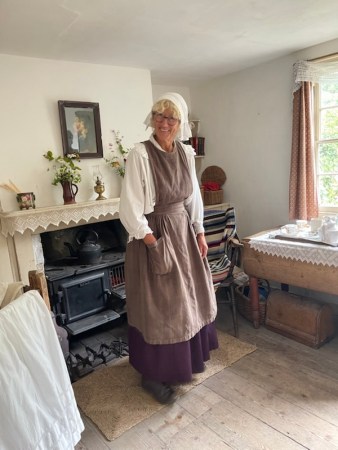
Among the museum’s major exhibits are:
- Bayleaf Farmhouse: A stunning 15th-century timber-framed Wealden hall house, offering a glimpse into early medieval domestic life.
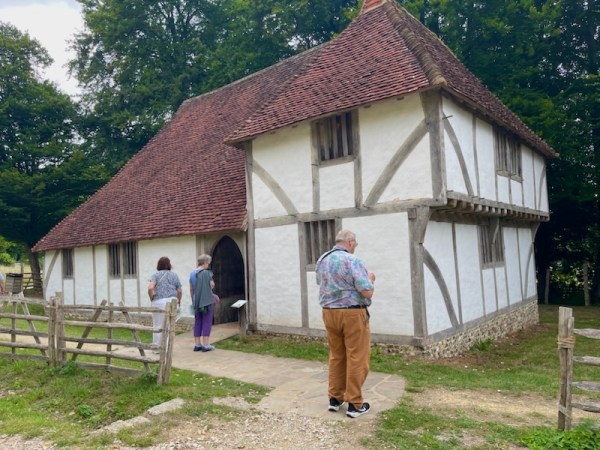
- The Medieval Barn from Cowfold: Dating back to 1536, this impressive timber barn showcases agricultural practices of the late medieval period.
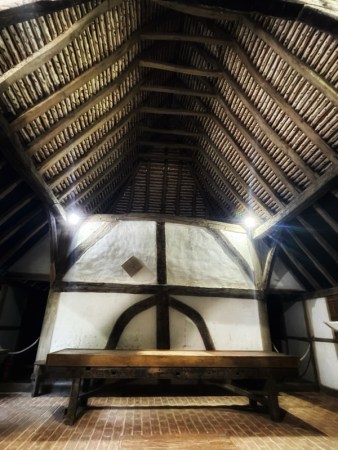

- Winkhurst Tudor Kitchen: An early 16th-century building that provides insight into Tudor-era cooking, brewing, and preserving.


- Market Hall from Titchfield: A striking public building that once served as a bustling hub of commerce.
- Aisled Barn from Hambrook: Built around 1771, this large barn with its distinctive aisle allowed wagons to easily enter for threshing and storage.
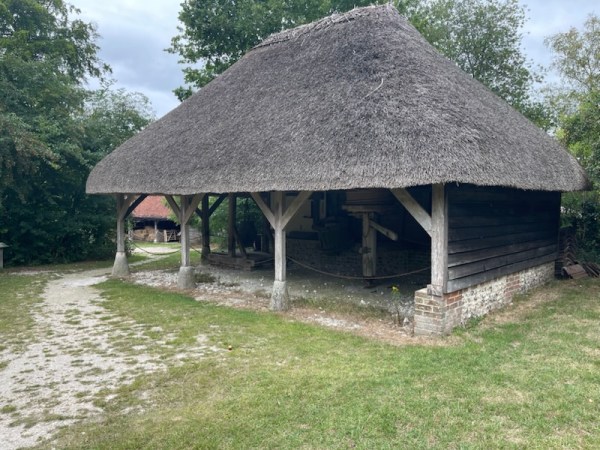
- Working Watermill and Bakery: Demonstrating traditional milling of flour and baking of bread, often available for visitors to sample.
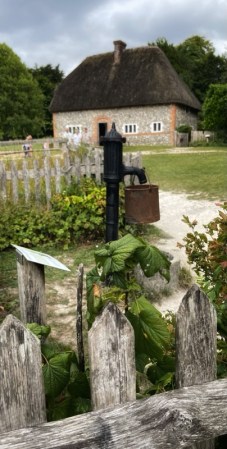
- A fully working underground water supply with ‘village pump’.
- Victorian Schoolroom: A step back in time to the classrooms of the 18th and 19th centuries.

- The village has a working supply of pump-based fresh water.
- The museum also features a range of other fascinating structures, including cottages, workshops, and agricultural buildings, all set amidst period gardens and populated with rare-breed farm animals, offering an immersive historical experience.
We loved it. Three hours later and tired, we made our way back to the car. The other two occupants slept their way to our hosts home in Haslemere.
©️Stephen Tanham, 2025.


 Sun in Gemini
I love these working museums, thanks for the photo tour. I once visited Beamish Museum which depicted past life in the Northern part of England and I found it fascinating. Three hours well spent.
LikeLiked by 1 person
Thanks, Darlene. Beamish is one of the best – and the actors are great!
LikeLiked by 1 person
There was even a pit pony and they told us the story about them. Yes, it was very good.
LikeLiked by 1 person
We took the children when they were 9 and 11, and they loved it 😊
LikeLiked by 1 person
Isn’t that where ‘The Repair Shop’ is based? It sounds like a fascinating place to explore. We visited Vermilionville, a similar (although smaller) open air Living History Museum in Lafayette, Louisiana, where old historic buildings are rebuilt, repaired and conserved to give a taste of Cajun life way back when – I absolutely loved it! 🙂
LikeLiked by 1 person
Yes, the ‘Repair Shop’ barn is there. They were not filming, though 😀
LikeLiked by 1 person
Were some of these buildings moved to this location from other places? There’s a historical museum ~ rather like that but not nearly as old, of course, being here in the States ~ the oldest building is from the early 1800s ~ it’s in the next town over ~ many of the buildings were moved from other places in the county ~ to preserve them. My mother & sister & I visited that “living museum” a few months before my mother’s death ~ there was a quilting exhibit my mother wished to see.
LikeLiked by 1 person
Thank you, Polly. Yes, some were moved, but not far. All originated from the local areas. It’s truly a representation of life as it was in centuries gone by.
LikeLiked by 1 person