by Steve Tanham

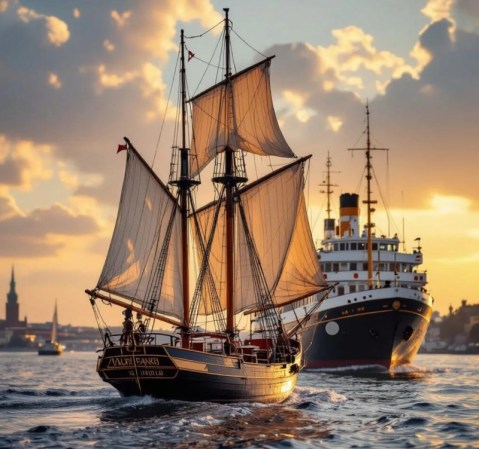
It was Easter Sunday, 20th April, 2025. Bernie had cooked us a fabulous Sunday lunch, now finished, leaving us relaxed and reflective. .
We had three guests; our longstanding friends and fellow dog-owners Siobhan and Paul, and a visiting new friend of theirs from New Zealand – Russ -who is pivotal to the rest of this true story.
Although you might have good reason for thinking that what follows is fiction…
The sun was shining and the air was warm. Russ and I went out into the garden with our drinks, leaving the others talking through the details of our forthcoming trip to Canada. We were to be reunited with the family in Toronto before visiting Ottawa and Montreal, ending our trip on a small island that was the home of L.M. Montgomery, the creator of the famous Anne of Green Gables novels.
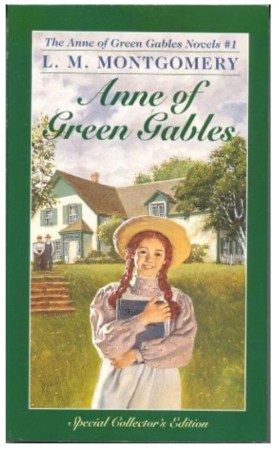
Bernie remembers loving these books as a child. She hadn’t expected to be able to visit the place of their origin and setting: Prince Edward Island…
But it was shortly to come true.
Beyond books, this is a story of ancestors, and a great adventure undertaken by those ancestors. It’s quite a story, but it’s not our story. The people who follow in this true tale are not our ancestors. They are the ancestors of Russ and Paul – with Russ being a direct descendant of the main adventurer; a man we will shortly meet.

Here’s a photo of those whose story this is; Paul (leading) and Russ, the ‘Kiwi’ following behind. Both with ice creams in the Cornish sunshine – where the ancestral story, here, was uncovered.

Back to our garden and the post-lunch sojourn.
Russ is a keen gardener. We chatted about the difficulty of keeping on top of mowing the grass at that time of year, when the new life literally bursts forth with a very determined push.
Finishing his drink, Russ sat back, enjoying the sunshine. I assured him that Easter weather in England was seldom this kind.
We had been talking about travel and its joys and also how exhausting it can be.
“The problem with New Zealand,” he said. “Is how far away it is from anywhere else … except Australia!”
I chuckled in agreement. We had visited New Zealand a few years ago at the end of another Australian family reunion, followed by a short cruising holiday down the Australian coast from Sidney, via Melbourne and on through the Tasmin Straits. It is a beautiful place but very far away.
“Did Paul tell you about the family connection with New Zealand?”
“He did!” I smiled at the sheer courage of those – his ancestors – who had emigrated there.
“Did he say where they travelled from?”
I sipped the last of my wine. There was a quiet determination at work, here…
“From Prince Edward Island, off the Canadian east coast.” He half closed his eyes. “In a schooner, for heaven’s sake”.

My father had a modest sailing boat that he kept on Ullswater in the Lake District. It would sleep four people as long as they could cope with ‘camping’ under fibreglass. There was a toilet: ‘head’ in boatish, and a very small sink. We’re not talking posh…
Named Vogelsang – birdsong from German – it was my father’s pride and joy. It was moored in a small bay just off the northern shore of Ullswater, next to a rather snotty sailing club whose members always refused to have anything to do with us.
There’s much to learn about people from such encounters.
My girlfriend and I stayed on the boat one Easter holiday and practically froze to death. Each morning we had to break the ice on the hatch to get out to the deck, then row the dingy ashore to take an hour’s walk (we didn’t have a car) into Pooley Bridge where we’d try to find a warm coffee shop that was open. It was a frozen Easter.
Once there, we hoped the owner would take pity and let us eke out our meagre funds and stay in their lovely warmth.… for three very slow coffees.
Boats are seldom the objects of romance we might imagine!
And that was just a lake…
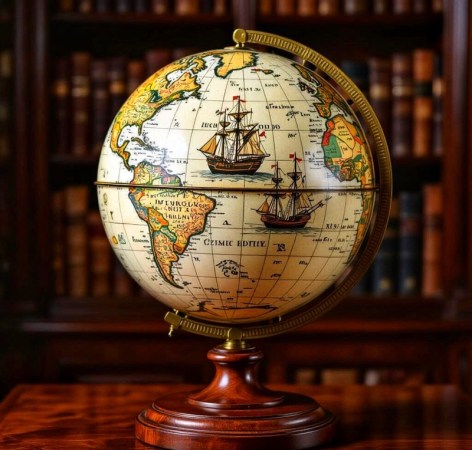
In my early twenties, I learned to sail Vogelsang by trial and error – often more of the latter. In the winters I used to read up on boating and ships. What Russ had just said surprised me: you would not normally choose a schooner – which, typically was used for offshore cargo between ports in the same country – to cross major oceans.
“A schooner?” I asked, looking into Russ’s smiling eyes. “All the way from Canada down across the Atlantic, under Africa and straight on across one-third of the planet to a barely-developed New Zealand?”
“Right…” he said, wistfully. “Or some similar ‘great circle’. It stopped me in my tracks, too; and we don’t even know the route they took … so far, we’ve found no further details of the voyage.” He leaned forward, laughing. “But we know what happened afterwards… And our family is at the end of that tree of descendants!”
Neither of us spoke for a while. I was trying to envisage the courage and skill such an adventure would have demanded.
Russ continued:
“With his family, a skipper they had hired…” he sipped the last of the juice, looking slightly theatrical. “And a cow.”
He waited for that to sink in.
“A cow?”
“Yes, so they could enjoy fresh milk as protein. They were resourceful people!”
I shook my head in wonder, and went quiet, trying to consider the logistics of putting that voyage together – and the slim chances of success.
“And they made it?”
“Yep,” Russ said. Just as they had made it from Bideford in Cornwall to Prince Edward Island in the first place!” He was lost in silent respect. “Took them 238 days.”
He let the import of that sink in. We were both quiet.
Bernie had seen us chatting away – this was the first time we had met Russ – and brought us fresh drinks. We sipped, deep in thought.
“And you found all this out in Cornwall.”
“We did…” Russ said. He took some more fruit juice. “Except for one important part.”
I chuckled, feeling that something key was about to be revealed. I said to Russ. “And?”
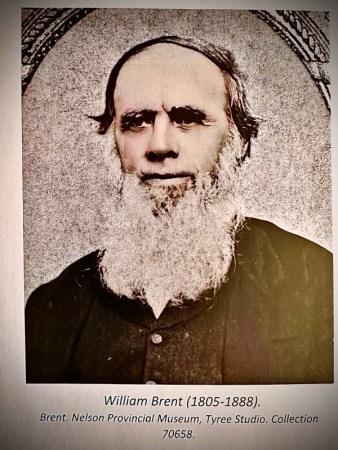
“Sadly we know little about Prince Edward Island – the place William Brent and his family had settled in after they left Cornwall; the place where his skills as a carpenter were put to full use and they prospered, the place where he had lived for over twenty-five years and raised a family.”
There was a sadness in his tone. “And I’m unlikely ever to be able to visit it.”
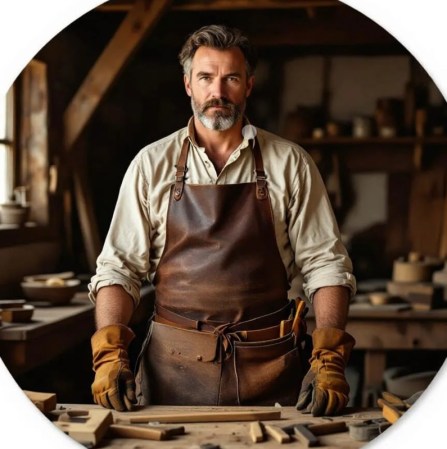
I had a feeling this might be our part in the story.
“But he eventually left Prince Edward Island? I asked. “Was there still a restless hunger?”
“None of us will ever know the background,” Russ said, staring into the blue sky of that lovely day. “But it may be linked to the fact that Prince Edward Island was becoming depleted of its once-abundant forests. Over-felling had decimated its tree population. William Brent may have had to make a decision: go back to England or carry on–‘
“-Around the planet!” I laughed. “What a brave soul he was!”
“They had the schooner built for them. Probably took most of their money. They took on a skipper, a first mate and a few deckhands, and set off across some of the Earth’s most dangerous seas…”
He sipped his orange juice, deep in thought. How could you not be! As fiction, it would be a fabulous story. As fact, it was astonishing.
“And they made it, intact?”
“Even the cow,” Russ said. “Sold the boat in New Zealand – which had always been the plan – and used the money to set themselves up there.”
“And they stayed?”
“Yes… Finally, William Brent had come to the end of his sailing adventures.”
“And now you know the whole story!”
“Not quite,” he said.
I leaned back, smiling.
“Prince Edward Island?” I ventured.
Russ laughed. “We’d love to know exactly where on Prince Edward Island the schooner was constructed. All we know is it was somewhere in St Mary’s Bay – which is a big area.”
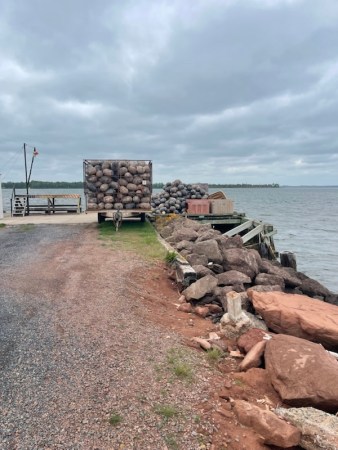
“And we’re about to leave on a trip to Canada,” I said with a grin “culminating in Prince Edward Island…”
“Couldn’t make it up, could you!” Said Russ. “Just a few photos of the area would be great?”
And so our small part in this historical detective story emerged – willingly undertaken and quite an adventure in itself.
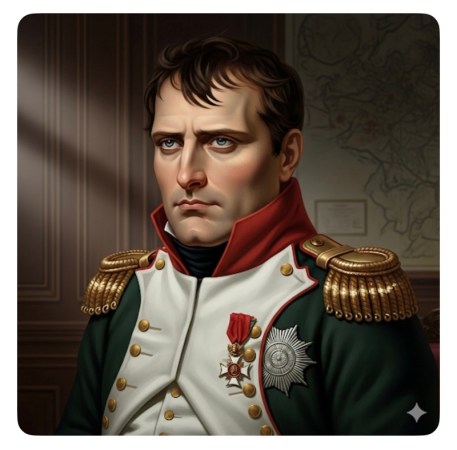
And a picture of Napoleon Bonaparte. What’s he doing here? Well… the story of why Prince Edward Island was vitally important to Britain is closely related to the actions of Napoleon. More in Wooden Ships, part two.
In one sense, that is the beginning and end of this barely believable tale, but there is so much more fascinating detail, about people, geography and lives, to tell.
I’ll try to set some of this background information down – in context- in the parts that follow, beginning in the second part – Wooden Ships (2).

©️Copyright Stephen Tanham, 2025. Photos by the author.


 Sun in Gemini
Hi Steve, this is a great story. I really enjoyed it. Thanks for sharing and have a super Sunday.
LikeLiked by 1 person
Thanks, Robbie! Lovely way to start Sunday 😄
LikeLike
The Anne of Green Gables series was a favorite of mine as well and I dragged Dave to PEI before we had kids to visit the setting of the books. It’s such a beautiful place.
LikeLiked by 1 person
We agree, Alethea! 😀
LikeLike
🙂
LikeLike
A multi-layered story, Steve!
LikeLiked by 1 person
Thank you, Audrey! I’m glad it worked 😃
LikeLiked by 1 person
A great story. I look forward to more. I also dreamed of visiting Prince Edward Island, the home of LM Montgomery and her character Anne Shirley. Three years ago my dream came true. Such a lovely place.
LikeLiked by 1 person
Thank you, Darlene. I’m so glad that your wish came true, too! Bernie sends a smile!
LikeLiked by 1 person
Smiles back! 😀😀
LikeLiked by 1 person
My daughters are still plotting a way to visit the island (because of Anne of course!)
That’s a wonderful family tale. (K)
LikeLiked by 1 person
You must indulge them, Kerfe! The visitor centre is great, and the reconstruction of Anne’s house is magical! 😄
LikeLiked by 1 person
One of these years…
LikeLike