by Steve Tanham

(Continued from Part One)
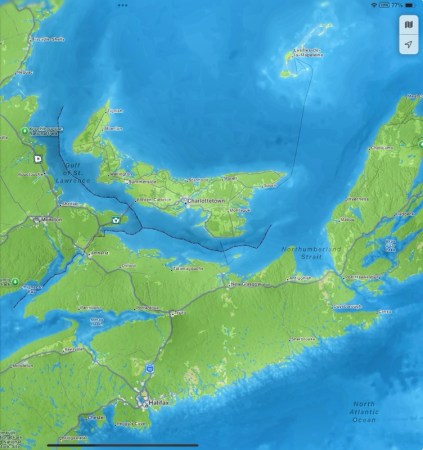
Prince Edward Island, often shortened to its initials PEI, is Canada’s smallest province. It lies only 13 miles off the New Brunswick Atlantic coast. It is connected to the Canadian mainland by one of the world’s longest bridges to pass over ice-covered waters (in winter), named the Confederation Bridge.
It is one of Canada’s Maritime Provinces, and the waters that flow around it are those of the Gulf of St. Lawrence. To the south is the Nova Scotia peninsula.
The island has an excellent and friendly airport to look after tens of thousands who come to visit the home of their favourite childhood character.

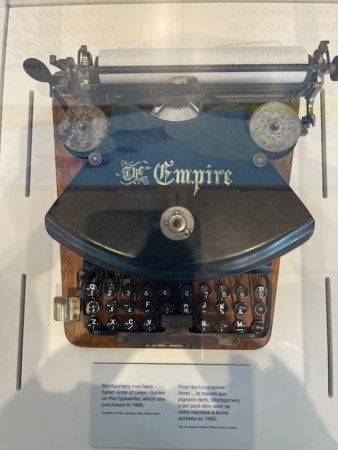
PEI was the home of L. M. Montgomery, the best-selling author who created the Anne of Green Gables series of books, in its time, among the world’s most popular books for teens.
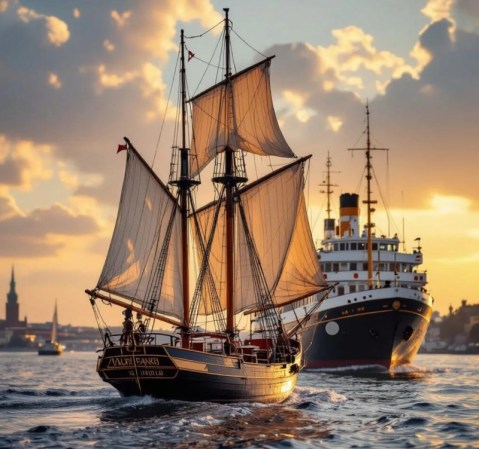
Long before the Anne of Green Gables books, it was the new home of William Brent and his family, after their successful schooner voyage from Bideford in North Devon – See Part One.
The outline of William Brent’s two amazing voyages was told in the previous post. In this blog, we consider some of the underlying conditions of the time: the backdrop to William Brent’s decisions.
Thomas Bernard, a relative of William Brent from Britain, had been on Prince Edward Island for many years before William Brent arrived with his family in the late 1820s.
Thomas Bernard’s business had two operations; they had established themselves as one of PEI’s major shippers, using their extensive knowledge of the Atlantic Ocean and its main ports, and secondly, they were poised to inject a very familiar ‘new’ cargo into those supply lines – quality timber.
Prince Edward Island was sparsely populated and had plenty of timber – though the land was unforgiving and less productive as a basis for agriculture. PEI, being a maritime province, had an existing reputation for quality ship building, and was growing in nautical importance despite the extremes of weather during the winters.
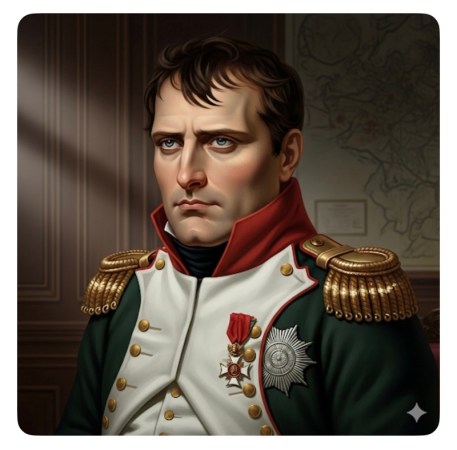
Thomas Bernard was aware how political tensions created markets. The self-styled French emperor, Napoleon Bonaparte, saw the British as his primary enemy.
Bonaparte, furious at Britain’s continued domination of the seas via their superior Royal Navy – used the smaller French fleet to blockade the Baltic ports, preventing the vital supply of raw timber Britain needed to maintain and increase ships of the fleet.

with comfortable soldiers’ living quarters on four floors. On the roof, was a rotary iron track around which the main cannon could be accurately aligned- enabling any ship within Scapa Flow to be targeted.)
The Hoy Martello Tower was never used in anger. But it did help to establish the vast Sea-Loch of Scapa Flow as one of the Royal Navy’s most defensible waterways. In addition, in Thomas Bernard’s time, the vast Scapa Flow sea loch was used as faster route to the open Atlantic, and therefore allowed Napoleon the possibility of ambush of timber shipping.
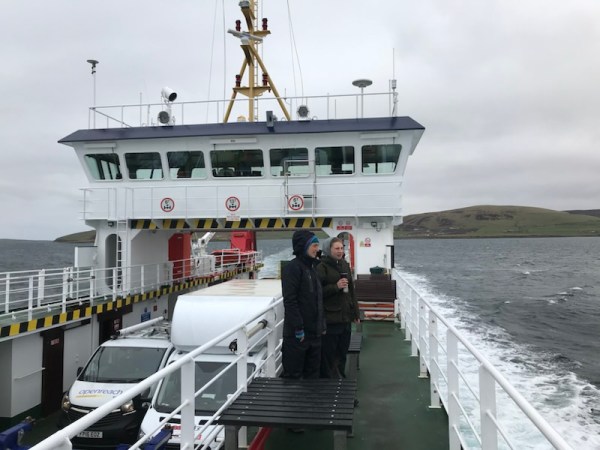
Napoleon Bonaparte was a thinker … and the presence of the Martello Towers would have weighed heavily on any considerations of a British Invasion by the French. A single, accurate, canon shot from this formidable weapon could sink a ship.

Over 100 Martello towers were made along England’s south and east coasts between 1805 and 1812.
None were ever fired in anger – an early example of ‘deterrence’ at work on a geo-political scale.
William Brent was a relative of Thomas Bernard. He saw his chance to take a low-risk move to PEI, moving his family from Cornwall to Prince Edward Island to join the carpentry operations of the relative Thomas Burnard.
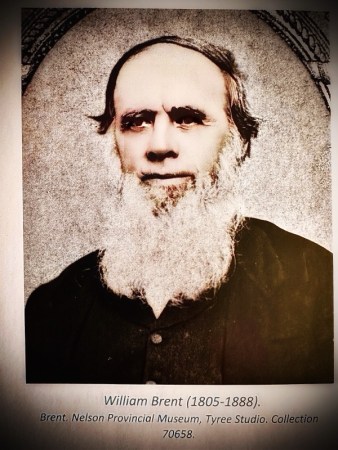
His advanced carpentry skills were in wider demand. He built his own house, then was instrumental in the design and building of a local church – one of the first on PEI, thus firmly establishing himself at the heart of the Charlottesville community.
‘Back in the present’, the research was going well – continually aided by Paul and Russ’ historical facts and the right kind of summaries that help the story; no-one wants a list of facts!
The start of our trip to Canada to see the family was fast approaching. We had to plan carefully. Family time had to be the first priority… but after that…
Bernie had arranged a long-overdue reunion in Ottawa with one of her cousins, Lee. Lee’s family had travelled, luxuriously, around the world in the 1960-70s, moving as part of their father’s career as a senior Shell Oil executive.
Bernie and Lee hadn’t seen each other in 53 years, though they had kept in touch.
Lee now works for the government in Ottawa and was keen to show us around that fine city. That, she said, would take us a full day – with some social time mixed in for lunch and dinner.

After leaving Toronto, Lee would collect us from the railway station in Ottawa and was and put her heart into the task of genial host for our two days there – far too little time for such a beautiful city.
That left a few days on PEI at the end of the trip…where we hoped to be of use to Russ and Paul in providing at least some ‘feel’ of St Mary’s Bay – the place where their new ship – The Lady Grey schooner had been built. We wondered if there might be one or two photographs of the harbours in use on the eastern seaboard, especially those that may have had the skills to take on the building of an entire ocean-crossing schooner, back in the 1820s … it was a long-shot.
Upon our arrival, two days would be devoted to getting to know the layout and scale of PEI by rental car. Our travel experience had shown the importance of that!

We’d allocated a full day for having a good look at The Anne of Green Gables visitor centre – on which I would like to invite my wife do do a separate post, using this blog.
The final day would be an attempt to do justice to our historical mission – To locate and explore St Mary’s Bay, the place at which the Brent family’s new boat: The Lady Grey, was constructed; the place from which they had sailed into the relative unknown, successfully crossing the oceans to New Zealand in the early years of the 18th century.
Russ had only asked us to take some general photos of PEI, for use in he and Paul’s historical research. But I had the feeling that we could get closer
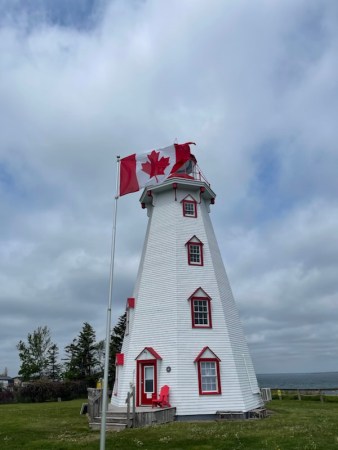
A sidewards skirmish via the internet had revealed that PEI had a fine set of lighthouses – one of my favourite subjects to photograph. I hoped to feature one or two photographs as we went along.

The airport gate was shortly to close. It was time to leave mainland Canada behind, though we would eventually connect to Dublin and Manchester via a swift return to Toronto.
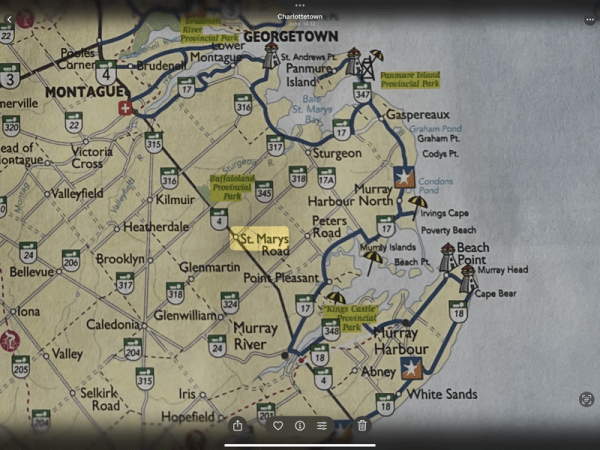
Was it reasonable to presume we could have any success at all? Photos a friend had supplied made it look sparsely-populated. Fishing trips seemed to be a major business – with a few cafes and farm shops close to major road intersections.
We could only try…

And at least the photography would be plentiful…

Below is one of very few documents related to The Lady Grey, built somewhere in St Mary’s Bay. It comes from the shipping register of New Zealand and is dated after the ship was subsequently sold. . Details of the ship are well documented, and it fulfilled its twin roles of transporting the Brent’s safely to New Zealand, and providing the initial capital for their lives.
They never moved again…

For us to find anything meaningful – and of use to assist Russ and Paul – we were going need much more than logic.We would need that telling intervention of serendipity- luck.
To be concluded in Part Three.
©️Copyright Stephen Tanham, 2025. Photos by the author.


 Sun in Gemini
That first photo is really atmospheric. Frame-worthy!
LikeLiked by 1 person
Thanks, Alethea! Taken a few years ago on our first trip to Orkney. We took the hire car across on small ferry to Hoy, and the Harkness Gun Battery was the main visit of the day 😀
LikeLiked by 1 person
🙂
LikeLike
Wonderful post Steve. Would love to live in that lighthouse!
LikeLiked by 1 person
Thank you, Di! Yes, me too! And it was right on the headland where the estuary becomes the sea.
LikeLiked by 1 person
How fabulous.
LikeLiked by 1 person
My friend lived at Murray Harbour when I visited her three years ago. Is that the Cape Bear lighthouse? Fascinating info here.
LikeLiked by 1 person
Thank you, Darlene. Murray harbour is further south. This was the Panmure Island Lighthouse on the southern tip of St Mary’s Bay. William Brent’s boat left for New Zealand from close by and we were trying to find the harbour or even jetty where it would have been constructed.
LikeLiked by 1 person