


With the April workshop looming close, Stuart and I needed a break from work and headed off for the afternoon. We wanted to pay our respects to one of the influences behind the weekend, so we took advantage of a rare break in the weather. It has rained a lot lately; many of the fields we passed were flooded and the river at our destination had overflowed, drowning the riverside pathways and marooning benches that would normally be filled with people.
We’re pretty lucky my local area… there are no rivers, just the springs and streams that arise in the chalk and meander through the Vale and we are far from the sea. Most of the time that seems a pity, as I love moving water and miss the waterfalls and waves, but with the recent persistent rain I can only be grateful.
Our little river is usually no more…
View original post 738 more words
Share this:

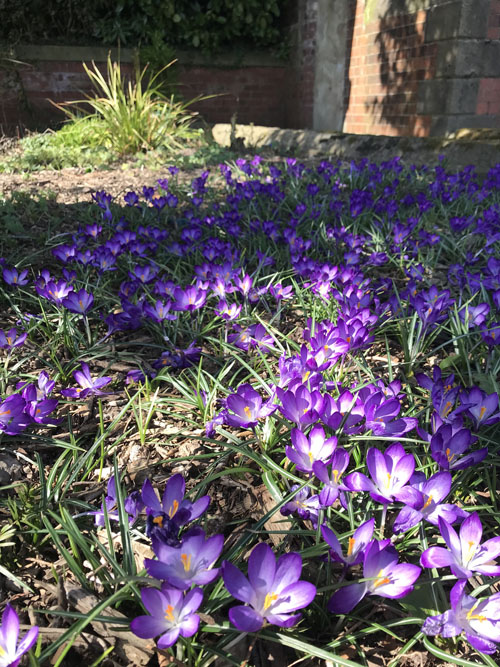
Is it perhaps in fingertips
Where poised and ready reflex sits
Sharpened, flexed and keen
Framing March’s calling turn
As brightness fills the sky
➰
Or feet that on an older ground
Had slithered, moaned and grumbled loud
Now, with bouncing spring and tread
A lighter step as though ahead
A different path awaits
➰
Perhaps the seeds delight and stir
Where winter’s less than obvious care
Has left in frozen, fractured earth
A memory of delight to birth
Awakening to the dawn
➰
Or there’s a switch within the head
That says: awake, arise from dead
And live, again, O mortal man
And staggering through the end of dark
Be greeted by the Sun.
➰
And somewhere, does a distant bell
Whose song’s a clear and keening knell
All life awaken – hear it well, rejoicing
That on your opened ears it gently fell
➰
While there are those of earth who
Still and silent now
Unchanging, live on in heart or head
Whose dying eyes, all-seeing, stretched with love
To bid you cross that line to be reborn above
➰
©Copyright Stephen Tanham.
Share this:

We can lend our thoughts and solidarity…

 David Hogg, (AP Photo/Andrew Harnik)
Most of my followers have heard me mention a time or two that my youngest brother was a victim of gun violence. Fifteen years ago this summer, he was shot in the head inside his home. There was no national coverage, no thoughts and prayers from politicians. He was just another gun death among the thousands that occur in the US every year, most so routine that we never hear about them.
These days, there are too many to report.
Mass shootings 2018 to date: 69
School shootings 2018 to date: 12
Approximately 33,000 Americans die from guns every year, that’s the equivalent of a 9/11 every month. On average that’s 96 gun-deaths each and every day. The statistics are plentiful and horrifying.
 “March for Our Lives” rally March 24, 2018, in Washington. (AP Photo/Alex Brandon)
When I was a grief counselor for children and families…
View original post 279 more words
Share this:


I remember the moment, a few years ago, when Stuart – one of my co-directors of the Silent Eye – said to me: “And that’s it, vanished in an instant: all that work about to be packed up, filed away and forgotten…”
He was referring to the hour at the end of our annual workshop during which we tear down the props, pack the period (or futuristic) costumes and collect up any spare workbooks, each one the better part of two hundred pages of lovingly crafted mystical theatre…
Around us is a scattering of people who don’t want to go home… Old friends, returned for their yearly round of camaraderie, fun and some deeply moving psychodrama, are standing in the residual warmth of a living thing which, like a vessel, has held and nurtured us all for the weekend. New friends, wondering what just happened…
I hate the word ‘psychodrama’ but that’s what it is. Hitchcock has a lot to answer for… ‘psych’ because the weekend is a process that works on ‘the self’, involving everyone in a play – a scripted five-act drama that starts off slow and ends with a rush that is all too real. It’s not drugs or alcohol that fuels this, it’s the largely forgotten state of ‘egregore’ of a group of people ‘playing’ at something with spiritual intentions whose success they are committed to.
We play via scripts and, often, costumes based on the characters enacted. No-one is expected to remember their lines over the five acts of the play. But watch any one of our players reading theirs and you’ll see that person giving total dedication to being the best they can be.
They may be a medieval knight, a soothsayer, a priestess. They may be a jester, a demigod or even a Queen. They might even be a cyborg from the future, struggling to become human, and challenging all our preconceptions in the process.
Sounds serious stuff? Yes, but beneath this is a strong and incredibly supportive layer of fun. A very good pub is next door to our conference venue: the lovely Nightingale Centre in this idyllic part of the Derbyshire hills. We are not averse to a glass of wine or beer to help wind down in the evenings, and the included meals in the venue are very good, indeed – and all this for less than three hundred pounds, per person, inclusive…
We don’t do it to make money, as the annual tax return would demonstrate. We do it because it reflects the best of the various ‘Schools of the Soul’ in which we were brought to a more inclusive state of conscious. Over the five short years of our existence we have made it our own, and created our own teaching styles, along the way developing some leading-edge approaches to distance learning.
We are not gurus – we don’t believe in them. We are just ordinary folk who enjoy teaching a deeper approach to life… and ‘playing’ in this magical and creative fashion.
This year, 20-22 April, on that final Sunday afternoon, we will be standing among the torn down bits of electronics, cables, fabric, giant chessboard and well-thumbed scripts. Stuart may well be standing there as the last box gets packed into the car and ask, in his customary fashion, ‘Well, was it all worth it?’
He’ll be smiling his ‘it’s not really a question’ smile, and we’ll both chuckle. Oh yes, it will indeed have been worth it!
———–
For more information on this and future Silent Eye workshops click here or contact us at rivingtide@gmail.com
©Stephen Tanham.
Share this:

Let’s call them Octapi. It’s a made-up name, but useful.
There’s an Octapi in your lap. It’s a friendly one. You’ve had it for a few years and you like its smiley face – in fact it has different faces you can use according to your mood.
Moods and preferences are important… The Octapi are very good at picking up how you feel.
You like the Octapi. You like the way it can reach out and send smiling, outraged or sad faces to other Octapi that your friends have; and how it can suggest linking feelers with Octapi owners that belong to people you’ve never met, but share the same interests, likes and dislikes as you.
When you started, your Octopi only had contact with a few, but now you have many new friends through the Octapi in their laps.
You didn’t need to buy your Octapi. It came free. All you have to do is to feed it. It lives on information – your information, particularly what you like and dislike. It keeps everything.
Mood is important… because what you like and dislike says a lot about you. You tend to associate with people who like the same things, so the polite little Octapi suggests other Octapi whose keepers might be like you.
What you don’t like can be even more powerful than what you like. The Octapi colonies, spread across the world, have so much information on you, and people like you, that, they can suggest what you might want to buy, or subscribe to. This is how the Octapi earn their living. This is stated clearly, so there’s no problem with the existence of the Octapi as long as you read the small print and understand that keeping one is not really free.
Part of the small print in the “how to look after an Octapi’ manual is that your personal information – including likes and, most importantly, dislikes, will be kept anonymously – that is, will be kept so it can be useful to the feeding of the Ocatapi colonies around the world but never released to anyone outside of that ‘trusted’ colony.
Then a very clever man from a very famous university developed a program that could infer how you would vote from your social preferences – known to your Octapi, of course. The clever man approached the chiefs of the Octapi and asked if he could set up an experiment, for academic purposes only, which would pay thousands of Octapi users to install his program in the Octapi on their laps.
What may not have been clear is that his program was capable of contacting other Octapi who were friends of the first Octapi and asking them for the likes and dislikes of their Octapi friends.
A few days later the personal likes and dislikes of an estimated fifty million Octapi owners, around the world were safely tucked away in a set of files, which were subsequently processed for use outside of the academic world for which they were intended.
In 2015 this leak of Octapi information was denied. Three years later, after an American election and a British Brexit – both of which used this or related Octapi data – had changed the face of the at least two countries.
It’s all fake news, of course. There’s no such thing as an Octapi, as far as I know.
It takes a lot of courage for a modern newspaper to pursue and publish this kind of story. But it’s now in the public domain, and being discussed in Government on both sides of the Atlantic:
Share this:

Share this:

 It was a dark place, akin to madness
Wrought by a grief held in stasis;
Buried alive by choices
Made in assumed ignorance
And wilful blindness.
Rooted in the memory of a past long dead,
That rattled its chains in waking nightmares
And brittle laughter.
Afraid to be seen, afraid to be ignored
To pass into oblivious eternity
Without having lived.
Or loved.
Or been.
And yet…
There was a glimpse, a fleeting flicker
A pause in the cadence, a heartbeat skipped,
When the world stopped.
A point of flame, unwavering,
Steady as ancient stone
That sang my name
And laughed at eternity.
Mirroring the universe
With my soul.
How many times
Had I not seen
Before allowing
Joy to lead my feet
And take me home.

Share this:


From twisted flesh and sinew
You dared to dream
To think, to see, to do
And in that doing felt
The Universe create anew
⦿
But doing dares beyond
To tell the species how
Uniquely made it is
Not for that which follows life
But simply what is now:
That mind could put an end to strife
⦿
And all, you said, of peace
Came down, at last, to this:
That talking raised us up
That talking kept us sane
That talking keeps the open door
And throws away the blame.
⦿
In memory of Professor Stephen Hawking
1942-2018
©The Silent Eye.
Share this:


Formidable, once:
Within this place was safety born
Exchanged for fealty, price of stones
That made these walls and saved your bones
⦿
Tracks in the sand:
The beach on which you walk your dog
Is wet where bishops splashed ashore
The highway of the sea a grateful, distant roar
⦿
Oak-panelled door:
Beneath which we pass in droves
A portal – then – to smells of meat and seat
For those who of this rank would proudly meet
⦿
But not for you nor I:
From simple huts of wood and earth
Our forebears gazed on castle keep
Unaware of centuries’ deadly creep
⦿
Tamed, exhibited now:
Its heavy stone enduring still
But only that; the purpose and the head are fled
To southern climes where power is better bred…
⦿
©️Stephen Tanham
Photo by author: Bamburgh Castle, Northumberland.
Share this:

Share this:

+ #Silenti, esoteric psychology, Mystery Schools, Silent Eye School, spiritual turning around, Spirituality
Candle in the mind
by Steve Tanham

If we wish to make a voyage into the self, we need a set of tools, with which to:
a) Investigate, as objectively as possible, what this ‘me’ is doing.
b) Create a space; a different part of us, that our growing and real consciousness can ‘live in’.
These may initially sound somewhat forced, but that is only because western language, with its notional structure of “(I) do something to (that)” embeds the principle that there is an ‘I’ in the form we think of it; therefore we never question the root of the problem.
The ‘toolkit’, strange-sounding though it may be, is only there to correct the language-based falsehood within which we all live. But truly understanding that comes later, when we live on the upper floor of ‘ourselves’ rather than the ground.
When we begin to watch ourselves, we run, immediately, into conditioning. Conditioning is the result of society, family, job, school, mates – best and otherwise, job pressures, the club for football/books/golf/cricket/(insert here). In short, everyone who has ever laid an expectation on us that we accepted, has contributed to this conditioning.
Most of this conditioning is there to mould our personality into an acceptable form so that we can live, harmoniously, within the society into which we were born; or into which we have relocated, due to a bad fit of the first one…
Part of the valid conditioning is a set of moral values: the good and bad of it. These often affect us the most, especially if we believe that good and bad are powerful things.
When we accept a framework of a philosophy or religion, we subscribe to a subset of values associated with that ‘method’ of instruction. This applies, equally, to any School of spirituality which imposes on us similar constraints.
Are we to be anarchical in our search for personal truth? Are we to cast off everything we hold dear to find a pure layer of self within, as though we were beginning our lives again?
It’s not a trivial question, since, at the right time in our development, there are truths in some of the above scenarios. But such a transition, done brutally, negates the value of the developed personality and its potential for doing ‘good’. In the West, we need to work within the framework of our society – we’re not particularly suited to the life of a monk, regardless of the religious basis. Few of us believe that discarding everything we own will do anything but destabilise us.
The mistake is thinking that the personality can solve this, all by itself. Since our goal is to rise ‘above’ the everyday life imposed on us by the habitual nature of that personality – with all its habits and hungers – we can hardly expect cooperation from the creature, itself!
Tricky…
A clever, stealthy and subtle way to go about it is to become a ‘self-watcher’. Self-watchers do everything they’ve always done, but they resist the societal urge to judge what they are watching in themselves. Self-judging is also habitual; and was exposed by Freud, the pioneering psychologist of the last century, as belonging to a part of the personality called the superego. We can never satisfy the critical demands of this monster. It’s like your worst authority-figure. Whatever we do, that critical voice is always there, telling us we may have tried our best but it’s just not good enough…
When we become a self-watcher, the superego comes at us like a charging tiger. It applauds what we’re finding about our ‘weak’ self! It loves our unveiling of the pathetic nature of our resolve to give up that nasty habit… or six.
The dedicated self-watcher has to learn a new skill: to ignore the judgment of that inner voice. It does this initially by trust. Later, with experience and a deepening sense of something good and calm growing inside us, it does this because it knows the approach opens up a new world. An inner realm, seen from a judgment-free perspective, brings a new energy to the study of how we really live our lives. This new energy is far more potent at personal transformation that any scowling superego could ever be.
One of its most wonderful attributes is that it loves us…
Watching has a power of its own, no matter what scale it operates on. This is one of secrets of the ancient methods of spiritual development, and one that is vital to learn if we are to find any peace and retain our sanity in the perceived nasty and crazy world we find ourselves in, today.
It doesn’t operate on its own; of course not. Other things have to happen, too. But the establishment of a watching-place inside us, inviolate from criticism–an inner room in which we can say: “In here I will learn about me in peace and free from persecution”, is the single most powerful tool we can adopt if we want personal transformation in our lives.
Stephen Tanham is a director of the Silent Eye School of Consciousness, a not-for-profit organisation that helps people find the reality and essence of their existence via home-based study and practice courses which are low-cost and personally supervised.
His personal blog, Sun in Gemini, is at stevetanham.wordpress.com.
You’ll find friends, poetry, literature and photography there…and some great guest posts on related topics.
©Stephen Tanham
Share this:

Sue recalls some of our adventures as April approaches!
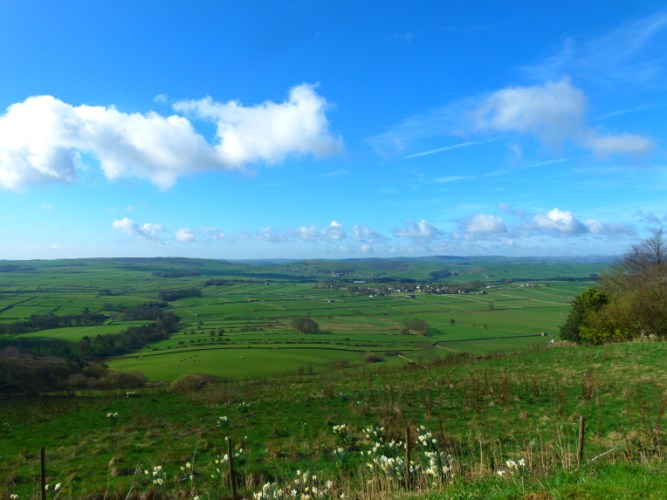
The Silent Eye is busy gearing up for the annual April workshop. Every year we host a residential workshop weekend in Derbyshire and every year people come from across the globe to join us for an adventure of mind, heart and spirit.
Past events have seen us travel through time from the far distant past to the unwritten future. The weekends are a frame for spiritual exploration, the costumes and colour bring the stories to life, while the scripted ritual drama engages the imagination and emotions, allowing us to learn from a shared experience.
Inevitably, these weekends have their ‘best bits’… the memorable moments that stand out from the rest. Such moments are largely subjective and doubtless everyone has their own, although the warm, friendship and laughter are a common thread.
Some of the highlights from the April workshops stand out not just as ‘workshop memories’, but as very special…
View original post 1,201 more words


 Sun in Gemini
You must be logged in to post a comment.