

As child, I wandered ways like these
And marvelled at the grace and ease
With which these tiny spears of Spring
Could rise and shake off Winter’s cling.
❊
A wiser self smiles back at him
Who knew not these were Alpine kin
Which lived for cold and days like these
That mirrored mountains’ solid freeze.
❊
But does this change the greeting bright
When muddied boots trail freezing night?
Not one jot! Young soul replies
from depths of Self that love surprise.
❊
©Copyright Stephen Tanham 2017
Share this:


We were in Castleton, hunting for props for the Feathered Seer. It was a cold, grey morning, but even so, the warm stone of the small Derbyshire town was inviting. We wandered through the streets, exploring hidden streets that we had not seen before and following the course of Peakshole Water, a tributary of the River Noe, that runs through the town.

The ducks were doing what ducks do best and performing their morning ablutions They are master contortionists when they are cleaning and preening their feathers, instinctively keeping them in perfect condition for their lives on water and in the air. Their faces always draw a smile… seeming to smile. They seem content to be no more and no less than what they are. We stopped for a while, watching and snapping away, under the eye of a curious robin.
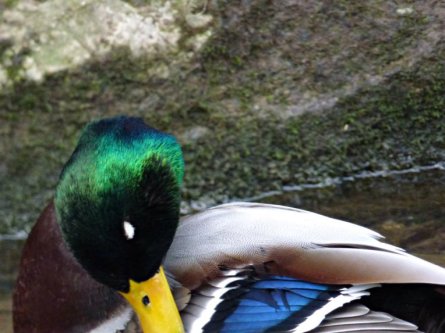
We seldom go far without a robin showing up…
View original post 776 more words
Share this:


It seems a very long time ago now, before the launch of the Silent Eye, that I wrote “Coming Through”, about the way we are sometimes guided by unseen hands. It was an attempt to describe what drives the work forward and how we experience that. Not just within the School, but all of us, throughout our lives, will feel that touch. There are many names and expressions used for this experience, perhaps the most frequent and generic term is ‘contact’ and while the Silent Eye is a ‘contacted school’, those words mean nothing to those outside of the esoteric world.
It is an awkward subject to address, as those who have not consciously felt that touch may well look askance at the weirdos and dismiss the whole concept as lunacy. Those who have felt it may have formed their own theories and come to a personal understanding…
View original post 598 more words
Share this:


Wise crows, raven-kin
Driven from your ancient trees
What home will call you now?
—
Where cosy craft
Of power’s secret circle
Convinces gentle folk
That cut and death and burn
Deliver best the clearing tide.
—
Revealing light?
—
Barren gaps and ugly fires
Of healthy wood consume
Both eye and view in sadness
The darker light made clear.
—
Be welcome, now
Among our ash and sycamore
The noble wood of sharing
Noisy dawns we will abide, and smile
When joyous roosting fills the brightening sky.
—
Wise crows, raven-kin
Driven from your ancient trees
This home will call you now.
—
©Copyright Stephen Tanham 2017
Share this:

Please help us reduce the explosions!
“She’s going to blow!”
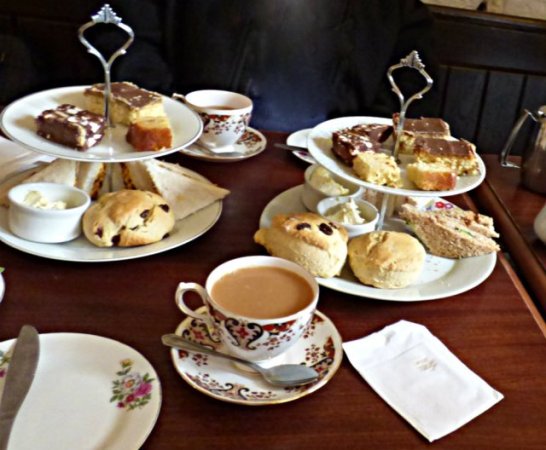
The gentlemen may have found it amusing. I did not. We had often stopped at this particular place for a pot of tea mid-afternoon and it was always a pleasant pause beside the fire of the old coaching inn. It had been bad enough when they stopped serving pieces of fudge with the tea, but you can understand the economics of that. What I couldn’t understand was the move away from teapots.
The first time I spotted this aberration, I was too shocked to voice my disapproval…for at least a minute. The waiter brought out the customary tray with cups, saucers and the usual accoutrements…. but the tea was in things that looked like mini-cafetières. A novel idea… but it was all for show, wasn’t it? The tea would still brew in the glass contraptions.
Not so. It was not to be allowed to…
View original post 1,316 more words
Share this:


The Scream by Edvard Munch. File source
Is the human reflected in society? Do our civilisations echo how we are as individuals, with all our complex components, such as our physical health and our sense of self – our psychology?
It’s a complex question. My personal belief is that the answer is yes, and at times of great stress and transition for mankind, that reflection, that mirroring, is amplified – often in a very ugly way. Such times are very stressful, as they represent gateways of great danger for humanity. But it’s danger with a silver lining, in the sense that they provide an opportunity for an equally great ‘clearing out’ of how we live.
I sit here, typing, with our cat, Misti, on my knee. She likes it there. It’s cosy. She has just been fed, in a warm house, and most of her primal needs as an animal-organism have been met. She has intelligence – but it’s instinctive cleverness, based on selfishness. Her selfishness is no threat to the planet, and her eyes beam real love at me. We’re very fond of each other – but that’s not unusual, as any pet lover will attest. She’s a completely different life-form to the human, but we chose to care for her and provide for her hierarchy of needs, including love, to cap it all.

We are similarly cared for by our solar system. Spinning in space, ninety-three million miles from a solar super-entity that sacrifices a huge part of its life force every second is our common home, the Earth.
We did not create the Earth, though we have created many wonderful things upon it. The whole of organic life on Earth has developed in reaction to that Earth. Evolution, viewed as survival, is a mechanism that teaches that the microbes, plants and animals that thrive do so because they live long enough and strongly enough to reproduce. Mathematics takes care of the rest.
Until we hit a barrier to expansion…
Intelligence invites us to investigate the truth. Organic truth is what keeps us alive. There are other forms of truth and they are more complex. Living together in a ‘container’ like a nation implies that we are brought face to face with the complexity of sharing. At the start of civilisation, we don’t want to share, so we use our bigger and better club to kill or, at least, maim, those who want our stuff. Eventually – though there are lots of exceptions – we realise that by working together our combined intelligence allows us to break through one or more of the barriers to expansion that face our tribe/region/nation – such as protection from the weather, mass health or sanitation.
When we were children, we may have watched Robin Hood, William Tell and various Cowboys and Indian films. It is essential to the plot of such entertainment that there is a clearly identified bad guy. Killing them solves the problem to our expansion. Some kids – bullies – try it out in the playground and it works. Later on, sadly, one or two of them bring real guns back into school and kill real people. Good education later teaches us that life is not so simple and invites us to join the world of adults, emotionally as well as intellectually. Some people don’t make the transition, but it may not stop them being powerful.
Maturing is the process of coming to terms with how things really are. That’s intelligence: adaptation of behaviour in the light of truth. We learn, we experiment to test our learning, we refine. Always, we have in mind that there is such a thing as truth. We teach the notion of truth as being vital to our perceived civilisation. Philosophers and psychologists teach it as being essential to our way of life, too, since it anchors us as close to the objective world as we can be. By ‘objective’ here I mean what ‘is’ as opposed to what we subjectively experience. Sometimes objective truth is unobtainable – it’s just too complex to arrive at, but we should always try.
We are told that the world is now relatively crowded, though a flight in a plane or the view from space suggests otherwise. The club-wielders are now those who carry guns, fly drones and have star wars satellites. Some of them are good guys…
To be able to impose your will on a crowded world is power. Power belongs, in diminishing proportions to: the rich; to the military or established dictators; what’s left of a post-World War II consensus who formed themselves into governments to make things better for their children and everyone else’s children; the media; and the occasional artist or writer who breaks through the bubble of mass sleep and wakes people up to the truth.
The power proportion held by the rich, many of whom are now super-rich, is increasing and large portions of the so-called ‘middle classes’ are disappearing. Political power belongs to the wealthy, who, as Chomsky so ably described, can ‘manufacture consent’ via media and political lobbying – bending the truth to create easily-digested messages, such as restoring sovereignty and making our countries great, again.
The loss of hope felt by the masses in the face of such opinion-manufacturing leads to despair and, eventually, if truth is not represented by strong political forces, chaos. My opinion is that we are now at the gates of such chaos, world-wide, and that the truth is more important than ever.
The deadly danger is that those with power revert to fundamentalism. There are many forms of fundamentalism. It is a state of mind of being closed to the evolving truth of our existence, a falling back on dogma – political or religious – rather than a recognition that that reality is complex and hard to manage, and there are few wholly good guys or bad guys. One of the key hallmarks of fundamentalism is that, for the fundamentalist, there are always bad guys… and they’re easy to spot, usually because their colour or their dress is different.
The truth is precious. The rise of ‘fake news’ is one symptom of chaos. The loss of outrage at mass killings, systematic torture by tyrants and the death of thousands of refugees on the high seas is another, particularly when the devastation and butchery from which they are fleeing has been caused, however inadvertently, by the good guys.
It may just be that this is a window for humanity to evolve to the ‘next level’. It may be that we can go no further as we are; that intelligence, kindness, and ignorance are at a three-way crossroads. If this is the case, then people of kindness and compassion need to find a new way to express their perspective of what’s happening to our world.
Good people are never powerless, but the powerful want to make them feel that they are. The power of opposition politics is at an all-time low. The enormous outrage felt by ordinary people is not represented in politics. People are hungry for the truth to be valued, again and are in a state of disbelief that it has been so effectively hijacked. Perhaps we need to be hungry, again, for the truth.
One way forward is for us, visibly, to share that hunger, in all its forms, across the planet. It has always been said by philosophers that suffering witnessed openly and acknowledged honestly carries a power of its own in our group consciousness – a power with untapped potential to create change.
Copyright Stephen Tanham 2017.
Share this:

Share this:


“Religion is a matter of diet. You must choose what suits your spiritual digestion, I suppose.”
Naomi Jacob, ‘Four Generations’.
View original post 1,252 more words
Share this:

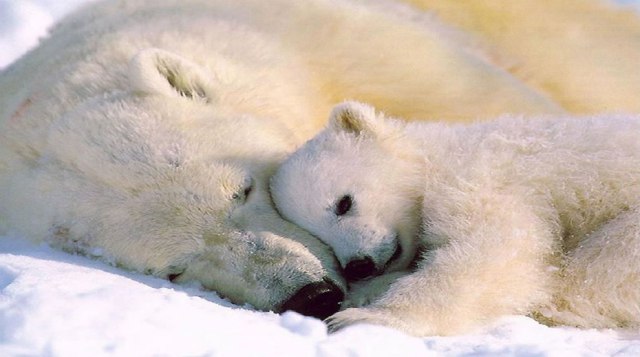
Image: http://www.lovethesepics.com
He wasn’t feeling too good so I carried his breakfast through into the lounge where he was watching TV and sat down with him on the sofa for five minutes. He was watching a wildlife programme and, as the small polar bear weakened and failed through starvation, I watched through a veil of tears. My own son beside me, it was easy to recognise the encouragement in the way the ursine mother tried to raise her cub to his feet. That was bad enough. Realising the little one could no longer stand she and his twin snuggled up with the dying cub, sharing warmth and comfort; nuzzling him gently and curled around the little body. Just waiting until the end. I can’t even write it without tears.
There was the debate about how the camera crew could simply stand by and watch, filming the tragedy, but the general…
View original post 1,112 more words
Share this:

Share this:

Poignant stuff from Stu.
Share this:

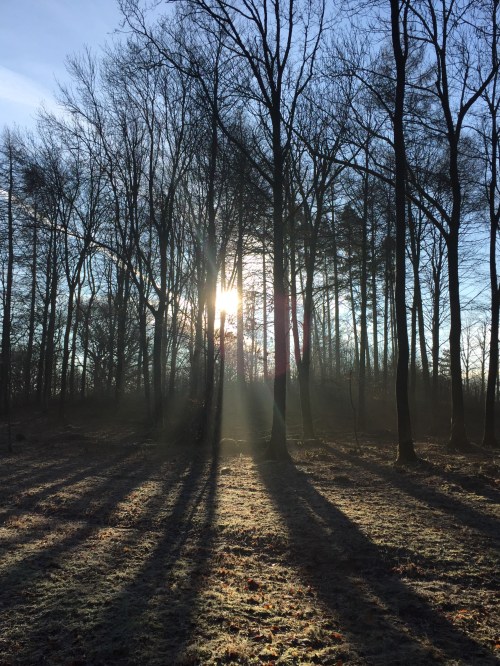
You may come this way a thousand times
And sense that space of place unfold
But it will never speak to you
Until your will is mine
—
Or watch your boots leave prints
A lifetime long
But they will never lead to you
Until your will is mine
—
Or trace the rising sun
Through trees that hiss and leaves that turn
But their eternal fragrance will a mystery stay
Until your will is mine
—
So, stop and seize this gifted morn
Where Winter light warms colder skin
Then give to me the life not yours
And let your will, embraced, be mine…
©Copyright image and verse Stephen Tanham 2017.


 Sun in Gemini
You must be logged in to post a comment.