


The past few days have seen us up to our eyeballs in research, planning and speculation. With the December Living Land workshop less than two weeks away, this was our last chance to get out in the field and check the details… so out into the fields and hills we went.
We were lucky with the weather, in spite of the frost that whitened the world. The chill of mid-November was mitigated by clear skies and a hint of sun on the coppery carpets of beech leaves. The emerald leaves of bluebells, reminding us that spring is just on the other side of winter, cluster thickly around stone and tree. Wherever we went, a robin seemed to be watching and busy squirrels worked frantically at secreting their winter hoard. And, wherever we ventured, odd and intriguing clues seemed to laugh at our blindness.

Places we have visited many times before…
View original post 357 more words
Share this:


And you did not
Grow up too soon
The cat and the bell
And the boys in the moon
⦿
The eyes that yearn
For one more tune
From the cat and the bell
And the boys in the moon
⦿
Must gracefully turn
To the quieter room
From the cat and the bell
And the boys in the moon
⦿
©Stephen Tanham
Share this:


‘To know, to dare, to will… and to keep silent’… this is a phrase heard within many branches of the Mysteries and one which echoes facets of the labyrinthine journey undertaken by those of us who work within them. It is an old saying, but none the worse for that, as much of the magical and mystical tradition is rooted in history. It contains much wisdom… a veritable treasure trove that responds to exploration by the meditative mind.
When we were setting up the Silent Eye, talking about how we could encapsulate something of the essence of the School’s ethos in a few words, that phrase was the starting point for a discussion. The school is a place where we ensure that ‘the heart and the head drink from the same stream’. It is just as easy to get lost in soggy sentimentality as it is to bury oneself in…
View original post 407 more words
Share this:

 Image: Pixabay
Over the past few days, social media has been awash with disgust at the note left on an ambulance window when the paramedics had been called to a dying man. It was a critical and time sensitive occasion and the patient died later in hospital. The man who had left the note, which read ‘you may be saving lives, but don’t park your van in a stupid place and block my drive’, has since called his own behaviour ‘monstrous’.
I am not going to join the viral chorus of blame and repugnance for this act. It may be an isolated incident, but I think it is symptomatic of something our world now suffers from on a much wider scale. The culture of ‘me’.
This is not about individuals, rather it is the baseline of Western society. People, as individuals, still care, still go out of their way…
View original post 546 more words
Share this:


+ #SE18Characters, #Silenti, esoteric psychology, Jewel in the Claw, Mystery Schools, Silent Eye School, Silent Eye Workshops, Spirituality, The Jewel in the Claw, Understanding Fear
A Woman of Power and Substance
by Steve Tanham

It is the winter of 1584. The well-dressed woman watches as her fourth husband storms out of the dining hall at their present home, Tutbury Castle, in Staffordshire.
In the corner of the room sits a younger woman, now smiling at the angry departure of the man of the house–the sixth Earl of Shrewsbury. The seated woman with the secretive smile has good reason to be pleased at the turn of events. She has been a captive in this house for nearly fifteen years and used that time to create mayhem with sexual politics. Her name is Mary, better known as Mary, Queen of Scots. Her fortunes are diminishing by the month.. But that hasn’t stopped her using human emotions, particularly jealously, to drive a deadly wedge between the Count and Countess, her gaolers.
The lady of the house is already one of England’s richest women, in fact she will shortly be second only in wealth to the Sovereign – Queen Elizabeth I. She already owns the Chatsworth House estate; fabled, even then, for its beauty and gardens. She hates the partial ruin that is Tutbury Castle, but, for that fifteen year period, has done her duty by her husband and her Queen in keeping watch over the exiled Scottish monarch, who is a prisoner in their castle. In this way, and, astutely, at the expense of the Shrewsburys, Queen Elizabeth has kept her biggest problem at arm’s length.
The tall woman staring at the slammed door through which, metaphorically, her beloved husband has passed for the last time, is the Countess of Shrewsbury. She has inherited the goodwill and wealth of three of her previous spouses. She has over ten children from those marriages; some of whom will end up with a future, though distant, ‘claim’ to the throne.
She has led an interesting life, to say the least. On this angry morning, engineered by the jealousy deliberately created by the royal prisoner, Bess of Hardwick, as she is better known, vows that, within the year, she will return to her beloved Chatsworth and pick up the threads of her old life, again…
Earl and Countess Shrewsbury have had to keep moving around the many houses owned by the Earl, as Mary’s life is constantly being manipulated by those who would use her as a figurehead to overturn the fledgling Protestant religion, instigated by Queen Elizabeth’s father, Henry VIII.
Born in 1527, Bess was the fourth daughter in a family of four girls and one boy. Their father died when she was young, but he managed to leave a Will which included a small dowry for the four girls.
Young Bess, aged twelve years, entered service for a great Derbyshire family, Sir John and Lady Zouche, (after whom the town of Ashby de la Zouche is named) whose home was Codnor Castle, in Derbyshire. Codnor was first mentioned in the Doomsday Book of 1086 and was at that time the property of William Peveril of Castleton, in the High Peak.


Despite being courted by several prominent suitors, Bess did not remarry until 1568, when she was betrothed to George Talbot, Sixth Earl of Shrewbury, and one of the senior figures in Elizabeth’s hierarchy. Bess became Countess of Shrewsbury. It was into this marriage–a happy one in the beginning–that the disruptive presence of Mary Queen of Scots was to intrude, though Bess and Mary were friends for a long time before the marriage eventually crumbled.
George Talbot was in poor health and died in 1590. Queen Elizabeth was fond of the couple and had made several attempts to reconcile them, but the ‘Mary’ years had taken their toll. Perhaps Elizabeth felt some guilt over this; but, if she did, it did not prevent her from imprisoning Bess in the Tower on two occasions when the Queen felt this other powerful woman was advancing her own cause at the expense of the Crown’s.
At sixty-three, Bess was now Dowager Countess of Shrewsbury and would not marry again. She devoted the remainder of her life to the welfare of her many children, getting into trouble several times because of their distant claims to the throne.
Bess of Hardwick died on 13 February 1608, aged 81. She outlived Queen Elizabeth by five years. She is buried in Derby Cathedral, where there is an elaborate monument to her life and achievements.
How does all this relate to our mystical workshop in April 2018, The Jewel in the Claw?
Bess was an unusual figure, being so successful in a man’s world which had intensely patriarchal values.
In our story, when the company arrives at NonSuch palace, they are shown into a newly-prepared room, one in which a deadly search for the truths of the age will be played out on many levels: intellectual, emotional, religious and magical. Outside of the Queen’s own mind, no-one else in the room is aware of what is to follow, not even Bess…
What confronts the participants in the centre of the space is a huge game board consisting of black and white squares…

Each side of the board has its own symbolism and its own champion. In our five-act magical drama, Bess has a very special relationship with the Queen, one in which her grasp of the ‘common touch’ can be used to royal advantage…
The Silent Eye’s spring workshop, April 2018 is: “The Jewel in the Claw’. The jewel is the emerging spirit of tolerance that Elizabeth, the self-styled virgin-queen, engendered; the claw is the nature of the forces of ignorance that still plague us in the twenty-first century every bit as much as they did in 1588, the year that the mighty Spanish Armada was defeated by a combination of English naval courage and our equally fabled weather; and Elizabeth I finally achieved a degree of security.

The Silent Eye has produced dramatic mystical workshops since its inception in 2013, but this is a break from tradition, and will stick closely to the formula of an actual Elizabethan production, letting the acts of the play tell the deeper story. There is no formal audience, of course. We, the players, play to each other, and in doing so invoke the desired depth of psychological and spiritual interaction.
If you’ve never been to such an event before, don’t be over-faced by this heady agenda. There are always new people joining us, and we take great care to ensure they are comfortable. We do not expect our ‘actors’ to learn their lines! We all read from scripts – as though doing a final rehearsal, but the atmosphere is truly electric and you will find yourself working to bring your character to the greatest life you can give them! You will also find they stay with you for years afterwards…
Above all else it is always fun; and every year, come the Sunday farewell lunch, those attending do not want to go home and end that living link with a body of experience and aspiration that they have helped create…
We can honestly say that the workshops become a living thing, formed and sustained in the minds and hearts of those attending. Come and join our ‘merry band’ and you’ll want to come back.
Places are still available for ‘The Jewel in the Claw’. 20-22 April, 2018. The average price is approximately £250, fully inclusive of all meals and accommodation. You will struggle to find a better value weekend, anywhere.
The weekend workshop will be held at the lovely Nightingale Centre, Great Hucklow, near Buxton, in the heart of the Derbyshire Dales at a wonderful time of year – the spring.
You can download the pricing and booking form here:
Other posts in this series cover:
John Dee, Sir Walter Raleigh, Sir Philip Sidney
Robert Dudley, Earl of Leicester
For more information email us on rivingtide@gmail.com
Image: Composite of original artwork by the author plus a portrait of Bess of Hardwick, courtesy of Wikipedia, CC by 3.0, Public Domain.
Stephen Tanham is a director of the Silent Eye School of Consciousness, a not-for-profit organisation that helps people find the reality and essence of their existence via low-cost supervised correspondence courses.
His personal blog, Sun in Gemini, is at stevetanham.wordpress.com
©️Stephen Tanham.
Share this:

Share this:


No passing bells
For those fine fathers
Who dodge and draft
The deaths of others
⦿
The weapon makers’ art
Is mute, no finer part
Than see the sons of heaven
Torn apart
⦿
©Copyright Stephen Tanham
Share this:

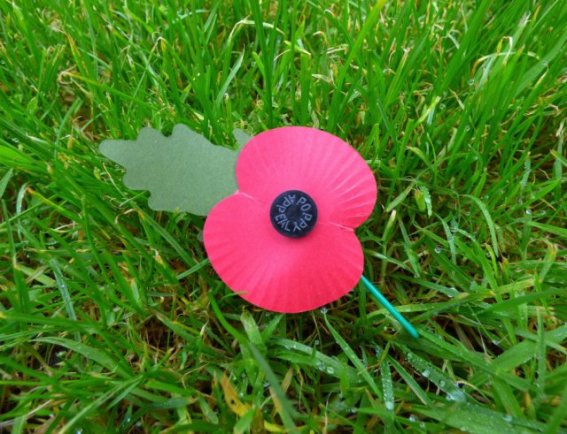
Paper poppies bloom, as fragile as the lives they represent. Every year it is the same, I try to find some way of saying what is in my heart and the words will not come. I was not there, I have no right to speak of war and its atrocities. I have not seen it with my own eyes. I have never aimed a gun at another human being and been faced with the choice whether to kill or be killed. I have not tried to sleep in cold mud made from the earth of a foreign land mingled with the blood of my comrades. I have not lost my child to war.
I have no right to speak, but nor have I the right to remain silent when the price of my freedom to speak was so high. I have a duty to my own conscience and to all…
View original post 1,171 more words
Share this:

Share this:

Share this:


SEVEN DAYS. SEVEN BLACK AND WHITE PHOTOS OF YOUR LIFE.
NO PEOPLE. NO EXPLANATION. CHALLENGE SOMEONE NEW EACH DAY’
My thanks to Sue Vincent for inviting me.
In turn, I invite anyone who wishes to join the challenge.
Thank you
Steve
Share this:

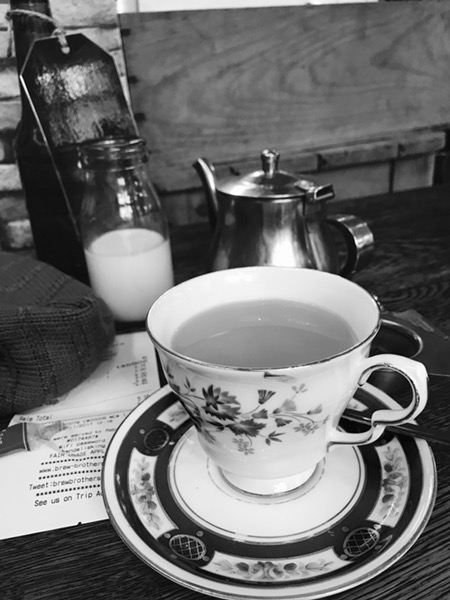
SEVEN DAYS. SEVEN BLACK AND WHITE PHOTOS OF YOUR LIFE.
NO PEOPLE. NO EXPLANATION. CHALLENGE SOMEONE NEW EACH DAY’
My thanks to Sue Vincent for inviting me.
In turn, I invite anyone who wishes to join the challenge.
Thank you
Steve


 Sun in Gemini
You must be logged in to post a comment.