
Share this:


+ #Silenti, esoteric psychology, Jewel in the Claw, Mystery Schools, Silent Eye School, Silent Eye Workshops, Spirituality, Understanding Fear
The Deadly Edge of Love (part one)
by Steve Tanham

They were both young, though he was a year older; beyond childhood but not yet adults, not in the way that their lives would soon force them to be…
They had been together since their early years, and what they were experiencing, now, would, on an emotional level at least, bind them together for life. How much more frightened could you be than to be locked up in the place from which your mother was led to her execution? In the darkness, she tells him, that she will never marry, should they survive. It is a sentiment and an intent shared with one she feels deeply for; and it will carve a signature of longing throughout his illustrious life.
They will never marry, though he will try to change her mind. They may have been lovers, but the risks to her kingdom of England and Ireland would have been grave. Better, I think, to consider them as lovers of the heart, as two intense and intelligent people who had to come to terms with an England and Ireland changing faster than anyone could have imagined…
Robert Dudley, the future Earl of Leicester, and Elizabeth Tudor, the future queen of England, were prisoners in the Tower of London. It’s 1554, and England was about to change, forever.
It is as though they were meant to be close. They had been tutored, together, by one of England’s best minds – Roger Ascham – at the original Hatfield house – one of Henry VIII’s many homes. In Tudor times, women were not allowed to enter university. Robert Dudley, son of the Duke of Northumberland, may have been there to lend companionship to the royal daughter, who was unlikely to ascend to the throne, given that her brother, Edward VI, King Henry’s son and heir, was shortly to be crowned.
Edward died in 1553, age sixteen, after just six years as regent. He never reached his majority. Because of his age, a Regency Council had been established to guide his steps. Despite his short reign, Edward was able to further the cause of Protestantism in England, becoming even more determined than his father, and without the latter’s ulterior motives.
The second head of that Regency Council was Robert Dudley’s father, John Dudley, who was then Duke of Northumberland, tasked with controlling unrest north of the border. John Dudley was a formidable military man and had defended England well during the reign of both Henry and Edward. He had also recognised the future importance of the navy, leading to the establishment of the Naval Dockyard at Chatham. John Dudley used his unequalled power to entrap the Duke of Norfolk – a strong Catholic supporter. In 1551, The Duke of Norfolk (Edward Seymour) was executed for conspiracy.
John Dudley, Robert’s father, was now unchallenged in his authority and had the ear of the monarch. But the young King Edward’s health was poor. John Dudley had to act to prevent the return of Catholic political power – in the form of Princess Mary.
He did this, in 1553, by persuading the young king to sign a document excluding both Mary (Catherine of Aragon’s daughter by Henry) and Elizabeth (Anne Boleyn’s daughter) from inheriting the throne, on the basis of their ‘illegitimacy’. The throne was to go to Lady Jane Grey, ironically recently married to Guildford Dudley, fourth son of John Dudley.
The political complexity of the times meant that Robert Dudley and Elizabeth’s fates were intertwined in so many ways. But, whereas Elizabeth would leave the Tower to be exiled to the comfort of one of the royal homes in Hertfordshire, Robert Dudley was to leave to a much more uncertain fate.
John Dudley’s attempt to control England failed. He never had the ‘common touch’ and Princess Mary fled to East Anglia – where John Dudley was very unpopular. His son, Robert, was recruited to take King’s Lynn and proclaim Lady Jane Grey as Queen; but by then, despite John Dudley suppressing the news of King Edward’s death for three days, the public had rallied around Henry’s eldest daughter and John Dudley was arrested and executed for treason, leaving Elizabeth and Robert Dudley at the mercy of the new queen.
Both survived the Tower. Robert Dudley fought for Mary’s forces (and for Catholic Spain) against the French and was restored to courtly favour, though the Northumberland estate was decimated. By then, new forces, orchestrated by the likes of William Cecil were taking every opportunity to re-establish Protestant England. After Mary reinstated Rome’s ecclesiastical authority over England in 1554, her popularity plummeted. The following four years earned her the nickname of ‘Bloody Mary’, as scores of Protestant leaders were persecuted; but, in fairness, that was no different from the life of Catholics under Edward. In July 1554, Mary married Charles II of Spain, and England looked set for a Catholic future.
England’s prosperity was waning. Her ships could no longer plunder the Spanish treasure ships, and Charles II was constantly away on his military campaigns abroad – on behalf of Spain, not England and Ireland. Aware of her failing health, and the failure of her marriage to the power of Spain, Mary reinstated Elizabeth as one of her last acts.
Queen Mary I died in November, 1558, in the Palace of Saint James. She was forty-two years old.
Elizabeth inherited the crown and was then free to take up her relationship with Robert Dudley, who had been her companion in those darkest of days.
How does all this relate to our mystical workshop in April 2018, The Jewel in the Claw?
In our story, when the company arrives at NonSuch palace, they are shown into a newly-prepared room, one in which a deadly search for the truths of the age will be played out on many levels: intellectual, emotional, religious and magical. Outside of the Queen’s own mind, no-one else in the room is aware of what is to follow.
What confronts the participants in the centre of the space is a huge game board consisting of black and white squares…

Each side of the board has its own symbolism and its own champion. In our five-act magical drama, Dudley is selected by the Queen to be one of her key players. He finds that he knows many of the others present – and has been an artistic sponsor of others, such as the poet Edmund Spenser, the writer of the Faerie Queen – based on Elizabeth, herself, and newly published. What does his Queen want him to do in this complex maze of relationships and potential confrontations? The answer may tax him more than anything she has ever asked…
The Silent Eye’s spring workshop, April 2018 is: “The Jewel in the Claw’. The jewel is the emerging spirit of tolerance that Elizabeth, the self-styled virgin-queen, engendered; the claw is the nature of the forces of ignorance that still plague us in the twenty-first century every bit as much as they did in 1588, the year that the mighty Spanish Armada was defeated by a combination of English naval courage and our equally fabled weather; and Elizabeth I finally achieved a degree of security.
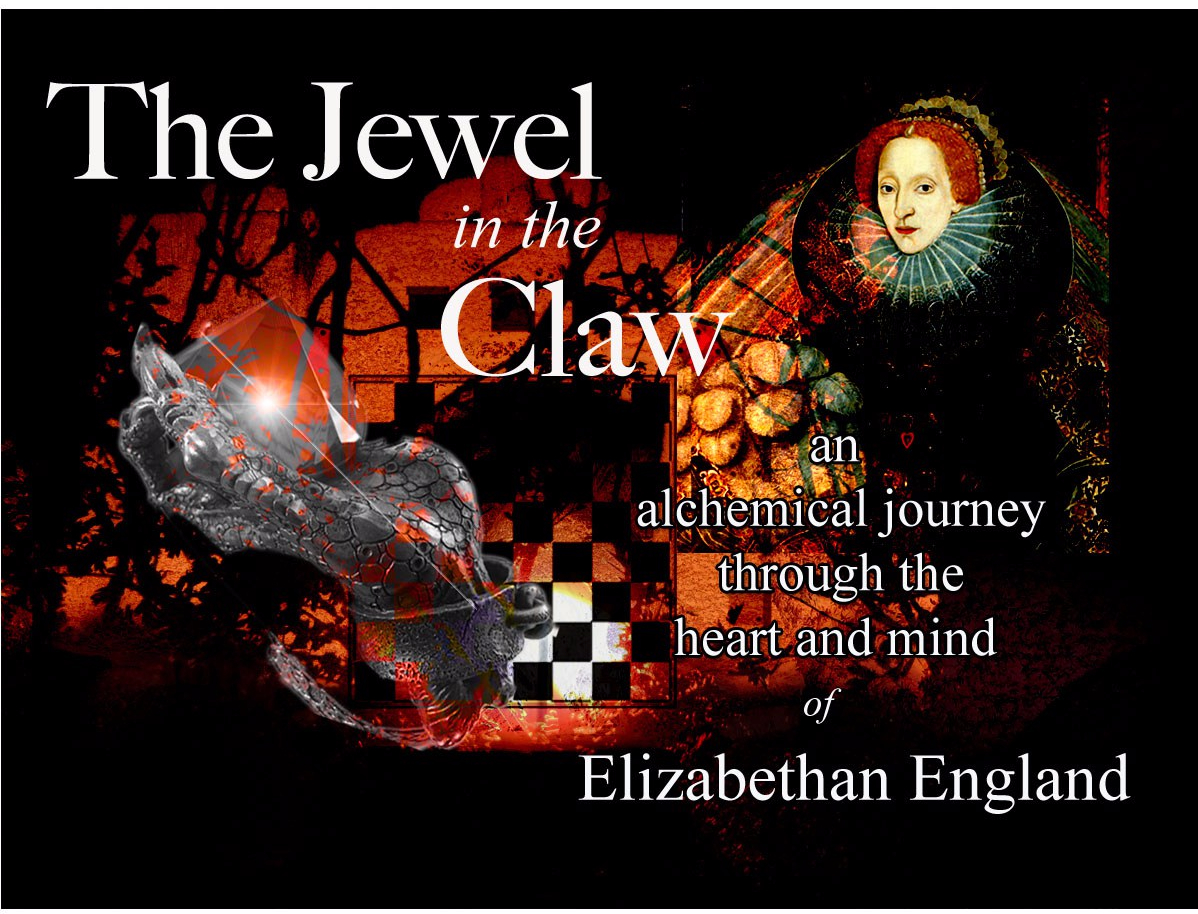
The Silent Eye has produced dramatic mystical workshops since its inception in 2013, but this is a break from tradition, and will stick closely to the formula of an actual Elizabethan production, letting the acts of the play tell the deeper story. There is no formal audience, of course. We, the players, play to each other, and in doing so invoke the desired depth of psychological and spiritual interaction.
If you’ve never been to such an event before, don’t be over-faced by this heady agenda. There are always new people joining us, and we take great care to ensure they are comfortable. We do not expect our ‘actors’ to learn their lines! We all read from scripts – as though doing a final rehearsal, but the atmosphere is truly electric and you will find yourself working to bring your character to the greatest life you can give them! You will also find they stay with you for years afterwards…
Above all else it is always fun; and every year, come the Sunday farewell lunch, those attending do not want to go home and end that living link with a body of experience and aspiration that they have helped create…
We can honestly say that the workshops become a living thing, formed and sustained in the minds and hearts of those attending. Come and join our ‘merry band’ and you’ll want to come back.
Places are still available for ‘The Jewel in the Claw’. 20-22 April, 2018. The average price is approximately £250, fully inclusive of all meals and accommodation. You will struggle to find a better value weekend, anywhere.
The weekend workshop will be held at the lovely Nightingale Centre, Great Hucklow, near Buxton, in the heart of the Derbyshire Dales at a wonderful time of year – the spring.
You can download the pricing and booking form here:
(End Part One. The story of Elizabeth and Robert Dudley will be continued in part two)
Other posts in this series cover:
John Dee, Sir Walter Raleigh, Sir Philip Sidney
For more information email us on rivingtide@gmail.com
Image: Composite of original artwork by the author plus a portrait of Robert Dudley, Earl of Leicester, courtesy of Wikipedia, CC by 3.0, Public Domain.
Stephen Tanham is a director of the Silent Eye School of Consciousness, a not-for-profit organisation that helps people find the reality and essence of their existence via low-cost supervised correspondence courses.
His personal blog, Sun in Gemini, is at stevetanham.wordpress.com
©️Stephen Tanham.
/p><<<<
gt;
Share this:


We had forgotten
In the turning of the clock
In the slide to dark afternoon
Lay a deeper power
—–
We had forgotten
The power of the fire
The gift from the beginning
The reaction of intelligence
—–
And in the darkness
Around the fire
Held within the flames
We remembered
—–
©Stephen Tanham
Share this:

So beautiful.. reblogged from Pensivity

If my touch could ease your pain,
I’d never let you go.
If my tears could wash away your sorrow,
I’d cry forever.
If my song could give you peace,
I would sing from the rooftops.
I can see your torment,
How I wish I could banish it for all time.
All I have is my Love,
The essence of my being.
You are welcome to it.
It is freely given without condition.
May it soothe your soul,
May it keep you warm,
May it give you comfort.
I would do more …………
If I could.
Share this:


+ esoteric psychology, Jewel in the Claw, Mystery Schools, Silent Eye School, Silent Eye Workshops, Spirituality, Understanding Fear
An Arthur for Elizabeth?
by Steve Tanham
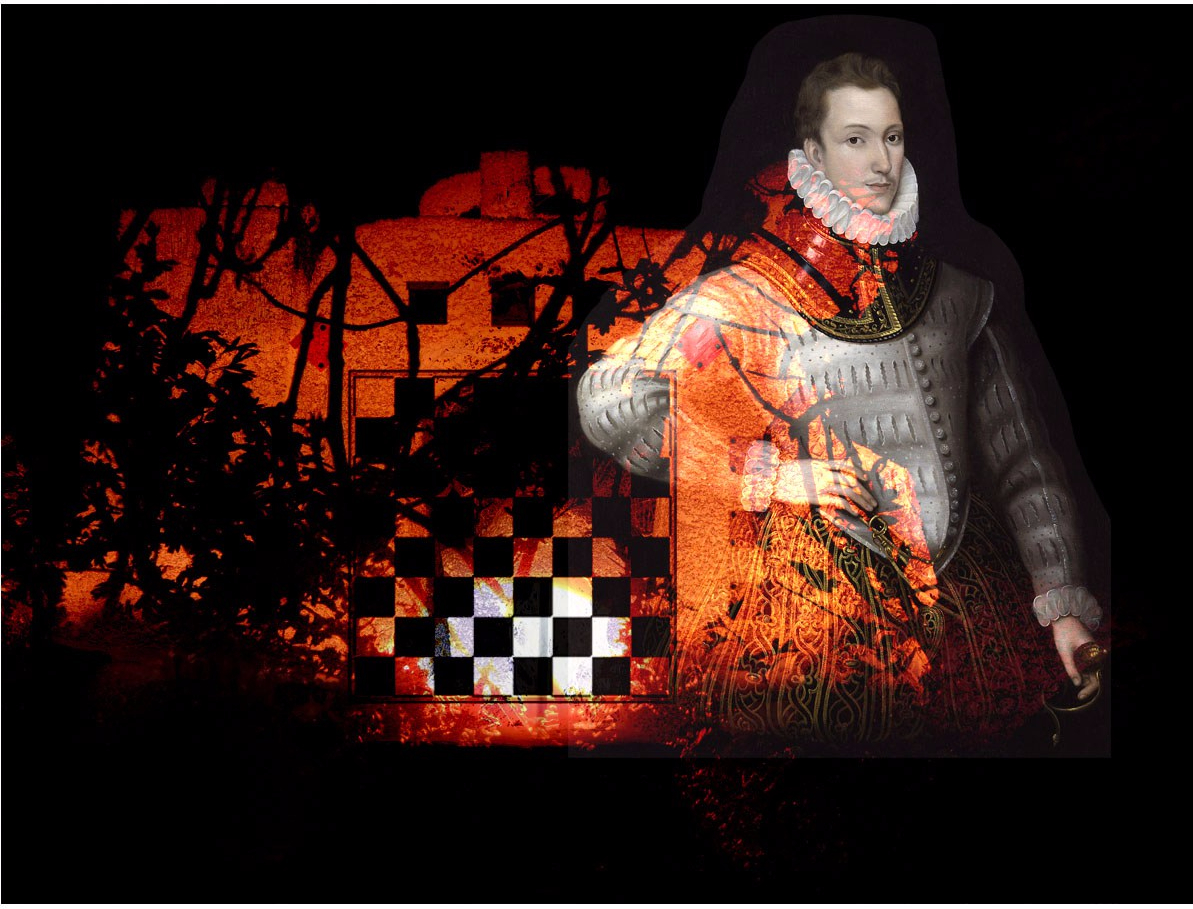
(Image: Sir Philip Sidney, Queen’s Champion. Original work – Author. Figure of Sir Philip Sidney from Wikipedia CC by Public Domain)
Philip Sidney was born into prosperity and with connections. He was the eldest son of Sir Henry Sidney and Lady Mary Dudley – making him a relative of the 1st Duke of Northumberland and the 1st Earl of Leicester, Robert Dudley.
He was educated at Shrewsbury School and Christ Church, Oxford.
If there was a man at Elizabeth’s court who epitomised the qualities of chivalry and courtly behaviour which were prized in the medieval foundations of that age, it was Sir Philip Sidney. In a life that was ended prematurely, he accomplished much, including distinction in the roles of solider, statesman and spy.
He became a favourite of Queen Elizabeth, who made him her Champion of the Lists; otherwise known as jousting, which had been kept alive by Elizabeth’s father, Henry VIII, but was largely ceremonial in nature, in an age where guns were taking over the rituals of war. It was, though, a considerable honour and showed the depth of affection in which he was held by the queen.
His life ended prematurely at the age of thirty-two when he was wounded in a skirmish with a group of Spanish soldiers in Zutphen, the Netherlands. Ironically, he shouldn’t have been there. He had been planning, covertly, to join Sir Francis Drake on one of his expeditions, but his intentions were royally uncovered. Elizabeth was reluctant to let him travel too far – a treatment shared with Sir Walter Raleigh – and, instead, had him sent to fight the Spanish forces intent on crushing Flemish Protestantism. It is a twist of fate that, had he sailed with Drake, he would likely have been safe. In obeying the queen, he was wounded and died of gangrene from an infected thigh wound.
Elizabeth I’s England had lost one of its favourite sons.
His funeral was a huge event and nearly bankrupted his father in law, Sir Francis Walsingham, Elizabeth’s spymaster.
It has been received wisdom that the Elizabethan age was built, entirely, on medieval foundations. But recent studies of the breadth and influence of the early sciences of the era are leading to a different view. The Elizabethan age is increasingly seen as one of new endeavours, and this typified in the contrasting side of Sir Philip Sidney’s life. As well as being a soldier, he was a poet, critic, and nurturer of the poetic arts.
Shakespeare did not know Sidney, but he built on his written forms – which, themselves, perpetuated the techniques of his Italian idol, Petrach. Sidney formed the poetic bridge between ancient writings and the expanding world of Elizabeth’s England, a world that perfected its art in Shakespeare’s sonnets – written, of course, in English.
Even less well-known is the historical fact that Philip Sidney trained in what we would now call ‘magic’ under Dr John Dee, the Queen’s mathematician, astrologer, and later, alchemist. In so doing , he became a member of a secretive circle of enquirers into the esoteric, centred on his uncle, Robert Dudley, Earl of Leicester, who had the closest romantic ties to Elizabeth for most of their often-shared lives.
In 1583 Sidney made a visit to Oxford University with the celebrated Italian esotericist Giordano Bruno, who subsequently dedicated two books to him. Bruno was an arrogant man, though a brilliant philosopher. His endorsement and philosophical extensions to Copernicus’ sun-centric cosmology was soon to lead to his imprisonment, torture and eventual death at the hands of the Vatican inquisitors. To be seen openly with him anywhere other than England would have marked Sidney for the special attention from the papist forces. The Pope had already excommunicated Queen Elizabeth in 1570.
Poetically, Sir Philip Sidney was the English inheritor of a great tradition.
There are some ideas which are of their time and take root, having a rippling effect for centuries beyond, before they pass into folklore, where they simmer, like the memory of a lost and beloved friend, just below consciousness.
The ideals of Courtly Love were one such example. The origin of Courtly Love was attributed to Eleanor of Aquitaine whose cultural influence on both France and England was considerable. She married Henry II and, after their separation, Louis VII. Her court at Poitiers in south-west France was said to been centred on a Court of Love in which matters of the heart were given final judgments.
Courtly Love was born in the ages of the Troubadours – those mysterious balladeer poets of knightly class who wandered through European society in the 12th and 13th centuries, singing and/or reciting tales of courtly love and noble purpose. They were, without doubt, mystical teachers.
Chretien de Troyes was himself a trouvère (a troubadour equivalent from the north of France) and assembled and deepened what became the Arthurian mythos. His work influenced writers, not to mention mystics, for centuries afterwards.
Poetically, Sir Philip Sidney was directly in this line of received wisdom and culture. He lamented the dearth of good poets in England and did all he could to foster their development. He was a friend of Edward Spenser (as was Raleigh) and Christopher Marlowe.
We can speculate on his history but nothing reveals the soul of a person like their own writings. Here is a link to sonnet 63 from Sidney’s work: Astrophil and Stella, quoted from the excellent Poetry Foundation.
O Grammar rules, O now your virtues show;
So children still read you with awful eyes,
As my young Dove may in your precepts wise
Her grant to me, by her own virtue know.
For late with heart most high, with eyes most low,
I crav’d the thing which ever she denies:
She lightning Love, displaying Venus’ skies,
Least once should not be heard, twice said, No, No.
Sing then my Muse, now Io Pæan sing,
Heav’ns envy not at my high triumphing:
But Grammar’s force with sweet success confirm,
For Grammar says (O this dear Stella weigh,)
For Grammar says (to Grammar who says nay)
That in one speech two Negatives affirm.
How does all this relate to our mystical workshop in April 2018, The Jewel in the Claw?
In our story, when the company arrives at NonSuch palace, they are shown into a newly-prepared room, one in which a deadly search for the truths of the age will be played out on many levels: intellectual, emotional, religious and magical. Outside of the Queen’s own mind, no-one else in the room is aware of what is to follow.
What confronts the participants in the centre of the space is a huge game board consisting of black and white squares…
Each side of the board has its own symbolism and its own champion. In our five-act magical drama, Sidney is selected by the Queen to be one of her Champions. To do this, he must represent the house of Magic, a role to which hints that the queen knows more about his activities than he thinks. But he quickly learns that he may be the only one in the room capable of defending Dr John Dee, now facing his doom as the royal plan unfolds…
At the start of the game, the Queen asks them all to help her answer a single question, revealed only when she begins speaking. The purpose of the Questioning at NonSuch, as these few days will come to be called, is to provide the answer, no matter how demanding the process…
The Silent Eye’s spring workshop, April 2018 is: “The Jewel in the Claw’. The jewel is the emerging spirit of tolerance that Elizabeth, the self-styled virgin-queen, engendered; the claw is the nature of the forces of ignorance that still plague us in the twenty-first century every bit as much as they did in 1588, the year that the mighty Spanish Armada was defeated by a combination of English naval courage and our equally fabled weather; and Elizabeth I finally achieved a degree of security.
The Silent Eye has produced dramatic mystical workshops since its inception in 2013, but this is a break from tradition, and will stick closely to the formula of an actual Elizabethan production, letting the acts of the play tell the deeper story. There is no formal audience, of course. We, the players, play to each other, and in doing so invoke the desired depth of psychological and spiritual interaction.
If you’ve never been to such an event before, don’t be over-faced by this heady agenda. There are always new people joining us, and we take great care to ensure they are comfortable. We do not expect our ‘actors’ to learn their lines! We all read from scripts – as though doing a final rehearsal, but the atmosphere is truly electric and you will find yourself working to bring your character to the greatest life you can give them! You will also find they stay with you for years afterwards…
Above all else it is always fun; and every year, come the Sunday farewell lunch, those attending do not want to go home and end that living link with a body of experience and aspiration that they have helped create…
We can honestly say that the workshops become a living thing, formed and sustained in the minds and hearts of those attending. Come and join our ‘merry band’ and you’ll want to come back.
Places are still available for ‘The Jewel in the Claw’. 20-22 April, 2018. The average price is approximately £250, fully inclusive of all meals and accommodation. You will struggle to find a better value weekend, anywhere.
The weekend workshop will be held at the lovely Nightingale Centre, Great Hucklow, near Buxton, in the heart of the Derbyshire Dales at a wonderful time of year – the spring.
You can download the pricing and booking form here:
For more information email us on rivingtide@gmail.com
Image: Composite of original artwork by the author plus a portrait of Sir Philip Sidney courtesy of Wikipedia, CC by 3.0, Public Domain.
Stephen Tanham is a director of the Silent Eye School of Consciousness, a not-for-profit organisation that helps people find the reality and essence of their existence via low-cost supervised correspondence courses.
His personal blog, Sun in Gemini, is at stevetanham.wordpress.com
©️Stephen Tanham.
/p>
Share this:


⦿
I had not thought to think on death
Until the line of light grew thin
Until the narrow, fragile band
Was all there was of what had been
⦿
There was a time I had the Earth
Where ‘now’ embraced potential
Where energy flowed free and fast
My will the blueprint elemental
⦿
Until the bog and fog grew thick
And weeds, untilled, grew mighty
But in what soil did darkness toil
That closed horizon’s bounty?
⦿
To find my gaze was in the dirt
The crop and maze of liars
But shock propels and dark dispels
When boundless sky my eye aspires
⦿
©Copyright Stephen Tanham
Share this:


 *
*
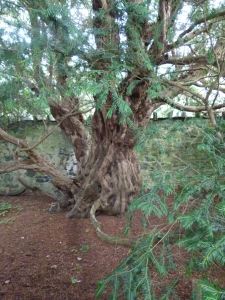
A berry long time ago…
*
 *
*
Before Worshippers…
*
 *
*
And Scholars…
*
*
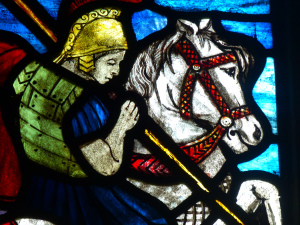
And Monarchs…
*
*
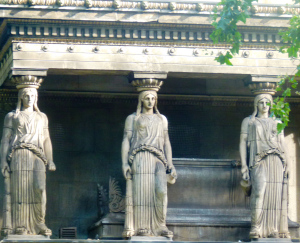
And Warriors…
*
 *
*
And Romans…
* *
*
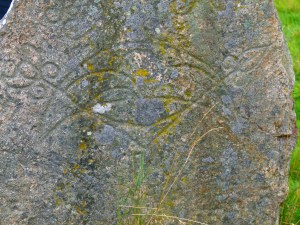
And Scorts…
*
 *
*
And Picts…
*

*
The Iron Age…
*
 *
*
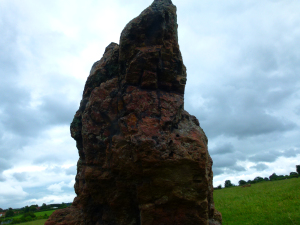
The Bronze Age…
*
*
And The Stone Age…
*
 *
*
This tree was planted…
*
 *
*
And it is still alive today.
Share this:


 I was up long before dawn…yesterday was going to be another busy day on the back of several busy weeks interspersed with illness. I have scarcely known whether I was coming or going and the bags have seldom been unpacked for long. Not that I am complaining…I wouldn’t change it for the world… but I am looking forward to a little of what passes for normality for a while.

There were kites crying as the sun rose and I went out to watch, in spite of the small dog’s continued absence. It had been too late to bring her home when I had finally arrived the night before. I had come home to mayhem… a couple of hundred miles commute to work was followed by finding myself locked out of email. The account had been compromised, emails deleted, strange contacts added and the whole thing left me with a series…
View original post 573 more words
Share this:

Share this:


+ esoteric psychology, Jewel in the Claw, Mystery Schools, Silent Eye School, Silent Eye Workshops, Spirituality, Understanding Fear
The Adventurer’s Hidden Magic
by Steve Tanham

“Strike man, strike!”
Those were the last words of Sir Walter Raleigh, spoken to an executioner who was taking his time, at the end of one of the most colourful lives of the whole Elizabethan era. The attitude–not of defiance, but of expediency–typified this adventurer’s life.
Raleigh had charmed Elizabeth I, but failed to do so with her successor, James I of England, who inherited the throne on the death of the childless ‘Virgin Queen’ in 1603. Despite the religious horrors of her early years, Elizabeth was pragmatic about religion, and actively sought to calm the religious stresses that the ‘bloody reign’ of her half-sister, Queen Mary I, had unleashed.
Raleigh was born into a strongly Protestant and well-connected family in Devon. Their lives had been blighted by religious persecution, and the aspiring Raleigh fitted Elizabeth’s cause well. As a young soldier of seventeen, he began a three year period of fighting for the Hugenots in France, an apprenticeship that was to fashion his outer persona as a handsome, gallant and efficient soldier.
An early academic start at Oxford University was cut short, and he never finished his degree. Instead, he later studied at the Inns of Court in London, though, at the end of his life, he denied he had ever studied law. He had become an accomplished soldier, and rose to fame as part of Elizabeth’s force in Ireland, which was tasked with putting down the frequent rebellions, which were stirred from afar. The Pope had sanctioned a series of incursions into southern Ireland, with the intention of supporting its Catholic traditions, and creating insurrection against England.
Raleigh served as a junior officer in the infamous Siege of Smerwick on the tip of the Dingle peninsula. Hundreds of Spanish and Italian soldiers had been landed there by boat and had prepared a hasty fortification using the ruins of a stone-age settlement. The English forces were soon on the scene. Messengers, sent earlier by the English, had been massacred and hung up, as trophies. Lord Grey, Elizabeth’s Deputy of Ireland, surrounded the invaders and began the Siege of Smerwick, which led to the brutal massacre of the six hundred invaders.
It is likely that, while serving under Lord Grey, Raleigh met Edmund Spenser–soon to be one of the most famous of the Elizabethan poets. Spenser was serving as military secretary to Lord Grey. His most famous poem, The Faerie Queen, was later presented at Court to Elizabeth, to whom it was dedicated. Raleigh, by then elevated in rank and rich in confiscated Irish estates given to him by the Queen, is likely to have been one of the sponsors of this introduction, since the two were neighbours in Munster.
Raleigh was a dazzling courtier, and renowned for his sparkling wit and quick-mindedness. Elizabeth was twenty-four years his senior, and, though no-one’s fool, she enjoyed his attentions and his intelligence. Once within the royal arc, Raleigh rose rapidly in her favour, and was knighted in 1585 at the age of thirty-one.
In 1591, in what the Queen was to see as an act of betrayal, Raleigh secretly married one of her ladies-in-waiting, Elizabeth ‘Bess’ Throckmorton. She was pregnant with their child at the time, though the child died of plague in 1592. Bess returned to her duties with the Queen, who soon discovered what had happened. In her fury, the Queen had both Raleigh and Bess imprisoned in the Tower of London.
But Elizabeth needed his expeditionary expertise and released him to oversee an attack on the Spanish coast. The fleet was recalled at the last minute, but Raleigh had already captured a rich merchant ship, the Madre de Deus, sailing off the Azores. On his return, Elizabeth sent him back to the tower to remind him of her authority over his life. She released him shortly afterwards and allowed him to become a member of Parliament, where he soon established a reputation as an eloquent speaker on religious and naval matters. Bess had also been forgiven and resumed her duties at the Queen’s side.
For the rest of their lives, Raleigh and his wife remained devoted to each other. They had two more sons.
Elizabeth died in 1603. Raleigh did not get on with the more cautious James I, who was fervent and dogmatic in his religious beliefs and suspicious that the Queen’s former favourite was one of a new breed of ‘free-thinkers’; more allied to the world of knowledge than of God. Elizabeth had been keen to stay abreast of the emerging fields of what we would now call natural sciences, particularly where she could see advantage for her England. But James was more superstitious and frightened of anything that bordered on what he saw as magic, having been persecuted, he believed, by witches in Scotland.
Raleigh, along with Henry Percy, Earl of Northumberland, was a founder of a mysterious organisation known as The School of the Night… Under James, this was asking for trouble.
How does all this relate to our mystical workshop in April 2018?
In our story, when the company arrives at NonSuch palace, they are shown into a newly-prepared room, one in which a deadly search for the truths of the age will be played out on many levels: intellectual, emotional, religious and magical. Outside of the Queen’s own mind, no-one else in the room is aware of what is to follow.
What confronts the participants in the centre of the space is a huge game board consisting of black and white squares…
Each side of the board has its own symbolism and its own champion. In our five-act magical drama, Raleigh is selected by the Queen to be one of her Champions. To do this, he must represent the house of Adventure, a role to which he agrees he is suited. But only the Queen and one of her advisors knows the full pattern of the relationships which will unfold as each character shows their strengths… and their vulnerabilites.
At the start of the game, the Queen asks them all to help her answer a single question, revealed only when she begins speaking. The purpose of the Questioning at NonSuch, as these few days will come to be called, is to provide the answer, no matter how demanding the process…
We can speculate on his history but nothing reveals the soul of a person like their own writings. Raleigh’s life had many facets, including being a father, soldier, statesman, spy. philosopher and poet. The severity of his early life gave him little time for the fanciful. He loved poetry from an early age and was considered one of the finest poets of the day.
By way of an example, Christopher Marlowe, the Elizabethan playwright who was a contemporary of Shakespeare, was ten years younger than Raleigh. Raleigh considered Marlowe’s famous poem ‘The Passionate Shepherd’ to be hopelessly romantic and ungrounded. Below is a comparison of Raleigh’s notorious response to the original – The Nymph’s Reply to the Shepherd.
There is much to learn about the man from the subtleties in the verses, matched, here, to the original.
 The Silent Eye’s spring workshop 2018 is: “The Jewel in the Claw’. The jewel is the emerging spirit of tolerance that Elizabeth, the self-styled virgin-queen, engendered; the claw is the nature of the forces of ignorance that still plague us in the twenty-first century every bit as much as they did in 1588, the year that the mighty Spanish Armada was defeated by a combination of English naval courage and our equally fabled weather; and Elizabeth I finally achieved a degree of security.
The Silent Eye has produced dramatic mystical workshops since its inception in 2013, but this is a break from tradition, and will stick closely to the formula of an actual Elizabethan production, letting the acts of the play tell the deeper story. There is no formal audience, of course. We, the players, play to each other, and in doing so invoke the desired depth of psychological and spiritual interaction.
If you’ve never been to such an event before, don’t be over-faced by this heady agenda. There are always new people joining us, and we take great care to ensure they are comfortable. We do not expect our ‘actors’ to learn their lines! We all read from scripts – as though doing a final rehearsal, but the atmosphere is truly electric and you will find yourself working to bring your character to the greatest life you can give them! You will also find they stay with you for years afterwards…
Above all else it is always fun; and every year, come the Sunday farewell lunch, those attending do not want to go home and end that living link with a body of experience and aspiration that they have helped create…
We can honestly say that the workshops become a living thing, formed and sustained in the minds and hearts of those attending. Come and join our ‘merry band’ and you’ll want to come back.
Places are still available for ‘The Jewel in the Claw’. 20-22 April, 2018. The average price is approximately £250, fully inclusive of all meals and accommodation. You will struggle to find a better value weekend, anywhere.
The weekend workshop will be held at the lovely Nightingale Centre, Great Hucklow, near Buxton, in the heart of the Derbyshire Dales at a wonderful time of year – the spring.
You can download the pricing and booking form here:
Image: Composite of original artwork by the author plus a portrait of Sir Walter Raleigh courtesy of Wikipedia, CC by 3.0, Public Domain.

Stephen Tanham is a director of the Silent Eye School of Consciousness, a not-for-profit organisation that helps people find the reality and essence of their existence via low-cost supervised correspondence courses.
His personal blog, Sun in Gemini, is at stevetanham.wordpress.com
©️Stephen Tanham.
Share this:


When Winter’s call
Strips bare the wood
When Summer’s kiss
Is but a brood
Upon your heart
I will intrude
My lady solitude
~~~
When silent spell
Slows heartbeat’s time
And reaches deep
To chill the wine
Upon your lips
I will intrude
My lady solitude
~~~
To wait the green
And keening ride
That signals Spring
Begins its tide
Emergent green
We will extrude
From deep within your solitude
~~~
©Stephen Tanham
Share this:

 Thilo Frank’s Mirrored Room. Image google search, source unknown… appropriately
My son has an infinity mirror in his bedroom which startled the electrician who installed it. He thought it was ‘just’ an illuminated mirror and nearly fell through the imaginary black hole it creates when he switched it on to test it. Tiny LED lights are mirrored back into ‘space’. I take great delight in showing it to people… it always elicits the same surprise and delight, from child to adult, and it reminds me every time I see it of moment from my own childhood.
Standing between the two mirrors in the rather swish cloakroom of the store, I saw my reflection stretching, apparently, to infinity. I was fascinated by the fact that I could see myself from both the front and from the back… a view we seldom see. Not only myself, but others in the cloakroom and…
View original post 537 more words


 Sun in Gemini
You must be logged in to post a comment.