
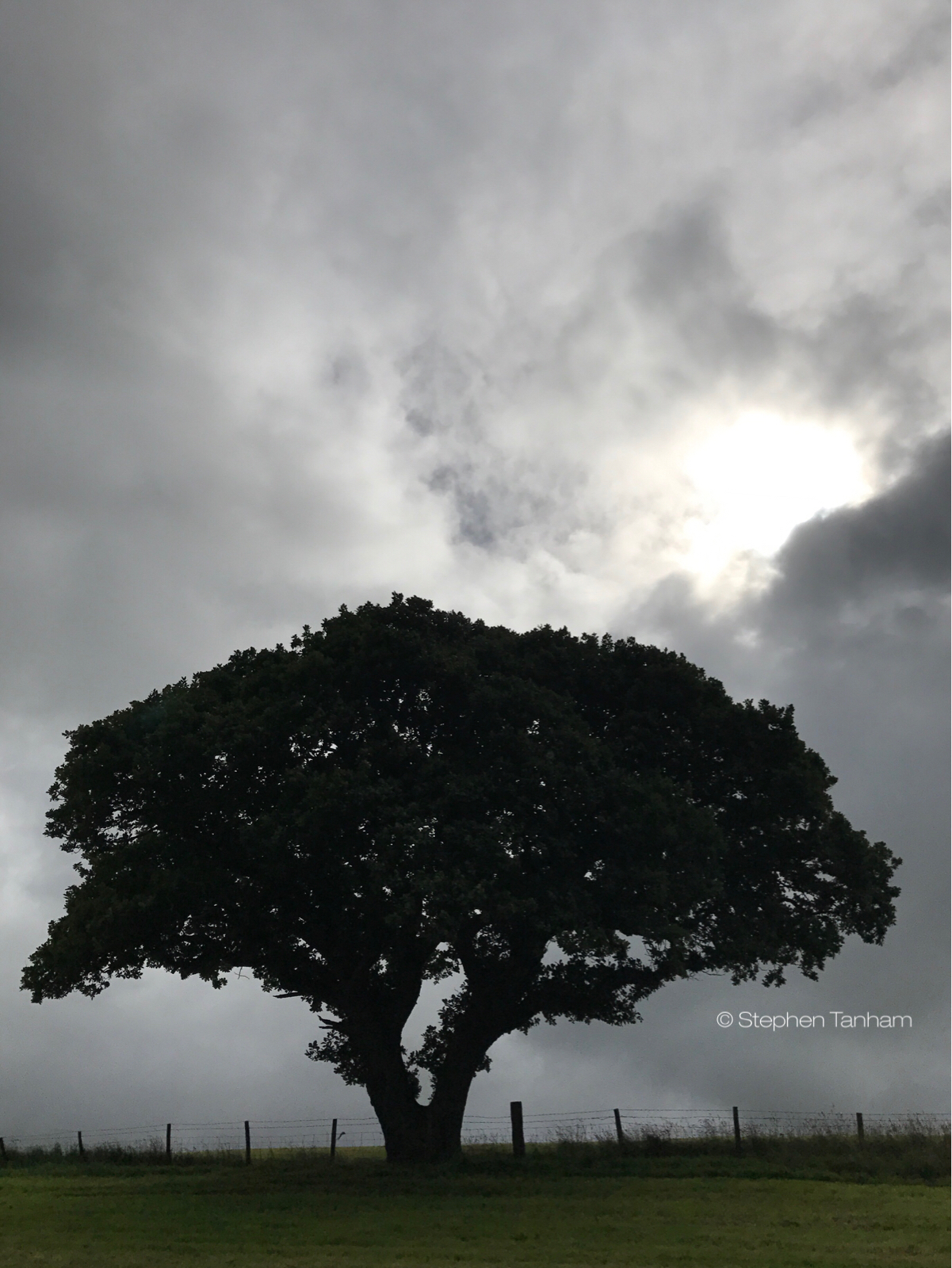
Rings of Oak
Along my walk there is an oak
Grown sturdy on the edge of winds
Life’s hardships fought and won
Whose sole and noble bearing
Engenders shared sojourn
△
Its ridge it strides alone
And I, in passing, catch its thought
Like a point on a seen, sawn, levelled trunk
Though yearly ring is far too long
For these few moments shared
△
But not this time, this round, this heart
Green canopy hiss: share this with me
Here, now, brief, unwitnessed
And be with ancient one in present time
Whose walk is only sidewards growth
△
Upon my eyes and mind
This rustling note is written, sung
Upon his rings of time he adds
A passing molecule of now, a mote
Upon the meadow there is only silence
△
Enjoy your walk around my Earth, he says
‘Around’ arrests: his sly intent, and turning
Gaze deep at wooden ark, as no voice, teasing
Says: and I, content to wait your arc’s return
Will travel further round the Sun
△
©Stephen Tanham
Share this:

Share this:


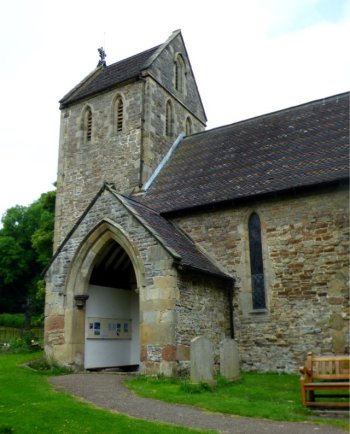
When we had finished looking at the Saxon crosses and the yew trees, we headed into the little Church of the Holy Cross. Even the doorway looked promising, especially as the porch was home to a nest of swallows, darting in and out to feed their young. Even after all this time and the number of ancient churches we have visited, there is still a thrill when you put your hand to the handle. Will it be open or locked? And if it yields to our touch, what will you find? Simplicity or ostentation? There is always history, but sometimes it is just interesting… sometimes it is spectacular. It does not seem to bear any relation to the size of the church, but the older its origins, the more disappointed you are when the past has been erased. Either way, you never know until the door opens.
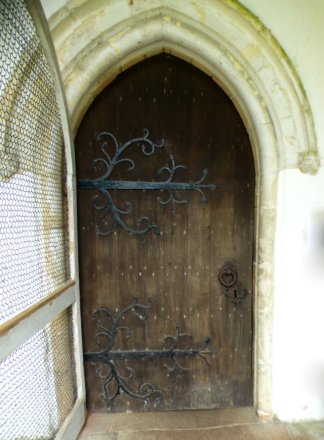
In this case…
View original post 724 more words
Share this:

Share this:

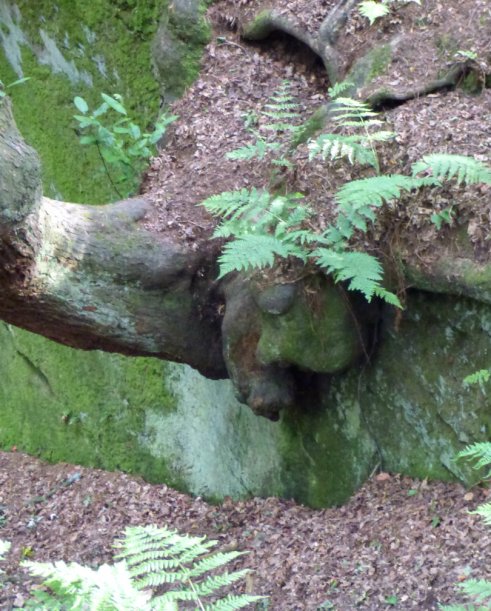
We had almost stopped there on our way to Wales. The suggestion had been made, but for some reason I had been reluctant to turn aside from our road west, for what might be no more than a walk in the woods. Not that we ever expected it to be that simple, but the mind goes its own way when looking for excuses. Especially when the inner voice is silently and inexplicably putting its foot down.

Consciousness dons blinkers, failing to see things that should be obvious, but which cannot become clear until the story has unravelled. It was as if some guiding spark of intent was aware of a chain of events spanning time, a sequence that had already begun, but had not yet reached a point where we could be allowed to see. And if that sounds confusing to read, imagine what it feels like to be caught…
View original post 763 more words
Share this:


Something had happened when we decided to approach the strange village by walking along the beach and coming to it via the old but grand harbour, with its mighty blocks and sea-gates. It was only later that we realised that what we had, inadvertently, photographed in the far distance was the focus of the whole story.

You could relate it to one of my favourite Gurdjieffian pastimes: stopping the world. This technique requires a degree of stealth and an ability not to be embarrassed by the unusual – and your part in it! Stuart and I once caused such a moment of presence by each turning around from our table (shared with a very amused Sue) in a cafe and facing the opposite way (outwards). We were not trying to be irritating, just to do something unusual. The people we were sharing the cafe with took it in good part and assumed we were doing something humorous, possibly for a bet.
On that day we had stopped after a few seconds; we had no desire to prolong it, simply to create the experience, good-naturedly, as an extension of the serious conversation we were having.
There is something about the silence generated that tells you you've got it right. It doesn't have to be in public, but there's something about that arena that generates a feeling that something else is watching…
As we walked – the wrong way – through the harbour gates and into the strange village of Hynish, I had that same feeling…
The name 'Stevenson' was on a plaque by the harbour wall. It rang a bell. I remembered a Robert Louis Stevenson as the author of Treasure Island and Kidnapped; and had the idea that he might also have written The Strange Case of Dr Jekyll and Mr Hyde; but I didn't think he built harbours…
What I didn't know was that the name Stevenson was that of a family of gifted and determined eighteenth century Scottish engineers, and that the uncle of Robert Louis Stevenson the author was a man named Alan Stevenson, and that what he and his father – Robert Stevenson – accomplished was the reason for the strange village of other-worldly buildings on this remote corner of the Scottish island of Tiree.

The view from the harbour was of a set of what looked like cottages, with a tower to their left.
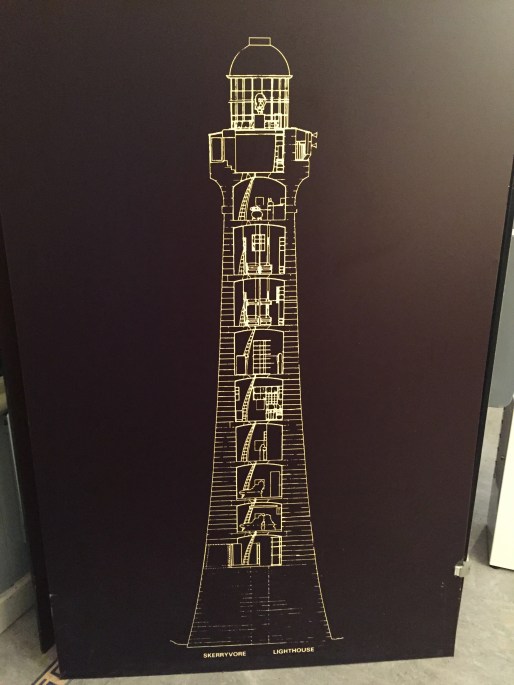
The tower was related to that view out to sea; the cottages were the modern home of the Skerryvore Lighthouse Museum, which had been established by the Hebridean Trust and lovingly restored and re-established over the past ten years to protect a vital piece of Scotland's history.
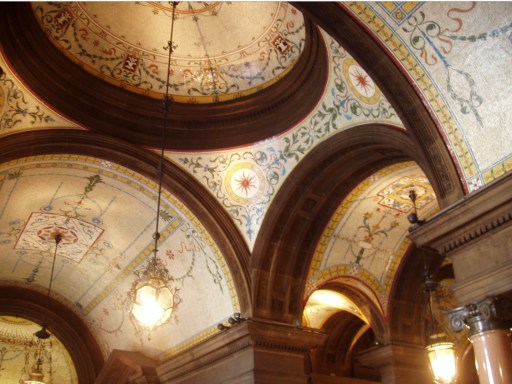
To understand the importance of Hynish and Tiree to Scotland's past you need to understand the way Glasgow developed in the 18th century. From a purely personal perspective, Glasgow has always been my favourite city, north of the border, because I have family there and it was the scene of many happy holidays in my teens – one of them involving my first long motorbike ride (in the pouring rain!). To find, all those years later, that Glasgow's early success as an international city had justified what happened at Hynish was a thrilling discovery.
Following the Act of Union in 1707, Scotland was free to trade, on equal terms with England, with the New World. Lucrative cargos of rice, tobacco, cotton, sugar and rum could now be imported to the Union via the deep estuary of the River Clyde. James Watt's 1760s invention of the steam engine also made Glasgow the most important exporter of manufactured good to the colonies. However, Between 1790 and 1844 more than thirty ships were known to have been wrecked in the area off the western edge of the inner Hebrides, as they fought the seas to enter and leave the Clyde.

In 1814 an Act of Parliament was established to survey and fund the construction of an offshore lighthouse on the obstructing and deadly skerry.
The Skerryvore rocks, located just off the bottom left edge of the map, above, were ten miles west of Hynish and the father and son team appointed to survey, design and build this enormous undertaking was Robert and Alan Stevenson. Work began on the construction of the lighthouse in 1738.
Our cycle ride had stumbled on the Shore Station that was built to support the construction of the Skerryvore Lighthouse – ten miles offshore. Later, a more makeshift station on the Skerryvore rocks, themselves, was constructed. As an indication of the severity of the weather, the latter, comprising a three storey structure for supplies, managers and thirty workers, was completely destroyed by a storm in November 1838. It was redesigned and built again in time for the following spring – the workers having agreed to stay and work on the rock through the winter!
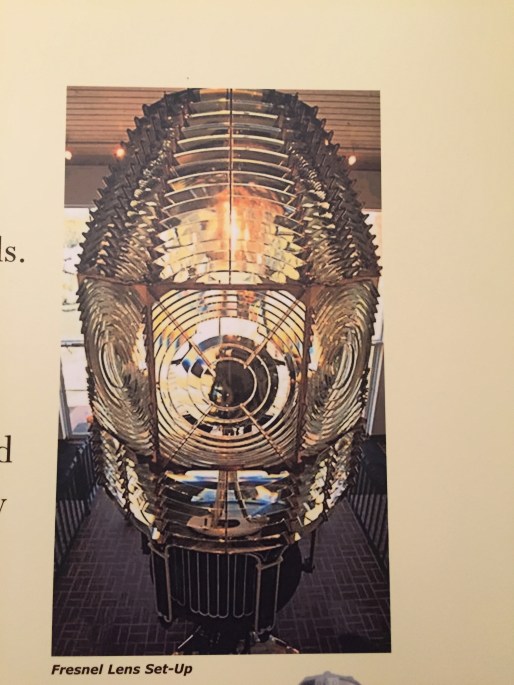
The most complex part of the lighthouse was its clockwork revolving light, which, incredibly, amplified the wicks of only four oil 'lamps' and projected them across the deadly darkness. The key to this optical power was the use of the latest Fresnel multi-part lenses, which Alan Stevenson commissioned from the French Fresnel brothers in 1840. The eight lenses were (and are) only the size of dinner plates, but could project a bright beam over thirty miles!
The lighthouse went operational in 1844 and the Shore Station was converted for use as living quarters for the shift of lighthouse keepers and their families.
Today the lighthouse is automatic, and it is controlled remotely from Edinburgh. The entire structure of Stevenson's design has remained in near-continuous operation since its commissioning.
Without the museum you would never know that the line of waves breaking far offshore, marks one of the world's engineering marvels, nor the reason for the existence of this strange and haunting place where so much happened, but which is no so quiet…
Despite the weather, our day had brightened. We wondered if we dared hope for a continuation of our good fortune?
To be continued..
An aside…
I was very moved by our visit to Skerryvore and wrote a poem for my personal blog Sun in Gemini. It is reproduced, here.
The Skerryvore Light
In tiny Hynish's western shore
Where gentle waves now kiss the sand
The resting seas recall the names
Of they who built the Skerryvore
➰
Forgotten in the passing nights
Unknown to most, of even few
Who chance on Hebridean soil
And stumble on the wreck of lights
➰
For ears a story here in stone
Which value engineers of night
Of iron and glass and fearsome seas
That rivals any ancient tome
➰
Not shifting sands or limestone frieze
No Pharaoh wise, nor Mayan king
Have ever dared to light the night
With giant tower upon the seas
➰
In deep of howling winter's night
I'll sit upon my writer's keys
And 'Stevenson' will be the word
The image: glass infused with light
➰
So come from history, taking bow
From we who sail on greatness past
We bow to you, who built our age
Forgotten on the quiet sands of now
➰
©Stephen Tanham
Previous posts in this series:
Steve Tanham is a director of the Silent Eye school of Consciousness. His personal blog is at stevetanham.wordpress.com
©Copyright Stephen Tanham, text and pictures. Re-use with permission.
Share this:

 A day bewildered
Embracing summer’s passion
Beneath stormy skies
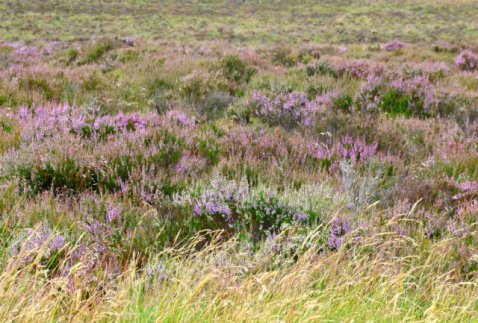
At my feet the heather blooms
The heavens answer my tears
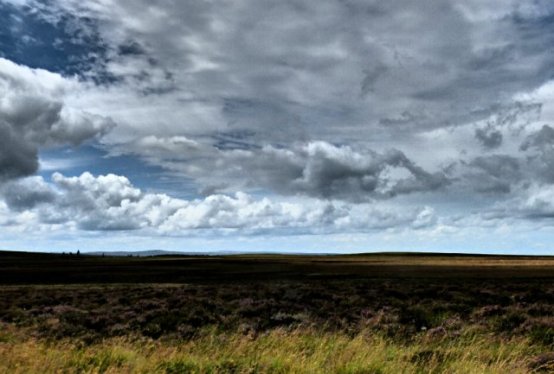
There is a point on my journey when, at just the right time of year, there is a first glimpse of purple hope. From this distance, it is no more than a shadow bruising the green of the high moors, as if the earth has lain sleepless in anticipation of the birth of beauty.
I look, but with little hope. It is not yet that time of year…not quite. Another month before the land wears royal robes. And yet… already it begins. Tight-furled buds are her heralds. Here and there a louder note in the jewelled fanfare. Beauty does not magically appear; in constant evolution, it grows from the heart.
Share this:

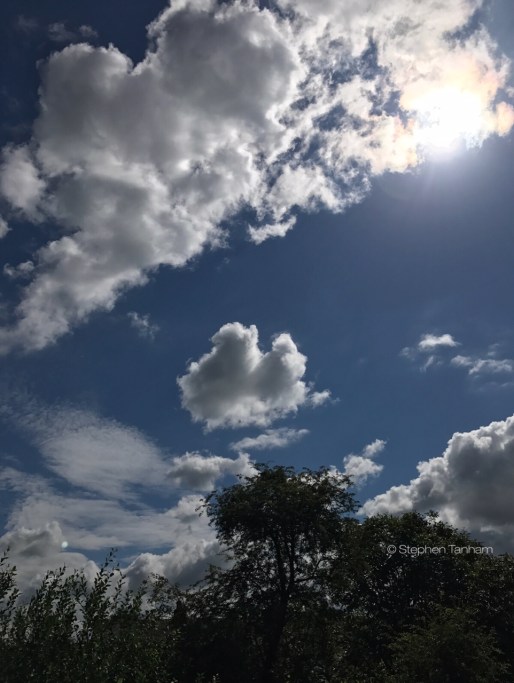
Pass slowly over me
Blue and pearl of July sky
Lift from this day
A living crown of summer’s leaves
And place it on my hidden head
As lasting ghost of sky that shone
▵
This done, let me pass this way
When days are dark and short
And ground is mud and slush
When man and dog have weary feet
Their homeward trek near ended
To wooden fire that warms the soul
▵
With shortened strength in darkening eve
Let me pause a breath, remembering
And reaching back, pull down that crown
Then, for a heartbeat, blaze within
Uniting dark and light in song of human tide
Whose role and right is seeing both.
▵
©Stephen Tanham
Share this:

Share this:

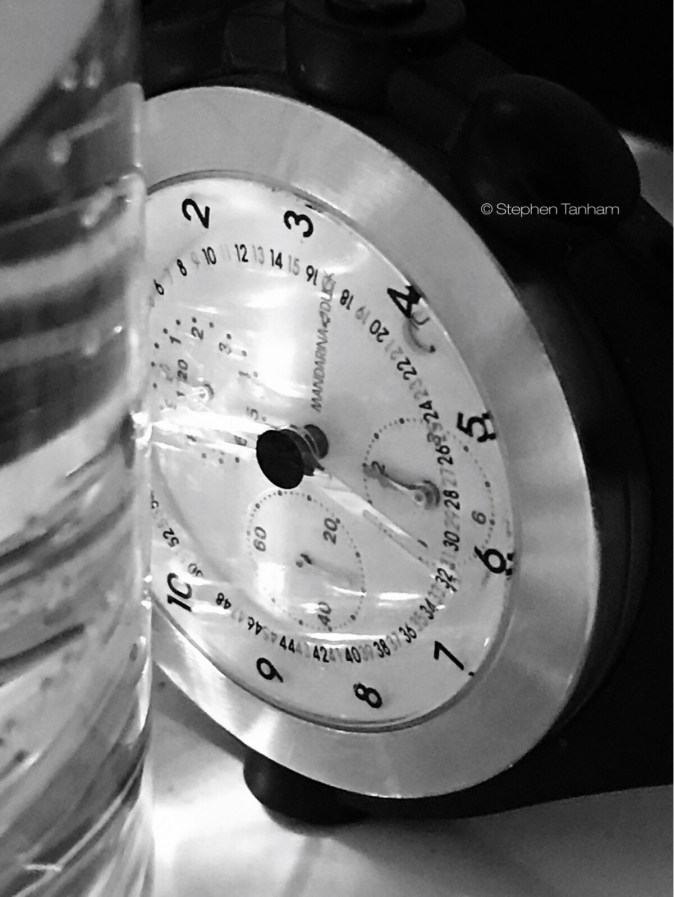
Of Time
—
Of Time I do not speak
Position and duration are my nouns
Eternal transition my verbs
Consciousness my palette
—
The plucking of imaginary points
Is how you speak of time
Inferred and constant highway
Present only to the mind
—-
But passing time alone
Knows no such waypoints
It speaks, if at all, of watchers
Now present to changes, now not.
—-
©Stephen Tanham
Share this:

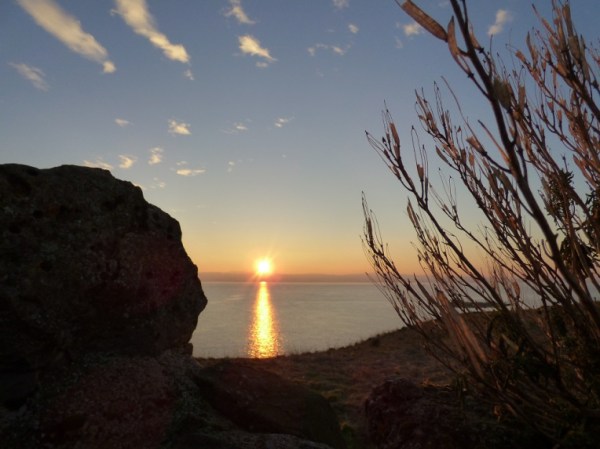
I always look forward to September. It is one of the most beautiful times of year in Britain. The days are usually mild and often beautiful, the last of the heather lingers as summer slides into autumn…a perfect moment for a wander in the landscape…and what better way to spend my birthday than with friends in the ancient and sacred places that I love?
The very first September event that we ran was the Harvest of Beingin Ilkley, up on the moors that I have loved since childhood. There is nowhere else on earth that I would rather have been at that moment. It was a small informal affair, just as we like to keep these events; no crowds, just a few friends exploring the landscape and sharing our different perspectives on the spiritual journey that is mirrored by that taken by our feet. The following September we…
View original post 434 more words
Share this:

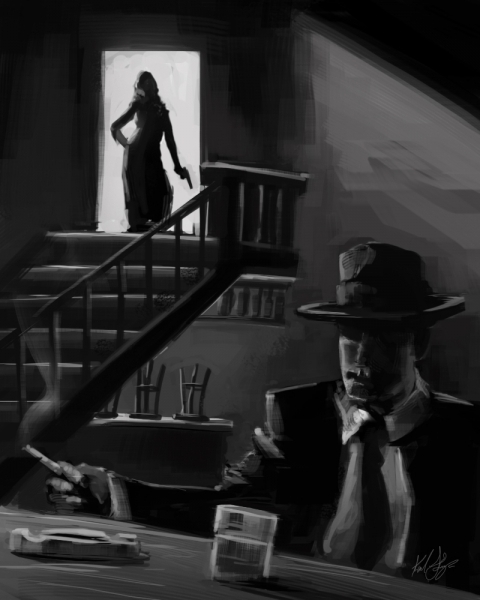
She moved with the sinuous grace of a dancer or a thief; sleek and deadly. Her eyes were wide, feigning innocence. Hiding secrets… She licked her lips, as if she liked the taste of blood.
The crime scene didn’t faze her, yet it was the worst I had ever seen. In my job, you see things you don’t want to remember.
He’d been cornered, caught in a dead end, a trap with no way out.
Blood spattered high up the walls. Gobbets of rent flesh clung to the paintwork. Dismembered life festered in scarlet pools on the pale carpet. The only thing she’d left intact was a foot, just one.
God knows what she’d done with the rest of him…
He must have struggled… fought back… the violence of the attack, the carnage…sickening.
This wasn’t just murder. This was slaughter.
I was glad I’d only had coffee. The clean-up was…
View original post 88 more words


 Sun in Gemini
You must be logged in to post a comment.