
Share this:


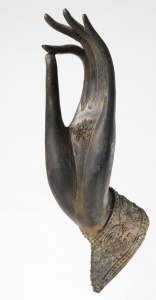 I didn’t know about Advaita Vedānta when I was a child and only recently discovered there were people like Alan Watts (and others) writing about non-duality in the Christian context, [link to part of the Alan Watts’ essay: This Is It]. Now I’m convinced it is important to focus on the fact that there is something at the heart of Christianity. The uncomfortable feeling that’s followed me all these years – that somehow I missed the point of the Jesus Teaching – all this has gone when I think of the Advaitist aspect of the teaching. It’s the missing piece of the puzzle I just stumbled upon, coming from an Asian perspective, an inductive knowing and that’s how it works.
The reason I didn’t see it before is because the Western concept of God, having human attributes (similar to the Advaitist idea of Ishvara), contradicts the rational scientific view. Accepting something that’s scientifically impossible, just…
View original post 440 more words
Share this:


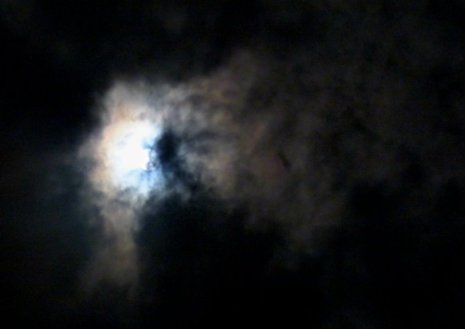
We had the supermoon a few days ago. On the night when it was forecast that we would see the phenomenon at its best, the moon was hidden by a thick pall of cloud which, though beautiful to watch as the moonlight lit it from within, did not exactly give ideal conditions. Luckily, though, the previous night had been beautifully clear and I had watched a golden glow surround the moon in her rising and seen her unveil silver beauty low in the sky.
It had been the same with the meteor showers. When they were supposed to be at their best, the cloud was impenetrable.Yet I had seen shooting stars cross the sky as lines of white fire in the nights before and after…and one glorious meteor that was as bright as a firework flash across the blackness.
The predictions had been wrong. While the moon and shooting stars…
View original post 542 more words
Share this:


Jiddu Krishnamurti (1895-1986), photographed in 1929. Picture source, see end of post
Many people are in a state of shock following a series of electoral surprises that have rocked the political ‘liberal establishment’ on both sides of the Atlantic. Racist attacks are on the increase and long-respected ‘experts’ are frequently mocked. We are in danger of throwing away many of the principles of established civilisation. It’s easy to feel that these uncertain times contain the seeds of extreme violence.
Politics works on the basis that large populations are capable of collective and constructive behaviour. But, there are other perspectives that speak, philosophically, of the effect that a relatively small group of people may have on an era, outside of politics, entirely.
Two figures in this latter mould are G. I. Gurdjieff and Jiddu Krishnamurti. In this series of posts, we look at the radical approach that Krishnamurti took to human freedom, which he said belonged only to the individual who was capable of observing himself/herself to such a level that a process of self-change could be initiated at the levels of mind, emotion and instinct.
Part of this process was to be prepared to completely cast off the conventional ways of thinking about things. Leaving behind beliefs, temperament and conditioning is no simple matter. This was particularly true of the subject of violence, which Krishnamurti viewed as the scourge of modern society, and endemic in our capacity for self-destruction.
Krishnamurti saw violence everywhere around us: outwardly and in our relationships with each other. He saw it in both politics and religion, and may well, had he lived, have seen it in the modern use of technology. All of this, he wrote, produces sorrow, which saps the creativity and coherence of life in society.
How are we to react to violence, which, in this era is even more threatening than in Krishnamurti’s time? Can we look to the experts, the politicians, the priests? His view was that all such respected ‘authorities’ have failed, leaving the individual to find their own answers.
Krishnamurti argued that we are, as human citizens, as fragmented as the societies in which we live, and that there was an unseen and potent relationship in this. He maintained that we were not, individually, in a position to affect society in a religious or political sense, but we did have great potential to turn ourselves into a true individual, in which case there would occur a binding between the actions we subsequently undertook and our effect on the violence we previously abhorred.
In part two, we will look at how the individual may approach violence in themselves, taking apart the pieces so that they can be held up to the inner light of objective consciousness.
—————————————–
This is the second in a series of postings related to topical issues in mysticism. They will all carry the hashtag #Silenti. Please feel free to reply or join in, using this hashtag.
©Copyright Stephen Tanham, 2016.
Share this:


I’m prepping a series of posts on the nature and origins of fear.
“Fear is the pillow of the ego.”
It just came to me, and I thought it was worth posting!
Hope you’re having a good Sunday…
Share this:

Just had to reblog – thank you, Jean!
Share this:

Share this:


Part Fifteen of The Unseen Sea
The fish that crawled out of the sea was ancient by the time LUCA, the EarthLife, came down from the trees, and, much later, began eating flesh that was no longer raw, but cooked on the magic of fire–a gift from the sky.
Within the tribe, the eyes marked for change watched and became conscious of… others.
As vivid as the original creation of the separated life, back in the beginning, where only the dark eyes could now reach it, the standing creature with two arms and two legs rose in the circle of the hunt’s celebration flames and realised that they were others; that they were as it was, but that there was something in him that they didn’t have – the me.
The me watched them as they watched him separate – his actions now guided by something different than the…
View original post 802 more words
Share this:


“It really gets to me,” said my son, checking his phone as I was putting his socks on.
“What does?”
“Words… stuff like this…” He read me a passage from social media. I immediately saw what he meant. It was story about a little girl with a beautiful voice. It was a touching enough tale, without the need of the writer to add pathos. ‘Despite her disabilities’ we were told, she sings like an angel.
I could see my son’s point, but he expounded anyway. Why should having a disability mean that she shouldn’t have a lovely voice? Doubtless the writer was only trying to add an extra dimension to her talent. Without any doubt at all there had been no thought of marginalising any further a young lady already labelled as disabled…a word that means broken, unfit for use, rendered powerless… It was simply a figure of…
View original post 660 more words
Share this:

Share this:


And, with infinite care
Like drawing with the finest brush
The lines of Now can be
Fleetingly
Crystallised
Against the sky
Which, smiling back
Decides to stay…
©Stephen Tanham, 2016.


You must be logged in to post a comment.