by Steve Tanham

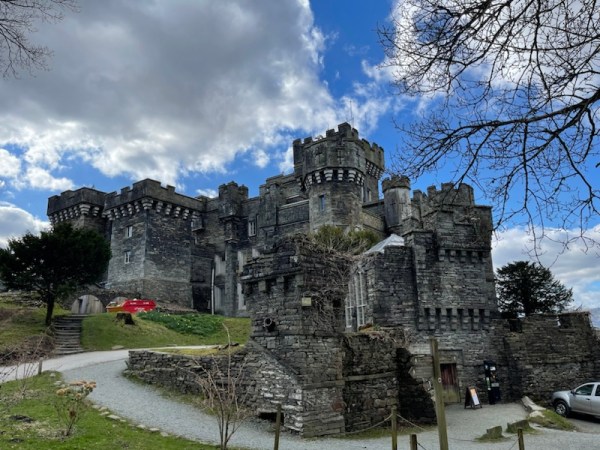
Wray Castle is an imposing neo-gothic building on the north-western shores of Lake Windermere. It’s not a real castle, but looks very much like one, and was crafted according to authentic historical plans. It was built in 1840 for a retired surgeon from Liverpool, James Dawson, who also commissioned Wray Church on the same estate.
He used his wealthy wife’s fortune to create it, and it was intended to become their main family residence… but she didn’t like it, so it was never occupied in the way he had intended.
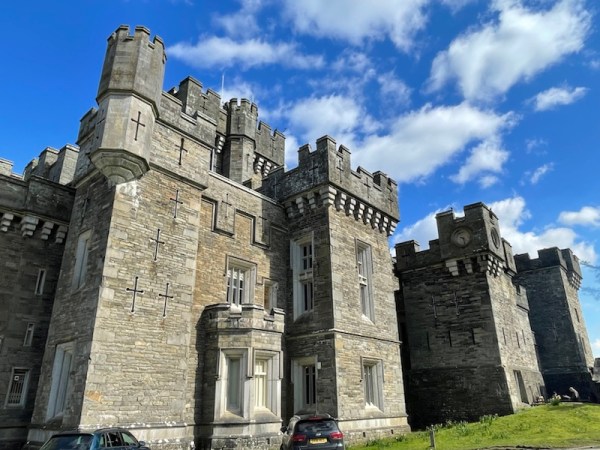
As can be seen from the pbotographs, It is an imposing creation, and we can admire Dawson’s vision… and sense his disappointment … and perhaps smile at life’s hubris-killing moments. We’ve all had them, but perhaps not on this scale…
But the story has a happy ending…
After Dawson’s death in 1875, the estate was inherited by his teenage nephew, Edward Preston Rawnsley, and later passed to Hardwicke Rawnsley, a cousin and clergyman who had a keen interest in protecting the countryside from the kind of rampant private development that was taking place on the other side of the lake.

Wray Castle has an association with another key player in history of the National Trust, Beatrix Potter, whose love of these parts began during a summer holiday in 1882, when she was 16. In 1905, she used the royalties from her first book, The Tales of Peter Rabbit, to buy the first of many farms nearby, though she never owned the Wray estate and its castle. On her death, the considerable estate she had amassed was passed to the National Trust, whose development she greatly assisted.
Hardwicke Rawnsley, who had become the vicar of Wray parish, was strongly influenced by the ideas of the respected social reformer, John Ruskin. He conceived of the idea of a ‘national trust’ that would buy land in the area and hold it in the public interest, preventing the sale of the assets to private developers – in perpetuity.
The house and grounds at Wray have belonged to the National Trust since 1929, and the house has been open to the public on a regular basis since 2013, though it performed other functions during the war years and after.
It is thanks to these people that the National Trust exists in the form it does today, though that perpetuity should never be taken for granted, as recent activity for the infiltration of the Trust by a conservative group based in London demonstrates.
Anyone standing in the beautiful upper gardens of Wray Castle in the afternoon of 20th May, 2023 would have seen a slightly weary group of walkers making their way – as quickly as their guide could provoke – along the lake path and completely bypassing the track up to the castle grounds, which, thankfully, had remained unseen…

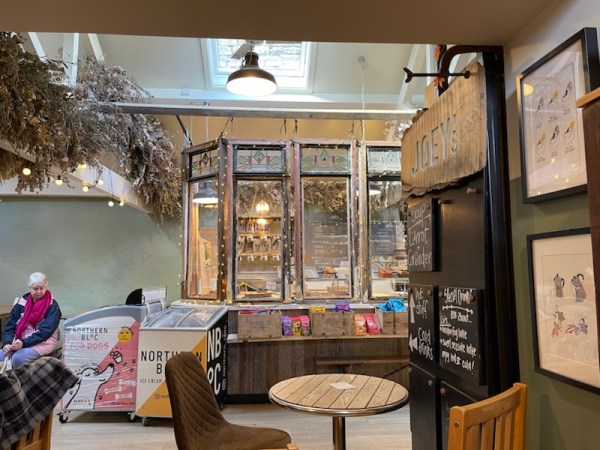
The unstated plan for our workshop group to have lunch at the other Joey’s (vegetarian) cafe – within the Wray Castle Building, had been abandoned by the organiser, though none of them knew this. Our gathering for coffee, first thing, and our two stops high on Claife Heights, had resulted in us running very short on time for something critical; a something that was now about a kilometre away from the tired band of walkers.
We had much bigger problems than a delayed meal. We had to get the whole group over the next hill and along the shore to catch what no-one was expecting – a small and little-known ferry to take us to Ambleside, via a triangular sailing to Brockhole, the National Park’s visitor centre on the opposite (eastern) shore.
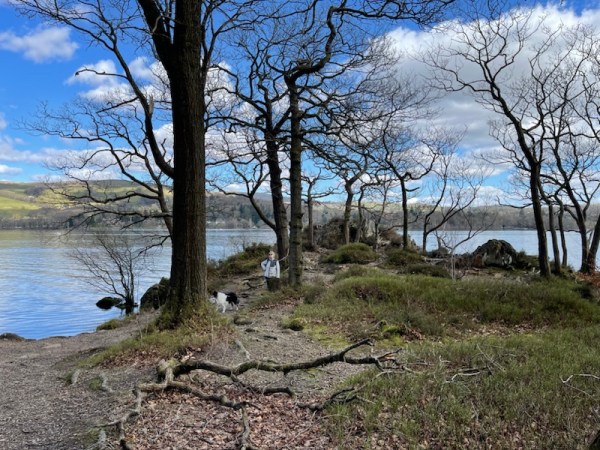

With a few minutes to spare, we rounded the headland and trudged, wearily, past the old boathouse and onto the pier. Within five minutes, the ferry came into view, beginning its wide arc round the bay to enter the small jetty space.


We had made it with a mere five minutes to spare… Our onward connections and the rest of the day were safe…

The trip to Brockholes is a matter of 15 minutes. Some passengers get off there to explore, but we sat comfortably enjoying the relaxation after the day’s exertions.
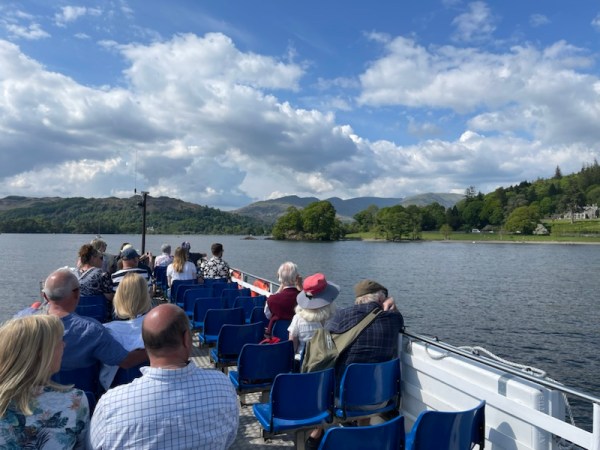
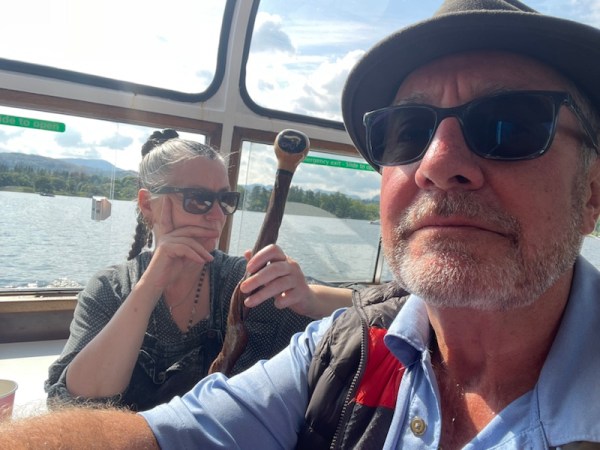
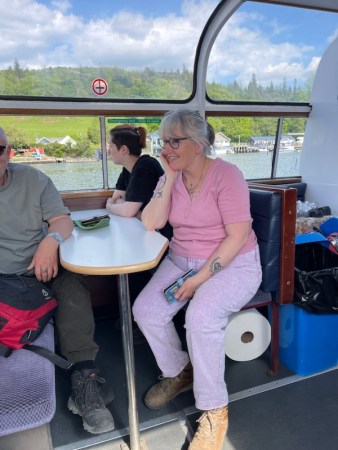
After Brockhole, with the sun still strong in the sky, the boat turned back towards Ambleside’s ferry point at Waterhead. Spirits had lifted with the refreshments, and the scenery was glorious. It was slowly dawning on the group that the day’s walking was finished; that we had, as stated, crossed over the head of the lake back to the east bank, but not by walking.
No-one was abusive…
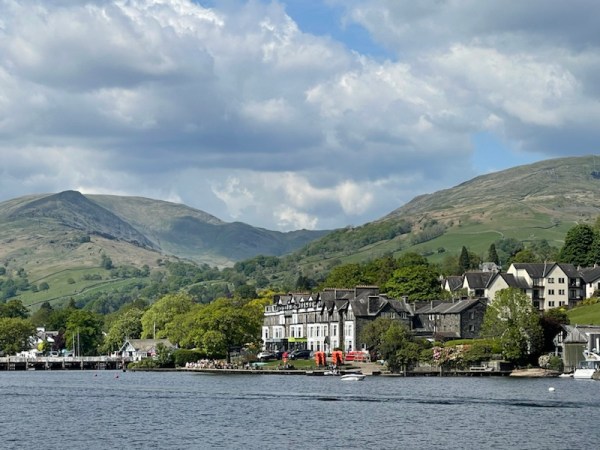
Arriving twenty minutes later in Waterhead, we needed to buy our tickets for Bowness – our final ferry crossing of the day. The cafe on Waterhead pier provided such delights as scones with jam and cream … and hot tea. A hasty snack later, we watched as the incoming ferry docked. We were in luck. It was one of the most luxurious boats of the fleet – the Swan. Our return leg to Bowness would be in style.
Surround yourself with beauty … and it will do the rest.
Ancient Sufi Wisdom
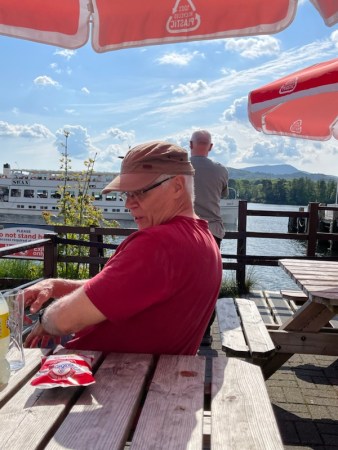
Everyone was quiet during the return journey. There was a happy mellowness about the late afternoon.
I had anticipated that we might need to cut out the visit to Wray. To compensate for the day’s meagre rations – thank heavens for Kendal Mint Cake – we had booked a table for dinner at the other end of the lake: The Swan at Newby Bridge.
There was just time to walk from the ferry point at Bowness to Ferry Nab and collect the cars for the short drive to the southernmost point of Lake Windermere – Newby Bridge.

It has an excellent bistro. The rushing was over. We could take our time over a fine meal. No-one left in the least bit hungry….and everyone was smiling.
To be concluded in Part Six
This is Part Five
©Stephen Tanham 2023
Stephen Tanham is a Director of the Silent Eye, a journey through the forest of personality to the dawn of Being.
http://www.thesilenteye.co.uk and http://www.suningemini.blog


 Sun in Gemini
Finally made it, Steve. Enjoyed my visit immensely, and the coffee and cake was delicious.
LikeLiked by 1 person
Delighted, Michael! And the views from the terrace, I hope 😄
LikeLiked by 1 person
Indeed, Steve, and a wander along the Lake shore from the boat house. We had a lovely day there, and the coffee was every bit as good as you led me to believe.
LikeLiked by 1 person