by Steve Tanham

Continued from Part One.
There was a taxi service from the canal’s dock to take those not wishing to walk into the centre of Aquileia.
The weather was mild and pleasant. We opted to walk. Fifteen minutes later we came to the centre of the village; a pleasant place with small shops, a local bar and a restaurant.
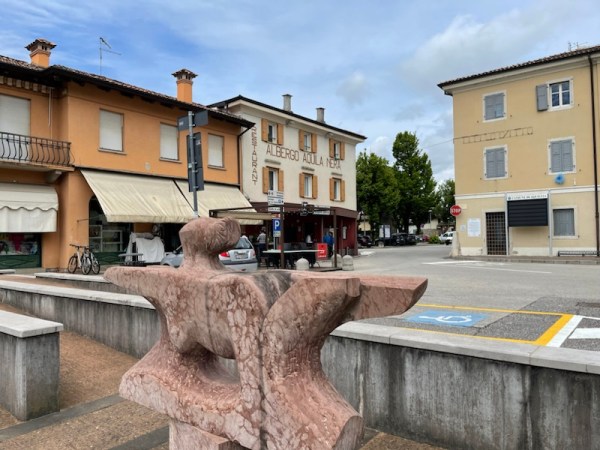
Our destination – the ancient Christian complex centred on the Basilica of Bishop Chromatius – was on the far side of the small town.
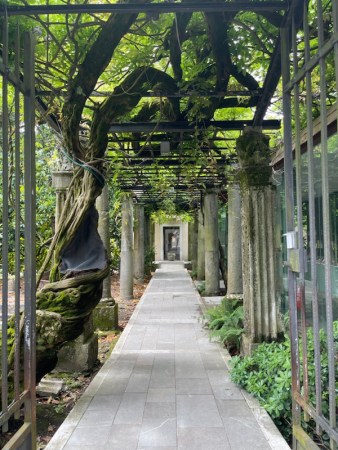
The walk revealed Roman ruins on either side, but little that hinted at the splendour that was to follow.
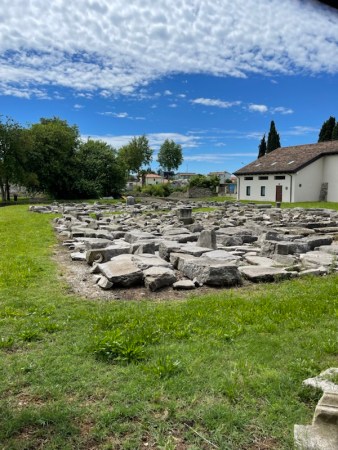
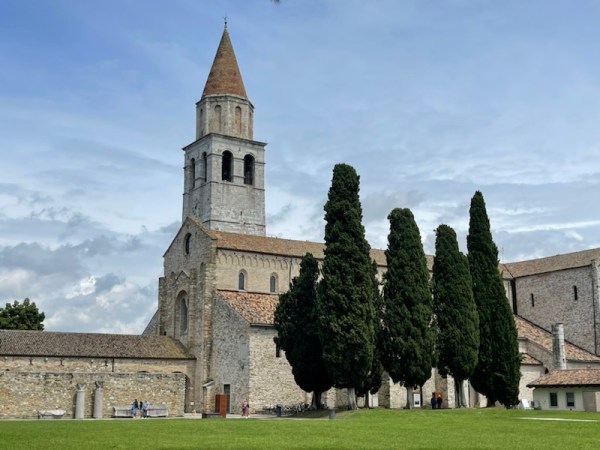
We saw the ‘campanile’ bell-tower first; then the outline of the rest of the basilica. Even from a distance the size of the complex was impressive.
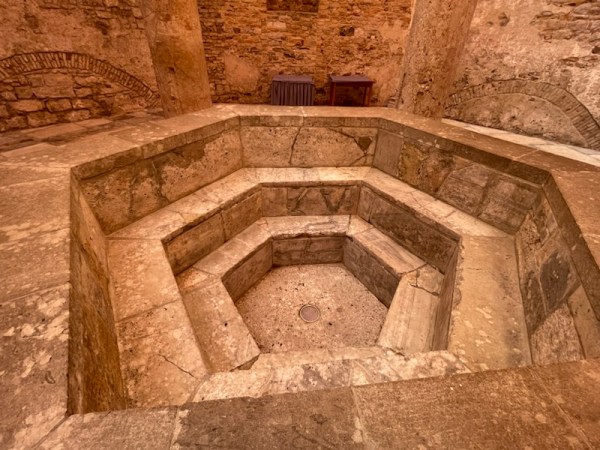
Visitors are guided, first, to the smaller building on the left of the photo, above: The Baptistery of Bishop Chromatius, built, like most of the site, in the 4th – 5th century AD, the period when the Roman Empire was coming to its end, but a time that marked the expansion of the Roman Church into a formiddible religious force.
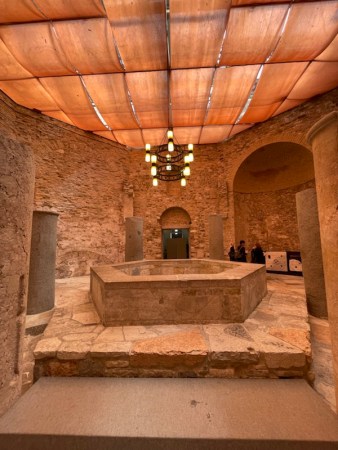
The Baptistery is an integral part of the basilica complex created by Bishop Chromatius (388 – 408). The original plan was square with four corner niches, above which the building is octagonal, with windows in the eight sides, an internal vault and a sloping roof above.
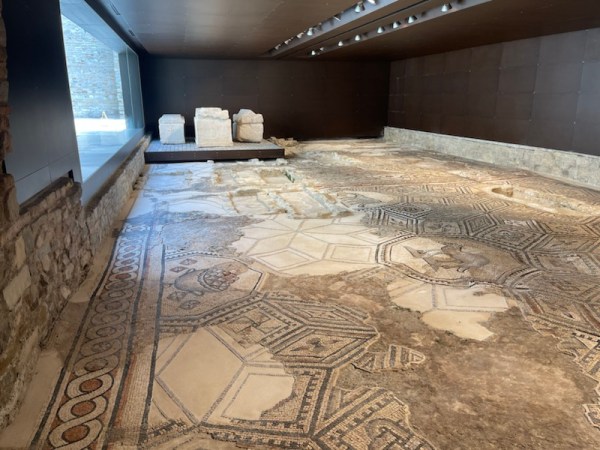
The floor and socle were probably in marble, whereas the walls and vault were certainly decorated with mosaics and frescoes.
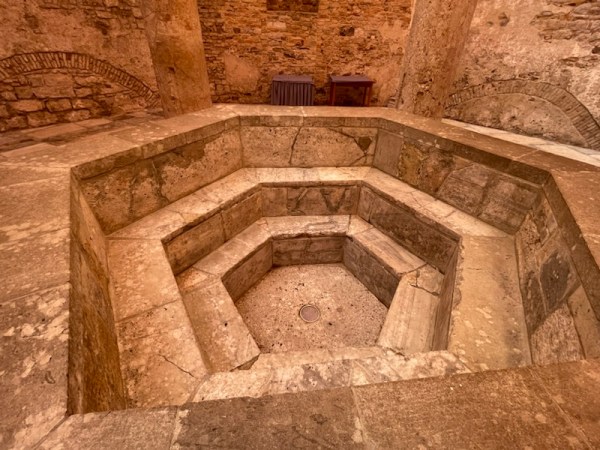
The Baptistery was joined to the narthe by two long chambers which had functions connected with baptism and religious instruction.
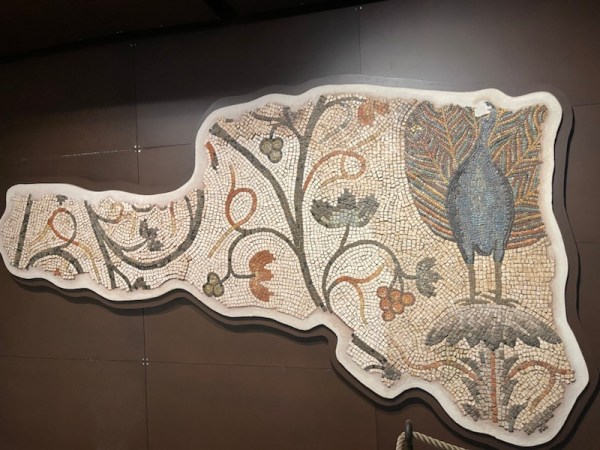
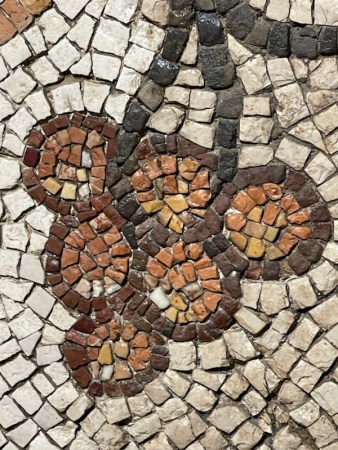
In the 9th century, after the demolition of the two side wings, a direct connection with the portico of the basilica was built (the “pagans’ church”) and three of the four corner niches were eliminated, giving the Baptistery a basically octagonal shape.
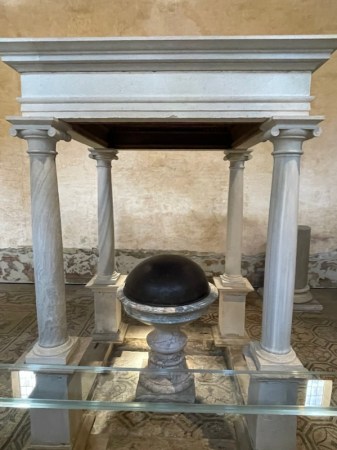
The same period saw the construction of an ambulatory, with reused Roman columns placed at the corners of the hexagonal baptismal font.
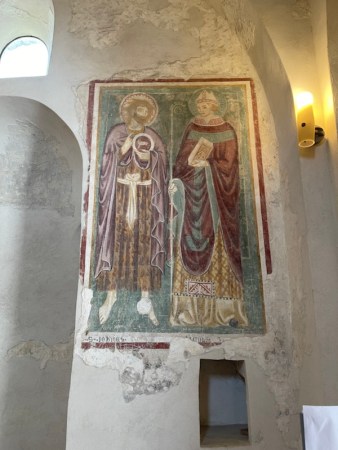
But if the Baptistry was impressive, what followed left us dazzled.
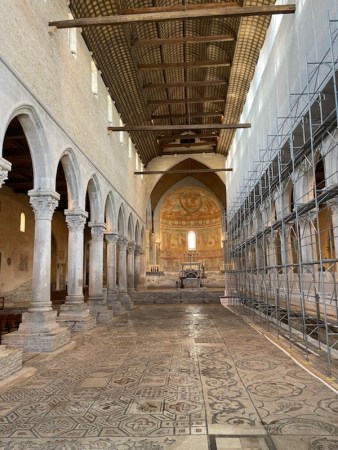
To be continued in Part Three
©Stephen Tanham 2024
All photos taken and processed on an iPhone 12 ProMax. Illustrative images created using NightCafe Studio AI.
Stephen Tanham is a writer-photographer and mystical teacher. He is the founding Director of the Silent Eye, which offers a monthly Zoom-based gathering of companions, each one on their own, unique journey to deeper states of self-realisation.


 Sun in Gemini
An amazing building. How did this one escape destruction during the Reformation?
LikeLiked by 2 people
I’ve not gone that deep, yet, Robbie. But it fascinates me, too!
LikeLiked by 1 person
An amazing place. I love your photos of it.
LikeLiked by 2 people
Thank you, Darlene. The best are yet to come 😊
LikeLiked by 2 people
Stunning photos Steve.
LikeLiked by 2 people
Thank you, Di!
LikeLiked by 2 people