
Share this:

Share this:

Continued from Part Two
So, this one day, considered in all its facets, resolves itself into a journey, a destination and an arrival – an arrival at a meeting with a French relative we have never met, and whose unlikely presence, here in the north-west corner of Wales, completes a cycle of mystery and loss lasting ninety-three years…
As we journey along the spine of Anglesey, to meet her by the Red Tower in the university town of Bangor, Juliette is waiting, over a coffee, in a place where she will be able to see us walking up the main street.
The car journey, fortified by all the strange connections, becomes an arrow; an arrow that completes…

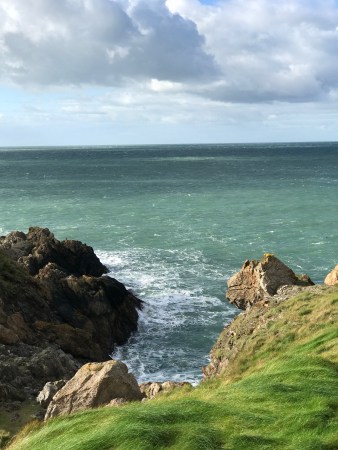
The island of Middle Mouse seen from the cliffs above St Patrick’s church
On the road across the island, we talk of the wonderful good luck of finding the local guide cum historian in the church of St Patrick at Llanbadrig Head; of his smile when he had told us that, usually, he attends on only two afternoons a week, but this morning, he felt he should be there… Wonderful story teller that he is, he had walked us to the cliff edge to see the island of Middle Mouse, to point at the dark rock and bring to life St Patrick’s escape from the storm that wrecked his ship. He had told us of the deadly cliffs, below, and that we were standing right over the cave that gave sanctuary to the swimmer on the dawn as Patrick escaped from his isolated rock and made the relative safety of the shore, with its protective cave with the freshwater spring.
And then how he had taken us back into the church, the remarkable church rebuilt by Lord Stanley, the man who had fallen in love with an Islamic lady and been so ‘opened’ to the love in his soul that he had converted to Islam and devoted his time to ‘good works’, including the reconstruction of the remarkable St Patrick’s Church.
On hearing that, a shiver ran up my spine. What, I had asked myself, as our guided tour unfolded, did any of the history of St Patrick’s Church have to do with the fact that, on this day, we were due to close the gap between two parts of a family lost to each other for nearly a hundred years? Suddenly, in the guise of Lord Stanley – Adbul Rahman as he became, in his new spiritual tradition, there was a symbol of a man who loved a woman so deeply that he gave up his ‘home’ – physical or spiritual, for her.
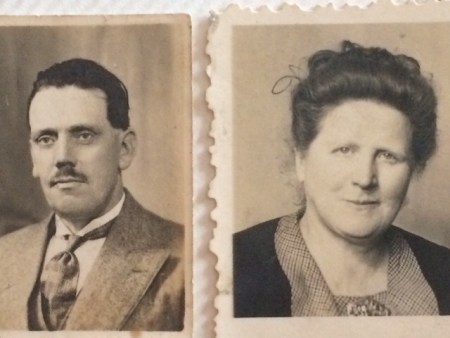
Stephen, my great-uncle and Adrienne, his wife
My grandmother’s eldest brother, Stephen, had done that, too. He came through the war unscathed, and, while still in France, married Adrienne, the woman he loved. Then he brought her back to England and the northern working-class town of Bolton, where their first child, Madeleine, was born. We do not know what happened after that; only that the three of them returned to France within two years. Stephen, later known in the family as ‘The Englishman’, went to work in the family’s bakery business and, subsequently, ran a successful Tabac near Calais.
Elizabeth, my paternal grandmother, never saw him, again… Was there bad feeling, that the Bolton family had lost their eldest son to a French girl? Maria, Stephen’s mother, was said to be a strong personality, even refusing to have her photograph taken because it might ‘steal her soul’. Perhaps she and Adrienne, Stephen’s new wife, fought. More likely is that her lack of spoken English may have created great hardship and homesickness for her – especially with a young child. My aunt Mary, Stephen’s niece and still alive in her nineties, remembers Adrienne ‘being very quiet; she just sat there and said nothing…’

Adrienne in the family Tabac and coffee shop
Whatever the reason, on returning to Calais, the family links seem to have fallen away… and were lost, eventually, to the knowledge of their English cousins and their children. They stayed that way for nearly a hundred years.
As a teenager, I remember my grandmother telling me the story of her eldest brother, and crying at the sadness of never having seen him again after his return to France. Other than the ancestral records and the fact that I, too, am called Stephen, I have little presence in her, or great uncle’s Stephen’s story… but the memory of her tears is very real and painful, and gives me a point of historical reality that suddenly becomes very raw, like a wound that needs healing.
Perhaps this is why we are here… on this day; to make good that gap in love. And, as Stuart would say, names are important; and mine is Stephen.
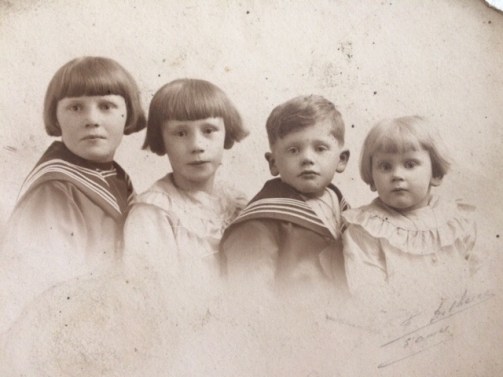
Stephen and Adrienne’s four children. The boy is Etienne – French for Stephen
In the car, we review what we know: Stephen and Adrienne had four children. Etienne (Stephen in French) was their third, and is still alive, though in his nineties. His wife is Mado (Madeleine) who began her earnest search for their long-lost English family over a decade ago. It was Mado’s message that Bernie, my wife, found on the Ancestry website while she was conducting a parallel search.
One of their children is Christophe, who is a Green politician in Calais. His daughter is Juliette, the Erasmus Language Scholar, studying at Bangor University, who waits for us in Bangor, near the red tower.
We arrive with five minutes to spare. We walk from the car park in near silence. The events of the morning have been overwhelming on so many levels. I feel as though a great weight rests on our shoulders as we complete the physical act of climbing the hill to the Red Tower. I speak a little French, though it is rusty. Perhaps I need not worry; she is a languages scholar, after all…
Juliette has finished her coffee. She sits on a bench by the Red Tower, rising to her feet and smiling, as we approach…
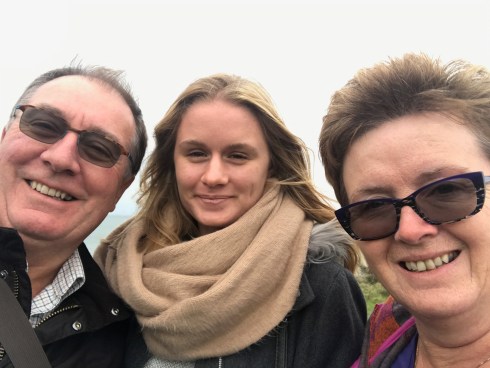
‘We found him, Grandma, and this woman is his great-granddaughter…’
Epilogue
I could have written: ‘we discovered that a long-lost branch of the family was alive and well in France. A younger member of that family is studying in Bangor, Wales. We happened to be on a short break, nearby, that weekend, so we arranged to meet up with her.’
But where would the fun have been in that? Moreover, where would the truth have been in that?
Any spiritual path, including that of the Silent Eye, requires that we examine the whole of our life, in detail, as it happens. We observe and let unfold; we do not judge – we simply let happen so that it may reveal its real nature.
This has been the story of that day’s unfolding. Everything in the three parts of this story is the truth, told as it happened.
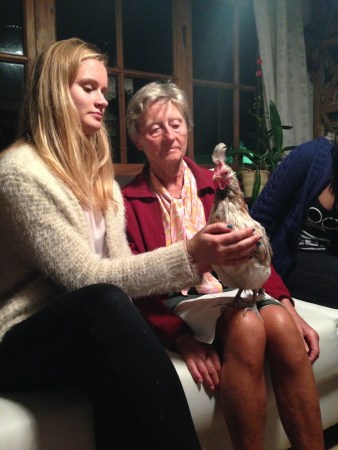
Juliette and her grandmother, Mado – the originator of the French side of the search
Other parts of this series of posts
…………..
Stephen Tanham is a director of the Silent Eye School of Consciousness, a not-for-profit organisation that helps people find the reality and essence of their existence via low-cost, supervised correspondence courses. His personal blog, Sun in Gemini, is at stevetanham.wordpress.com
©️Stephen Tanham
Share this:


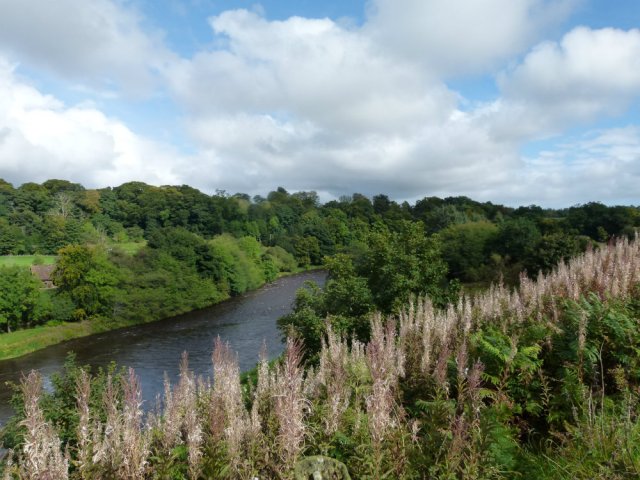
Our last visit of a weekend that seemed to have flown by all too quickly was to a little church on the edge of Aberdeen. The sun finally decided to show its face… though it still managed to rain anyway, but at least we had blue skies through the roofless ruins of St Fergus’ Church.
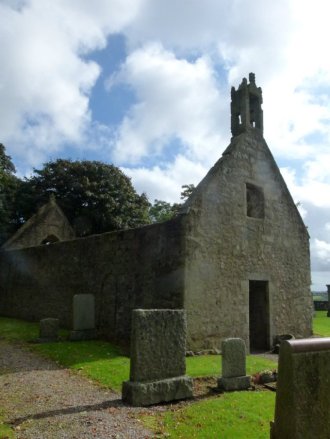
Originally built around eight hundred years ago, the old parish church of Dyce sits high above a bend in the river Don. It was a place of Christian worship long before the present church was built…and possibly already a sacred or significant site in the pre-Christian era. Little now remains of the church apart from its shell, with the curious doorway to the east, where the altar would normally be situated.
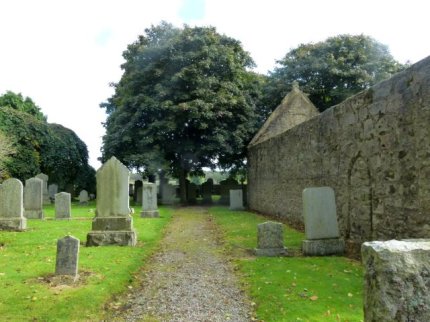
Fergus the Pict was an Irish bishop, responsible for bringing Christianity to many in this area of Scotland. He may be the same Fergus…
View original post 594 more words
Share this:

It is, still, all of it, only one day…
Though now the winds that buffeted the bed-and-breakfast farmhouse have abated. I look at my watch. We have two hours to go before we need to leave to drive across Anglesey to meet a young woman named Juliette, who holds the key to this entire story. She will be waiting, at noon, by the red tower in the centre of Bangor – the nearest town on the other side of the beautiful but deadly Menai Straits.
We have time, we decide. Time to visit the isolated and mysterious St Patrick’s Church on the rugged cliffs to the east of Cemaes Bay. Prior to this trip, we hadn’t heard of it. Now, after hearing local accounts of its history, we can’t wait to visit…
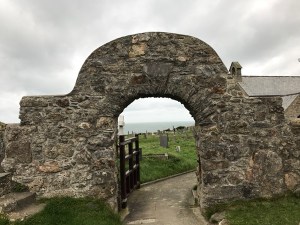
After a couple of false starts, we correctly interpret the hand-drawn map, donated at breakfast, and make our way from the main Holyhead road along the mile of narrow and twisting country lane to find the archway to the church ahead of us.
Not far away, but long ago, he is standing a little way ahead; looking down at the crashing waves and bringing his gaze from the dark rock of Middle Mouse island towards the cliffs beneath his feet.
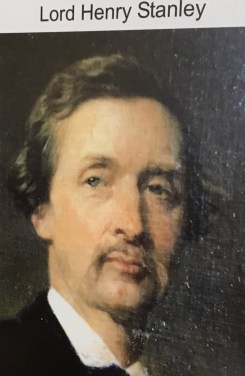
It is 1864 and he has used his wealth to fund the restoration of the little church behind him.
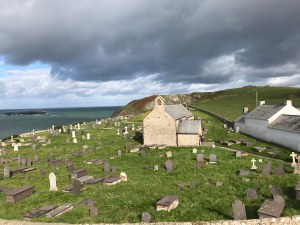
He gazes down at the waves… How long had Bishop Patrick clung to the inhospitable granite of the tiny island of Middle Mouse, as the wreckage of his ship washed past him? Did he wait till first light, before tying what was left of his heavy and saturated woollen robe across his back and entering the sea, again, to swim the half kilometer to the cave he could now see; a cave that would offer a fresh-water spring and let him tend his wounds, a cave that would become his home until the miracle of his survival became known to the local people, who would build him a church on the headland – the first Christian church in these parts.
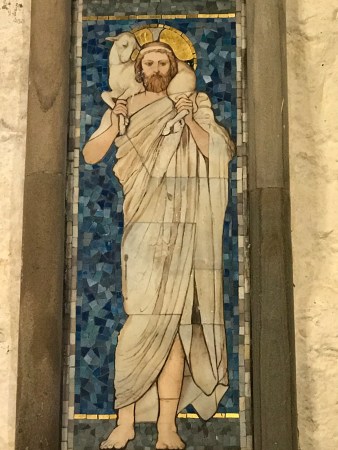
Badrig – St Patrick
Adbul Rahman looks down one last time at the savagery of the waves breaking below. He shakes his head at what early religious pioneers of all faiths had to go through. His own sacrifice is small by comparison; and carried out under the cloak of wealth. But, in his own way, he has sought out worthy causes, to show that his heart is still within Britain, though his faith has changed. Now a devout muslim, and the first such in the British House of Lords, Adbul Rahman, formerly Henry Edward John Stanley, Third Baron of Alderley, has just overseen the full restoration of St Patrick’s first church in Wales.
The feeling is a good one. He, Adbul Rahman, has made a contribution to the sincere worship of God, paying respect, as is the custom in his new faith of Islam, to those of other faiths. The completion of the church at Llanbadrig has been timely; his sister has just given birth. The infant’s name is Bertrand Russell. It sounds like a good name -a portent, perhaps of the child’s future…
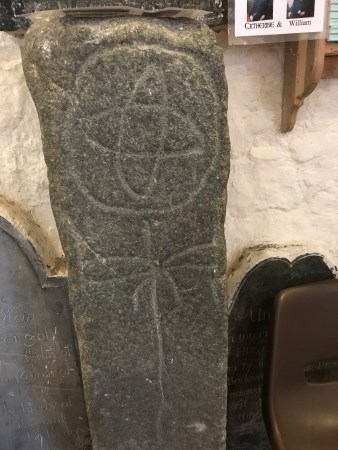
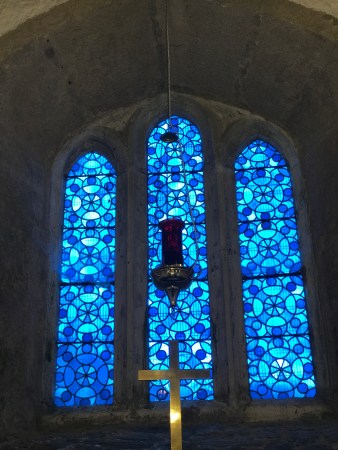
Entering the tiny church, he is greeted by the ancient cross, the one bearing the two-overlapped fishes – said to be the original Christian cross design. Beneath the cross is a crude carving, chiseled, with patience and dedication, on the ancient granite pillar whose origin or possible previous use is unknown. It is a palm tree. No one knows what it means, or why it is juxtaposed with the crossed fishes…
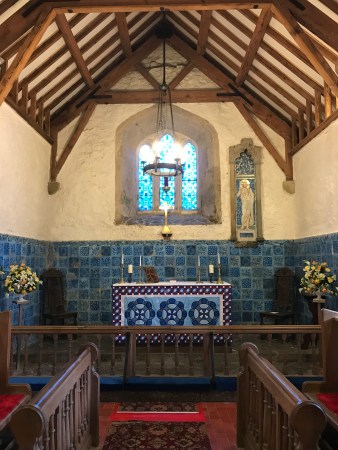
On the far eastern wall, behind the simple, but beautiful altar, the wall tiles are of an Islamic pattern, though fired in England. It has been his one overt imposition on the design of the restored site, though several more are hidden – for those who have knowledge of eastern symbolism – in the design of the church.
It is 1919. Stephen Duffy fingers the document in his pocket for the umpteenth time, realising that his constant fretting with it is wearing the paper away. He pulls his fingers from his jacket’s inside pocket, glancing, nervously across at his youngest sister, Elizabeth, who knows him so well that she has spotted his fretful behaviour. From the look in her eyes, she senses that something dreadful is going to happen, despite the smiles of her beloved brother and his new French wife.
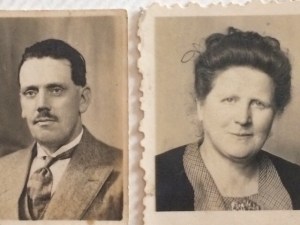
Stephen Duffy and his French wife, Adrienne
A soldier in the Royal Engineers, he has come through the first World War unharmed – a miracle in itself. But his wife, Adrienne, cannot settle in the working class darkness of post-war Bolton, and needs to return to her home town of Calais, where her relatives have created a new job in the family’s bakery business. Stephen is a baker by trade and will be very welcome in the family’s boulangerie, The couple’s newborn first child, Madeleine is assured of a warm, family welcome. Three more children will follow, including Etienne, Juliette’s grandfather. Etienne is French for Stephen.
Stephen Duffy, of Bolton, Lancashire, and his wife Adrienne are leaving for France. The document in the breast pocket is the ticket for the ferry. Elizabeth Duffy, my paternal grandmother, looks at him across the table where Sunday lunch has been, and senses, correctly, that despite his surviving the horrors of the war, she will never see her elder brother, again.
Juliette Duffy is twenty years old. She is combing her hair and looking at her reflection in the small room’s mirror. She knows she looks like her devoted grandmother Mado. Mado – the preferred short-form from her given name of Madelaine – has been a detailed researcher of the family tree – particularly the lost English connection, for decades. Juliette knows that there is a mystery back there, back then, as to why the two families lost contact… but fate has cast her, an Erasmus Scholar of languages, studying at Bangor University, in an unlikely role.
Seven years ago, Mado placed a request on the Ancestry website asking for help from anyone who could help reunite the two sides of the family by giving details of its lost English connection. Two weeks ago, that notice was finally seen by a woman in England who knew of the Duffys; indeed had married the grandson of one…
Juliette puts on her coat and leaves the student block. She will be early. She will have a coffee and think what she might say to these two middle-aged relatives on behalf of her grandmother, who is frantic with anticipation across the channel in Calais…
(Continued in Part Three)
Other parts in this series:
…………..
Stephen Tanham is a director of the Silent Eye School of Consciousness, a not-for-profit organisation that helps people find the reality and essence of their existence via low-cost, supervised correspondence courses. His personal blog, Sun in Gemini, is at stevetanham.wordpress.com
©️Stephen Tanham
Share this:

Over the past few days we have shared stories and pictures of the places we visited during the Solstice of the Moon weekend in Scotland. What is impossible to share on these pages is the sense of warmth, the laughter and the camaraderie that attends these weekends. Those who come along are not all members of the Silent Eye… in fact, the majority are not. It is not a requirement. They come for the sake of friendship, companionship and a shared curiosity about the mysteries of this land and the even deeper mysteries our human lives.
Three times a year we gather for informal workshops in the landscape, exploring historic sites and the spiritual history of those who built them. Sometimes… as with Portmeirion… we take a more modern landscape and seek a symbolic landscape, finding ways to apply what we learn to or own daily lives. Spirituality is not…
View original post 412 more words
Share this:


 *
*
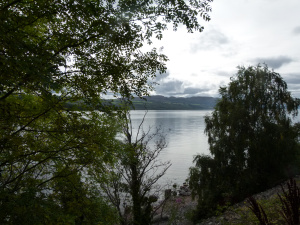
Quite apart from…
*
*
being excessively beautiful…
*

*
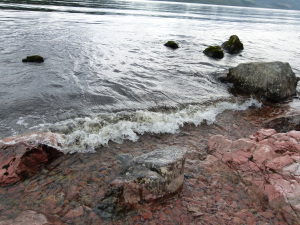
Loch Ness turned…
*
*
out to be…
*

*
A veritable watering hole for monsters!
*
Share this:

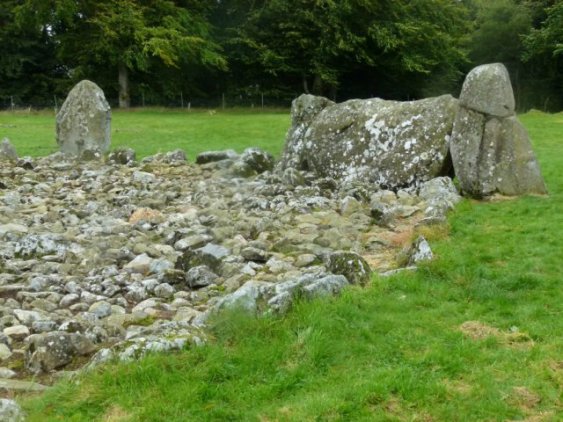
It looked, for a while, as if we might escape being rained on at our second site of the morning, but no… that would have been too much to ask The ritual cleansing would continue. We were heading for another recumbent circle, with a few unusual features… Loanhead of Daviot.
The car park was full so I parked the car at a little distance and we walked back, arriving to find the group listening to a ghost story about the lady seen in the woods through which we would walk to the circle. The trees could not have been there when the circle was constructed, or they would have blocked the view of the moon and made the recumbent redundant, but they do provide a beautiful approach and backdrop to the stones. The green lawn opens out beyond the shadows of the trees on a spectacular site.
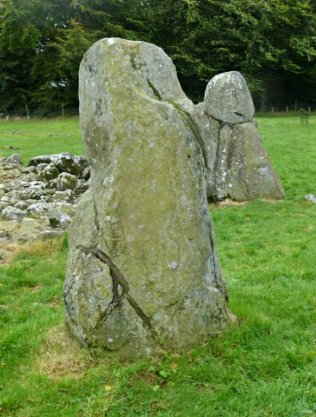
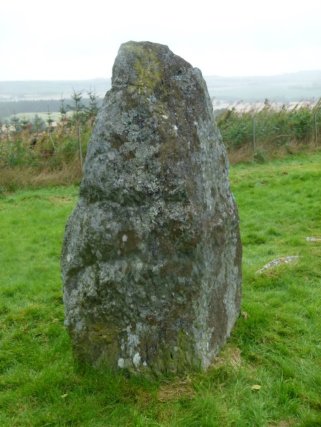
There are two…
View original post 894 more words
Share this:

It is, after all, only one day…
Have you ever re-assembled a day into a different sequence? Been so involved with its contents that the threads seem to weave themselves, again… and differently.
But it is only one day… and at the halfway point she will be waiting; waiting near the red tower where we will meet for the first time. And then the torn thread of ninety-seven years will be re-woven… for real, not just as a story.
It’s early October, 2017. It’s also AD 440 on a rocky cliff top towards which we are walking; and it’s 1914, and a picture from my genetic past rises, again, in my consciousness and returns to haunt me…
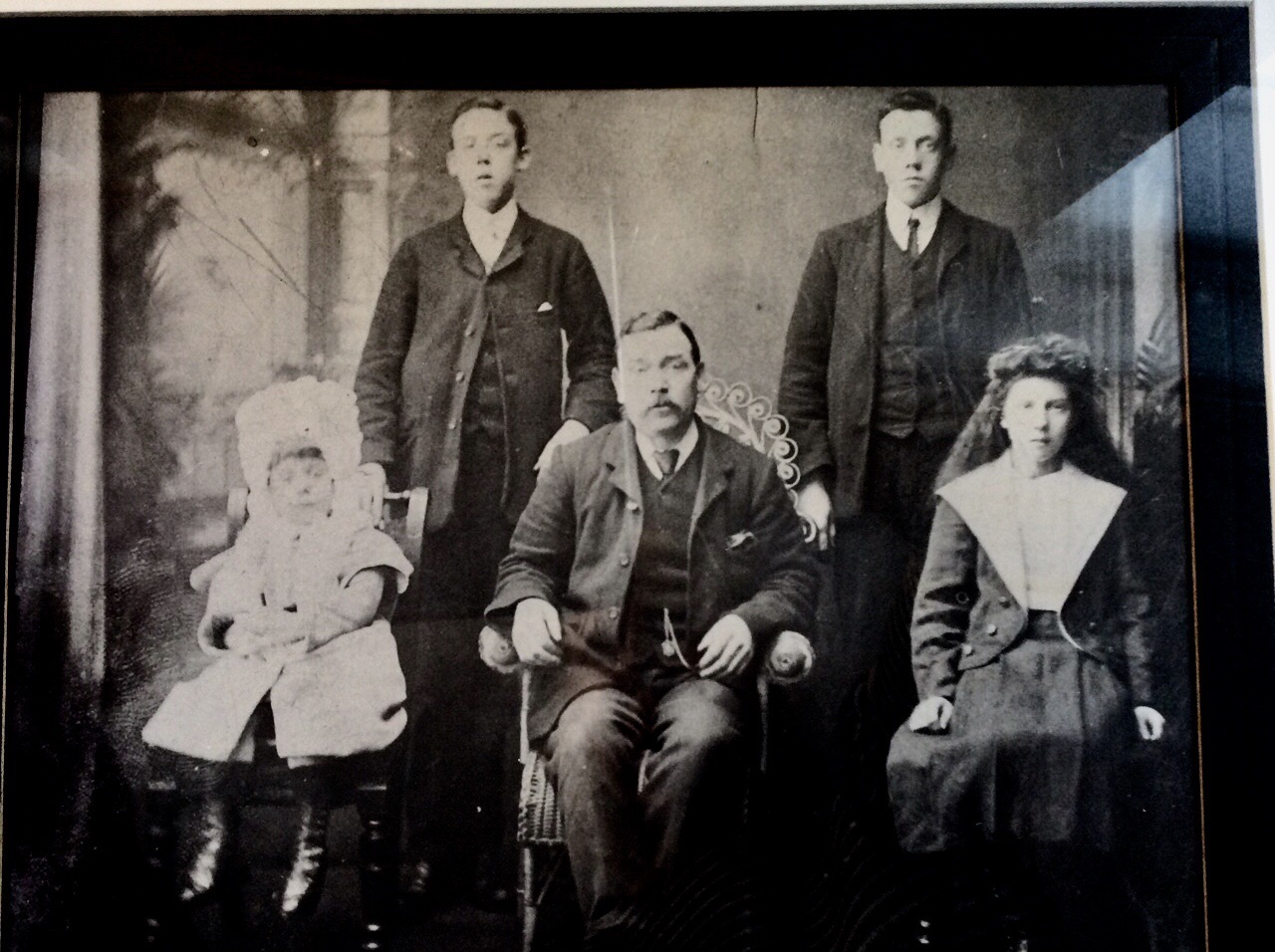
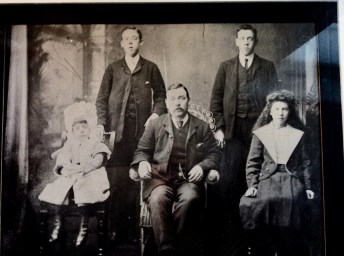
She’s very young, the girl in the black and white family photo. Her feet don’t touch the floor, on the adult chair. She stands out as much younger than the rest of them. She is my paternal grandmother, and her name is Elizabeth.
We know the island of Anglesey quite well. Even from Cumbria, it’s a relatively easy journey, courtesy of the northern M6 and the A55 dual-carriageway that follows the North Wales coast right to the bridges over the beautiful Menai Straits.
We’re having a short break near Cemaes Bay, which is located at the top of this historic and fascinating island.
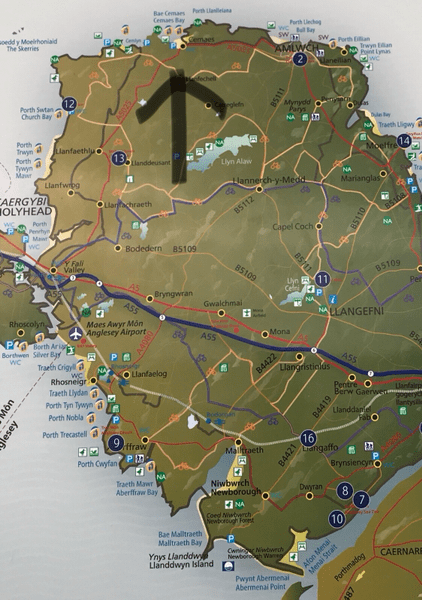
My annotated Anglesey photo (above) from the tourist information board at the tiny seaside village of Camaes Bay shows the location of this beautiful stretch of coast, which boasts that it is ‘the most northerly village in Wales’.
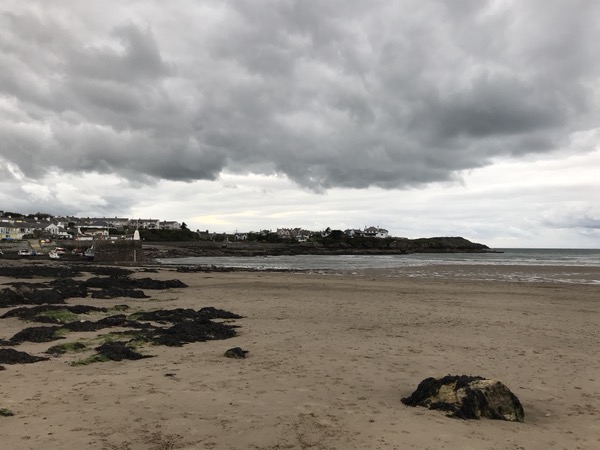
We had planned our trip carefully. It was to be a day of two halves, with very different agendas. The lunchtime and afternoon were to be spent on the reuniting of two family threads that have been separated by a near-hundred year gap, about which more later…
The morning was ours to fill, and we had our eyes on the nearby clifftop church of St Patrick’s; a place we had read about but never visited.

The beautiful bay of Cemaes is well known. Less celebrated is the ancient tiny church on the adjacent headland of Llanbadrig, and its founding by no less a figure than St Patrick, the father of the first Christian communities in Ireland and the west coast of Scotland
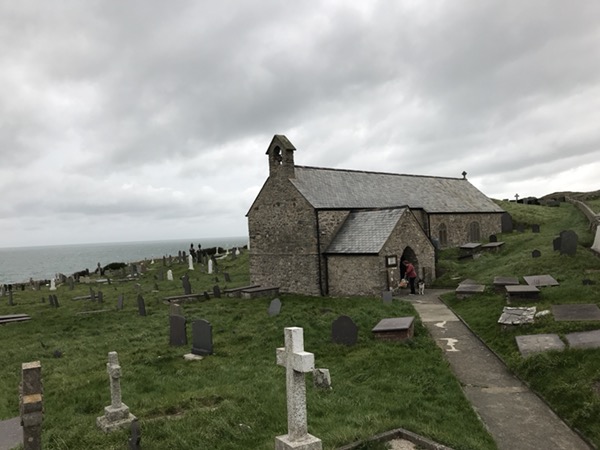
According to local legend, in AD 440, Bishop Patrick, as he was known back then, was on his maiden voyage from St Columba, on Iona, to Ireland, in order to bring it into line with Christianity – empowered by holy orders from Pope Celestine.
As often happens with the Patrick of legends, his voyage was ravaged by storms. The ship was driven towards the brutal coastline by the notorious Anglesey winds and shipwrecked onto the rock of Middle Mouse – now called St Patrick’s island, where he was marooned.

Above left: the tiny rock of St Patrick’s Island, formerly Middle Mouse.
He clings to the rock that, later, he will find is called Middle Mouse, though they will rename it. His coarse robe has taken on so much water that it’s seen him nearly drowned. Only by tearing at it was he able to squeeze between the jagged, black rocks that held him captive, while the breakers pounded him to a bloody mess. But he’s alive… nearly naked, frozen, bleeding and weeping. But alive… In the boiling sea, splinters of wood flicker into focus as he scans the waves for signs of they who brought him here, steered a course from Iona until the waves turned to salty mountains risen from the blackest nightmare.
But alive…
The photograph is taken; the photographer is thanked and dismissed. The members of the family – minus mother, Maria, who believes that cameras steal your souls – leave the family room. But not all of them… Stephen gazes down at his youngest sister, tears forming in his eyes. How difficult it is to know he will see her, again. She will not turn to look at him. She knows that the most precious person in her world is leaving. He is going to war; he and his fine engineer’s mind and his self-taught and fluent French.
(Continued in Part Two)
——-
Stephen Tanham is a director of the Silent Eye School of Consciousness, a not-for-profit organisation that helps people find the reality and essence of their existence via low-cost, supervised correspondence courses.His personal blog, Sun in Gemini, is at stevetanham.wordpress.com
©️Stephen Tanham
Share this:

A really beautiful post from bridgesburning… and relevant to many of us.

The strangest thing happened yesterday and the thought of it stays with me today. I visit frequently and regularly with a dear relative who suffers from dementia. The kind of dementia doesn’t matter, it all translates to the same thing. Inability to communicate, to understand, to know.
I read once that someone asked an old man why he went to see his wife in the nursing home every day when she suffered from such severe dementia that she did not know him. He replied that yes she did not know who he was, but he knew who she was. I think of that so often.
Anyway, I am pretty much the only person who visits this dear soul and I do it because she is family, we have a long history and because I love her greatly. Her degree of dementia varies from day to day. Sometimes she knows who…
View original post 530 more words
Share this:


Most people are familiar with the Big Bang. It’s a name adopted by the scientific world to describe the origin of the universe, a point of ‘singularity’ at the centre of the original black hole where everything, including space and time, came into existence.
Wikipedia defines it as:
‘The initial singularity was a singularity of infinite density thought to have contained all of the mass and space-time of the Universe before quantum fluctuations caused it to rapidly expand in the Big Bang and subsequent inflation, creating the present-day Universe.’
Except it didn’t…
Not everyone agreed with the idea of the Big Bang. One of its chief opponents ironically gave it its name: Professor Sir Fred Hoyle. The ‘big bang wars’ of the 1950s onwards were very bitter, as an outspoken Yorkshireman battled with the Cambridge establishment, of which he was a member, though he eventually resigned, saying it was impossible to work with the politics, there.
Hoyle was a brilliant astro-physicist who had objected to the idea that the universe had a start point. He argued that nature never did that; that time was a subjective thing and that everything should continue to be set within the understanding of Einstein’s laws, which required that time and space didn’t just disappear… or appear. The counter-theory, which had the weight of historical opinion behind it, was named the ‘Steady State’.
With the discovery of the cosmic microwave background in 1965, which showed that something like the Big Bang had happened billions of years ago, the tide turned against Hoyle and his ‘Steady State’ colleagues. This was despite the fact that Hoyle had previously showed that the heavy atoms needed for human life originated, not in the primordial big-bang soup, but in the suns of local solar systems – a kind of stepping down of cosmic matter and energy to originate life within the stable realm of a sun, which then nurtured that life as it gave up its own… in the form of radiant energy.
Professor Sir Fred Hoyle was excluded from a Nobel prize that included his main co-worker at the time. The reason was never given, but speculation was rife that the Nobel committee was uneasy with Hoyle’s multiple pastimes, including his creation of various science fiction books which dealt with intelligent and benign aliens.
Hoyle left Cambridge for the more liberal pastures of the American academic life, eventually retiring, with his wife, to the hills above Ullswater in the Lake District; not too far from where I’m writing this blog. He continued to oppose the Big Bang but was to far from its mainstream of thought to attack it.
In contrast, the Big Bang continued its roller-coaster of success, tracing the origin of the Universe back to millionths of a second after its creation…
…until the past few decades, when insurmountable evidence began to accumulate that you could not actually trace this creation scenario back to its absolute origin, at all.
Like most people, I had no idea that the Big Bang train had come to a halt, and yet what follows has apparently been known for four decades… That hunted singularity where space, time, and all the matter and energy within began did not exist.
The trail, as you approach the singularity where everything breaks down, is something like this: it becomes too hot for atoms to form; there is so much energy that matter and antimatter pairs can form; individual protons and neutrons break down into a quark soup and the heat and densities are so high that the whole Universe becomes denser and fits into the inside of a single atomic nucleus that we would recognise, today.
Finally, this collapses to a single point that occupies no space at all – a singularity at which the very laws of physics run off to infinity and everything breaks down. This was the ultimate vision of the Big Bang – the origin from which everything exploded outwards and forwards in time.
It’s sobering to think that nearly everything except that last instant has been confirmed as true. The three problems are: (1) that the Universe is perfectly uniform in background temperature; yet hasn’t had time to be so; (2) Has no curvature at the extremes, despite extensive searching; (3) There is no high-energy wreckage from these earliest of times…
The answer, put forward in 1979 by a theoretical scientist named Alan Guth, was stranger than science fiction. Instead of a radiant mixture of the highest energy particles at that singularity, there was no singularity and there were no particles. All that would become the Universe was bound up in the fabric of space, itself.
In space, itself….
This has been described as form of ‘vacuum energy’ which subsequently causes the Universe to expand at an exponential rate, without the need for a Big Bang, at all.
No-one really knows what this means. But it matches the ancient Hindu picture of eons-long expansion and contraction far more than it matches the Big Bang.
Professor Sir Fred Hoyle died on his beloved hills near Ullswater in August 2001. I would have loved to hike up those hills to tell him that, while he wasn’t exactly right, he wasn’t wrong either…
For more information I can recommend this excellent article on Medium, by Ethan Siegel:
Stephen Tanham is a director of the Silent Eye School of Consciousness, a not-for-profit organisation that helps people find the reality and essence of their existence via low-cost, supervised correspondence courses.
His personal blog, Sun in Gemini, is at stevetanham.wordpress.com
©️Stephen Tanham
Share this:

From Stuart: more detail than my earlier post and some fascinating observations…
Our first stop next day was a place where mysterious stones, a Celtic saint and a link to one of the best-known legends of the British Isles all come together in a village churchyard. It took a bit of finding, but at least the weather was a little less vicious than the day before. We were still going to undergo the ritual cleansing of the rain-gods though. We had no idea what we were about to see. We could have done a bit of research and snooping, but I, for one, was enjoying this mystery tour and was happy to go where we were led, enjoying the surprise of revelation.
Walking into the neat and well-kept graveyard of Midmar Church, I glimpsed a suspicious looking standing stone around the back and wondered if it was an outlier of a stone circle. We tried the door of the little church, but…
View original post 972 more words


 Sun in Gemini
You must be logged in to post a comment.