+ #Silenti, Consciousness, esoteric psychology, Gurdjieff, Mystery Schools, nature, Silent Eye School, Spirituality
The Finding of Polarity (3) – #Silenti
by Steve Tanham


In parts one and two of this set of three posts, we have examined how the development of the individual, the ‘self’, is a different process from the development of our young bodies, and relies upon our departure from ‘oneness’ in the womb towards a reaching for individuality – a process that eventually matures into what psychology calls the ego.
From a psychological perspective, the scientific definition of the ego is in terms of a ‘self-image’, increasingly strengthened and stabilised as we grow through childhood. Various problem conditions, from aberrations to pathologies, are related to how well this ‘self-image’ takes hold and becomes the centre of our ‘me’ existence in the adult world. Narcissists, for example, often reach senior positions because of their extreme need to define themselves by projecting their self-worth onto what they do, rather than what they are. More rounded psyches are grounded in true relationship, whereas the narcissist relies upon a perceived and constant reflection of their own worth in the world around them.
Western civilisation places enormous value on the achieving of individuality, particularly emotional and physical individuality; and glorifies financial independence above all else. Success in society is generally equated with such independence.
Here we have an increasingly agonising divergence: the world’s spiritual traditions have, for millennia, equated individual progress towards a spiritual state (one that is more real) with the diminishment, and, in some cases, the complete annihilation, of what we now know as the ego… the very centre of western culture’s mark of achievement.
We can take the view that the ancient knowledge of the inner states of our ‘selves’ is past its sell-by date and that modern thinking, based on science, is much more in tune with the truth of things. The majority of the population do just that, if they think of it at all. Many see spirituality as religion, only, and conflate the latter’s diminishing importance as mirroring its relevance – a view understandably fuelled by the constant headlines from the extremes of fundamentalism.
But absolutely none of this makes us happy… or even fulfilled. Something is missing if a person living a simple life in humble conditions can get more from life than those with an array of possessions and achievements.
The conventional response by those believing themselves on a spiritual path has been to attack our way of life. Only radical philosophers like Gurdjieff dared to consider that we might actually be on a perfectly valid spiritual path of our own.
The egoic nature of the western world has not stopped people from being caring individuals. Political societies might cycle through a lack compassion, but there is always a great degree of kindness in the family units that comprise them. The hunger for the personal truth and meaning that drives us may well be of a different nature. What if the ego’s development were necessary as a ‘fuel-tank’ for another journey? Suppose that the seeming negatives of the egoic self, with its anger, selfishness, avarice, pride, lust and the rest of the well-categorised deadly ‘sins’, were really signposts to what was missing – in effect the way home…
We’d have to want to be ‘home’, as in somewhere else, inside ourselves, of course. But if we are truly at the point where increasing our store of what society views as the stuff of happiness was simply producing more angst, then where else is there to go?
The key is not to find someone else’s truth; it is to find our own. The value of what psychology has given us lies, ultimately, not in the production of stable egos – though that is an important goal for anyone in whom that vital stage has not crystallised; the value of it lies in the clarity it has provided for the inner meaning of those ancient traditions and their relevance to those who would find their own spiritual path, today.
The founders of the Silent Eye gained their experience within a varied and mixed background of mystical traditions ranging from Rosicrucian, to Qabalistic to Fourth Way. We had all experienced the real power of people working together in a group aimed at ‘raising the consciousness’ of each individual, without drugs, so that we could begin to perceive deeper realities. We established the Silent Eye School using a core set of teachings that combined everything we knew to work, including mystical drama, and based it around a symbolic variant of the enneagram – a nine-sided kind of star that has evolved to describe and illustrate how ‘nature’ works the world and, latterly, how psychology’s map of the inner human maps into the heart of this. Only our synthesis of this is new; all the components were there before, though not in the form we gave them for our symbolic and inner three-year guided journey which is at the heart of the correspondence course.

The Silent Eye’s version of the enneagram
Our journey begins with this quest: to find and understand the ‘gap’ between the western self as described by psychology and the ancient wisdom of the ‘no-self’. Our goal as been to show that the value of the egoic nature can be preserved, but that its nature has to be healed rather than polished. Instead of retaining its desperate role as the ‘captain of the ship it must keep creating’, it can now relax into knowing that it is really only a picture – an image of our outer reactiveness, useful in terms of its skills, but redundant in terms of its knowing the answers about our real coming-into-being.
Those answers lie in a personal journey which unzips the ego, carefully and with love, using its restlessness (and suffering) to point to how those elements of unease are generated, in each part of its psychic anatomy, by a lack of something else. That something else eventually takes shape, and that is where the enneagram has its unique value – it acts as a map of the homeward journey, a journey in which the real characteristics of a true Self become apparent, requiring no validation from the material world. This newly discovered entity, which many call the Soul, is perfect in its individuality; is supported in its vivid feeling of being truly alive; and is secure in knowing, beyond question, that it is already a child of those formless realms spoken of so long ago…
Other posts in this series:
©️Copyright Stephen Tanham 2017
Share this:

Share this:

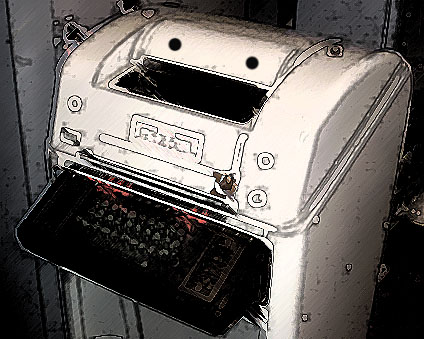
It’s 1950. The room we are in is more like an old school hall than the site of a leading-edge experiment in the definition of intelligence. Before us is a teletype – a machine that we can type on which will relay that message – and any response generated – across a telecommunications link to a similar machine somewhere you can’t see.
That’s a fairly simple requirement by today’s standards, but, back then, it was the way you communicated, remotely.
We’ve just typed a question on our end of the teletype link: “What will you do on Tuesday?”
There is a pause while our recipient in this experiment thinks about this. Then our machine chugs into action, the paper moving up one line to allow the response to appear. A bit like a old teleprinter giving a football score, the characters appear, noisily, one by one.
“Perhaps, I should ask you what you will be doing on Tuesday?” reads the message.
We smile. There is both humour and cheek in the response. For the past hour we have been trying to decide whether our correspondent on the other side of the link is a machine or not. This test for intelligence – whether we can decide the difference by talking to he/she/it – has been proposed by Alan Turing, one of Britain’s leading code-breakers of World War II, and the genius credited with cracking the Nazi’s ‘uncrackable’ Enigma encryption machine, as part of the Bletchley Park initiative.
Four years from now, Turing will be found dead from cyanide poisoning in his Manchester flat, though the apple remnants in his stomach will show no signs of the poison. Shortly before this he was required by the local police to be chemically castrated, following prosecution for practicing homosexuality. The treatment gave him breasts, and this is thought to have triggered his supposedly terminally depressed state. His flat was full of advanced computing circuitry, which was removed by the local police.
Our little test with the teleprinter never actually took place. Like many such mental devices that Turing put forward, it was a conceived as a reliable ‘thought experiment’ in logic. His proposition was:
“A computer would deserve to be called intelligent if it could deceive a human into believing that it was human.”
The success of Turing’s code breaking also led to significant moral dilemmas. It was alleged that Churchill’s wartime government faced agonised decisions when messages they intercepted resulted in knowledge of future enemy attacks. If you knew that a certain convoy of ships was being targeted, did you alert them to the danger? We would probably respond with ‘of course!’, but to do that, repeatedly, would have revealed to the enemy the fact that the codes had been broken – resulting in the critical, and potentially war-winning, advantage being lost.
What followed has never been officially verified, but has been widely spoken of. The government -and Turing was involved in this, himself – had to derive a method, an algorithm, that would randomise the interventions to an acceptable level of success. Of course, each one also had to be viewed in terms of strategic importance to the war effort and the country’s future. ‘Playing God’ was reputedly one of the expressions that Turing used at that time. It was during this era that the foundations of what became known as Game Theory were laid by mathematicians on both sides of the Atlantic. Not unlike the thinking behind cybernetics (one of the early branches of ‘robotic’ artificially intelligent behaviour), this new branch of confrontation and strategic warfare was to gain in importance until it became a key part of the planning of possible nuclear war scenarios.
Turing was concerned with what ‘behaved like it was intelligent’, understanding that, although the teletype didn’t look like a human, or even a robot, if its appearance could be masked, that wouldn’t matter. The problems generated by the cracking of the Enigma machine came about because of the success of the technology. They were not directly related to the technology, itself.
Artificial Intelligence (AI) has moved on, considerably, since the 1950s, and now poses moral dilemmas and consequences much greater than those of revealing that codes have been cracked. AI, embedded in all manner of domestic products, now makes decisions for us, computing in tiny fractions of a second what the line of least risk might be for a given situation; or what the most efficient ‘way forward’ might be…
The problems generated by the success of the technology haven’t gone away. A recent example is the logical programming of automated ‘driverless’ cars, which use AI to control themselves – something quite unheard of in Turing’s time, and viewed as fantasy even a few years ago.
Dilemmas often centre around a ‘thought experiment’, much as Turing’s test of intelligence all that time ago. One of the latest such mental devices, derived from philosophy, is known as the ‘Trolley Problem’. Imagine that you are standing beside a railway track, and that, coincidentally, there is a lever nearby that activates a set of points to change the direction of any train coming your way. You’re having a bad day and it gets worse when you turn around and see that number of people have been tied down to the main track – the normal route of the train. Before you can adjust to the shock you turn to look at the other track (the one that the points will activate) and see that there is another person tied there. Your attention is rudely dragged back and forwards to the main track – and you see that a runaway train is coming down the line…
You – simulating AI – have the only ‘control freedom’ possible; the train can’t be stopped and is either going to kill the group or the single person. You get to decide. Most people would switch the track-points so that fewer people got killed. But then, just before the train gets to you, your smart phone tells you that the men on track one are bad guys who’ve just robbed a bank. Now, what do you do?
This is not so far-fetched as it may first appear. Say this was a driverless car and a connected social media platform that you trusted kept a ‘good persons score’ on each satellite-tagged person in the vicinity. In the event of your car being about to smash into that car in front of your – the one with five occupants – your car would ‘know’ that the lady with a pram on the pavement, who you would kill if your car took it’s usual ‘avoid collision’ action, was a much better person, and therefore worthy of saving.
It’s horrific… but this ‘world’ is very close to where we are now as a technological society. In this example what’s happening is that the possibility to make changes in real-time is forcing us to re-examine that tiny window previously covered by the word ‘accident’.
If AI can change the outcome, then who owns the programming the AI will use?
While technology is advancing, massively, politics and humanitarianism seem to be being left far behind, leaving the rich and powerful to decide things – as they did with the large-scale manipulation of political data on both sides of the Atlantic during the past twelve months.
Next week we will go deeper into the fascinating but potentially nightmarish world of AI.
©Copyright Stephen Tanham 2017
Share this:


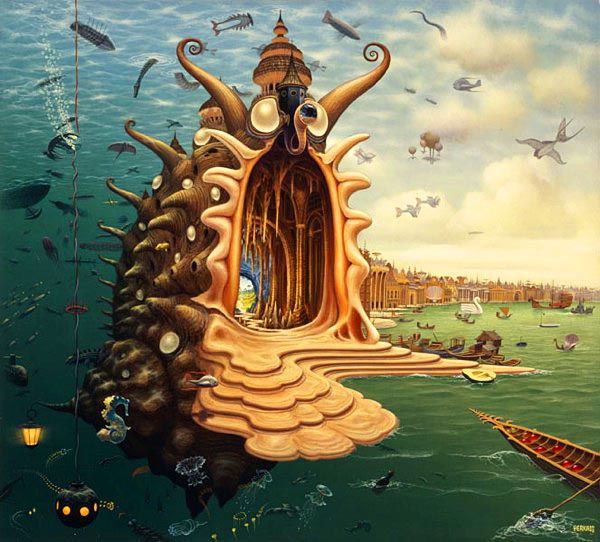
I snuggled under the duvet. The night was chilly but the bed, with its big feather pillows is perfect in this weather. Bliss, in fact. And I was ready to sleep, looking forward to it… it had been a long day, an early start. The dog had burrowed beneath the cushions again… I’ve given up on that. She needs an igloo. Me, I burrowed under the cosy duvet. I relaxed, switched down, let the muscles go and the breathing slow, into that meditative pre-sleep state. As I was drifting into dream I thought about the whole affair of sleeping…
Then I was wide awake again.
Hang on a minute here… what is it with this sleep thing that we look forward to so much? Rest… yes, that I can go with. Relaxation… that I can understand. A chance to recharge the batteries; for the mind and the brain to process…
View original post 619 more words
Share this:

“As I begin to understand how ‘I’ am made I begin to see that infinity can largely be equated with what is formless and not with some mathematically and useless hugeness”
I wrote that down some time ago. From one perspective, it describes the beginning of the real search for what uncovers the heart of polarity – rendering it useful, at last.
We live in a world of what mystics call ‘form’. Form gives us separate ‘things’. Without separate things the mind cannot function in the way it has been taught. Without things, mind begins to panic – though it need not; but our training in perception (in how to see) is received and deep, and conditions the self and the society in which that self grows.
Self is the continuity of thought. Self clings desperately to that continuity, thinking that this massively heavy baggage is its life. Unless I keep this picture of ‘me’ vividly alive, I will lose my life, it says… Even in writing it down we can sense the frailty of the mechanism. Thought is a continuous narrative around the supposed centre of the self – the picture, the emotional and physical image of a ‘me’ at the heart of things; and it’s made of memory. This construct generates all the problems that life contains: It separates an assumed ‘me’ from the rest of experience. That experience is real, but the packaging of duality we divide it into is not.
This is the heart of the twin concepts of duality and polarity. These concepts are the true, mystical endeavour. The separation of ‘me’ from my experience distorts the reception of my experience, for which ‘I’ as an unique point of perception in the universe, am beautifully equipped. Over a lifetime, the nature of that experience becomes entirely conditioned by the layers of this assumed ‘me’. Only careful unwinding of this dirty bandage will reveal where we – Life – really live.
Life develops on a gradient of awareness. We, the humans species, are said to be the pinnacle of that awareness. Through evolution, primitive awareness of the survival of a separated centre becomes, eventually, the accretion of a self, as like and dislikes come to define who ‘we’ are. To evolve intelligence, we have to be capable of manipulating the external. We examine it and need to separate its components, because we can’t ‘eat the whole elephant’. To do this, the mind takes a giant leap and names things… And, of course, one of the things it names, or is given a name for, is itself. The naming, praising or denigration of this self becomes the ego.
The way our minds work mirrors, and derives from, the survival instincts that protect our animal – and there can be no escape from the fact that a considerable part of us is animal in its nature. I like warmth, I hate cold, though I have to learn that there are degrees of things, and that too much warmth can hurt me – probably a lot more than cold – so paradoxes become frequent and the complex logic of mental words accommodates them. This duality of like and dislike, pain and pleasure, expands into a spectrum of preference in the adult -and preference brings with it an implication of dissatisfaction with what is.
These are all the product of the animal part of us. We have, by then, developed a strong sense of self-image, and the assertion of this is the key to our success in the world. That has to be based upon agreed advantage, so we quickly learn that to be successful we have to fit in.
And then, one day, we might wake up and realise that something very deep is, increasingly, being lost. That vividness of experience and honest feeling we had as a child has been clouded over, like a blue sky gone grey and without its sun. At that point we see that we have made a world for ourselves; that the egoic self-image has become the centre of our lives rather than the reality of undivided experience all around us. This world, seen as it is, in Reality – was not and cannot be created by use in this constant anxiety of the success-mind and so the estrangement grows and grows.
It’s quite a moment – in the Silent Eye we call it the ‘turning point’. Many people register it but do not act on it. Over time, it can be numbed by the usual diversions of the sensual world. For the small number who choose to act on it, a path awaits that will challenge everything they think they know – to paraphrase the Sufi mystics.
Firstly, we have to recognise that our lives are filled with duality: me and it. ‘It’ is the world, ‘me’ is the self-image. This duality robs our experience of its true life (Reality) and that dirty bandage must be carefully unwrapped, without destabilising the animal or losing the hard-won skills that give us power of action. Secondly, we come to realise that what gives us the most real excitement is not the self-image but the power of the experience of being alive. When we shut down our inner judge we begin to let reality flow in us, again. The original shutting off of that flow is the cause of most of our sadness, dissatisfaction and illness.
One very good way of sampling this for ourselves is to look at a familiar object – a tree is good subject – and say its name (eg ‘Oak’) over and over again until the world – the agent of thought- becomes meaningless. At that point of no-longer-knowing-anything about the tree, go closer to it and be with it. Walk around and touch it, smell it, see it from deliberately different angles, use all your senses and try to suppress anything that smacks of the past. Most of all, shut of like and dislike and any inner dialogue based on previous experience of trees. There’s nothing ‘new-age’ about this, its simply the science of being. Having said that, there’s nothing wrong with hugging a tree you’ve just discovered, even though it’s been there for years…
This exercise will bring you into contact, however fractionally, with the Being of the Tree. It will also show you that, once you turn off the habitual mechanism of the ‘word’, the substance of thought, you will begin to see that the duality of ‘me and it’ is entirely false, and that your real life is in the harmonisation of experience and the diminishing of the false self.
We have spoken, here, mainly of duality; so what is polarity? Are they the same? Mystics speak of a subtle difference. Polarity is seen as a deeper understanding of the construction of form – objects with purpose being grouped together. We did not create such purposes in our own minds, we discover them through knowledge – the real purpose of science. With new eyes, we build new relationships with the natural world, seeing a much bigger will than ours at work.
There comes a moment when we see that the subtle difference between duality and polarity lies in the latter’s possession of an intelligence of reconciliation, and a realisation – like discovering a natural spring in the landscape – that this polar intelligence is there to take us home…
What, then, is the usefulness of a ‘self’? Has Nature spent billions of years evolving us from star-stuff to find that the self is not fit for purpose? The answer is an intriguing paradox that we will consider in the concluding post, next week.
©️Copyright Stephen Tanham 2017
Share this:

Share this:


“…as everyone knows, if the first butterfly you see is yellow the summer will be a happy one. If it is white then you will just have a quiet summer. Black and brown butterflies should never be talked about – they are much too sad.”
Tove Jansson, ‘Finn Family Moomintroll’.
It is the same every year, as soon as the sun warms the earth for the first time, I start looking for butterflies and even after all this time, I am hoping the first is golden. I don’t know why that passage left such an impression on me as a child, but no spring has passed without me thinking about it.

I have never been able to find out whether Tove Jansson based her premise on imagination or on local folklore. It doesn’t really matter. Whether it is truth, myth or fantasy, I choose to believe it. And, if…
View original post 437 more words
Share this:


 *
*
Could any creature
more perfectly delineate
the strange
ludicrous
joy
of existence?
*
Share this:


This series of posts have been about the manipulation of democracy, on both sides of the Atlantic, by a new generation of internet-based personal data collection tools. These tools feed on the information we – wittingly or unwittingly – provide to social media applications like Facebook and Google. We have seen how a small number of our opinions, expressed on such social media, may provide a comprehensive inference of our voting intentions, laying us vulnerable to instantly presented information – or disinformation, in the case of the past twelve months.
Equipped with products like NationBuilder, a team of people carrying out political canvassing on the doorstep will already know what your voting intentions are likely to be. Their message to you may appear to be a traditional reinforcement of a party political manifesto, but it could equally be an entirely fictitious reference to a script that has been created by organisations who use that tool to cast doubt in your mind. The tool isn’t doing this, but it is enabling those who build the message – sometimes hundreds of thousands of different messages – to falsify or subtly bend the truth, as in my experience, related in Part One of these posts.
There is no law against lying to the public, as long as you do it under the cover of a political process. That is the sad conclusion drawn by experts across the world, following the turbulent events of 2016. The UK has data protection laws, as, increasingly, has the EU. But neither country applies the law to the truth of what is given out as fact in elections. In the US, there is no single public data protection statute, though different states have their own, many of which conflict with each other. (source)
We need to consider the trade we make when we use social media. We do not pay for the use of a very sophisticated suite of applications, at least not up-front. Instead, we give the platform providers the right to use our data. Few of us ever read the small print. I understand that trade-off with advertising, having been in the software business for many years. I’m perfectly happy for Facebook or Google to show me images of what they think I might want to buy. Sometimes, I do click on them to buy something, so, it works, and allows the social media platform to make its money – but not as much money as they can make in an election year…
More sophisticated use is frequently made of our data if we respond to one of the ‘you won’t believe what this resulted in…’ type of sensationalised banner, in similar style to a tabloid newspaper. You may then be led, unknowingly, to, ‘install’ a product such as NationBuilder, which will live alongside your social media tool, collecting your political data. If you haven’t checked, click on your settings and see whether this is hitching a ride on your life… Remember, these system run on the internet, so they don’t need to download to your computer, just run alongside what you already have in some distant server farm. Again, there is nothing illegal about such software, but the use to which that data is put – the motives of the end user who wishes to engineer public opinion in a targeted sector of the population – is increasingly seen as immoral and hostile to an open and truthful political process.
The fault here does not lie with the technology. The IT business has been offering ‘data-mining’ for a generation. What is new is the willingness to shift the process of opinion-farming into dubious practice that should lie outside the law, but doesn’t.
I have watched a fascinating process for many years as new ‘elites’ are generated in society. During the 1970s and for a period of thirty years, it was IT, itself, that attracted a generation of bright minds. The latest was the growth of the power of international banking, mirroring that of the internet. In each case, a small group at the top of the pile viewed themselves as above the law. In each case, new laws were required to protect the public – the ‘little people’ to quote a popular phrase among the ultra-rich investment banking community.
It may be too late… The ability to understand the complexity of modern commercial, political and governmental processes, all of which rely on embedded computing and the internet, may be beyond all but the few. Most of these few will have been seduced by the lucrative returns they can make in commerce. I am a proponent of business, having run my own company for two decades. I consider business to have been the engine of social progress – but only as it long as it serves the common good.
What we lack are laws and funding that extend the rule of law into all such dubious aspects of society, so that electoral manipulation is as much subject to scrutiny as banking… though the latter has yet to mature, as well.
There are many voices raised in support of this. The latest is the founder of the internet, himself – Tim Berners Lee. In a recent article in the Guardian newspaper, he makes many of the points raised in this series of three posts, but with much more authority than I can. His comments on governmental mass surveillance make sober reading as well, especially in a week that has seen the Wikileaks revelations about ‘smart’ domestic devices being able to listen into our home comforts… Anyone remember the chapter in George Orwell’s 1984 where the speaker on the wall tells Winston and his love that they’d better get dressed?
Why aren’t we chilled at all this? Have we become numb to it all? Is the fear of terrorism really enough justification to change all our lives in ways that may never be reversible? Is it simply ‘bread and circuses’ – keeping the masses happy with sport and shopping while those running our lives do the ‘hard stuff’? Or, have we simply become soft? In a period of relative prosperity have we forgotten the need to struggle for the truth? History, for those few who still study it, paints a vivid portrait of what happens, next…
Philosophically, we should question those who seek to control for a living, in all its forms. Life thrives on freedom, but freedom needs laws to control its excesses. Never before have we so needed the spirit and letter of the law to be strengthened to protect human rights. Never before have we so needed that new generation of lawyers to come forward with a will to protect society and its values beyond their personal pocket.
When you see newspaper headlines accusing the country’s most senior judges of being ‘the enemy of the people’ then it’s time to worry most of all… The Law may be occasionally pompous, but it’s the best friend we’ve got.
Original content©Copyright Stephen Tanham 2017
Other parts of this series:
Share this:

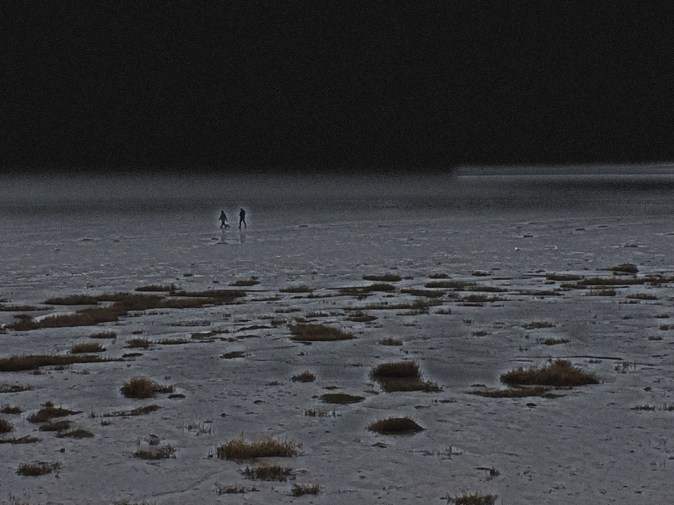
Beyond the boats of reason beached
We walked – the lady, the dog and I
And darker day came after darker night
As air of truth died on the breeze
And chaos of nightmare dawned.
⦿
Beyond the boats of reason beached
We walked – the lady, the dog and I
And breathing stopped because
We were not breathing
And chaos of fear dawned
⦿
Beyond the boats of reason beached
We walked – the lady, the dog and I
And darkness pressed upon our skin
But only pressed, not cut
And chaos of reality dawned
⦿
Beyond the boats of reason beached
We walked – the lady, the dog and I
And the tide had turned and waited at our backs
But waited in a darkness, pregnant
for the power of reality dawned
⦿
Among the boats of reason beached
We returned – the lady, the dog, the tide and I
The way was that which shone from our own skin
Which filled the empty darkness
And the shroud of chaos fell
from a reality finally unafraid
⦿
©Copyright Stephen Tanham 2017
Share this:

Alethea is also a Companion of the Silent Eye School of Consciousness
Truth
open the room of my mind
search for me
within faded
doubt
listen to words
sing
My birth
There was once a girl named
Alethea
her heart sparked with truth

My mother always told me she found my name, Alethea, in a book. In my child-mind I created a tome perfumed with age, adding gilded pages over the years. Sometimes I imagined stories, filled with strong and beautiful goddesses, and smiled with the thought that I was held inside.
“It’s Greek,” my mother told me, “for truth.”
When I opened the book inside the room of my mind, I watched the pages unfold like the wings of a butterfly, and waited for a girl named for truth to manifest into form.
I never doubted the existence of this book, until one winter afternoon when I was thirty-six. That day, alone in my New Hampshire home, I cupped a phone…
View original post 973 more words


 Sun in Gemini
You must be logged in to post a comment.