

Jiddu Krishnamurti (1895-1986), photographed in 1929. Picture source, see end of post
In part one, we examined Krishnamurti’s view that the individual could, with considerable effort, ‘unclip’ themselves from their society (though not broadcast it) and begin to separate out the pieces of their world in order to contemplate violence in a new way…
This would begin the process of giving the objective world (what IS) some initial power over the egoic self, which had grown to assume a role as something it was not capable of, being entirely subjective and without true centre.
We may think that anything that purports to address violence would begin by considering aggression. But Krishnamurti took a different route: he said that it must begin with a new way of seeing.
We might reasonably think that having reached adulthood and tested our vision in both physical and intellectual tussles, we were perfectly capable of seeing without further guidance.
Not so, said the teacher..though he suggested we must be our own teacher in this as in so many real things.
Seeing as we knew, it, he maintained, was the result of our personal history. Not history as we generally know it, but an accretion of ‘stuff’ that clouded every attempt to see out of this fog of confusion we called the self. We are, he said, not a single entity. We have a self that arises in family and with loved ones; a self that arises when we face up to the confrontational challenges in our workplace; a self that reacts as it does not want to when we are forced to do something – the imperatives of survival dictating that we preserve this ‘self’ at all costs. There were many more.
To approach violence and fear, we had to come to know a new type of seeing, one that belonged to a new self, a self that examined the flow of itself without judgment in order to place a watcher on she/he who claimed to watch…
What does this second watcher do?
In order for this entity to exist, it must, in a sense, step backwards from a world that is painted on our eyeballs; a world that triggers us to react with every breath, never having the time nor the energy to truly ‘see what to do’ without thought.
And, arriving at that point, Krishnamurti said, we began to glimpse that our history, reaction, time and fear were all secretly knitted into a fabric dominated by the chief villain of the piece… thought.
Continued in Part Three
Previous Parts:
—————————————–
This is the second in a series of postings related to topical issues in mysticism. They will all carry the hashtag #Silenti. Please feel free to reply or join in, using this hashtag.
©Copyright Stephen Tanham, 2016.
Share this:

Share this:


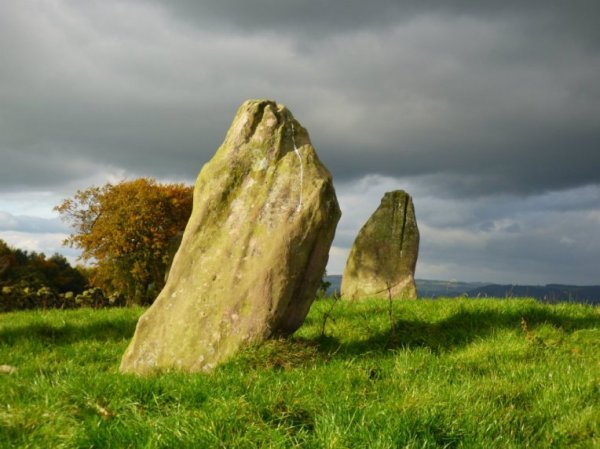 Nine Stones Close
There has been a bit of a preoccupation around here lately with stone. Between the recent and forthcoming workshops we will have visited a fair number of stone circles, standing stones and burial chambers and it might be tempting to think we are simply indulging our curiosity or even wafting around the stones of the past, in denial of the fact that evolution has taken humanity thousands of years away from the time and spiritual climate in which these stones were erected.
There is a temptation also to look at these stones and call them primitive constructions, or crude symbols, yet the planetary and seasonal alignments present at many of these sites, let alone the scale and sheer number of them across the landscape, suggests we need to reassess that misconception. While arguments smoulder about their purpose and significance, their beauty, mystery and the power of standing…
View original post 1,138 more words
Share this:

Share this:


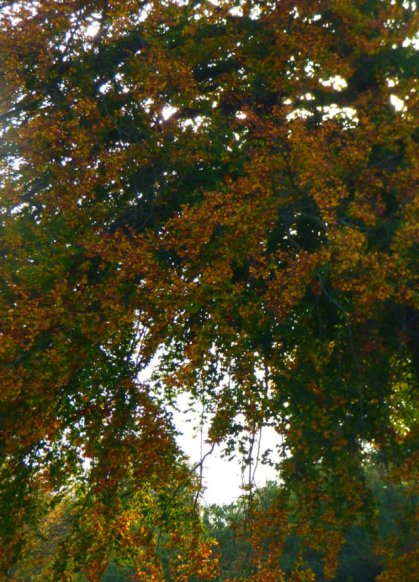
The last vestiges of autumn’s glory still clings to the trees, pale gold and copper against the damp-blackened bark and vivid green of the English countryside. The stone-built cottages, many of them still roofed with ancient slabs of sandstone, or the dark grey slate that echoes November skies, look warm and cosy with their lights casting an orange glow to soften the shadows.
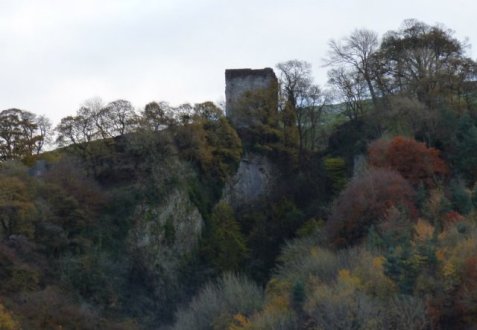
There is something reassuring solid about these homes that have seen so many people pass through their doorways over the centuries. Their chimneypots vary from the purely prosaic to the fanciful, creating a landscape all of their own high above the village streets. Even the ruined castle on the hillside has a permanency about it, though after nearly a thousand years it is a mere shell of its former self.
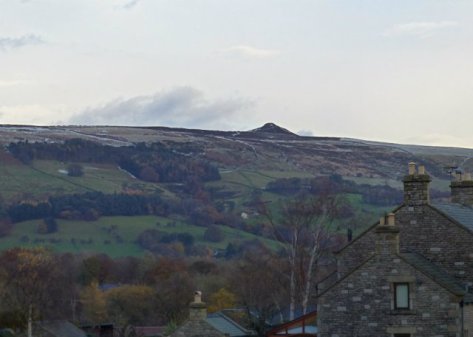
It is no wonder that so many people come here on holiday in the summer, when even…
View original post 488 more words
Share this:

Share this:

Share this:


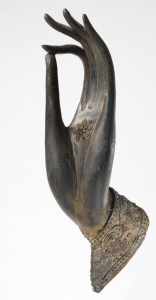 I didn’t know about Advaita Vedānta when I was a child and only recently discovered there were people like Alan Watts (and others) writing about non-duality in the Christian context, [link to part of the Alan Watts’ essay: This Is It]. Now I’m convinced it is important to focus on the fact that there is something at the heart of Christianity. The uncomfortable feeling that’s followed me all these years – that somehow I missed the point of the Jesus Teaching – all this has gone when I think of the Advaitist aspect of the teaching. It’s the missing piece of the puzzle I just stumbled upon, coming from an Asian perspective, an inductive knowing and that’s how it works.
The reason I didn’t see it before is because the Western concept of God, having human attributes (similar to the Advaitist idea of Ishvara), contradicts the rational scientific view. Accepting something that’s scientifically impossible, just…
View original post 440 more words
Share this:

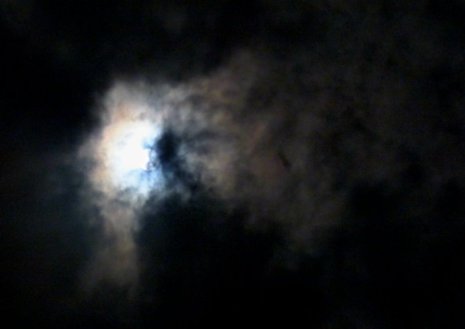
We had the supermoon a few days ago. On the night when it was forecast that we would see the phenomenon at its best, the moon was hidden by a thick pall of cloud which, though beautiful to watch as the moonlight lit it from within, did not exactly give ideal conditions. Luckily, though, the previous night had been beautifully clear and I had watched a golden glow surround the moon in her rising and seen her unveil silver beauty low in the sky.
It had been the same with the meteor showers. When they were supposed to be at their best, the cloud was impenetrable.Yet I had seen shooting stars cross the sky as lines of white fire in the nights before and after…and one glorious meteor that was as bright as a firework flash across the blackness.
The predictions had been wrong. While the moon and shooting stars…
View original post 542 more words
Share this:

Jiddu Krishnamurti (1895-1986), photographed in 1929. Picture source, see end of post
Many people are in a state of shock following a series of electoral surprises that have rocked the political ‘liberal establishment’ on both sides of the Atlantic. Racist attacks are on the increase and long-respected ‘experts’ are frequently mocked. We are in danger of throwing away many of the principles of established civilisation. It’s easy to feel that these uncertain times contain the seeds of extreme violence.
Politics works on the basis that large populations are capable of collective and constructive behaviour. But, there are other perspectives that speak, philosophically, of the effect that a relatively small group of people may have on an era, outside of politics, entirely.
Two figures in this latter mould are G. I. Gurdjieff and Jiddu Krishnamurti. In this series of posts, we look at the radical approach that Krishnamurti took to human freedom, which he said belonged only to the individual who was capable of observing himself/herself to such a level that a process of self-change could be initiated at the levels of mind, emotion and instinct.
Part of this process was to be prepared to completely cast off the conventional ways of thinking about things. Leaving behind beliefs, temperament and conditioning is no simple matter. This was particularly true of the subject of violence, which Krishnamurti viewed as the scourge of modern society, and endemic in our capacity for self-destruction.
Krishnamurti saw violence everywhere around us: outwardly and in our relationships with each other. He saw it in both politics and religion, and may well, had he lived, have seen it in the modern use of technology. All of this, he wrote, produces sorrow, which saps the creativity and coherence of life in society.
How are we to react to violence, which, in this era is even more threatening than in Krishnamurti’s time? Can we look to the experts, the politicians, the priests? His view was that all such respected ‘authorities’ have failed, leaving the individual to find their own answers.
Krishnamurti argued that we are, as human citizens, as fragmented as the societies in which we live, and that there was an unseen and potent relationship in this. He maintained that we were not, individually, in a position to affect society in a religious or political sense, but we did have great potential to turn ourselves into a true individual, in which case there would occur a binding between the actions we subsequently undertook and our effect on the violence we previously abhorred.
In part two, we will look at how the individual may approach violence in themselves, taking apart the pieces so that they can be held up to the inner light of objective consciousness.
—————————————–
This is the second in a series of postings related to topical issues in mysticism. They will all carry the hashtag #Silenti. Please feel free to reply or join in, using this hashtag.
©Copyright Stephen Tanham, 2016.
Share this:


I’m prepping a series of posts on the nature and origins of fear.
“Fear is the pillow of the ego.”
It just came to me, and I thought it was worth posting!
Hope you’re having a good Sunday…
Share this:

Just had to reblog – thank you, Jean!


 Sun in Gemini
You must be logged in to post a comment.