

“For me there is only the traveling on paths that have heart, on any path that may have heart, and the only worthwhile challenge is to traverse its full length–and there I travel looking, looking breathlessly.”
― Carlos Castaneda, The Teachings of Don Juan: A Yaqui Way of Knowledge
Recently a name has kept on cropping up that takes me back several decades. There seems to be a resurgence of interest in the books of Carlos Castaneda, an intriguing figure who, with the unlikeliest of stories, managed to capture the imagination of a generation of spiritual seekers.
The first books to hit the shelves were written when he was an anthropology student. They purported to be true accounts of a meeting with Don Juan, a Yaqui Man of Knowledge of a lineage of Toltec Seers… and of the author’s training and subsequent journeying into ‘nonordinary reality’. Originally hailed as accurate…
View original post 921 more words
Share this:

Treat yourself to a little smile…

As soon as you start to mention the whole mind over matter thing, scepticism immediately cuts in like an automatic safety mechanism to keep you on the right side of reality and sanity. Vague visions of objects floating across a room by the use of telekinetic powers are accompanied by the eerie strains of 70s sci-fi TV and straight away, you are unconsciously looking for the wires.
As an idea, it isn’t quite so far-fetched though. There are good reasons to believe that the mind can influence matter and that the body can influence the mind.
Smiling is a good example. We smile when we feel happy, yet it is equally true that we feel happy when we smile. Even if it is a forced smile, by activating the muscles around the mouth and eyes in imitation of a smile, the brain is fooled into thinking we must have something
View original post 915 more words
Share this:


To the small creatures that call the tree home, we are no more than a temporary addition to their landscape. Spiders and beetles wander over our legs or drop from our hair as we rest with our backs to the trunk, feeling the sleepy life of the tree through our spines. Our world is in the darkness and we are grateful for the cool oasis of dappled shade. Around us the earth bakes in the noonday sun that saps our energy, while the birds, butterflies and bees reap the harvest of summer.
On a hot day, there is no better place to be than within the shade of a tree, looking out upon a sweltering world without feeling the heat of a sun that blasts and sears. Yet hiding in the shadows is not always the best option. There are many who seek the safety of the shadows rather than…
View original post 249 more words
Share this:

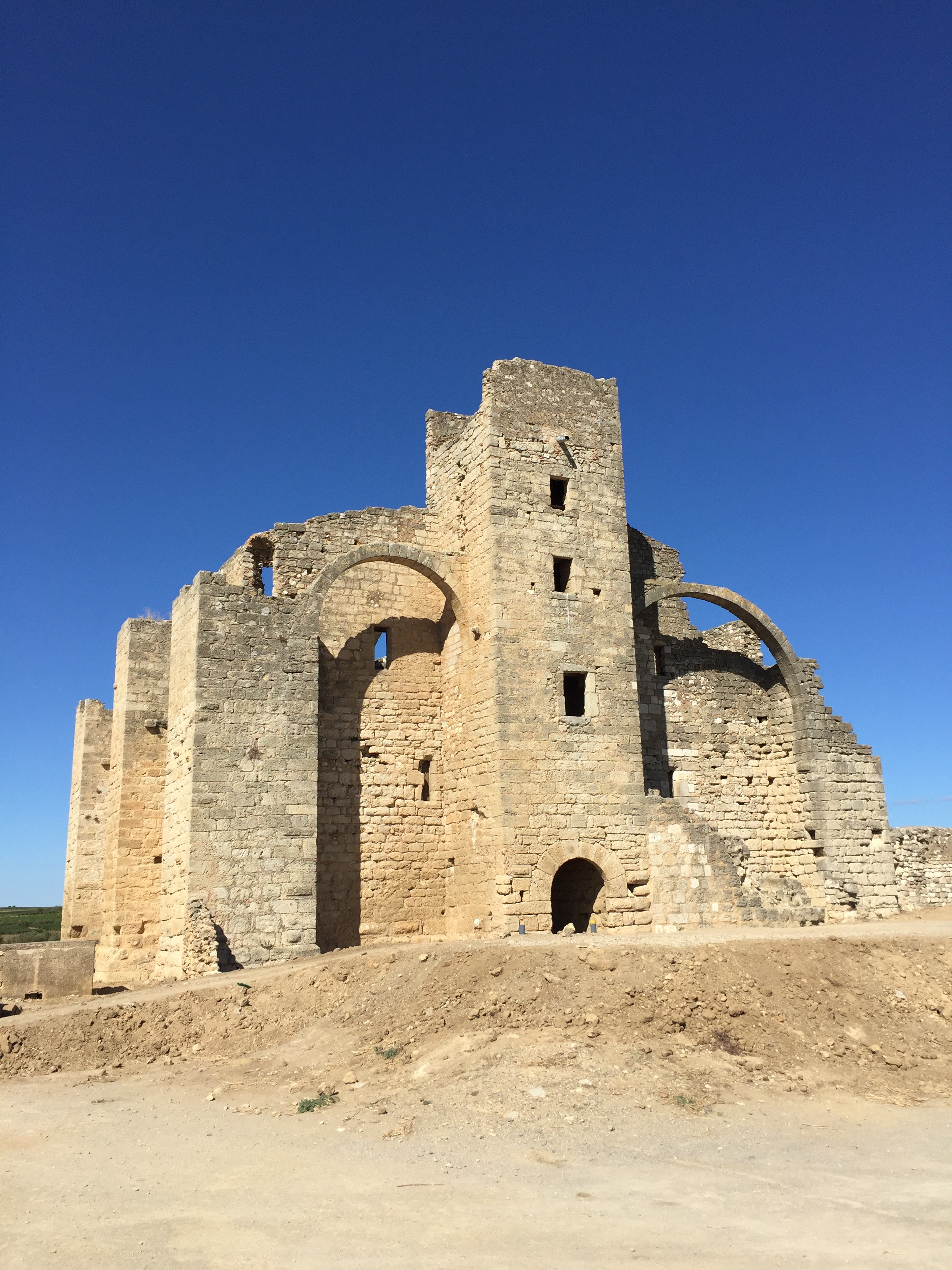
Old Man of Fontcalvy
—
The monk, long served, arises
Bathed, through shutter’s lid
In single beam of golden light
The last such kiss he will receive
An echo of that given, late,
By parting Father Abbot
True friend of forty years
Beneath the blocks
That now shield ageing flesh
From withering sun’s ordeal.
—
Alone, at last, the old man of Fontcalvy
Surveys his hallowed stones
His to close, to lock, forget, the man and boy
And then,
To take away its dying sigh
To leave, uncentred, radians of growing life
That fill the silent, fertile marsh,
Around this gentle place
Where loving hands have passed true peace
And eyes have shone the light
Of understanding, common,
By any tongue, or symbol fit of learning.
—
Cold water washes one last time
From stony trough
The aged fingers hold but drops
Unlike plump fruit of fields nearby
Beneath a blazing sun, two-natured:
To nourish and to age, and, perhaps, today,
Another…
—
Do I want to leave this place?
His leathered sandals seem to ask
As, flapping, softly, on the worn and polished oak
He notes that brightness from the East,
Is lighter, yet, than any he has known
It blazes through the ancient wooden door,
Final gate, through which his life must pass,
Where, waiting, soon,
A brother monk will load him, ripe like fruit well turned,
Onto a cart which rides the road of dotage
—
But what is this? The motes which
Spin and curl with sweet refrain
Between the rays of gold,
Now singing out his name?
Come! Dusty, wrinkled chalice
Filled with heart and kindness
Let radiant world of gold and blue
Belong to you…
And, nearing them, in silence
And not the decades’ creak
With which it welcomed many
From that dusty road outside
The heavy wooden portal opens wide, itself…
—
In perfect, shining grace
With tearful eyes abrim
He finds the sky
With golden eye
Has come for him.
—
In memory of my Father
Edward Tanham
A bearer of the Light
©Stephen Tanham, 2016
Share this:

Only in the hands of Running Elk…

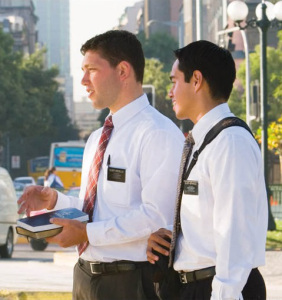 Nice lads. (Found at Matt Fradd)
Well. I’ve been trying to write the same post since April 2015, and it might (just) be about to be writ… or not… so a little preamble might be in order.
I was at work. The phone rang. It was the wife. She immediately went on a rambling explanation about two clean-cut young men standing on the doorstep. When would I be home to meet them?
Well, it made sense. They were offering something that I badly needed. The comparative religion / cult shelf was missing “The Book of Mormon”. Ironically, I’d seen them sitting in a car on the street the night before. Since they must have noticed me diving through a handily open window in order to avoid them, it couldn’t possibly be awkward when we would finally meet.
Nice pair of misguided lads, with an intensity and fervour which would…
View original post 708 more words
Share this:


Knock-knock-knock-knock-knock…
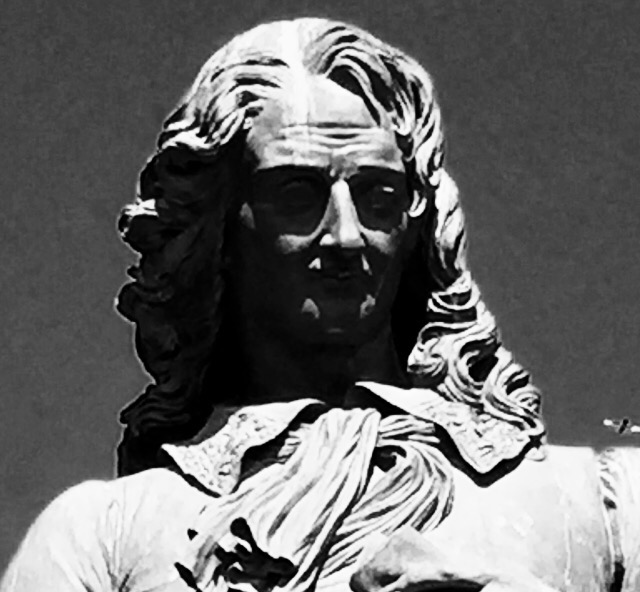
Pierre-Paul Riquet was having a bad night, as he tossed and turned…
Louis XIV was his patron, although he doubted even the Sun King’s sponsorship would alleviate his growing debts – debts that had now risen to a level he knew he would never be able to repay.

It was all down to an obsession, no, the obsession – to connect the waters of the Atlantic with those of the Mediterranean via a unique feat of French engineering; a canal running right through the Midi of glorious France…
But there was a problem, a problem that threatened to wash away all the engineering success of the past ten years…
Knock-knock-knock-knock.
There it came again in his fevered mind. Always the same, always the metal hand with the five finger knocking on the door inside his tormented head…
We left the Hotel Peculier, in Bézier, with mixed feelings. It had been an excellent and stylish home for two nights; two nights in which we had got to know Bézier a little, and recharged our batteries for the longest run of the trip – to our final destination, Sète. We were nearing the end.

We also knew that the countryside between Bézier and Sète was, to be frank, pretty dull.
The Canal du Midi flows all the way to the Mediterranean but the major activity, nowadays, is holiday boating. And most of that seems to be west of Bézier. 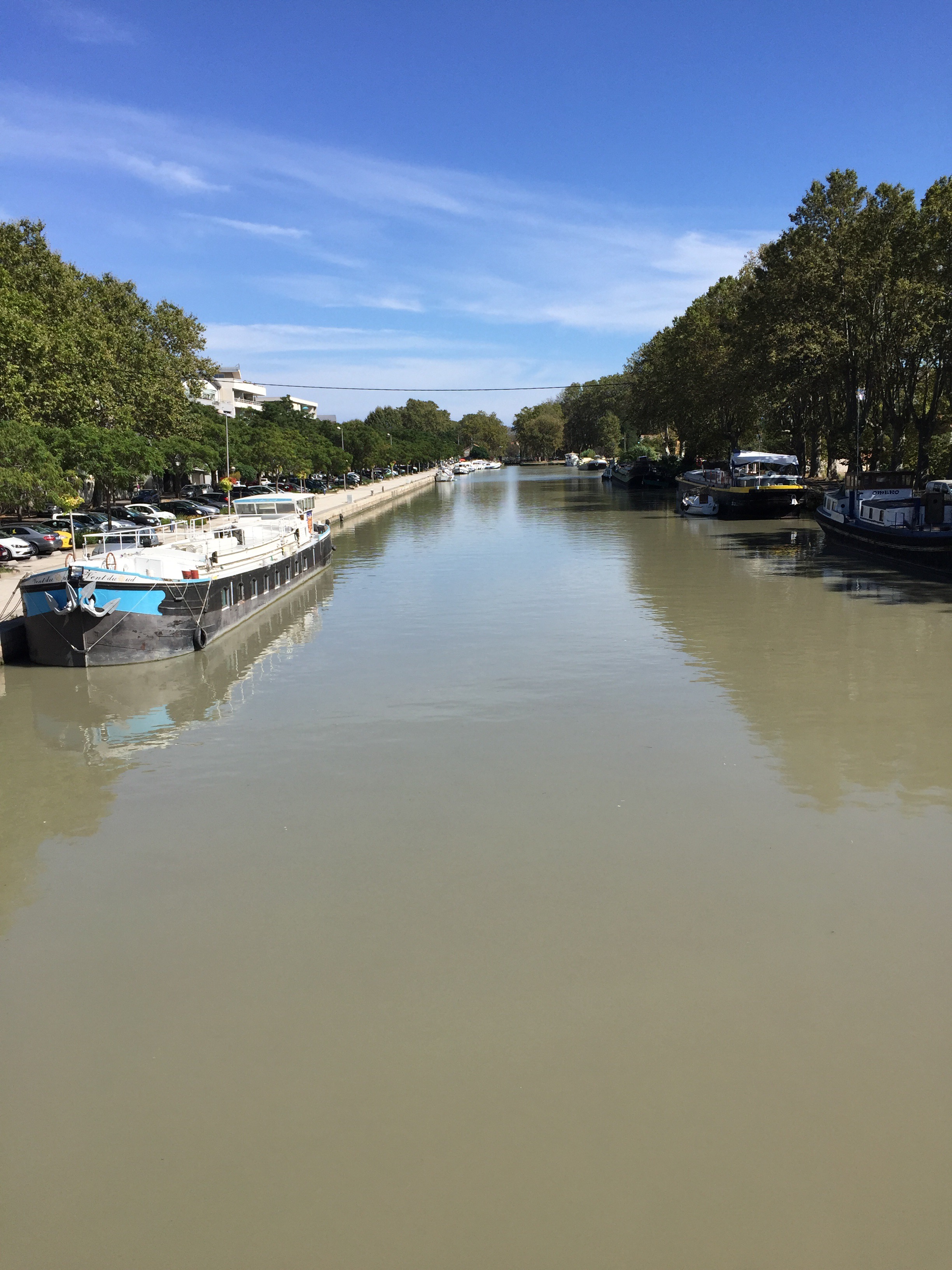
But the design goal of the canal, built during the reign of Louis XIV, the Sun King, was to connect the Atlantic to the Mediterranean Sea for the purpose of ferrying cargo; and to provide an economic spur to the hard-pressed people of south Languedoc.
Knock-knock-knock-knock…
Pierre-Paul Riquet, French Baron, Salt Tax Collector, risen to King’s Engineer and now entrusted with his own obsessive vision, turned over in his sheets and stuck out his hand so that it caught the shaft of moonlight coming through the shutters on that hot August night in 1679. He dragged the fingers of the hand so that they moved along the sheet in parallel, creating a wave in the pale cotton…
In a second he was wide awake. The five finger knocking in his head had ceased… He knew what to do…

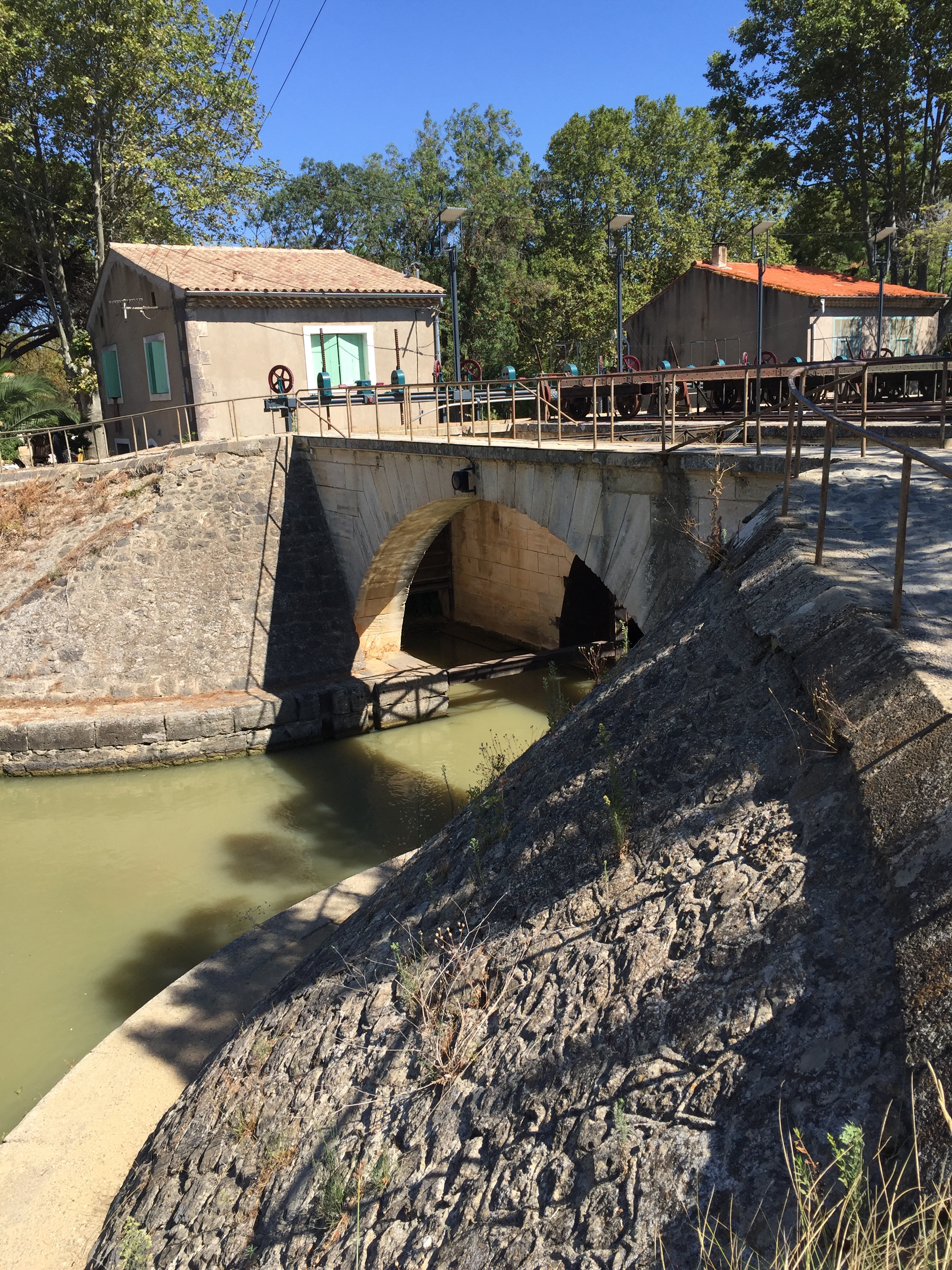
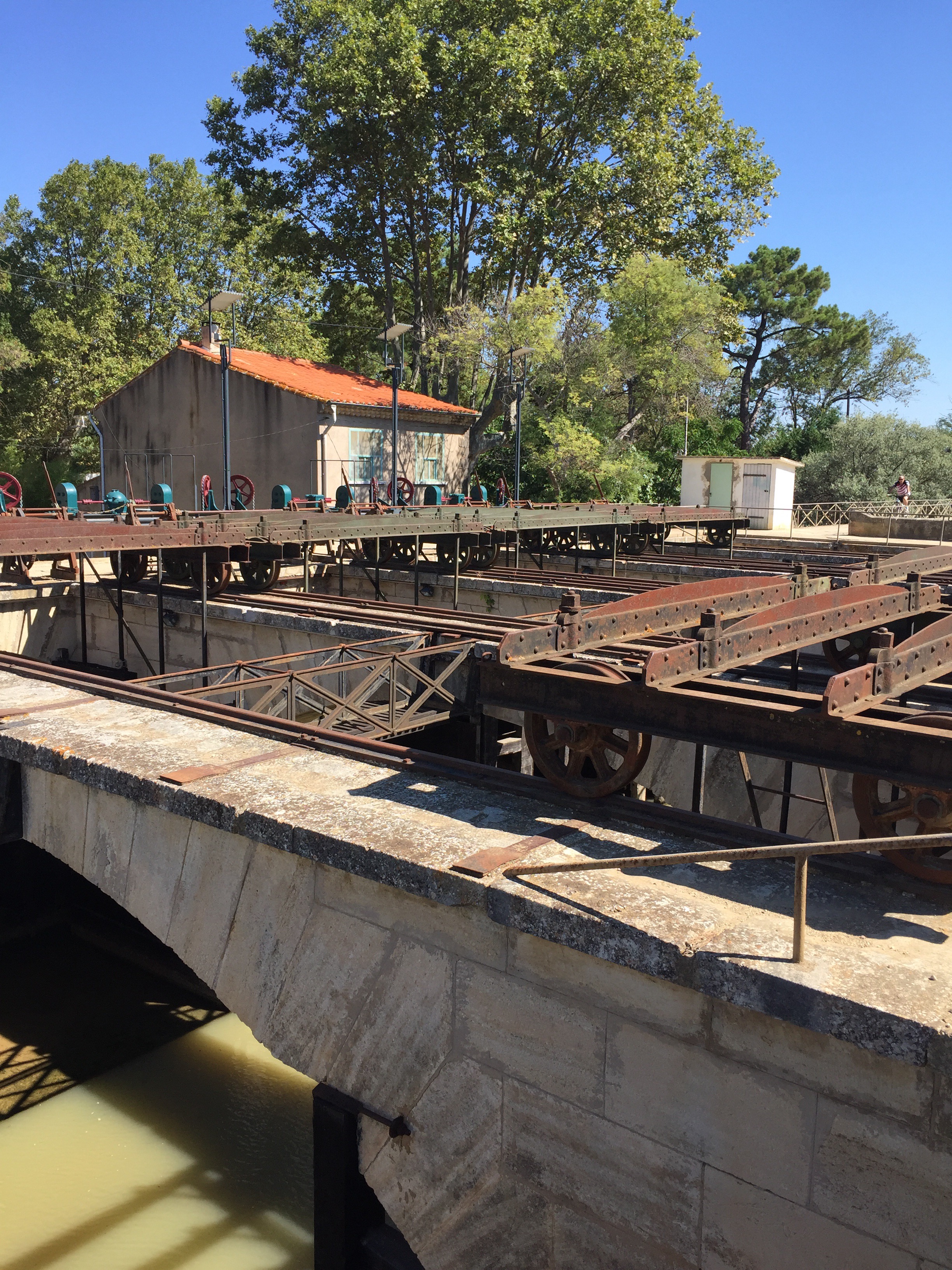
Approaching the tiny hamlet of Vias, we were able to see the work of the Sun King’s Engineer up close and personal…
When two waterways intersect, they have to go over or under each other. They can’t simply pass through each other like a road system does. Water doesn’t know how to wait – unless you make something very strong to force it!
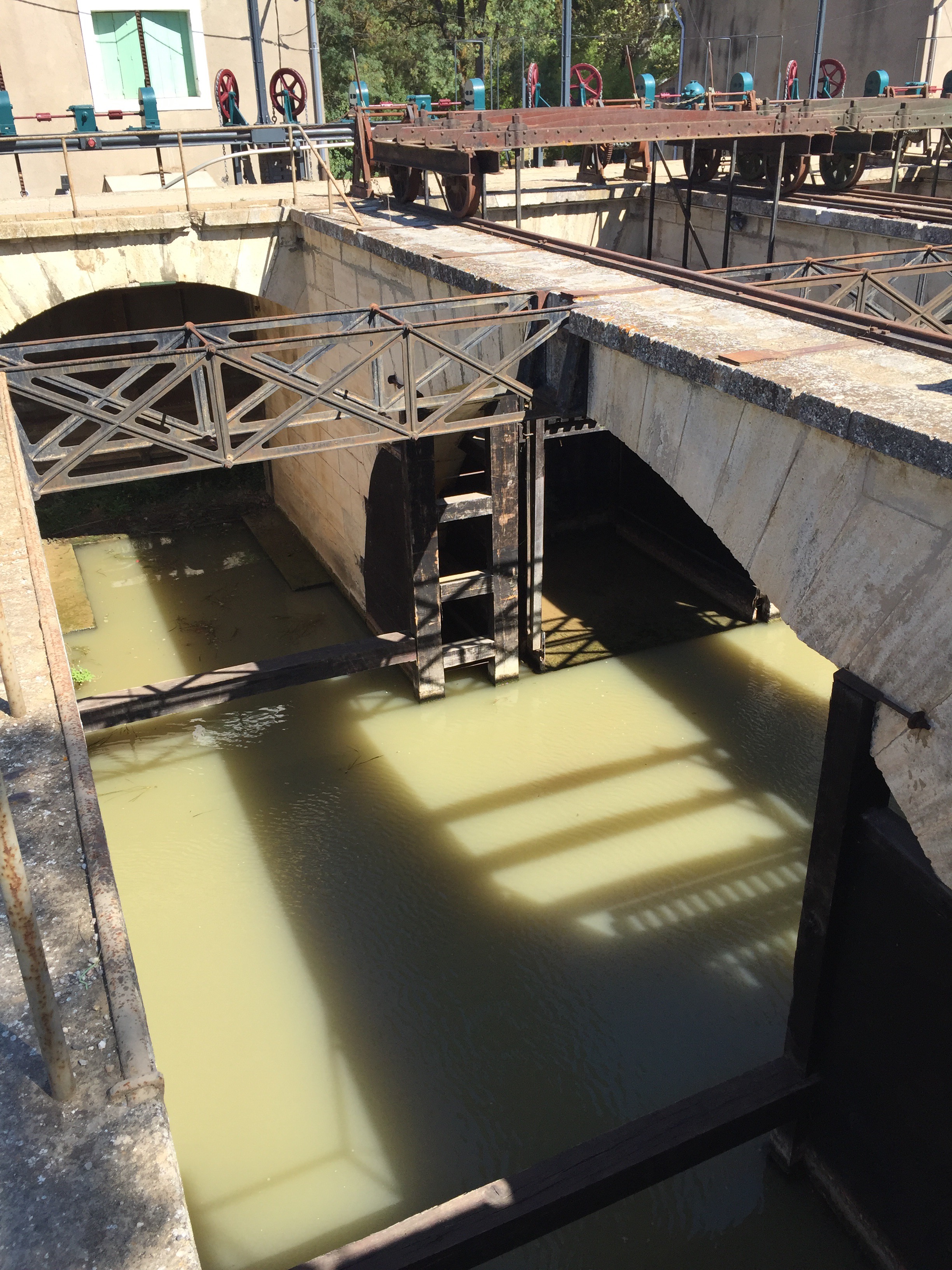
To get the canal to the sea, near Sète, Pierre-Paul Riquet had to make the Canal du Midi and the fast-flowing river Libron ‘intersect’. They were at the same level in the landscape, so an aqueduct was out of the question.
Riquet followed his silvery vision and, using a combination of heavy ironwork and railway components, constructing two giant sliding hands that would stop even the frequent flood waters of the mighty Libron…

Today it is one of the historic wonders of the engineering world and is called Ouvrages du Libron. Most people pass it by without even knowing its significance. Without it there would be no Canal du Midi.

Beyond Vias the landscape changes, becoming very salt-marsh based. There are camping and chalet-centric holiday parks and an increasingly complex road network. You can feel that you have entered the flow of holiday traffic.

Four kilometres from the sea, the pleasant town of Agde lies on the estuary of the river Hérault, one of southern France’s major waterways.
Tired from the heat, we entered its sheltering streets, found a quiet and shaded spot on the waterfront, and had a light lunch.

We knew we were on the last leg of the whole adventure, and there was a sadness as well as a sense of relief.
Lunch over, we cycled to the spot where you get the last view of the Canal du Midi, before it enters the sea, a few kilometres down the salt marsh.
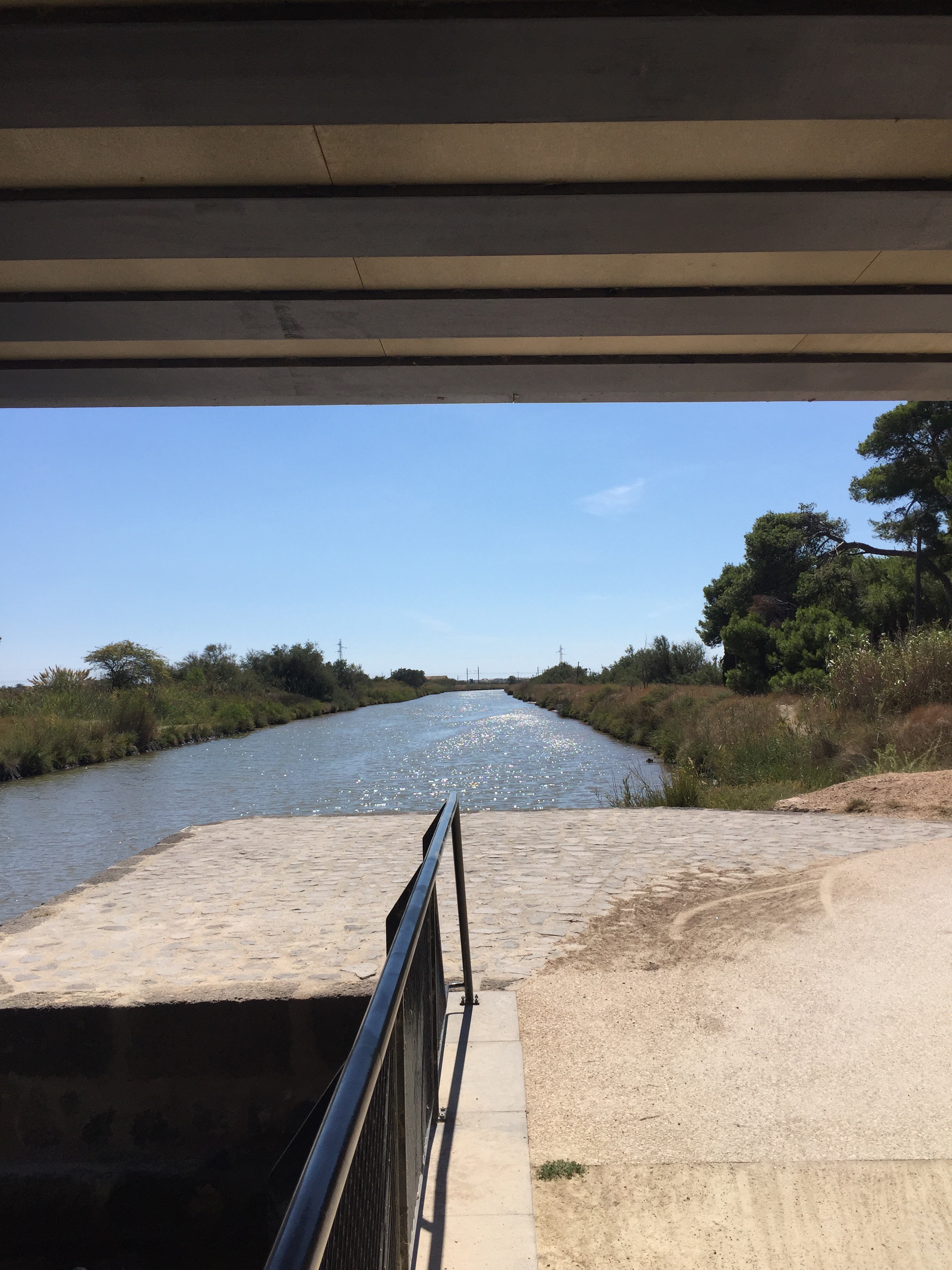
We thanked it and gave each other a selfie kiss, before moving on…

There followed about ten kilometres of small roads. Then we entered the outer cycleways of Sète and got our first view of the Mediterranean!
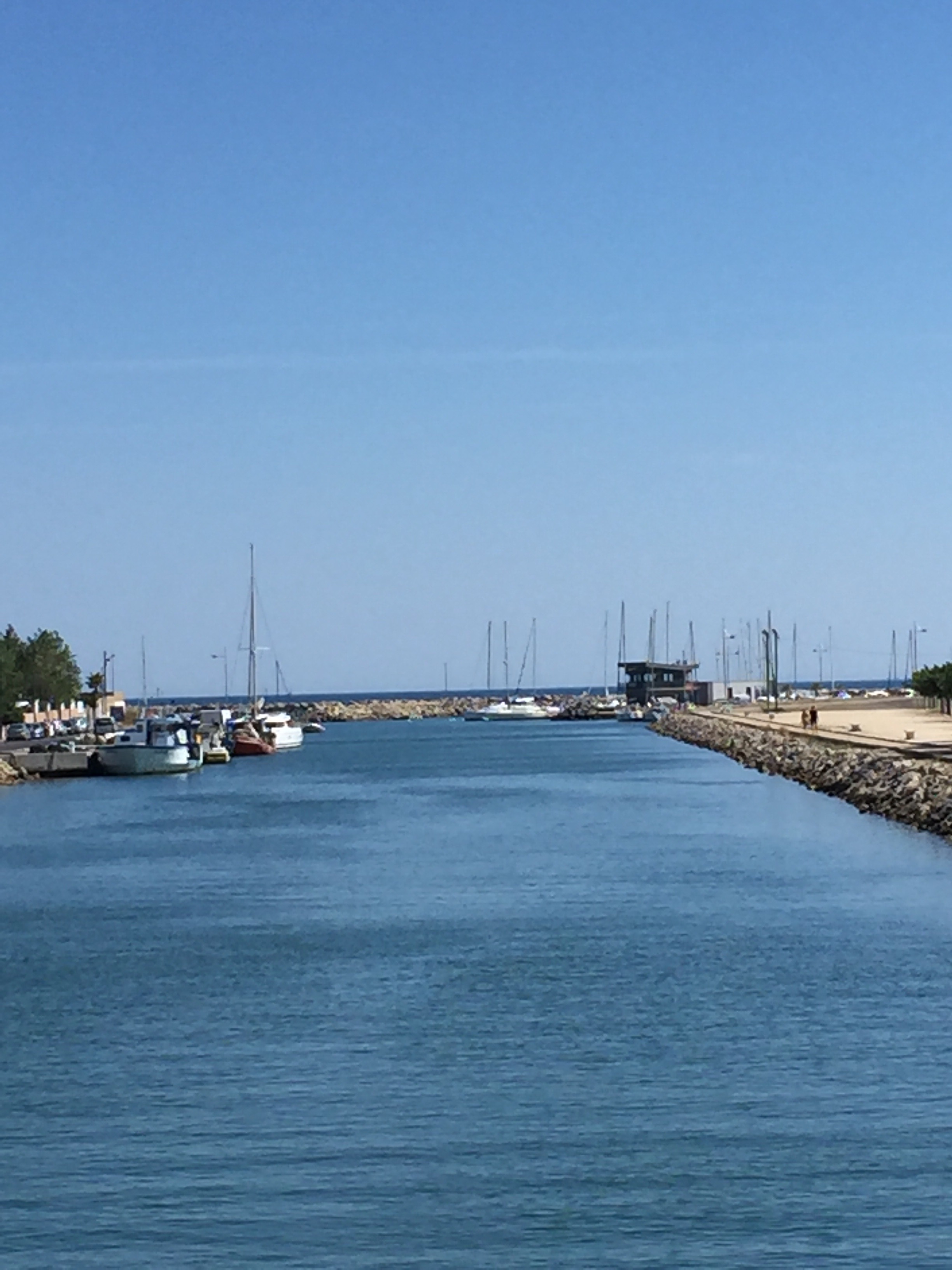
The final journey was along the spit that separates the town from its huge inland lake.

This narrow bar of sandy land contains an excellent cycleway, which lifts the spirits until you realise that it’s fifteen kilometres long…

By the end we were wilting, and ready for that long iced drink in the first cafe that emerged from the endless blue horizon…
They had an aerial photo map that showed the sheer extent of this lovely place, surrounded on three sides by the shining blue of the Mediterranean.
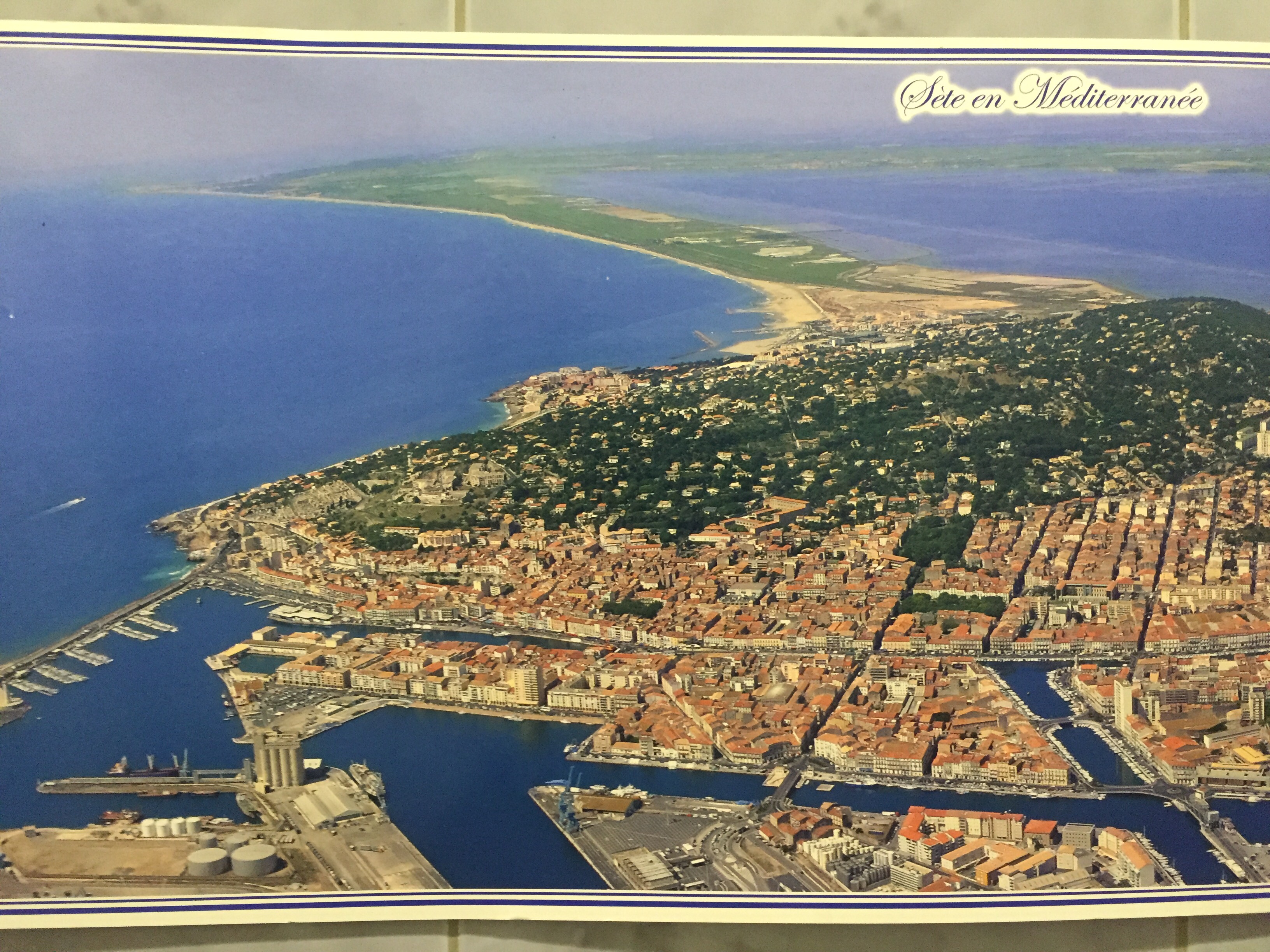
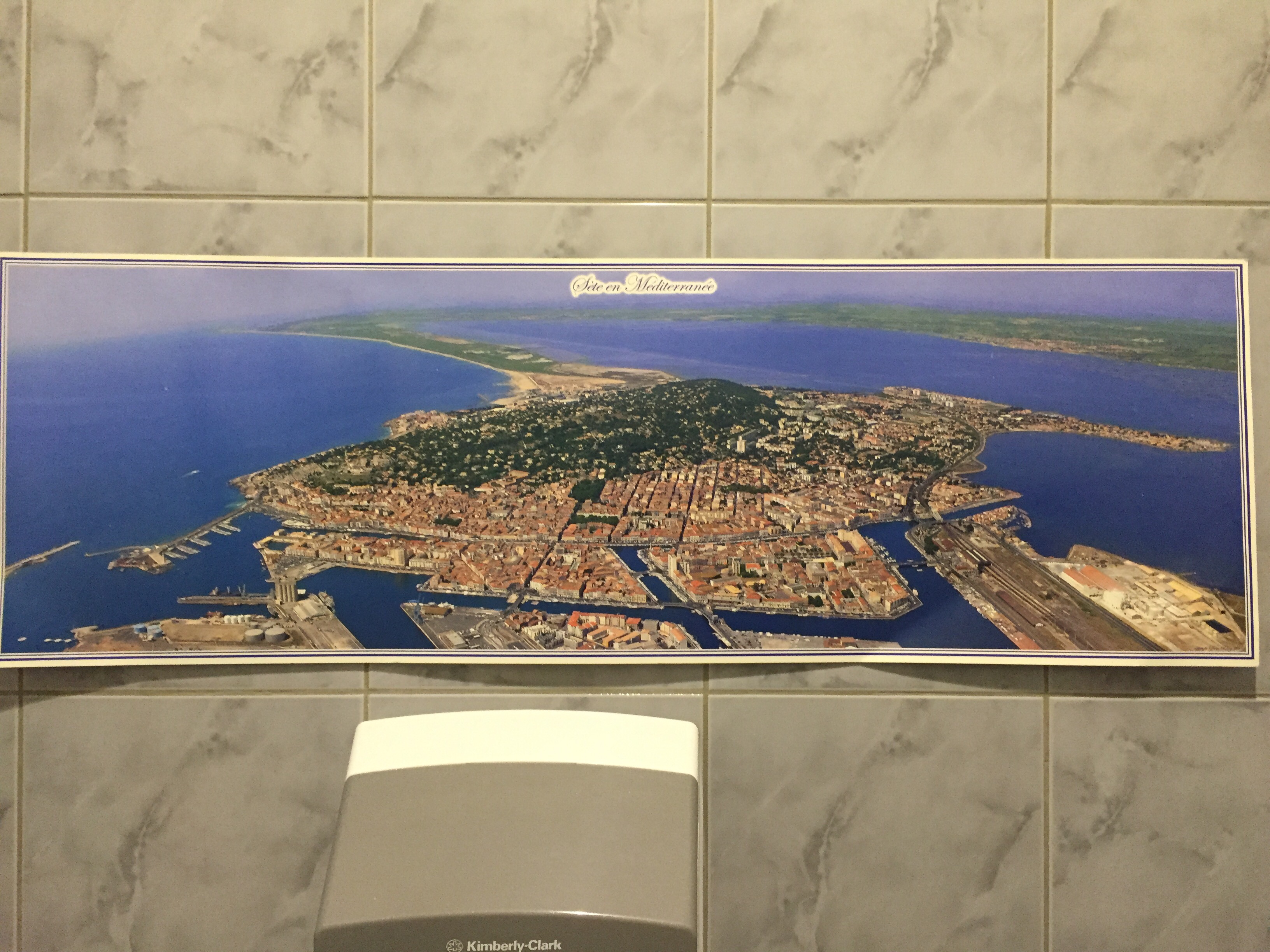
The top map shows our long approach down the causeway; the second shows the whole expanse of Sète, centred on its green hills.
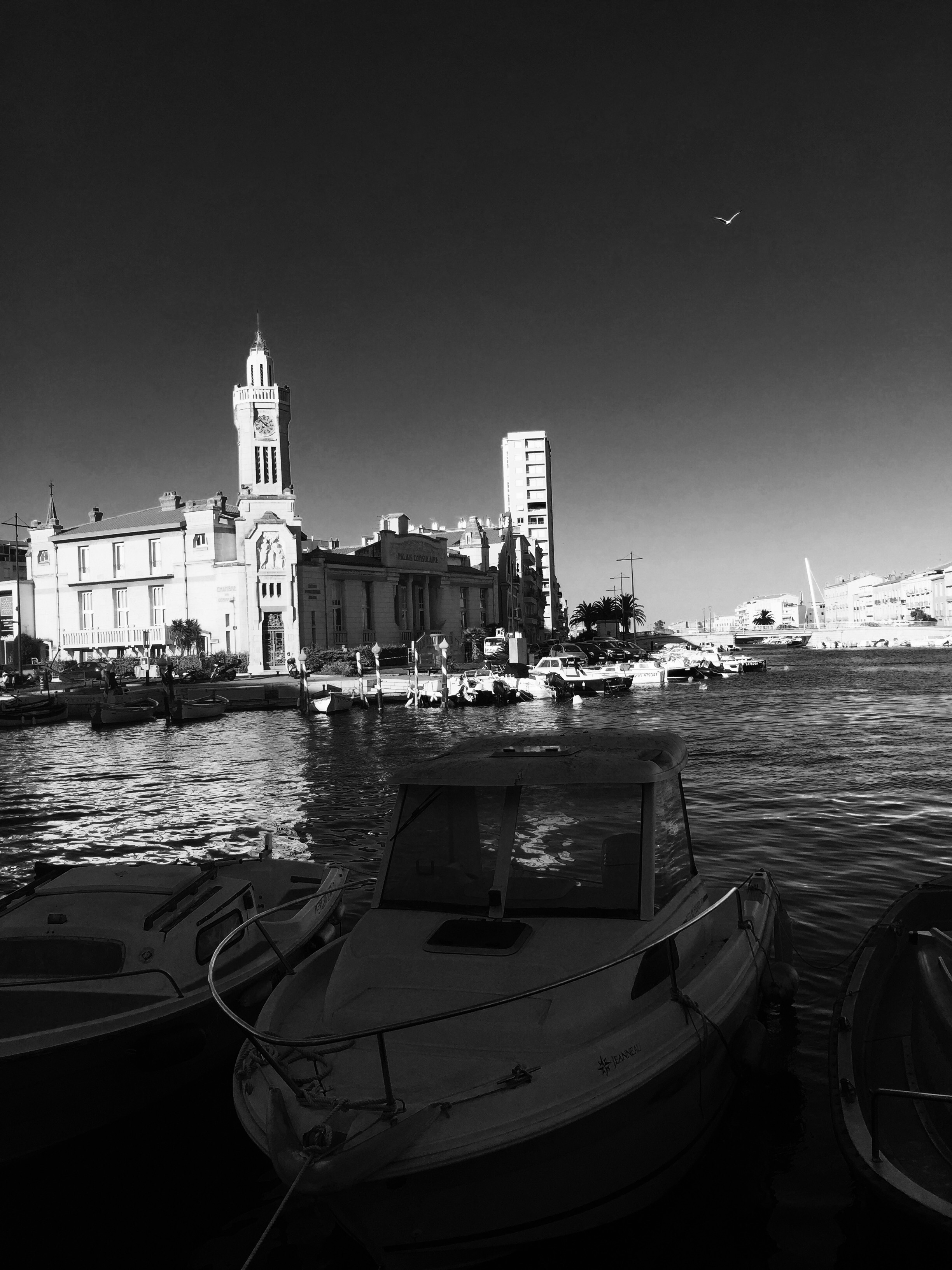
We had cycled over two hundred kilometres in the searing heat, but we had eaten beautiful French cuisine along the way, and enjoyed new (to us) labels of Minervois and Corbière wines. We had stood in places of massacre and of engineering triumph. We had followed the Canal du Midi to the sea and had enjoyed its tranquil company – especially when it brought us shade…

Now it was time to say goodbye to two good friends that had carried us across the miles without even a puncture.
Later, walking along the quay in search of a final fish dinner, we passed a father and daughter sitting, enjoying the sunset. I asked if I could take a photograph. He smiled a yes and stood up to get out other way. I smiled and laughed that I wanted them both…

It sums up the modern, cosmopolitan South of France, really, that picture…

Thank you for riding with us! We hope you enjoyed the journey. We certainly did…
©Copyright Stephen Tanham, 2016.
Share this:

 Bézier is a beautiful city. It was established five hundred years before the Christian Era and thrives today.

Roman amphitheatre excavated

modern Bèzier
It is also the city where in 1209 an entire population of Cathars and non-Cathars were put to the swords of Pope Innocent III’s Albigensian ‘Crusaders’, including Simon de Montfort, because of their strength of belief in a living Christ capable of manifesting in an individual’s life, rather than via a Church hierarchy.

For the Cathars to die as they did shows they had already found their answers.
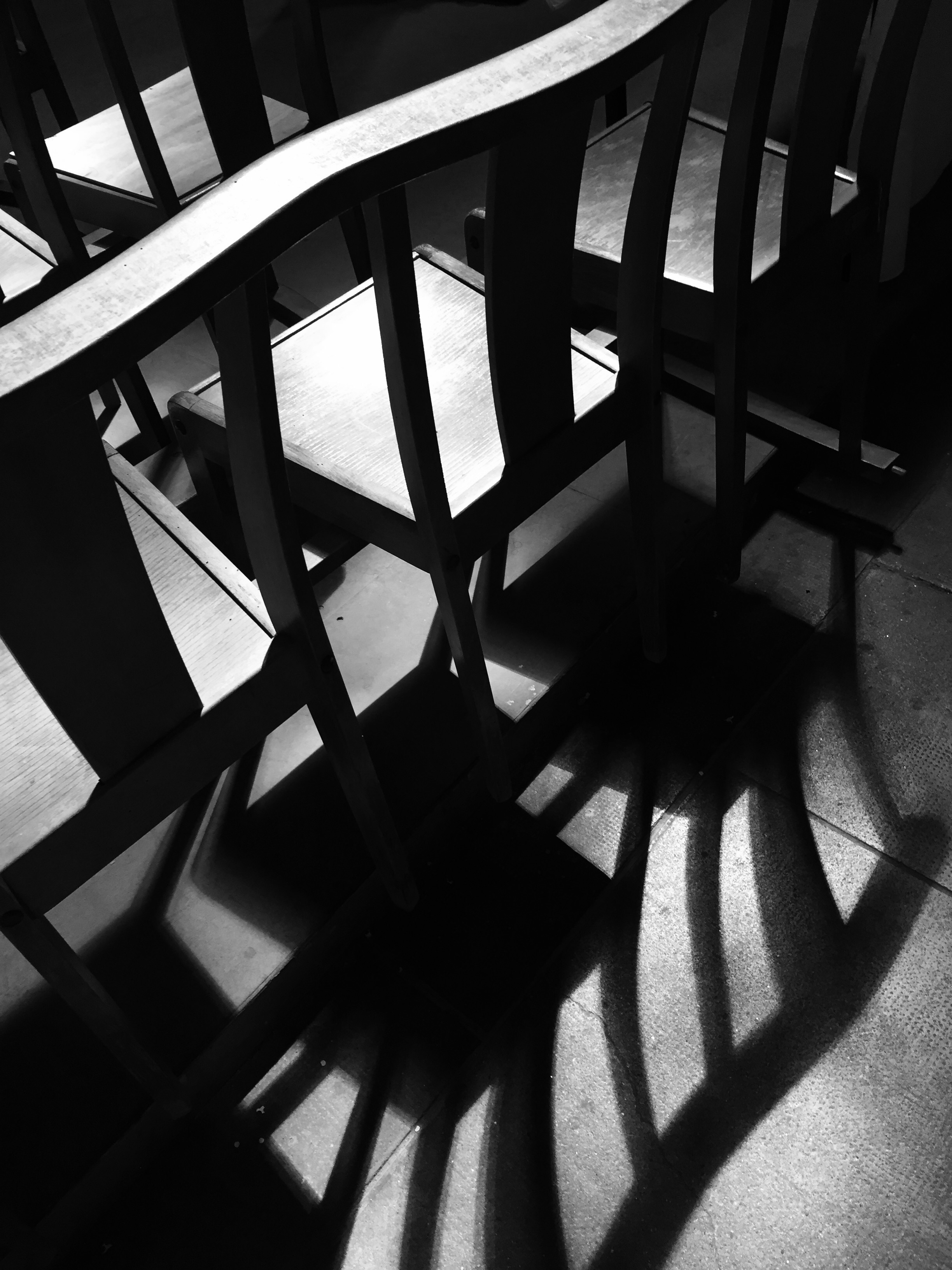
It is not for us to judge, simply to reflect on their courage, and the value of the ‘truth’ they had found.
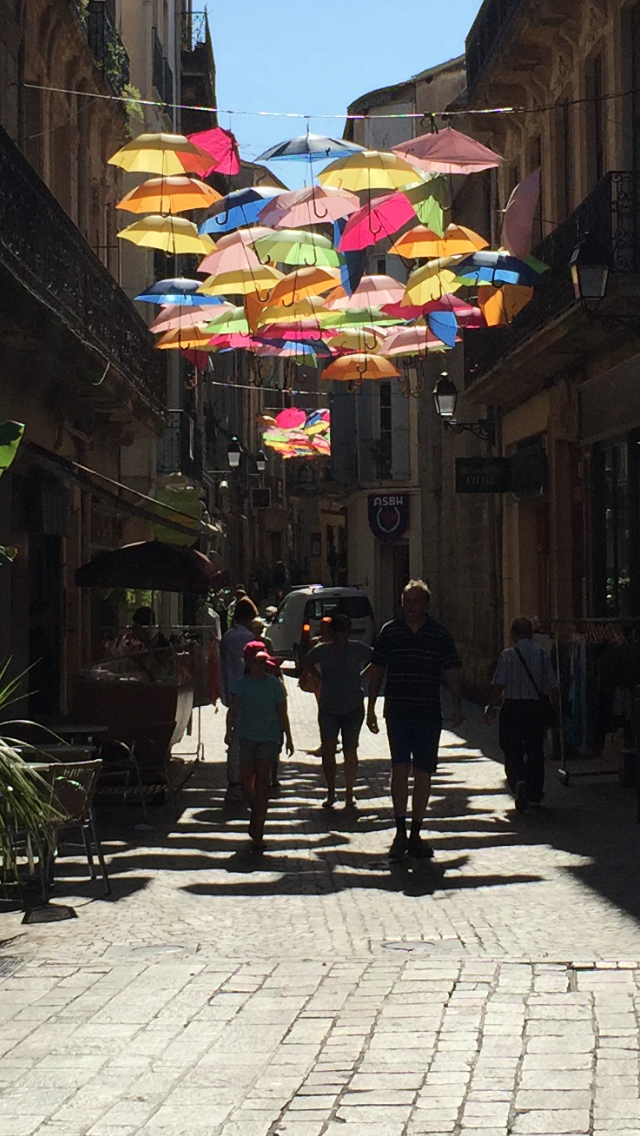
Modern Bézier faces its own challenges. It is a multicultural city in a hot place. It lives in an agriculturally dominated landscape, yet has technological ambitions. It is on the main route between Italy, the Côte d’Azure, and the Atlantic ports of south-west France and Basque (Catalan) Spain.
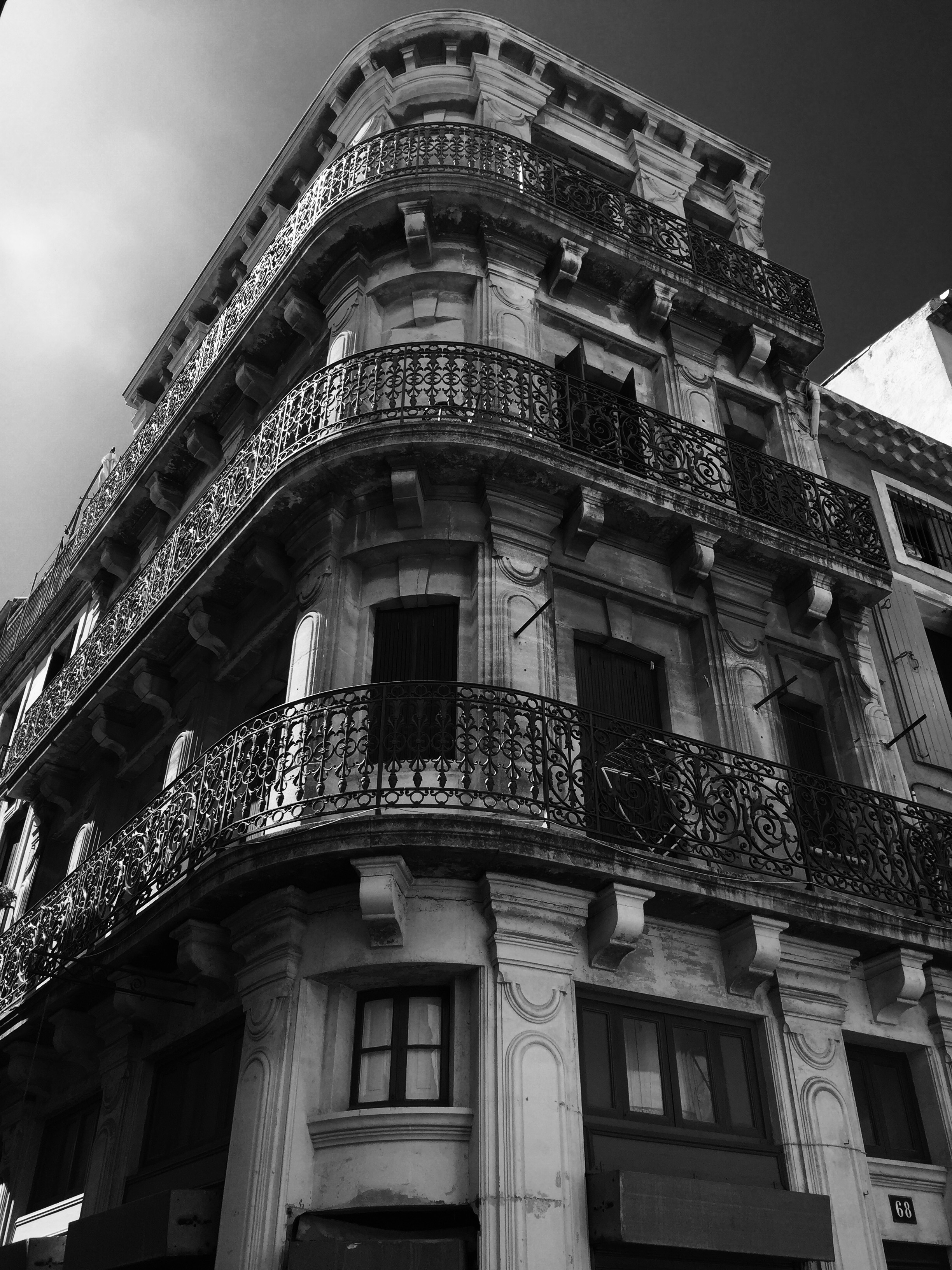 It is also host to one of the most important sections of the Canal du Midi – commemorated (below) in a famous painting to celebrate its opening in May, 1681 – over three hundred years ago.

The great architect of the Canal du Midi, Pierre Paul Richet, was a local man and is celebrated in a huge statue in one of the main boulevards.

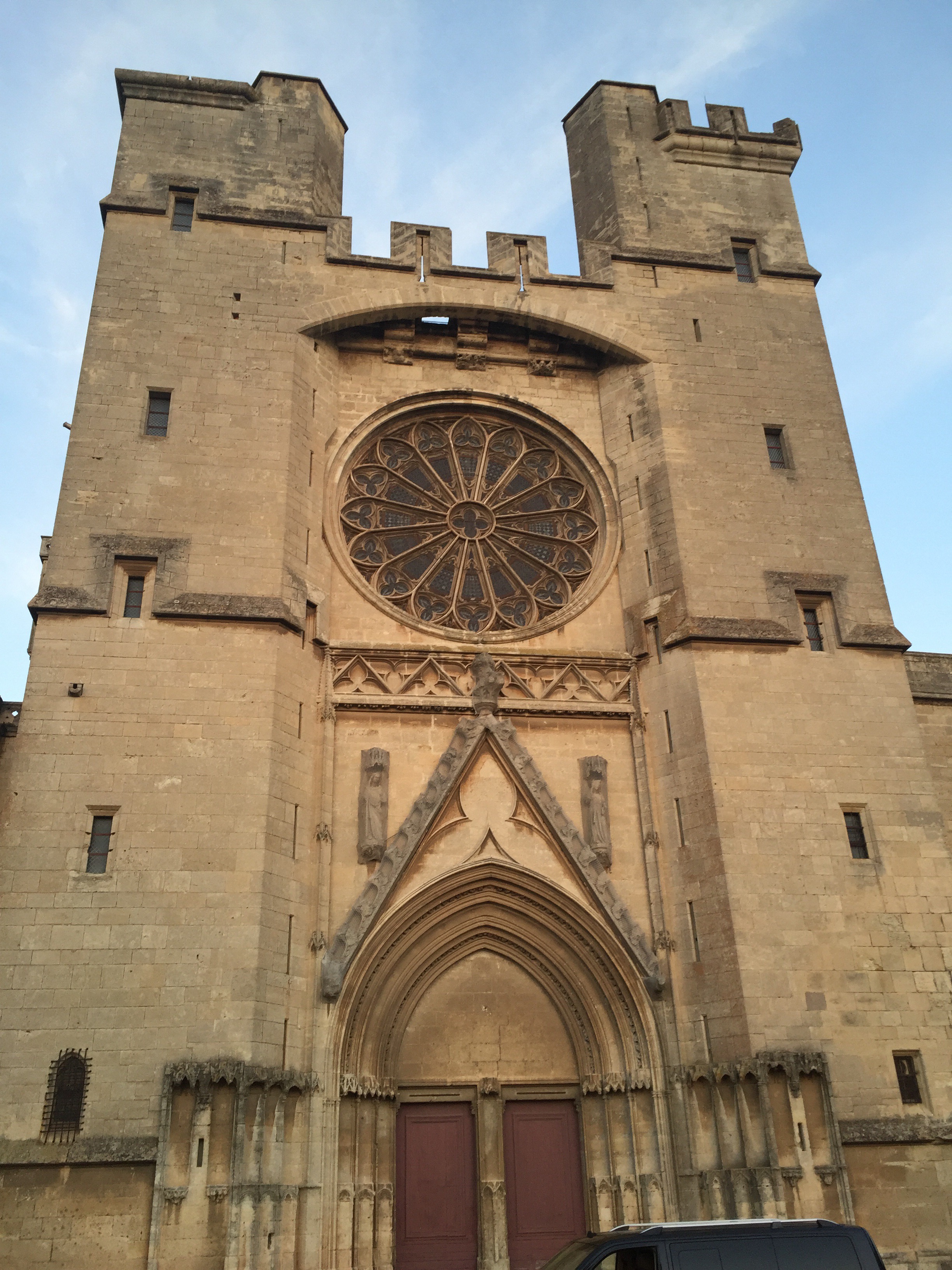
The heart of the city is a place of contrasts. The scene of the 1209 massacre, the impact of the Cathedral of St Nazaire on the visitor is immense… And yet it is a place of obvious humility. Work on the building was begun in the eighth century.

The first thing that strikes you about the Cathedral is its accessibility. This was built to include people, rather than awe-inspire them. Of course it does both, but in a way that invites.
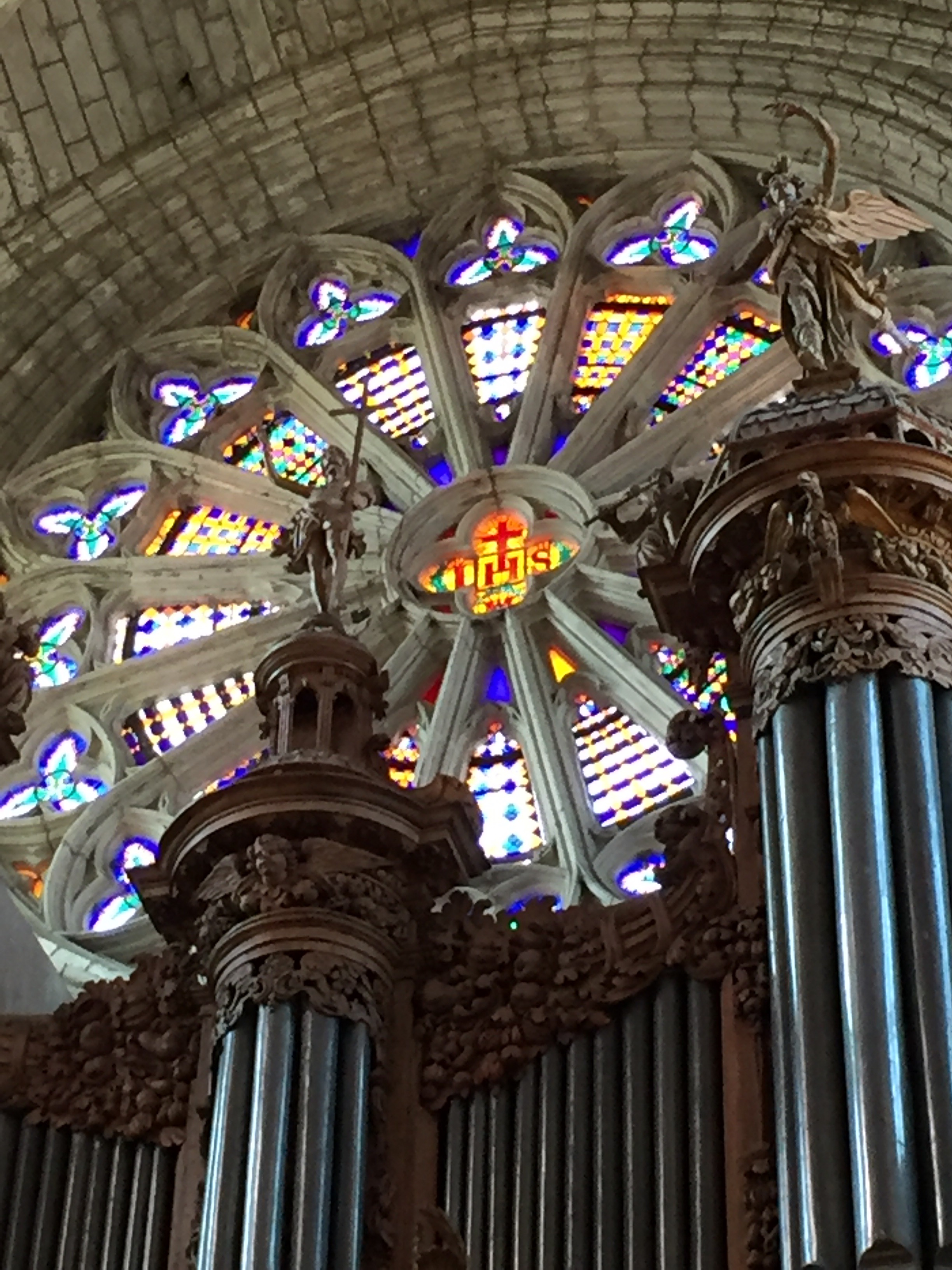
The famous rose window in the west, which sits above the huge organ, and receives then fading light of the sunset, is magnificent.
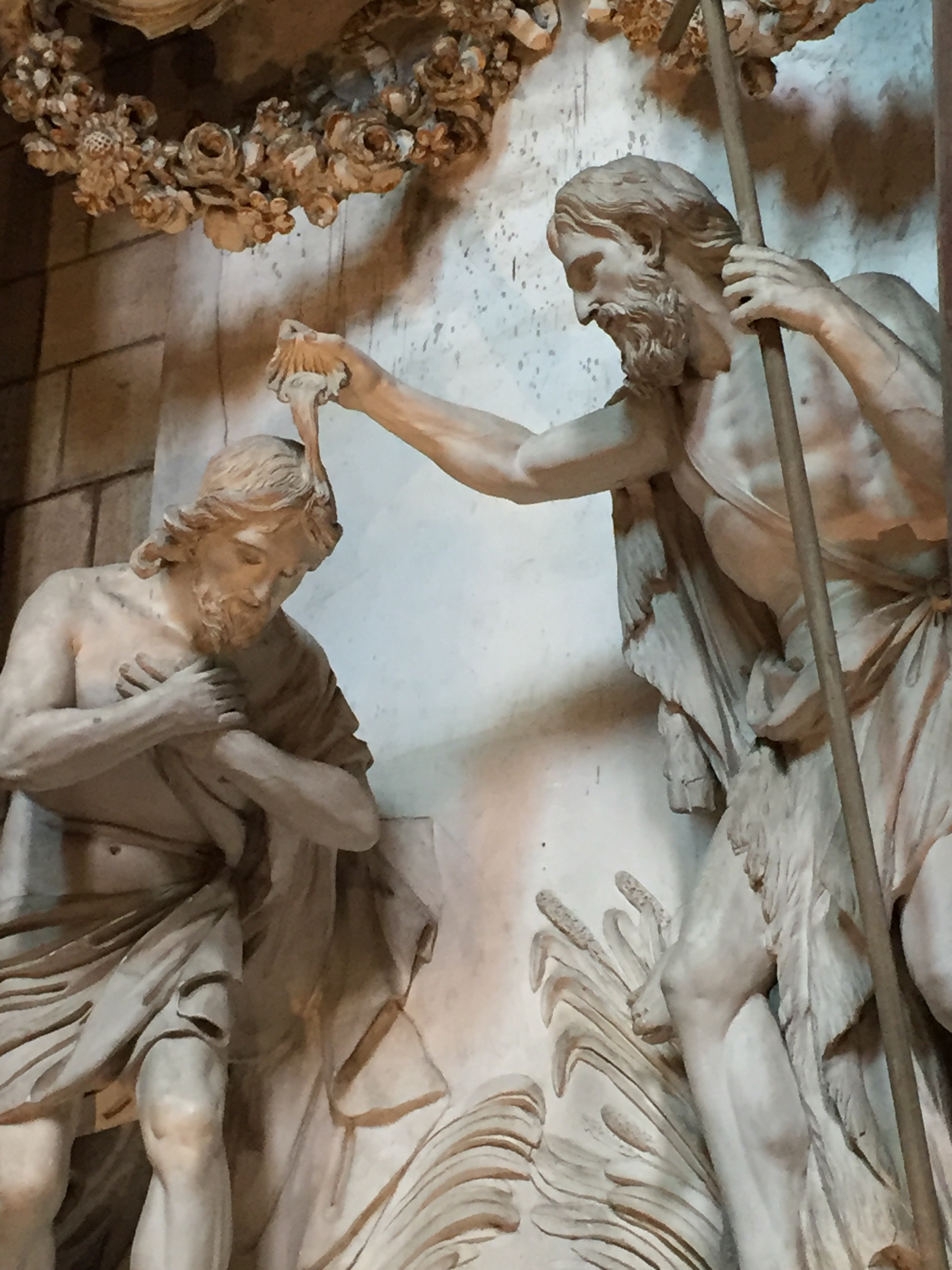
Christ’s baptism by John the Baptist
One of the most moving chapels in the north-west of the nave depicts the baptism of Christ by John the Baptist. It was key moment in the Christ story, and the symbolic acceptance of his mission is beautifully portrayed in the stance and the faces of the two men who knew well what they were doing, on both the spiritual and physical levels of their lives.
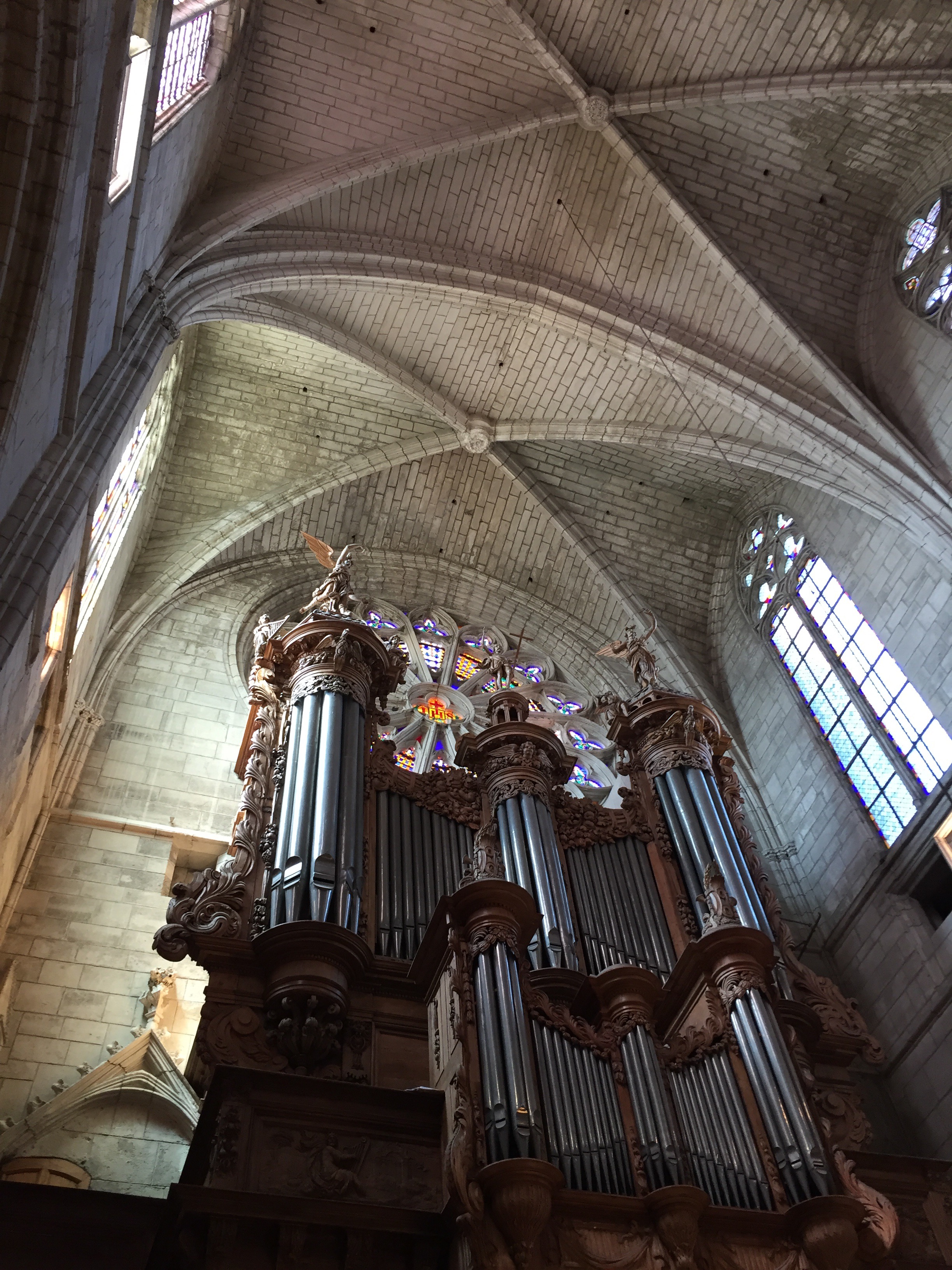
The beautifully vaulted main roof is exquisite in its detail.
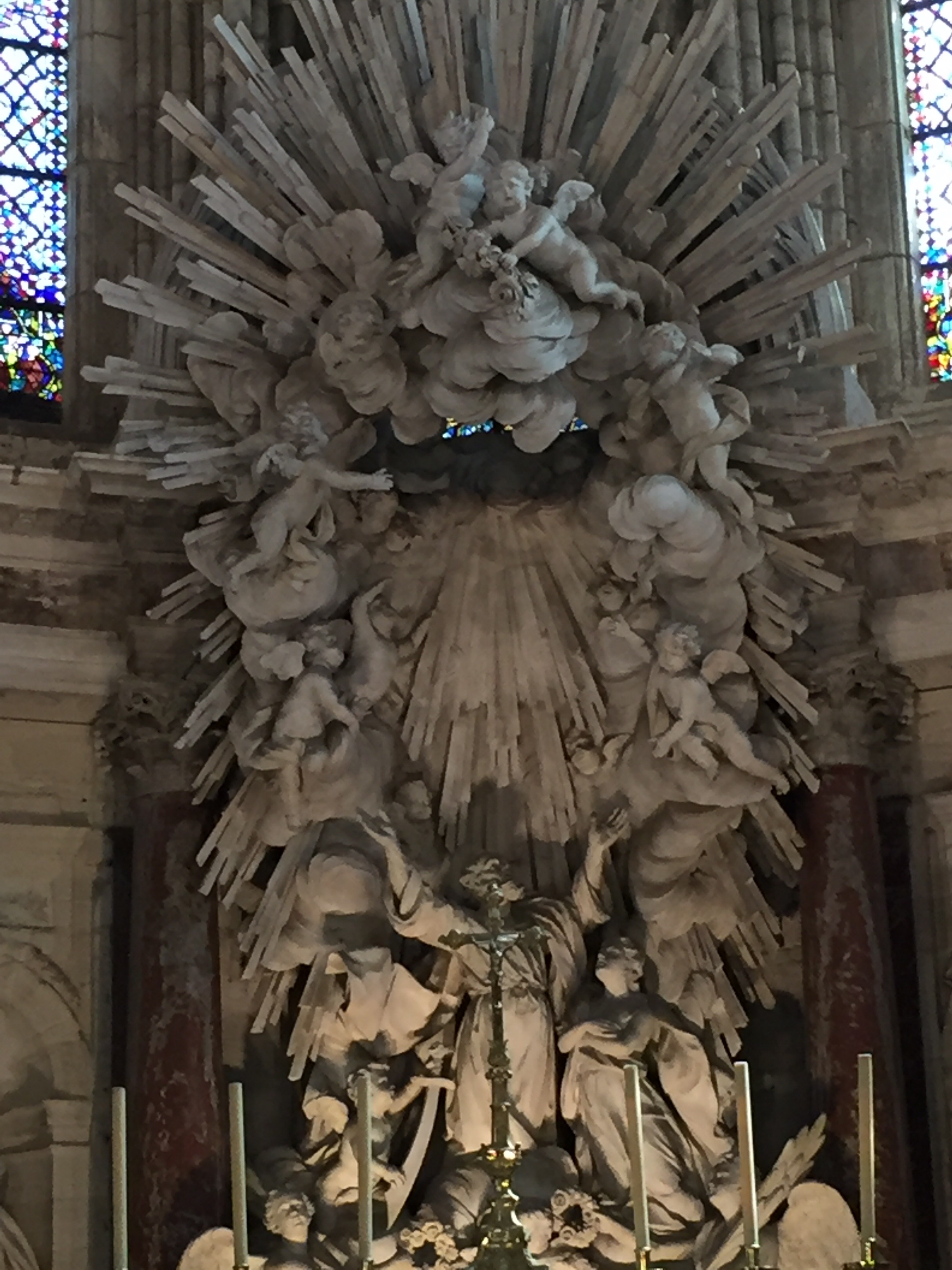
The high altar is framed by the main east panel that is beautifully crafted in Baroque déco style and takes up nearly the whole of the Eastern wall of the building. It is too ornate for my taste, but I can acknowledge its finery.

The feature that moved me the most was a simple wooden arch, placed in the west, and nearly at the nave’s end.

This ‘doorway of mercy’ mirrors that opened by Pope Francis in St Peter’s Bailica and is fashioned around simple and inclusive proportions. The act of ‘going through the door’ invites us to unite the whole of our being in one, inclusive action. The arch represents the combination of three different geometric figures:
The rectangle is an elongated square – our physical nature: the earth, the place we find ourselves.
The four equal angles of the square/rectangle represent the four directions of our horizons.
Above is the arch, part of a circle, the symbol of the heavens, the spiritual world – not high above us, but just ‘above our heads’
You are invited to walk through this magical gateway, and I did, delighted to find these simple esoteric truths portrayed in a church, once again…
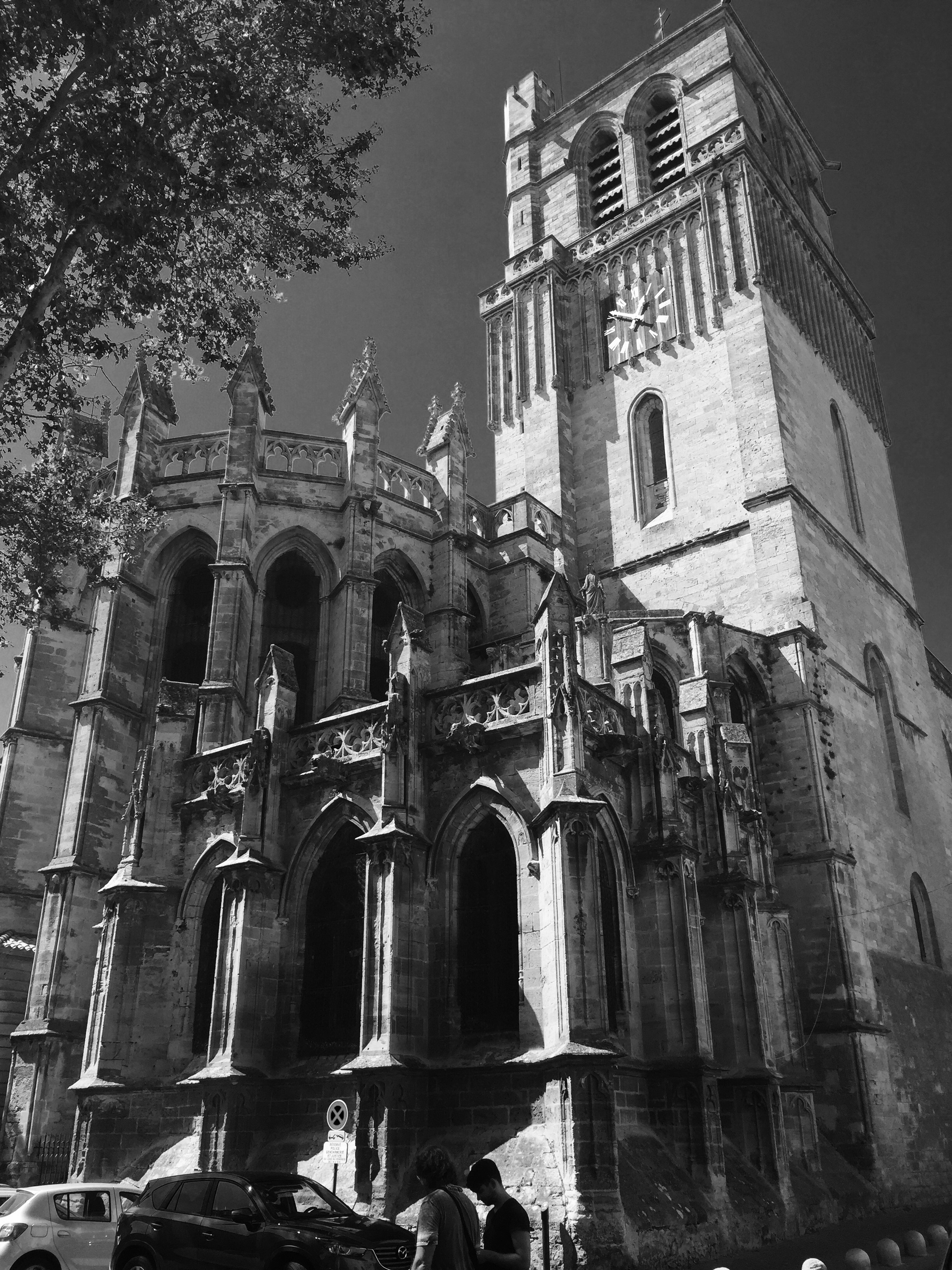
The exterior of the Cathedral is asymmetrical, and draws the eye to explore it.

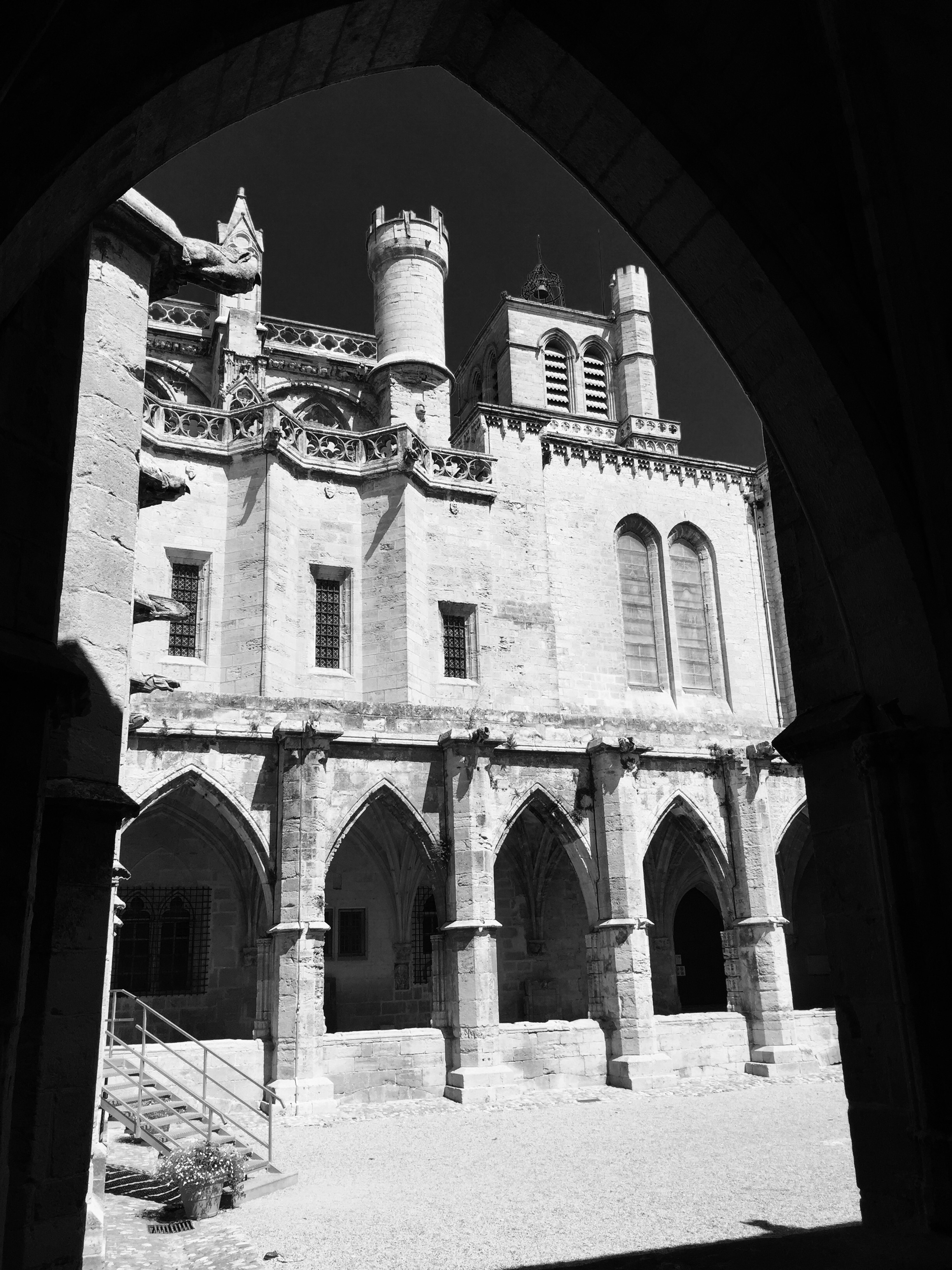
The cloisters are one of the few cool places, and lead down to the terraced garden which overlooks the canal-housing valley below.

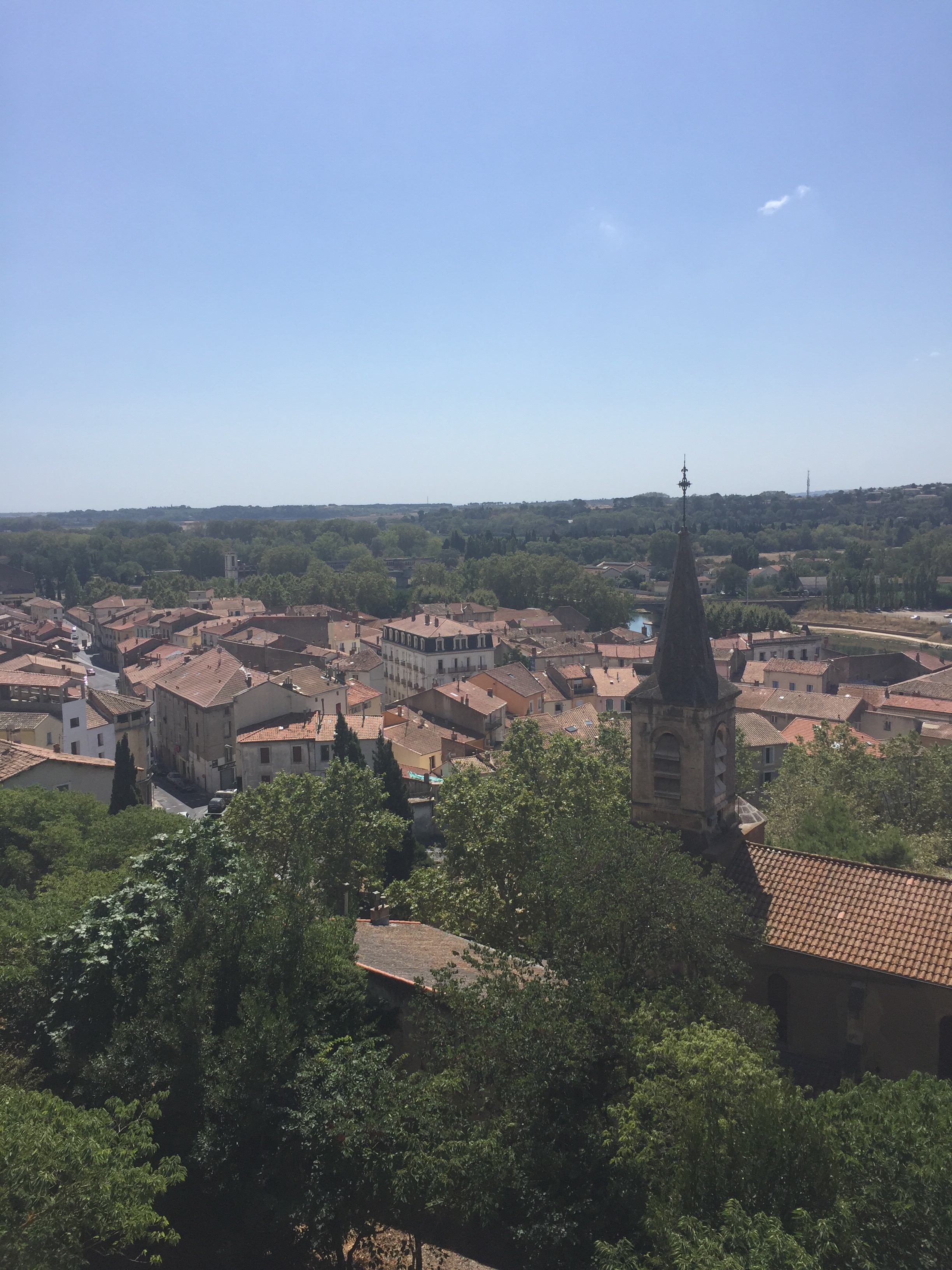
Our time at an end, we walked slowly through the ancient streets, happy just to wander and find shade where we could.


Thursday morning will see us on the road early, for the final and longest of our cycle rides – to Sète, our final destination, and, finally, the Mediterranean Sea…
©Copyright Stephen Tanham, 2016.
Share this:

Share this:


 It was hard to leave Narbonne. We had formed a very special bond with the place; but, we had another 50 km ride in front of us, one that would see us arriving at our penultimate destination – Bezier.
First, we had to retrace our steps back up the Canal Robine to rejoin the land of the Midi.
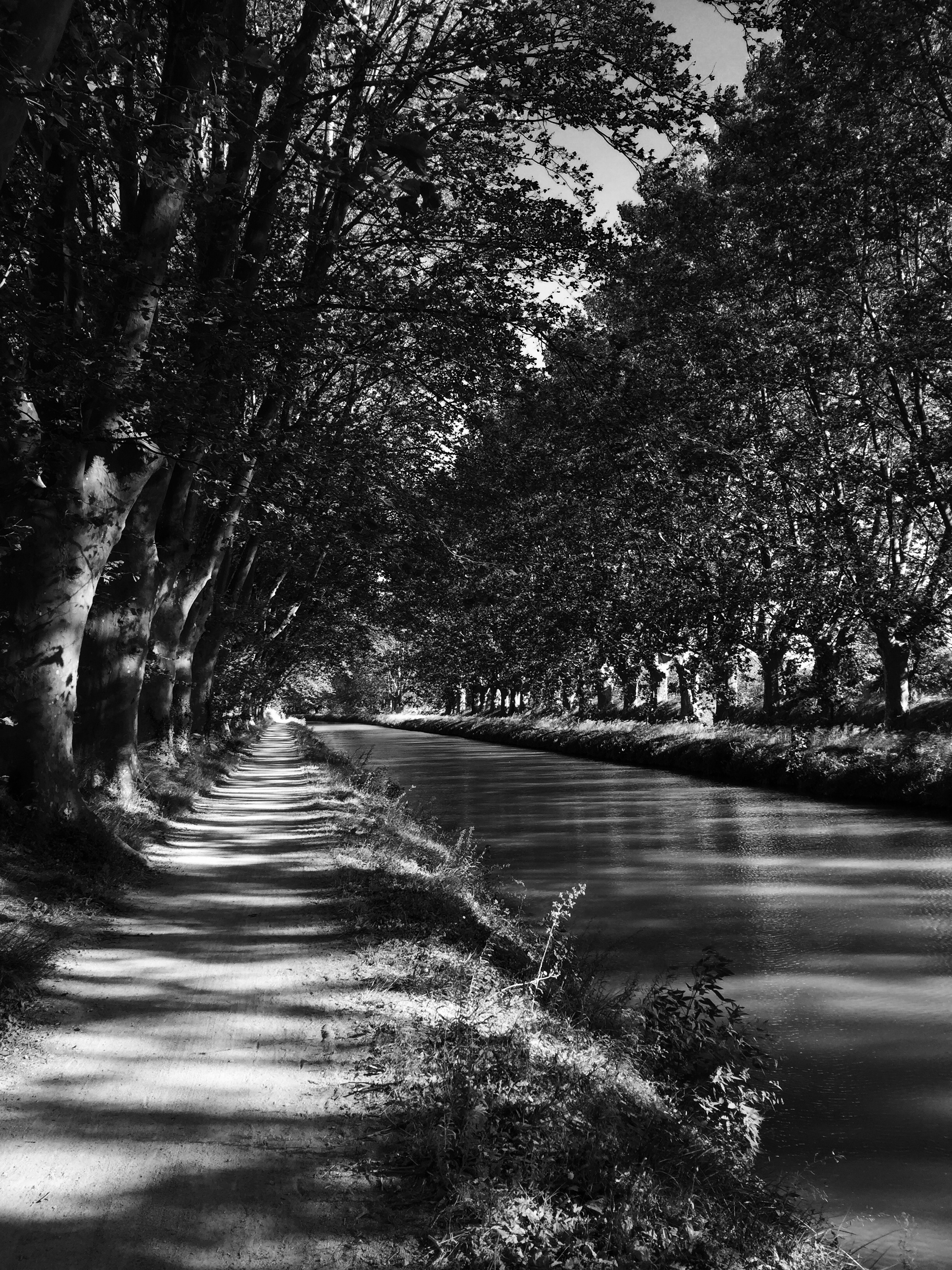
The few kilometres up to Cuxac D’Aude passed quickly. We are discovering a whole new set of muscles that endure much longer than the ones we had when we set out from Bram, so long ago!

Cuxac is not a pretty place, but we’d had to race through it the first time. Now, it was the perfect coffee stop for us to consult the map, as something rather special lay ahead…
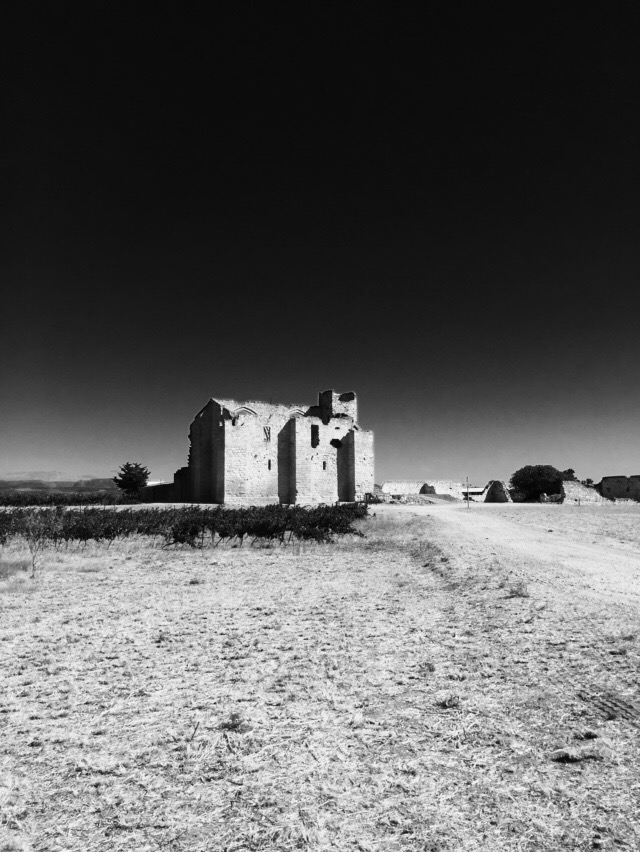
Four kilometres later, we caught our first sight of the ruined abbey of Fontcalvy.
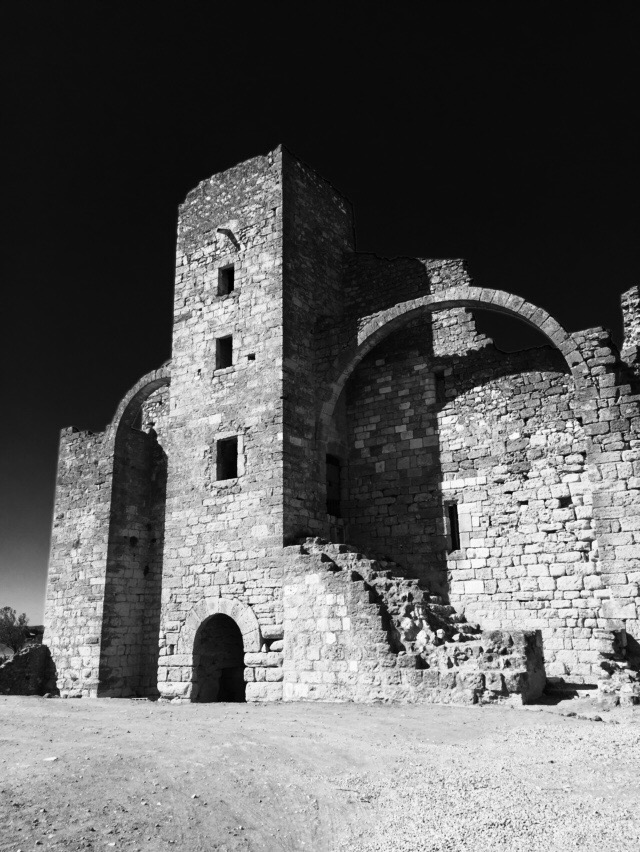
Established as a Cistercian religious ‘hub’ for a number of ‘etangs’ -local districts of agricultural value, it had flourished until the nineteenth century, when it was finally abandoned. It was given historical monument status in 1983 and is now a protected building.
Despite being a ruin, it has one of the most ‘alive’ feelings I have ever experienced. It touched me in a way I can only express in poetry, so I hope to do it justice in the near future…
Beyond the ruin lay a couple of small villages linked by some of the most delightful country roads you can imagine. There is just the sound of the tires on the hot tarmac, the breeze in the trees, and the colours of green, blue and the Sun’s gold.
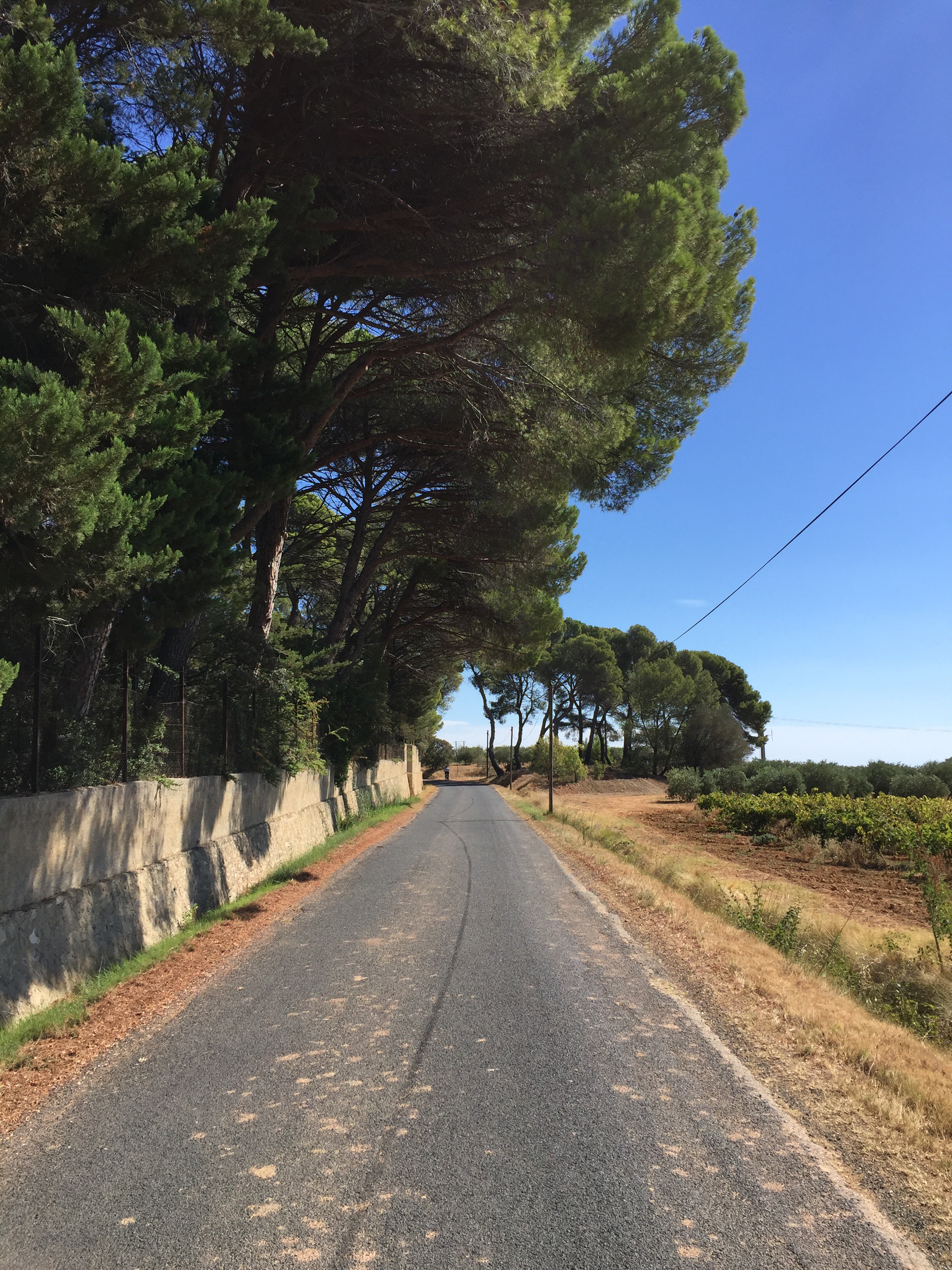
Eventually, we reached the suggested lunch stop of Capustang.
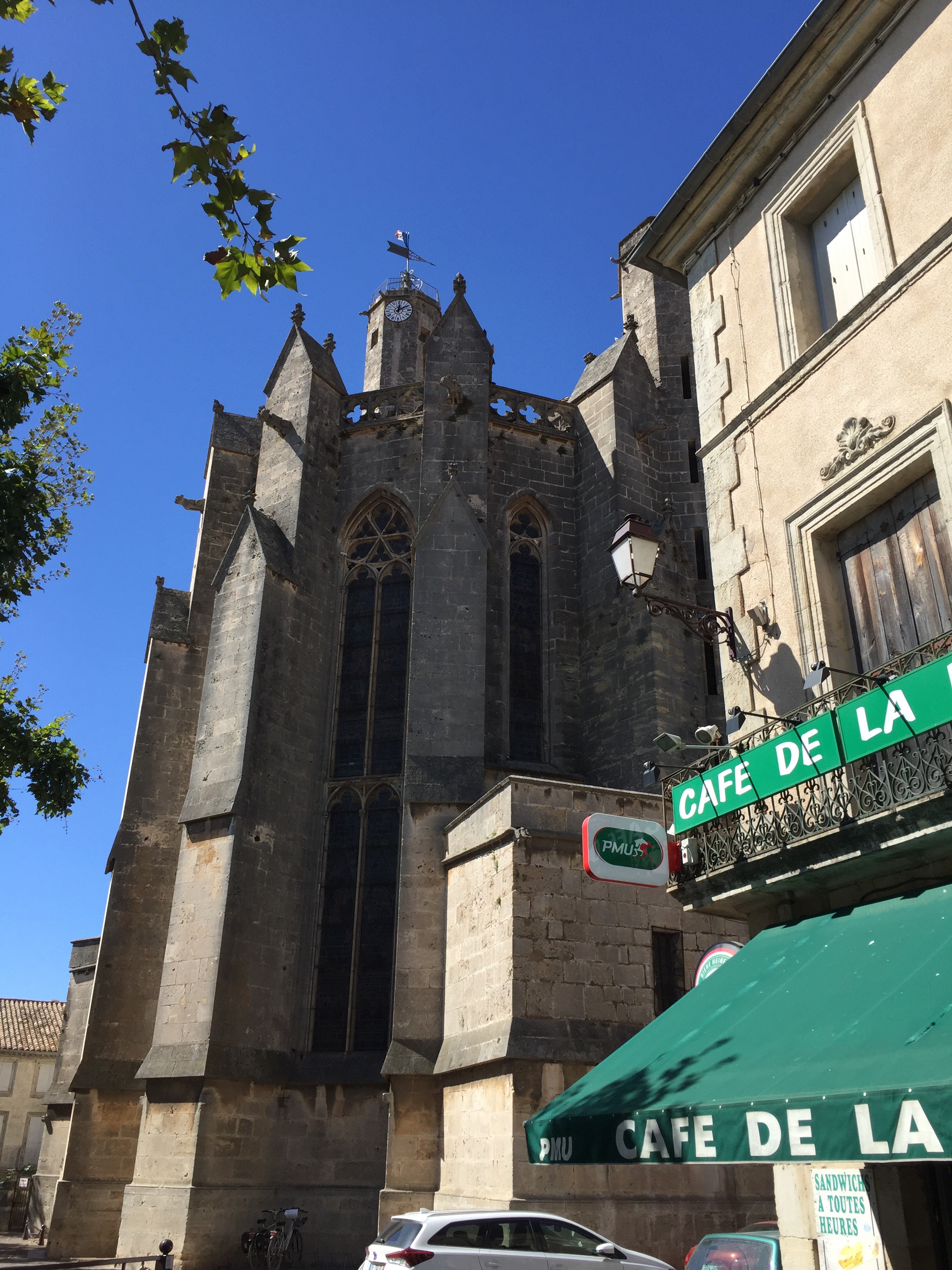
This lovely and vibrant little town was, sadly, spoiled for us by an adjacent table of cyclists who were wining so loudly that we gave up after a hasty Croque Monsieur, called it a day and left…

But fate moves in mysterious ways and we were to make good use of our extra time at an unexpected engineering marvel a few miles along our route…
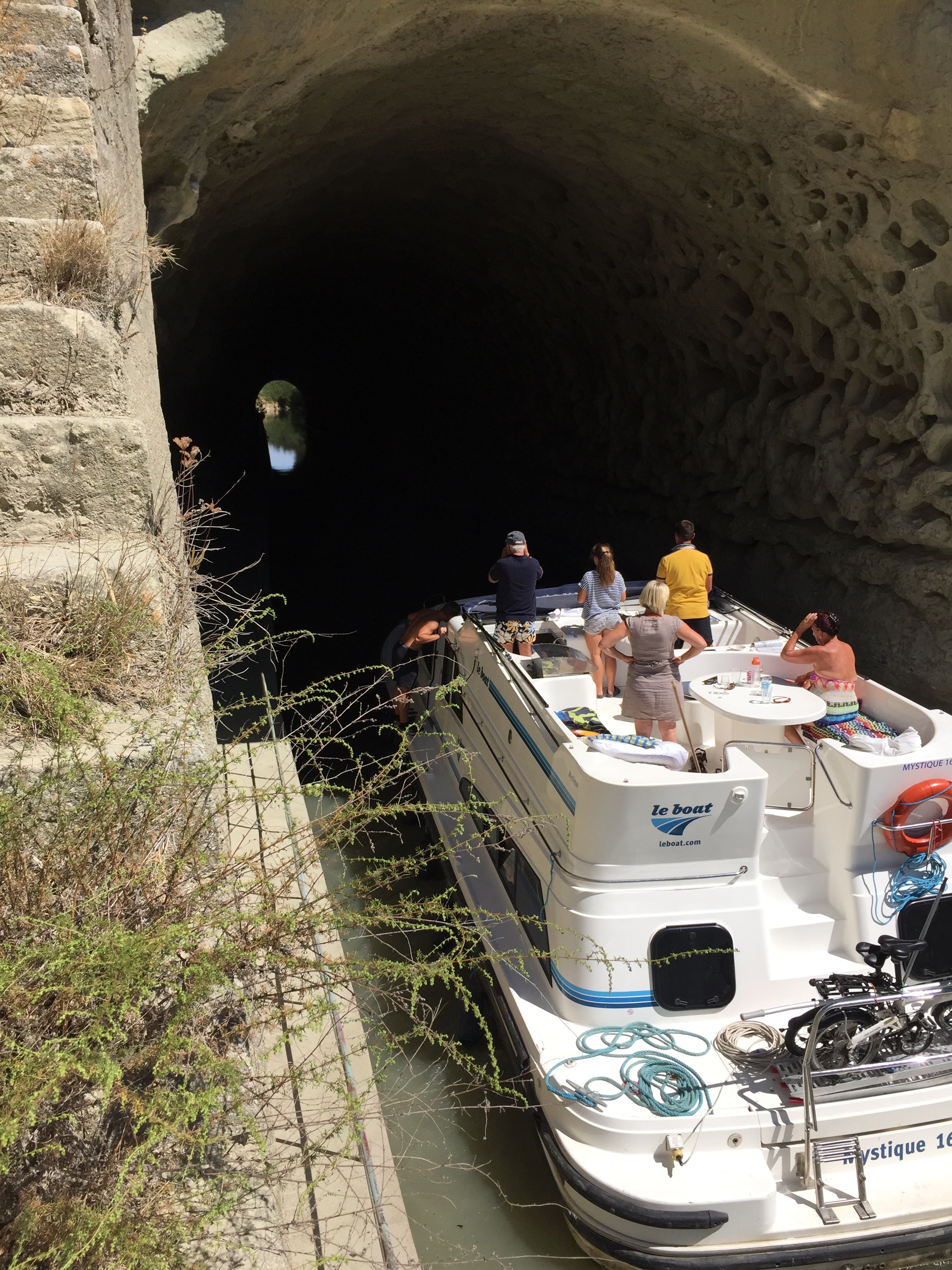
The Butte du Malpas is a small hill, barely fifty metres high, but it has a singular place in the history of civil engineering in the Languedoc region. The picture shows one of the larger cruiser boats entering the tunnel of the Canal du Midi.
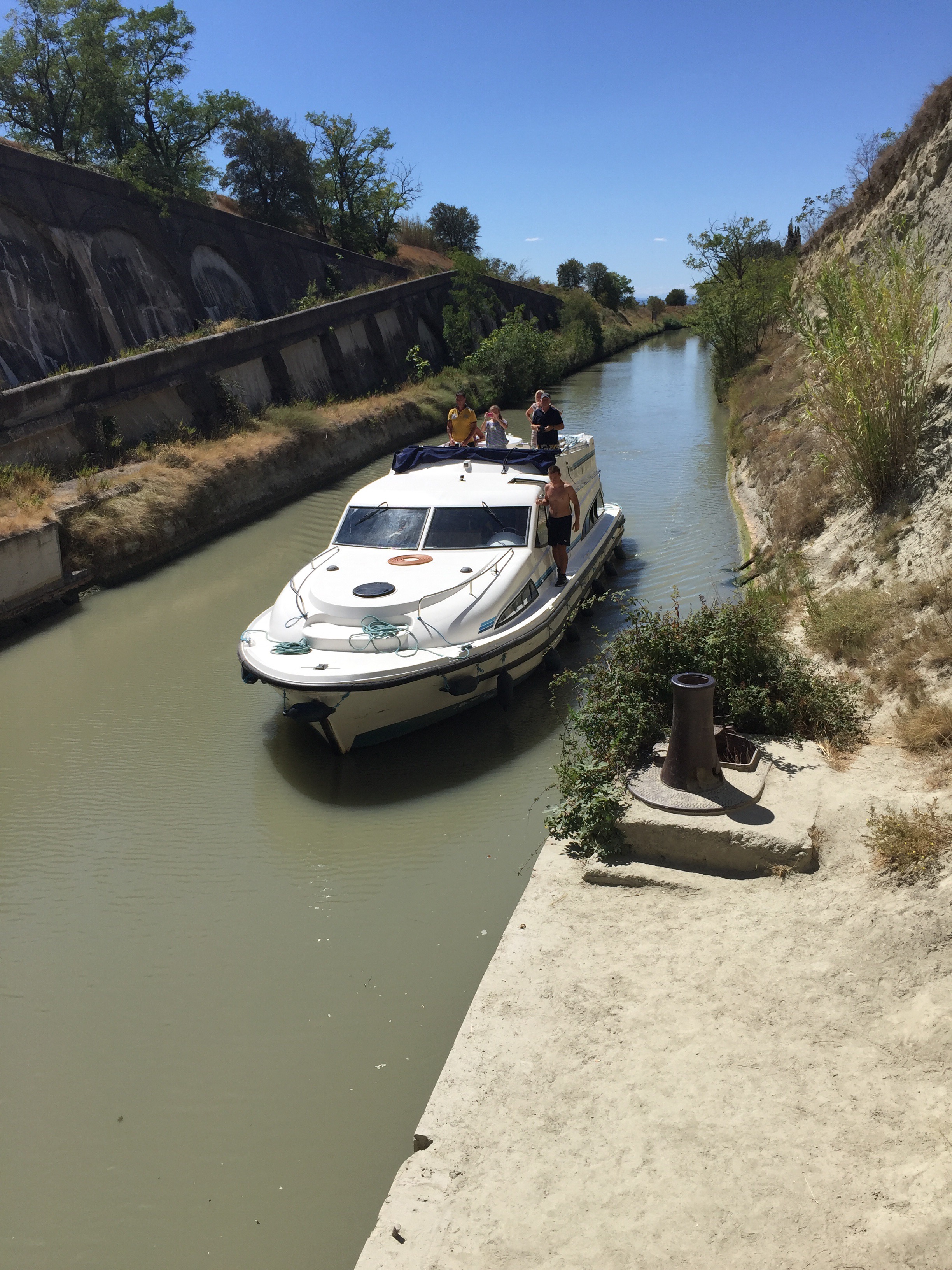
What it doesn’t show is that, fifteen metres below that and at an angle of about sixty degrees, runs the main rail link from Bordeaux to Sète – our final destination.
And that’s not the end of the story…
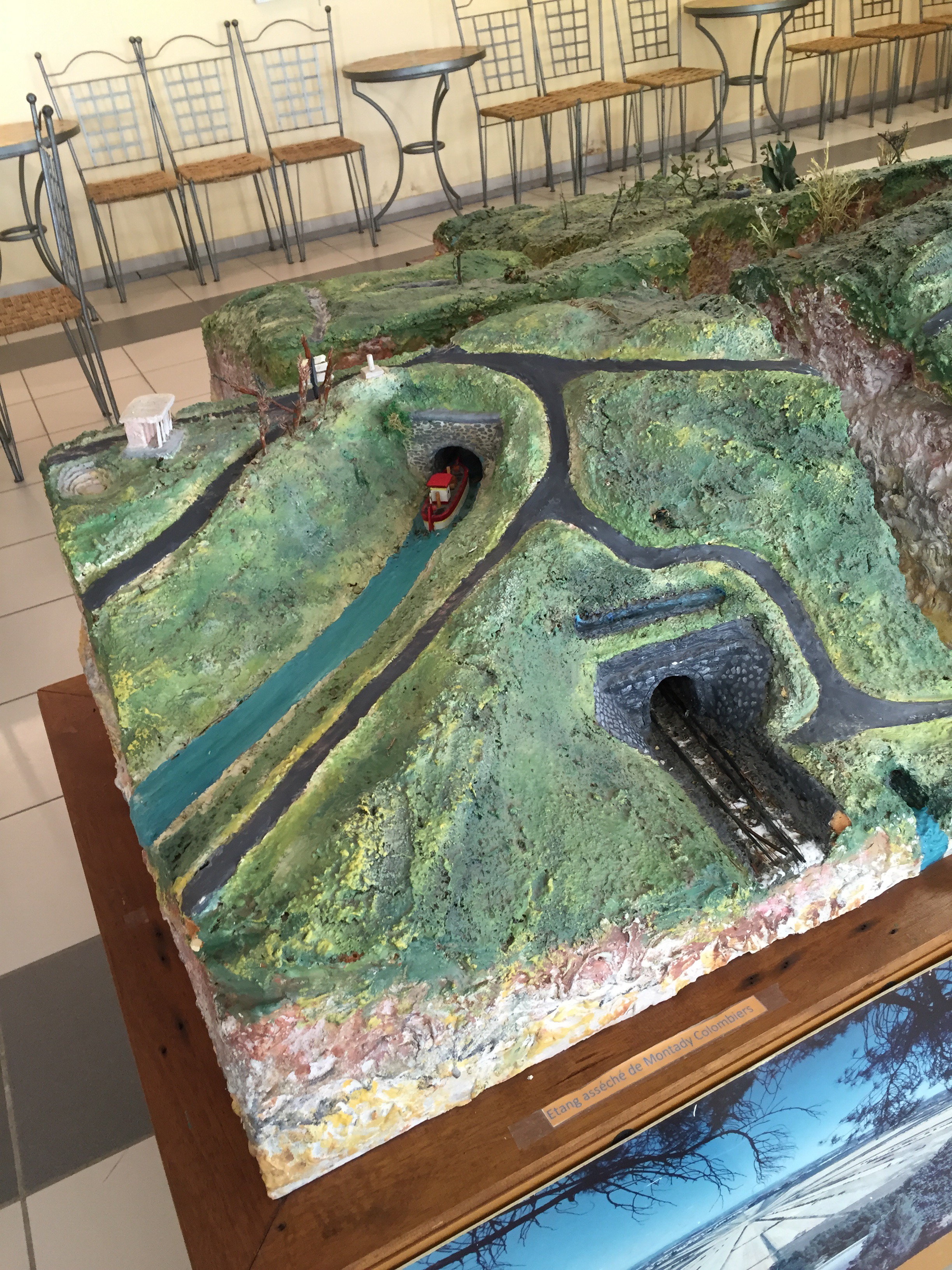
Beneath the rail tunnel there is an even deeper one, the original, which is the drainage outlet for the nearby lake.

Poor Malpas hill has had more drilling than my teeth… But it is a worthy engineering masterpiece.

Just offset to the south of the crest of the hill is a lovely visitor centre which houses the model shown above. It was staffed by two of the most hospitable ladies we could have wished for, and soon, two hot and dusty cyclists were parked in the shade, drinking fruit juice, and sharing a litre of iced water… heaven!

The downhill run from Malpas saw us swiftly arriving in the canal pleasure-port of Colombièr, one of the few such modern sites on the whole of our route. The very air was starting to feel like the ‘seaside’; not surprisingly, as we were a mere few miles from a Mediterranean we were yet to glimpse…
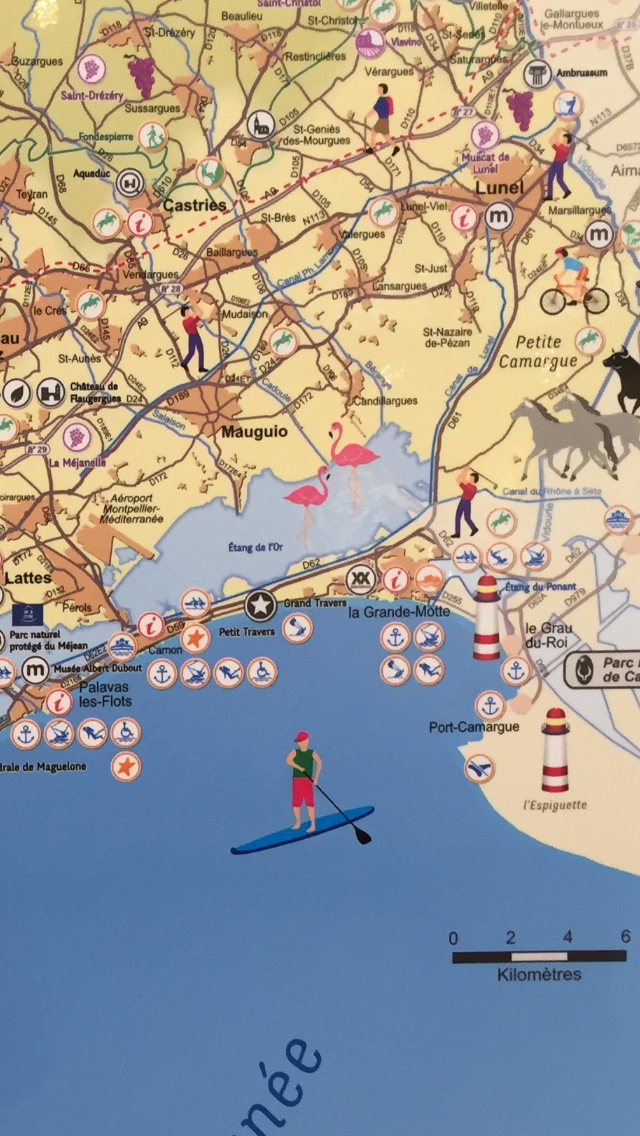
Thursday’s final ride will fix that, as we end our pedalling with a glorious run along a fifteen km stretch of ‘spit’ that separates Sète from its huge tidal lake.
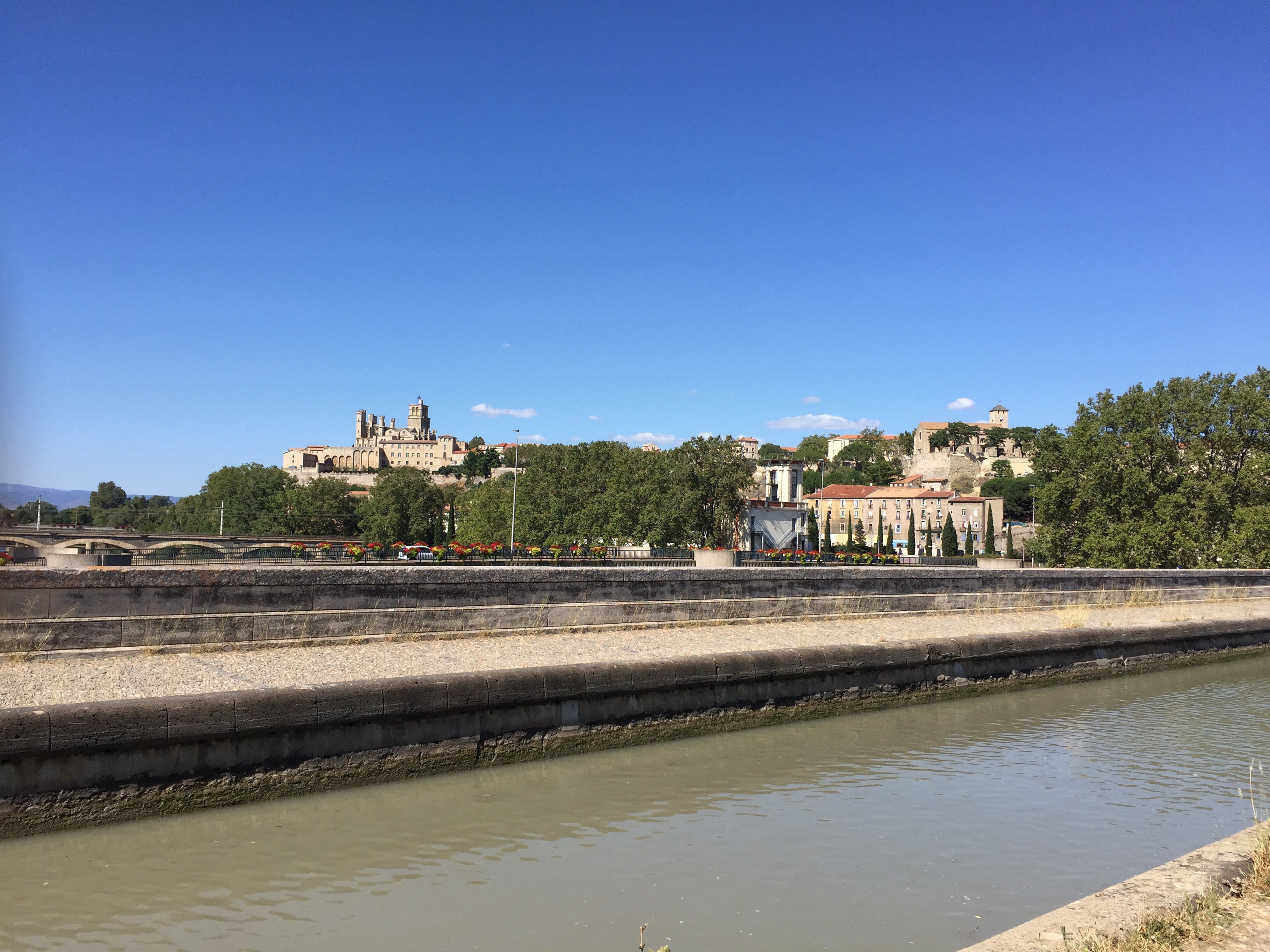
For now, the beautiful, Roman city of Bezier had come into view, and, after navigating some tricky construction work that had closed the canal path, we began a one kilometre ascent of one of its hottest streets to find our lovely hotel…
More tomorrow on Bezier.

©Copyright Stephen Tanham, 2016.
Share this:

 I slowed to let the young lad on the bicycle pull out onto the roundabout. That looks like… I raised my hand to wave to my son’s friend and instantly realised my mistake. It might have been his son, but it certainly was not the boy I had known. It couldn’t be… he would be in his thirties now and this youngster was little more than a child. Even worse, he looked like my son’s best friend when we had first known him, almost twenty years ago, not as I had last seen him a couple of years ago, well over six foot tall and as broad as a tank.
Memory is a funny thing. I recalled a recent conversation where we had discussed how the images that we hold in our minds of people we know are not always accurate. Sometimes we picture them from a single moment in…
View original post 846 more words
Share this:

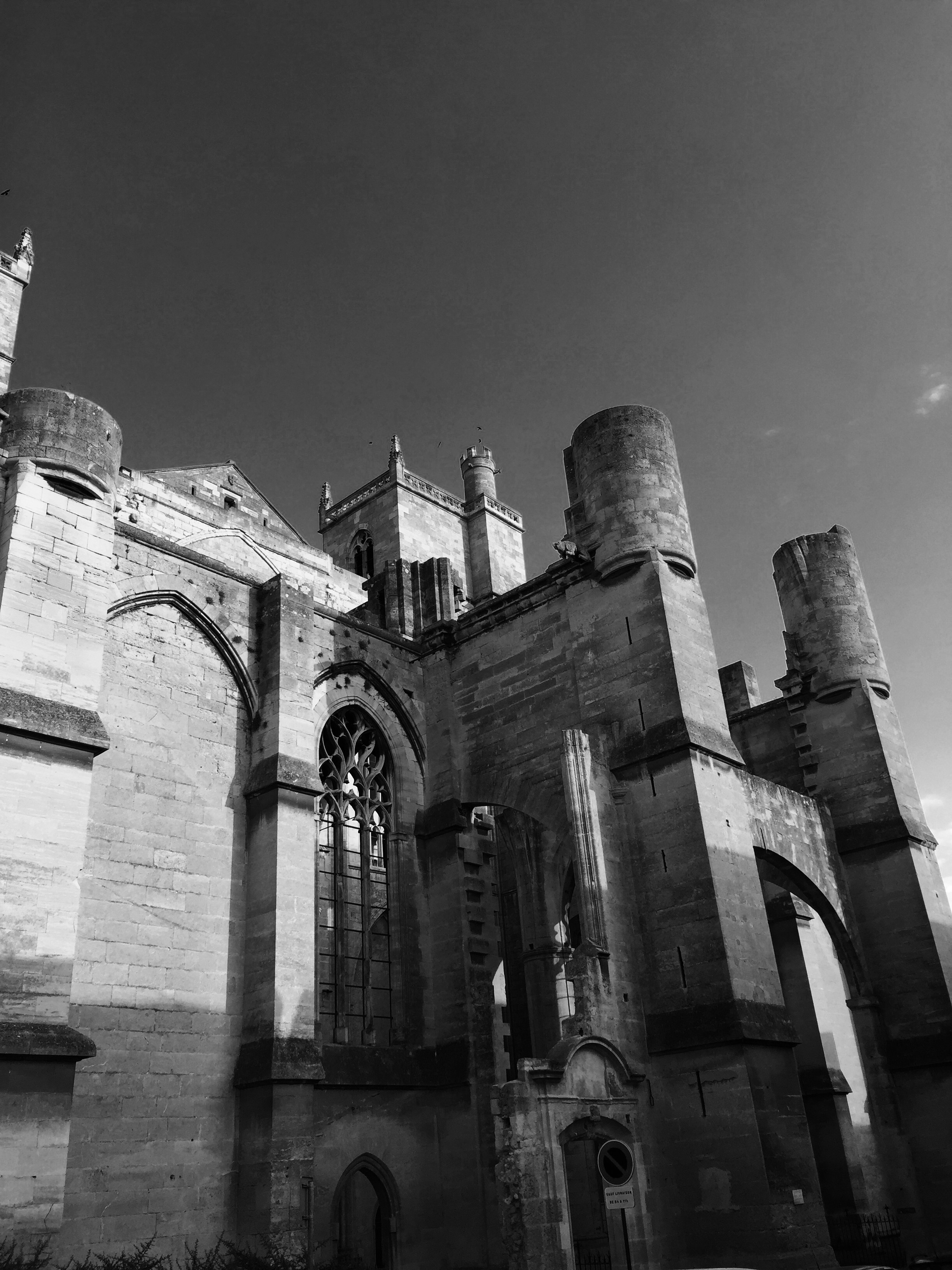
What would you do if you were the Archbishop of Narbonne and you found yourself being made Pope?
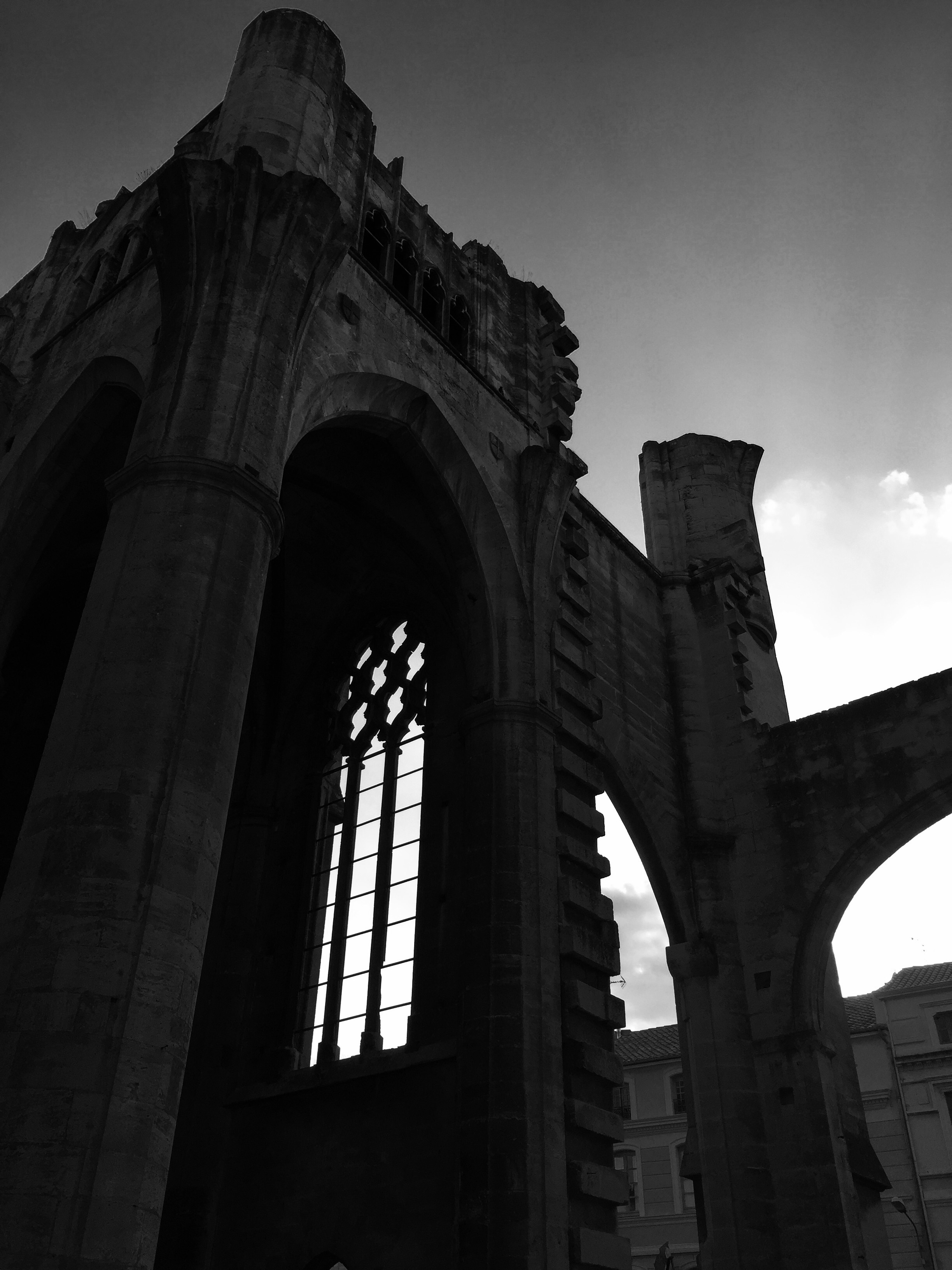
You might consider honouring your former home by creating a new, gothic, cathedral – a very grand cathedral; one modeled on the splendour of those in Northern France.
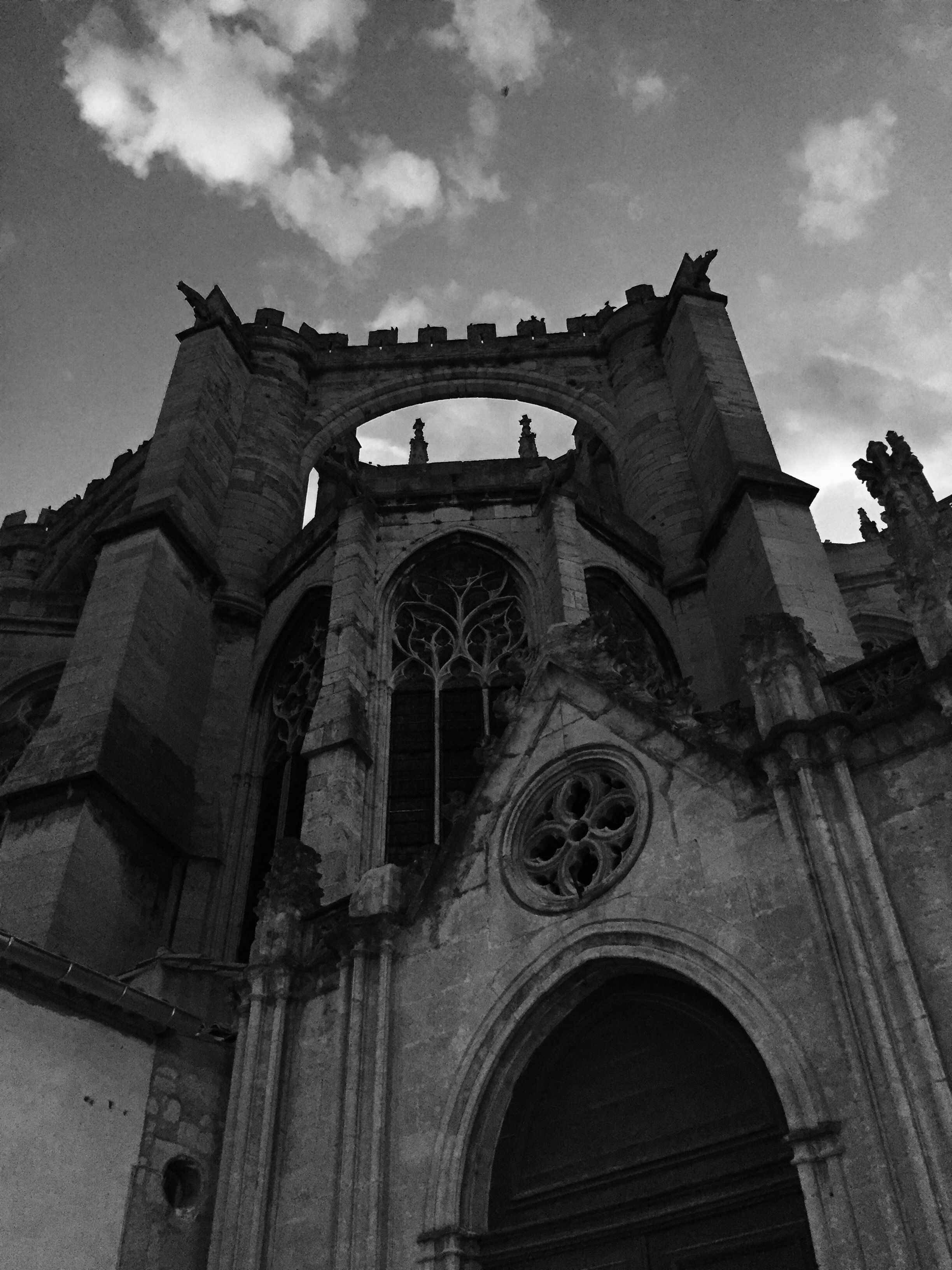
In 1268 that’s exactly what Pope Clement IV did. He decided that it would be a monument made in the magnificent style of the Kingdom of France. He had plans drawn up and the construction began in 1272. The ‘choir’, the bit at the top of the calvary cross that all such churches were based upon, was finished in 1332, but the rest of the building was never completed. What you see today is as far as it got… the dark outline in the ‘wingless’ plan below.
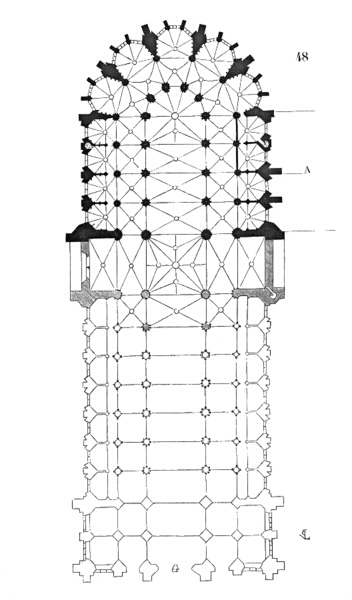
This ‘grand cock-up’, as the local historians describe it, was the result of many things, including sudden changes in the economic status of Narbonne, the sheer size of the original design – which would have seen it span four city blocks- and regional economic issues.
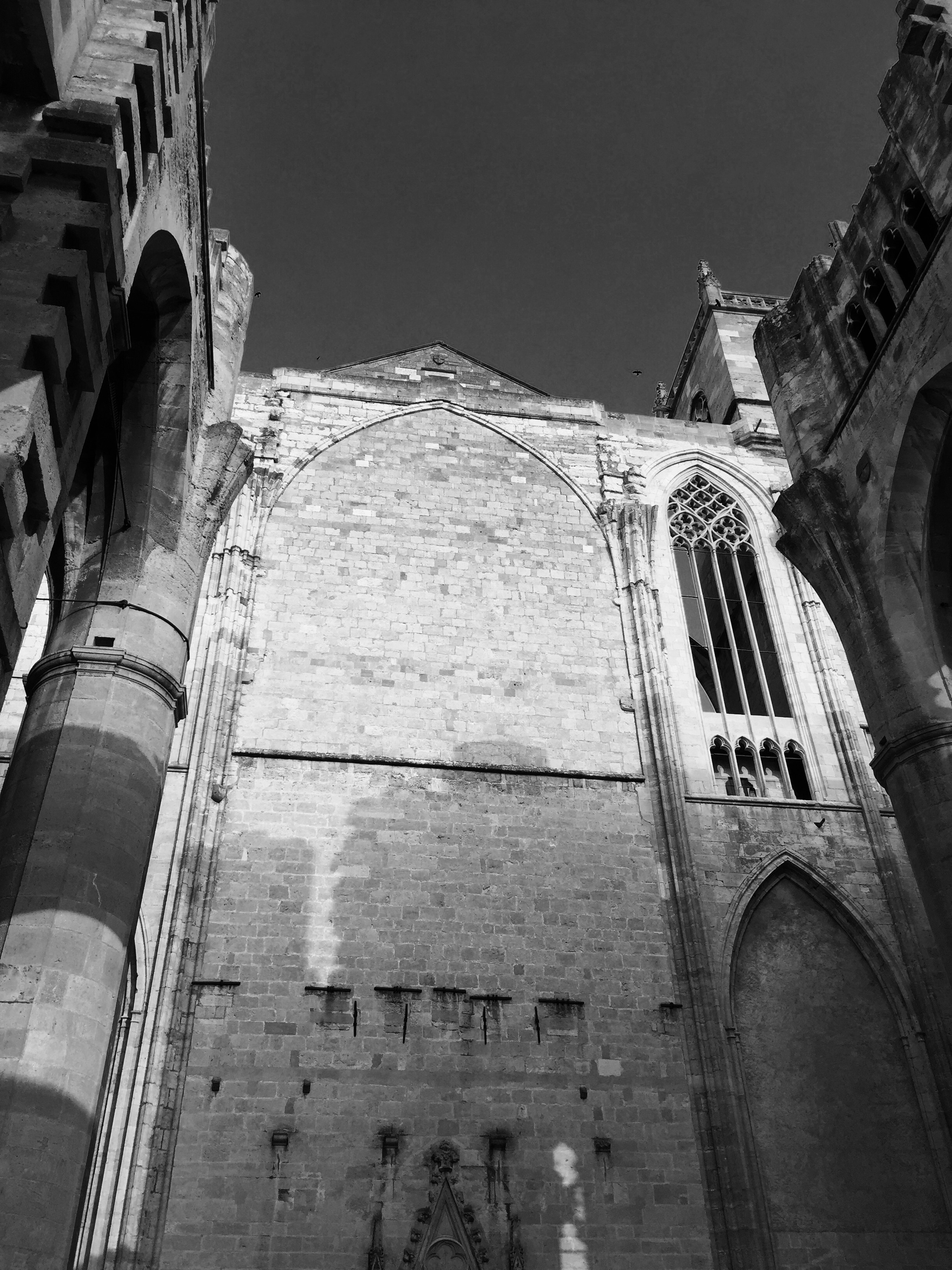
But the biggest reason for the cessation of the construction was that someone worked out that they would have to demolish the city walls to accommodate one of the trancepts – the left side-arm of the horizontal part of the cross shape… Both trancepts have been removed from the plans you will note.
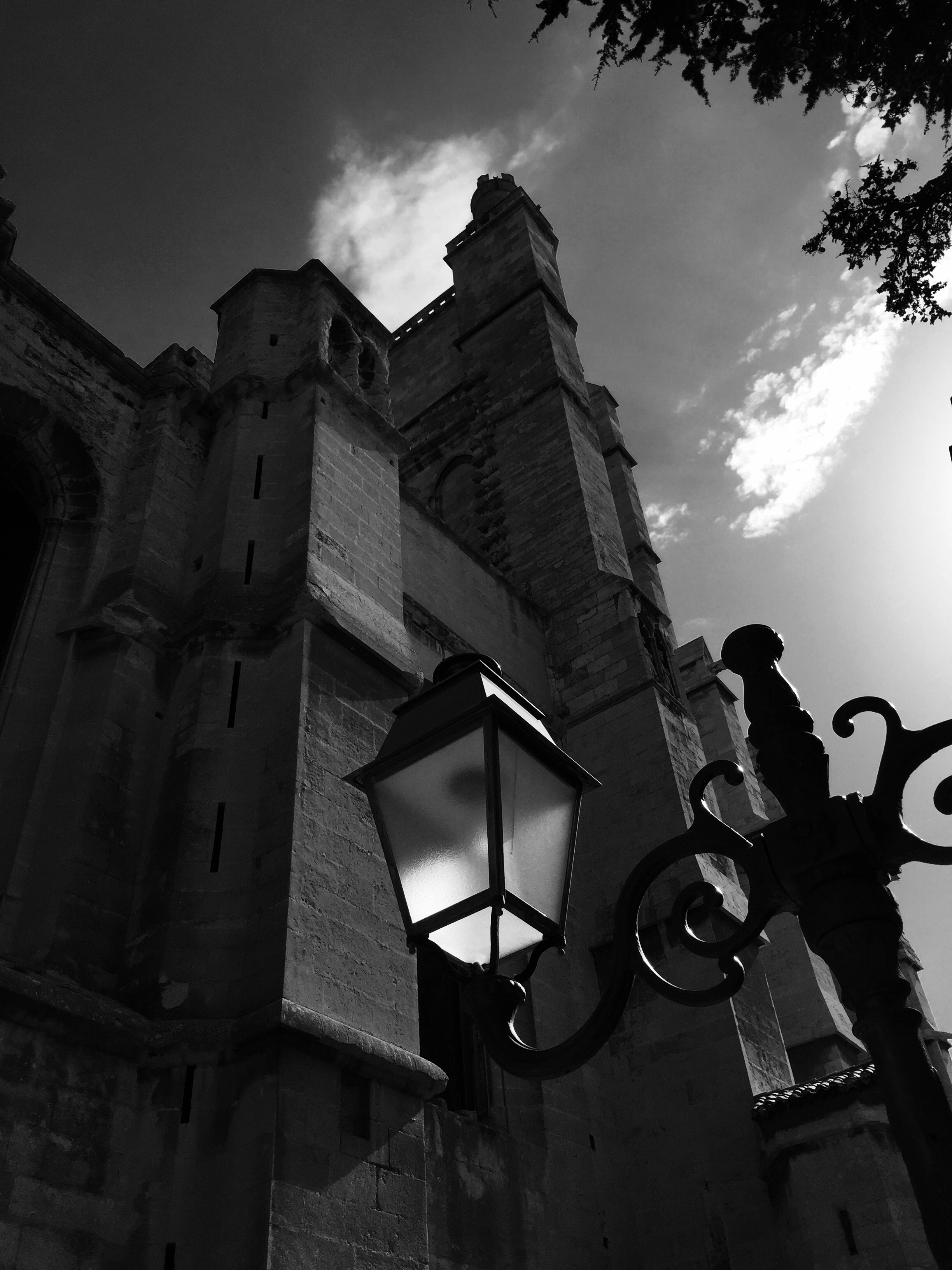
But the wingless wonder continued to crash. Over the next two hundred years the rest of the plans were gradually dropped, leaving the ‘choir’ as the only surviving part of the cathedral of Saint Pasteur and Saint Juste, as it became known to history – the Pope having, presumably disowned it by then…
But magnificent failures have much to teach us…
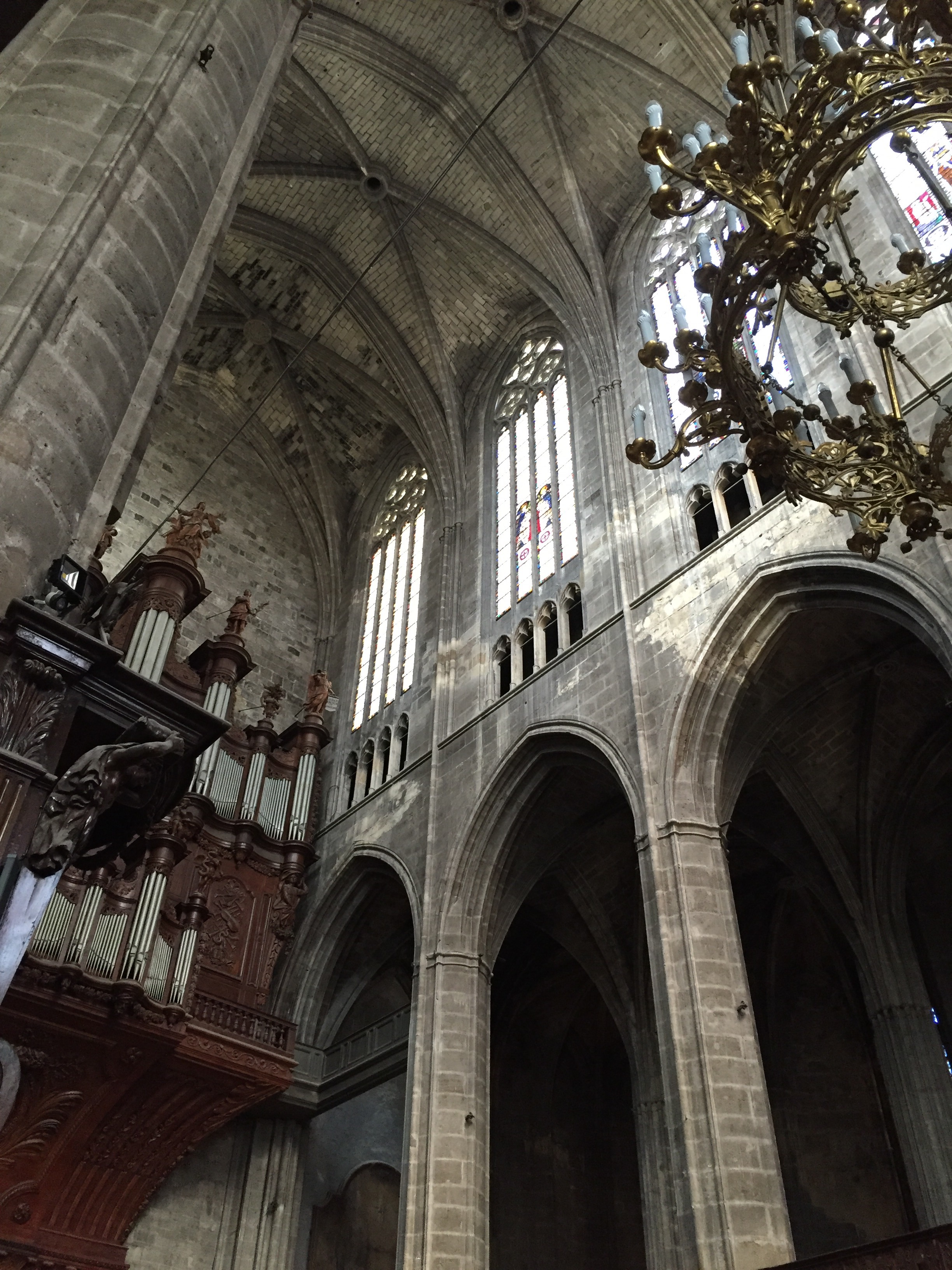
The good people of Narbonne took the residual ‘choir’ to their hearts and ensured that it would stand the test of time on its own terms.
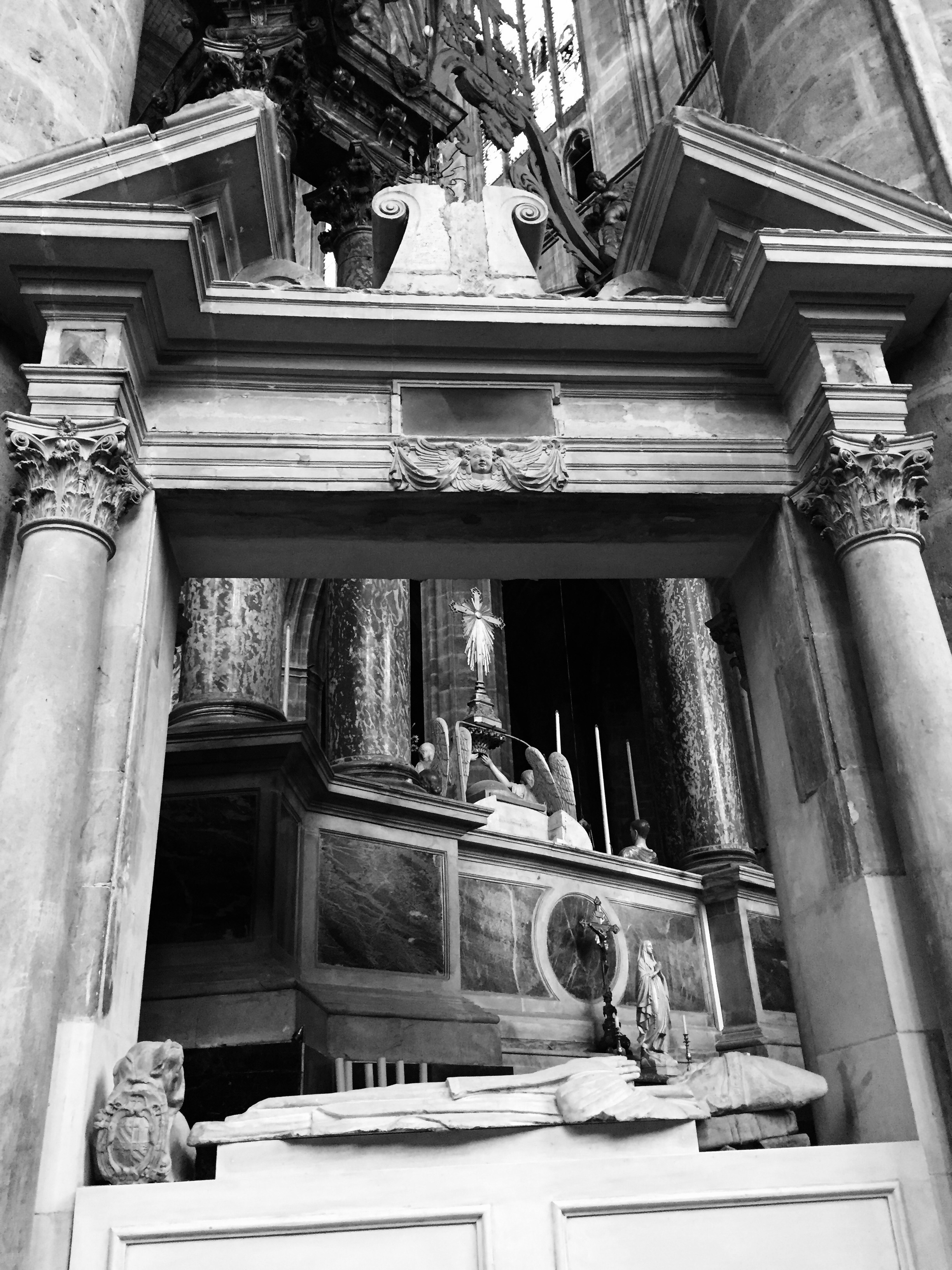
When you are in the splendour of this interior space there is only grandeur and beauty, ‘box’ or not.
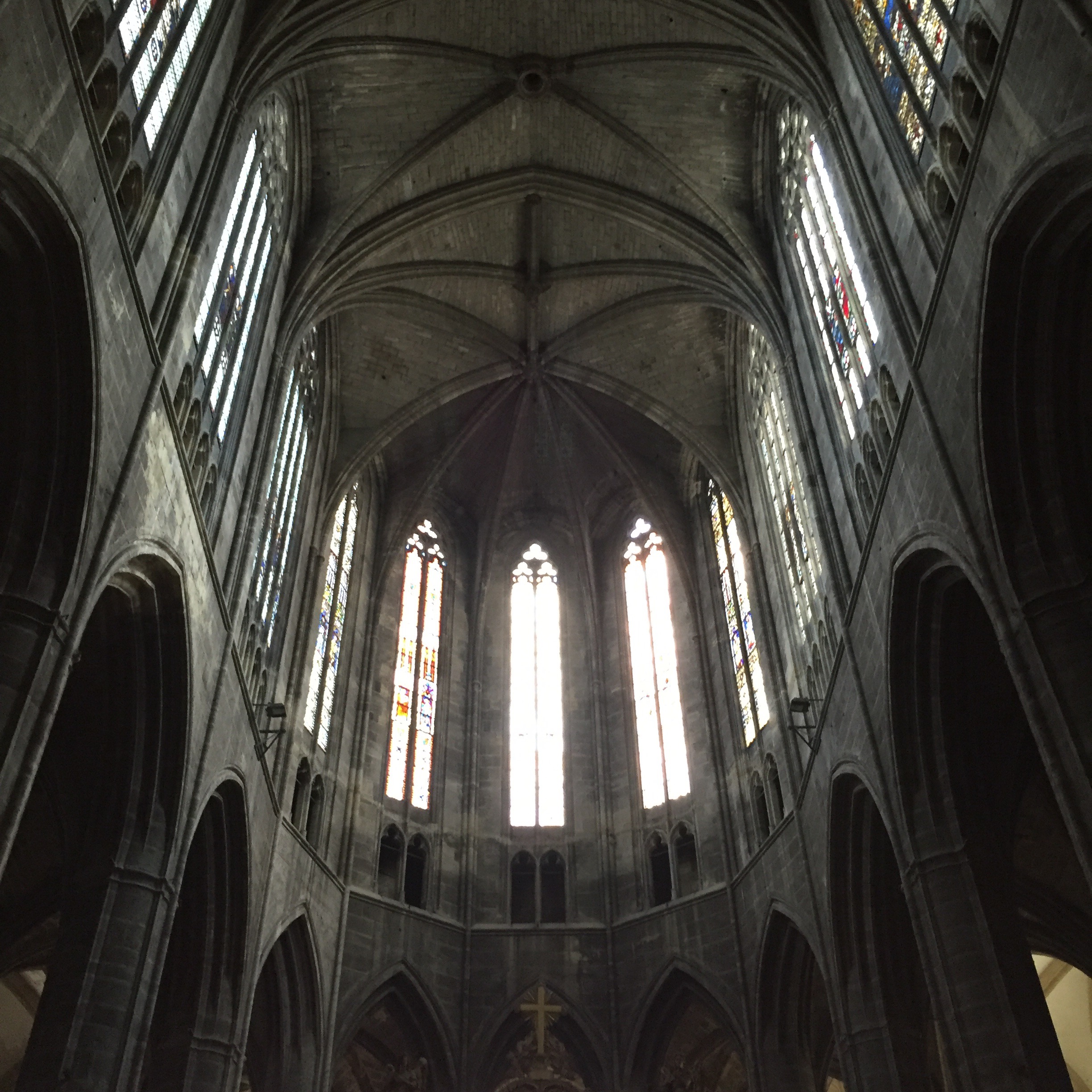
You may have gathered that we’re not cycling today.
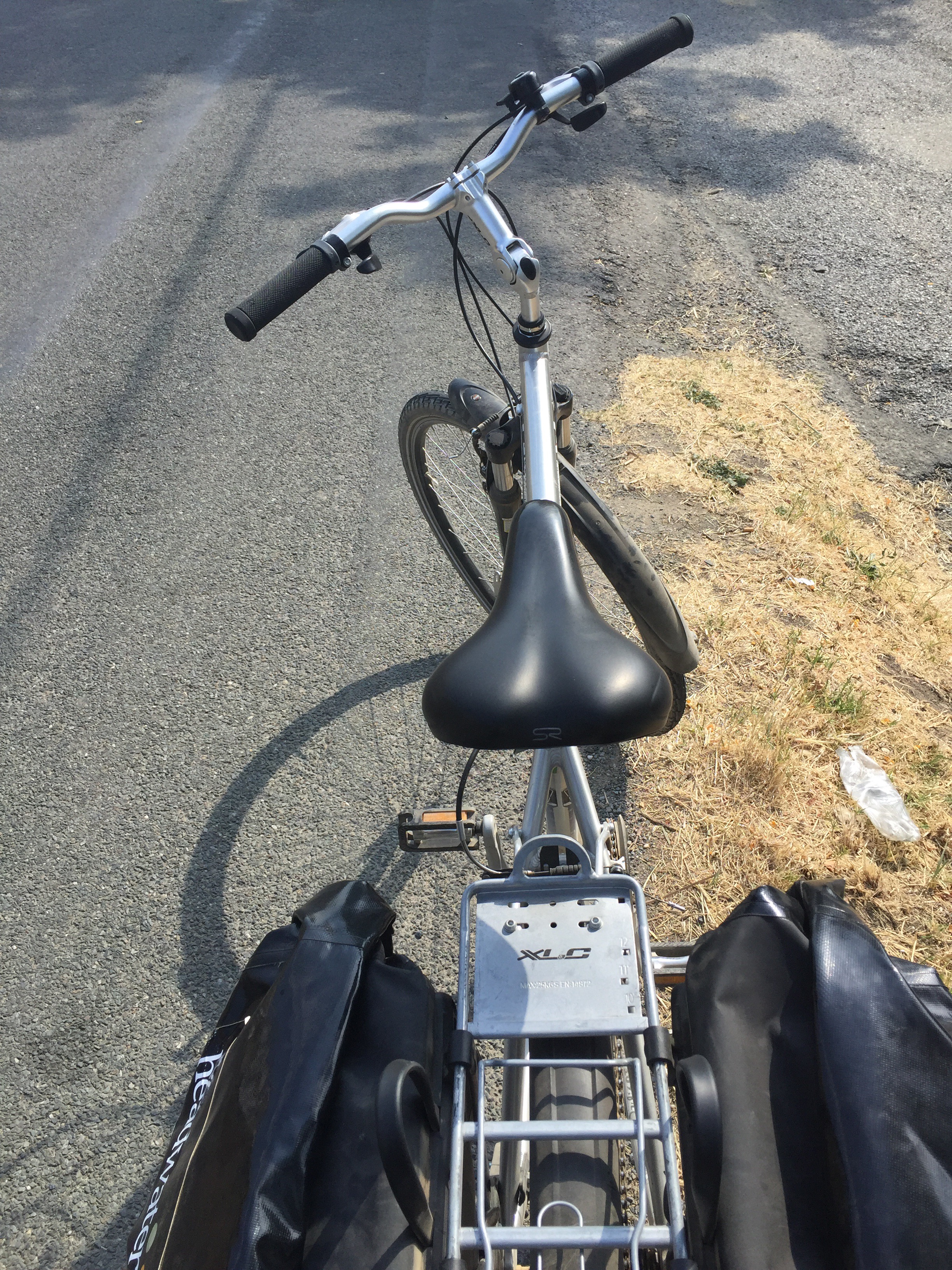
We’re having a rest day in Narbonne, swapping further time in the saddle for a relaxed tour of this lovely and friendly city
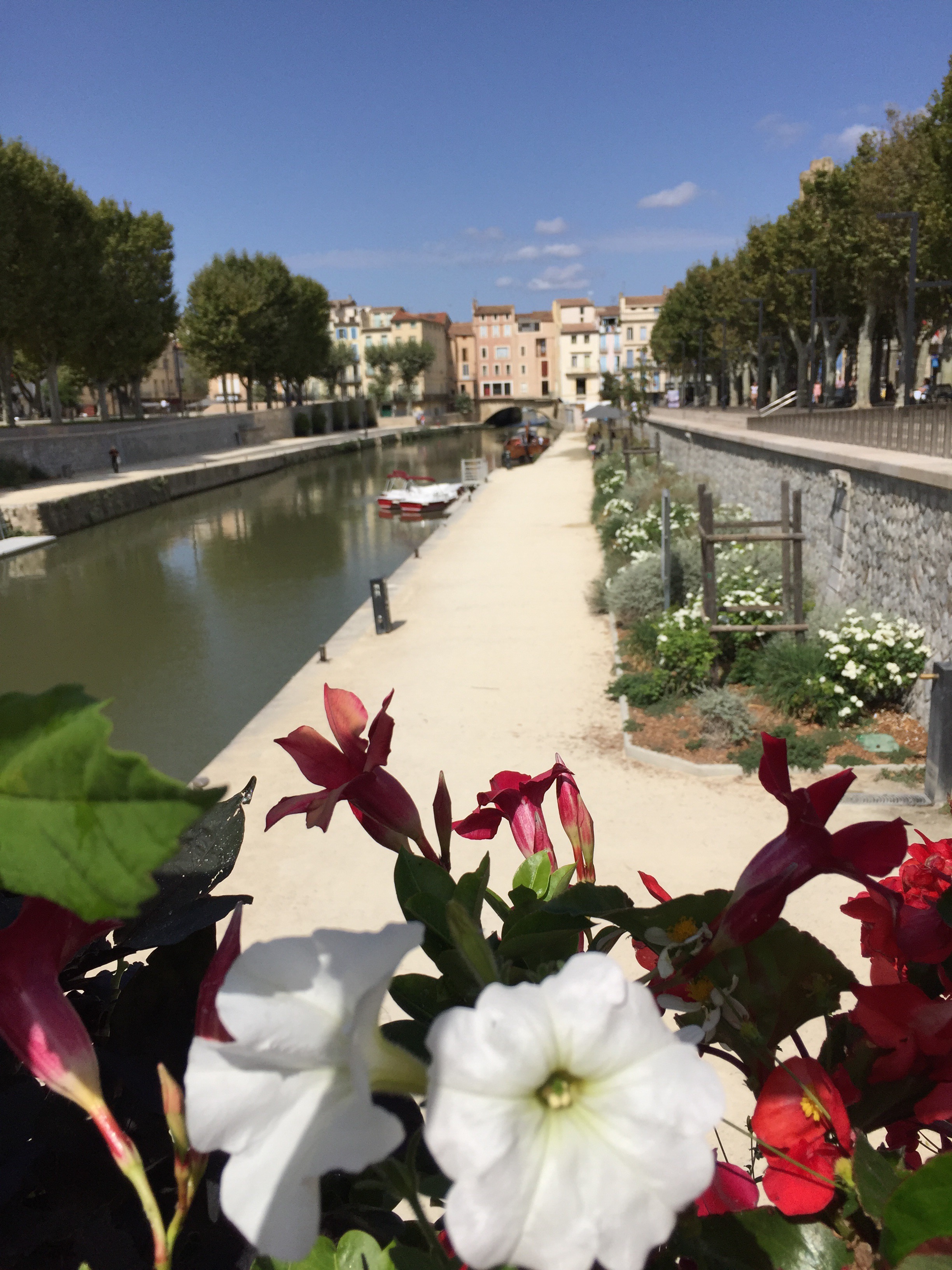
The Canal du Rabine, which is a Narbonne spur from the Midi, runs right through the middle of the city, as the picture shows.
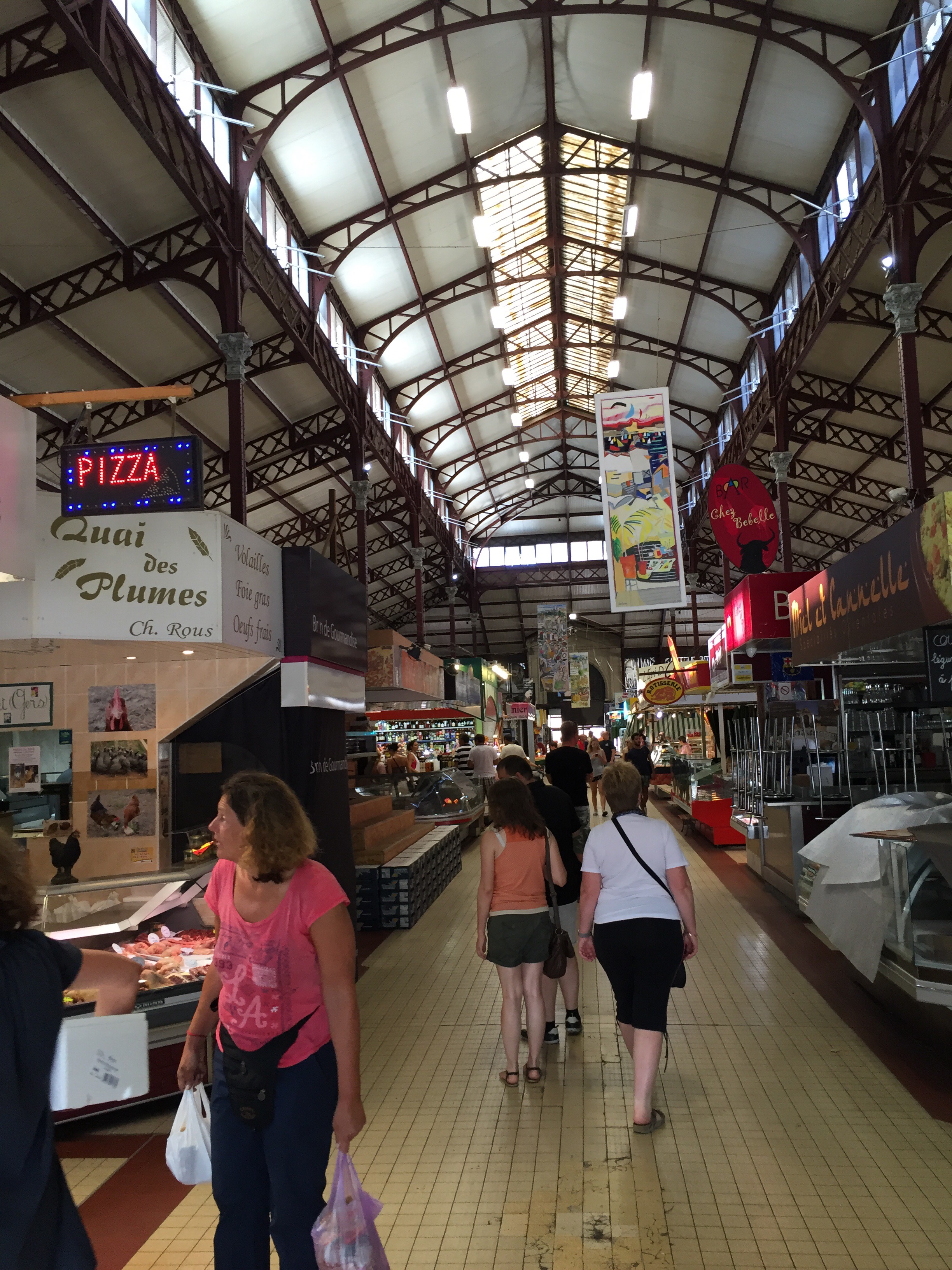
The covered market offers a wonderful glimpse into the lives of the people of the city, and how they shop and prepare their food
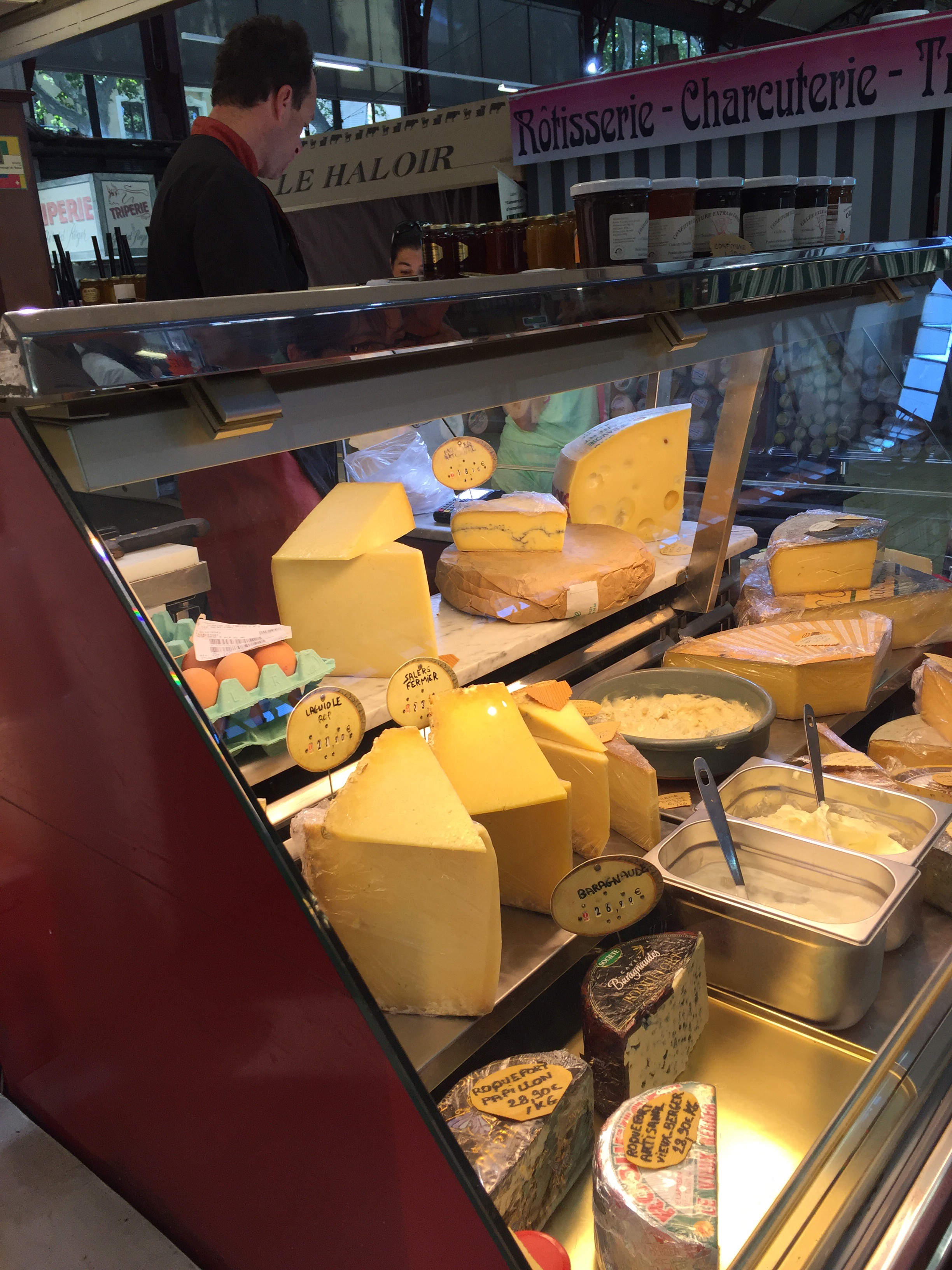
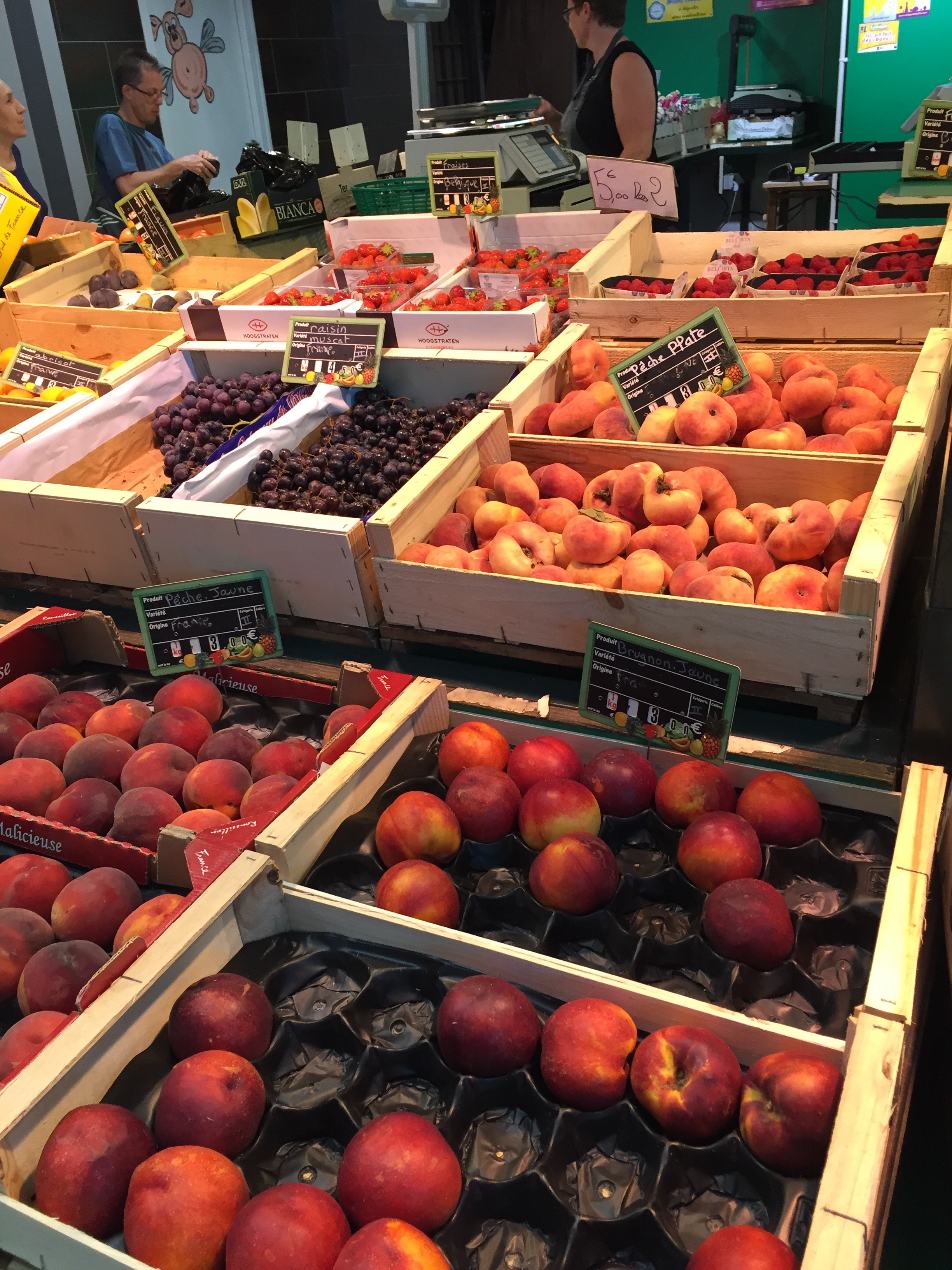
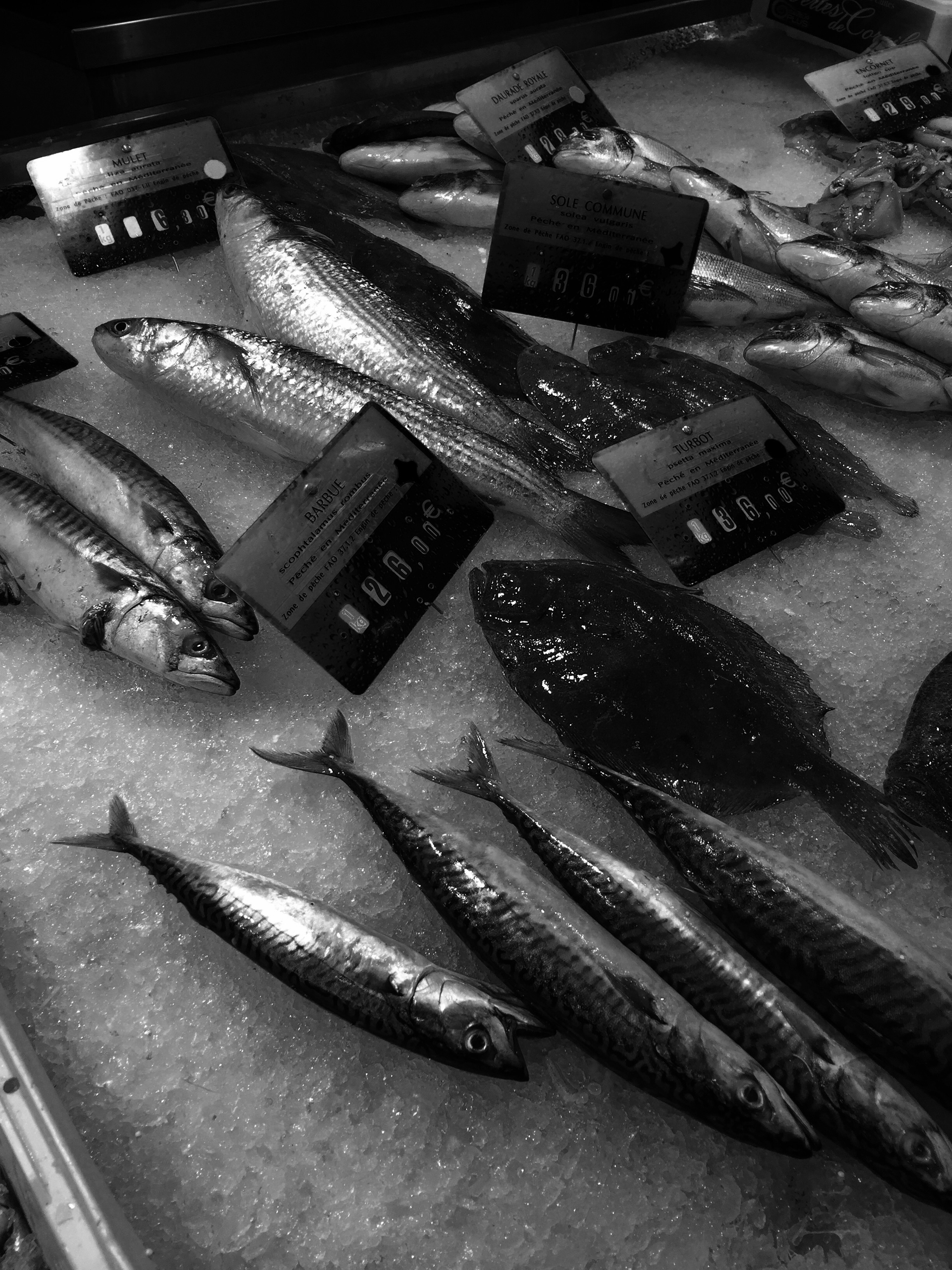
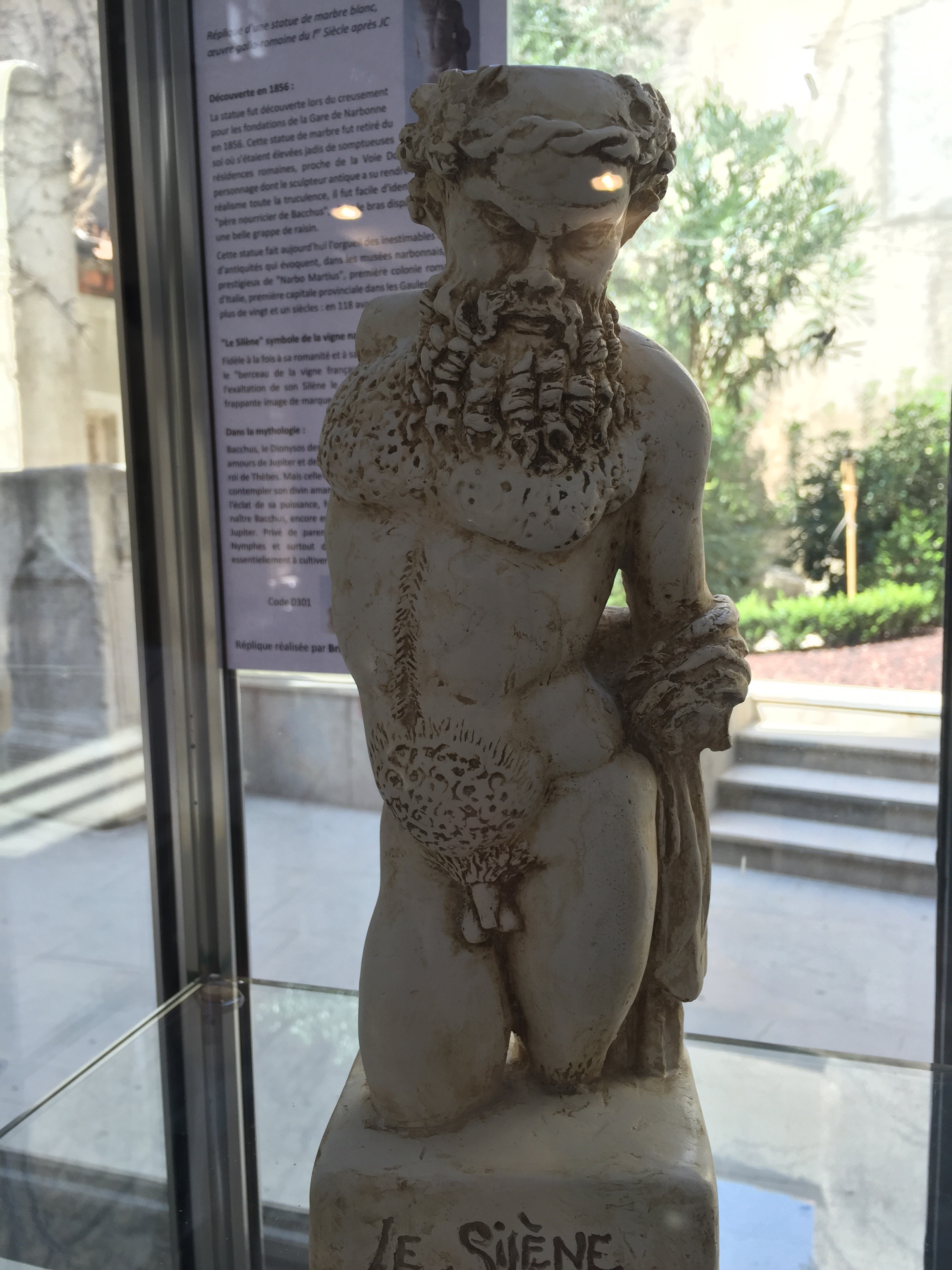
And then there’s the Roman Museum…
And frequent exhibitions, like this one on Australian Aboriginal art:
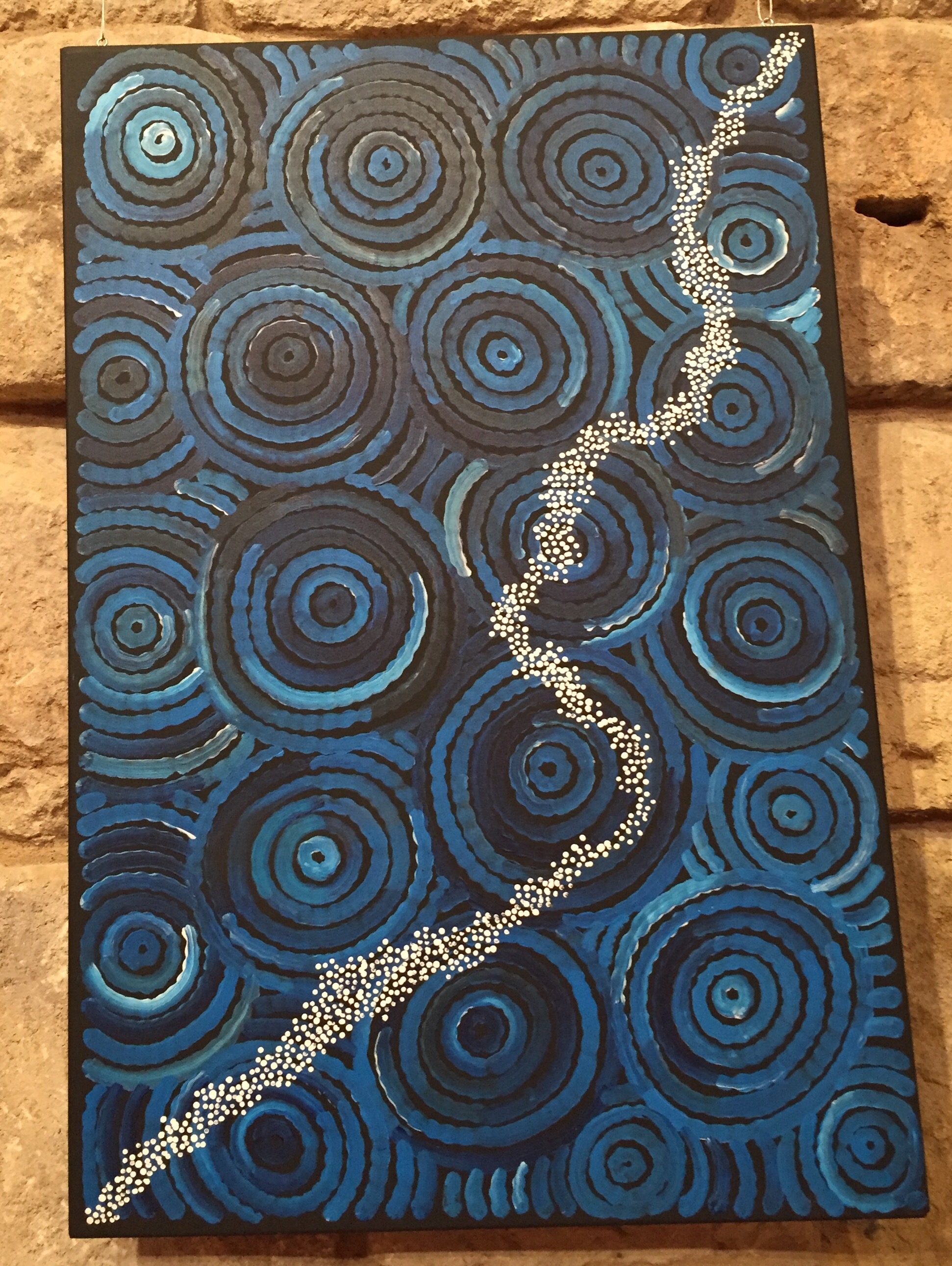
So, all in all, it’s been a wonderful and cultured rest day…
Tomorrow, back in the saddle and head down to Bezier! May it not be as hot as the Homps trip!
©Copyright Stephen Tanham, 2016.
Share this:

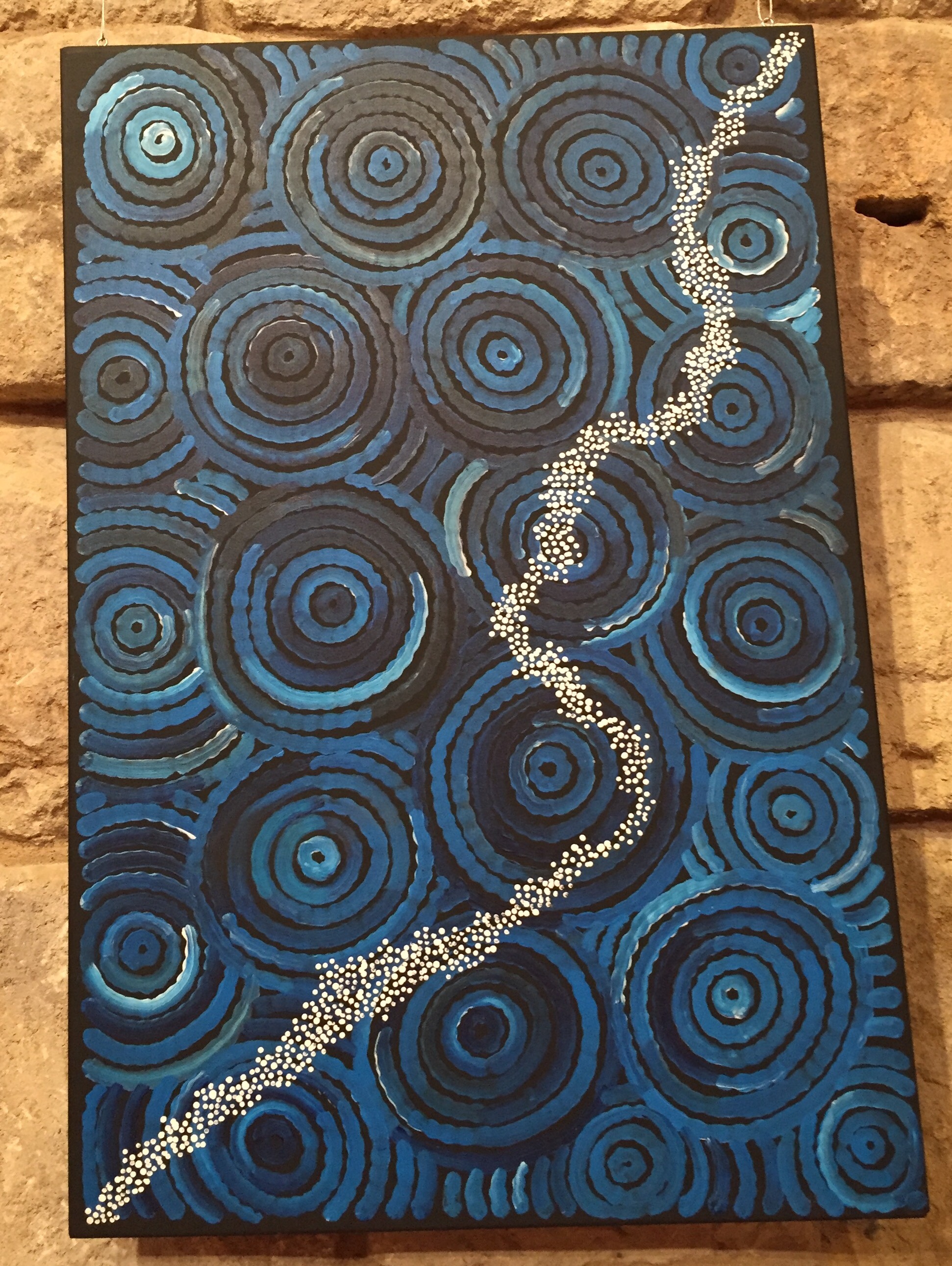
Inspired by an exhibition of Aboriginal art in Narbonne.
Image: Milky Way by Louise Numina, 1965
Native Australian Artist
—
And Life Shall Have Dominion
Whatever you can touch
You have dominion over
Whatever you can touch and move
You have power over
Be kind to it…
–
Whatever you can see or hear or smell
But cannot touch or move
Has dominion over you
Pray that it is kind
And knows love for what you
Could be…
——-
©Stephen Tanham, 2016.


 Sun in Gemini
You must be logged in to post a comment.