

It is a long time since I joined the crowds in France to celebrate a national holiday, but I remember the wonderful atmosphere and gaiety when I took my small son to watch the blooming of fireworks in the night sky, when the ideal of ‘Freedom, Equality and Brotherhood’ was proclaimed and reaffirmed across the land.
I cannot begin to imagine what it must have felt like to see lives, ideals and loved ones maimed and murdered on such a night. My own experience does not bring me close to such horror, though I have endured the interminable, rending heartache and the waiting for news when my child lay near death through an act of senseless violence.
It doesn’t matter ‘why’, though many will cry that word into the night, begging for an answer that will never be enough.
It barely matters ‘who’… the perpetrator can no longer cause harm…
View original post 320 more words
Share this:

Come and join us on an magical adventure in the landscape…


*
They care for her needs, which are few enough… goat’s milk and berries, bread and herbs…fur for the cloak and boots she wears against the cold through the long nights of vigil by the stones.
They keep their distance, coming only to the Guardian.
She speaks to none else who do not seek.
Very different this life from her beginnings in the bright, fire-lit halls of lore and music… but it is life and she serves the Clan of the Raven.
*
 *
*
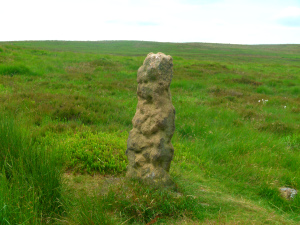
Laying her hand on the great mound she walks through the cairns to the home-place to warn him of their coming. Bending low she enters the house, low roofed and sturdy, lined with stones piled between the circle of uprights, a special burial at its heart, capped with stone.
*
 *
*
He had gone back, her Guardian… under cover of night… dangerous work…to bring her their…
View original post 149 more words
Share this:

Share this:


Whispers in the West – part three
After the group’s successful ascent of Carningli (panorama shot above), the second day of the Silent Eye’s Whispers in the West weekend continued, with a short, further car journey to one of the historic highlights of the trip – Pentre Ifan.
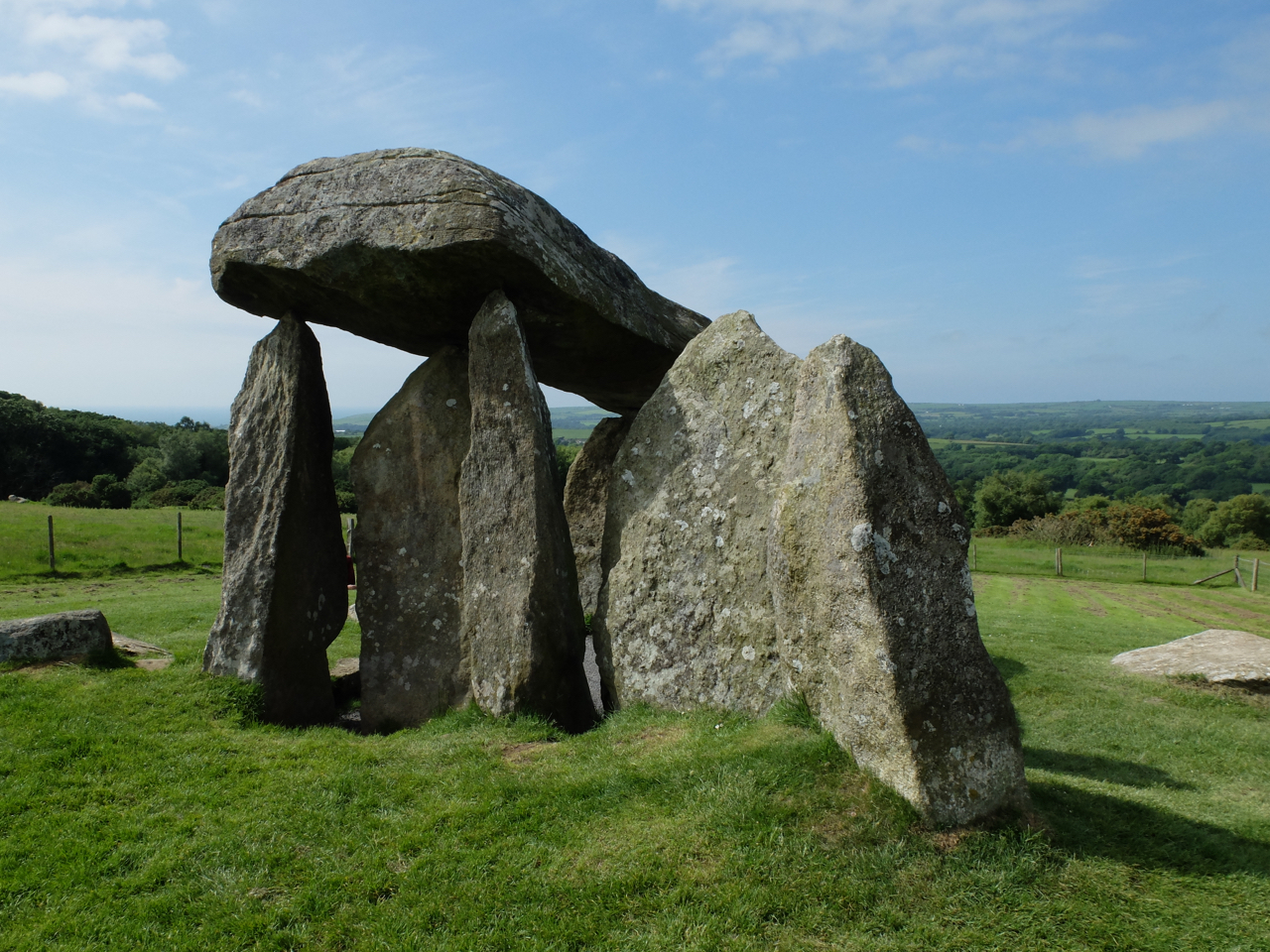
Pentre Ifan is the best known, and because of its height, the most impressive megalithic monuments in Wales. It is believed to be the remains of a chambered tomb for the communal burial of the dead, which would have been used, continuously, for some period before being finally sealed for good. The tomb was erected in the Neolithic age, perhaps as early as 3.500 B.C.

The burial chamber itself was once partially covered by a great cairn (see schematic, below), extending well to the rear, but the stones have long since been removed; so it now lacks its original covering.

(Schematic taken from a partial photograph of the CADW information board at the site)
Pentre Ifan is classified as of the Portal Dolmen type, with the front of the chamber composed of three large uprights set in an ‘H’ formation – though here it is placed, unusually, at the centre of a curving facade of slabs, in line with the design shown in the schematic.
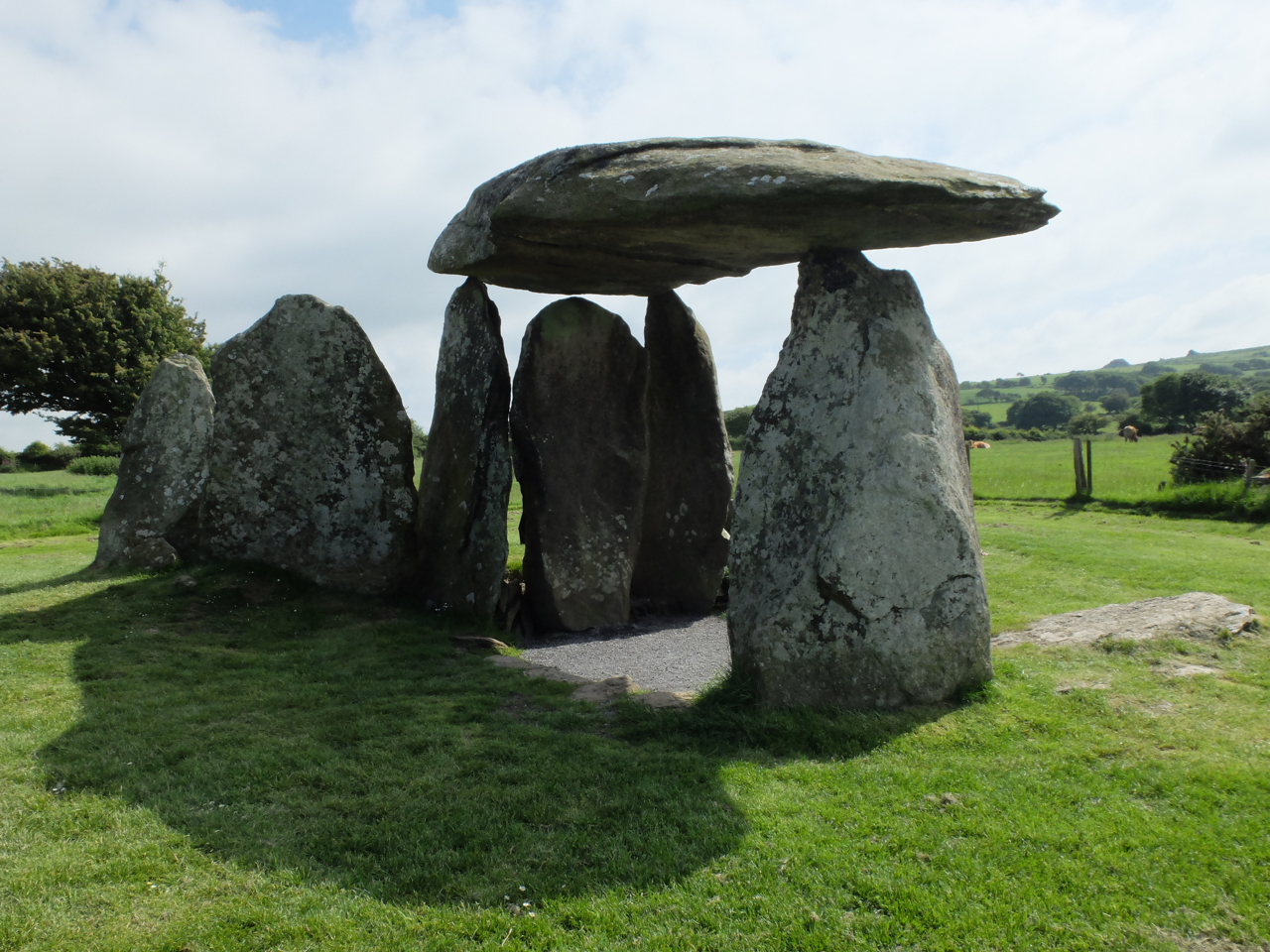
The enormous capstone, nearly 17 feet long, weighs over sixteen tons and is supported on just three stones, as can be seen in the above photograph. It is believed that the juxtaposition of supporting and non-supporting stones was part of the design of the dolmen.
The weather continued to be wonderful, as you can see from the photographs. Beyond this, though, and the fact that it was now late afternoon, there was a very peaceful atmosphere about Pentre Ifan. It is a very beautiful and spiritual place. No-one in our party wanted to depart…
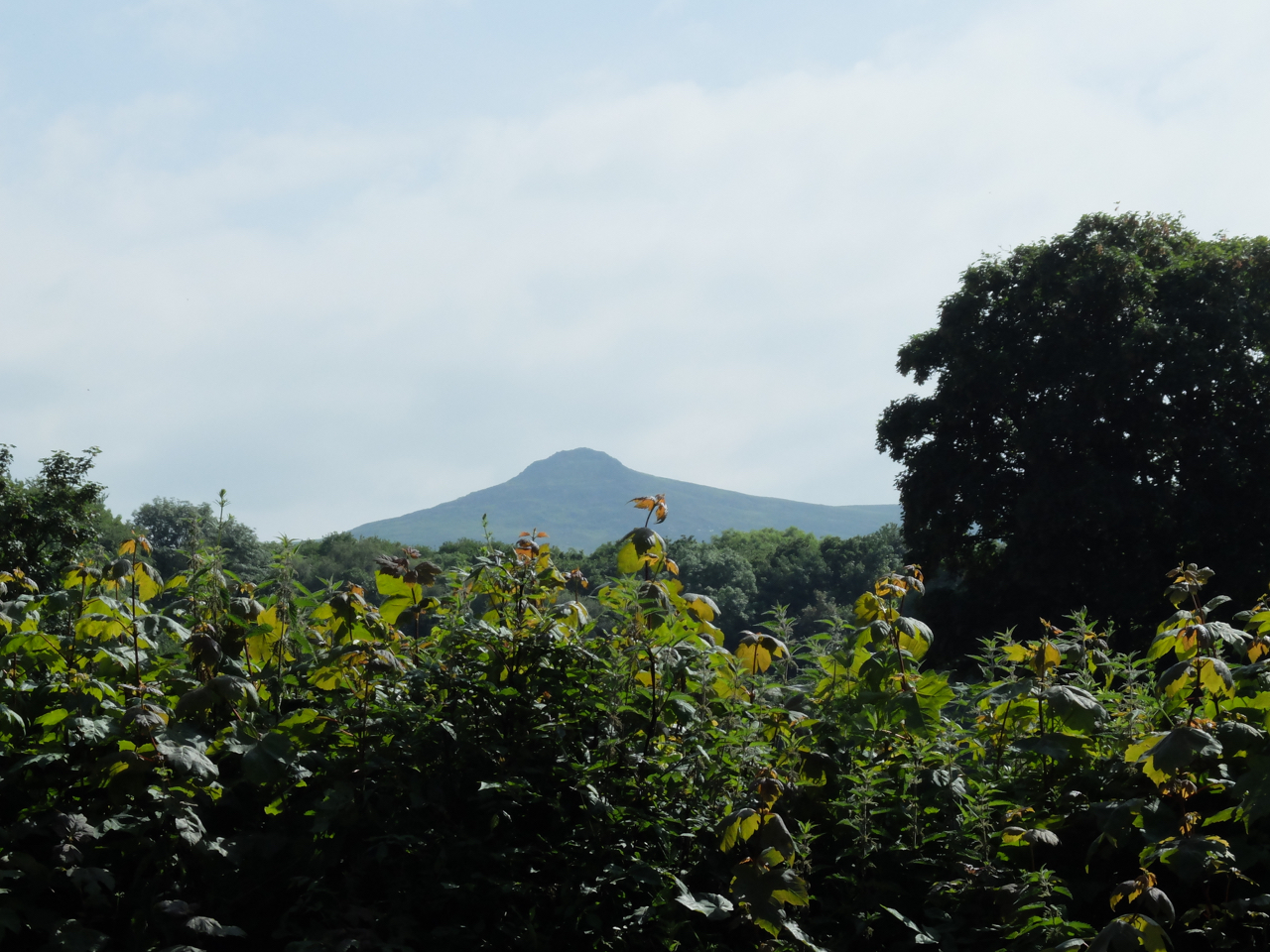
In leaving, we took one final look beyond the perimeter hedge, to see the now-familiar shape of Carningli, mountain of the angels, from which we had just come. Seen from this angle, you can see how high it is, and how it dominates the land around.
And then it was back in the cars for a short journey into a very beautiful valley to the north of Pentre Ifan to see St Brynach’s church in the lovely village of Nevern.
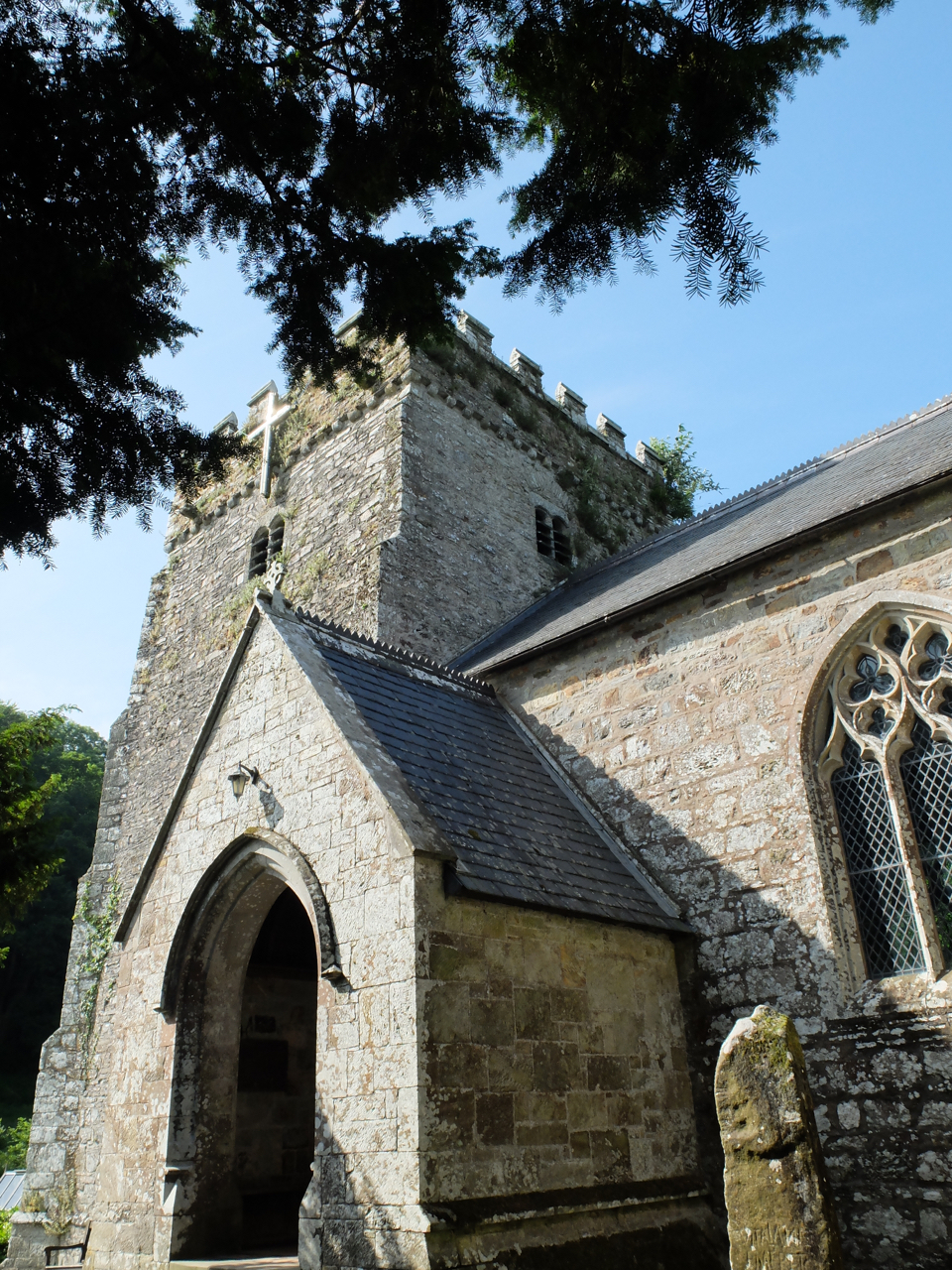
The church is most famous for one of its many yew trees, near to the gate, which is called the “Bleeding Yew”. The yew tree is about 700 years old, which is extraordinary in itself.
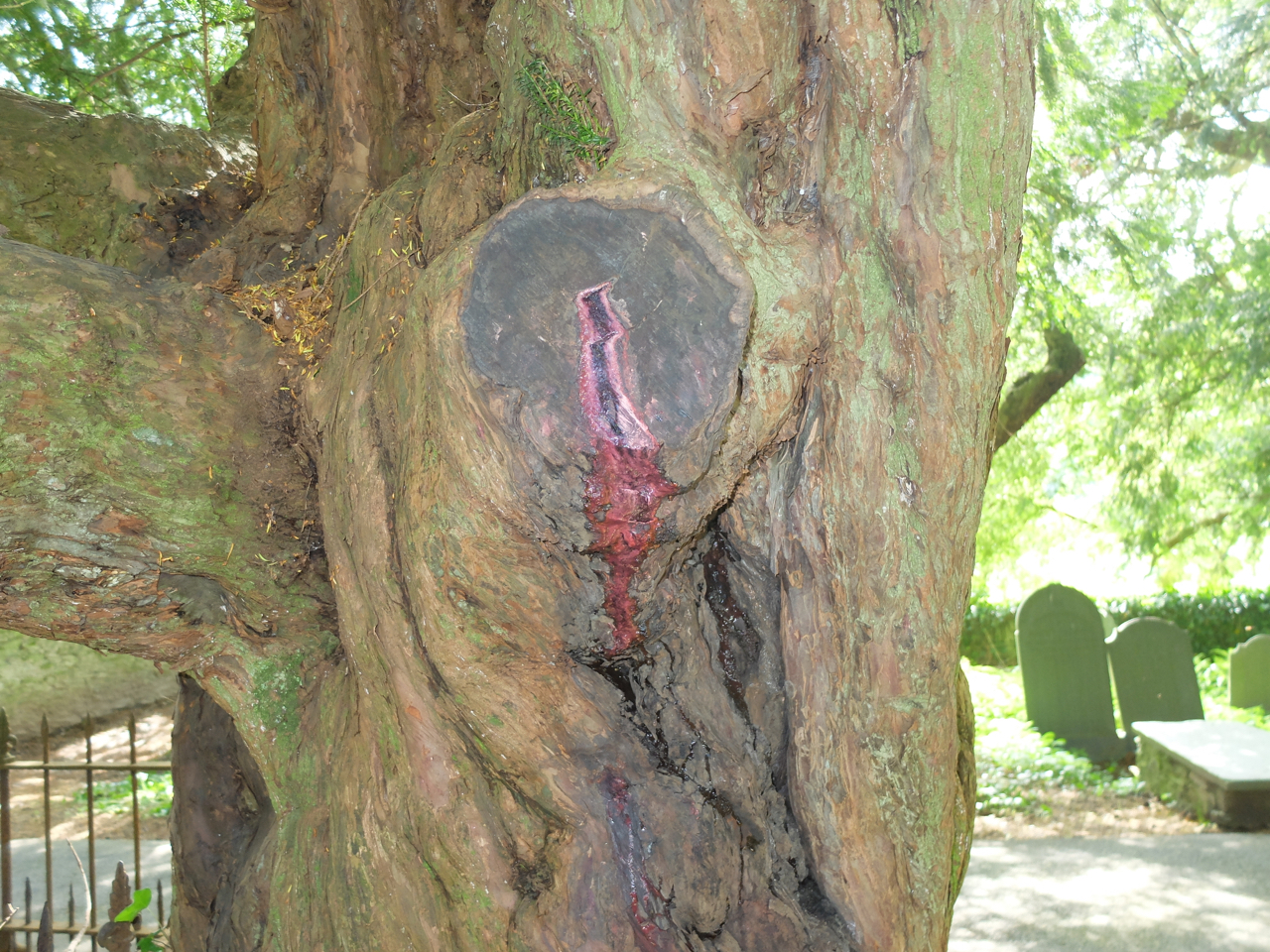
It has a red sap running out of it which has the consistency of blood – though it dries pink rather than brown. Trees are known to ‘bleed’ when their internal flow structures are exposed, but, according to local legend, St Brynach’s bleeding yew has been in that state for hundreds of years.
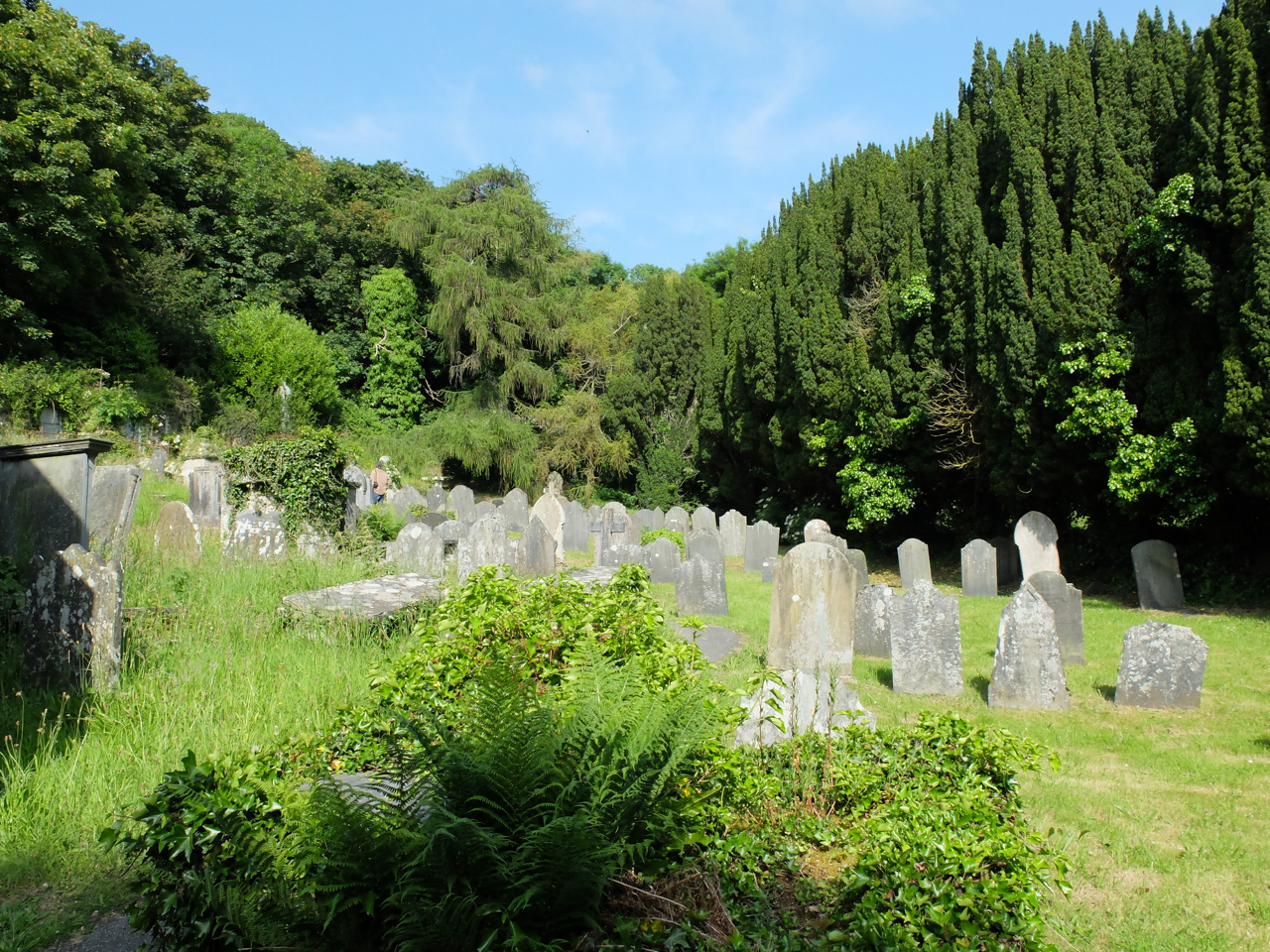
There are many myths about why the Nevern yew tree bleeds: some say that as Jesus was crucified on a cross it is bleeding in sympathy. One myth says that a monk was hanged on this tree for a crime of which he was innocent and the tree is still protesting the injustice. There are many other stories, but the church and its surroundings have much more to offer than just the Bleeding Yew.

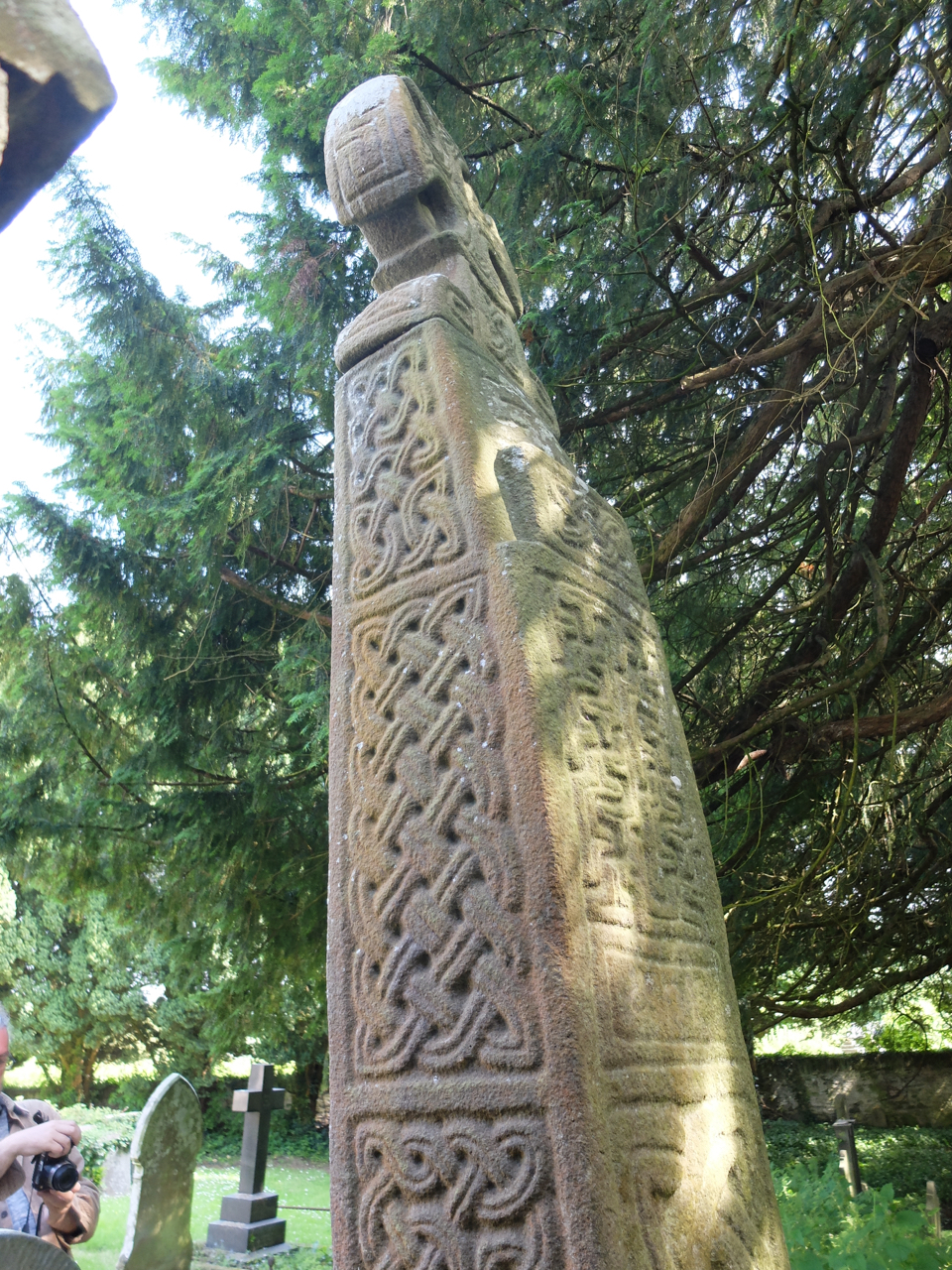
Further up the main path to the church is a large and dominant Celtic Cross, carved with the familiar Celtic knot-work pattens seen elsewhere in western Europe.
The cross is one of the most perfect examples of ancient Celtic stone carving in all Wales. The total height is thirteen feet and the cross is two feet in diameter at its thickest point.
Experts date the cross as late 10th or early 11th century. The four sides of the cross are carved with geometric interlacing patterns.
The West and East faces have inscriptions. One is Ans, meaning Dominus, latin for Master. The other is not as certain, and could be the word for Hellelujah.
Language is major feature of the inside of St Brynach’s church, which unashamedly celebrates the Celtic history of the land around it. The famous Nevern Ogham Stone, which has inscriptions in both ‘Celtic – Ogham’ and Latin, has been laid as the lintel of one of the windows in the south side of the transept.

The photo shows the Ogham lines cut into the corners of the stone to form words. There is even a notice showing you how to use the stone to write your name in Ogham – assuming there are sufficient letters.
And with that, our time in Nevern had come to an end. It had been a long and wonderful day of discovery and we were due to have an early dinner at the Sloop pub in Porthgain, on the twenty mile return journey to St David’s.
Lizzy had arranged things so that we would just have time for a slight detour on the way there to have a very special glass of Welsh cider at a place called (locally) Bessie’s pub in Cwm Gwaun. The valley which houses Bessie’s is well hidden and I would not have liked to find it on my own! Having said that, the village was delightful and full of friendly local people, sitting on their doorsteps in the early evening sun, who smiled at our band of weary travellers and waved us towards Bessie’s – the only pub in the valley.
And the cider? Well, if you get chance, have a pint of Black Dragon if you’re passing through these parts. ‘Nectar of the Gods’ springs to mind…

The final part of this series of posts will conclude, next week, with our Sunday morning walk to St David’s Cathedral, via the coastal footpath and St Non’s clifftop church and shrine. St Non was the mother of St David.
The Silent Eye runs four such weekends per year; in April, June, September, and the start of December. Apart from the main April workshop, which combines mystical drama with teachings, they are very informal occasions, but a good way to meet some of the names and faces from the Silent Eye School of Consciousness. Everyone is welcome – we simply wander in a landscape and get to know each other.
The formal teaching programme of the Silent Eye School is a three-year correspondence course, studied at home and in the individual’s daily world, with personal supervision via email, and workshops. The teaching programme is based on a guided journey through the spiritual layers of a nine-pointed figure called the Enneagram (below). The Silent Eye is a not-for-profit organisation and charges as little as possible for its work.

The Silent Eye’s version of the enneagram.
You can find details of the forthcoming events for the year on our website.


Share this:


Warm Purrings Banish
⦿
Warm purrings banish
Pale July’s dark, endless rain
Skilled fingers thrill
⦿
©Copyright Stephen Tanham, 2016.
Share this:

Share this:

Stuart’s take…
Share this:


In response to Sue Vincent’s blog:
Thursday Photo Prompt – Look Out – #writephoto
https://wordpress.com/read/feeds/3193846/posts/1081481498
They never remember my name; I mean Lissrack isn’t much of a moniker, is it? But I know theirs… and, through the tiniest cracks I’ve watched them trudge across these sodden moors and hills for many years, now. I mean just look out there at it! Eternal damp…rain, bloody rain…
They like stone things, churches, burial mounds, circles, that sort of thing, but even when it’s right in front of them they can’t see the wood for the stone, so to speak. I’ve dreamed the word Lissrack at them a thousand times, but do they listen? I suppose the notion of a winged stone monster is difficult to envisage. But they’ve got ships made of metal that don’t sink, so what’s the problem? Think laterally, little darlings!
Who do they think did the deeds that inspired all those grotesque figures on their precious churches? Their forbears were all fleeing from us, that’s who! till we did the heavy breath thing, and petrified the lot… a few of them are still in there – in the oldest of their buildings of course.
Lissracks… we’re very old, so old that we got bored with the eternal Derbyshire rain and decided to hibernate. A thousand years, we thought, should see it cured; but that sleep was wonderful, and it looks like it’s been a bit longer! Still, who’s counting… and the rain’s exactly the same as it was back then, LissJoy said it would be, smart little flocker.
The little ones’ language isn’t hard to grasp, not when their bipedal speaking has been the substance of my dreams for much of that time – we can hear when we sleep, you see. Our dreaming is watching you – and listening. Mind, it’s changed a bit, your tongue; but difficult? No. They should have tried Neolistics! Ha! Get your grunting gear around them syllabubbles, I say…
I’ve grown fond of them really, these two intrepid stone-hunters – and they never give up. They’ve just gone past, again, trudging along in the mud in wholly unsuitable footwear… and I bet they’re wearing wool! In this day and age, I ask you! Can’t wait to try on some of that Lycra or even a GoreTex shell or two! No more sodden feathers for me…
Should be quite a surprise when I start running down the valley after them on my three legs, pretending I can’t fly! Makes a fantastic and scary thumping noise. At the last minute, I will, of course, soar above their fleeing figures and caw my name as I circle them.
Bet that helps them remember in future…
Hawks, pah! Bi-fluffs! Wait till they see what four wings can do.
Nearly there now… couple more pecks at the last of the stone egg and I’ll be free. Born again…
And then we’ll see…
©Copyright Stephen Tanham, 2016.
Share this:

Share this:


Whispers in the West – part two
The second day of our the Silent Eye’s Whispers in the West weekend began with relief – that we didn’t have to drive all the way across South Wales, again, to reach the town of Newport – our starting point for day two.
There are, apparently, many Newports in Wales, but only one of them, some twenty miles up the Pembrokeshire coast from our base in St David’s, has this nearby:

It stood alone on what looked like the cliff edge, dramatic and serene. In the brightness of a warm June day, with azure skies, we walked forwards in respectful silence… to look at ‘Samson’s Rock’.

Carreg Samson is five thousand years old… quite a thought, when you consider that its capstone, five by three metres and a metre thick, has rested for a considerable part, if not all, of that time on only three of the six standing stones, which vary from one to two metres tall.
I hadn’t realised until recently, that most of these Dolmens (or Quoits, as they used to be popularly known, although this, technically refers to the capstone, alone) were, at one time, buried, sometimes with enough of the stone visible to form an entranceway. The land has eroded or been excavated around them, yet their fundamental construction was so strong that they remain stable, like stone creatures from a distant age, to tantalise us in our search for their deeper meaning…

It was as hot day, and we were beginning to thirst for a coffee, at least, so we played a game, with Barbara supervising of how many Silent Eye weekenders can you fit into a Quoiter pint stone glass… sorry, couldn’t resist it!

Lizzy had structured the day very carefully, to give us all the best the coast and the nearby hills had to offer, and we had to leave the serenity of Carreg Samson and its idyllic location for our next Dolmen, just along the coast.

Carreg Coetan Arthur is a neolithic chambered tomb, or dolmen, of the same age as Carreg Samson, which sits in its own little ‘park’ within a holiday village built during the late 1980s. According to Lizzy’s carefully prepared notes, its significant location is obscured by the hedging, but it stands a few hundred metres south of where the river Afon Nyfer enters Newport Bay; and just over a mile north of the hills of Mynydd Carningli, towards which the dolmen seems to be orientated.

It consists of four uprights, and is not much taller than a person. The remains consist of four uprights, only two of which support what appears to be a precariously-balanced, wedge-shaped capstone, which is tilted backwards. There is little trace of any of the original cairn material that once covered the stones.
We stopped and stared, admiring what Stuart had named “Little Bear” before taking as many photos as possible before being shunted out of the way by the next group of visitors.
Lizzy’s plans for the day were unfolding, beautifully, and Carningli, the mountain of the angels, beckoned, as the next item on our agenda.
But that coffee would have been nice… And, as fate would have it, we were about to get one, but in a rather unexpected way. Lizzy suggested a short stop in the small town’s centre and we set off for a nearby car park, in three cars, around the tight streets of Newport’s main road. Sadly, I took a wrong turn and we lost sight of the lead car and ended up doubling back before concluding that we were lost! We had noticed, on our detour, that there had been a sign to a beach car park nearby. The two lost cars turned down this road, reasoning that we might be easier to find in such a location, and we emerged onto a car park next to a very scenic beach with a… tea room across the road!
Well, we reasoned, Lizzy wouldn’t have wanted us to go thirsty in our confusion, and, if we stayed put, there was a good chance she’d find us…
Half an hour later, guzzling tea, coffee and cream and jam scones in the garden of the tearoom, and not looking anywhere near guilty enough, we were ‘found’ by our guide and brought back into the convoy to begin our climb up to the Angels of Carningli.

Carningli doesn’t rise up like some of the stone masses of Snowdonia, but it does dominate the landscape for miles around; and it is accessible with ordinary walking gear with about a thirty minute climb, as the car does a lot of the work for you.
We began the climb, with everyone aiming to reach the top. Ages and fitness levels always vary on these occasions, so it’s wise to constantly check that everyone’s okay. By the time we had reached the plateau below the rocky summit, it was obvious that there were very determined people intent on conquering that peak, perhaps doing something they had not done for a many years.

It was a wonderful spirit and got us all to the top – with considerable pride on the faces of those who had had to work the hardest.
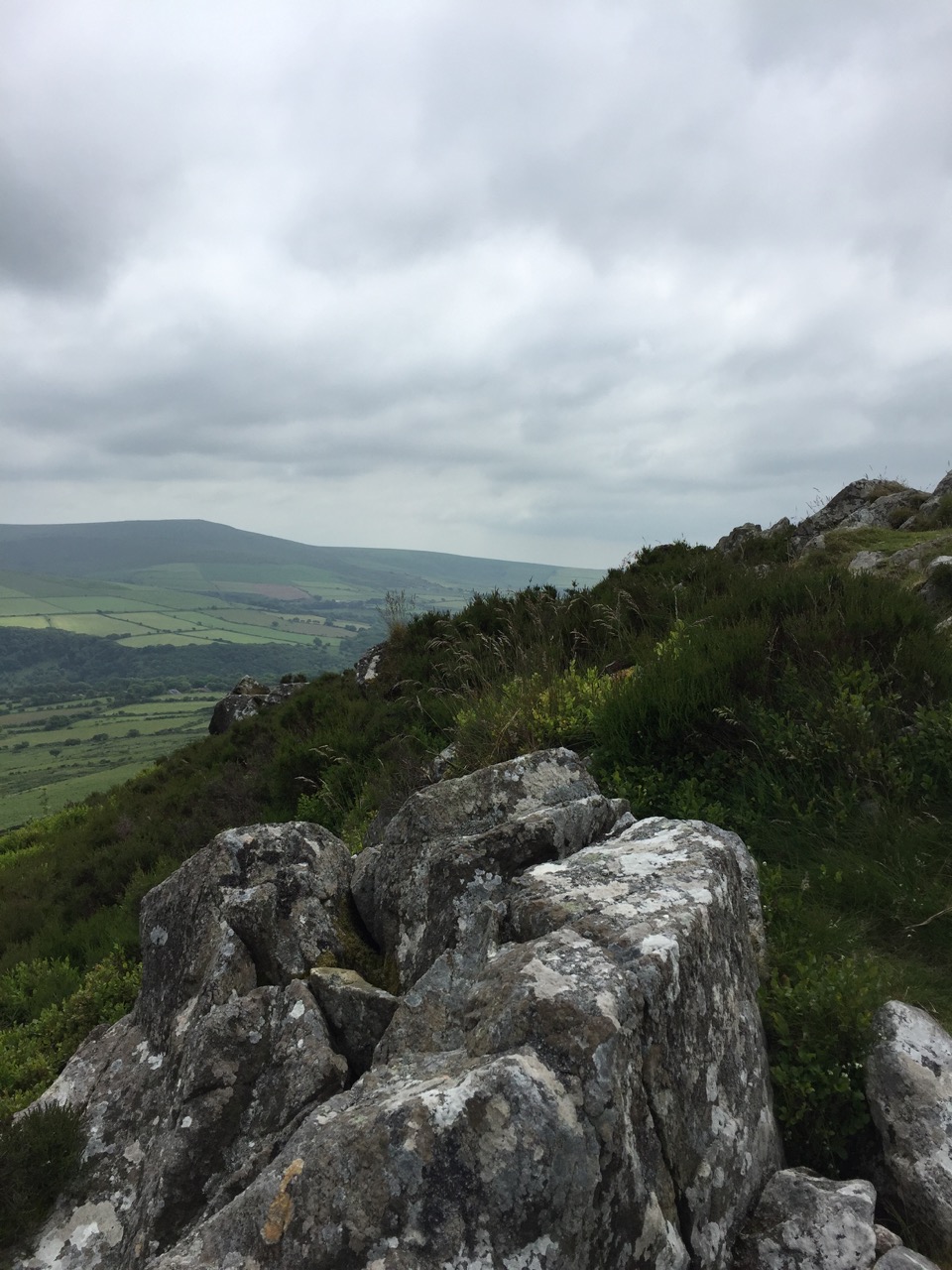
The top of Carningli is very rocky and we had to pick our way carefully to a stable ridge from which we could all look down at the glorious views of Pembrokeshire’s countryside and coast.

In this magical spot, the verdant countryside is as beautiful as the lovely coast.

We had climbed Carningli with an additional goal in mind: to hold a distant healing vigil for one of our members who is facing a severe illness. Chris, one of the weekend group who had to work the hardest in the climb, revealed he had a secret goal – to take back a small rock for our suffering friend, ‘charged’ as it were, with the spirit of that shared moment.

It was a very beautiful, lofty, interlude, and we were glad that Lizzy had urged us to make the climb – the views, alone, were worth it. We came down from the peak of Carningli the direct way, which was somewhat challenging, but we all finally emerged back at the car park and began to dream of a promised cider in a little village that lay close by.
But, first, we had an appointment with another Dolmen – one of the best in Europe; and a wonderful church in a very special valley… So Chris had a lie-down on the grass, instead…

More to follow in the story of this amazing day… quite a bit more, actually…

The Silent Eye runs four such weekends per year; in April, June, September, and the start of December. Apart from the main April workshop, which combines mystical drama with teachings, they are very informal occasions, but a good way to meet some of the names and faces from the Silent Eye School of Consciousness. Everyone is welcome – we simply wander in a landscape and get to know each other.
The formal teaching programme of the Silent Eye School is a three-year correspondence course, studied at home and in the individual’s daily world, with personal supervision via email, and workshops. The teaching programme is based on a guided journey through the spiritual layers of a nine-pointed figure called the Enneagram (below). The Silent Eye is a not-for-profit organisation and charges as little as possible for its work.
The Silent Eye’s version of the enneagram.
You can find details of the forthcoming events for the year on our website.
The Silent Eye runs four such weekends per year; in April, June, September, and the start of December. Apart from the main April workshop, which combines mystical drama with teachings, they are very informal occasions, but a good way to meet some of the names and faces from the Silent Eye School of Consciousness. Everyone is welcome – we simply wander in a landscape and get to know each other.
The formal teaching programme of the Silent Eye School is a three-year correspondence course, studied at home and in the individual’s daily world, with personal supervision via email, and workshops. The teaching programme is based on a guided journey through the spiritual layers of a nine-pointed figure called the Enneagram (below). The Silent Eye is a not-for-profit organisation and charges as little as possible for its work.
The Silent Eye’s version of the enneagram.
You can find details of the forthcoming events for the year on our website.
Share this:

Share this:

Intense Swirling Steam
⦿
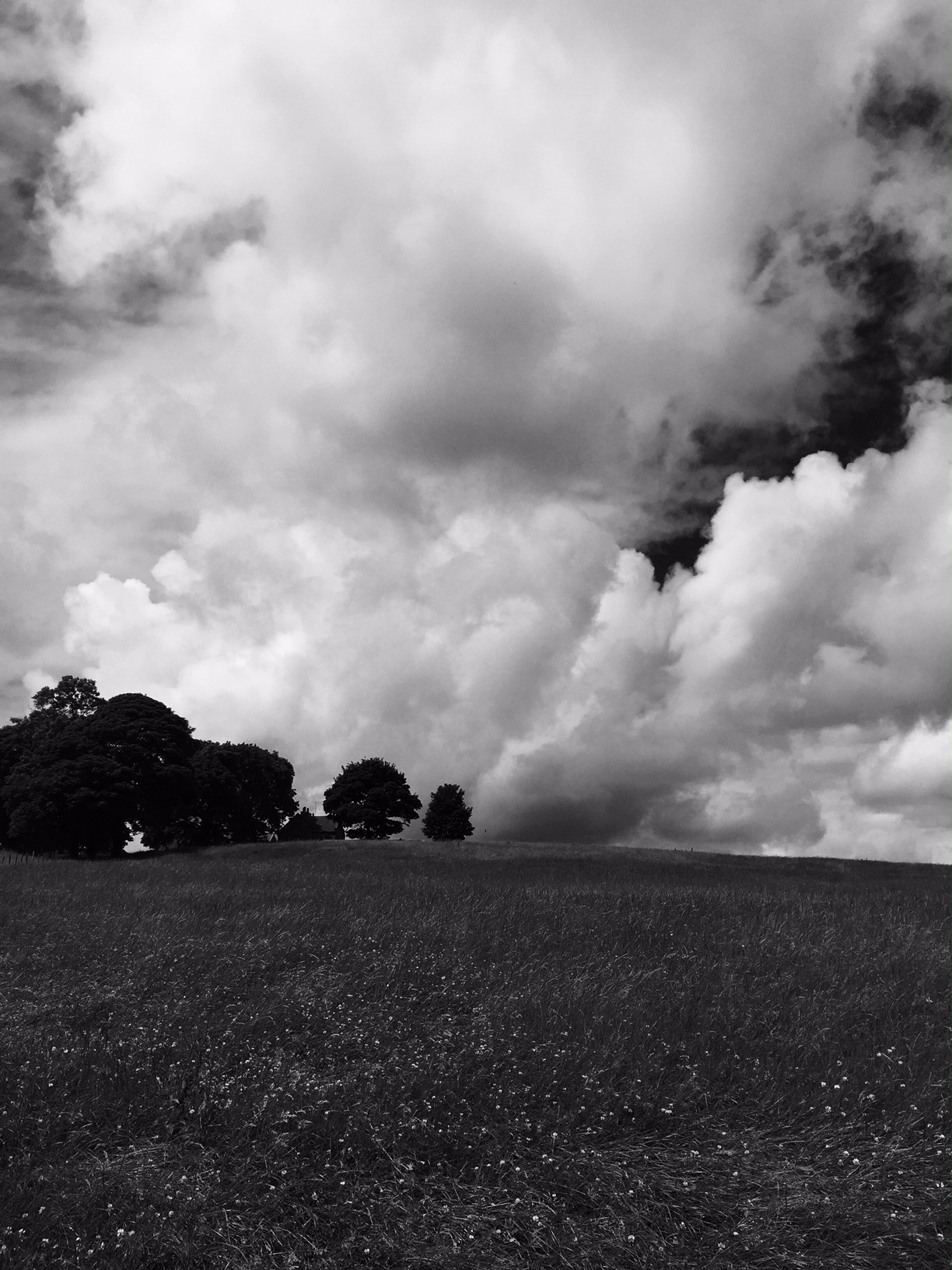
Intense swirling steam
Consumer of the last wood
Glowing dots remain
⦿
©Copyright Stephen Tanham, 2016.


 Sun in Gemini
You must be logged in to post a comment.