
Ali’s brilliant tale of one of the mysteries of the Silent Eye’s Arthurian weekend workshop continues…

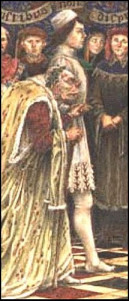
Cursed! Crouched in crunching bones and cruelly deformed face! Left, at the whim of a power greater than I, to limp haltingly through the Enchanted Forest, searching for a true and chivalrous knight.
Ah! But the loathsome irony of it all! That I, Lady Ragnell – accounted so beautiful in days gone by – should now be so reduced by Fey interference that even the act of glimpsing my visage in a moonlit pool brings tears and bitterness in equal measure. And, to feel the Spear hits its mark ever-more nastily, the knowledge that the magical conundrum visited upon me is impossible to answer correctly.
Call me vain, if you will – for, yes, I will freely admit that the glowing fall of my burnished hair gave me deep pleasure, as did the perfect dimensions of my fashionably pale body, with its curves and undulations and dips and hollows –…
View original post 741 more words
Share this:

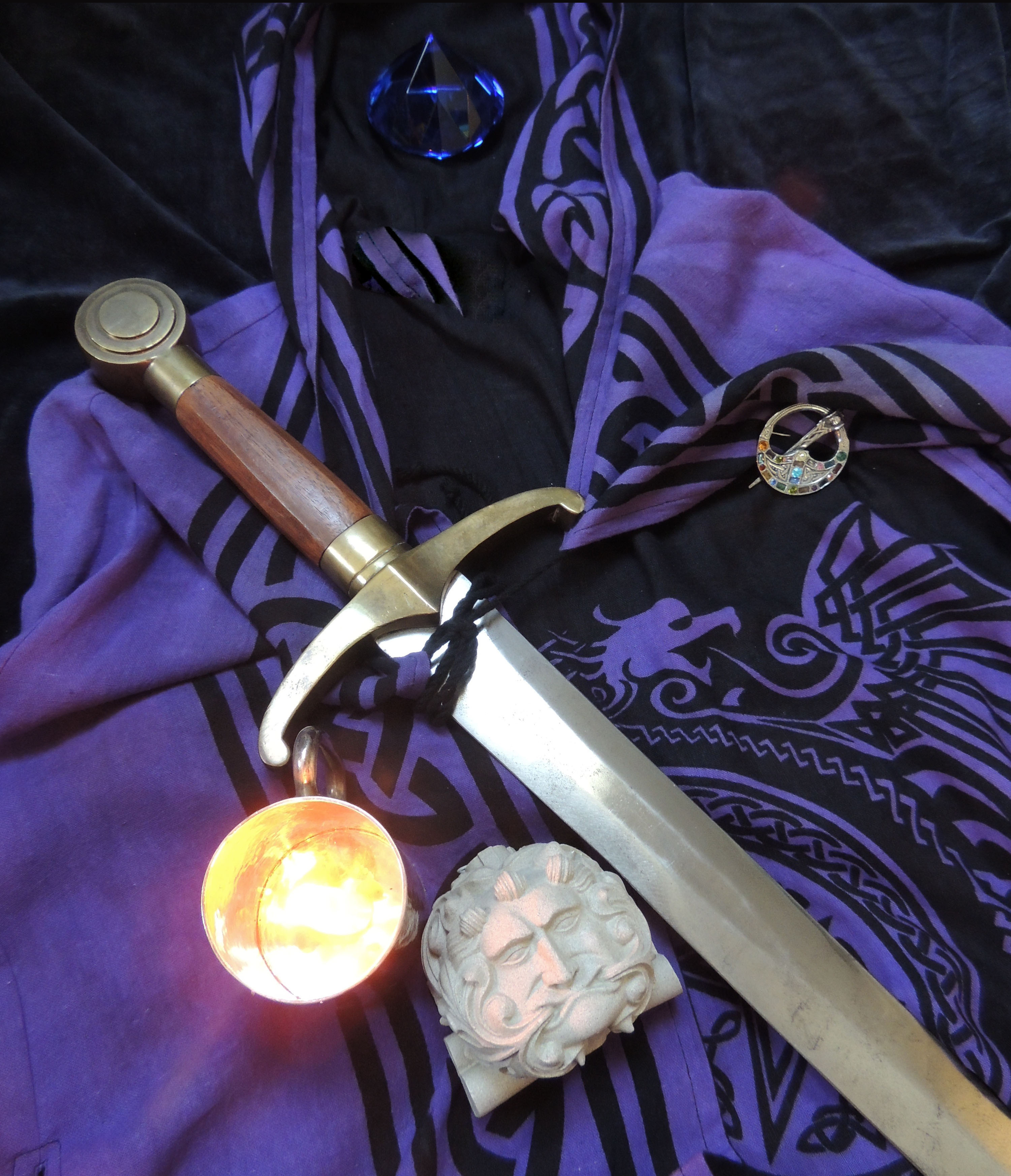
We are now only two days away from the Silent Eye’s 2016 workshop, Leaf and Flame, organised by my two co-directors of the Silent Eye School of Consciousness Stuart France and Sue Vincent.
I have the dubious honour of having the largest vehicle. Tomorrow, I will spend five hours or so loading the major fixtures needed to create the Temple of the Mysteries that we use to stage our magical dramas. On Friday morning, very early, I will collect the single passenger needed to fill up the one seat not taken up by the fittings, and we will journey to the lovely village of Great Hucklow, and the wonderful Nightingale Centre, home of the last three of the Silent Eye’s annual workshops.
This year’s Leaf and Flame event tells the Arthurian story of Sir Gawain and his doomed quest to protect King Arthur from the consequences of accepting the Green Knight’s beheading challenge. Essentially, the Green Knight, riding into Camelot on New Year’s Day, challenges any of the Knights present to chop off his head; as long as he may do the same a year from then. Sensing extreme trickery, Gawain persuades King Arthur that he should not accept the challenge, but let it fall to himself (Gawain) instead.
We may assume that Gawain was suspicious of the actions of the green giant, but did not want to expose his beloved King to the dark forces involved. Sure enough, having chopped the head from the otherwise peaceful invader, Gawain awakens to a scenario of horror as the Green Knight picks up his severed head and rides out, stating that he’ll see his failed executioner in a year’s time, at a place called the Green Chapel, for the return blow – a blow that Gawain knows he does not have the magic to survive.
And so the scene is set for a mysterious series of adventures, culminating in a frozen and nearly dead Sir Gawain, in honourable search for the Green Chapel to surrender his life, arriving at an unknown castle and being taken in by the Lord and Lady who run it. They thus save his life and assure him that he has time, before paying his grisly debt, to recover amidst their generous hospitality, as the mysterious Green Chapel is nearby.
In return for this rescue, the Lord proposes a game: that, on each of three days’ hunting that follow, he will give to Gawain everything he wins. In return Gawain is to give to him everything that he receives, during his recovery in the warmth of the castle. So far so good, but when the Lord has left to hunt, the following morning, the Lady of the castle steals into Gawain’s bedchamber and attempts to seduce him… There follows a verbal fencing match where Gawain, decidedly under-dressed under his bed covers, is kept prisoner by the Lady while she works her seductive mischief. The original 14th century text is cleverly composed to show how the Lady changes strategies several times to try to outwit Gawain, who clings to his Knightly principles in what he senses is a losing game…
For three days, this twin metaphor of hunting and seduction is played out, with Gawain finally succumbing either to a magical token (the Lady’s garter) that may just help him survive his immanent beheading at the hands of the nearby Green Knight; or to sex with the lovely seductress. The interpretation relies very much on your point of view of the mores of the medieval times. Sex and Death were common themes, particularly in those tales that derive, as does the story of Gawain, from older Celtic traditions, where plain-speaking was the norm.
A similar historical eye is needed for the details of the Lord’s grisly hunting scenes, which otherwise might seem unnecessarily bloodthirsty…The original story was written about a time not long after the Norman invasion, where a strict code of hunting rewards were part of the hierarchy of the controlling elite.
I will not finish the formal story, as Leaf and Flame is not exactly sticking to the original plot, instead, as I wrote to a friend, earlier:
“In the hands of Stuart and Sue, The Leaf and Flame story of Sir Gawain becomes a sophisticated tale of the different ‘selves’ of the human; from the ‘lower’ and animalistic levels (and, below that, the foundation of survival, itself) to the assumed higher and intellectual levels. In the ‘middle’ we have the powerhouse that is the emotional ‘self’. The three ‘levels’ are not necessarily to be seen as stacked vertically…nor in the order given above..
The five act mystical drama follows the initial beheading of The Green Knight (who does not die, but rides off with his head under his arm) to the subsequent trials of Sir Gawain, who volunteered to enter this cursed action to save the honour of King Arthur. In the 14th century original, Gawain is ‘nicked’ on the neck rather than beheaded, following a partly successful seduction by the wife of a noble related to the Green Knight. Along the way, Leaf and Flame weaves in the story of Lady Ragnell, a woman cursed to be ugly to her suitors until one breaks the spell, thus freeing her to be what she is…
The greater story is that of the impossibility of divorcing the different elements of the ‘Whole Human’ whose nature has to be realised, in the words of Sue and Stuart, as “Fully human and fully divine”. The workshop is a cryptic journey through all these levels and how they operate within the life of, in this case, one victim, played by at least two people – Sir Gawain and his alter egos. Of his survival or not, I cannot speak, since my parters are keeping me in ignorance! I can only say that I sense some horror ahead; and that they are not necessarily keeping to the original story!”
I am, as you may have guessed, playing the part of Sir Gawain… it was not my idea, but my active acceptance of the doom ahead (whatever that turns out to be–and I really do not know the important details) needs to be a fitting tribute to their wonderful efforts. Whatever my ‘loathly end’ turns out to be, it will be followed by one of the most spectacular outside fire-dances, in the form of a performance by the mysterious Langsett Fox Dancers, whose dramatic performance will light up the night, though I probably won’t be there to see it, so to speak…
Now, if you’ll excuse me, I believe I have an appointment with a grisly end and this may well be my last post…
Can micro-surgery stick heads back on, yet?
Normal service will be resumed, hopefully, next week…
Share this:

As perfectly expressed as you could wish for…

Tap ‘spirituality’ into the search bar of Amazon and you will be faced with around half a million choices. Not so very long ago, you could trawl every bookstore in town.. and most towns had a fair few to choose from… and you would be lucky to find anything more than a bible. Ask for the esoteric section and the assistant would look at you with a blank expression and/or back away from the weirdo before directing you towards the poetry shelves. There were books…but not many, hard to find and expensive because of their rarity. The best places to look were the scruffy, second-hand and antiquarian bookshops, invariably tucked away down a side street in a seedy part of town. When you found a good one, you didn’t forget.
These days, it seems as if everywhere you look there are books, CDs and videos promising you the earth and…
View original post 879 more words
Share this:

As we approach our weekend workshop of ancient tales, some sobering thoughts from Sue…
Share this:

Happy quarter million, Sue x

 Image source: allpoetry.com
These pages may be no mighty oak, but the rest of the quote seems to fit.
I mentioned this morning the sad, slow beginnings of this blog, with its whole six views in its first year.
The blog has grown a little since then. Today it informed me that it has been read a quarter of a milliontimes.
Compared to many blogs and websites, that may be no great thing.
Compared to six views in a year, it is simply incredible.
I could not let that pass without saying something appropriate.
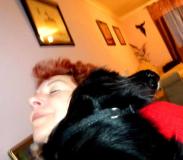
So, from a little nut and her mutt…

Share this:

Share this:

River of the Sun, chapter 20 – The Waters of Thought
It was a very specific power and Lord Menascare had never experienced its like, before.
If not stopped, time had certainly been changed. No longer was there a uniform flow of things happening in a concerned – unconcerned way. Instead, the unfolding events were made into a running sequence, where the running was to the next important thing, where that flow slowed down so that every aspect of it could be examined in detail; taking as long as one desired…
Without moving his head, he could see and feel everything that Neferaset was involved with. To a lesser extent he could do the same with the thoughts and actions of Anzety, but suspected that was due to the power of the high priestess, flowing into her brother, rather than the high priest’s own…
It was like a liquid, dancing. A liquid current centred on Neferaset…
Obion was speaking, he had no idea of what was really going on around him at this level of awareness. Neferaset was talking very slowly to him, stating that, if he was to support her, as the King-in-Rising had ordered, then she needed control of the Talatat’s movements in the temple. Menascare could feel the distaste on the soldier’s breath; but, sensing little threat, the commander of the Talatat let his elite troops be marched around three circuits of the temple, ‘building the fire’ as the rejuvenated high priestess named it…
Now the flow of time compressed itself– like a discarnate mind listening to the the thoughts of the young priest-to-be, as Neferaset spoke.
“Amkhen, we have prepared this temple for you, but now you must be ready to sacrifice everything you have, everything you are, to the nature of your elevation to chosen priest of this temple. You know that there are pressures here, beyond anything that could reasonably be asked of you. We, in our turn will do what we can to support your journey to the full moon. Are you ready for this?”
Menascare forced himself to turn his head to look at the young man, though there was no need: he could hear and feel the apprentice priest’s every thought.
Neferaset held the attention of Amkhren. Fixing him, with her eyes, as a cobra would its prey. But this was no death strike; this was the heart of life protecting life… For the first time, Mensacare saw it in its wholeness.
Time was alive… and it moved like a serpent, just as his Goddess did… full of dread intent and focus, able to sift everything related to a single string of consciousness. To not know this was to be in the path of events, good or ill, as they tumbled from the sky. To be aware of this – and more, if you were of Neferaset’s calibre, was to have power over what the high priests called the blow of happenings…
Returning to the movement of the time-serpent in front of him, Menascare could see that, within this fluid, the high priestess had isolated Amkhren from those around him. The boy’s heart was beating peacefully, full of love for the woman he adored above anyone else–even his beloved grandmother. He saw nothing but Neferaset; heard nothing but her voice.
Within this, Menascare could sense her dilemma: that to keep him like this for too long would reduce his awareness of the very real threat posed by the sinister Talatat; now standing in a ring around the inner temple. Obion was nobody’s fool. He knew that something unseen was going on…
The snake that was this new time now slid forward. Event after event poured in on the boy, until there came a moment when Obion smiled and said in a voice like a sword being drawn from its sheath, “Amkren, join us…”
——————————–
Index to previous chapters:
Chapter One – Gifts From the River
Chapter Two – An Agony of Sunset
Chapter Three – The Dark Waters
Chapter Four – Touching the Sky
Chapter Five – The Fire Within
Chapter Seven – The Crystal Air
Chapter Eight – The Unchosen Darkness
Chapter Nine – The Priestess Calls
Chapter Ten – Darkness at the Door
Chapter Twelve – Above and Below
Chapter Thirteen – The Binding Voices
Chapter Fifteen – The Intimacy of Enemies
Chapter Sixteen – Old Friends, New Dangers
Chapter Seventeen – The Rule of Three
Chapter Eighteen – Rider on the Dawn
Chapter Nineteen – The Return of the Silence
—————————
Introduction to River of the Sun
In April 2015 a group of people gathered in the Derbyshire hills to enact the Silent Eye’s annual Mystery Play, entitled, The River of the Sun. The five-act mystical drama formed the backbone of that Spring weekend, and told the fictional story of a clash of ego and divinity set in an Isis-worshipping temple located on an island in the Nile, during the the fascinating period of the 19th dynasty, the time of Rameses the Great.
The 18th and 19th dynasties were a period of deep upheaval for ancient Egypt. The reign of the ‘Heretic King’, Akhenaten, saw Egypt’s religious structure torn apart, as the revolutionary Pharaoh became what Wallis Budge called the ‘world’s first monotheist’; re-fashioning the power of the many Gods with one supreme entity – the visible sun disc, the Aten, for which Akhenaten, alone, was the high priest. Many have pointed to the failure of the ‘herectic’ Pharaoh’s politics, but few have doubted the sincerity of his religious vision. He will, forever, remain an enigma.
Whatever the nobility of his goal, the actions he took were ruthless, and included the shutting down of the annual deity festivals which were the sole point of ritualistic contact between the ordinary people of Egypt and their locally-worshipped gods. In addition, Akhenaten paid little attention to the domestic and military affairs of Egypt, allowing the country’s enemies to encroach on its borders, greatly weakening Egypt’s power at that critical time for the region.
After Akhenaten’s brief reign, culminating in the Pharaoh’s mysterious death, shadowy military forces took control of Egypt, instigating the 19th dynasty in the persons of Rameses I and, soon thereafter, Seti I, whose throne name derives from the god Set – often considered the ‘evil one’ because of his slaying of his brother, Osiris.
Seti I is judged by modern historians as having been one of the greatest-ever pharaohs, yet his importance in the 19th dynasty was eclipsed by the actions of his second son, the brilliant Rameses II, whose long reign of over sixty years included much self-promotion and the alteration of Egypt’s recent history. Both Seti and Rameses II (Rameses the Great) were passionate about the evisceration of the last traces of Akhenaten’s ‘chaos’, as they saw it.
But, although, by the 19th dynasty, the the ‘Son of the Sun’ was long dead and the buildings of his embryonic and doomed city of Tel-al-Armana were reduced to rubble, something of that time remained in the Egyptian consciousness. A new kind of connection between Pharaoh and God had been established, one which elevated mankind, if only in the being of the Pharaoh, to be someone who ‘talked with God’. It was, at the very least, a bold experiment and, though the world would have to wait until the 19th century to re-discover the ‘erased’ pharaoh, the philosophical waves of that period rippled out and dramatically affected the way the incoming 19th dynasty had to repair the worship of the Gods, uniting the people of Egypt under a trinity of Amun-Ra, Khonsu and Mut.
Our fictional story is a tale of politics, friendships, mind and faith. It is set against an historically accurate background, and at a time when Rameses was due to take the throne from the dying Seti .
Returning to Thebes in his swift warship, crewed by his fearsome Talatat mind-warriors, Rameses decides to mount a surprise night-time raid on the island-based Isis temple which has prospered under the sponsoring reign of his father. Rameses suspects that the inner teachings conducted by the revered High Priestess and Priest conceal views that relate to the thoughts of the heretic Pharaoh, Akhenaten. He plans to insert himself and his warriors of the mind into the islands’s Spring rites as the high priest and priestess begin a cycle of initiation for a chosen apprentice priest who has proved himself worthy of special advancement.
The resulting clash draws everyone, including the young Pharaoh-in-Rising, into a spiralling situation where each is forced to confront their own fears as well as living out the roles which life has allocated them. River of the Sun is the story of a spiritual and political encounter from which none emerge unchanged, including the man who will shortly be Pharaoh, the mighty Rameses II, whose secret name for himself is ‘the unchosen’.
Through the eyes and minds of those surrounding the chosen priest and the ‘unchosen’ Pharaoh, the River of the Sun takes us on a tense and compelling journey to the heart of power and its eternal struggle with truth.
The chapters of the book will be serialised in this blog. The finished work is planned to be available in paperback and Kindle in the Spring of 2016.
————————————————–
River of the Sun, serialised here, and its associated images, are the intellectual property of Stephen Tanham and is ©Copyright material.
Share this:


They were bright red on the day he bought them
From the impossible shop in the mountains
So far away.
—
Like her throat in the heat of passion
As their skins moved like silk
And their lips were liquid joy.
—
Now, faded, she gathers the leaves around their stems
Like a cloak over the beloved
As the colour, though not the memory
Fades…
—
They were bright red
On the day he bought them
On the day he died.
——-
In response to Sue Vincent’s photo prompt, #writephoto
Thursday photo prompt – Roses #writephoto
Share this:

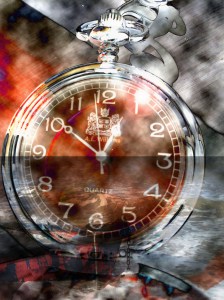
Nine minutes to One, part three – The Wishing Well
“I suppose she sent you?” said the man with green eyes, looking down, sadly on the boy.
“Who sent me?” replies the boy, in a voice deeper and more powerful than he expected. At this the man with the green eyes stands back, as though some link has been made with something forceful in his life.
The boy realises that the journey through the darkness has changed many things; that the setting off into the unknown made the clock face do something strange: something you couldn’t draw just with a straight line…
“Did she?” asked the man with the green eyes.
“What?” the boy asks, extracting himself from the tight yellow rain mac that is threatening to rip itself open across his shoulders. He discards it, but the man with the green eyes follows it as it tumbles along the roots of the tree and lands on the moss, below.
“Can I have that – if I help you?” he said.
Comprehension comes tumbling into the boy’s world just in time. “It’s…” He swallows the words, ‘Too small for you’, and, says, instead, “Of course you can, as long as you can help me fix her.”
“I haven’t seen her in a long time,” said the man with the green eyes. “How is she?”
“She is angry…too angry…” says the boy. “I love her and want to fix her.”
At the word ‘love’ the man with green eyes turned his head away. The boy realises that the man with the green eyes is unable to face the idea that the angry woman could be loved by anyone else. The boy sees that the freely given love he assumed to be part of everything is not so; that there are those who cut themselves off from it.
“Why do you want to be with her, if you don’t love her as I do?” asks the boy.
“Be with her!” exclaimed the man with the green eyes. “I was never good enough to be with her!”
The boy stares into the intelligence of the green eyes made cloudy by anxiety, and realises that the man with the green eyes can do nothing to help him fix the angry woman; that he faces the same pain, though its source is different. With the angry woman it comes from her belief that she must keep trying to make things better. With the man with the green eyes, the certainty is that he could never be good enough, no matter what he did, that he is fundamentally lesser.
The boy looks through the man with the green eyes and realises that he makes himself a child, never letting the other sun, the one that led the boy here, help him to open to the air of the mountains, which the boy knows to be all around, even here. The boy bends to pick up the little yellow mac and holds it open, inviting the man with the green eyes to step into its bright folds. “You may have it, whether you help me or not,” he says, smiling, genuinely, at the man with the wet green eyes.
The boy is not surprised when the coat fits; nor that the gift makes the man with the green eyes cry again.
“There is a price, though,” says the boy. “You must show me something that you’re good at!”
The man with the green eyes looked at the earnest boy and pulled the folds of the yellow mac around him, taking comfort in how it felt. “I’m good at one thing,” he says. “But I keep it secret… Would you like to see?”
The boy nods, smiling that he has found an important truth. The man with the green eyes takes him over a hill and down into a valley where there is a secret cave. In the cave there is an old stone well, dug deep into the rock.
“Watch,” says the man with the green eyes, and he gazes down into the water, where suddenly there appears a parade of brightly dressed characters, all of whom are played by the man with green eyes, as though he is directing a play starring only himself.
The boy is delighted. He claps his hands at the cleverness. But then, in the deeper part of the water, below the glittering parade, he sees the second sun shining; at first pale, but then getting brighter and brighter. He realises that time has passed, is passing, here on the clock face.
The man with the green eyes stared, folornly, at the boy’s second sun, then pulled away from both the visions in the well. The parade disappeared, but the second sun remains…
The boy is learning caution, but knows the truth of the second sun. He climbs up on the rim of the well and prepares to dive into the water below, full of trust. Just before he launches himself he turns to wave goodbye to the man with the green eyes who is staring at him, horrified, and stripping off the yellow mac.
©Copyright Stephen Tanham 2016.
Nine Minutes to One is a short story, in about 20 episodes, published on Thursdays.
Index to previous parts below:
Part One The Bridge of Falling
Share this:


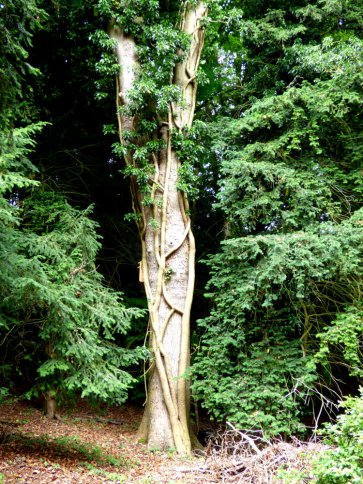
…That night the world took on strange colours and my dream-girl became a tree.
If I were a Druid I would say that I had fallen under the sway of a wood nymph, a Dryad…
She is certainly very beautiful and pulls me away from the busy road where traffic endlessly flashes through the ever screaming air…
She always wins.
I always turn from the road and allow her to take my hands in hers.
We roll down the embankment conjoined…
We roll together
for all eternity
but then collide with the bole of the tree
and she is gone.
https://scvincent.com/2016/04/07/thursday-photo-prompt-tree-writephoto/
Share this:

Poetry of great beauty from Sue
Share this:

River of the Sun, chapter 19 – The Return of the Silence
Lord Menascare pushed with all his might at the edge of the damaged temple door. On the other side of the bronze olbong, Anzety, the high priest, did the same, though in the opposite direction. Both men were wet with the sweat of their efforts, but the discomfort had not diminished their determination.
Around them a sea of silent faces stared at their seemingly doomed work to partly fix the damage. Menascare cursed beneath his breath. It should have been unthinkable to attempt the repair at the very start of the restored ritual, but, looking at the twisted metal, he had felt such a depth of emotion that he wanted to make a gesture–to insert a sense of reparation–into the violated space.
One set of eyes, in particular, radiated venom – those of Obion, the Commander of the Talatat, who clutched the handle of his sword as though it were the neck of his arch rival. Menascare returned his gaze with calmness…and ignored it, turning back to his heated efforts. The room was filled with an hypnotic silence. Menasacare had chosen to do this when all participants had returned. He could easily have done it while the young priest-to-be was performing his hasty bathing and re-robing.
With a characteristic streak of subversion – the cause of so much of his troubles – he had elected to make his efforts public, brushing aside the risk of such visible exposure to failure.
In the East, seated in quietude, in the twin place of the Goddesses Isis and Mut, the high priestess sat with her eyes closed. Her calm presence seemingly withdrawn from the whole temple. She seemed oblivious to the efforts of her brother and Lord Menascare.
They were making little progress against the huge weight of the damaged portal. Tools, thought the elder man, I need tools… The thought took his mind back to much younger days when he had the company of the best stonemakers in the land. One in particular, watching his struggles to entertain the young Rameses, had taken him to the palace workshops and taught him the principles whereby a small force could rearrange a seemingly impossible weight, trading distance at one end for tiny movements at the other. He smiled at the memory of the younger Sarkur, and wondered where the Stonemaster was now? Good, men, really good men, were few and far between in this land of fear and politics. The chaos which had been the temporal harvest of the reign of the Erased still seeped through Egypt’s structures of power; whose shapes would never again resemble those of its glorious past–whatever the facade…
Tools, thought, Menascare, again. Forcing his mind from idle regrets to the needs of the now.
Anzety must have been having the same thoughts, for, shaking his head in unspoken agreement with his old teacher, he stepped out of the temple, to return, moments later, with a long, forge-twisted, brass bar and a small block of dense sandstone. Between them they positioned the crude lever. Menascare took one last look at their hasty arrangement, then both men pushed down on the long metal bar. The bronze temple door inched upwards, creaking on its remaining hinge as it rose. Too much weight was being placed on that single pivot, and the silent minds in the room tensed with the sense of impending failure – a failure that would be far worse than the initial act of damage. At the last moment, Anzety jumped across the space and lent his own considerable strength to the final positioning of the metal rings over the top of the giant pin of the upper hinge.
Menascare, now alone, could hold the weight no longer. There was a scream of metal on metal and the entire door hung between two worlds. Then with the high priest hammering his shoulder against the shining surface, a groaning ensued, whose note descended as the door sank, gently, down into its former position, overcoming the buckling of the hinge with its own weight.
There are victories that have nothing to do with death…thought Menascare.
Anzety was slumped, exhausted, against the door, his strained hands tracing wet streaks along the metal as it moved. He opened his eyes to see the miracle of a closing temple door, taking his leaning body with it as it slid into position and sealed the temple, once more, leaving him on his knees and close to sobbing.
But Menascare was not looking at his former pupil. He had turned, at some inner command, to see Neferaset emerging from her meditation. How do you describe the sound of war which has no fury? thought the mage. As if in response, the high priestess opened her eyes and did something that Menascare had only witnessed twice before in his life; once in the presence of his dying teacher, and once in his youth, in a deep sandstone cave, when his mysterious and enigmatic Goddess had first revealed herself to him.
She stopped time…
——————————–
Index to previous chapters:
Chapter One – Gifts From the River
Chapter Two – An Agony of Sunset
Chapter Three – The Dark Waters
Chapter Four – Touching the Sky
Chapter Five – The Fire Within
Chapter Seven – The Crystal Air
Chapter Eight – The Unchosen Darkness
Chapter Nine – The Priestess Calls
Chapter Ten – Darkness at the Door
Chapter Twelve – Above and Below
Chapter Thirteen – The Binding Voices
Chapter Fifteen – The Intimacy of Enemies
Chapter Sixteen – Old Friends, New Dangers
Chapter Seventeen – The Rule of Three
Chapter Eighteen – Rider on the Dawn
—————————
Introduction to River of the Sun
In April 2015 a group of people gathered in the Derbyshire hills to enact the Silent Eye’s annual Mystery Play, entitled, The River of the Sun. The five-act mystical drama formed the backbone of that Spring weekend, and told the fictional story of a clash of ego and divinity set in an Isis-worshipping temple located on an island in the Nile, during the the fascinating period of the 19th dynasty, the time of Rameses the Great.
The 18th and 19th dynasties were a period of deep upheaval for ancient Egypt. The reign of the ‘Heretic King’, Akhenaten saw Egypt’s religious structure torn apart, as the revolutionary Pharaoh became what Wallis Budge called the ‘world’s first monotheist’; re-fashioning the power of the many Gods with one supreme entity – the visible sun disc, the Aten, for which Akhenaten, alone, was the high priest. Many have pointed to the failure of the ‘herectic’ Pharaoh’s politics, but few have doubted the sincerity of his religious vision. He will, forever, remain an enigma.
Whatever the nobility of his goal, the actions he took were ruthless, and included the shutting down of the annual deity festivals which were the sole point of ritualistic contact between the ordinary people of Egypt and their locally-worshipped gods. In addition, Akhenaten paid little attention to the domestic and military affairs of Egypt, allowing the country’s enemies to encroach on its borders, greatly weakening Egypt’s power at that critical time for the region.
After Akhenaten’s brief reign, culminating in the Pharaoh’s mysterious death, shadowy military forces took control of Egypt, instigating the 19th dynasty in the persons of Rameses I and, soon thereafter, Seti I, whose throne name derives from the god Set – often considered the ‘evil one’ because of his slaying of his brother, Osiris.
Seti I is judged by modern historians as having been one of the greatest-ever pharaohs, yet his importance in the 19th dynasty was eclipsed by the actions of his second son, the brilliant Rameses II, whose long reign of over sixty years included much self-promotion and the alteration of Egypt’s recent history. Both Seti and Rameses II (Rameses the Great) were passionate about the evisceration of the last traces of Akhenaten’s ‘chaos’, as they saw it.
But, although, by the 19th dynasty, the the ‘Son of the Sun’ was long dead and the buildings of his embryonic and doomed city of Tel-al-Armana were reduced to rubble, something of that time remained in the Egyptian consciousness. A new kind of connection between Pharaoh and God had been established, one which elevated mankind, if only in the being of the Pharaoh, to be someone who ‘talked with God’. It was, at the very least, a bold experiment and, though the world would have to wait until the 19th century to re-discover the ‘erased’ pharaoh, the philosophical waves of that period rippled out and dramatically affected the way the incoming 19th dynasty had to repair the worship of the Gods, uniting the people of Egypt under a trinity of Amun-Ra, Khonsu and Mut.
Our fictional story is a tale of politics, friendships, mind and faith. It is set against an historically accurate background, and at a time when Rameses was due to take the throne from the dying Seti .
Returning to Thebes in his swift warship, crewed by his fearsome Talatat mind-warriors, Rameses decides to mount a surprise night-time raid on the island-based Isis temple which has prospered under the sponsoring reign of his father. Rameses suspects that the inner teachings conducted by the revered High Priestess and Priest conceal views that relate to the thoughts of the heretic Pharaoh, Akhenaten. He plans to insert himself and his warriors of the mind into the islands’s Spring rites as the high priest and priestess begin a cycle of initiation for a chosen apprentice priest who has proved himself worthy of special advancement.
The resulting clash draws everyone, including the young Pharaoh-in-Rising, into a spiralling situation where each is forced to confront their own fears as well as living out the roles which life has allocated them. River of the Sun is the story of a spiritual and political encounter from which none emerge unchanged, including the man who will shortly be Pharaoh, the mighty Rameses II, whose secret name for himself is ‘the unchosen’.
Through the eyes and minds of those surrounding the chosen priest and the ‘unchosen’ Pharaoh, the River of the Sun takes us on a tense and compelling journey to the heart of power and its eternal struggle with truth.
The chapters of the book will be serialised in this blog. The finished work is planned to be available in paperback and Kindle in the Spring of 2016.
————————————————–
River of the Sun, serialised here, and its associated images, are the intellectual property of Stephen Tanham and is ©Copyright material.


 Sun in Gemini
You must be logged in to post a comment.