
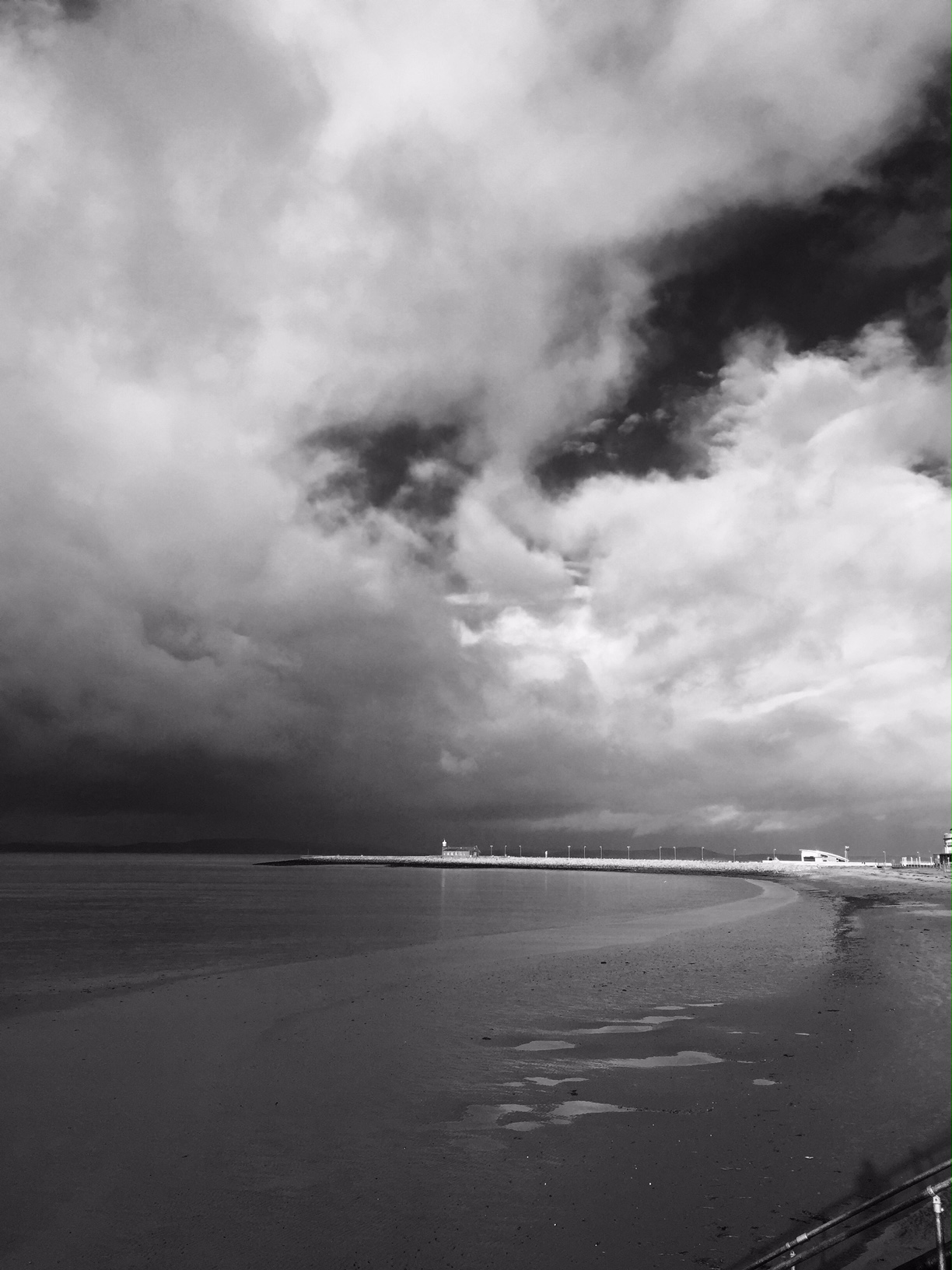
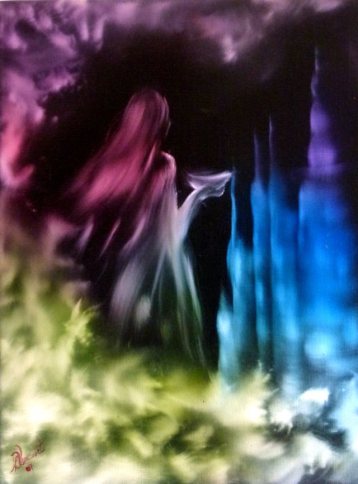
A line of sight
Which calls in frozen white
To towering forms of shapeless spray
That shield incoming night.
©Copyright Stephen Tanham 2015
Share this:

+ Esoteric Meaning of Myth, Greek Myths, Higher Mind, Labours of Hercules, Silent Eye School, Spirituality
Nine Deadly Sins with Coffee, part 39 – Twins of Time
by Steve Tanham
.Alexandra.
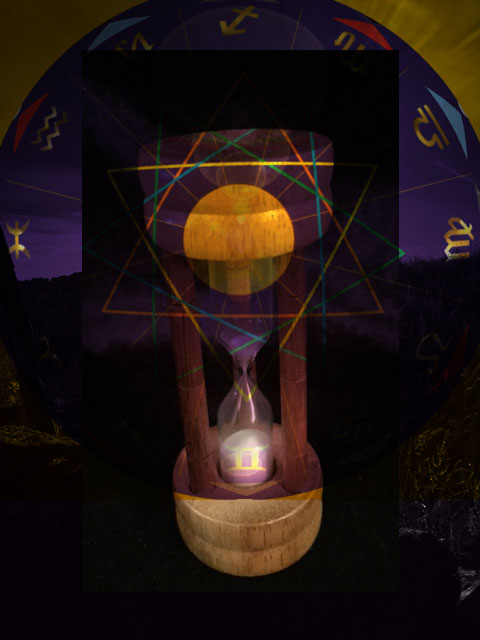
I wasn’t late, but the object placed ominously in the middle of our table suggested I might be…
“Morning John,” I said, warily. “Is this supposed to tell me that time is running out – that I’d better get enlightened quick or you’ll pass the time with another acolyte?”
He stared at me, saying nothing, as I digested what I had just uttered… Then, he turned the old-fashioned egg-timer flat on its side, so that none of the sand inside was moving. “Better?” he asked, pleasantly.
“I…I didn’t mean…” I muttered, realising how presumptuous I had been. His eyes were dancing with humour, and there was no anger there at all.
“We do things…” he said. “We do things, usually out of some kind of fear, that are knee-jerk reactions, of which we are then ashamed.”
He looked at me. I nodded, composing myself and letting the tension go. “It was just that I saw the ‘clock ticking’ and felt… well, you know–got at!”
He was laughing now, and pointed at the levelled timer. “You’d rather nothing happened at all?”
It was pure mischief but I realised that I had created the whole thing. I reached across and restored the ticking sand. “You were saying,” I said, softly. “or, rather, you weren’t saying.”
“One last look at the third labour,” he said, smiling. I realised that the tiny episode was completely gone, that he had moved on – almost as though he spent most of his life observing the strangeness of ego-based reactions in others… and no doubt in himself, as he never professed to be a saint.
I fought to reclaim some high ground. “Gemini, you said? “The twins?”
He nodded, pleased I had remembered the earlier reference which we had not yet discussed.
“What do twins have to do with the trials of Heracles, do you think?”
I thought long and hard. I was beginning to get the ‘key’ to this way of thinking. Twins could refer to siblings, of course, but they could also refer to things linked at different levels, like a matching or contrasting set of rooms on different floors of a good hotel.
“We are twinned within ourselves,” I said, feeling the certainty flow through me in a way that ordinary knowledge did not. “We are twin beings…”
“And the other bit is referred to as the–”
“Soul,” I said, ready with the answer, in a way that did not upset the flow of the moment, which I was beginning to see was its perfection. I followed through on the idea that had just come to me. “And we can chose which room we live in, as long as we have enough intent – we can view the world through the eyes of the ego or the eyes of the soul… with a bit of help!”
John laughed, gently, at my finale. “Yes,” he said, his eyes filled with kindness. “We all need a bit of help from time to time – but the soul itself will help, we just have to ask it!”
“Knock and it shall be opened unto you…” I said, half dreaming the words from my childhood.
“Exactly so,” he said. “This is not a new art…”
I looked down at our table. The sands had all run into the bottom part of the glass figure, which I now realised resembled a leminscate: the figure of eight symbol of infinity… and probably a host of other things. “Time’s up?” I ventured.
“Depends where you want to live; like Heracles, once he had it figured out, you have a choice…and it’s really very simple.
I watched his eyes lead mine down to the egg timer. Feeling elated, I pulled it into the air and turned it around.
“And so, like Heracles,” he said. “With one action, you have defeated the serpent, by pulling it from its native earth, and established where you want your new home to be.”
I looked at the tiny grains of tumbling sand. Whatever I did–unless I laid the object down, sideways again–they would flow. And the flow would always be into the world, like a multi-dimensional field of spiritual gravity – that was, presumably, why we were here. But I could, at any time, raise it up, by inverting the object… just as I could choose to see things from the perspective of the soul – by asking it to fill my life, as the sand grains filled the glass chambers.
For the first time that morning, John picked up his coffee and drank some, smiling at me over the rim of the cup.
I did the same; and we grinned at each other like children.
———————————————————–
Nine Deadly Sins with Coffee is usually published on Thursdays.
All images and text ©International copyright, The Silent Eye School of Consciousness, 2015.

Share this:

+ Bakewell, Bakewell Jail, Ballad of Reading Gaol, Ben's Bit, imprisonment, Incarnation, Journey of the hero, Mystical poetry, Oscar Wilde tribute, Uncategorized
From Bakewell with love – the gift of surprise
by Steve Tanham
His new life, denied expression in the free world, can be seen as symbolic of the journey of the soul, ‘imprisoned’ in the world of matter.
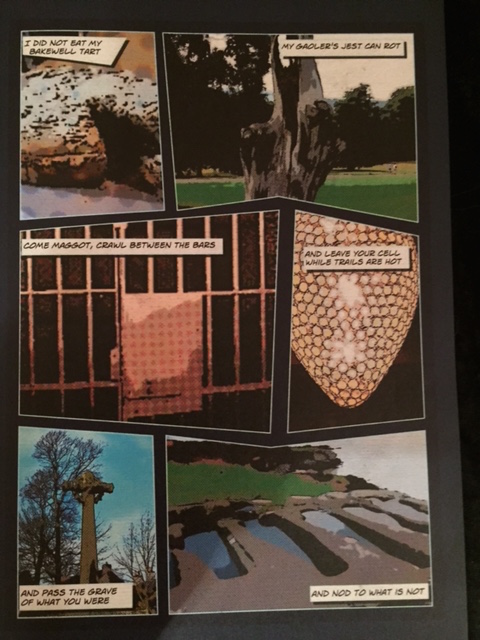
‘So maggot – former pillar tall
Of their community
Examined, tried, and now your kind
Demand they end your liberty
A pillory they have prepared
For public’s careful scrutiny’
“The second force is subtly bred
As wealth and stealth extend their leach”
“With single candle lit and says,
“It is The Will, this dark descent,”
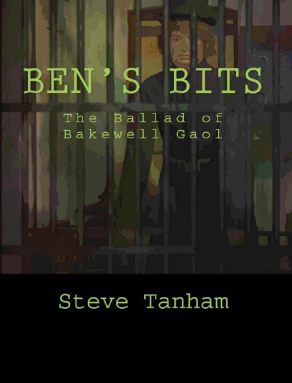
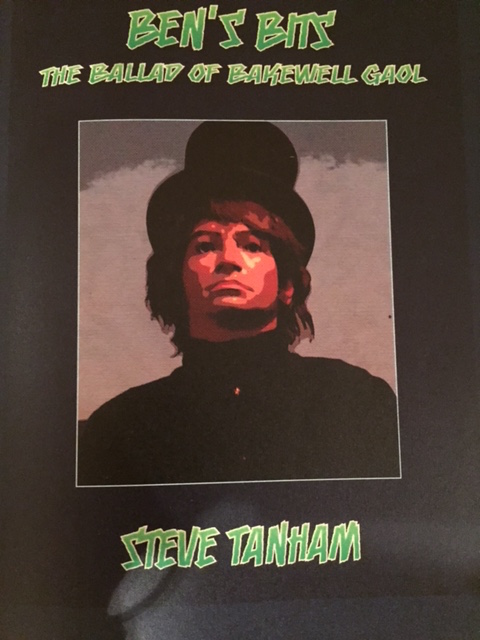
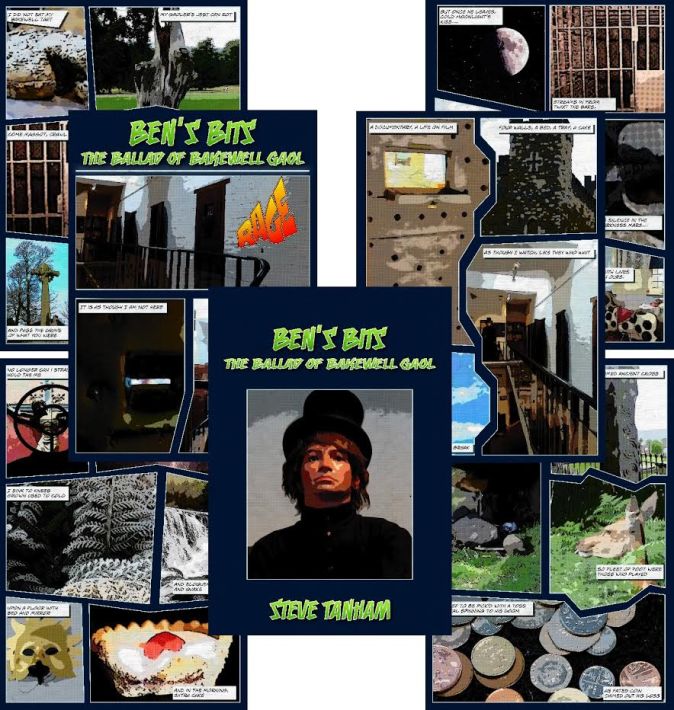
Ben’s Bit: The Ballad of Bakewell Gaol is a graphic novel, in poetic style, of 38 pages, written by me, Steve Tanham and designed and produced, in colour, by Sue Vincent and Stuart France. It is available in both Amazon paperback and Kindle formats.
Share this:


My son has been through hell lately. Not for the first time and, life being what it is, probably not for the last. As some will know he faced a major challenge in 2009 when he was stabbed through the brain and left for dead in an alley. His determination to heal on all levels has been astonishing to watch and never more so than now. As he grows a beard to match that of his hero, he has written his thoughts to share. With great pride, I re-introduce my son, Nick Verron.
Well, hello again. I’ve had a major realisation and really felt the urge to share. It has completely changed the way I look at life 🙂
I’ve just been through the most terrible experience in my life. If you imagine how bad it was when my world collapsed following my attack, that was preferable to what I’ve…
View original post 687 more words
Share this:

Chapter Six – The Wide Waters
Anzety, brother of Neferaset and the high priest of the temple of Isis, stood between the landing pillars and looked into the distance at the pilgrim boat departing from the eastern bank of the great river, heading for the temple island of Gezirah an-Nabatath, his home for the past ten years.
The old and rickety craft rolled heavily at the limit of his vision. He could see that she was packed with the final group of official visitors to the temple, whose numbers would soon swell the rites of Akhet, the all-important season of inundation. Many of those now making their passage across the powerful side currents of the river would have journeyed for days or even weeks to join in the festivities of this, the most revered of the island’s religious festivals.
The old barque was the last temple ferry to depart the despatch point on the mainland and, upon its arrival at the landing dock which he now guarded, the gates of the island would be closed and locked; not to be opened for the three days to follow.
For that time, all present would help begin the cycle of initiation–bestowed, in honour and recognition, to the one chosen from among those destined to become the new priests of Isis. Anzety knew Amkhren, the chosen, well. He had spent the past seven years trying to put a hard head on those young and too-trusting shoulders. But the young man had a secure future as a fine priest; and, possibly, if his sister, the high priestess, had her way, something more…
Anzety thought of Neferaset, now at her preparatory duties inside the closed bronze doors of the central temple, beyond the tall pylons which marked the entrance to the sacred inner sanctuaries–where none but the priests or their invited guests dared to tread. He turned to look at the stragglers from the previous boat – talking happily in the late afternoon sun near one of the outbuildings, which would act as dormitories for the days ahead. There were few luxuries on the temple island – everything was dedicated to that which lay beyond the senses. The reflection brought to mind the condition of what he thought of as the mind of Egypt, herself, and Anzety grew wistful as he reflected on the turbulent times in which sister and brother had chosen to establish their unorthodox temple.
“But for Seti…” Anzety mused to himself, closing his eyes and dissolving a knot of fear at the thought of the imminent transition of their long-time friend and protector.
Egypt was a changed land; no longer the assured centre of the known world, it had suffered two cataclysms in its recent past. The first had been its six-generation occupation by the Hyksos Kings–those from the lands of the far north-east. The second had been the brief but deadly, fourteen-year reign of Akhenaten, the self-styled Son of the Sun; a man so devoted to religious revolution that he had closed down all the temples, forbidden the annual festivals–the only chance the working people had to participate in the worship of their local deities–and sacked all the priests, installing himself as the only connection between the all-giving Aten, the sun-disc, and the inundated Black Land of Egypt, ruled by his ruthless civil service.
Now, just over forty years later, the last of the stones of the city of Armarna, the Heretic King’s replacement for the temples of Amun Ra at Thebes, were being removed, an evisceration that had lasted several decades, to provide building materials for the common folk who had been so brutally robbed of their birthright. Akhenaten had become known, simply, as The Erased, and his memory was being literally chisled from the lists of Kings and and from the story of the land of Egypt. The erasers were those who came after him – including, and most passionately, the present pharaoh, Seti, himself. The dwellers on the island lived a complex and precarious existence, Anzety thought, quietly…
There was, of course, another view of what Akhenaten had done.
To speak of it meant death; but there was a different perspective, at least as regards the heretic King’s religious ideals. This belief was held by a strange and eclectic group of minds whose focus was the divine – in all its forms. To them, the doomed heretical pharaoh had opened a bridge to the world beyond the neters – the gods; but the priestly pharaoh had failed to leave behind a priesthood that could teach its revolutionary methods. Politically immature, but possibly closer to the Creator than any other Egyptian had ever been, Akhnaten had left no spiritual heirs …
Anzety turned his head to look at the temple’s huge bronze doors. Only two people were in that sacred space – the chosen apprentice, Amkhren, and Anzety’s sister, the high priestess. He looked to the sun and smiled into the golden light of the late afternoon, imagining it reflecting from those tall doors. No-one knew better than he how skilled she was in the theatre of the rites; and how easily she could provoke the reactions she needed, in order to bend the mind of another to her, admittedly noble, purposes. Although they had spent much of their childhood apart, they had come together again following his years in the reinstated temples of Thebes, to establish the island sanctuary of Isis/Mut. Had that only been ten years ago?
In many ways, the temple on Gezirah an-Nabatath was her creation. Oh, he had been happy to lend his experience, and willingly; but it was she who had painted the vision to Seti I, their benefactor, now lying in his bed in far-away Pi-Ramesse, the new royal capital in the Nile’s vast delta. Anzety shook his head at the thought of a world without Seti. He hoped that history would be kind to the great thinker and warrior; the leader who had risen from humble origins and reunited a devastated Egypt after the psychological crumbling of the Heretic’s short reign.
King Seti had been a fine benefactor. He had provided the island, the stone builders, the money for the construction; and the all-important approval for the spiritual mapping of the rites. And now, Seti was dying…
Anzety looked down at the orange sun-scarf wrapped around his right wrist and left there while he read the messenger’s sad news on the parchment wrapped in the bright linen. There was work to do; and the temple cycle about to start was too important to the continuation of the cult of Isis to let the death of a King interrupt it… and Seti, strangely-named Beloved of Set–the slayer of Osiris and enemy of Horus– would have understood that…
The high priest raised his hand and waved the bright scarf to the lead oarsman in the prow of the ferry now approaching the landing stage. He wondered at the number of fellow priests massed in the overloaded boat, but dismissed the thought as unimportant.
——————————–
Index to previous chapters:
Chapter One – Gifts From the River
Chapter Two – An Agony of Sunset
Chapter Three – The Dark Waters
Chapter Four – Touching the Sky
Chapter Five – The Fire Within
—————————
Introduction to River of the Sun
In April 2015 a group of people gathered in the Derbyshire hills to enact the Silent Eye’s annual Mystery Play, entitled, The River of the Sun. The five-act mystical drama formed the backbone of that Spring weekend, and told the fictional story of a clash of ego and divinity set in an Isis-worshipping temple located on an island in the Nile, during the the fascinating period of the 19th dynasty, the time of Rameses the Great.
The 18th and 19th dynasties were a time of upheaval for ancient Egypt on many levels. The reign of the ‘Heretic King’ Akhenaten saw Egypt’s religious structure torn apart, as the revolutionary Pharaoh became what Wallis Budge called the ‘world’s first monotheist’; re-fashioning the power of the many Gods with one supreme entity – the visible sun disc, the Aten, for which Akhenaten, alone, was the high priest. Many have pointed to the failure of the ‘herectic’ Pharaoh’s politics, but few have doubted the sincerity of his religious vision. He will, forever, remain an enigma.
Whatever the nobility of his goal, the actions he took were ruthless, and included the shutting down of the annual deity festivals which were the sole point of ritualistic contact between the ordinary people of Egypt and their locally-worshipped gods. In addition, Akhenaten paid little attention to the domestic and military affairs of Egypt, allowing the country’s enemies to encroach on its borders, greatly weakening Egypt’s power at that critical time for the region.
After Akhenaten’s brief reign, culminating in the Pharaoh’s mysterious death, shadowy military forces took control of Egypt, instigating the 19th dynasty in the persons of Rameses I and, soon thereafter, Seti I, whose throne name derives from the god Set – often considered the ‘evil one’ because of his slaying of his brother, Osiris.
Seti I is judged by modern historians as having been one of the greatest-ever pharaohs, yet his importance in the 19th dynasty was eclipsed by the actions of his second son, the brilliant Rameses II, whose long reign of over sixty years included much self-promotion and the alteration of Egypt’s recent history. Both Seti and Rameses II (Rameses the Great) were passionate about the evisceration of the last traces of Akhenaten’s ‘chaos’, as they saw it.
But, although, by the 19th dynasty, the the ‘Son of the Sun’ was long dead and the buildings of his embryonic and doomed city of Tel-al-Armana were reduced to rubble, something of that time remained in the Egyptian consciousness. A new kind of connection between Pharaoh and God had been established, one which elevated mankind, if only in the being of the Pharaoh, to be someone who ‘talked with God’. It was, at the very least, a bold experiment and, though the world would have to wait until the 19th century to re-discover the ‘erased’ pharaoh, the philosophical waves of that period rippled out and dramatically affected the way the incoming 19th dynasty had to repair the worship of the Gods, uniting the people of Egypt under a trinity of Amun-Ra, Khonsu and Mut.
Our fictional story is a tale of politics, friendships, mind and faith. It is set against an historically accurate background, and at a time when Rameses was due to take the throne from the dying Seti .
Returning to Thebes in his swift warship, crewed by his fearsome Talatat mind-warriors, Rameses decides to mount a surprise night-time raid on the island-based Isis temple which has prospered under the sponsoring reign of his father. Rameses suspects that the inner teachings conducted by the revered High Priestess and Priest conceal views that relate to the thoughts of the heretic Pharaoh, Akhenaten. He plans to insert himself and his warriors of the mind into the islands’s Spring rites as the high priest and priestess begin a cycle of initiation for a chosen apprentice priest who has proved himself worthy of special advancement.
The resulting clash draws everyone, including the young Pharaoh-in-Rising, into a spiralling situation where each is forced to confront their own fears as well as living out the roles which life has allocated them. River of the Sun is the story of a spiritual and political encounter from which none emerge unchanged, including the man who will shortly be Pharaoh, the mighty Rameses II, whose secret name for himself is ‘the unchosen’.
Through the eyes and minds of those surrounding the chosen priest and the ‘unchosen’ Pharaoh, the River of the Sun takes us on a tense and compelling journey to the heart of power and its eternal struggle with truth.
The chapters of the book will be serialised in this blog. The finished work is planned to be available in paperback and Kindle by the end of January 2015, and will contain the full novel plus an appendix of the dramatic rituals used to enact the story in April 2015.
————————————————–
©Copyright. River of the Sun, serialised here, and its associated images, is the intellectual property of Stephen Tanham and is Copyright material.
Share this:

+ Esoteric Meaning of Myth, Greek Myths, Higher Mind, Labours of Hercules, Silent Eye School, Spirituality
Nine Deadly Sins with Coffee, part 38 – The Three-sided Coin
by Steve Tanham
.Alexandra.
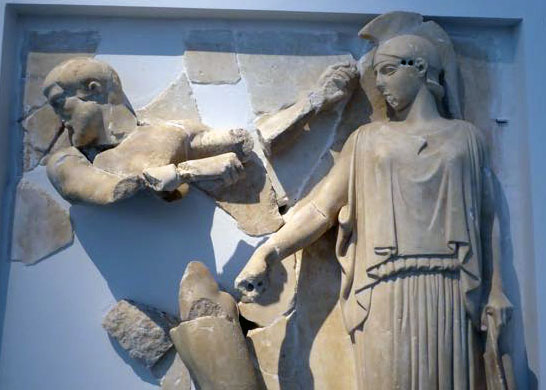
“The story of Heracles and the Golden Apples begins with failure…” I said.
“It does,” replied John, sipping his latté. “Just as, in the first story, with the Wild Mares, Heracles gets a bitter lesson that never leaves him, with his failure to protect the life of young Abderis, despite his success in overcoming the wild she-horses.”
He stopped, then, and looked at me very seriously. “Failure is very important… it not only teaches us about success, it teaches us about the fragility of both – and the existence of a third … thing.”
He had lowered his voice when speaking the word ‘thing’, as though its impact had been pivotal in his own life. For a short while I watched him drink his coffee, saying nothing. I decided we could afford to come back to it – he had, inadvertently, touched on something far below his confident exterior and I wanted to know more…
“If we didn’t have adversity, we could never really do anything, could we?” I ventured.
John looked up, shocked. “That’s really good,” he nodded. “It touches on the basic polarity of the universe. We can only ‘do’ when there is a raw material to do with.”
“And that is opposition?”
“Perhaps a better word is resistance, which removes the idea of hostility – though hostility may still apply…”
“So, sometimes we overcome the resistance and a new thing, a third thing, you called it, is born.”
“Born, yes–excellent word! Born of the struggle, just like birth itself is a struggle.”
“And sometimes we don’t win…” it wasn’t a question.
“If we always won, there could be no winning.” He sat back, drinking his coffee, looking thoughtfully upwards, shaping what he wanted to say. “But winning is as illusional as losing, since our birthright – our true birthright – is to be the agents of the right change…”
“The right change…” I said, musing. “Like the Buddha’s Right Action?”
“Exactly so,” he said. “Which has nothing to do with winning or losing, and may involve the invocation of the simplest action, or even one of deliberate sacrifice… as you so bravely chose to do with our little piece of theatre last week.”
He watched while I cringed at the memory… “Two worlds?” he said.
“What?”
“Are you, perhaps, thinking about the choice of ongoing worlds that depended on your decision at that point?”
I thought back to the woman sitting at the table, forced–no, resolved–to carry on holding the world because there had been no other ‘right thing’ to do…
“You didn’t give me much choice,” I said, looking into his eyes for something.
“Would you have wanted me to–” there it was… the truth. “Didn’t it change you, in a small but significant way?”
My voice was a whisper, “Yes.”
“Success feeds the ego, unless we watch its effects very carefully,” he smiled. “And we spent many coffees talking about the outer rim of the enneagram,which is the world of the ego – to which we shall return, once our quest around this zodiac of labours is done.” He drank the last of his coffee. “Did you feel that your heroic gesture of last week fed your ego?”
“No.” I answered, truthfully. “It felt like it fed a different part of my ‘interior’.”
“And you didn’t feel you had failed in any way?”
Suddenly, it was there–the picture he was carefully painting, I grasped at it. “No–neither success nor failure… just a sense of rightness, whatever the world might have thought!”
“The world apart from Rose?”
I laughed then, remembering the unlikely partnership that occasionally manifested on the strange stage of our Monday coffee-shop meetings. “Yes… darling Rose.” I looked behind me to flash a look of gratitude at the cafe’s elderly owner; but she was nowhere to be seen.
“But last week she was there when you needed her?”
“Oh yes…”
And she was completely present to your ‘suffering’, and came, from nowhere, to stand beside you, offering the most unlikely and exact help…”
I nodded, lost in the bliss of the memory of that help.
“Heracles had a ‘Rose’, too” John said. “but despite the skill of Nereus the shapeshifter, Heracles never saw the help being offered… Often, it’s right in front of us, but we are looking for something else, something the rational mind decides we need for the problem it cannot solve…” He allowed himself a grin.
“So, he had to find it through his wanderings around the four directions of his world, eventually discovering the key by not looking for it, but helping someone else…”
I’ll swear there was a tear in his eye as he got to his feet, grabbing his raincoat, then kissing the top of my head before striding out into the deluge of a mid-November morning. That and a smile…
———————————————————–
Nine Deadly Sins with Coffee is usually published on Thursdays.
All images and text ©International copyright, The Silent Eye School of Consciousness, 2015.
Share this:

When the strength of our reaction
Creates the enemy
Giving him a strength in life
He never had in death.
(c)Copyright Stephen Tanham 2015
Share this:

Share this:

Share this:

Chapter 5 – The Fire Within
Neferaset, high priestess of the temple of Isis, entered the red-stone building through the twin pylons, and ascended the flight of wide, stone steps before stopping to carry out her personal invocation at the huge bronze doors to the inner sanctuary. She knew that no-one would be watching her as she performed the sacred walk to inspect the place of initiation. The temple apprentices could be trusted to do their jobs well; and the guardians of the inner space were well versed in her ways.
Now, young and mature, both, would be seated in their priestly alcoves, adding their inner powers to the ascending, invisible notes that would soon swell and fill the air which hovered, expectantly, over the temple island of Gezirah an-Nabatath. Everyone would be present at the ceremony to come, but only one person would hold the focus of them all… it was a terrifying ordeal, Neferaset, knew, but once in a generation someone came along with so much promise that the risks were worth it…
Placing both hands on the shining metal, she called down the power of her birthright and spoke the litany of the left and right hands.
“I am only a vessel
I have the gift of two
In me are the opposites born
And in me, alone can they die
As they were meant to
In my heart lies the gate of reconciliation
Let my mind be clear
Let my thoughts be their tongue
Let my left and my right be the sound and the mouth
Now let me enter to work for those whose day becomes”
She could feel the descent of the invisible flames, the build-up of energy in her arms and hands. She pushed with all the strength her compact frame allowed. The two temple doors, designed to be operated by a duo of burly guardians, swung, slowly, open…
The young priest-to-be was kneeling in the West of the temple, opposite the shining east, with its distant and part-shadowed figures of great Isis and Mut. He knelt in line with the central altar in which burned the flames which were always tended. She examined the boy become man and marvelled that seven years had passed so quickly. He had emerged, as she had hoped, to be a leader among the apprentice priests; and tonight would see his reward for that.
The season of Akhet, the great inundation, had begun; the time when the Nile overflowed its banks, flooding the growing lands with the fertile black alluvium. On this day, the temple offered the leading apprentice the highest honour – the chance to undertake three initiations, the first, that night; the subsequent two as the year rolled on. By the harvest, the season of Shemu, the boy would be a fully-raised priest; and great power would be invested in him by the accelerated induction which would, otherwise, have taken several years.
There were risks–she knew only too well! But the rewards were great for those strong enough to endure the intensity.
“Amkhren!” she said, softly enough not to frighten him; hard enough to command his instant attention.
She watched his back stiffen at her voice. She had been exacting in his training; but only because she believed him capable of so much. In other respects, she had been a mother to him, too, offering an ear and a heart, while moderating his troubles and energies into adulthood; though his aged grandmother, the venerable Snefer, was always on hand to provide familial comfort if the high priestess had pushed him too hard. There was little substitute for a gentle family touch.
“The flames,” she said, into the space that contained the priest-to-be.
She watched as he bent forward, taking hold of two alabaster bowls, ridged with gold, fired in a pattern that would form a complete sphere if the halves were brought together. Within the half-spheres burned two tallow candles. Amkhren extended his arms until they were each at a right angle to his body, then bent his head forward, his back curved and offered, the angle of his arms raising slightly so that his shape, seen from behind, assumed that of the Horus hawk in flight.
Neferaset stepped out of the temple slippers, then walked, slowly and silently, to stand behind the bowed figure, taking the left hand bowl from him. She held it up to the east, invoking Isis of the right wing, then placed one foot onto the white, crystalline surface of the outer of two rings of the circle, which bounded the sacred space within temple. As her freshly washed skin made contact with the perfect mosaic of shining white stone crystals, the air sang… Amkhren’s stretched body trembled as the high priestess intoned her chant of cleansing, using one of the most pure sounds he had ever heard. He had never been witness to this before; the establishment of the true temple, the invisible counterpart of the physical, was normally permitted only to those who had passed through the inner gates, themselves. Preparation was everything in this space.
By the time Amkhren had recovered his composure, the high priestess had walked to the east, censing the half temple with the flame, and lighting the incense burner at the point of the south. The cloud of heady incense billowed from the burner into the sanctified air of the vibrating space, curling around the circle in an act of love as Neferaset raised the flame of purification to the head and outstretched right wing of the goddess, chanting the secret song and making Amkhren tremble with its beauty.
When the High Priestess returned around the circle to the west, to take the second flame from the kneeling young man, the rich and heavy fragrance of the incense had taken its toll on Amkhren. His head was swimming and his outstretched muscles began to slacken, despite his best efforts to hold his position. Neferaset smiled to herself as she heard him flex his thighs to ease the tension in his body, but said nothing. She completed the cleansing of the temple, lit the second burner in the north, and returned down the centre line to where he was now straining, head slightly lower than it should have been, and nearly on the cold stone floor. She finished the cleansing ritual. Bowed to the east, then came back to stand behind the agonised youth.
“Enough. You may release the tension.” He would not know that certain of the herbs in the incense were there to relax the body. He would think he had come close to failing her. This was all part of the build-up to his initiation, to take place later. That edge of failure – and the chasm beyond, were part of a pattern that began the breaking of the reflection…
She smiled as she walked past him, taking the hammer to the gong and summoning the temple guardians from the shadows. She nodded at the near comatose figure of the priest-to-be as they entered.
“To his cell,” she said. “Ensure he rests, he will need his strength.”
She knew that rest would come immediately – she had seen to that. There had to be certain unseen things she could do for the chosen one… after all, she had chosen him…
——————————–
Index to previous chapters:
Chapter One – Gifts From the River
Chapter Two – An Agony of Sunset
Chapter Three – The Dark Waters
Chapter Four – Touching the Sky
—————————
Introduction to River of the Sun
In April 2015 a group of people gathered in the Derbyshire hills to enact the Silent Eye’s annual Mystery Play, entitled, The River of the Sun. The five-act mystical drama formed the backbone of that Spring weekend, and told the fictional story of a clash of ego and divinity set in an Isis-worshipping temple located on an island in the Nile, during the the fascinating period of the 19th dynasty, the time of Rameses the Great.
The 18th and 19th dynasties were a time of upheaval for ancient Egypt on many levels. The reign of the ‘Heretic King’ Akhenaten saw Egypt’s religious structure torn apart, as the revolutionary Pharaoh became what Wallis Budge called the ‘world’s first monotheist’; re-fashioning the power of the many Gods with one supreme entity – the visible sun disc, the Aten, for which Akhenaten, alone, was the high priest. Many have pointed to the failure of the ‘herectic’ Pharaoh’s politics, but few have doubted the sincerity of his religious vision. He will, forever, remain an enigma.
Whatever the nobility of his goal, the actions he took were ruthless, and included the shutting down of the annual deity festivals which were the sole point of ritualistic contact between the ordinary people of Egypt and their locally-worshipped gods. In addition, Akhenaten paid little attention to the domestic and military affairs of Egypt, allowing the country’s enemies to encroach on its borders, greatly weakening Egypt’s power at that critical time for the region.
After Akhenaten’s brief reign, culminating in the Pharaoh’s mysterious death, shadowy military forces took control of Egypt, instigating the 19th dynasty in the persons of Rameses I and, soon thereafter, Seti I, whose throne name derives from the god Set – often considered the ‘evil one’ because of his slaying of his brother, Osiris.
Seti I is judged by modern historians as having been one of the greatest-ever pharaohs, yet his importance in the 19th dynasty was eclipsed by the actions of his second son, the brilliant Rameses II, whose long reign of over sixty years included much self-promotion and the alteration of Egypt’s recent history. Both Seti and Rameses II (Rameses the Great) were passionate about the evisceration of the last traces of Akhenaten’s ‘chaos’, as they saw it.
But, although, by the 19th dynasty, the the ‘Son of the Sun’ was long dead and the buildings of his embryonic and doomed city of Tel-al-Armana were reduced to rubble, something of that time remained in the Egyptian consciousness. A new kind of connection between Pharaoh and God had been established, one which elevated mankind, if only in the being of the Pharaoh, to be someone who ‘talked with God’. It was, at the very least, a bold experiment and, though the world would have to wait until the 19th century to re-discover the ‘erased’ pharaoh, the philosophical waves of that period rippled out and dramatically affected the way the incoming 19th dynasty had to repair the worship of the Gods, uniting the people of Egypt under a trinity of Amun-Ra, Khonsu and Mut.
Our fictional story is a tale of politics, friendships, mind and faith. It is set against an historically accurate background, and at a time when Rameses was due to take the throne from the dying Seti .
Returning to Thebes in his swift warship, crewed by his fearsome Talatat mind-warriors, Rameses decides to mount a surprise night-time raid on the island-based Isis temple which has prospered under the sponsoring reign of his father. Rameses suspects that the inner teachings conducted by the revered High Priestess and Priest conceal views that relate to the thoughts of the heretic Pharaoh, Akhenaten. He plans to insert himself and his warriors of the mind into the islands’s Spring rites as the high priest and priestess begin a cycle of initiation for a chosen apprentice priest who has proved himself worthy of special advancement.
The resulting clash draws everyone, including the young Pharaoh-in-Rising, into a spiralling situation where each is forced to confront their own fears as well as living out the roles which life has allocated them. River of the Sun is the story of a spiritual and political encounter from which none emerge unchanged, including the man who will shortly be Pharaoh, the mighty Rameses II, whose secret name for himself is ‘the unchosen’.
Through the eyes and minds of those surrounding the chosen priest and the ‘unchosen’ Pharaoh, the River of the Sun takes us on a tense and compelling journey to the heart of power and its eternal struggle with truth.
The chapters of the book will be serialised in this blog. The finished work is planned to be available in paperback and Kindle by the end of the year, and will contain the full novel plus an appendix of the dramatic rituals used to enact the story in April 2015.
————————————————–
Index to previous chapters:
Chapter One – Gifts From the River
Chapter Two – An Agony of Sunset
Chapter Three – The Dark Waters
Chapter Four – Touching the Sky
River of the Sun, serialised here, and its associated images, is the intellectual property of Stephen Tanham and is ©Copyright material.
Share this:

I had picked up the book from the shelves at the top of the stairs. When I am too tired to read anything useful in bed, I go to old and familiar friends that I know I can re-read and enjoy as pure relaxation without having to concentrate or analyse. This one I hadn’t read for a good few years, but it caught my eye and attention as my son and I had been talking about a picture he had ‘acquired’ on a visit home long ago.
The painting had been on my wall, the oils barely dry. “I like that.” It reminded him, he said, of a book we had both enjoyed when he was in his teens and read every sci-fi and fantasy on my shelves… usually by the light of the street lamp outside his bedroom window. I knew the book without him having to name it…
View original post 503 more words
Share this:


Meditations
What aspects of the personality could be represented by:
…The Hooded Figure
…The Bearer of the Cross
…The Haloed Female Figure
…The other female figures
…The figures disrobing Jesus
…The figure of Jesus
…The body of Jesus
…The figures entombing the body?


 Sun in Gemini
You must be logged in to post a comment.