
One of our favourite spiritual landscapes – captured beautifully by Smacked Pentax.
Share this:


Alexandra was calmer and much more introspective when we met the following Monday morning.
“So, we’re going to look at things from the unified perspective of what we have called ‘the Wave’?” she said.
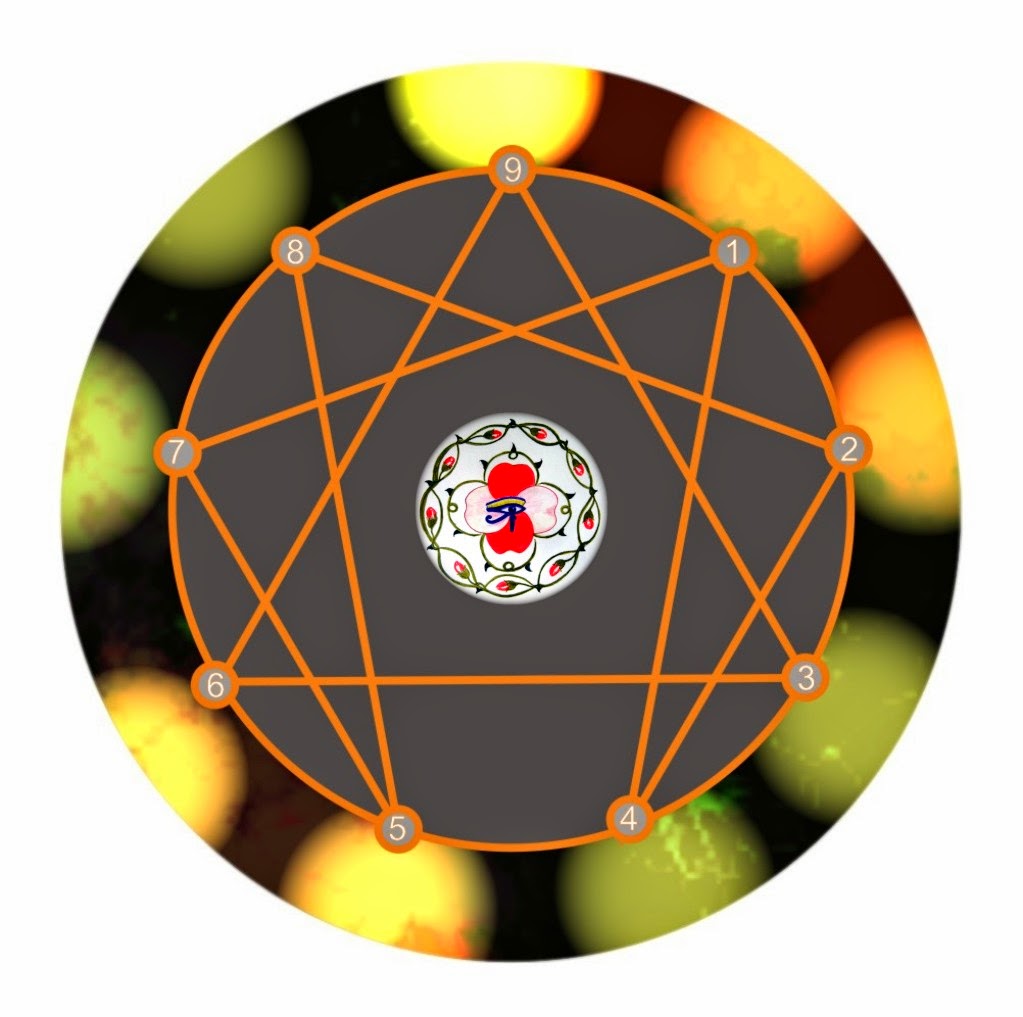
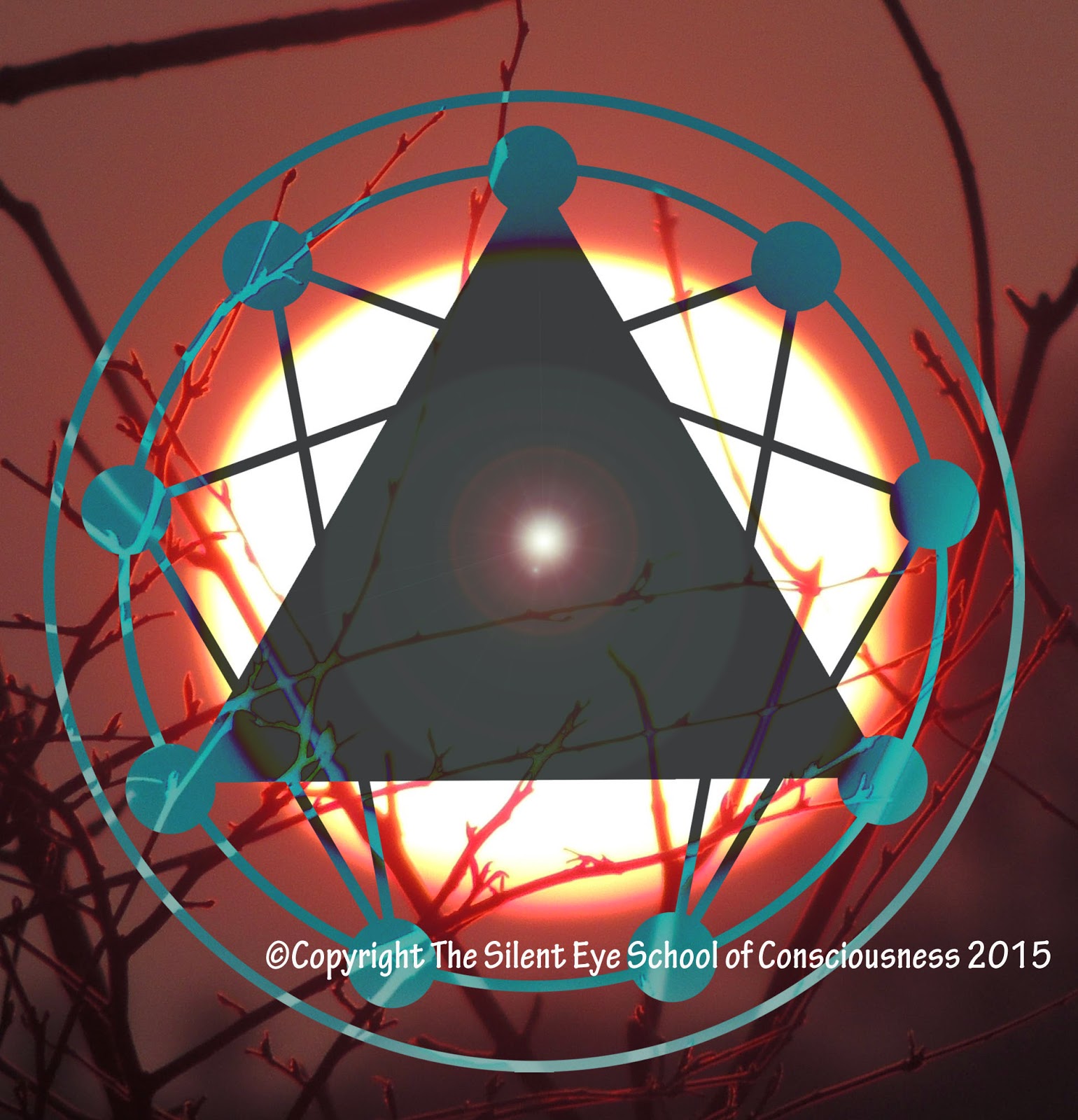
“Yes,” I replied, taking the new drawing, from my pocket and unfolding it next to the two fresh lattes. “Examine this and tell me what you see . . .” She studied it carefully. I had arranged for it to be printed on silk so that she would treasure it.
The barrister’s mind missed nothing. “The inner triangle is a different colour,” she said. “And the hexa-thingy and the triangle have both been marked with arrows.”
“Precisely. There are really two sequences shown in this diagram, the one made up by the sides of the triangle goes back on itself in three moves; the other follows a more complex pattern that looks a bit like a jewel.” I took a sip of my hot coffee. It scalded my lips and I winced in pain.
She chortled at my discomfort, but not cruelly. “A bit like the fear reactions generated by our coming-into-the-world?” she said, still chuckling.
“Exactly so . . .” I smiled ruefully at my haste. “In our enneagram model, that would now have created a learned reaction which would stay with the developing person, forming a foundation layer on which other, more complex reactions would be layered, but, though primitive, that foundation layer would be very powerful.”
“In the brain?” she asked.
“Absolutely in the brain,” I replied. “Much of what is considered mystical actually takes place in the brain – though that is not to say that there isn’t, alongside that, the truly spiritual.”
I watched her trace the sides of the triangle from station nine to six to three; and then back to nine again. “And you said that this first move–” she re-traced Nine to Six. “Was a basic move away from our true nature – that which is really spiritual in us?”
I loved it when she used her own logic in this way, though it held a trap, since the temptation would always be to use the brain rather than what lay beyond. It was so hard for someone very clever setting out on a spiritual path to consider that the brain – the ordinary mind – was incapable of even conceiving of the spiritual life beyond the brain patterns of reaction and personality.
She continued, “So at Six we learn fear and the patterns begin to form that will become the us that the world knows, but there is something much more alive buried beneath that?”
“Yes,” I said. But we don’t get that to start with–in fact most of us don’t get it, ever . . .”
She traced a finger from Six to Three. “So we go this way, instead?”
I smiled. It was a rewarding experience to teach one so eager and so quick-thinking. “Yes, we take our fear and our hurt and go deeper into the world, creating an island of personality at Three which allows us to get some strength and stability in the world – in our world. But its satisfaction is short lived, because we cut ourselves off from the true flow and energy in life.”
“But it’s not entirely a negative thing?”
“Not at all–it’s an essential thing. Without it we could never have the strength nor the discrimination to look back on the basic layers of fear and begin to dissolve their power.”
She looked me in the eyes; her own were beautiful hazel orbs radiating her initial grasp of the significance of all this. “This is not a trivial journey, is it?” she said, very wistfully.
“No,” I answered. “But it’s the only one that’s real. As Jung said, ‘you can construct all the beings of light you like, but until you tackle your own depths, you will never make any real spiritual progress’.”
She was silent for a long time. Eventually, she said, “But you would say that there’s so much beauty ‘down there’ that it’s all worth it?”
“Yes,” I said. “There’s so much beauty ‘down there’ that it will make you cry with delight; make you feel that, as the Sufi’s always said, the Beloved has returned to your life . . .”
We sat in silence for a long time, thereafter, and then I drove her to the station. With a gentle peck on the cheek she left for her other world, one increasingly encroached on by her developing spiritual awareness . . . the journey was going well.
——————————-
Nine Deadly Sins with Coffee is usually published on Thursdays.
All images and text ©International copyright, The Silent Eye School of Consciousness, 2015.

Contact details and an outline description of the Silent Eye School are on the other pages of this blog and via the website at www.thesilenteye.co.uk
Share this:

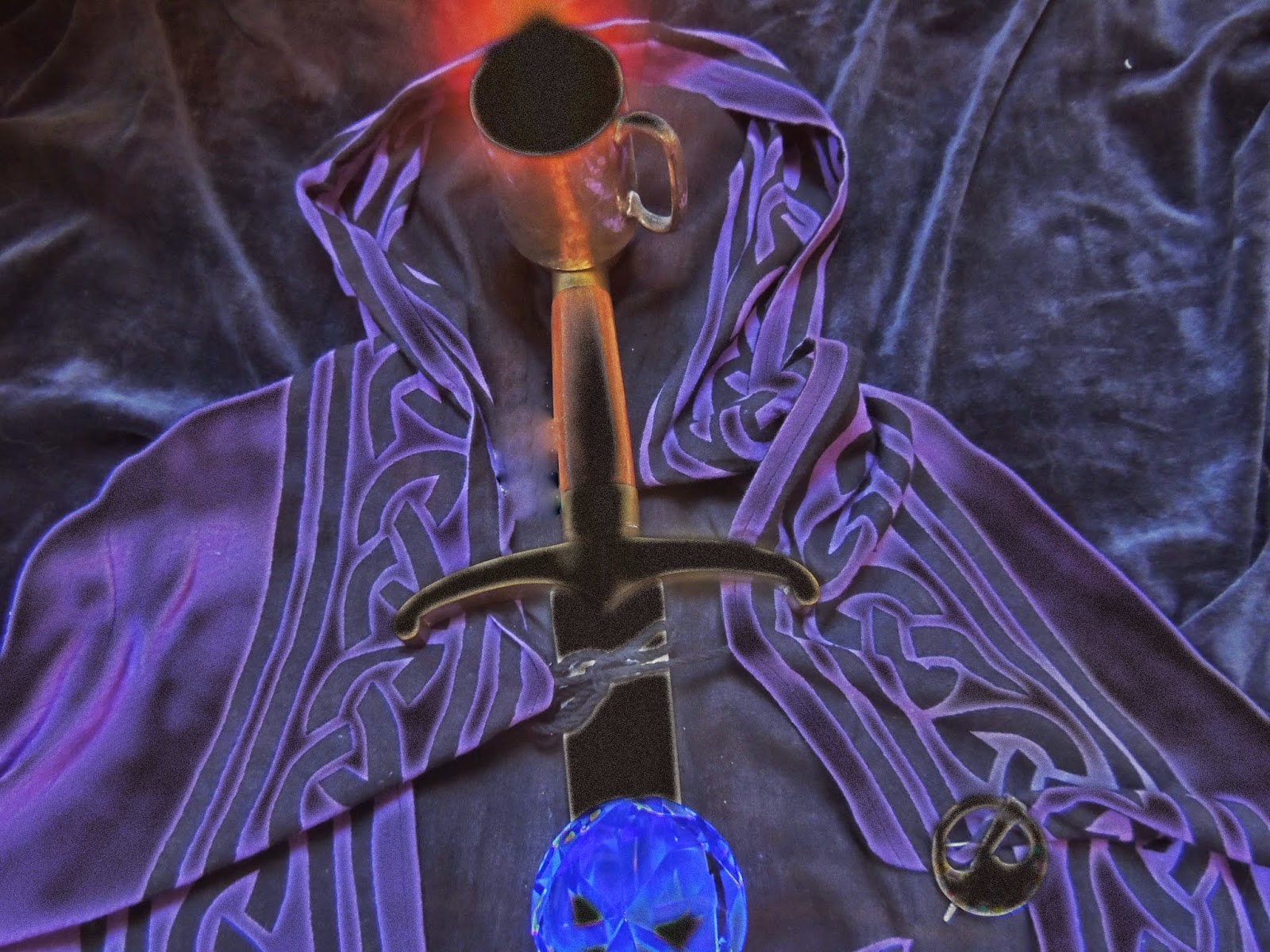
In a fundamental shift from the ‘Tanham’ era at the helm of the Silent Eye’s annual workshops in Derbyshire, next year’s event, 22-24 April, 2016 marks a new departure on two fronts: we are taking the now well-practiced enneagram temple format into the Arthurian Mysteries, something that may never have been done before and which may see Mr Gurdjieff’s ghost coming after me for its just deserts with mutterings about ‘abuse of imagination’ and a few other choice sentiments; and secondly, we (read: they) are to set the five-act ritual drama, and supporting meditations and outdoor gatherings around the combined stories of Sir Gawain, the Green Knight and Lady Ragnell, with the possibility of a little fire-dancing as well.
By way of an appeal from the dock, I would point out that, with total reverence for the elegance and power of the Gurdjieff System of personal exploration, we have stayed as true as possible to the core model, yet appear to have successfully integrated it with the Western Mystery approach in using many of the elements of a traditional magical temple. Our approach to a modern temple design is integrated within a sacred space containing the Silent Eye’s own variant of the enneagram and set of two encompassing rings which represent the realms of Being and Becoming. Finally, all this is set within a compass square which brings in the traditional East, West, South and North, and their alchemical associations.
I used the word ‘they‘ above because, in the tradition of these things, and now being the junior ‘creative’ partner, I actually know very little of what will transpire on the weekend of the 22-24 April next year. It has become a tradition – established by me, apparently, to keep the other two in our ‘Triad’ in state of general ignorance until very close to the event. This year, Sue and Stuart are running things; ostensibly to ‘give me a break’. Hmmmm . . .
This means that, although I will be constructing some of the supporting parts of the weekend, the only thing I know is that I will be playing the part of Sir Gawain in the five-act ritual dramas . . .
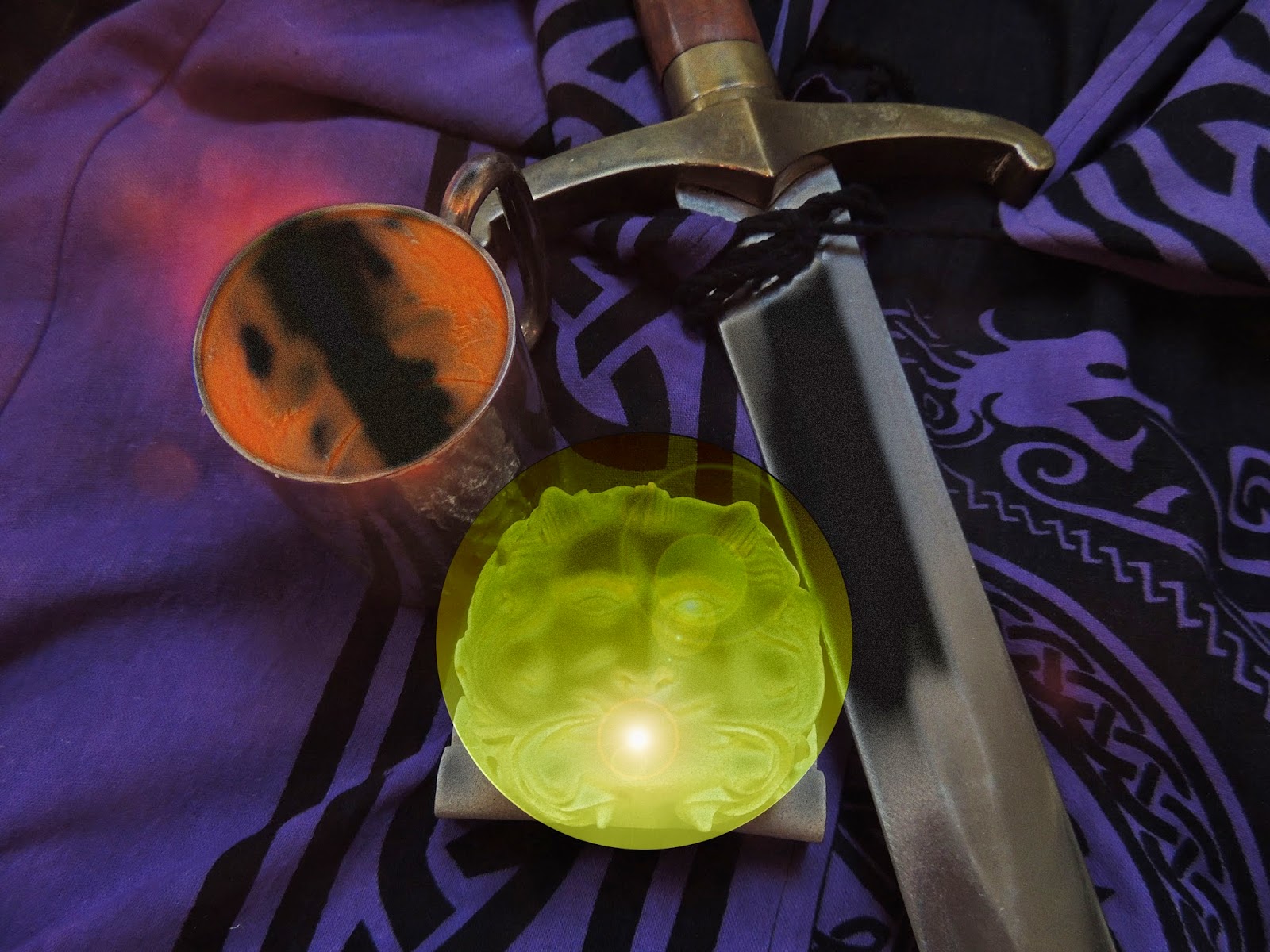
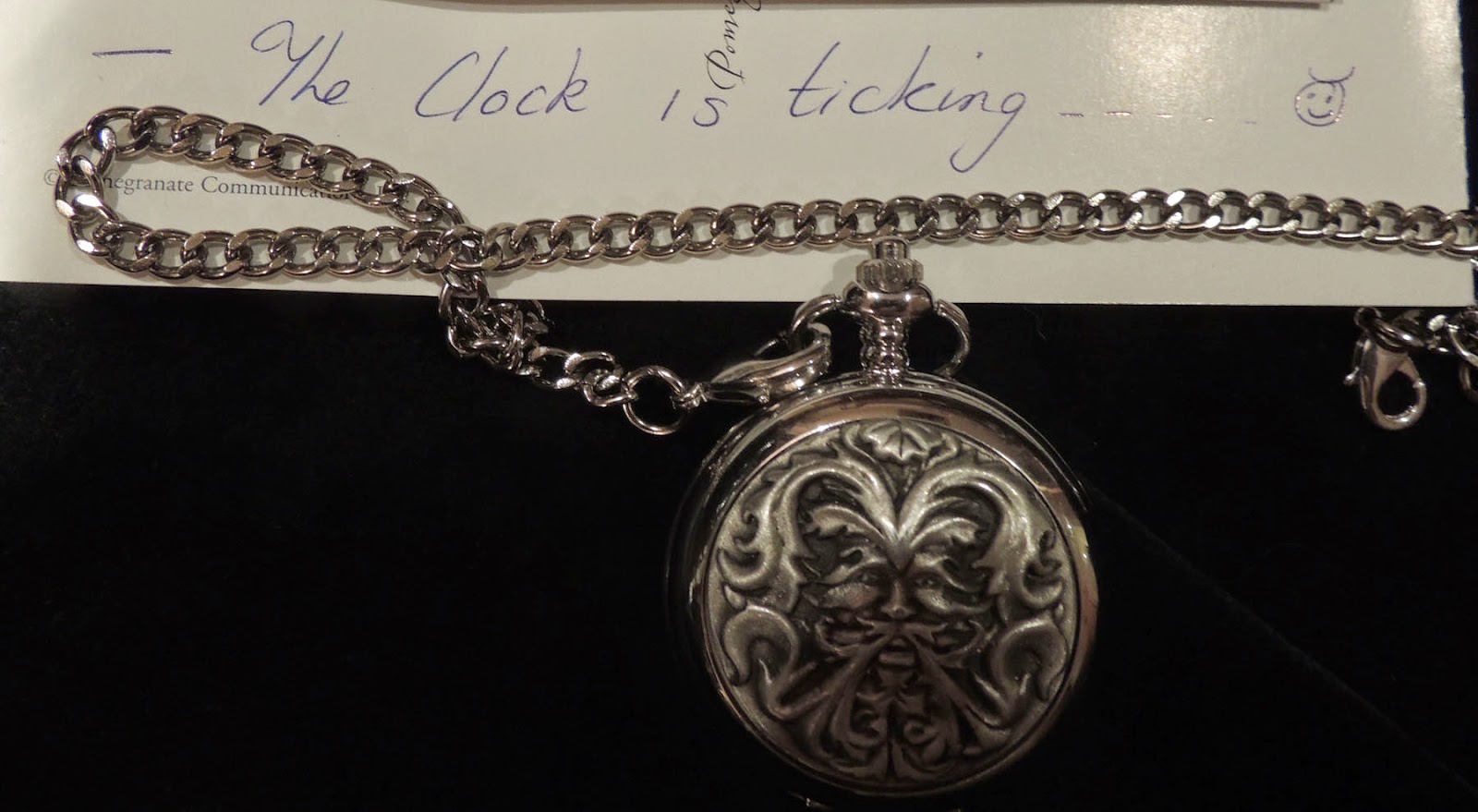
Now Gawain is an interesting character. I’ve played him before in a wonderful SOL workshop in Tintagel, the traditional site of ancient Arthurian Camelot. But there is something much more risky about playing in the variant of the Gawain tales that ‘les enfants terribles’ have in mind. At this point I need to explain something of the dynamics of the three of us. The other two in our creative threesome, Sue and Stuart, spend a lot of time writing and plotting together. It’s a general sport of theirs that anytime they can generate panic in my gentle soul, they do so . . .
Share this:

From one of my favourite bloggers – James Elkington
Share this:

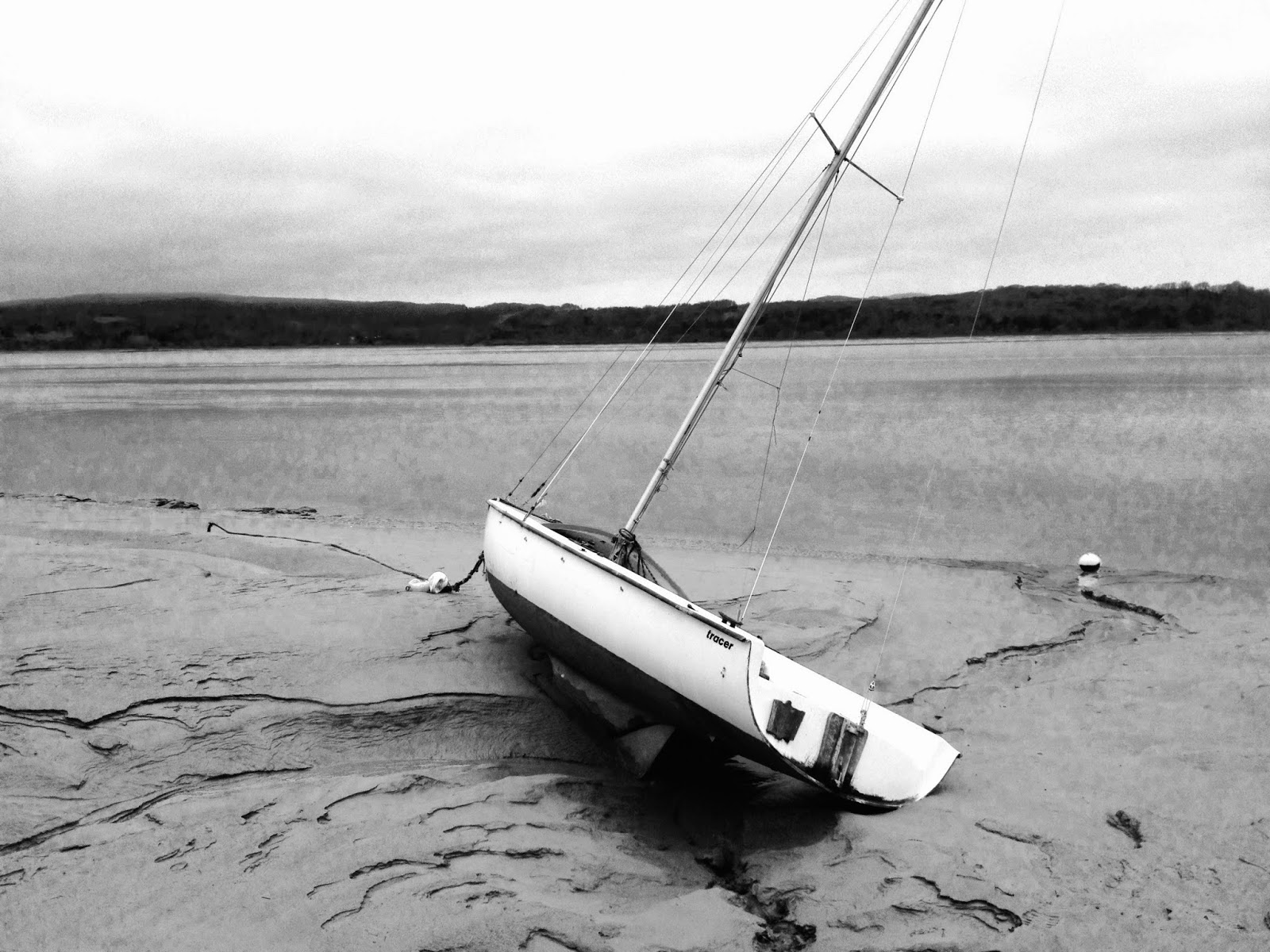
The sand was wet under our bare feet. Alexandra insisted on taking my hand and leading me into the shallow waves that lapped at the muddy beach. With her rolled-up suit trousers and my similarly shortened jeans, we must have looked quite a pair.
I looked at her and laughed, “You’re doing this because I mentioned waves?”
“I’m doing this because whatever you’ve done, it’s connected with something young in me and brought out a sense of abandon and adventure!”
In truth, I was now the one who was unprepared. “And the train to London?” I asked.
“I’ve disappeared,” she chortled.
“Disappeared . . . as in without trace?”
“Yep!”
“They’ll worry!” I added, wondering why I was obsessing about her bold actions.
“They’ll be frantic!”
She began to laugh hysterically, then bent down to scoop some sea water into her cupped hands, which she proceeded to hurl at my head in an arc of salty spray. In slow motion, I watched it come towards me, my perception of the wonder of it keyed by the sheer energy of her actions, which had pushed me into that special state of heightened attention. Stilling the body’s reactions, I let the essential smile light my face as the shower of liquid diamonds kissed my skin in a million tiny explosions and turned my eyes to look at her.
“What–?” she said, a second later. “What was that?” Her hands were still in front of her, dripping. She had been fully conscious of what had just happened.
“Well, you did it” I replied softly. “What do you think happened?”
“You kind of slowed down time!”
“Or perhaps stepped into the heart of time might be better?”
“Yes,” she said, “Something like that.”
“It’s always there,” I continued. “It just requires your full acceptance of the moment – the now . . . When that is done there is no time . . . just the wave, which is undistorted reality.”
“And how do we give our acceptance to the real like that?”
In reply, I picked up a old stick, a salty remnant washed onto the beach by the powerful tides of the estuary. I used it to draw out a rough enneagram.
“To give our acceptance to the now, we have to cast off all the baggage that comes with the outer layers of the Nine.”
“How–” she began, but I interrupted her.
“To do that, we have to work through them and seen how each one gives the world a perceptual and emotional tint; how the real, loving and objective world which is always present, is tainted in seeing by what our fears and reactions have taught us”
She stopped all other movements, gazing at the stick, which I was walking around the circle of the Nine, station by station. Something else in the potent now around us was calling. I turned to look along the beach, then called her over, pointing along the shore, with the sandy end of the stick. “The boat – look!”
The sailing boat lay on its side near the water line. It was still serviceable, but old and battered. “That’s a bit like what life does to us all,” I said. “We learn to sail the waters of life in a certain way, conditioned by the shape and size of our own little boat, which is formed by our reactions to life – our own shell.”
“And separate ourselves from life’s depths in the process?”
It was my turn to smile – her response had been magnificent. I nodded and said, “Yes, but the wave always adjusts the moment, the now, so that each second contains the power to give us what we most need, what we began to lose at station Nine here–” I stabbed the end of the stick into the upper point of the enneagram, watching her wince with the power of the gesture.
“When we were afraid of its awesomeness?” she asked, meekly.
I shook my head, making sure the gesture was gentle. “When we turned our back on our own true nature . . . because it hurt too much to remember what true life was like in the face of the storm that swept us out to sea . . .”
She was silent for the rest of the next hour. She was still silent as I put her on the London train, trying to brush off the last of the sand from the pin-strip fabric of her trousers.
“We can begin next time,” I said, giving her a peck on the cheek as I passed her the last of the black bags.
“Begin?”
“Begin considering each of the Nine from the unified perspective of the wave.”
“Oh brave new world . . . I’d like that,” she said, gently; waving and smiling like a little girl as the door beeped and closed, and the long snake of elegant metal left the station to begin its three hour journey. The memory of the expression of innocence on her face stayed with me for the next few hours – it was a very happy sight . . .
——————————-
Nine Deadly Sins with Coffee is usually published on Thursdays.
All images and text ©International copyright, The Silent Eye School of Consciousness, 2015.
Contact details and an outline description of the Silent Eye School are on the other pages of this blog and via the website at www.thesilenteye.co.uk
Share this:

“Tell me about the ‘wave’?” Alexandra asked, excitedly. “I get the idea of the now, though I think that’s something we all take for granted; but the wave sounds like something to be discovered, something fundamental to existence . . .”
I sipped my coffee and looked back into those excited, bright eyes, and considered how to fill her with the sense of joy that the idea of the wave always generated in me.
I began slowly, almost hesitantly, “The wave is the substance of the now; just like the soul has been called by some the substance of consciousness.” I watched as she absorbed this challenging concept. Both these ideas were seldom comprehensible to the beginner, and yet, in what the Buddhists called ‘Beginners Mind’, lay the simplicity of comprehension that could make great leaps through not being bogged down by the weight of accumulated thinking. To the Buddhists beginners mind was not something belonging solely to the beginner, but a state to be sought by all of us.
She sat back and drank some of her coffee. Her brilliant mind was working hard at this. Eventually, she said, “So this wave, which is the now, radiates from the centre – in this case the centre of the enneagram, giving us this moment in time, presumably, in which we can choose to live . . .?”
“We have no choice but to live on the wave, there is nothing else. The choice is whether we give it the attention it deserves and stop worrying about the phantom constructs of the process of thought.” It was as direct as I could make it. I could see her reeling slightly from the mental force behind it.
She was gentle in her reply, sensing that these concepts were at the heart of what she found fascinating about our whole direction of investigation. “I can see that in our circle of the enneagram the wave originates from the centre and radiates outwards . . .” She paused, then, “But how does this relate to the character types we have been discussing on the outer rim, the Nine on the perimeter of the circle?”
It was an excellent question. Now, I had to reach into the now, my wave, and see what lay there, what could be taken at its most potent and used, with gratitude, to put more light onto the subject. Suddenly, it was in front of me – a perfect analogy for Alexandra’s vast and educated mind.
“The whole of the inside of the enneagram’s circle is a sea,” I said, leaning forward. “Around the outside are nine islands. Parts of this sea are calm and parts of it – the outer regions – are stormy. Life sweeps us from the centre, on our own wave, to the extremities; and the journey makes us fearful and changes us.”
She sipped her coffee, draining the cup, then smiled at me in a very beautiful way. “Full fathom five my father lies . . .” She winked, enjoying the allusion to The Tempest.
She had found the trail which had been in my mind seconds ago. “Perfect!” I beamed back at her. So, now, shipwrecked on a foreign island you meet–?”
She was close to giggling, again, with the excitement of real discovery. “Ummm . . . a wise old man named Prospero, his daughter, Miranda, and a beast of a man called Calaban.”
She was great. The barrister’s mind had retrieved the context, swiftly – doing what minds do best. I added more encouragement, “This is not specific to the enneagram, of course, but here you have a set of human characters which represent what we might call the ‘levels’ or centres of our lives: Prospero, the wise but impotent old man, who we could rightly say might represent the intellect; Miranda, his daughter who could be both heart and soul; and finally Calaban, the very potent but unregenerate ‘savage’ who is the very essence of instinct, appetite and human energy!”
“But these are not the ‘types’ we drew around the enneagram’s circle?” she asked, certain of her ground.
“No,” I responded, nodding my approval. “These are what we might call the vertical elements of each; the Nine are something entirely different – and each of them has the three levels, or centres in which their humanity – in all its vulnerability – is focussed.”
“A whole cast of players . . . ” she said, softly, speaking to the inner stage she had just discovered.
“Yes . . . and all unique to the wave that washed us ashore, that continues to wash us ashore, to the land of exile of our outer facing lives!”
She stood up. I looked at my watch and reached to get my raincoat – it was raining hard outside; not unusual for a Monday in May.
“No! Stay!” Her hand came down softly on my shoulder. “I need another coffee. You need to stay here and tell me more,” she grinned. “In return for yours . . .”
“But your train?” I laughed at her departing back.
“To hell with the train!” she laughed, her heeled feet dancing across the cafe’s wooden floor as she made her way to the counter.
——————————-
Nine Deadly Sins with Coffee is usually published on Thursdays.
All images and text ©International copyright, The Silent Eye School of Consciousness, 2015.
Contact details and an outline description of the Silent Eye School are on the other pages of this blog and via the website at www.thesilenteye.co.uk
Share this:

Between the heartbeats

(c)copyright words and image Stephen Tanham 2015
Share this:

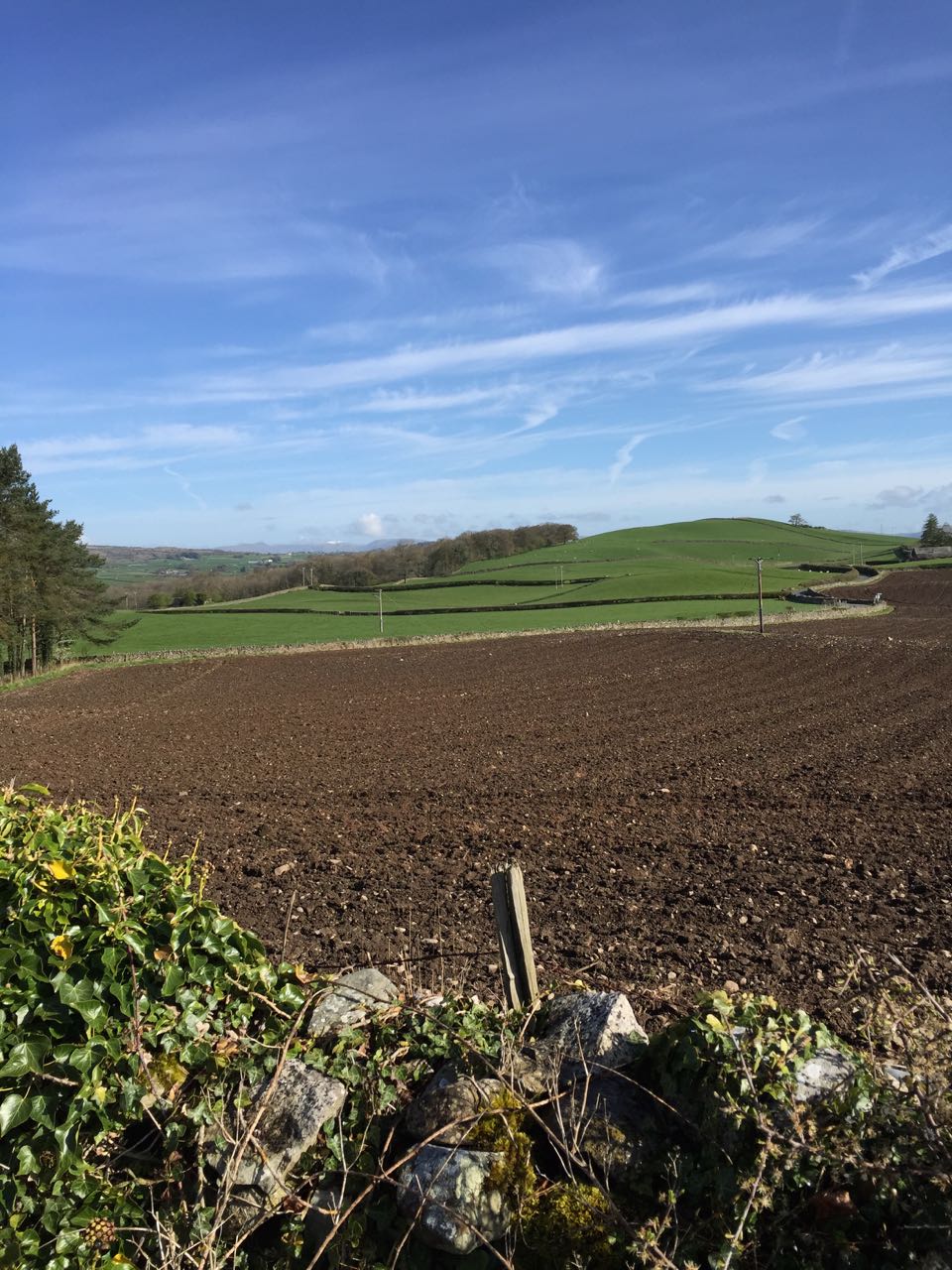
Eye to Sky
From daffodil which fades and bends
Through old stone walls and moss
Between the furrowed opened soil
And green restored from months of loss
Till sky pulls eye to distant peak
Where arc of fading snow
Bisects on high the world of eye
from world of I, below.
©Copyright Steve Tanham, 2015
Share this:

The space between us had changed.
I smiled as I sat down next to the tall latté waiting for me in the coffee shop opposite the roaring spring sea which was doing its best to reclaim the old seaside town.
“You knew, didn’t you?” Alexandra asked, in a question that wasn’t. “Knew that the sun in the one-tree would change things?”
“I did,” I replied, “But it was a hope rather than a certainty. Such things are always at the mercy of the moment.”
She thought about that carefully. “Mercy of the moment – I like that . . . ” She sipped a little of her own coffee before continuing. I held back so as not to disrupt the gentle flow of her thoughts and feelings.
“The moment is important in the enneagram, isn`t it?”
“In the style of enneagram we use, it`s probably the most important thing” I replied, softly, putting as much flow into my voice as I could.
I watched her face: the barrister within her was fighting that quiet flowing moment, wanting to cut it apart, to dissect its intellectual content, not, simply, to leave it whole and approach it the way I wanted her to do. I watched as the struggle progressed and then smiled, inwardly but sadly, as the legal mind won.
“We,” she said, looking me in the eye with a hawk-like stare. “You said ‘we'”
She didn`t notice my slight sigh – I, too, would have to go with the new flow. “Yes, I did.”
“This is a group thing?”
“Groups generate their own power in addition to the companionship they provide. Learning in a group can be very empowering. “And no,” I added.
“No?”
“No, I don’t want you to join a group . . .”
“Why not!?” she blurted out, unable to contain the reaction I knew would result.
To hide my urge to chuckle at the smug response I was about to give – which did not reflect my real desire, but suited the moment, I drank a lot of my own coffee, which, mercifully, had cooled enough to allow it. I hadn’t chosen this route of discussion, but Alexandra always rises to a challenge, and the opportunity was too good to miss.
“Because you’re not ready yet . . .”
There was no scream; and yet, if you knew her well, there was. A long subvocal moan with the power to shock most of the people around us. What came out was a whimper.
“Not ready . . . ” She managed to keep the tone flat.
“That’s right,” I said calmly, pretending not to be rocking inside. “Despite the heroic efforts you have made . . .”
The inner lawyer gained control, again, and decided there was nothing to gain down this cul-de-sac, coming at me along a different tangent. “The moment . . . tell me about the moment.”
It was time to be direct and as powerful as possible. Time was passing and she needed her seed-thought for the week. “The moment is where the real happens. It is the only place where what is real is . . .
“What is real?”
“Yes. We live in a world of imagination,” I said. “The age we live in has conditioned us to see reality as lots of different things – the past, the future; as though they were not merely thoughts and had some substance. Try it – reach out now and touch the future . . .”
I watched her right hand actually move, just slightly, as she wrestled with the idea of grasping the not-present.
“Yes, that idea of reaching out for a reality defined only in thought is common to us all – but I didn’t say reach across the table, in space, I said reach into the future, which has no reality at all . . . though it’s components may have a probability”
She was silent; her thought machine fascinated by what would, ultimately, undo it.
“Because it’s a truth machine, the enneagram is centred in what is real; and the only thing that is real is now, the moment.”
“And where is that on the enneagram?” she asked, returning to the flow.
“Why, in the centre, and radiating the wave, I replied, leaning across the small table and tapping her watch.”
As I dropped her off at the station, I could see her lips forming the word ‘wave’ silently, as the legal mind in the background got out its scalpels and queued up to dissect it.
Her week would be an interesting one . . .
All images and text ©International copyright, The Silent Eye School of Consciousness, 2015.
Contact details and an outline description of the Silent Eye School are on the other pages of this blog and via the website at www.thesilenteye.co.uk
Share this:

`Twas brillig, and the slithy toves
Did gyre and gimble in the wabe:
All mimsy were the borogoves,
And the mome raths outgrabe.
She gyred and gimbled down the steep slope of the hillside; full of music, laughter and the generally infectious good will that is the core of Ali – she of the golden heart, and one of the heroines of the River of the Sun, the Silent Eye’s 2015 main workshop in the lovely hills of Derbyshire.
Quite why Ali picked this poem (Jabberwocky, by Lewis Carroll) I’ll never know, but, as she bounced, singing playfully, down the steep, green meadow and back towards the Nightingale Centre, it became one of those iconic and wonderful moments, when any trace of pomposity would meet a ruthless evisceration from the moment, from the ‘now’ . . .
Her utterly human humour was a wonderful contrast to the fifteen minutes of chanting a greeting to the dawn that we had just carried out in the fine early morning that ushered in the Saturday of the weekend event. The chant, a pseudo-Egyptian creation that we had crafted and layered over a dimly remembered melody from a French folk song about the ancient cathedrals of ancient Paris, had rung out over the hillside towards a dawn that stubbornly moved itself along the line of its expected appearance and appeared only during our descent – no doubt summoned by Ali’s Jabberwocky and not our Egyptian chant with accompanying text from the Hymn of Akhenaten.
And that is the most perfect cameo I can think of to express the success of the Silent Eye’s third such workshop and our second birthday – duly celebrated at the end of the weekend with a gorgeous cake baked by one of my fellow Directors of the School, Sue Vincent.
The contrast between planned ‘perfection’ and the reality of mischievous manifestation was at the heart of what rescued the River of the Sun from the annals of what would have been groaning oblivion, as those present hurried to bury the memories in gestures of goodwill and personal reassurances.
The River of the Sun took a year to conceive and three months of solid writing to bring to readiness; but then disaster struck in the last week, with four people having to drop out with health-related issues. Even two of those present turned up full of the horrible flu bug that seems intent on incapacitating much of Britain. One of them, David, was new to the whole thing, and had heroically accepted the central role of Rameses the Great for which he had done months of preparation.
The surviving cast, of what should have been twenty-two members, were to fill the roles of either the ‘royal family’ – Rameses II, his senior military command, Obion, and a mysterious and elderly Mage named Menascare; the Temple Vessels of the Gods: Sekhmet, Hathor, Khonsu, Tefnut, Ptah, Thoth and Ma’at; or the fearsome Talatat, the military elite guard of Rameses under its commander, Obion. The island temple on the Nile was led by the High Priestess of Mut and her brother the High Priest, who had recently adopted a promising young orphan, Amkhren, and his ‘bent old grandmother’ nicknamed Snefer, who was his sole surviving relative.
But seventeen people do not equate to twenty-plus parts, even when a bit of last-minute whittling of the 150 pages of script had eliminated two of the Talatat, ridding the temple of the practitioners of the dark specialisms of inquisition and vengeance, part of the enneagram’s ‘outer leaves’ of the darker side of humanity.
They must have seen the despair in my eyes as we began the workshop with apologies for the decimation of our expected acting population and our inability to carry out the five rather vivid ritual dramas that formed the backbone of the event.
Dead in the water? Not on your Nellie . . . not with the magical edge of the esoteric fraternity present. Within seconds of expressing my sadness, regret and (at Sue’s timely prompting) our condolences for those who had been struck down with the vicious bug, two experienced volunteers had stood up to offer to be heroes. One was Ali, the aforementioned singer of ‘nonsense’ verse; the other was an old friend and senior figure in another esoteric School with whom several of us had shared many years of magical past – Dean.
For the Friday evening and on through Saturday and Sunday morning, the two of them battled the logistics, angular distance and the perils of the twin Wheels of Egyptian time – eternity and recurrence, as they skilfully played out multiple roles to hold together the coherence of the script.
Amkhren, now seven years older and about to be initiated into the priesthood, was duly petrified by the arrival of the river-borne war party of the young Rameses, travelling up the Nile for one last hunting mission and eager to drop in, unannounced, on the temple he suspected of harbouring one of the last pockets of support for the religion of now-erased Akhenaten, the self-styled Son of the Sun.
The scene was set for a confrontation of unequal forces as the gentle Temple Vessels battled with the cruel onslaught of the King-in-Rising and the military prowess of his elite guard – now played by a red-haired dervish (Ali) who could disappear into one of the time wheels on the perimeter of the enneagram-shaped temple only to reappear, a heartbeat later, as a different warrior with changed voice and persona at the other side of the temple . . . It should have been funny, but it wasn’t – it was brilliant! In like fashion, Dean, brandishing what must have been the heaviest replica sword we have ever sourced, darted and dashed through the internals of the enneagram of humanity and rounded up the missing and the fallen, re-animating them with spirit and vigour.
With considerable emotion, Amkhren repaid his mentors by charming and impressing the young Rameses; so much so that the King-in-Rising’s final act was to steal him to be be a royal priest in the family palace. The devious Menascare, the mage who turned out to be more sympathetic to the recent past than his new ruler liked, was led away to his death by the triumphant Obion, again with sword and, by now, well exercised arm muscles . . . The temple was not only spared, but given new royal patronage, and Rameses (brilliantly played by David, Sheila’s son) declared himself happy with the unconventional worship of the Divine Feminine.
During the third of the three ‘theory talks’ which always accompany the ritual dramas, I thanked those present for rescuing our workshop. The success had come, not from the play, but from the magnificent souls who had animated it. We were talking at the time about the Silent Eye’s use of the Djed Pillar and the Scarab. Ali’s character – the bent Snefer, was in the process of being elevated, with royal approval, to the Lady Scarab, in a twist of events, which were, in many ways, the reverse of those events which had brought us to the edge of disaster.
I was told later that, at that moment, the ‘presence’ in the room changed and I went off-script for a period of about ten minutes to talk about our approach to Being in a quite different way than before. I cannot remember all of it – I was truly ‘streaming’ something from another place; but I came back to normal consciousness and realised what had happened. There was no loss of continuity, but the content had gone into a gentle overdrive . . . truly a magical moment, made possible by the goodwill of all those present and my dawning realisation that the intellectually dominated approach to taking all the risks out of an endeavour like this is entirely secondary to the Spirit’s ability to mould and fashion the moment for its purposes.
We had people present who were new to us and also the return of many old friends. The Sunday morning saw the emotional content peak with Sue and Stuart’s Rite of the Seers, during which we were all led off, in threes, by the Vessel of Sekhmet, to come face to face with a living Ankh, marked out in another room in lights on the floor, with a projected picture of the Cosmos on the wall beyond. We returned with scrolls of Egyptian wisdom upon which to meditate in the main temple.
But my moment of the weekend remains that of watching Ali-Snefer-the Lady Scarab, lovely Slithy Tove that she is, bouncing down her green hillside, in the full power of her glorious and heart-warming humanity. The Nightingale Centre nestles at the foot of a Derbyshire edge that hosts a gliding and paraponting school. As Sunday’s glorious sun warmed the day, the air was full of people with wings or para-wings riding down and up on their thermal gradients above us. It struck me that we might need a new word for the way Ali could descend the green slopes below, chanting her ‘nonsense’ poem. I propose Jabberwalking . . . any offers?
Thank you to all. I believe you enjoyed our annual rite of the spring. We wish those stricken with the ‘flu a speedy recovery. Our target for next year is thirty to thirty-five people, so, if you’re interested in the 2016 event, the Foliate Man, which will cast the Arthurian legend of the Green Man and Gawain in the language of the magical enneagram, please contact us by email at rivingtide@gmail.com or via the website below.
All images and text ©International copyright, The Silent Eye School of Consciousness, 2015.
Contact details and an outline description of the Silent Eye School are on the other pages of this blog and via the website at www.thesilenteye.co.uk
Share this:


She leaned forward, and at the same time, took a large swig of her coffee. I had seen her do it many times; it signalled that she was about to launch her enquiry.
“Home” I said, softly, completely ruining her build-up.
“How did you–?” she laughed, there was little sign of the irritation that would have accompanied my impolite gesture back when we first started our discussions about the enneagram.
“It’s what I would have asked first, given where we got to last time.”
“Uncanny!” she said, sitting back and enjoying the coffee, now that she didn’t have to lead with the right question. It was hard being a barrister, her furrowed brows explained; but her smile said something different . . .
“Okay then,” she added, reasonably. “Home . . .”
I drank some of my own coffee. My reply had to be perfect – not in a general sense, but in the context of our meeting. I had something unusual planned, but it required careful staging – and her full cooperation.
“The enneagram is only a symbol,” I said, softly. “But it’s a very beautiful expression of some wonderful truths; and their relationship.”
I let that sink in, drinking some more coffee before continuing. She waited and considered what I had said.
“So home is where everything begins?”
“Yes,” I responded carefully, drawing out the word.
“But?” she had picked up on the hesitation.
“But, it’s not like regressing, going back in our lives. It’s really about taking the good stuff with us?”
“The good stuff?” Now she was looking mischievous. I could see she was enjoying this.
“There’s a difference between something like skills, and other, more negative things we may have learned from life.”
“Like fear?” She was being really quick, today. I had to keep her headed where we needed to be.
“Like fear, yes – but we’re all afraid . . .” It was a dead-end. I knew it would leave her little to grasp at, forcing her to open it up, again. I pounced before she could.
“As different types, it’s really a question of what frightens us, not whether we’re frightened.” I watched as she worked that apart. Her slight nodding – subconscious to her – indicated that she well understood fear.
“But fear is not primary?” she asked. “It’s not that we’re born with fear!”
I was there. “No,” I added, speaking so low it was practically a whisper. “Fear happens when we leave home.”
It took me a further ten minutes to persuade her to let me drive her to a different station. I knew that the faster London trains stopped at Oxehholme and that she would be at her destination no later than a half hour behind her usual schedule. I was banking on the fact that she would be well prepared, and have enough slack in her Monday to allow this to work. After the first few minutes she let me win, but gradually.
In the car she was relaxed. Her black bags were stowed in the ample boot and she was enjoying being ‘kidnapped’. When we got to the valley she was surprised when I passed her a pair of walking boots.
“Ten minutes, I promise.” I said. We began walking. As we approached the strange hilltop where I had often stood at this time of year, I diverted her attention, making her look back down the valley as we walked the final few steps to line us up with the sun, still rising over the far side of the steep hill. And then, I put my hands gently over her eyes, and turned her around to see what I had come to know as the One Tree.

There was nothing particularly special about it. It was just a tree set in an extraordinary spot. I realised I had been quite tense about the timing, but one look eastwards showed me that I need not have worried. We were right on time – we and the sun. I took my hands away and watched her focus in wonder at the tree, and then the sun behind it.
“Home,” I said. Smiling at the gentle conspiracy of sun and human intent. “Sometimes there are no words for what we are trying to say”. Her breathing deepened as she took in the idea behind the visual, but, magnificently, she managed to say absolutely nothing . . .
She was still holding her silence when I pecked her on the cheek and handed over the last of her bags as she got on the express from Glasgow to London.
———————————
Nine Deadly Sins with Coffee is usually published on Thursdays.
All images and text ©International copyright, The Silent Eye School of Consciousness, 2015.
Contact details and an outline description are on the other pages of this blog and via the website at www.thesilenteye.co.uk
Share this:

A free place at our forthcoming workshop this weekend. Donated by a Companion who has paid for his place but is unable to attend due to ill-health.

STOP PRESS
One Free place available
Would YOU like to join us for the Silent Eye Workshop in Derbyshire this weekend?

One of our Companions is too ill to attend and has generously donated his place to anyone who would like to attend in his stead but cannot afford to do so.
At such short notice and with our Companion’s blessing, we decided to throw this to the winds and see if anyone would like to attend. The free place includes the weekend workshop, room and all meals throughout the weekend.
Interested?
You can read more about this magical workshop by clicking the link here.
River of the Sun Derbyshire, 24-26 April, 2015.
Full brochure, prices and booking form can be downloaded here. Remember, we have one free place available:
If you would like to be a part of the workshop and spend…
View original post 56 more words


 Sun in Gemini
You must be logged in to post a comment.