
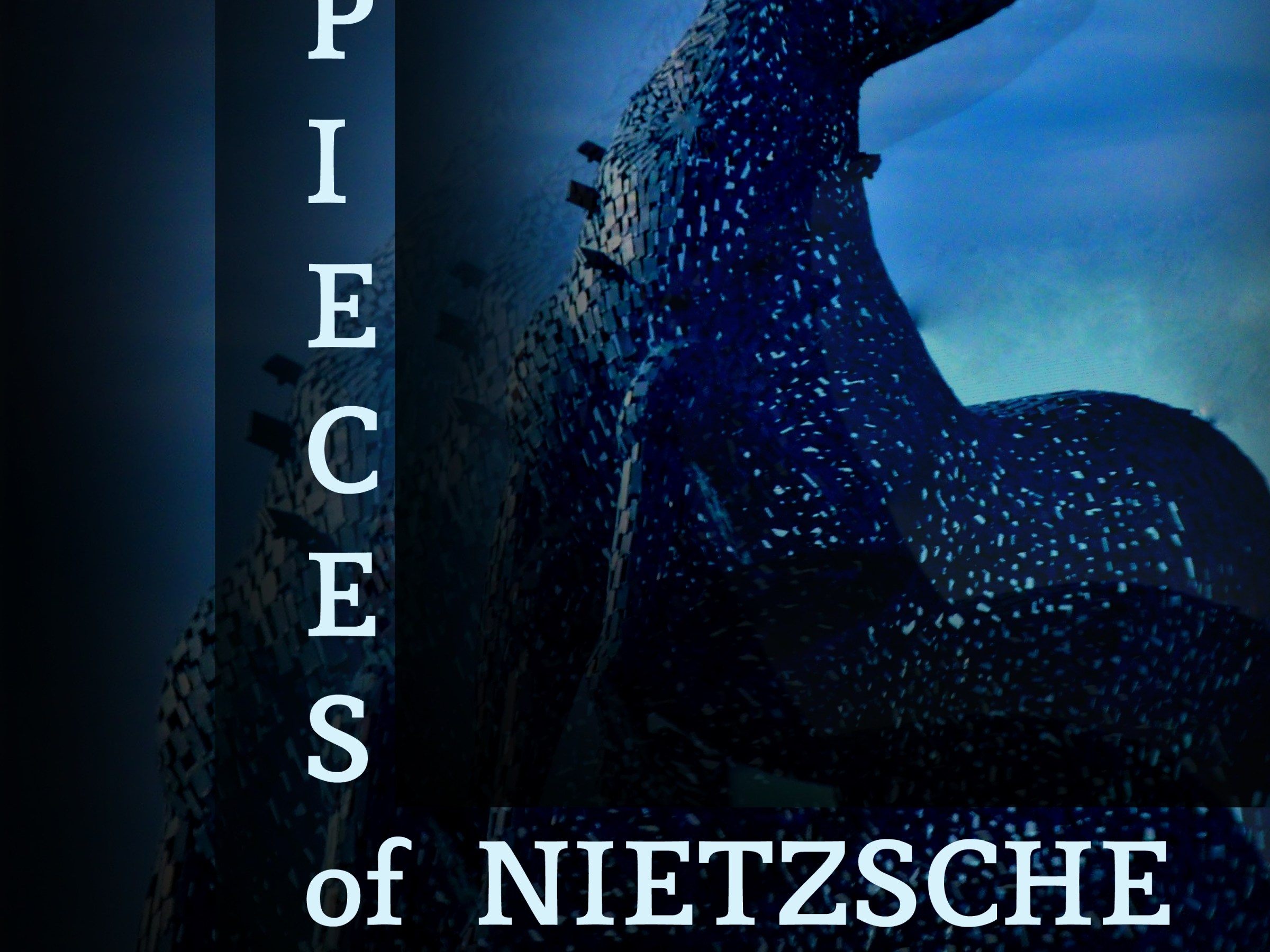

Stuart’s new book.

The question of value goes to the heart of who we are, what we are and why we think we are here… A tendency to make certain assumptions about our environment appears to be intrinsic to our nature, yet the meaningful existence we crave can only ever be granted by a ‘higher power’ which we now seem loathe to recognise outside of ourselves… We have always looked to those best qualified to answer our most fervent questions but what if they too have fallen foul of the ‘Auction-House of Things’… And what of the Beyond?
Friedrich Nietzsche, philosophical and psychological genius of the nineteenth century, in his book, ‘Beyond Good and Evil’, presaged the breakdown of the Western Aristocratic ruling elite and the irresistible forces that led to two catastrophic world wars. This new poetic interpretation of his master work teases out still relevant lines of thought for the reappraisal…
View original post 21 more words
Share this:

The Swedish chair looked very comfortable. He sat in it and rocked backwards. The mysterious tiredness swept over him, again. Had be been drugged?
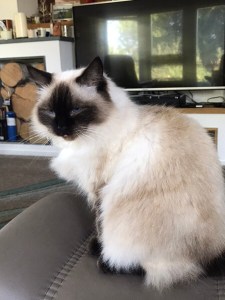
He gave in to sleep… When he awoke it was still light, he was hungry, and there was a cat sitting on the footstool, looking at him…
‘Mow,’ said the cat.
©Stephen Tanham
Share this:

From Sue.
Share this:

From Stuart.
Share this:

Share this:

+ #Silenti, Consciousness, esoteric psychology, Silent Eye School, Spirituality, Stream of Consciousness
The Old Man and the Tower
by Steve Tanham

There was and is a tower, a tall, dark tower.
One day, a fugitive – ragged but not lost – came to this tower.
The tower stood beside a wild sea, which constantly washed its face with spray. Day after day the sea would send clouds of cold spray high into the air, where some of the droplets splashed onto the thick, crystal windows of the tower.
The sea thundered on the rocks and covered the arriving ragged man with salt-water, but his only reaction was to smile.
Through the crystal glass at the top of the dark tower, an old man watched the world beneath him. Every day he would look out at the streaks of sea water on the outside of the thick glass. Sometimes he shuddered at the ferocity of the sea; at its determination to get through the crystal glass. At these times he wondered at the stupidity of the natural world, that it would waste such energy trying to get through his toughened windows to the place where he was safe. Science had given him the glass. He thought about the cleverness of humans, about everything they knew, all the knowledge they had amassed and how they had been able to store it so effectively.
His tower was a repository of such knowledge. Its white, winding stairway, which spiralled up to the top of the tower, was lined with expertly-crafted, curving shelves. These shelves contained every book that the old man had wanted in his long life. Many were unread; some were partly-read. A few – nine of them – lay on the large, oak table that was the main feature of the single room where the old man lived, high above the dark, rocky coast, and the relentless sea that spat against the crystal windows.
The old man became aware that something had changed in the out-there. His life had been marked by acute awareness and he trusted such instincts. He stood up from his task of rearranging the nine books, and looked down through the smeared, crystal windows at the sea-spray and the raging sea. Against the sea was framed the dark figure of the fugitive, staggering backwards towards the boiling foam.
“Nooooo! You’lll die in that deep!” cried the old man, his voice seeming to shake the entire top of the tower. The figure below seemed to be laughing up at him. Was he drunk or ill thought the old man? He gripped the lead window frames as though the panes of crystal glass were about to be blown from their secure places – and the horrors of the world let in…
Before he could object to his unfathomable decision, the old man found himself racing down his spiral staircase to the solid, oak door that was the only entrance to the dark tower. He swung it open and ran outside, skidding on the salt-slippery limestone into which the foundations of the tower were deeply bored.
The fugitive was on his hands and knees, being dragged towards the edge of the land by the howling wind and a draught of air so salty that the old man could taste it. As the old man rounded the tower’s base, the fugitive, kneeling in the spray, looked up at him with a light in his eyes, a light that did not belong to the storm. The fugitive held out his hands as a vicious gust of the salty wind threatened to spin him around and toss him into the dark sea.
Before he could understand how he had come to be there, taking such risks, the old man found himself clutching the dirty fingers of the fugitive–then the wrists, as the slippery flesh of the thin digits began to slide from his unpracticed grasp.
Minutes later, the two of them stood in the shadow of the tower. The old man was shaking with an emotion that made his throat feel tight. The fugitive was also shaking, but with the cold and the effects of his sodden clothing. The old man still had hold of the fugitive’s wrists. Laughing, the fugitive prised his hands loose, and thanked the old man for saving his life… but there was a gleam in his eyes when he said it. The fugitive asked if he might come in and dry himself. Mute, the old man pointed the way to the oak door, which, and inexplicably, he had left open.
They began to climb, but the dripping figure of the fugitive kept stopping.
“I’ve heard of that book,” he said, after each few steps, brushing the dust from the spines so he could more clearly see the name and author. “And you have read them all… how clever you must be!”
“I haven’t read them all,” the fugitive found himself responding as they climbed. Why did he feel the need to justify himself to this pathetic figure, he wondered?
“But most of them?” asked the fugitive.
The old man shook his head, exasperated at the truth being dragged from him. He clutched for something, but was aghast at what came out of his mouth. “I know where they all are!” he said, trying to bite back the words the second they were uttered.
After that, the fugitive said little, and their ascent was punctuated only by the dripping and slopping of the other man’s old coat on the white stairway.
They reached the warm chamber at the top of the tower and the fugitive’s eyes fell on the blazing wood fire. The old man motioned him to stand beside it. The fugitive continued to say nothing, but looked down on the heaving seas, below. As he did so, the sea lashed the crystal windows with such force that the old man shrank back to the far reaches of the circular chamber.
“It’s me she wants,” the fugitive said softly, staring into the black, ever-shifting mass of the ocean.
“Why does she want you?” asked the old man.
“Because of what I don’t know,” said the fugitive.
©Copyright Stephen Tanham
Share this:


There is a long tradition in esoteric circles of keeping a journal. It is a tradition to which Companions of the Silent Eye adhere, making a record of the thoughts, questions and realisations that arise from their own meditations and the work of the correspondence course. There are many reasons for doing this, from the simple discipline of writing down these ideas to ‘earth’ them, helping to fix them in memory… for like dreams, such tenuous thoughts can easily dissipate…to leaving a record that might just help someone else who comes after us and reads them one day. Their most important function, though, is as a record for the writer.
When engaged on this inner journey, we stumble into strange areas of the mind, heart and soul and, like a traveller on an unknown path, we may bring back traces of meaning like dust upon our feet. We do not…
View original post 631 more words
Share this:


Glasgow is a wonderful city. I’m biased, as my seven Scottish cousins were born there. I love Scotland. Edinburgh is beautiful, and we visit it often; but Glasgow has that combination of grit and grace that speaks of its historic struggles, and the triumph of the artistic spirit over the industrial landscape.
One of Glasgow’s most famous sons is the architect and artist Charles Rennie Mackintosh, who very much epitomised the spirit of the age as the 19th century came to an end. That spirit of art rising from the ashes of industry was the driving force behind an artistic movement known as Art Nouveau.

Mackintosh was one of those polymaths who could do anything. He was an architect, designer, artist and, some would say, philosopher. His works ranged from iconic chairs to buildings, to… tea rooms.
In Glasgow, what are now known as the ‘Willow Tea Rooms’ are one of Mackintosh’s most famous legacies. There were four of them, and they provided Glasgow’s hard- working folk with a touch of class, transporting them from girders to a world of curves, colours and strange yet practical fantasy. Tea-rooms were, traditionally, the province of the middle-classes, but I could always imagine a working-class mum and dad dressing up their family after church on Sunday and taking them out for a high tea in the city centre.

The grandest of the Willow Tearooms, at 217 Sauchiehall Street, has recently been restored. Created by Mackintosh in the early years of the 20th century, it originally opened its doors in October 1903. It was the third in the Willow series of tea rooms commissioned by Catherine Cranston (known as ‘Miss’ Cranston), a wealthy hotelier and a leading figure in the Scottish Temperance movement. Her photograph, taken from Wikipedia, is below. (Attribution)

For the Sauchiehall Street (pronounced suck-e-hall) Willow Tea Room, Miss Cranston gave Mackintosh control of its design and construction – both outside and inside. It is therefore a rare example of the full spectrum of the architect’s talents.

As a result, the building reflected Mackintosh’s skill at its height, and, today, gives us a living example of turn of the century sophistication and art. The original building, prior to becoming the tea room, had been an 1860s tenement. One look at both the interior and the exterior shows the depths of the architect’s vision.
Tea drinking was seen as an alternative to the male-only pub and the city was keen to encourage it. By the 1880s, tea had become affordable and a new wave of tea rooms was sweeping Britain. Miss Cranston was eager to participate. She created an aspiring environment where there were separate rooms for women, men, and mixed groups. In that way, everyone was welcome – and no one needed to feel threatened. Very soon, everyone wanted to see and be seen in one of the Willows.

Art Nouveau developed first in Britain, then spread across mainland Europe. It had its origins in the Arts and Crafts movement, but also was heavily influenced – especially in the Glasgow School – by the influx of Japanese minimal forms in art. Japan had recently opened its doors to foreign trade in its art, and, because of engineering and shipbuilding links, Glasgow was one of the first cities to benefit.
The Arts and Crafts movement developed from the desire to bring beauty – and the skills of the individual craftsman – back into the lives of ordinary people. The middle classes were a growing economic force, and they were the ‘ordinary people’. The working classes were unlikely to be able to afford what it offered, but I like to think that the tea room offered a chance, occasionally, to bridge that gap. The inspiration of youngsters was one of Mackintosh’s passion, possibly because he and his wife, Margaret Macdonald, had no children of their own…
 The Sauchiehall Street Willow Tea Rooms has an interesting history. Catherine Cranston was happily married, though also childless. When her husband died in 1917, she felt heavy with grief and unable to continue in her public life. She sold off her tea rooms and her other businesses. When she died in 1934, she left two-thirds of the money in her will to the poor of Glasgow.
Mackintosh carried out his last work for Catherine in 1917 with the extension of the Willow Tea Rooms into the basement of the building next door; to create what was known as the ‘Dug Out’. Later generations observed that the style of this extension (below) was very close to that adopted, later, by the Art Deco movement. (Picture Wikkiepdia)

The Sauchihalle Street Willow Tea Rooms building closed in 1928. The furniture was sold off and the building was converted for use by Daly’s department store. Daly’s moved to new premises in 1978 and various attempts were made to restore the surviving parts of the original interior. The building was and is greatly loved by the people of Glasgow, and, in 2014 the Willow Tea Rooms Trust was established as a charity, with the aim of acquiring Miss Cranston’s foremost Tea Rooms in Suchiehall Street and restoring it to its former glory as a working restaurant.
The other Willow Tea Rooms in the city, though at least partly designed by Mackintosh, are a separate commercial undertaking, and not part of this charitable trust.

Every attempt has been made to restore the working atmosphere of the original tea rooms, including the training and uniforms of the friendly staff. We had tea and cakes during our visit to Glasgow and can vouch for the excellent food and service.

If you’re in the city, pay it a visit. It’s a wonderful tribute to both Miss Cranston and Charles Rennie Mackintosh.
The latter had a less than happy end to his life. Disillusioned with the world of architecture, the couple had moved to Port-Vendres, a Mediterranean coastal town in southern France with a warm climate that was a cheaper place to live for the now poorer couple.
Mackintosh and his wife were content to paint landscapes and flowers, though he continued to explore the relationship between industry and the landscape. Sadly, they had to return to London in 1928 when the architect was diagnosed with cancer of the throat and tongue. He died on the 10 December, 1928. He was sixty years old.
The inner life of the man lives on in his works – and Miss Cranston’s Tea Room is one of the best. If you’re visiting Glasgow, go to Sauchiehall Street and take some tea… and possible a cake… or two.
In case anyone wonders, I’m not on commission; I just love Art Nouveau…and that cake!

©️Stephen Tanham.
Stephen Tanham is a director of the Silent Eye School of Consciousness, a not-for-profit organisation that helps people find the reality and essence of their existence via home-based, practical courses which are low-cost and personally supervised.
His personal blog, Sun in Gemini, is at stevetanham.wordpress.com.
You’ll find friends, poetry, literature and photography there…and some great guest posts on related topics.
Share this:

From Sue.
Share this:


Sunday decided to investigate the house; it felt partly familiar, but altered… Curiously, he did not feel threatened. Besides, his only hope of getting back lay in locating the redhead.
Turning into the hallway, he came on the giant teeth, which, although fixed to the wall, seems to bar his passage…
©Stephen Tanham
Share this:

From Stuart: something to immerse ourselves in…


You must be logged in to post a comment.