by Steve Tanham

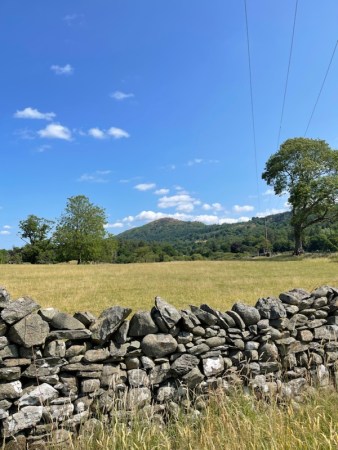
There is always a poignancy about meeting up on the final day of one of the Silent Eye weekends. So much has been shared that it seems impossible that the beginning was only two days before. Everyone arrives ready to depart at the end of the morning, or – if they have the luxury of another hour or two – at the end of the final lunch. Many have journeys that will take up most of the day.
It’s a mellow time, but also one full of reflection. Often, new friendships have been made, and there is that sheer intensity of ‘being here’ and having shared something wonderful.
It’s important to pick a Sunday morning location that facilitates this; that gives a lot but allows an easy departure, too.
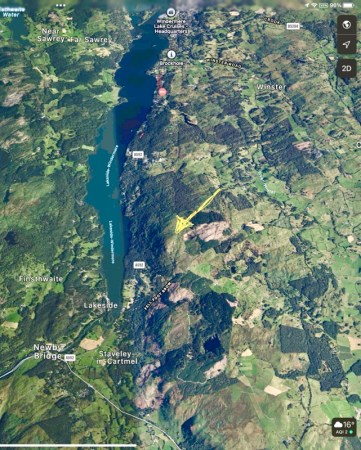
From nearby Fell Foot Park, Gummer’s How looks like a half-day climb. But there’s a road that cuts across the hill and does most of the work, leaving a walk of about 45 minutes. The ample car park also takes away the stress of finding safe places to leave what, at this stage, is a small convoy of homeward-bound vehicles.

A herd of long-horn cattle share the lower part of the path.
The path begins with a gentle climb until you cross a stream, when it suddenly becomes much steeper and requires a determined push upwards…
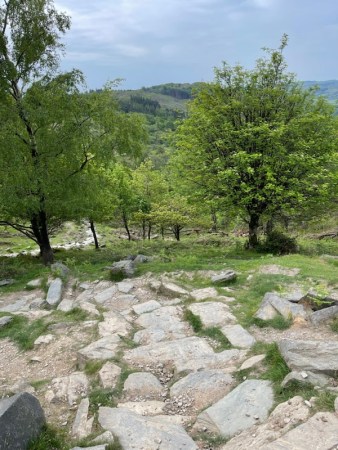
At this point the rocks become more like ‘steps’ until the way forward opens up and levels out.
Gummer’s How is popular with school trips. I’ve heard many a teacher say, “So this is up to you… You can take a gentler curve to the right and approach the summit using a longer path … or you can just go at the scramble in front of you!”

The school kids – fit young bands of elastic – usually go right for it.
I’ve done both. The scramble is more prone to error. The day before had been a hard walk, so I recommended the gentler ascent, and we all took it. Once, again, the weather was beautiful and the climb a joy.
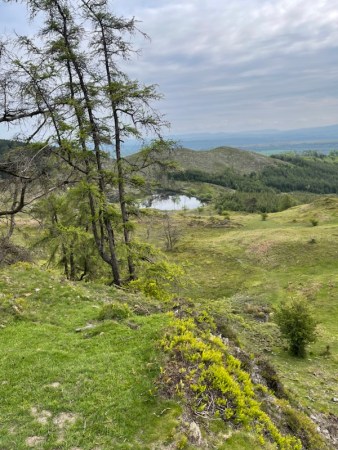
The semi-circular way skirts the side of the peak, revealing a delightful landscape of forest and valley below to the east and towards Winster. This is unseen from the peak and provides a reward for the more cautious choice.

There is a short scramble up the side of a limestone boulder, then the path opens up into a curving meadow, and the peak is visible ahead.
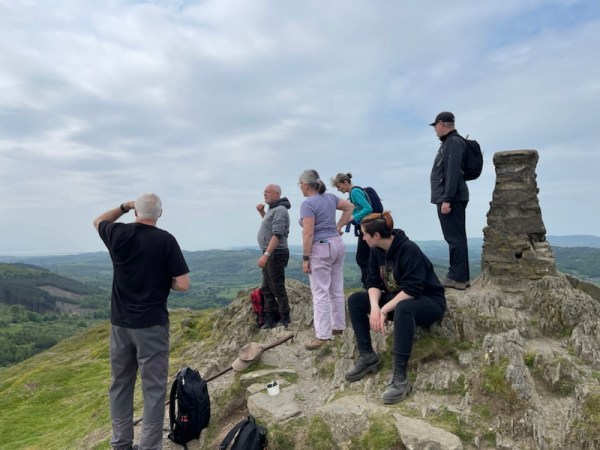
The view from the peak and its old ‘trig-point’ – long ago replaced by GPS signals – is one of the widest and most informative in the Lakes.
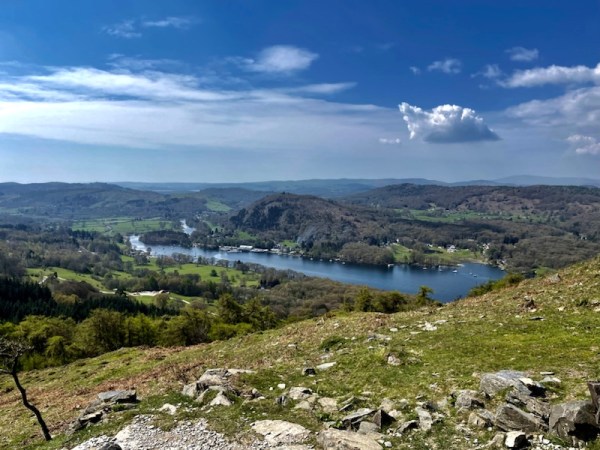
Lake Windermere is partly visible below, but I was planning to take us down to a nearby edge from which the whole ten-mile length of the lake could be seen.
Look south (left in the photos) and you can see along the line of the A590 to the Hoad Monument at Ulverston and the edges of Barrow-in-Furness in the far distance.

Once everyone had drunk their fill of the views from the peak, I led the party down towards the edge of the upper meadow to where the land drops away and the whole lake comes suddenly into view.
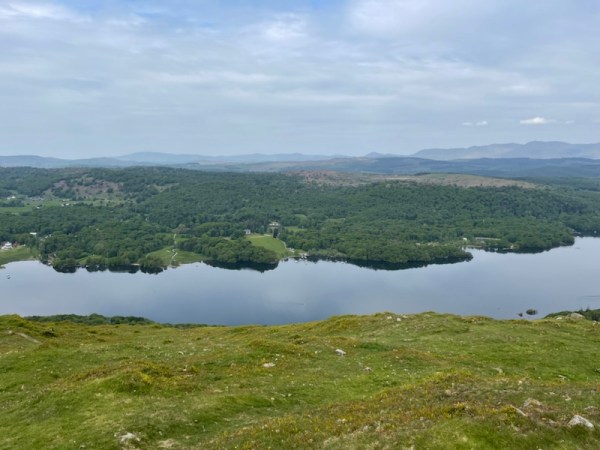
It’s a ‘what was that!’ moment! Everyone stopped, surprised that the Gummer’s How peak was not the most spectacular view, after all.
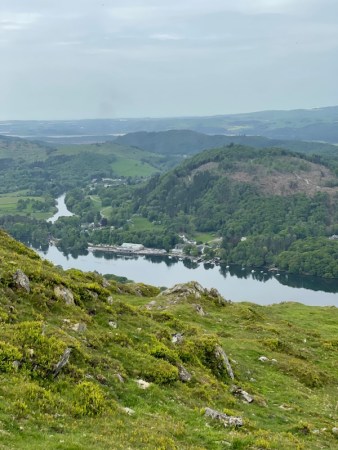
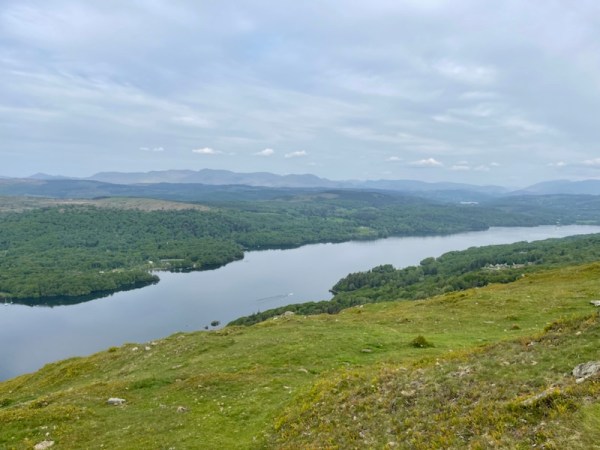
It was time to bring things to a close. We gathered just back from the sheer drop of the viewing edge, in a gentle hollow where we could review our weekend and carry out our final discussions.
We had one last part of the workshop to carry out: the final assembly together of three stones we had each used to signify the three energy centres of belly, heart and head. We would take these away – as charged and active tools for our own use.
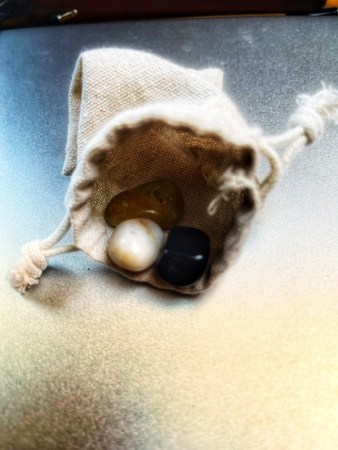
With a final use of our Mudra – a hand ritual that we had used throughout the weekend, we packed our ‘now-precious’ stones into bags and pockets and made our way down the mountain.
Everyone agreed it had been a meaningful and fun weekend. We had tested ourselves against the landscape and emerged a close band of companions with a shared quest. I knew the memories would keep coming back to everyone in the weeks and even months ahead.

And the May weather had blessed us with the perfect experience of one of Lakeland’s finest landscapes.
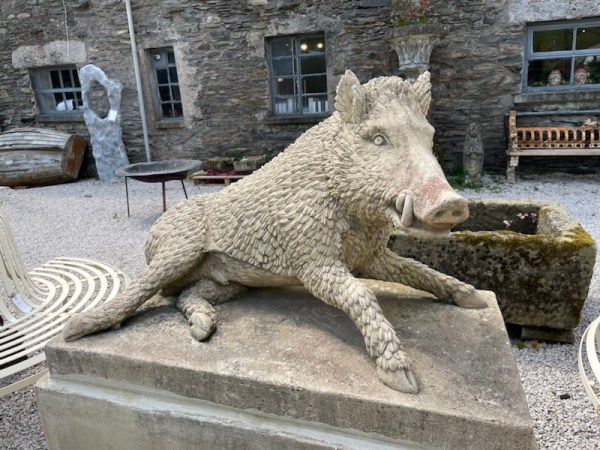
Some were able to stay for a snack lunch at the Yew Tree Barn, not far away, others had to get off to begin long journeys home.
None of us really wanted to leave…
Surround yourself with beauty … and it will do the rest.
Ancient Sufi Wisdom
Before departing, we discussed the ideas for next May’s workshop. The plan is to move the centre of action northwards, to Wordsworth’s home landscapes around the town of Grasmere. We are likely to use Ambleside as a base of operations as it’s a bigger town, with more accommodation and cafes. More details to follow, here, as it takes shape.
The provisional title is ‘The Magical Landscapes of Wordsworth’. We will use extracts from his mystical encounters with nature to inspire us as we wander around his most loved hills and lakes.
The dates will be the weekend of 17-24 May, 2024.
To be added to our mailing list for this event, and stay abreast of developments, send an email to rivingtide@gmail.com
This is Part Five, the concluding post.
©Stephen Tanham 2023
Stephen Tanham is a Director of the Silent Eye, a journey through the forest of personality to the dawn of Being.
http://www.thesilenteye.co.uk and http://www.suningemini.blog


 Sun in Gemini
Looks like a fruitful weekend. Such a perfect setting. Well done, all of you.
LikeLiked by 1 person
Thank you, Darlene. It was a joyous weekend 😄
LikeLiked by 1 person