
Sometimes, you just have to… thank you, Geoff. I laughed through two cups of tea.
Share this:


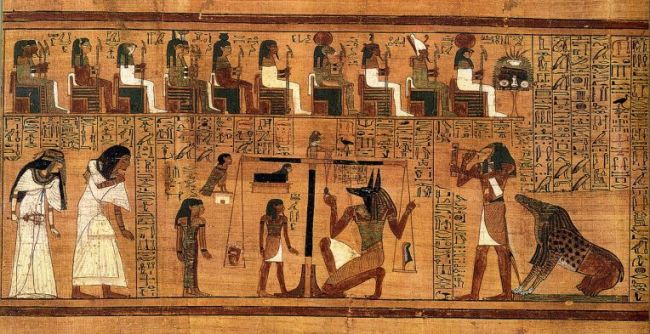
“No…! Really? That’s terrible…” It may well have been, but I doubt the subject of their gossip would have appreciated the evident relish with which the two women were discussing her misfortunes. I wasn’t eavesdropping, the strident voices were inescapable in the waiting room.
“Must be karma…” She folded her hands on her bag and sat back, nodding sagely.
“Yeah,” the lady almost licked her lips, “She must have done something really awful in a past life to deserve all that…” Here we go again, I thought, itching, as always, to jump into the conversation on that one subject, at least. Then, I suppose they would say the same of me…
It is no secret that I have fulfilled the criteria of the infamous ‘Chinese curse’ and lived in ‘interesting times’. What with one thing and another, life has never had chance to become monotonous, though…
View original post 571 more words
Share this:

+ #Silenti, Ancient Sacred Sites, Celtic Christianity, Consciousness, esoteric psychology, Fear, landscapes, Silent Eye School
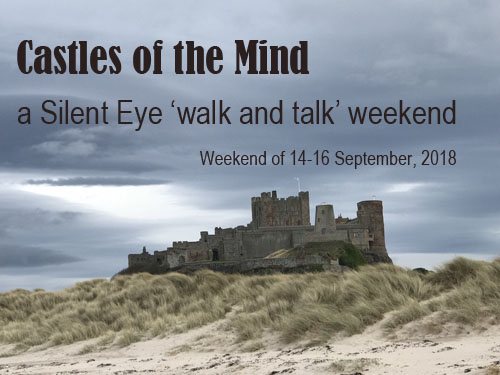
Castles of the mind
by Steve Tanham

Do we have ‘castles of the mind’?
Traditionally, ancient castles were built where there was trouble… Do we have the equivalent in our minds and emotions? Have we, over the course of our lives, built up strong fortifications with which to repel those intrusions which, as children, we considered frightening?
The foundations for such things can begin very early, and be formed of some very primitive fears and, even, strong dislikes. That dark green colour of the man in the long raincoat who collected money and caused mother great distress. The child would see the pain of a caring parent whose finances were stretched to the limit; the deeper truth that it was a door-to-door insurance man, making his Friday call in time to tap into the new pay packet would not be seen until later in life… but the coloured raincoat would be remembered…
We smile at such memories, now, but their effects can linger, unseen, becoming the bedrock of fear and prejudice.
Fear is a topical subject. We live in a world where some of the artificial ‘bogeymen’ have taken flesh, become leaders of what we assumed were states governed by some sort of ‘reasonableness’. When that is blown away, we are left staring at the ragged ruin of the personal safety blanket behind which we have lived most of our lives.
We’d be living a life at the edge if what we did, individually, could repel the kind of boarders that strut their aggression and lack of compassion on the world stage, today. But confronting those fears in our own lives, and holding them up to the light of adult reason and mature feelings is an essential practice for anyone treading a ‘non-fluffy’ mystical path.

To do this alone is very difficult. To do it in a group of trusted friends, new and old, is an empowering thing. In the Silent Eye, we offer this when we can construct an environment that is conducive to trust and empathy, and in which we can share examples of these powerful structures in our personal histories. We are modern mystics, not psychotherapists. Our method is for each of us to work with their own individuality to increase stability and confidence – enough to invite the deeper parts of ourselves to extend their loving reach into our everyday ‘selves’.
The ‘borderlands’ between our carefully-controlled ‘normality’ and the effects of those early experiences are the places where we can widen the paths of light which drive mature and reflective energy into the murky places of unresolved immaturity.
So, we thought, why not run one of our ‘walk and talk’ weekends in a part of the UK associated with borderland of its own?
Northumberland is one of Britain’s most wild and beautiful counties. It shares the Scottish border with Cumbria in the West and extends, on the map, far into what appears to be Scotland. Until Anglo-Saxon times it was an independent kingdom, and later, was the seat of important families whose role was to ‘police’ the borderlands from such castles as Alnwick (home of the Percy family) and Bambrugh.

Northumberland’s landscapes vary from rolling hills and river valleys, to wild coastlines and castles – castles which have been used to enforce a borderland between the Scots and the English for hundreds of years. Thankfully, things are more peaceful, now, but the history remains written in the land…
Not everything in this ancient landscape was devoted to warfare. The island of Lindisfarne, which will form an important part of the weekend, is famous as one of the original homes of British Celtic Christianity.
Our ‘walk and talk’ events are friendly and informal. We ask those attending to bring one or two readings from their favourite books, poems, or other sources of inspiration. We listen and talk… and share. If someone is ready to enter their personal borderlands, we hold their hand and walk with them.
The cost per attendee is £50.00. This is an administrative cost, only. All personal costs and booking, such as hotels and meals are the responsibility of those attending. Meals are generally shared and the cost divided between those partaking.
Come and join us for our September event. Weekend of 14-16 September, 2018, based in the beautiful town of Seahouses on the Northumbrian Coast.
To register your interest, send us an email at rivingtide@gmail.com.
Stephen Tanham is a director of the Silent Eye School of Consciousness, a not-for-profit organisation that helps people find the reality and essence of their existence via low-cost supervised correspondence courses.
His personal blog, Sun in Gemini, is at stevetanham.wordpress.com
©Stephen Tanham, Silent Eye School of Consciousness.
Share this:


She stops, the gentle collie
Tasting the air at the breakwater’s end
The day in the car forgotten
Enchanted by the dingle ching
Of cables and pennants
The hiss of moonlight on cold sea
The stroking breeze from the eastern sky
—
And, suddenly, I am thirteen
And the sea, unseen
And the night, unkissed
Have come for me…
—-
©Stephen Tanham
Share this:


Have you ever stopped for a minute to consider how much you do because of other people? Not for others, but because of them? There’s a difference, and it is a big one. Doing ‘for’ can have many motivations; love, duty, obligation, care, to name but a few… But what about the ‘because’? And how easy is it to separate the two? The lines between are often blurred and what we grumble that we have to do because of others, we may be doing for them… while things we think we do for others, or even for ourselves are often motivated by more subtle reasons.
I was discussing the question with Ani as I was tidying up today. She is an intelligent listener and a great leveller of ego. My housework always used to be done first thing in the morning… I’d get up early to make sure it was…
View original post 982 more words
Share this:


*
For what doth it profit a nation,
To gain the world,
But lose its land?
Share this:

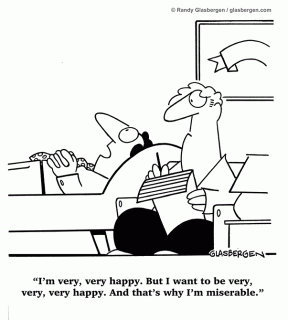 Wouldn’t it be great if we all knew how to live and love without needing to be told how? But looking around, it begins to seem as if we have lost that knack. Instead, we have coaches, psychologists, psychiatrists, mentors, therapists… and look back with almost romantic nostalgia upon simpler times, when the world wasn’t mad and we did not need professional help.
I contend that the longing is misplaced. Therapists and teachers have always been around, we have always needed them…we just called them by a different name. Most of them didn’t specialise in one fragment of human need, but brought a lifetime’s experience to the problem at hand. We called them elders, wise-women, druids, minstrels, priests or storytellers.
The practical skills would be taught by those who knew best. Granny would teach you how to spin or make bread, while grandfather told tales of the hunt or plough…
View original post 369 more words
Share this:


Sitting with irrational fears is worth an exploration. This is what came through today:
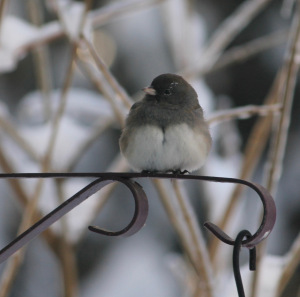
Relax into the faith of unknowing
Time whispers promises to those who wait
Unfolding through the now of the eternal present
Unwraps the gift of the self
♥
Let go of the shield of delusions
Fear gripping the heart wears a false hand
On a body of decaying wants
♥
To shed the shell of the outer
Examine the pieces that you have stitched together
Then pull the threads through truth
And let the lost voice sing
Its forgotten song
Share this:

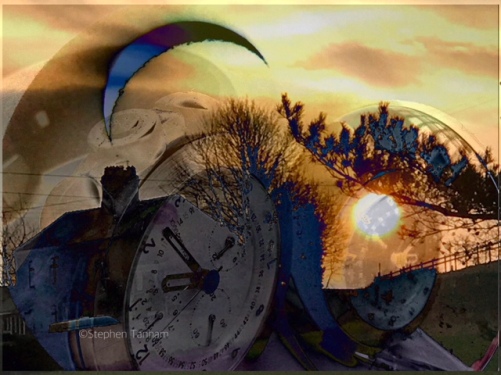
What does it mean to have ‘free will’?
It’s a phrase that is used very casually, as though it carries an identical meaning to us all. It’s particularly important if you want to pursue a path of mystical self-development, since the whole idea of ‘will’ is a central concept of work on the self.
What is will? We take its very existence for granted, but we should be clear in our own minds as to what we mean by it. We could say that will prevails. It is a kind of force that determines what happens next – as much as that is under our control. We will return to this subtlety of this point at the end of this short post.
It would be useless, as King Canute is reputed to have done, to exercise our will to hold back the incoming tide. Actually, Canute was a wise ruler and was trying to show that the divine right of Kings had limits… History can have a cruel ‘will’ of its own. This does imply a certain amount of wisdom about how we use our will: we have to know what is possible, or potentially so, whether or not we have the force to succeed. This, in itself is curious, as it implies we have some foreknowledge of our likely success in the exercise of our willed force. Do we, then chose to fail when exercising ordinary will power? Or is there some form of higher ‘seeing’ that knows what can be done, uniquely, in the personal now?
We can say we are successful in using will – for example in not having that heavy pudding that will add more weight to our already- January rich waistlines; or we can say we failed to exercise our willpower in refusing it. This is curious, since it implies that we are, somehow, split beings: one part doing the ‘right’ thing, the other the wrong or weaker one.
From a cultural point of view, this is serious stuff, since the very idea of will seems to be bound up with doing the ‘right’ thing, rather than the prevailing of a chosen and pleasant course of action (having the pudding). The cultural derivation is obvious: we live in societies that consider themselves to have a code of proper conduct. There are rules and expectations governing everything from personal hygiene to political and humanitarian conduct. It is not easy to go against any of these ‘norms’ and stay an accepted and respected member of that society.
In the human definition, to have a will implies that the entity wishing to use will is alive. Aliveness is a whole topic, in itself; but its origin as a concept begins with organic persistence. An entity is alive because it persists; and in a self-renewing form that gives it an identity. This is true from the single cell, right up to the most complex organisms, such as mankind. Something with an identity can belong to a family, and then its will is expected to conform to the expectations (and receive the praise) for actions supporting that group.
There are two things to carry forward here: the first is the mystery of the dual approach to our will: the having or not having that pudding. The second is the simple truth that any real form of mystical development requires the individual to step outside their ‘tribe’ and attempt to see things from a different (and hopefully truer) perspective. No harm is intended with the latter, but it can be painful to arrive at a set of values that are, from the new perspective, more ‘grown up’ that those inherited from the family or, more likely, the tribe.
The idea that we have conflicting wills is not simply that of organic hunger versus waistline and looking good. When we begin our mystical path, we begin to sense a more subtle world; one which has a very different set of (very gentle) expectations. These carry no prohibitions save that of belonging to something we have selected as an individual, rather than that received from a group.
Here, we can see a trap: a mystical training organisation that expects you to absorb its dogma without question is not behaving in a truly mystical way. Self-discipline is always a part of good things, but there is a fine line between dogma and a rigorous basic training. The western mind, with its industrialised psychology, is not very good at following group-disciplined paths.
A few years into our training, we may encounter the final consideration of will: that the universe is vividly alive, and that this vast life-force has a will of its own. If we have been successful in making our training our own and not just someone else’s dogma, there will have developed the first stages of a new level of consciousness in which the highest level of our will finds itself attuned to the needs of this vast intelligence. Then, the perception of will at all levels becomes a very different vision. We begin to see that the greatest freedom of will is to belong to something that works on a vast landscape of all-mind and that belonging to this is no loss of individuality at all.
Stephen Tanham is a director of the Silent Eye School of Consciousness, a not-for-profit organisation that helps people find the reality and essence of their existence via low-cost supervised correspondence courses.
His personal blog, Sun in Gemini, is at stevetanham.wordpress.com
©️Stephen Tanham.
Share this:

We meet up for a bowl and brew
When winter days are short
And darkness fills the edge of hours
And shortens lives too far apart
🔻
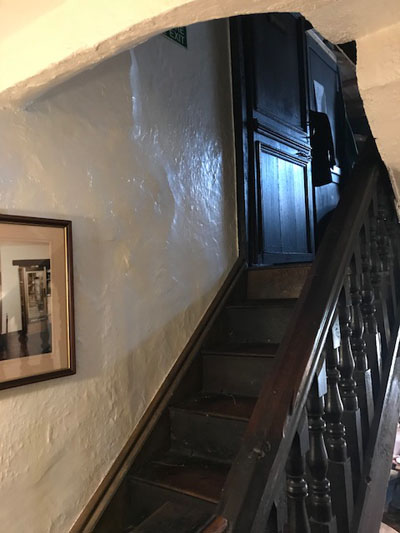
The muddy Collie, winding stairs
Are worth the sodden ball and park
The panting dog with coursing blood
Now flops, no more to chase and bark
🔻
I leave the table free for you
While shaking coat of leaves
The dripping heap disturbs no one
Tucked high in writer’s eaves
🔻
The notebook freshly muddied
Now flaps open, dripped anew
Ideas spark as coffee starts
To focus hidden inner view
🔻
The years are hundreds since
This nook was crafted first
How many pens have scribbled here
How many hearts have burst?
🔻
So take this chair, wiped freshly dry
And sup with me a while
And let us conjure worlds anew
And bring that winter smile…
🔻
©Stephen Tanham
Share this:

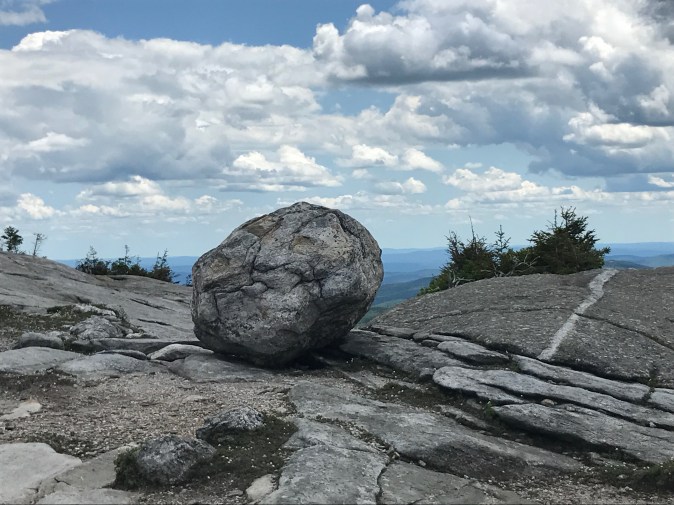 Stone Guardian of a Mountain
This is a post I have been wanting to write for quite some time, but have put off because it can be such a controversial topic. I don’t wish to offend or demean anyone, and I think this is why I also feel so compelled to write this. There are such strong opinions on this topic that it often spurs a “holier than thou mentality” for some and a defensive response in others.
I do not believe, morally speaking, one is better than the other. Some of the wisest and most reverent individuals I know are omnivores. I don’t believe they are better than anyone else, and they don’t either. They share a belief in the Native cultures on Earth, which is one that I share as well: That all life is sacred. The consciousness of Life moves through each of us, just as it…
View original post 544 more words


 Sun in Gemini
You must be logged in to post a comment.