

*
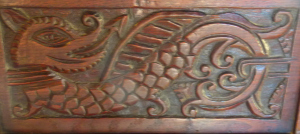
“The Elements, then, were not links in a simple chain but acted more as ‘inherent principles’ within the chain as a whole…”
*

*
“Similarly, the perfected parts of inanimate nature, operated at heights far removed from what might be termed the lower specimens of the animate classes…”
*

*
“The stars and constellations were linked, not with plants and beasts but, with angels.” …
*
*
Source: Stuart France
Share this:

Share this:

+ #Silenti, Ancient Landscapes, Ancient Sacred Sites, Consciousness, Silent Eye School, Silent Eye Workshops
Riddles of the Night – Templar Shadows (3)
by Steve Tanham
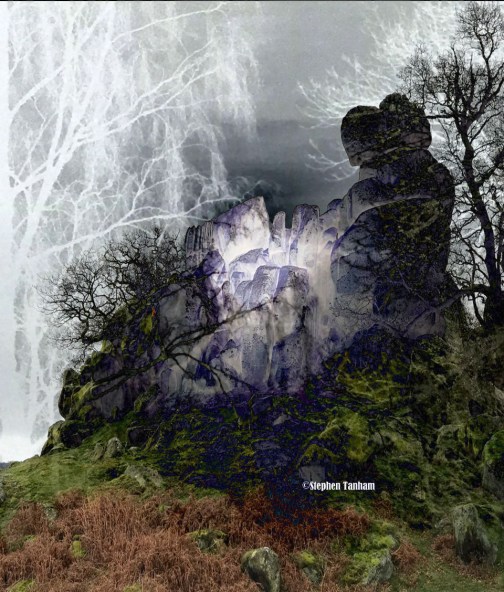
A bastard’s bastard, he would never know that he carried the blood of the Templars in his veins. That was only speculated after his death; being proved, later, by the researcher who followed his short life.
He did it because he was a runner…
Hardship was the key; hardship and the words his cruel companions at the parish school carved on his leg with a blunt knife, the day he won the local race, aged seven. As he sat, crying in the shadows, he lamented the departure, that year, of his father, who might between drunken bouts, have defended him. His mother had surrendered to the bitter cold the previous winter.
The wound in the thigh, though infected, had healed, but its shadow had never entirely faded. The yellow and pink scar of three words would remain, and the pain of the memory with it.
He bettered himself, using scripture to win favours, feeling the stories in the Bible, rather than understanding them with his mind. It brought him comfort and an inner knowing that he was touching the truth. Sometimes that truth contradicted the words, like the walls of an old house falling down and revealing that it had always concealed an intact and pristine structure, behind; a structure that never faded.
The vicar, his only real friend, watched the dirty bundle of rags talking about scripture. He used to smile and shake his head as the boy’s fantasies took flight, sometimes adding songs he would make up on the spot. He was a singer, too; this runner… The wooden hut in the gulley high in the hills would sometimes ring with moonlit song far into the night. As the pupils left the scripture classes the vicar would often slip a wrapped parcel of food into the boy’s hand, winking and sealing his lips with a gesture.
The boy loved the moon – it spoke to him; calling him to run beneath the shiny blackness, especially in the Winter. Beneath its stark light, he learned things that no-one else had thought to teach him. He learned about how the land changed under the moon; learned to read a softly-lit landscape. He learned about the great darkening, which lasted from the middle of Summer to the darkest day in the Winter, and how it reversed from that point of darkness to race towards the fullness of warmth, the great brightening.
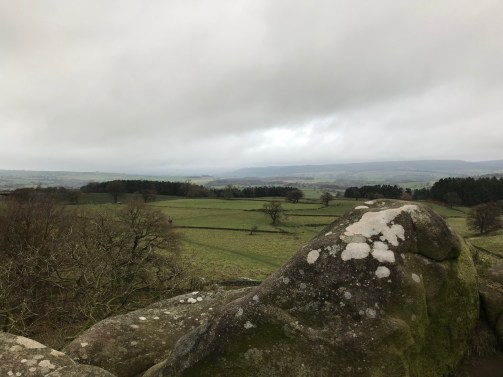
Fullness was a word he thought of often. He knew it had many meanings; and some of them spoke of the hidden house behind the crumbling ruins.
The Moon taught him about songs. Everything had a song; and beneath the moon was the special place to sing. Then, all the plants and creatures would listen to the song.
The moon always called to him at the end of the darkening. It rejoiced that the time of turning was at hand. It needed a runner to take that joy from the high rocks behind the village to the special place. It needed a flame-runner to light the Sun with the coldest of light that would transform into the warmest of days.
He felt the moonlight on his skin that night, knew it was time…
At the top of the rocks, he washed in the pool, taking off all his clothes and cleaning them as best he could. Then he laid them out in the moonlight, spread them on the high rocks to absorb the cold light, the light that would wrap his skin, making him silver, inside. He shivered with the cold as he dressed, again, but the moon comforted him, telling him he would soon be warm as he raced across the land.
And then he ran, like a silver wind runs, like a half seen bird at the edge of consciousness. And the great stones drew him across the silver land under the moon. The stones were diminished; there had been nine of them in the oldest of days, but now there were only four. But the four sang so loud as the silver boy raced across the silver land that they made up for their fallen brothers and sisters.
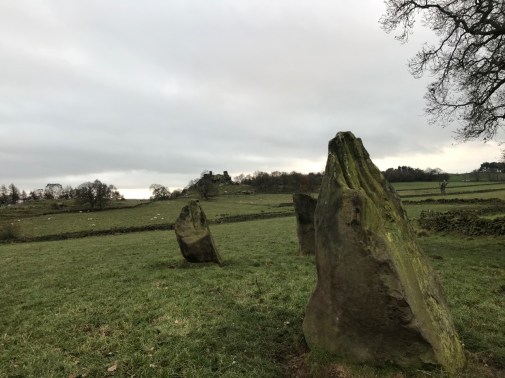
They made a gift of a new chant while he ran around them. The chant grew and grew in his heart and he sped from the circle with a cry of pure joy, like a stone flung from a sling, carrying the chant like an arrow to the place of the twin pinnacles on the far side of the meadow, opposite the singing stones.
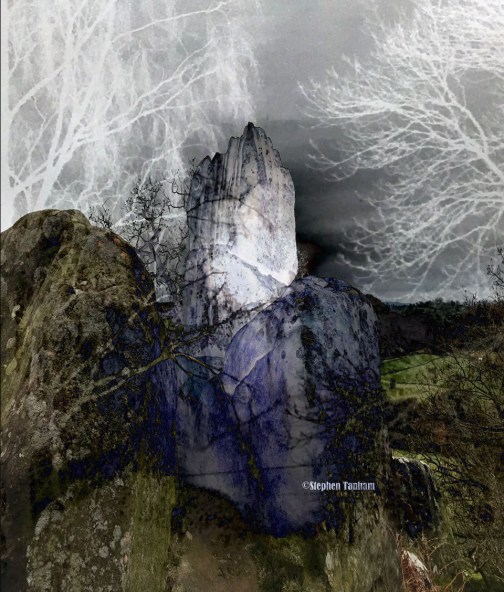
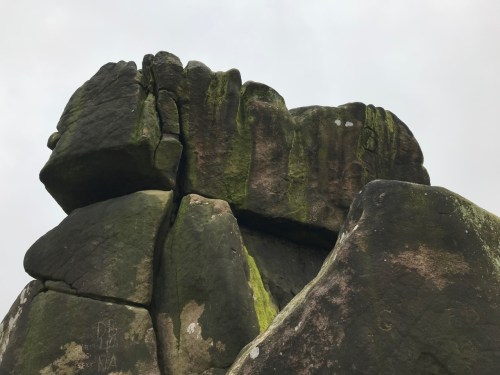
The place of the twin pinnacles was the special place, the place that the Moon had shown him in the darkness, leading him with pale light until he was on top of the rocks.
Then the Moon had come out from the dark clouds and revealed the Place of the Hermit far below and along the cliff. But the Moon had always told him that the Place of the Hermit was forbidden until he was ready, until he would make that special journey to complete the run of his life.

This did not frighten him, for every time he saw the place of the twin pinnacles his heart grew, and the fullness inside him increased, and there was nothing in his world that was better than that.
As he climbed the huge boulders of the twin pinnacles, the Moon shone extra bright and showed him the hidden cube in the rocks and his heart knew where the new song had to go…
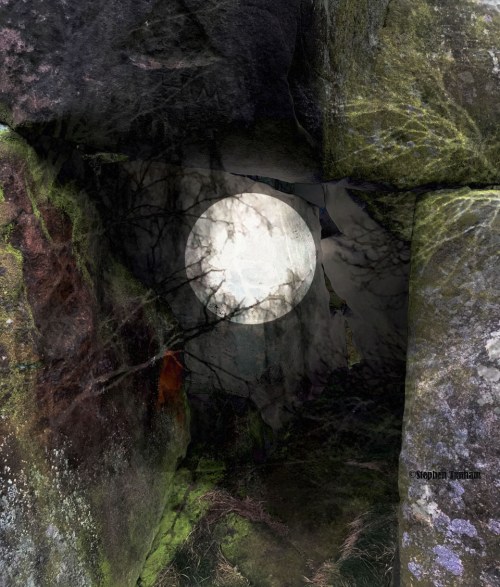
Only the boy and the Moon and the animals and plants were watching when the stones of the pinnacles came alive.
Finished with the chant the boy danced with delight up the hidden path to the very top of the rocks and gazed out on the moon which now stood before him, silent and saluting in the dark space made bright, the purpose fulfilled.
The stones were awakened, again. The cold darkness would pass to warmth, the earth would be fruitful and the plants would grow and feed the village.
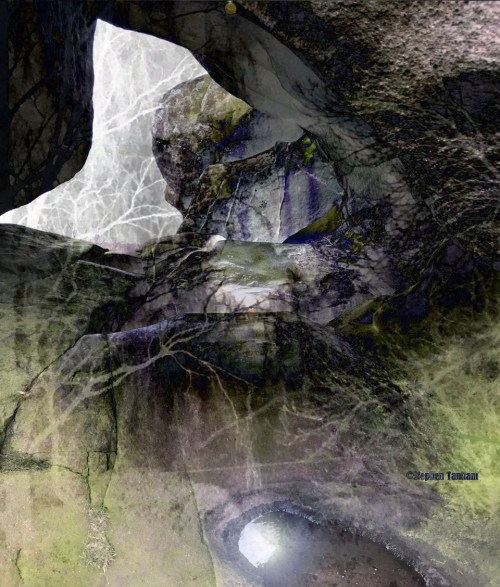
The boy had never felt so much fullness. He thought that his heart would burst. In his joy he spun around on the top of the world and his foot slipped on the ice that had been water. Down the boy slid, to the very edge of the cliff and over into the blackness. No sound escaped his lips as he crashed to the rocks, below, broken but still alive.
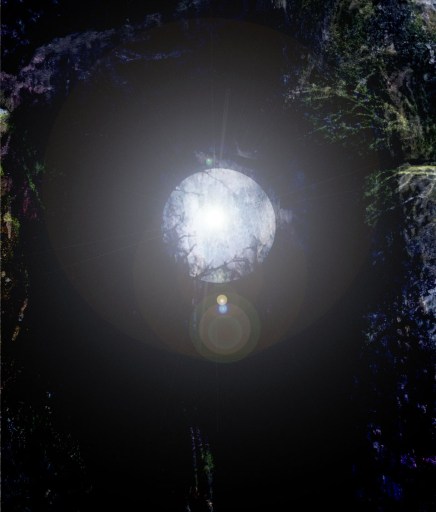
There was enough light in the Hermit’s Cave to make out the shape carved into the wall. With arms that should not have functioned, and the help of the slippery moon, he pulled himself to where he could see the figure that the Hermit had carved in the hard rock. The crucified arms of the figure seemed to detach themselves and came forward to hold the child. The boy had thought the world could not contain more fullness… but he had been wrong.
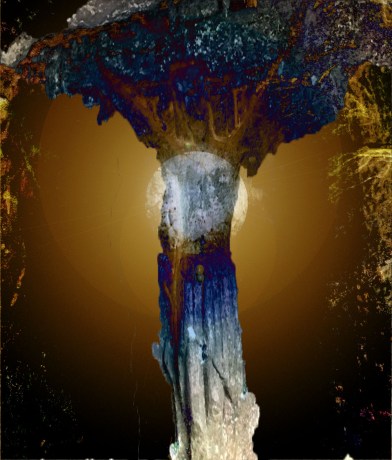
The vicar found him in the morning, after running through the pre-dawn in the grey light. The dream had shown him where the child lay. As he approached the Hermit’s cave, seeing the small dead figure propped up against the stone wall, he began to sob. But the expression on the boy’s face contained no pain, nor spoke of death.
As he stooped to pick up the thin body in his strong arms, a shaft of sunlight broke through the clouds and onto the rock face. Through the torn material of the boy’s trousers, the words ‘Mock the Beggar‘ revealed their scarred existence.
The vicar spun the child around to face the rising sun, whose pale golden light bathed them both.
——-
This is a work of fiction, but the landscape in which it is set is real. The Riddles of the Night weekend, run by Stuart France and Sue Vincent took us to Robin Hood’s Stride and the Circle of Nine Stones (which has four). The alternative name for Robin Hood’s Stride is Mock Beggar’s Hall. The origin of this name is uncertain. The Hermit’s Cave with the carved figure of Christ crucified is part of the rocks known as Robin Hood’s Stride.
End Part Three.
Other parts in this series of blogs about the Riddles of the Night weekend:
Stephen Tanham is a director of the Silent Eye School of Consciousness, a not-for-profit organisation that helps people find the reality and essence of their existence via low-cost supervised correspondence courses.
His personal blog, Sun in Gemini, is at stevetanham.wordpress.com
©️Stephen Tanham.
Share this:


 A Rose Opens to Light
I have started working with the mantra Aham Prema, which translated into English means “I am Divine Love.” 54 repetitions with the mala beads brings my voice outside of myself to a state beyond insecurity. My body becomes a humming vibration of energy amplified by the back of my throat. Constriction releases as I settle into the frequency of the ancient notes of Sanskrit.
“I am Divine Love.” Aham Prema.
Quite some time ago, I was sitting in a pub with a friend of mine. We were talking about yoga, and she was telling me about how it brings her to a state of discomfort. “It’s like welcoming the divine into your body,” she stated.
Aham Prema. “I am Divine Love.”
Is this not what we all seek? Yoga, and all that it encompasses, for it is not merely a series of poses, asks us to…
View original post 240 more words
Share this:

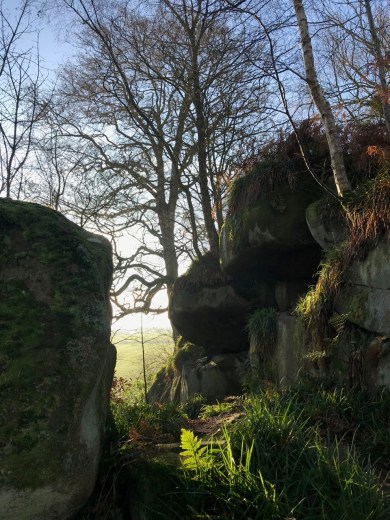
Imagine a tiny village, just a few miles from a major Derbyshire town, yet unknown to most people passing by on the busy road between Bakewell and Matlock. The village contains an ancient mound of boulders of millstone grit layered on the underlying limestone base – typical of this part of the White Peak.
Aside from its geology, the intricate and serpentine rocks hold a deeper mystery. They show signs of being used for initiatory purposes for at least the past six thousand years.
Initiation is a process whereby an experience is arranged for an incoming person who has proved themselves worthy of a higher, and life-changing, viewpoint. The selected person(s) is led through a series of strange encounters in order to ‘open’ their being to higher spiritual truths. If successful, the arranged and symbolic nature of what is experienced will trigger a different relationship with the world for that person. Although the deliberate arrangement of circumstance is ‘contrived’ the internal experience of those going through such initiations is not…
Welcome to Rowtor Rocks, Birchover, a tiny dot on the map between Bakewell and Youlgreave… with a very mysterious past. Let us explore it, together…


We look up at the mound of rocks, which have that unique shape characteristic of the weathered gritstone formations in this part of Britain. Many of them are covered in lichen and mosses which shines bright green in the December sunshine. Prompted by our guides, Stuart and Sue, we begin to climb in silence. Even at the lower levels of the mound there are caves – caves which show substantial evidence of workings. Regardless of its isolation, this place has been the centre of something intense and historically ancient… Carved in the stones here are rings and ‘cup-marks’ from the neolithic era – thousands of years ago.
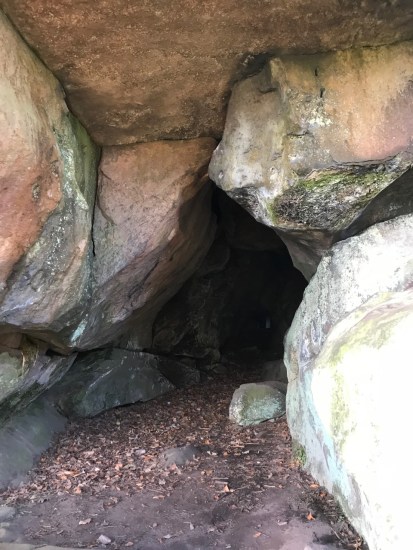
Our guides stop us beside a font, clearly carved out of the rocks and beautifully symmetrical. The vessel is filled with rainwater. In our mind’s eye a young figure dressed in white skins is led to the water and ritually cleansed of his or her past. There is silence on more than just the physical dimension. The candidate – or to use an more appropriate word, the initiand, enters a world between two worlds, aware that their past is slipping away and that they cannot know what lies ahead – the unknowing is the essence of the process that will elevate…

Our role is to witness. We watch as the initiand is led to the base of the cliff face and shown the narrow and treacherous path by which they must ascend to the level of the chambers, above. They turn, one last time, and look at us. We remember the nature of the feeling behind those eyes, but turn away. The spiritual process must work its magic, and aloneness is part of it. Their experience must be real or the psychological and spiritual ‘opening’ will not occur. We hear the unsure scrambling of able feet as the one whose fate we guard comes to terms with the physically difficult start of their solo journey up the rocks.
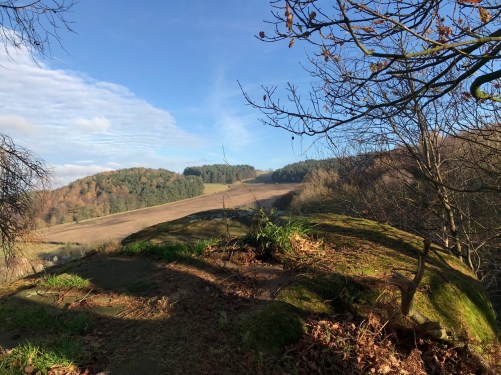
At the level of the first of the transition chambers we gather in silence. Our path here has been easy, the initiand’s is hard. We close our eyes and say a silent prayer that the very real danger faced is mastered, and inner readiness achieved. They cannot yet know the intensity of that holding that emanates from above them.

The temple chamber awaits us. The initiand emerges, breathless and wide-eyed from the climb, passes, tested into the sacred space, coming face to face with the twin pillars – simple-looking but the result of months of work during the seventeenth century. The initiand is given time to consider the significance; these rocks, set in place forever by nature, need no buttressing… the pillars represent the mastering and use of the polarities of life by human beings, the generation of goodness in the face of adversity… many other things that they will come to understand in the years of growing wisdom ahead. No explanations are given – they will come later, from within and without.
For now, they are simply brought into the presence…
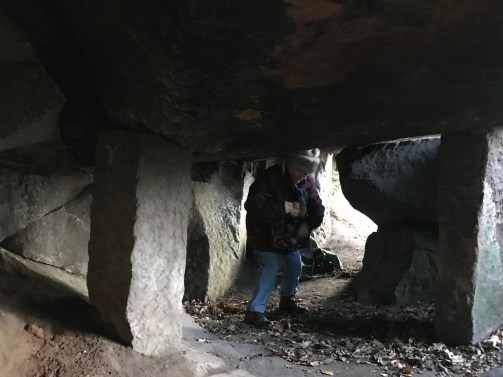
It shocks them when the cloth binding is placed over their eyes. Initially, they can see nothing, but, as we gather around them and light the flames, tiny flashes of light penetrate their darkness. Figures come and go, gently brushing against their immobile form; eventually settling into a pattern of eight sides. Our One purpose now has eight faces.
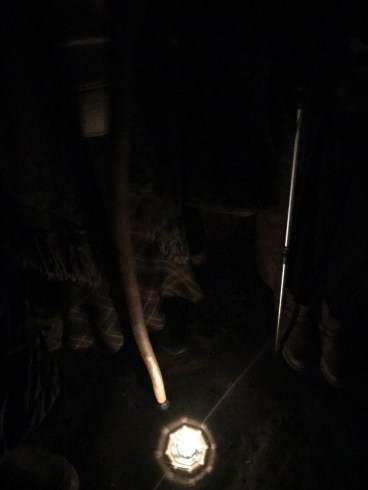
The Elder, whose purpose has been to block the light from the entrance, moves out onto the ledge. We withdraw from the partially-sighted one, but not before lighting the aromatic herbs whose smoke will fill the chamber.
No words are given. They must draw, now, on their own resources – including intuition. Outside, arranged in a curve that will greet and embrace them, we wait. We can picture the scene within: the swirling, sweet-smelling mists, the bright light creating a half image. We picture their progress as groping hands feel for the chamber’s wall; then the shock as a gentle hand takes their arm. The message of that moment will never be forgotten: In the fearful darkness you were not alone…
The gentle hands take the fingers from the harsh rock and guide the trembling figure towards the vertical eye of light. At the first sight of the hands emerging, the gathered group let out a sigh and reach for the stumbling one, taking the wrapped cloth from the eyes and head.
The glory of the new view of an old landscape is forever burned, with joy, into the newly-opened eyes. No words have been spoken, but much has been conveyed.
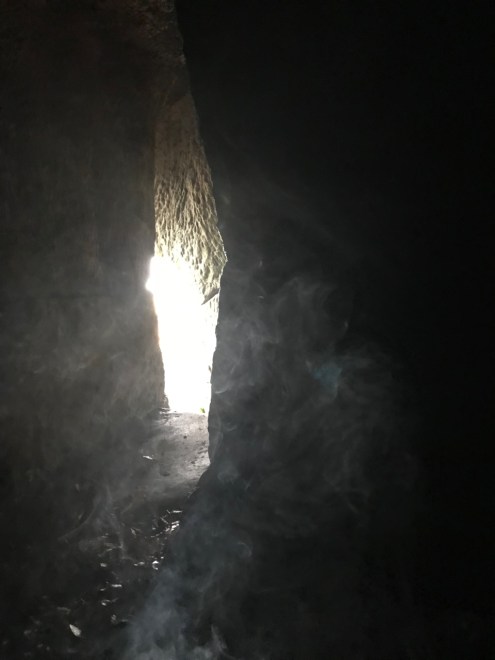
The respite is brief. The initiand is shown a narrow cleft leading back into the central rock and then upwards. The steps are steep and awkward. There is not room for both feet, and yet the ascent cannot begin until the body and its weight are committed to the climb. It is a paradox made physical. To get it wrong risks a painful fall onto hard stone, but there is no other way. Empowered by the emergence from the dark cave, the initiand throws his weight upon an upwardly-stretched leg and propels himself higher. The first step is everything; get that right and the momentum lets the legs return to normal function and the ascent is made.
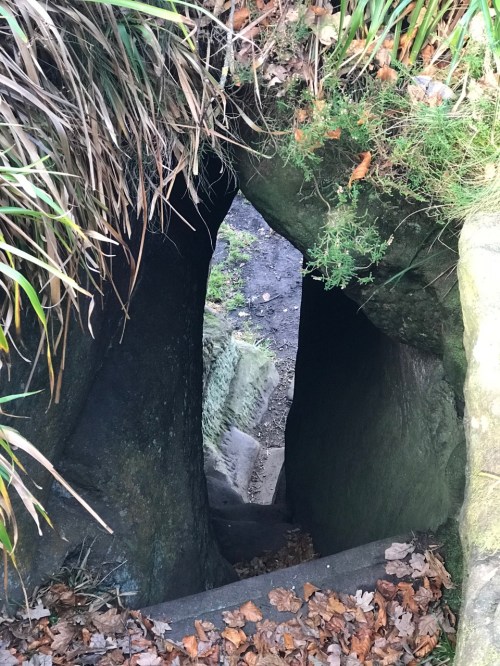
A new figure waits at the top of the flight. He takes the emergent one to a higher ledge where there sits a huge rock. Words are finally spoken. “Move the rock.” As witness, you watch the body stiffen, feel the habitual response: “How… It’s a heavy rock.” These are not voiced. no-one says this, but you can hear the mind’s words of doubt… always doubt.
The wise eyes nod in encouragement, indicating another sentiment: “Try, give no home to doubt…”
You watch as the initiand’s hesitant hands reach out to touch and then push the rock. You know what will happen, but the gentle hands do not. The Rocking Stone is one of many on the ancient mound. They are all miraculously balanced about a single point. With very little effort their entire mass can be pivoted and moved, falling back to their previous state when released. You watch the wonder in the eyes of the initiand. The message is clear: right knowledge can move the world…
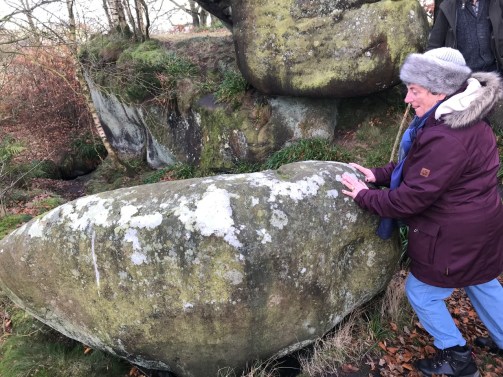
From the gullies, caves and paths they emerge, now – the others; the ones who were candidates for this rite in the past. They embrace the initiate; their heat is the clothing of love, of respect…most of all, of belonging
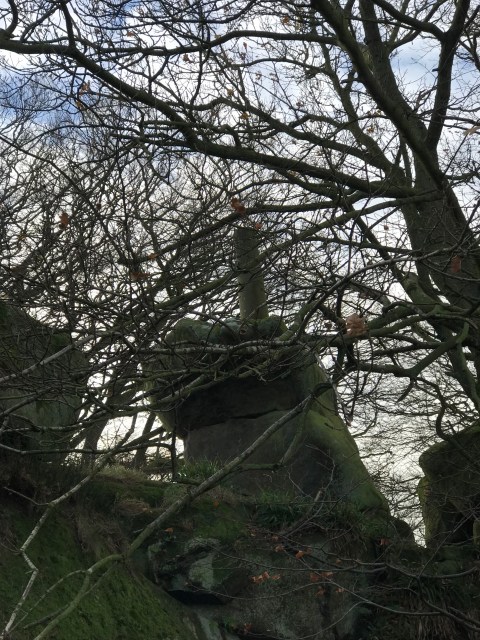
But such knowledge carries responsibility. The new initiate is taken around another spiral in the rocks. They are pointed at the highest point which is just ahead. It is pillar, a pillar that has been constructed half-broken… Or is it half-finished? Alone on the the top of the whole edifice, it points at the sky. The initiate is shown the faint path over the climbing rocks. The ascent is difficult and brings them back to look down at where you are gathered, below. There is nowhere else to go, now…

When the questing feet can go no further, the pillar remains a few feet out of reach. The initiate looks around for another way, but there is none. He cannot continue his quest.
Then there comes the sound of skilled footfalls on the rock. Before the initiate can react the thighs are grasped and hoisted. “Reach!” Comes the command as the body slaps flat to the topmost rock surface. Stretched fingers clutch at space, anguished that, still, the final few inches cannot be crossed…
“So it is for us all,” says the kind voice of the Elder, “but the presence of the Companion always takes us closer…”
The initiate is led down from the top rock. The embraces are warm and knowing. All watching have stood here. It is finished… for now. Everyone takes a final look at the high pillar, knowing the meaning, knowing the quest that will fire the life that follows: to take your world closer to the sky… to share the Work with others. Eventually, when the skills are many, to become an elder in the tribe, and one day complete the initiation of another young soul.
The initiatic reconstruction fills us all with wonder. We cannot know the exact details, but we know, without doubt, that we have sensed the heart of it.

Far below, next to a popular pub called the Druid Inn – the actual meeting point of the Ancient Order of Druids, a friendly society founded in 1781 – is the Church of St Michael, created in 1717 by Thomas Eyre, the owner of the lands around Birchover.
There is historical evidence of intermarriage between the families of the Eyres and the Foljambes, and the land here once belonged to the Templars…
To be here, is to feel that history.
One part of the wall of the church contains ancient stones which must have been recovered from the site. Something ancient has been at work, here, for a very long time…


These researches belong to the work of Sue Vincent and Stuart France. We were lucky enough to be the recipient of this very special weekend, an event that brought together, in a beautiful and living landscape, the fruit of their well-researched thoughts.
End Part Two.
Other parts in this series of blogs:
© Copyright Stephen Tanham
Share this:


Sue and Stuart opening the Riddles of the Night weekend at Baecca’s Well.
It began at Baecca’s Well…
Sue and Stuart have run many successful weekends in the course of the Silent Eye’s short history, but the start-point for this one had a rather mundane location, given the ancient and exotic hill-forts for which they are best known.
“We’ll meet at the far end of the Recreation Ground on the Matlock road just out of the centre of Bakewell…”
Recreation ground, I remember thinking, with a smile, when I read it. Which just goes to show how wrong you can be…
*
From Baecca’s Well
Via All Saint’s Spire
*
To a rocky height
That holds initiatory fire…
*
We’d never done this before: used clues like a treasure hunt to seed the next location in the ‘chase’ for knowledge. It worked really well. At the well, Stuart and Sue gave out the first envelope to be read, the text is above.
We were all standing around the stone edifice that marks the site of the ancient Baecca’s Well as we considered the words. The first clue was relatively easy, given that we had been told that the Friday afternoon was to be within Bakewell, the geographic base for the Riddles of the Night weekend.
Derbyshire is famous for its annual well-dressing festivals at the end of June each year. This ancient tradition goes back beyond recorded history; and its origins are not often discussed by the locals. Baecca’s Well is one of the sites used. Its location is only mundane from the perspective of its modern proximity to the large recreation area that borders on the large cattle market site. Between them, they cover many acres, so the visitor to Baecca’s Well is left standing in a far corner of a huge open space and beside a main road. The local council has done its best to offset this by surrounding the well with a stone-enclosure, with small garden.
The Derbyshire town of Bakewell is an absolute gem. In early December, with its lights twinkling all day, it feels as ‘Christmassy’ as you can get. If you run a workshop at this time of year, you have to allow for adverse weather. Bakewell offers some wonderful diversions (tea and Bakewell tart parlours, for example) which can make up for inclement weather… or you can just tough it out on the hills…
Fifteen minutes later, still on foot, we were climbing the hill towards Bakewell’s famous parish church. All Saints’ is built on Anglo-Saxon foundations. The present church was begun in the 12th century, but our two guides focussed us on developments in the 13th, when the present tower was constructed. We were pointed at that tower as a first clue by the use of a leminscate (the infinity symbol, resembling a figure 8)
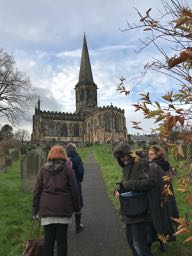
The eight-sided tower of All Saints was added in the 13th Century, and is very unusual…
The symbolism of the tower was to be the key to something very special about All Saints’: the use of eight-sided symmetry. The tower was the heart of the rebuilt church in the mid-13th century, a time of much speculation about the fate of the vast Knights Templar organisation, whose full wealth has never been traced, following their supposed extermination in France in 1313. Stuart’s latest post, here, goes into more detail using his usual excellent graphics.

The church of All Saints was restored under the sponsorship of Sir Godfrey Foljambe and his wife. A monument to them is dated 1377, which fits well with the Templar theories. Their coat of arms, below, adds to the evidence for a prosperous French connection.
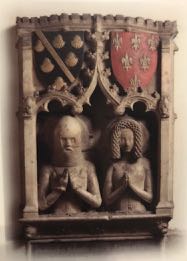
The crests combine the fleur-de-lys motif of the French Plantagenet house with the shells associated with the Templars’ protection of pilgrim routes to holy sites, such as Jerusalem and Santiago de Compostela.
Another unusual feature of the church is the use of St Michael in place of St George in the ‘dragon-slaying’ story associated with early English history. Additionally, the spear, which normally just touches the dragon, has it pierced in such a way that it pins the ‘beast’ to the inner frame of the enclosing wheel.
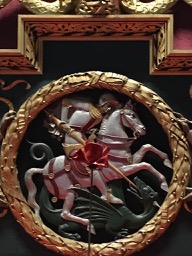
St Michael ‘pierces’ the dragon’s mouth, pinning it to the enclosing circle.
The ‘dragon-slaying’ motif is part of a spectacular reredos work, engraved in wood. We have studied this, before, and found it to be a very mystical image. Christianity has largely lost touch with its mystical past, but in images like this, the intimate sense that something deeper than a morality play is being taught is very strong.
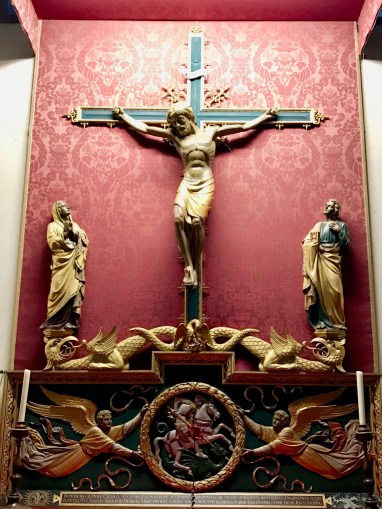
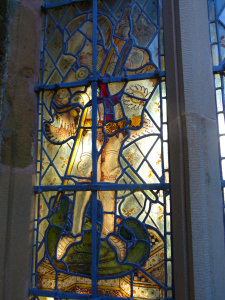
The reredos, upon which the crucified Christ rises from the ‘slain’ dragon within the circle. The Christ figure is supported by the higher dragons…
Were the elements of All Saints church all there was of these strange associations, the weekend’s search would have ended in Bakewell, but the many ancient sites around the town held some startling surprises, as our next clue hinted:
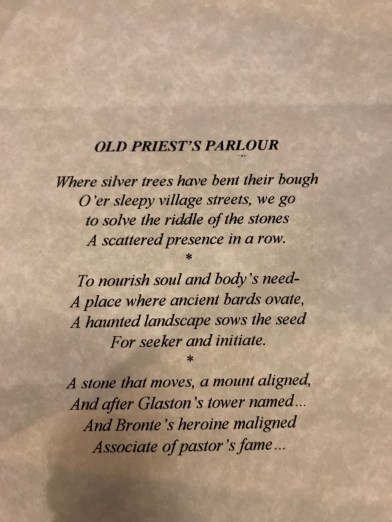
But that next stage in our understanding of the Riddles of the Night would have to wait until the following morning… Saturday. For now, the lights were coming on all around the town, and our evening meal beckoned.
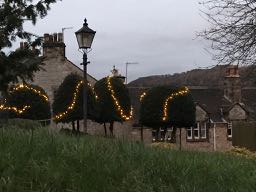
End Part One
© Copyright Stephen Tanham
Share this:


+ #SE18Characters, #Silenti, esoteric psychology, Jewel in the Claw, Mystery Schools, Silent Eye School, Silent Eye Workshops, Spirituality, The Jewel in the Claw, Tudor Lifetimes, Understanding Fear
The Dragon of Elizabeth’s Seas
by Steve Tanham
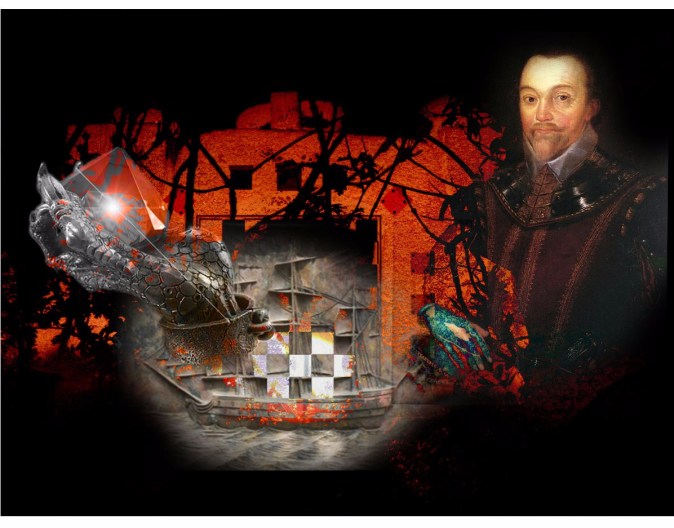 It is the beginning of May, 1587, and a man known locally as The Dragon is headed for Cadiz on Spain’s Atlantic coast. His mission is not peaceful. The act of sailing to Cadiz poses few challenges for this master mariner, who, ten years prior, had already circumnavigated the globe – becoming only the second person (after Magellan) to do so.
But what follows his arrival in Cadiz, at the head of a small fleet centred on four English galleons, is extraordinary by any measure…
In the sixteenth century, Spain is the mightiest empire in Europe–its wealth boosted by gold plundered from the New World… It is also considered the fiercest defender of the Catholic faith; a faith under threat from the growth of Protestantism in Northern Europe, including its foremost enemy: England.
Phillip II has the Pope’s blessing to invade and subdue England, using whatever means is necessary. The Queen of England, Elizabeth I, has been excommunicated by the Pope and King Phillip is assembling a fleet of over a hundred ships to solve the ‘English problem’. English sailors, regarded as little more than pirates by the Spanish, have been a thorn in its side at home and abroad, especially in the New World, where British Privateers have been particularly effective in plundering the gold that Spain has so carefully extracted from the natives.
The man commanding the small fleet now sailing into Cadiz harbour is Sir Francis Drake. The Spanish hate and fear him so much, they have named him El Draque – the Dragon. History will record that he was here to ‘singe the King of Spain’s beard’.
The tiny English fleet – sent by Elizabeth to begin a preemptive action against the gathering might of the Spanish Armada – will spend the next few days in two key Spanish ports (the other being Corunna) destroying a total of thirty-seven of Phillip II’s best ships, despite adverse weather and constant shelling from the guns on the cliffs. Seldom had there been such a display of seamanship, against such difficult conditions.
The success of the raid will delay the Armada by a full year. More significantly, the cargoes plundered by Drake in Cadiz turn out to be well-seasoned timber staves essential for the construction of wooden barrels for food and water storage. When the Armada finally sails, in the summer of 1588, one of the contributing factors in its failure will be the poor storage of supplies and consequent ill-health of the sailors in the Spanish fleet… Of such small details are vast changes in sovereign fortunes made…
The Spanish considered the raid on Cadiz so audacious that Phillip, himself, sent an urgent letter to the Duke of Medina Sidonia, the commander-in-chief of the Spanish Armada, warning him of the other likely targets of El Draque’s murderous voyage (below).
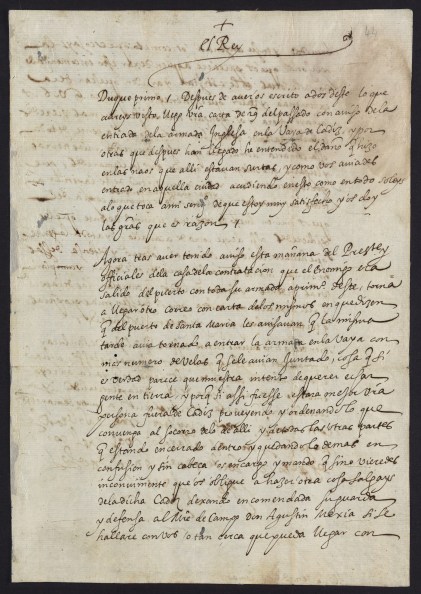
Phillip II’s letter to the Duke of Medina Sidonia warning of Drake’s likely next targets. A rare example of a document that backs up an audacious legend (source)
Nowadays, we are acutely aware of historical exaggeration and propaganda, but this letter is a rare piece of factual evidence that proves how infamous Drake actually was; not that he was shy at promoting his own image…
Francis Drake was born in Tavistock, West Devon, in 1540, seven years after his future queen. He was the eldest of the twelve sons of Edmund Drake, a Protestant farmer. In 1549, the family had to flee local religious persecution and re-settled in Kent, where the resourceful Edmund secured religious training and a position as Deacon of Upnor Church on the Medway, a busy part of the Thames estuary. From Upnor, he was able to minister to the men in the King’s Navy – a first contact upon which he was able to build his, and his children’s, future.
Drake was apprenticed to the master of a barque used to ship merchandise from London to France. Drake’s work pleased the owner of the vessel so much that the childless ship’s master bequeathed the boat to Drake on his death.
The family already had naval connections, and the sea was to shape his life from this point onwards. John Hawkins, later Sir John Hawkins, was Drake’s second cousin and, following the younger man’s successful apprenticeship, he was taken into the extended family’s shipping business, based in Plymouth. In 1563, aged twenty-three, Drake made his first voyage to the Americas, under the command of his cousin. Three more voyages followed, during which the English ships attacked Portuguese towns and ships on the West African coast. Hawkins has a dark reputation as the first English slave-trader, and inducted the young Drake into the trade. The captured cargoes of slaves were, ironically, sold to Spanish plantations…
On the third such voyage, the Hawkins fleet, undergoing resupply and repair in Mexico, was attacked by Spanish warships. Only two of the family ships survived. Drake and his cousin only escaped by swimming to safety. This incident, combined with the persecution of his childhood, set Drake on a course against Catholic Spain, a course he would pursue with delight and skill as his fortunes unfolded.
The coast of Panama was used as a staging post for the Spanish treasure-gatherers, and Drake polished his privateering skills along its coast, taking considerable riches from the raids. He seemed both skilful and lucky in his exploits, but was severely wounded on more than one occasion.
On Elizabeth’s secret instructions, Drake went on to circumnavigate the world, sailing around Cape Horn and entering the Pacific, where he claimed California for the English Crown. The voyage of exploration was punctuated with several acts of plunder on Spanish ships and ports, and, in 1580, with only one ship (The Golden Hind) remaining, he returned to England with a full cargo of treasures, including an exotic jewel made of enamelled gold and bearing a diamond and an ebony ship, which he presented to Queen Elizabeth.
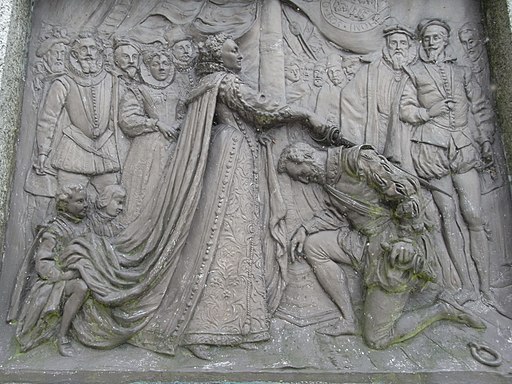
Drake is knighted by Elizabeth I. The monument to Drake in Tavistock. Wikipedia public domain. Source.
The Queen delighted in his successes against the Spanish, and knighted him aboard the Golden Hind in 1581 – an act that enraged Phillip II of Spain. On William Cecil’s advice, all the records of the voyage were made state secrets, and the remaining crew were sworn to secrecy. Everyone knew that war with the Spanish would be forthcoming, but with men like Drake at her side, Elizabeth felt that the spirit of her England had a chance of success.
Drake was a commoner and had risen to be one of Elizabeth’s favourites; quite an achievement. For his coat of arms he adopted a shield showing two stars; representing the Arctic and Antarctic, connected by the oceans, topped by an image of the Golden Hind. The Hand of God is shown as benevolent fate within his lifetime, indicating, with appropriate humility, that his good fortune was not wholly his own doing.

The Coat of Arms adopted by Sir Francis Drake
The year after the raid on Cadiz, one hundred and twenty Spanish ships set sail to invade Elizabeth’s England. Drake was second in command of the outnumbered English fleet, which was led by Lord Charles Howard. There is no historical evidence that Drake delayed his departure for battle while he finished his game of bowls in Plymouth. The apocryphal story appeared some thirty years later and fits with our heroic and stylish picture of the man, so it lives on in the imagination.
The result is well-known. A combination of inspired seamanship by Drake and Howard, plus adverse weather, saw the invasion flounder. What is less well known is that two-thirds of the ships returned safely to Spain, having circumnavigated the British Isles, pursued by an English fleet that was unable to inflict too much harm. The greatest damage was to Phillip II’s reputation. His life had been intertwined with England’s queens since his earlier marriage to Queen Mary – Catherine of Aragon’s daughter. In his journals he claimed to have influenced Mary to restore Elizabeth to the royal line of succession.
We may never know the truth of this; if so, it is doubly ironic that the bravery of Elizabeth and her senior officers brought about the decline in respect for Phillip, and he never recovered.
Although Drake’s place in the heart of England was secure. His military fortunes declined, and the English Armada, ordered by Queen Elizabeth I, fared no better than had the Spanish fleet.
Sir Francis Drake died in Panama on the 28 January 1596 of dysentery. His last unsuccessful expedition was with his cousin, Sir John Hawkins. They died together and their bodies were buried at sea. Drake had asked to be dressed in his armour for his death, and had already made provision that his body be placed in a lead coffin before it was committed to the deep.
How does all this relate to our mystical workshop in April 2018 – The Jewel in the Claw?
Sir Francis Drake is an obvious heroic archetype to use in a mystical play like this. But his life illustrated far deeper issues that were at the heart of Elizabeth’s England. Heroes operate within a theatre of circumstances and responses in which there are few freedoms. Only by being unafraid of being alone, could Elizabeth release the potential of her age. Drake, along with Raleigh, was one of her most visible heroes, but there were many others – men like William Cecil, who moved with equal precision behind the scenes. Nor can the age’s ‘scientists’ like Dr John Dee – at the centre of our story – be considered to be any less heroic in their world of knowledge rather than action.
In our mystical drama, Sir Francis Drake is one of Elizabeth’s appointed champions. But, he has a more difficult and deeper layer to his role within her ‘court’. His depth of experience lends his character special skills when it comes to understanding the motives of men… and women.
In our story, when the company arrives at NonSuch palace, they are shown into a newly-prepared room, one in which a deadly search for the truths of the age will be played out on many levels: intellectual, emotional, religious and magical. Outside of the Queen’s own mind, no-one else in the room is aware of what is to follow.
What confronts the participants in the centre of the space is a huge game board consisting of black and white squares…

Each side of the board has its own symbolism and its own champion. In our five-act magical drama, Drake has a very special relationship with the Queen, one in which his grasp of the importance of Naval warfare can be used to royal advantage…
The Silent Eye’s spring workshop, April 2018 is: “The Jewel in the Claw’. The jewel is the emerging spirit of humanism and tolerance that Elizabeth, the self-styled virgin-queen, engendered; the claw is the nature of the forces of ignorance that still plague us in the twenty-first century every bit as much as they did in 1588, the year that the mighty Spanish Armada was defeated by a combination of English naval courage and our equally fabled weather; and Elizabeth I finally achieved a degree of security.

The Silent Eye has produced dramatic mystical workshops since its inception in 2013, but this is a break from tradition, and will stick closely to the formula of an actual Elizabethan production, letting the acts of the play tell the deeper story. There is no formal audience, of course. We, the players, play to each other, and in doing so invoke the desired depth of psychological and spiritual interaction.
If you’ve never been to such an event before, don’t be over-faced by this heady agenda. There are always new people joining us, and we take great care to ensure they are comfortable. We do not expect our ‘actors’ to learn their lines! We all read from scripts – as though doing a final rehearsal, but the atmosphere is truly electric and you will find yourself working to bring your character to the greatest life you can give them! You will also find they stay with you for years afterwards…
Above all else it is always fun; and every year, come the Sunday farewell lunch, those attending do not want to go home and end that living link with a body of experience and aspiration that they have helped create…
We can honestly say that the workshops become a living thing, formed and sustained in the minds and hearts of those attending. Come and join our ‘merry band’ and you’ll want to come back.
Places are still available for ‘The Jewel in the Claw’. 20-22 April, 2018. The average price is approximately £250, fully inclusive of all meals and accommodation. You will struggle to find a better value weekend, anywhere.
The weekend workshop will be held at the lovely Nightingale Centre, Great Hucklow, near Buxton, in the heart of the Derbyshire Dales at a wonderful time of year – the spring.
You can download the pricing and booking form here:
Other posts in this series cover:
John Dee, Sir Walter Raleigh, Sir Philip Sidney
Robert Dudley, Earl of Leicester
For more information email us on rivingtide@gmail.com
Underlying images:
Sir Francis Drake Wikipedia Commons – public domain. source.
Underlying image of plaque of ship CC BY-SA 3.0 source
Banner Image: Composite of original artwork by the author plus a portrait of Sir Francis Drake, courtesy of Wikipedia, CC by 3.0, Public Domain.
Stephen Tanham is a director of the Silent Eye School of Consciousness, a not-for-profit organisation that helps people find the reality and essence of their existence via low-cost supervised correspondence courses.
His personal blog, Sun in Gemini, is at stevetanham.wordpress.com
©️Stephen Tanham.
Images: background montages by the author – own photography.
Share this:

Share this:


On sweet golden wood decked in yellow
Is my love of ochre from you?
A fantasy glimpsed in old posters
A place where poor children are few
⦿
From a farther realm now you are calling
Bright image, uncharted, at sea
Your home somewhere richer and darker with meaning
Not timeless nor faded but free
⦿
Let me sail down to Rio within you
Let me hold and be cherished in turn
Let us fire up the space where the dance is the grace
Then back let us wave while we burn
⦿
©Stephen Tanham
Share this:

On golden wood bedecked in yellow
Is love of ochre gained from you?
A fantasy glimpsed on old posters
A space where poor children are few
⦿
From a farther place now you are calling
Lost on the seas, uncharted, not gone
Your home somewhere richer and darker with meaning
Not glossy or gaudy nor stone
⦿
Let me sail down to Rio within you
Let me hold and be cherished in turn
Let’s fire up the space where the dance is the grace
Then back let us wave while we burn
⦿
©Stephen Tanham
Share this:

+ #SE18Characters, #Silenti, Consciousness, esoteric psychology, Jewel in the Claw, Mystery Schools, Silent Eye School, Silent Eye Workshops, Spirituality, The Jewel in the Claw, Understanding Fear
She of the Voice
by Steve Tanham

‘She of the voice, the inner voice,’ had been the way they referred to her, later in childhood, when she would suddenly go quiet and listen to that wonderful, silent dialogue that taught her so much about what was really happening in front of her; watching others react while she smiled and laughed so much they thought she was just being girly.
But he knew better, too…
He, her mysterious spiritual guide, teacher of English and word games. Nur al-Din; whose name whispered its meaning – Light of the Faith. At first she hadn’t understood what he was teaching her; ‘the author of the words’ he had called it, a voice within the ‘voice of the world – the story being told is not the storyteller… come to know the storyteller.’
But it had been the other; the dark and purposeful figure of Muhammad al-Annuri, who strode into her life and spirited her away, un-graduated, from the mystical enchantment of learning the truth within the truth. The dark Muhammad had loved games, too. Games of the mind had fascinated him… Games of the body they had shared with a mutual passion.
“Forget all you think you know,” her sad-eyed teacher had said as she was taken from him. “Let it teach you what it is…” No-one listening would have known what he meant.
But she did… and never forgot it. That was all back then, in distant Morocco. Back then…
‘The Saracen woman’ they call her, now, in the streets of London. They have little understanding of the place from which she came. They see a beautiful and dutiful wife to the Moroccan Ambassador. Her husband, with his royal connections, has done well, and now sits astride two civilisations. With one face, he is an ambassador; with the other, a spy and co-conspirator…
He has told her little, but his voice has told her much. She trembles at what she knows.
Guns… Ships and guns. Just the beginning.
And now, summoned, mysteriously, to be at the Queen’s gathering: this strange chamber. “Another leading woman,” was all they told her. “Great honour.”
The others are ranged around the edge of a floor patterned like a great game board in the middle of the room.
‘Revealing,’ the voice whispers. ‘A place of great revelation…’ Rab’ia breathes in the way he taught her, letting the other shadows emerge, the hidden ones, the ones with secrets… She opens hazel eyes that have made warriors wither and seeks the other awakened eyes in the room, surprised and smiling at the result.
Perhaps it has all led to this, she thinks, smiling in the way he used to do.
How does all this relate to our mystical workshop in April 2018, The Jewel in the Claw?
Rab’ia al-Anuuri is the wife of the Moroccan ambassador in London, during the time when Elizabeth I is seeking a closer relationship with the Saracen world – what we would now call the world of Islam. The Saracen world is a potent force and has more than enough might to challenge the other super-power in Europe – Spain.
In our five-act mystical drama, when the company arrives at NonSuch palace, they are shown into a newly-prepared room, one in which a deadly search for the truths of the age will be played out on many levels: intellectual, emotional, religious and magical. Outside of the Queen’s own mind, no-one else in the room is aware of what is to follow. Rab’ia, wife of the Moroccan Ambassador is brought into this chamber as a personal guest of the Queen, whose goal is to begin with as much of a male-female balance as she can achieve, in an age when powerful women were not abundant – not in the political sense, that is…
What confronts the participants in the centre of the space is a huge game board consisting of black and white squares…
Each side of the board has its own symbolism and its own champion. In our five-act magical drama, Rab’ia will come to have a unique relationship with the Queen, as she is a powerful foreign dignitary in her own right and truly beyond the monarch’s power – or is she? The Queen of England is a potent force when it comes to defending the interests of her own country…
The Silent Eye’s spring workshop, April 2018 is: “The Jewel in the Claw’. The jewel is the emerging spirit of tolerance that Elizabeth, the self-styled virgin-queen, engendered; the claw is the nature of the forces of ignorance that still plague us in the twenty-first century every bit as much as they did in 1588, the year that the mighty Spanish Armada was defeated by a combination of English naval courage and our equally fabled weather; and Elizabeth I finally achieved a degree of security.
The Silent Eye has produced dramatic mystical workshops since its inception in 2013, but this is a break from tradition, and will stick closely to the formula of an actual Elizabethan production, letting the acts of the play tell the deeper story. There is no formal audience, of course. We, the players, play to each other, and in doing so invoke the desired depth of psychological and spiritual interaction.
If you’ve never been to such an event before, don’t be over-faced by this heady agenda. There are always new people joining us, and we take great care to ensure they are comfortable. We do not expect our ‘actors’ to learn their lines! We all read from scripts – as though doing a final rehearsal, but the atmosphere is truly electric and you will find yourself working to bring your character to the greatest life you can give them! You will also find they stay with you for years afterwards…
Above all else it is always fun; and every year, come the Sunday farewell lunch, those attending do not want to go home and end that living link with a body of experience and aspiration that they have helped create…
We can honestly say that the workshops become a living thing, formed and sustained in the minds and hearts of those attending. Come and join our ‘merry band’ and you’ll want to come back.
Places are still available for ‘The Jewel in the Claw’. 20-22 April, 2018. The average price is approximately £250, fully inclusive of all meals and accommodation. You will struggle to find a better value weekend, anywhere.
The weekend workshop will be held at the lovely Nightingale Centre, Great Hucklow, near Buxton, in the heart of the Derbyshire Dales at a wonderful time of year – the spring.
You can download the pricing and booking form here:
Other posts in this series cover:
John Dee, Sir Walter Raleigh, Sir Philip Sidney
Robert Dudley, Earl of Leicester
For more information email us on rivingtide@gmail.com
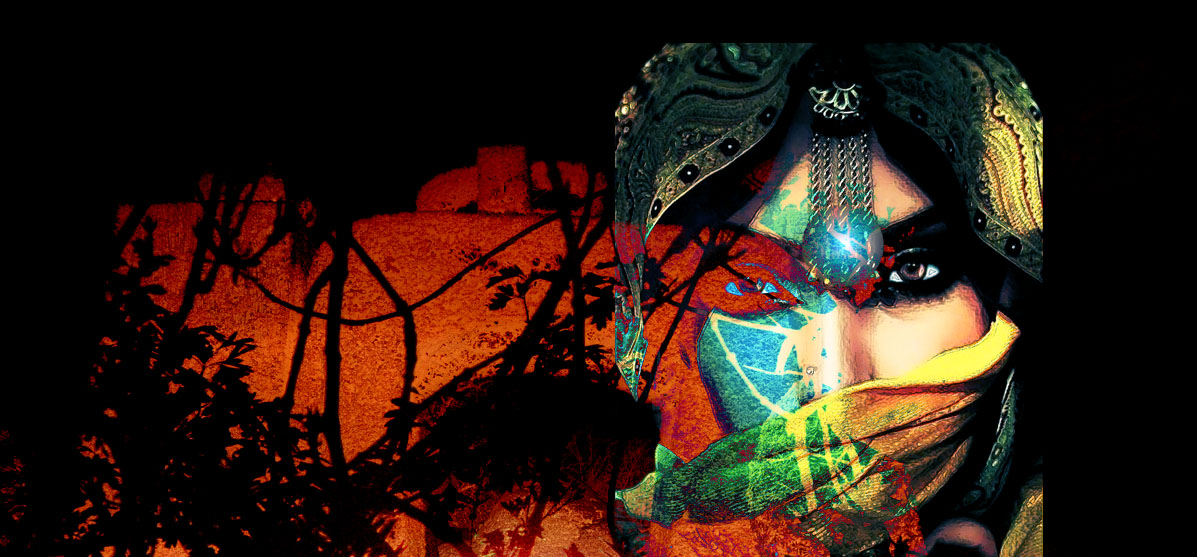
Image: Composite of original artwork by the author.
Stephen Tanham is a director of the Silent Eye School of Consciousness, a not-for-profit organisation that helps people find the reality and essence of their existence via low-cost supervised correspondence courses.
His personal blog, Sun in Gemini, is at stevetanham.wordpress.com
©️Stephen Tanham.
Share this:

Stunning… from Stuart


 Sun in Gemini
You must be logged in to post a comment.