
Share this:


 It is dark as we walk down the lane, the small dog and I, yet a bird is singing, opening the gates of dawn with a joyful song, heralding the day without yet knowing what it will bring. For now it sings alone, a brave voice in the darkness, but soon others will join with it. The song is no more than a communication with a mate or a defence of territory, or so they tell us, but to me it speaks of something deeper. It sounds like trust in whatever the morning might unfold, confidence in the rightness of life, facing the blank canvas of the day with a wild joy. It is almost as if the birds sing their symphony at dawn to remind us of that. As if the presence of their song in the world brings us closer to the divine simply by existing. You get…
View original post 409 more words
Share this:

Share this:


Never look back! It’s an adage that makes a lot of sense. It also characterises a certain stage of mystical development – a point at which the aspirant comes to realise that the only place of reality in our lives is within the moment; and that our history is simply a container that has conditioned how we react to experience. A skill-maker, certainly, but also a straitjacket…

The kindly man with a right arm full of tattoos takes our six pounds for the car park fee, and suggests that, in view of the thick mist, and our early arrival (there are only three other cars in the Land’s End parking area) we might like to explore the southern loop of paths and the artisan workshops before returning to the main buildings, which by then will be open…
There is something wonderfully Cornish about all this – the great care with which the tattooed ticket man helps us; the gentle way in which he offsets the possible late arrival of some of the staff in the thick sea-mist that is the hangover of a night of torrential rain at the end of the first day of our holiday.
I had been to Land’s End before – and stayed near Sennen Cove; the location of our present rental cottage, high on the hill, a little further along Whitesands Bay. Land’s End was just around the corner, then as now, which was why we are early…

Back then- and I shuddered to accept it had been forty years ago – the holiday home had been a small touring caravan, borrowed from my father and towed behind my first car capable of towing anything; a beloved Renault 16.
On a morning with nothing better to do, my girlfriend and I had driven the couple of miles from Sennen to the car park overlooking the famous ‘New York 3147’ signpost, which, apart from the ‘First and Last Inn’ pub was pretty much all that was on the Land’s End headland, back then.

It’s still there, as I was to discover, later. But now set into a complex- a small theme park – which undoubtedly fits the bill of a ‘good wet day out with the kids’. I remember those, too; they were essential if you wanted to stay sane on holiday with small children.

Now, approaching the old mill next to the ‘petting farm’ with Bernie, my mother and our party’s two dogs, I smile at the thought that I was both parent and child in this company. Technically child to a mother with vascular dementia, yet also parent in that I am her short-term memory and her maker-of-sense.
Cornwall has always been her favourite place and this holiday is likely to be her last chance to revisit it.
The mist surrounding the farm, with its working water-wheel, is like the fog that creeps through her brain, paralysing the speed of anything new, anything logical. She is still there, but all the most complex – and challenging parts of her personality are exaggerated.
I look at her face, glowing with enjoyment at the experience of something new, and smile at the thin layer of moisture she, and the rest of us, bear, within this seemingly perpetual mist. It’s giving us all a ghostly glow.
To our right as we pass the artisan hamlet, the light gets brighter, and I can sense that the sea isn’t far. A moment’s concentration reveals that the roaring sound coming from the same place is not the strong wind that buffets us…

Memories are starting to tumble out from that distant past. It was a cold day and we stayed only a few minutes, looking at the famous sign before fleeing back into the car. As we were leaving, I distinctly remember looking south, and seeing a cluster of huge rocks out to sea. This outcrop looked out of place at that distant spot; as though the official Land’s End position should have been shoreward of it, thereby lining up the symmetry.

With that memory came another: that of a intense but lovely dream when my mother was overnight in the operating theatre at Bolton Hospital, twelve years ago, having most of her lower intestines removed, due to advanced colitis that would have certainly killed her, otherwise.
The consultant treating her, whom we had got to know well, gave her a fifty:fifty chance of survival.
I had slept, eventually, after the barrage of family phone calls asking about her status.
Somewhere around three in the morning, I drifted off, awakening at seven struggling to remember the most intense dream. In it she and I had travelled to some future place, and were sitting on the rocks of a promontory, far out from the land. The sense was that of a future time and place… but a place of hope and refuge; like a time-magnet that pulled at possibilities.
She had survived, with some miracles of artificial, medical plumbing. Twelve years on, we are in Cornwall for what may well be her last such holiday.
Now, I stumble through the mist, wondering at the import of this collision of recall. At that moment, the land drops away to reveal that we are on the very edge of a landscape where huge rocks mark an impossible path to a turbulent sea below.

She is holding onto my arm, tightly. I ask if she wants to go back, but she shakes her head, enjoying the gale and the challenge. Arm in arm, we find a path to the very edge, which becomes a narrow corridor of stone, at the end of which is a massive dark figure.

Nervous minutes later, we stand in a place we should not be and raise our heads to stare across a misty distance we cannot measure.
There is a now-familiar sense of the sky dropping. Her arm clutches mine tightly as a gust of wind threatens to unseat us from the stone ledge. But I am not lost in caution; I’m lost in knowing that the huge, dark mass across that foaming distance is a friend, and it’s also the landmark I saw all those years ago.
It is also the place in the dream, and, twelve years later, we are still here…
With one hand, I work the phone camera to try to capture something of the moment – a moment whose intensity I might not remember, otherwise. As I press the shutter, a large bird flies across the distance between us.

Birds and mist, I think, smiling…. Don’t forget that combination… and then the sky drops again and I realise the friend across the water has communicated something shamanic in the way of names…
On the way back to the car, Bernie observes that I am more than usually silent.
——-
Stephen Tanham is a director of the Silent Eye School of Consciousness, a not-for-profit organisation that helps people find the reality and essence of their existence via low-cost supervised correspondence courses.
His personal blog, Sun in Gemini, is at stevetanham.wordpress.com
©️Stephen Tanham
Share this:

Share this:

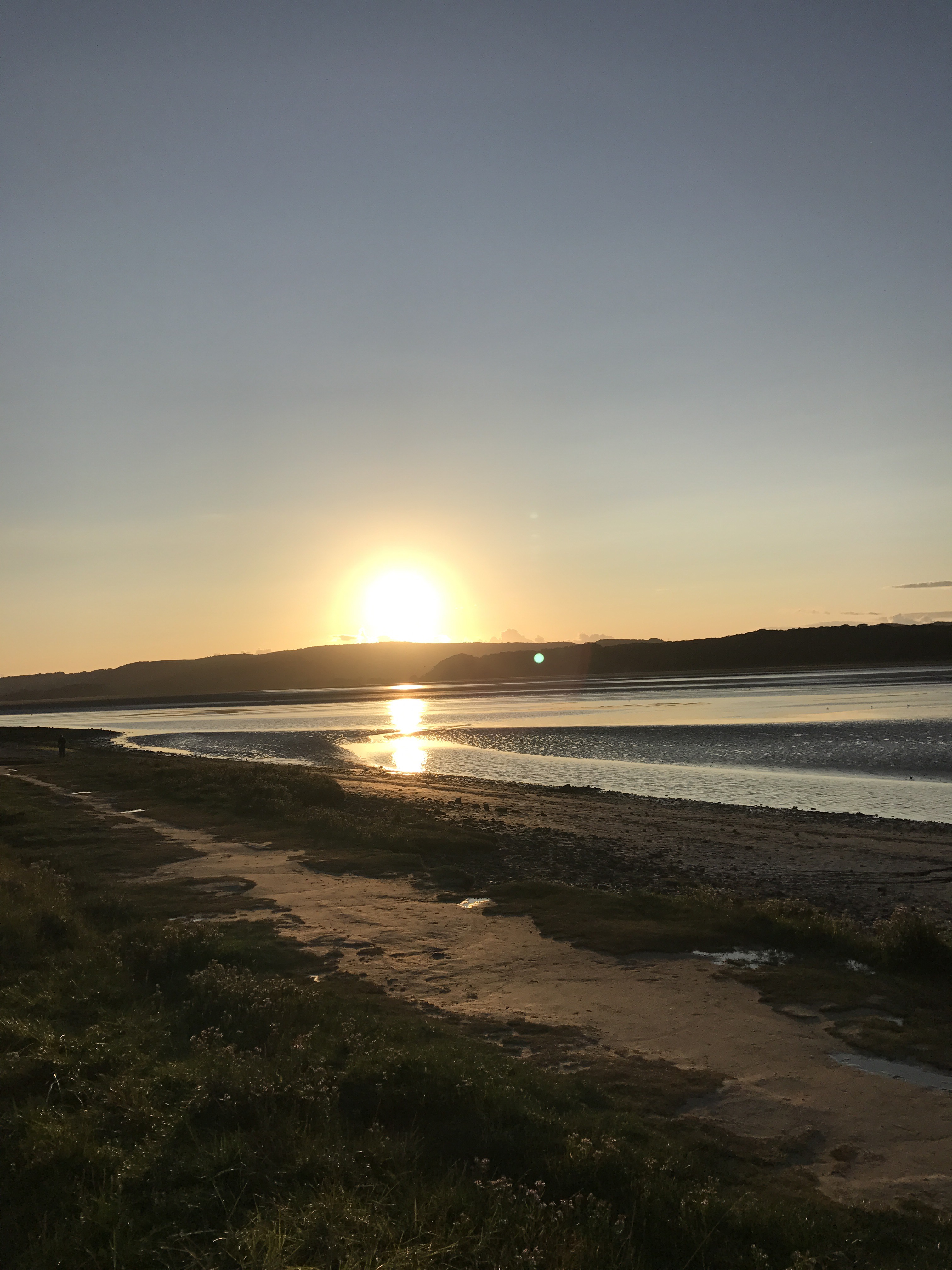
And yours is no disgrace
Yours to arrive and not to know
To stand in the sun, un-named
And feel the sliding mountain
Falling behind and not know fear
At the sound of tiny pieces
Returning to their source
➰
Used…
➰
And yours is no disgrace
When used means filled with ‘lived’
Lost to recall, now, but singing still
Upon that shore
From which the new Sun rises
And hails a dawning song much like its own
➰
Risen…
➰
To greet the undisgraced and shining mote
Smaller than the last discarded piece
Bigger than the world that turns
But holding life, undivided
Within its outstretched hands
That reach and hold the flame
➰
Of Life within its life embraced.
➰
©Stephen Tanham
Share this:

A beautiful set of gardening memories from Sue.


Long, long ago, when the world was still young and I was younger still, I moved into a house with a garden. It wasn’t much of a garden, long-deserted, overgrown and gone to seed, but my mind painted it in rainbows. Since getting married, we had lived in a flat and a ‘street house’ that opened straight onto the pavement. My only forays into gardening had been herbs on the kitchen windowsill. It was the first time I’d had a garden of my very own, though there had usually been one at my parent’s home and my grandparents’ long-established gardens were places of magic and mystery.
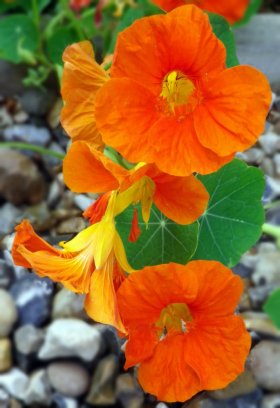
It is odd to think that although I remember every home I have lived in very well, as well as those of my grandparents, I remember the gardens better. I have but the vaguest of memories of my father’s family home. We probably did…
View original post 1,132 more words
Share this:

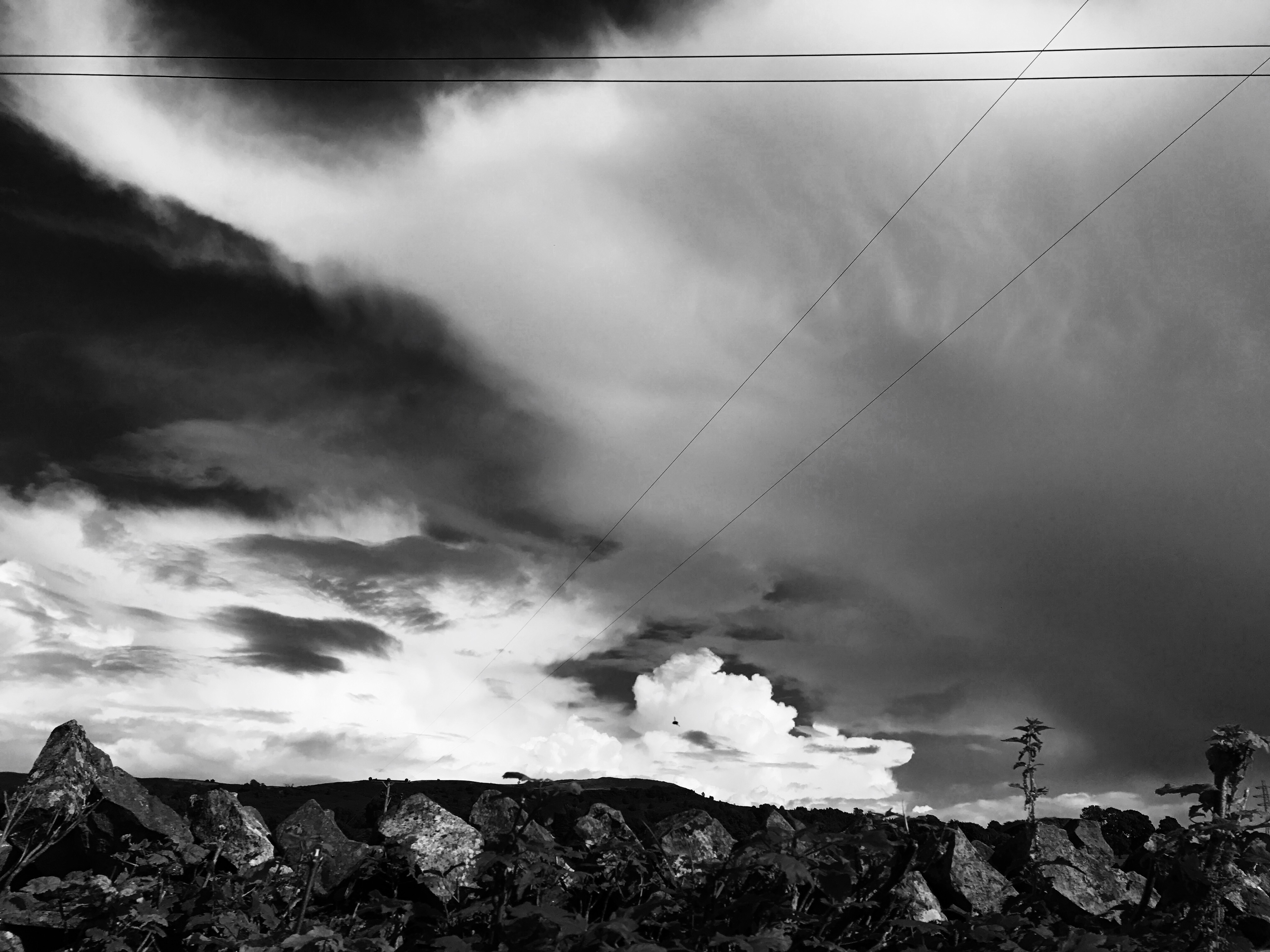
Ease off the grid
And let the space of time go by
Kick off the infinite suit
And feel the grassy toes
With eyes smiled closed
Look skywards…
Rejoining as you will… but not yet

©Stephen Tanham
Share this:

Share this:

+ esoteric psychology, Jewel in the Claw, Mystery Schools, Silent Eye School, Silent Eye Workshops, Spirituality, Understanding Fear
The Mind of the Virgin Queen
by Steve Tanham

Is it possible to go back in time and see into the minds of monarchs who played a key role in a country’s development? Given it is so long ago, how difficult would it be to do this for the Elizabethan age?
This is our task for the Silent Eye’s spring workshop 2018: “The Jewel in the Claw’. The jewel is the emerging spirit of tolerance that Elizabeth, the self-styled virgin-queen, engendered; the claw is the nature of the forces of ignorance that still plague us in the twenty-first century every bit as much as did they did in 1588, the year that the mighty Spanish Armada was defeated by a combination of English naval courage and our equally fabled weather; and Elizabeth I finally achieved a degree of security.
That security had been a long time coming: twenty-nine years, to be exact, the length of time between her coronation, in 1559, and the sanctuary created by the failure of the Spanish fleet.
Philip II of Spain, the ‘prudent king’, never recovered, politically or financially, and despite the continued plunder of South American gold, Spain’s dominance in Europe went into decline. It took with it the hopes of Pope Pius V that England could be brought back into the Catholic faith with force.
His was the decision to excommunicate Elizabeth using his papal bull, Regnans in Excelsis, in 1570 – accompanied by the formation of the Holy League, an alliance of Catholic states whose demise the failed Armada triggered.
Elizabeth’s life was truly lived on the edge, but fate conspired to protect her, in the form of a number of true and loyal advisers, whose council she knew could be depended on. Our play therefore includes such figures as John Dee: her personal astrologer and a man who would shape the mathematical future of navigation, enabling the emerging English navy to safely navigate the known world. But Dr Dee was also an alchemist with deeper secrets, which left him vulnerable to sinister interpretation… and potential exploitation, as a close confidant of the Queen.
William Cecil, first Baron of Burghley, was at her side for most of her reign, and she depended on his wise council, about which he wrote in his diaries, “Often, I best serve my Queen when I do nothing, rather than hasten to act…”
The years would teach her how complex it is to rule, and how few – even among supposedly close friends – can be trusted, fully. The era of the play includes the explorers Sir Francis Drake and Sir Walter Raleigh, both men embodying the expansive spirit of the age, which would see the mastery of the seas and an empire that spanned the world.
Always close at hand was her childhood sweetheart and alleged lover, Robert Dudley, Earl of Leicester, whose wife was found dead at the foot of their stairs during his and Elizabeth’s period of greatest personal intimacy. How lonely and vulnerable must the Queen have felt at that moment?
She was a resourceful woman of surprises, as evidenced by the hosting of a month-long visit by the Moroccan ambassador, Al-Anouri. Their joint and secret agenda was to build a mighty alliance between England and the much more powerful Islamic world. Then, as now, the world beyond Europe was hungry for our expertise in the making of weapons…
And then there was the formation of the original secret service, within which Dr Dee ironically held the code name 007, the original ‘James Bond’, though he cut an unlikely figure as a spy. Created by William Cecil, the secret service was taken over by Sir Francis Walsingham, whose methods were ruthless, but whose effectiveness was unquestionable – protecting the Queen from the Catholic plot to replace her with Mary, Queen of Scots, as one example. At the time of the play’s setting, Walsingham is dying; but his equally capable daughter Frances Walsingham, the ex-wife of the Queen’s Champion, Sir Philip Sidney, takes his place.
Throughout this, Elizabeth crafted a potent role for herself: that of Lover of the English people; a people who had openly cheered her through the streets of London at her coronation, despite the fact that she was a virtual unknown. They had become weary of her half-sister, Mary’s policy of persecution and wanted an age of peace in which ‘blood did not run through the streets of the capital’.
Our final ingredient is the emergence of what later became known as the ‘age of science’. Here, Sir Francis Bacon is cast as a figure able to bestride the emerging knowledge and balance it with the intimate and (to today’s eyes), mystical cosmology that had dominated the west’s world view for fourteen hundred years.
Elizabeth’s triumph in 1588 did not remove the threat of plots against her. But it did mean they had to be much more subtle. The nature of such intrigue forms the core of the workshop and is played out as a tapestry of events taking place over a weekend in which the Queen has invited her closest friends and courtiers to her favourite Palace of Nonsuch. Our intrigues will touch the human soul in ways that will be remembered, always, as the soul of the age is laid bare…
And what of the influential women in Elizabethan society? It was a very patriarchal age, and women were expected to better themselves, if at all, through marriage. They were forbidden formal education, though the most well-born or wealthy could be tutored. One of the best examples of a determined Elizabethan women is Bess of Hardwicke, who married four times – each time to a richer husband. She rose to become the second most wealthy and powerful woman in England, second only to the Queen. There are many more examples, and some of them will feature as either independent characters or equal partners to important male figures in the workshop.
Our workshop is written as a Shakespearean play, but set in plain English; indeed the Bard, himself, is one of the characters, rising from his chair in the last moments before death to share with the kindly spirit of the abyss the essence of his great unwritten work, wherein he undertakes to reconcile the deeper nature of playing, itself, with the best actress of the age – the Virgin Queen, Elizabeth Tudor.
The Silent Eye is a modern mystery school, and our real-life mysteries go far deeper than politics or murder…
How can we bring together this mixture of politics, science, magic and human nature into a story of five acts? We’ll have to ask the Bard…
The Silent Eye has produced dramatic mystical workshops since its inception in 2013, but this is a break from tradition, and will stick closely to the formula of an actual Elizabethan production, letting the acts of the play tell the deeper story. There is no formal audience, of course. We, the players, play to each other, and in doing so invoke the desired depth of psychological and spiritual interaction.
If you’ve never been to such an event before, don’t be put over-faced by this heady agenda. There are always new people joining us, and we take great care to ensure they are comfortable. We do not expect our ‘actors’ to learn their lines! We all read from scripts – as though doing a final rehearsal, but the atmosphere is truly electric and you will find yourself working to bring your character to the greatest life you can give them! You will also find they stay with you for years afterwards…
Above all else it is always fun; and every year, come the Sunday farewell lunch, those attending do not want to go home and end that living link with a body of experience and aspiration that they have helped create…
We can honestly say that the workshops become a living thing, formed and sustained in the minds and hearts of those attending. Come and join our ‘merry band’ and you’ll want to come back.
Places are available for ‘The Jewel in the Claw’. 20-22 April, 2018. The average price is approximately £250, fully inclusive of all meals and accommodation. You will struggle to find a better value weekend anywhere.
The weekend workshop will be held at the lovely Nightingale Centre, Great Hucklow, near Buxton, in the heart of the Derbyshire Dales at a wonderful time of year – the spring.
You can download the pricing and booking form here:
Image: Composite of original artwork by the author plus portrait of Elizabeth I, circa 1590, Wikipedia, Public Domain.

Stephen Tanham is a director of the Silent Eye School of Consciousness, a not-for-profit organisation that helps people find the reality and essence of their existence via low-cost supervised correspondence courses.
His personal blog, Sun in Gemini, is at stevetanham.wordpress.com
©️Stephen Tanham
Share this:

This is my entry for week 35 of Sacha Black’s

And this week the theme is ‘Pyramid’. Sacha is the founder of the Blogger’s Bash and is a bit under the weather at the moment. Please send her your kindest thoughts; she’s a great character and a wonderful organiser…
Pyramid Text
Magnox, PI, had seen the deadly red lettering before. He wondered how he could wake, in Jorgi’s bar, face down in his battered Burberry mac, and make insightful observations. The broad in the picture was dead, but the neat square indentations in her neckline told him everything: the Pyramid Killer was back…
Story 52 words. Suitably black, Sacha? Best wishes.
Share this:

Georgette Heyer is probably best known for her Regency romances and her knack of capturing an era and bringing it to light-hearted life. She also wrote detective novels and the two works for which I admire her the most… An Infamous Army, which is an account of the Battle of Waterloo and The Spanish Bride, about the Peninsula campaign of the Napoleonic wars. In both cases, the author builds her story around the lives of individuals, making the trials of the campaign personal and engaging the reader’s emotions.
In The Spanish Bride, Heyer tells the romantic and true story of Juana María de los Dolores de León, a child just out of the convent who was brought to the battlefield and consigned to the care of the British troops by her sister when their home was sacked after the fourth siege of Badajos. Fourteen year-old Juana was married a…
View original post 517 more words


 Sun in Gemini
You must be logged in to post a comment.