
 Thankfully, this view is not what I’m writing about, with its jumble of old, recent and dubious…
We are spending a few days with the South London branch of the Tanham family, who are shortly to leave, with granddaughter Alice, for a new life, as, doctors, in Australia. We are staying in a budget hotel on the South Bank of the Thames, and it has been a delight to see how well and organically this ancient part of the city has been preserved and renovated.
A case in point is the recently excavated Winchester Palace.
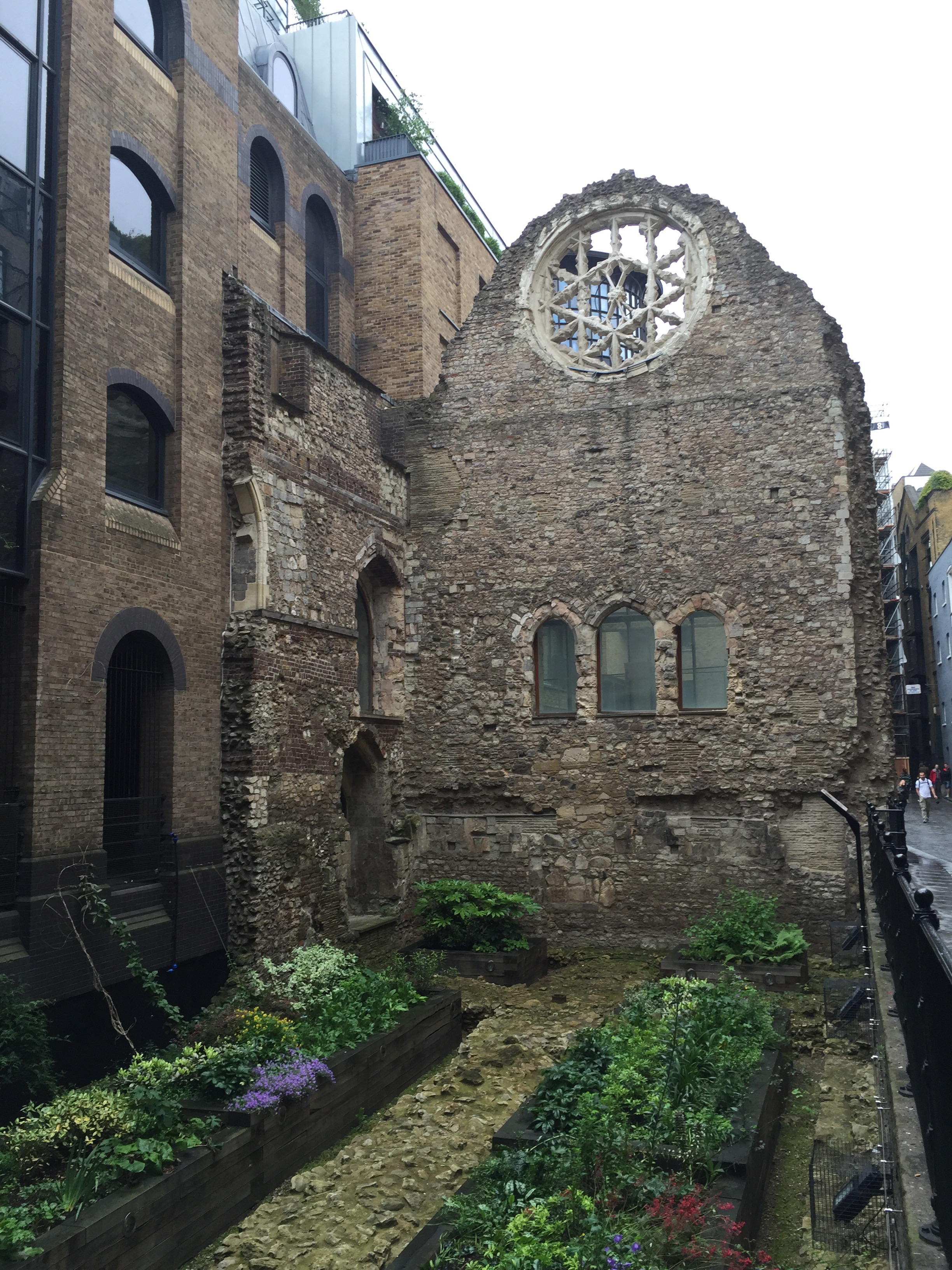 These ruins are all that remain of the home of the very powerful Bishops of Winchester, among the most influential figures of medieval London. They lie one street behind the Thames, in a densely developed area which beautifully balances leisure, housing, dining and entertaining, using a human scale of construction that maximises the re-use of existing resources, such as redeveloped warehouses, leaving history and culture not only intact, but adjacent.
 Within five hundred metres you will find three pubs, eight restaurants, the ancient Bishops’ Palace of Winchester and Sir Francis Drake’s ship, the Golden Hind.
On the north bank, in stark contrast, you will find offices and a roadway. The contrast couldn’t be more stark, and yet the City, proper, lies on the north bank, with its vast wealth and influence.
There is no point railing against this, London has its own complex systems of government. What is useful is to hold us the rejuvenation of the South Bank as an example of how wonderful an inner city area can be when effort is made to keep things on a human scale…
Share this:


 It is with great pleasure that I can tell you that Sue, Stuart and I received third place in the Most Inspirational Blog category of the 2016 Annual Bloggers’ Awards in London, earlier today.
  The turnout was great, as you can see from the picture, above, with many times more attendees than the inaugural event last year.
Our heartfelt thanks go to Sacha, Geoff, Ali and Hugh for a great deal of effort over the past few months in putting the event together. The venue was The Driver gastro pub, near Kings Cross station and we had an excellent guest speaker (Luca) from the company behind WordPress.
Nick Verron, Sue’s eldest son, received a second place in the best newcomer blog category.
A huge thank you for everyone who voted for us, and Nick.
Share this:


History and Mystery on Caldey Island – Final Part (5) , Warriors of the Heart
Their age is uncertain, but most observers place them as medieval. I’m no expert in ancient Christian symbolism, but, on my first visit to Caldey, a decade prior, I knew that the uncovered plaster etchings on the lower walls of St Illtud’s church were unusual. My first reaction was that they could also be partly alchemical, but I have no evidence for this, other than the initial impression of certain visual similarities.
Now, I was back, with a better camera, and determined to obtain a good set of photographs despite having to crouch low to take the shots of the old stone etchings which line the lower walls of St Illtud’s church.
A sun drawn as a circle (see first photo, above) with a smaller circle inside it. Four straight lines radiate from the upper and lower verticals, and the left and right directions. Further straight lines radiate out in each quadrant, but the mid line of each quadrant is wavy, as we might draw a ‘wavelength’ line in physics.
A dove descends (second photo) – a common Christian symbol of the Holy Ghost – but this dove descends from a figure of the sun above, and it’s own body radiates the ongoing life to those below.
Three fishes swim in a sea clearly marked by its surface (third photo). The three fishes form what looks like the head of an arrow pointing downwards. Smaller fishes curl at the lower edge of the piece, but these are not part of the power of three represented by the core group. Three is, of course, a symbol of the Trinity; and, prior to Christian thought, the mystical symbol of creation, ‘three primary forces in one’, the radiating of divine will into the ‘primal stuff’; the embodiment of that will; the projection from the ‘male’ energy of a receptive ‘female’ form into which the potency of the male may reside… leading to the birth of the world, or should we say, our realisation of the birth of that world…
Esoteric Christianity contains some of the most profound mysticism in the history of mankind and I wondered how much of this was being shared by the creators of these designs, etched in the past, where the ‘past’ is anything from one hundred to one thousand years ago.
There are over twenty of the ‘etchings’. When I first came to Caldey, they were dilapidated; and many were mouldy. Now, they had been lovingly restored under the supervision of Father Gildas, the Abbot of Caldey, though he recently confessed to the local newspaper, The Western Gazette, to knowing very little of their origin.

What is known is that the site of St Illtud’s church was the original home of the 6th century Celtic Christian church; the medieval Benedictines; and the more recent group of monks who created the modern religious landscape of Caldey in the last century. Although the present Abbey is Cistercian, the founding group of monks of the recent cycle of habitation were also Benedictines, and led by a very unusual man – Dom (Father, from Latin Dominus, master) Aelred Carlyle, also chronicled by some as the “Lord Abbot” and the “Druid Abbot” due to his highly unusual approach to his calling…
Dom Aelred Carlyle began his working life in London, where he tried to establish an institution that helped underprivileged young men to fit themselves for gainful work. This failed and he found himself in a series of roles, culminating in a vision that the restoration of Caldey Island as a place of isolated Benedictine worship should be the goal. He was, to say the least, an unusual man, not to mention an very ‘different’ priest. We would expect the word Benedictine to be associated with the Catholic faith, but Dom Aelred Carlyle’s followers were Protestant Benedictines – a line descending from the survivors of Henry VIII’s dissolution of most of the monasteries in 1536.
Dom Aelred’s proposition attracted some sponsorship, and, in 1906, the then owner of Caldey Island, the Rev Done Bushell, Chaplain of Harrow School, agreed to the sale of Caldey with certain strict provisions, including the construction of a formal guest house for visitors, who would be expected to pay, handsomely, for the privilege of being ‘part of the community’ for a while. A train was chartered to bring the Don Aelred’s existing Benedictine community from North Yorkshire to Tenby, where they were allowed to rest and wash, before making the short crossing to Caldey, their future home, in a local boat.
We have to admire their bravery, as they worked to restore what is now St Illtud’s church, at the same time as trying to feed themselves from the land and sea. The site of the Celtic and medieval communities had become, once more, the home to monastic worship on Caldey.
Sadly the story goes downhill from there. A series of grandiose plans for one of the largest abbeys in Europe were expensively shelved. But the present Italianate abbey was designed and built – taking Dom Aelred’s group massively into debt.
By 1929, the project was no longer viable, despite the construction of the present set of buildings, and the abbey was taken over by the Belgium (Catholic) Cistercian monks whose spiritual ‘descendants’ are today’s inhabitants. It is a tribute to them that they have continued to maintain and further restore St Illtud’s church and its long history. Today, the abbey is financially secure and the community is growing.
There remains one more treasure to document before closing this set of posts: that of the stained glass window in the sanctuary of St Illtud’s church.

One of the unsung heroes of the present day story of St Illtud’s is the Rev William Done Bushell, who restored the church in the closing years of the 19th century, and was the man who sold Caldey to Dom Aelred’s Benedictine group. To crown the restoration, he installed the large sanctuary window, which shows St Illtud (also written St Illtyd) as a young Arthurian Knight, being visited by an angel who urges him to turn away from Arthur’s court and return to the religious life of his youth. It’s an interesting and potentially controversial message, given the mystical interest in the inner symbolism of the Arthurian stories today.
Perhaps we are best ending this by thanking the present monks for their care of precious things from the near and far past, and for keeping those treasures alive for us all to see… and wonder at…
I will conclude with a view of Caldey’s ‘Calvary’ monument, overlooking the arrival and departure of its visitors, and the borrowed sentiment we often use in the Silent Eye School: “there is only one truth but a thousand windows through which to see it…”

Previous parts of this series:
Part One, Part Two, Part Three, Part Four,
Share this:

Sue’s house move happens…

Let’s try this app thing on the phone…
There was a point when I was sitting on the kerb homeless, surrounded by all my worldly goods while another family moved into my home behind me. Thankfully, I was only waiting for the van to come back for the final load.
Even so, it felt weird.
It felt weird for quite some time, as I know my new home well… It has been younger son’s place for the past five years… and really didn’t feel like mine.
Nevertheless, mine it now was, complete with the mountain of boxes, bags and chattels.
It had been touch and go for a while… We were moving at nine on Saturday morning. The cavalry didn’t manage to arrive until half eight Friday night to help me clear the loft, a terrible place full of the stored junk of fifteen years and the eleven people who…
View original post 470 more words
Share this:

+ enneagram, esoteric psychology, Haiku, Mystery Schools, Mystical poetry, Silent Eye School, Spirituality
Coffee and Haiku Cake – “Sly Dog”
by Steve Tanham
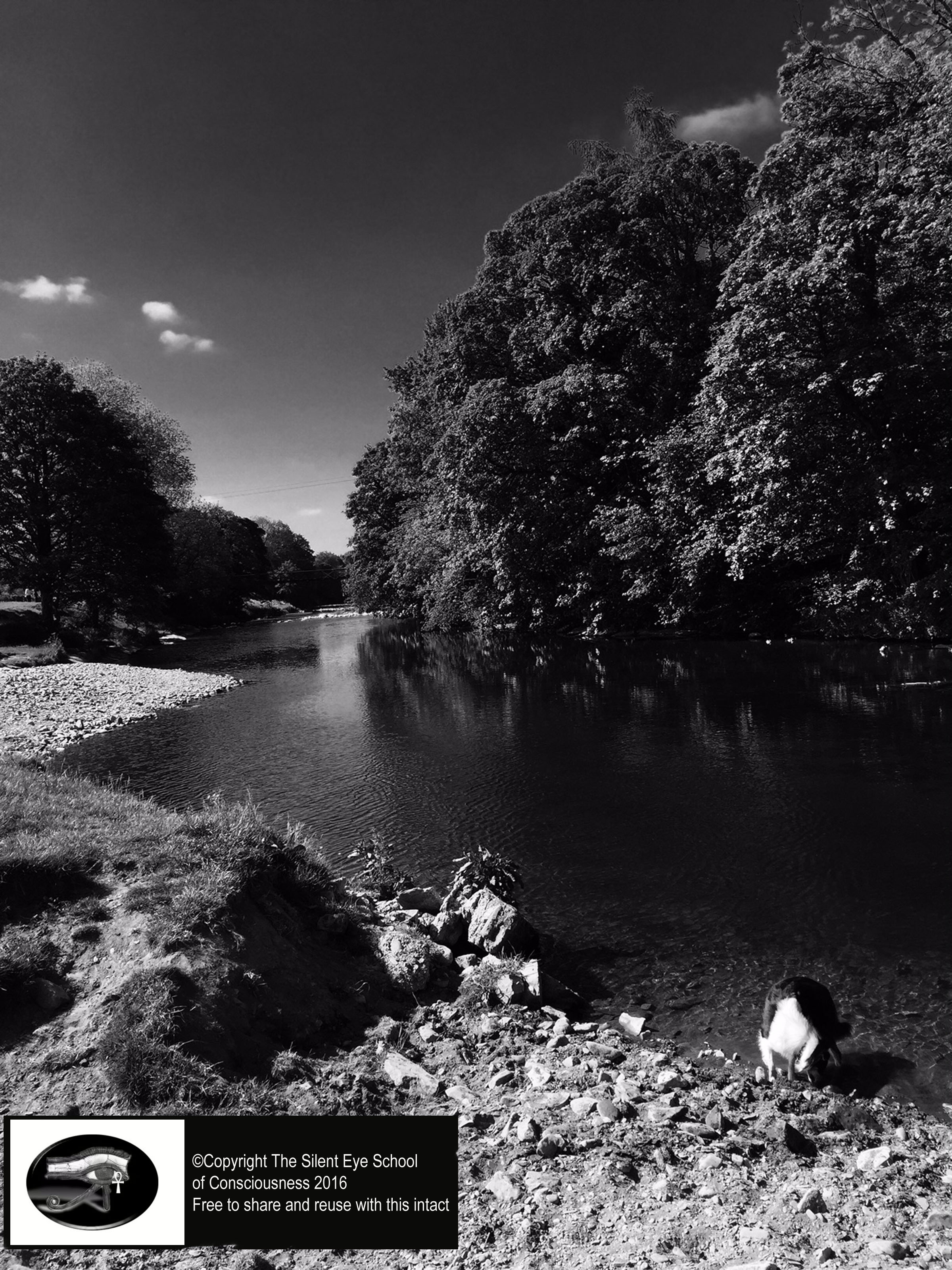
“Sly Dog”
⦿
Hissing flow on stones
Green soft swaying, fullsome trees
Sly dog drinks it all
⦿
Share this:

More ‘make you think’ stuff from Stu…
Share this:

Wisdom from Running Elk

 Attic Table Tennis
Woke up this morning to the sound of birds in the attic. Your actual birds in your actual attic, that is.
I’m often asked what a particular animal or bird “means”, in the mistaken belief that every encounter with the animal kingdom is necessarily a message from Great Spirit. In this instance, the message was fairly clear: “There is a hole in your roof big enough to allow birds to get in… might want to consider blocking that hole up.”
But this isn’t good enough for some folks. They’d want to know what type of bird it was, how many were there, what direction does the hole face… as if every minute detail of the encounter adds further, hidden layers of significance. We must accept that, sometimes, there are no hidden layers. It is what it is. Nothing more, nothing less.
To peer further risks madness. Stopping…
View original post 251 more words
Share this:

Beware, Britain, thus vision of healthcare could be just around the corner…
Share this:


History and Mystery on Caldey Island – Part Four, Two Ships
There were two ships on that day, each of them spoke of other dimensions…One completed our journey back from Caldey, in a way that could only be seen as symbolic. The other was the vessel called St Illtud’s church, whose foundations, and, perhaps some of the contents, had carried the ancient wisdom of the sixth century and beyond, so that we could gaze on it today with something approaching wonder.
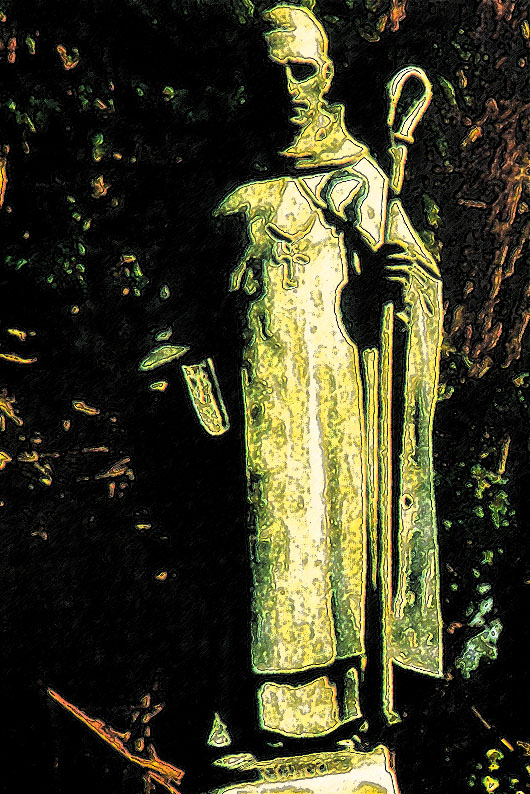
St Samson, the first Abbot of Caldey in the 6th Century.
St Sampson (above) was the first Abbot of Caldey island. He established the 6th Century Celtic Christian church, and later, its monastery, on the site that is now a ruin, apart from the outbuildings which form the perfume factory and the church of St Illtud.
The latter is mysterious home of everything talked about in this post. St Illtud was the founding ‘father’ of the Celtic church in this part of Wales, and his personal influence spread as far south as Brittany. It was fitting and generous, therefore, that the Cistercian fathers who took over Caldey’s Benedictine Monastery in 1930 should re-name the original church of St Mary, which stood on the site of Samson’s monastery, St Illtud’s.
(the previous posts have discussed the history of worship on Caldey, see the foot of the post for fast links)
There is a growing interest in Celtic Christianity. Many see joy in its directness of worship and its sexual equality, and much spiritual vitality is seen in its art, such as the wonderfully ‘illuminated’ Lindisfarne Gospels. Celtic Christianity, derived from the Eastern Christian tradition and heavily influenced by the Desert Fathers, was heavily oriented towards the works of John the Evangelist, which are widely seen as the most mystical of the of the Gospels.
To quote from Andrew Dunn, an authority on the role of Celtic thought within modern Christianity:
“The Johannine emphases on the presence of God among us, the Word made Flesh, the Spirit who has come in Jesus’ name, the risen Lord speaking to his Church and drawing it, and all believers, into union with him (“Abide in me and I in you . . . without me you can do nothing”1) – all moulded the Celtic way.”

The Lindisfarne Gospels, an example of objective art Source Wikki Commons
Celtic Christianity flourished on the fringes of Britain – particularly in the West, coming here from Ireland, and, prior to that, from the Eastern Church via Brittany, where there were training schools for early priests who would spread the word of the original church.
The Synod of Whitby, in 664 A.D., marked the official end of the endorsement of what we now call Celtic Christianity. It was gradually replaced by the Roman view of how Christ’s life should be viewed and emulated. But the Celtic Christian faith did not die out quickly, instead, it went underground, and continued to flourish for hundred of years in those Western reaches that had given it its early life.
Prior to all this, the people we now view as the original ‘Celts’ had been quick to adopt it. In their turn, the descendants of these people were keen to defend it, seeing in it a vital link to their forebears’ beliefs that nature was the ‘Second Book’ and that an understanding of the Divine Feminine was key to finding the ‘spirit’ in the world.

Rome took a different view and, even today, wrestles with the results…
When great beauty is expressed as spiritual art, as it has been from time immemorial, it presents the observer with an experience, rather than a seen thing. In the Silent Eye, we honour many of the ideas of the philosopher Gurdjieff, including his statement that such art reaches inner parts of our consciousness because it is objective – that is, it speaks an exact truth which is beyond the filters of belief, thought and prejudice applied by the subjective ego.
To create objective art requires that the ‘artist’ bring it into existence with this purpose in mind; and that such creators are then assisted by the innate power of truth in a creative process that can easily be seen as religious, but which can be described in many other ways, too, including those used by mystics. The inner cores of the world’s religions have always stressed that there is only one truth – and many windows through which it may be viewed.
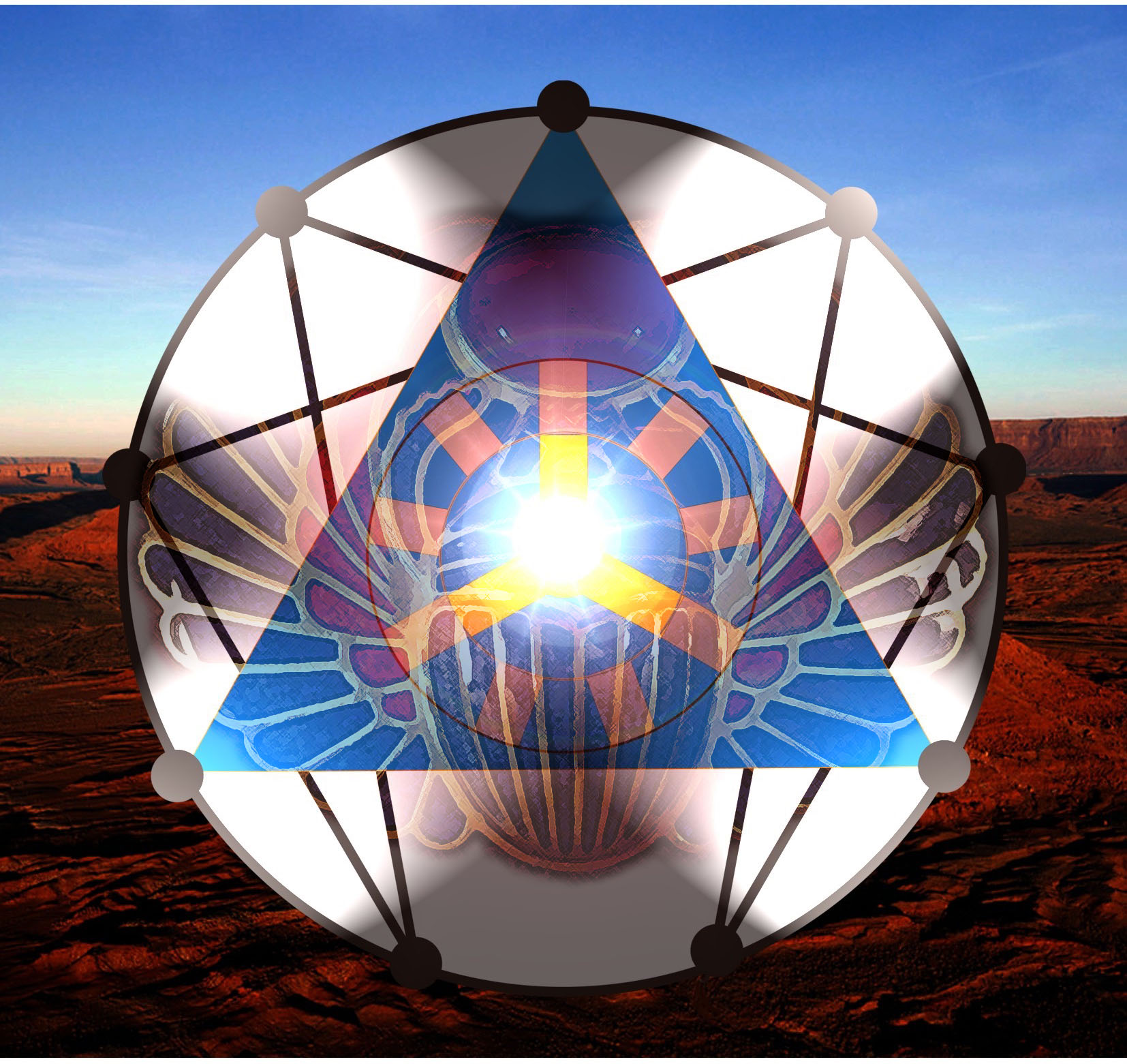
In the Silent Eye, we use the ‘stations’ of the enneagram as, firstly subjective, and latterly, objective windows by which the evolving soul can come to gaze on the beauty of its origins…
There are three wonderful elements of St Illtud’s church that speak of what I have come to think of as its spiritual ‘playfulness’ of purpose. One is the Caldey Stone, with its Ogham script, introduced in the last post; the second is a set of plaster engravings which depict very early Christian images; and the final one is a magnificent stained-glass window of St Illtud, himself – but with a very mysterious subtext…
We will consider the Caldey Stone in this post and conclude the series next time with a look at the other two.

As far as is known, the Caldey Stone was dug up in the old priory grounds in the 18th century. Local records from the time quote and elderly islander, ‘Ned of Caldey’, as saying that other inscribed stones had existed on the island; but none have ever been found.
The ancient Ogham script was used by the Druids and comprises a series of notches on the edge of the stone. The Caldey Stone, which has both Ogham and Latin inscribed on it, has been translated in several ways. One of the most respected experts, Professor Burkitt, translated the opening words as “With the sign of the cross, I, Illtud, have fashioned this monument.” This interpretation would date the Latin text to the time of St Illtud, who died in around A.D. 535.
But the Caldey Stone is only a single artefact. Around the lower parts of the walls of the Sanctuary in St Illtud’s sit over twenty plaster reproductions of ancient Christian art, and some of these are very enigmatic, indeed…

Previous parts of this series:
Part One, Part Two, Part Three
Share this:

Powerful memories…

A fictionalised account of the hillside rite from the Land of the Exiles workshop 2014, extract taken from Doomsday: Dark Sage.
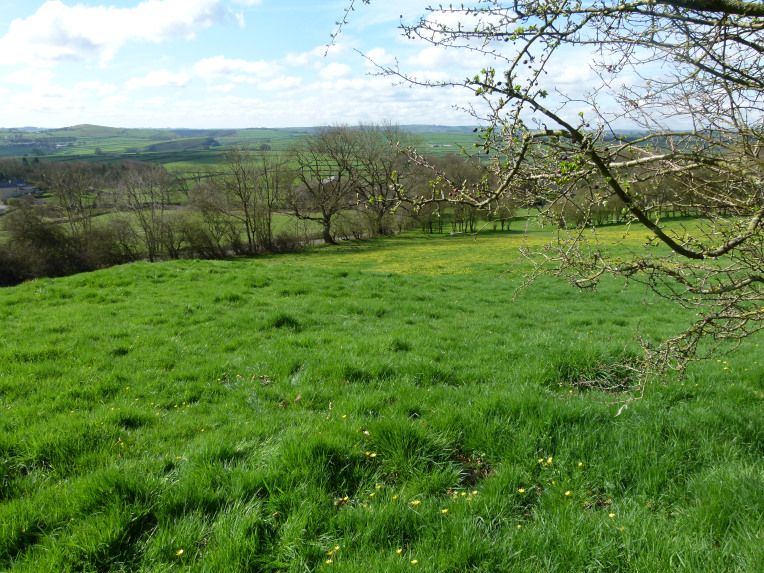
The seeing stone is chill against my spine as I wait for the dawn.
Their shades are close this night.
They are Wakeful.
I hear their whispers on the wind as the shift comes and I find them across the ages.
…She paints his eyes, smearing shimmering colour across the lids with gilded fingers. They work in silence in the yellow false-light. Garbed in black, they are not themselves. I feel them, yet something else overlays them, shadowing forth into the world; latent, coming, but not yet…not yet.
He leaves the place where she did not sleep; she looks into the cold surface that hangs like ice upon the wall, seeing other souls not her own. She is many, she is Three. I look through her eyes, as she…
View original post 977 more words
Share this:

Anyone using Microsoft Windows be aware…

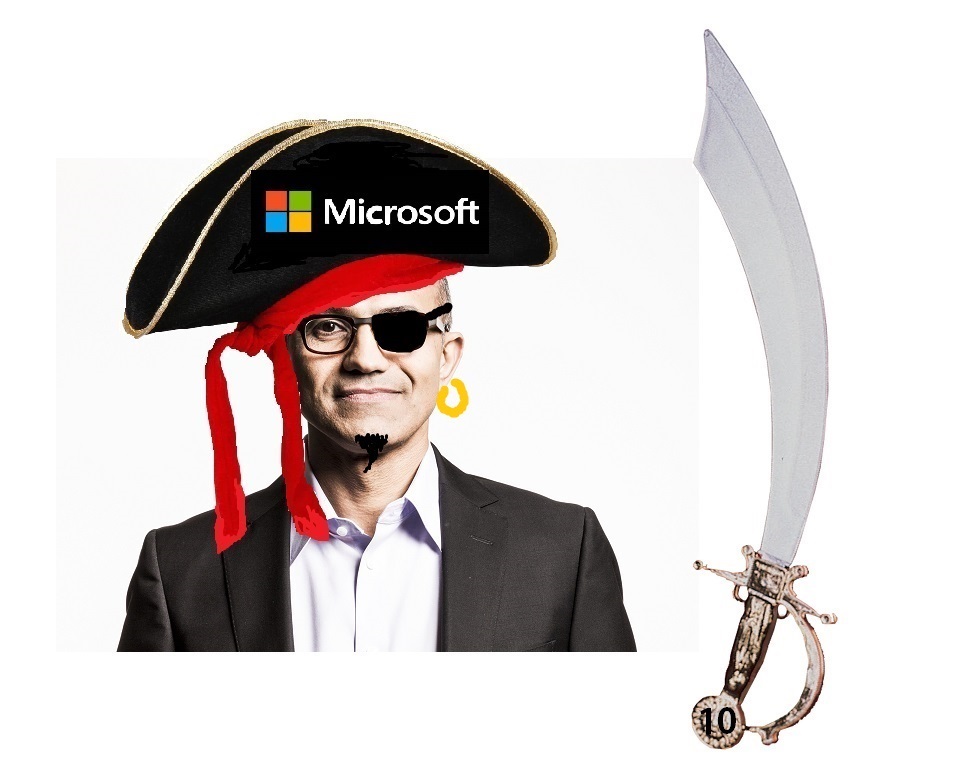
 Photo of CEO Cap’n Satya “Microbeard” Nadella (the blackguard) courtesy of Microsoft. Though ’twere embellished a wee bit.
Look sharp, mateys! If yer ship be flying the flag of Windows 7 or 8, batten down the hatches and prepare to repel boarders. Cap’n Microbeard and his bloodthirsty band of pirates be sailin’ the interwebz’ stormy seas.
A co-worker turned on her computer last Monday morning and was hailed with a message congratulating her on upgrading to Windows 10. Shiver me timbers! We be sailin’ with Windows 7 on all the computers in our office and I don’t aim to change me allegiance – not now, anyways. Maybe later when all of me programs are compatible, but maybe never. That’s fer me, the captain, to decide. Leastways, it should be.
Microsoft thinks differently.
Their Windows 10 upgrade icon is stuck faster ‘n a barnacle to every ship in our armada, and…
View original post 885 more words
Share this:


The Hushed Portal
In response to Sue Vincent’s
Thursday photo prompt – Still water… #writephoto
⦿
The dark wall at which you have been staring opens
Breathing,
You breathe for calm and hold its presence
Knowing,
That something truly new is happening
Happening,
As your skin happens, now tingling as a child’s might
Your child,
Not as given birth, but as born anew, from within
Within,
As, matched into the moment, you rise, seeing
Seeing,
As thought and memory drop away, leaving only Being
Being,
Which maps itself, and guides your trusting feet
Walking,
Walking through the portal to the impossible beach
Walking from beach to the spit of dark land
Narrowing,
Narrowing your walk as your stride ends the land
Feeling,
Feeling the new waters lap your toes, ankles, thighs
Laughing
Laughing as dying fear is washed away in endless, depthless joy
Smiling,
Smiling with the joy of sunrise
Smiling with the joy
Smiling with
Smiling alone
Never alone again
⦿
©Stephen Tanham 2016


 Sun in Gemini

You must be logged in to post a comment.