
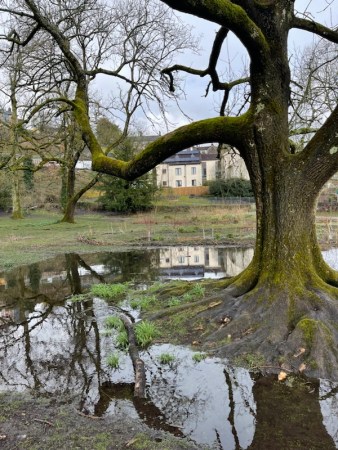
Dragged, sodden.
Dumped in
Wet and cold moraines
Of winter’s angry passing
Last vestiges of icy daggers
Point to spring with
Slowly dripping teeth
Fading with a promise to return
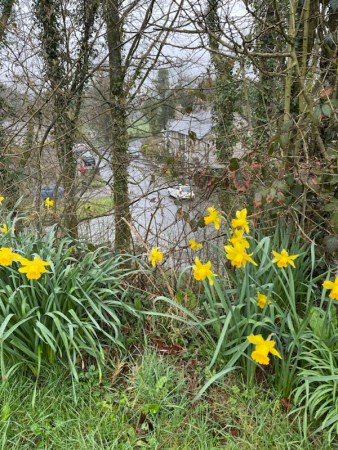
Daring us to rise from mud
And wash … and shine
With the faithful daffodils.
©Stephen Tanham 2024
All photos taken and processed on an iPhone 12 ProMax.
Stephen Tanham is a writer-photographer and mystical teacher. He is the founding Director of the Silent Eye, which offers an exciting journey of the soul guided by lessons, inner experience and outer companionship.
There are two blog streams:
(mystically-oriented writing)
and
(general interest, poetry, humour and travel)
Share this:


Weather-wise, there’s little of cheer at the moment. We left for Ireland in the rain, spent the week – apart from one blessed day in Waterford – in constant drizzle; and returned to face the past three days of driving downpours.
Upon our arrival, the neighbours informed us that the weather in our absence had been really good.
So it’s official, we’ve become ‘rain gods’ as Terry Pratchett would have said…
But there is one good thing about this time of year, if you’re a photographer – and that is the quality of what I call the ‘silver light’.
This precursor of the spring can best be seen when distant objects, such as (above) Morecambe’s seafront, are highlighted against the darker background of the hills of the Trough of Bowland, as in the photo.
The other seasonal factor, specific to this time of year, is the silver colour of the calm sea between Grange-over-sands, from where the photo was taken, and Morecambe, five miles away on the far shore.
I’d happily give up the lot for a bit of blue sky, but you’ve got to work with what you’ve got…
But then I am a rain-god.
Mutter, mutter.
———-
©Stephen Tanham 2024
All photos taken and processed on an iPhone 12 ProMax.
Stephen Tanham is a writer-photographer and mystical teacher. He is the founding Director of the Silent Eye, which offers an exciting journey of the soul guided by lessons, inner experience and outer companionship.
There are two blog streams:
(mystically-oriented writing)
and
(general interest, poetry, humour and travel)
Share this:

(📩 Irish travel, lots of photos, 1000 words. A good cup of coffee…)
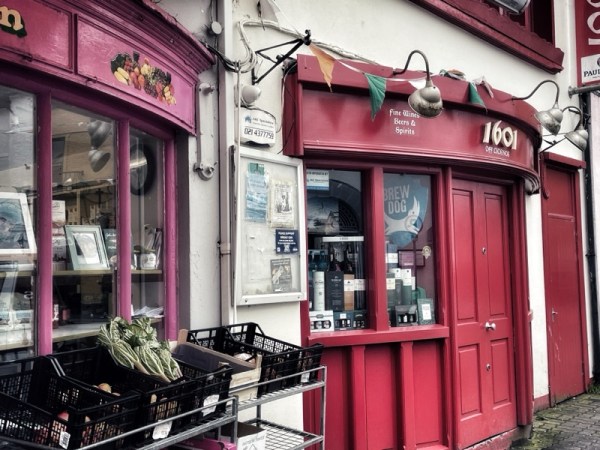
We all need a place of tranquility, a haven where we can take a retreat from a busy or even mad world. It may be a room in our house where we keep objects that mean something special to us. We may meditate there, or read books that have become special friends; perhaps even paint or write our blog…
Or it may be a place… Welcome to ours … Kinsale.
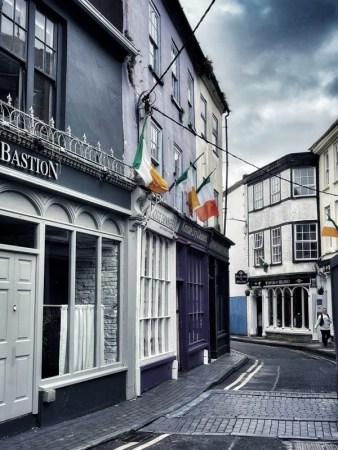
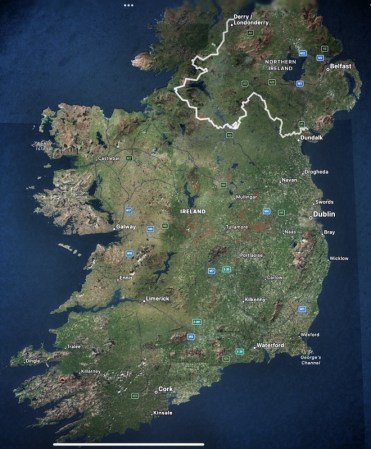
If we’re able to travel, we might like (and need) a week in the sun as winter grinds to its dreadful end through March… and often into April.
Last year, we managed a March week in the Canary Islands – Gran Canaria. That bit of sun did us the power of good, though the return journey’s walk through the car park at Leeds-Bradford Airport in the frozen darkness was an icy ordeal; and a reminder that, though the plane had taken off from Gran Canaria in ‘summer’, we were back in England in the middle of winter.
This year, we decided to forego the sun and revisit a place that became special to us over twenty years ago – the seaside town of Kinsale, on the south coast of Ireland, not far from Cobh (pronounced Cove), where the Titanic began its last and fateful voyage.
In the years that followed our first trip, it became at least an annual – and sometimes twice annual – trip to ‘calm the soul’, but we hadn’t been back for twelve years.
It was time to fix that…
We arranged to travel by car ferry from Holyhead to Dublin. Our first visit was to Waterford, also on the Irish south coast and covered here in last week’s post.
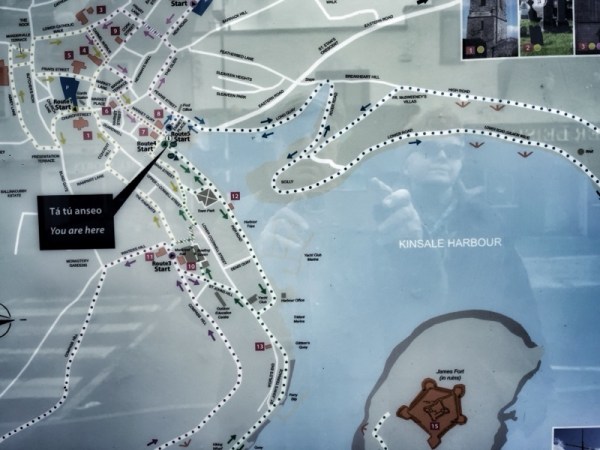
And then we’d make the two hour drive along the south coast to be reunited with our special place of tranquility: Kinsale.
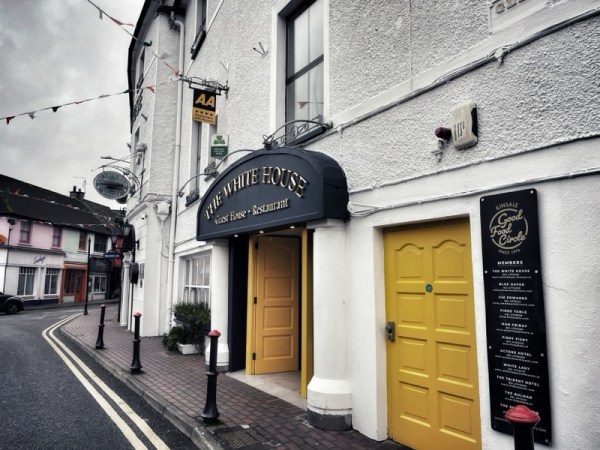
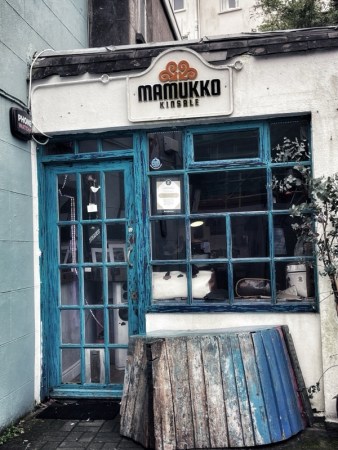
That first wander through the uneven and winding streets felt like we’d never been away. We drank in the old faces, shops, bars and restaurants – not to mention a harbour full of boats. Few things had changed. Once more we took in the individuality of the small shops; the emphasis on Irish fabrics and designs, and of course, the many pubs and bars with a simple and welcoming approach to travellers.
Kinsale is a prosperous place, but not overly expensive. It boasts at least five well-known restaurants. We had eaten at three of these in previous visits.
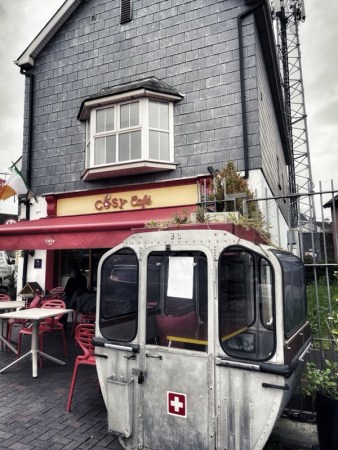
Perhaps best of all is the quality of these restaurants. When we were first here, a small corner plot that had once been a fish shop, was booming under a new name: ‘The Fishy Fishy Cafe’ (now the Cosy Cafe, above).
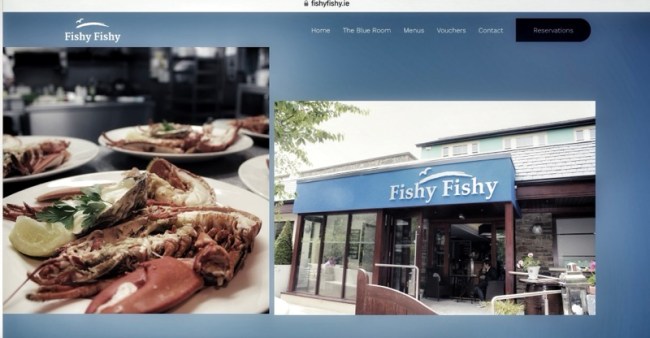
Twenty years on, Fishy Fishy is internationally famous (yet has remained good value) and has moved to a location between the children’s park and the quayside.
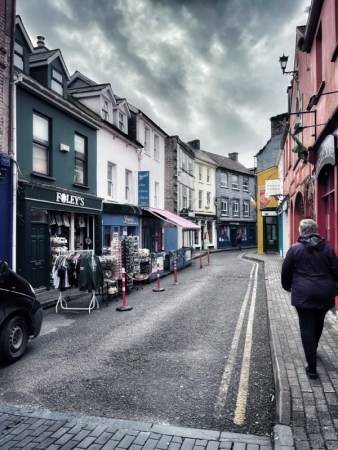
As we were touring around several locations in Ireland, (see post on Waterford, here) we had only three nights in Kinsale; barely time to scratch the surface of what the place has to offer.
Kinsale is close to Cobh – pronounced ‘cove’ – from where Titanic departed on its ill-fated voyage across the Atlantic.

My wife and I discovered Kinsale on a chance ‘winter getaway’ break twenty ago. We read a review, packed a rucksack each, and drove to Manchester airport to board a cheap flight to Cork – Southern Ireland’s second city after Dublin.
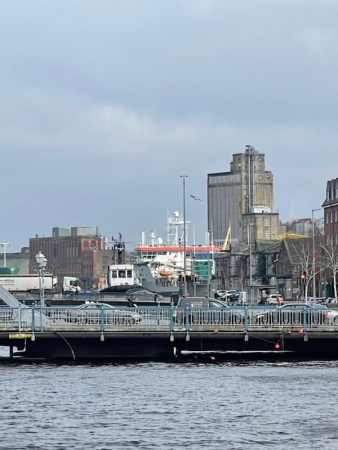
Cork is well worth visiting. It’s southern Ireland’s second city, and bustles with life. If you go, make sure you walk the length of Oliver Plunkett Street, with its hundreds of individual shops – and the historic English Market – see below.
The harbour in Cork is a working place. To our knowledge, it’s not visitor oriented. The main shopping streets more than make up for that.
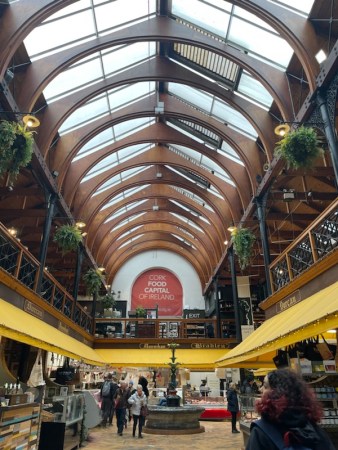
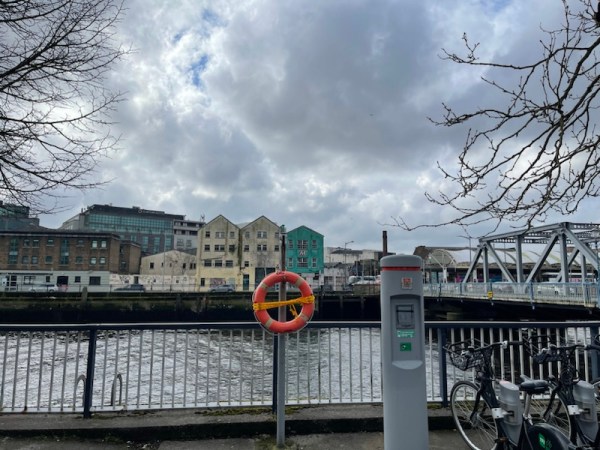
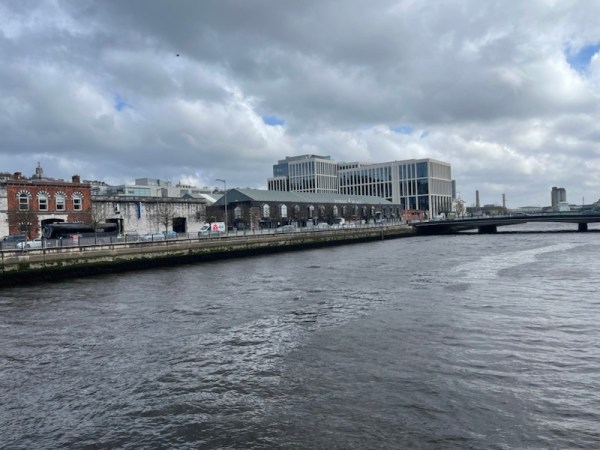
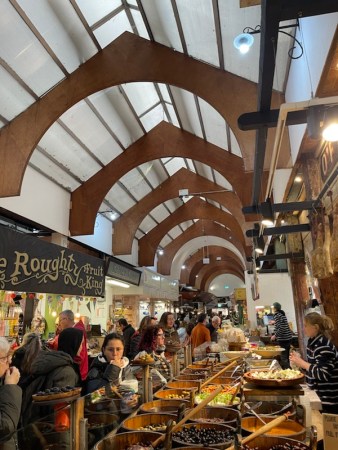
(Above/ Montage above: the many faces of Cork. The ornate and period roof belongs to the English Market, on which I will be doing a dedicated blog)
Our focus was on re-absorbing the peace and friendliness of Kinsale, but the day in Cork – via the bus – was well spent. I think I slept part of the way back…
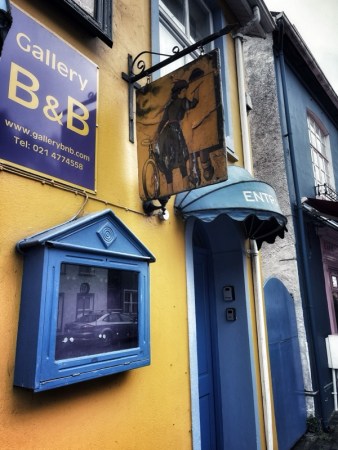
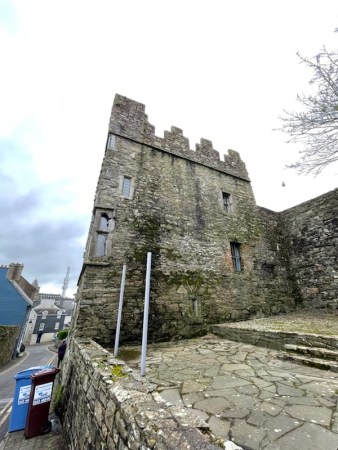
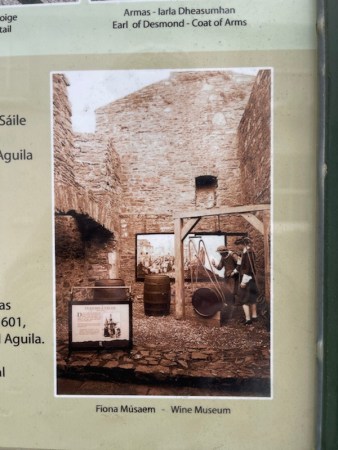
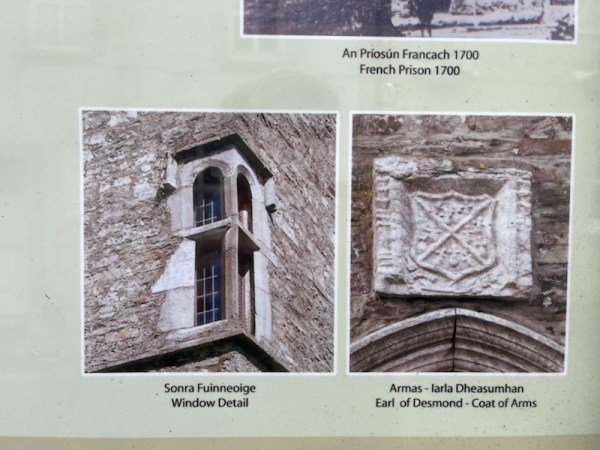
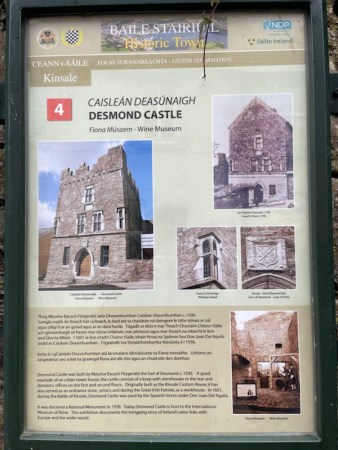
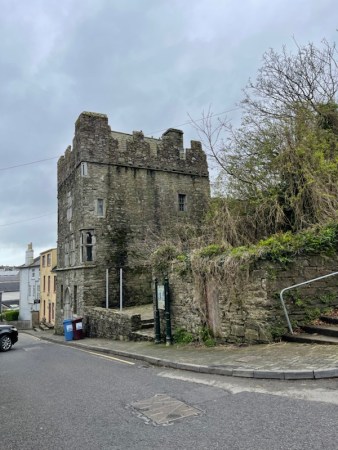
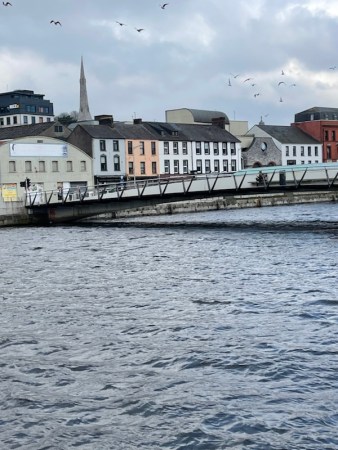
(Above: lots of history. Generations of people – and cultures have loved Kinsale)
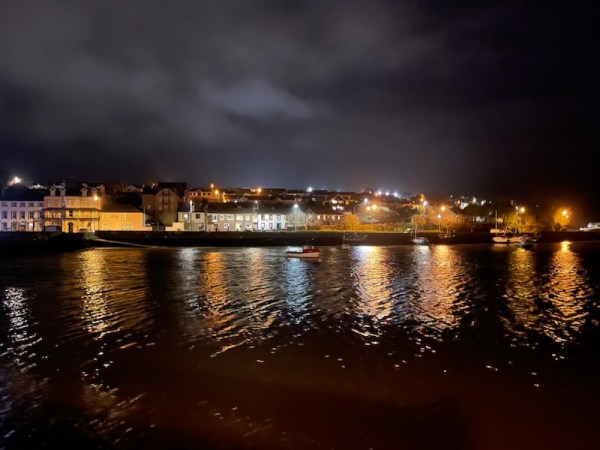
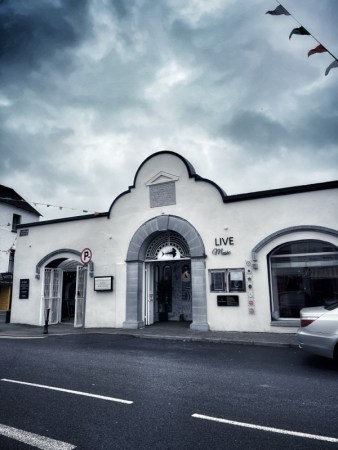
Did it make us peaceful? Yes. We had remade our contact with this special seaside town.
We didn’t want to leave – we never do. But our final two nights before getting the ferry back to Holyhead, were to be spent in Dalkey, just south of Dublin. Like many visitors, we had always driven through and on to somewhere else in Ireland. This would be our chance to sample a piece of Irish history that is busily reinventing itself as one of the Dublin metropolis’ favourite neighbours.
See next week’s post.
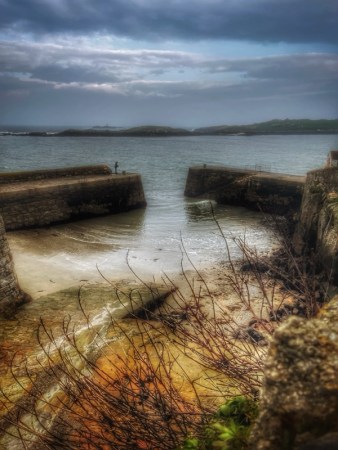
———————————
©Stephen Tanham 2024
All photos taken and processed on an iPhone 12 ProMax.
Stephen Tanham is a writer-photographer and mystical teacher. He is the founding Director of the Silent Eye, which offers an exciting journey of the soul guided by lessons, inner experience and outer companionship.
There are two blog streams:
(mystically-oriented writing)
and
(general interest, poetry, humour and travel)
Share this:


We regret that Mr Tanham’s return from Europe was delayed.
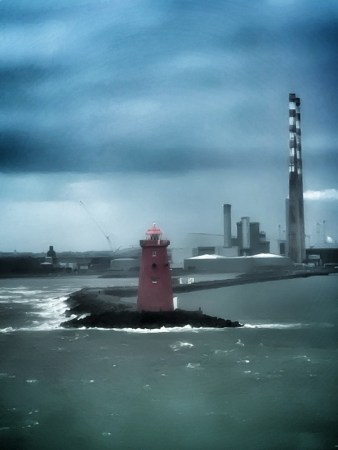
Normal service will be resumed as soon as possible.
😎
Share this:

(📩 100 words, seven photos – two minute read)
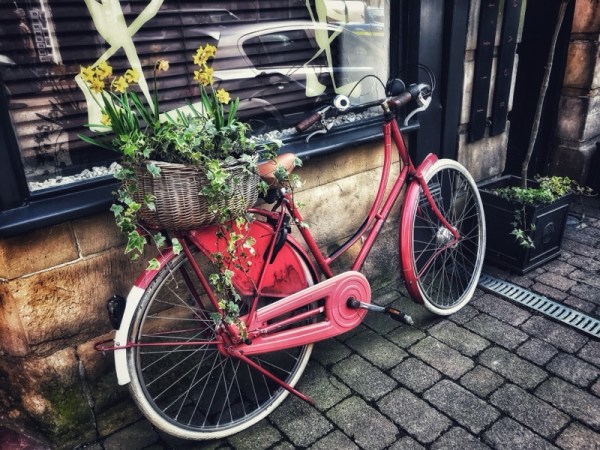
I noticed that some of my favourite photos had bicycles in them. There’s something ‘happy’ about a bicycle. I had a look back over the years I’ve been blogging and picked out my favourites.
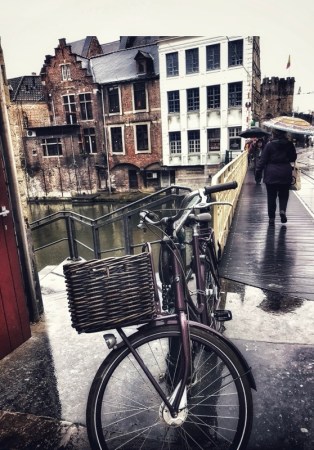
Some of these are for decoration, or an eye-catching feature to draw you into a local business.
Some are real machines, ready to carry you off on an adventure, ecologically powered by your own effort.
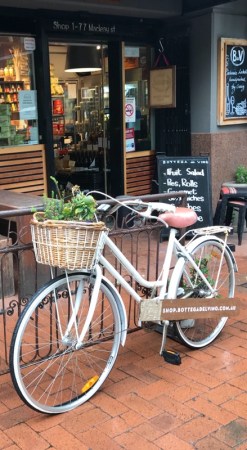
They’re all smilingly eye-catching. They all speak to the soul in their quiet and harmonious ways…
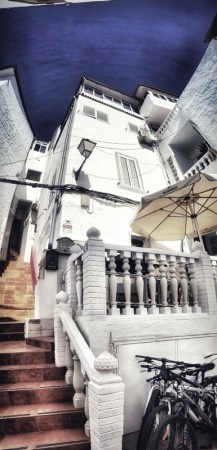
Some make you think of warmer, holiday destinations, where the idea of pedalling gently in the soft air sounds delightful.
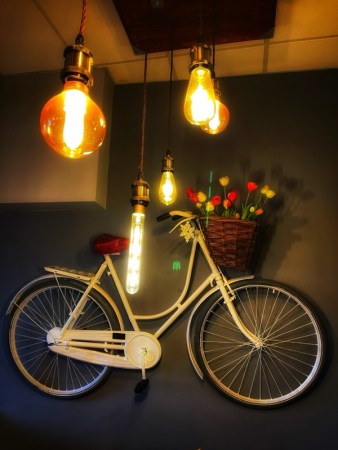
Others are purely decorative, fixed to walls as part of the decor, or even fixtures for lighting.
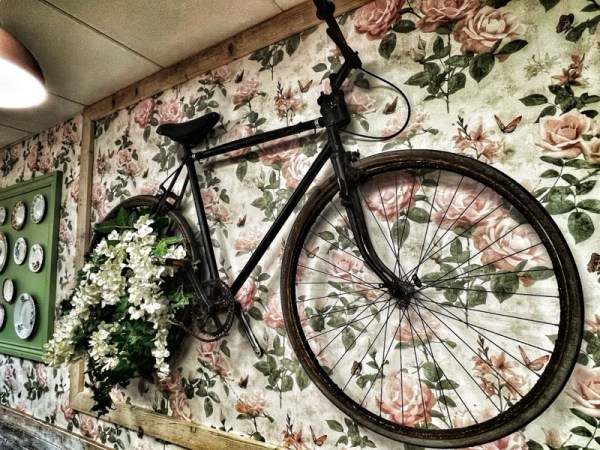
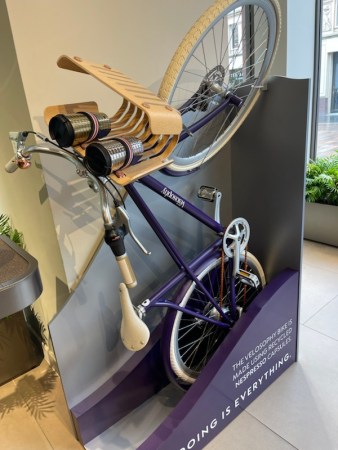
Some are even experimental; like this ‘Velesophy’ bike, made from recycled coffee capsules)
©Stephen Tanham 2024
All photos taken and processed on an iPhone 12 ProMax.
Stephen Tanham is a writer-photographer and mystical teacher. He is the founding Director of the Silent Eye, which offers an exciting journey of the soul guided by lessons, inner experience and outer companionship.
There are two blog streams:
(mystically-oriented writing)
and
(general interest, poetry, humour and travel)
Share this:

(📩 650 words, Travel musings, photography, a five minute read)

There’s something defining about the tall wooden figure facing off across the busy harbour-front road with its opponent: the icy-modern loading hoist, made in steel of various hues.

We’re in Waterford, the vibrant coastal heart of south-eastern Ireland; home to the famous crystal glass factory. I can close my eyes and still hear the harmonic ringing of one of our old (inherited) Waterford wine glasses after it was flicked by a teen’s fingernail.

The city was founded by Vikings in 914 CE. I had to read that twice when I first saw it on a tourist board; founded, not invaded.

There’s something of the ‘Viking spirit’ about the raw lumps of molten glass being twisted and ‘blown’ into shapes we eventually recognise as crystal-glassware.
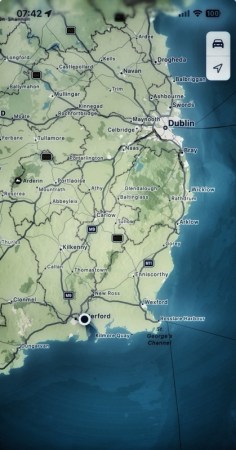
Waterford is a Viking city – and proud of its cultural – and no doubt genetic – past. The map shows why the Vikings chose it: adjacent to the ocean, sheltered by the Irish Sea rather than facing the fury of the Atlantic in the west… and a lot nearer to the power base of the English throne, which was vital for its survival in the first few centuries of its existence.
It’s wet, of course. Everyone was staring up at the blue sky in amazement: “In March, for heaven’s sake, they would say…”

This is Ireland at its winter best. Having said that, we did enjoy a lovely, blue-skied day when we arrived, just one, mind you… It gave us the light to take these photos of Waterford’s city centre while the shy sun shone…

There seems to be encouragement to explore artistic style within the city’s streets. The whole feel of the ocean-side city is creative. .

Anyone who’s experienced Irish hospitality knows they need no help in throwing a party. On our trip, we’ve experienced how powerful is the Irish love of a song and the singing of it. This tradition, shared so easily, takes us immediately into another place, one where the rules are flow, rather than the stop-start of ordinary conversation.
Poetry and most of the graphic arts, here, share this. Live Music is present everywhere and in everything.
It’s there in the poetic variance of tone in the language; in the way people – and even strangers – greet each other; and most of all in the dedication to making music, in all its forms.

This feeling was evidenced when we came across the music shop in the photo, above. Stocked with every conceivable folk instrument, the window simply invites you in…
Have a chat, y’dont need to buy anything…
But even more than the shop window, the entrance way of the music shop tells the whole story.
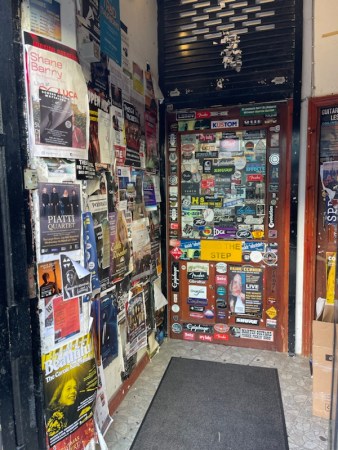
Festooned with small brochures, calling cards and messages, it’s a riot of contact, colour and identity. It’s the single most potent image I will take with me when we leave this fine place, tomorrow – as we continue our journey along the south coast to Kinsale.

More photos and travel notes from there… Thank you, Waterford. We’ll be back…
©Stephen Tanham 2024
All photos taken and processed on an iPhone 12 ProMax.
Stephen Tanham is a writer-photographer and mystical teacher. He is the founding Director of the Silent Eye, which offers an exciting journey of the soul guided by lessons, inner experience and outer companionship.
There are two blog streams:
(mystically-oriented writing)
and
(general interest, poetry, humour and travel)
Share this:

(Nimue) Today I’m sharing a song by Davóg Rynne which he has put out to raise money for Medicine Sans Frontiers in Gaza. It’s a good example of the …
Davóg Rynne’s bardic work
Share this:


Photographically, I’ve been lucky with Bolton-le-Sands. The constantly changing light lends itself to subtle moods, as long as you know where to find the good perspectives.
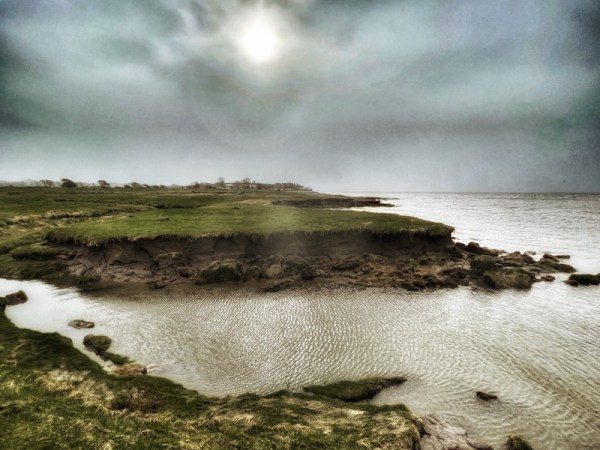
I time our return drive from visiting my mother’s care home, in Morecambe, to suit what I hope to meet – in terms of light, when we get to the rather weird tidal pools landscape.
Sometimes it works; requiring only experience as to where to stand, relative to the tide and the intense patterns the wind makes on the visible water – be it tidal pool or the full high tide, which is rare.
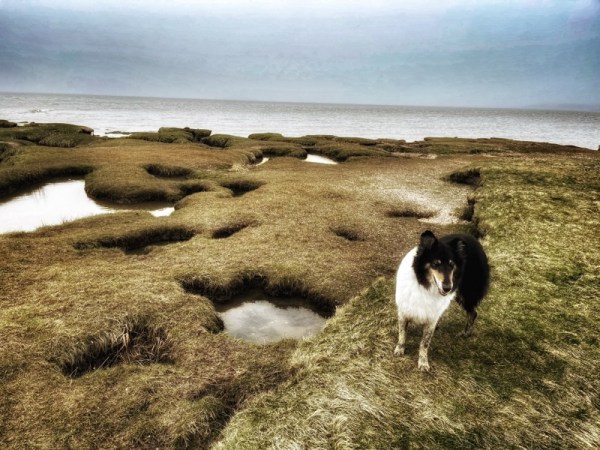
When it all lines up, it’s great. And Tess loves it, too. She particularly likes the challenge of finding an optimal way across the pools to retrieve the frisbee thrown by her cunning ‘dad’.
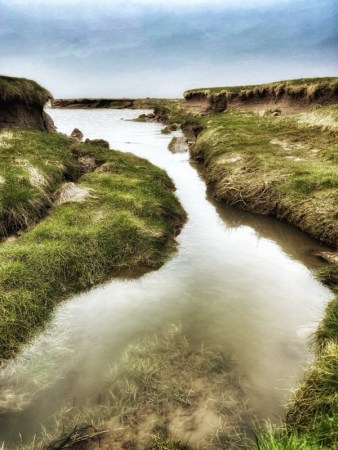
An online friend remarked that the shots reminded her of TV images that she had seen of the Romney Marshes in one of Charles Dickens’ tales.
That’s a great mood. More luck than skill but I’ll take it!
©Stephen Tanham 2024
All photos taken and processed on an iPhone 12 ProMax.
Stephen Tanham is a writer-photographer and mystical teacher. He is the founding Director of the Silent Eye, which offers an exciting journey of the soul guided by lessons, inner experience and outer companionship.
There are two blog streams:
(mystically-oriented writing)
and
(general interest, poetry, humour and travel)
Share this:


To me, there’s something of the late 1950’s about any image like this with ‘stripey light’ in it.
I was born in the middle of that decade. My parents were keen to escape the ‘factory streets’, and we moved out of the terraced housing of ‘old Bolton’ to a seemingly progressive village sitting on a hill halfway to Bury; where the cotton-barons were replaced by the local church mafia.
Mum was artistic and dad was into Zen and loved cars. You can imagine the horror of the local vicar, who promptly decided, along with his mate – the local primary school headmaster, to disown this ‘heathen family’.
They had their revenge, later, but that’s another story…
We had little money, but lots of intention. Back in those days, life seemed full of potential, and it manifested in our dreams … and the things we liked.
I’m not sure where it came from, but every time I see an image with ‘stripey light’ patterns, I get this undefined memory from my childhood – more of a feeling than a tangible recollection.
It may be because we had full venetian blinds in the living room of the new bungalow – whose monthly mortgage payments we couldn’t always afford. Kids are not supposed to hear these things … but do.
The blinds were bright red and spectacular in the right light. Mum painted flowers and landscapes on the back of cereal packets in oils and made fabulous clothes that saw cutting- patterns spread across the carpet in the living room.
The living room (the one with the red blinds in it) seemed to always have the sounds of Beethoven, Taikovsky and The King and I film track.
In an artistic sense, I was very style conscious, and, even as a child, I would study the interior of houses to see what people had made of them. The best ones were glimpsed only through windows, and I began to see what a difference a little money made to quality.
There’s another memory that goes with it – a red Mercedes sports car parked by a modern ‘bachelor-pad’ that looked so utterly sophisticated, I just wanted to stand and stare at it.

Many years later, I bought a (very) used one and considered having it restored… but a local Merc dealer talked me out of it. He said it was too far gone, and that the only good thing about it was the engine.
We used it for a few months over the summer, then managed to sell it as a partial trade-in for a company car. I didn’t even get my money back, but it had been fun.
The memory of it lingers. Soft evenings with the top down; country lanes that led to Southport; fish and chips as the sun set over the beach where the sea only appears a few times a year.
I’ve rambled a bit. See the power of those stripes!
©Stephen Tanham 2024
All photos taken and processed on an iPhone 12 ProMax.
Stephen Tanham is a writer-photographer and mystical teacher. He is the founding Director of the Silent Eye, which offers an exciting journey of the soul guided by lessons, inner experience and outer companionship.
There are two blog streams:
(mystically-oriented writing)
and
(general interest, poetry, humour and travel)
Share this:

(📩 1100 words, a ten minute read, the mystical journey)

We are so simple, and yet so complex. The simple is what we are; the complex is what we take ourselves to be before we discover what we are.
We are formed as points of awareness – consciousness – into a composite organic body made of the most sophisticated formations of matter. These cellular structures carry us from oneness with mother’s body to the rigours of living and surviving in an independent body – though our whole ‘eco-system’ is set up to enable that consciousness to understand the world around us.
Kindness and care are two of the inherent qualities we are born with. Love is another. These were not formed by our brains; they are of another order, and innate. They are properties of what we are.
Unlike plants, but like animals, we are mobile: we can choose where to take our physical and emotional refreshment. We share many aspects of this with other mammals, whose nature our bodies mirror, providing us with strong instincts to help us lengthen our lives; establish ourselves in relationships small or large; and unite, sexually, with another to deepen intimacy and create a nurtured home for new life.
Our growth, mental and physical, is predicated on being separate; though we long not to be so, in both intimate and societal groupings.
We realise early on that we often contradict ourselves…but we may not have the language to express it.
We have no choice but to identify with our bodies. The reality is that we are souls inhabiting a physical vehicle of cellular life. We have a strong sense of existing, but the ‘confinement’ of our pliable souls results in an increasingly rigid identification with the body. This becomes the first sense of self, the first identity.
If we are fortunate enough to encounter someone who can demonstrate the falseness of this, and give us a glimpse of the ‘energy of the larger being’ in the other perspective, we may choose to enter some kind of spiritual path. This journey will often focus us on the finer, unconscious energies that we already possess, and demonstrate the interplay of body, instincts and soul.
Meditation will be a key part of this, together with one of a variety of techniques for asking questions of ‘ourselves in the now’ – the present moment in which we have our being. we may be startled when we realise the truth of the ancient maxim: ‘Ask and ye shall receive’.
Few realise how responsive life can be if we simply ask it…
In parallel, we will be shown how the human soul in a body is powerfully drawn into a ‘constellation’ of behavioural characteristics that become the personality, or egoic self.
The ego is not the monster that pocket psychology has made it. The ego is the result of an essential defence of the hard-won self, and must continue to play that part until we find and adopt a more powerful identification of self than the purely egoic. The mystics, particularly those of us who endeavour to teach, need strong egos. Egos are the main tools with which we work in the world, and are a characteristic of intelligent living.
We will become used to ‘standing back’ from the ego and watching it a work – seeing how automatic our responses to life can be, from both positive and negative perspectives. Until this is an established discipline, it can be painful. Even then, it is likely to be uncomfortable. But it is essential and empowering if we want to live in the truth of ourselves.
At that point, we could be asked (usually by a friend, and with a smile) if there really is a self? The question usually comes as a shock, since the notion of a ‘higher self’ or ‘Self’ seems to be the heart of our growing awareness. Why is the question asked? Because it’s time to
To work with this, we need to begin a separation of being conscious, from being aware. Both can have casual meanings; something deeper is meant here. Behind our sense of self is a well established knowing of our existence at a deep level. Trying to ‘find a self’ is problematic, if we move beyond the egoic level, yet we already know the ego is a construct; a set of reactions knitted together by the mind for its intelligent use.
Where, then, is the true Self?
Here, we come to one of the most potent gates of consciousness.
Since the infant mind developed, we have been refining its use of ‘objects’. There is a ‘me’ and there are its ‘objects’, objects that have edges, are individual. and together make up a consistent but shifting ‘world’. This subject-object duality is the basis of the mind’s development. We name everything. Naming is the mind at work with its objects. This power is even referenced in the Bible’s Genesis.
Faced with the question: ‘does the self exist?’ we are brought back from the familiarity of subject-object to consider that though the question exists, the questioner may not… at least in the form we expect.
We may encounter the notion of ‘the void’. This reduction of the self to ‘nothing’ will challenge us so much that it shakes our taken-for-granted foundations. Personally, I find the use of the word ‘void’ a misleading one; it has negative connotations in modern life beyond the intent of those who first used it, mystically.
Instead, let’s consider it as ‘nothing’. We may already have played with the idea that the subject (me) exists, and that the objects of our consciousness – outside of our selves – do not. Now we are asked what happens if we take away even this self?
That state of ‘nothing’ has much to teach us. I will not spoil anyone’s journey into it, save to say that the voyage is one that makes, rather than destroys, us.
Being nothing is not no-being. Being nothing is begun by having no objects matched to your state of subject, and then to stand in the awe of your ‘part’ of being – which turns out to be intimately related to the whole of being.
Much of this may remain, at best, mysterious to the reader. But it may lay a trail of mystery that entices … and encourages.
Please let it…
———————————-
©Stephen Tanham 2024
All photos taken and processed on an iPhone 12 ProMax.
Stephen Tanham is a writer-photographer and mystical teacher. He is the founding Director of the Silent Eye, which offers an exciting journey of the soul guided by lessons, inner experience and outer companionship.
There are two blog streams:
(mystically-oriented writing)
and
(general interest, poetry, humour and travel)
Share this:

📩 110 words, Poetry, a two-minute read
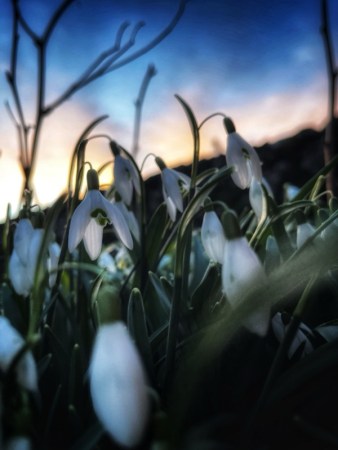
Within the evening’s petals shone,
Like breath for eyes emerged from night,
A brighter hue of rays to come
A soft caress, like parted lovers write
Way-stations of the coming sun
All held within the form and fold
Of snowdrops growing pearls within the night.
©Stephen Tanham 2024
All photos taken and processed on an iPhone 12 ProMax.
Stephen Tanham is a writer-photographer and mystical teacher. He is the founding Director of the Silent Eye, which offers a journey of the soul guided by lessons, inner guidance and outer companionship.
There are two blog streams:
(mystically-oriented writing)
and
(general interest, poetry, humour and travel)
Share this:

(📩 300 words, photo and prose. A five minute read)
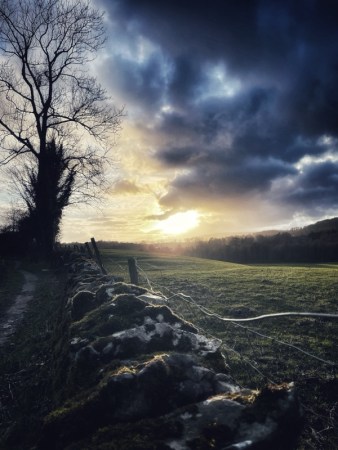
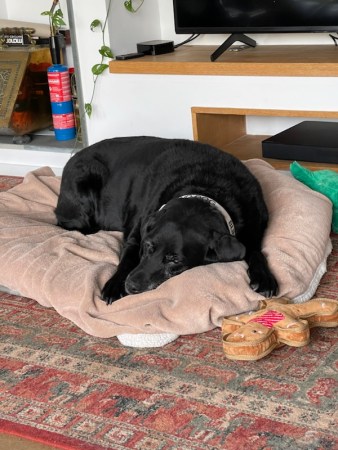
Our evening dog walk takes about forty minutes – a bit longer at the moment as we are looking after a friend’s blind Labrador, Rosie, and, while she’s fully mobile, she has to take things slowly and use her poor nose as eyes…
We leave the house through the back gate, then pick up the old canal path and walk along it for about twenty minutes, stopping for the dog necessaries as appropriate.
I can understand why many people have no interest in having a dog. I was always a cat person until my wife persuaded ‘us’ to have a collie. I have no regrets. The companionship – not to mention the constant exercise – is wonderful.
But not on a freezing evening…
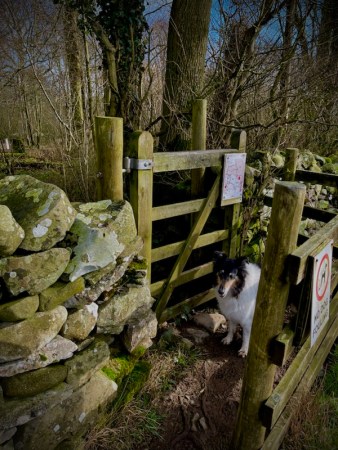
Looking after two dogs is a challenge.
The canal path takes is to one of the famous ‘bridges to nowhere‘; outliers of a former age when these amazing waterways were the backbone of trade – the lorries of their time, albeit slower.
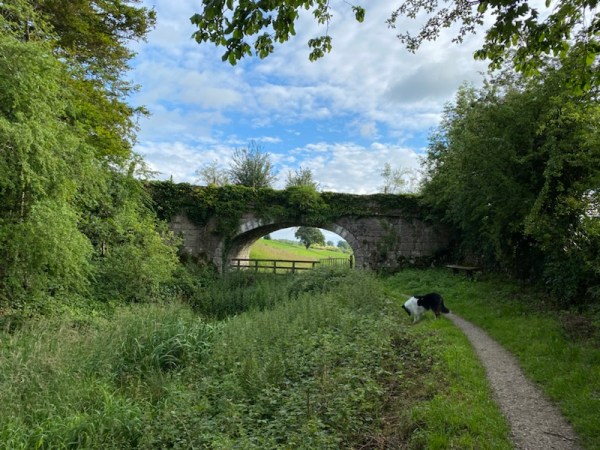
The walk ends at Bridge 178, above. But the beautiful old stone construction is not the main attraction. Sitting at a bench to the right of where the photo was taken is one of the best views for miles around. This stretch of the old Preston-Kendal canal was famous for its views, and this section was the bargers’ favourite.
And here, in the full glory of the sunset, you can see why…
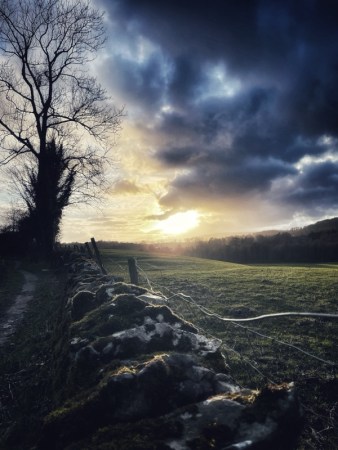
We call it the place of the sunsets. It never fails to delight.
———-
©Stephen Tanham 2024
All photos taken and processed on an iPhone 12 ProMax.
Stephen Tanham is a writer-photographer and mystical teacher. He is the founding Director of the Silent Eye, which offers a journey of the soul guided by lessons, inner guidance and outer companionship.
There are two blog streams:
(mystically-oriented writing)
and
(general interest, poetry, humour and travel)


 Sun in Gemini
You must be logged in to post a comment.