

Photographically, I’ve been lucky with Bolton-le-Sands. The constantly changing light lends itself to subtle moods, as long as you know where to find the good perspectives.
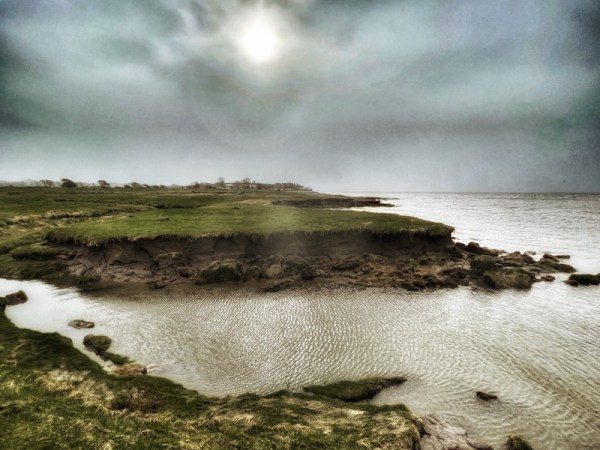
I time our return drive from visiting my mother’s care home, in Morecambe, to suit what I hope to meet – in terms of light, when we get to the rather weird tidal pools landscape.
Sometimes it works; requiring only experience as to where to stand, relative to the tide and the intense patterns the wind makes on the visible water – be it tidal pool or the full high tide, which is rare.
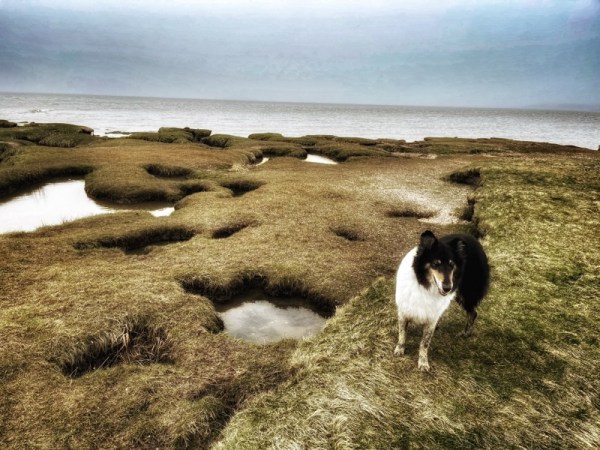
When it all lines up, it’s great. And Tess loves it, too. She particularly likes the challenge of finding an optimal way across the pools to retrieve the frisbee thrown by her cunning ‘dad’.
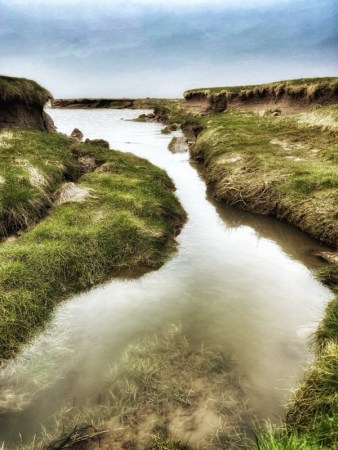
An online friend remarked that the shots reminded her of TV images that she had seen of the Romney Marshes in one of Charles Dickens’ tales.
That’s a great mood. More luck than skill but I’ll take it!
©Stephen Tanham 2024
All photos taken and processed on an iPhone 12 ProMax.
Stephen Tanham is a writer-photographer and mystical teacher. He is the founding Director of the Silent Eye, which offers an exciting journey of the soul guided by lessons, inner experience and outer companionship.
There are two blog streams:
(mystically-oriented writing)
and
(general interest, poetry, humour and travel)
Share this:


To me, there’s something of the late 1950’s about any image like this with ‘stripey light’ in it.
I was born in the middle of that decade. My parents were keen to escape the ‘factory streets’, and we moved out of the terraced housing of ‘old Bolton’ to a seemingly progressive village sitting on a hill halfway to Bury; where the cotton-barons were replaced by the local church mafia.
Mum was artistic and dad was into Zen and loved cars. You can imagine the horror of the local vicar, who promptly decided, along with his mate – the local primary school headmaster, to disown this ‘heathen family’.
They had their revenge, later, but that’s another story…
We had little money, but lots of intention. Back in those days, life seemed full of potential, and it manifested in our dreams … and the things we liked.
I’m not sure where it came from, but every time I see an image with ‘stripey light’ patterns, I get this undefined memory from my childhood – more of a feeling than a tangible recollection.
It may be because we had full venetian blinds in the living room of the new bungalow – whose monthly mortgage payments we couldn’t always afford. Kids are not supposed to hear these things … but do.
The blinds were bright red and spectacular in the right light. Mum painted flowers and landscapes on the back of cereal packets in oils and made fabulous clothes that saw cutting- patterns spread across the carpet in the living room.
The living room (the one with the red blinds in it) seemed to always have the sounds of Beethoven, Taikovsky and The King and I film track.
In an artistic sense, I was very style conscious, and, even as a child, I would study the interior of houses to see what people had made of them. The best ones were glimpsed only through windows, and I began to see what a difference a little money made to quality.
There’s another memory that goes with it – a red Mercedes sports car parked by a modern ‘bachelor-pad’ that looked so utterly sophisticated, I just wanted to stand and stare at it.

Many years later, I bought a (very) used one and considered having it restored… but a local Merc dealer talked me out of it. He said it was too far gone, and that the only good thing about it was the engine.
We used it for a few months over the summer, then managed to sell it as a partial trade-in for a company car. I didn’t even get my money back, but it had been fun.
The memory of it lingers. Soft evenings with the top down; country lanes that led to Southport; fish and chips as the sun set over the beach where the sea only appears a few times a year.
I’ve rambled a bit. See the power of those stripes!
©Stephen Tanham 2024
All photos taken and processed on an iPhone 12 ProMax.
Stephen Tanham is a writer-photographer and mystical teacher. He is the founding Director of the Silent Eye, which offers an exciting journey of the soul guided by lessons, inner experience and outer companionship.
There are two blog streams:
(mystically-oriented writing)
and
(general interest, poetry, humour and travel)
Share this:

(📩 1100 words, a ten minute read, the mystical journey)

We are so simple, and yet so complex. The simple is what we are; the complex is what we take ourselves to be before we discover what we are.
We are formed as points of awareness – consciousness – into a composite organic body made of the most sophisticated formations of matter. These cellular structures carry us from oneness with mother’s body to the rigours of living and surviving in an independent body – though our whole ‘eco-system’ is set up to enable that consciousness to understand the world around us.
Kindness and care are two of the inherent qualities we are born with. Love is another. These were not formed by our brains; they are of another order, and innate. They are properties of what we are.
Unlike plants, but like animals, we are mobile: we can choose where to take our physical and emotional refreshment. We share many aspects of this with other mammals, whose nature our bodies mirror, providing us with strong instincts to help us lengthen our lives; establish ourselves in relationships small or large; and unite, sexually, with another to deepen intimacy and create a nurtured home for new life.
Our growth, mental and physical, is predicated on being separate; though we long not to be so, in both intimate and societal groupings.
We realise early on that we often contradict ourselves…but we may not have the language to express it.
We have no choice but to identify with our bodies. The reality is that we are souls inhabiting a physical vehicle of cellular life. We have a strong sense of existing, but the ‘confinement’ of our pliable souls results in an increasingly rigid identification with the body. This becomes the first sense of self, the first identity.
If we are fortunate enough to encounter someone who can demonstrate the falseness of this, and give us a glimpse of the ‘energy of the larger being’ in the other perspective, we may choose to enter some kind of spiritual path. This journey will often focus us on the finer, unconscious energies that we already possess, and demonstrate the interplay of body, instincts and soul.
Meditation will be a key part of this, together with one of a variety of techniques for asking questions of ‘ourselves in the now’ – the present moment in which we have our being. we may be startled when we realise the truth of the ancient maxim: ‘Ask and ye shall receive’.
Few realise how responsive life can be if we simply ask it…
In parallel, we will be shown how the human soul in a body is powerfully drawn into a ‘constellation’ of behavioural characteristics that become the personality, or egoic self.
The ego is not the monster that pocket psychology has made it. The ego is the result of an essential defence of the hard-won self, and must continue to play that part until we find and adopt a more powerful identification of self than the purely egoic. The mystics, particularly those of us who endeavour to teach, need strong egos. Egos are the main tools with which we work in the world, and are a characteristic of intelligent living.
We will become used to ‘standing back’ from the ego and watching it a work – seeing how automatic our responses to life can be, from both positive and negative perspectives. Until this is an established discipline, it can be painful. Even then, it is likely to be uncomfortable. But it is essential and empowering if we want to live in the truth of ourselves.
At that point, we could be asked (usually by a friend, and with a smile) if there really is a self? The question usually comes as a shock, since the notion of a ‘higher self’ or ‘Self’ seems to be the heart of our growing awareness. Why is the question asked? Because it’s time to
To work with this, we need to begin a separation of being conscious, from being aware. Both can have casual meanings; something deeper is meant here. Behind our sense of self is a well established knowing of our existence at a deep level. Trying to ‘find a self’ is problematic, if we move beyond the egoic level, yet we already know the ego is a construct; a set of reactions knitted together by the mind for its intelligent use.
Where, then, is the true Self?
Here, we come to one of the most potent gates of consciousness.
Since the infant mind developed, we have been refining its use of ‘objects’. There is a ‘me’ and there are its ‘objects’, objects that have edges, are individual. and together make up a consistent but shifting ‘world’. This subject-object duality is the basis of the mind’s development. We name everything. Naming is the mind at work with its objects. This power is even referenced in the Bible’s Genesis.
Faced with the question: ‘does the self exist?’ we are brought back from the familiarity of subject-object to consider that though the question exists, the questioner may not… at least in the form we expect.
We may encounter the notion of ‘the void’. This reduction of the self to ‘nothing’ will challenge us so much that it shakes our taken-for-granted foundations. Personally, I find the use of the word ‘void’ a misleading one; it has negative connotations in modern life beyond the intent of those who first used it, mystically.
Instead, let’s consider it as ‘nothing’. We may already have played with the idea that the subject (me) exists, and that the objects of our consciousness – outside of our selves – do not. Now we are asked what happens if we take away even this self?
That state of ‘nothing’ has much to teach us. I will not spoil anyone’s journey into it, save to say that the voyage is one that makes, rather than destroys, us.
Being nothing is not no-being. Being nothing is begun by having no objects matched to your state of subject, and then to stand in the awe of your ‘part’ of being – which turns out to be intimately related to the whole of being.
Much of this may remain, at best, mysterious to the reader. But it may lay a trail of mystery that entices … and encourages.
Please let it…
———————————-
©Stephen Tanham 2024
All photos taken and processed on an iPhone 12 ProMax.
Stephen Tanham is a writer-photographer and mystical teacher. He is the founding Director of the Silent Eye, which offers an exciting journey of the soul guided by lessons, inner experience and outer companionship.
There are two blog streams:
(mystically-oriented writing)
and
(general interest, poetry, humour and travel)
Share this:

📩 110 words, Poetry, a two-minute read
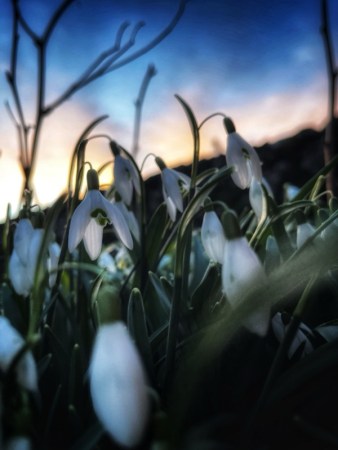
Within the evening’s petals shone,
Like breath for eyes emerged from night,
A brighter hue of rays to come
A soft caress, like parted lovers write
Way-stations of the coming sun
All held within the form and fold
Of snowdrops growing pearls within the night.
©Stephen Tanham 2024
All photos taken and processed on an iPhone 12 ProMax.
Stephen Tanham is a writer-photographer and mystical teacher. He is the founding Director of the Silent Eye, which offers a journey of the soul guided by lessons, inner guidance and outer companionship.
There are two blog streams:
(mystically-oriented writing)
and
(general interest, poetry, humour and travel)
Share this:

(📩 300 words, photo and prose. A five minute read)
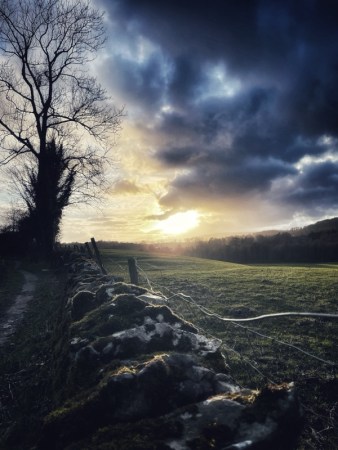
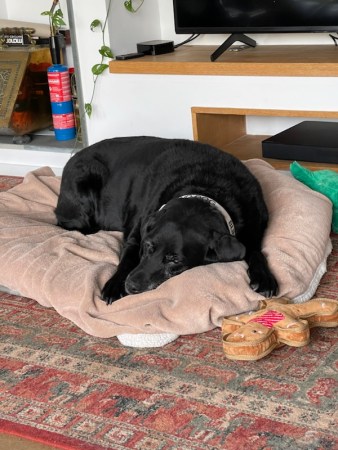
Our evening dog walk takes about forty minutes – a bit longer at the moment as we are looking after a friend’s blind Labrador, Rosie, and, while she’s fully mobile, she has to take things slowly and use her poor nose as eyes…
We leave the house through the back gate, then pick up the old canal path and walk along it for about twenty minutes, stopping for the dog necessaries as appropriate.
I can understand why many people have no interest in having a dog. I was always a cat person until my wife persuaded ‘us’ to have a collie. I have no regrets. The companionship – not to mention the constant exercise – is wonderful.
But not on a freezing evening…
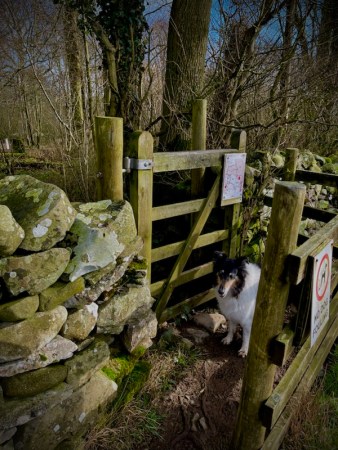
Looking after two dogs is a challenge.
The canal path takes is to one of the famous ‘bridges to nowhere‘; outliers of a former age when these amazing waterways were the backbone of trade – the lorries of their time, albeit slower.
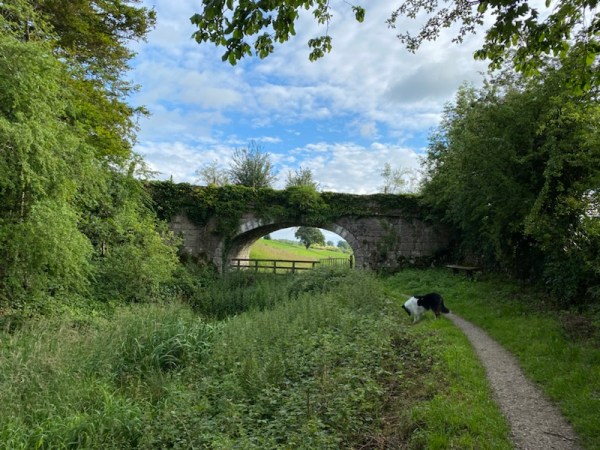
The walk ends at Bridge 178, above. But the beautiful old stone construction is not the main attraction. Sitting at a bench to the right of where the photo was taken is one of the best views for miles around. This stretch of the old Preston-Kendal canal was famous for its views, and this section was the bargers’ favourite.
And here, in the full glory of the sunset, you can see why…
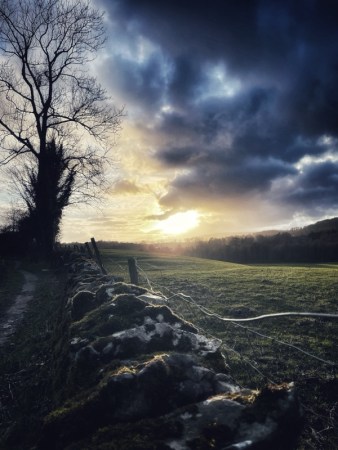
We call it the place of the sunsets. It never fails to delight.
———-
©Stephen Tanham 2024
All photos taken and processed on an iPhone 12 ProMax.
Stephen Tanham is a writer-photographer and mystical teacher. He is the founding Director of the Silent Eye, which offers a journey of the soul guided by lessons, inner guidance and outer companionship.
There are two blog streams:
(mystically-oriented writing)
and
(general interest, poetry, humour and travel)
Share this:

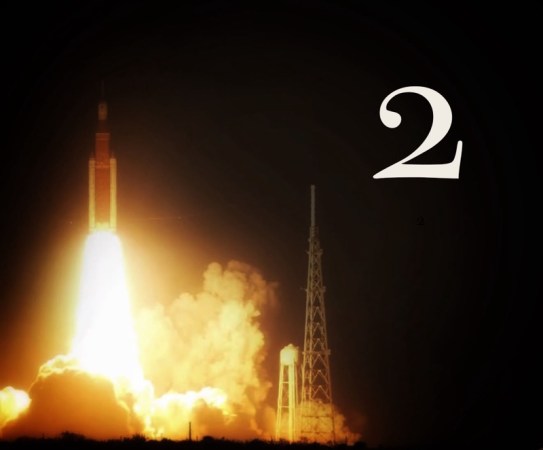
‘Our life-force begins its journey with the instincts.’
Hearing that stopped me in my tracks. It was so exact, yet, at the same time, so counter to what I would have written on my own.
Prior to this, I would have considered the life-force to be somehow ‘higher’ to the instincts; the latter being the pesky habitual appetite-related objects that get in the way of us being ‘better humans’.
We can think of many examples. We all know the effects of fear in paralysing what we need to do; of too much drink at that dinner party; or letting our hunger make emotional pictures that override sensible eating patterns. All these begin with the instincts. Most relate to threats or appetites. The threats are usually to our perceived sense of ‘self’ at the egoic rather than the existential level, but they all pattern and distort our ‘self in the world’.
We can, though, clearly see the benefits of, for example, listening to the ‘intelligence of fear’, and trusting that sixth sense when it tells us we are in danger or even involved in a threatening situation which may not be clearly defined.
We can make all of this much more conscious…
As I wrote in the last post, there are some similarities between the psyche and rockets… The life-force IS our fuel. The fact that it is all routed to our conscious minds through the instincts is significant for everything we do and try to do.
There is a helpful analogy between the brain and the hand, one that models the evolutionary basis of our brains, and illustrates the way life – and intelligence – has evolved and is evolving through us.
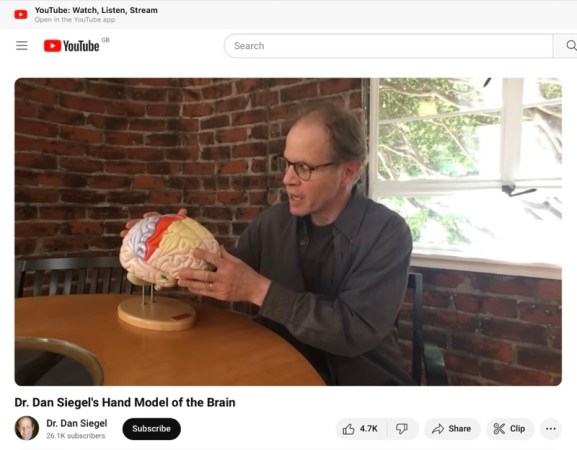
The model was developed by Dr Daniel Siegel to help us visualise this evolutionary drive at work in nature.
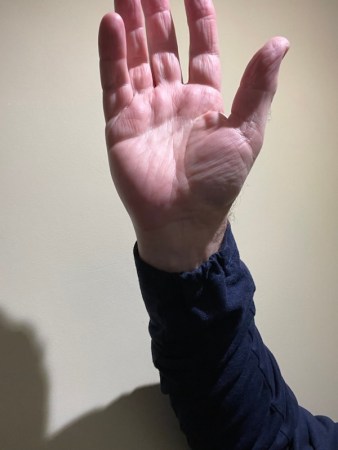
Hold up an arm of your choice, so that the forearm is vertical – representing the spinal column. The spine, together with the flat palm of the hand is known as the brain-stem, or mid-brain, and is the foundation of our survival ‘fight, flight or faint’ protective responses. These have been around for over 200 millions years, and interact, closely with what came next: the limbic brain, represented by the folded thumb in the next image. The limbic system took evolution another hundred million years to develop. These are not trivial structures!
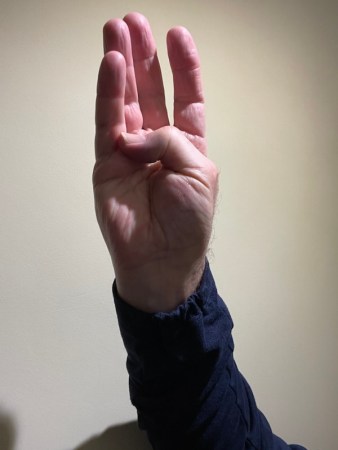
This combined sub-cortex structure is often referred to as the ‘reptile brain‘, although the mapping is only approximate. The reptile brain contains our core instincts, but none of the secondary features that ‘check and question’ the reactive actions the ‘reptile’ triggers. Real reptiles lay their eggs and leave the offspring to fend for themselves; there is no continuous ‘suckle, check and care’ as offered by mammal such as humans, dolphins, hippos, etc.
The ‘cold-blooded’ reptile is concerned only with survival. Above that and closely coupled with the spinal column is the mid-brain – the palm of the hand, below, with the odd structure of the folded thumb.
The combination of the folded thumb and palm creates the limbic-centric mid-brain, which adds – significantly – the emotions and our motivations. Now we have immediate reactions to the events of life that are of a different quality to the fight and flight responses of the reptile. The emotions are closely-coupled to the physiology and physicality of our organism. They may well convey information to us that is not of a logical nature, but of essential importance – such as the desirability and psychological ‘fit’ of a ‘mate’.
The limbic part of the brain also gives us the all-important means to connect with our caregivers, meaning that we can form the vital bonds with those who have the power to protect and nurture us. This is the basis of our whole social instinct system, which is many times more developed than the survival or even sexual instincts.
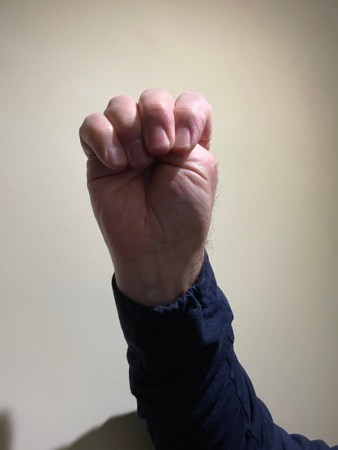
If we fold the fingers over the ‘limbic region and brain-stem, we can see how interconnected the brain is – and this is at the heart of how it works. Each new development, often taking millions of years, has integrated itself, deeply, with what came before. This has resulted in the mind having great power over what we do with our brains and body, and also an astonishing degree of ‘plasticity’ in the functioning of the brain, itself.
Brain cells are not limited to the head. New neural networks of brain cells are being discovered in the heart and lungs, for example. It is becoming obvious that our former understanding of the brain is tiny compared to its real potential.
In the next post of this series, we will consider the function of the outer layers of the brain, with particular reference to the neo-cortex, the most recent layer, and consider how our instincts may not simply be outliers of ancient evolution, but advanced societal functions capable of coming to the rescue of mankind in terms of inner strength, deep relationships and astonishing interchanges of human energy…
They might be arriving just in time.
©Stephen Tanham 2024
All photos taken and processed on an iPhone 12 ProMax.
Stephen Tanham is a writer-photographer and mystical teacher. He is the founding Director of the Silent Eye, which offers a journey of the soul guided by lessons, inner guidance and outer companionship.
There are two blog streams:
(mystically-oriented writing)
and
(general interest, poetry, humour and travel)
Share this:

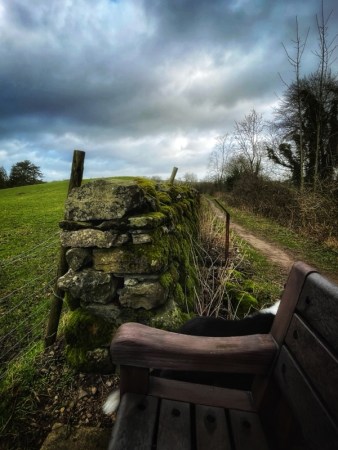
If you turn around
And your dog is nowhere to be seen
She may be behind you
And smarter than you are.
———-
©Stephen Tanham 2024
———-
All photos taken and processed on an iPhone 12 ProMax.
Stephen Tanham is a writer-photographer and mystical teacher. He is the founding Director of the Silent Eye, which offers a journey of the soul guided by lessons, inner guidance and outer companionship.
There are two blog streams:
(mystically-oriented writing)
and
(general interest, poetry, humour and travel)
Share this:

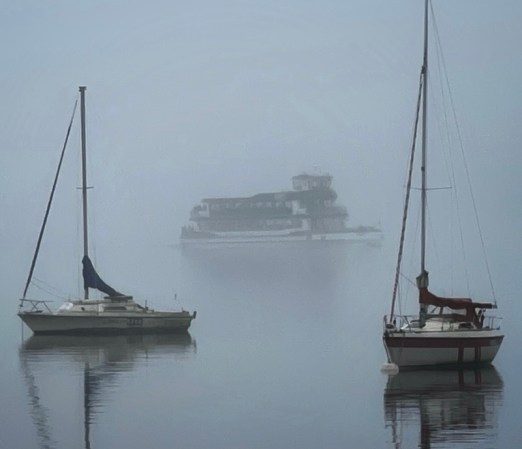
February has few attractions, other than it gets us to March, the prospect of Easter, and a definite change in the light.
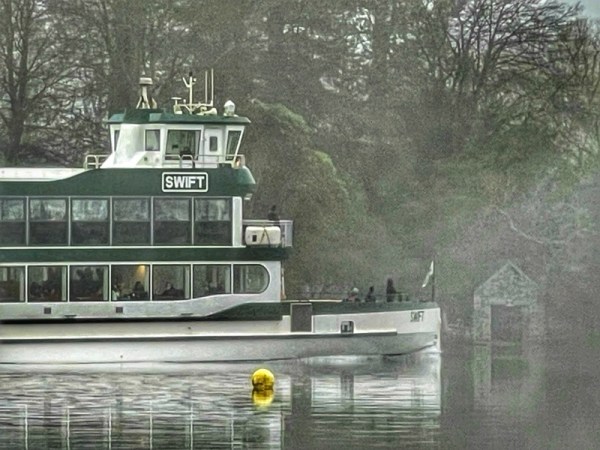
But, here on Lake Windermere, February does produce some wonderful morning mists…
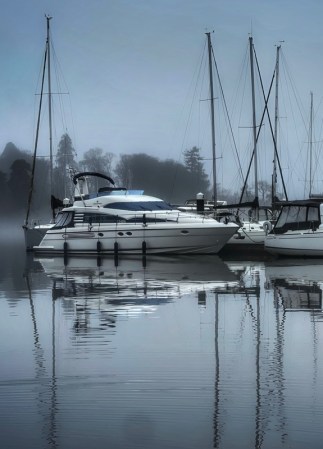
Boats slide gracefully into view, with a mystery and elegance that no digital effect can produce.
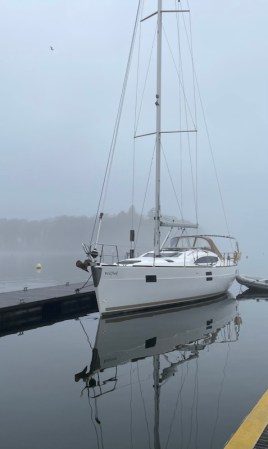
There is also a quality of silence… like no other season. As though everything is waiting.
©Stephen Tanham 2024
All photos taken and processed on an iPhone 12 ProMax.
Stephen Tanham is a writer-photographer and mystical teacher. He is the founding Director of the Silent Eye, which offers a journey of the soul guided by lessons, inner guidance and outer companionship.
There are two blog streams:
(mystically-oriented writing)
and
(general interest, poetry, humour and travel)
Share this:

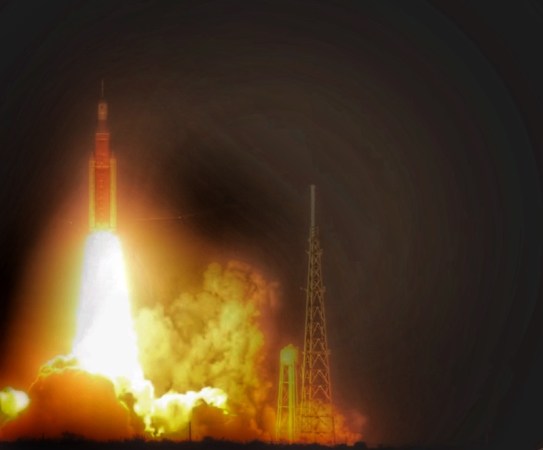
We could liken ourselves to a tall rocket, layered into functions. At the top would be the most sophisticated ‘computer’ the world has ever seen – the human brain. Below that would be the human-sized machinery tailored to assist the human passengers to navigate and control their tasks in space. Beneath these would be the vast machinery that balanced thrust and agility in this powerful human mechanism.
Towards the base, we would find the fuel – a set of huge tanks whose role was to safely store, then regulate the flow of this massively energetic substance so that it achieved the gaol of propelling the whole machine – including itself – upwards into space.
There are some similarities between the psyche and rockets…
The top of our ‘machine’ is the brain, which can be considered to have three main divisions. Its base, extending from the top of the spine, is the limbic brain – often referred to as the reptile brain. This ‘cold-blooded’ creature is concerned only with survival.
Above that and closely coupled with the spinal column is the mid-brain, the home of the sexual functions, such as arousal.
Beyond the mid-brain, the most recent addition to our long evolutionary journey is the neo-cortex – the ‘new brain’. This is involved with consciousness, language and other functions that we associate with societal and relational living.
There is physiology – the physical components of the human body, and their interworking; and there is psychology – the science of how this composite creature comes to assume a single idea of a ‘self’, centred on the body-mind entity.
Sigmund Freud was one of the pioneers of this ‘science of the mind’. He divided the ‘sense of self’ or psyche into:
das Ich – the ‘I’;
das ‘Uber-ich’ – the ‘Over I’, which became known as the Super-ego; and
Das Id – ‘the It’
This division offered a profound view of the human makeup, particularly with the origination of the idea that there was a high-energy ‘basement’ to our being. Freud said the ‘id’ grew as we matured, and the ego learned to suppress those instincts that were not acceptable in the societal ‘layer’ we wanted to inhabit.
As the suppression of what we would now call ‘instincts’ continued, the whole of our lives would become ‘skewed’ with the force of their presence, a presence that was denied a life in the normal world. Carl Jung, the well-known contemporary of Freud wrote extensively about this.
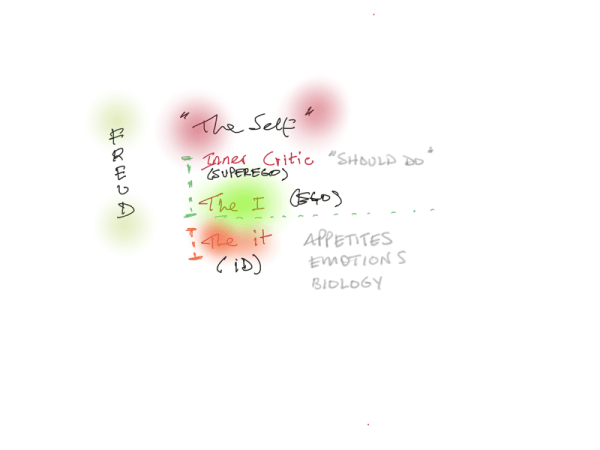
Much much more is now known about the interaction of the physical (physiological) and the emotions. They are, effectively two sides of the same coin. We may think emotions are a ‘higher entity’, but their origin is directly in the ‘flow’ of what is happening to us: our experience. As such, their strength is to be nearer to the reality of experience than the elements of mind.
It’s easy, with some practice, to monitor our emotional states and reactions. We simply need to pause the normal state of our attention and ‘inquire into ourselves’.
The act of making them visible will teach us a lot about ourselves. But what about our instincts – those levels of response that are the first expression of our life-force in the body?
Instincts are not simply emotions; they are structures of reaction and response in the lowest levels of what we come to know as mind. They are example of early programming that underpin everything else that happens in our lives. Over time, they become – slowly – more sophisticated, and can be seen to be the core of our primary responses in the areas of survival, sexual and social interactions.
Do such instincts have a bearing on our spiritual journeys? Given that they are so rigid and controlling, we might view them as negative forces ranged against any true attempt to spiritualise our lives. This can easily be confused with then internal and critical voice of the superego.
The instincts have, however, great potential to help us on our spiritual journey, since they are the holders of the primary energies of our lives – in vast potency – the ‘rocket fuel’ of our title. More will be said about this in future posts of this series.
This is topical on a personal level. I have, for a number of years, been keen to deepen my knowledge of how the instincts operate – from a spiritual perspective. One of the teaching organisations I most respect – the Diamond Approach – has recently begun to offer some of their core knowledge as a series of online courses, available to the public.
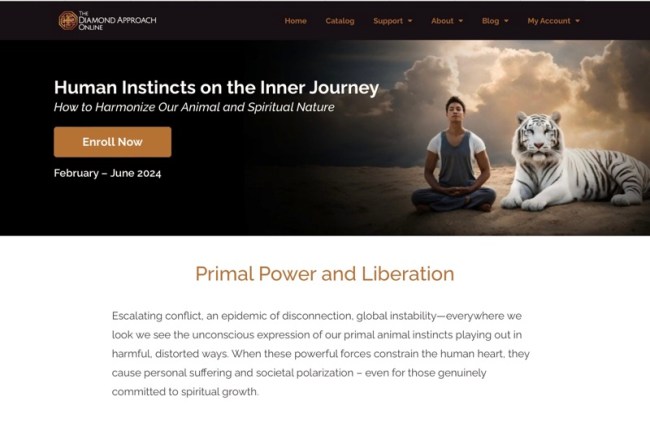
I have enrolled in the DAO online course, and look forward to sharing some personal insights in this series of blogs, though I will not be able to share the actual material of the course.
Part Two will follow in the next two weeks.
©Stephen Tanham 2024
All photos taken and processed on an iPhone 12 ProMax.
Stephen Tanham is a writer-photographer and mystical teacher. He is the founding Director of the Silent Eye, which offers a journey of the soul guided by lessons, inner guidance and outer companionship.
There are two blog streams:
(mystically-oriented writing)
and
(general interest, poetry, humour and travel)
Share this:


Stark, naked, the long cold night of winter
Draws my will to live in shapes
Whose beauty lies in number,
Unseen to hands that touch
My rough and dusty bark…
———-
The limit of life is my companion
As pale sun begins to feed
Across the stellar miles
And seeks – within the rough
And blackened frame –
The tiny hiss of sap.
———-
My roots, abused but warm
–though not to you,
Are wed in size to what is yet to come.
A sphere of growth so dense
That acres were required
To lay its workings level.
———-
Turn, shrink and turn again
My mantra to the burrowing sun
His breath, my thrust, as space is filled
With longing maps of future green
And laughter – unheard by man
Ghosts our dance, impossibly tactile
Whose hidden name is fractal.
———-
©Stephen Tanham 2024
All photos taken and processed on an iPhone 12 ProMax.
Stephen Tanham is a writer-photographer and mystical teacher. He is the founding Director of the Silent Eye, which offers a journey of the soul guided by lessons, inner guidance and outer companionship.
There are two blog streams:
(mystically-oriented writing)
and
(general interest, poetry, humour and travel)
Share this:

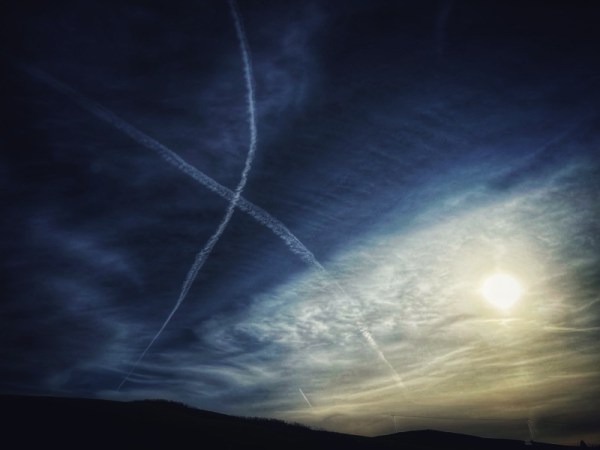
‘When I said “mark the spot“, Jenkins, I had something else in mind!’
‘Stewardess, would you kindly bring us two more coffees … and a cloth!’
———-
©Stephen Tanham 2024
All photos taken and processed on an iPhone 12 ProMax.
Stephen Tanham is a writer-photographer and mystical teacher.
Share this:

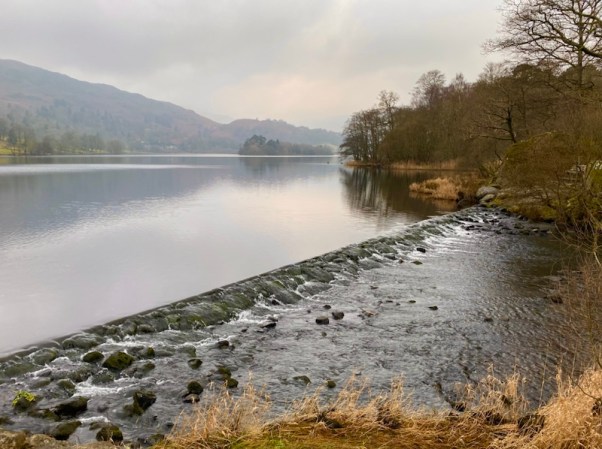
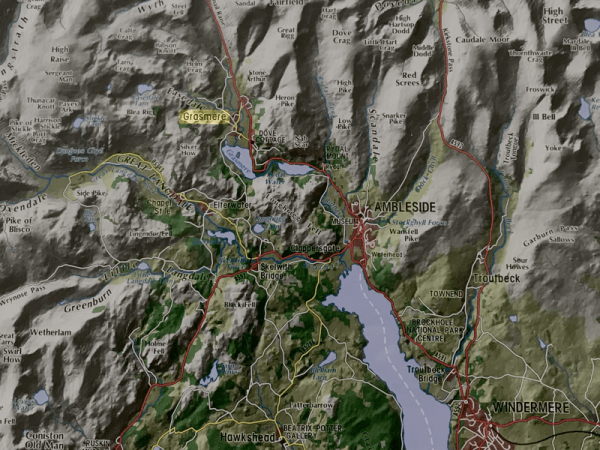
It’s February; cold and wet, now… But in a few month’s time, It will be glorious May, and the landscape around the celebrated village of Grasmere, in the heart of the Lake District, will be transformed into one of the beautiful locations in Britain.
Grasmere is to be our base for the Silent Eye’s Spring weekend of 2024, 10-12 May.
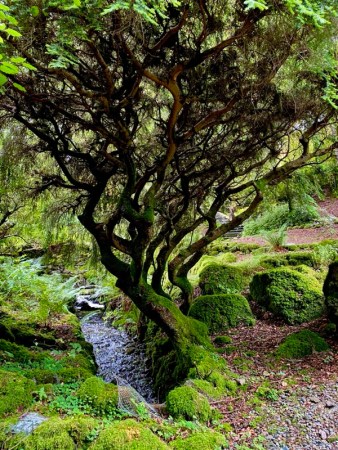
Grasmere’s most famous resident was William Wordsworth, and the village hosts the world-famous Wordsworth Museum and Dove Cottage. Dorothy and William Wordsworth’s grave is located between the church and the river.

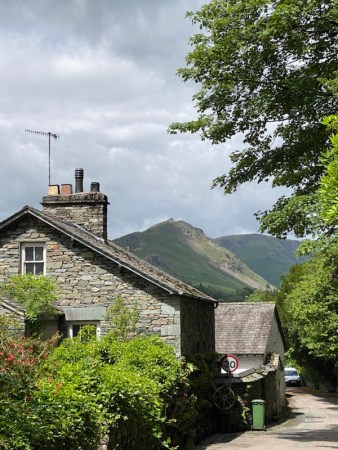
Our weekends are gentle affairs, but we do some serious walking and talking, too. We choose a landscape of beauty around which we can base three walks: A longer one for the Saturday and two shorter ones for the Friday afternoon and the Sunday morning prior to departure after lunch.
The main walk is taken on the Saturday, often in some circular fashion – and combining walking with other forms of transport. Last year, a number of well-exercised walkers were surprised and delighted to find an unexpected boat arriving at the jetty of Wray Castle, on Windermere, to ferry them across Lake Windermere and back to our base in Bowness.
Our spiritual theme, discussed at various points on our walks is based on one of Wordsworth’s most famous works: the Ode to Immortality from Recollections of Early Childhood.
We will explore the idea of ‘Clouds of Glory’ and what that might mean in modern terms. Those joining the event will be welcome to bring their own readings and quotations.
“Our birth is but a sleep and a forgetting:
The Soul that rises with us, our life’s Star,
Hath had elsewhere its setting,
And cometh from afar:
Not in entire forgetfulness,
And not in utter nakedness,
But trailing clouds of glory do we come
From God, who is our home”
William Wordsworth. Extract from Poetry Foundation website
Grasmere is justly famous for its surrounding hills, including Helm Crag’s Lion and the Lamb and the landscape of the River Rothay, which snakes through its centre (close to the grave of William and Mary Wordsworth), before flowing out into Grasmere lake and eventually, through Rydal Water and on into the vast waters of Lake Windermere.


A circular walk around Grasmere lake, taking in the beauty of the village, with refreshments back in the town, will be part of our planning.
Come and join us! Friday lunch to Sunday lunch 10-12th May, 2024.
To register your interest and receive updates on the plans, contact us at rivingtide@gmail.com.
———-
©Stephen Tanham 2024
———-
All photos taken and processed on an iPhone 12 ProMax.
Stephen Tanham is a writer-photographer and mystical teacher. He is the founding Director of the Silent Eye, which offers a journey of the soul guided by lessons, inner guidance and outer companionship.
There are two blog streams:
(mystically-oriented writing)
and
(general interest, poetry, humour and travel)


 Sun in Gemini
You must be logged in to post a comment.