
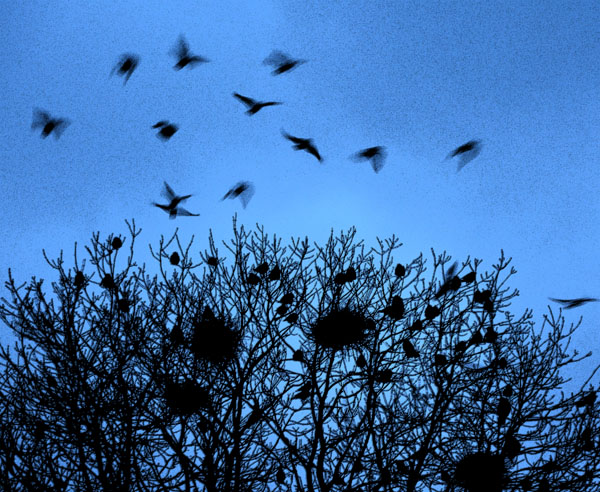
At Winter’s end
In lows of March
A friend said: watch the crows
It’s fanciful, he said
But wise, and came from one who knows.
⦿
Far below the nest
that swayed, I wandered
With streaming eyes to field beyond
Where two dark shapes
Carved the air on frozen pond.
⦿
Mere hair’s width from the icy death
A swooping, chasing joy
A courtship rash and bold their only care
Pulled upwards to the virgin moon
In winds that to a human bring despair
⦿
The tears within my eyes
Bled no emotion, save of chill
The precision of their love against the icy sky
A perfect union in pursuit of which
I find my head and heart of words run dry
⦿
Later, as the darkness
Gathered frozen black in Winter’s arms
I watched the rocking of the nests that must
In our tall trees
And relearned all I thought I knew of trust.
⦿
Be here, be welcome warm
Enduring crows in love
For one proud gaze, sliced into time
You had the whole of me
And only breathing took your flight from mine
⦿
©️Stephen Tanham
Stephen Tanham is a director of the Silent Eye School of Consciousness, a not-for-profit organisation that helps people find the reality and essence of their existence via home-based, low-cost and supervised correspondence courses.
His personal blog, Sun in Gemini, is at stevetanham.wordpress.com
Share this:


It is snowing again as I write. Have you ever watched a snowstorm and wondered just how many snowflakes were falling? Or how many had ever fallen? A million snowflakes, apparently, will only cover a patch two feet square by ten inches deep. A quarter of the land mass of the planet gets snow every year and how many winters have come and gone since the first snowflake fell? The mind boggles at the sheer impossibility of the number.
Yet, if one could ignore space and time and be everywhere and every-when at once it would, theoretically at least, be possible to count them. Even taking all future snowfalls for the projected lifetime of our planet into consideration, it would be a finite number. There was, once upon a time, a very first snowflake to fall. There will be a last. There would come a point where there were…
View original post 876 more words
Share this:


*
With what gusto the horizons of our world expand.
Our enthusiasm grasps at each new enigma like a child its toy.
Perhaps one day the most solemn problems of the past
will appear as mere playthings to us…
The plight of the poor.
Souless wealth.
Our treatment of animal species.
Man’s inhumanity to man.
Perhaps ‘Old Man’ will then look for new problems to amuse himself.
Share this:

Share this:

+ #Silenti, Consciousness, Esoteric Meaning of Myth, esoteric psychology, Silent Eye School, Spirituality
Dwellers in Towers
by Steve Tanham
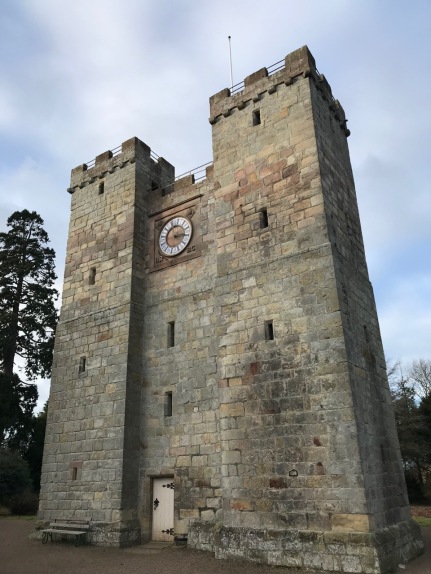
A recent trip to the beautiful Northumbrian coast threw up a chance visit to Preston Tower, one of a type known as a ‘Pele Tower’ – a fortified place of refuge for well-to-do families, built during the times of the ‘Border Reivers’ – armed family gangs who took the law into their own hands in these often un-policed borderlands between England and Scotland.
In the famous Pevsner’s Guides to the architecture of the UK, the Northumberland guide describes this type of building:
“In the 14th Century Northumberland was almost permanently in a state of warfare, and in the 15th and 16th centuries the county was still so sorely harassed by armies, gangs and thieves that a tower house was the only possible insurance a man of sufficient property could take out.”
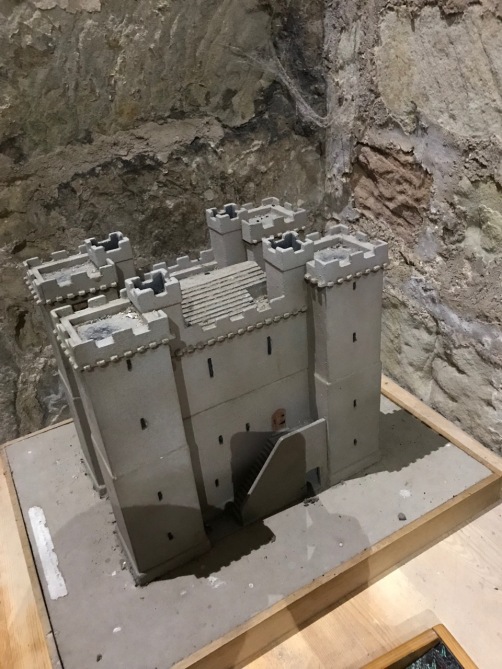
In the entrance room is a model of how Preston Tower would have looked in the 14th century. Only half of it remains, but that is in very good condition and considered one of the finest examples in Britain.
Towers and their dwellers have always interested me, as they illustrate a particular set of human attributes: the needs for security and the power of fear – something whose controlling power we make reference to as a block to individual spiritual development in the Silent Eye’s three year self-exploration course, where one of the archetypes encountered is just that Dweller in the Tower.
Towers have featured often in spiritual literature. The famous Tarot Card of the “Blasted Tower” is a reference to the destruction by natural forces (lightning, in this case) of the upper levels of the Tower’s construction. To find the whole origin of the essence of the card we need to go back to the Bible, where, in Genesis, it tells that, in a land after the great flood, all ‘men’ spoke the same language. They decided to build a Tower to Heaven from the ‘slime’ of the earth. God confounded their plans by causing them all to speak a different language.

The ‘Blasted Tower’ from the Ryder-Waite Tarot Deck painted by Pamela Coleman-Smith. Wikkipedia Public Domain (source)
We might assume that a kindly God would be pleased at our attempts to build a tower to reach ‘him’, but the essence of the story is that the materials used were not those that would withstand a dialogue with so powerful a being; and hence that very force – or attempted dialogue – was the source of the destruction. A mystical interpretation is that a successful tower would have to be built from below and from above at the same time… But that is a topic for another post.

Despite its apparent size, the interior space is minimal. The arrangement of the space is entirely geared to defence rather than comfortable living.
The Dweller in the Tower is secure but cut off from the world they fear. The fear is real, as is the perceived threat, but it may not be present.
The effect of separation from the surrounding landscape is a terrible price to pay. We might say that such an approach takes us away from the ‘flow’ of life – a flow that, if embraced openly, is the key to our personal evolution. This is not an easy step, and is counter intuitive. It is the kind of step we take only when we become convinced that our life (within the Tower) is no longer capable of providing any real sustenance.
Pele towers like Preston Tower were build by rich men. They subjected their families to terrible and cramped living conditions in the name of safety. Psychologically, we might say that our obsession with safety does much of the same, today…

What would be attractive about life in a tower? One good thing might be the view. From a good height, we can see more… but not touch or feel or smell it. This suggests an isolation of the intellectual sense, that lives its life against a ‘picture’ of the world rather than the world, itself.

The view from the roof of Preston Tower, near Bamburgh
From that height, using that view, I could see all around me. I could compile detailed maps of the world below, bringing all that knowledge back into my tower, like a spy might – but it would always be historical knowledge. My interaction with the world below could be minimal, or as slight as I wanted it. Whenever I felt the least bit threatened, I could close the thick doors and bolt them. Then, climbing the winding staircase, I could take myself farther and farther from what might hurt me… take myself farther and farther from life, itself, replaying only the bits I wanted.

The Tower Dweller is not a complete human in the Silent Eye’s approach. He or she is an aspect of the personality, one formed from that part of the spectrum of ourselves which is associated with fear. The Pele towers were a very good model for one aspect of the modern personality, which feels itself under threat from things real – and many more, imaginary.
It takes targeted effort and a lot of self-honesty to see these deeply- rooted patterns in ourselves. The positive side of that coin is that they are fundamentals within our self. Any changes to these ‘magnetic poles’ in ourselves will alter the whole. If we simply concentrate on the Tower Dweller within us, then our self-work will be unbalanced. Far better to circumscribe ourselves so that we can see what other aspects hold the patterns of our vital energies prisoner.

One day, we might climb to the roof for a different reason…
One day, we might climb to that roof and look at the view, all around, for a different reason. We might have come to a vision of the potential fullness of our real selves and want to take one last look at the landscape from above, before opening the door and venturing out into that world with a very different purpose. The map will still be useful, but limited, compared with being there.
As the first breaths of our new life enter the lungs, enriching neglected inner pathways with new life, we might look back at the soaring stonework and thank the Tower; thank it for keeping us safe until we grew confident enough in ourselves to make our destination the world and not its isolated heights.

As the sun sets on the cold stone, we might find ourselves laughing and running into that forest, creeping up to shout ‘Boo!’ to the bogeyman who we once thought lived there…
Preston Tower details: http://www.prestontower.co.uk/
Stephen Tanham is a director of the Silent Eye School of Consciousness, a not-for-profit organisation that helps people find the reality and essence of their existence via home-based, low-cost and supervised correspondence courses.
His personal blog, Sun in Gemini, is at stevetanham.wordpress.com
©Stephen Tanham, Silent Eye School of Consciousness.
Share this:

Share this:

Share this:

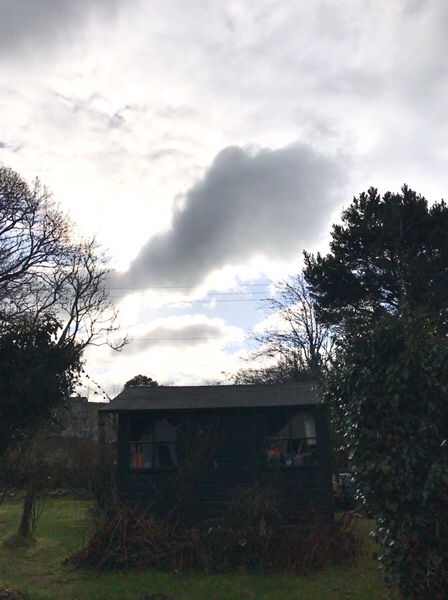
Will I write in here as snows arrive
Locked eyes and fingers frenzied?
Imagined places, chattering teeth
With windows needing mended
➰
Or will the soft and ancient chair
Seduce me in the corner?
To doze and dream-up worlds galore
While Spring drifts by in wonder
➰
But it’s unlikely that this shed
Will grace me with it’s favours
The ancient box: creative pride
Belongs to next door neighbours
➰
©Stephen Tanham
Share this:


The old woman gazed at the photo of her grandsons, standing in its silver frame on the scratched coffee table by the window. She remembered the day the toy sports car – minus one rubber wheel – had gouged its French-polished top.
Despite the damage, she had kept it as it was. Her grandson was horrified that it was still there to remind him.
It brought a smile that a maturing young man could feel that twinge of guilt, many years after the incident… as she also did, the old woman mused, so long after the other one; the one for which no-one was prepared.
Now, in his turn, the desk-scratcher was to be married. There was something about the coming ceremony that promised to make right the memory of the other, the older dark day.
Her brightly coloured dress was lit by a flash of spring sunlight breaking through the clouds. She followed it, and from where she was sitting, she could just see the tops of the trees swaying slightly; the last of the pink blossom being cast adrift and taken on the wind.
She reined in her thoughts. “Enough of the past,” she muttered, realising she had spoken the words; then, looking down, decided to finish the sentiment. “Let this be a joyful healing…”
The phone rang. She stared at its familiar Art Deco shape, thinking how the bell’s sound echoed the black Bakelite curves. She had insisted they keep it alive for her.
“Yes?” her practiced tones never wavered.
“The car is here, Ma’am,” said the precise voice.
She turned one last time to look at the photo of Diana and fought back a small tear.
“You would have been very proud of him,” she said into the silence of the royal study.
————-
(296 words, excluding the title)
This is my entry for the Bloggers Bash Blog Competition, 2018.
The theme is ‘Royalty’. The blog post may have a maximum of 300 words.
The Blogger’s Bash for 2018 is on the 19th May, the same day as the forthcoming royal wedding between Prince Harry and Meghan Markle. We wish them every happiness.
Original image of Bakelite phone: source.
Share this:

+ #Silenti, Consciousness, esoteric psychology, Higher Mind, Silent Eye School, Stream of Consciousness, Will
Of one mind?
by Steve Tanham

To be of ‘one mind’: it’s an expression we don’t hear a lot of, nowadays, though it remains available to us in the language. Historically, it was used to describe an intensity of opinion, or – even stronger – belief, that something was so important that several key figures united in a single ‘front’ of solidarity behind whatever was being endorsed.
Perhaps our vision of truth has become dulled, and it is considered that there are few such ‘black and white’ moments… In line with the complexity of our world, it may be that nothing truly ‘is’ anymore, there are just shades of ‘isness’.
Over the ages, philosophers have ventured into the waters of the human psyche and grappled with the idea of single-mindedness. To be of ‘sound mind’ has always been important; and that implies being single in our interior nature. That unity expressed by a group of people being of one mind now applies, at least within the world of psychology, to a healthy state for the individual.
But are we ‘single’ within ourselves?
For example, we can resolve, going to bed, that we are will rise early and finish off that important piece of writing for which we need a snappy ending. We may reinforce that intent by assuring ourselves that famous writers often speak of the inspiration and clarity of mind to be found when the night’s rest has cleansed the mind.
And then, tired, we fall asleep…
But do we get up that extra hour early to avail ourselves of what we know to be advantageous? Usually not, if my experience of human nature is correct, including my own. So, how can one ‘part’ of us have such a clear resolution of what we want and need to do, and another part (the tired bit) decide to ignore it. I am reminded of the ‘Wheel of Fortune’ tarot card in which various mythic beings are seen rotating to a point of ‘uprightness’, in what fits well with the idea that only one of them can have precedence at any one time, though they all belong to the notional ‘self’.

The Rider-Waite Wheel of Fortune card (source)
The key to examining this – as much as the mind can examine itself – is in the word ‘self’. We all consider that we have a self. It is our identity, a stable entity with a name and memories… and, a body, which, though constantly changing, gives us the sense of continuity of being. We can come to terms with biological ageing as long as we have an inviolate ‘self’ within this collection of cells.
And that’s where it gets a bit tricky…
We need to look at what we can count on: we have the memory of being a straight line of biological life through our ‘timeline’. We have a body that changes, and a name, but apart from that it could be argued that we are simply a point of perception that sustains an illusion that we have a single, undivided self, or mind or brain, call it what you will. Whatever name we use, we are very attached to it. Any lively debate between people beginning a study of the esoteric will throw up strong opinions, as the inviolate ‘self’ is encroached upon!
And yet…
And yet, that notion of the importance of being ‘single minded’ is deeply important to us; and that, like so much else that drives us, is based on a fear of it no longer existing… the reality of our existence suddenly ending. To counter this, we may postulate that there is a ‘heaven’ somewhere separate to life, perhaps where our kindnesses will be remembered and will outweigh our bad bits. The human psyche needs such edges or the fear might just become overwhelming. I do not mean to disparage religion, here. Religion helps many people to leave deeper and more self-less lives. I’m just examining the psychology of it all. If the idea of an eternal self is real, why is that which is considered ‘holy’ associated with the self-less, rather than the super-self?
Can we get closer to something ‘real’ by investigating how we might deepen this sense of a united self? Certainly, this has been the approach of many leading thinkers over the past two hundred years. They point out that the weakness of our personalities in holding to a true and single self is something we can examine, on a daily basis. The dispute comes, not in being able to study ourselves, but rather in terms of how we respond to what we can so easily find.
To make a study of ourselves we need to have a vantage point from which we can make these (initially hypothetical) observations. To create this interior space, we have to allocate it certain properties. The first of these is how we react. When we study our reactions we find that none are more powerful that the shock of seeing ourselves as we really are. When we find our constant contradictions to that ‘image of me’ that we carry around, we begin to wonder how we have lived a life that was so shallow in this respect. We can be objective about others, but when we turn that spotlight on ourselves… em.
This interior space, this ‘tower’, if you like, has to be a place in which only the truth is allowed. We can keep it secret, of course, so we don’t need to feel shame as we watch ourselves lying, for example. But, sooner or later, this internally honest viewing platform will begin to develop, for the want of a better word, its own interior feelings. One of them will be a quiet revelation that the truth has a profound power all of its own; and that it lights the way into a deeper state of real self that we had never even suspected was there…
It’s a gateway that we can only approach when we are truly ready… like the resolve that will get us up on a dark winter morning to finish that story…
Stephen Tanham is a director of the Silent Eye School of Consciousness, a not-for-profit organisation that helps people find the reality and essence of their existence via low-cost supervised correspondence courses.
His personal blog, Sun in Gemini, is at stevetanham.wordpress.com
©Stephen Tanham, Silent Eye School of Consciousness.
Share this:

♣️
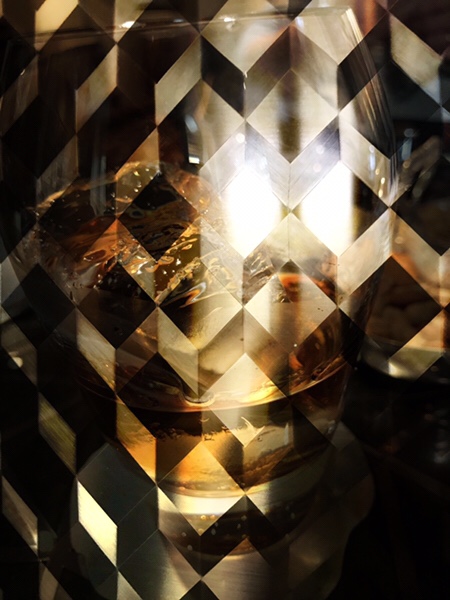
Cube and rum
Sophisticated fun
The night beyond
The story spun
♦️
A teasing touch
Don’t reach too much
And spoil the fun
Dangled, loved one
♠️
A shiver, a shudder
Still laughter down under
Nail follows bone
Taut flesh coming home
♥️
Recently bold
Softly nestle and hold
A different kiss shared
Bliss sought and bared
🍸
©Stephen Tanham
Share this:

+ #Silenti, Consciousness, esoteric psychology, Gurdjieff, Mindfulness, Silent Eye School, Spirituality
Identified flying object
by Steve Tanham

One of the key understandings in mystical thought is the idea of identity. Words morph their meaning over time, and identity is a classic case.
We might think of the police knowing the ‘identity’ of a person they want to speak to. We would find it in fashion magazines for both genders in the context of a garment to reinforce our identity in line with a progressive trend.
Both these show how the word identity means either a unique description or a close bond through some sort of ‘mapping’ of properties by adoption. The central theme is that of a chosen closeness. If I buy a new car and feel very good when I drive it, I’m identifying with an object that adds to my identity and makes me feel good.
The car analogy is a good one – and a very good way of studying one of the 21st century’s fault lines – in the sense that, if ten miles down the road, someone deliberately races past our new sports car, we may well feel aggrieved that we have been deliberately ‘slighted’ and that our inflated identity, centred on the car, has been wounded.
At such times, if we could step back and imagine we were flying above our shiny new car and watching the whole drama unfold, we might be a little ashamed by how we chased after the errant teenager and nearly caused a crash by proving that our new vehicle was superior.
It’s easy to insert the word ‘ego’, here. We all know the difference between driving our shiny new car and the theoretical view from above it. In the latter we are detached because we can see a bigger picture. In the former we are somehow compressed into a smaller space where the red mist of anger is a frequent consequence.
Most drivers have had that ‘red mist’ moment; particularly men, with their overdoses of testosterone. Young male drivers have an horrific accident rate precisely because, after yearning to drive for years, they suddenly get wheels and have to prove to the world that they have always been a better driver than anyone else… or, at least, their mates.
When recalling full story of accidents of this nature, the accused often say they did not know what came over them; the red mist descended and they went to war. Going to war is a good link to what’s underneath of all this, and we go to war for our country – because it’s a primary part of our identity.
The path to self-knowledge begins with such constructs. When I see that my stupid reaction to the teenager overtaking me was a reduction in consciousness, despite the elation beforehand, I might begin to investigate how such identification is at the root of many of the negative things I do, and the cause of much of the energy loss that I might suffer on a daily basis.
This type of identification is inherited from lower levels of our evolution – but not too far back. In anything but an age of true plenty, the possession of objects of visible status was a sign of rank and personal worth. You were important if you had them. Modern advertising works very hard to keep this alive in our societies, and the cult of celebrity is an even worse example of how someone here today and gone tomorrow can be all but worshipped; as can everything they are seen to drive and wear…
When we have to add objects to our selves for that good feeling, we are showing that the self does not have enough worth. We want the object because it will signal to the world that ‘I’ have grown along some axis of importance. In this way we see that much of what we are taught, by education, by family and by employment, is based upon an inherited sense of worth that is not related to the unique and precious self with which we came into the world and this life. That self is taught that it can feel ‘bigger’ if it acquires ‘classy’ things. But such objects do not actually make us feel a lot better – In fact the gain is often way out of proportion to their true cost.
There is a paradox at work here, and the shock generated when this is seen can be, and should be, life-changing…
Here’s the first part of the shock: the things we use to define ourselves need not be physical objects at all. We can be attached to our likes and dislikes, our hatred, our politics, our favourite food… or even our suffering. Identification, seen from the most powerful height above that speeding car, is a label saying ‘this is me’. The flow of life’s events, over which we have little or no control constantly brings us up a filmstrip of images, smells, tastes and other sensations. This filmstrip was originally seen by us the infant as a passing show. We did not attach ourselves to its display until we became more conscious of the link between ‘me’ and that filmstrip. But, and here’s the key, we had to be taught that – by others whose lives were already bound up with the film. Once tied in this way, any change to what is being ‘viewed’ is capable of taking us into sadness, anger, hatred or a dozen other negative states.
The two perspectives are radically different: one is that life is happening; the other that life is happening to us.
To break free of this, whilst still retaining the hard-won discrimination of adulthood, is the work of mystical development, under whatever banner. To break the link with the filmstrip’s negative power we need to open up a space within ourselves and move into it, in the sense that, from then on, we watch both the filmstrip and our own reaction to it – without allowing identification to take place. We watch the flashy car, we register it as a quality thing, but we do not allow that habitual effect of ‘yes, that’s me’ or ‘I would be a better me if I had it’. We do this because we know the real value of an awakened Self.
To do this is to be at odds with the world, to a certain extent, though that can be viewed with humour, too. But in a time when the world appears to be on the edge of insanity, might not being at a slight angle to it be the saner option?
Stephen Tanham is a director of the Silent Eye School of Consciousness, a not-for-profit organisation that helps people find the reality and essence of their existence via low-cost supervised correspondence courses.
His personal blog, Sun in Gemini, is at stevetanham.wordpress.com
©Stephen Tanham, Silent Eye School of Consciousness.


 Sun in Gemini
You must be logged in to post a comment.