
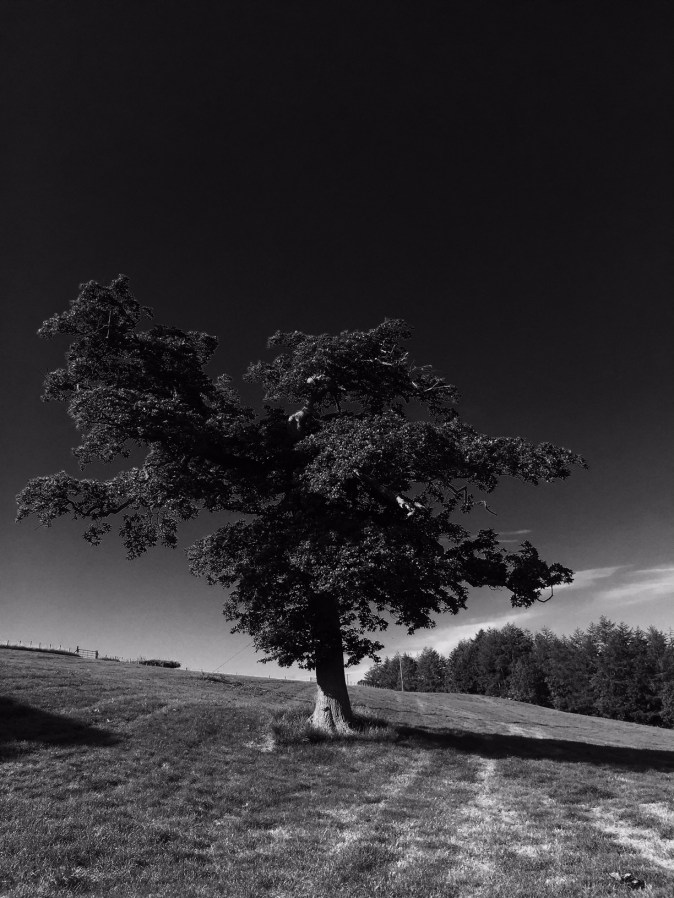
What Curves Caress
(In the style of Sufi poetry)
What curves caress the distant sky when distance is not known?
What shades of finest touch release the moment new which is not held?
What depths of shade use shadow only to conceal the deeper joy?
And in that joy, behind the shade, behind the touch, behind the sky, itself, will I not see you?
(c)Copyright Stephen Tanham, 2016.
Share this:


After the Mist
This post is in response to Hugh’s Views and News photo challenge with the subject of ‘After”
At the end of our lovely weekend in St David’s, Pembrokeshire, we woke, on the Sunday morning, to a thick mist outside the small hotel’s windows. It was still present, but clearing as we set out to gain access to the coastal footpath that would take us the mile or so to the seaward side of St David’s village and our eventual destination – the Cathedral.
Soon, we were at the point where you come off the sea path and are greeted by the old stone chapel of St Non, mother of St David.
St Non was said to have been raped by a local prince, giving rise to her pregnancy, which was marked by various signs as a holy one. St David was the result and the place of St David has been revered ever since.
It used to be the edict that two pilgrimages to St David’s were considered by the church to be the equivalent of one to Rome; three the equivalent of one to Jerusalem.
By the time we got to St Non’s Chapel, the mist had lifted.
Want to join the fun? Here’s what you need to do.
1. Take or choose a photo that you’ve taken which interprets After.
2. Create a new post on your blog entitled “Hugh’s Weekly Photo Challenge: Week 30 – ‘After’
3. Add the photo(s) you have taken to the post and tell us a little about what you are showing.
4. Create a *pingback to this post and/or leave a link to your post in the comments section so other participants can view the post.
*Due to the current problem WordPress is experiencing with Pingbacks (read the post here), I’d highly recommend that you copy and paste a link to your entry into the comments section of this post.
Share this:

+ enneagram, esoteric psychology, Haiku, Mystery Schools, Mystical poetry, Silent Eye School, Spirituality
Coffee and Haiku Cake – “High Summer’s Kiss”
by Steve Tanham

“High Summer’s Kiss”
⦿
Floating, curling gold
Of pristine fullness, forming
Shining solstice kiss
⦿
Feel free to share or re-use, but kindly leave the notice intact to help
the Silent Eye School.
©Copyright Stephen Tanham, 2016
Share this:

A Bridge for all our Fathers…
This post is in response to Hugh’s Views and News photo challenge with the subject of ‘Open”
Since it’s Father’s day, and I’ll be driving back from a Silent Eye Weekend in St David’s, Pembrokeshire, for most of the day, I’d like to dedicate the post to all our Fathers, particularly those who fought in the two European wars of the last century.
They weren’t just British soldiers of course, many other countries sent their troops in support of a desperate Britain as the Nazi forces closed in. Apart from those brave souls who joined us, we stood alone then because we had taken a stance against the darker forces of extremism, not because we had closed ourselves off.
The European Union was conceived as a response to those wars; in the belief that interaction, dialogue, and, dammit, showing other people that we were just as human as them, would make a difference.
It did, and for over sixty years peace has been the climate of Europe.
Today, we in Britain stand on the brink of another disaster – that of leaving the European community on the basis of manipulation by a group of right-wing interests, many of whom do not live in the UK and do not pay taxes here; but control vast sections of the press. These interests pretend to represent the common ‘man’ and his/her sovereignty; despite the fact that Europe has done more to safeguard human rights in the UK than any of the indigenous political parties.
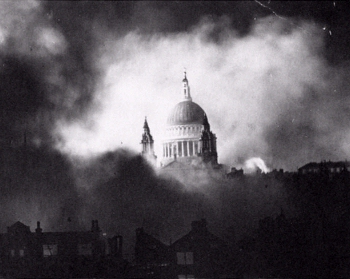
Source Wiki CC Fair Use
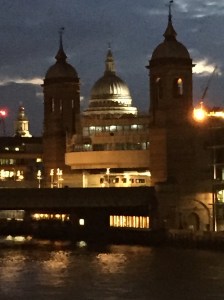
Many will remember Herbert Mason’s famous picture of St Paul’s Cathedral (above), unscathed but surrounded by the acrid smoke of the blitz covering the ruins of inner London.
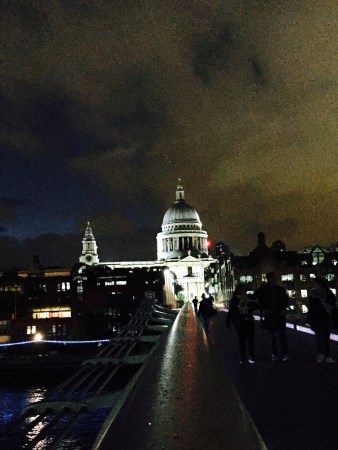
My own humble offering, (top), has a night sky that prompted the comparison, but has a new bridge (The Millennium footbridge) connecting it, across the ‘water’ to the ‘greater world’.
My bridge is Open… and the pic seemed an entirely appropriate response to Hugh’s latest photo challenge.
For the memory of all the Fathers who went before us, I hope Britain remains open, too, in heart as well as boundaries. Ironically, we are not alone in facing such challenges, once again.
Happy Father’s Day, everyone… as Edmund Burke said, “All it takes for the triumph of evil is for good men to do nothing…”
Share this:

Water and Night Bridges
⦿
Soft dark breezes
Dance
With opening light-ways
Inciting introspection
In warm summer darkness

⦿
Great running river
Shining
Throws lighted ghosts
From glowing quicksilver
To smiling mind
⦿
The distantly familiar
Casts
Phantoms
Between the reaches
Near and far

⦿
And not too far below
Resounds
The slap of tire on tarmac
As roads of life endure…
⦿
©Copyright Stephen Tanham, 2016
Share this:

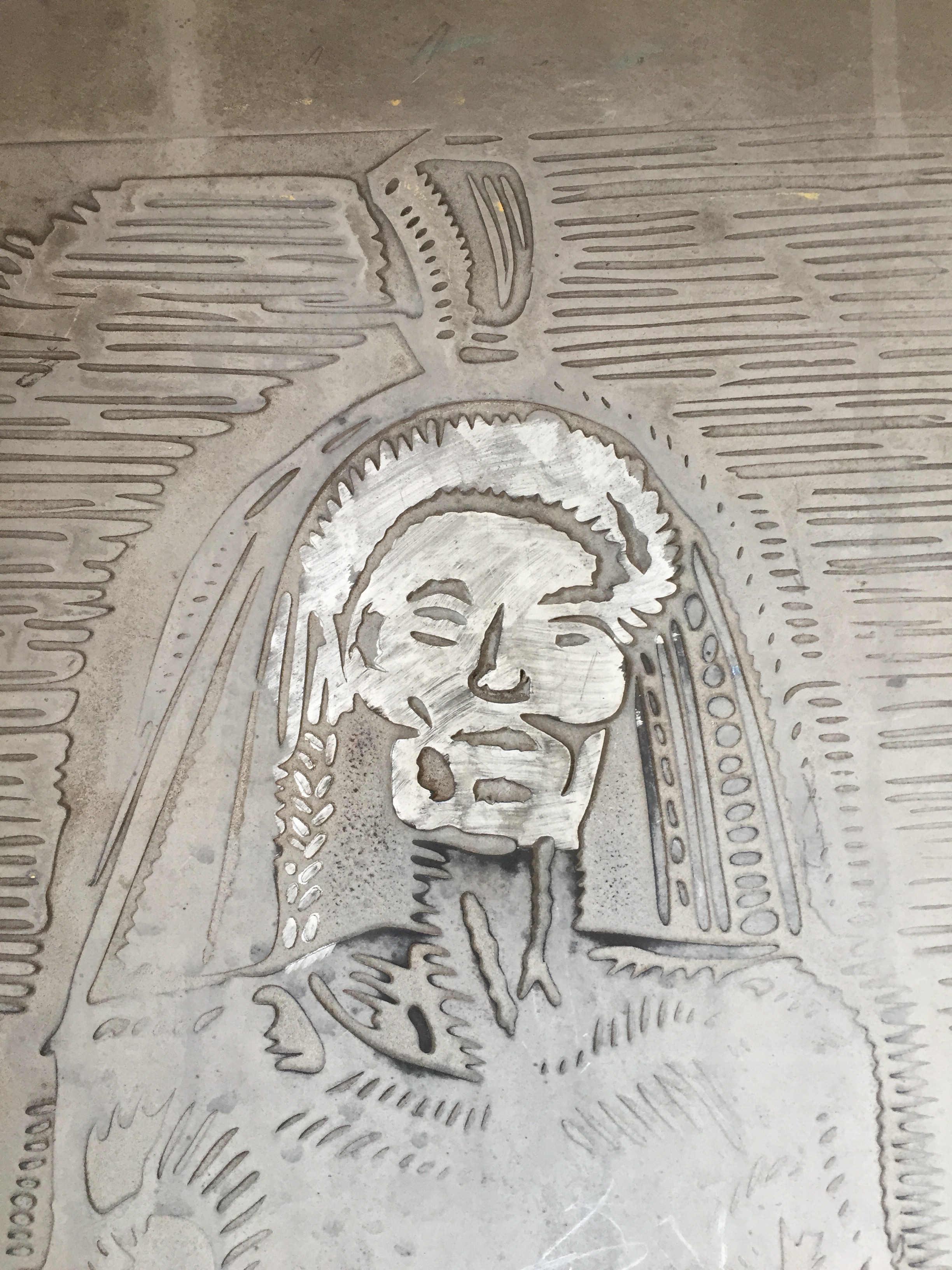
Next time you’re having a bad, day, a really bad day, console yourself with this…
He was what Dickens would have called a Scrooge, a miser of the first water. He lived in a large house on the south bank of the Thames near where the Golden Hinde now rests.
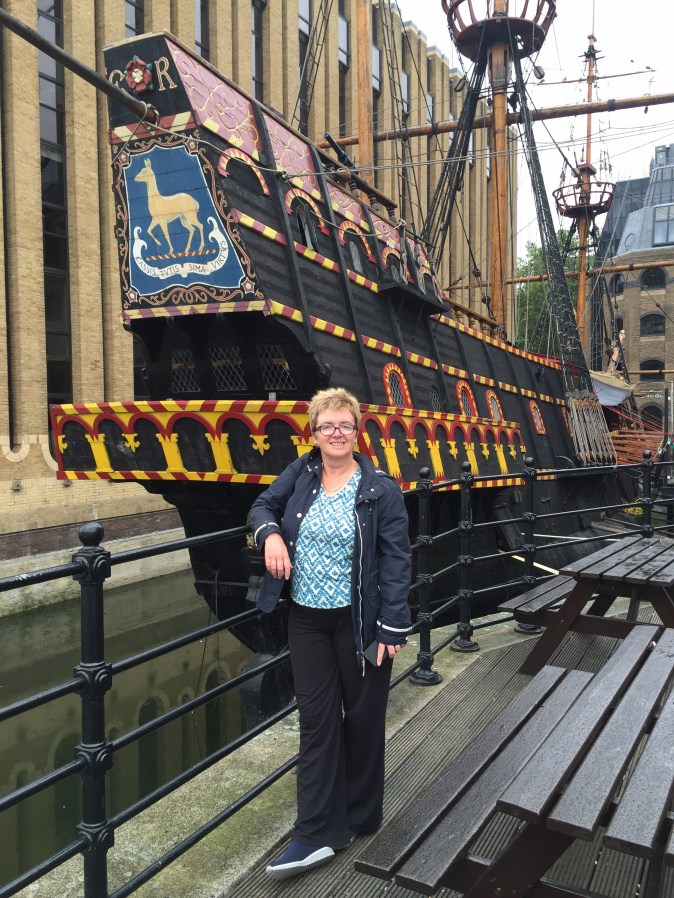
Bernie stands near to the site of John Overs’ house
His name was John Overs. In the 12th century, he owned, and his servants operated, the ferry service across the span of the Thames that is now London Bridge. He became very rich and had a large house on the south bank.
He resented having to look after his servants and his extended family, despite his riches, and so, one day, he decided he would fake his own death and lie in his coffin, enjoying the sight of them all fasting in his honour.
To his horror, they didn’t…and began to feast and make merry at the passing of the old miser.
Furious at the turn of events, he carried out what Hoffnung would have described as “a loss of his presence of mind” and sat, up, screaming and frothing with rage.
One of his servants, quick of reaction, grabbed an old, broken oar, and with a single blow, thinking to ‘kill the Devil that had possessed the recently surrendered body’ smashed out his brains.
His daughter, Mary, an honest and long-suffering woman, sent for her betrothed lover, who, sadly, in his haste to claim his inheritance, fell from his horse and died on the highway.
Mary-now, presumably bewildered by the turn of events, was so overcome that she spent the inheritance on the founding of a convent, which she promptly entered, seldom to be seen in that perplexing world. The convent change its name many times before becoming the ‘Priory of St Mary over the Rie’; or St Mary Overie.
Today, it is better known as Southwark Cathedral, a splendid place to which I shall return in a forthcoming blog.
For now, I will finish with a final glimpse of John Overy, and his sad demise. When that bad day clutches at you, resist the urge to sit up and scream…
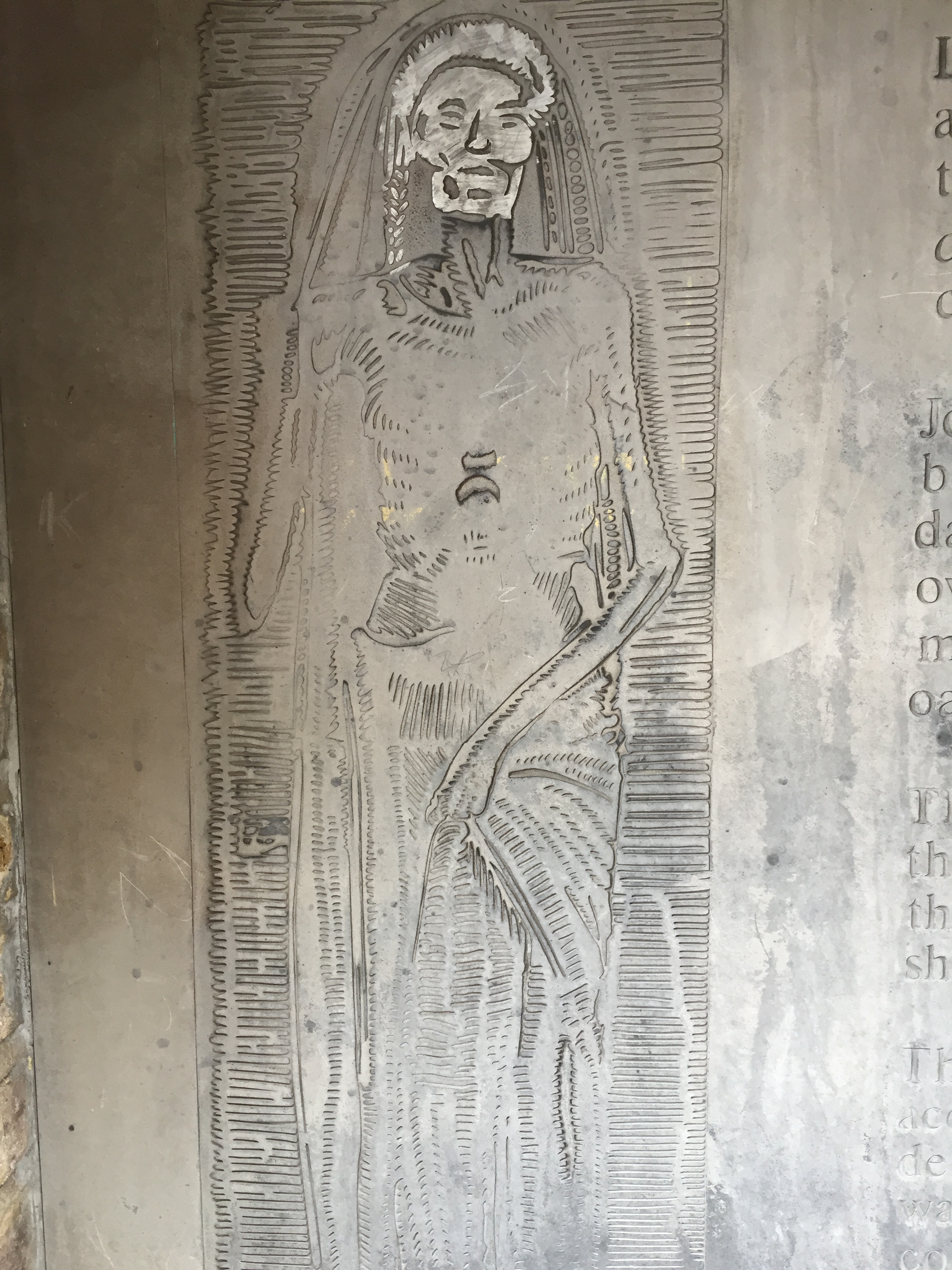 Continue reading “Gems of the South Bank (ii) – A Very Bad Day…”
Share this:

+ enneagram, esoteric psychology, Haiku, Mystery Schools, Mystical poetry, Silent Eye School, Spirituality
Coffee and Haiku Cake – “Involution”
by Steve Tanham

“Involution”
⦿
Ageless grace, whose life
Is fed from silver stars ablaze above
Erupts to green life anew
⦿
Feel free to share or re-use, but kindly leave the notice intact to help
the Silent Eye School.
©Copyright Stephen Tanham, 2016
Share this:

 Thankfully, this view is not what I’m writing about, with its jumble of old, recent and dubious…
We are spending a few days with the South London branch of the Tanham family, who are shortly to leave, with granddaughter Alice, for a new life, as, doctors, in Australia. We are staying in a budget hotel on the South Bank of the Thames, and it has been a delight to see how well and organically this ancient part of the city has been preserved and renovated.
A case in point is the recently excavated Winchester Palace.
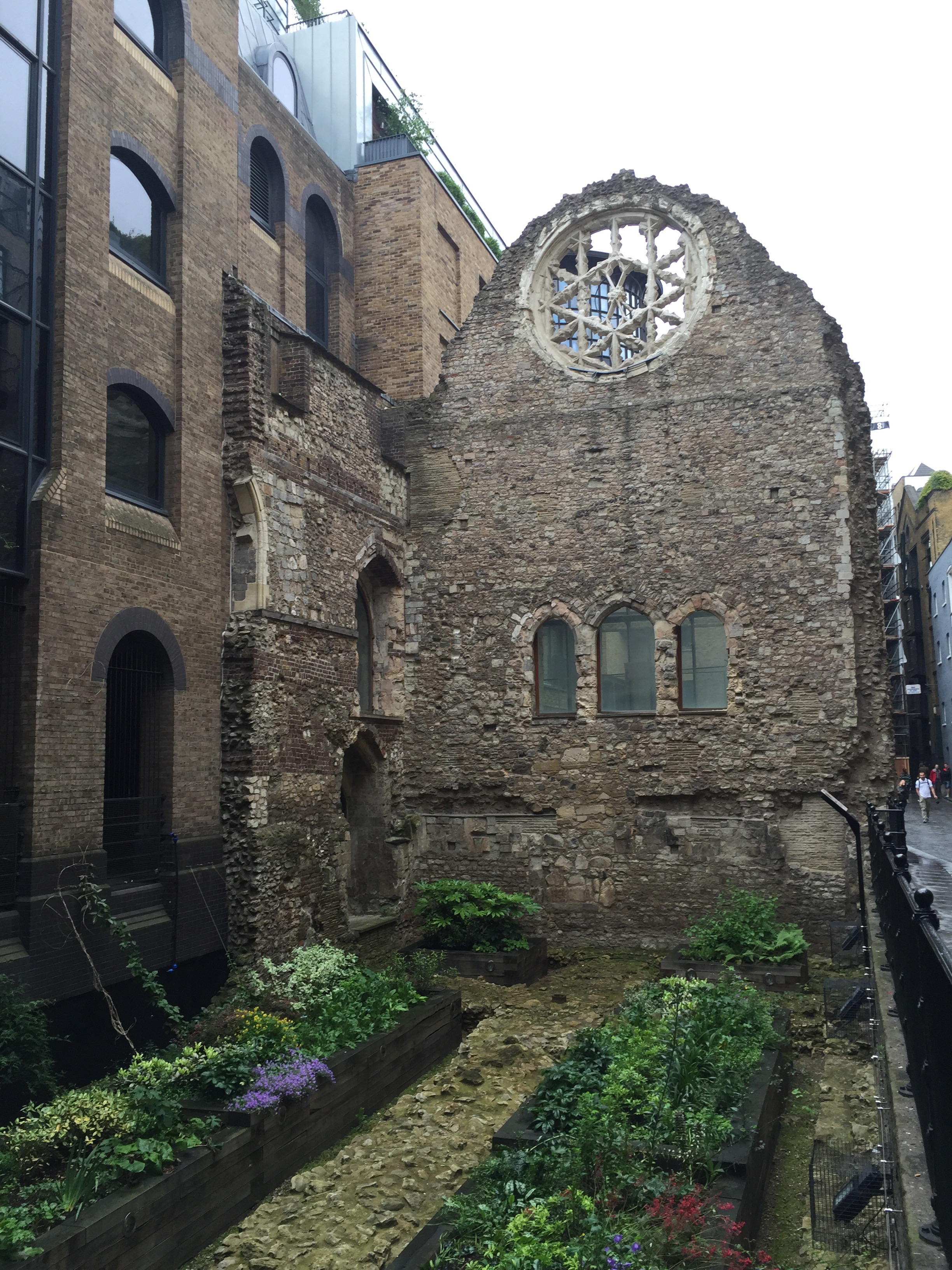 These ruins are all that remain of the home of the very powerful Bishops of Winchester, among the most influential figures of medieval London. They lie one street behind the Thames, in a densely developed area which beautifully balances leisure, housing, dining and entertaining, using a human scale of construction that maximises the re-use of existing resources, such as redeveloped warehouses, leaving history and culture not only intact, but adjacent.
 Within five hundred metres you will find three pubs, eight restaurants, the ancient Bishops’ Palace of Winchester and Sir Francis Drake’s ship, the Golden Hind.
On the north bank, in stark contrast, you will find offices and a roadway. The contrast couldn’t be more stark, and yet the City, proper, lies on the north bank, with its vast wealth and influence.
There is no point railing against this, London has its own complex systems of government. What is useful is to hold us the rejuvenation of the South Bank as an example of how wonderful an inner city area can be when effort is made to keep things on a human scale…
Share this:


 It is with great pleasure that I can tell you that Sue, Stuart and I received third place in the Most Inspirational Blog category of the 2016 Annual Bloggers’ Awards in London, earlier today.
  The turnout was great, as you can see from the picture, above, with many times more attendees than the inaugural event last year.
Our heartfelt thanks go to Sacha, Geoff, Ali and Hugh for a great deal of effort over the past few months in putting the event together. The venue was The Driver gastro pub, near Kings Cross station and we had an excellent guest speaker (Luca) from the company behind WordPress.
Nick Verron, Sue’s eldest son, received a second place in the best newcomer blog category.
A huge thank you for everyone who voted for us, and Nick.
Share this:


History and Mystery on Caldey Island – Final Part (5) , Warriors of the Heart
Their age is uncertain, but most observers place them as medieval. I’m no expert in ancient Christian symbolism, but, on my first visit to Caldey, a decade prior, I knew that the uncovered plaster etchings on the lower walls of St Illtud’s church were unusual. My first reaction was that they could also be partly alchemical, but I have no evidence for this, other than the initial impression of certain visual similarities.
Now, I was back, with a better camera, and determined to obtain a good set of photographs despite having to crouch low to take the shots of the old stone etchings which line the lower walls of St Illtud’s church.
A sun drawn as a circle (see first photo, above) with a smaller circle inside it. Four straight lines radiate from the upper and lower verticals, and the left and right directions. Further straight lines radiate out in each quadrant, but the mid line of each quadrant is wavy, as we might draw a ‘wavelength’ line in physics.
A dove descends (second photo) – a common Christian symbol of the Holy Ghost – but this dove descends from a figure of the sun above, and it’s own body radiates the ongoing life to those below.
Three fishes swim in a sea clearly marked by its surface (third photo). The three fishes form what looks like the head of an arrow pointing downwards. Smaller fishes curl at the lower edge of the piece, but these are not part of the power of three represented by the core group. Three is, of course, a symbol of the Trinity; and, prior to Christian thought, the mystical symbol of creation, ‘three primary forces in one’, the radiating of divine will into the ‘primal stuff’; the embodiment of that will; the projection from the ‘male’ energy of a receptive ‘female’ form into which the potency of the male may reside… leading to the birth of the world, or should we say, our realisation of the birth of that world…
Esoteric Christianity contains some of the most profound mysticism in the history of mankind and I wondered how much of this was being shared by the creators of these designs, etched in the past, where the ‘past’ is anything from one hundred to one thousand years ago.
There are over twenty of the ‘etchings’. When I first came to Caldey, they were dilapidated; and many were mouldy. Now, they had been lovingly restored under the supervision of Father Gildas, the Abbot of Caldey, though he recently confessed to the local newspaper, The Western Gazette, to knowing very little of their origin.

What is known is that the site of St Illtud’s church was the original home of the 6th century Celtic Christian church; the medieval Benedictines; and the more recent group of monks who created the modern religious landscape of Caldey in the last century. Although the present Abbey is Cistercian, the founding group of monks of the recent cycle of habitation were also Benedictines, and led by a very unusual man – Dom (Father, from Latin Dominus, master) Aelred Carlyle, also chronicled by some as the “Lord Abbot” and the “Druid Abbot” due to his highly unusual approach to his calling…
Dom Aelred Carlyle began his working life in London, where he tried to establish an institution that helped underprivileged young men to fit themselves for gainful work. This failed and he found himself in a series of roles, culminating in a vision that the restoration of Caldey Island as a place of isolated Benedictine worship should be the goal. He was, to say the least, an unusual man, not to mention an very ‘different’ priest. We would expect the word Benedictine to be associated with the Catholic faith, but Dom Aelred Carlyle’s followers were Protestant Benedictines – a line descending from the survivors of Henry VIII’s dissolution of most of the monasteries in 1536.
Dom Aelred’s proposition attracted some sponsorship, and, in 1906, the then owner of Caldey Island, the Rev Done Bushell, Chaplain of Harrow School, agreed to the sale of Caldey with certain strict provisions, including the construction of a formal guest house for visitors, who would be expected to pay, handsomely, for the privilege of being ‘part of the community’ for a while. A train was chartered to bring the Don Aelred’s existing Benedictine community from North Yorkshire to Tenby, where they were allowed to rest and wash, before making the short crossing to Caldey, their future home, in a local boat.
We have to admire their bravery, as they worked to restore what is now St Illtud’s church, at the same time as trying to feed themselves from the land and sea. The site of the Celtic and medieval communities had become, once more, the home to monastic worship on Caldey.
Sadly the story goes downhill from there. A series of grandiose plans for one of the largest abbeys in Europe were expensively shelved. But the present Italianate abbey was designed and built – taking Dom Aelred’s group massively into debt.
By 1929, the project was no longer viable, despite the construction of the present set of buildings, and the abbey was taken over by the Belgium (Catholic) Cistercian monks whose spiritual ‘descendants’ are today’s inhabitants. It is a tribute to them that they have continued to maintain and further restore St Illtud’s church and its long history. Today, the abbey is financially secure and the community is growing.
There remains one more treasure to document before closing this set of posts: that of the stained glass window in the sanctuary of St Illtud’s church.

One of the unsung heroes of the present day story of St Illtud’s is the Rev William Done Bushell, who restored the church in the closing years of the 19th century, and was the man who sold Caldey to Dom Aelred’s Benedictine group. To crown the restoration, he installed the large sanctuary window, which shows St Illtud (also written St Illtyd) as a young Arthurian Knight, being visited by an angel who urges him to turn away from Arthur’s court and return to the religious life of his youth. It’s an interesting and potentially controversial message, given the mystical interest in the inner symbolism of the Arthurian stories today.
Perhaps we are best ending this by thanking the present monks for their care of precious things from the near and far past, and for keeping those treasures alive for us all to see… and wonder at…
I will conclude with a view of Caldey’s ‘Calvary’ monument, overlooking the arrival and departure of its visitors, and the borrowed sentiment we often use in the Silent Eye School: “there is only one truth but a thousand windows through which to see it…”

Previous parts of this series:
Part One, Part Two, Part Three, Part Four,
Share this:

Sue’s house move happens…

Let’s try this app thing on the phone…
There was a point when I was sitting on the kerb homeless, surrounded by all my worldly goods while another family moved into my home behind me. Thankfully, I was only waiting for the van to come back for the final load.
Even so, it felt weird.
It felt weird for quite some time, as I know my new home well… It has been younger son’s place for the past five years… and really didn’t feel like mine.
Nevertheless, mine it now was, complete with the mountain of boxes, bags and chattels.
It had been touch and go for a while… We were moving at nine on Saturday morning. The cavalry didn’t manage to arrive until half eight Friday night to help me clear the loft, a terrible place full of the stored junk of fifteen years and the eleven people who…
View original post 470 more words
Share this:

+ enneagram, esoteric psychology, Haiku, Mystery Schools, Mystical poetry, Silent Eye School, Spirituality
Coffee and Haiku Cake – “Sly Dog”
by Steve Tanham
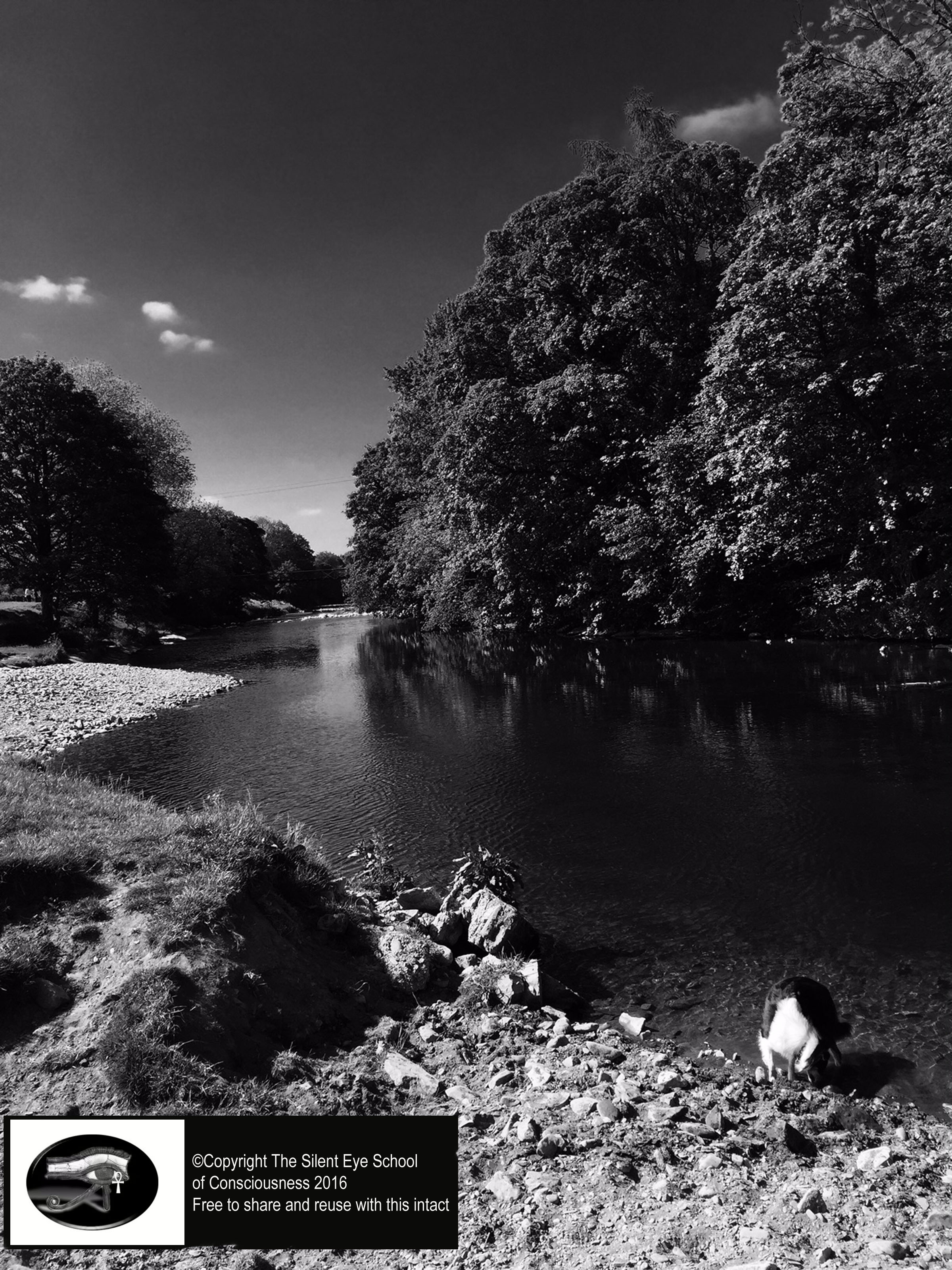
“Sly Dog”
⦿
Hissing flow on stones
Green soft swaying, fullsome trees
Sly dog drinks it all
⦿


 Sun in Gemini
You must be logged in to post a comment.