
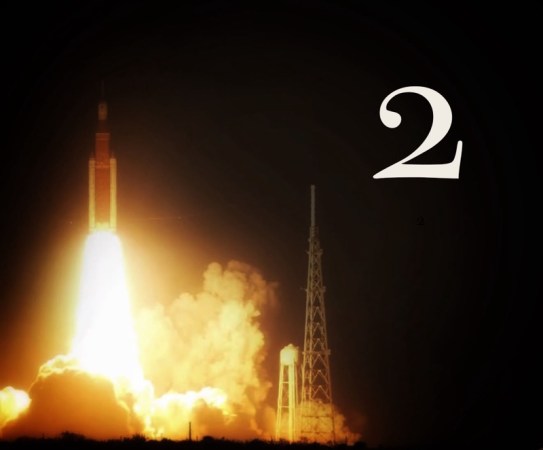
‘Our life-force begins its journey with the instincts.’
Hearing that stopped me in my tracks. It was so exact, yet, at the same time, so counter to what I would have written on my own.
Prior to this, I would have considered the life-force to be somehow ‘higher’ to the instincts; the latter being the pesky habitual appetite-related objects that get in the way of us being ‘better humans’.
We can think of many examples. We all know the effects of fear in paralysing what we need to do; of too much drink at that dinner party; or letting our hunger make emotional pictures that override sensible eating patterns. All these begin with the instincts. Most relate to threats or appetites. The threats are usually to our perceived sense of ‘self’ at the egoic rather than the existential level, but they all pattern and distort our ‘self in the world’.
We can, though, clearly see the benefits of, for example, listening to the ‘intelligence of fear’, and trusting that sixth sense when it tells us we are in danger or even involved in a threatening situation which may not be clearly defined.
We can make all of this much more conscious…
As I wrote in the last post, there are some similarities between the psyche and rockets… The life-force IS our fuel. The fact that it is all routed to our conscious minds through the instincts is significant for everything we do and try to do.
There is a helpful analogy between the brain and the hand, one that models the evolutionary basis of our brains, and illustrates the way life – and intelligence – has evolved and is evolving through us.
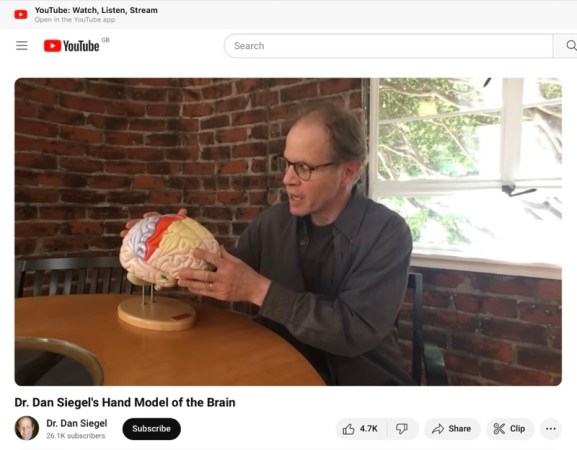
The model was developed by Dr Daniel Siegel to help us visualise this evolutionary drive at work in nature.
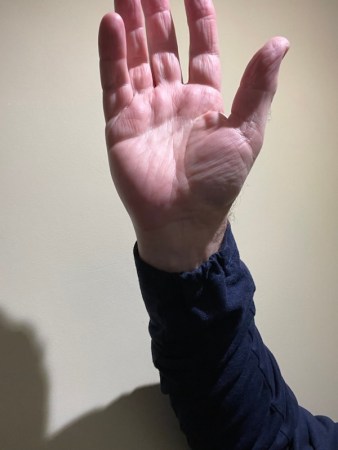
Hold up an arm of your choice, so that the forearm is vertical – representing the spinal column. The spine, together with the flat palm of the hand is known as the brain-stem, or mid-brain, and is the foundation of our survival ‘fight, flight or faint’ protective responses. These have been around for over 200 millions years, and interact, closely with what came next: the limbic brain, represented by the folded thumb in the next image. The limbic system took evolution another hundred million years to develop. These are not trivial structures!
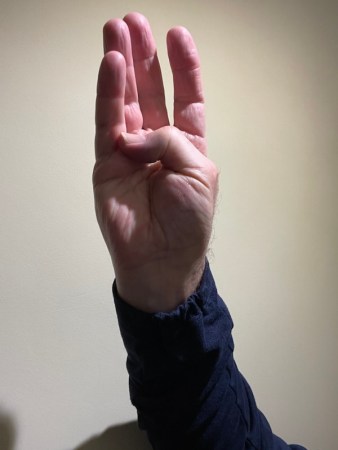
This combined sub-cortex structure is often referred to as the ‘reptile brain‘, although the mapping is only approximate. The reptile brain contains our core instincts, but none of the secondary features that ‘check and question’ the reactive actions the ‘reptile’ triggers. Real reptiles lay their eggs and leave the offspring to fend for themselves; there is no continuous ‘suckle, check and care’ as offered by mammal such as humans, dolphins, hippos, etc.
The ‘cold-blooded’ reptile is concerned only with survival. Above that and closely coupled with the spinal column is the mid-brain – the palm of the hand, below, with the odd structure of the folded thumb.
The combination of the folded thumb and palm creates the limbic-centric mid-brain, which adds – significantly – the emotions and our motivations. Now we have immediate reactions to the events of life that are of a different quality to the fight and flight responses of the reptile. The emotions are closely-coupled to the physiology and physicality of our organism. They may well convey information to us that is not of a logical nature, but of essential importance – such as the desirability and psychological ‘fit’ of a ‘mate’.
The limbic part of the brain also gives us the all-important means to connect with our caregivers, meaning that we can form the vital bonds with those who have the power to protect and nurture us. This is the basis of our whole social instinct system, which is many times more developed than the survival or even sexual instincts.
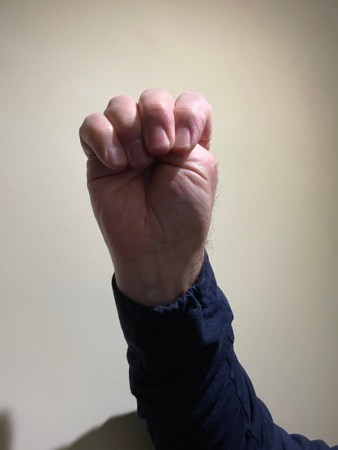
If we fold the fingers over the ‘limbic region and brain-stem, we can see how interconnected the brain is – and this is at the heart of how it works. Each new development, often taking millions of years, has integrated itself, deeply, with what came before. This has resulted in the mind having great power over what we do with our brains and body, and also an astonishing degree of ‘plasticity’ in the functioning of the brain, itself.
Brain cells are not limited to the head. New neural networks of brain cells are being discovered in the heart and lungs, for example. It is becoming obvious that our former understanding of the brain is tiny compared to its real potential.
In the next post of this series, we will consider the function of the outer layers of the brain, with particular reference to the neo-cortex, the most recent layer, and consider how our instincts may not simply be outliers of ancient evolution, but advanced societal functions capable of coming to the rescue of mankind in terms of inner strength, deep relationships and astonishing interchanges of human energy…
They might be arriving just in time.
©Stephen Tanham 2024
All photos taken and processed on an iPhone 12 ProMax.
Stephen Tanham is a writer-photographer and mystical teacher. He is the founding Director of the Silent Eye, which offers a journey of the soul guided by lessons, inner guidance and outer companionship.
There are two blog streams:
(mystically-oriented writing)
and
(general interest, poetry, humour and travel)
Share this:

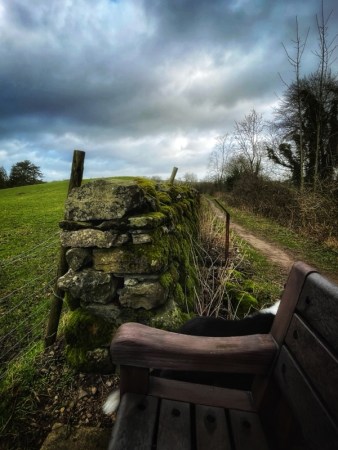
If you turn around
And your dog is nowhere to be seen
She may be behind you
And smarter than you are.
———-
©Stephen Tanham 2024
———-
All photos taken and processed on an iPhone 12 ProMax.
Stephen Tanham is a writer-photographer and mystical teacher. He is the founding Director of the Silent Eye, which offers a journey of the soul guided by lessons, inner guidance and outer companionship.
There are two blog streams:
(mystically-oriented writing)
and
(general interest, poetry, humour and travel)
Share this:

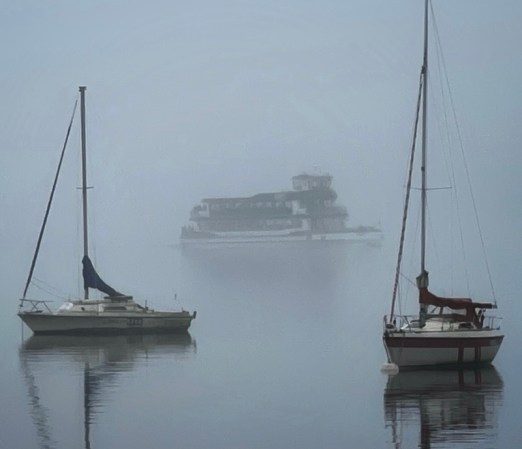
February has few attractions, other than it gets us to March, the prospect of Easter, and a definite change in the light.
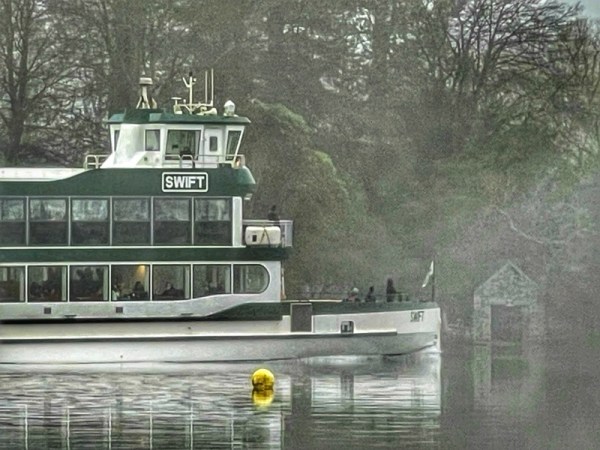
But, here on Lake Windermere, February does produce some wonderful morning mists…
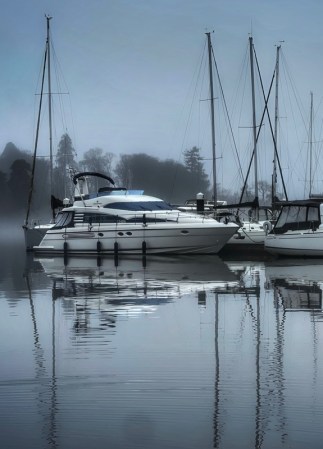
Boats slide gracefully into view, with a mystery and elegance that no digital effect can produce.
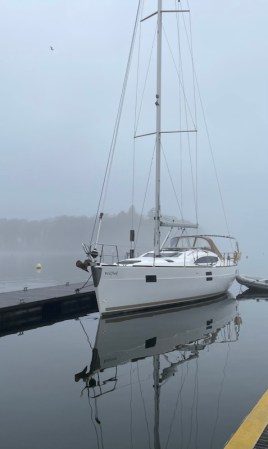
There is also a quality of silence… like no other season. As though everything is waiting.
©Stephen Tanham 2024
All photos taken and processed on an iPhone 12 ProMax.
Stephen Tanham is a writer-photographer and mystical teacher. He is the founding Director of the Silent Eye, which offers a journey of the soul guided by lessons, inner guidance and outer companionship.
There are two blog streams:
(mystically-oriented writing)
and
(general interest, poetry, humour and travel)
Share this:

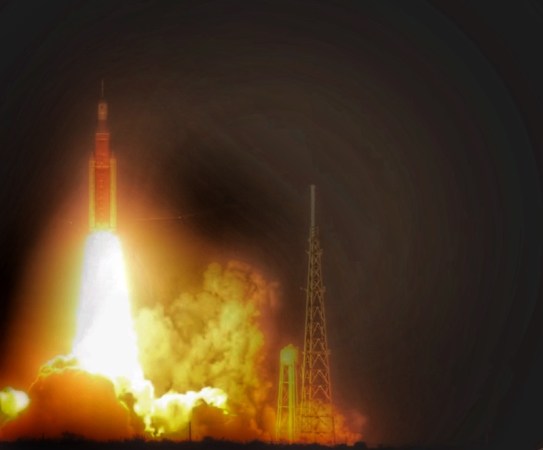
We could liken ourselves to a tall rocket, layered into functions. At the top would be the most sophisticated ‘computer’ the world has ever seen – the human brain. Below that would be the human-sized machinery tailored to assist the human passengers to navigate and control their tasks in space. Beneath these would be the vast machinery that balanced thrust and agility in this powerful human mechanism.
Towards the base, we would find the fuel – a set of huge tanks whose role was to safely store, then regulate the flow of this massively energetic substance so that it achieved the gaol of propelling the whole machine – including itself – upwards into space.
There are some similarities between the psyche and rockets…
The top of our ‘machine’ is the brain, which can be considered to have three main divisions. Its base, extending from the top of the spine, is the limbic brain – often referred to as the reptile brain. This ‘cold-blooded’ creature is concerned only with survival.
Above that and closely coupled with the spinal column is the mid-brain, the home of the sexual functions, such as arousal.
Beyond the mid-brain, the most recent addition to our long evolutionary journey is the neo-cortex – the ‘new brain’. This is involved with consciousness, language and other functions that we associate with societal and relational living.
There is physiology – the physical components of the human body, and their interworking; and there is psychology – the science of how this composite creature comes to assume a single idea of a ‘self’, centred on the body-mind entity.
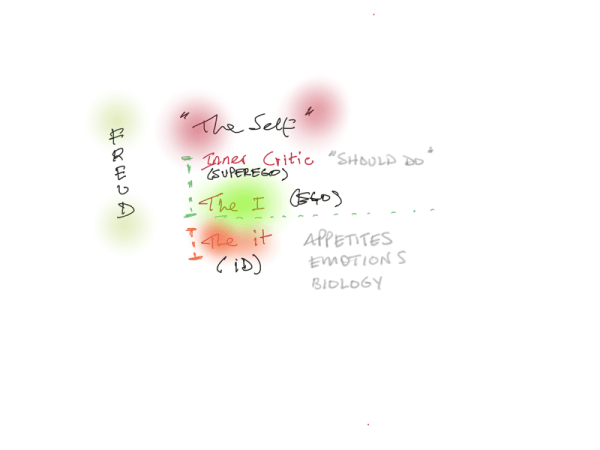
Sigmund Freud was one of the pioneers of this ‘science of the mind’. He divided the ‘sense of self’ or psyche into:
das Ich – the ‘I’;
das ‘Uber-ich’ – the ‘Over I’, which became known as the Super-ego; and
Das Id – ‘the It’
This division offered a profound view of the human makeup, particularly with the origination of the idea that there was a high-energy ‘basement’ to our being. Freud said the ‘id’ grew as we matured, and the ego learned to suppress those instincts that were not acceptable in the societal ‘layer’ we wanted to inhabit.
As the suppression of what we would now call ‘instincts’ continued, the whole of our lives would become ‘skewed’ with the force of their presence, a presence that was denied a life in the normal world. Carl Jung, the well-known contemporary of Freud wrote extensively about this.
Much much more is now known about the interaction of the physical (physiological) and the emotions. They are, effectively two sides of the same coin. We may think emotions are a ‘higher entity’, but their origin is directly in the ‘flow’ of what is happening to us: our experience. As such, their strength is to be nearer to the reality of experience than the elements of mind.
It’s easy, with some practice, to monitor our emotional states and reactions. We simply need to pause the normal state of our attention and ‘inquire into ourselves’.
The act of making them visible will teach us a lot about ourselves. But what about our instincts – those levels of response that are the first expression of our life-force in the body?
Instincts are not simply emotions; they are structures of reaction and response in the lowest levels of what we come to know as mind. They are example of early programming that underpin everything else that happens in our lives. Over time, they become – slowly – more sophisticated, and can be seen to be the core of our primary responses in the areas of survival, sexual and social interactions.
Do such instincts have a bearing on our spiritual journeys? Given that they are so rigid and controlling, we might view them as negative forces ranged against any true attempt to spiritualise our lives. This can easily be confused with then internal and critical voice of the superego.
The instincts have, however, great potential to help us on our spiritual journey, since they are the holders of the primary energies of our lives – in vast potency – the ‘rocket fuel’ of our title. More will be said about this in future posts of this series.
This is topical on a personal level. I have, for a number of years, been keen to deepen my knowledge of how the instincts operate – from a spiritual perspective. One of the teaching organisations I most respect – the Diamond Approach – has recently begun to offer some of their core knowledge as a series of online courses, available to the public.
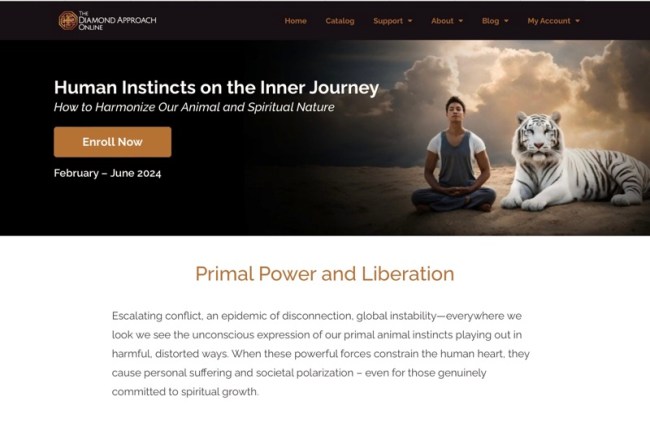
I have enrolled in the DAO online course, and look forward to sharing some personal insights in this series of blogs, though I will not be able to share the actual material of the course.
Part Two will follow in the next two weeks.
©Stephen Tanham 2024
All photos taken and processed on an iPhone 12 ProMax.
Stephen Tanham is a writer-photographer and mystical teacher. He is the founding Director of the Silent Eye, which offers a journey of the soul guided by lessons, inner guidance and outer companionship.
There are two blog streams:
(mystically-oriented writing)
and
(general interest, poetry, humour and travel)
Share this:


Stark, naked, the long cold night of winter
Draws my will to live in shapes
Whose beauty lies in number,
Unseen to hands that touch
My rough and dusty bark…
———-
The limit of life is my companion
As pale sun begins to feed
Across the stellar miles
And seeks – within the rough
And blackened frame –
The tiny hiss of sap.
———-
My roots, abused but warm
–though not to you,
Are wed in size to what is yet to come.
A sphere of growth so dense
That acres were required
To lay its workings level.
———-
Turn, shrink and turn again
My mantra to the burrowing sun
His breath, my thrust, as space is filled
With longing maps of future green
And laughter – unheard by man
Ghosts our dance, impossibly tactile
Whose hidden name is fractal.
———-
©Stephen Tanham 2024
All photos taken and processed on an iPhone 12 ProMax.
Stephen Tanham is a writer-photographer and mystical teacher. He is the founding Director of the Silent Eye, which offers a journey of the soul guided by lessons, inner guidance and outer companionship.
There are two blog streams:
(mystically-oriented writing)
and
(general interest, poetry, humour and travel)
Share this:

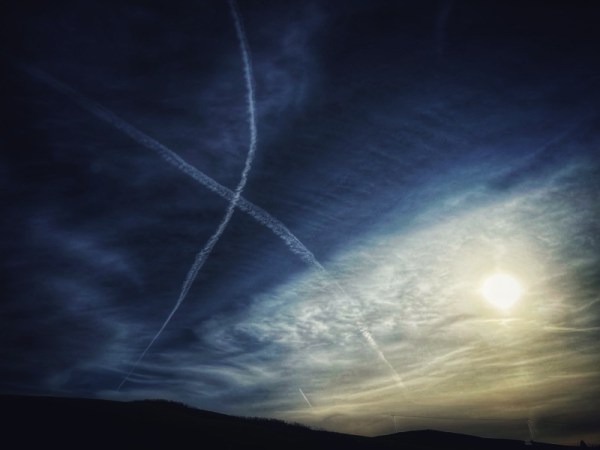
‘When I said “mark the spot“, Jenkins, I had something else in mind!’
‘Stewardess, would you kindly bring us two more coffees … and a cloth!’
———-
©Stephen Tanham 2024
All photos taken and processed on an iPhone 12 ProMax.
Stephen Tanham is a writer-photographer and mystical teacher.
Share this:

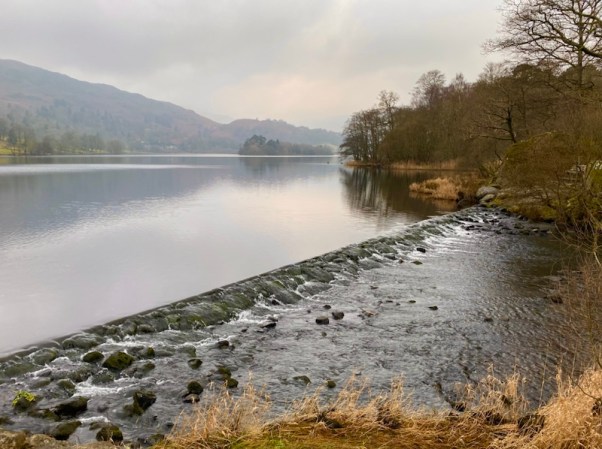
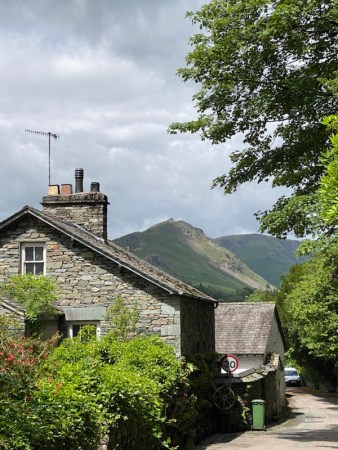
It’s February; cold and wet, now… But in a few month’s time, It will be glorious May, and the landscape around the celebrated village of Grasmere, in the heart of the Lake District, will be transformed into one of the beautiful locations in Britain.
Grasmere is to be our base for the Silent Eye’s Spring weekend of 2024, 10-12 May.
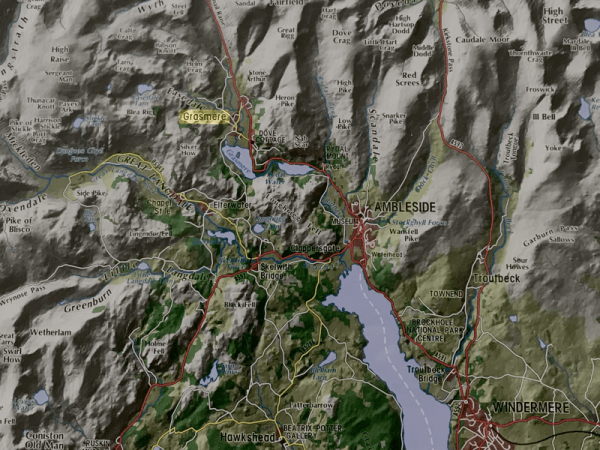
Grasmere’s most famous resident was William Wordsworth, and the village hosts the world-famous Wordsworth Museum and Dove Cottage. Dorothy and William Wordsworth’s grave is located between the church and the river.

Our weekends are gentle affairs, but we do some serious walking and talking, too. We choose a landscape of beauty around which we can base three walks: A longer one for the Saturday and two shorter ones for the Friday afternoon and the Sunday morning prior to departure after lunch.
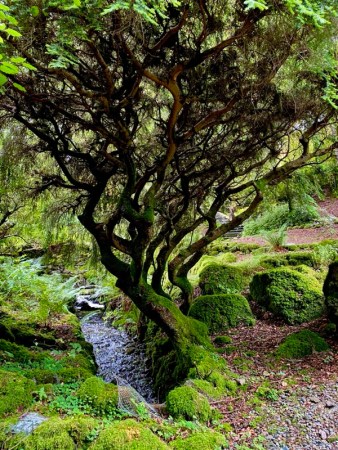
The main walk is taken on the Saturday, often in some circular fashion – and combining walking with other forms of transport. Last year, a number of well-exercised walkers were surprised and delighted to find an unexpected boat arriving at the jetty of Wray Castle, on Windermere, to ferry them across Lake Windermere and back to our base in Bowness.
Our spiritual theme, discussed at various points on our walks is based on one of Wordsworth’s most famous works: the Ode to Immortality from Recollections of Early Childhood.
We will explore the idea of ‘Clouds of Glory’ and what that might mean in modern terms. Those joining the event will be welcome to bring their own readings and quotations.
“Our birth is but a sleep and a forgetting:
The Soul that rises with us, our life’s Star,
Hath had elsewhere its setting,
And cometh from afar:
Not in entire forgetfulness,
And not in utter nakedness,
But trailing clouds of glory do we come
From God, who is our home”
William Wordsworth. Extract from Poetry Foundation website
Grasmere is justly famous for its surrounding hills, including Helm Crag’s Lion and the Lamb and the landscape of the River Rothay, which snakes through its centre (close to the grave of William and Mary Wordsworth), before flowing out into Grasmere lake and eventually, through Rydal Water and on into the vast waters of Lake Windermere.


A circular walk around Grasmere lake, taking in the beauty of the village, with refreshments back in the town, will be part of our planning.
Come and join us! Friday lunch to Sunday lunch 10-12th May, 2024.
To register your interest and receive updates on the plans, contact us at rivingtide@gmail.com.
———-
©Stephen Tanham 2024
———-
All photos taken and processed on an iPhone 12 ProMax.
Stephen Tanham is a writer-photographer and mystical teacher. He is the founding Director of the Silent Eye, which offers a journey of the soul guided by lessons, inner guidance and outer companionship.
There are two blog streams:
(mystically-oriented writing)
and
(general interest, poetry, humour and travel)
Share this:

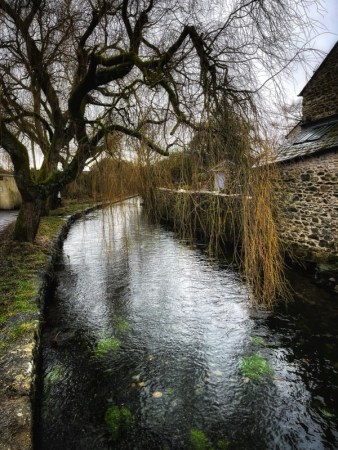
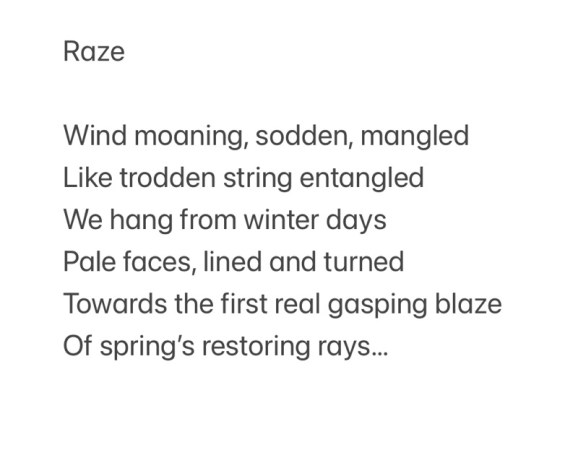
Raze
by Steve Tanham
(📩70 words, winter poetry, a one-minute read)
———-
©Stephen Tanham 2024
All photos taken and processed on an iPhone 12 ProMax.
Stephen Tanham is a writer-photographer and mystical teacher.
He is the founding Director of the Silent Eye, which offers a journey of the soul guided by lessons, inner guidance and outer companionship.
There are two blog streams:
(mystically-oriented writing)
and
(general interest, poetry, humour and travel)
Share this:

(📩100 words, a one-minute read)
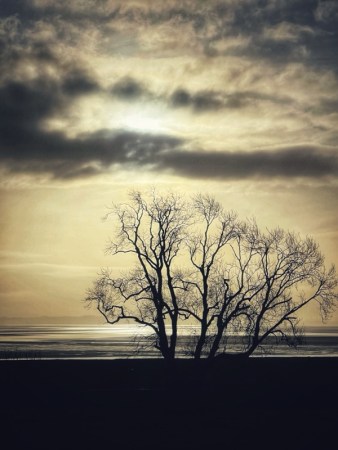
The sky lit bright with promise
The dark earth sodden and soft
The tree – the form returning life
will use to shape itself.
Like, yet unlike,
Each season different yet the same
With a billion variants we do not see…
———-
©Stephen Tanham 2024
All photos taken and processed on an iPhone 12 ProMax.
Stephen Tanham is a writer-photographer and mystical teacher.
He is the founding Director of the Silent Eye, which offers a journey of the soul guided by lessons, inner guidance and outer companionship.
There are two blog streams:
(mystically-oriented writing)
and
(general interest, poetry, humour and travel)
Share this:

(📩700 words, a ten-minute read, final part)

(Note: due to a technical error, Part Two of The Touch of Experience did not publish on Sun in Gemini, though it did on The Silent Eye. There is a link at the end of this post if the reader would like to read the full set of three, in sequence. Apologies)
In Part Two, the ‘Apple’ became a friend that helped us quieten the mind’s focus on concentration (of things) and created a ‘light and bubbling’ sense of ourselves, a kind of glow…
In this final part of the series, we are going to do something quite wonderful … and very simple. I hope you will take this with you and use it, often.
When we feel the gentle affinity with the apple – or whatever object we have used to help us – we are going to include it in our being.
That’s right, we’re going to relate to it as though it were part of us; a part of the ‘me’ that is ‘you’ – your very special sense of self.
We do this by holding that bubbling glow that we feel at the presence of this friendly object and transposing it back to us, as though some invisible process was absorbing it back into our body.
Immediately we do this, we will feel that, actually, it already was part of our body, and that the bubbling glow we now feel was really coming from us, all along. Only now, we recognise the signature of that focus on the apple was actually the sense of peaceful self.
While the energy of this is glowing, use it to sweep up your whole body, starting with the muscles and bones of your feet and rising up within the legs to the mid-section, stomach and chest, and holding it in your heart. Then, let it rise through your throat and head with a sense of ‘flowering’ at the very top of your head and out into the space above you.

As though you were a flower, feel your feet rooted to the Earth and your flowering head connected to the sky (and stars) above you.
It’s a beautiful feeling, isn’t it?
The body is always in the now, but we don’t often pay this kind of attention to it, so we stay lost in our thoughts and concerns and feelings – the mind. All of these are imaginations compare to the reality and ‘present-ness’ of the body.
Go back now and feel how much your body is in the ‘present moment’. Does it have that gentle inner glow? If so, then the whole of it is present to the beautiful now, and the phantoms of the busy or troubled mind have been pushed where they belong.
The future is an idea. The present is where everything happens; and it is constantly changing, Our lives can change in an instant, so our heavy thoughts and worries simply hold us away from the power of the now and that which is present in the now to change things.
Our minds are usually in a chaotic state of ‘must do this, must remember to do that … and worry about things that have yet to happen to us. The body is always in the now, and when we return our full presence to it, it glows with joy.
Experience –where we started – touches the body, first. That is reality, What we then make of that touch of experience is down to the state of our emotion and thoughts – the mind, in other words,
With care and love for our-selves, we can separate these, and see how they work. At any stage, we can stop the compulsive busyness and simply be present to our bodies, re-inhabiting the bubbling joy of being alive and being ‘me’.
This ‘other realm’ of being is what we always had before our minds became ‘sophisticated’ and cluttered with concerns, anticipations and worry.
It belongs to us. It is us. We can reclaim it so simply.
I hope this works for you… Its effects can be a revelation.
Previous parts of this series:
This is part Three
———-
©Stephen Tanham 2024
All photos taken and processed on an iPhone 12 ProMax.
Stephen Tanham is a writer-photographer and mystical teacher. He is the founding Director of the Silent Eye, which offers a guided inner journey from the state of conscious personality to the awakening of realised personal Self and its world of Being.
There are two blog streams:
(mystically-oriented writing)
and
(general interest, poetry and travel)
Share this:

(-📩 500 words, mainly photos. A five minute browse)
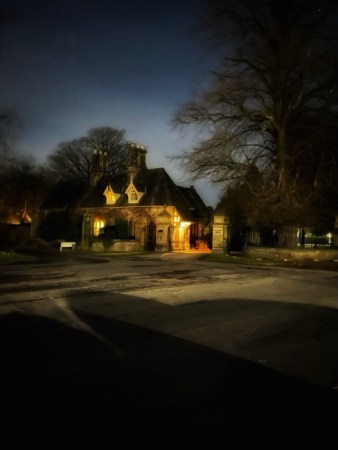
It was so late there was literally no-one else around.
An unsettled dog with an upset tummy had led me out into the unlit streets of Sedgwick: our small village, which lies about 25 miles from Lake Windermere.
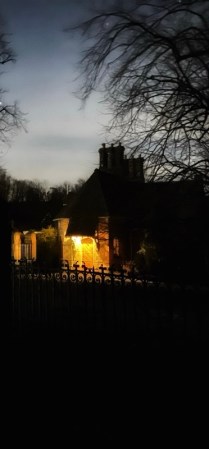
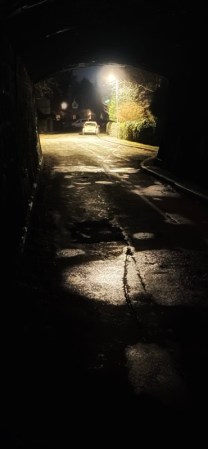
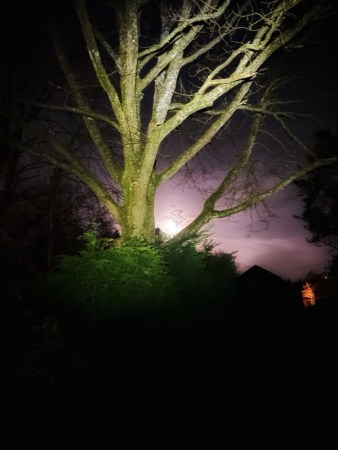
With nothing else to do except walk the poor collie until she was tired or cured, I got the iPhone out and began to play with ‘Night-mode’, switching the flash off and letting the lens and internal computers do their best against the darkness. There are no street lamps in Sedgwick; the village has a dark-skies policy.
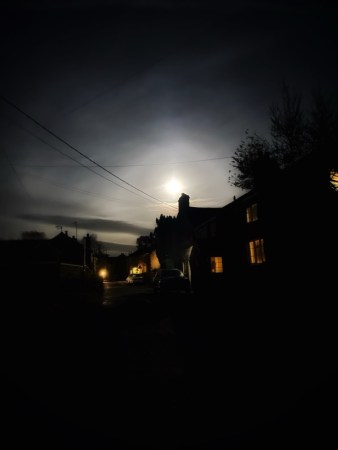
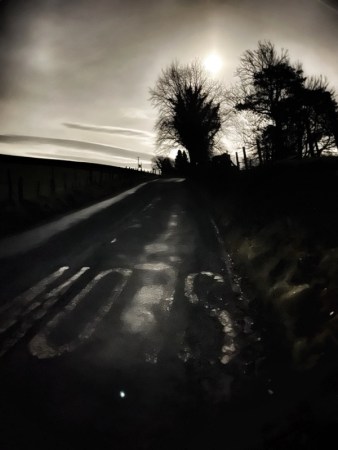
I don’t use a tripod, so half the shots were taken just standing up and holding the phone as steady as possible. The rest were taken jammed against a fence post, lamp-post or anything else that was tall enough to brace and steady the shots. I did, though, have the benefit of a bright and full-ish moon, which made all the difference at the ‘cold’ end of the spectrum.
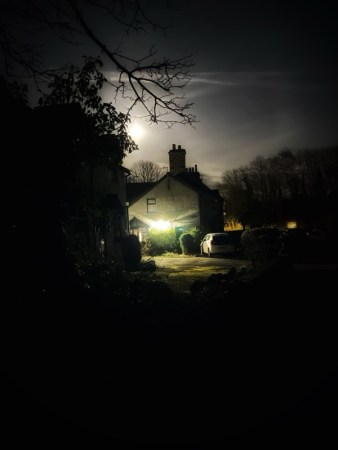
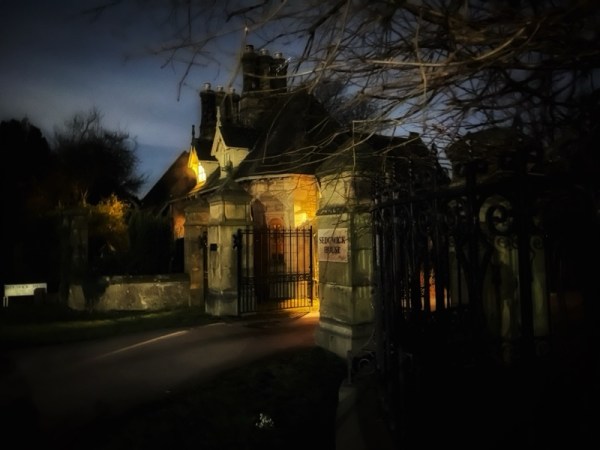
Opposite the old Wakefield estate, there is a row of individual houses, built at various times in the village’s history. Geographically, this is the centre of the village.
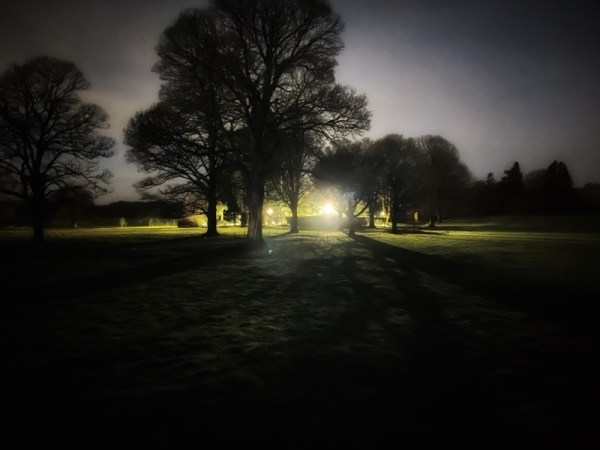
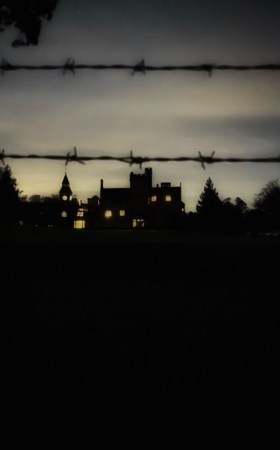
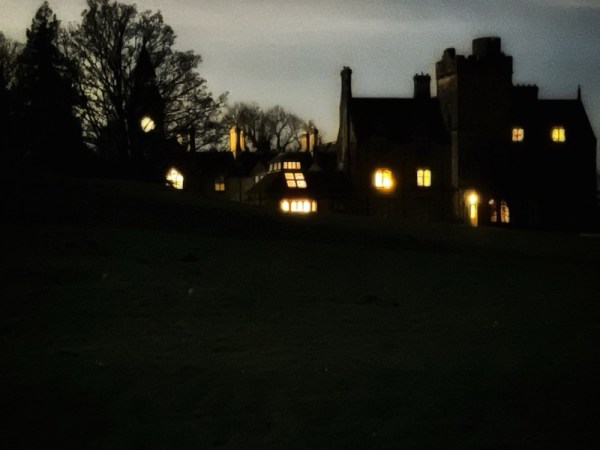
The old Wakefield house and gardens are extensive. In the darkness they look ominous… The perfect setting for a ghost story, perhaps?
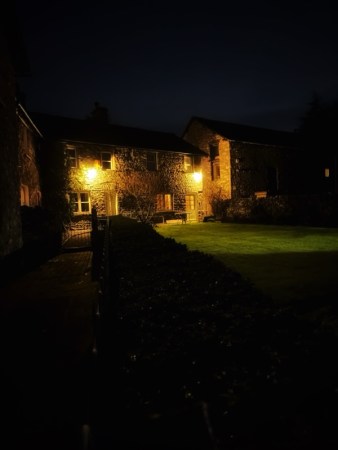
Apple’s night-mode on the iPhone works by using AI to evaluate what’s being asked of it, then taking and merging multiple shots to get the best result it can. All this without using the flash – which makes it good for any kind of landscape photo; near or far.
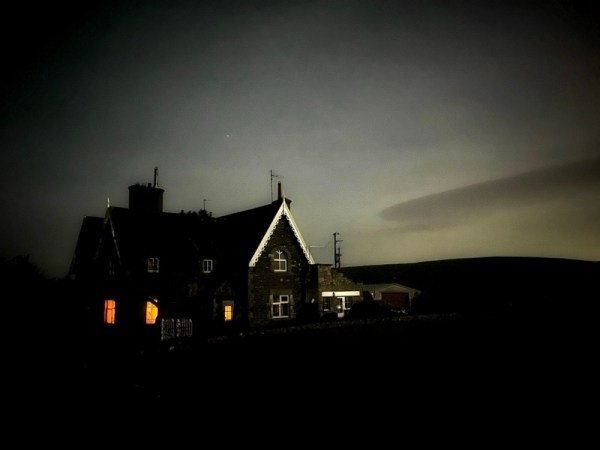
As the hill steepens towards the River Kent, the houses thin out. This is one of the old gunpowder-foreman’s houses , now divided into two dwellings.
©Stephen Tanham 2024
All photos taken and processed on an iPhone 12 ProMax.
Stephen Tanham is a writer-photographer and mystical teacher. He is the founding Director of the Silent Eye, which offers a journey guided by lessons, correspondence, exercises, zoom reviews and personal meditation. This takes the conscious personality to the dawning of realised personal Self and its restored home of Being.
There are two blog streams:
(mystically-oriented writing)
and
(general interest, poetry, humour and travel)
Share this:

📩 humorous photos, fright. 17 words. One minute read)
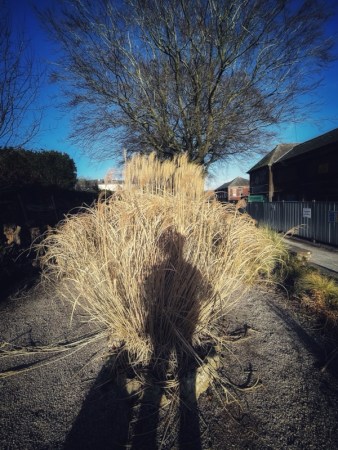
Winter shadows are great fun.
The strong sun, coming in at a low angle, creates images of high contrast. Many of these carry a degree of humorous ‘threat’: the kind one can imagine on the cover of a dark novel.
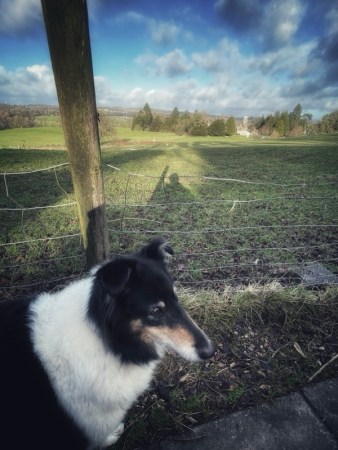
The ‘intruder’ appeared when I was framing the shot of Tess, sitting on a bench. The sun came out behind me and suddenly there was a new figure in the shot… An ancient monk, perhaps, bearing a staff!
And he’s behind us!!!
———-
©Stephen Tanham 2024
All photos taken and processed on an iPhone 12 ProMax.
Stephen Tanham is a writer-photographer and mystical teacher. He is the founding Director of the Silent Eye, which offers an intuitionally-guided journey from the state of conscious personality to the awakening of realised personal Self and its world of Being.
There are two blog streams:
(mystically-oriented writing)
and
(general interest, poetry, humour and travel)


 Sun in Gemini
You must be logged in to post a comment.