
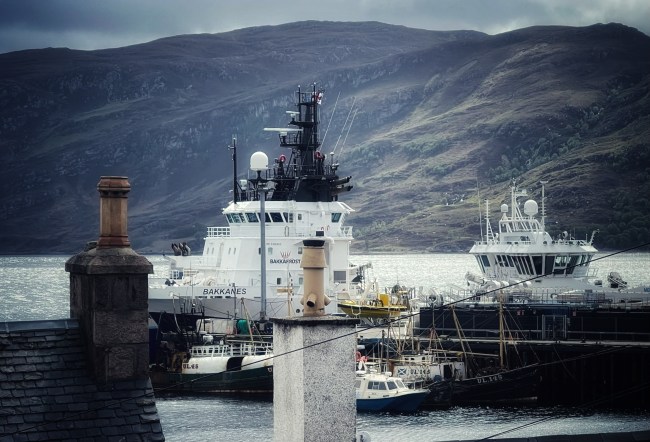
Continued from Part Four…. See index below.
We’re in Ullapool. Waiting to board the ferry to the Outer Hebrides – the island of Lewis, to be precise. Our first week in the far north-west of Scotland is over. We’ve marvelled at some of the most dramatic scenery we’ve ever seen. My iPhone has struggled to cope with the sheer scale of this land.
It’s raining, as it has been most of the week. But we’re not going to let it dampen our spirits. After a while, being damp ceases to dull the spirit, and you fill the day with smaller explorations – ensuring that each one has a warm coffee shop!
My best waterproof is long and based on a riding-coat style. Bernie says it reminds her of the Mad Max films. I don’t mind – I’m quite happy being at a slight angle to the universe…
But it’s not here. It’s several hundred miles south in Cumbria, hung on a peg by the front door where I wouldn’t miss it when leaving with the last of the cases…Mmm.

In fairness to this beautiful part of the Highlands, Cumbria is pretty wet, too – and just as unpredictable as Scotland. Winter and summer, the long ‘Mad Max’ raincoat has proved invaluable.
Though not in itself warm, its length provides a body-fitting waterproof barrier. In summer storms, it’s ideal. But you do need to have it with you…
For reasons explained in Part One (see index below) I hadn’t told my wife, Bernie that I didn’t really have a coat. This was doubly poignant when you consider she was carrying – for my imminent holiday birthday – a very tasty, shorter version of Mad Max, made by a New Zealand company that also understands a life in near-constant rain.
Bernie hadn’t yet noticed my oversight…and I wasn’t about tell her. It was down to me to survive on what I had packed long enough to collect the new coat. After that I would always be dry…
…and warm. Did I mention warm? For the past week the weather had not only been wet, but cold. Zipped into my stand-in Berghaus windproof, I had no less than three layers, comprising: vest, walking ‘woollie’ and super-light gilet. I was, it has to be admitted, warm. But I was permanently damp…
Now in Ullapool and seeing the waiting ferry boat below us brought home that it would only be a few days to dry warmth. I was counting them down.
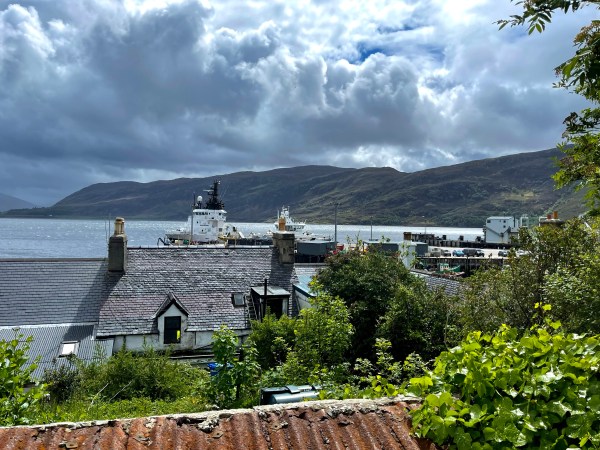
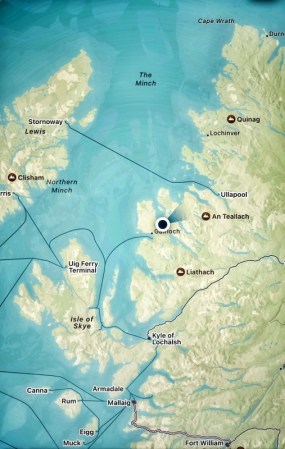
Our adventure holiday – ‘four wet people in a people carrier’ had been adopted as its moniker – was planned as a two centre holiday. We were at the end of the first week and about to board a very modern ship to cross the ‘Minch’, a challenging stretch of sea that separates the extreme north-west coast of the Scottish mainland from the islands of Lewis and Harris – the Outer Hebrides; a place we had long wanted to visit.
Bernie and I are well used to sea-going ferries. We travel each year – usually November – to spend time with friends on the Isle of Man. The crossing takes four hours and can be rough; though, in the fifteen years we have been doing it, we have been fortunate in always having calm weather.
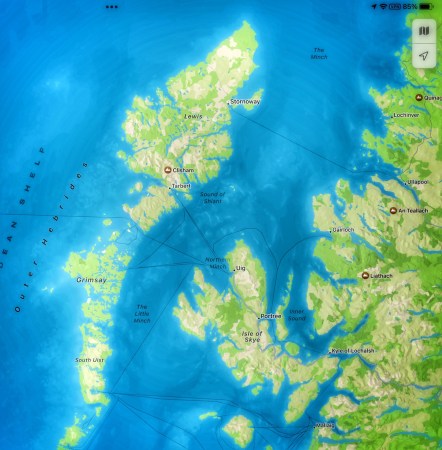
Image from Apple Maps, post processed by the author)
We had realistic expectations of the island of Lewis. The interior of the land was spoken of as rocky and rather featureless, but with hundreds of sea-lochs. The highpoint of the scenery seemed to be the beaches. We were travelling with two dogs, one of them blind. We were hoping that both would find the large and empty beaches joyful, and that Rosie, the blind Labrador, would find in them a vast and safe space to run free.
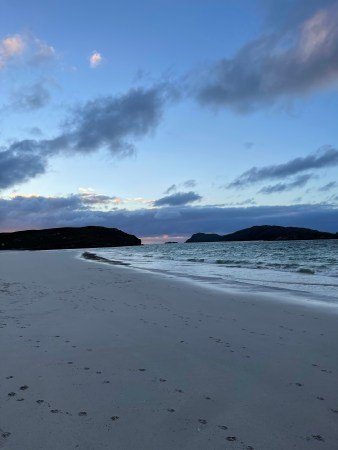
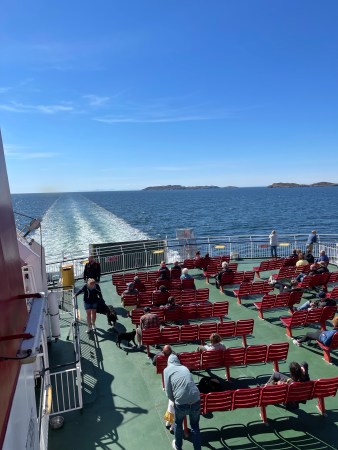
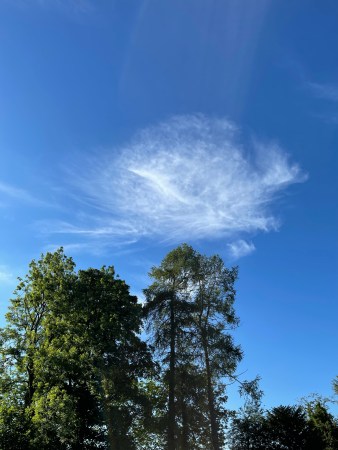
Part way through the voyage to Lewis, the sun came out and I went on deck to photograph it. At least I think that’s what happened. Perhaps I’d nodded off. Either way, things might have been about to improve.
For now, I was enjoying the warm, dry and dog-friendly lounge of the Calmac Ferry to Stornaway, and smiling at the thought of the birthday waterproof coat just around the corner…
Part One: https://suningemini.blog/2022/05/24/a-poolewe-diary-1/
Part Two, https://suningemini.blog/2022/05/31/a-poolewe-diary-2/
Part Three, https://suningemini.blog/2022/06/06/a-poolewe-diary-3-the-loch-on-the-back-of-the-oats-box/
Part Four, https://suningemini.blog/2022/06/14/a-poolewe-diary-4-once-upon-a-time-in-the-far-north-west/
This is Part Five
©Stephen Tanham 2022
Stephen Tanham is a Director of the Silent Eye, a journey through the forest of personality to the dawn of Being.
http://www.thesilenteye.co.uk and http://www.suningemini.blog
Share this:

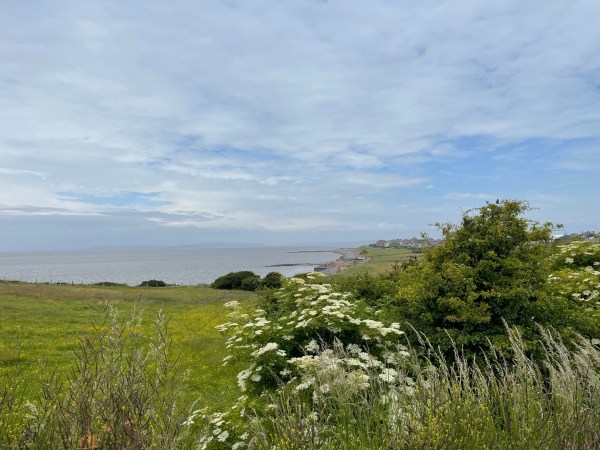
The raw picture had some pleasing elements. The ‘follow-line’ from the foliage down to the sea was attractive, but the width of the foreground diluted the impact. The first step was to deepen the ‘feel’ with a number of tonal changes.
There’s no instant fix. It’s a process of trial and error. There is a danger of going overboard with the effects and making the image look interesting but artificial. There’s a desire to move away from the original, but only to get closer to what was ‘glimpsed’, emotionally, when taking the original image.
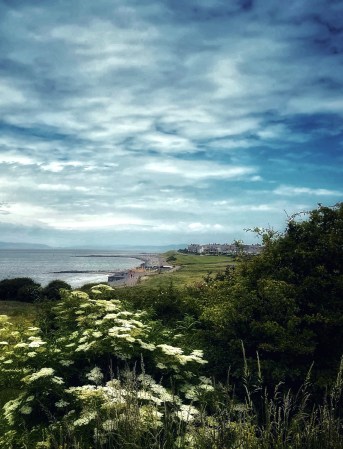
After this balance is arrived at, the rest is down to cropping – extracting a core ‘block’ of the image to be the new whole. To do this we take away what we don’t need of the original using digital tools that ‘crop’ to any desired aspect ratio.
There is an undefinable moment when something goes ‘click’ in the mind and you know you’ve found a certain symmetry of composition. It’s more of an ‘art’ than a science.
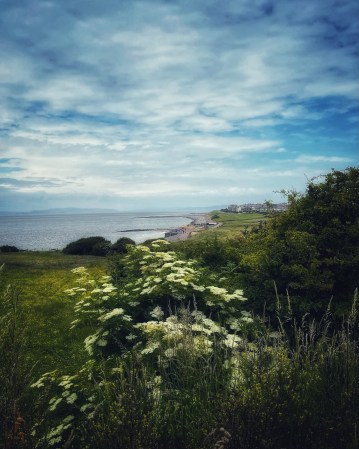
Above: restoring a little of the grassy surface on the left establishes a better balance. It’s a process of ‘feel’ rather than mathematics, although I suspect the mind recognises quite complex areas as ‘harmonic’.
©Stephen Tanham 2022
Stephen Tanham is a Director of the Silent Eye, a journey through the forest of personality to the dawn of Being.
http://www.thesilenteye.co.uk and http://www.suningemini.blog
Share this:

+ #Silenti, Ancient Landscapes, Ancient Sacred Sites, Consciousness, Lake District, myths and spirituality, Photographic techniques, Photography
Heroes in a Landscape (6) Fellowship of the Shepherd
by Steve Tanham

Continued from Part Five…
There comes a moment in any weekend event when the carefully cultivated sense of order breaks down… no matter how good the plan. At that point one looks to ‘heaven’ knowing that the success is in the ‘laps of the Gods’.
The man striding up the hill from Great Salkeld towards Long Meg Stone Circle possessed a brain whose capacity for the solution of additional problems had ceased…
You can only do so much to anticipate what might go wrong. This is different from careful planning; which provides a framework which should be resilient, and above all else, elastic.
The companion who was having difficulty walking was, to the best of my knowledge, still somewhere close to Lacy’s Caves; and being looked after by some, if not all, of the walking party. Even with their help, she might be unable to walk out of the Eden Valley.
She was later to write to Stuart and I that there must have been a remarkable amount of ‘elastic in the system’ to bring things to a successful conclusion. At the time, it didn’t feel like that…
The Saturday of the Journey of the Hero workshop had gone very well. The problems were entirely about how it was ending…

To the best of my knowledge, I was the only one not still ‘trapped’ in the Eden Valley. Somewhat hot and sweaty, courtesy of my self-imposed route-march, I was approaching the Long Meg Stone Circle – where all the cars were parked. Other than breathing deeply and being hot, I felt okay. There was no sign of extreme fatigue. My concern was entirely for the companions farther back along the route.

A glance at my watch showed I had made it back in record time. But there was none to lose. It seemed unlikely that we would be making our early dinner appointment at the Shepherd Inn, Langwathby – the next village, but a million miles away in problems. A prime Saturday evening booking cancelled… they would be rightly annoyed.
I located my car keys in the backpack and opened the door… It’s amazing what sliding behind the wheel of your car can do for the spirits when you’ve spent the past hour walking at a near-run. Now, finally equipped to get somewhere fast, I could begin to put a rescue into effect. Down in the village the large gate was padlocked and I would not be able to take the car on its return mission without solving that first.
I glanced at the Long Meg stones and made my silent prayer, again. Then drove off down the steep lane back to Great Threlkeld.

Five minutes later, I swung the car round the corner and into the small road by the village green to find that three people were sitting on the bench, looking at the arriving fast car. Stuart was one of them. I couldn’t work out what had happened but was relieved to see at least some of the party. They were equally surprised to see me, and explained that they presumed they had been just behind me on my self-enforced march.
It transpired that the lady with the walking difficulties had made a determined effort to have another go at it; and found out that her Covid-suppressed leg muscles had begun to respond to her needs! She was somewhere behind on the trail but being assisted by one of our strongest hikers. In my absence, the problem had begun to resolve itself… There’s a lesson in that, I muttered to no-one in particular…

It seemed there was nothing I could do to speed up the situation, so the critical path shifted to getting everyone who was here back to their cars.
Without delay, I ferried them back up the hill to Long Meg. I was about to set off, again, back to the village, when one of the party approached me looking glum and shaking her head.
“I appear to have lost my car keys,” she said in a low voice.
She’s an experienced lady, and hosts workshops of her own. She looked downcast, conscious that the slim possibility of getting to our dinner had just evaporated…
Stuart and I looked around the car, then got down on the ground to see if the keys had dropped beneath. Nothing. Meanwhile, the lady without the keys was searching every pocket she had, including those of her backpack. It was fruitless…they were not there.
The three of us mentally retraced our steps to think where they might have been dropped. She said that, after locking the car, they were always placed in a certain pocket of her walking jacket. She patted it, silently.

“One of my daughters lives close by. She said, brightening. She took out her mobile. “She’ll not be surprised…”
I always admire self-deprecating humour. In the face of difficulty, it’s a noble thing.
Stuart sighed and said, in the way he does when he’s wearing his Reaper’s look, “Lacy’s Caves… we all sat down for that tea and chocolate…They might have fallen out there!”
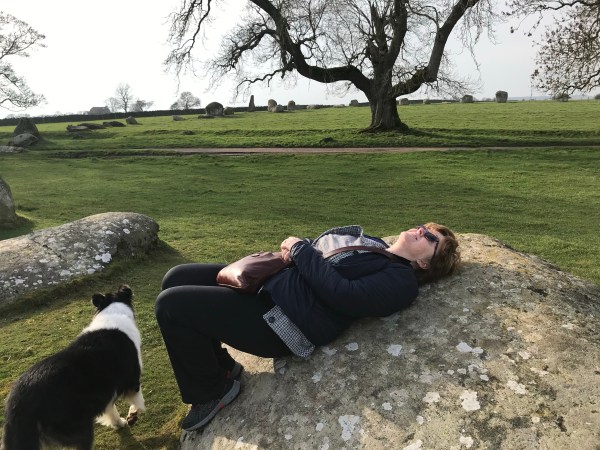
No-one responded. The implications were ‘too horrid’, as a long departed mentor would have said.
I took stock: we did have enough seats in the available vehicles to get us all to the Shepherd Pub in nearby Langwathby. We were short two people, one of whom might be limping along the river trail.
It was 17: 40. The dinner table was booked for 18:00. It was Saturday evening; they wouldn’t hold it long.
“I’ll drive back into the village” I said. “You never know, the final two might have made it that far.”
I got into my car, again, opening the side window to catch any last-minute developments. The companion without her car keys was phoning the daughter with the spare set. I could hear the cackle of laughter at the other end.
“Again!”
It was beautifully good-natured. We would be okay, even if we had to dine off fish and chips, standing on the pavement in Penrith…
I drove down the lane, again. This was beginning to feel like the central character in Gerard Hofnung’s story of the bricks… If you’ve never heard it, it’s ten minutes well spent.
The lady with the limp and her stalwart protector were sitting on the same bench. She looked fine. I had a growing sense of amused unreality.
“I’m fine, Steve. My leg started working, again. Just lack of exercise… I should have done some training before the weekend!”
I thanked her protector and we climbed back into the car. I was about to set off for Long Meg when a different plan presented itself…
I dropped them outside the Shepherd Inn in the nearby village of Langwathby with instructions to secure our table and delay things as long as possible. If we were thrown out at that point, we had at least battled and lost. Dinner in that delightful pub was to be the high point of the day and I wasn’t going to surrender it, lightly.
I went back up the hill to Long Meg… (See I told you you’d like the Bricklayer’s tale)
The lady without her keys was standing behind her car, talking with her daughter. The keys being brought seemed to be a minimum of an hour away. All hopes of the nearby dinner were vanishing.
She turned to lean on the back of the car and – to her visible surprise – the boot swung up and open…
“That’s not supposed to happen,” she remarked, quietly, to her bemused daughter on the other end of the line. “I think I know what the problem is…”
Stuart and I looked on in astonishment as, saying nothing, she walked to the driver’s side and pulled the handle. The door opened. It hadn’t been locked…
Flashing me a ‘please don’t say anything until I’ve had a drink’ look, she reached down into the well of the door and extracted her keys…from where she now knew they’d been, all along.
“Done it again,” she murmured to her daughter, who was still on the phone. “Thank you!”
Nine minutes later, our party arrived in Langwathby and parked by the village green, next to the pub.
As we crossed the threshold, I looked at my watch. It was one minute to six…
It was a lesson in the art of the possible – as long as you let the possible happen. A lesson that Stuart and I are unlikely ever to forget… It was also an excellent dinner.
The morning after, we would be climbing a mountain… but not exactly in the way we had planned…

To be concluded in Part Seven.
Other parts in this series:
Part One, Part Two, Part Three,
This is Part Six.
©Stephen Tanham 2022
Stephen Tanham is a Director of the Silent Eye, a journey through the forest of personality to the dawn of Being.
http://www.thesilenteye.co.uk and http://www.suningemini.blog
Share this:

We’ve got to approach this, carefully… Or you won’t have as much fun as I did.
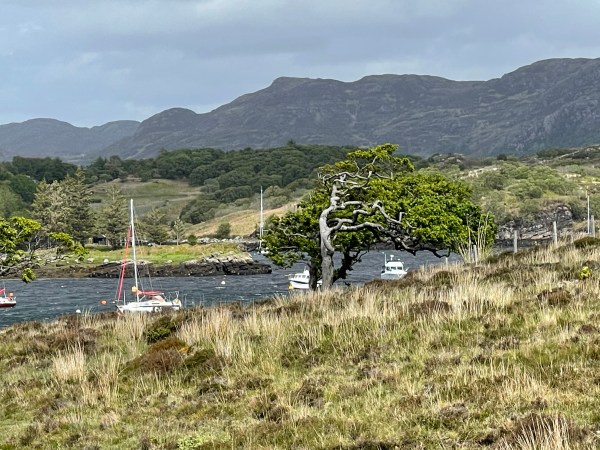
Badacro Creek… I’m not sure there’s a ‘creek’ in there, but if there’s not, there should be. Badacro is well known in these parts as a safe anchorage for boats, particularly sailing boats. It lies at the heart of a ‘jigsaw’ of inlets and creeks just south of Gairloch.
At least, that’s what the guidebooks say… The reality is something far more vivid than such words can convey. And there are surprises here, too.
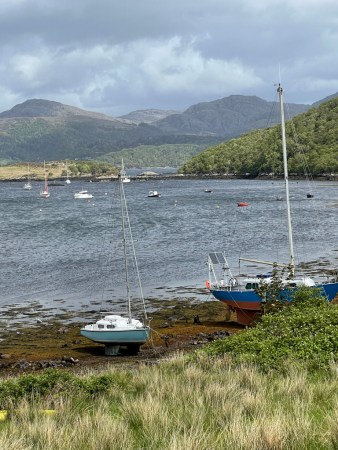
Badacro is a hidden gem, tucked away in one of the most beautiful, yet secluded parts of the North-West Scottish coast.
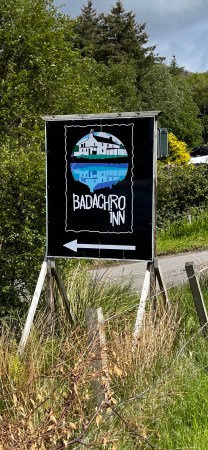
Standing at the top of the tiny lane, these things are made apparent by a combination of the faded map and old, weather-worn signposts. Badacro has an inn, and as it seems to be down by the water, I’m drawn to it. I love shoreline locations. I’ve known about this one for all of two minutes…and I’m intrigued, and intent on following the narrow lane that winds down towards the sea.
We look at the sign at the intersection; it groans as it flexes in the cold wind. The day looks warmer than it is. No change there, then…
And it’s not raining – which only adds to the sense of something strange (but beautiful) happening.
It’s rained continuously since we got to this far corner of North-West Scotland nearly a week ago. But now, there’s an hiatus. We have an undoubted ‘window event’ opening up, here. I’ve learned to recognise them over the years. There’s a kind of inaudible crackling in the air… which fades to an intense and pregnant silence.
Something’s gonna happen here… a familiar and mischievous voice in my head chuckles. The skin on the back of my neck prickles, supportively. Definitely…
Cue the music… ‘Once Upon a Time in the West‘… ( link: https://youtu.be/6MZw_Iv0wdU)
It’s my nomination for the best-ever western, and it has nothing to do with this part of Scotland…except that the music comes to me every time one of the ‘window events’ occurs.
Every Christmas, in a stolen slice of late evening, usually on Boxing Day, I watch the whole movie, having hypnotised the family into thinking that I’m walking the dog…
That wailing harmonica – played by good guy Charles Bronson – whose character is only known as ‘Harmonica’ – to a nearly empty hotel bar… Those eyes! Cinema at its 1960s best.
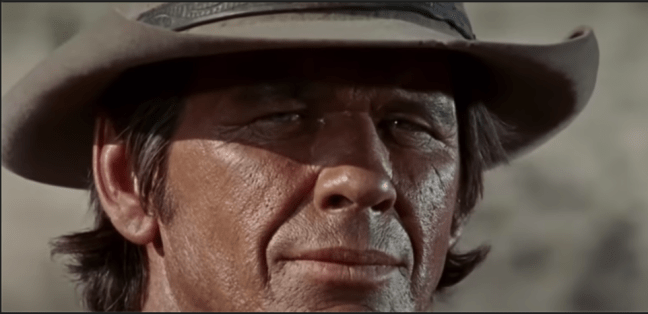
Bronson’s mysterious ‘Harmonica’ eventually wins out against the emerging railroad’s chief enforcer, ‘Frank’, played by Henry Fonda.
It’s a good fit to the brightening mood in Badacro Creek.
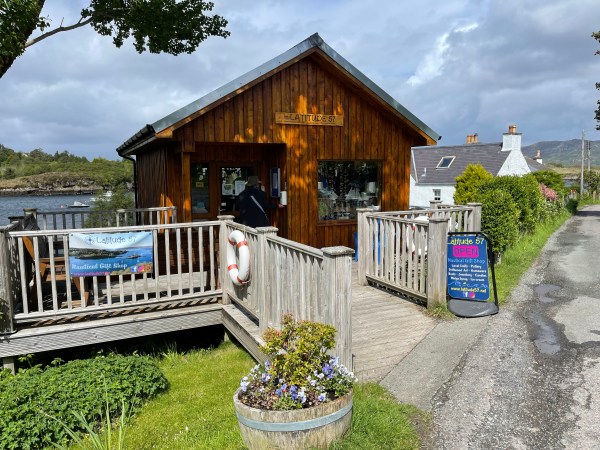
Back in Badacro, the first roof-line comes into view. But the lovely cedar-panelled building on stilts over the creek is not the Badacro Inn. It’s a nautically-themed gift shop. They don’t take dogs, not even acting dogs that understand Ennio Morricone’s music, so we carry on walking down the steep slope, anticipating that the inn is close.
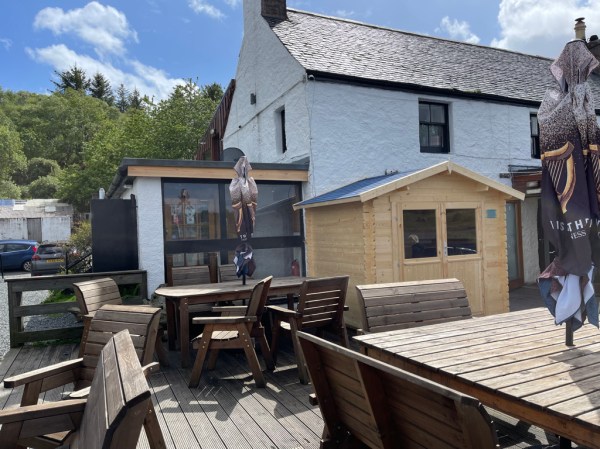
As we near the waterfront, there’s that slightly unreal feeling. At the next turn, The Badacro Inn comes into view… If you’re an old romantic like me, it’s what you want to find at the end of a lane that curves down to the sea so beautifully. Everything seems to be lined up. The music is playing. Bury me here, my love, I want to say, but the Collie says stop being stupid, Dad.
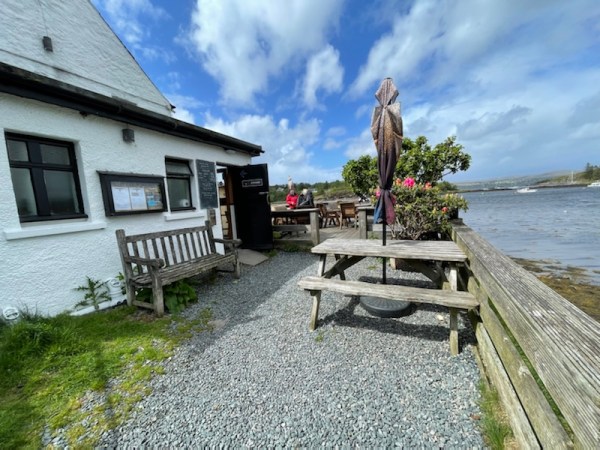
The image above is only half the story. To the right of this, there’s another unexpected feature.
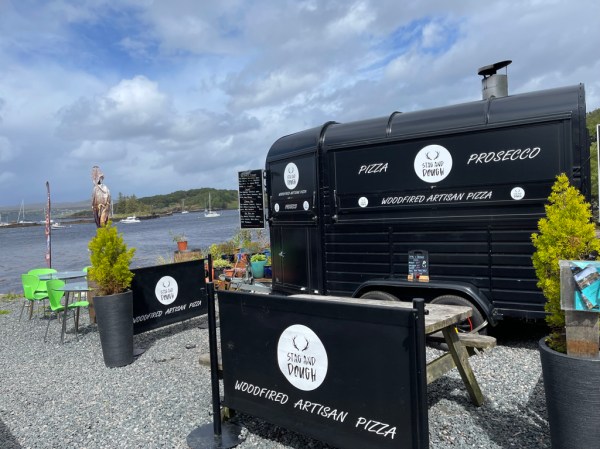
We didn’t get to find out whether the ‘Pizza and Prosecco’ trailer is part of the pub or a licensed extension. Either way, I can only imagine it being a welcome offering to sailors, locals and wet gunslingers in search of refreshment… and fun.
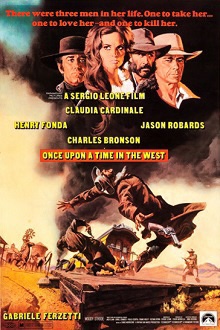
Claudia Cardinale provided the fun in Once upon a time in the West. Her character rises from supposed seediness to noble heroine, despite the death of her husband-to-be at the brutal hands of the icy arch-villain of the piece – Played superbly by a steely Henry Fonda – ‘Frank’.
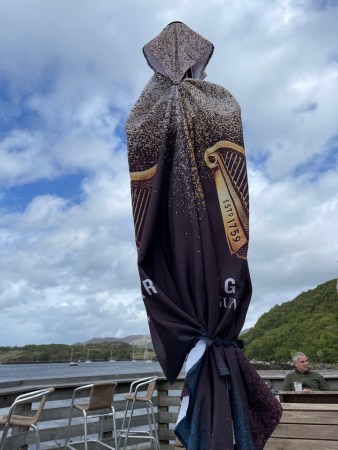
I’m not a frequent beer drinker, but when I do, I love a well-kept pint of Guinness. With this thought, the laughing feeling grows, triggering remembered stories of how one’s favourite things and places are arranged as experiences at the end of life… It’s not a morbid thought, but it invokes the mischief-maker within and the harmonica music, of course. Always the harmonic music.
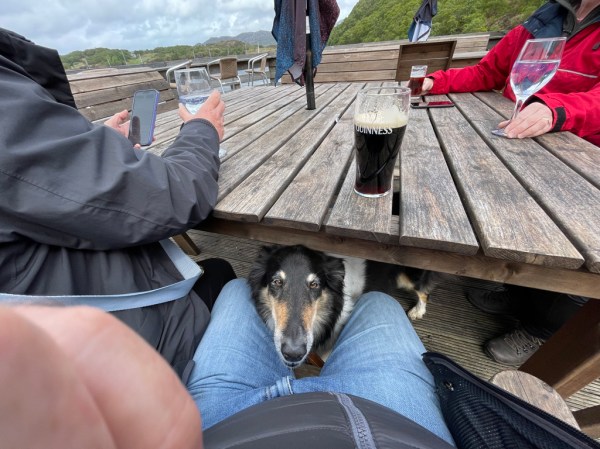
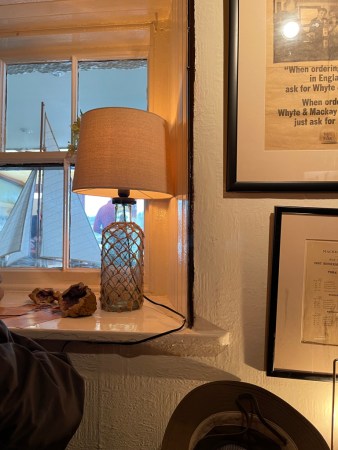
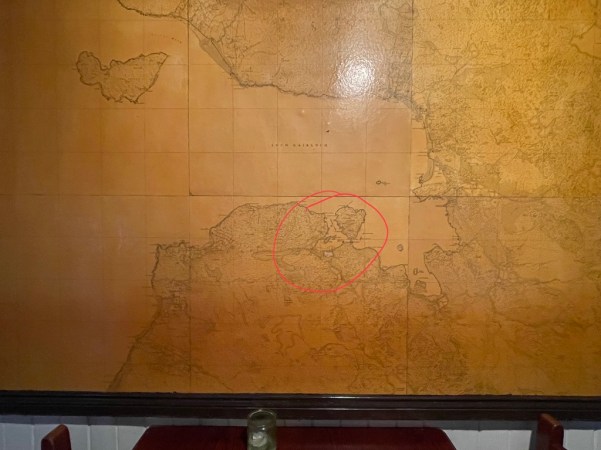
We go inside the Badacro Inn and it’s just as tempting. There’s an old naval chart showing the location of this part of the shore. I’ve ringed it in red in my photo.
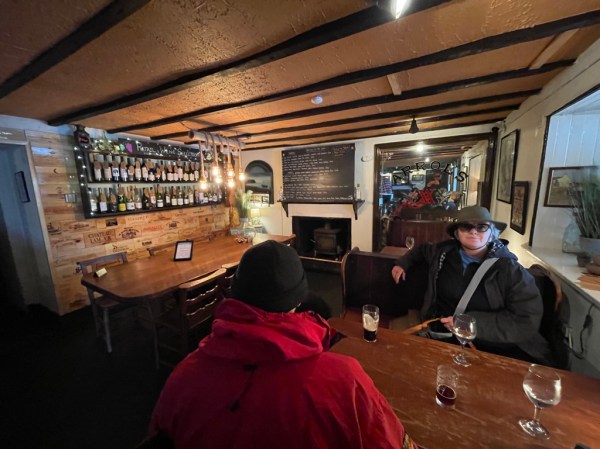
The Badacro Inn used to offer accommodation, but the Covid years seem to have changed that. It may need some tender loving care to help it back to full functioning . Let’s wish it well. It’s simply a beautiful place, but, for now, the gunslinger may just have to move on. Here’s how Sergio Leone handled Harmonica’s departure. This is not how it ends, only how it ends for now.
Somehow, the return to Poolewe feels flat. The rain begins, again of course. It’s comfortably familiar…and today is our last day in the village. Tomorrow, very early, we leave for Ullapool and the car ferry to the Outer Hebrides. It will be a very different world.
But, then, so was the Badacro Inn… and the fine memories that, briefly, lived again.
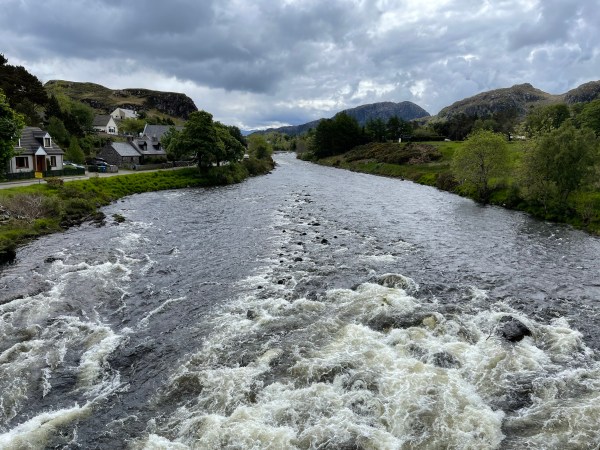
©Stephen Tanham 2022
Stephen Tanham is a Director of the Silent Eye, a journey through the forest of personality to the dawn of Being.
http://www.thesilenteye.co.uk and http://www.suningemini.blog
Share this:

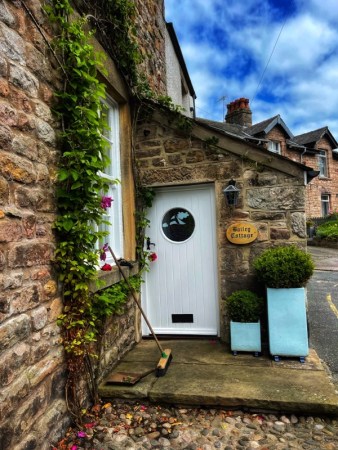
We’re often in Heysham Village. Its beach is the nearest decent one to where we live. The Collie thinks it’s well worth the 40 mins drive…
But the beauty is not the beach, it’s the cottages in the the main street that are special. The road winds steeply down to the start of the shore path that can be followed for several miles along the promenade, until you reach Bolton-le-Sands.
There was once a tiny fairground here, and an nougat shop, and two cafes with sea views. All gone, now…
But the beautiful cottages remain. And every year I photograph them.
©Stephen Tanham 2022
Stephen Tanham is a Director of the Silent Eye, a journey through the forest of personality to the dawn of Being.
http://www.thesilenteye.co.uk and http://www.suningemini.blog
Share this:

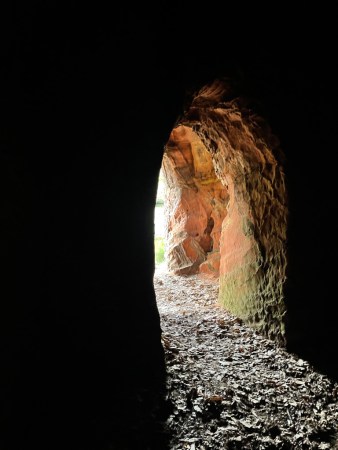
It seemed we were learning anew, each day…
The decision to abandon the walk along the long ridge path to Ashness Bridge had been forced upon us by time constraints. It would cost us the boat ride back to Keswick – something that had immense emotional appeal – but, instead, it had given us back… calmness.
After a snack lunch by the lake shore in Keswick, the group travelled to the Eden Valley in three cars. One of the companions lives near to our destination, in Penrith, and would not be returning to Keswick at the close of the day.
Stuart and I were eagerly anticipating this next part of the workshop. The caves we were to visit had been researched by Sue Vincent. She and Stuart had planned to incorporate them into a landscape weekend, but the sad events of 2021 overtook this.
There was the light of a personal pilgrimage in Stuart’s eyes when we all arrived at the stone circle of Long Meg, the start of our Eden Valley adventure. With some regret, we were not able to spend much time here, as the walk along the River Eden would be a substantial – needing to represent the Hero’s challenge as they sought to inherit the ‘magical reward’ promised by the quest – in truth, really a change of consciousness…
During our recce day, we had evaluated two routes. Now, siding with caution and calmness, we set off on the shorter one…which turned out to be a blessing – and one not related to the weather!
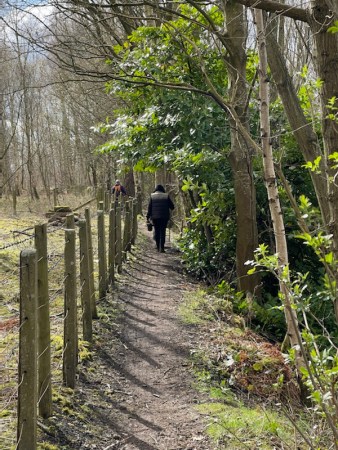
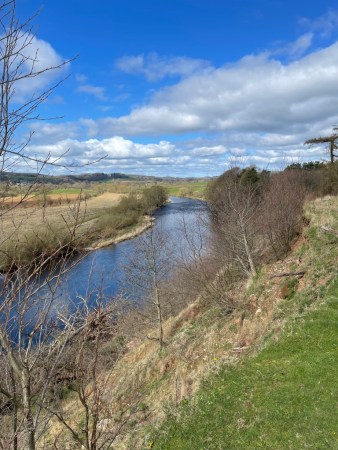
The Lacy Caves are located directly above the River Eden. It had taken us about ninety minutes to get there, a half hour longer than forecast. The difference was down to an oversight on our part.
This workshop was the first after the Covid period. Though everyone was delighted to be out in the countryside, again, not all had recovered their former walking strength.
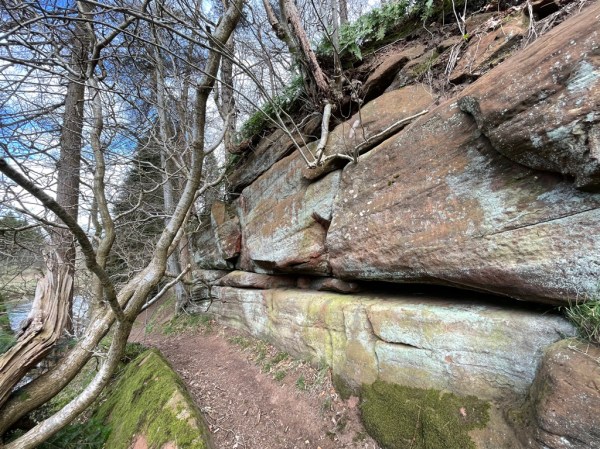
By the time we were halfway to the caves, two of the companions were experiencing tiredness. With one it was affecting her walking. We stopped to allow a period of rest, but the signs were not good – we had travelled a long way into the valley and, regardless of the drama we were about to enact as the day’s exciting finale, we still had the walk back to Long Meg Stone Circle where the cars were parked.
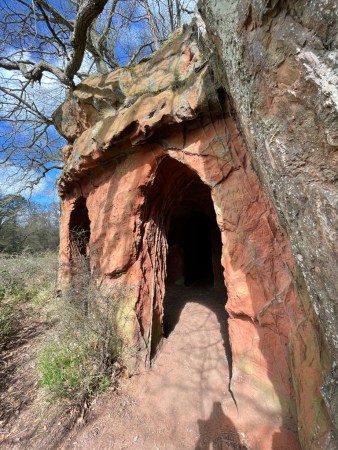
Our pace slowed and, as group leader, I had to take some decisions. The companion in question said she would be okay, as long as the caves were close. They were just around the next curve in the river.
I walked at her side, my arm ready to give support if the going got too difficult. Unlike our recce day, most of the route had been dry, but the final few hundred metres were muddy; adding to the difficulty.
But everyone was happy to continue, and we reached our destination without further difficulty.
Colonel Lacy, a wealthy landowner of Salkeld Hall, owned the land on which the Long Meg stone circle lies. He wanted to clear the circle to make it usable as pasture. On the night he set dynamite to the first stone, a devastating storm developed which caused considerable damage to his nearby farm.
Immediately relenting, he repaired the damage and thereafter swore to protect the ancient circle.
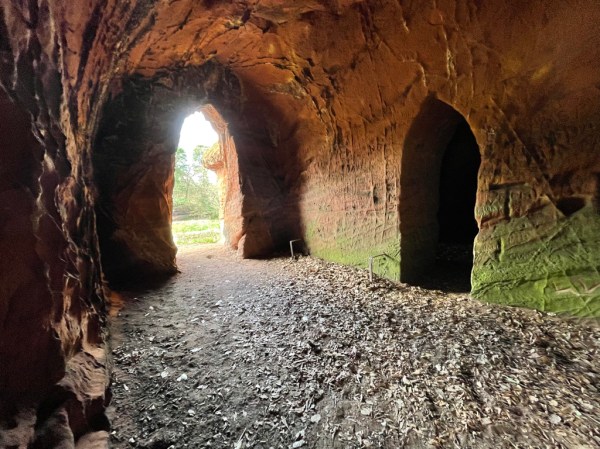
Lacy switched his attentions to the sandstone cliffs a mile away as the crow flies, alongside the river, where he carved out a cave system for parties and entertaining. It was fashionable to have such a folly at the time, and the place was decked out with furniture and had extensive gardens sweeping down to the river.
Having said that, Stuart and I think there was a parallel with Francis Dashwood’s ‘hellfire caves’ at High Wycombe… The truth is lost to history. There is certainly an air of mystery about the place.
We both had suitable outfits to complete the dramatic effect. We were not seeking to make it macabre, simply to shift the mood to a deeper contemplation of two of the remaining Tarot cards: Death and the Hermit.
Stuart prepared for the drama to come, in which we used two parts of the cave system: a well-lighted entrance chamber and a much deeper and darker passageway leading to the innermost space in the complex.
At the entrance, Stuart’s figure of Death called forward each of the companions in turn. showing them the card and asking them to seek the deeper meaning. He then made a loud signal and I appeared – as The Hermit – at the end of the dark passageway, hooded and with a torch illuminating my face from beneath. I am told the combined effect was dramatic…
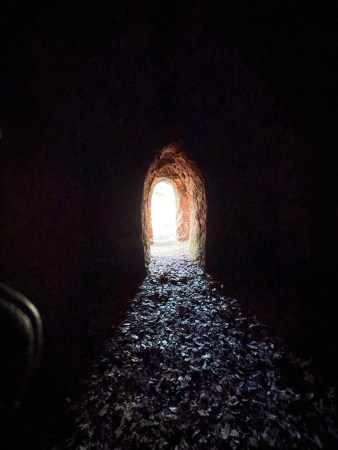
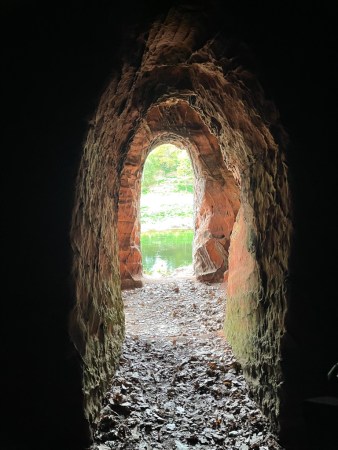
The companion had to choose to ‘go beyond death’ to find that the inner room actually looked out over the river (of life).
We had completed our tasks for the day. Outside the caves, in the last of the sunshine, we laughed and shared impressions of the Hero’s journey so far.
My rucksack contained a large flask full of still-hot tea, and some chocolate. We shared this- appropriate provisions for this stage of the journey.
All we had to do to finish the day was to get back to the cars and then drive to the nearby village of Langwathby and the comfort of the Shepherd’s Inn, where we had an early dinner booked.
Our rest complete, we set off… to find that our companion in difficulty was having trouble walking at all…
We took stock of the situation. There seemed no way she could make it back to the village on foot. My only choice was to leave her in the capable hands of the group and walk as fast as I could back into the village and up the steep road to the Long Meg circle. It had taken 90 minutes the other way, perhaps I could do it in half that, if I walked at a fast pace.
Once there, I could drive the car back to the farm track and hopefully get the car within striking distance of the lady – even if it meant reversing the car for half a mile or so.
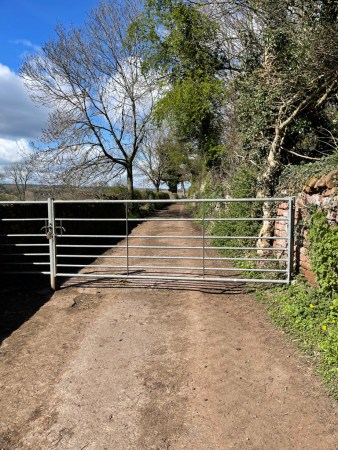
I made good time to the edge of the village, only to find that the large gate to the main road was locked. We had earlier passed through the footpath space. All I could do was continue to the car, then try to locate the farmer or another keyholder and explain the emergency.
The day that had gone so well was ending with peril… And it had nothing to do with our planning.
I remember looking up at the sky and asking, silently, for help…
To be continued in Part Six.
Other parts in this series:
Part One, Part Two, Part Three,
This is Part Five.
©Stephen Tanham 2022
Stephen Tanham is a Director of the Silent Eye, a journey through the forest of personality to the dawn of Being.
http://www.thesilenteye.co.uk and http://www.suningemini.blog
Share this:


Continued from Part Two…
Food manufacturers learned, long ago, that small children, sitting at the morning table to have their much-needed breakfasts, eagerly consume whatever reading material is in front of them.

My mother’s favourite breakfast for us was Scott’s Porridge Oats. The figure on the packaging of was dressed in Highland Games’ regalia. Quite why he is tossing the heavy ball towards the loch, below, is anyone’s guess, but the image remains in my consciousness.
Unlike, say, Cornflakes, you couldn’t have an instant breakfast with porridge. You had to wait patiently, while Mum did strange things with a cauldron-sized pan that bubbled like something from Macbeth, until the grey substance emerged onto the table in a large bowl, its top floating with milk and sugar, whose initial purpose was to cool it down to prevent small boys from scalding their mouths…
Happy memories. But there’s a serious side to this; Scotts were a clever company, driven by a Scottish ethic to educate as well as feed. During one period, the back of the pack featured dramatically illustrated images of huge ships floundering in icy seas, with under-equipped young sailors fighting for their lives in something called the ‘North Atlantic’.
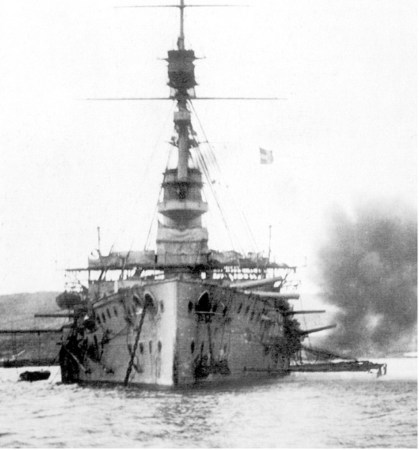
Those images have stayed with me. Here, I was finally to come face to face with the reality…

I suspect most of us would fail the geography challenge. But if I asked a group of people to mark the outline of Russia on a map, (see below) we would draw the outlines of Norway and Sweden at the ‘top’, then possibly Finland, eventually moving to the north-western border of Russia. What we all tend to forget is that Russia sits over the top of all of them.
At this time of tension with Russia’s territorial aggression, that’s a terrifying piece of geography, but during WW2, Russia was allied with the West against the might of Nazi Germany. Helping Russia to win on the Eastern Front was vital to the future of a free Europe.
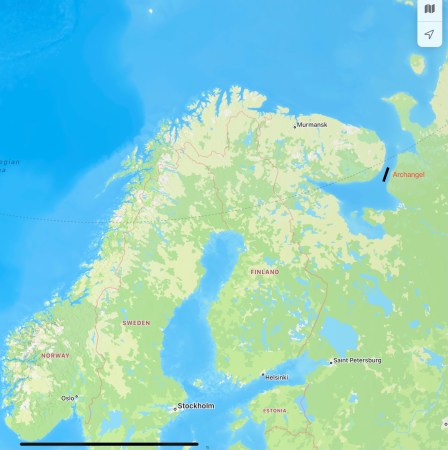
Britain’s part in this was to supply the Russian ports in the far north – Archangel and Murmansk (marked in red top right). To do this, Allied shipping had to brave not only the icy seas, but also the constant presence of Germany’s deadly U-boats. The Arctic convoys delivered over four million tons of vital supplies to the Soviet Union including tanks, fighter planes, food, fuel, medicines and boots.
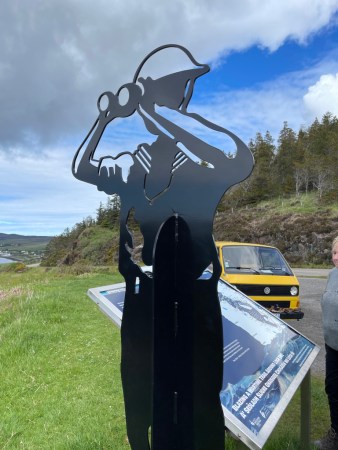

Loch Ewe was a vital part of the war effort. It is a deep sea-loch with direct access to the north Atlantic Ocean. This made it a perfect base for the convoys. At times, up to ninety-five Merchant and Royal Navy ships anchored in the loch.


The ships were protected by anti-aircraft guns located at sites around the shore. Military personnel and local people manned lookout posts along the coastline to keep watch for enemy aircraft, submarines and ships.

The most direct route to the Soviet ports of Murmansk and Archangel was a hazardous two-week voyage. This took the ships into the Arctic Circle and east across the freezing Barents Sea. The convoys braved constant attacks by sea and air from German U-boats and aircraft flying from bases in Nazi-occupied Norway.

Each convoy was made up of Merchant ships protected by an escort of Royal Navy warships. They moved in a strict column formation and sailed only as fast as the slowest ship. Merchant ships were not designed for speed and the convoys were an easy target. They were exposed to relentless attacks from bomber aircraft during the polar summer, when the night sky was constantly light.
Fierce storms, blizzards, towering waves, gales and extreme cold were a constant threat during the long polar winters. The water was so cold that waves could turn to ice as they smashed against the ships. Men were known to freeze to death on watch. Crew had to constantly hack the ice that built up on the ships to stop it becoming so heavy that it would sink the ship. Extreme care had to be taken never to touch metal with bare hands as the skin would. literally, be torn off.
If the convoys made it to Russia, they still had to face the return journey. At the mercy of the Arctic weather and under threat of attack from above and below. More than three thousand Merchant Navy and Royal Navy sailors lost their lives.
Our rented cottage was on the very edge of Loch Ewe. Its peace today belies the violence and desperation of those times…
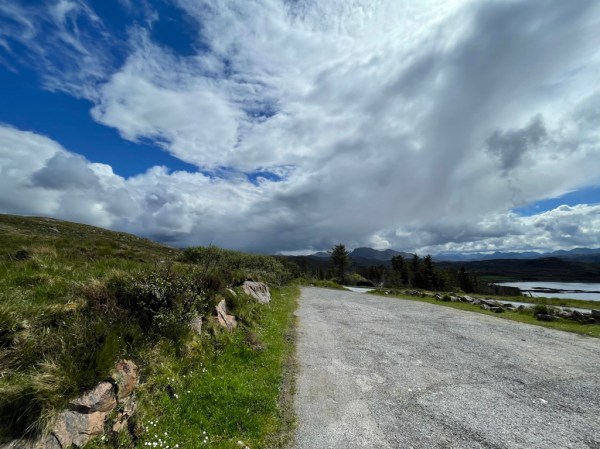
Loch Ewe was heavily fortified. A metal ‘boom net’ spanned the mouth of the loch and protected against enemy submarines and torpedoes. An underwater ‘Guard Loop’ laid across the entrance to the loch monitored changes in the electrical field. Controlled mines could be detonated if ships or submarines were detected.
Barrage balloons helped protect the skies from German bomber attack. They were used until storms blew most of them away – this is a volatile part of Scotland. So many were lost that a reward was posted for their return! At a time of severe rationing of food and materials, they made good hayrick covers and some even ended up as handbags and purses.

“I can remember entering Loch Ewe late on a fine evening at the end of August, It was a magnificent spectacle. The loch was crowded with merchant ships, the green fields of the crofts rose up from the shore and on the eastern horizon, the mountains of Wester Ross were outlined red in the sunset.
Reuy Clarke – Ordinary Seaman, HMS Farndale
The Scott’s Porridge Oats boxes never sought to glorify the Navy’s war. I learned a lot from my boyhood reading of them. It was unexpected and moving to come across such confirmation of the bravery they conveyed in their dramatic pictures…
©Stephen Tanham 2022
Stephen Tanham is a Director of the Silent Eye, a journey through the forest of personality to the dawn of Being.
http://www.thesilenteye.co.uk and http://www.suningemini.blog
Share this:


Nowhere to go
nothing to do
Only to be
With the I
That was you…
Uig, Isle of Lewis
2Jun22
Share this:

Each of our landscape weekends follows the same pattern: a socially-oriented Friday afternoon with a hint of what’s to come; a full Saturday which contains the main body of the ‘work’ and ends with an early evening pub meal out in the countryside; finally, a relaxed but meaningful Sunday morning, ending with an informal snack lunch and farewells.
Saturday the 7th May dawned over Keswick as brightly as the Friday had been dark. There was a tangible sense of having ‘learned the lessons’ of Friday afternoon; of having realigned our intent to fit in with the guiding landscape, and not try to impose older, indoor workings upon the more expansive and intuitive outdoors.
After meeting up in the Cricket Club car park, the group began the walk along the river Greta and into Keswick’s town centre, which was bustling with visitors to the weekly market in Moot Square – a medieval word meaning ‘meet’.
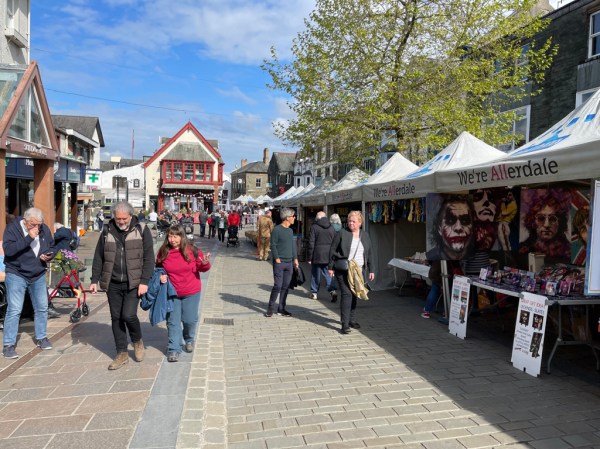
During our recce day, a month prior, Bernie and I had walked the high path along the length of the ridge above Derwent Water to the famous Ashness Bridge – one of the most photographed places in The Lakes, and one offering unparalleled views back down the lake.
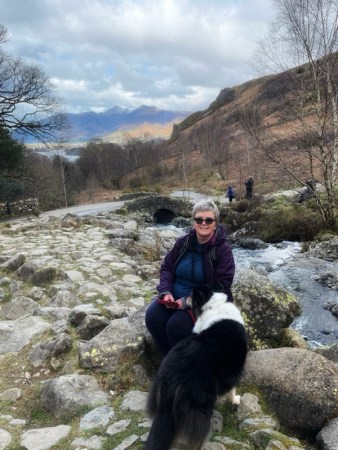
Our original plan for the Saturday morning had been to recreate this walk, knowing that the Companions would have been tired at this point… and concerned that they still had to walk back to Keswick before another journey into the Eden Valley in the afternoon.
What they wouldn’t know is that the ferries that circle Derwent Water stop at a jetty a few minutes’ walk from the bridge, enabling us all to travel back to Keswick in comfort – and providing an additional dimension to the weekend.
On the recce day we didn’t take the ferry because we had one more ‘fallback’ location to visit – the mysterious carved boulder known as the ‘Millennium Stone’.
This proved a wise investment…
After the rain-induced difficulties on the Friday of the weekend at the Castlerigg site, we didn’t want to risk other natural challenges to the success of each half-day. Ensuring that each segment of the programme had enough time to keep things leisurely and relaxed had become a priority.
In the light of this, Stuart and I reluctantly abandoned the idea of the ridge walk to Ashness Bridge – and its return boat ride – in favour of a shorter walk along the shore path of Derwent Water to the mystery stone. The weather was perfect: warm and bright but not too hot.
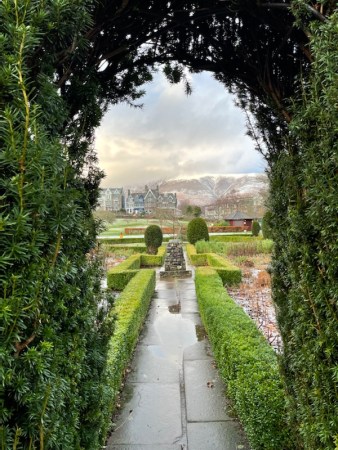
We crossed through the town, past the beautiful Crow Park, and to the start of the path by the rental rowing boats.
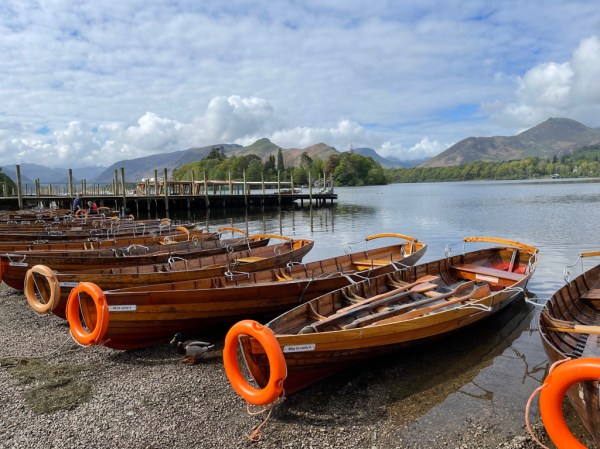
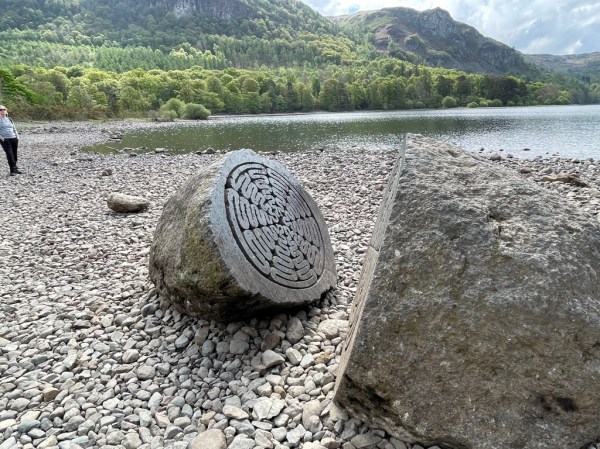
From here, the path winds along the shore of Derwent Water in a series of curves, some of them natural paths, others – across marshy places of natural diversity – created along boardwalks by the National Trust. For approximately one mile, it weaves in and out of a variety of habitats, to finally emerge, via a small copse of trees, onto the expanse of shore that hosts the Millennium Stone.
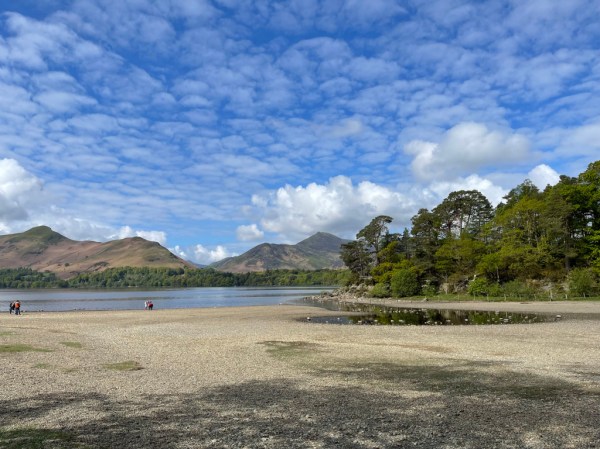
It was a delight to arrive at our destination…and to see the companions smile, leave the path and make their own way down the ‘beach’, and there examine the twin halves of the mysterious stone.
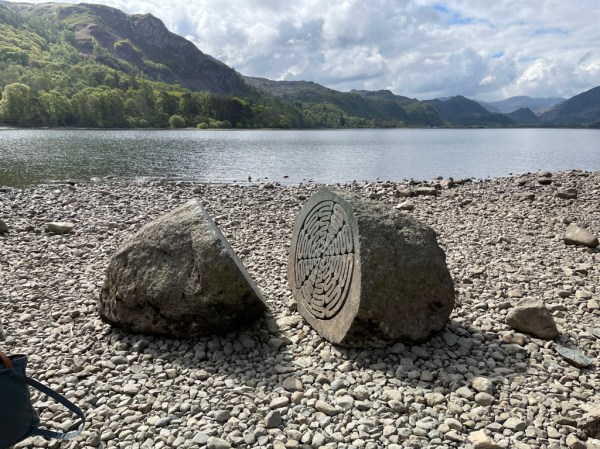
We asked the companions to divide into pairs, one representing the visible self, the other the invisible self. They were then to walk together to the water line and dip one hand into the lake. Upon their return each would address one of the matched labyrinths, tracing the pattern with a wet finger in step with each other and visualising that they were experiencing a twin life from beginning to end.
The close was symbolised by the pair moving back to the water and washing their hands, returning the ‘dust’ of the journey to the vast waters of life represented by the lake.
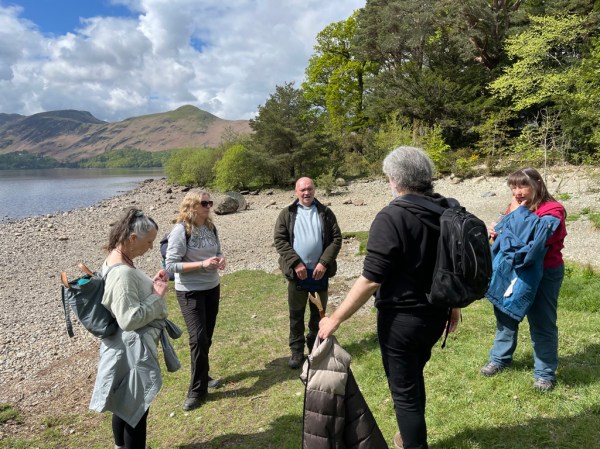
No-one wanted to leave the twin stones. It had been the perfect morning. But now we had to return to Keswick to take a quick snack before our journey by car into the heart of the Eden Valley… and a very mysterious encounter by a major river…
To be continued in Part Four
Other parts in this series:.
Part One, Part Two, Part Three
This is Part Four.
©Stephen Tanham 2022
Stephen Tanham is a Director of the Silent Eye, a journey through the forest of personality to the dawn of Being.
http://www.thesilenteye.co.uk and http://www.suningemini.blog
Share this:

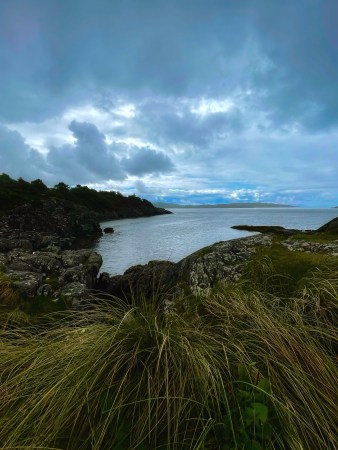
Continued from Part One.
I should have known, really…that our luck would run out, one day.
According to a close friend, who loves journeys into Scotland as much as we do, we are a ‘talisman’ for good weather. No less than six trips in a row – over several years – have seen us bathed in sunshine for most of the week. There have been exceptions, but they left you with the feeling that most of it had been good.
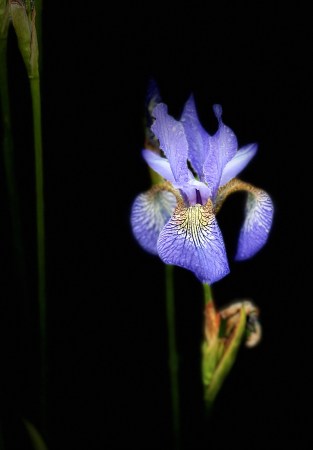
Original image by the author, taken at Inverewe Gardens)
The same friend states that we have seen an entirely different Scotland from most travellers, whose furtive presences are usually to be seen huddled in doorways and rushing into small general stores to buy those forever seen but never bought ‘rain jackets in a pocket’.
Something like this:
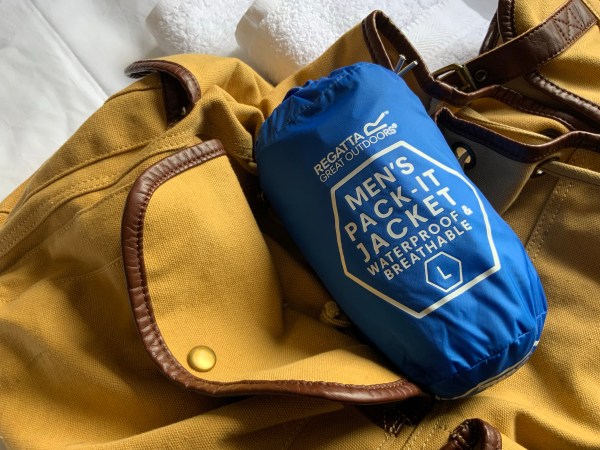
Didn’t we always look at them and ask who would buy such things? Well, for those who are following my agonised journey to warmth, I have an update for my cynical former self… They are the sort of garment that could save your life…albeit at the cost of your reputation.
This trip has seen us huddled into doorways, overhangs and barely watertight cafe extenstions (for that neglected breed – us dog owners) at least four times a day – when we have dared to get out of that warm capsule of transportation: the modern car.
We thought the spring would have arrived in the Scottish Highlands by the end of May. When we voice this in quiet, wet whispers, new-found friends, clutching their hands around large coffee mugs in hippy-themed cafes, smile at us, saying nothing. But we do notice they all have six layers of clothing…to our four.
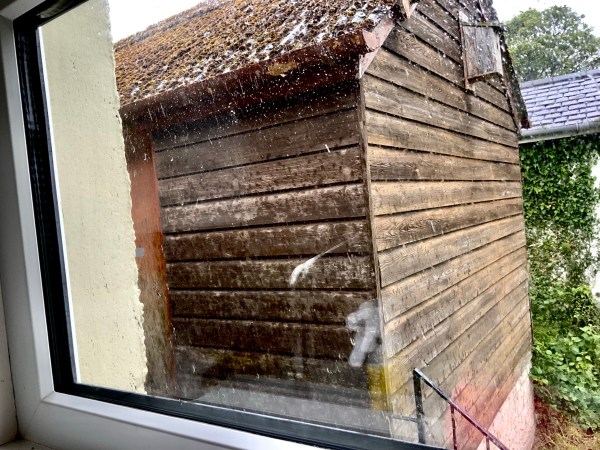
I expected rain – it is Scotland, after all; but not so much cold. It’s relentless… As I sit here, writing at the kitchen table of our rented cottage in Poolewe (see last Tuesday’s post), the hailstones are bouncing off the roof of the nearby wooden shed belonging to the property.
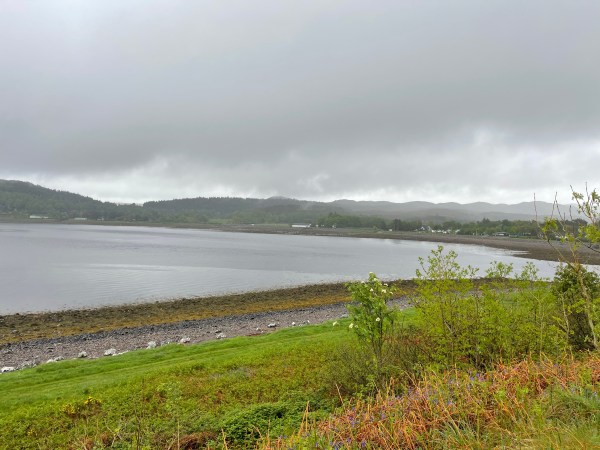
But we’re not the kind of folk who sit in the house – our own or rented – moaning and dripping. One of the planned visits of our Scottish trip was to be Inverewe Botanical Gardens (pronounced ‘Inver – you’) , a famous horticultural landscape occupying the whole of one of the local headlands.
My wife, Bernie, is a qualified horticulturalist, and the botanical gardens at Inverewe were to be one of the highlights of this Scottish odyssey. It was early in our holiday, and even a wet walk along the curve of the bay seemed exciting, so we set off…
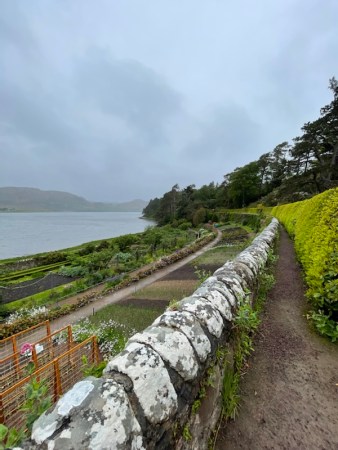
The estate is entered through the gates. The main gardens can optionally be entered by following the line of the shore. This – the walled garden – would have generated produce for the kitchen, and is not for decoration; but is a classic example of gardening organisation.
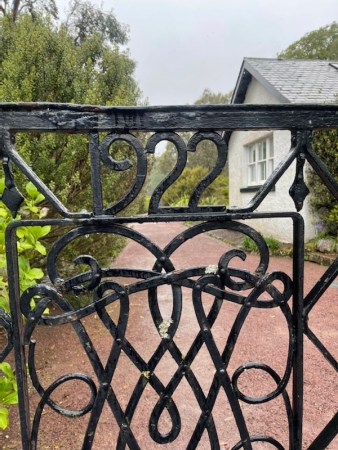
The 2,000 acre garden was created in 1862, on what used to be barren land, by Osgood Mackenzie. His rich mother bought him the land, presumably to set her son a challenge.
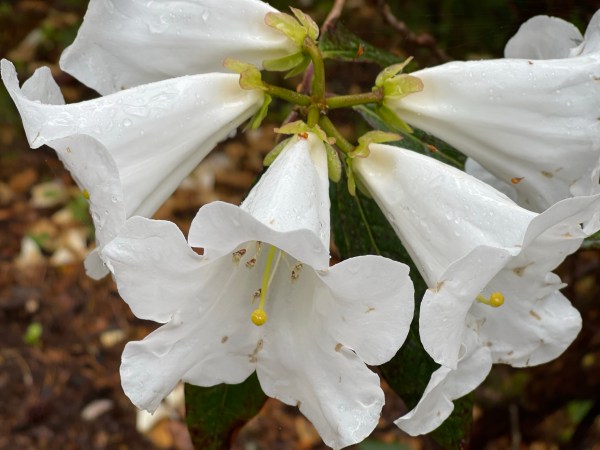
He set about tackling the difficulties inherent in a sea-facing setting; beginning with the establishment of a natural wind-break, then improving the soil to sustain the wide variety of planting he had in mind.

He began by planting a mixture of large trees and shrubs to form the windbreak. These included Corsican Pine, Douglas Fir and Rhododendrons.
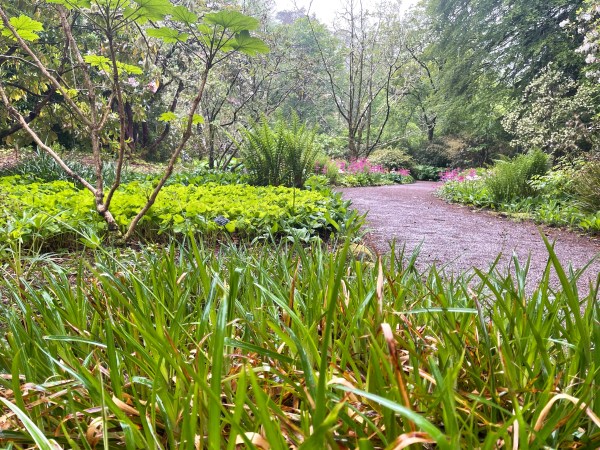
This made feasible his further plans for a wide variety of exotic plants – many of which he had seen on his ‘grand tour’ of Europe and the Near East. Osgood Mackenzie died in 1922. The gardens continue to be developed by the Scottish National Trust.

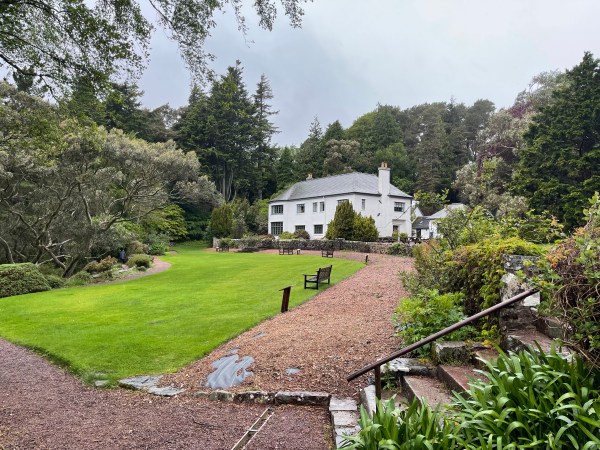
The original Inverewe Lodge was destroyed by fire in 1914 and replaced in 1937 by the current Inverewe House. The current garden covers some 20 hectares (50 acres) and has over 2,500 exotic plants and flowers. There is a further 800 hectares (2,000 acres) of land managed for recreation and conservation.
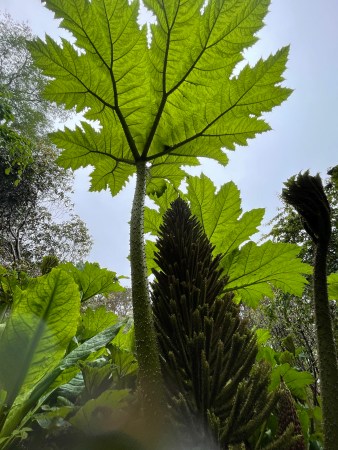
The garden and estate has been the property of the National Trust for Scotland since it was given to the Trust along with a generous endowment for its future upkeep by Osgood’s daughter Mairi Sawyer in 1952.
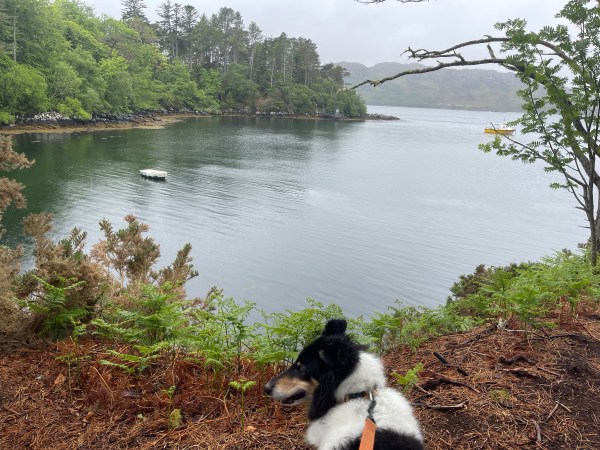
The garden continues to be developed by the small garden team. There are currently 10 full-time gardeners. Inverewe has a noteworthy Rhododendron collection in flower throughout the year. There is also an extensive collection of Erythroniums. These flower in Spring; in recent years the garden has promoted an Erythronium festival.
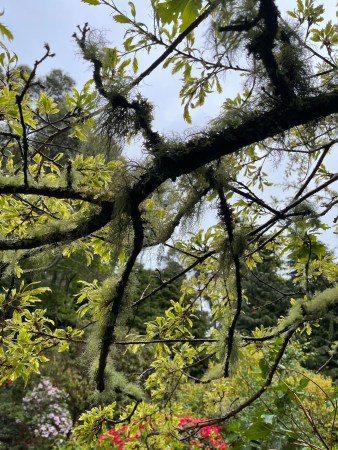
In summer the walled garden and borders come into their own with many exotic plants from all over the world which grow here thanks to the influence of the Gulf Stream. There are even palm trees in nearby Plockton – setting for much of the dramatic film, ‘The Wicker Man’.
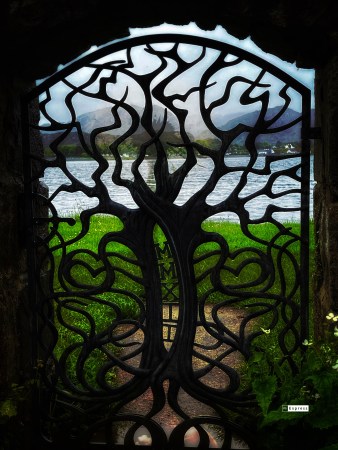
Even in winter Inverewe is colourful. The bark of many rhododendrons is delicately coloured and the collection of native and non-native trees, including Wollemu trees, adds to the variety.
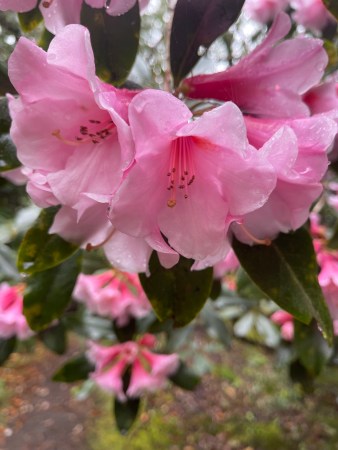
The weather was foul throughout our visit, but we still enjoyed these magnificent gardens.
Assisted by a coffee and cake from the garden cafe, we enjoyed the trip; returning to hot showers and an afternoon of gentle reading, tea and snoozing…
My warm and waterproof coat was still several days away, but the fallback outfit: multiple layers of warm garments, topped by a versatile Berghaus wind-proof, was proving reliable. There was hope that I could tough and bluff it out till the weekend (see the previous post!)
©Stephen Tanham 2022
Stephen Tanham is a Director of the Silent Eye, a journey through the forest of personality to the dawn of Being.
http://www.thesilenteye.co.uk and http://www.suningemini.blog
Share this:

+ #Silent Eye, #Silenti, Ancient Landscapes, Consciousness, landscapes, Photographic techniques, Photography, Scotland
Seven Splendours
by Steve Tanham

The first week of our Scottish Highland trip is over. At the time of writing, I’m sitting in the back of the car, headed for Ullapool; the gateway to the Outer Hebrides. The ferry will take three hours to transport the four of us to Stornaway,, the capital town of the linked island of Lewis and Harris.

I’m glad to be moving on. The scenery has been magnificent, but the weather has been cold and unendingly wet. The four of us have spent the week in our winter gear, occasionally warmed by short bursts of bright May sun.

Time to share some of the best photos, most of them taken in the gaps between the rains.


It’s a beautiful land, but bring your long raincoat if you want to be comfortable.


©Stephen Tanham 2022
Stephen Tanham is a Director of the Silent Eye, a journey through the forest of personality to the dawn of Being.
http://www.thesilenteye.co.uk and http://www.suningemini.blog
Share this:

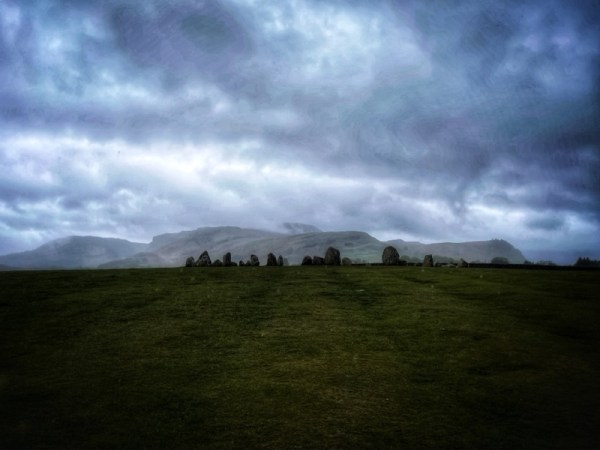
Continued from Part Two…
My phone wasn’t dead – it looked perfectly bright against the dark landscape, but it wasn’t responding to any finger gestures. And it contained my copy of the script, now locked away by the storm.
I reached into my ‘Fool’s’ kit bag, a sturdy old canvas friend that I’ve used for years. Often in the run up to workshops, I will, at the last minute, throw in a paper version of a script as an absolute backup. My wet fingers encountered paper and I extracted what turned out to be a last but one version. That would be okay, as long as I remembered the final changes we had made.
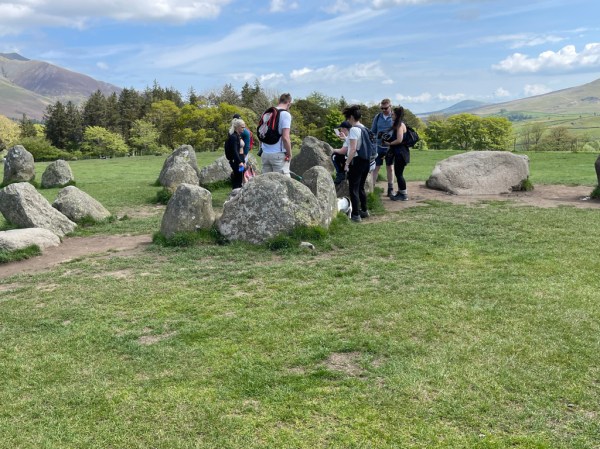
With the help of a mentor, the hero will cross a guarded threshold, leading them to a supernatural world, where familiar laws and order do not apply.
I held it up at chest level and began reading. The group let out a collective sigh of relief, but they couldn’t see the heavy raindrops dissolving the ink and melting the paper as it became increasingly saturated.
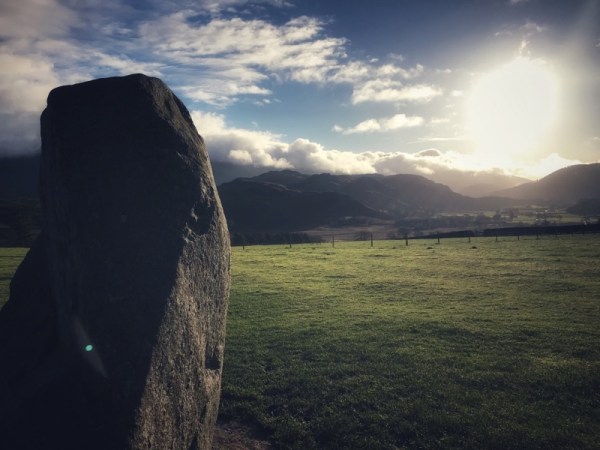
I had the idea to memorise the next few lines, then fold the paper along its original creases and hold its axis vertical to the descending water. It worked – after a fashion – but every time I reopened it, the text was less legible and the paper itself had continued its journey to mush.
We have survived a few scrapes; Stuart, Sue and I, and found that it’s not unusual for something unseen to come to the aid of the drowning performer. But in this case, only we had the scripts. Our companions were being guided by our words, alone. Their faces expressed empathy, but they were powerless to help.
It’s difficult to remember at exactly what point I abandoned the ‘toilet paper’, as Stuart later christened it. He could see the change, he said, because I began to relax… simply letting what we have always called ‘the flow’ take over. And trusting…
…simply letting what we have always called ‘the flow’ take over. And trusting…
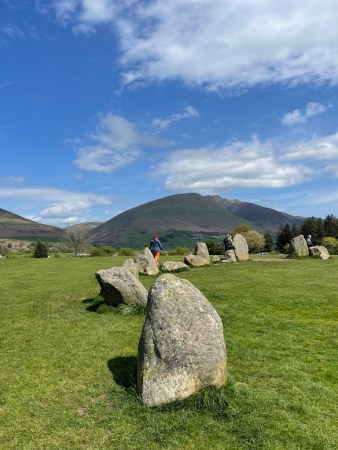
It did… Instead of behaving like someone reading a book, I let the flow take me and improvised in the moment, thankfully recalling from memory what we needed the Fool/Magician to do to get the companions through to the final gate and release them into their symbolic strange, new world, where – within the context of our play – nothing would behave as it had in the previous place. A fitting tribute to what we had just endured.
Somewhat post-storm, we left the Castlerigg circle. We would return here for the final act in our landscape play, but not before seeing the site from a mystery great height – fitting for a Hero looking down on the end of the quest.
The rain was abating but we had another problem. One of our companions – who had confirmed and paid for his attendance – was missing. During the damp ceremonials, I had thought he might be sitting it out in the car, having arrived late. But he was nowhere to be seen.
I didn’t have his mobile number but sent him an email as we left the circle. He had the information sheet and would know where we were headed next.
We had two important things to do…
The first was to escort everyone to a specific car park on the outskirts of Keswick. This would be our meeting point for the rest of the weekend, and it was essential that everyone knew its location.
The second was to have an early dinner. Weather, tension and stress had taken their toll… We were starving.
Our usual format for a first evening in Keswick is to have an inexpensive fish and chip supper. The central Moot Square boasts a fine chippy with upstairs restaurant, which offers vegetarian options. The small convoy drove the short distance to the car park and, now on foot, we followed the path of the river along the park and over the bridge into Keswick centre.
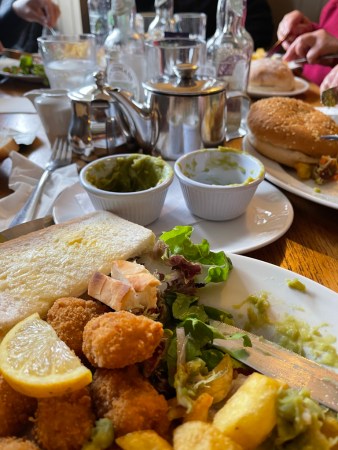
Dinner was a joyous affair. We laughed about the difficulties of open-air mystical theatre and resolved to learn the lessons of the day. This will be covered in the next post. Part way through the meal, the evening was brightened by the arrival of our missing companion. He had endured a nightmare journey up the M6 motorway with tyres that had been wrongly inflated by a defective pump at a service station near his home. At one point he felt the car was ‘floating’ and going to crash. He had the good sense to stop at the next services and get the problem diagnosed and fixed. But it had cost him the afternoon.
Stuart and I both had the thought that we might be able to do something creative about that…
The skies were clearing. The evening sun was mellow and promised a better day tomorrow. We had little idea how much better, though the long Saturday would not be without its challenges…
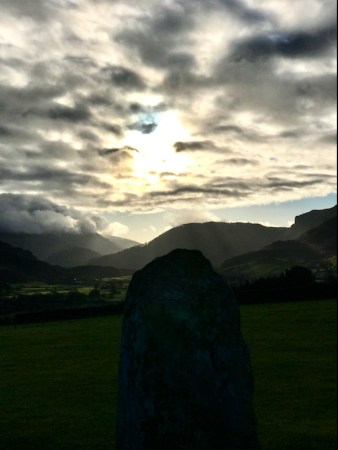
To be continued in Part Four.
Previous parts in this series:
Part One, Part Two
©Stephen Tanham 2022
Stephen Tanham is a Director of the Silent Eye, a journey through the forest of personality to the dawn of Being.
http://www.thesilenteye.co.uk and http://www.suningemini.blog


 Sun in Gemini
You must be logged in to post a comment.