
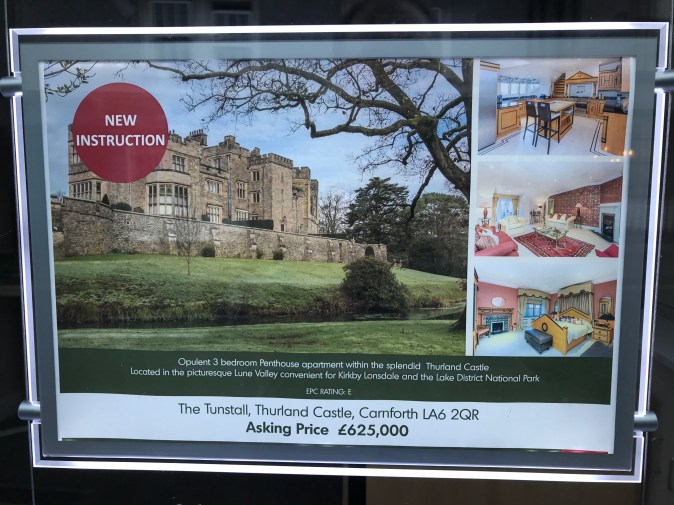
Between the Cant and the Greta rivers there is a castle. In it lived a great chief, a warlord who was a King in his own right. His name was Bernard Maltravers and his success was due to his ability to not only fight, but to think. Maltravers lived like a king and one of the joys of his kingly life in the castle was the company of his ‘court Jester’, a Frenchman they called, simply, L’est. No one knew how the man had come by the name, and he never spoke if it, himself. But everyone called him by it…. except Lord Maltravers, who simply yelled out, “J’est” in a well-rehearsed parody whenever he wanted the services of his Fool.
“It’s Christmas, J’est,” he said, after the fourth measure of mead. “Should we get rid of most of the castle staff? Give them a holiday?”
L’est looked forlorn at the suggestion. He knew that if his wilful lord put the plan into action, he, the Jester, would end up doing most of the duties, such as cooking and cleaning, instead of what he was good at: intelligent and witty conversation – and provoking his master to just the right degree. However, Lord Maltravers had insisted that L’est join him in two of the goblets of mead and he was less in control of his mouth than usual… so he replied, “Why not, my Lord. In fact, why not break with tradition, altogether, and invite the local peasants into the rooms of the castle, they can abide with us throughout the season, truly making it one of goodwill to all men…”
Lord Maltravers had a short temper, which the excess of mead did little to ameliorate, so he ran the Fool through with his long sword.
As he died by the fireplace, L’est thought of the idea of peasants, happily living in the castle… he used all of his will to form the image into a spoken and enduring curse, letting it escape into the air and the stone of the castle as his last breath filled the space.
……………………
Lester Atkinson, standing in front of the estate agent’s window in the centre of Kendal and drenched by the spray from passing cars, had no idea why he had been drawn to the central panel of opulent properties, nor why he was having trouble suppressing his jollity.
“Take that,” he muttered, laughing aloud.
A passing woman looked at him accusingly.
“What did you say?”
“I really have no idea,” said Lester, walking his uncontrolled mirth away before it could do him any more harm. “But Merry Christmas, anyway.”
©Stephen Tanham
This is entirely a work of fiction… apart from the Estate Agent’s window.
Happy Christmas….
Share this:

A must read from Running Elk…

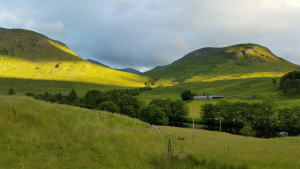 I should have known really… the folklore, like a haddock to the face once you spot it, TELLS you!! But I wasn’t listening, and had to go the long way around… like 10 years searching up hill and down bleedin’ dale. And all along, the folklore whispered “You’re an idiot. We kept it locked, safely hidden away, in the old tales… stop walking, start listening…”
“Here the Saint stopped the advance of the plague.”
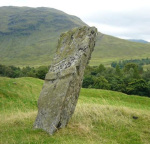
Oh. That’s nice. Christianised. Simple. Pictish. Incised cross.
Not much to look at. Could trip over it and not notice… (don’t even ask how many times THAT happened with the old hitching post…)
Niggle…
HERE. The Saint stopped the advance of the plague.
The Saint stopped the coming of the Black Death.
The Saint turned back death.
Death… a veil of darkness?
Darkness was turned back!
HERE!
And thanks to the power of GoogleEarth… so it…
View original post 103 more words
Share this:

More from our Penrith weekend

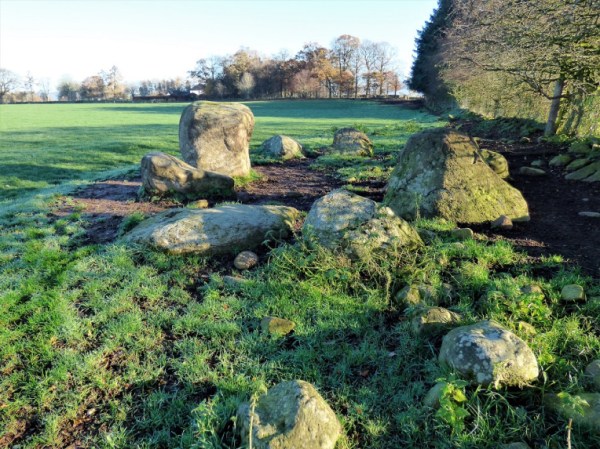
We squelched through the mud at the gateway to the field, following the fence down to a tiny stone circle that is unknown to most casual visitors. Just a third of a mile from its big sister, the tiny cairn circle of Little Meg is one of the least known circles in the area and yet it is, with Long Meg and nearby Glassonby, one of only three in the area that has ancient carvings on its stones.
Technically, Little Meg is not a stone circle. When it was first discovered by antiquarians, it was buried within a mound of earth, making it the internal structure of a burial mound and the excavations revealed bones, charcoal and an urn, buried in a cist at the centre. The stones may, perhaps, have originally been a circle that was covered over, but the preservation of the symbols on one of the stones…
View original post 565 more words
Share this:

From Stuart
Share this:

From Sue and Stuart
Share this:

©Stephen Tanham
Share this:


Two poems for the coming Solstice.
The first is The Iron Hand from Barbara Walsh, who is in the process of establishing her own WordPress site:
The Iron Hand
The iron-hard earth imprisons life below
Cold darkness, gripping life that glows
But not to conquer or destroy;
That life now sleeping waits to grow
Till winter’s touch so cold yet needed.
Releases gentle fingers new to spring’s caress
Waves goodbye to winter’s tending
Starts the cycle never ending
©Barbara Walsh
➰
And one from me…Dark Solstice
➰
Dark Solstice
If I had different eyes
That shone a bolder hue
I’d see the cycle of the year
As a single act surrounding you
➰
If I had larger ears
For a wider range of sound
I’d teach you of the double chord
St Stephen and St John resound
➰
If I had a bigger heart
That could hold both death and light
I would raise your gaze to the brightest day
Beyond this cold December night
➰
©️Stephen Tanham
Stephen Tanham is a director of the Silent Eye School of Consciousness, a not-for-profit organisation that helps people find a personal path to a deeper place within their internal and external lives.
The Silent Eye provides home-based, practical courses which are low-cost and personally supervised. The course materials and corresponding supervision are provided month by month without further commitment.
Steve’s personal blog, Sun in Gemini, is at stevetanham.wordpress.com.
You’ll find friends, poetry, literature and photography there…and some great guest posts on related topics.
Share this:

From Stuart…

*
One of the ‘hardy perennials’ on many of our workshops is the thorny problem of intent.
Thorny because much of what we now see may not have been originally intended by the erstwhile perpetrator or perpetrators, yet some of what remains most definitely was!
On our recent sojourn around Cornwall, having been cruelly divested of our guide book, we still managed to find one particular unsought spot ‘blind’, as it were, and this is pretty much the task we had now set our Companions…
The telluric current we were ‘following’ passed through the remains of Penrith Castle and on through the site of the Old Church.
The legends that attach themselves to these sites in many cases assume the outward appearance of unbelievable ‘gibberish’ and most certainly do not follow the reasonably delineated form of history, official or otherwise…
And yet, the wry smile which they inievitably engender, the…
View original post 176 more words
Share this:


It’s little more than a hillock
A green slope, with mist
Until the sky rips open
And something unseen
Reaches down
To ink a drawing of
The possible
Then mind, seizing itself
Creates the living tree
©️Stephen Tanham
Stephen Tanham is a director of the Silent Eye School of Consciousness, a not-for-profit organisation that helps people find a personal path to a deeper place within their internal and external lives.
The Silent Eye provides home-based, practical courses which are low-cost and personally supervised. The course materials and corresponding supervision are provided month by month without further commitment.
Steve’s personal blog, Sun in Gemini, is at stevetanham.wordpress.com.
You’ll find friends, poetry, literature and photography there…and some great guest posts on related topics.
Share this:

From Sue. Part two of the Penrith weekend
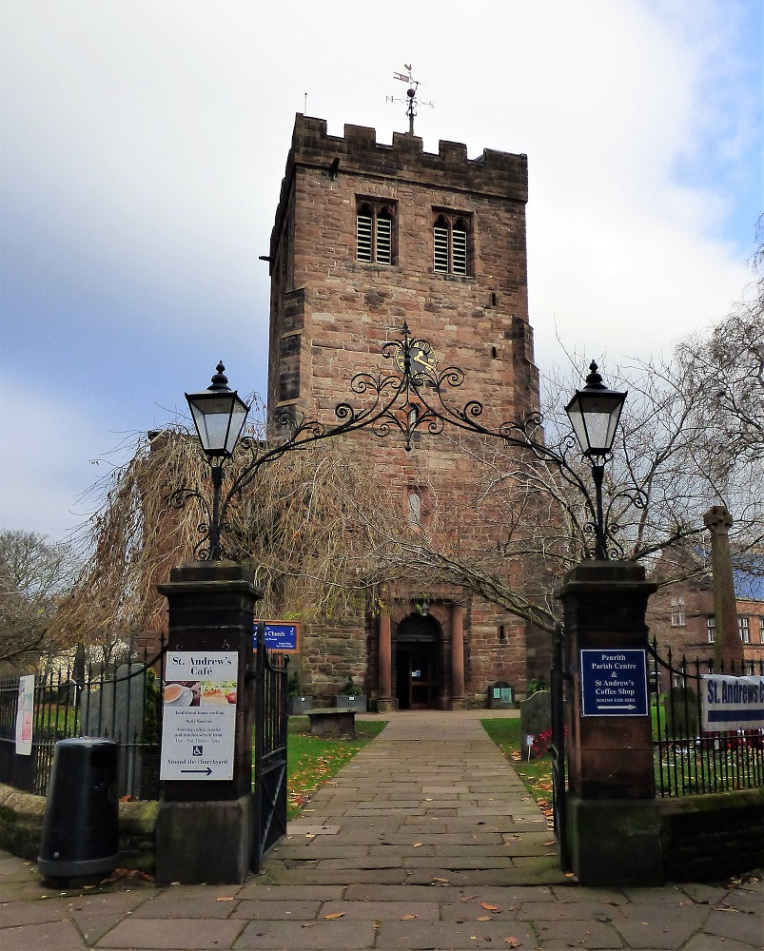
Penrith is a lovely old market town with narrow alleys and some wonderful old buildings. Sadly, we would not have time to do the place justice over the weekend, but at least we had a glimpse as we walked to our next site, the Parish Church of St Andrew.
The church itself is an interesting one. It appears to be a Georgian edifice, having been largely rebuilt and remodelled in 1720, by Nicholas Hawksmoor, inspired by St Andrew’s in Holborn, London. The elegant interior seems almost out of place in a northern market town, and lacks the homely feel of churches that have retained their character and appearance of antiquity. But the church has stood on this spot since 1133 and, taking a moment to ‘feel beyond form’, you can indeed feel its age and the centuries of prayer its walls have held.
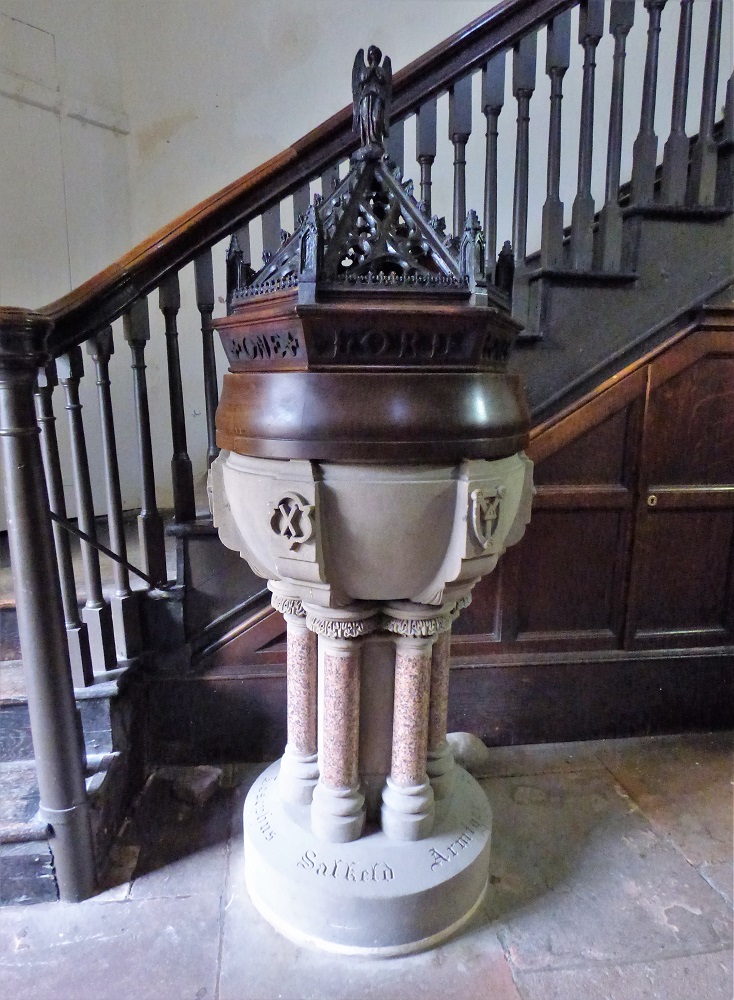
The building is perfectly cross shaped, but…
View original post 677 more words
Share this:

Sue’s definitive introduction to the recent Penrith weekend…
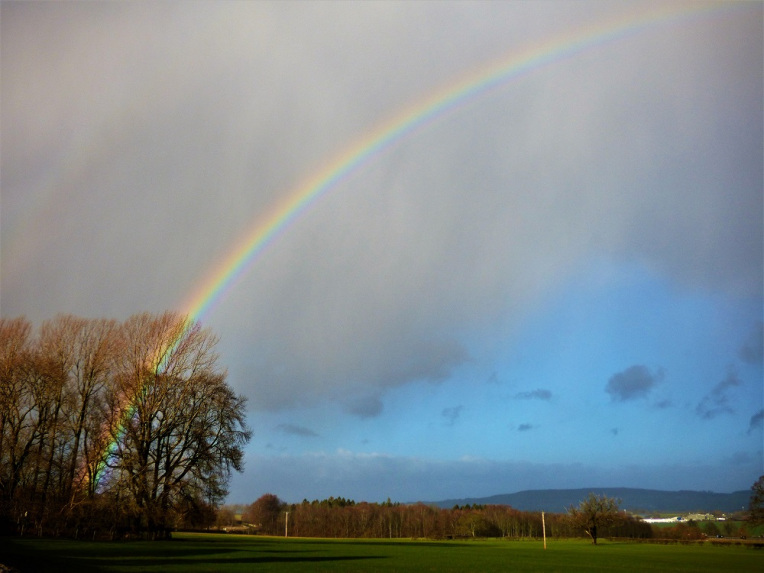
In spite of the rainbow that had greeted our arrival in Cumbria, the skies looked none too promising as we gathered beneath the shelter of the park gate in Penrith. The chill winds of December had brought showers, but at least, for the first afternoon, there would be a little cover. We could only hope that the following day would bring better weather. Not that rain would stop us. Since the downpour we had encountered in Scotland, we had accepted that rain was a natural benediction… a blessing and a cleansing beyond the gift of Man and, therefore, a perfect way to start a weekend of spiritual exploration.
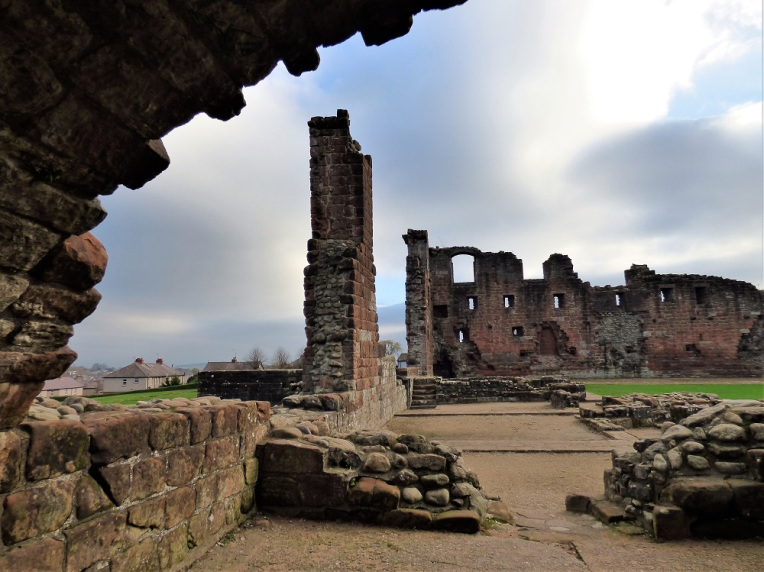
We had chosen to begin at Penrith Castle, built between 1399 and 1470, probably on the site of a much earlier Roman encampment, as part of the defences against raiders from Scotland. Once thought to have been first built by William Strickland…
View original post 694 more words
Share this:

+ #Silenti, Belief and Faith, Child of Light, Consciousness, enneagram, esoteric psychology, Journey of the hero, Mindfulness, mystery, Mystery Schools, Spirituality
The Modern Mysteries
by Steve Tanham
The ‘mysteries’ have been with mankind as long as we have existed. They are a collection of paths that take us inwards; restoring a sense of self deeper than that which reacts, and showing us that mankind is much more than a biological animal – though animals, and their focus on the ‘now’ have much to teach us, too.
The reason these paths work is that we are more than we appear to be. The reactive nature of the self-in-the-world, the personality, fixes it into a certain relationship with its world. This is vital for survival but not so for our potential evolution. Mankind is not a finished project. Nature can only take us so far, beyond that point we have take responsibility for our own self-development, and the power for this comes from within. To begin this, we have to loosen the grip of the world on our reactive self. When this is done, a new space emerges within our mind and heart.; a quiet, creative place that feels wholly our own. Unlike the everyday world, our energy is not robbed in this place, in fact the former reactions, seen in their true perspective, actually feed the strength of this private chamber… there is a bubbling of laughter, a lightness of being.
Developments in psychology over the past hundred years have given teachers of the spiritual a powerful vocabulary to describe the nature of the reactive self, the self-in-the-world. We see that our essential self is not what has grown up, like layers of paint, around our experience of the world. For the first time, we see that what is truly ‘us’ is not only difficult to define, but also not the layers of painted self-consciousness that have developed, year on year, since we came into the world.
At this point we begin to sense the weight of the baggage we carry. As the time spent on self-study lengthens, we see that we can let go a lot of what we thought was us, and delight in the rush of powerful energy when the unnecessary is let go. As the reactive gravity is released, we begin to sense an entirely new relationship with the world in which we live – the outer world… or is it?
With the letting go of what we thought we were, we enter a new field of confidence. This confidence is reinforced when events in our lives seems to conspire to teach us each next step that we need to learn. We look up at the sky – inner and outer and ask, “Did that really just happen?” And it did, and it goes on happening as the door of perception opens onto true relationship and we come re-evaluate our whole lives.
There comes a point where we know enough to show others parts of it. We feel a honourable debt and a desire to do this. We experiment; finding what techniques work for us and which don’t. The personality is not done away with, rather it is realigned in the service of this inner relationship – spirit will do nicely as a word, but there are many more words that can serve us well. We may even change our vocabulary as we speak to different audiences. We need have no fear, for each challenge brings its own way of speaking and showing – if we remain true to the inner vibration, which, day by day, is becoming us.
These, then, are the mysteries. They are not, nor have ever been, bound up in a fixed set of teachings, They belong to all of us, they are our birthright. They are the new world we have always had. Only the self-in-the-world was ever in the way of this, and now it serves something higher and more noble as we reach for the sky.
©️Stephen Tanham
Stephen Tanham is a director of the Silent Eye School of Consciousness, a not-for-profit organisation that helps people find a personal path to a deeper place within their internal and external lives.
The Silent Eye provides home-based, practical courses which are low-cost and personally supervised. The course materials and corresponding supervision are provided month by month without further commitment.
Steve’s personal blog, Sun in Gemini, is at stevetanham.wordpress.com.
You’ll find friends, poetry, literature and photography there…and some great guest posts on related topics.


 Sun in Gemini
You must be logged in to post a comment.