
From Stuart…
Share this:

+ #Silenti, Ancient Landscapes, Ancient Sacred Sites, Australia, Silent Eye School, Soul, Spirituality
The Wolf and the Setting Sun
by Steve Tanham
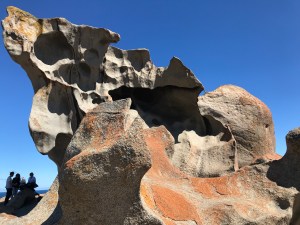
Like knowing thought inclined to action
Creates ‘me’ when the job is done
So must I trust the light
That pulls me where the photos are
To stand beneath the ancient wolf
And howl at the setting sun
©Stephen Tanham
Share this:

From Sue…

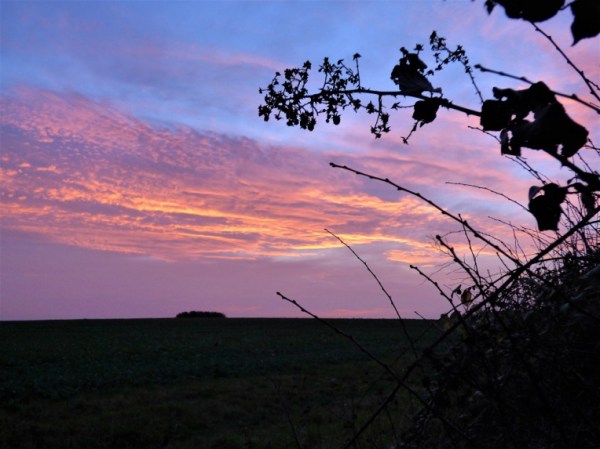
Six a.m. on a Sunday… I groaned and turned off the alarm clock. I hadn’t been sleeping well, or enough, and did not want to obey the imperative summons… especially not on a day when, historically, most folks get to sleep later. As I clawed my way through the fleeing remnants of a dream in which I had been dreaming about dreaming, I wondered about the whole sleep thing. We are supposed to spend about a third of our lives in slumber. Is that a design flaw, a superb bit of physical engineering or a gift? Maybe it is all three, or perhaps that depends on where you are standing.
There has been a huge amount of research done on the need for and benefits of sleep, from both the physical and psychological perspectives. We have identified the stages of sleep, the way the mind solves problems and the body…
View original post 714 more words
Share this:

+ #Silenti, Astrology, Consciousness, esoteric psychology, Mindfulness, Mystery Schools, Spirituality, Stream of Consciousness
The rotating blade of meaning (1)
by Steve Tanham

You have probably never heard of him. He was an engineer by training. He was the primary inventor and developer of the Bell helicopter, which made the promise of point to point flight a reality – though it had been discussed for centuries beforehand. This inventor, engineer and scientist was from an age when a few scientists could still challenge the overall approach of modern science – with its focus on the smaller and smaller, and lack of vision of the ‘whole’. They are almost gone as a species, so, in this series of posts, I’d like to pay tribute to Arthur M. Young and explain in non-technical language how important his work was… and is.
He was also, and unusually for a scientist, a master astrologer…
Despite being skilled in engineering and mathematics, Arthur Young returned to university as an adult to study Quantum Physics, recognising that here was something that completely altered the way we should visualise the world. He was fascinated by the consciousness potential of the relationship between the ‘observer’ and the ‘observed’, something that science had tried to ignore for centuries. This dismissal was brought up, sharply, by Quantum Theory, which proved that only the presence of the observer allowed the presence of the object to be ‘measured’. In other words, proved it was there… but not alone.
Helicopters make people nervous. They are heavy objects, oddly shaped and dangerous looking. When flying, they would plunge to the ground if the massive rotor, above, stopped working or broke. We can think of a plane as being safer because it has fixed wings that give it the theoretical capability of gliding back to Earth. Most of them don’t. For both planes and helicopters, the focus is on making sure that they are reliable and controllable in a failsafe way, and, for helicopters, that controllability is a very complex thing…
Given Arthur Young’s involvement in the development of the small, commercial helicopter, it’s not surprising that he was focussed on this central aspect of control. We will see, later, how this led to startling revelations that bridged physics and philosophy.
Consider the opening photograph. It shows an Art Deco style wall lamp, caught in a beautiful moment of rainbow colour coming into the living room from a clear winter’s day, outside. It has its own beauty, and that is what draws us to it. It has a complex shape that can be considered at differing levels of detail. Some of these details (properties) are objective – they can be measured by science and classified into such properties as material and shape.
Some of the properties are subjective – they only mean something to us – the observer. If I wanted to break down the ‘stages’ of knowing the wall-light lit by the rainbow, I might deliberately ignore the feeling of beauty and its minutely shifting colour, and examine only the overall form of the object. Its fundamental shape is an inverted triangle. I know enough about the delicate glass from which the ‘saucer-shaped’ leaves are made to be concerned that they are easily broken. With that small set of information, I feel I know the material content of the object; I could describe it to someone else and they would get a good picture in their minds.
The world of science is concerned only with this latter description: the inverted triangle – the form of the object, and the chemical material from which it is made. Arthur Young called this the formal description. Science is focussed on this level of knowing because is the only one that is objective: that is, not dependent on how we see something (bad mood, poor eyesight, colour-blindness, etc.) Using this formal description, science can categorise the object, and make it part of a common set of things – a very important process.
But the human, awakened to the form and beauty (or not) of the world around them, has a much richer experience. I understand the objective nature of the inverted triangle and the delicate chemical composition of the fragile leaves, but I’m staring in wonder at the texture of the glass and how it is reflecting the rainbow. I lean closer and find that the glass has a faint but definite smell to it. It’s clinical but not unpleasant.
These are subjective impressions. Science could never reproduce them because they belong to me, to you, to anyone with sense organs. We all experience these things differently, but we can try, with language, with photography, writing, art or poetry to convey that this is not simply an inverted triangle made of fine glass; it is a rich experience and unique in the entire history of the universe… You could experience something similar, but the fine details would belong only to each of us, differently–and they would change the event. We seldom consider this power we have – be a unique observer of the universal beauty all around us. We, whose bodies are made from the atoms created by ancient exploding stars, must come close to our zenith when we find such beauty and stop our everyday consciousness to ‘be’ with such it.
Science is not deficient in its lack of concern for this; it’s simply that the full experience of the observer cannot be reduced to numbers… The collective mind that created numbers can never be subservient to them.
So far we have encountered the formal description of the object: the inverted triangle and the chemical properties of fine glass. We have also used our sense organs to experience the way the rainbow light shimmers on the petals of the lamp, and we have even smelled the glass. These sense impressions come from the object. They may be slightly different to each of us, but the properties from which they issue belong, also, to the object. Our object therefore possesses a formal description and specific sense impressions. The formal description could be shared, using shared language or mathematics, with anyone. The sense impressions could not, but could be likened to something else in our experience.
Step back and the experience of being an observer has two main aspects. There is a ‘me’ and an ‘it’. The experience of the wall lamp is deemed to be ‘out-there’, but the knowing resides ‘in-here’. I am helped, by the formal description, to recognise or locate the object, even if I’ve never been in that room.
Young said that, to realise the process and the power of knowing it is vital to (initially) separate our aspects of experience in this way. When we consider the received information and the sense data from the object, two more things happen in our perceptive mind. The first is that we place a value judgement on the experience – perhaps I am in awe of the beauty of the rainbow on the lamp. Without rationally considering it, I feel moved by an emotion, a kind of joy that this rare impression of living perfection is present.
The second ‘in-here’ aspect is the purpose of the object. In this case it’s not to show off rainbows, but to give light when evening comes. In other circumstances, my knowing of the lamp would have been part of the inventory of the capabilities of the room. Arthur Young named this the function. These two ‘in-here’ aspects belong to the observer, not to the object. We project them onto the experience based on our learning. Young called this kind of aspect projective, and the aspects belonging to the object, alone, he called objective. Where something in an aspect was specific, he used the term particular; where it had a shared nature, he named it general.
If we unravel the above example, there emerges a process of incremental perception which, conceptually, looks a lot like the opening of the famous Russian dolls:
- Aspect one, which is an inverted triangle shape, made of a chemical structure of fragile glass.
- Aspect two is the contents of the above plus the sense impressions belonging only to the objective nature of the inverted triangular shape (its colours, shades and smells)
- Aspect three is the subjective experience of all the above plus the feeling of beauty and awe I have when my attention and perception is captured by the occasion.
- Aspect four would be all the above plus the function of the wall-lamp, which, in this case, has been subverted by the unexpected rainbow… exactly what happens when we open ourselves to the possible in real life!
These four aspects therefore comprise: formal description, sense data, value and function. The first two are objective (‘out-there’), the second two (‘in-here’) are projective (subjective).
We can put these into a table for easier reference:
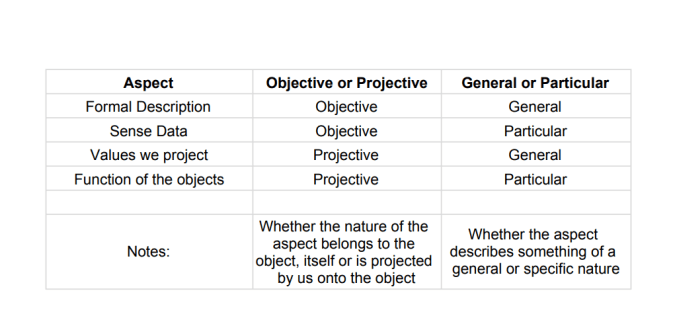
The creation of this was not a casual work. Arthur Young tested it against all the situations he knew of, in both a scientific and philosophical sense. He determined that it was a universal description, an ‘anatomy’ of how we perceive and how we ‘know’. These four stages – aspects – of knowing were at the heart of being human, they were not only the containers of what we learned, they were how we learned.
Four was an interesting number and features predominantly in the ancient mysteries. ‘Fourness’ is a key part of how mankind has conceived of the universal divisions of experience. Fourness is one of the keys to Astrology, in the form of the ‘Elements’ of Earth, Air, Fire and Water. For Arthur M. Young, an astrologer as well as a scientist, the notion of fourness at the centre of human experience was about to take him on a mind-expanding journey…
To be continued…
©️Stephen Tanham
Stephen Tanham is a director of the Silent Eye School of Consciousness, a not-for-profit organisation that helps people find a personal path to a deeper place within their internal and external lives.
The Silent Eye provides home-based, practical courses which are low-cost and personally supervised. The course materials and corresponding supervision are provided month by month without further commitment.
Steve’s personal blog, Sun in Gemini, is at stevetanham.wordpress.com.
You’ll find friends, poetry, literature and photography there…and some great guest posts on related topics.
Share this:


Orphaned shoots of summer’s fullness
Sway high in January’s blue
Like gifted children graced with wisdom
Defying winter’s hidden fury
Escaping falsely changing hue
➰
Against the black we could not see you
Yet, dancing in the violent storm
Your gentle tips flowed round the deluge
Untouched by night’s electric harm
A younger magic, bold and warm
➰
But, come the day when icy winter
Bows to brightening of the morn
And deep in earth green thirst awakens
Then screaming “Life” the upstretched fingers
Become the first to catch the dawn
➰
©Stephen Tanham
Share this:

From Sue…

“I need to do something.” Clinging to a lifestyle in which they felt themselves to be stuck, the person concerned said that a change was needed… a break in the pattern of their days, for to break just one link in a chain is to break free of it. But where to start? What if it wasn’t enough? The fear of failure was holding them back from taking even the smallest step forward that could potentially change everything.
I know that feeling. I imagine that most of us have felt it at some time in our lives. Change and failure can be two of the scariest monsters we have to face and maintaining even a painful status quo can feel like a far better option than scaling a mountain of fear. Still, you never know what you can do until you try…and you cannot take a second step until you…
View original post 758 more words
Share this:

From Sue and Stuart
Share this:

+ #Silenti, Consciousness, esoteric psychology, Higher Mind, Krishnamurti, Silent Eye School, Spirituality
Becoming Nothing
by Steve Tanham

‘Become Nothing’
He didn’t use those exact words but that was the meaning of what he wrote. The words were suddenly there in the moment in my consciousness… and I knew they were right.
I had been reading a piece by Krishamurti – that fearless enemy of dogma, and proponent of the individual’s right to find their own spiritual path.
It does involve a certain amount of bravery – to contend with that feeling of ‘going against’ those of wisdom, those from whom we can learn, perhaps those of a tradition in which we were raised or trained. But that wasn’t Krishnamurti’s point; he didn’t deny anyone their well-found wisdom, rather, he urged each one of us to find our own… not second-hand knowledge. And to do that, the only way is to go out there and play with the universe; but play with a spirit of intent. And this is where it gets a little complex… until you see the whole of what he was saying…whereupon it gets very simple.
When you play with the universe, you do so in a way that stares in wonder at what you see. There’s a grown thing, covered in rust and tar and road rage; and it’s stuck onto our eyes, forming a film. This gritty, dirty, bitten lens imbues everything we try to see with its sticky waste. Staring in wonder at what you see is the cleaner that wipes the dirty grown thing from our eyes. For most, it happens in little stages, but there are some who ‘take the kingdom of heaven by storm’. They have a moment – a surging, brilliant moment that melts and washes what is keeping them from looking at the world, a universe that is alive and waiting to respond, personally, to their presence, their conversation, their love…
And when you find that relationship with what used to be ‘out there’ you will find that the primary desire of that sticky, dirty, bitten thing was always to change what was out there, because it wasn’t good enough – and having achieved that, to change it, again… and again….
The mind which knows only thought knows no rest.
‘Becoming nothing’ – what does it really mean? It is a mantra of power. It is a moment of revelation that alters our relationship to the whole of our lives. To reveal it via words would reduce the power of each of us being able to step through that mirror of self. It would rob the reader of the self-same experience. But this much can be said: that the word ‘nothing’ should not be the main focus until the rest is understood. What follows, then, is a journey of realisation that shifts who we are, and takes away its central power in our lives, leaving…
And you will have to fill in that space.
©️Stephen Tanham
Stephen Tanham is a director of the Silent Eye School of Consciousness, a not-for-profit organisation that helps people find a personal path to a deeper place within their internal and external lives.
The Silent Eye provides home-based, practical courses which are low-cost and personally supervised. The course materials and corresponding supervision are provided month by month without further commitment.
Steve’s personal blog, Sun in Gemini, is at stevetanham.wordpress.com.
You’ll find friends, poetry, literature and photography there…and some great guest posts on related topics.
Share this:


By wind and mere and rippled flow
And water’s mirror, sunlight’s glow
To farther hills whose skin embraces
Touching sky with changing faces
Who sees the round but loves the whole
And wrestles with that spirit’s capture
Here sits the poet, lost in rapture
©️Stephen Tanham
Stephen Tanham is a director of the Silent Eye School of Consciousness, a not-for-profit organisation that helps people find a personal path to a deeper place within their internal and external lives.
The Silent Eye provides home-based, practical courses which are low-cost and personally supervised. The course materials and corresponding supervision are provided month by month without further commitment.
Steve’s personal blog, Sun in Gemini, is at stevetanham.wordpress.com.
You’ll find friends, poetry, literature and photography there…and some great guest posts on related topics.
Share this:


And here we
Will laugh in the gentle light coming through the slanted glass louvres,
Will smile at the smiles of passing folk who smile at our smiling,
Will drift, within this cheer, within,
But, most of all, will plot and write…
With tea…
©Stephen Tanham
Share this:

What we do…
 Above Great Hucklow, Derbyshire
One of the joys of working with the Silent Eye is the people you get to meet. Not all of them are part of the School; most follow their own Paths, which, though they may run in the same general direction, can take vastly different routes on the journey. None is inherently ‘better’ than another; it is always the Path that speaks to the heart that is right for any seeker. Being able to share and learn from our individual experiences on that Path makes the journey richer and fosters a spirit of understanding and cooperation.
Every year, the Silent Eye runs four workshop weekends. While the correspondence course and the personal journeys of our students are at the heart of the way the Silent Eye works, the workshops allow us to take a different approach and explore new ideas in new ways. They also allow…
View original post 842 more words
Share this:

Some very special thoughts from Stuart…


*
The One animates Spirit with Light.
Spirit animates Soul with Love.
Soul animates Body with Life.
The Body generates the Many
The Many live in the One.
*


You must be logged in to post a comment.