+ #Silent Eye, #Silenti, Ancient Landscapes, Consciousness, English Lake District, landscapes, Photographic techniques, Photography
Pale sun, November river…
by Steve Tanham

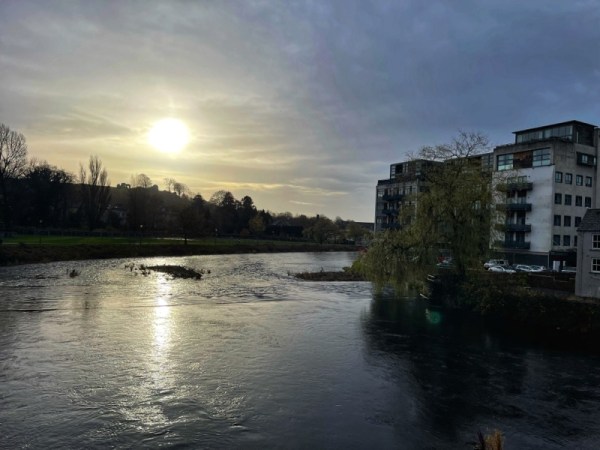
That moment when you look up and realise that the sun is as high as it’s going to get … and, yes, it’s the end of November.
On our ‘town and castle’ walk, the Collie and I pass over this old stone bridge and gaze down at the silver-gold of the river Kent.
And reflect…
©Stephen Tanham 2022
Stephen Tanham is a Director of the Silent Eye, a journey through the forest of personality to the dawn of Being.
http://www.thesilenteye.co.uk and http://www.suningemini.blog
Share this:

+ #Silent Eye, #Silenti, Consciousness, nature, Seasons, Four Seasons, Spring, Summer, Autumn, Winter,, Summer Solstice, Time
What if the week didn’t exist? – Part 1
by Steve Tanham
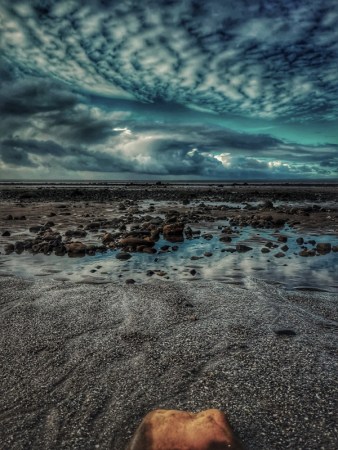
I don’t know about you, but I find the week comforting…
Over the years, I’ve built up a pattern of working through things that I need to do, in order to get to the things I regard as ‘me-time’.
There is the stuff of keeping an orderly house. Then the dog has to be walked… and time to visit my mother in her care home. In the summer, the garden takes up a lot of our week. Keeping on top of this does involve some early mornings and late nights – most of that for either the review of Silent Eye companions’ journals or the writing of blogs. But the ‘me-time’ is all the more special for that…Experience teaches that, if you can keep on top of things, the pattern of seven days works well….
But what would happen if we continued the days beyond seven, not into one, again, but numbered the next one ‘eight’, then gave it a new name… and so on? Perhaps we’d get to 365 and have a pot of tea before concluding it was boring…. Then pick up Sunday, again.
Does ‘the week’ really have any reality? Our week is cyclic: it comes round again on the eighth day. But nothing really comes around apart from the habitual patterns that fit into seven days. We cut the grass on Sundays, perhaps. We do the shopping on Saturdays. Weekdays, we collect the kid or grandkids from school…
These patterns of familiar events give us a warm feeling that the week really does exist, but what really exists is a seven-day cycle of recurring events made by ourselves. The traditional ‘working week’ is a big part of this, of course. It’s at the root of how we are trained to view the seven days as a real composite thing – in order to fit in with our society, even our world.
Can we find a reality in the larger cycles of our lives? To do this we need to find some boundaries – some natural cycles of definite character and presence – that will provide an anchor for the derivation of the week.
The year is the obvious starting point. Every 365 days (plus a quarter), we find a repeating cycle of four approximate seasons driven by the time it takes the Earth to travel around the Sun. We don’t actually see that, of course, though we do see the sun crossing the sky every day, bar a cloud or two.
But the sun does return to its annual start-point reliably … sort of…

It is, of course, the planets that move around an apparently stationery sun. In reality, the sun and its planets – including our home, Earth, are hurtling through the space of the parent Milky Way galaxy at more than a hundred miles a second, and all this at a right angle to what we think of as the ‘saucer’ on which the sun and planets lie – the ecliptic. See the above diagram for an illustration (original source itskosmos on Instagram)
The week is simply a series of days following nights; eventually leading to the changing cycles of nature as we progress from spring, to summer, to autumn to winter. The solstices and equinoxes are real events and can be measured. The year provides a primary ‘time container’ for the passing-time of life on Earth – something that has a substantive presence beyond any artificial concept.
All these belong to solar cycles: the orbits of planets – inclined on their axes of spin so that seasons exist. Were we not to be tilted at 23.5 degrees from the ‘vertical’ we would have no seasons, and the equator would be a fiercely hot hell-zone. We would have no instinctive feel for what time of year it was, and all our days would be of fixed duration depending on our degree of latitude.
Variation seems to be a key ingredient of a healthy life. From a perspective of consciousness, that is easy to understand: the mind gets bored if it is not stimulated by freshness. The body would quickly die without a constant exchange of material with the outside world to provide food, air and excretion.
We can see that some of the parts of our ‘time-container’ are valid boundaries, determined and backed up by the realities of physics. The day, and the year – with its solstice (longest and shortest) and equinox (equal night and day) – are actual physical occurrences that can be mapped onto, say, a ridge on the horizon, allowing for the precession of the equinoxes, a cycle that takes 26,000 years to complete.
Is the week still a mystery? The truth is its meaning and origination have slipped from our consciousness but is rooted in our ancient study of moon-cycles – something we find pretty but otherwise irrelevant to our busy modern lives.
Twenty-eight days was the approximation to the full cycle of the moon whose actual length is 29.5 days. This closely fitted the average 28-29 days of the full menstrual cycle of women: the basis of all human life on earth…
Before the patriarchal society imposed upon us by religion and power politics, women were the priests…and for good reasons.
The ancients knew of the magical nature of cycles of seven. Harmony emerged from a cycle of seven notes, repeated on higher levels with the eighth note being the same as the first but an octave higher. The proportions of frequency within the seven gave rise to endless harmonic innovation.
The seven-day week originates from the calendar of the Babylonians, which in turn is based on a Sumerian calendar dated to 21st-century B.C. Seven days corresponds to the time it takes for a moon to transition between each phase: full, waning half, new and waxing half.
Seven times four is 28: the nearest ‘whole’ number to the moon cycles and therefore key to reproduction in woman. The week was ‘born’…
Incidentally, the scientist and philosopher Rudolph Steiner developed a system of agriculture based on the cycles of the moon – Biodynamics. It was deeply in harmony with what became ‘ecology’ and rewards an increasing number of farmers who use it.
The sun and the solar system are moving at 200 kilometers per second, or at an average speed of 448,000 mph (720,000 km/h). Even at this rapid speed, the solar system would take about 230 million years to travel all the way around the Milky Way. So, the length of the week is fairly trivial, in galactic terms.
But not to us…
Were we to live on a desert island, off-grid and self-sufficient. We could forget the days, weeks and even months. The shortening, then lengthening days and their twin solstices and equinoxes would remind us of the four polar points as the years of our lives passed – a tiny blink in the life of the universe.
And yet the consciousness we hold, the seat of the ‘I’ which is the real jewel of creation – is still inexplicable to the great minds that map the universe we have just explored in our imagination.
The seven days of the week can hold a wonderful key to self-development. In next week’s post we will explore the use of this key.
©Stephen Tanham 2022
Stephen Tanham is a Director of the Silent Eye, a journey through the forest of personality to the dawn of Being.
http://www.thesilenteye.co.uk and http://www.suningemini.blog
Share this:

+ #Humour, #Silenti, Dark Humour, English Lake District, Photographic techniques, Photography, Places and Prose
Goths on the Lake?
by Steve Tanham
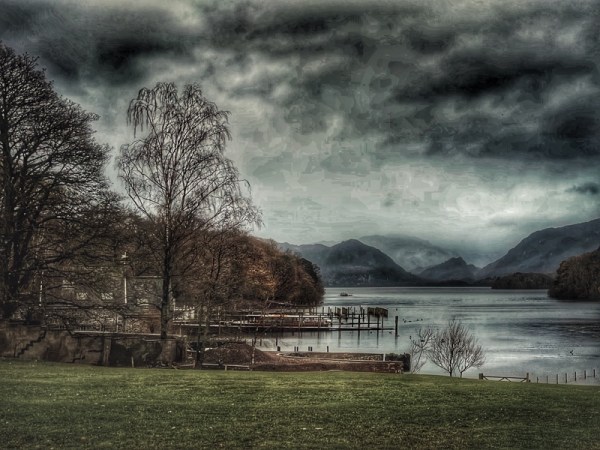
A mid-November trip to Keswick and one of its two lakes – Derwent Water. The last few days of the visit of our artist friend from Oz, before she leaves for a final rendezvous in Manchester and then the long journey back home to Melbourne.
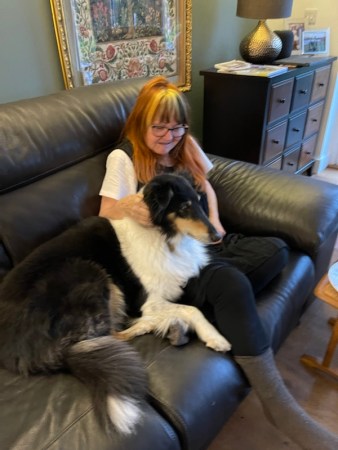
A week with us then she had two days with a fellow artist and his engineer wife… who happen to be very fond of Gothic clothes and decidedly edgy festivals in Whitby…
Whitby… mmm. Wasn’t that where Count Dracula came ashore in Bram Stoker’s infamous novel?
Derwent Water, a ten minutes’ walk from the centre of Keswick, is usually a safe place to garner a set of shots for a blog… In the summer, it looks like this:
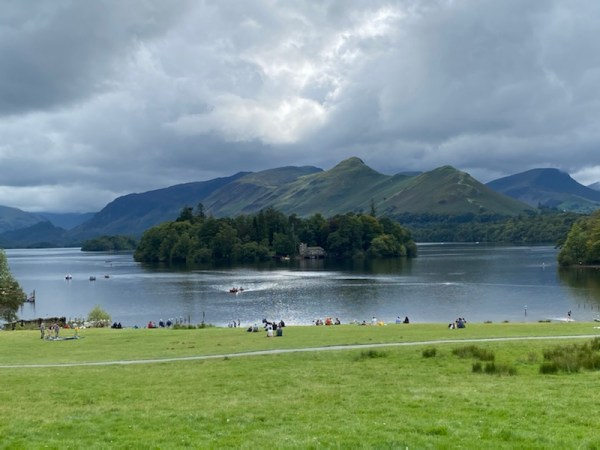
But, today, it didn’t look anything like that… It looked gloomy, lightless and awful. In fairness, it was half an hour before the darkness took over… and that thought gave me an idea…
We four could adopt a decidedly Goth mentality and see if the lake would lend itself to a Gothic photography session. I’ve never been a Goth, but two of our friends had… and loved the idea.
We set about taking shots of the dark lake; shots that would lend themselves to a certain style of post-processing.
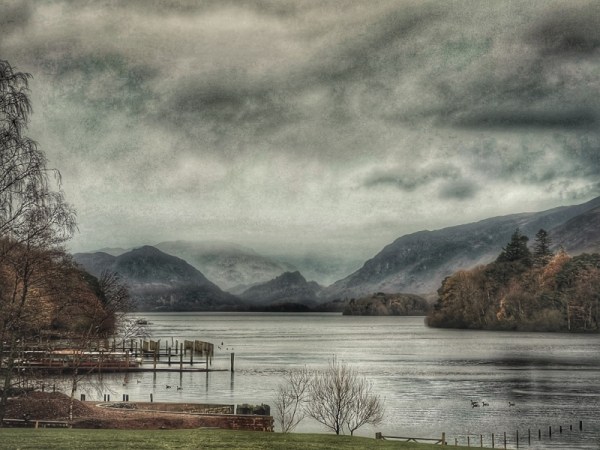
Over an atrocious cup of coffee at a reluctantly-still-open cafe, we processed a chosen subset to get these…
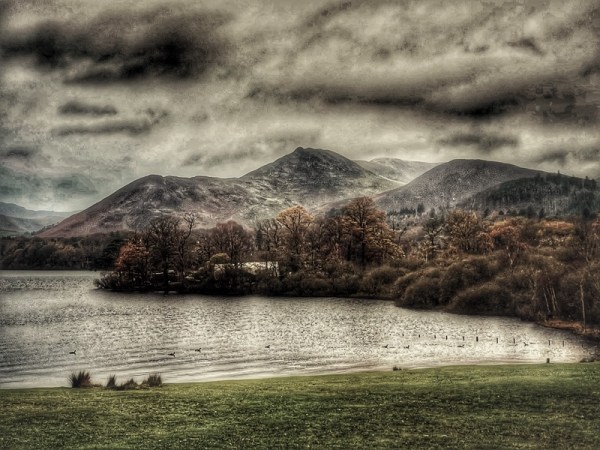
Our mood lifted (or should that be darkened?) as the results emerged
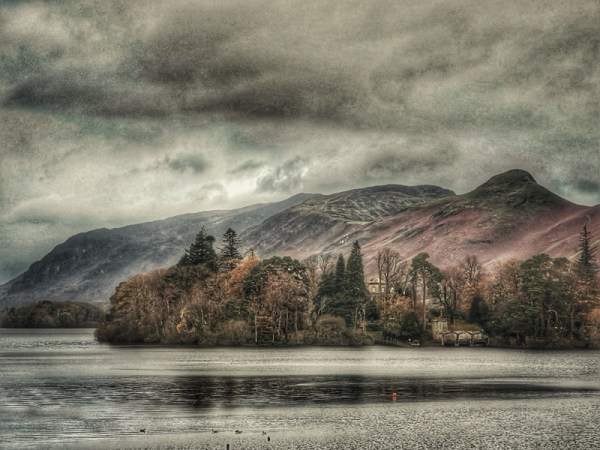
Upon reflection, even the clouds had conspired to help us…
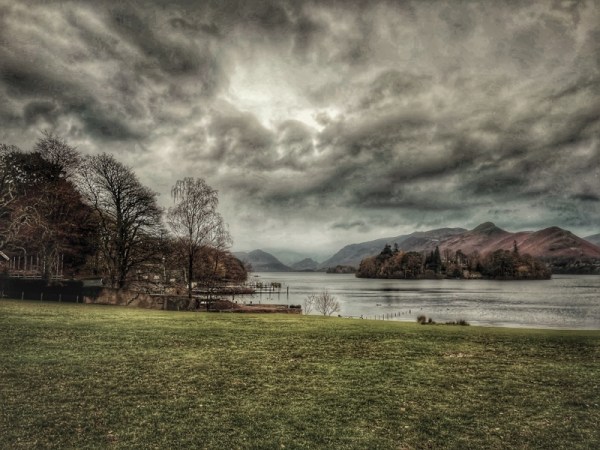
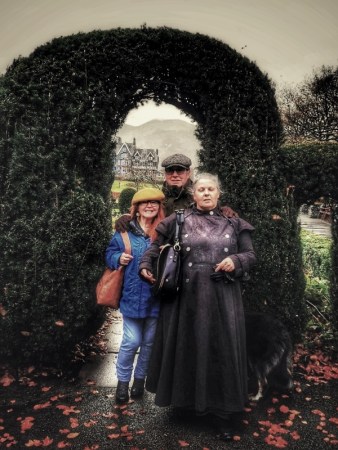
I’m pretty sure that’s what happened. Otherwise, I dreamt it… and woke up to the photos…
©Stephen Tanham 2022
Stephen Tanham is a Director of the Silent Eye, a journey through the forest of personality to the dawn of Being.
http://www.thesilenteye.co.uk and http://www.suningemini.blog
Share this:

+ #Silent Eye, #Silenti, landscapes, Photographic techniques, Photography, Places and Prose, Travel and Photography
The bridge over the railway at Grange
by Steve Tanham
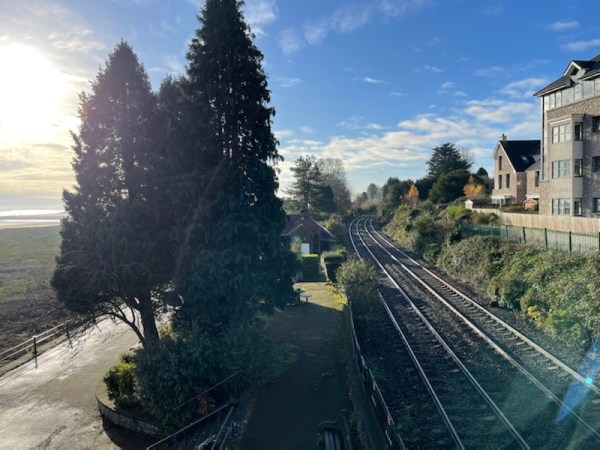
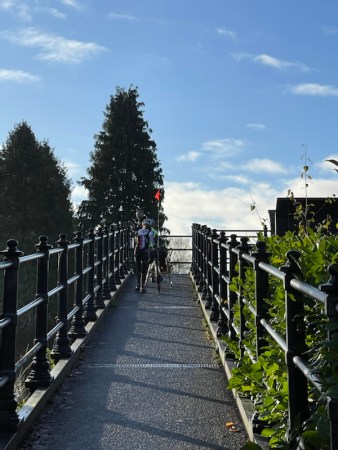
The railway made Grange-over-Sands; and part of that legacy is a wonderful but decidedly odd-looking metal bridge over the line as you’re leaving the town to the West – in the direction of Barrow-in-Furness. It’s a favourite piece of architecture – mainly for the photogenic views up the line, as in the cover shot…
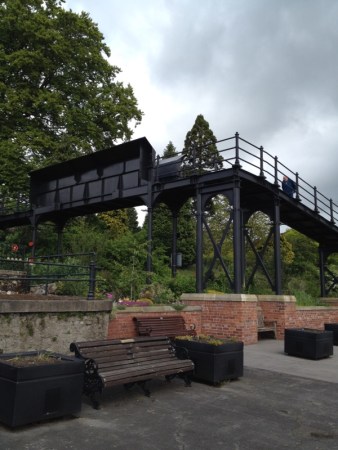
The giant L-shaped structure dominates this part of the promenade. It used to be possible to walk across the twin track line at several points, but some near-misses with the children of inattentive parents meant their closure. Today, there is only the station, itself, and this bridge until you get to the end of promenade where there’s an old and dingy tunnel that allows you to make the return via a park.
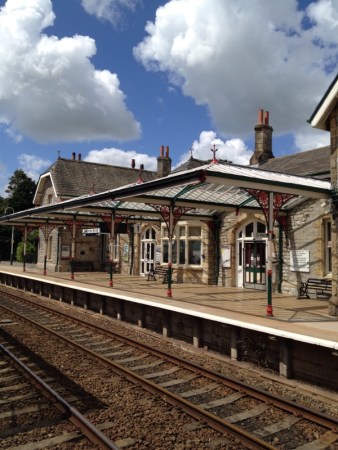
The metal bridge links to several of the larger car parks – essential for visitors as the centre of Grange is a narrow place and cars enter at their peril! Its also used by promenade cyclists to get back to their vehicles.
©Stephen Tanham 2022
Stephen Tanham is a Director of the Silent Eye, a journey through the forest of personality to the dawn of Being.
http://www.thesilenteye.co.uk and http://www.suningemini.blog
Share this:

+ #Silent Eye, #Silenti, Consciousness, esoteric psychology, Mindfulness, Mystery Schools, Psychology, Silent Eye School
Representing the Invisible
by Steve Tanham

For this you were called, created, formed and made…
The human mind has always sought to represent the invisible…
A feeling might be represented by high art, such as Michelangelo’s marble sculpture ‘Pietà’, in St Peter’s Basilica, Vatican City.
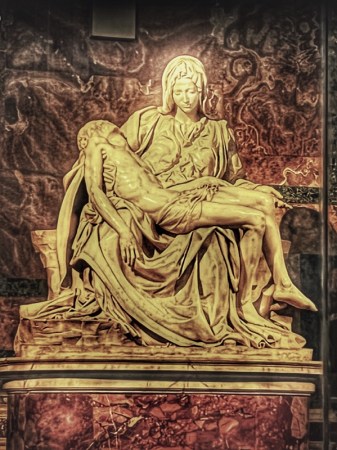
To stand before the Pieta sculpture is to be drawn into the emotion of Christ’s mother, holding the crucified body of her son, Jesus Christ. There is sadness, but something deeper – understanding of what his role was in the world and the sacrifice involved for him and for her.
We could also say that it represents the divine feminine in all her forms, giving birth to life and taking back its used-up form to be ploughed back into the ‘earth’ – nature – and become the visible stuff of life, again.
When it comes to ideas, rather than emotions, we often rely on conceptualisations to convey meaning to the viewer.
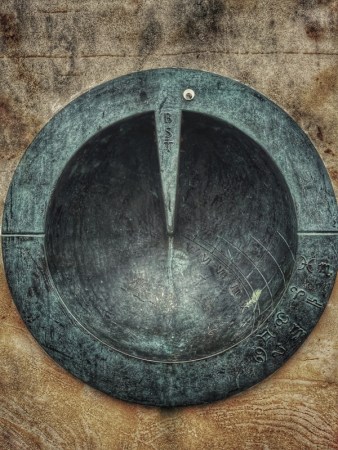
The object, above, is a good example of an powerful image with a potentially hidden meaning. What appears to be a circle is, in fact, half of a sphere. Were it to be complete, we would not be able to see its interior, so the sculptor has created it as a ‘section’, giving us a semi-physical representation so that we may, more accurately, create a deeper visualisation within our selves.
There are astrological markings on the flattened circumference, indicating that this may represent the life of a person, ‘incarnated’ into the world of matter. That world is governed by laws that seem to constrain but really are the basis of its enduring construction. The outer ring may also indicate the strong inclinations of the personality, as it develops under the rules of the world: combining external and inner influences into a life that strengthens and energises the inner being, now enshrouded in organic matter – great Nature’s own contribution to the process under way.
The horizontal ‘horizon’ line is self-describing in the sense of a navigation tool but could also be used to indicate one of the mystical ‘directions’ that are the seeming boundaries of our brain consciousness. Temples of the Mysteries are aligned along an East-West axis, as are churches and other buildings dedicated to the sacred in mankind and Nature.
There are other ‘directions’. North-South is an obvious complement to the first, but there is also Above-Below. Taken together, these give us the three dimensions of space, forming an endless sphere in which we appear to live and have our daily being.
‘God is a circle whose centre is everywhere, and circumference is nowhere…’
Meister Eckhart
Time is, subjectively, the ‘duration of consciousness’; but physics is discovering deeper and deeper relationships between all the spatial directions, which increasingly appear to be a continuum tightly bound to consciousness.
We should not be surprised at this, since the most dramatic finding of Quantum physics was that energy only resolved itself into either wave, particle or both when it was measured, i.e. observed.
The most important element of the sculpture in Figure 3 is the arrow or pointer that descends from the symbolically highest – the ‘extreme’ and apparent outer – to the centre of the whole figure. These seeming extremes should generate a strong feeling in us… The idea of something vital penetrating to the very centre of our existence – being the centre of our existence is designed to make us think about who we really are…
The human is born into the middle of this ‘world’. At birth, the physical separation from mother is mirrored in the developing consciousness, which comes to see and experience itself as separate from the world in which it awakens. The mind becomes subject, the world, object.
As Wordsworth wrote:
Our birth is but a sleep and a forgetting;
Ode: Intimations of Immortality (extract)
The Soul that rises with us, our life’s Star,
Hath had elsewhere its setting
And cometh from afar;
Not in entire forgetfulness,
And not in utter nakedness,
But trailing clouds of glory do we come
From God, who is our home:
The mystical journey has one goal: to use our temporal maturity to undo the forgetfulness of this incoming; to place within our consciousness an indigestible seed of a return whose journey may be quite different from what we envisage…
Many diagrammatic forms have been used to describe this. The Kabbalistic ‘Tree of Life’, below, maps a descent of consciousness from divine to human awareness. As part of this, the ‘world’ of the eventually conscious is also brought into ‘existence’ via the work of two vertical pillars of Force and Allowance.
The stages in this descent were famously described by Isaac Luria, a noted 16th century Kabbalist, as ‘called, created, formed and made’ – the subtitle of this post. The ten spheres of coming into being are divided into four regions of descent, corresponding to the above.


To understand why we are ‘called, created, formed and made’ we need to comprehend the idea of tsimtsum, whose literal meaning is contraction or condensation.
In Luria’s Kabbalah, God began the process of Creation by taking away, not by addition. What was taken away was the undifferentiated divine and infinite light, and the taking away affected a region that came to be the universe we know. This allowed a ‘beam’ of new creative light to be allowed back into the target dark region in a specific way: Kabbalistically a four-step process through ten manifestations that allowed the entire Creation to form its own consciousness and see the majesty of the whole from an apparently external perspective.
Consider that carefully… For the culmination of the entirety of that is the completion of the human consciousness.
Many things are said here … many more are left unsaid.
This post also forms the orientation paper for our next Silent Eye Explorations (SE-Explore) zoom meeting on Sunday 20th November 2022 at 8 pm. These virtual meetings last 90 minutes and are an informal gathering of curious people and some established mystical teachers. All are welcome. There is no charge.
For more information and the link to connect to the next meeting, send an email with the subject line ‘SE-Explore’ to:
Rivingtide@gmail.com
©Stephen Tanham 2022
Stephen Tanham is a Director of the Silent Eye, a journey through the forest of personality to the dawn of Being.
http://www.thesilenteye.co.uk and http://www.suningemini.blog
Share this:

+ #Silenti, landscapes, Photographic techniques, Photography, Silent Eye School, Travel, Travel and Photography
Orkney’s hidden jewel – the Stromness Museum
by Steve Tanham
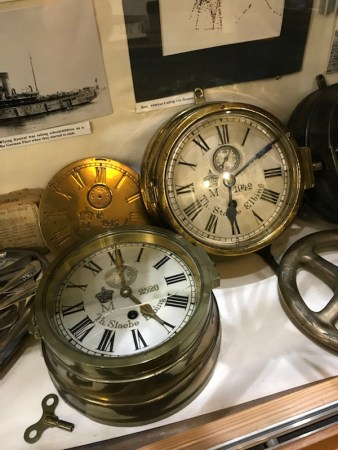
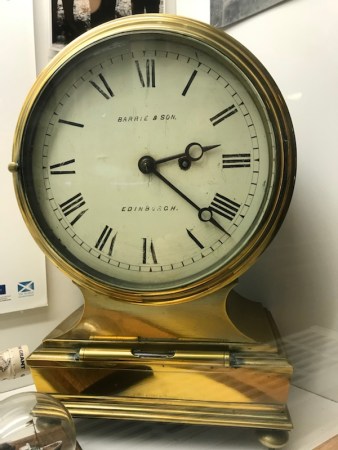
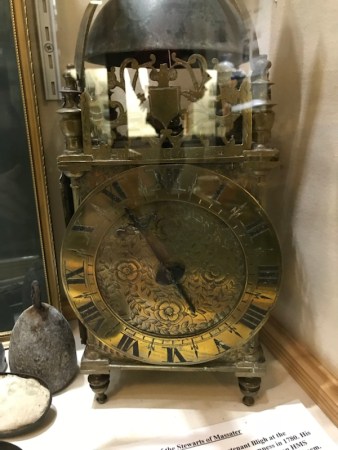
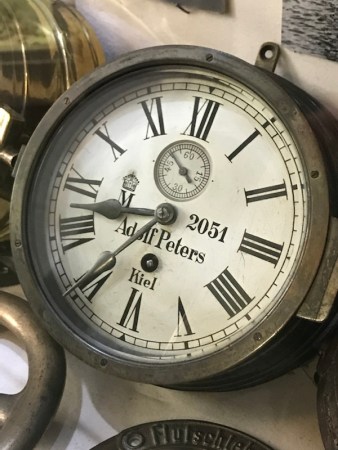
My iPad, on which I do most of my writing, these days, threw up a random picture of a marine clock the other day. I recognised it as dating to when we made our first visit to Orkney in 2018, staying in the busy port of Stromness.
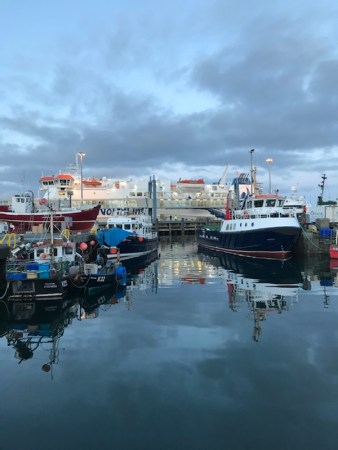
Stromness has an excellent local history museum. An entire room is concerned with the town’s links to naval history and has one of the best collections of marine clocks I’ve ever seen.
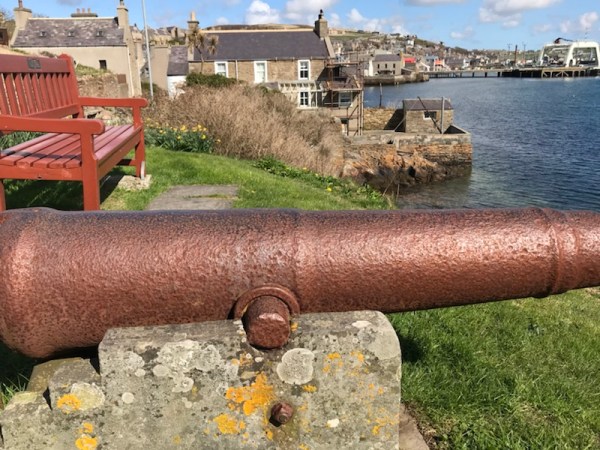
Orkney was a strategic base for our naval operations for a long time. During the Napoleonic wars (1803-1815), it was considered a weak point for French attacks and was fortified with Martello Towers – state of the art defence structures with advanced rooftop cannon that were never tested in battle…
Perhaps knowledge of their excellence was sufficient deterrent?
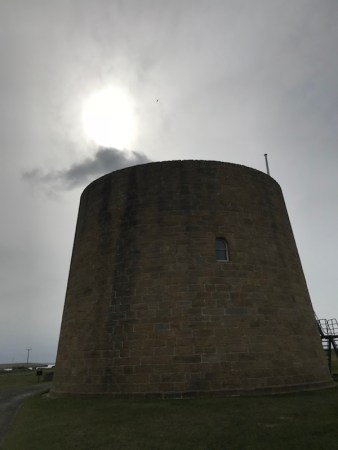
The Napoleonic Wars were a series of major global conflicts pitting the French Empire and its allies, led by Napoleon I, against a fluctuating array of European states formed into various coalitions. It produced a period of French domination over most of continental Europe, and invasion of Britain was a constant threat.
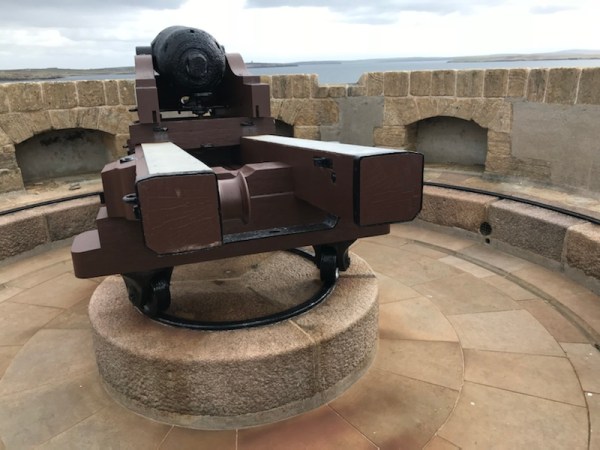
Since then, during WW1 and WW2, the huge sea-loch Scapa Flow was the heavily guarded anchorage of the British Naval Fleet.
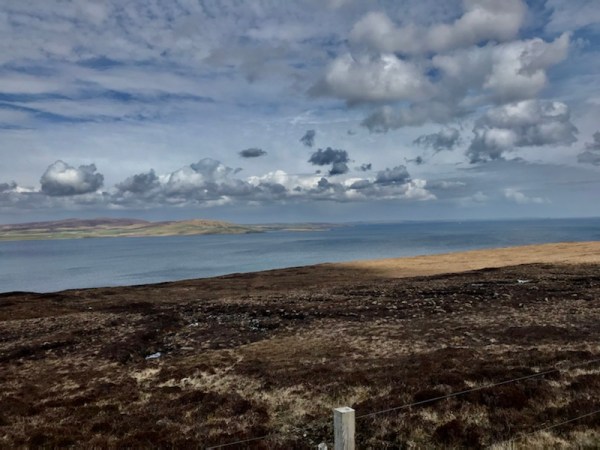
The clocks in the museum are from a variety of ships that plied the local waters. Orkney was the main staging post for Arctic Expeditions headed for tremendous hardship as they searched the summer ice for a way through to Canada – the famous North West Passage.
John Rae was one of Stromness’ most famous sons. A local hero, he was instrumental in finding the way through the ice and establishing the North West Passage as a viable route of the day.
The statue of John Rae is displayed in simplicity in the town square, opposite the port of Stromness.
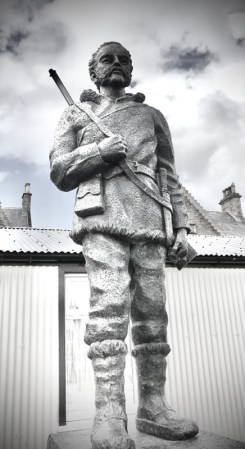
In our age of aviation, this world of arduous and life-threatening sea voyages seems very distant; yet the Stromness local history museum brings and keeps it alive, and the artefacts link us with that past.
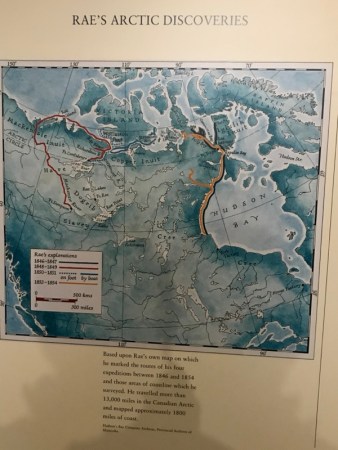
Churchill, himself, recorded that future generations could never have the perspective to understand the historical importance of Orkney to Britain, spanning hundreds of years. Perhaps he was sensing that the preeminence of the ‘Senior Service’ (Navy) would be eclipsed by the development of aviation.
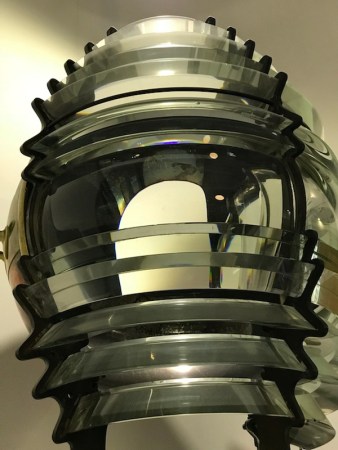
The museum’s exhibits cover many other aspects of Stromness’ maritime history, including the development of powerful lenses which enabled low-power light to be reflected for many miles out to sea to guide ships.
If you ever visit Stromness – and I would urge you to do so – be sure to spend an hour or two at the local history museum. You’ll be glad you did…
©Stephen Tanham 2022
Stephen Tanham is a Director of the Silent Eye, a journey through the forest of personality to the dawn of Being.
http://www.thesilenteye.co.uk and http://www.suningemini.blog
Share this:

+ #Silenti, Ancient Landscapes, Ancient Sacred Sites, Consciousness, English Lake District, Photographic techniques, Photography
The shifting beach…
by Steve Tanham
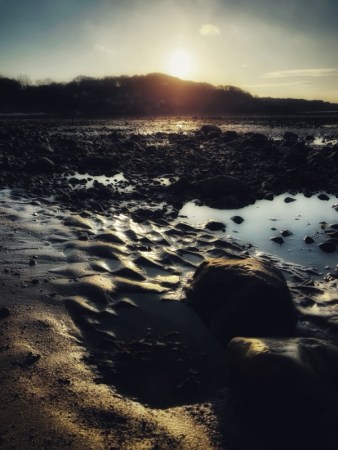
What I love about the beaches around Morecambe Bay is the way you can go back a day later and find them completely changed.
Heysham Beach, near Morecambe, is a wonderful example. In autumn, the tides get stronger, and the landscape upon which you walk – often a liminal zone between rock and sand – changes with each tide.
Which is good news for photographers, as, once more, we can crouch down on a virgin pattern of sand and rock as a new basis for the shot.
©Stephen Tanham 2022
Stephen Tanham is a Director of the Silent Eye, a journey through the forest of personality to the dawn of Being.
http://www.thesilenteye.co.uk and http://www.suningemini.blog
Share this:

+ #Silenti, Consciousness, esoteric psychology, guided mystical walks, Higher Mind, Lake District, Mystery Schools
Beyond the Winter
by Steve Tanham

It’s at this time of year, when the nights are long and the days short and getting shorter, that we turn our attention to a what could unfold in the spring – in the form of the Silent Eye’s May workshop. The idea is one thing, the success lies in giving it form and substance…and making sure that everyone there feels a creative part of it.
There is something special about the month of May… Just the sound of it is romantic. It’s the kind of month that demands we do something different; that we cast off the inward-looking considerations of the winter, and perhaps say that last goodbye to the crackling of the log-fires in the hearth.
We used to hold our first weekend of the year in March or April, depending on the date of Easter – which we had to avoid. But May offers a very different energy – and perhaps a degree of warmth and colour lacking in the months before it.
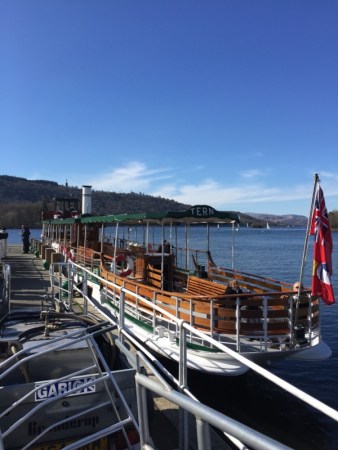
This past year, we celebrated the May 2022 weekend – and the relative freedom from Covid – with ‘The Journey of the Hero’, using the north Lakes town of Keswick as our base. Our adventures took us along the ridges of hills, down a long river walk in the Eden Valley, and deeply into ourselves within the Castlerigg Stone Circle.
This coming May, we have chosen a different theme – Water, and its associations with our emotional natures. Our name for the weekend of 19-21 May, 2023 is ‘Water, Circle, Cross – a rite of Spring’
This time we are basing our journeys around the massive body of water that is Lake Windermere; England’s largest lake, as we set off on a spiritual journey across its vastness, along the paths over its neighbouring fells, and a modest degree of merriment in the twin towns of Bowness and Ambleside.
‘Body of Water’ is our theme…
We will explore our spiritual relationship with water, the alchemical element that is most associated with the emotions, and ask whether we can use its healing power. At a time of great tension on the planet, we will carry out a series of guided sailings and walks that attune us to the vast power of harmonisation we all carry – in the water of our cells.
The inner journey, from self to Self, is one of personal discovery. No-one can gift that journey, but you can gift it to yourself.
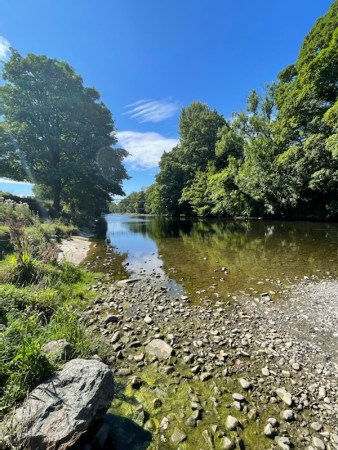
The group will use a method of ‘characterisation’ to move from one state and landscape to another. Each participant will be asked to form a fictional character in their minds and hearts; a persona of great power and insight. At various stages of land and lake, we will enact a developing rite that explores and unites this body of ‘players’ into a working group…all leading to the powerful and healing finale on the Sunday morning.
Our personal rite will take the form of a Solarace – a set of movements and gestures that take place entirely within the space of the body. This mysterious and ancient technique has calming and focussing properties that will serve us well in our individual and collective quest.
No experience is necessary. We will all learn, together, by doing…
The central meeting point will be the lovely lakeside town of Bowness. Rail connections are available to the nearby town of Windermere, two miles up the hill from the Lake.
The administration cost will be £75.00, but additional monies should be set aside for a ferry pass to cover the weekend. We will notify the 2023 cost of these tickets nearer the time.
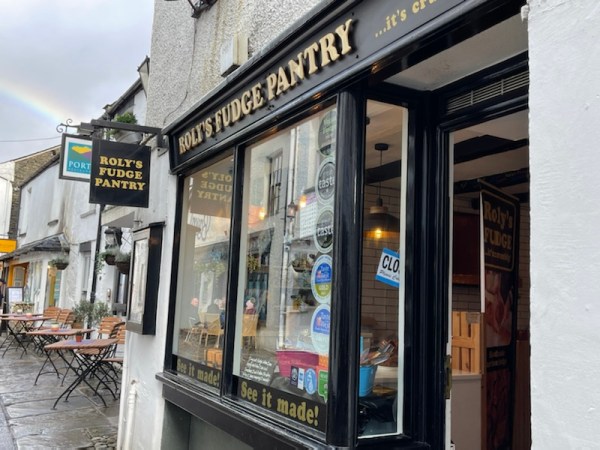
Those joining us are responsible for their own accommodation costs, meals, and transportation.
We will meet at the ferry point in Bowness on the Friday lunchtime. Attendees may join later if needed. Friday evening will see us having a shared dinner in Bowness.
The workshop will run through to Sunday lunch, allowing early departure for return journey.
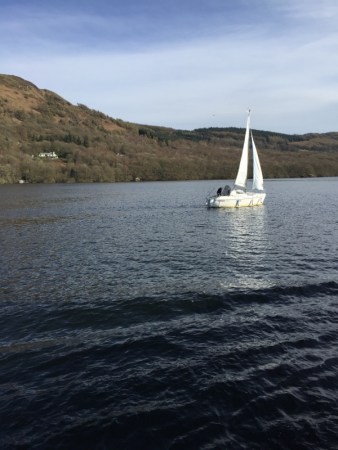
If you’ve never been on one of our weekends, you will be doubly welcome. Those who have joined us, before, will testify to the quality, fun and happy intensity of these Silent Eye events.
Contact us at:
Rivingtide@gmail.com to book your place.
©Stephen Tanham 2022
Stephen Tanham is a Director of the Silent Eye, a journey through the forest of personality to the dawn of Being.
http://www.thesilenteye.co.uk and http://www.suningemini.blog
Share this:

Michael perfectly sums up his remembrance journey to the home of his forbears…

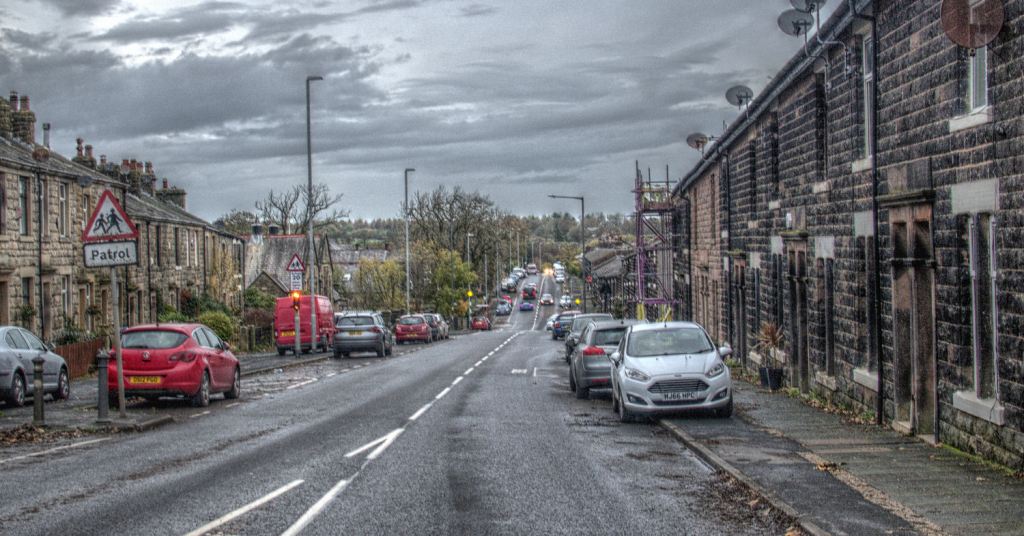
The gate to the war memorial at Abbey Village is locked. I usually visit in the week leading up to the armistice, to leave one of those little wooden crosses for my great uncle. He died in Mesopotamia in 1918, and is named on the column. He was one of the many sons of the village who did not come home.
So, what to do? Well, after a moment of indecision, I toss the little cross, as gently as I can, but still rather indecorously, through the bars, where it falls skew-whiff among the evergreens in the planter at the foot of the column. I offer a wordless apology. A token charged such as this should be placed mindfully, not tossed as a last resort, but I didn’t know what else to do. I had not wanted to walk away with it still in my pocket, for then…
View original post 924 more words
Share this:

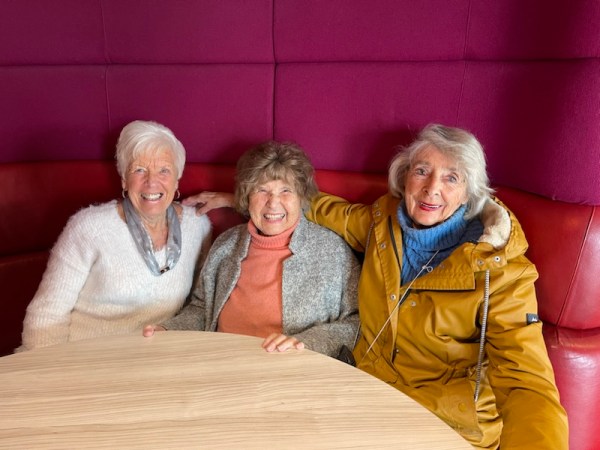
There were four of them: best friends who grew up in the smoky old streets of Bolton, Lancashire, long before the leviathan called ‘Greater Manchester’ gobbled up anything that looked remotely prosperous.
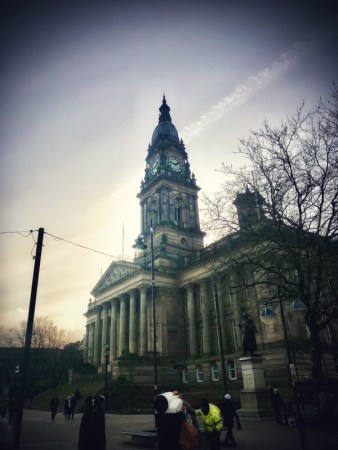
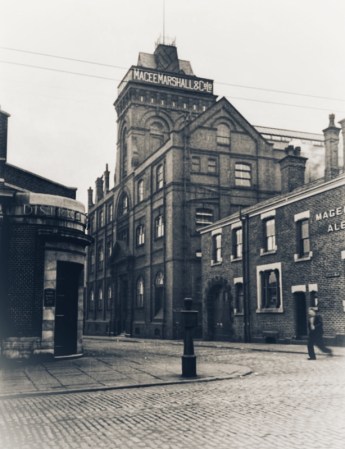
Bolton’s not prospering, now. It’s yet another ‘depressed former mill town’, though that blanket description completely masks the major contributions that Bolton – and many of the large towns near it – made to the development of the Industrial Revolution and the century that followed.
My life began in those dark, cobbled streets. So many did.. They were filled with a great number of good people… and a few bad ones. Most had hard lives and warm hearts.
I had some real aunties and uncles on my father’s side, but they were more remote and austere than the group of people who were best friends with mum and dad. These became our day-to-day ‘relatives’. Summer picnics, Christmas parties and Easter trips to the coast were our happy lives together…not to mention weekly Sunday trips to the baths – the name for municipal swimming pools in those days.
“Aunties and uncles’ had children, of course: my brother and I, Doreen’s son, Louise’s son. And, Paul, the son of Mavis, who tragically died in his teens. We didn’t have a ‘gang’ name, just cousins – even though we weren’t… In truth, we were stronger than most cousins by blood.
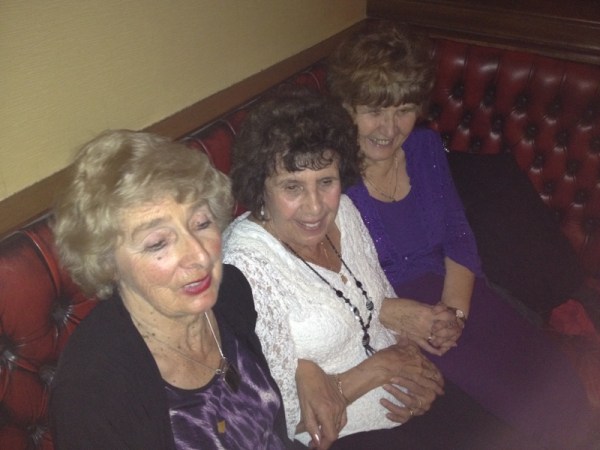
There are three of the ladies left alive, now – see top photo. Mum – right, Doreen – centre and Mavis, left. They took the name ‘golden girls’ for themselves about twenty years ago: after the American TV series. There were four, but Louise passed away this year.
Doreen and mum speak via her mobile phone every day. They take turns to call each other – when she can find the phone, that is; and assuming it’s still charged. Remarkably, this is one aspect that has survived the ravages of her dementia.
Keeping in touch is so very important for our golden girls.
Once in a while, we summon up the courage to get them together. I say courage because the potential for things to go wrong is vast. Mum’s dementia and Doreen’s dogged refusal to compromise are a fearsome combination. Often the whole event would make a hilarious sitcom episode. Mavis is a beacon of reasonableness and sanity, and helps the two of us ‘youngsters’ keep the events on the tracks.
Doreen’s son, Mike, and I usually arrange these things. On Sunday he had offered to bring the two Bolton-based ladies up to Morecambe where mum is in a retirement home – closes enough for me to be there in about 30 mins. But we didn’t learn about this until the middle of our trip to the Scottish Highlands. This meant that our long return car journey would be followed, not by a day of recovery, but by a ‘golden girls outing’…
No matter. We would make it work.
The original plan was to use the Royal Hotel in Heysham Village. It’s dog-friendly, so we could take Tess, our collie, along, too. But they were fully booked. Tables for seven are not always easy to come by at short notice.
Long distance from Scotland, we suggested the Morecambe Hotel, in the old central region of the Morecambe’s original town – Poulton. They had one table left and that would seat six – seven at a push. We’re used to compromise and knew there might well be a reduction in numbers by the time we got there.
We booked it…from somewhere north of Inverness.
Everyone was happy until Mike showed his mother the menu – online. She said there was insufficient veggie choice. We countered that there was a good fish option, but he had tried and it wasn’t enought to placate Doreen.
Knowing that we were still returning from Scotland, Mike said he’d arranged an alternative: the Midland Hotel.
We cancelled the Morecambe Hotel…from somewhere north of Perth.
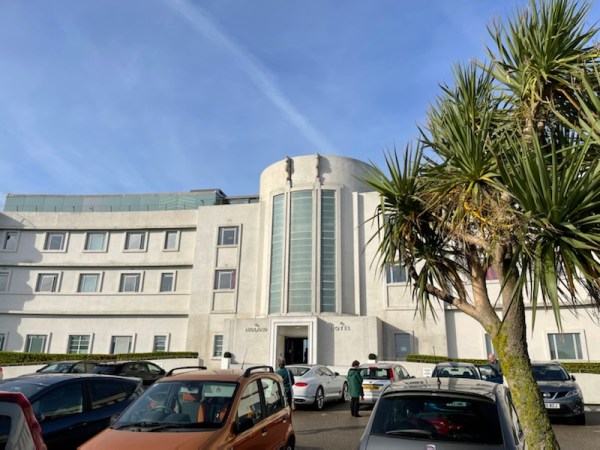
The Midland is a reliable friend, but, outside of the formal restaurant, which was too expensive for our purposes, there were only a few large tables. It’s dog-friendly and we often use it for coffee stops, when we’re taking Tess for a beach walk. We hoped that Mike had secured one of the larger tables. We didn’t voice this, but our view was that the veggie choice was no better than the rejected Morecambe Hotel.
We arrived back home late that night. Tired and wanting nothing more than a gentle day to follow, but knowing that wasn’t going to be the case.
I was early collecting mum on the day of the ‘golden girls’ meal. The journey from the retirement home to the Midland was one of only a few minutes, so we arrived with about twenty minutes to spare… I had a hunch that the extra time would be useful.
Getting mum a glass of Apple juice from the bar, I went to reception to check that we did actually have a booking. They had no record of it… but assured us that one of the large booths in the secondary Rotunda bar would soon be coming free.
I returned to mum to find she had spilled half the fresh glass of apple juice down her coat. Some of the bar staff helped with additional napkins, but she was sticky…
Just then, in the way of such things, Doreen’s party arrived in the bar; protesting that their booking had been lost. I turned around to see one of the larger tables being cleared and immediately walked over to claim it, refusing to budge until the rest of our party, including a sticky mother, crossed the space to join me.
Was it a success? Yes, in the end it was. And what did the veggie golden girls choose from the menu? Why, fish, of course…
©Stephen Tanham 2022
Stephen Tanham is a Director of the Silent Eye, a journey through the forest of personality to the dawn of Being.
http://www.thesilenteye.co.uk and http://www.suningemini.blog
Share this:

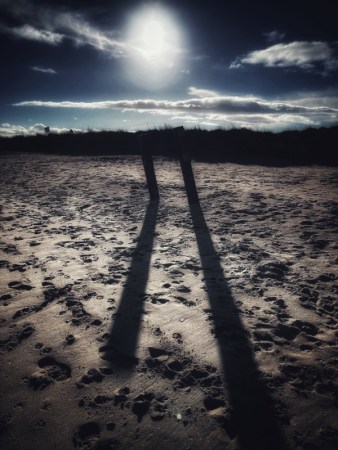
I just love it when you’re looking to capture something artistic, as opposed to just landscape, and nature conspires to assist…
There’s a long beach walk that links Rosemarkie, on the Black Isle, north of Inverness, with the lighthouse at Chanonry Point.
Halfway along, the sun became so bright that its autumnal ‘long flat’ rays began to create a glare in my side vision. For a second, I saw a structure, not knowing what it was in the visual intensity.
But I did point the camera at it…
Moments later, I turned away from the glare to examine what my eyes had glimpsed and the camera had snapped.
And went back to shoot it again, with the helpful sun right over the simple seat. The result is above.
The result is above; a natural ‘tau’ figure – elongated on the sand. Sun, sand and deep blue sky in perfect harmony … for which, a humble thank you!
©Stephen Tanham 2022
Stephen Tanham is a Director of the Silent Eye, a journey through the forest of personality to the dawn of Being.
http://www.thesilenteye.co.uk and http://www.suningemini.blog
Share this:

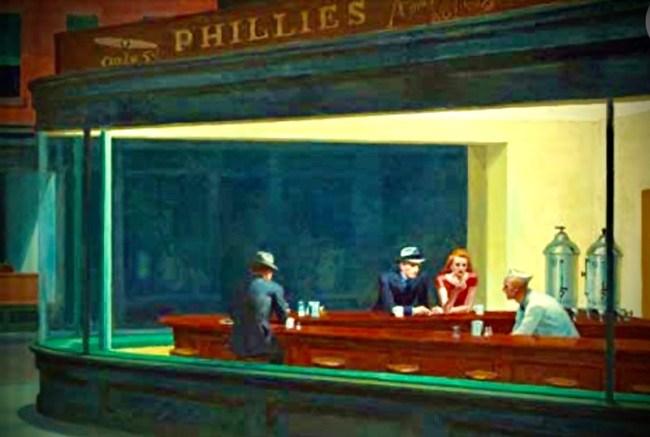
One of my favourite artists is the American Edward Hopper. His ‘Nighthawks’ is a study in late-night loneliness, set in a bar/diner whose light is a stark and emotional contrast to the isolating darkness outside.
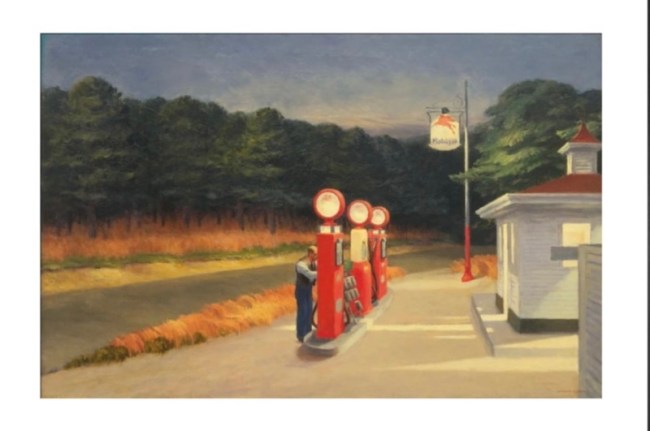
He also painted isolated and often abandoned scenes, such as outdated petrol (gas) stations; again with a very ‘still’ emotional fascination.
The figures within the bar still have barriers: the space between them. But the hopeful fragility of that is there to be overpowered by the need to, collectively, respond to the dark with… friendship.
That’s my take on it, anyway!
Hopper and his wife were both artists, but they didn’t start off that way. Inspired by her, he took it up and eventually outshone the lady, who never painted again.
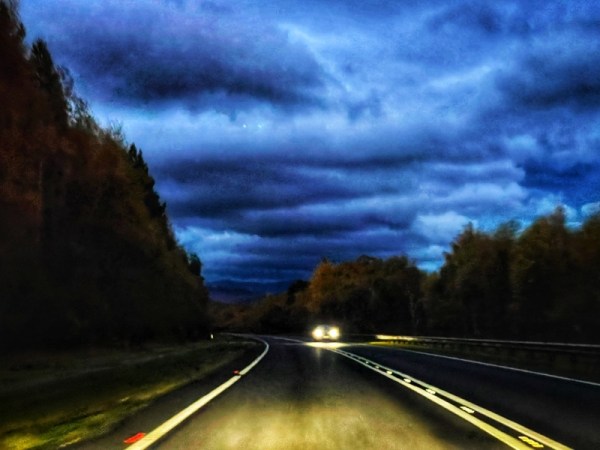
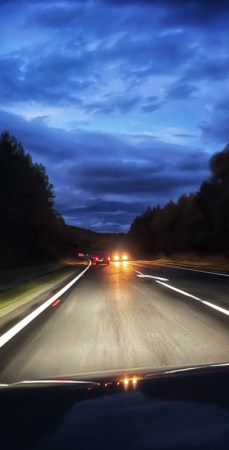
Last year, in the passenger seat on a night drive in Scotland, I noticed that one of the shots I had taken through the windscreen reminded me of Hopper’s work – which is not to say I am comparing our results.
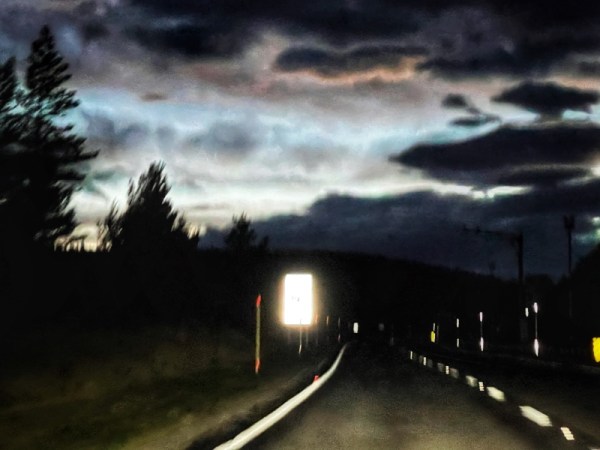
Since then, I’ve been trying to recapture the look…
We have just finished a long drive to the Scottish Highlands for a short break to get Tess away from the infernal Bonfire Night firework bangs. I took the first leg from Kendal; Bernie drove from Perth, allowing me time to try out my experiment on the darkest part of the journey as we approached Inverness on the long and winding A9.
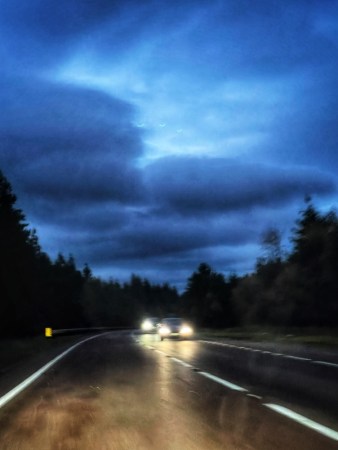
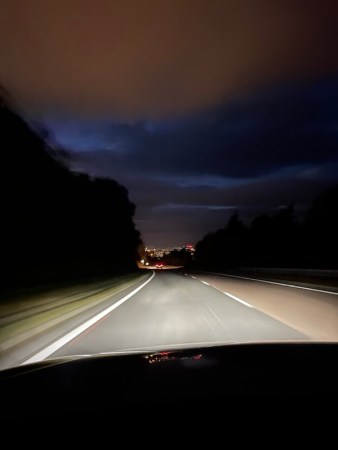
©Stephen Tanham 2022
Stephen Tanham is a Director of the Silent Eye, a journey through the forest of personality to the dawn of Being.
http://www.thesilenteye.co.uk and http://www.suningemini.blog


 Sun in Gemini
You must be logged in to post a comment.