

See sources and links, below)
Over the past three years, I’ve been closely following the ever-accelerating development of robots. In an age where the use of military drones for ‘state-backed’ assassinations is not unusual, and artificial intelligence is pervasively present in household devices, it pays to be aware of the various ways in which technology and the humanities are interacting.
It is also instructive to see how darkly we have diverged from the visions of our future seen in earlier sci-fi.
It was only last year that I became aware that the Guggenheim Museum in New York had, since 2016, staged a ‘robotic installation’ called ‘Can’t Help Myself’. This speaks to the heart of this malaise. It is, to my eyes, a deeply moving spectacle, and one that refers, quite subtly, to our sleepwalking into a new age.
I’ve been lucky enough to visit the New York Guggenheim, though that was many years ago. I would have loved to visited this exhibit, which is now closed. As it is, having seen a reference to it, I’ve gathered this information from the internet and the Guggenheim’s website.
The exhibit was surrounded by a dedicated glass corridor, enabling visitors to position themselves to see the action. The ‘action’ was an industrial robot set at the centre of what seems to be a violent crime scene. In fact, this is a robot modified so that its one job is to use a massive sweeper – positioned on the end of a flexible and extending arm – to gather back into itself all the blood-coloured liquid that has spilled across the floor. At the end of a successful exercise, the robot performs one of a number of dances…
The visceral liquid constantly leaks from the machine, as though from a wound. The smooth and precise movements of the arm and sweeper gather the liquid back into ‘the body’ of the device, but a thin film is always left behind – and more accumulates, by splashing, beyond the reach of the arm.
The ‘spilled’ dark red fluid is necessary for the machine to function. The robot is programmed to trigger the use of its sweeper when it sees the dark fluid has spilled beyond a certain radius, but the arm can only reach so far…
There were reports that when a certain level of fluid-loss was reached, the body of the robot literally dies… The audience looked on in silence as this miracle of modern technology came to the end of its life, unable to help itself.
Artists aren’t paid to be political… they’re paid to be revolutionary.
Personally – and these are my subjective views, only – I consider this was a ground-breaking statement aimed at the heart of our global society; a statement about our own, massive exposure to the effects of unchecked technology in the face of a moral and political edifice that has run out of the will and the means to redress it. That this trend has continued and accelerated only makes the greater case for such art to speak out. It’s one of the few voices that will do so…
With little debate, we have entered the age of the robots. Completely lacking in any kind of global governing agreements, we are walking, blind, into an era where the value of the individual human is defined by his or her economic contribution, alone, leaving behind the older societal norm that human life has intrinsic value.
In the near future, wars will be fought by robots whose job is the killing of populations. If you don’t have the best military robots, you won’t survive long as an important country; therefore massive spending on military robots will be assured We could say that this mirrors the ‘cold war’ and the nuclear stalemate, where the horror of mutually assured destruction (MAD) and the cost of deployment became the only buffers to further madness, but there’s an important difference.
Military robots have given the technologists an entirely new playing field; that of the ‘battlefield-limited aggressive automaton’, programmed to recognise and kill the human. ‘Bad humans’ will presumably be differentiated from ‘good humans’ by secret response codes built into their battle fatigues, or more likely, wired into their bodies. This won’t apply to you and me, of course, only soldiers overseeing the war. We will be at work, paying for it.
This should scare us. Reassurances from governments would be meaningful if they had any track-record in other, related fields, such as how many children live below the official poverty line in each country.
All of this is a far cry from Isaac Asimov’s laws of robotics, formulated in the 1950s and written about in his famous Sci-Fi book ‘I Robot’:
First Law- A robot may not injure a human being or, through inaction, allow a human being to come to harm.
Second Law – A robot must obey the orders given it by human beings except where such orders would conflict with the First Law.
Third Law – A robot must protect its own existence, as long as such protection does not conflict with the First or Second Law
Sun Yuan and Peng Yu, the creators of the ‘Can’t Help Myself’ robotic installation say of their work:
“More and more mechanical devices have entered our lives and even become part of our bodies. It is natural that they enter the art world.”
Sun Yuan goes on to say:
“This installation examined our increasingly automated global reality, one in which territories are controlled mechanically and the relationship between people and technology is rapidly changing. During the exhibition, viewers were invited to gather outside the transparent enclosure and watch the machine inside, setting up a dialectic that reflects a moral question, “Who is more vulnerable: the human who built the machine or the machine who is controlled by a human?”
Resources:
You can see a YouTube video of the ‘Can’t Help Myself’ robot in action by clicking here.
The opening photograph is taken from, and copyright of, the Guggenheim’s website, click here.
The opinions expressed in this post are those of the author, alone.
©Stephen Tanham 2022
Stephen Tanham is a Director of the Silent Eye, a journey through the forest of personality to the dawn of Being.
http://www.thesilenteye.co.uk and http://www.suningemini.blog
Share this:


It’s been a challenging Christmas and New Year…
Two days before Christmas, my wife tested positive for Covid with a home lateral flow test. I immediately took the same type of test and the result was negative.
Bernie had some mild symptoms, including a strange headache and a dry cough. I had none, but I was cautious about being asymptomatic, hence the need for a more accurate ‘second opinion’.
We immediately booked a drive-in PCR test in nearby Lancaster. Within the hour, we were tested and returned home to await the results, hopefully the next day.
Shortly after we arrived back, my mobile rang. It was the care home where my mother is a resident in Morecambe. As part of their routine testing, she had shown up positive for Covid. I phone her every day, but we had not been physically together for over a week.
Bernie and I made some tea and digested the news and its implications…
We were due to visit mum on Christmas morning, taking her some presents and wearing our reindeer antlers to bring some cheer. With a confirmed Covid result, she would now be confined to her room for at least the next week, and possibly longer. She would not be able to take part in the home’s Christmas Day festivities. Our only link with her would be the mobile phone which, between us and aided by the force of habit, we managed to keep alive for her… and her ability to use it and its pre-programmed numbers of the four most important people in her life.
We had one final method of contact, an accidental benefit of her room’s location, used often during the two lockdowns she’s endured since March 2021: we could go and stand outside her room’s window on the ground floor…talking to her through the glass by using the mobile phones. It doesn’t sound a lot, but it’s something; and that something is a life-saver.
The one good thing was that we had already had our Christmas meal with the extended family. We had taken mum out of the home – with their blessing – for both the family meal and (at their request) to escort her to the home’s Christmas meal, held at a nearby hotel on Morecambe’s seafront. Both were lovely events. Serendipity had smiled on that, at least.
But now we had Bernie’s testing to deal with… The lateral flow tests are not completely reliable, so we had to wait for the end of the following day to get the PCR results back.
It came back, just before midnight, as positive, confirming that she had Covid – omicron variant; the one that’s sweeping the country, infecting at least 1 in 25 of us. Thankfully, its effects are reasonably mild – in the healthy body at least. It can be a different story in the elderly.
We could do nothing about mum’s personal lockdown; nor my wife’s positive diagnosis – which meant she could not leave the house for the next week, and only then if she got a negative lateral flow test (LFT) two days in a row.
I rolled up my sleeves, went to bed early and prepared to play nurse, cook, dog-walker and general juggler. But, sharing the same life and bed, I was unlikely to be Covid-free for long.
My wife’s sister is widowed. She normally joins us for two or three days over the Christmas period. We phoned her with the bad news. She was instantly adopted by one of her close friends and invited to spend the whole of Christmas day with them. One problem solved…
As long as Bernie’s infection followed the normal pattern, her sister would be able to join us for New Year, or shortly after.
We cooked as much food as we could store to be ready for the week ahead, Bernie remained well enough to stay out of bed within the house. I made sure I had my small armoury of tools to help fight off the infection, as I was the proverbial ‘last man standing!’. These ‘tools’ are my own and include regular nasal salt-water flushes and frequent gargling with an alcohol-based mouthwash, like Listerine.
A friendly medic assures me the alcohol kills any virus in your throat – stone dead, but needs refreshing, often. The former was a wonderful gift from a friend of my mother in my teens (a yoga teacher) who spotted I had troublesome sinuses. If anyone wants the recipe, I’ll gladly supply it. It’s slightly yucky, but very effective at flushing out sinus tissues. It’s been a lifelong friend ever since. The salt water does not kill viruses but the laws of physics (rather than molecular biology) suggest that it will flush most hostile things out of your nasal passages. I have no idea what the experts would say. It seems to work for me.
We phoned mum on Christmas day, to try to bring her into the family warmth. Her symptoms were still mild and she was okay with things. “At least,” she said, “we had our celebrations early.”
Over a week later, I’m still showing no signs of Covid, but we have learned a thing or two about Covid testing. Chief of these is that you can have Covid (Omicron) for many days without it showing up on a Lateral Flow Test (LFT). This shocking fact was confirmed by a biologist friend, who, in retrospect, worked out that it was only on the fifth day of catching it that the second line showed up on her test.
Effectively, this means that the LFT is practically useless as an Omicron early warning tool. A massive number of responsible people who regularly test themselves are seeing false negative results until the ‘viral load’ builds up to a level detectable by these pre-Omicron devices. By that time, the infection will have continued to expand at its exponential rate.
If we could work this out, Governments have known this for some time. Yet, there appears to be no movement to produce a more accurate LFT. The LFT results are the only way you can get to see an elderly person in a care home.
Bernie is now through her Covid and feeling well, again. My mother is not, and her cough is getting worse. We are all praying that, at 92 years old, she has the strength to survive.
I’m still virus-free. My eldest son, a doctor in Australia, says I may have had it earlier and not noticed the symptoms.
Me, I have faith in total hand hygiene, masks to protect others, staying away from crowds… lots of fresh air and my little tool kit.
©Stephen Tanham 2022
Stephen Tanham is a Director of the Silent Eye, a journey through the forest of personality to the dawn of Being.
http://www.thesilenteye.co.uk and http://www.suningemini.blog
Share this:

+ #Poetry, #Silenti, Lake District, landscapes, Photographic techniques, Photography, Seasons of the year, Silent Eye School
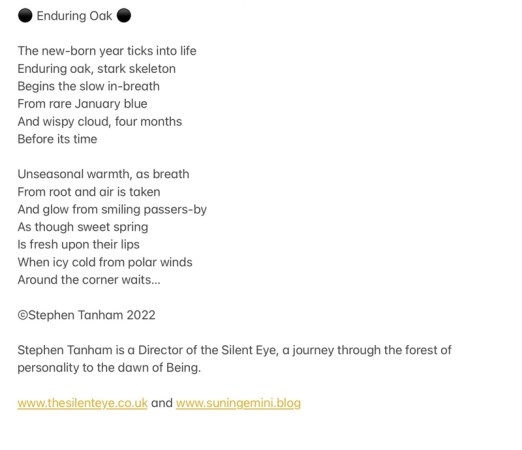
Enduring Oak
by Steve Tanham

Share this:


A very Merry Christmas, and…
May 2022 bring us a kinder world.
©Stephen Tanham 2021
Stephen Tanham is a Director of the Silent Eye, a journey through the forest of personality to the dawn of Being.
http://www.thesilenteye.co.uk and http://www.suningemini.blog
Share this:

+ #Silenti, Christianity and modern mysticism, Consciousness, Esoteric Meaning of Myth, Magic, meditation, Mystery Schools, Silent Eye School
The nothing of tasted darkness
by Steve Tanham

“It’s a good time to meet nothing at the darkness cafe,” she said. It was many years ago and I had no idea what she was talking about… It was nearly Christmas and we were working on some of the initial Silent Eye lessons.
Our topic of conversation was the power of the winter solstice to invoke new feelings, new experiences… and new ways of looking at things. As we discussed at last Sunday’s Silent Eye Explorations Zoom talk (open to everyone, see References below), and written up, separately, by Stuart France, the longer days do not begin immediately after the day of the solstice, but rather three days later. For those three days, due to some complex solar system mathematics, the length of the day is suspended, frozen at its value on the 21st December.
There is a mystical Christmas tradition that we should use these three days to contemplate first the birth of Jesus in the manger; secondly, the visit of the shepherds; and finally, on the third day, the visit of the Magi – ancient magicians of great wisdom. Each imparts ‘layers’ of temporal and spiritual capability to the infant Christ at the start of its mission of love in the world.
We need not believe in these as historical or even actual events. It is sufficient to consider them as potent symbols. Ideally, we should meditate on them during the darkness prior to the dawn – not too difficult at this dark time of year. When the dawn breaks, we should open ourselves to the inspiration they have generated – without trying to think what that might be. An active intellect is the opponent of deeper contact with our inner realms; an active and freed imagination is its friend.
But my lady friend of the opening paragraph was intent on adding something to this; something involving the technique of ‘approaching nothing’.
We were discussing the idea of hooded robes, something made sinister by cheap horror films of the 60s and 70s. The origin of such robes was in ancient religious orders within monasteries, where monks signalled their desire for silence by ‘retreating’ beneath the hood so they could enter their religious contemplation. There never was anything sinister about these garments, but there is something spiritually effective about the use of a hood.
The period around the winter solstice is already one of stillness. We can augment this by an act of purposeful meditation that amplifies this stillness in the form of silence and a degree of restful darkness. To do this we need our own garment with a hood.

I’ve had the above dressing gown for years. It’s faded and familiar and is a great friend on a cold winter’s morning. I also use it for certain meditations, where I want to ‘withdraw’ from the immediate world of the day. It doesn’t work in the summer – it’s too hot – but in December, it’s perfect!
So, what do we do with this conjunction of garment and ideas?
By the time this publishes there will be three days remaining to Christmas, but the technique, here, doesn’t have to finish on the 25th. If possible, find a quiet place in your home and place there a comfortable but upright chair.
Just before you go to bed, return to the chair, calm your thoughts, and spend a few minutes thinking about the nativity images described earlier. On day one, therefore, we will fall asleep with the warm idea of the birth of a ‘saviour’ – a saviour of our lives, born into humble darkness. Once the image – and feeling – is clear, let it go, then go to bed, and drift off into a peaceful sleep. Don’t set an alarm but see if you can wake just before the time of the dawn.
On waking, return to the meditation chair wearing the hooded garment. Sit quietly and calm yourself. When this takes on an inner ‘glow’, pull the hood over your head and feel the warmth and protection of its presence covering this – the seat of your consciousness.
With your hood raised, think of nothing… This is, of course, a misnomer. We can’t remove the object of thought, but we can reduce the content to something different. In this mystical exercise, that something is the idea of nothing. In the beginning, this is a paradox… until we find there is something there beyond ordinary experience. Further work on this will reveal a deeply personal connection to it.
I can’t promise this will change your life…but it will change your Christmas.
Image: Author’s photograph and studio effects; from an original Christmas decoration belonging to Barbara Walsh.
References: The Silent Eye Facebook group ‘Silent Eye Explorations’ is open to anyone with a genuine interest in things mystical. Apply to join in within Facebook.
Stuart France blogs here and on France and Vincent)
©Stephen Tanham 2021
Stephen Tanham is a Director of the Silent Eye, a journey through the forest of personality to the dawn of Being.
http://www.thesilenteye.co.uk and http://www.suningemini.blog
Share this:

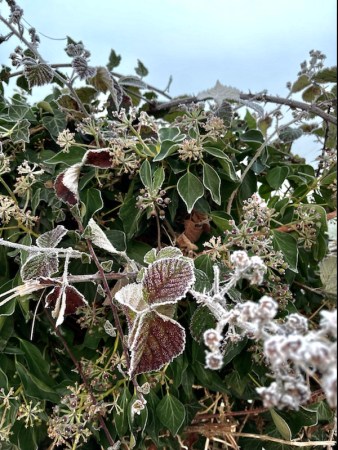
This will be my penultimate post of 2021. After Thursday’s blog, I will be taking a break till the new year.
Every December, I try to capture a set of images that would make good Christmas cards. I used to have a colour ‘photograph’ printer and would send some of these to family members. But the device was old and had begun behaving erratically. For such a small level of use, it wasn’t worth replacing. But the photos do find a good home in blog posts…
Here then are my pick of December 2021’s photographs, sent with love and thanks to those whose companionship and support has become so special, despite us only meeting here, in ‘cyberland’.
In these harsh times of Covid, this ‘virtual’ – yet very real – world has become precious and provided a continuation of communication and creativity that would otherwise have been aching void.
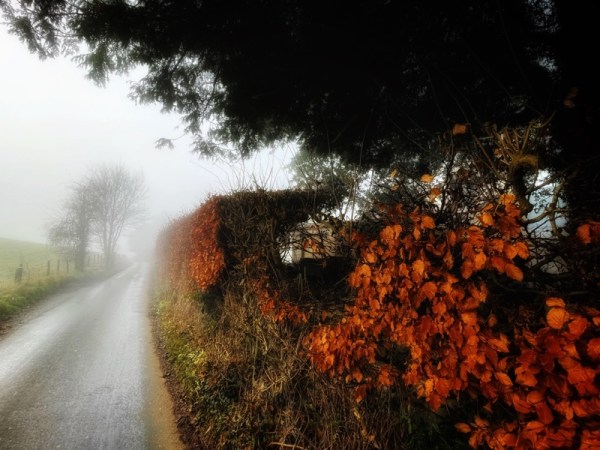
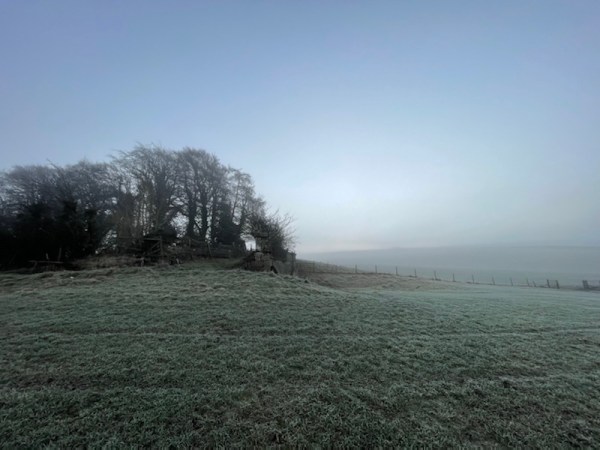
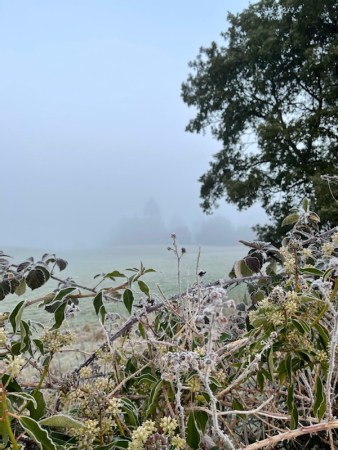
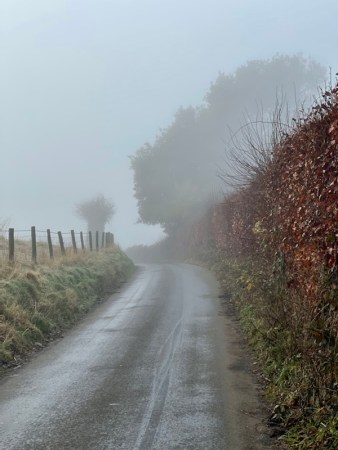
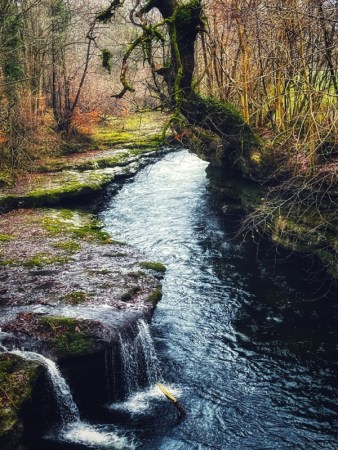
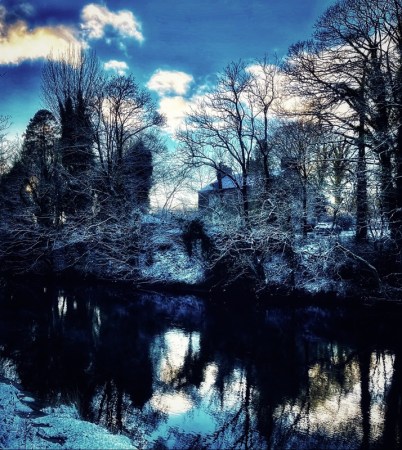
And there we have it… Happy Christmas! Thank you for being ‘out there’ and here’s to more blogging companionship in 2022.
©Stephen Tanham 2021
Stephen Tanham is a Director of the Silent Eye, a journey through the forest of personality to the dawn of Being.
http://www.thesilenteye.co.uk and http://www.suningemini.blog
Share this:

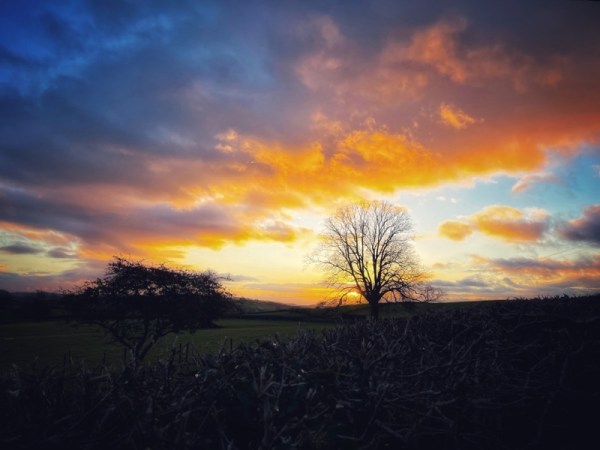
When we think of December, images of cloudy skies and short days come to mind.
There are blazes of intense colours, but they are brief and often forgotten in the general grey of winter.
All the more reason to highlight and celebrate them when you can capture their glory…
©Stephen Tanham 2021
Stephen Tanham is a Director of the Silent Eye, a journey through the forest of personality to the dawn of Being.
http://www.thesilenteye.co.uk and http://www.suningemini.blog
Share this:


It sounds odd, doesn’t it? See what you’re seeing…
But we don’t. We do see, but we don’t see what we’re seeing.
I’d better explain my terms, here, before it becomes an exercise in Zen paradox – which I want to avoid. There are not only two, but three phases in our act of seeing. The first is the actual biological receiving of the light waves/particles by our eye’s receptors. The second is the rapid conversion into ‘object of interest’ by our brains – based entirely on what we have seen before.
The third is the intervention of our own consciousness to examine what we are looking at; and it’s that last one that make the difference when we are trying live more ‘mindful’ lives.
Habit makes us see superficially. The brain is programmed to cut down the volume, so, essentially, we see what we’ve always seen, and in particular what we saw the last time we were in ‘this situation’. This situation may be an event, such as a confrontation or it may simply be a something seen along a footpath or road,
Nothing illustrates this better than the process of writing a blog post. You start with an idea, then maybe create an outline of what you want to say – particularly how you want to end. You then have to shift mindset from that high-level exercise to one of beginning the detail, usually with a line that will generate enough interest to carry the reader through the post. The length of the blog is critical; people lead busy lives and you can help those who support you by being succinct.
You use this stage to flesh out the post, ensuring that you include all the notes you made before beginning to write the draft.
Then a different phase begins: you begin to turn the piece into a ‘whole’ by reading it back as a single entity, noticing that the flow between certain paragraphs feels good or not so good – usually because the latter feels ‘forced’. You may be able to modify this, or may have to delete the whole paragraph… sometimes because you’ve spotted that a neighbouring one can be expanded in an economic way to include that key idea.
And so on… Until you reach the finished post and can press ‘Schedule’.
But many wise bloggers have noticed that another review, some time later – or possibly the following morning, just before publication time – can throw up a whole field of errors you must have read twenty or more times… but not seen.
That last act of checking with a different head on removes us from the initial process of ‘constructing and seeing’ together. It forces us to focus on an entirely different aspect of our written piece: its structure rather than its content…or, to use a metaphysical concept, its form rather than its force.
If you have a trade or hobby in which ‘critical seeing’ is essential, then you are likely to have developed the skill of deconstructing the image of what’s in front of you. Photographers have to do this all the time. To use our terms above, their minds have been trained, usually over many years, to see good force; knowing that it will take accumulated skill to employ the techniques of composition and image finishing to deliver that forceful form to the viewer of the image. The force gives it life; the form lets it endure.
Our minds work in similar ways, and vision is the dominant component of the input to consciousness. We can approach the mindful – the spiritual – by a simple act of deconstructing the act of seeing.
When we encounter a natural scene that affects us, emotionally, we should stop the normal process of intellectual perception by refusing to let the mind think. Thinking contains all the value judgements: the likes and dislikes that distort what we see and shroud it (an appropriate word!) in our history. We don’t want the accumulated history of seeing similar objects, we want to see the now, expressed in the beauty of nature.
Having stopped the constant voice of habitual thought )and this is not trivial, but the struggle, itself, is so instructive) we then sense a different kind of seeing, one that usually contains a degree of calm emotion. If the emotion begins to contain value judgements, such as like or dislike, then we should gently nudge it back to simply seeing and not reacting. We are aiming to get a sense of presence, with a calm and sweet quality to it. You will know it when it happens… and never want to lose it, again.
©Stephen Tanham 2021
Stephen Tanham is a Director of the Silent Eye, a journey through the forest of personality to the dawn of Being.
http://www.thesilenteye.co.uk and http://www.suningemini.blog
Share this:


‘Found art’ is a style in which objects are discovered in the environment or workplace that have artistic value or gain artistic value through being arranged in new ways.
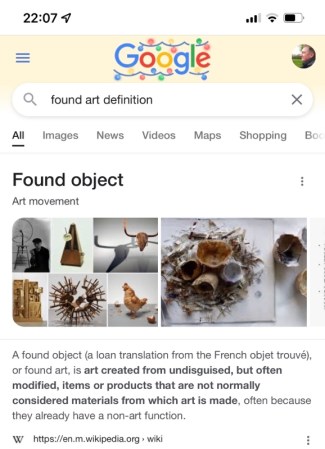
That about sums up my knowledge of the genre, though, as a keen photographer, I can see the parallel between them. Both rely on ‘seeing’ something that may not appear obvious. Both require the extraction of that from the surroundings.
The photographer often ‘crops’ the taken shot to get the composition’s proportions glimpsed with the mind and emotions.
The ‘Found Object’ artist will go to great lengths to preserve and present the find. I once saw a programme in which a fallen tree embedded in crushed railings was purchased and extracted by powerful machinery before being exhibited in a major gallery, sawn and shaped.
I’m not an artist. An illustrator, sometimes, but relying on manipulation of something already existing. Sue Vincent was an artist , and we are currently working with another – Giselle Bolotin – on the creation of the Silent Eye’s new oracle deck of cards. Giselle is painting the core images for each of the characters used as archetypes in the Silent Eye’s three year correspondence course.
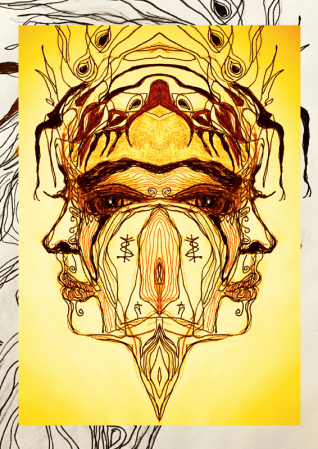
Returning to my opening image:
The recent storms have brought considerable damage to South Lakeland. Thousands of mature trees have been felled; many of them in the most remote areas are still being discovered.
The priority has been to clear the roads and pathways. The result is the appearance, everywhere, of sawn-through tree trunks, like the one above. In this case the chainsaw has cut through both trunk and surrounding ivy to create a neat cross-section of circles. A striking image on the path where I came across it. It’s the closest I’m likely to come to a true ‘found object’.
©Stephen Tanham 2021
Stephen Tanham is a Director of the Silent Eye, a journey through the forest of personality to the dawn of Being.
http://www.thesilenteye.co.uk and http://www.suningemini.blog
Share this:

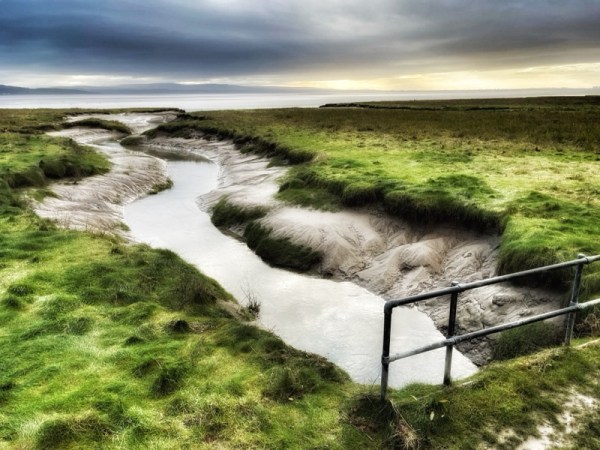
There are a handful of them along the seafront at Grange-over-Sands. They lie quietly beneath the promenade, encased in the stonework crafted by Victorian engineers, whose design allowed the water to pass beneath the all-important railway tracks.
They carry the amalgamated water of several small streams into the turbulent waters of Morecambe Bay… and backwards when the tide is high – which is quite a sight…
At the far end of the creek (see the photo) is a small beach. Really, you need wellingtons to get to the meeting point of water and bay. Families are often to be see trudging back to the shore covered in mud, having underestimated the marshy salt flat, which returns wonderful lamb, but very dirty humans..
I would have loved this little creek as a child. We used to go out ‘for a run’ on most Sundays. In my parents’ car, any sighting of a creek was met with excited pointing from the back seat. For me, there was – and is – something utterly magical about the fact that the vast wildness of the ocean can flow gently inland into such beautiful features.
I’m tempted to draw a male-female metaphor, but I’m not so sure, and suspect that something more subtle is at work in the deeper layers of our selves that draws out these symbolic parallels.
A deeper contemplation sees the sea operating on an emotional, female level, showing the masculine land how it, too, can be penetrated by the imaginative gentleness of inspiring water.
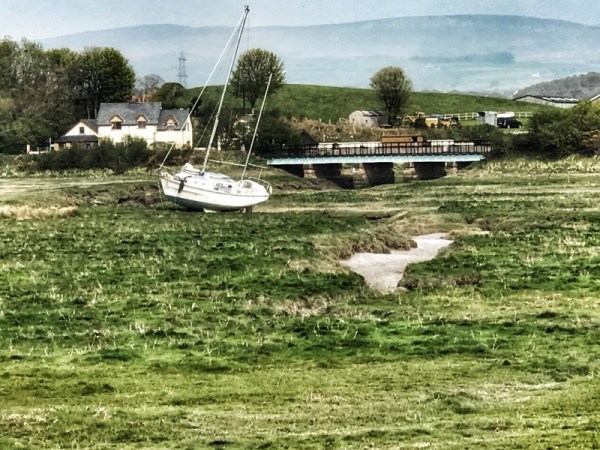
Around the curve of Morecambe Bay and south of Lancaster is the village of Condor Green. Here is a wonderful creek that is deep enough to float sizeable boats, and navigate them – carefully – into the sea near Lancaster’s old port at Glasson Dock. It’s a less expensive option than a mooring inside the sheltered waters of the dock. It’s also perilous, and a handful of boats have been wrecked by storms over the years.
I remember when, as a young boy, my parents stopped the car so that I could take a look at this delight. Years later, I returned on my first vehicle – a Ducati motorcycle – and simply sat by the creek, watching the tide fill its contours. It’s a vivid and very happy memory; and one that still makes me smile with its well remembered sense of freedom and discovery.
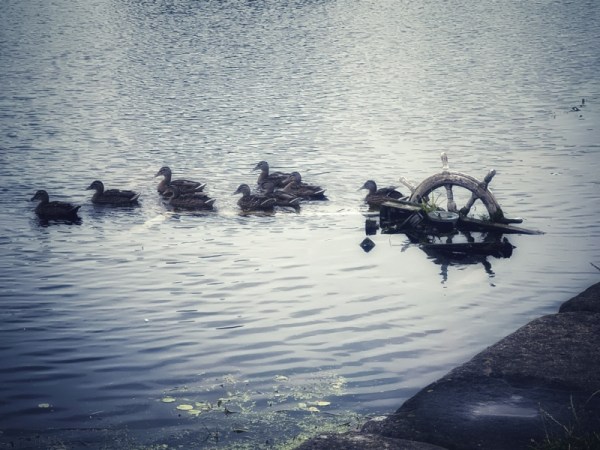
To close… The photo, above, was taken inside the basin at Glasson Dock – beyond the reach of the nearby creek. It shows that even sheltered waters are not safe. The boat – whose remains now lie beneath the surface – was wrecked in a storm, but towed to the side of the dock, where it gradually rotted to its present state. Ironically, the only visible remnant is the ship’s wheel, occupied in my shot, by a family of ducks.
©Stephen Tanham 2021
Stephen Tanham is a Director of the Silent Eye, a journey through the forest of personality to the dawn of Being.
http://www.thesilenteye.co.uk and http://www.suningemini.blog
Share this:

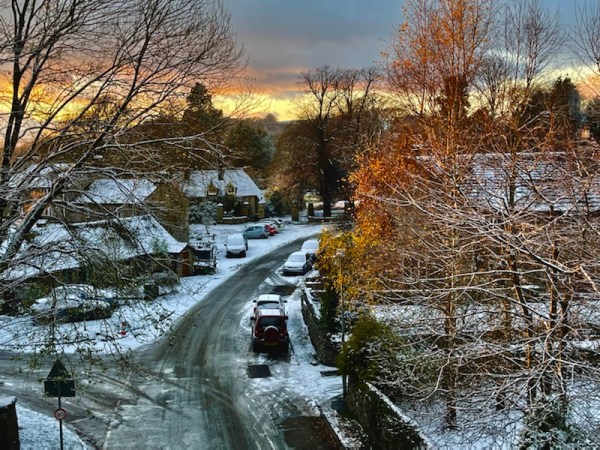
Like many who write on psychological or spiritual topics, I often wonder about the nature of time. Does it have an existence or is it solely a product of our interaction with a world that we consider to be ‘out-there’?
Out-there is an interesting notion, for it immediately creates an ‘in-here’. What is the content of that? Does it have any substance?
One of my favourite philosophers is Gurdjieff, the creator of what became known as the Fourth Way system in the first half of the last century. He famously said that ‘time is breath’; an idea that, initially at least, sounds as interesting as it is preposterous. Most of Gurdjieff’s preposterous ideas turn out to be living gateways to a mental ‘crisis’ that precipitates a different way of thinking – which in turn creates a new way of living. His is not a way to toy with, unless you want to mess with the Universe… and the Universe just adores people who want to mess with the ‘normal’ view of it…and I mean that in a positive way.
Let’s go back to ‘time is breath’. Breathing is life, in the sense that we cannot sustain our organic life – and hence the consciousness that is built upon it – without its continuous cycle. Second after second, we live in a rhythm of in and out breath, vitally restoring our body with the oxygen and other chemicals that exist in the air. We can live for about a month without food, a few days without water, and a few minutes without air. We can safely assume this frequency is a sign of air’s importance to our ‘mechanism’, and, above that level of biology, to our sub-consciousness (unseen guardian of our biology) and our consciousness, a key part of which is the sense of ‘me’; an all-important identity.
The Buddha taught that the stuff of the world involved us to such a degree that we live in a constant state of interruption and confusion. We have a conviction that there is a ‘me’ experiencing this, rather than that there is just experiencing. He considered the most powerful method to combat this was to focus on the breath.
We’ve all read this so many times that it has lost what should be a deep connection to our existence. We have become ‘dull with the news of it’, but we shouldn’t. If we truly wish to create a wonderful doorway to the new in our lives we need to revisit and embed this into our waking consciousness – thereby altering our sense of ‘me’.
One of the sites I follow is Dhamma Footsteps, hosted by a man whose pen-name is Tiramit. He’s been running a series of posts to take us progressively deeper into a style of Buddhist meditation. It’s a gift from him, you don’t need to be a Buddhist.
The progressive instructions have been aimed at establishing a calming and restoring state of meditation via a focus on our breathing. This was the Buddha’s favourite and most powerful method of breaking the chain of events that make up our awareness of daily existence. When that link is broken, we automatically come back into contact with what is truly ‘us’. It’s that simple: when we stop one, we enter the other.
This ‘other world’ is calm, gentle and warm… and filled with love for us. There are two ‘fools’ involved in this deepening perception. As the Beatles sang; one of them sees the Sun going down, the other sees the world going round.
The ‘sun-down’ fool is the ‘me’. His or her daily life dominates the consciousness, which is so full of reactive stuff that it shuts out the greater and more real vision of the other fool; the one who sees – and feels – the world spinning round.
The ‘world spinning round’ fool is the ‘I’ or Self. We have to keep a clear head, here, because the word ‘self’ is traditionally associated with the reactive self – the ‘me’ in the paragraph above. Buddhist meditation is concerned with the eventual revelation that this ‘me’ has no substance; that it is simply a set of associated reactions to the world’s events. We don’t even see that world clearly, because we see through lenses that are built from our past, making it quicker to superficially examine what’s in front of us, much like machine learning, or AI does.
Working with the breath can be one of the keys to peacefully breaking this habitual existence; and letting in the light of new living, where we raise our heads in delighted surprise at the rush of a higher form of ‘oxygen’.
The technique, as given by Tiramit, is really very simple…
We find a quiet spot, ideally somewhere where our back can be vertical-ish. I have found it ideal to begin by a rush of consciousness from my feet to the top of my head, like a wave. To begin, this may be faint to nothing, but a surprisingly short period of practice will engender a gentle ‘wave of thrill’, as our mind – already freed from routine cares – energises the intent.
Before focussing on the breath itself, we have to prepare an inner place of working. With the same kind of ‘wave of thrill’ we take the whole of our past, and render it irrelevant. Just like that… What we are doing owes nothing to that past, no matter how much the ‘me’ protests. The ‘me’ has no place at this table…
Next, we free ourselves of the future in the same way. If the future had any importance in this work, it would already be here. Yes, that’s right, meditation is all about involvement with the now… and only the now. It’s another revelatory concept that has been dulled with repetition, but its effects are instantly life-changing.
Gently close down any thoughts that don’t support this now place of working. Feel yourself to be a bright bubble of essential existence – not the reactive soul that wanders the troubling world of the day.
Now, into this bubble of essential experience, bring one thing: the awareness of the cycle of your breathing. Don’t try to alter it – simply listen to what its doing. We could stop here, and, if you did this several times a day, this would change you and your world.
But we can go deeper… As we engage with the breath, passively, not trying to change, it.. it changes itself, intelligently watching us as we watch it. The results of that cannot really be described, they have to be experienced… and it’s very simple to do that. We just have to work at it a few times until we have the basis of a fool’s habit – one that will serve us for the rest of our lives.
Gurdjieff’s ‘time is breath’ statement now makes more sense. Time is involvement with the true unfolding of the world, seen from that loving and calm perspective – which is freed from past and future.
In that gentle and powerful place, we can choose which fool we wish to live as… and take the results of that into our daily lives.
©Stephen Tanham 2021
Stephen Tanham is a Director of the Silent Eye, a journey through the forest of personality to the dawn of Being.
http://www.thesilenteye.co.uk and http://www.suningemini.blog
Share this:

+ #Silenti, Consciousness, esoteric psychology, Mystery Schools, Mystical poetry, Photographic techniques, Photography, Poetry, Silent Eye School
The Quiet Places
by Steve Tanham
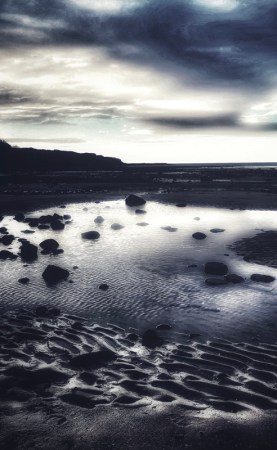
They live concealed within the ebb and flow of life recycled. That very nature is why they are so hard to find. The extraordinary hidden in plain sight…
Their camouflage is the blindness caused by seeing what we saw, before, and not what is before us.
A spell so strong, it takes our will to see it, differently. To reach into what seems to be ‘it’, but is really ‘me’; a world painted on our eyes by our mind.
From memory, of course; that pale repeater and drain of the new.
Close your eyes, facing the unfolding, and will to see what was not seen before, knowing it can never been seen again beyond this.
But this once…
Not recycled: lived again, but lived anew. And then the act of seeing the quiet places will become a song whose chords that stroke the soul will never be repeated in that symphony of delight that is our new-seen life.
Only the see-er changes. The rest was always there.
©Stephen Tanham 2021
Stephen Tanham is a Director of the Silent Eye, a journey through the forest of personality to the dawn of Being.
http://www.thesilenteye.co.uk and http://www.suningemini.blog


 Sun in Gemini
You must be logged in to post a comment.