

The words stopped my reading… I mean I read them and had to go back to them, immediately – not even finishing the sentence before returning.
Intention has long fascinated. It’s one of those vitally important words that belong with a handful of others, like memory, or will, or detachment, or even truth. Each of them carries great import when, and only when, it’s placed in its correct hierarchy of spiritual importance to mankind. It’s hard to imagine how important these words are. Familiarity has dulled their powers, but that can be fixed by conscious exposure to their reality.
The rusty object can be dug from the earth and, with time and dedication, lovingly restored to the mantelpiece.
“Intention chooses heaven”
I was reading a Buddhist text quoted in a favourite author, Tiramit, in which the placing and importance of ‘intention’ was clearly spelled out.
In the book of Genesis, we are admonished: ‘But you must not eat from the tree of the knowledge of good and evil’. This instruction, far from being some general command, is a specific psychological reference that a certain pattern of thinking will take us away from ‘heaven’.
Good and evil is to like or dislike. By liking or disliking we engage with the elements of life which draw or repel us. Instead of ‘seeing the heavens reflected in a calm sea’ we create the waves that prevent us from seeing the starry sky.
So how do we get back to bathing in the eternal calmness of starlight? One of the keys is to understand the proper place of intention; and to do that, we must examine our own lives in detail to find out what stops us using the full power of this human faculty.
Intention is not simply will. Will is a kind of sustained emotion. It keep our effort focussed on a goal, a direction. Intention is to find that focus in the first place; moreover, to find a space within us where we can see the possibilities with the greatest inner clarity and calmness.
The article referred to when the Buddha, sitting under the Boddhi tree, was assailed by the demons of Mara. He repelled them by calling the Earth to witness the large number of perfections he had accumulated over ‘past lives’. Tiramit’s post invites us to interpret such ‘past lives’ in two ways: literally or figuratively. If the latter, then it invites us to review the highs and lows of our present lives in a way that is attentive yet dispassionate – seeing everything we have done, accurately and honestly, yet not allowing either negative or positive feelings (dislikes or likes) about each experience to arise. We make it simply part of the wave that was and is our lives. It is truth, if viewed in this way. It therefore simply becomes an ‘is’, or as the Buddha would have said, it is ‘thus’…
Such reviews of personal history are a time-honoured method of arriving at a state of equanimity. We need to acknowledge the power that like and dislike have held over us. We need to see that the world’s accolades of material gain are not those belonging to the inner consciousness. Very different qualities are valued by our inner Self.
“And get past being the victim or the star of the show…”
Within equanimity, we are alert to but not identified with, events. We see our past as important only in that it got us ‘here’; and here is immediately relinquished to the movement of the now, ever fresh and ever full of potential – but if equanimity prevails, that potential has been subtly altered. It’s like an equilateral triangle: balance the like and dislike of the two base points and something wonderful happens at the third…
Our true, inner power in the now is to be present to it, which, in turn bring its sense of presence to us. The world becomes intelligent as teacher. This marriage of attention and power invites a new state of intent, as we clearly see the right way forward and move consciously along a front that unites our inner and outer worlds.
A full understanding of this requires that we investigate what is actually meant by ‘Karma’, rather than the petty ‘action and judgement’ modes of its comprehension.
We will discuss the ‘law of Karma’ and its deeper implications, in next week’s Silent Eye post.
The Dhamma Footsteps article is here.
©Stephen Tanham 2021
Stephen Tanham is a Director of the Silent Eye, a journey through the forest of personality to the dawn of Being.
http://www.thesilenteye.co.uk and http://www.suningemini.blog
Share this:


It is dark, so there won’t be any
Photographs
They will, like the sun
Be resting in untaken
Manifestation

But collie’s last trip
Outdoors
In upward glance reveals
A silver-blue unlike
Any before

It is the moon, hiding and smiling
At
The one human on the planet
Standing here within the game
Of Midnight
©Stephen Tanham 2021
Stephen Tanham is a Director of the Silent Eye, a journey through the forest of personality to the dawn of Being.
http://www.thesilenteye.co.uk and http://www.suningemini.blog
Share this:

And on summer evenings, rich with sun absorbed, We will slip through the CV gate, the two of us, and with a ripple of space-time, find ourselves in Burgundy, where, in a small cafe, hidden from the unworthy, Nicole pretends to be married to a burly chef, though she, too, is chef, and also front of house.
And after water iced with lemon as the sun sets, she will once more set out to teach me the Subjunctive over white fish, pan fried with little dressing, and served with a bottle… two, possibly, as it is complex tense.
©Stephen Tanham 2021
Stephen Tanham is a Director of the Silent Eye, a journey through the forest of personality to the dawn of Being.
http://www.thesilenteye.co.uk and http://www.suningemini.blog
Share this:


“The healer must know themselves to be connected to something bigger, something vast in its power to help us… something entirely whole. The healer is not the source of the power, simply its conduit.”
Who wrote it is lost in the past. For me, it expressed the entire art of healing; the idea that suffering is ‘smaller’ than the power of wholeness.
The main barrier to the positive perception of ‘healing at a distance’ is the belief that it can’t work; that there are no laws of the physical that support it.
The face-to-face comfort and companionship offered by someone sitting with the recipient are obvious, and easily supported by psychology. But the methods by which healing at a distance could operate are less discussed – for example, is the ‘self’ bigger than the physical constraints of the body?
When you’re with someone you love, you can feel their presence in a heightened way. There is an intensity about the space you share. The world becomes a special place within that ‘bubble’. You don’t have to be touching them for this to work.
If this works across a cafe table, then why assume that any distance is a barrier? Healing energies and loving energies are strikingly similar. What matters is focus, and the ability to draw on what is bigger than the ordinary self.
With people you know well, you can picture and feel their presence over any distance. That idea of a picture is of great importance. What about if we had the picture of a shared place of healing; a special landscape envisaged and brought to life by active cooperation and participation from around the world?
How about a picture that came alive?

This is the method we have chosen to use to establish the Silent Eye’s new Healing Circle. The process is open to both those who need healing and those who would like to support the healing of others.
This method, often known as use of the ‘magical imagination’ has been used for millennia. We have a clear picture of a place of working. We bring it to life within our own imagination…. then we move within it, using certain conventions to bring into play our deeper and more purposeful energies.
The result is not subject to the limitations of space. This directed energy operates according to the laws of consciousness, alone. Nothing is ‘invoked’ by this method other than the attunement of your own energies, focussed on the needs of you or another.
This may be enough description, and you may decide this kind of healing method is for others. However, if you are interested in joining us in this endeavour, then the full script of the ‘guided journey’ is below.
The new Healing Circle will be inaugurated on the dawn of the Summer Solstice: Monday June 21, 2021, beginning at 04:44 in the morning – the time of the dawn – and continuing for the next seven hours. We would be delighted if you could join us by reading to yourself (or other friends) the text below at any point during that period.
———————————————
The Silent Eye Healing Circle – Guided meditation
The sun is rising on the horizon…
Before you is a level plain, a waving grassland, kissed with the golden rays. In the middle of this is a raised hill with a flat top. On the hill, you can see what looks like a small temple structure. You walk towards the temple with a sense of expectation, each step adds more positive energy to your journey.
Soon you are climbing the wide, wooden steps to the raised surface. There is a gap in the temple’s walls and you look through. A Priest, sitting at a beautiful oval table, shaped like an eye, beckons you to join him. As you walk into the temple, you see that there is also a Priestess seated at the opposite end of the oval table. Each occupies a cut-out, carved, perfectly into the curving vesica shape of the table’s ends.
As you approach the centre of the temple, the Priest stands to welcome you. He asks you to take his seat and shows you a slip of shimmering paper flecked with gold. He offers you a beautiful antique ink-pen and asks you to write your name on the paper. In your visualisation, you watch as your signature emerges onto the beautiful parchment.
“Have you come to give or receive healing?” he asks. Again, he points to the paper and you write the one of the words, GIVE or RECEIVE, beneath your signature.
The Priest directs you to stand and take the parchment to the Priestess who now rises to greet you. She directs you to sit in her chair then opens her palm saying, “Lay the paper on my hand.” You do so and, the second that her skin and the paper meet, a myriad of small flames engulf the paper which curls into a burning cylinder and then dissolves into a thousand motes of golden light, each flying gently upwards to join what you now see is a slowly revolving picture of a galaxy where the stars and star systems are the glowing motes of the history of the Earth’s healing.
The Priestess smiles and offers you her hands from which all the motes of golden light have flown. She turns you to face the outer walls of the temple and you see, for the first time, that the “pillars” are, in fact, people – each one cloaked, hooded, and veiled. The Priestess turns you around so that you have completed a circle then you come back to face her.
“There are seven of these planetary healers,” she says, “and, though you cannot see their faces, they KNOW you. Walk, clockwise around the circle until you find an energy that matches your intentions here.”
The Priest rises to take you to the first of the Planetary Healers, standing just left of the entrance where you entered the temple. Beneath the flowing robes, you cannot tell whether they are male or female, but you can feel the radiated love directed at you.
You approach the figure. Immediately, you begin to feel the energies of Mars.
“Absorb the energies of each, then, the second time around, rest by the one who matches your needs,” says the Priest.
In turn he escorts you, after the figure embodying the Mars energy, to the Planetary Healers of Mercury, Jupiter, Venus, Saturn, Sun, and Moon. At the end of the circle and, once more by the entrance, the Priest speaks, inviting you to take a further circuit and rest at the place you have chosen. You may take rest and healing in more than one place if you wish, but each time moving clockwise to the next. Your time with the Planetary Healers may be spent in taking or giving healing, but you should not mix the two in a single visit to the Healing Circle.
When you have completed your time in the circle, you return to the Priestess, holding her eyes and conveying, silently, what you have experienced. The Priest will escort you out of the temple and down the wooden steps. You make your way across the soft grasslands marked by two rows of flaming torches. At the end of the grasslands lies the start of your regular world of experience.
This guided meditation is designed so that you may take from, or add to, the healing energies of the Silent Eye’s Healing Circle. It is open to all, at all times of day or night. The officers of the Silent Eye, and others taking part, will regularly add their own energies to the Healing Circle. You may wish to add to this energy, and we thank you for doing so.
The Silent Eye’s Healing Circle is available anywhere in the world at all times apart from Tuesdays, during the period 14:00-15:00 GMT, when our own High Priestess performs a weekly closing down and re-opening ritual. During that time, we ask you not to enter.
These instructions may be freely copied and distributed as long as they retain the original words. They are also be found on the healing page of the Silent Eye’s website at: www.thesilenteye.co.uk
Thank you for participating in our work.
The Silent Eye’s Healing Circle is not a commercial undertaking. We do not, nor every will, make charges for our healing work. Companions and officers of the Silent Eye provide their time, freely, as part of their undertaking to serve.
©Stephen Tanham 2021
Stephen Tanham is a Director of the Silent Eye, a journey through the forest of personality to the dawn of Being.
http://www.thesilenteye.co.uk and http://www.suningemini.blog
Share this:


The heat, it must have been the heat
That teased and turned my steps
That stepped a different thrust and beat
A moan of limbs on fire where once were feet.

The green, it must have been the green
That cooled me in a light I’d never drunk
That drank me in a way that drew a sigh
Surrendering to what - before, I had not seen.

Into the trees; I went within the singing
My garments eased from flesh that needed air
An airing of the need within my skin and hair
With ending like a bell that needed ringing.

That sound - a cry that led you to the wood
To find me, naked, drinking at the stream
The hand, that once had stroked now drew on flesh
The nails inscribing paths of where I’d been.
©Stephen Tanham 2021
Stephen Tanham is a Director of the Silent Eye, a journey through the forest of personality to the dawn of Being.
http://www.thesilenteye.co.uk and http://www.suningemini.blog
Share this:

The heat, it must have been the heat
That teased and turned my steps
That stepped a different thrust and beat
A moan of limbs on fire where once were feet.

The green, it must have been the green
That cooled me in a light I’d never drunk
That drank me in a way that drew a sigh
Surrendering to what, before, I had not seen.

Into the trees; I went within the singing
My garments eased from flesh that needed air
An airing of the need within my skin and hair
With ending like a bell that needed ringing.

That sound - a cry that led you to the wood
To find me, naked, drinking at the stream
The hand, that once had stroked now drew on flesh
The nails inscribing paths of where I’d been.
©Stephen Tanham 2021
Stephen Tanham is a Director of the Silent Eye, a journey through the forest of personality to the dawn of Being.
http://www.thesilenteye.co.uk and http://www.suningemini.blog
Share this:

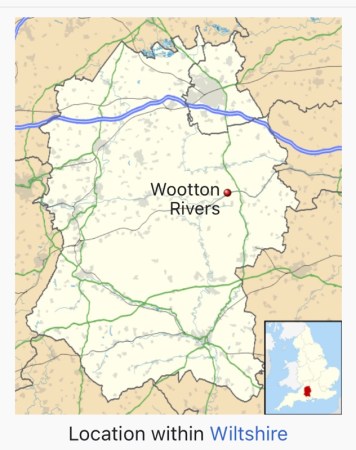
We’re spending a few days in the Wiltshire village of Wootton Rivers. Set in the middle of the ancient Vale of Pewsey, its fertile farmland has a documented history going back to the Bronze Age. But we’re not here for the history…

It’s a long way from Cumbria. The clue to why we’re here is the village’s proximity to Avebury, home of Britain’s largest stone circle, and one of the previous destinations of the Silent Eye’s summer workshops.

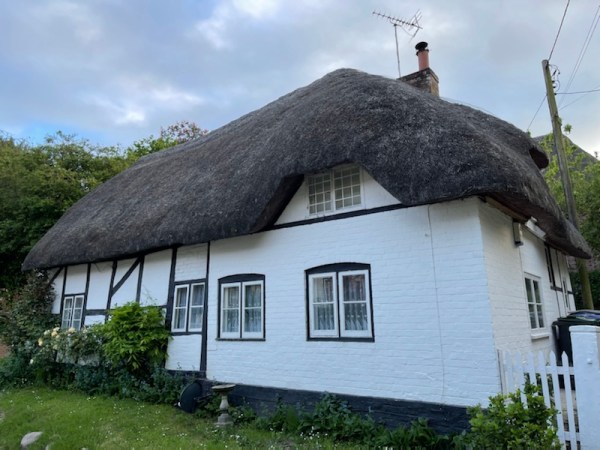
Two years ago, Sue and Stuart had proposed another weekend here for 2020, but Covid put paid to that. We had booked our weekend’s accommodation well ahead – a converted chapel in the village of Wootton Rivers.

The owners offered us a full refund or the option of putting the booking back for a year. We opted to postpone; a decision we are delighted with now the long winter has matured into this blazing June.


Despite our long journey from Kendal, the first thing we wanted to do was take a walk to stretch our legs, get our bearings and make sure we still had a functioning collie! Turning onto the canal path, we met the lady owner of a turquoise narrow boat (above). She had sold her home to buy it, and now lives a quiet life ‘off-grid’. She had no regrets…
The untimely death of Sue Vincent, our fellow Director of the Silent Eye, has left us all a bit numb. Bernie and I had no agenda for this trip, simply to ‘be’ in a green and gold summer landscape for a few days, hopefully at the end of the Covid restrictions, though the present trends for the so-called ‘variant delta’ places that in doubt.

The sun and the sheer exuberance of Wiltshire at this time of year have lifted our spirits… and Wootton Rivers has provided its own humour; chief of which is the ‘Wootton Crouch’

The upstairs of a converted small Methodist Chapel is bound to be a little cramped. When a chapel, there would have been only the ground floor. So the architect had to create an upper floor – two bedrooms and a bathroom – from s steeply sloping ‘v’ shape. .

In a conversion, with low bathroom height, you’re going to bump into wooden features, overhead. Once you’ve bashed your head on a new wooden frame a few times you get the hang of walking round with a C-shaped spine – the said Wootton Crouch.
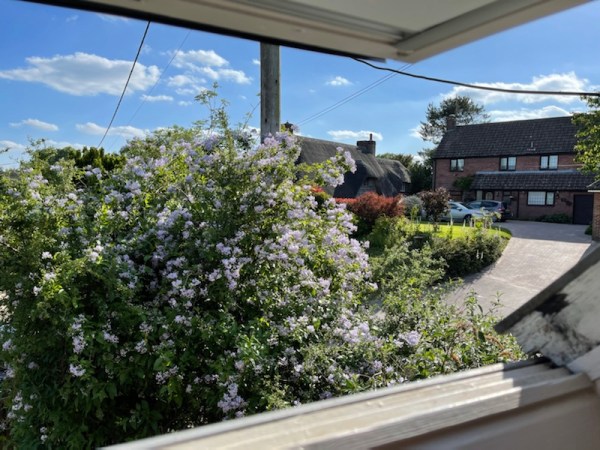
The problem is the heat – which isn’t really an issue, given we spend all winter pining for it. In this warm weather, the small upstairs of the beautifully-modernised chapel gets hot, and it’s necessary to leave the three Velux windows open, horizontally, if we are to return to a temperate building. However, if you forget, you can end up the ball in a child’s bagatelle as you jerk your bewildered head from the window frame into the opening glass shower door…
Humour aside, the Old Chapel has been a great place for a break. It’s stylish, comfortable… and only occasionally challenging.
It will all be good practice for our future canal boat, should it all get too much…

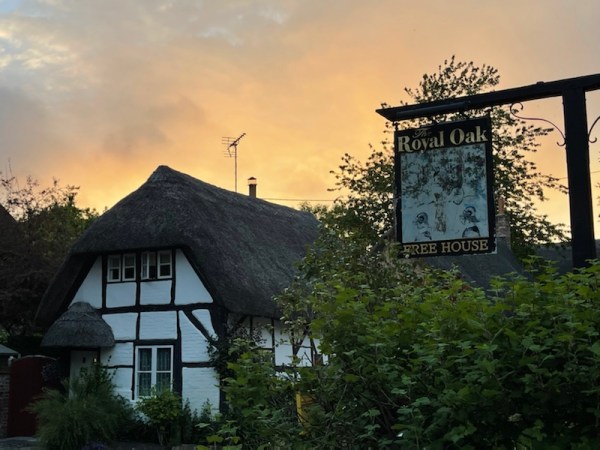
©Stephen Tanham 2021
Stephen Tanham is a Director of the Silent Eye, a journey through the forest of personality to the dawn of Being.
http://www.thesilenteye.co.uk and http://www.suningemini.blog
Share this:

“Healing is about restoring the person’s power to heal themselves.”
The old lady who said it was called Jean. Beloved of all us us at the Roiscrucian group in Manchester, she was was a venerated outlier from a previous age; an age in which the sheer magic of mystical development and communion was not taken for granted, and was a path that required work…
“He has the healing touch, your son,” Jean had said to my father, matter of factly, as we were having tea, cake and biscuits after the monthly meeting. She had been suffering terrible back pain and I had felt drawn to ask her if I could place my hands on her back, where I knew the pain was located. She gladly agreed. Moments later, I felt the flow of the familiar energy… and she had sighed, quietly, the muscles in her back relaxing, and her breathing taking on a more normal rhythm.
No-one had said that to me, before, yet it made me feel good that she had voiced it. Raised in a Rosiucrucian family, I was used to being viewed as ‘odd’. Working with healing energies was another perfectly sensible oddity. Some things had to be grasped and performed intellectually, but there was nothing about invoking and using the healing force that was intellectual; it flowed like a living love from healer to the person who needed it.
It just ‘was’…
You can feel the energy best in the hands. Bring your palms close together, with the thumbs up, but don’t let them touch. Closing your eyes is not necessary but can help when you are starting out. Take a short in-breath, then expel the stale energy from your lungs. Inhale from the stomach, first, letting the diaphragm expand, fill your lungs to a count of five, and stop for a second or two with in the ‘fullness’ to register the gentle heat building in the space between the hands. Repeat the breathing and direct the energy from the in-taken breath through your body, down your arms to the space between the palms.
Repeat the breathing, but do not strain at any point. A good healer is relaxed. A stressed healer does not heal.
Build the energy until you feel it has a power and warmth, and is being fed from within you by each breath. Your arms and your chest will feel like a powerful horseshoe.
If the person you are helping is comfortable with it, offer to lay your hands upon them in an appropriate place. The back of the neck at collar height is extremely effective, as it offers a direct connection with one of the most important parts of the spine and nervous system.
We are looking to interrupt the body’s ill-health or discomfort. Our excess of this loving warmth is to be used to restore, then tip their healing balance so their own body restores itself. In short, we are attempting to address the whole of the person we are working with.
The person needing healing may simply be ill, or may depleted in other ways. Often, people cause their own ‘dis-ease’ by holding negative thoughts and emotions within their bodies. These accumulate, darkly, within the self, preventing the healthy flow of their own restorative energy.
If the person receiving help is uneasy with close physical contact, offer to take their hands, instead. Hold their right in your left and vice-vera. You will feel a warmth in the wrists and thumbs as you conduct your energy flow. If no contact is possible, you can still send the loving energy by standing near them and directing your heart and mind to work together with theirs across the short distance.
Nothing complex in all that; nor was there ever. It’s simply a natural energy that one needs to encourage, develop and, above all, have confidence in. There is a special spiritual power in knowing that something is right and capable. In a sense, it’s like seeing it done, already…
What about across a distance? Is it possible to conduct what used to be called ‘metaphysical healing’ while not in the presence of a person, or group of people? In the Silent Eye, we believe it is, and has been practiced for thousands of years. We are about to establish a world-wide resource available to anyone, for every hour of each week, apart from a one-hour period where our special ‘place of healing’ will be allowed to rest, then restored, after the quiet hour has passed.
I will be providing details of this next week. We are inaugurating this at the Summer Solstice, when we will be building and empowering a shared guided meditation available to all to help them connect with the healing service. Anyone may join in. The new Healing Circle will operate on a basis of an elevated conception of ‘take and give’. Those who feel well and strong may, using the same guided meditation format, give some of their energy rather than taking it from the Healing Circle. A person who has been helped may choose to come back, subsequently, and give as a form of thanks.
The establishment of the Healing Circle will link it with powers of Being, ensuring that its energies are constantly refreshed for the use of those in need.
Next week, we will consider in more detail the principles of healing at a distance, and provide the script for the guided meditation to establish the Silent Eye’s healing circle in your own life, should you wish to join us.
The Silent Eye’s Healing Circle is not a commercial undertaking. We do not, nor every will, make charges for our healing work. Companions and officers of the Silent Eye provide their time, freely, as part of their undertaking to serve.
©Stephen Tanham 2021
Stephen Tanham is a Director of the Silent Eye, a journey through the forest of personality to the dawn of Being.
http://www.thesilenteye.co.uk and http://www.suningemini.blog
Share this:

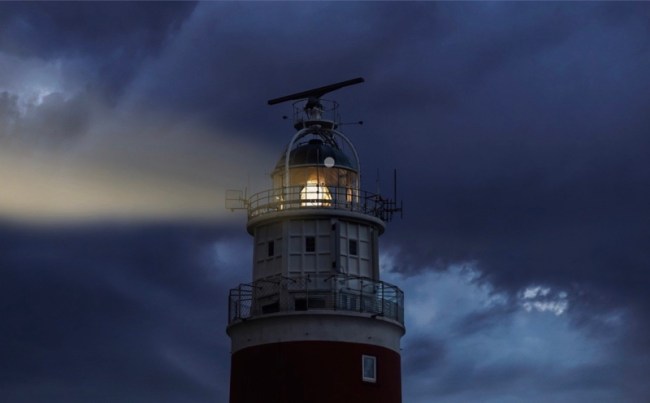
Rotating hope

As a Captain in a blackened storm
Scans a ravaged horizon
To find rotating hope
- Not only where but who;
The ship, by edge of darkness
Locates the world beyond the sea


So we, with storm and prayer
Scanning signs of inner life
Find voyage in a pulsing light
A presence: there, then gone
Returning if we will but stare,
And hoping, count the circles

©Stephen Tanham 2021
©Stephen Tanham 2021
Stephen Tanham is a Director of the Silent Eye, a journey through the forest of personality to the dawn of Being.
http://www.thesilenteye.co.uk and http://www.suningemini.blog
Share this:

As May neared it’s end, we were beginning to despair in this most northerly part of England. Record cold and wet weather for the entire spring had dampened our Covid-reduced spirits to absolute emotional zero…
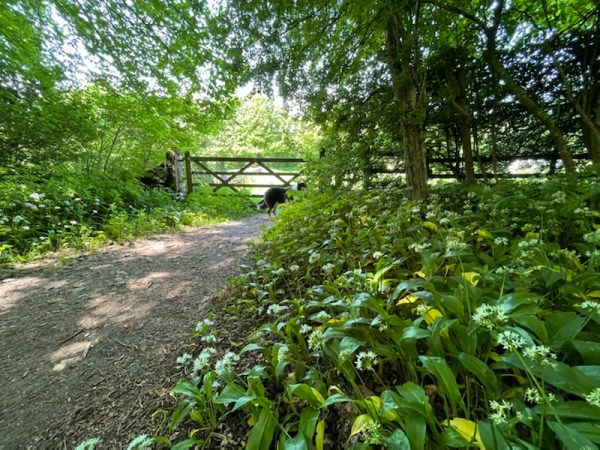
Then something remarkable happened. As though the intensity of the late warmth and light had to quickly compensate for what hadn’t happened so far, summer burst forth.
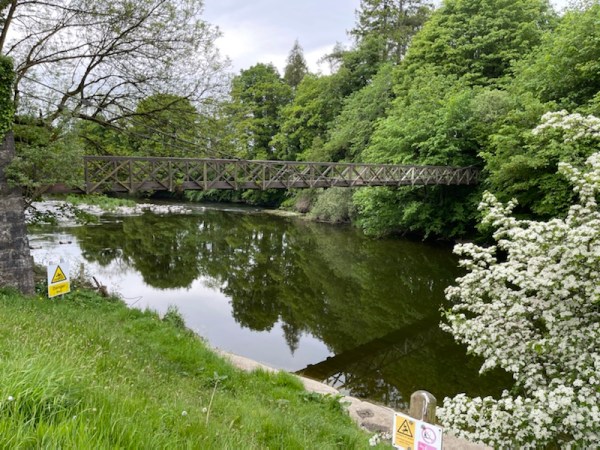
And the famous green of our Lake District literally erupted… With a ferocity I’ve seldom witnessed. .
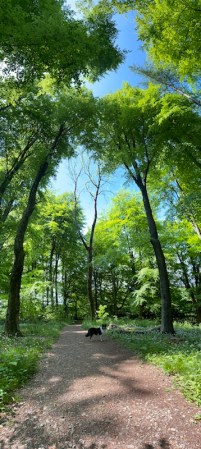
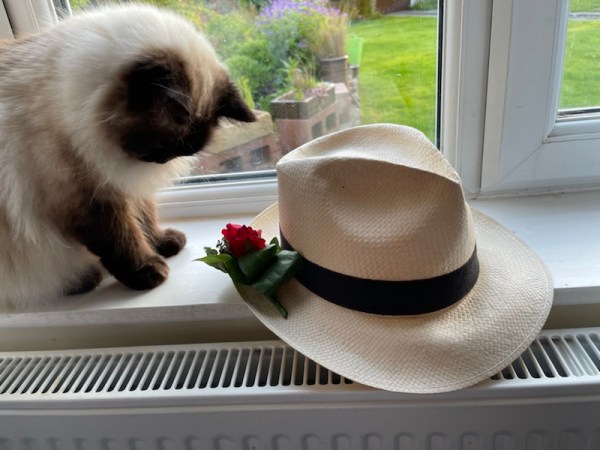
The collie is in heaven, at least in the mornings. The afternoon heat can drive her to the far side of the house and its shadows. The thickly-furred cat, who you would think had most to fear, made for the hottest window seat and basked…
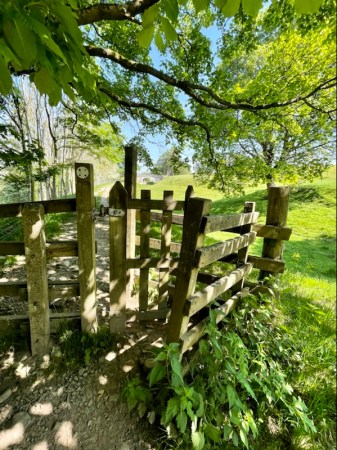
We are blessed with ancient paths – rights of way – that criss-cross the county. The interplay of light and shadow is a photographer’s delight…
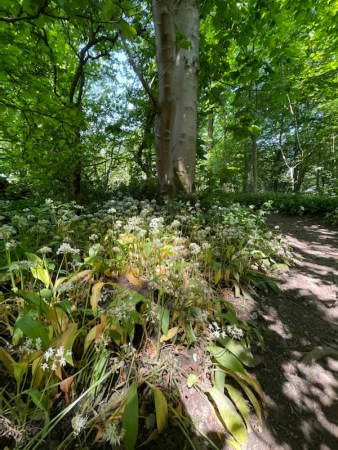
The intensity of the muted light within these zones of gentle contrast is practically meditative.
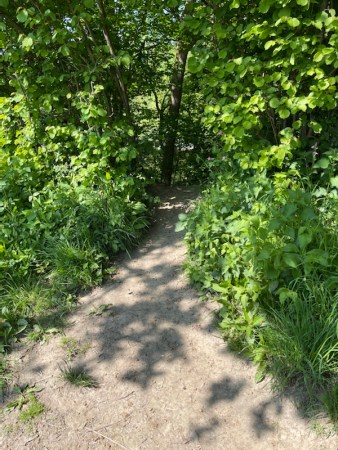
Occasionally, you come across a man-made object, like this gate, which creates a lovely contrast of textures, it’s rustic straight lines entirely in harmony with the green backdrop.
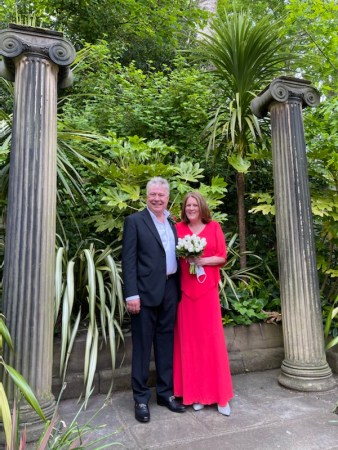
Oh, and my brother and his long-time partner got married, which is why there’s a flower in the cat’s hat…
©Stephen Tanham 2021
Stephen Tanham is a Director of the Silent Eye, a journey through the forest of personality to the dawn of Being.
And
Suningemini.blog
Share this:

+ #Silenti, Ancient Landscapes, Ancient Sacred Sites, Celtic Christianity, Christianity and modern mysticism, Consciousness
The Mysterious Road to Tain (4): a simple man
by Steve Tanham

The young missionary – a peregrini, meaning one on a life-pilgrimage – wore two crosses; but not around his neck nor on his simple, woven robe. The Celtic designs were tattooed onto his eyelids so that, when he slept, the original Cross of Christ was projected from both his sleeping eyes into the world… Truth never sleeps.

A Christ that he had reached out and touched, as though it were his deepest friend…
It was hot, the day he came back to Tain. May was giving way to June, and the weather had changed for the better. For years, the discomfort of the monk’s robe – a white tunic covered by a cowl – had become a thing of the background, not allowed to intrude into his finely trained consciousness. A consciousness filled with the magic of refined thought and the devotion of a mind entirely turned to the good.
In addition to the Scriptures, the Brothers of Ireland had given him everything they had: well structured and beautifully crafted writing in the universal language of Latin; a deep understanding of music and the special numbers that made it harmonic; an observation of the sun and stars so acute that he, even alone, could calculate the correct dates in the cycle of the religious year.
The mind the Irish brothers had bestowed on him was full of ‘knowing’ – his to transform to wisdom – but it was not at the expense of the practical, the how to do…

Soon, if his mission was allowed to take root in this land of his fathers, he would be building a chapel. He had all the necessary skills to transform stone, metal and wood for that purpose; and, beyond that, strong hands as delicate as a feather, when needed.
First, he had to make his tools, but for that he needed the help of a local forge. If his childhood friend, the son of a blacksmith, had survived to adulthood, he hoped to trade an education of the man’s children for the strength of metal.
Ahead of him, now, was the last of the ridges that led to Tain. His leather sandals, made by his own hands, were wet with dew and dirty. His feet were sore from the weeks of walking across Scotland from its west coast fishing village where the tiny boat from Ireland had left him. But it was a joyous pain, and no match for the joy in his heart at smelling the sweet scents of home.
He crested the last rise and stopped, fighting back tears as he looked down on the place whose people he wanted to serve for the rest of his days. The small town of Tain was just waking, the sun climbing on the horizon and painting the calm sea with a line of shimmering gold. This way, it called, as it had a hundred times on his long walk. This way…
———-
This is fiction, but as close to the spirit and facts of St Duthac’s early life as my research has been able to take me.
Duthac was a real figure, yet the details of his life can be elusive. He was born in AD 1000 and died in 1065. Despite devoting his life to Tain, he did not die there. In his final years, something pulled him back to Ireland, presumably to the school of God and Selfless Love that had given him his spiritual wings. In 1253, long after his death, his ‘relics’ – mainly bones – were returned from Ireland by unknown benefactors, to the same tiny chapel he built in Tain.
Much later, the relics were transferred from the abandoned chapel to what is now the St Duthac Memorial Church. Much of St Duthac’s published story is based on the same potted text, some of which is incorrect. It’s an important fact that the ‘relics’ of the saint came back to the original chapel that he had built by hand and where he worked and taught.
St Duthac was one of Scotland’s most revered and well-known saints. The Scottish Reformation, in 1535, brutally erased the saints and their worship, removing all ritual and replacing decoration with plainness. Music was also banned, replaced only with the chanting of psalms.
The memory of St Duthac was removed from history… To the victors, the spoils. The truth of the long human story is constantly altered in this way. Curiously, unlike other saints – such as Columba or St Andrew – Duthac’s name was only ever preserved in Tain, the town he served and loved, and which hosts his name and his works to this day. St Duthac’s relics were later moved within Tain to the first of two churches built in his name. The relics were mysteriously ‘lost’ during the reformation, and never seen again…
Most of his life is lost to history, but much of Duthac’s appeal and status can be inferred from the folk tales that come down to us from ‘his people’. Two of his ‘miracles’ are illustrative of this.
In the first, when a young child, he was asked to transport some ‘blazing coals’ to start another fire. He did so with his bare skin, remaining unburnt. Here we have to look beyond the literal for the meaning. Certain parts of the detail stand out, in the way of such stories:
He was a child – a young soul. His life lay ahead of him, the blazing coals are symbolic of a ‘fire’ that would burn others, yet were not a danger to him. Through the gift of a ‘high nature’ – earned or by birth – he was able to hold and transport that fire. The fire can be read as deep spiritual knowledge; the transportation as teaching. It was a power that was his to transform so that it would inspire, but not burn others. He was the higher vessel. His duty was to use it wisely and to teach those ready to receive.
St Duthac is said to have been of noble birth, yet no records remain to support this. Perhaps this, too, is symbolic, and fits with the above interpretation.
In another of the ‘miracles’, a man asks one of Duthac’s younger disciples to carry a gift of some meat and a gold ring to the saint. The disciple is careless and lets a bird of prey steal them. Arriving, crestfallen, at the chapel, the young man recounts his sorry tale. St Duthac forgives him and summons the eagle. He lets the bird keep the meat, but takes the ring.
The lesson is to cherish the true and perfect ‘gold’ of the ring and let the ‘lower’ – the meat – be left to nature’s cycles of birth, maturity and decay. Duthac’s status (of ‘noble birth’) is one of mastery of nature, i.e. working completely with it. Nature is then content to conform to this ‘noble’ human will. The Creator is recognised; reflected in the Man, but governed by the degree that the man conforms to ‘God’s will’, i.e. the Good.
History tells that Duthac became Bishop of Tain, but we might want to examine this. His training in Ireland was entirely within the Celtic Christian tradition – one that would send missionaries out across Europe to found some of the most important centre of learning in history. It may have been that the Roman church tradition that drove Celtic Christianity back to Ireland, made Duthac, posthumously, into a bishop to show his historical conversion to the standard faith.
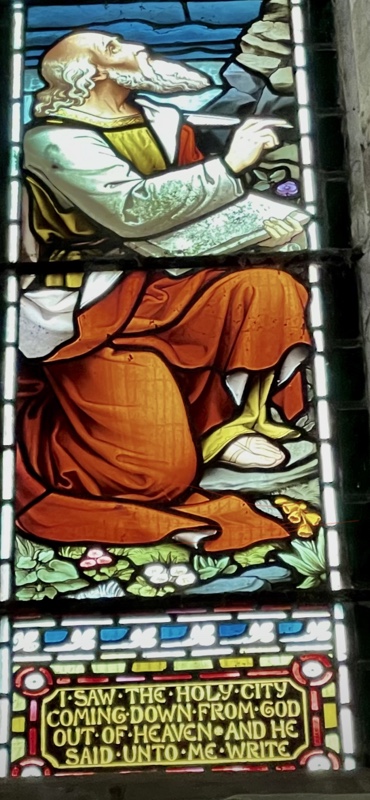
‘I saw the Holy City coming down from God out of Heaven, and he said unto me write’
In the three previous posts, (see list at end of post) we have considered each of the buildings associated with St Duthac. The history of the later Memorial Church warrants further attention. During its time as the main church of Tain, it was a more complex building.
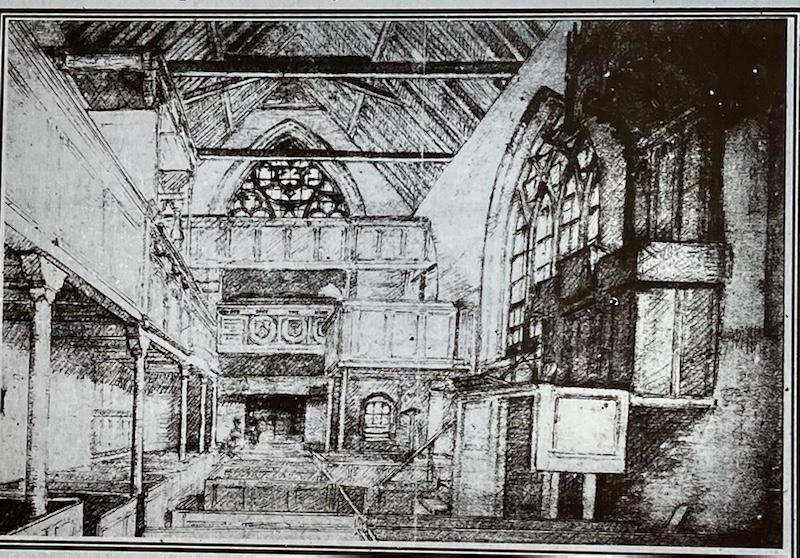
The black and white drawing, above, shows how the interior of the church once looked. Note the elevated ‘stalls’ on the left.

The construction and use of the north wall is curious. The above plan of 1815 shows separate exterior gallery stairs into the building. These gave direct entry to ‘lofts’ or galleries belonging to Tain’s trade guilds. The guilds oversaw apprenticeships and were the guarantor of the quality of work done by their craftsmen. They were a key part of the orderly government of the town, and linked strongly with the authority of the local church.
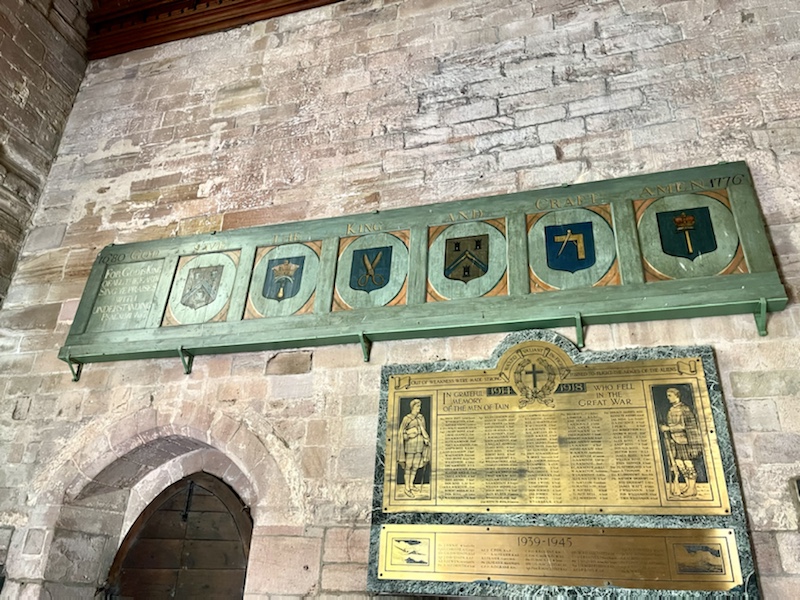
Tain is unique in Scotland in having an intact set of Guild ‘coats of arms’. These are displayed on the north wall of the St Duthac Memorial Church, just beneath the high window (below) containing the stained glass rendering of St Duthac, gazing up at the Citadel and the four letter of the Tetragrammaton (below). To my mind, a link is implied…

It would be appropriate to bring this series of posts to an end with a return to the mysterious stained glass window high in the north wall of the Memorial Church, (see images above and below) to consider if any of these last threads of mystery can be unified.

At the very top of the mysterious window over the Guild plaques, on the the dome of the ‘Citadel’ is written (left to right) something very special in Hebrew: Yod-Heh-Vav-Heh. It derives from ancient Hebrew wisdom and is an integral part of Kabbalistic teaching.
Its name of Tetragrammaton is the Hebrew ‘highest name of God’. Jewish scholars will not speak this name, as it is taken to be sacred, even though formed of four of the standard Hebrew letters of the alphabet.
We can safely assume that this is not a legacy of the Scottish Reformation. What, then, is it doing high on the north wall of the Memorial Church of St Duthac?
Western mysticism is not so silent on the subject, though the sanctity of the inner meaning of Tetragrammaton is preserved. In Kabbalistic teaching there are four ‘worlds’ of continuous creation which result in the ever unfolding ‘now’. Each of these worlds is represented by one of the four letters of Tetragrammaton.

This mysterious stained glass window was part of the 1870-1882 restoration of the church. The design and creation were carried out by James Ballantine and Sons, Edinburgh. Ballantine was a brilliant artist and, to me, it looks like he was given particular freeway with the style of this, window, which is nothing like the others.
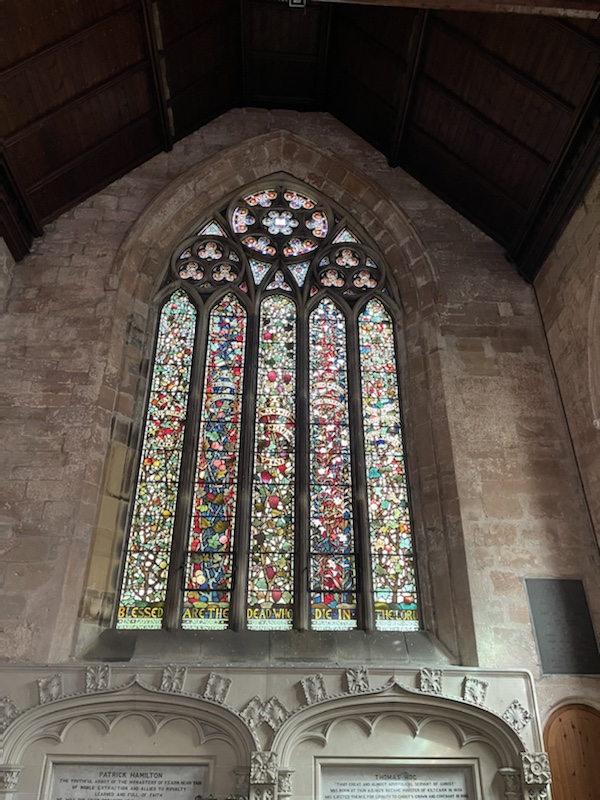
There are other examples of the Tetragrammaton used in highly ceremonial church and cathedral buildings, such as Winchester Cathedral. Its use in so small a building as the St Duthac Memorial Church is extremely rare. I could be completely wrong, but I sense the presence of another protector of Duthac’s legacy, here – one that arose from the chasm of the Scottish Reformation that did everything possible to destroy the saint’s legacy – the Freemasons.
The Freemasons arose, mysteriously, after the Reformation. Early records were not kept in order to protect their members. They modelled themselves on a stonemason’s guild, but added their own origin myth. They prosper today and benefit from their own carefully-crafted rituals, and progressive degrees of learning. Their higher degrees contain detailed references to Kabbalistic learning, and the Tetragrammaton is an important symbol in this. I can only suggest that they may have been the sponsors of this very different window, and, by this act, ensured that the spirit of Duthac’s work was honoured into modern times and its potentially mystical nature not lost to history.

To this day, they are well known for their generosity in preserving key aspects of history in their respective Lodges.
There is no suggestion, here, that the spiritual world of St Duthac was related to that of the Freemasons. Duthac’s world was based on a teaching in Latin, not Hebrew. The ‘Celtic’ Christians of Ireland had a rich and sophisticated teaching method, based on an individual’s ‘sense of belonging’ with Christ. The Freemasons have a broader ‘church’, in which a man is urged to better himself through application and dedication to the highest principles ‘he’ can discover within himself. In that, they are related, but the Celtic Christian oath of having no luxury, not even that of travelling by anything other than foot, is very different from our modern notions of piety.
I am not a Freemason, but have admiration for their work.
Esoteric history is full of different, but related, systems of thought, each showing us a part of the inner wisdom in a form we can remember and use. There is no single system of teaching that has all the answers. Each has its own emphasis, based upon the teaching preferences of its founder(s).
The spiritual journey is personal. Others can help, but the excitement is in discovering that everything of real importance belongs to each of us, alone.
And that is a paradox… but the most beautiful one we will ever encounter.
The Silent Eye will return to the world of St Duthac via a modern ‘pilgrimage’ to be offered sometime in 2022, subject to possible Covid restrictions. We will follow a route (part walking, part driving, in stages) from the Black Isle, across the Cromarty Firth, and explore the Tarbat Peninsula, before finishing in Tain at the Pilgrimage Centre.
If you would like to be kept up to date with plans for this, you can register your interest at rivingtide@gmail.com
End of series.
Other posts in this series:
Part One, Part Two, Part Three. This is part Four.
©Stephen Tanham 2021
Stephen Tanham is a Director of the Silent Eye, a journey through the forest of personality to the dawn of Being.
Share this:


Within a world where atoms part
This golden glory, rich like silks
Is accidental art
Whose numbers are not seen
Made beauty only by our minds
With insubstantial form and finds
➰
But let me share my secret truth
That nowhere is that pattern lacking
The heart of life’s delight
And say: when dulled mind looks on this
Content with art’s deflection
It finds its own reflection
➰
©Stephen Tanham
Stephen Tanham is a Director of the Silent Eye, a journey through the forest of personality to the dawn of Being.


 Sun in Gemini
You must be logged in to post a comment.