+ #Silenti, landscapes, Photographic techniques, Photography, Silent Eye School, Silent Eye Workshops, Yoga
Winter walks with Camera (7) : panorama
by Steve Tanham

The modern mobile phone puts an arsenal of photographic tools at our disposal. One of the strangest and most difficult to master is the panorama… yet the results can be wonderful.
(550 words. A four minute read)
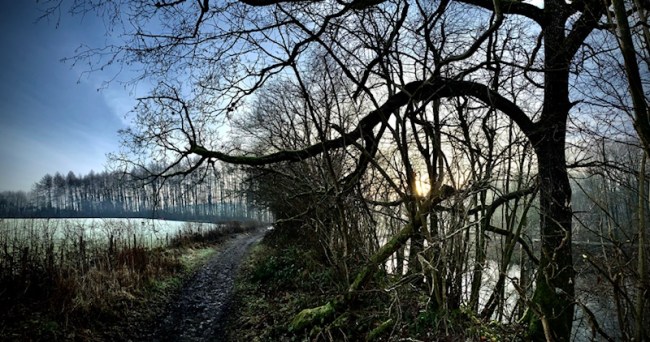
The panorama is not a gimmick. It’s a wide-angled shot in which the correct proportions are retained, rather than the treatment of a ‘fish-eye’ lens, where the extremes are increasingly compressed as you approach the edge of the image. We can look on it as a short piece of video, panning left to right, where all the shot is retained and formed into a wider picture.
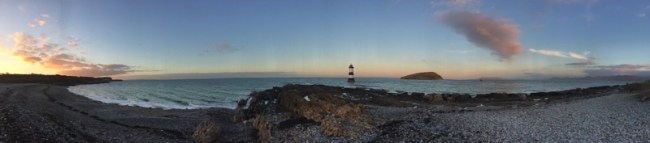
There are many difficulties; chief of which is how hard it is to stay level and steady as you pan across the shot. Ideally, we would have an electronic, rotating tripod in our pockets! With practice, and by carefully following the indicated line in the viewfinder, we can get a degree of stability into our photos. Also, modern phones allow a faster sideways movement than their predecessors, as they need less light to function well.
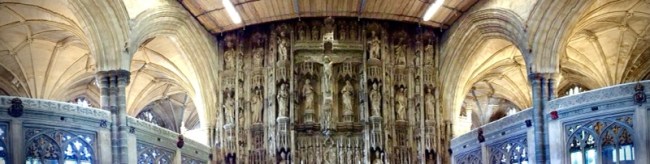
Panoramas are great at capturing the grandeur of large or historic buildings, as with the shot of Winchester Cathedral, above.
One of the little-known wonders of panoramas is that they can be taken vertically!
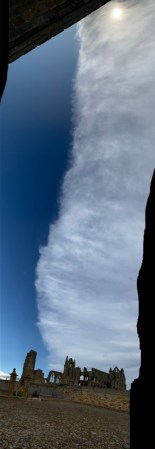
The above shot illustrates the usefulness of this. It was taken on a preparatory visit to Whitby, in 2018. I needed a long, thin vertical image for the sidebar of a pocket brochure for the Silent Eye’s Whitby weekend, in December of that year.
As I focussed on the ruins of the Abbey, I realised that the whole sky was covered by a single, dramatic cloud leading to the sun. But this was only available by scanning the camera vertically.
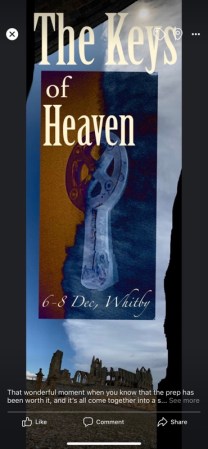
The closing images, below, are what I call ‘sky-shots’. Some of my favourite photos have been taken this way.
There’s nothing better than the successful capture of a huge, bright sky. The trick is to hold the arms out, level with the ground and then rotate the shoulders upward, in tandem, finishing overhead with the back arched. It’s a bit like yoga and takes a bit of practice, but the results are unlike any other type of shot you will take.
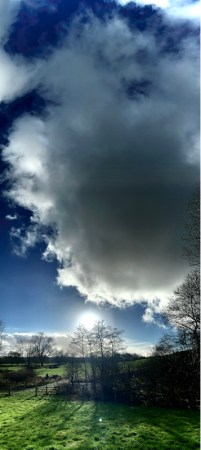
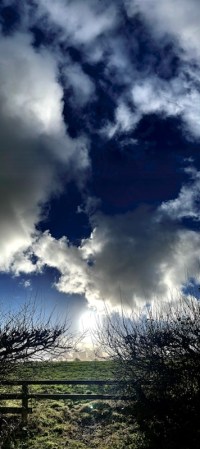
The key is to have a go… After a while you become your own best teacher. If it feels good to you, it is good!
©Stephen Tanham, 2021.
Stephen Tanham is a Director of the Silent Eye, A journey through the forest of personality to the sunrise of Being.
Share this:

+ #Silenti, Biology and mysticism, Consciousness, esoteric psychology, Higher Mind, Life-sciences, Psychology, Silent Eye School, Unconscious
The Big Picture (2) : a portrait of the archer
by Steve Tanham
If we’re going to set off in search of the spiritual – as seen in humanity’s ‘internal pictures’, we need to have a more modern definition of what ‘the spiritual’ actually is…

Imagine we are reading a paragraph in an absorbing book – something like the image below. Normally, our brains would assemble a sequential stream of characters into recognised words, then meaning. The meaning would be gradually tuned as we read into the context of the whole.
Clever stuff… Our minds equip us well to interact with the information sources in our world – some of which could kill us, if wrongly interpreted: think of a traffic crossing. We have a life-imperative to protect our organic existence, but it does not mean that, beyond the needs and duties of this lifetime, it was ever truly our home.

Back to the paragraph in our book. Imagine if, instead of that sequential, character-by-character interpretation of the language, we looked at the set of words and suddenly sat back with surprise as the whole thing sprang into vivid life in front of us!
Now, everywhere we look, and from every angle, the deepest meaning of the text becomes vital; and with a force that simply leaves no room for it being wrong…
That’s what seeing with a ‘spiritual eye’ is like. The sense of ‘me and it’ is lost in a glorious, calm involvement with what had been the object of our vision – and this can be the whole world. What’s happened is the sudden and miraculous removal of the learned idea of a separate entity for me and it. Instead, there is a seamless and deeply personal absolute knowledge that we are seeing the truth of where we look.
The experience is completely real. It means the state we have entered is a higher one. By that, we mean that it came first… It is a parent of the state we are now in.
The state we normally live in, this lesser ‘ordinary’ consciousness where understanding comes through slow absorption of ideas, is the product of a natural process as we enter life and become in-volved with our new world.
It is essential that we do this; that we experience this biblical ‘fall’ into the denser world of organic matter. Why this is so is a much deeper answer, one requiring a more developed vocabulary for the shape of our existence. The brain cannot fully comprehend it, but it can string the bow… What happens next requires that we have an arrow.
Our personal power in life comes from having a strong ‘identity’ with ourselves… and this is a picture of self. This self, and its interactions with the world, are gradually assembled into a composite which solidifies with a psychological ‘whoosh’, somewhere around our seventh year of life. From then on, this ‘me’ becomes the core of how things are felt, and how we take things forward. It is the personality; but it is built on many, smaller units of ‘me’ that are part of a process of deeper involvement with the world.
The prenatal infant does not know itself to be separate from mother. But ask any mother and they will tell you the poignancy of knowing something that your body has ‘made’ will have to leave your warmth to achieve its life, separated. The mother knows the infant is not her, the infant does not… until, mirroring the deepest spiritual tales from our collective past, it is born, a stranger in a strange land.
Instantly, there is it and the world. The most beautiful state of Oneness, paradise, has been lost… And only the most magnificent human potential could justify that event.
Mother is there, of course. Her breast and her warmth are everything to the child, but they are not the exact match to her needs as when in the womb. There begins a process of not just separation, but of ‘lack’, especially orally when there is not enough milk for the infant’s hunger.
From these early events is formed a set of relationships with the new experience of independent life. The infant is always present to its experience, so everything is seen in a relationship to itself. The whole of the infant’s life will be patterned by these formative experiences.
One way of examining this development – which is mainly psychological – is the technique of ‘Object Relations’: one of the tools of modern psychology, and one that finds itself most closely allied with certain mystical schools – though not by intent. An understanding of Object Relations will help reveal the pictures formed during this first stage of our-selves.
We are not attempting regression, here. The goal is to unite the adult mind’s power with the early and potent feelings of being human. We do this because there is a correspondence between those early events and the patterns of experienced energy we find when can touch our own essence.
It is no accident that the ability to form good mental images – visualisation – has always been one of the key tools of spiritual development. Ignatius Loyola, founder of the Jesuits, is most famous for his exposition of building living images of oneself ‘imitating Christ’. These techniques are truly ancient, and have been the tools of ‘priests’ throughout history. To get what we want and hopefully need, requires a ‘clear picture’ of the desired state, even if it is partial.
But there is a problem when it comes to visualising a higher spiritual state. The mind cannot conceive of something higher than itself. However, we can assemble a small armoury of self-tools certain to take us at least part of the way to the spiritual eye spoken of in the opening paragraphs. It’s time to make our arrow…
In the next few weeks, we can follow an overview of the Silent Eye’s method for:
- Understanding the most important of the early pictures of self, and how they became the foundations of ‘us’.
- Examining the aspects of ‘ancient wisdom’ that correlate most closely with the pictures.
- Reconciling the adult and powerful self with the fears of the infant, experiencing a ‘washing away’ of that early anxiety, thus freeing the energy inherent in the early states that were so close to Oneness.
- Finding the separate ‘faces’ of that Oneness, and forming a new picture of each, as the Sufis do, as Intimate Friends on our deeply personal path.
Equipped with the above, we truly notch our arrow into the taut and harmonic string of a mighty bow, and, standing tall, fire it into the heavens of our own sky.
We might even get an answer to this focussed message. But its nature may surprise us…
©Stephen Tanham, 2021.
Stephen Tanham is a Director of the Silent Eye, A journey through the forest of personality to the sunrise of Being.
Share this:

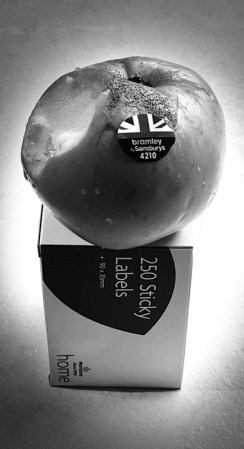
I had such a peaceful blog planned… Creative and poetic, taking a whimsical look at a key modern event.
But… instead, I’m typing this on my much-loved Apple iPad, with a sour taste in my mouth.
Better start at the beginning.
I was queuing for a take-away in Costa Coffee, Morecambe, on a particularly nasty day three weeks ago. The rain and wind were battering the windows, and Joanne, my sister-in-law, was having to stand outside in the gale because only one person per group was allowed to queue inside the coffee-house. Bernie was walking Tess, our collie, and she was joining us, in the park area across the road, to have our coffee – the only kind of social event we can do, now.
Joanne is not good in high winds and I had to keep looking back to check she was okay… Not a good way to concentrate.
Wallet in one hand, I was using the other to check in with the Covid QR code. That’s when I dropped the phone, and watched in slow-motion as it spun down to land, screen-first, on a metal bar fronting the base of the counter. My much-loved iPhone 11 is the device on which I have taken most of the blog photos for the past two years.
The screen had fractured into dozen of cracks… it was still usable but a mess. At least I had it insured. With a bit of cash up-front, I could replace it with the latest model… the one with the bigger lenses and dramatically increased processing power. Mmmm.
One of my sons, Daniel, had been seen at our most recent get-together jubilantly flashing his brand-new iPhone 12 Pro – supposedly the best ‘phone camera’ on the market. Now, I had the chance to get the same device. If you’ve followed this blog, or are a friend on Facebook, you will know how passionate I am about photography through the seasons.
The new model duly arrived. Unwrapped, it looked stunning in its cool gun-metal case. I couldn’t wait to set it up. The older iPhone 11 had, in its time, taken less than an hour to configure itself by automatically copying everything on the previous phone and re-verifying my security via its sophisticated algorithms.
I pressed ‘Go’, on the new one… and made a pot of tea, expecting it to be practically finished when I got back.
Three days later, I’m still waiting. Apparently, Apple know they have a set of problems with this release. The hardware is great. The core operating system comes up straight away…
But most of us have a vast array of ‘Apps’ that do specific and important things for us, including advanced processing of our photos. These are currently sitting, ‘greyed out’ on my new phone, unable or unwilling to jump into life on the replacement. I’m no beginner, and have followed exactly what I did with the last device. But every time I chase the next logical path to a fix, it turns out not to be.
I’ve been a vocal fan of Apple for decades and am an enthusiastic advocate of its stance on protecting our individual security. When my wife asked me what I wanted for Christmas, I unhesitatingly asked for an Apple Watch.
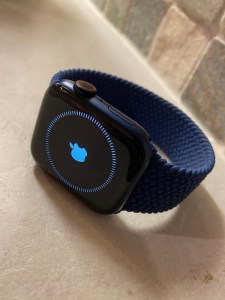
That’s it, above. Dead as a dodo, presumably in limbo between two generations of its host phone. Sadly, the price of reliance on a single technology.
As you can tell, I’m struggling with all of this. Bernie has just opened a bottle of wine and we stared, through tired eyes, at the reset button that would eliminate two days of partial work and take us back to the beginning of the whole upgrade via a recovery from the last iCloud backup. Someone on one of the internet support groups said this may be the only way out.
We press it… turning away while it starts at the beginning, again. All this might be my fault. The wrong decision, something odd installed on my phone – like a virus checker. The thing is, though, Apple have always protected me from that. They’ve always been there, one step ahead of what I might do in error, next.
So far, the reset from iCloud appears to be working… But it’s going to take a while to take this sour taste from my normally sweet mouth.
©️Stephen Tanham
Share this:

+ #Silenti, Consciousness, nature, Photographic techniques, Photography, Seasons of the year, Silent Eye School
Winter walks with camera (6) : the shape of drama
by Steve Tanham
Drama comes in many forms, but those forms can be accentuated by the rigours of Winter
(250 words, a two-minute read)
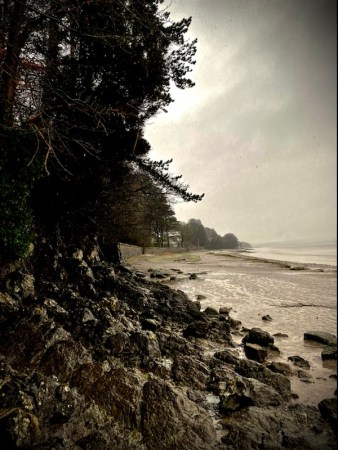
The estuary to the west of Arnside has an ancient feel, and is filled with dramatic shapes and foliage. In Winter, some of these can look primeval, and the natural desaturation of colour caused by the lower levels of light play to the mind looking for objects of potential menace…
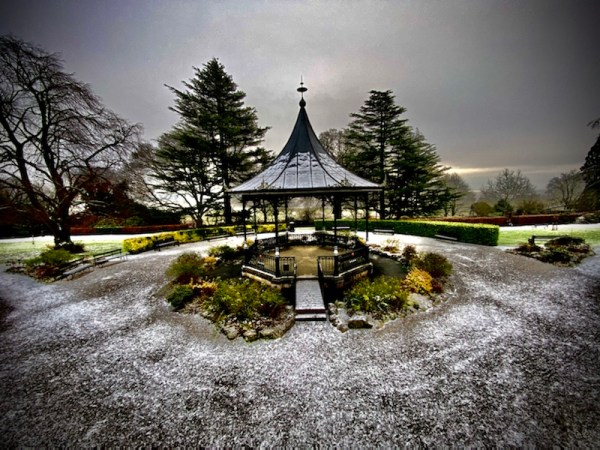
Familiar objects, like the park bandstand above, can take on a more dramatic form when photographed in a way that emphasises their aloneness. We are invited to enter… but what awaits?
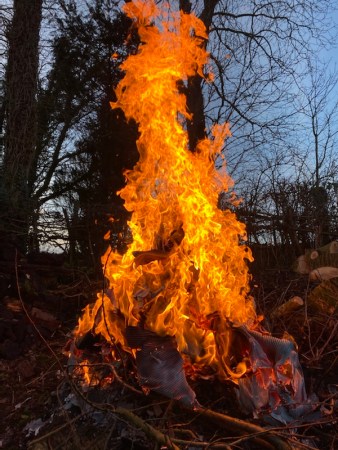
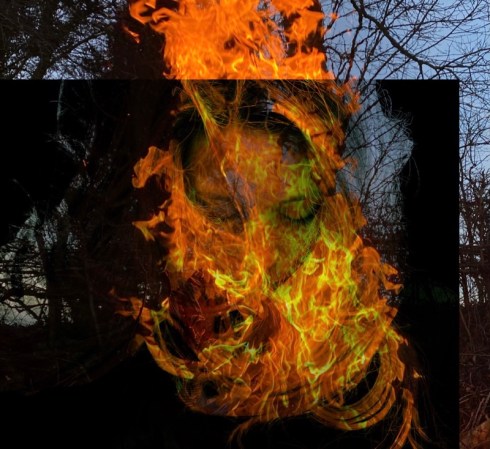
Fire is one of the most dramatic things, and has ancient links into the human psyche. Protector or destroyer may hinge on circumstance…
Fire is notoriously difficult to photograph realistically. The twilight helped with this shot, giving the dancing flames a vivd life of their own.
I was able to re-use this image to create a blend of flames laid over a woman with flowing blonde hair, sourced from Pixabay. The finished montage became the keynote picture of a new series of blogs on the power of the image within our psychological makeup.
©Copyright Stephen Tanham, 2020.
All photos by the author unless otherwise stated.
Stephen Tanham is a Director of the The Silent Eye, a journey through the forest of personality to the sunrise of being.
Share this:

+ #Silenti, Biology and mysticism, Consciousness, esoteric psychology, Higher Mind, Life-sciences, Psychology, Silent Eye School, Unconscious
The Big Picture (1) : life and the image
by Steve Tanham
We don’t live ‘in the world’… an outrageous thing to say, and yet it’s true. Well, if we don’t live in the world, where do we live?

We don’t live in the world; we live in a picture of the world… the ‘big picture’ of the blog’s title. If we actually lived in the world, we would go insane within a very short time in trying to process the near infinite information that the real world throws at us every second of the day. Nature has helped us with this; millions of years of evolution have honed and perfected this ‘signal processor’ that we call the brain.
Instead of losing our minds – itself a telling statement – we have evolved to have, at the pinnacle of our personal organisation, a sophisticated ‘summary engine’ that can be taught what’s important to us so that it can be extracted from the ‘flow’.
When we were children, staying alive was very important; as was staying close to ‘mother’, who protected us. The knowledge and methods of this stage of our lives are buried deep in our so-called ‘subconscious’, where they protect us by becoming ultra-fast reactions based on recognised patterns of events coming at us – like a hot coal that once burned us, or the initial taste of mother’s milk, our original food of life that went hand in hand with her deep and ‘most warm’ love.
The human being’s consciousness is made up almost entirely of reactions… and rightly so. In a potentially hostile universe, these reactions operate at lightning speed to protect and preserve us. They also give us fear, filling us with chemicals that speed up our reactive potential. They can also give us pleasure… to the point of addiction.

Growing up to maturity in a stable way is not a trivial process. No wonder we value the stability of the bionic machine that protects us. That this reactive engine is the pinnacle of us is marginally untrue. We also have a strange other creature sitting high up there at the top of our personal organisation.
Reading this, you can, at any time, break away from these lines of language being interpreted by the equivalent of millions of lines of ‘brain code’ that sift and refine what the meaning is. You can break away from this information stream and ask yourself, ‘Mmm what do I think of this?’
The part of you that has this power of separate thought from the general engine of survival, pain and comfort is the self. The self is a very strange entity that arose in our internal experience once we had stabilised our survival. Essentially, the self was what survived in conscious memory from moment to moment within the sea of experience. We became attached to it, for it not only carried memories vital for survival, it also gave us a sense of worth. Because it was always there, we grew fond of it. With its help, we could take greater autonomy in our lives, choosing certain directions based, positively or negatively, on pleasure, pain or… even values.
Values are interesting. They dont feed us, they don’t frighten us, yet we have learned that they are important. Some humans don’t spend much time on values, but anyone brought up with love and affection is likely to have a small treasure-trove of culturally inherited values from their loving parents and those who have influenced them most strongly in their lives.
We might say we have an unusual instinct for the ‘good’, beyond any need for it to be linked to our survival… or even wellbeing.
Our higher levels of organisation – our minds – contain the most sophisticated abstract representations of our world and our selves. These representations are in the form of interior pictures. They may contain all the information our senses can provide, but they are still pictures. They are not the reality of the present. They are that reality seen through pieces of our history, as though through an evolved lens.
The nature of those pictures, and their relationship to any quest for the reality of our selves, is the subject of this series of posts. It’s a series I’ve wanted to do for a while, and I feel the time is right and appropriate to this felt sense of an ‘end of the age’. My belief is that things are indeed ending, but only to clear the way for the depths of human potential to be further revealed. Because of the way we are made, the real changes need to come from a psychological and spiritual perspective. Only an awareness of this dimension of ourselves will open up our possible future…

The idea of images being central to our mental and emotional existence is not a new one. Ancient systems of metaphysics used diagrams like the Tree of Life, above, to illustrate the relative place of the actual world and our consciousness within it. The lowest of the ten ‘spheres’, above, is Malkuth, which is the body and its raw awareness. But our composite consciousness of the world begins at the next higher level – the purple sphere of Yesod above it. One of the key meanings of Yesod is ‘The Image’.
The story of how our deeply personal ‘way of seeing’ developed is the story of how our experiences formed relationships between ‘me’ and the world. These started very simply, but powerfully, with the essential relationship between the infant and mother. In the first two years of life are to be found the essential lenses of our seeing that pattern the rest of our lives.
In the next part, we will examine this early state – not from a perspective of regression, but with a view to blending our early perceptions with the adult discrimination we now possess. The mixture can be a fiery one… But the flames of self-discovery can put an entirely new light on our habits, our fears, our joys and the potential for our consciousness to go much further than we currently envisage.
©Stephen Tanham, 2021.
Stephen Tanham is a Director of the Silent Eye, A journey through the forest of personality to the sunrise of Being.
Share this:

Mystical Poem in the Sufi style: 120 words. A one-minute read

Across a scattered land I sought you
For almost all a lifetime’s days
Until within a book I brought you
To be a light beneath my gaze.
♾
Within a scattered mind I sought you
Aflame with thoughts and secrets found
But words declined to let me find you
Who watched the eyes that chased you round.
♾
Within a scattered heart you found me
And pulled me back from lines that fade
I am, you said, your essence finding
The song by which your life was made.
♾
Dedicated to Rumi, the Sufi Poet
©Stephen Tanham, 2021.
Stephen Tanham is a Director of the Silent Eye, A journey through the forest of personality to the sunrise of Being.
Share this:

+ #Silenti, Consciousness, nature, Photographic techniques, Photography, Seasons of the year, Silent Eye School
Winter walks with camera (5) : long-shadowed figures
by Steve Tanham
A bright winter day brings a wonderful benefit: long shadows. Often a matter of being lucky and at the right place at the right time, the long shadow is at its best extending the movement of people…
(300 words, a two-minute read)

The opening shot was taken while walking behind a family. It was a Sunday afternoon and we had been strolling behind them on the promenade at Heysham. As the prom approaches the village, it climbs steeply up a small cliff. At that point, the shadows in front of us, cast by the early setting sun, became extended. I had finished taking photographs for the day but I grabbed the camera from my coat pocket and pressed the shutter – not even sure I’d get a shot. I was delighted with the sheer joyfulness of people and shadow this produced.

This shot, above, taken on the same Sunday, is one of my favourites. I was focussing along the promenade, playing with the linear effect of the wide tarmac surface in the bright sun. Two cyclists appeared in the distance and the potential began to unfold. As they got closer, I forgot the longer shot and tried to get the timing right to capture the moment the shadows reached their maximum width for the lens.

The final one, above, is more shape than people. Morecambe is doing a fine job of bringing itself up to date, spending a fortune on its prize possession: one of the longest promenades in Britain; with an unparalleled view of the Lake District thrown in. As a lover of Art Deco, for which the town is justly famous, I’m delighted that they are using the styles and (here) curves of the period to enhance the increasingly impressive seafront. The monochrome medium simply increases the contrast, beautifully.
©Copyright Stephen Tanham, 2021.
Stephen Tanham is a Director of the The Silent Eye, a journey through the forest of personality to the sunrise of being.
Share this:


I had meant to write a blog about Covid; about the way it is changing our world, and not just from a health perspective. Finishing on whether there is a dimension of spiritual (consciousness) development in what’s happening to our societies.
But…
But I’ve been up since 05:30 and had a day with my mother, a woman approaching 91 years whose vascular dementia has galloped along this past six months. If you’ve been there, or seen a relative or carer being ground down by the sheer effort and often futility of a day spent trying to ease their relative’s burden, then you’ll know what my face looks like, having just arrived home at seven in the evening.
The day began with our trip to the opticians – SpecSavers, in Bolton. Three years ago, mum’s sight had been diminishing rapidly, and we feared she was going blind. She had nearly died in hospital fifteen years prior and had an emergency ileostomy involving the removal of most of her lower intensities. She survived that, taking six months to convalesce and, finally, come home. One of her eyes was infected with MRSA during her stay in hospital, resulting in internal scarring. Her remaining good eye has been her lifeline.
Two years ago, she had a life-changing cataract operation, which restored a world of colour to her one eye. Sadly, this fast few months, we feared that her days of sight were coming to an end, as the vision became blurred and she was unable to read.
The SpecSavers visit raised her spirits. There was good news: a ‘film’ had developed over the eye’s replacement lens, and this could be removed with laser treatment. She has been referred for a hospital visit to carry out the procedure. Hopefully, Covid permitting, she should be able to read, again, within three months.
Back home, she began a familiar litany: a family member was stealing all her money; and, worse, was now entering her home when she was out to rearrange many of her personal effects – like her makeup. It’s awful, trying to find the right balance between what you know is the truth and attempting to refrain from confrontation. I will not go into details. Sufficient to say that fate smiled on my attempts to find objects that had been ‘stolen’. They were retrieved and placed before her astonished gaze. She even seemed close to retracting her accusations. The new sentiments may not survive the night, but it was good to see the ‘old mum’… albeit briefly.
I dashed to the nearby Morrisons to do her weekly shopping, and we shared a final tea and cake before I left… but not for home.
We live near Kendal, in Cumbria. Mum’s house is in the old family town of Bolton, in what was Lancashire. When I make a day trip to look after her, I try to make the best of the travel. The other ‘to-do’ before I could begin the journey home was some dental work in nearby Chorley, where we had retained the relationship from our days of living there.
Having a new ‘crown’ requires extensive drilling, and I wasn’t looking forward to it, even though the modern anaesthetics are wonderful. A difficult day was going to end painfully.
On the way back to the car from the dentist, mouth numb and only able to mumble, I passed the parish church on the A6 road. The icy path sparkled in the light as it curved up to the silhouette of the old church, framed against the fading light and emerging stars. It was a moment of perfect beauty, and the image captured it well. The uphill struggle of the day seemed mirrored in nature’s frosting of the frozen water on the curved stone.
So, instead of a consideration of Covid’s wider implications, this was my day. We live to fight another. But not too many like this one, please…
Dedicated to all those looking after dementia sufferers, and all those caring for other people, everywhere.
©Stephen Tanham, 2021.
Stephen Tanham is a Director of the Silent Eye, A journey through the forest of personality to the sunrise of Being.
Share this:


My wife bought me an Apple Watch for Christmas. She’s had one since they were released, back in 2015, and loves it.
I had held off – I’m a bit of a traditionalist when it comes to watches, I love the classical face of a ‘proper’ watch. But, month on month, I followed progress as the usefulness of her watch grew,… and finally decided I’d give it a go. I’m very happy with it. I like the way you can tailor its functions and add ‘complications’ to each face, giving you fast access to digital services such as reminders, alarms, weather and even phone calls on your wrist. Then there are the health ‘apps’; a whole world in themselves.
It’s also beautifully integrated with Apple’s laptop computers, and we’ve had those for decades. I no longer need to logon to my Apple technology, the watch does it for me.
It made me reflect on how far watches have come, and that took me back to a time in childhood when I got my first one…
The small watch with the battered black strap lay on the ‘repair’ table, illuminated by the diffuse light from my father’s old table lamp. The lamp had a tattered and bent pink shade that betrayed its bedroom origins. Its base was surrounded by the screwdrivers, long tweezers and strange clasps of my father’s favourite hobby – watch repairing and restoration.
He was quite good at it and it brought in a small, secondary income to supplement his pay as an engineer for a fire alarm company. He was better at fixing watches than televisions; a fact made evident by the many dusty TV sets to be found In the darker corners of our home, most of them in various states of part-repair. I remember many of the neighbours calling to ask exactly when their sets might be returned… He was not a man to be hurried, my dad.
He gave the child’s watch a final examination and passed it to me. It had been one of a bundle that a friend had given him for spares. In this case only the strap was broken, and he’d just finished adding a new one. As soon as I saw it, I badgered him for it to be mine. The fact that it actually worked was a major attraction, too.
“It’s not ideal…” he said, giving me a look I’d seldom seen. Later, I would recognise it as an adult running out of appropriate words. Back then, I just skipped off with my new watch, and its shiny new brown strap.
I was seven years old and about to return to the village primary school after the Christmas holidays. I think I ran all the way to school, despite the icy pavements. The Lancashire village of Ainsworth was on top of a hill and its roads and paths were seldom gritted. As I entered the playground, I made sure to wave my arm a lot, displaying my new possession, proudly.
Miss Crompton got us settled in for the new term. She was a good teacher, but like many spinster ladies of the time, was rather severe. It was the early 1960s after all, The world was a very different place, back then.
“Miss, miss!” Jennie Barlow cried, holding up her wrist. “I’ve got a new watch for Christmas.” This was followed by Amanda Johnson doing the same. “Mine’s a Minnie Mouse watch!” she cried, gleefully.
That was my cue. Proudly, I stuck up my left arm and said, “Miss, mine’s a Minnie Mouse watch, too..”
Miss Crompton gave me a passing version of my father’s strange look and said, “Don’t boys normally have a Mickey Mouse watch, Stephen?”
I was, of course crushed. It hadn’t occurred to me that boys had to have a male character watch. In that shamed moment, the meaning of my father’s enigmatic expression was made plain – as was his undoubted dilemma in letting me have this one. I turned to look into a sea of hooting boy faces.
“Tanham’s got a girl watch!” they laughed. Miss Crompton did not correct them. I never wore it again.
But there’s a final twist to the story.

Apple have thoughtfully provided a whole string of optional faces… one of which is a choice of Mickey or Minnie Mouse. So, when I want to brighten up a more serious moment or bring a smile to one of my monitored yoga or ‘walks with dog’ exercise periods, I flick the screen to my saved watch faces and me and the girl mouse smile at each other, conspiratorially.
They’re not laughing now!
©Stephen Tanham, 2021.
Stephen Tanham is a Director of the Silent Eye, A journey through the forest of personality to the sunrise of Being.
Share this:

+ #Silenti, Consciousness, nature, Photographic techniques, Photography, Seasons of the year, Silent Eye School
Winter walks with camera (4) : cold sunsets
by Steve Tanham
Winter is not generally associated with clear skies, not in Cumbria, at least! But when when a period of high-pressure brings clear air, and everything begins to freeze, there can be found the most beautiful of sunsets…
(300 words, a two-minute read)

Sue Vincent, one of my fellow Directors of the Silent Eye, along with Stuart France, the third in our trio, are both famous for admonishing those who travel with us on our ‘landscape adventures‘ with the words ‘Look up!‘ Taken in a wider context, it’s not the spire of a little-known church or a carved figure high on an ancient cathedral.
Sometimes, it’s just a cloud…
This one – unique in the depth of its colour – drew my eye so strongly, I put down my post-gardening coffee and ran inside to grab the camera – returning seconds before another cloud diluted the brightness that gave rise to the fabulous orange stratocumulus. Technically, it’s a terrible photo; phone cameras are as poor at telephoto shots as they are good at close-ups, but the image does convey the beauty of the skies at that moment, and therefore earned its keep.

This next one, above, is an example of ‘letting it be!’ Normally, before photographing, I see an image and go through an instant process of recording the emotions I feel. When I look at the image, usually back home, I will fine tune the colour and intensity mixers until I get the same result (or as close as possible) as the original feeling. Often, this involves taking out what I consider excess colour. With this photo, I simply let it be… I could not improve on what the camera had done with the sunset over the ridge.

The third photo involves one of my favourite themes – capturing the sun through the winter structures of trees. I was lucky to be at that place at that moment. Nature in winter can be so very beautiful!
©Copyright Stephen Tanham, 2020.
Stephen Tanham is a Director of the The Silent Eye, a journey through the forest of personality to the sunrise of being.
Share this:

From Sue…

 “Where there is life, there is love” Ghandi
It has been a lazy day, lounging half asleep on the sofa, nursing a rotten cold. The mind wanders down odd paths at such times and I have been thinking a lot about the whole idea of love. It is, after all, possibly the most important of human emotions and one that preoccupies us more than any other.
We seek it on many levels and in many ways, from the filial to the romantic, from the parental and the passionate to the divine. We call it by many names that may not at first be obvious, hiding it in plain sight as with so many other things of deep significance.
 “Where there is no love, put love — and you will find love.” Juan de la Cruz
Friendship is love, so is kindness, compassion, tenderness… the thoughtfulness that picks up the phone…
View original post 603 more words
Share this:

As we approach the end of it, I wanted a recent photo to sum up this dreadful year; but one which had hope in it – and an element of fun, despite the deluge of bad news we seem to face daily.

This is not me trying to be heroic. It’s simply a photo taken on Sunday by my wife, Bernie, during a rain and hail storm near Lake Windermere. Within minutes, we could have been saturated, and hurrying the half mile back to the car. Fortunately, we were both well protected – essential for winter life in Cumbria – and able to find the whole thing funny. The humour was lost on Tess, our collie, who had a bit of a sulk, until we got the chucker and ball out of that bag around my shoulders, at which point the downpour didn’t seem to matter…
Hopefully, the photo has some of the elements that characterise us Brits under adversity – self imposed or not. We know how to shield ourselves from the vagaries of the climate. We know that what connects us to the earth can also be watery. We know how to smile at the ridiculous… it’s a good job, really.
Beyond all of this, there is an ability to endure, to hitch a ride on the vehicle of time, which does away with all things… including our youth.
I’ll be taking a holiday from blogging for a short while over Christmas. I look forward to rejoining the writing stream in January. Thank you to everyone who has supported these posts in 2020 – you’ve been wonderful.
I hope 2021 is a better year for us all.
Happy Christmas!

©️Copyright Stephen Tanham, 2020.


You must be logged in to post a comment.