+ Biology and mysticism, Consciousness, esoteric psychology, Life and Death, Life-sciences, Spirituality
The What of Life (2)
by Steve Tanham

I want to like you, she thought, loudly.
Please don’t spoil it by picking on science in a stupid, fluffy way… but don’t stop challenging, either… find the villains…
She listened, intently, as he talked about the need to ‘see’ it all differently – Life, biological life, not separated from spirituality, but part of a bigger whole that encompassed them both…
“There is something in the human soul that formed and forms an angry and energetic response to reductionism: that the answers are to be found in the dissected, colourless and cold parts…”
He was right… so right. And biology had become the hidden champion of that. Late to the party, having spent a century emulating a physics-derived worldview from which physics was already trying to escape…
The problem was something called emergence. The beautiful patterns of a snowflake, seen under a microscope, were an example of emergence, but there were thousands more. Biologists were used to something ‘higher’ than the dissected bit emerging in front of their gazes. To the classical physicist, this was anathema. Everything, they said, could be solved by the bits… But even physics was changing, as the power of emergent forms began to grow in evidence and presence; but sadly not in time to prevent the widespread adoption of the ‘reductionist mindset’ in education, science in general and in life.
Seized upon by materialists, they used it to savage any example of the ‘mystical’ that dared say it was of the truth… And it took a hundred years before the ‘reductionist fundamentalists’ came to see that their own disciplines were, in this respect, crumbling beneath them. When that day came, the world of biological ‘form’ – the shapes and organisation that life takes, were seen to be a paramount example of how the whole was much greater than the sum of its parts… and this gave a new dimension to what was driving life along its mysterious road.
“Science’s models of how evolution works are incomplete,” said the speaker. “Or rather, the reductionist view of it – not the nonsense of Creationism – though, at the human level, we can understand the need for a compassionate view of our place in the universe, and the person who gives that away is a fool, for we – the human mind – invented that quest for understanding…..”
Dead right, she thought. Okay, I like you… Now, go where I haven’t … don’t blow it….
The session broke for coffee. She sat there, deep in thought, unaware that she was alone, until the woman in the red hat came over and gently touched her shoulder.
Darwin’s theory of evolution was and is brilliant, but it is only half of a ‘ruling dynamic’ that plays the music against which our slow dance of evolution proceeds. The powerful idea of ‘natural selection’ destroyed much of religious thought – but not completely. Within us all, there is a burning need to reinforce our sense of belonging with the natural world – teacher and exterminator that it is.
With ‘reductionist’ thought, which seeks answers by breaking things into their smallest parts, we have trees – but no forests… The reductionists found they had no language to describe them, so, metaphorically, they cut them down…
The ecosystem of the forest is as much a guiding principle as the tree. The huge advances in microbiology have shown the brilliance and the limitation of the reductionist view. So it is with the ‘natural selection’ model of evolution, which threw away any idea of a determining principle beyond random mutation of genes, resulting in a new creature that beat its competitors to the bed-chamber. Nature became a thrower of dice…
But then there were the gaps in the fossils, in the timeline, where entire species came into existence ‘overnight’. Eventually, these became impossible to ignore and it became apparent that something was working alongside selection to change life.
But, before we look at that something, we need to admire what microbiology found in the small, the ‘atomic’, the reduced. What it discovered was the cell, the glorious ‘bubble’ of organic life in which the entire blueprint of the organism was written. This inner code was the gene: both ‘plan’ and ‘means of delivering the plan’ – gene and expression of gene.
Deep in those life-cradling ocean vents, where the gradient of heat to cold was so intense that something that became organic life had the energy to come into being, we find that the core principle behind what became life was ‘born. That ‘living’ principle was persistence.
Life does nothing if it cannot persist. ‘We’ persist – and yet we change, constantly. Something within us – related to and harvesting our experience of the world – stays ‘me’. This is true at the organic level and at the psychological level. Some ‘pattern’ that is me moves forward in time, with persistence. Imagine waking up each day and thinking we were a new-born.
We are vastly more complex than the first containers of life. We have memory and therefore identity. Yet the same principles are seen to apply. In the oceanic depths, there were no cells, only chemicals: atoms and atoms grouped into molecules. The forerunners of cellular life were chemical chains of proteins that could self-replicate. With self-replication, they could persist .
The fundamental principle of life had been established, but this was just the beginning. Our self-replicating molecules were still part of their environment. To become more ‘complex’ – more organised, they had to begin to separate themselves from the world around them – yet still feed from it… Next week we will look at the birth of a world within a world; as mysticism calls it, a ‘microcosm within the macrocosm’. In terms of organisation and complexity, two of the building blocks of the new picture of life were about to come into existence…
Other parts of this series:
©️Stephen Tanham
Stephen Tanham is a director of the Silent Eye School of Consciousness, a not-for-profit organisation that helps people find a personal path to a deeper place within their internal and external lives.
The Silent Eye provides home-based, practical courses which are low-cost and personally supervised. The course materials and corresponding supervision are provided month by month without further commitment.
Steve’s personal blog, Sun in Gemini, is at stevetanham.wordpress.com.
From Sue…


Have you ever laid in the dew damp grass of morning and watched the petals of a daisy unfold, purest white, lifting its heart to the sun? Or seen a newborn creature take its first breath, opening its eyes on a new world? That was the gift I was given as a young man and I sat on a doorstep in the sunshine, talking of those questions that are hidden in each of us.
It would have been impossible to say who was the teacher and who the student as the spring sunlight poured down, honey gold and warm on one of those moments outside time where all that matters is opening the heart. The roles were continually reversing, as ideas flowed backwards and forwards between us.
Like the walrus and the carpenter, we spoke of many things, not sealing wax and cabbages, but equally disparate, yet somehow all with…
View original post 724 more words
Share this:

+ #Silenti, Consciousness, esoteric psychology, Facebook, Faces of Shiva, Google, Higher Mind, Instagram, Mindfulness, Mystery Schools, Politics and Power, Powers of the Mind, Speaking truth to power, spiritual turning around, Spirituality, Tech, Technology
The Faces of Shiva (3) The Colour of Kin
by Steve Tanham
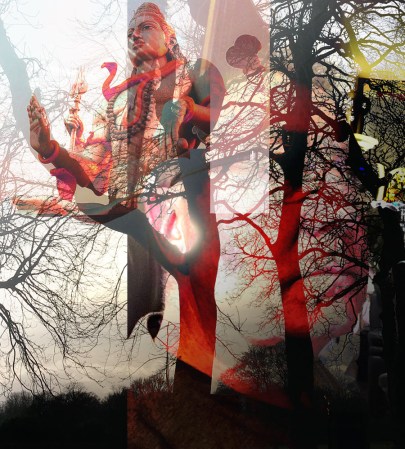
(Montage image by the author. See base of post for source of Shiva element)
We began this series by looking at how, at certain times in the life of civilisations, a ‘perfect storm’ of events overtakes and paralyses the forces of commonly perceived ‘good’ and cohesion; a state established over a long period of time.
We can consider that, in the case of America and the UK, this former consensus is in decline, and the shift of extreme wealth to the few produces a corruption which then erupts with society-changing force in varieties of violence, bringing the ‘age’ to an end… To people deprived of the the wealth and prosperity seen in those controlling the age, this is a good thing. To those of wealth it is a terrible prospect..
I am not a socialist. Having run a software business for over twenty years the aspiration-sapping dogma that often goes with it is not appealing. But the holding of more than ninety percent of a nation’s wealth by less than ten percent of its citizens is indefensible at the ‘state’ level.
No-one can blame an individual for being successful; it is what our commercial world is built on. But a society has to be something beyond this – and it has to be the home of our values. In my opinion, the living concept of society has been in decline since the time of Thatcher in the UK and Reagan in the USA.
To the ancient Hindus – who gave us so many of our core ideas of philosophy, this destructive decline was, and is, inevitable. It had to happen before something of new vigour could be born and grow to a restoring maturity.
The world would never be the same, again, of course, but the ‘real’ in mankind had to be given new life, new expression, like the spring brings the new growth of the organic world.
The last living memories are leaving us, but WW1 was such an event. Between 1914 and 1919 the old ‘age’ of Victorian Britain – and its empire – was swept away, as the country gazed on the blood-bathed horror of trench-based mutual destruction across a front line of war.
The U-boats’ successful attacks on American merchant ships was the trigger for the USA to enter the war in April 1917, under President Woodrow Wilson. Faced with this, the German forces, having tried to negotiate directly with the USA, signed a humiliating agreement – the Armistice – in a railway carriage located in the french Forest of Compiègne.
Endings are important. The German diplomats knew they would be hated for their perceived ‘surrender’. They also knew that their country was dying under the strain of military expenditure. President Woodrow Wilson’s entry into the war had tipped the balance and signalled their defeat. Both sides were exhausted in a way that we can barely imagine in our comfortable western world.
The terms imposed upon Germany were savage and punitive. The currency collapsed and there was widespread starvation. We could say that ‘they’ deserved it – many in Britain did, and continued to hate anything German for decades to come.
To me, it is ironic that Germany rose to become the dominant and the most inclusive, politically, as the forerunner of the EU was established after the ruin of WW2.
Matthias Erzberger, the German politician who agreed the terms of the armistice – reluctantly, for he knew how it would end – was murdered three years later by ultra-nationalist thugs from his own country.
In the confines of that forest, on the day of the Armistice, a younger German officer had witnessed his country’s surrender. He took with him a cold determination from that moment of national humiliation.
His name was Adolph Hitler…
Winning is complex; and the hatred generated by winners can be the driving force behind the destruction of an age. In 1938, no-one in Europe could believe that the continent had forgotten the horror of WW1 so thoroughly that another war was looming. But it was, fuelled by the hatred of the defeat and humiliation imposed by the ‘victors’.
There were few victors in the years that followed, as new depths of the human spirit were plumbed. The Nazis focussed their hatred of a target minority (the Jews) into the creation of the concentration camps – their ‘final solution’. Psychopaths – children of hatred – were running Germany, while the millions of ‘good Germans’ stood by in silent horror, terrified of speaking out but watching their country bring about what it hated, most.
Today we face a different war; one in which the natural and shared financial resources of the planet are centre-stage. We have reached the ‘finiteness’ of the Earth. Our intelligence has built machines that destroy as well as they create. The idea of ‘the good’ is paid lip-service, if not ridiculed by common expressions such as ‘do-gooders’.
Power breeds abuse. Abuse creates minorities who hate. Elements of the super-rich can harvest hatred as energy for their own purposes. Another name for this phase of ‘the Shiva cycle’ is fascism; where a minority with ‘differences’ is demonised for their skin colour or their ‘destructive’ religion. In the history of mankind it has been one of the most successful political philosophies.
As Edmund Burke – who was quite a right-wing figure – said: All it takes for the triumph of evil is for good men to do nothing’.
Usually, it’s not enough – nor in time. Occasionally, the Shiva force is put back in its box…
Is there a spiritual dimension to this? The force that feeds this negativity is hate. As a parent might look at their fighting children and wish upon them the higher perspective of an adult, so we can look at ourselves enmeshed in this cycle and pull ourselves ‘above it’. Without this, there will never be healing.
Other parts in the Faces of Shiva series:
These are my personal views. I respect those of others who may not agree with them. If there is a way through these things we need to share opinions and ideas in a non-polemic way. Currently, hatred reigns. As Stephen Hawking said, “All we have to do it to keep talking”.
If we don’t there may not be a future…
Please free to add your own comments.
©️Stephen Tanham
Stephen Tanham is a director of the Silent Eye School of Consciousness, a not-for-profit organisation that helps people find a personal path to a deeper place within their internal and external lives.
The Silent Eye provides home-based, practical courses which are low-cost and personally supervised. The course materials and corresponding supervision are provided month by month without further commitment.
Steve’s personal blog, Sun in Gemini, is at stevetanham.wordpress.com.
Images: The opening montage is by the author. The underlying image of Shiva is from Wikipedia under the licence detailed below.
https://upload.wikimedia.org/wikipedia/commons/4/4a/Shiva_cropped.jpg
Thejas Panarkandy from India – Murudeshwara Statue
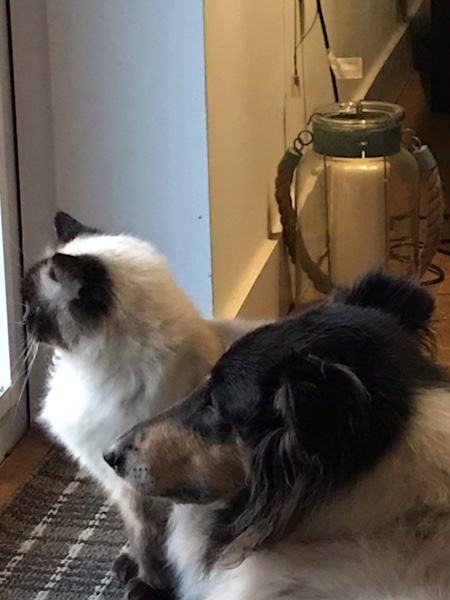
– C’mon little fella, you can make it…
– That pond’s not far!
– Just three more hops… one, two–
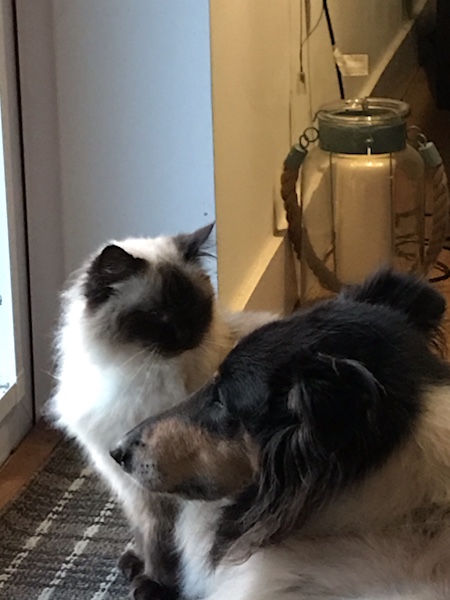
– Eeurgh! I can’t look
– I hate herons…
©Stephen Tanham
Share this:

+ Biology and mysticism, Consciousness, esoteric psychology, Life and Death, Life-sciences, Spirituality
The What of Life (1)
by Steve Tanham
She was sitting in the front row – the car, for the first time in its life, had failed to start, and she set off late, as though projecting her future to this point – the front row of a group of about twenty people, a collective warmth -she had to admit – within which she was a complete stranger.
They had sounded interesting. Not presumptuous, not critical, just warm and intelligent.
The speaker was talking; a man with kind eyes, who had the relaxed manner of someone who’d one this many times. He looked at her, smiled and asked the question, “What is Life?”
It was the end of a miserable event curve that had begun with the car’s idiocy. Now, she felt nineteen pairs of eyes and ears upon her as she wished herself away. Instead, she breathed, wishing to rise to this double challenge of being unknown and facing an question to which there was no entire answer – itself an unknown…
But he was shifting his attention. “We all need to ask ourselves that, for it is the basis of any spiritual exploration…”
His head turned towards the back of the room, where she could feel someone straining to answer. There’s always a resident swot, she thought, recalling her school days…
“I would say that….” rose the voice from the back. Then it paused.
It was the gap that did it, she would later reflect. The pause that spoke to her and said You can respond to this. Damn it! She had studied biology in some depth; had created a synthesis in her own head, mixing it with her belief in universal kindness at apparent war with a cold universe…
“It’s a mysterious continuity,” she said, firmly – filling the gap.
She didn’t need to see to know that all eyes were upon her. His eyes dancing with mirth at her interruption, smiling gently at the depth of her answer.
“Yes?” He said, inviting…
She would apologise to the interrupted man at the back, later… For now, she had something to say.
———–
What is life? It’s an obvious question that has taken us thousands of years to approach. Even philosophers have argued over the question, unable to frame the properties of ‘living’.
As a child, and keen on cheap horror films, we would go out into garden with old, water-filled milk bottles and create coloured mixtures of soil, bits of plants and various other substances like the dust of old cement from the builder’s yard next door; that sort of thing. We would jam our hands over the neck and shake the contents for all we were worth, eventually, and exhausted in arm, watching the swirling mass of usually dark liquid spin like its own speeded-up universe.
Did it live?
Of course not. But the broken fractures in the middle of the deep sea oceans, with their bubbling, muddy vents, powered by the intense heat from a gap in the Earth’s crust did live – according to the most likely theories on the origin of life – our life.
What lived there that contrasted with our dead but sincere shaken milk bottle stew? What was it that came into existence and sustained itself, miles from the surface of the sea, coaxed into life by the energy of the volcanic deep-sea trench?
The answer is fascinating and multi-faceted. One very good answer is that we did. We came into existence in that deep ocean trench, a billion years ago. The chain of life that began then resulted in us – a being that can actually look back, with some authority, on the history of life on Earth. But it doesn’t just look back; it asks whether this was a unique, freak event, or whether the universe is teaming with life…
The growing mind that resulted from that self-sustaining life form can still only describe what life is, not why. The ‘what’ is wonderful and mysterious, but the why is either ignored with disdain or avoided. Science is not good at sharing the ‘truth’ with anything not based on its rigorous, but limiting principles. There are good reasons for this. The ages before the birth of rational thinking were marked by sheer fantasy and religious dogma as to what life was. The resulting materialistic swing of science was a natural reaction to this – and a good one. Perhaps now – as the questions of consciousness pile higher – there will be a loosening of what has become its own dogma, and a much deeper sharing of what it means to be human.
Over the next few Thursday posts, we will take a journey from those ocean vents where life began, making the leap from chemical to organic – and watching it change its relationship with ‘the world’ forever.
©️Stephen Tanham
Stephen Tanham is a director of the Silent Eye School of Consciousness, a not-for-profit organisation that helps people find a personal path to a deeper place within their internal and external lives.
The Silent Eye provides home-based, practical courses which are low-cost and personally supervised. The course materials and corresponding supervision are provided month by month without further commitment.
Steve’s personal blog, Sun in Gemini, is at stevetanham.wordpress.com.
Share this:

+ #Silenti, Consciousness, esoteric psychology, Facebook, Faces of Shiva, Google, Higher Mind, Instagram, Mindfulness, Mystery Schools, Politics and Power, Powers of the Mind, Speaking truth to power, spiritual turning around, Spirituality, Tech, Technology
The Faces of Shiva (2) Twisting Democracy
by Steve Tanham
(Montage image by the author. See base of post for source of Shiva element)
The ‘perfect storm’ is a phrase that has entered our common vocabulary; that coming together of events to create a maelstrom of change and, often, terror – the terrorist attack of ‘9/11’ was a vivid example. These events change our world. We need a new word that describes the way we can look back at catastrophes and dissect them with great insight, yet seem unable to react in time to change them when they are happening.
The fact that our societies cannot fend off these ‘attacks’ in time to change them is part of a bundle of risk calculations made by the perpetrators. They rely on the ‘attack’ being something new, something of a different order to what has gone before, and which therefore will escape the safety mechanisms already in place. By following this plan, they calculate that the plurality and slowness of the response (of democracy) will dilute any ability to frustrate what they are carrying out.
They also rely on poor education; the inability to see through over-simplification of important and life-changing decisions. Few things are black and white, but we have to work to distinguish things in colour…
Politically, we could dispense with the slow and measured response of democracy and instigate a small or very small group of controllers – this would be fascism. Fascism always seems to be attractive in the face of a crisis; that’s why generating a false crisis is usually the first move of the proto-fascist. Decisions with depth need the kind of thinking through that makes things slow, and depends upon the goodwill of the people and the maturity of the judiciary.
Fascism is not a political party. It’s a state of mind that preys upon the under-educated. It follows a well-tested curve to power; something I will write about in the final blog of this series. It is a mistake to think that the snake of fascism ever dies. Its mechanisms are always funded by the super-rich, who need to damage the power of ‘reasonableness’ in order to get the sweeping changes they need for yet more power. This is key: while a society’s centre of reasonableness holds, the extremists cannot gain traction.
The year 2016 saw two examples of a dynamic and decisive use of a new technology for the manipulation of political power: the US presidential elections, and what has become known as the ‘Brexit’ referendum in the UK- though, at the time, ‘Brexit’ was the name of the well-funded camp that wanted a second national referendum on the issue – the first was in 1975, which confirmed that the British nation wanted to stay in Europe.
I am not writing here about the results; the winners of the elections. The idea of democracy is that people vote for what they want. I am discussing the advanced methods by which democracy is manipulated; and the step-change in power of those who now control mass opinion. Historically, newspapers and television have done this, but the massive growth of social media has changed the playing field across the world – particularly the use of Facebook data, something acknowledged by Facebook itself.
During the start of the second UK referendum, I was first alerted to what was going on when a full-screen image appeared on my Mac over my morning coffee. There, in an exact match of the colours and fonts used by the UK’s Labour Party, was a political advert saying that Jeremy Corbin, the leader of the Labour Party, was against Britain staying in the European Union. The content of the Facebook ad was subtly worded, such that it was the right side of the law, but the inference: that Corbin had endorsed the ‘Brexit’ campaign, was entirely false. Subsequently, it was discovered that there were hundreds of variants of each advert, each specially tuned to the exact political parameters of the recipient. Ask any psychologist: people give a lot away about themselves when they fill in the boxes on fun surveys like ‘What kind of avenging princess are you?’
Surprisingly few people know the full story of how Facebook data was used during that period in the UK and in America. It was estimated that the personal social-political media profiles of over 50 million Americans were held by Facebook and legally (though deviously) extracted by an English firm – Cambridge Analytica – to be used in the election that brought Donald Trump to power. Exactly the same process was used to sway the million and a half voters needed to tip Britain into the present chaos of ‘Brexit’, as per my Labour Party example, above.
Cambridge Analytica ceased trading following the exposure of its methods by journalists not politicians. It was a runaway business success to that point. Only social pressure and the refusal of other companies to be seen to be customers drove it out of existence. In the end, much of that boils down to the pressure exerted by institutional shareholders, which points to one effective way of tacking such abuses.
It would be a mistake to assume that the methods developed by Cambridge Analytica have faded away in the aftermath. Facebook did nothing illegal, but – particularly in the US – is deeply fearful of new laws that would classify its screen-based output as ‘publishing’ and bring its content under the same legal and political scrutiny as conventional publishers. Such a move would dramatically affect the growth and share price of the ‘Tech’ giants in the social media world. Just as significantly, it would give them a task that they were, technically, not yet able to perform. The sheer volume of content means that even an army of human monitors could not deliver the control needed. Only advanced AI methods can do this – coupled with much faster follow-on response than they have shown previously.
The recent teen suicide scandal in the UK, where the Google subsidiary Instagram was seen to be hosting videos that promoted the practice, has highlighted the slow response to present crises, despite a stated willingness on the part of the Tech giants.
Personally, I think both Google and Facebook offer excellent products. But both face a barrage of ‘social responsibility’ issues, the response to which could bring them into a societal maturity they currently lack. But they have deep pockets… very deep pockets. We can hope that such money will be used in the development of automated ‘cleansing’ systems, rather than fighting off the need for society to protect itself – and the integrity of the political process of government.
All of what is happening may be inevitable. This ‘Face of Shiva’ may be characteristic of the destruction of a way of life that comes at the end of an age. The shift of power into the hands of very few people and corporations is a frightening thing. Plurality protects; the US lawmakers who are now looking at anti-trust legislation against their own companies face a difficult dilemma, but one that must be solved if we are to feel that the individual human has any value at all.
Is there a spiritual dimension to this? There is certainly one of consciousness. The most destructive forces at work are those creating the ‘polarity of hate’ across the western world. However much we feel ‘our side’ has been wronged, our only hope for the future is to re-discover the middle ground from which the extremists have pushed our collective centre of gravity- and that is a personal, not a political, action.
Other parts in the Faces of Shiva series:
These are my personal views. I respect those of others who may not agree with them. If there is a way through these things we need to share opinions and ideas in a non-polemic way. Currently, hatred reigns. As Stephen Hawking said, “All we have to do it to keep talking”.
If we don’t there may not be a future…
Please free to add your own comments.
©️Stephen Tanham
Stephen Tanham is a director of the Silent Eye School of Consciousness, a not-for-profit organisation that helps people find a personal path to a deeper place within their internal and external lives.
The Silent Eye provides home-based, practical courses which are low-cost and personally supervised. The course materials and corresponding supervision are provided month by month without further commitment.
Steve’s personal blog, Sun in Gemini, is at stevetanham.wordpress.com.
Images: The opening montage is by the author. The underlying image of Shiva is from Wikipedia under the licence detailed below.
https://upload.wikimedia.org/wikipedia/commons/4/4a/Shiva_cropped.jpg
Thejas Panarkandy from India – Murudeshwara Statue
Share this:

From Stuart…
Share this:

From Sue…
Continuing my visit to Penn, to keep my promise to Noelle Granger. The second part can be found here:
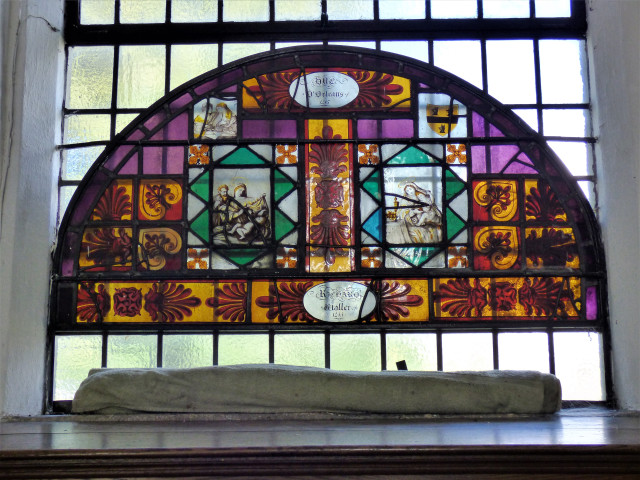
There is so much to notice in the church at Penn… far too much to take in at a single visit. Even the grave markers and monuments each have a story to tell and, while I seldom spend a lot of time reading inscriptions on a visit, here there were too many that bore names important to history to simply ignore them.

All around the church there is evidence of not only the history of the building, but of its people and patrons across over eight hundred years.
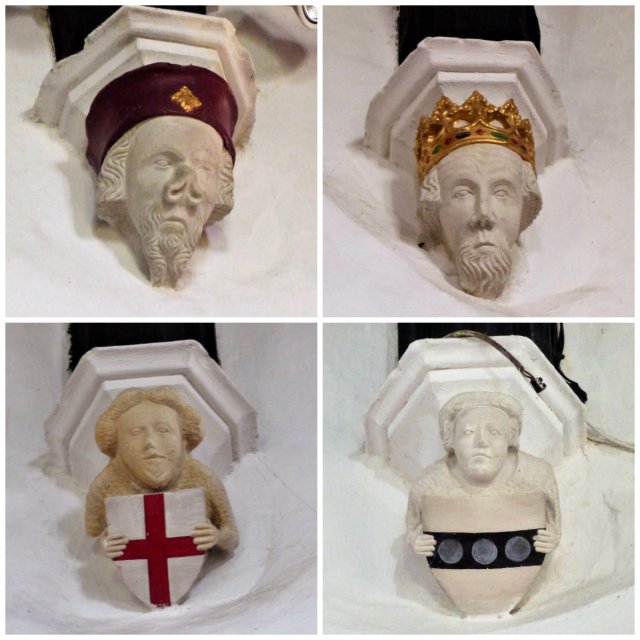
Faces, shields and heraldic symbols look down upon you are you explore. You know that each one means more than you understand… and know that you will be trawling the heraldry websites again in search of their stories.
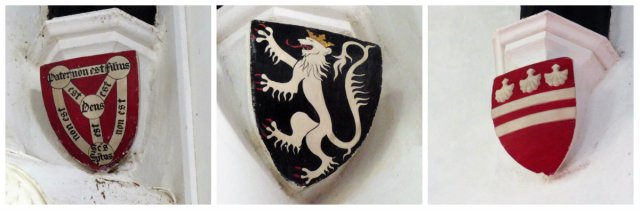
The royal…
View original post 436 more words
Share this:


Misti : I’m bored
Tess: I’m staying asleep
Misti: I’m still bored
Tess: You’ve been running across the back of my settee for an hour
Misti: You’re so predictable…
©Stephen Tanham
Share this:

+ #Silenti, Consciousness, esoteric psychology, Mindfulness, Silent Eye School, Spirituality, Truth and Esotericism
Reality TV?
by Steve Tanham
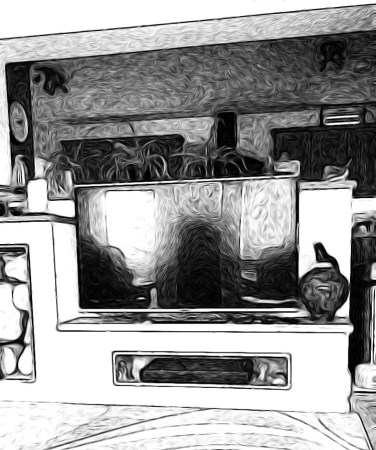
It’s full of trivia and artificial things; things which have arisen in the name of entertainment. Everywhere you look there is a stream of mindless celebrities willing – some would say desperate – to eat tropical bugs to give themselves a chance of being famous, again. It reminds me of a sad film I once saw called “They Shoot Horses, Don’t They”.
There are also some of the best and most informative documentary programmes we have ever seen. Such a mixture, and, as usual, it’s a matter of personal choice – and a bit of effort…
Television. It’s changed a lot since I was a boy… Perhaps not all for the better. But it’s not the purpose of this blog to complain about the ‘box’. We are all entitled to our leisure time and to choose how we spend it. To me, there is a sense here of a ‘race to the bottom’ about a whole layer of modern entertainment. This seems to go hand in hand with a view of life as a comic strip, where there must be good guys and bad guys and violent resolutions. Superhero movies don’t help. The truth is complex. Resolution of problems always involves compromise. There is no black and white.
How about considering the humble TV in a different way: as a reflection of the mind and human consciousness, it’s an experiment that opens up a set of parallels that are fascinating.
The TV shows us a flat screen that our minds have learned to convert back into our native 3D. With a well made drama programme that we can be ‘lost’ in, the experience is a good approximation of being there. Children can be traumatised by scary TV programmes. Adults sometimes forget the degree to which they cannot separate it from reality. Only later in life do we see that the ‘scare’ can be switched off inside ourselves, but only if we ‘pull back’ from the flat screen experience and deny it its imaginative power. My wife still can’t and hides her face behind a cushion with really scary films…
In ‘switching off’ what appears to be present lies a mystical parallel. Can the television teach us to do the same thing with life, itself?
I’m watching a bunch of gym-obsessed twenty-somethings flaunt themselves on an island in the sun. The women are blonde and beautiful; the men shaped like Greek gods… But their conversation could be from a junior school. The whole thing is entirely artificial. I mutter under my breath and switch it over. It’s a documentary about plastic waste and what we are doing to our oceans. I care about this, so I sit down and watch, clutching my cup of tea. This is real… and painful. I wish the perfect sun worshippers were watching this, too. We could us their energies…
Can we, in life, switch over channels? To do this we have to find the equivalent of us being on our comfy chair and watching the TV. This is entirely possible and is one of the basic techniques that we teach in the Silent Eye School of Consciousness.
We need to, literally, push the world away from our eyeballs. Sound crazy? Well, the reason the world is painted on our eyeballs is that we identify with what we see. Like the child with the television, we can’t see the screen and ourselves at the same time. By developing this dual consciousness – which is the work of only a few months – we can begin to watch our own life as though it were a screen. In fact it is a kind of screen, one on which we project much of our existence. We see this as happening to us, but, really, we are happening to ourselves. At least at the mundane levels of life.
Once we begin to penetrate the understand of the ‘world as television’ we can start to look for the truly real…. and that is a very different journey.
©️Stephen Tanham
Stephen Tanham is a director of the Silent Eye School of Consciousness, a not-for-profit organisation that helps people find a personal path to a deeper place within their internal and external lives.
The Silent Eye provides home-based, practical courses which are low-cost and personally supervised. The course materials and corresponding supervision are provided month by month without further commitment.
Steve’s personal blog, Sun in Gemini, is at stevetanham.wordpress.com.
Share this:

From Stuart…
Share this:

+ #Silenti, Consciousness, esoteric psychology, Higher Mind, Mindfulness, Mystery Schools, Politics and Power, Powers of the Mind, Speaking truth to power, spiritual turning around, Spirituality, Tech, Technology
The Faces of Shiva (1)
by Steve Tanham
(Montage image by the author. See base of post for source of Shiva element)
Brahma creates the world. Vishnu sustains it so that it might achieve its potential. Shiva destroys it when its positive energy has been exhausted. The ‘world’ might be everything, or, for the initiate of old, it might just as well apply to anything created by the mind – large or small. In other words a system.
It should make us think…
The ancient Hindu triumvirate describes a deep and recurring motif in spirituality: that there must be a threefold process, which necessarily involves the sweeping away of that which has served its purpose; has ceased to support the structures it built to achieve its purposes; has ceased to draw upon the positive (expansive) energies that sustained its coming-into-maturity.
We could be forgiven for thinking that this ancient myth accurately describes what we are experiencing in the world economics, politics and technology.
At the heart of it is the question: does the ordinary human have any intrinsic value?
We take for granted that we have value – that human life has value. We are at the top of the food-chain. We are intelligent. We created machines that appear to think, at least well enough to solve problems. Yet we are surrounded by recent and powerful changes that are sweeping away the consensus of ‘human worth’ that have sustained our civilisations for centuries.
Even a decade ago, we could have counted on an unwritten agreement that human life had value among the powers that control. Now, I’m not so sure. On both sides of the Atlantic (and elsewhere) what was supposedly put to bed at the end of the age of Fascism (World War II and its surrounding periods) is being attacked by either ultra-rich or fanatical forces.
In Britain, we have a crumbling national identify, divided by the hatred generated by Brexit and the advancing power of the political ‘right’ whose vision sweeps away thirty years of social thinking. Thugs from the ultra-right have been empowered by Brexit’s implicit racism and feel justified in threatening and even killing members of parliament who promote social and inclusive agendas.
In America, there is a President who is adored or hated in seemingly equal measure; a head of state who openly rewards the super-rich – that one percent of the elite that owns ninety percent of the wealth.
This kind of approach is applauded by those who espouse the supposed ‘trickle-down’ effect of wealth at that top; yet detailed studies on both sides of the Atlantic have shown that the tricking down of such wealth is non-existent. Many of those who voted for Brexit admit they did it to ‘spoil the party’ of the better off.
On holiday, last November, we met and had dinner with an American couple from Arizona whose company we liked but whose values were very different to ours. The personal possession of guns was one of the issues, but we were able to discuss it in a friendly manner. I learned a lot – particularly from the man’s statement that the police were incapable of responding to armed burglary in time to do anything, and so anyone not armed was vulnerable… He was appalled when I said that, in the UK, I would be committing a serious criminal offence if was caught with a pistol in public. I won’t be – I don’t like guns, but it pays to listen to other people’s views…
We did not fall out. Both sides of the table listened, and we continued to understand each other in more depth. Most telling was what the husband of the couple said to me as we were preparing to leave. He said that we should not believe this ‘bullshit’ that the average American middle-class family was prosperous. In his view this entire layer of American society had become substantially poorer over the past twenty years – the period that the super rich had hoovered up the available wealth – particularly after each financial crash.
The same is true in Britain, where the supposed ‘middle-class’ has seen its prosperity whittled away by the politics of ‘austerity’ since the financial crash of 2007. As a close friend of mine – a very working class man – said, “None of the ****ing bankers were put in prison, yet we’re all a lot poorer through having to bail them out… and the rich seem to be a lot richer, despite this.” In our case, this rage came home to roost with Brexit – changing the face of Britain, possibly forever, and destroying an economic coalition of European countries that had prevailed since the end of WWII.
When I worked in IT (for a Californian company) it was often said to me, in confidence, that the Europoean Union was ‘too successful at international law and too principled…’ Food for thought.
Recently, I watched a documentary in which an American billionaire from Silicon Valley was interviewed on this subject. His opinion runs counter to most of his super-rich friends. He argued that the very wealthy had only to share a little of their wealth to make the whole economic carousel continue in its revolutions; but that they didn’t see it that way, and therefore it was likely doomed…
Everywhere we look there is destruction of the old and formerly stable way of looking at things.
Back to our ‘value of the human’ consideration. I used to think that we could only fix things if we addressed the following:
- There has to be a ‘society’. Former UK prime minister Margaret Thatcher famously said that ‘there was no such thing as society’ – prompting outrage at the time. Collectively, perhaps, we need to re-learn where society comes from and how its values stay strong. The Scandinavian countries seem the best at doing this, and they willingly pay the higher taxes needed to sustain it.
- We have to believe that politics both works and matters. To have politics we have to have real choices. If, say, a victory for either side in a two-party state actually results in a the same economy-controlled decisions, then that is not a choice – it’s a fake choice. Following WWII, Britain voted out an astonished Winston Churchill in favour of a radical Labour Party that proceeded to carry out an exhaustive and effective overhaul of British social provisions. That was only possible because there was belief that change could be achieved.
- There has to be education about the issues. Brexit is a case in point. Even hardline pro-Brexit voters now admit they had no comprehension of the complexity of what they were voting for. They may not want to change their minds, but they agree they were misled.
- Technology – particularly social media – needs to be brought under a unified regulatory structure, even if it means extending the present laws to accommodate the uniques. The abuse of this mechanism was widespread in the Brexit referendum – and in the last US election. An English software company – Cambridge Analytica (about which I wrote at the time) – was chased to ground and had to ceased trading, but that’s proving to have been the tip of the iceberg. The origin of some of the vast sums spent with the social media companies on these campaigns remains shadowy.
Today, I’m not sure that list is comprehensive. Much of what follows in these posts is about the gaps…
Our world is complex and it is international. Any attempt to turn the clock back to simpler days, like ‘little Englanders’ do, is doomed to swift and painful failure. The degree to which people’s prosperity is inextricably linked with the state of the rest of the world is a terrifying thing – unless you see it as part of an evolution of the human race; an evolution in which we are brought face to face with the real conditions prevailing in the rest of the planet – unable to ‘turn off the TV’.
Is the face of Shiva upon us? The speed with which these changes occurred, and is occurring; and the success of some of the most destructive forces suggests that, whatever you call it, something whose time has come is active across the planet. This may be a test of the present stage of humanity, or it may simply be an age of destruction. It’s happened before, but few learn from history.
In the next few posts, I will be writing about some of the most pressing topics around the subject of global power, economics and technology. Beginning with the degree to which western democracies are wide open to active and politically-sponsored online interference from hostile forces.
These are my personal views. I respect those of others who may not agree with them. If there is a way through these things we need to share views and talk a lot. If we don’t there may not be a future…
Please free to add your own comments.
©️Stephen Tanham
Stephen Tanham is a director of the Silent Eye School of Consciousness, a not-for-profit organisation that helps people find a personal path to a deeper place within their internal and external lives.
The Silent Eye provides home-based, practical courses which are low-cost and personally supervised. The course materials and corresponding supervision are provided month by month without further commitment.
Steve’s personal blog, Sun in Gemini, is at stevetanham.wordpress.com.
Images: The opening montage is by the author. The underlying image of Shiva is from Wikipedia under the licence detailed below.
https://upload.wikimedia.org/wikipedia/commons/4/4a/Shiva_cropped.jpg
Thejas Panarkandy from India – Murudeshwara Statue
©️Stephen Tanham
Stephen Tanham is a director of the Silent Eye School of Consciousness, a not-for-profit organisation that helps people find a personal path to a deeper place within their internal and external lives.
The Silent Eye provides home-based, practical courses which are low-cost and personally supervised. The course materials and corresponding supervision are provided month by month without further commitment.
Steve’s personal blog, Sun in Gemini, is at stevetanham.wordpress.com.


 Sun in Gemini

You must be logged in to post a comment.