


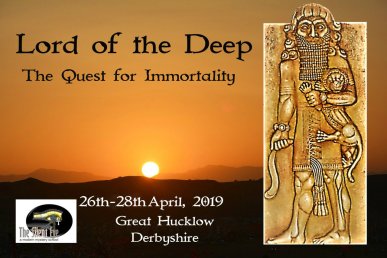
The Silent Eye’s Spring workshop for 2019
*
The glories above…
+ #Silenti, Highlands of Scotland, Mindfulness, Mystery Play, Mystery Schools, Places and Prose, Scotland, Silent Eye School, Silent Eye Workshops, Spirituality, Stream of Consciousness, Travel, Travel and Photography, Writing
by Steve Tanham

Portmahomack, a fishing village on the north shore of one of the fingers of land that jut out into the North Sea, thirty or so miles north of Inverness.
There is something perfect about it.

Somewhere close, our collie dog, Tess, is barking, playing with the waves. I follow the waterline, ensuring that only the thick soles of my boots get wet. It is March and that green-grey sea is icy, here on the Sutherland coast. We’re an hour’s drive from John o’ Groats, the most northerly point on the British mainland. Had it been May, I might have paddled…

I am here to write, not play on the beach; though the early mornings and evenings will be devoted to making sure that the collie has lots of exercise and that I don’t become dull by sitting too long at that old wooden desk in the hotel room; the one that smells deliciously of ancient wood and generations of preserving polish. It even has a hole where the inkwell used to be.

The Oyster Catcher will do nicely for the evening meal. A latté, by itself, for breakfast – the mild hunger helps me think – and, at this time of year there’s nothing better for lunch than a steaming bowl of fish chowder with a chunk of locally-baked bread. I’ll see if I can persuade the hotel to do it; perhaps swap them a glowing review on Trip Advisor… It’s worth a try.
But food is for later. For now, I just want to drink in where I am, a writing castaway in this quiet and relatively unvisited place – at least I judge it so, as we are, as far as I can see, practically alone in Portmahomack.

We each have our own writing triggers. For me it’s a combination of sky, landscape, beaches.. and some inspirational music. Sometimes, I find a place that combines them all… This is one such. I’m looking forward to meeting a few of its residents, but not too many. Maybe a couple of beers, or a glass or two of wine after the evening meal, then an early night with one of my current books – I’m studying how William Boyd writes such apparently simple novels, yet hooks you into the plot early in the first chapter. Try ‘Any Human Heart‘ if you want to sample his best.
It helps to fall to asleep reflecting on how great writers do it… and wake refreshed and determined to have a go…
I’ll set the alarm so that I wake about six. I will open the curtains and look out at that vista, listen to the sea and drink in the the sheer wonder of being here. The start of the day will see me making a rubbish cup of tea from the contents of the wooden tray in the wardrobe, before taking Tess onto the beach across the road. Then I’ll sit down to begin the writing, knowing, at the end of the first couple of hours’ creativity, that a delicious coffee awaits at the tiny cafe along the quay. Later on, someone might be making chowder with home-made bread in the Oyster Catcher.

Sky, landscape and beaches… You can see from the photos how lovely this part of Scotland is, but none of them convey the sheer size of the Scottish sky. We’re less than an hour north of Inverness on the east coast of Scotland, yet we could be in a different world and in a different time. Most of our previous trips have been to the western highlands, which are glorious; but this part of the highlands has been a revelation. We are told that there are far fewer midges here in the north-east of the country. Depending on the time of year, this can be a life-saver.

Across the waters lie the mountains of South Sutherland – which don’t appear to have a generic name – but that may just be my lack of knowledge. We are well north of the famous skiing region of the Cairngorms and the landscape is very different. Golden beaches seem to be everywhere; most of them empty. Good to walk on and Collie heaven…

It’s not so much a question of writing a book as finishing one. Several years ago, we ran a Silent Eye weekend workshop called ‘River of the Sun‘, a modern mystery play, told in five acts, and set against the backdrop of the 19th Dynasty in ancient Egypt. The man who would become Pharaoh Ramases II is sailing back up the Nile to be at the bedside of his dying father – the, arguably, greater Seti I.
Ramases knows his father has little time left, yet he seems in no hurry to return to the royal palace. Instead, he mounts a night-raid on one his father’s favourite temples on an island in the Nile, run by a high-priestess the son suspects of heresy… The audacity and spiritual violence has far-reaching consequences…
The workshop was a success. Several people commented that the plot would make a good novel. As a test I serialised the first part of the book as a series of blogs (see list at the end of this post), but time has passed and I have yet – and inexcusably – to complete it. Hence being here…

We have reached the quayside. It’s quite windy and the farther out along its length we go the more we get blown. We do not linger… but return to the shelter of the village streets. Other days will dawn and the wind will have abated.

From along the beach, my wife, Bernie, calls… Tess barks for our reunion. My wandering reverie is broken. With a sigh I turn the corner of the quay and begin my walk back to where she and the Collie are waiting by the car for us all to depart. In a second, my fantasy of a creative break in this newly-discovered haven vanishes. It is not that it is impossible, just that it will have to be another time, as we are staying in a cottage forty minutes south of Portmahomack, not here.

I take one last look at this idyllic fishing village and get into the car. Tess licks my face and Bernie smiles at my wistful expression.
“A writers’ paradise?” she asks.
How well she knows me… But I will be back, though some other writing room may witness the creative conclusion of The River of the Sun.
For now, there are other places to visit on this lovely winter tour of north-east Scotland. Who knows what other writer’s dens I may encounter in this magical land.
©Stephen Tanham
Stephen Tanham is a director of the Silent Eye School of Consciousness, a not-for-profit teaching school that helps people find a personal path to a deeper place within their internal and external lives.
The Silent Eye provides home-based, practical courses which are low-cost and personally supervised. The course materials and corresponding supervision are provided month by month without further commitment.
Steve’s personal blog, Sun in Gemini, is at stevetanham.wordpress.com.
Index to opening chapters of River of the Sun:
Chapter One – Gifts From the River
Chapter Two – An Agony of Sunset
Chapter Three – The Dark Waters
Chapter Four – Touching the Sky
Chapter Five – The Fire Within

+ #Cats, #FurryFives, #RagDollCats, #Silenti, Cats, Collie dogs, humour, Pet Heaven, Photography, Rag Doll Cats, Spirituality, The Inner Cat, Your inner wolf
by Steve Tanham

I hate crows, Tess, don’t you?
– They’re harmless… just make a lot of noise
That’s the point, craw, craw, bloody craw… from dawn till dusk
– What are you doing now? Your little head’s going into another dimension!
Shaking their noise out of my ears.
© Stephen Tanham

From Sue on that most precious of subjects: favourite books

Jessica Bakkers, after reading Mae Clair’s post at Story Empire, posted about five books that had, as she put it, made her, ‘her’. There is no way on this earth that I could pick just five books… not unless it was five per decade… Or five for every facet of life…
There were always books. Hundreds of them…everywhere. I was free to read any of them as soon as I could master the words… even if understanding the concepts would only come much later. That childhood access to books creates something special on the pages of imagination, and I would find it impossible to choose just a few to span a lifetime. Impossible too to select just a few that defined and shaped the person I know as ‘me’. But there are a few that stand out, way above the rest, as hugely influential… and of those, I…
View original post 1,320 more words

+ #Silenti, Consciousness, Higher Mind, meditation, Mindfulness, Photography, Spirituality, Stream of Consciousness, Truth and Esotericism
by Steve Tanham

The light between the railway carriages…
It was one of the best analogies I ever had given to me; yet it took me years to grasp its fullness. Like any true seed of ‘spiritual’ insight, it was strong enough to lie on the rock till a little pocket of earth developed beneath – a receptive place into which it could extend its roots.
We all grow up thinking, without question, that ‘thought’ is continuous, and the basis for our ‘in-here’ existence. It may take a lifetime to see that the thought-machine that fronts our world is our own creation and coloured with our thinking and emotional history. This colouration paints ‘the’ world, making it our world, familiar in its likes and dislikes, fears and moments of courage – many of them unobserved, except by that mysterious watcher within us.
The world we inhabit is therefore the sum total of our reactions to everything that has happened to us. Many of these reactions protect us – like knowing not to put our hands onto something burningly hot; others fill us with prejudice against threats that are not present in our moment.
The ocean in which this history exists is the internal ‘field’ of our thoughts.
‘Look, there’s a cherry-blossom tree!’ We cry, imposing the history-carrying words over the raw and beautiful experience of the reality. Names are useful, but they also pre-program our seeing. Knowing this, we can work backwards if we choose, and repeatedly use the word so that it temporarily loses its meaning. We may then find ourselves on the edge of a kind of fear. Have we damaged our brain’s memory of what a cherry-blossom tree is?
Of course not… but staying within that uncertainty may teach us something.
Just seeing how the mind takes that defensive stance is instructive. If, instead of allowing that fear, we carry on with the exercise and spend a ‘mute’ few minutes next to the ever-changing perfection of the tree, we may experience the gap – the light – between the railway carriages of the train of consciousness thundering by on its eternal and dominating journey.
In those precious moments, we may see that there is a landscape beyond the noisy and flashing train, one that comes slowly into focus and reveals itself as a very different place, yet one to which we are, most certainly, closely related – since we and it are now still… gazing upon each other in a new way.
©Stephen Tanham
Stephen Tanham is a director of the Silent Eye School of Consciousness, a not-for-profit teaching school that helps people find a personal path to a deeper place within their internal and external lives.
The Silent Eye provides home-based, practical courses which are low-cost and personally supervised. The course materials and corresponding supervision are provided month by month without further commitment.
Steve’s personal blog, Sun in Gemini, is at stevetanham.wordpress.com.

by Steve Tanham
A thoughtful piece from Alethea…
 Photo Credit: Pixabay
It’s likely most of us suffer from it, to lesser or greater degrees. Soon after birth, the ego discovers its individuality and realizes that separation can be a threat to its survival. If I am not considered special, the ego decides, I may not be fed, taken care of, and loved. First the individual ego fears the rejection of his parents, then later learns to extend this fear into the wider world of siblings, teachers, coaches, peers, and employers. No one wants to be cast aside and forgotten.
So the ego searches for specialness. It decides, if I am attractive enough, I will be loved. If I am smarter than my peers, I will never fail. If I am fast enough, I will always win. And in that striving for specialness, angst sets in. What will happen if I am no longer considered beautiful? Will I no…
View original post 997 more words

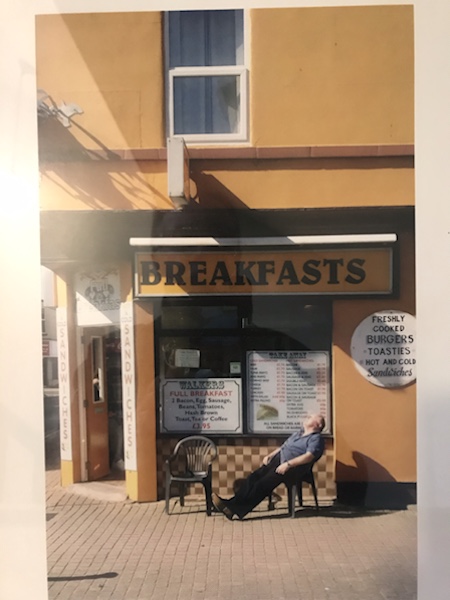
And heaven was a breakfast…
A tiny Salford cafe on the corner of the busy road where we turned for the final leg to work. Half an mile away but a full hour to get there…
Within Paul’s Cafe was Paul; eclectic, gregarious. A man who had walked away from the edge of Salford’s gang culture and made great food, instead. A friend who would be friendly, but leave us in peace with our bacon butties, brown sauce and mugs of steaming tea… magically-refilled, without us asking.
Bacon butties, done ‘crispy’… And just the memory brings a fresh rush of goodness, now – and a sense of loss; even though that was a long time ago, and Paul’s Cafe is a memory buried beneath the white verticality of high-rise, modern docklands Salford.
Nearby, Media City glitters, now – and wonderful it and The Lowry Centre are… but I am lost in the simple pleasure of the memories and the taste of what was there, before….
It was a dirtier, grittier time, but, for us, there will never be another cafe like Paul’s.
©Stephen Tanham

From one of our Companions…
Anne Copeland, a Companion of the Silent Eye, writes of her journey with the School:
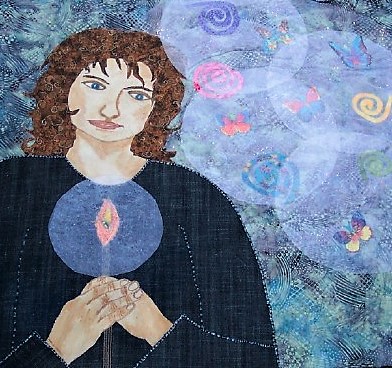 The Little Match Girl by Anne Copeland
I came across The Silent Eye Mystery School quite by accident, if anything can be truly considered an accident. I have studied a lot of psychology, archaeology, history, geography, spirituality, world religions, mythology, and other studies for many years, trying to discover just where I fit in within this world and this universe. I sought to understand the meaning of the many things I encountered daily in the ways I related to others, or the meanings of things that cannot readily be seen, but which we all are conscious of. Somehow I never seemed to quite find the answers I was seeking.
Have you felt that you are somewhat alone with a world that seems to have so many problems and people doing wrong that it feels out…
View original post 412 more words


I’m trying to work!
– I knoooowwwwrrrr
I have a deadline…
– Is it as good as purring?
Well, now you come to mention it, nnnnoooooooooowrrrr
———
©Stephen Tanham

From Stuart… in fine form.
*
“So what’s it all about, then?”
“Oh, lots of things, like, duty and service, and honour, and love, and friendship, and devotion and good government, and bad…”
“But ultimately?”
“Ulitmately it’s about the need to balance polarity.”
“Is that an individual polarity or a collective polarity?”
“Somewhat inevitably, it is both the polarity of an individual psyche and the polarity of a collective state.”
“And erm, do we touch upon Matriarchy and Patriarchy at all?”
“Given that brief it would be very difficult not to.”
“And we seek balance in this sphere too?”
“But of course…”
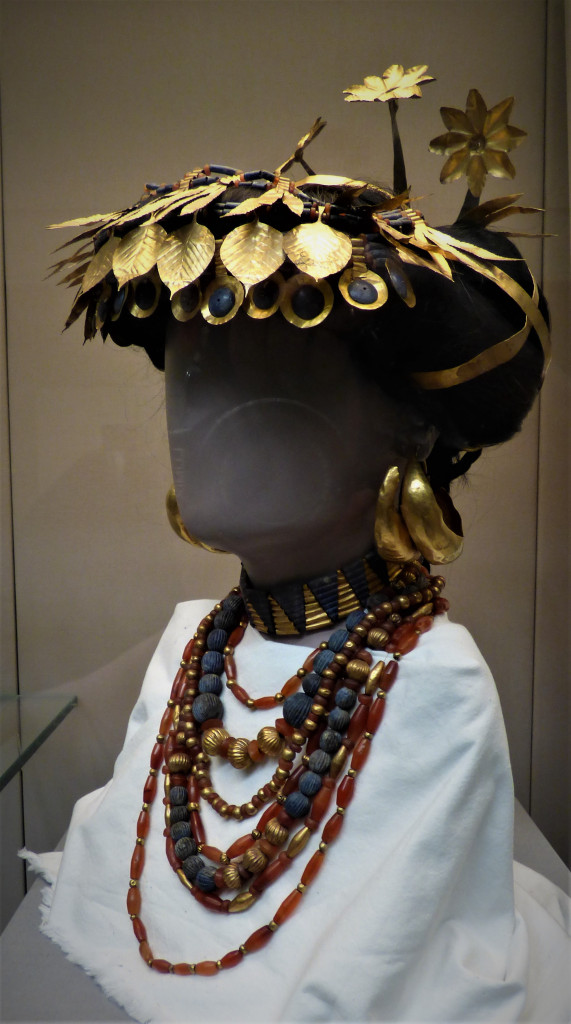
“So, how come Aruru, the Mother-Goddess, gets to wear a delicate tiara of jewelled flowers,
while Anu, the Father-God, gets a plant pot plonked on his head?”
“It’s just the nature of things.”
*

*
The Silent Eye’s Spring workshop for 2019
*
The glories above…
View original post 147 more words

Beautiful thoughts from Druid Life…
What would happen if our dreams were not driven by the desire to consume? What if we weren’t drawing our inspiration from adverts, and weren’t being fed a constant consumerist narrative about what we need to own in order to be happy? What would we daydream about then?
We might stop dreaming about new cars and kitchens and carpets and start dreaming about how to live at our hearth and in our homes. Dreams of community and time spent with people we care for, and who care for us. Not the look of the kitchen itself, but the scope to make good food and share it with good people. Life changes dramatically when you’re less focused on how a home might look and more concerned with what you can do in it.
Equally, if our gardens don’t have to look like something off the telly, we might dream of wildlife…
View original post 407 more words

+ #Silenti, Ancient Landscapes, Ancient Sacred Sites, Consciousness, Dark Humour, Esoteric Meaning of Myth, esoteric psychology, Higher Mind, Journey of the hero, landscapes, Life and Death, Mindfulness, Mystery Play, Mystery Schools, Myth, myths and spirituality, Politics and Power, Spirituality, Truth and Esotericism, Understanding Fear
by Steve Tanham

If you’ve ever been involved with anything of an ‘amateur dramatic’ nature, you will know that moment: the protagonist, hated until the final few moments (when the greater picture is revealed) shuffles off, in rags, to his doom; and the shared and questioning silence longs for the gentle and poignant soothing that only the right music can bring….
Screech, click, screech, ping, wheeeeeedle…. .
Frantic sound of fingers fiddling.
Screech, click, screech, ping, wheeeeeedle…. and then the final piece, a gentle Sufi melody cuts in… only it’s about twenty decibels too high in the flying fingers’ frantic search for sound… any sound.
The much maligned King Gilgamesh (who turns out to be only 99% schmuck) looks to the heavens in an unscripted gesture. Everyone is stunned… but for all the wrong reasons.
It didn’t happen, not yet… but it’s time to make sure it can’t…
Amateur actors – our annual workshop participants – such as the Silent Eye seems to be able to attract year on year, are wonderful people. They are enthusiastic, flexible and multi-tasking. They stand, clutching their scripts, in the middle of a space invested with spiritual emotion, power and purpose and give their all… to such an extent that, come the start of Sunday afternoon, no-one wants to leave and break up the intense camaraderie that these warm and mystical adventures generate.
There are no mistakes, just real-time variations in the script. Like Jazz, the best bits can be improvised, often with humour from above… Ask Barbara, who we once completely lost, Schrödinger-like, in the middle of Act Three in the centre of the room. To this day, no-one knows where she went.
Being the technician can be a difficult job. And, it’s near impossible to be one of the characters in the mystery play and the technician. So, the partial answer is to make the soundtrack as free-standing as possible.
The problem is the technology, or, rather, the combination of technology and the media – sound – that is required to be ‘piped’ through the technology. Most domestic music players are just not up to the job.
The epic stories of Gilgamesh the King are the oldest known legends on Earth. Using this as a basis, Stuart France has re-envisaged the story in five acts of ritual drama, where everyone attending plays their part, large or small. Stuart and Sue Vincent have crafted a workbook of nearly two hundred pages of beautifully laid out script.
I have been ‘volunteered’ to play the part of Gilgamesh, but since I have taken our technology forward, too, I’m taking no chances… These days I’d rather produce than be centre-stage.
Gone are the multiple CD machines, laid out at strategic points in the temple space of the mystery play; each one involving a lightning sprint from compass point to compass point. Gone, even, is the use of an uncooperative Apple iTunes with its incomplete staging of cues. Gone is any notion of carrying around the sound with a portable speaker – one of the past’s more heroic failures…
Instead of Screech, click, screech, ping, wheeeeeedle…. or just plain silence, we have this on the iPad screen:

It’s a deck… a sound-deck in software. It’s what professionals use to control the music and lighting for stage shows, moving with consummate timing from event to event as the production progresses. If you were into William Gibson’s sci-fi (Burning Chrome etc) it’s what the pre-internet generation used to ‘jack into’ the ‘net and control the world with…
Tired of playing games that couldn’t really argue back, they began to design real software; masterpieces that really could kick-ass… but in a good way.
This scaled down masterpiece of software, called iMiX Pro, runs on an Apple iPad – mine. This is not to say that it does all the work for you. Oh, no… shoot, man, there’s a bucketload of stuff y’all need to do up frooont! (Sorry, that’s my inner Texan coming out). I’ve been sitting at this ‘deck’ for two days and only now… am I winning. And that’s the thing with these systems, you have to get the music into the machine before the ‘ghost’ that is the combination of producer and good software design come together in glorious expletives that do sound decidedly Texan.
In the beginning, there is the raw music, or other sound files; so, as before, you have to get them onto (in my case) your Mac and into… Hmmmm iTunes.

In the process, you have to re-name the tracks you want to use so that, when they re-appear in the iMiX software, they are recognisable. So, lovingly and carefully, you work out a naming scheme that shortens the track names in order to see something of their name in the individual panels on the iPad screen. The above first window is the result.
Next, you need to take the original files and convert them into one of Apple’s ‘Playlists’. These are just collections of songs. So it’s easy. You group all the original tracks and select ‘Add to Playlist’… and off she goes. You then have all your music in a second and more pliable container.
The use of a Playlist is essential because they have to be in this format to get the group of tracks across to the iPad. Along the way you get to put them in order – no mean feat with over twenty tracks. But, finally, they are ready to be beamed (okay, wired) across to their new portable home – a bit like the NASA lunar lander making a bid for freedom from the orbiter module. Once you’ve set off for the weekend, the iPad is on its own.
An hour later, you finally figure out how you did it last time and the transfer is complete… except the Apple transfer software has lost your carefully constructed sequencing and you’ve just got the order it decides you need on the iPad. They’re all in there, somewhere, you’ve just got to find each one again. So, you think about making paper list – or contact Sue, who recognises sleep-deprivation and provides one as a list of what should be happening in each act.
A small bottle of gin later, you realise that it doesn’t matter what the Apple software has done to your weekend’s sequence because the iMiX’s colossus of a DECK is about to rescue you!
Look back to the original diagram. Each of those vertical ‘pods’ is a beautifully programmed home for your hard-won music and sound tracks. And it offers you total control over how and when that track is played…. heaven.


You can control the volume; you can trim the clip regardless of what any other piece of software has done to it. You can select its unique fade-in and fade-out. The iPad ‘pencil’ is brilliant, and, for run-time, all you need to do is tap the track ‘pod’ and the magic beings.
And, throughout this, written up the side of the ‘pod’ is the full name of the track you so lovingly created… <cue Texan sounds…>
So, two days after I began, we have the Deck, fully programmed and ready to be operated on the weekend of 26-28 April, in lightning-fast real time, by our mega-techno dude who insists on being nameless.
But he’s related to one of the Directors…

And all of that fits into a single screen (above). There will be no ‘Screech, click, screech, ping, wheeeeeedle…. or just plain silence’. So, while I won’t actually be operating the Deck, I’ll be the ghost in the machine…
Houston, we’re good to go.
Now all I have to do is figure out how to best play that ego-maniac, Gilgamesh…There are lots of ego-maniacs in the world at the moment. Very timely, that, Stuart…
Wish us luck… please. Even better, come and join us. We can fit in a few more people if you’d like to join this merry but sincere band. And we promise that you, too, won’t want to leave, come Sunday lunch…
©Stephen Tanham
Stephen Tanham is a director of the Silent Eye School of Consciousness, a not-for-profit organisation that helps people find a personal path to a deeper place within their internal and external lives.
The Silent Eye provides home-based, practical courses which are low-cost and personally supervised. The course materials and corresponding supervision are provided month by month without further commitment.
Steve’s personal blog, Sun in Gemini, is at stevetanham.wordpress.com.


The tallest trees in Britain are to be found in Scotland, a short distance from Inverness in a quiet valley that links the Moray Firth with the north-east shores of Loch Ness.

Centred on a local peak called ‘The Aird’, the locally- celebrated ‘Tall Trees’ have been threaded with a series of walks of varying lengths. My wife, Bernie, is an horticulturalist by training, but neither of us had heard of the Reelig tall trees. It was about forty miles from where we were staying and too good an opportunity to miss…

We were spending a few winter days in this wild and beautiful part of Scotland in preparation for the Silent Eye’s ‘Macbeth’ weekend (The Silent Unicorn) in June, and came across a notice board that referenced the Aird estate.

Upon arrival we noticed that there are a number of paths through the forest. We wanted to do several things in the day, so chose the shortest one that still included all the most famous of these venerable trees.

This most popular path has recently been extended with an elevated section that forms a ‘switch-back’ to one side of the forest. The river Moniack winds through the park. A new bridge has been added – though the remains of the old one have been beautifully incorporated into the riverbanks.

The effect of the new section of path is wonderful. The original formed an ‘S’ shape through the vast trees. The extension crosses the river and climbs, steeply, curving back on a higher level towards the start of the walk and allowing the sheer vertical scale of the forest to be seen from different perspectives.

Many of the tallest of the Reelig trees have information ‘wings’ that fold out from slots in vertical posts.

The Reelig woodlands comprise a mixture of broad leaves trees and old conifers. The main group are giant Douglas Firs, many of which are over a hundred years old, and have reached over 170 feet.

In the year 2000, the then tallest tree – named Big Douglas – was measured at just over 200 feet. It was declared the tallest tree in Britain. A different Douglas fir in the Reelig forest has now been measured at nearly 218 ft, and is confirmed as Britain’s tallest, and is also the tallest conifer in Europe.
It was late March, and the photographs show that the landscape was still a winter one. We look forward to returning in the brightness of summer.
©Stephen Tanham


You must be logged in to post a comment.