
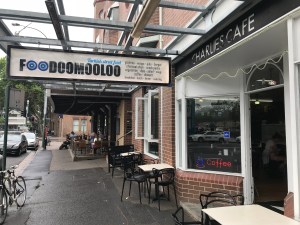
Sydney
We are having breakfast at Charlie’s Foodamalloo, across the street from our hotel; the Ovolo. It’s a wonderful greasy spoon and reputed to be one of the best places for breakfast in Sydney – if you don’t mind the simple interior and the washed but stickily-aged wood and tiled tables.
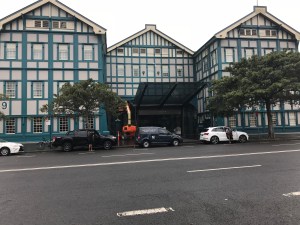
The Ovolo is located on the redeveloped old giant wharf at Woolloomooloo. The beloved old cargo and passenger quayside is now home to twelve restaurants and Russell Crow’s luxury boat… and, it is rumoured, his penthouse, high above the dock.
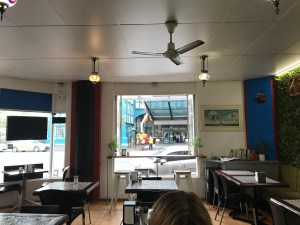
There’s a man. He is noisily on his mobile and standing, partly blocking my view through the opened shuttered window. He looks very at home here but is not Australian. He sounds… perhaps Austrian?
Another man comes in, an Australian with a broad and deep accent. He walks past the two young naval officers putting their caps on, post breakfast. There is a large naval base along the quay. Yesterday, I’d taken several shots of a gleaming new warship before I got to the sign that said don’t.
The two men greet each other by swinging their hands together in a well-practised gesture. It produces a crack so intense that the two naval officers turn in alarm.
One of the men gets up to reassure the uniformed men, smiling. Their conversation turns to tobacco… interesting.
Bernie is having tea with her breakfast. The lovely Turkish lady who brought me my BLT tips over Bernie’s little steel milk jug. It goes all over my backpack on the floor. The young Turkish lady is mortified. She mops it up carefully with a cloth, then brings a mop and bucket to sort out the floor. I had no idea the little jugs held so much milk… She offers me a cloth Aldi bag in compensation. I reassure her that it’s okay…
There’s something weird in the Sydney air…
We’re staying at the Ovolo but breakfasting at Charlie’s. It’s much more interesting.
I hope it won’t rain all day… we can get this in Cumbria.
(Editor’s note: it did)
©Stephen Tanham
Share this:

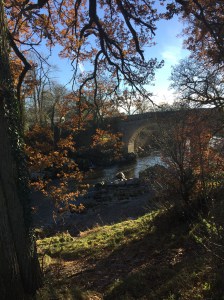
The Lune Valley is always worth exploring. The river Lune rises as a stream near Ravenstone Dale, Cumbria, and gathers momentum and volume as it winds towards the sea at Lancaster and its one time port, Glasson Dock. Devil’s Bridge, above, is, perhaps its most famous landmark, and was once the main highway between Yorkshire and the north Lancashire region – prior to the rejigging of the ancient counties that created Cumbria from Westmorland and bits of old Lancashire.
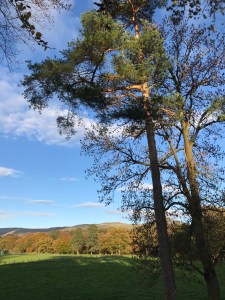
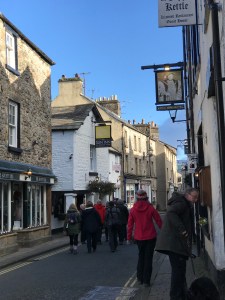
It is near Kirkby Lonsdale that the Lune Valley is at its most beautiful. We jumped at the chance to be part of a sponsored walk along the river and duly met up with the other participants in the Sun Inn, in the centre of the town, where we began the day with the time-honoured breakfast of walkers: the bacon butty…
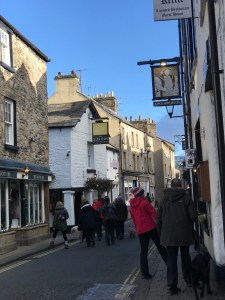
The landlord of the Sun Inn, himself a dog owner, was joining us on the walk, and served out breakfast for his fellow hikers. Duly fed, we navigated ourselves and the dogs (It was an abandoned dogs charity we were supporting), and made the ten minute walk to the park area at Devil’s Bridge.
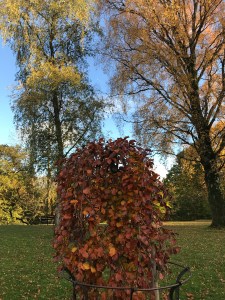
No-one is sure how Devil’s Bridge got its name, but the lady guide brought in for the occasion explained that it was normal for churches to fund bridges. Sometimes they didn’t and the fund-raising fell to the hard-pressed locals. In retaliation, they named their creation appropriately!
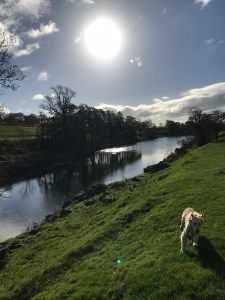
In similar fashion, no-one knows where the name ‘Lune’ came from. We had always assumed it to be a Norman-derived name for ‘moon’ but the guide explained that there were three theories:
1. It was Roman for ‘healthy and pure’.
2. It was named after the Roman God Lalonus who featured prominently in local worship.
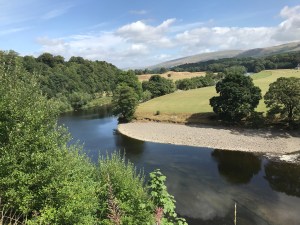
3. Lune can refer to a prominent oxbow curve in the river, for which Kirkby Lonsdale (‘lunes’ dale) is famous – in the shape of what is seen from the spectacular Ruskin’s View near the church (photographed during the Summer):
Our guide was an English teacher who had a passion for local history. She had constructed two such walks. The first – the one we were on – was more suitable for dogs, and hence the choice on the day. The second was more concerned with the early industrial history of Kirkby Lonsdale. We may do it in the future.
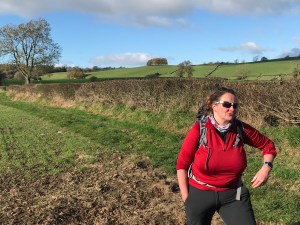
Having cleared the edges of the town by crossing the perilous A65, we settled into a reasonably fast pace along the river bank. The walk was planned to last just under three hours, allowing for a couple of discussion stops. The route was constructed around a rectangle that would allow us to walk along the river to a point where we could turn right towards the historic town of Whittington, home of an ancient church and a rather unusual pavement…
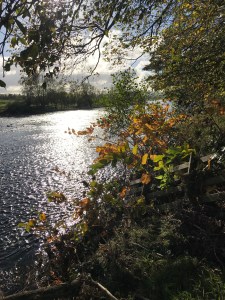
We were blessed with cold but clear weather. The bright sunshine made the opening leg along the riverbank particularly pleasant. The golds and yellows have been strong and striking this year.
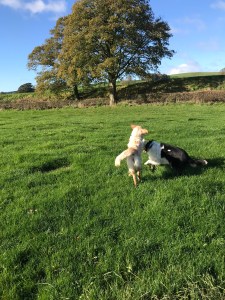
The happiest walkers were the dogs. Our Collie, Tess, discovered a good friend in a nine-month old Golden Retriever. They ran and ran in the bright sunshine, never seeming to tire.
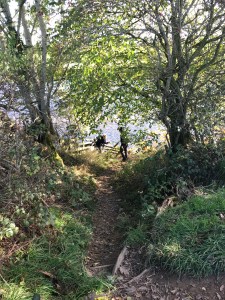
The path divides after about two kilometres. Leaving the river path, it is necessary to scramble up a gulley to reach the start of a path that leads towards the village of Whittington.
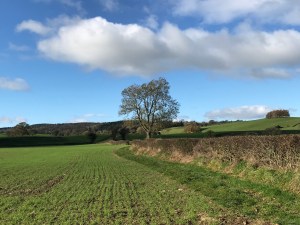
Here the fields stretch on either side of the path. To the North lies Ingleborough, one of the highest peaks in nearby Yorkshire, and part of the famous Three Peaks challenge, during which contestants have to scale all three in a day – a very demanding ordeal.
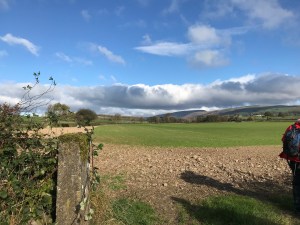
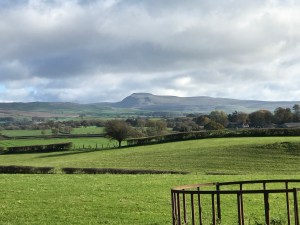
Eventually, the horizon is lost behind hedges that hint at a more domestic landscape. The village of Whittington comes into view.
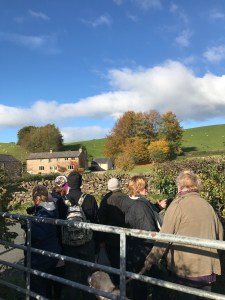
Whittington is a small village with a famous church. It forms part of a cluster of sisters along the Lune valley. Each of these has evidence of a castle’s motte and bailey fortification. This is the densest concentration of Norman castles outside of the those on the Welsh border.
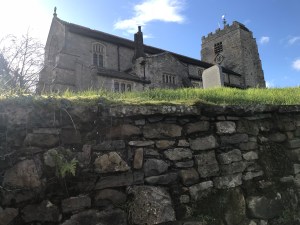
St Micheal’s Church is strongly linked with two nearby churches of St John the Evangelist, Gressingham, and St John the Baptist, Arkholme. The church stands within the bailey of the former Norman castle, as can be seen from the above photo. It is thought that a church has stood here since around 1200. The oldest part of the present church is the tower, which dates from the early 16th century. The rest of the church was largely rebuilt in 1875, funded by Colonel D.C. Greene of nearby Whittington Hall.
Being a Sunday, the church was in use and we were not able to venture closer than gate. Happily, there was a compensation…
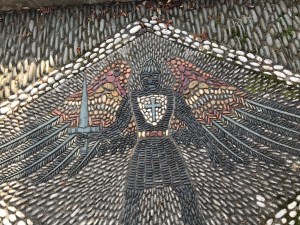
Beneath our feet, was a pebble-based mosaic, created, locally, to mark the millennium, by Maggie Hogarth, a local artist and sculptor. The photo does not do it justice. It marks the Church of St Michael the Archangel with great respect.
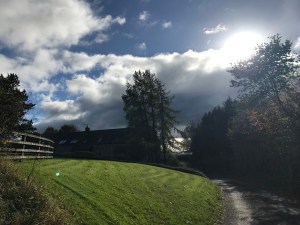
To complete our journey, we had a further climb of about a kilometre. From this, the highest point, we could see the whole landscape of our walk. The view across to Ingleborough was the best of the day.
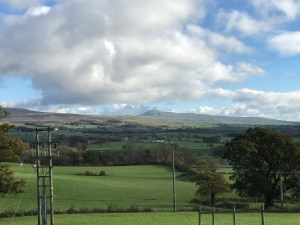
Kirkby Lonsdale lay at the foot of the far side of the hill. Slightly weary, we trudged down to the Sun Inn, where a discounted lunch awaited those who had completed the walk.
©️Stephen Tanham
Stephen Tanham is a director of the Silent Eye School of Consciousness, a not-for-profit organisation that helps people find a personal path to a deeper place within their internal and external lives.
The Silent Eye provides home-based, practical courses which are low-cost and personally supervised. The course materials and corresponding supervision are provided month by month without further commitment.
Steve’s personal blog, Sun in Gemini, is at stevetanham.wordpress.com.
You’ll find friends, poetry, literature and photography there…and some great guest posts on related topics.
Share this:

From Stuart. The plot thickens…

*
‘In Mesopotamian mythology a Mother Goddess, with the assistance of a God of Wisdom created men out of clay, mixed with the blood of a slain God.
The Primeval male and female human beings were not allotted a life-span.
People originally only died as the result of natural disasters such as plague, famine or flood, or by internecine strife.
The Epic of Gilgamesh culminated with the introduction of a limited life-span for Mankind.
Man’s original purpose in being was to relieve the Gods and Goddesses of hard labour.
Gods and Goddesses associated with birth and fertility were also patrons of mining, smelting, and metal work.’
*
“We find the information contained on this board to be ever so slightly uncomfortable.”
“It’s slave mentality.”
“And it’s metallic mind.”
“’The blood of the slain God’ is perhaps most perplexing.”
“It might be more than that if the Gods were Planetary Beings.”
View original post 132 more words
Share this:

From Sue


“I don’t get it,” said my son. “We’re an island… how can we be short of water?” I had been telling him about the shocking state of the Derwent Valley reservoirs. I have seen them very low before, but never this low. The water is no more than a trickle in the lake bed and the villages drowned at their creation are once more feeling the sun on their stones. We discussed desalination, technology and our acceptance of water-on-tap in developed countries. From there, we went on to other countries, where the populace is not so lucky and water may have to be drawn from a dirty well several hours walk from home. My son continued, “I mean, if seventy per cent of the earth’s surface is covered with water, and, if it all comes from the sea to begin with and goes back into the water cycle, how come
View original post 850 more words
Share this:

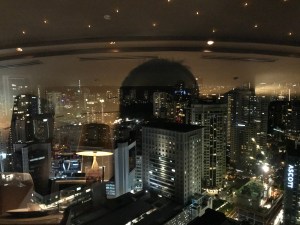
I am in a hotel room in Singapore. It’s 05.02 and I’ve been awake for three hours. Beside me, my wife, Bernie, has also give up trying to sleep and is sitting up drinking the tea I have just made. Having failed to sleep for most of the night, she has joined me in a plan to take an early breakfast as soon as the hotel’s facilities come back to life.
Jet lag is brutal…
For the past two hours, I have been reading a sci-fi book called Endymion, by one of my favourite authors, Dan Simmons. The book – which is the third in the Hyperion series – begins with a man, who has survived his execution, finding a spaceship. It’s obviously made my night-fevered brain think about the greater meaning of the word ‘Spaceship’. My generation used to talk a lot about ‘Spaceship Earth’. But that was back in the days when ecology was the main focus of working together, and we hadn”t declared war on one of the most fundamentally important gases in nature’s construction of life on Earth.
I’ve been propped up in bed with the room’s lights off. I even turned down the brightness on the screen so as not to wake my love, who was manfully… womanfully, I suppose – but futilely – trying to wrestle a few more hours sleep from the swiftly passing Singapore night.
We are passing through through, too – on our way to Australia. We have broken our journey for a few days to revisit one of my favourite places on the planet. Singapore is a spaceship, a very beautiful island city-state perched at the end of the Malaysian landmass. The people are drawn from a mixture of sources: Chinese, Malay, Indian and Eurasian. They are some of the most pleasant and friendly people I have ever met. They are intelligent, caring and thoughtful. Their racial admixture, combined with a common enemy – space and natural resources – may well be what has made them that way. Metaphorically, they have changed their small country into a spaceship; and it works…
Singapore is one of the safest countries on Earth to visit. It’s a clean city and full of shops – and gardens. Shopping is the national hobby, as far as I can see. I can only take so much shopping, but, fortunately, Bernie is an horticulturalist and always wants to visit most, if not all, of the world’s famous gardens on our travels. A short time from now, having startled the staff in the hotel, and figured out the local metro system, she intends that we are first through the gate of the spectacular Gardens by the Bay a few miles south of where we are staying. It’s one of two such planned visits; the other being the famous Botanical Garden. You can tell a lot about a city from its gardens.
I shall create a blog for both these visits, as I know many readers are interested.
There is no litter in Singapore. The former ‘authoritarian’ regime which founded modern Singapore, led by the famous Lee Kuan Yew, transformed this tiny state from a third to a first-world state in a single generation. Along the way his government instilled into its people the need to work together to create a lasting approach to scarce resources. A big part of that was accepting certain disciplines; among them no smoking in public, big and enforced fines for littering, and a total ban on public use of chewing gum. There were, and are, many more.
Contrast Singapore’s pavements with any city in Britain and you’ll see why such a simple idea as the chewing gum ban is a good idea… The other side of Lee’s coin was enormous investment in infrastructure, especially transportation.
We are en route to Aldelaide, where my eldest son, his wife, and, presently, our only grandchildren live. Their parents are both doctors, having been trained in England then coming to believe, in the heat of the past few years of Government vs NHS politics, that they could provide a better world for their kids by emigrating to Australia. From a parental point of view it was a sad moment, but I understand their logic. They seem to be making a great success of it and I wish them well. We are only able to see the grandchildren once every couple of years… But ‘it is what it is’ and we have to make the best of it… and I’ll not suppress a sarcastic snort at the next person who tells me that ‘Skype’ is a good alternative to the transcendent delight of holding your children’s children…
We have a beautiful Collie and a beloved – and somewhat exotic – rescue cat. We love them for what they are and not as grandchildren substitutes – which they both predated. They are both in spaceships, too. The dog is with my cousin and her husband – thank you, so much! – so we only have to fret a few times a day. The cat is with a former kennel-maid who has set up her own business to provide home-based residency during her customers’ travels.
There will be hell to pay when we get home… And, it’s very difficult to forget that look in their eyes when they figure out you’re abandoning them, again.
We came here in a spaceship – a beautiful Airbus with good air quality and a high ceiling. Economy seating is never totally comfortable, but the Singapore Airlines cabin crew looked after us better than any other group of ‘service workers’ that I can ever remember. Maybe they are so good at it because they have been raised in a culture and an economy that understands that a problem is everybody’s problem; and that riches based on success are great, but do not exempt you from active caring.
Thank you, Singapore. Thank you for being as I remembered you from my business trip, fifteen years ago. I love your spaceship-state. I think I’m going to adore your gardens. If I was asked to nominate a future-facing country, I’d nominate you… And I know lots of other people who would, too.
I’ll stop the sleep-deprived rambling, now. Hopefully, my wakefulness will last till the afternoon, when we can steal a couple of hours’ sleep back from the jet lag. We’ll sleep peacefully, protected by this fine island city-state and free from chewing gum on our soles.
©Stephen Tanham
Share this:


For fifty years I sought you
Beneath an ashen tree
And then at last I caught you
Hiding behind me
➰
What jests your lips had whispered
As I darted too and fro
Till I lay down at the wayside
With nowhere else to go
➰
Quiet, your fingers touched me
Bidding stillness in their grace
Made soft with love the journey
By turning round the face
➰
The night of sight was ended
From this head that wore a frown
And the throne of Self lay open
As your palms displayed a crown
➰
Now my tiny kingdom’s hidden
Beneath a starry sky
But my eyes drink light forever
As the opening days roll by
➰
For fifty years I sought you
Beneath an ashen tree
And when at last I caught you
You were smiling back at Me
➰
©Stephen Tanham
Dedicated to the Sufi philosopher, Rumi, who lit the way…
Share this:

Share this:

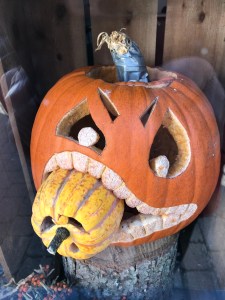
The hallowed ‘een
The in-between
The edge of life
And death unseen
©Stephen Tanham
Image from a shop in Kirkby Lonsdale.
Share this:

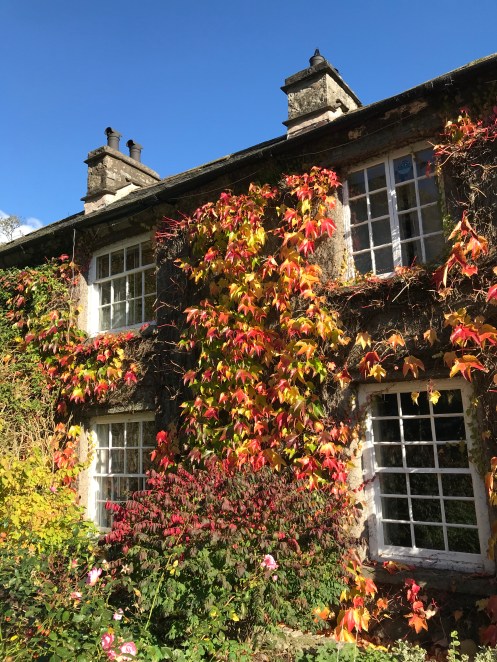
Just before time was sliced and diced
So that the evenings could be darker
You gathered up your colour
And threw it in my face
Laughing
Until I laughed back…
© Stephen Tanham
Share this:

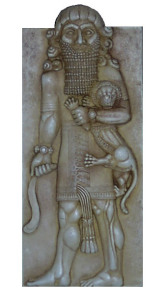
Imagine being a high priest in the world’s first advanced civilisation and realising that mankind’s mind could take it dangerously out of harmony with the natural world…. Come join us in April for the re-enacted story of Gilgamesh…
*
… “What are you talking about?”
“A question of questions, young Wendolina, the answer to which may serve as a stunning proof of our original assertion.”
“Your original assertion, which was posed as a question anyway. And I’m older than you are.”
“Yes, yes, dearest Wendlebury. There was a need for the razor ban, in order, to achieve assimilation. The original model for Samson wasn’t Gilgamesh at all, it was his ‘alter-ego’, the wild-man, Enkidu, who in the words of birds-feet etched into tablets of baked-clay over four thousand years ago, possessed long hair like a woman and an excessively hairy body.”
“In that case the ‘jaw-bone’ may well be a form of boomerang…” muses Wen, and then, “Birds Feet?”
“Cuneiform.”
“If I wasn’t so confused, I’d be tempted to jump up and down,” says Wen.
“Two-thirds animal, one-third man.”
“Ah,” says Wen, the light of comprehension settling…
View original post 419 more words
Share this:

From Stuart… be afraid….
Share this:

From Peedeel via Silver Apple Queen…

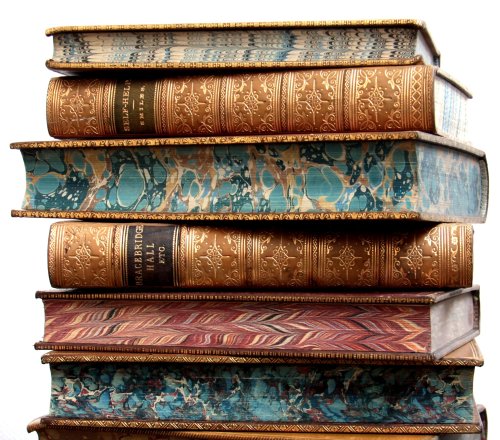
Today you can buy the Dialogues of Plato for less than you would spend on a fifth of whisky, or Gibbon’s Decline and Fall of the Roman Empire for the price of a cheap shirt. You can buy a fair beginning of an education in any bookstore with a good stock of paperback books for less than you would spend on a week’s supply of gasoline.
Often I hear people say they do not have the time to read. That’s absolute nonsense. In one year during which I kept that kind of record, I read twenty-five books while waiting for people. In offices, applying for jobs, waiting to see a dentist, waiting in a restaurant for friends, many such places. I read on buses, trains and planes. If one really wants to learn, one has to decide what is important. Spending an evening on the town? Attending a ball game?…
View original post 76 more words


 Sun in Gemini
You must be logged in to post a comment.