
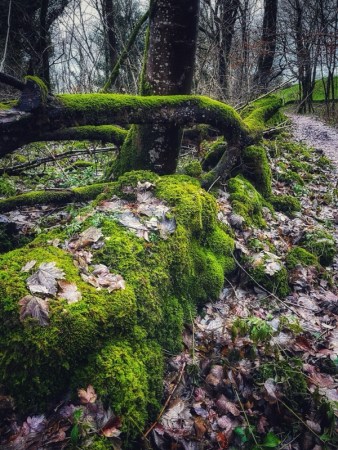
I walk the collie through the local forest and marvel at the intensity of the green mosses and lichen growing on the limestone boulders and the forms of dead or dying trees felled by the savage winds we get in these parts – particularly between the start of November up to the new year.
With the other side of my mind I curse the bright green stuff that invades the tiny indentations of the tarmac areas around the house. Removing it is a nightmare that involves chemicals that I’d rather not touch.
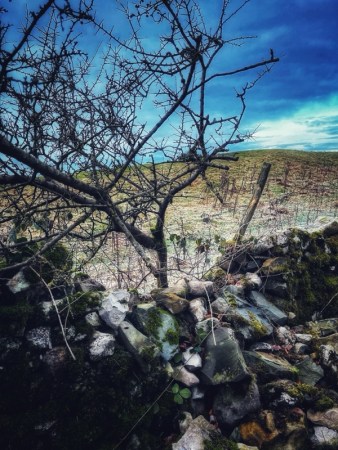
This love-hate relationship is a product of such a beautiful and wild landscape, and civilisation’s (as in tame the wild) uneasy place within it.
I saw a TV program once that ran a simulation about how quickly the wild vegetation and mosses would take over the urban landscape if we died out. Within a few months, our towns and cities would look totally different. Within a few years, they would be mere shells, completely overgrown.
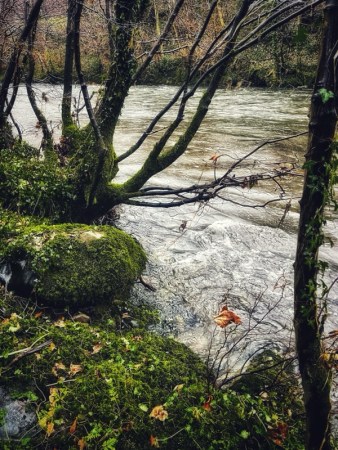
You get a strong sense of that, walking each day through this wet, muddy and winter-green world. But it’s a necessary prelude to the spring, and brings its relief and renewal in with needed emotional force in this stage of the Earth’s circuit around the Sun.
The mosses and lichens are truly ancient – a hardly form of life that complements the summer, beautifully, reminded us that abundant life takes many forms.
©Stephen Tanham 2023
All photos taken and processed on an iPhone 12 ProMax.
Stephen Tanham is a writer-photographer and mystical teacher. He is the founding Director of the Silent Eye, which offers a mentored, journal-based journey from personality to the awakening of realised Self and its world of Being.
http://www.thesilenteye.co.uk and http://www.suningemini.blog
Share this:


©Stephen Tanham 2023
All photos taken and post-processed on an iPhone 12 ProMax.
Stephen Tanham is a writer-photographer and mystical teacher. He is the founding Director of the Silent Eye, which offers a mentored, journal-based journey from personality to the awakening of realised Self and its world of Being.
http://www.thesilenteye.co.uk and http://www.suningemini.blog
Share this:


“Dancing, double-talking…” It’s a line from one of the most powerful songs I’ve ever heard: Innocents’ Song, by Show of Hands, a west-country folk duo who we have followed for years.
Click the link above to listen on YouTube. (There may be an advert to click through, first).
But this post is not about music or that album. It’s about the dramatic words used in the song…
Who’s that knocking at the window?
Innocents’ Song
We first saw them at the Cambridge Folk Festival in 2009. Since then, we’ve joined their devoted followers to attend live gigs whenever possible.
Who’s that knocking at the door?
The words were not written by Show of Hands; they were penned by Charles Causley, a much-loved English poet, in 1961.
What are all those presents, lying on the kitchen floor?
Charles Causley (1917-2003) was born in Cornwall, in the market town of Launceston, where he lived for most of his life.
His father fought in the First World War and died when he was young.. This early loss and his own experience of service in the Second World War affected him, deeply.
Who is the smiling stranger
With hair as white as gin,
What is he doing with the children
And who could have let him in?
He was drawn to poetry, studying the traditional forms, but preferring to take his inspiration from folk songs, hymns and ballads. There was something of the romantic about the young man.
Throighout his active and successful life (he was honoured with the Queen’s Gold Medal for Poetry in 1967 and a Cholmondeley Award in 1971) he stayed a ‘people’s poet’ and observers often remarked that ‘he wrote the kind of stuff that you would listen to sitting around the campfire’.
But this gentle picture belies the daring of the imagery he used in his work. He loved children and wrote some of his best works dedicated to them – and in defence of them. Causley never lost his vision of a world where “Houses put on leaves, water rang.”
I think it’s fair to say he would have been appalled that the ‘collateral slaughter’ of children is now commonplace in our fractured world. The final lines of his Innocents’ Song, (a poem), is below, and is the source of the quotes here.
Watch where he comes walking
Out of the Christmas flame,
Dancing, double-talking:
Herod is his name.
It’s also deeply shocking – perhaps appropriate in these days of vaporising housing blocks.
Ted Hughes described Causley as one of the “best loved and most needed” poets of the last fifty years.
His Cornish burr imparted a story-teller’s magic to the ballads around that campfire. We can also imagine the tears in his eyes at the current tragedies.
Causley’s full poem, Innocents’ Song, is below:
Innocents’ Song, by Charles Causley (1961)
Who’s that knocking on the window,
Who’s that standing at the door,
What are all those presents
Laying on the kitchen floor?

Who is the smiling stranger
With hair as white as gin,
What is he doing with the children
And who could have let him in?

Why has he rubies on his fingers,
A cold, cold crown on his head,
Why, when he caws his carol,
Does the salty snow run red?

Why does he ferry my fireside
As a spider on a thread,
His fingers made of fuses
And his tongue of gingerbread?

Why does the world before him
Melt in a million suns,
Why do his yellow, yearning eyes
Burn like saffron buns?

Watch where he comes walking
Out of the Christmas flame,
Dancing, double-talking:


Herod is his name.
———-
Exeter University holds Charles Causley’s archive of literary manuscripts, notebooks, diaries and photographs – you can explore these here and the Charles Causley Trust also has a wealth of resources available.
———-
©Stephen Tanham 2023
Stephen Tanham is a writer-photographer and mystical teacher. He is the founding Director of the Silent Eye, which offers a mentored, journal-based journey from personality to the awakening of realised Self and its world of Being.
http://www.thesilenteye.co.uk and http://www.suningemini.blog
Share this:

+ #iphonephotography, #Phoetry, #Photography,, #Silenti, nature, Photographic techniques, Photography
Beyond the edge of colour
by Steve Tanham

There comes a time when even the most creative use of ‘pale colour’ results in a lesser image than its equivalent in black and white.
When we get a shot for which no amount of digital rescue or fine-tuning will deliver success, it’s time to let the powers of monochrome have a go…
Good results can often be achieved by taking the original to the edge of the psychedelic … and then converting it to high definition monochrome.
The two panels below illustrate this:


Of course, we could just go out looking for monochrome shots … but that’s for a different post.
All photos taken and post-processed on an iPhone 12 ProMax.
©Stephen Tanham 2023
Stephen Tanham is a writer-photographer and mystical teacher. He is the founding Director of the Silent Eye, which offers a mentored, journal-based journey from personality to the awakening of realised Self and its world of Being.
http://www.thesilenteye.co.uk and http://www.suningemini.blog
Share this:

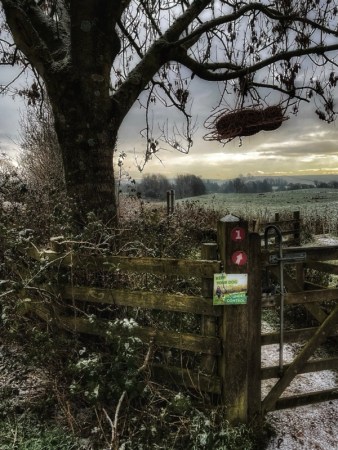
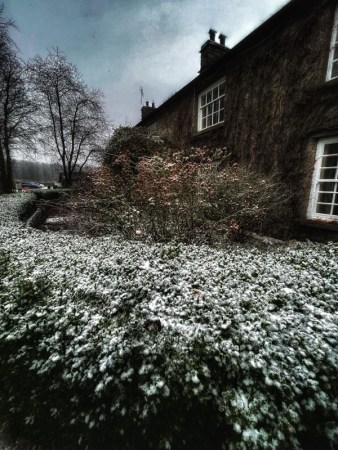
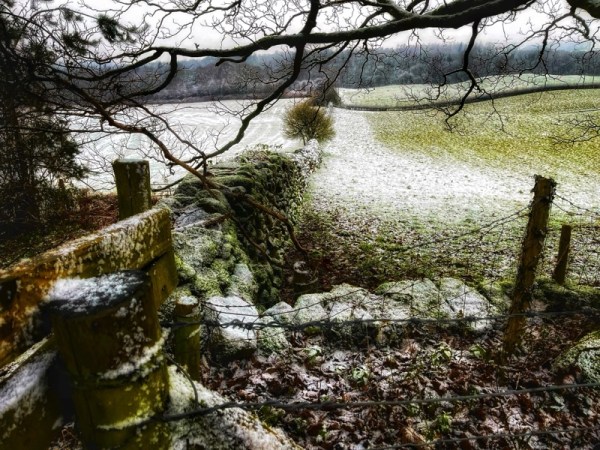
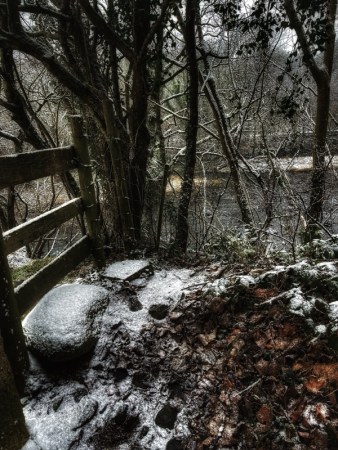
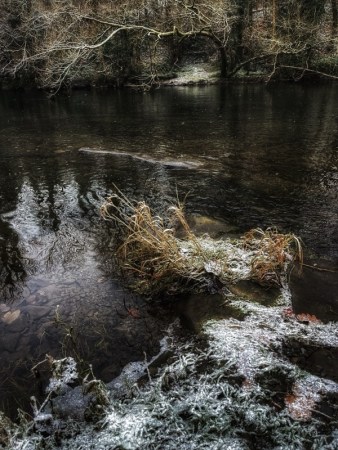
The fading light in December is a challenge. There is a temptation to ‘settle’ for a monochrome approach to taking shots; looking only for high-contrast situations. But there are opportunities for compositions that lend themselves to a limited spread of subtle colours.
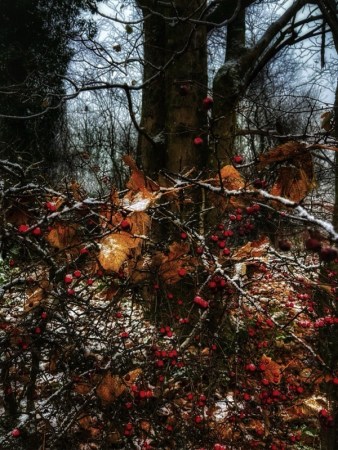
As a second stage, modern editing tools can be applied to bring out a small selection of colours as highlights – such as the those found in the mounds of leaves blown under the hedgerows. Berries are a big plus…
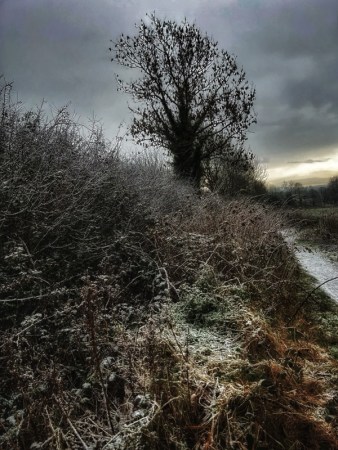
Below, an old footbridge over the River Kent is a feature of our village. Winter offers a chance to see and photograph it in a different light.
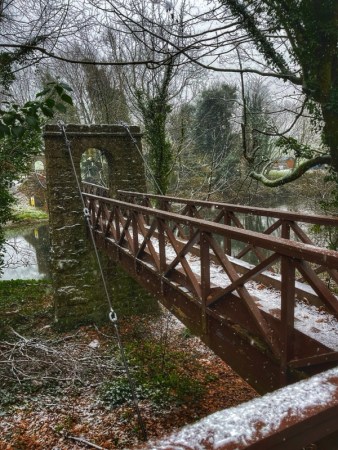
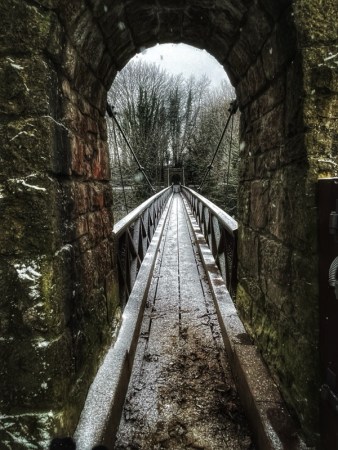
The bridge over the River Kent has a natural photogenic quality. It’s difficult to find an angle that isn’t interesting, and the material contrasts are rich.
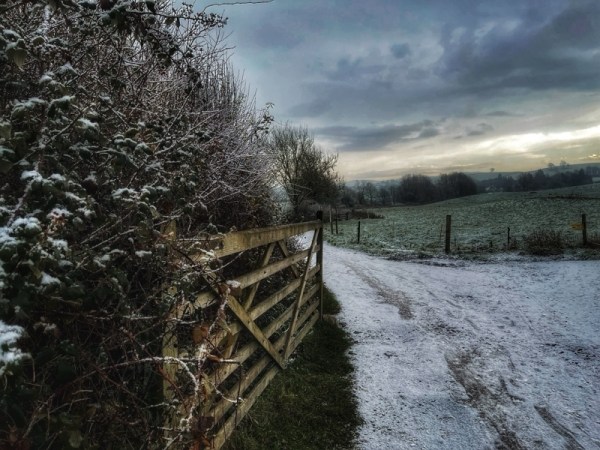
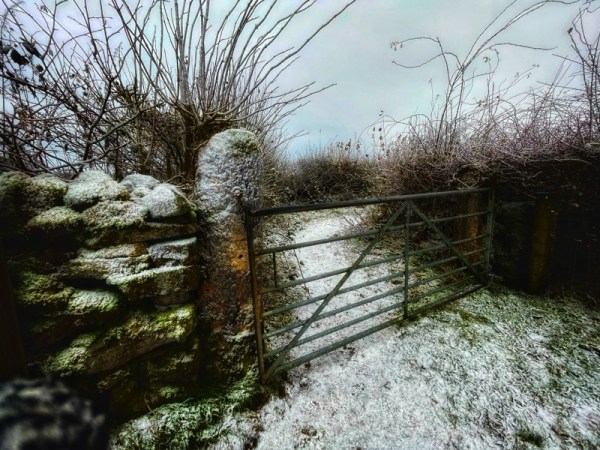
Gates are great, and the countryside is full of them. Taken flat and front-on, they can be dull, but at a slight angle, blending into the rest of the landscape, they become great ‘lead-lines’ for the viewer.
©Stephen Tanham 2023
Stephen Tanham is a writer-photographer and mystical teacher. He is the founding Director of the Silent Eye, which offers a mentored, journal-based journey from personality to the awakening of realised Self and its world of Being.
http://www.thesilenteye.co.uk and http://www.suningemini.blog
Share this:

It has been a thing of joy to me that most of the writers and teachers who have a desire to communicate the ‘mysteries’ of the human soul use the same language to describe the innermost nature of it.
The word ‘Essence’ is often used to describe this living ‘jewel’ that is our most fundamental identity – though a more liquid, honey-like metaphor might be more exact. The human essence has certain qualities or aspects. There are many of them, but – as an illustration – consider the qualities of Love, Intelligence, Will, Joy and Value.
Each of these is an aspect or facet – hence the use of jewel – of the human’s inner self. They are not created by any other process; they simply are what makes up our most sacred self… And they are therefore a part of our fundamental place in existence.
The years of our childhood are among the most vivid of our lives, and the challenges of this period of ‘first maturing’ provide us with the basis for our character – technically, our egoic self. The ego is a protective shell with which we face life. Its development is well documented by modern psychology. The egoic self, however, is formed ‘in the world’ (see last week’s post) and is therefore not woven from our aspects of essence; our deepest natures.
In simple terms, the egoic self is a complex network of programmed responses that we see as beliefs and opinions from our personal past and societal expectation, most of which operate beyond our active consciousness, and are therefore unseen and ‘unconscious’, though their presence is at the centre of our daily lives. Making this self of unwitnessed responses visible is a slow process, but one which, as Carl Jung attested, is essential to our spiritual development.
“Until you make the unconscious conscious, it will direct your life and you will call it fate.”
C.G. Jung
The creation of the egoic self happens in stages. The child is aware of the great beauty and ‘emotional-centrality’ of that which they are seeing slip away… But the world is an exciting place; full of sensual delights and energetic experiences. The full array of the essential aspects of the person are still there, but now lost to everyday awareness, buried even deeper than our network of responses, though certain character traits reflecting a favoured essential aspect may continue to shine through into the personality – we all have our personal strengths!
Is there a causal link between the underlying jewel of our essence and the developed, reactive egoic self – the personality?
One man who set out to map this in accessible and non-technical form goes by the pen-name of A.H. Almass. Born Hamid Ali in Kuwait, he emigrated to California as a young man and became part of a group whose work was modelled on Gurdjieff’s teachings, borrowing the latter’s use of ‘Seekers After Truth – SAT’.
The SAT met frequently in the area south of San Francisco and was led by Claudio Naranjo, a psychiatrist who had worked as Fred Pearls’ assistant in the development of Gestalt theory.
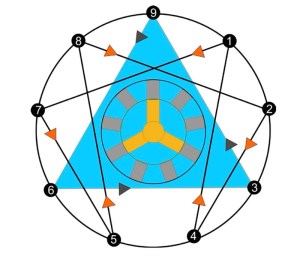
Almass and Sandra Maitri, another of the SAT members, worked closely with Naranjo to refine the use of the nine-pointed enneagram to map the human journey from essence to personality, a psycho-spiritual approach that had little to do with the subsequent and extensive promotion by others of the enneagram as a tool for ‘polishing the personality’; one that degraded into a widespread business-oriented movement thereafter.
It is interesting that during this period, a group of leading Jesuit thinkers (Rohr and Ebert) also decried the dilution of the original intent of the enneagram and began publishing their own guide to this sacred symbol.
Eventually, Naranjo refused to teach the enneagram in ‘English’ in protest at the commercialisation of what he saw as sacred knowledge. From that day on until his recent death, he only taught in Spanish, his native language from his home country, Chile.
Almaas, however, assisted by Karen Johnson, Sandra Maitri and others, believed that their findings pointed to a deeper approach to the links between personality and the underlying human essence. Almass formalised his methods under a school of the soul named ‘The Diamond Approach’, which today numbers thousands of students, some of them passing through a seven-year training program. One of my oldest Rosicrucian friends, who lived in San Francisco, graduated from this process.
The approach detailed by Almass was to link the facets of mankind’s underlying essence (Love, Will, Intelligence, Strength etc) to the main characteristics of the egoic self via what he called ‘The Theory of Holes’.
Working with hundreds of students, he analysed what they reported that, under psychological guidance, they made contact with what, as a child, had been their core natures. Repeatedly, they said they now – as adults – felt like they had a ‘hole’ where the strong and loving element of their inner natures had been.
Almass knew that the inner nature was still present … simply unconscious and therefore inactive in their daily lives. Our inner creative natures ‘fade away’, unseen and ‘untended’ in this way.
But still present…
Almass and his close colleague studied what had happened to compensate for these ‘holes’. They found that, in each case, the hollow sense of emptiness had been ‘part-filled’ by substituted experiences from the ‘outer’ lives of those involved. These were ‘things of the world’ in the language of the last post. Often these ‘fillers’ were relationships with other people with whom the subject partnered to ‘fill the hole’ of their emotional and spiritual loss.
This mapped, clearly, onto the findings of psychology when approaching, say, narcissistic personality types. The narcissist will constantly thrust their self-importance into the world to make up for a deep-seated and unconscious wound (hole) of lack of attention and reflected worth in early childhood.
Almass knew he could create a holistic and non-clinical ‘way back’ that would gradually weaken the power of the hole, enabling the student to reconnect with their essential nature. Thousands of graduates of the Diamond Approach now attest to the success of this.
In the next post, we will examine the foundational elements of this method, including the nature of ‘passions and fixations’; terminology that defines why such ‘holes’ are so difficult for us to detect and heal.
To be continued in Part 2.
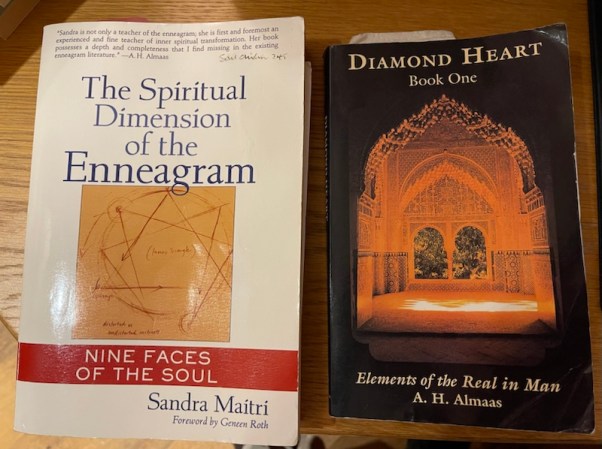
Recommended reading:
The Diamond Heart series of books by A.H. Almass.
The Spiritual Dimension of the Enneagram by Sandra Maitri
—————-
Other parts of this series:
This is Part Two
———-
©Stephen Tanham 2023
Stephen Tanham is a writer-photographer, mystical teacher and Director of the Silent Eye, a correspondence-based journey through the forest of personality to the dawn of Being.
http://www.thesilenteye.co.uk and http://www.suningemini.blog
Share this:

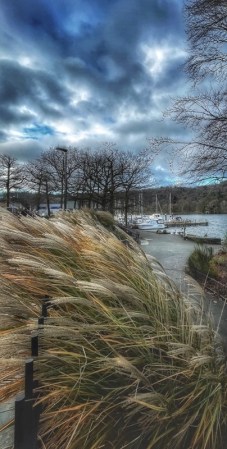
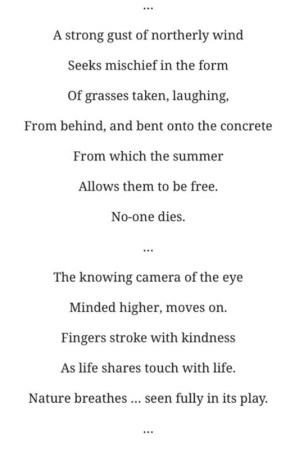
©Stephen Tanham 2023
Stephen Tanham is a writer-photographer and mystical teacher. He is the founding Director of the Silent Eye, which offers a mentored, journal-based journey from personality to the awakening of realised Self and its world of Being.
http://www.thesilenteye.co.uk and http://www.suningemini.blog
Share this:

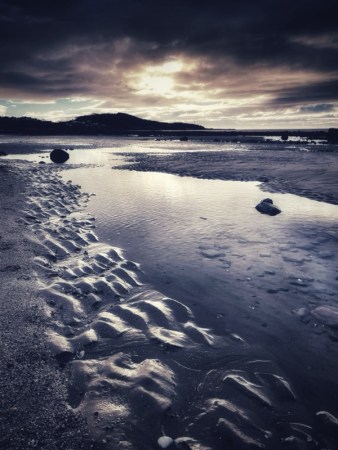
Quickly grasp, before this
Failing light sinks subtle eye
Chill fullness stolen.
©Stephen Tanham 2023
Stephen Tanham is a writer-photographer and mystical teacher. He is the founding Director of the Silent Eye, which offers a mentored, journal-based journey from personality to the awakening of realised Self and its world of Being.
http://www.thesilenteye.co.uk and http://www.suningemini.blog
Share this:

On the third Sunday of every month, the Silent Eye hosts a Zoom-based discussion to explore one of the core topics of modern mysticism.
This series of ongoing posts features a summary of each monthly discussion; of which this is the third.
The talks are open to all, and we welcome new visitors to the group – whether you drop in to take a look, or decide to stay and join our work.
There is link at the end of the post to enable you to join one of our discussions.
No-one wants a dry set of ‘minutes’ of such meetings. We’ll tell the story of these special events as informally as possible.

The SE-Exploration talk for Sunday 17th November 2023 was : A ‘present’ for Christmas: a new relationship with the now

We began by welcoming a new member of the group, then continued our investigation of the present, asking what was its content, and who inhabited it?
There was an enthusiastic and rapid convergence on the idea that we could not separate presence – discussed at length in our previous meetings – and the present.
To be in the present means to be conscious with presence; that inner deeply personal connection and clarity that belongs, uniquely to each of us, though being shared as the foundational ‘layer’ and nature of all consciousness.
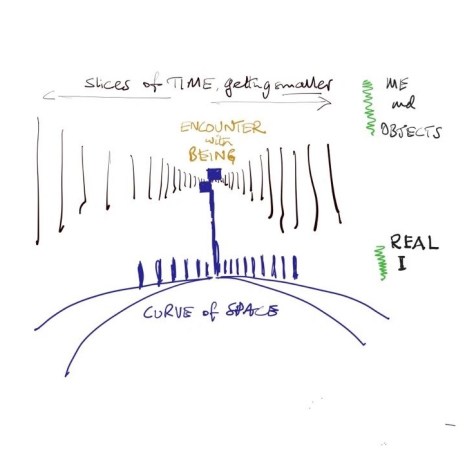
We went on to question whether any other form of ‘now’ exists? The usual scientific route of finding a ‘practical slice’ of passing time from which to expand the past and consider the future seemed ‘too thin on reality’ in the words of one of the group. We concluded that there is nothing ‘thin’ about Being – the real identity of presence, and a place of inner knowing and certainty.
We delved deeper into the combined ‘now::presence’ and concluded that it was the ‘entire content and nature’ of that theoretical slice of time but far richer, since its nature is Being, and, once we cast off the mindset of subject-object, ‘me and it’, existence becomes that ‘glowing’ and all-pervading knowing.
We examined whether there were any ‘objects’ at all; and proposed that, from the level of Being, rather than Mind, there were not. Existence is a continuity of consciousness in which we are free to travel. Whether we travel as a minded individual or open ourselves to the overall flow (as our new attendee suggested), is our choice … and our birthright.
The group-leader told the Sufi-derived tale of the wise man and the sad river, reproduced below:
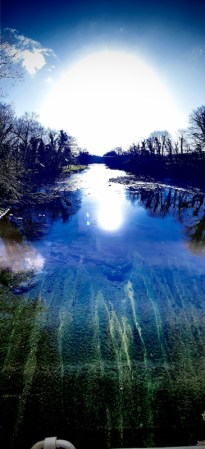
A wise man sits down in a familiar spot by the river to rest, but feels there is sadness present. After a while, he locates the sadness in the presence of the river, itself.
“Why are you sad,” he asks his old friend, the river.
“I have developed the consciousness of what I am,” says the river.
The wise man smiles and nods his head, suspecting what is coming.
“I can let myself sense downstream, and there I find a large lake, which is much bigger than I am. Even worse, when I feel what it is like to be there, I hear a great roaring in the distance and am fearful of what that might be!”
The wise man considers his words, carefully.
“And what are you now,” he asks his old friend.
“Why, I am the river!” The reply is instant and without pause.
“And what will you be if you let yourself go downstream?”
The river says, “That’’s the whole point! I do not know what I will become!”
The wise man pauses, looking into the waters of the river for a long time…
“You were never a river,” says the wise man, softly. “You are the flow and substance of what, here, is seen by others as a river.” He listens to the listening of his friend, knowing that the truth is flowing into him.
“When you let go the narrowness of these banks, you can become anything you encounter without fear, for you are the nature of that which forms and shapes them all, yet is none of them…”
The river thinks long and hard, and begins to smile back at his wise friend as he lets go the bank and surrenders to the glorious flow. “Was there, then, any value in my being a river?”
The wise man laughs. “Most certainly. We could never have had this conversation if I did not stop here to rest on your soft banks…”
———-
It was felt there was much to discuss in this shared subject and will return to it in future talks.
Why not join us for our December zoom meeting? The details and synopsis are below:

The SE-Exploration talk for Sunday 17 December 2023 will be : The Technique of Self-Inquiry. We will also have a group meditation to celebrate the coming Winter Solstice – the birth of the returning light.
Our regular closing text from the Gnostic Gospel of Thomas urges us to Inquire within:
“Knock upon yourself as upon a door and walk upon yourself as a straight road. For if you walk on that path, you cannot go astray; and when you knock on that door, what you open for yourself shall open.
Let the one who seeks not stop seeking until he finds. When he finds, he shall be troubled. When he becomes troubled, he will be amazed, and shall come to transcend all things.”
Gnostic Gospel of Thomas.
At the next meeting we will examine a practical technique whereby we may ‘knock upon ourselves as a door…’
Join us for 90 mins of friendship and amicable sharing of views and experiences … not forgetting fun. It’s Christmas! Bring a glass of your favourite tipple with you…

If you’re not on our contact list and you or a friend would like a Zoom invitation to join us at the next SE-Explore meeting (see above), send an email to rivingtide@gmail.com.
———-
©Stephen Tanham 2023
Stephen Tanham is a writer-photographer and mystical teacher. He is the founding Director of the Silent Eye, which offers a mentored, journal-based journey from personality to the awakening of realised Self and its world of Being.
http://www.thesilenteye.co.uk and http://www.suningemini.blog
Share this:

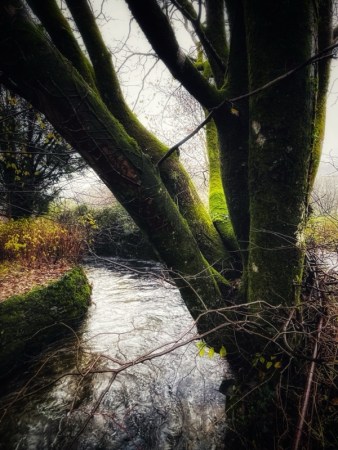
The Lakeland town of Ambleside lies at the northern end of Lake Windermere. It’s full of surprises; one of which is the fact that it’s not actually on the lake, but a twenty minute walk from Waterhead, the tiny but beautiful ferry-port that is.
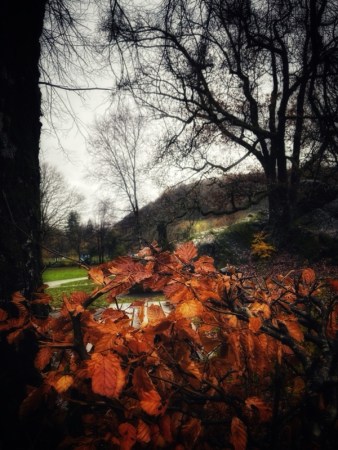
One of the other gems is Rothay Park, hidden from the entire road system, but forming a green backdrop to the curve of the town.
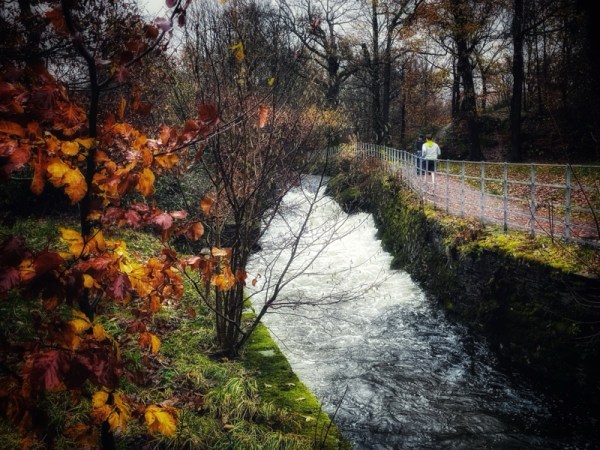
Water defines Lakeland towns, and the curve of the River Rothay is the forming influence that – largely unseen – shapes the northern and western perimeters.
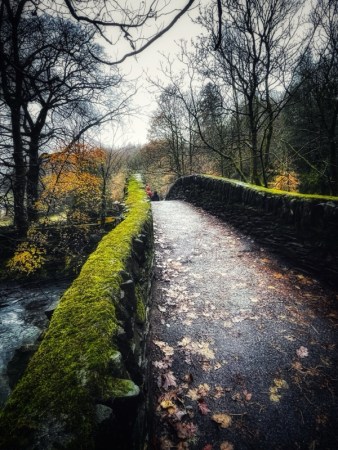
The river descends steeply from the high fells around the Kirkstone Pass, then gushes through the heart of the town at Stock Ghyll, before entering Rothay Park as… appropriately enough, the River Rothay; presumably because its volume at this point warrants the upgrade.
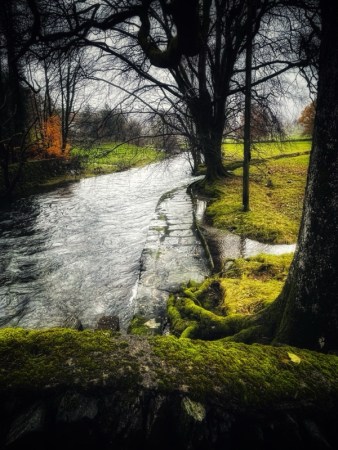
From there, it skirts the southern end of the park, bypassing St Mary’s church and community centre, before taking a straight line south along the edge Roman fort at Galava, where it enters the northern tip of Lake Windermere, only a few hundred metres after merging with its sister river Brathay (‘bray-thay’) arriving from the west.

We’d made the drive to give Tess a good run in the (muddy) expanse of the park. But it turned out to be an excellent day for low-light, and rather dark photography.
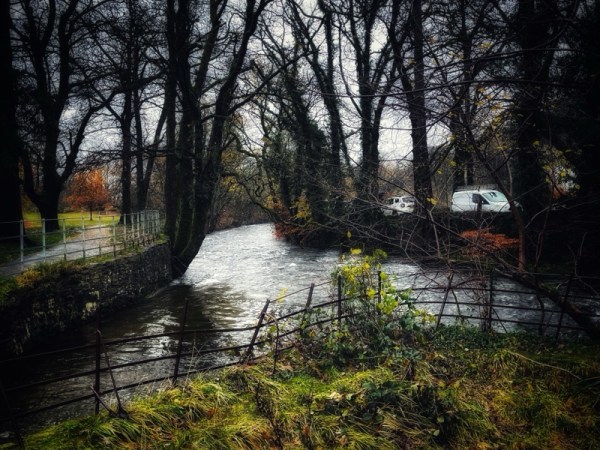
On such days, contrast is king – in order to make a the juxtaposition of light and dark the central feature.
———-
Stephen Tanham is a writer-photographer and mystical teacher. He is the founding Director of the Silent Eye, which offers a mentored, journal-based journey from personality to the awakening of realised Self and its world of Being.
http://www.thesilenteye.co.uk and http://www.suningemini.blog
Share this:

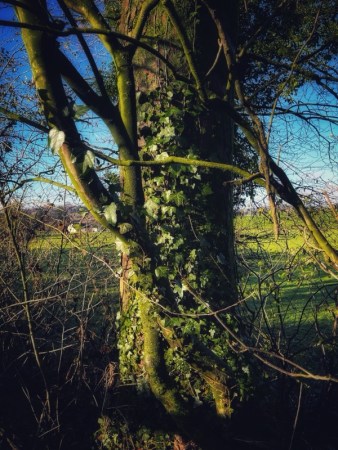
The old giant,
Garlanded with summer’s
Growth of ivy,
Prepares with inner calm
To greet the howling winds
Of winter.
Our hearts join his,
And his spins depth
Of fortitude
Into our willing eyes…
———-
©Stephen Tanham 2023
Stephen Tanham is a writer, mystical teacher photographer and Director of the Silent Eye, a correspondence-based journey through the forest of personality to the dawn of Being.
http://www.thesilenteye.co.uk and http://www.suningemini.blog
Share this:

There is a famous phrase, attributed to the Sufi tradition:
Be in the world but not of it…
The sentiment refers to how an individual views their life, and also how they orientate themselves to their experiences. We seldom view experiences as being a living dimension of life. We view them as random events; our task being to navigate around them well – not to absorb them and find their deeper character.
The very idea of events having a character, even something to teach us from a spiritual perspective, is not a normal part of our average day. And yet the orientation to events can be the key to a deeper life as long as the experience is used to reinforce the knowledge of our self.
Dramatically, the self as we know it is the result of a withdrawal from the inner reality of who we are when we enter this life.
The infant is filled with the knowledge and company of an inner presence, often referred to as Essence. This is its true and original self. Primary characteristics of this state, such as love, truth and acceptance, are bundled together into one undifferentiated experience of the world.
The infant has to ‘unlearn’ its self-evident identity and accept (by tuition) that it is separated from its world and that this ‘container of experience’ will be its home … gradually surrendering the memory of the wonderful inner states of Essence to the subconscious, where they haunt our dreams and desires.
Life takes us, increasingly, into a world defined by adults. The closest of these – our parents or guardians – impart to us our worldview, and also define how we should protect our-selves. All of this is kindly, but delivers us as young adults into a world that is alien to the remaining glimpses of a former state which has an energetic and ‘clear’ nature, and possesses a state of calm and belonging that refreshes us in a way that we find hard to define using the words and concepts of the newly-formed adult nature.
The Essence of the person is still there. Ignored and often given a sense of being abandoned. It needs to protect itself – and its true identity – and so it assembles a series of notions about itself, harvesting vivid experiences, and forming a new and ‘adult set of identifications.
All of this melds together as the personality, which now sits as the ‘front’ to the world.
We couldn’t survive without the personality. It is an important part of our development as an adult human. But this suit of armour is not who we are.
Life continues to maturity and offers its challenges and its rewards of success, companionship, sex, friendship and family. Few, if any, of these touch the inner realms, though we may take pride in the discipline and energy used to hold together a stable and responsible existence.
The heart of the problem is that the personality is entirely based on pieces of our personal history, and so is a creature of the past, unused to really ‘being there’ in the present. We exist, biologically, in the now, but greet it, mentally and emotionally, with the ‘filters’ of our past perception. For those who develop mystically, the fresh air of a true relationship between our real identity and the world of experience becomes a driving hunger.
Typically, somewhere in the middle of life, we begin to yearn for the ‘feeling’ of that dimly remembered inner state. Increasingly, people use techniques such as mediation to get back in touch with that ‘inner glow’ of simply being; holding back the incessant demands of ‘doing’ in their normal life.
Our starting phrase: ‘Be in the world but not of it’ offers a parallel way to meditation; one not based on withdrawal from the world to a meditative state, but upon a different engagement with the world of our experiences. This is not to say anything is lacking in a meditation practice; quite the opposite. The two complement each other, but both can be combined to energise and redirect our lives in different directions and with new energies.
Together, they can also change our ideas of identity – who we are…
Early in what has become a true search, we begin to see that the world is actually the same from the perception of personality and the withdrawn essence. But the way the world is seen – the lenses of perception – are different.
When we discover that this is true – feeling that surge of rightness from within, we finally have a opportunity to change our orientation to life so that we are ‘in the world but not of it’
(We need to re-energise our quest for that deeply personal sense of self, beyond the personality.)
Ironically, the personality; the egoic self, can assist us in this quest. Since this ‘outer’ shell of self is synthesised from the real essence which it protects, we can find pointers in our personality to our authentic essence, its power and its love – our real nature, now seen with adult discrimination … and hence a power of doing.
We will begin to illustrate this transformative journey in Part Two.
©Stephen Tanham 2023
Stephen Tanham is a writer-photographer, mystical teacher and Director of the Silent Eye, a correspondence-based journey through the forest of personality to the dawn of Being.
http://www.thesilenteye.co.uk and http://www.suningemini.blog


 Sun in Gemini
You must be logged in to post a comment.