
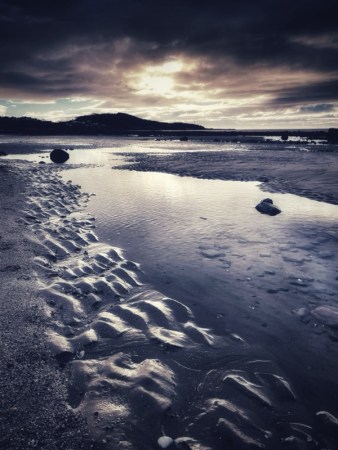
Quickly grasp, before this
Failing light sinks subtle eye
Chill fullness stolen.
©Stephen Tanham 2023
Stephen Tanham is a writer-photographer and mystical teacher. He is the founding Director of the Silent Eye, which offers a mentored, journal-based journey from personality to the awakening of realised Self and its world of Being.
http://www.thesilenteye.co.uk and http://www.suningemini.blog
Share this:

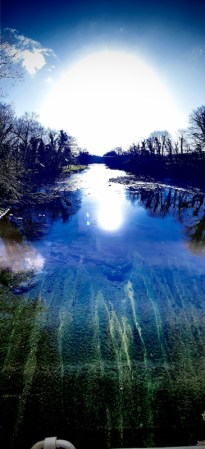
On the third Sunday of every month, the Silent Eye hosts a Zoom-based discussion to explore one of the core topics of modern mysticism.
This series of ongoing posts features a summary of each monthly discussion; of which this is the third.
The talks are open to all, and we welcome new visitors to the group – whether you drop in to take a look, or decide to stay and join our work.
There is link at the end of the post to enable you to join one of our discussions.
No-one wants a dry set of ‘minutes’ of such meetings. We’ll tell the story of these special events as informally as possible.

The SE-Exploration talk for Sunday 17th November 2023 was : A ‘present’ for Christmas: a new relationship with the now

We began by welcoming a new member of the group, then continued our investigation of the present, asking what was its content, and who inhabited it?
There was an enthusiastic and rapid convergence on the idea that we could not separate presence – discussed at length in our previous meetings – and the present.
To be in the present means to be conscious with presence; that inner deeply personal connection and clarity that belongs, uniquely to each of us, though being shared as the foundational ‘layer’ and nature of all consciousness.
We went on to question whether any other form of ‘now’ exists? The usual scientific route of finding a ‘practical slice’ of passing time from which to expand the past and consider the future seemed ‘too thin on reality’ in the words of one of the group. We concluded that there is nothing ‘thin’ about Being – the real identity of presence, and a place of inner knowing and certainty.
We delved deeper into the combined ‘now::presence’ and concluded that it was the ‘entire content and nature’ of that theoretical slice of time but far richer, since its nature is Being, and, once we cast off the mindset of subject-object, ‘me and it’, existence becomes that ‘glowing’ and all-pervading knowing.
We examined whether there were any ‘objects’ at all; and proposed that, from the level of Being, rather than Mind, there were not. Existence is a continuity of consciousness in which we are free to travel. Whether we travel as a minded individual or open ourselves to the overall flow (as our new attendee suggested), is our choice … and our birthright.
The group-leader told the Sufi-derived tale of the wise man and the sad river, reproduced below:
A wise man sits down in a familiar spot by the river to rest, but feels there is sadness present. After a while, he locates the sadness in the presence of the river, itself.
“Why are you sad,” he asks his old friend, the river.
“I have developed the consciousness of what I am,” says the river.
The wise man smiles and nods his head, suspecting what is coming.
“I can let myself sense downstream, and there I find a large lake, which is much bigger than I am. Even worse, when I feel what it is like to be there, I hear a great roaring in the distance and am fearful of what that might be!”
The wise man considers his words, carefully.
“And what are you now,” he asks his old friend.
“Why, I am the river!” The reply is instant and without pause.
“And what will you be if you let yourself go downstream?”
The river says, “That’’s the whole point! I do not know what I will become!”
The wise man pauses, looking into the waters of the river for a long time…
“You were never a river,” says the wise man, softly. “You are the flow and substance of what, here, is seen by others as a river.” He listens to the listening of his friend, knowing that the truth is flowing into him.
“When you let go the narrowness of these banks, you can become anything you encounter without fear, for you are the nature of that which forms and shapes them all, yet is none of them…”
The river thinks long and hard, and begins to smile back at his wise friend as he lets go the bank and surrenders to the glorious flow. “Was there, then, any value in my being a river?”
The wise man laughs. “Most certainly. We could never have had this conversation if I did not stop here to rest on your soft banks…”
———-
It was felt there was much to discuss in this shared subject and will return to it in future talks.
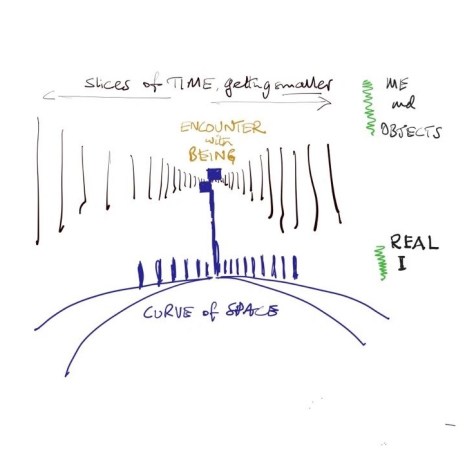
Why not join us for our December zoom meeting? The details and synopsis are below:

The SE-Exploration talk for Sunday 17 December 2023 will be : The Technique of Self-Inquiry. We will also have a group meditation to celebrate the coming Winter Solstice – the birth of the returning light.
Our regular closing text from the Gnostic Gospel of Thomas urges us to Inquire within:
“Knock upon yourself as upon a door and walk upon yourself as a straight road. For if you walk on that path, you cannot go astray; and when you knock on that door, what you open for yourself shall open.
Let the one who seeks not stop seeking until he finds. When he finds, he shall be troubled. When he becomes troubled, he will be amazed, and shall come to transcend all things.”
Gnostic Gospel of Thomas.
At the next meeting we will examine a practical technique whereby we may ‘knock upon ourselves as a door…’
Join us for 90 mins of friendship and amicable sharing of views and experiences … not forgetting fun. It’s Christmas! Bring a glass of your favourite tipple with you…

If you’re not on our contact list and you or a friend would like a Zoom invitation to join us at the next SE-Explore meeting (see above), send an email to rivingtide@gmail.com.
———-
©Stephen Tanham 2023
Stephen Tanham is a writer-photographer and mystical teacher. He is the founding Director of the Silent Eye, which offers a mentored, journal-based journey from personality to the awakening of realised Self and its world of Being.
http://www.thesilenteye.co.uk and http://www.suningemini.blog
Share this:

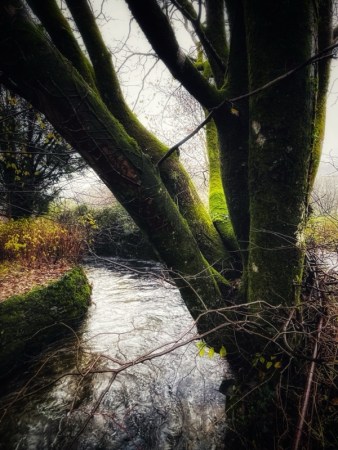
The Lakeland town of Ambleside lies at the northern end of Lake Windermere. It’s full of surprises; one of which is the fact that it’s not actually on the lake, but a twenty minute walk from Waterhead, the tiny but beautiful ferry-port that is.
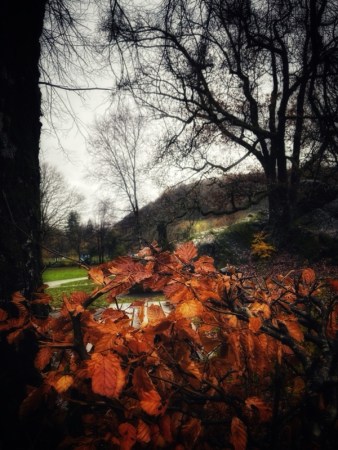
One of the other gems is Rothay Park, hidden from the entire road system, but forming a green backdrop to the curve of the town.
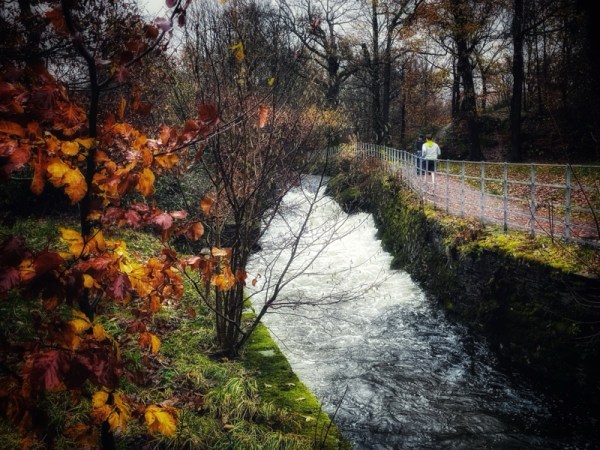
Water defines Lakeland towns, and the curve of the River Rothay is the forming influence that – largely unseen – shapes the northern and western perimeters.
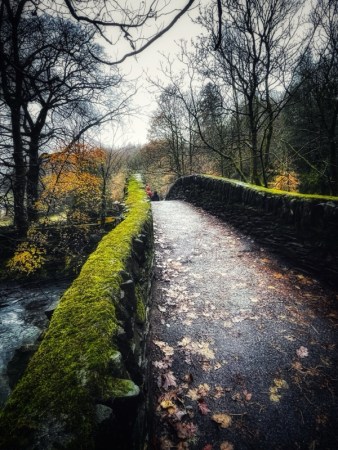
The river descends steeply from the high fells around the Kirkstone Pass, then gushes through the heart of the town at Stock Ghyll, before entering Rothay Park as… appropriately enough, the River Rothay; presumably because its volume at this point warrants the upgrade.
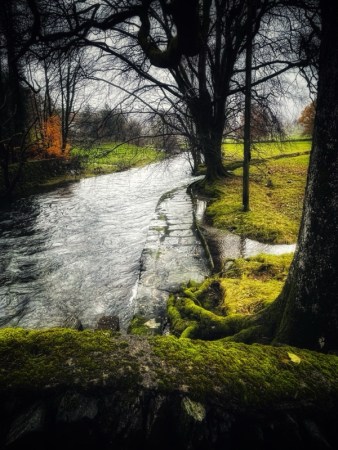
From there, it skirts the southern end of the park, bypassing St Mary’s church and community centre, before taking a straight line south along the edge Roman fort at Galava, where it enters the northern tip of Lake Windermere, only a few hundred metres after merging with its sister river Brathay (‘bray-thay’) arriving from the west.

We’d made the drive to give Tess a good run in the (muddy) expanse of the park. But it turned out to be an excellent day for low-light, and rather dark photography.
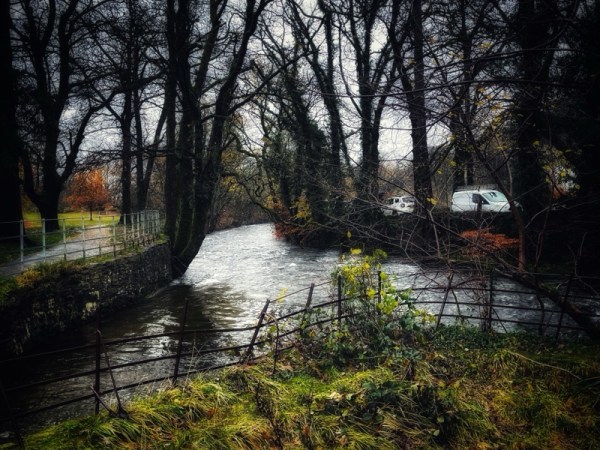
On such days, contrast is king – in order to make a the juxtaposition of light and dark the central feature.
———-
Stephen Tanham is a writer-photographer and mystical teacher. He is the founding Director of the Silent Eye, which offers a mentored, journal-based journey from personality to the awakening of realised Self and its world of Being.
http://www.thesilenteye.co.uk and http://www.suningemini.blog
Share this:

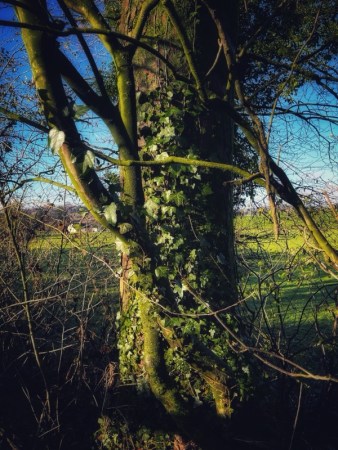
The old giant,
Garlanded with summer’s
Growth of ivy,
Prepares with inner calm
To greet the howling winds
Of winter.
Our hearts join his,
And his spins depth
Of fortitude
Into our willing eyes…
———-
©Stephen Tanham 2023
Stephen Tanham is a writer, mystical teacher photographer and Director of the Silent Eye, a correspondence-based journey through the forest of personality to the dawn of Being.
http://www.thesilenteye.co.uk and http://www.suningemini.blog
Share this:

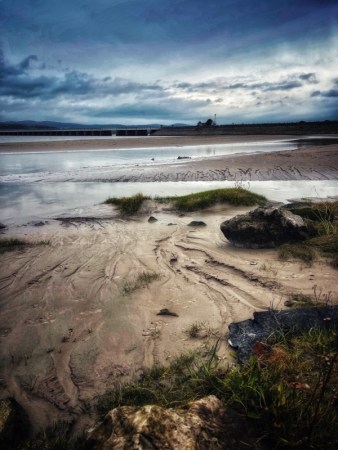
There is a famous phrase, attributed to the Sufi tradition:
Be in the world but not of it…
The sentiment refers to how an individual views their life, and also how they orientate themselves to their experiences. We seldom view experiences as being a living dimension of life. We view them as random events; our task being to navigate around them well – not to absorb them and find their deeper character.
The very idea of events having a character, even something to teach us from a spiritual perspective, is not a normal part of our average day. And yet the orientation to events can be the key to a deeper life as long as the experience is used to reinforce the knowledge of our self.
Dramatically, the self as we know it is the result of a withdrawal from the inner reality of who we are when we enter this life.
The infant is filled with the knowledge and company of an inner presence, often referred to as Essence. This is its true and original self. Primary characteristics of this state, such as love, truth and acceptance, are bundled together into one undifferentiated experience of the world.
The infant has to ‘unlearn’ its self-evident identity and accept (by tuition) that it is separated from its world and that this ‘container of experience’ will be its home … gradually surrendering the memory of the wonderful inner states of Essence to the subconscious, where they haunt our dreams and desires.
Life takes us, increasingly, into a world defined by adults. The closest of these – our parents or guardians – impart to us our worldview, and also define how we should protect our-selves. All of this is kindly, but delivers us as young adults into a world that is alien to the remaining glimpses of a former state which has an energetic and ‘clear’ nature, and possesses a state of calm and belonging that refreshes us in a way that we find hard to define using the words and concepts of the newly-formed adult nature.
The Essence of the person is still there. Ignored and often given a sense of being abandoned. It needs to protect itself – and its true identity – and so it assembles a series of notions about itself, harvesting vivid experiences, and forming a new and ‘adult set of identifications.
All of this melds together as the personality, which now sits as the ‘front’ to the world.
We couldn’t survive without the personality. It is an important part of our development as an adult human. But this suit of armour is not who we are.
Life continues to maturity and offers its challenges and its rewards of success, companionship, sex, friendship and family. Few, if any, of these touch the inner realms, though we may take pride in the discipline and energy used to hold together a stable and responsible existence.
The heart of the problem is that the personality is entirely based on pieces of our personal history, and so is a creature of the past, unused to really ‘being there’ in the present. We exist, biologically, in the now, but greet it, mentally and emotionally, with the ‘filters’ of our past perception. For those who develop mystically, the fresh air of a true relationship between our real identity and the world of experience becomes a driving hunger.
Typically, somewhere in the middle of life, we begin to yearn for the ‘feeling’ of that dimly remembered inner state. Increasingly, people use techniques such as mediation to get back in touch with that ‘inner glow’ of simply being; holding back the incessant demands of ‘doing’ in their normal life.
Our starting phrase: ‘Be in the world but not of it’ offers a parallel way to meditation; one not based on withdrawal from the world to a meditative state, but upon a different engagement with the world of our experiences. This is not to say anything is lacking in a meditation practice; quite the opposite. The two complement each other, but both can be combined to energise and redirect our lives in different directions and with new energies.
Together, they can also change our ideas of identity – who we are…
Early in what has become a true search, we begin to see that the world is actually the same from the perception of personality and the withdrawn essence. But the way the world is seen – the lenses of perception – are different.
When we discover that this is true – feeling that surge of rightness from within, we finally have a opportunity to change our orientation to life so that we are ‘in the world but not of it’
(We need to re-energise our quest for that deeply personal sense of self, beyond the personality.)
Ironically, the personality; the egoic self, can assist us in this quest. Since this ‘outer’ shell of self is synthesised from the real essence which it protects, we can find pointers in our personality to our authentic essence, its power and its love – our real nature, now seen with adult discrimination … and hence a power of doing.
We will begin to illustrate this transformative journey in Part Two.
©Stephen Tanham 2023
Stephen Tanham is a writer-photographer, mystical teacher and Director of the Silent Eye, a correspondence-based journey through the forest of personality to the dawn of Being.
http://www.thesilenteye.co.uk and http://www.suningemini.blog
Share this:


It was happening very quickly… I looked at the collie – Tess. She looked back at me, equally confused. The boot lid continued to descend towards us…
It won’t make any sense unless I back it up a bit.
Once a week, we go to Grange-over-Sands to do our fresh-food shopping. The small but lovely seaside resort has a ‘one of everything’ approach to its specialised and individual shops.
There’s the collie to be walked, of course, so a certain division of labour is needed. I walk Tess around the local park, then onto the promenade for the return leg into the town. Tess and I usually arrive just before Bernie, whose last undertaking is to get us a couple of lattés from the local Costa Coffee. It’s a family tradition that began during the Covid restrictions (Grange was within the dog-walking zone from where we live).
Shopped and equipped with the coffee, we usually sit on the tailgate of the car, Tess’ head prominently gazing out (between us) at amused passers by. You get used to the attention directed at the dog and everyone is good-natured.
And so it was that I came to be seated, drinking coffee and swinging my legs; the shopping and walking done. It was my wife who first gestured, in panic, to the descent of the boot lid. Before I could react, it had reached my head … and mercifully stopped – the automated response to meeting resistance.
Tess retreated to the inner space, while I wriggled out and stood by the errant boot lid, feeling under its lower edge for the manual buttons. I tried several combinations, searching for a reason for the aberrant behaviour.
None could be found…
We reset: Bernie handed me back my coffee and Tess returned to centre stage to study her adoring public. The tailgate’s rogue performance faded into recent memory, and we all relaxed. I began swinging my legs again – something I often do in ‘relaxation’ and when I’m thinking, deeply.
Once more, equally unannounced, the tailgate came at me. This was becoming personal…
Perhaps in anticipation that it might happen again, I had memorised the position of the button that would abort the descent of all that metal and glass.
Bernie stood there, looking at the visible lower half of my face. She took the coffee from my uncertain hands and said she’d be back, soon. It was all very surreal, though Tess seemed unperturbed.
I pushed the middle button. The boot lid rose. Some distant memory of a story by Hoffnung of bricks and buckets entered my consciousness and a smile crossed my lips – which is more than could be said for the cooling coffee.
“It’s you!” She said it with a smile, clutching the car’s handbook that she had collected from the dash.
“There’s a proximity foot-switch under the back of the car. It’s supposed to help you if you’re carrying a heavy bag or two and have run out of hands…” She laughed. “It works to open and, if already open, to close. You must have triggered it – twice – by your habit of swinging your feet when you’re having coffee.”
We sat in silence, Tess twisting her head from side to side to consider our mood.
My feet were still.
©Stephen Tanham 2023
Stephen Tanham is a writer, mystical teacher photographer and Director of the Silent Eye, a correspondence-based journey through the forest of personality to the dawn of Being.
http://www.thesilenteye.co.uk and http://www.suningemini.blog
Share this:

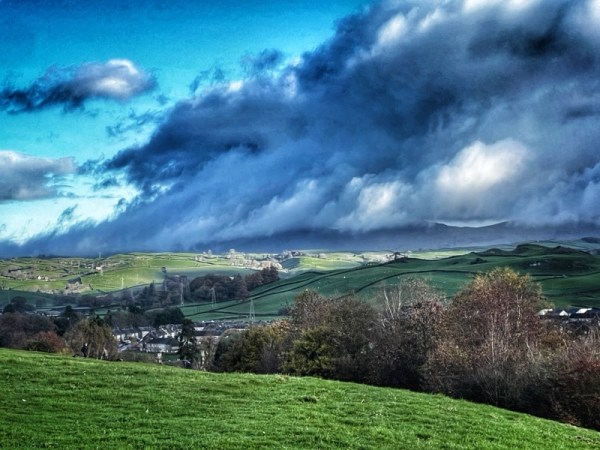
It’s a steep climb from Kendal’s town centre up to the old castle that still stands guard over this ancient town.
Once there, you are greeted with 360 degrees of lovely landscape, ranging from the north end of Morecambe Bay to the Lakeland hills. Just to the north-east lie the less visited Howgills. I always glance across, as the view of hills and dales is spectacular.
On the morning I took the opening shot, a few days ago, my attention was grabbed by the wildest looking cloud patterns I’d ever seen.

To the best of my knowledge, it wasn’t a storm… But it was one of the most surprising and mesmerising skies.
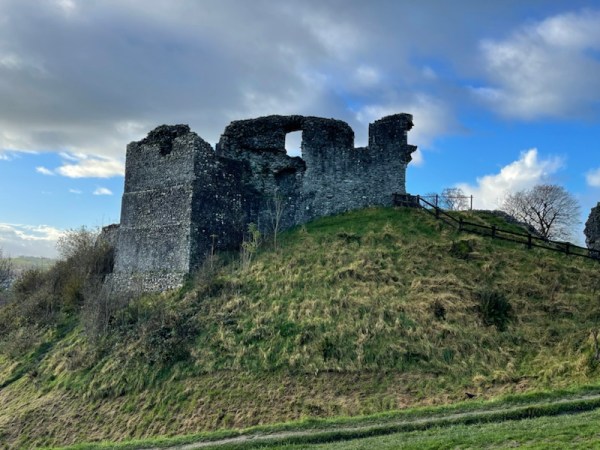
Here’s a shot of the castle, for completeness. Much of it is still standing and well worth a visit – as long as you don’t mind a steep and often muddy ascent.
©Stephen Tanham 2023
Stephen Tanham is a writer, mystical teacher, and Director of the Silent Eye, a correspondence-based journey through the forest of personality to the dawn of Being.
http://www.thesilenteye.co.uk and http://www.suningemini.blog
Share this:

+ #Silenti, Consciousness, esoteric psychology, I Ching, Inquiry techniques, meditation, Mindfulness, Photography, Silent Eye School
Shells from an Inner Sea (3 of 3): the inner flow
by Steve Tanham

When we find that the process of inner inquiry described in the last two posts actually works, and we see that ‘finding out’ things about our inner lives is both simple and replicable, we might wonder why and how this mysterious technique works so well?
What mechanism makes this seeming conversation with our experience and its storehouse of memory so powerful?
Hang on tight, because if you grasp the central reality of this, it has the power to change everything about your life – in a good way, of course.
The method of inquiry connects all your life’s experience with your intelligence and the presence of that intelligence.
The whole of spiritual development is about presence – the increasingly present companionship of a more real ‘us’ than our storm-tossed outer egoic personality.
The practice of inquiry, as outlined in these three posts, changes the usual ‘in here – out there’ relationship of living. Instead of experiencing ourselves as an in-here that is somehow superior to the world in which it exists, we begin to see that the edges of that division are not well defined, at all.
We are brought up from a very young age to think of the in-here as the surface of our bodies. We may have senses that supply an inference – homed by years of perceptive polishing – of what is happening out-there, but it remains a ‘me and it’ relationship; in other words an object-based view of our universe. We (surface of skin inwards) relate to not-me (surface of skin outwards) as an object; an object that can be subdivided into lots more physical and logical parts, many of which can never be never be ‘seen’, like anger directed at us, for example.
Our ‘self’ possesses many more means of ‘finding out’ about its world that our five traditional senses. When we enter a beautiful, budding glade on a spring morning, we feel a sense of renewal and eurphoria. This is a real feeling, though nothing of meaning has been transmitted to us in a sense that physics would acknowledge.
Similarly, when dealing with certain people, we know when they are lying – we can ‘just tell’. Body language may be part of it, but not the whole story; the rest being a kind of certainty of experience, a knowing.
We attribute much of this to psychological ability to make sense of our world, but much of it is an extension of our core out into the world that we know of as out-there.
An interesting exercise is to let go of your boundary of skin. Imagine yourself pervading the air around you, touching and sensing the moisture in the air, then the ground, the water in a stream, the grass of a meadow as you are walking through, the radiance of the sun in the sky. In the context of our investigation, we are extending what we know is our self out beyond its traditional boundaries and doing something slightly different to simple ‘mindfulness’.
Don’t try to push, say, ‘seeing’ out there in a forced way, simply let your awareness flow outwards, as though it were another kind of hearing.
If we carry this out over a period of weeks, with an open and welcoming expectation of forming a new relationship with our ‘felt’ world, we will begin to be both relaxed and expanded. Our ‘presence’ will seem to fill not just our bodies – glowing inside us – but the entire space around us.
This extended sense of intelligent and intimate presence is the ‘field’ into which we direct our Inquiry when we use a specific question or as a general exploration of ‘how we are’; which may be health-based or a dive into a specific issue of importance to us.
In our inquiry we simply have a friendly and open stance to whatever comes into our internal space. With practice, we find that the glowing state of presence is a powerful pre-requisite to a fulfilling session, and stays with us through the adventure.
When we are familiar and settled with the simple joy of the act of inquiry, we come to realise that the state of our presence in the act of inquiry is synonymous with the awareness of the all-embracing ‘now’, as discussed last week.
In this discovery, we become conscious that the ‘now’ and the feeling of glowing presence are in fact the same experience. With this new knowing, we enter a second and more powerful phase of inquiry, where we begin to question the nature of ‘space’ itself.
But that may be a step too far for this post!
Previous posts in this series:
This is Shells from an Inner Sea (3), the final part.
©Stephen Tanham 2023
Stephen Tanham is a writer, mystical teacher and Director of the Silent Eye, a correspondence-based journey through the forest of personality to the dawn of Being.
http://www.thesilenteye.co.uk and http://www.suningemini.blog
Share this:

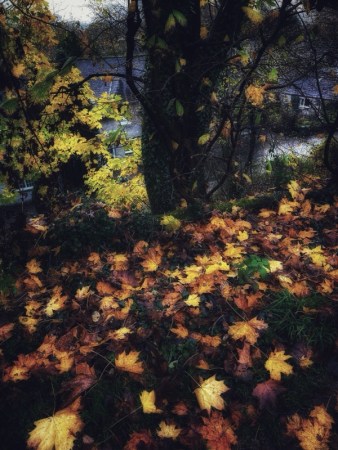
The damp demise of colour
In the hedgerow
The feral scent of water
Molding the undoing
Of what it kissed to life
So short a time ago…
———-
©Stephen Tanham 2023
Stephen Tanham is a writer, mystical teacher, photographer and Director of the Silent Eye, a correspondence-based journey through the forest of personality to the dawn of Being.
http://www.thesilenteye.co.uk and http://www.suningemini.blog
Share this:

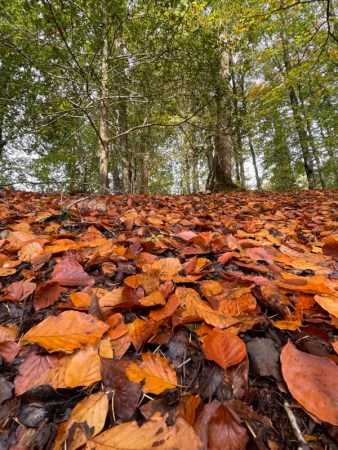
Sometimes, the moment just is … in all its beauty.
The leaves, their work done, let go the link to their sustenance and fall through space to an unknown place, where their form blazes briefly amidst their kin, before losing its cohesion in the harshness of winter, returning everything they have been, but not this memory, to the good earth.
©Stephen Tanham 2023
Stephen Tanham is a writer, mystical teacher and Director of the Silent Eye, a correspondence-based journey through the forest of personality to the dawn of Being.
http://www.thesilenteye.co.uk and http://www.suningemini.blog
Share this:

+ #Silenti, Consciousness, esoteric psychology, I Ching, Inquiry techniques, meditation, Mindfulness, Photography, Silent Eye School
Shells from an Inner Sea (2) A fresh look at the ‘now’
by Steve Tanham
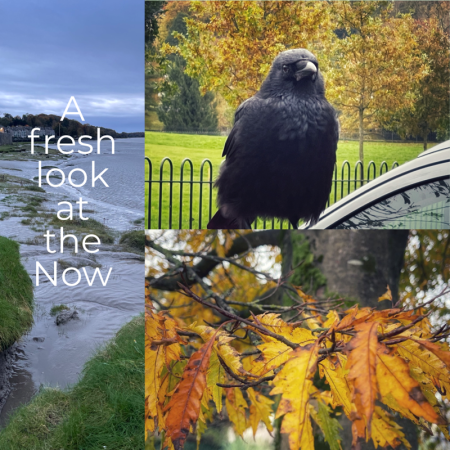
We are urged by spiritual writers to ‘live in the now’. We might reasonably ask how we might live anywhen else, but that would go against the spirit of such good advice.
Some clarity might be needed, though.
As far as a reasonable self-inquiry goes, we – our composite consciousness – lives pressed up against signals from our senses that are very much of the now. What we do with these signals is another matter. Our psychological past has equipped us with gates to perception that ‘colour’ how we compose and react to the ‘inner now’ from the sum of what is actually received by the senses as experience.
Experience is therefore an inner and outer activity. We have signals from the world, and we have reactions to those changes of state. The two together form our view of the now, the present.
Those who exhort us to ‘live in the now’ mean that we should put effort into making quiet these inner reactions and let our ‘inner senses’ perceive the world as it is. It’s not a simple matter. The years of conditioning that everyone has imposed on them by society, let alone the need for survival, mean that we are far from being a real observer of the actual present of our lives.
The word present is linked to the word presence. The latter involves the discovery of an inner level of being that we all possess. Knowledge of this level of our selves changes lives. We come to know, with a certainty, that we are more than the body, and this deep knowing reorientates our lives and ambitions. What is the relationship between this presence and the now?
Isn’t the now simply a kind of ‘ticking-clock space’ in which we live?
When we are asked to think of the now, we tend to view it as amorphous. – without shape or form – rather than a ‘thing’. And yet most of the ‘non-me’ objects in our world are things… It’s curious.
And yet we are sure there is a now. We can’t define it without resorting to our-selves: I am in the now … er, but only now… But the previous now has gone. Not easy is it? A constant companion which might not really be there? And if the now is not reliably there, then what is it?
Perhaps it’s a flow? Time, itself is considered a flow, at least when viewed from one perspective. A flow can never really be pinned down to one location because it’s always ‘flowing’. So whenever you try to measure it by ordinary means, it’s not there as a flow – its a dead ‘section’ of something that was mysteriously and powerfully alive.
We can sense or measure a change in a flow. For example, the flow is a river, our minds can register a change in the nature of what is ‘flowing’ past us – perhaps we have had a rain storm the night before and the water level is raised and the volume greater.
We could express this as so many gallons per minute, for example. But we have no such units for the flow of our own now except the depth of experience and the movement of a clock’s hands, and that is likely to be all about the clock and very little about us.
All we know is that our apparent now flows with us, as tightly coupled as it can be. If we mediate on it, we might conclude that our now is actually inside us, and closely related to the discovery of our own presence.
Let’s ask another question: what’s more real, the ‘me’ or the now? The me seems to exists and move with and within the now, but we have seen how difficult the now is to pin down.
Which brings us to experience, itself. It might be reasonable to assume that our now is linked to our experience, since the now is registered as a continuous flow of experience. However, if we take time to be quiet and examine our experience, we find that the content of that is a stream of occurrences, synonymous with the presence (attentive or bored, for example) of our attention and the depth to which it registers what we experience.
And this is where we find the living link between all the things we have considered, here. The nature of our conscious experience is seen as the now of the supposed time-flow.
We know that ‘out-there’ in the world, real events are happening, but the residual experience – post our personality’s ‘gateways of perception’ is coloured and different. But there is a place where the actual events of the world are received and held … and that is the part of us that Carl Jung named the Unconscious.
So now to the crux of this post. Its very difficult for us to undo the processes of ‘blunting’ the world’s events that have become the patterns of perception from our childhood onwards. But our unconscious is a vast sea of true experience, stored accurately and available to our conscious minds if we cultivate a stable method of … yes, you may have correctly jumped ahead, inner inquiry.
If you have ever wondered at the power of such methods as Tarot readings, or divination with the I Ching – in the hands of a dedicated and honest practitioner, you will find the source of their skill is to tap into the presence of this level of your self.
Carl Jung said that a person who will not enter such inner waters will never know themselves, fully, and much will happen in their lives that is beyond their control – when it need not be.
Our inner worlds are intimately linked with the truth of our lives. The daily world of the egoic personality is only aware of a fraction of that wholeness. The beauty of it all is that it belongs to us, in its entirety… and we can talk to it!
Our inner worlds of thoughts and feelings are vastly more powerful than we know. Moreover, they can speak to us – if we develop the ability to explore and listen. Our post last Thurdsay on the nature of spiritual inquiry was a first step in that development, and offers a tool that can serve to deepen and clarify our consciousness.
Here is the link, again : Shells from an Inner Sea (1)
In the final post of this series, next Thursday, we will consider the kinds of powerful inquiry we can make within this living inner sea. All we have to do is to enter it and listen…listen with love and confidence.
©Stephen Tanham 2023
Stephen Tanham is a writer, mystical teacher and Director of the Silent Eye, a correspondence-based journey through the forest of personality to the dawn of Being.
http://www.thesilenteye.co.uk and http://www.suningemini.blog
Share this:



©Stephen Tanham 2023
Stephen Tanham is a writer, mystical teacher and Director of the Silent Eye, a correspondence-based journey through the forest of personality to the dawn of Being.
http://www.thesilenteye.co.uk and http://www.suningemini.blog
(On the back of the card, partly rubbed out, it says in pencil: inclined to irreverence and humour… )


 Sun in Gemini
You must be logged in to post a comment.