
(-790 words, a five minute read)
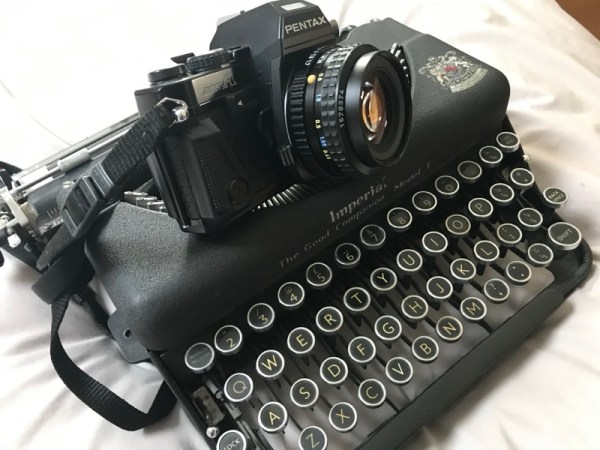
There’s nothing like having a good rest from blogging to make you think about what your blogging life should be like.
I’ve been musing for the past three weeks – between Christmas family warmth and New Year’s ‘Auld Lang Syne’ – about the nature of blogging and why we do it. Reading others’ similar reflections has been instructive.
The new year is a good time to consider such ‘housekeeping’, though, apparently, a bad time to physically clean the house. The Christmas break is just that: a chance to step outside of the blogcadian rhythms that govern us – pretty sternly if other writers’ observations are anything to go by; and there is no finer source of feedback than one’s peers.
What we produce will determine how we go about it. I’ve created several self-published books (Amazon), but most of them were done in the early and heady days of the Silent Eye. Sue Vincent was our nominated ‘publisher’ and all one had to do was send her the MS and await international fame. She is missed… as is the international fame.
So, equipped with a new technique of ‘personal inquiry’, I sat down and let it flow… Looking deep for the reasons behind the reasons.
In no particular order, this is what came back.
1. I write because I want to. It feels good to write; but I also know when I’ve written something good and sometimes, not so good. The problems come when it’s late at night and I realised the confused 1500 word ramble I’ve just spent five hours editing is not sufficient…
2. It’s a creative discipline – and good things come from such focus. Rhythm carries energy with it, which flows in cycles – like tides. As in the old adage “A tide taken at the flood leads on to fortune…” Looking back on my time as a blogger, I feel good that I’ve kept my nose to the grindstone for a considerable length of time. But that adds weight to the need to review what I do and how I do it. Simply ‘carrying on’ sidesteps what could be a wonderful opportunity for a personal refining process.
3. This is a big one: blogging keeps us in a community of fellow bloggers. Not all may be book writers, some may be happy with a life producing their own ‘magazine’ on a regular basis. If so, this further emphasises the importance of a regular cycle of publication. For me, the idea that blog posts can be the equivalent of a good magazine article is important, and provides a model to aim at.
4. We should never forget to entertain. People keep reading our words because (a) they like us, and (b) they feel either warmth, humour or companionship from what we write. That’s a complex mix and does not readily accommodate a ‘one size fits all’ approach. How to work with this is a challenge.
There are some simple practicalities here. Taking poetry (which I love writing) out of the mix, I know from many years experience that my most popular blog posts have been between 500 and 900 words. Longer ones may well be of interest to a few people looking for greater detail, but isn’t that the role of a book, or at least a series of posts?
I have ambitions to return to book-writing, but we’ll see. This is about blog posts published twice or three times per week. That’s a lot of writing, and I need a coherent plan. In this endeavour, I’ve decided I need to model the work on what I would find attractive elsewhere. Someone buying a technical mag is probably happy to find instructive articles of several thousand words, but that’s not what we typically do.
Really, we keep in touch by blogging, don’t we? A group of online friends and ‘colleagues-in-writing’. My posts need to reflect this. 500-900 words is just fine and will be central to my future plans.
Also, I think we should tell people how long it will take to read. I’ve seen this used, before – in other channels, like Medium. It’s polite and helpful. Subjective, but in a constructive way. I did it for a while but dropped it. It can only help, so I think it’s time to revisit,
So those are my thoughts. I’m happy to be back at the keys. Those few weeks away from ‘tap tap evenings’ have been a tonic, and have made me focus on what’s important and realistic. But they’ve also made me realise how important regular blog-writing is.
I’m looking forward to seeing how this evolves in 2024, as I know my fellow bloggers are with their projects.
Let’s keep in touch!
©Stephen Tanham 2023
All photos taken and post-processed on an iPhone 12 ProMax.
Stephen Tanham is a writer-photographer and mystical teacher. He is the founding Director of the Silent Eye, which offers an emotionally-guided journey from personality to the awakening of realised personal Self and its world of Being.
http://www.thesilenteye.co.uk and http://www.suningemini.blog
Share this:

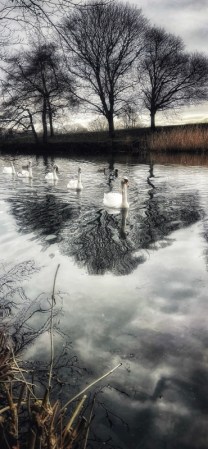
There was something of the celebrated children’s story ‘The Ice Queen’ about the beauty of the white formation of swans gliding towards me across the mercurial waters of the upper pond in Roundhay Park, Leeds.
Saturday, and we were making a delayed New Year visit to our young grandson. Always a challenging journey at this time of the year – along the frozen A65 across the ups and downs of the Yorkshire Dales national Park.
Ice may lie around any corner…
But it’s worth it to see the joy in the eyes of young lad when he spies his grandad and nana emerging from the road-salt covered car.
©Stephen Tanham 2023
All photos taken and post-processed on an iPhone 12 ProMax.
Stephen Tanham is a writer-photographer and mystical teacher. He is the founding Director of the Silent Eye, which offers an emotionally-guided journey from personality to the awakening of realised personal Self and its world of Being.
http://www.thesilenteye.co.uk and http://www.suningemini.blog
Share this:


With this post I’ll be signing off for the rest of 2023 and the first week in 2024.
I’m sure we all need a recharge, and I find the festive season a good time to switch off and lie fallow for a while…
The image above is a montage of two of my recent photos. I liked the way the warm bits reveal themselves in the Christmas foliage; there’s something of a ‘Dutch Oil Painting’ about the colours.
If you find it pleasing, and are short one image, feel free to download it…
Warm wishes to all who read my blogs – here and on the Silent Eye website. Thank you for your company, support and friendship this year, and may we share a fulfilling 2024.
©Stephen Tanham 2023
All photos taken and processed on an iPhone 12 ProMax.
Stephen Tanham is a writer-photographer and mystical teacher. He is the founding Director of the Silent Eye, which offers an emotionally-guided journey from personality to the awakening of realised personal Self and its world of Being.
http://www.thesilenteye.co.uk and http://www.suningemini.blog
Share this:

+ #iphonephotography, #Phoetry, #Poetry, #Silenti, Ancient Landscapes, nature, Photography, Spirituality
Sodden
by Steve Tanham
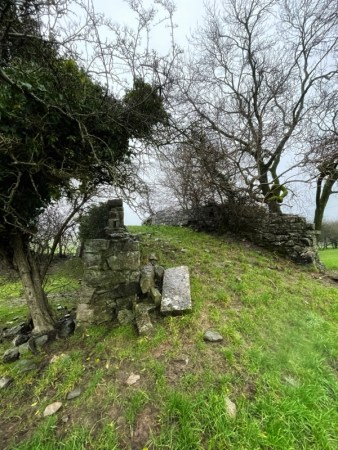
Sodden, like a soldier’s backpack
hauled across the final freezing mile.
The face of one determined
To outlive, within an icy smile.
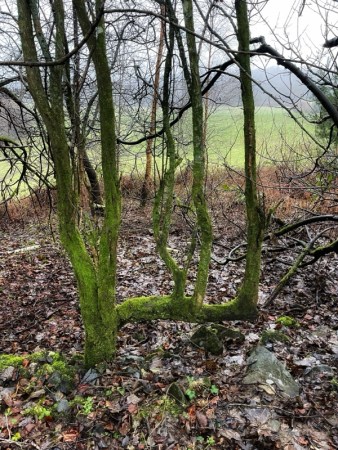
A green chord, stroked arpeggio
Denied its solemn tone
But knowing minor E contains
The fire in flint and spark in stone.
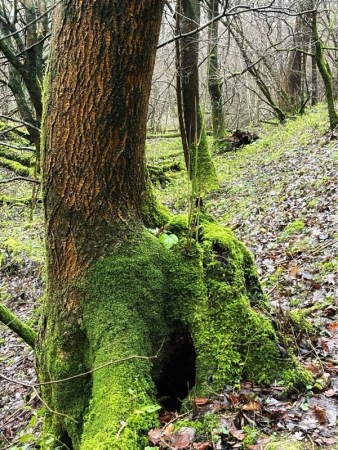
The forest, bright with inner flame
Disguised in mud and weeping bark
Waits, silent, dripping, lost in time
A holding womb, a stilled and silent ark.
———-
©Stephen Tanham 2023
All photos taken and processed on an iPhone 12 ProMax.
Stephen Tanham is a writer-photographer and mystical teacher. He is the founding Director of the Silent Eye, which offers an emotionally-guided journey from personality to the awakening of realised personal Self and its world of Being.
http://www.thesilenteye.co.uk and http://www.suningemini.blog
Share this:

+ #Photography,, #Silenti, Ancient Sacred Sites, Christianity and modern mysticism, Consciousness, Photography
Metanoia and Light from Darkness
by Steve Tanham

This Sunday (17th December) sees the last of our Silent Eye Explorations zoom meetings for 2023.
It’s been a fascinating year, and we mean to end it with a special event which will combine a guided mediation on the subject of ‘metanoia’ with a visualised, mental and emotional odyssey to two sacred places on the mystical and ancient Orkney islands.

We’re going to supplement the verbal guidance of the meditation by including photographic images of the locations, taken on previous in-person trips.
First, though, we have to get there…
The waters of the Pentland Firth – the whirlpool ridden stretch of water than connects the north-eastern tip of Scotland with the group of islands that make up Orkney – are treacherous, and the meeting place for competing currents from two stretches of ocean.
Dangerous whirlpools are common…

We may find the ferry from Thurso to Stromness on Orkney has some surprising passengers on board. They may have a message for us.
Our ferry to Orkney will take us past the dramatic Old Man of Hoy, famously the site (1967) as one of the first such televised climbs of what had previously been considered an unconquerable ‘sea stack’. Those of a certain age might remember this BBC programme in black and white – broadcast over several days – from their childhood.


From Hoy, the remaining journey to The Mainland of Orkney is matter of a few miles. We will enter the vast inshore area of Scapa Flow – the home of the navy battle fleet during WW1 and WW2.


Arriving at the main port of Stromness, we will be greeted by a familiar figure whose role is to escort us, safely, to the magnificent Ring of Brodgar stone circle.

There we hope to be greeted by one of its famous sunsets, and refresh our spirits in this beautiful place surrounded by Orkney’s ever-present sea inlets…

Our day will end within a secret chamber… there to watch the setting sun from its temple interior… and await the night. No more can be said, here… about what follows.
But you’re invited to join us and take the experience – and the journey to the magical land of Orkney.

And Metanoia; what is it? The word has come down to us as a translation of the original biblical Greek. The scriptures continue to include the incorrect translation of ‘repentance’; but language scholars have agreed for over a century that the real meaning of metanoia (μετάνοια) is a change of mind, literally, to see things differently.
How will all this come together at this time of the Winter Solstice, a time of great importance to the ancients minds?
Come and join us to find out…
Contact: simply send us an email to Rivingtide@gmail.com
We’ll send you back a Zoom link for 8:00 pm on Sunday 17th December.
©Stephen Tanham 2023
All photos taken and post-processed on an iPhone 12 ProMax.
Stephen Tanham is a writer-photographer and mystical teacher. He is the founding Director of the Silent Eye, which offers a mentored, journal-based journey from personality to the awakening of realised Self and its world of Being.
http://www.thesilenteye.co.uk and http://www.suningemini.blog
Share this:

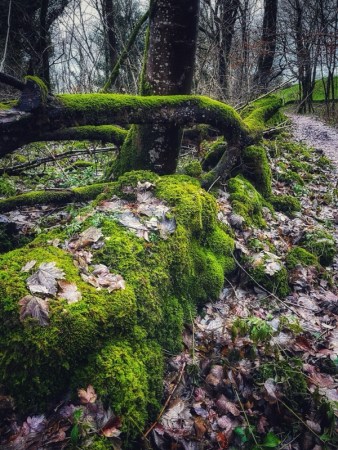
I walk the collie through the local forest and marvel at the intensity of the green mosses and lichen growing on the limestone boulders and the forms of dead or dying trees felled by the savage winds we get in these parts – particularly between the start of November up to the new year.
With the other side of my mind I curse the bright green stuff that invades the tiny indentations of the tarmac areas around the house. Removing it is a nightmare that involves chemicals that I’d rather not touch.
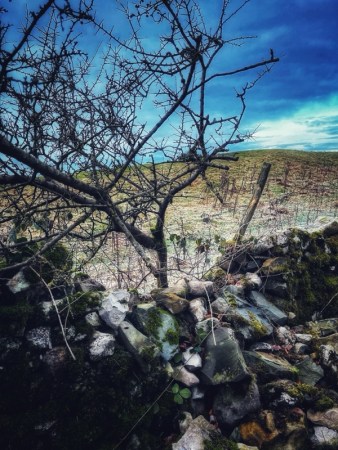
This love-hate relationship is a product of such a beautiful and wild landscape, and civilisation’s (as in tame the wild) uneasy place within it.
I saw a TV program once that ran a simulation about how quickly the wild vegetation and mosses would take over the urban landscape if we died out. Within a few months, our towns and cities would look totally different. Within a few years, they would be mere shells, completely overgrown.
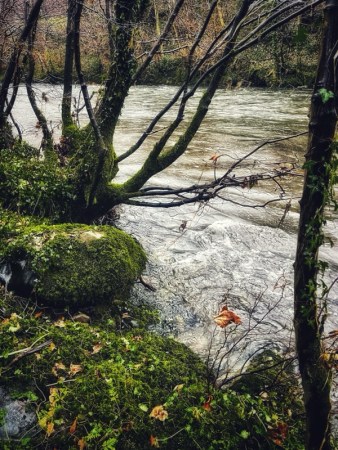
You get a strong sense of that, walking each day through this wet, muddy and winter-green world. But it’s a necessary prelude to the spring, and brings its relief and renewal in with needed emotional force in this stage of the Earth’s circuit around the Sun.
The mosses and lichens are truly ancient – a hardly form of life that complements the summer, beautifully, reminded us that abundant life takes many forms.
©Stephen Tanham 2023
All photos taken and processed on an iPhone 12 ProMax.
Stephen Tanham is a writer-photographer and mystical teacher. He is the founding Director of the Silent Eye, which offers a mentored, journal-based journey from personality to the awakening of realised Self and its world of Being.
http://www.thesilenteye.co.uk and http://www.suningemini.blog
Share this:


©Stephen Tanham 2023
All photos taken and post-processed on an iPhone 12 ProMax.
Stephen Tanham is a writer-photographer and mystical teacher. He is the founding Director of the Silent Eye, which offers a mentored, journal-based journey from personality to the awakening of realised Self and its world of Being.
http://www.thesilenteye.co.uk and http://www.suningemini.blog
Share this:


“Dancing, double-talking…” It’s a line from one of the most powerful songs I’ve ever heard: Innocents’ Song, by Show of Hands, a west-country folk duo who we have followed for years.
Click the link above to listen on YouTube. (There may be an advert to click through, first).
But this post is not about music or that album. It’s about the dramatic words used in the song…
Who’s that knocking at the window?
Innocents’ Song
We first saw them at the Cambridge Folk Festival in 2009. Since then, we’ve joined their devoted followers to attend live gigs whenever possible.
Who’s that knocking at the door?
The words were not written by Show of Hands; they were penned by Charles Causley, a much-loved English poet, in 1961.
What are all those presents, lying on the kitchen floor?
Charles Causley (1917-2003) was born in Cornwall, in the market town of Launceston, where he lived for most of his life.
His father fought in the First World War and died when he was young.. This early loss and his own experience of service in the Second World War affected him, deeply.
Who is the smiling stranger
With hair as white as gin,
What is he doing with the children
And who could have let him in?
He was drawn to poetry, studying the traditional forms, but preferring to take his inspiration from folk songs, hymns and ballads. There was something of the romantic about the young man.
Throighout his active and successful life (he was honoured with the Queen’s Gold Medal for Poetry in 1967 and a Cholmondeley Award in 1971) he stayed a ‘people’s poet’ and observers often remarked that ‘he wrote the kind of stuff that you would listen to sitting around the campfire’.
But this gentle picture belies the daring of the imagery he used in his work. He loved children and wrote some of his best works dedicated to them – and in defence of them. Causley never lost his vision of a world where “Houses put on leaves, water rang.”
I think it’s fair to say he would have been appalled that the ‘collateral slaughter’ of children is now commonplace in our fractured world. The final lines of his Innocents’ Song, (a poem), is below, and is the source of the quotes here.
Watch where he comes walking
Out of the Christmas flame,
Dancing, double-talking:
Herod is his name.
It’s also deeply shocking – perhaps appropriate in these days of vaporising housing blocks.
Ted Hughes described Causley as one of the “best loved and most needed” poets of the last fifty years.
His Cornish burr imparted a story-teller’s magic to the ballads around that campfire. We can also imagine the tears in his eyes at the current tragedies.
Causley’s full poem, Innocents’ Song, is below:
Innocents’ Song, by Charles Causley (1961)
Who’s that knocking on the window,
Who’s that standing at the door,
What are all those presents
Laying on the kitchen floor?

Who is the smiling stranger
With hair as white as gin,
What is he doing with the children
And who could have let him in?

Why has he rubies on his fingers,
A cold, cold crown on his head,
Why, when he caws his carol,
Does the salty snow run red?

Why does he ferry my fireside
As a spider on a thread,
His fingers made of fuses
And his tongue of gingerbread?

Why does the world before him
Melt in a million suns,
Why do his yellow, yearning eyes
Burn like saffron buns?

Watch where he comes walking
Out of the Christmas flame,
Dancing, double-talking:


Herod is his name.
———-
Exeter University holds Charles Causley’s archive of literary manuscripts, notebooks, diaries and photographs – you can explore these here and the Charles Causley Trust also has a wealth of resources available.
———-
©Stephen Tanham 2023
Stephen Tanham is a writer-photographer and mystical teacher. He is the founding Director of the Silent Eye, which offers a mentored, journal-based journey from personality to the awakening of realised Self and its world of Being.
http://www.thesilenteye.co.uk and http://www.suningemini.blog
Share this:

+ #iphonephotography, #Phoetry, #Photography,, #Silenti, nature, Photographic techniques, Photography
Beyond the edge of colour
by Steve Tanham

There comes a time when even the most creative use of ‘pale colour’ results in a lesser image than its equivalent in black and white.
When we get a shot for which no amount of digital rescue or fine-tuning will deliver success, it’s time to let the powers of monochrome have a go…
Good results can often be achieved by taking the original to the edge of the psychedelic … and then converting it to high definition monochrome.
The two panels below illustrate this:


Of course, we could just go out looking for monochrome shots … but that’s for a different post.
All photos taken and post-processed on an iPhone 12 ProMax.
©Stephen Tanham 2023
Stephen Tanham is a writer-photographer and mystical teacher. He is the founding Director of the Silent Eye, which offers a mentored, journal-based journey from personality to the awakening of realised Self and its world of Being.
http://www.thesilenteye.co.uk and http://www.suningemini.blog
Share this:

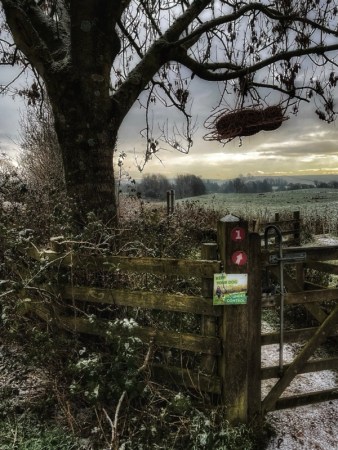
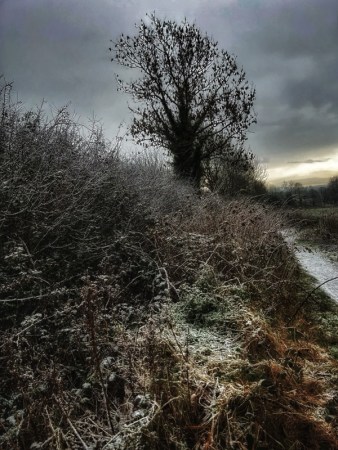
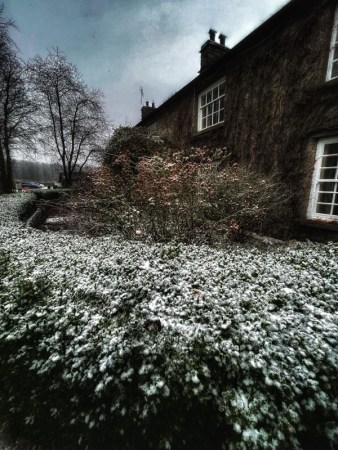
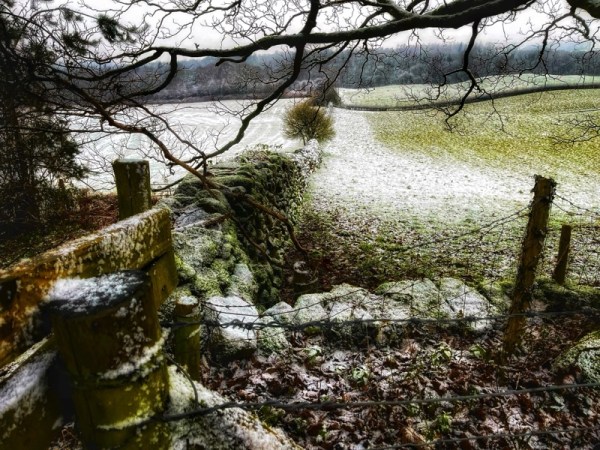
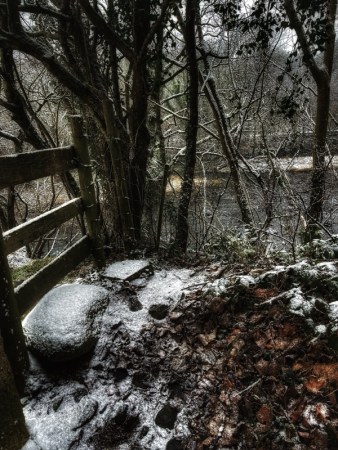
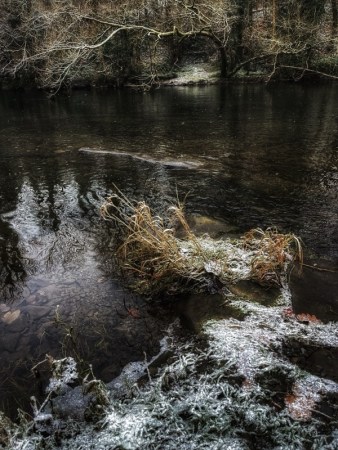
The fading light in December is a challenge. There is a temptation to ‘settle’ for a monochrome approach to taking shots; looking only for high-contrast situations. But there are opportunities for compositions that lend themselves to a limited spread of subtle colours.
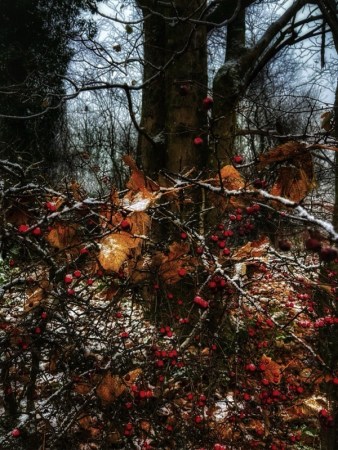
As a second stage, modern editing tools can be applied to bring out a small selection of colours as highlights – such as the those found in the mounds of leaves blown under the hedgerows. Berries are a big plus…
Below, an old footbridge over the River Kent is a feature of our village. Winter offers a chance to see and photograph it in a different light.
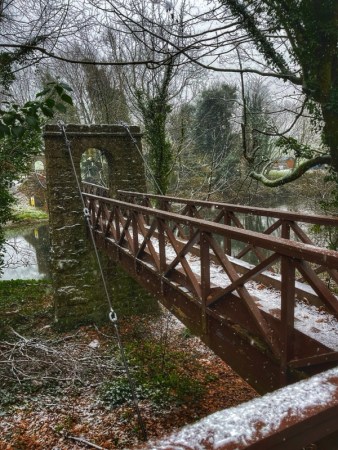
The bridge over the River Kent has a natural photogenic quality. It’s difficult to find an angle that isn’t interesting, and the material contrasts are rich.

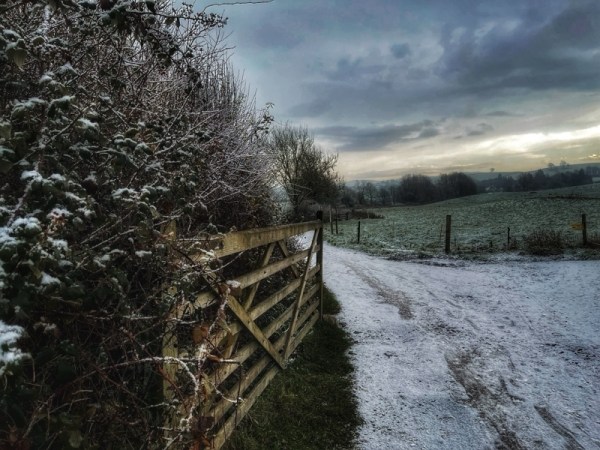
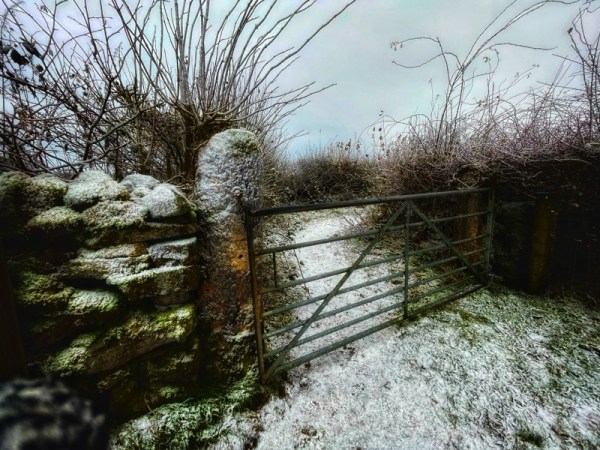
Gates are great, and the countryside is full of them. Taken flat and front-on, they can be dull, but at a slight angle, blending into the rest of the landscape, they become great ‘lead-lines’ for the viewer.
©Stephen Tanham 2023
Stephen Tanham is a writer-photographer and mystical teacher. He is the founding Director of the Silent Eye, which offers a mentored, journal-based journey from personality to the awakening of realised Self and its world of Being.
http://www.thesilenteye.co.uk and http://www.suningemini.blog
Share this:

It has been a thing of joy to me that most of the writers and teachers who have a desire to communicate the ‘mysteries’ of the human soul use the same language to describe the innermost nature of it.
The word ‘Essence’ is often used to describe this living ‘jewel’ that is our most fundamental identity – though a more liquid, honey-like metaphor might be more exact. The human essence has certain qualities or aspects. There are many of them, but – as an illustration – consider the qualities of Love, Intelligence, Will, Joy and Value.
Each of these is an aspect or facet – hence the use of jewel – of the human’s inner self. They are not created by any other process; they simply are what makes up our most sacred self… And they are therefore a part of our fundamental place in existence.
The years of our childhood are among the most vivid of our lives, and the challenges of this period of ‘first maturing’ provide us with the basis for our character – technically, our egoic self. The ego is a protective shell with which we face life. Its development is well documented by modern psychology. The egoic self, however, is formed ‘in the world’ (see last week’s post) and is therefore not woven from our aspects of essence; our deepest natures.
In simple terms, the egoic self is a complex network of programmed responses that we see as beliefs and opinions from our personal past and societal expectation, most of which operate beyond our active consciousness, and are therefore unseen and ‘unconscious’, though their presence is at the centre of our daily lives. Making this self of unwitnessed responses visible is a slow process, but one which, as Carl Jung attested, is essential to our spiritual development.
“Until you make the unconscious conscious, it will direct your life and you will call it fate.”
C.G. Jung
The creation of the egoic self happens in stages. The child is aware of the great beauty and ‘emotional-centrality’ of that which they are seeing slip away… But the world is an exciting place; full of sensual delights and energetic experiences. The full array of the essential aspects of the person are still there, but now lost to everyday awareness, buried even deeper than our network of responses, though certain character traits reflecting a favoured essential aspect may continue to shine through into the personality – we all have our personal strengths!
Is there a causal link between the underlying jewel of our essence and the developed, reactive egoic self – the personality?
One man who set out to map this in accessible and non-technical form goes by the pen-name of A.H. Almass. Born Hamid Ali in Kuwait, he emigrated to California as a young man and became part of a group whose work was modelled on Gurdjieff’s teachings, borrowing the latter’s use of ‘Seekers After Truth – SAT’.
The SAT met frequently in the area south of San Francisco and was led by Claudio Naranjo, a psychiatrist who had worked as Fred Pearls’ assistant in the development of Gestalt theory.
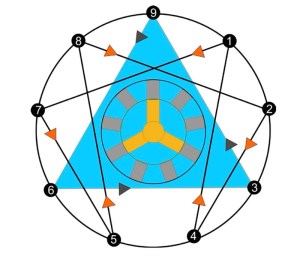
Almass and Sandra Maitri, another of the SAT members, worked closely with Naranjo to refine the use of the nine-pointed enneagram to map the human journey from essence to personality, a psycho-spiritual approach that had little to do with the subsequent and extensive promotion by others of the enneagram as a tool for ‘polishing the personality’; one that degraded into a widespread business-oriented movement thereafter.
It is interesting that during this period, a group of leading Jesuit thinkers (Rohr and Ebert) also decried the dilution of the original intent of the enneagram and began publishing their own guide to this sacred symbol.
Eventually, Naranjo refused to teach the enneagram in ‘English’ in protest at the commercialisation of what he saw as sacred knowledge. From that day on until his recent death, he only taught in Spanish, his native language from his home country, Chile.
Almaas, however, assisted by Karen Johnson, Sandra Maitri and others, believed that their findings pointed to a deeper approach to the links between personality and the underlying human essence. Almass formalised his methods under a school of the soul named ‘The Diamond Approach’, which today numbers thousands of students, some of them passing through a seven-year training program. One of my oldest Rosicrucian friends, who lived in San Francisco, graduated from this process.
The approach detailed by Almass was to link the facets of mankind’s underlying essence (Love, Will, Intelligence, Strength etc) to the main characteristics of the egoic self via what he called ‘The Theory of Holes’.
Working with hundreds of students, he analysed what they reported that, under psychological guidance, they made contact with what, as a child, had been their core natures. Repeatedly, they said they now – as adults – felt like they had a ‘hole’ where the strong and loving element of their inner natures had been.
Almass knew that the inner nature was still present … simply unconscious and therefore inactive in their daily lives. Our inner creative natures ‘fade away’, unseen and ‘untended’ in this way.
But still present…
Almass and his close colleague studied what had happened to compensate for these ‘holes’. They found that, in each case, the hollow sense of emptiness had been ‘part-filled’ by substituted experiences from the ‘outer’ lives of those involved. These were ‘things of the world’ in the language of the last post. Often these ‘fillers’ were relationships with other people with whom the subject partnered to ‘fill the hole’ of their emotional and spiritual loss.
This mapped, clearly, onto the findings of psychology when approaching, say, narcissistic personality types. The narcissist will constantly thrust their self-importance into the world to make up for a deep-seated and unconscious wound (hole) of lack of attention and reflected worth in early childhood.
Almass knew he could create a holistic and non-clinical ‘way back’ that would gradually weaken the power of the hole, enabling the student to reconnect with their essential nature. Thousands of graduates of the Diamond Approach now attest to the success of this.
In the next post, we will examine the foundational elements of this method, including the nature of ‘passions and fixations’; terminology that defines why such ‘holes’ are so difficult for us to detect and heal.
To be continued in Part 2.
Recommended reading:
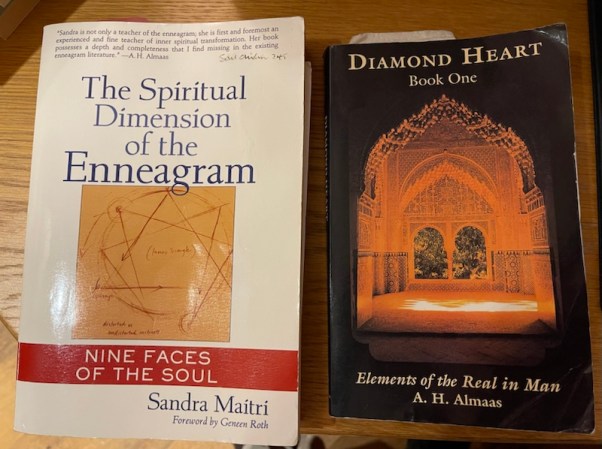
The Diamond Heart series of books by A.H. Almass.
The Spiritual Dimension of the Enneagram by Sandra Maitri
—————-
Other parts of this series:
This is Part Two
———-
©Stephen Tanham 2023
Stephen Tanham is a writer-photographer, mystical teacher and Director of the Silent Eye, a correspondence-based journey through the forest of personality to the dawn of Being.
http://www.thesilenteye.co.uk and http://www.suningemini.blog
Share this:

©Stephen Tanham 2023
Stephen Tanham is a writer-photographer and mystical teacher. He is the founding Director of the Silent Eye, which offers a mentored, journal-based journey from personality to the awakening of realised Self and its world of Being.
http://www.thesilenteye.co.uk and http://www.suningemini.blog


 Sun in Gemini
You must be logged in to post a comment.