
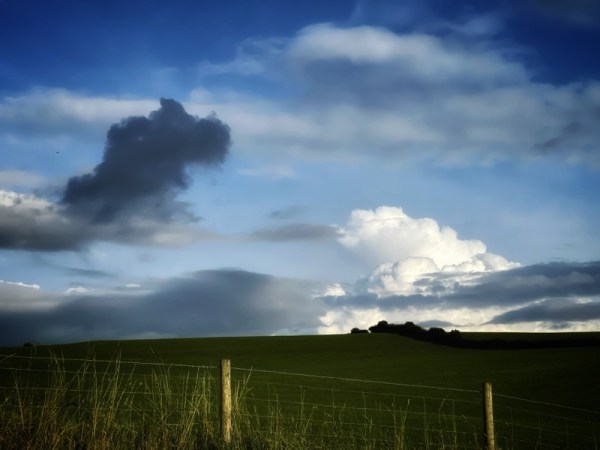
It’s an effect I often try to achieve and seldom do.
But on this occasion…
Taken in Sedgwick on our evening dog walk last week. The dark July rain had relented, granting us a few hours of sunshine.
The ‘washed’ feel of the landscape seemed to add to the feeling of something painted. And the clouds, well…
©Copyright Stephen Tanham 2023
Stephen Tanham is a Director of the Silent Eye School of Consciousness, a not-for-profit teaching school of modern mysticism that helps people find a personal path to a deeper place within their internal and external lives.
The Silent Eye provides home-based, practical courses which are low-cost and personally supervised. The course materials and corresponding supervision are provided month by month without further commitment.
Steve’s personal blog, Sun in Gemini, is at stevetanham.wordpress.com.
Share this:

+ #Silenti, Consciousness, esoteric psychology, Higher Mind, Incarnation, Powers of the Mind, Psychology, Silent Eye School, Spiritual Enneagram
Nine Keys: (5) The Giant Sail
by Steve Tanham

So far, we’ve looked at the development of the self – the ego-personality. We’ve seen how our ‘being’ arrives, entirely whole but naked to this world, at birth. It then begins to develop a protective shell as it finds its place in a world that is not entirely comforting.
We moved on to consider the layers of perception, and how there is a fundamental awareness at the heart of everything we are. That awareness is the most alive part of us. The mind – the thinking machine – is built to equip the soul with the power of concepts with which we can separate out and handle the world of the separated object.
Beneath the conceptual awareness of mind, at the level of the soul, there lies our original ‘knowing’ of unfiltered experience – a tapestry of the universe revealing itself …. here, where the observer is apparently separated. At this level of perception, we have no awareness of objects, just differentiated ‘patterns’ in the whole. We see differences, but have not conceptualised them into objects like ‘cars’ or ‘chairs’.
What, then, is the soul? It’s one of the most used words in all of philosophical thought, but seldom defined. It carries the idea of an ‘essential me’, yet perhaps not that of the egoic self, the personality – would we consider the weak or greedy parts of our behaviour to belong to our soul, too?
That can be a sobering thought… But one whose meaning we have to chase, for internal division of ideation or purpose will not serve us well in this most important of journeys.
Is there a relationship between the earthly personality and the ‘refined’ soul? Can we reconcile the mental and reason-based human mentality with the eternal and essential Self (Being) experienced as the soul?
To begin this, we need to extract the most beautiful conceptions of the soul laid down by those who have touched their own inner experience beyond the egoic self; a place reached when we quieten the chattering of the personality so that the inner presence of the spiritual may be felt.
Imagine the largest of sails on an elegant boat – our boat. In your mind, let this be the home of all your experience.
At the heart of our personal development is how we come to know things, and whether there is anything in our field of constantly-changing perception that we don’t know. This will require that we revisit the concept of the ‘known’.
We begin our consideration of this here.
To know is to find a trusted familiarity with an object of consciousness. Can we dig deeper into this feeling. Isn’t the core of this a ‘oneness’ with what we are perceiving.
Later, we will define this more deeply and say that to know is to find a trusted familiarity all of consciousness. In doing so, we will leave out the idea of an object, because this separates us from experience, and leaves us always on the ‘mind-side’ of the perception field. Who wants to be separated from a constantly opening flower of creation, drinking in its being via a poorer mechanism of rational thought, logic and memory?
The soul is our organ of experience. Like that towering sail above us, it responds to everything we experience. Years of conditioning in ‘logic’ have restricted the value we attribute to the power of this all-encompassing awareness, but that can be undone, slowly and safely.
Every experience we have – both the taking in of the presence of what can be experience and our reaction to it – is a part of this single organ of experience. Our giant sail not only flutters in the slightest of breezes, but it powers the direction and pace of our movement through the ocean of life. The mast connects both the tiny breeze and the hurricane with the depths of the boat – our inner being.
Do we really have a body? Most certainly. But our field of experience – our soul – is much larger than the body. The most vivid of impressions – really signals – come from the body, and so we have come to associate our ‘selves’ with this. But the body is made from the organic stuff of the world, and not the finer essential material of the vast sail – which stretches far above into the blue sky.
We will have much more to say about this very special ‘sail’, and its relationship to our true Self.
The soul needs the mind to work with the world. But the soul sees what is…
This consideration throws up a paradox… and we will investigate this apparent duality in the next post – Part Six.
Parts of this series:
This is Part Five: The Giant Sail
This is Part Four: The edge of the known.
Part Four: The Edge of the Known
©Stephen Tanham 2023
Stephen Tanham is a Director of the Silent Eye, a journey through the forest of personality to the dawn of Being.
http://www.thesilenteye.co.uk and http://www.suningemini.blog
Share this:


A test, perhaps, to see who lives till August
With mind and heart intact
Boiled down, diluted, merged with wet earth
In all its sodden tones, from dark to dank.
A sense of did that happen?
Pale shadows – memories starved of sun
Recounting, beer or second wine in hand
The glory of that ‘ May, then June, then…
This
©Stephen Tanham 2023
Stephen Tanham is a Director of the Silent Eye, a journey through the forest of personality to the dawn of Being.
http://www.thesilenteye.co.uk and http://www.suningemini.blog
Share this:

+ #Silenti, Consciousness, English Lake District, nature, Photographic techniques, Photography, Places and Prose
Insurgent Thistle
by Steve Tanham

The come by stealth; just when you think the summer landscape is settling down for its slow decline to autumn…
Aggressive, spiky green – enough to make you walk several paces to one side. The thistle knows how to make an entrance.
But then that beautiful flower emerges; an inonimate shade somewhere between vibrant pink and soothing lilac.
A wonderful paradox, reminding us that life is just a bigger version of it…but what emerges is worth it.
©Stephen Tanham 2023
Stephen Tanham is a Director of the Silent Eye, a journey through the forest of personality to the dawn of Being.
http://www.thesilenteye.co.uk and http://www.suningemini.blog
Share this:

+ #Silenti, Consciousness, esoteric psychology, Higher Mind, Incarnation, Powers of the Mind, Psychology, Silent Eye School, Spiritual Enneagram
Nine Keys: (4) The edge of the known
by Steve Tanham
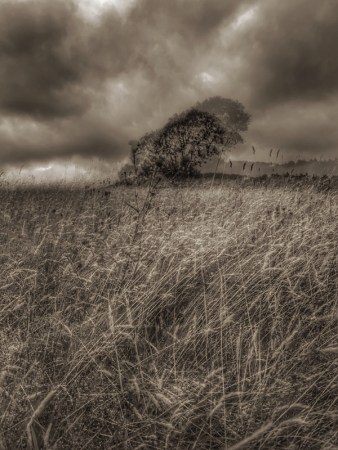
We look out at the world with our eyes. There is a strong, conceptual basis for our looking. We look out from an in-here to an out-there. In other words, we locate ourselves – the ‘me’ – inside something that we regard as an intimate ‘home’, never seeing, perhaps for all of our lives, that we have created the division. The immediate effect of this is to locate the rest of our ‘world’ as exterior to our selves, and therefore to define it as ‘not us’.
Because of this, we live our lives in a kind of perpetual conflict…
It is the personality (ego) that does this. And it does it in conjunction with the mind. The rest of our lives is spent at one end of this division. Its effect is therefore profound, and conditions everything that follows.
At the heart of our personal development is how we come to know things, and whether there is anything in our field of constantly-changing perception that we don’t know. We begin our consideration of this here.
We seldom examine why we are so sure there actually is an in-here. The only thing we can be sure of is that there is an awareness (me) that has a senses-based relationship with the world around it.
This view of self belongs to the personality, and develops as the use of mind grows. Mind reinforces our separation from the world … but it doesn’t have to. Mind does what we ask it to do – what we focus on in our thoughts. We can alter the focus of our minds.
We said in Part Three that the core of a person is their essence. Another word for this is the soul. The soul is our wonderful organ of experience, and the mind is our organ of knowledge or knowing. We take ‘knowing’ for granted, but its power is at the heart of our lives, and a full investigation of this will enhance our relationship with all of life.
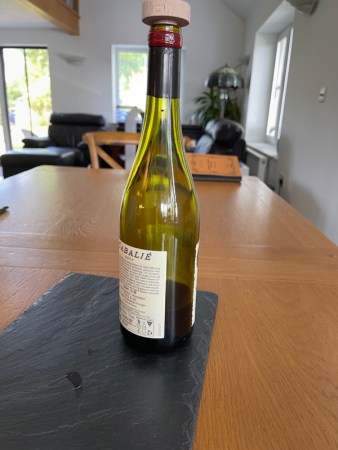
Everything out-there is what modern developmental psychology calls an object. We make ‘objects’ of things so we can recognise, understand and manage them. The bottle of wine before me in the above picture is known to me. Therefore I know how to interact with it, including whether I like or dislike it.
Years of familiarity mean I don’t need to look at it in detail to know it as a wine bottle. If the type of wine is one I drink often, just glancing at the label without actually reading it will allow me to know what’s before me.
Any bottle is an object; the wine bottle is a further defined object with certain properties – like its shape. The specific bottle and label of a wine type – here, the French wine Cabalié – give it complete visual identification. But I would still need to taste it to double-check its integrity.
Now, say we imagine our view of the bottle was a ‘painting’ like this.
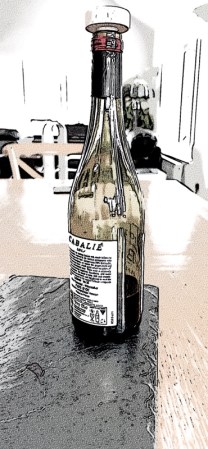
If I asked you to examine Bottle No. 2) and estimate the distance between the bottle and the dining chair behind it, you might – rightly – look at me and smile, replying that there is no distance in the unreal depth of a picture.
The same applies to the photo in the image of Bottle No. 1, but because we are used to seeing such photos as real, we easily project our logic into the equally false distance.
The overall image of our world at any time is not what is ‘actually there’; it is a learned version of that reality. When we were the new-born we spoke of in Part Three, we developed the ability to focus our eyes, but what we saw was a field of vision where there were differences but no objects. Objects belong only to the mind, and are an instrument of separation.
The infant’s view of the world is like a quilted bedspread. There is a lot of variety, but the child simply sees it as a pattern. There is no attempt to see each element as separate.
The details above are not just theoretical, they are the basis of a very useful exercise with which we can challenge the supremacy of the mind’s dominant view of our reality … and make it open its powerful eyes to a new world where division falls away and freshness rushes in.
The Exercise:
Consider the images of the two bottles. Look around you at any scene that takes your attention; either inside or outside the house. Concentrate on ‘framing it’ so that it looks to your mind like a photograph.
Now, instead of seeing this as 3D image with depth, imagine it rendered ‘flat’, as in Bottle No. 2. If you achieve this even for a second, you will notice something new in your consciousness, and the beginning of a deeper understanding of how your presence really works with the world.
Make this gentle, and as though you are interacting with an inner friend. There should be only relaxation in the experience.
In Part Five, we will deepen this journey into the known.
Parts of this series:
This is Part Four: The edge of the known.
©Stephen Tanham 2023
Stephen Tanham is a Director of the Silent Eye, a journey through the forest of personality to the dawn of Being.
http://www.thesilenteye.co.uk and http://www.suningemini.blog
Share this:


Never go back! It’s a frequent admonition, reminding us that the world we find on our return may not have the magic it possessed at the time it was laid down, ‘shining’ in our memories.
It’s often used in the context of a romantic involvement; the futility of attempting to recreate real emotion through place.
But what if the going-back involved an early first-stage development of a skill – an ability? Would the same disappointment apply?

When I was 13, my father bought a small sailing dinghy while we were on holiday in the Tenby region of South Wales. We spent the holiday learning to launch and row it, but didn’t dare put the sail up with such large crowds to witness our fumbling.
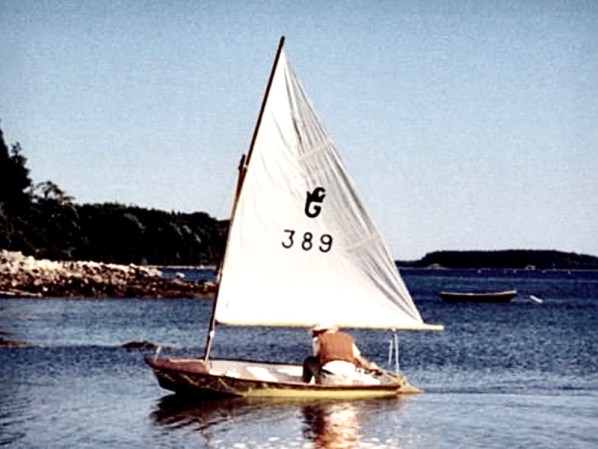

The next two years saw us learning to sail in a rather haphazard, but delightful fashion. On various lakes in Cheshire, and then – gloriously – along the Red Wharf Bay coast of the north-east corner of the island of Anglesey, we achieved hard-won competence of a rugged variety; and could take to the water with the best of them…
Messing about in a boat had become the most fun.
We visited Anglesey often in the summer, months, back then. I also had a memory of snorkelling somewhere sheltered in the same place – I was an active teen! My best memories of that time were of a small cove with a strange name where the bay seemed sheltered by a rising headland from the wilder expanse of Red Wharf Bay.
As an adult, I often returned to Anglesey, usually staying on the western coast around Rhosneigr and Trearddur. Whenever had the chance, I would take a detour across the island and try to find that little bay where I had learned to sail all those years ago. But I never could. Seemingly familiar places turned out to be different, and that magical goal of reunion eluded me.
I left it behind, along with other unfulfilled youthful wishes.
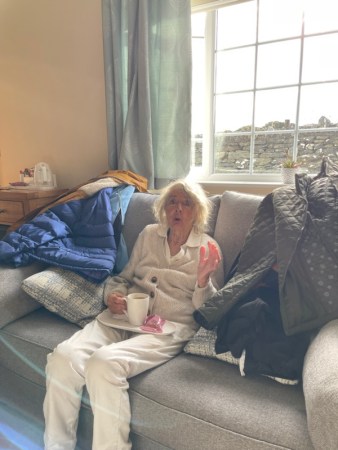
As I’ve written before, my mother is 93 and her vascular dementia is advancing… Holidays were always a very special part of her life and I like to take her away for a short break from the care home in which she lives on Morecambe seafront. She’s happy enough, and the care is excellent and friendly, but the idea of revisiting one of the places she loved, if only for a few days, still fills her with delight.
Some years ago, my wife discovered a converted farm, near Amlwch (pronounced Am-Lock) that had been turned into a modern but cosy hotel – and it was dog-friendly. We loved it, and have returned several times in and out of season. We contacted them and they were happy to have mum stay there in her own room, next door to ours, so we weren’t far in the event of a panic.
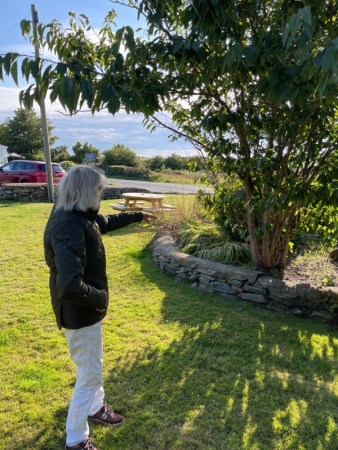
Sadly, our local cattery could only take our Rag Doll cat (Misti) for two nights, so my wife offered to come down in her own car with the dog and return early so that mum and I could have the extra full day of what might be our last chance at such a holiday. At 93 nothing is certain.
On the morning of our final full day, with the sun bright in the sky, we decided to play one of our ‘let’s get lost’ travel adventures. This comprises heading for a rural location and literally taking a random set of turns to see where we end up. The satnav will usually rescue us at the end of such playful folly, but the ever-new exploration is worth the disorientation.
We found ourselves in a warren of tiny roads near Dulas, and through this, discovered two new tiny bays… but neither was the mysterious sailing beach of long ago. Eventually, feeling hungry, we decided to abandon the game and let the car take us to the more populous Red Wharf Bay Area.
At this point, mum said she had a craving for pizza – one of her favourite foods. I explained that we would be lucky to find such an establishment, but we’d give it a go. Within twenty minutes the satnav had returned us to the main coast road, and I switched it off, confident I knew where I was.
Then I took a left turn towards the sea and realised I hadn’t known at all.
The country lane was narrow, steep and unfamiliar. There would be no chance of turning round until we reached a farm or similar at the bottom.
Suddenly, the landscape changed and became less wooded and much more ‘managed’. There emerged a large car park on our right and, next to it, a modern white shop displaying water-sports equipment.
I began to get that tingly feeling…
The tinglies only increased when we parked the car and approached the white shop. There were tables under an overhang and people were chatting and eating in the midday sun. The menu was limited – just pizza, served in a box for eating at the tables or taking to the beach…
It was excellent pizza!

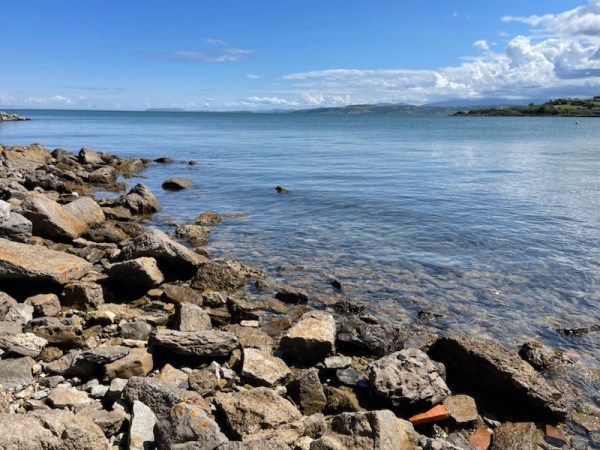
Thirty minutes later, and replete, we made our way on foot down the last curve of the road. There on our left was an entrance track to a small marina with steps down to the sheltered water…
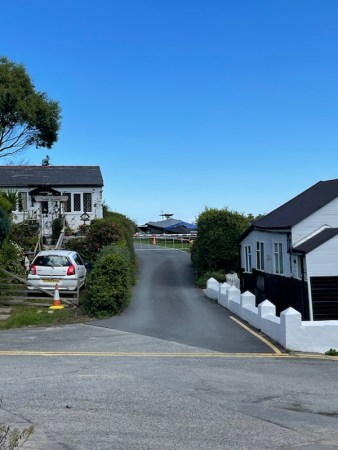
… from which the boy I had been at 13 had entered the cold sea, venturing out between the bobbing boats, into the fullness of the bay.

The joy of recognition matched the perfect day… and I was mentally and emotionally carried back to the time and place of my first sailing adventures.
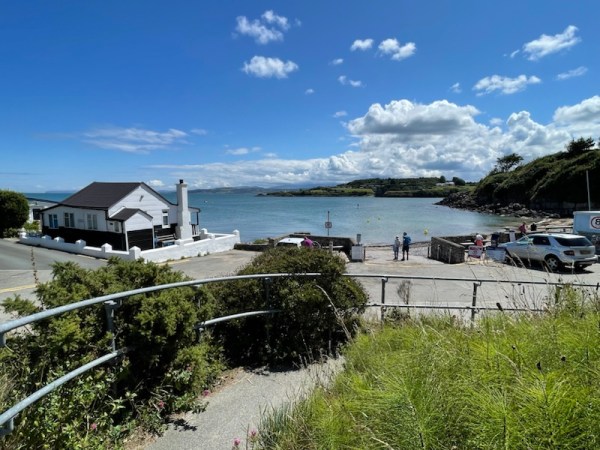
And in a vivid continuation of memory, on that lovely bay, shining now as it had then, was a small ‘Golbin-class’ dinghy, and a thirteen year old boy, his heart racing with excitement, the master of sail, rudder and rope as his small craft zig-zagged across the choppy waves of the waters of Traeth Bychan.
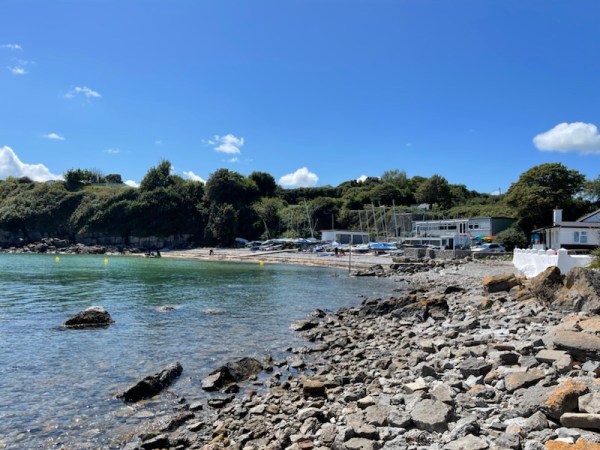
The joy was compounded by the knowledge that I had not found the lost place, but rather, it had, in a very real sense – with my mother in tow – found me… We sat on one of the benches next to the small beach. Mum began talking to a fellow artist and they spent the next two hours chatting, while I smiled at her happiness and drank in the powerful presence of the reunion.
Never go back? Well, maybe once or twice, just in case…
©Stephen Tanham 2023
Stephen Tanham is a Director of the Silent Eye, a journey through the forest of personality to the dawn of Being.
http://www.thesilenteye.co.uk and http://www.suningemini.blog
Share this:

+ #Silenti, Ancient Landscapes, Ancient Sacred Sites, landscapes, Photographic techniques, Photography
A Cross at Trearddur
by Steve Tanham

It wasn’t what I was expecting to see in the middle of the beautiful curve of Trearddur Bay, one of the jewels of the island of Anglesey, off the North Wales coast.
But the more I looked at it, the more perfect its setting – like the ‘collector’ at the parabolic point of focus of a radio telescope’s dish. And how fitting that image is…

Saint Ffraid, the patron saint of Trearddur Bay, is the name on the cross. She was born in Faughart, Ireland in about 450 AD. The Millennium Celtic Cross, above the beach at Trearddur and bearing her name, was erected to mark the new century.
The name Saint Ffraid is the Welsh version of Saint Bride (or “Brigid”). She set up a monastery in Kildare in the late 5th century, and was known as the Virgin of Kildare.
Legend claims she was carried over the Irish Sea, and arrived at Trearddur Bay beach on a square of green turf. I understand the colour link with Ireland, but there may be more to the symbolism: squares tend to be associated with spiritual states…
Half way up the 8 foot high cross, made from Anglesey limestone from Moelfre Quarry, is a carving representing a hand carrying a flame.

This symbolises the light from Kildare, Ireland.
At the head of the cross you can see the beautifully carved “Cross of Peace”.

The words “St. Bride, Pray for Us” are inscribed in four languages, English, Latin, Irish and Welsh; one on each side of the plinth.
Even in the middle of a summer rainstorm – or perhaps because of that – it was a striking object of great beauty.
©Stephen Tanham 2023
Stephen Tanham is a Director of the Silent Eye, a journey through the forest of personality to the dawn of Being.
http://www.thesilenteye.co.uk and http://www.suningemini.blog
Share this:

+ #Silenti, Consciousness, esoteric psychology, Gurdjieff, Incarnation, Photography, Psychology, Silent Eye School, Spiritual Enneagram
Nine Keys: (3) the Fall
by Steve Tanham
We seldom think about what it must have been like to be a new-born.Perhaps there is something uncomfortable about the image of being so helpless?
And yet that first period of life – emerging from mother’s body in which we have been safely cocooned with all our needs met – is formative for the rest of the human being’s incarnation in matter.
The way we came to be who we are had its beginnings in our birth and the first few months of life. The mother’s womb provides literally everything the unborn child needs; both physically and psychologically. The child knows … but their is no ‘object’ to that knowing. It loves every ‘thing’, but there are no things! What it loves is the tapestry of warm, bright and loving patterns with which its wonderful new universe is made.
For the pre-born, this is blissful union with the mother. There is no other state known to the fresh brain that is rapidly gathering the sensory information that can only been seen as flavours and colours of oneness, without any separation into ‘me, you and it’.
It’s an easy and powerful exercise to ‘feel yourself’ back in this state; with perfect love directed at you, and experiencing in that love perfect contentment without desire. You might be surprised to discover how instantly refreshing this is.
You might even question why it feels so easy and natural…
At birth, the child is literally pushed away – out – by its mother’s body, in order to have its own life, but the closeness of her warmth and the senseing of her flesh are seen as a continuation of the womb’s perfection, even though the focus moves to the mouth and the urgent need for external nutrition. Air in the born-powerful lungs provides the infant with the ability to cry – and at a frequency tuned to the mother’s instincts.
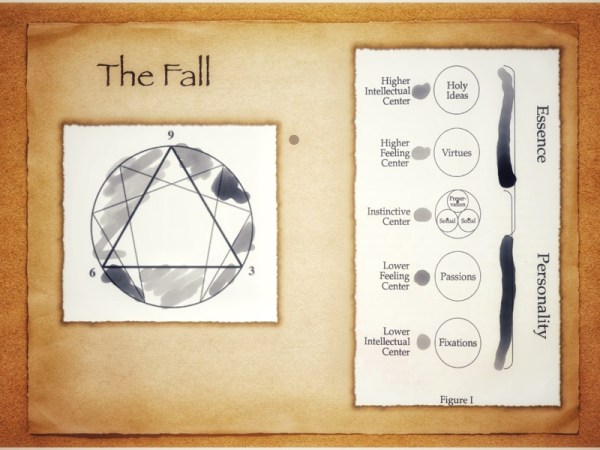
There is no cognition, because there is no differentiation from the state of oneness. The infant is enjoying a consciousness made up of sensations from its body, emotions … and something else. That something is illustrated in the right hand diagram in Figure 1, above.
This figure shows the twin upper and lower worlds of the self available to the human consciousness. The lower half will come to be filled and dominated by the developing personality. The upper half represents the beautiful aspects of oneness known (but not by cognition) in the pre-birth state. These aspects are known as Essence, and always remain part of us, though we push them into our personal unconscious when their existence is not ‘reflected’ back at us by our parents, who, sadly and long ago, lost the active presence of their own Essences.
Our Essence belongs to us. It was there pre-birth and endures. It waits for us to find our way through the veneer of the personality and back to the more powerful presence of the true Self.
Though this is available to all, few take up one of the many paths that lead to inner realisation.
But the personality has a vital role – to protect our physical existence and allow us to work in the world and in the society in which we are born and have our developmental opportunities.
This paradox needs to be examined and considered before it offers up its jewels…
In Part Four, we will consider how the unfolding of the personality begins to gather pace and sophistication.
Parts of this series:
This is Part Three: The Fall
©Stephen Tanham 2023
Stephen Tanham is a Director of the Silent Eye, a journey through the forest of personality to the dawn of Being.
http://www.thesilenteye.co.uk and http://www.suningemini.blog
Share this:

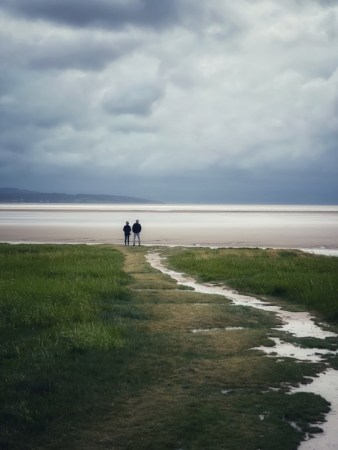
And will we weep while mammon rages.
Beyond that silver shore.
Heated words in anguished cages
Fading, falling, dew so slow
Reflecting endless sea
With mind that longs for other ages.
—-
©Stephen Tanham 2023
Stephen Tanham is a Director of the Silent Eye, a journey through the forest of personality to the dawn of Being.
http://www.thesilenteye.co.uk and http://www.suningemini.blog
Share this:

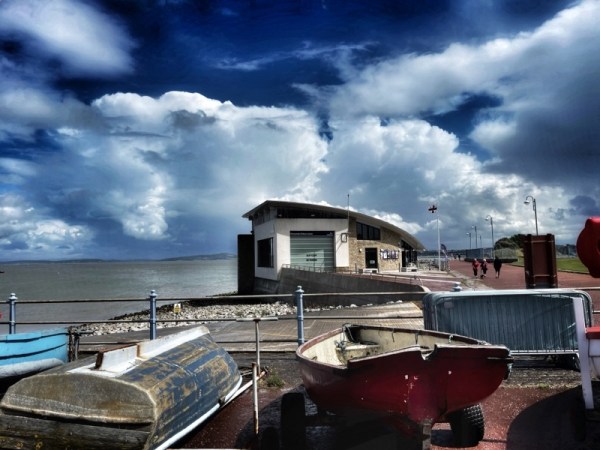
Like a knife, dividing
Bright July from
Oncoming storm

Where birds of warning
Guard the last resort
With mocking grey
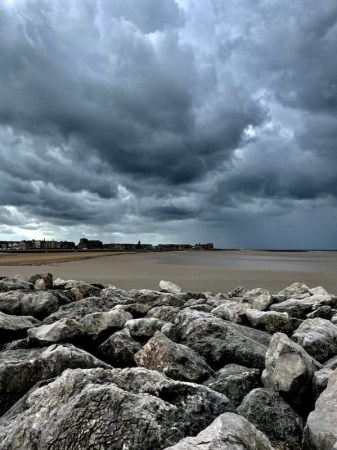
From here is only stone
And rocky way
Towards the end of land
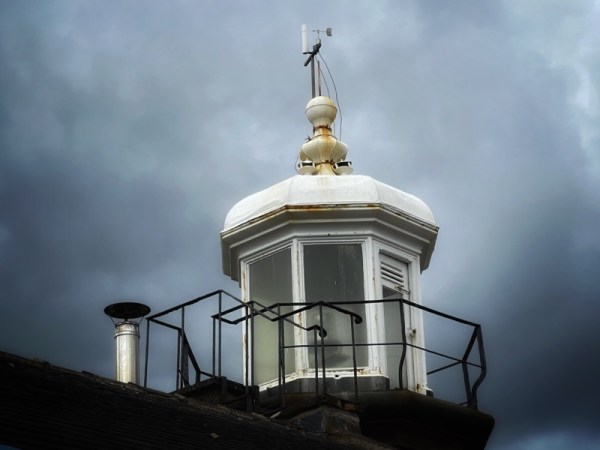
Wise and full of warning
Yet ancient-skilled in reach
The light of ages searches
#Phoetry is a mixing of predominant images and guiding worlds to – in this case – tell an inner story.
©Stephen Tanham 2023
Stephen Tanham is a Director of the Silent Eye, a journey through the forest of personality to the dawn of Being.
http://www.thesilenteye.co.uk and http://www.suningemini.blog
Share this:

+ #Silenti, Consciousness, esoteric psychology, Gurdjieff, Incarnation, Photography, Psychology, Silent Eye School, Spiritual Enneagram
Nine Keys: (2) The look of love
by Steve Tanham
A good friend wrote to me after last week’s Part One of this series. They wondered if they had ever really known their ‘real self’.
It’s a common observation, and people who can say this are being emotionally honest at a deep level. But I can reassure anyone who feels this way that they are mistaken.
The feeling is that life has apparently taken away their ‘real world’ – and there is a correspondent sense of ‘long-term lack’, whereas what has happened is that our reactions to life have obscured a real world that is still there – right in front of us, right now.
In other words, we have changed and not it…
We can compare this process to the ageing of a pair of well-loved glasses that have become scratched and covered in the daily residue of organic living. We believe the view is still there, but we have only one pair of glasses … and we need them to see.
Where is that view? Does it lie in the glasses? Clearly not – no pun intended! Does it lie before us, but now obscured? We have think carefully before we answer this. Have we ever known that view in its actuality, or have always had the glasses; which used to be near-perfect but now have lessened in their acuity?
What we appear to experience is like an equation…comprising what might be really ‘out there’ plus what we do to it when it enters our ‘glasses’…
If we dwell on this for a while, we see that we cannot escape the conclusion that what we experience as our view of the world is a mixing of what might be out tbere – in ‘actuality’ – plus the ‘colouring’ we give it, caused by our states of perception.
Perhaps we can never escape this mixing, never see things for what they are? The truth of this is very subtle… and exciting. We should not be in a hurry to get rid of or diminish any part of our ‘seeing’. Each part is magnificently constructed so that we come at the solution in a particular way.
None of this is accidental. Mankind is both Being and Process, and has a deep relationship to matter and what lies beyond matter.
Our sensual ‘glasses’ are smeared, bent and possibly of the wrong prescription. But they are composed of the stuff that is us. Our bodies are real and are doing the perceiving. The world ‘out there’ appears to be real – science has spend centuries ‘proving’ that to us… and yet the issue of ‘consciousness’ vexes science more than any other. What’s really doing the seeing?
What is it that is aware? We know that the mind is inseparable from the thoughts that form its movement – its changes and states. There is no location where the mind lives. This is the basis of meditation. When you quieten your thoughts, you drift through to a deeper place where anything related to words is unnecessary. Our subject-object use of language means that the idea of ‘me and it’ is embedded in our consciousness.
In truth, we assemble the ‘world’ in our own minds, and much of this is related to expectation. We see what we expect to see; and we have some sophisticated mechanisms for building up the force of that expectation.
Chief of these is memory. Everything we do with the mind uses information from the past to interpret the present.. and to worry about the future, which has no existence but plenty of uncertainly to generate constant anxiety.
Memory is essential for our day-to-day work. But the past as a basis for our future is distinctly flawed.
We can examine this in a forceful way by stopping in the middle of a repeated activity – say, washing the cups after our morning tea or coffee. Take away the act of vision by closing your eyes and letting your hands explore the mug, the hot water and the feel of the soap. Let the sounds you had forgotten come back into your experience and feel the richness of it. Take away any sense of having to complete this before you move onto that next ‘essential task’. When you’ve established your gentle will over this, open your eyes and see how much power of experience is removed by habitual repetition and expectation.
You’ve just had a truly fresh experience and seen the power of the habitual to seriously dull things. But that continuously-available freshness was still there, waiting for you.
Our minds do this for good reason: to help us cope with the sheer volume of ‘information’ in our lives… but it robs us of colour and depth.
In meditation, we want to leave behind the normal day-world. But there is another ‘discipline of consciousness’ that is the reverse: being present to the now.
Being present to the now means being fully engaged with whatever we are doing. We don’t need to be judgemental, just to be truly involved with that task that has arisen and that we need to get on with. We might like or dislike it, but if we can ‘trap’ those two imposters and not let them sap our energies with negative emotions, we can enter a state of presence that in-volves us with the now in a feeling of clarity (and often love) that is startling.
Pulling all of this together, we might want to ask if there is a single, core cause of this dulling of our lives; of this loss of freshness?
There is. It’s one of the most essential things in our lives, but its construction from the material of the past means it has only one place and one direction: heaviness.
Its name is the personality, known in psychology as the ego.
It’s not wicked or evil; it simply is what its nature makes it – our apparent centre.
But the infant has no ego, no personality. It – we – are born with a full set of glorious, beautiful and loving characteristics that, in mystical work, we refer to as essence.
Imagine two circles that mirror each other, one above, one below. The one above is connected in joy to everything in the universe. The one below is connected only to our separateness…
Next week, we will begin to examine these two circles and to map the way the original, joyful qualities of essence have become diminished … But not lost, and how what William Wordsworth called our ‘Clouds of Glory’ are still with us, as traces; traces that generate so much longing in our souls.
The two maps on the twin circles might just provide us with a method – a deeply personal path – that allows the original ‘essential’ qualities to shine again in our being … and regenerate our inner lives in the world, without needing to be withdrawn from it.
Parts of this series:
This is Part Two: The look of Love
©Stephen Tanham 2023
Stephen Tanham is a Director of the Silent Eye, a journey through the forest of personality to the dawn of Being.
http://www.thesilenteye.co.uk and http://www.suningemini.blog
Share this:

+ #Silenti, Consciousness, nature, Photography, Places and Prose, Seasons of the year, Silent Eye School
The Perfect Evening
by Steve Tanham
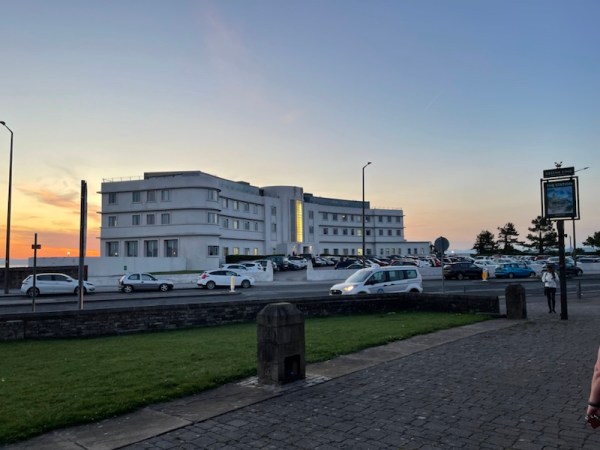
I begin to look for it from the start of July…
The ‘perfect evening’. Highly subjective, of course. For me, it begins with a gentleness of warm (but not hot) air flowing over the land.
Add in light that has a softness – as though mother-of-pearl had been ground into a fine dust and scattered, unseen.
And the final ingredient is an emotional, mellow ‘fullness’ that seems to encircle the whole experience, giving us a taste of underlying perfection, yet showing us that the price of this coming-into-manifestation is brevity…
I don’t look for another. I’m content to let the summer flow on towards harvest – though none too quickly, please – once the perfect evening has graced us with passing perfection.
©Stephen Tanham 2023
Stephen Tanham is a Director of the Silent Eye, a journey through the forest of personality to the dawn of Being.
http://www.thesilenteye.co.uk and http://www.suningemini.blog


 Sun in Gemini
You must be logged in to post a comment.