
Sue Vincent passed from this organic life into the world of Being, early this morning. Her partner, Stuart France, was with her, as was her family.
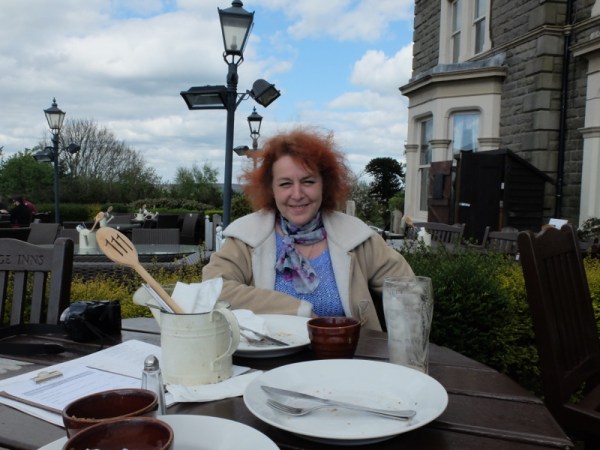
She leaves two fine sons and two delightful grandchildren, Hollie and Imogen… and a famous dog named Ani, whose books have outsold anything the rest of us have ever written.
Sue was one of the founding Directors of the Silent Eye, planned through the winter of 2012, and established in the spring of 2013. She described it as one of the most important things she ever did.
I will be writing a little about the history of our Mystical School on Thursday’s Silent Eye blog, and copied, here.
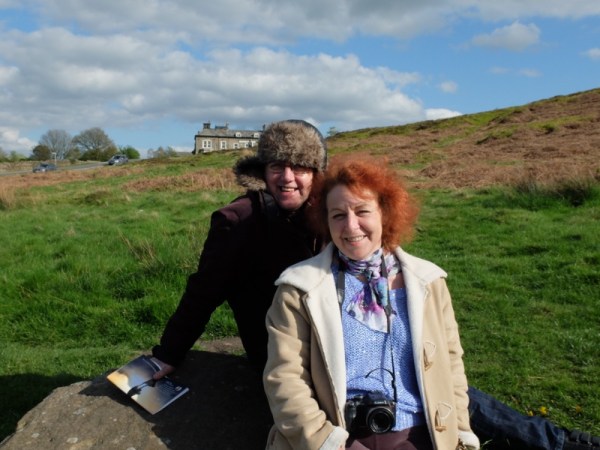
She leaves us all with fond memories of her fiesty and indefatigable spirit, her love of life, and her deep empathy with the cares of others.
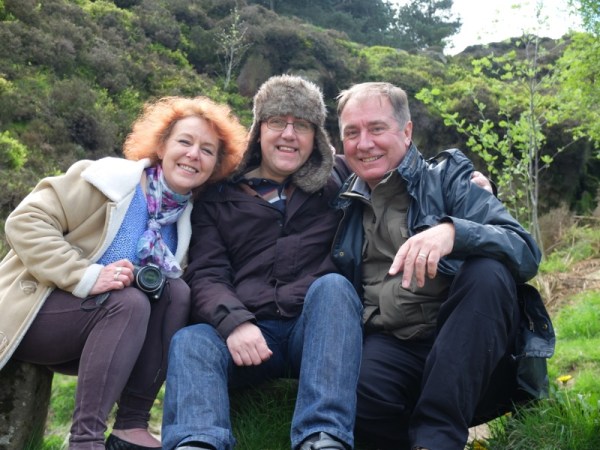
The Silent Eye will carry on its work, as she would have wanted. Sue will be deeply missed…
Sue Vincent
14th September 1958 – 29th March, 2021
©Stephen Tanham, 2021.
Stephen Tanham is a Director of the Silent Eye, a modern yet mystical journey through the forest of personality to the sunrise of Being.
Share this:

When I am old and grey, and Father Time has had his wretched way with all the bits that move no more…
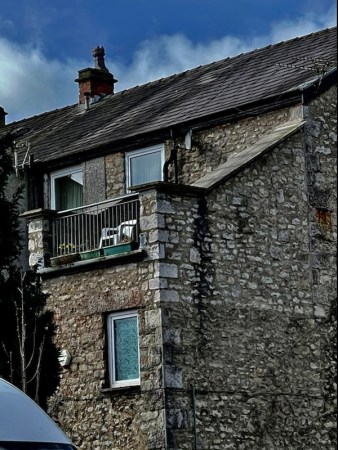
I will live in a simple dwelling like this top floor, with endless sea beyond the veranda’s edge, and mountains to the other side, behind the cluttered bookshelf that used to be a windowsill.
And Mags will feed me, not because she must, but because she loves, and I can tell her stories of the sixties, and paperbacks and the sound of your first motorbike.
The dog will be too much and not like heights, but Rascal, the wasted tom, will share my memories and some of my breakfast before we take the sun and read the Guardian and learn of Murdoch’s final hours.
Before our present, in thundering clouds, comes rolling from those mountains, sweeping before it everything we knew had no importance, until the only thing left to write is the word that rhymes with
©Stephen Tanham
Stephen Tanham is a Director of the Silent Eye, a journey through the forest of personality to the sunrise of Being.
Share this:

One of Sue’s latest posts in her final few days battling cancer…


We were talking today about how much is lost in translation. This was being discussed from an abstract, as well as a literal viewpoint.
It started with a conversation about books and moved on to language in general and thence to poetry and song. I mentioned Jacques Brel, a poet, singer and performer of, in my opinion, utter genius, who wrote almost exclusively in French. Many people know the songs for which he was best known, even though they are generally known best in English as cover versions.
To take one of the original songs and translate it into literal but literate English is fine.. it allows access to the meaning, but not the poetry. To take the original and make it into a song that has rhyme and rhythm is wonderful.. but it then loses must of the lyricism and the depth of meaning and emotion created by the…
View original post 481 more words
Share this:

We all have preconceptions about places we know well. As photographers, we are uniquely placed to ‘sneak up’ and shoot a different story, deliberately skewing things..
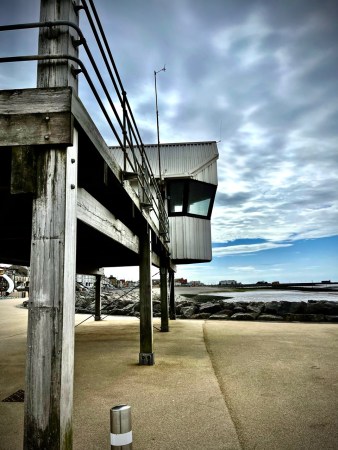
The Lancashire resort of Morecambe is less than 30 minutes drive from where we live. Tess, our collie, loves the beaches there, and there is a three mile promenade allowing pleasant Sunday walks with access to take-away coffees to minimise the cold…
Morecambe Sailing Club (MSC) has a race office that sits on a recessed part of the promenade, right over the sea. It’s a daring piece of modern engineering, and I’ve photographed it many times and posted on the New Morecambe Past and Present page on Facebook.
I’m usually after a complimentary look, but the design is so radical, it invites a bit of mischief, too, as the opening shot, above, shows. The bulbous and bulging ‘nose’ of the race office window can suggest an authoritarian look, which I highlighted, just for fun…
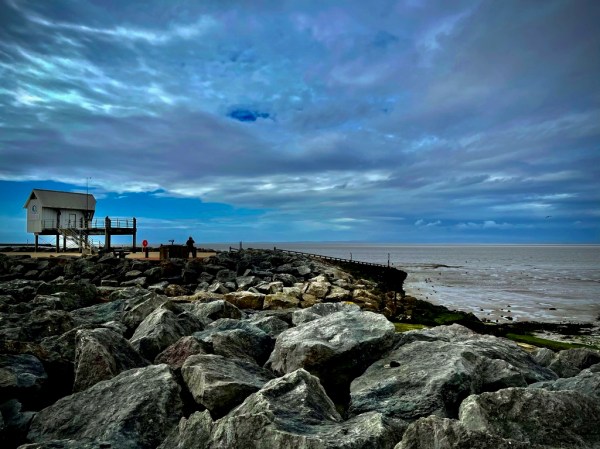
Sticking with the same subject, I noticed that, further down the promenade, there was an open angle shot that placed the racing office to the extreme left of a wide-angle view. The effect was to emphasise the massive nature of Morecambe Bay and place the MSC building as a tiny hut on the edge of it! Mischief, indeed…
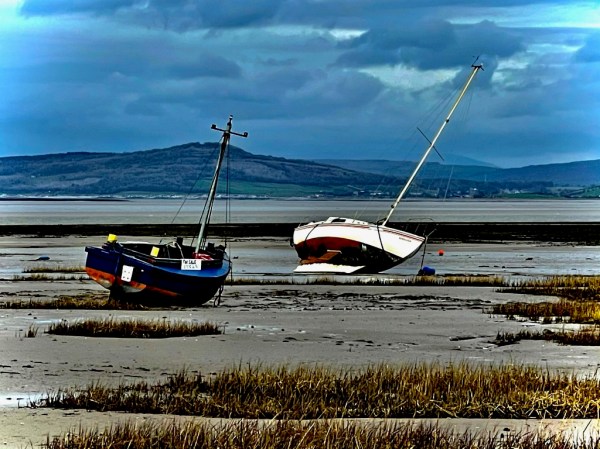
The final photograph is above. Boats are at their best floating, but these two look like they’re sleeping on the job…
©Stephen Tanham, 2021.
Stephen Tanham is a Director of the Silent Eye, a modern yet mystical journey through the forest of personality to the sunrise of Being.
Share this:

+ #Silenti, Consciousness, esoteric psychology, Mindfulness, Mystery Schools, Silent Eye School, Truth and Esotericism
The Ferocious Healer
by Steve Tanham
Healing can be gentle and tender; but certain healing acts on an inner level of the self, racing like a cold wave to resolve us, before washing us up on the beach called tomorrow, but under a different sun…
(900 words, a five-minute read)

We all progress through an inner journey in our lives. We may not work with any specific system of self-development, but we come to the same perspective about ourselves. We come to know, with certainty, that there are things about us that have far more importance than anything else. These are qualities, rather than things. They do not relate to things; to what we might have, how secure we are. They are concerned with an ‘easiness’ (or not) of our inner state, our ‘me-ness’.
When we enter this awareness, usually in our middle years, we are on a path to self-knowledge, whose gravitational force becomes stronger as we age. True, there is a contest between bodily health and focus at that point – as shown by the increasing take-up of combined Eastern systems, such as Yoga, or derivates like Pilates. A daily walk confers much of the same benefits. Whatever method we adopt, the gains are reflected within as a calmer interior.
If we self-inquire into where unease comes from, we are pointed at a many-coloured quilt of mind and emotions, made from pieces of our experience, solidified as responses. There are desires, regrets, resolutions and powerful insights woven into this fabric. The whole of it comprises the self, the personality, and, although it feels complicated, it really isn’t – once we find the dynamic states in there, and begin to separate the dross from the real.
The real is vitally important, and we are compelled to approach it in stages. These stages reveal a pattern of ‘really important things’ – things with a power to change that interior state and make us renewed, within – which then changes the without…
The real is based on truth. Our relationship to truth is subtle, and, initially at least, learned. We are brought up in societies where many of the most important ‘powerful people’ lie. They lie all the time, carving and shaping the societal world in a way that protects their existence as liars. We all lie, but becoming aware of our lying is a key part of putting real life, as opposed to illusion, back into our interior state. We may not have the power to make our societies true, but we do have the power to make ourselves true.
We don’t want zealots here. There’s nothing as deadly as a zealot, clinging to his or her first vision of real truth and preaching how important it is to give up our present lives. We want gentleness, we want sharing and, above all, we want compassion…
Compassion is one of the great discoveries of the land inside us. Like anything else we presume to know, compassion has hidden depths. Compassion has two apparent faces: the one that soothes the friend who is going through illness, providing a reassurance that things will be okay, when we know they will not; and the the other, deeper face, that acts like a silent twin of truth.
If we have any ‘spiritual’ intentions, we must find our own truths. I’m not talking about the methods of development we may choose. I’m referring to an interior capability to ‘feel’ the truth of any situation. It can come as a shock to find out that we have an inner organ that knows when something is true or not; that knows when we are bending our complex and sophisticated past to accommodate something that is really an indulgence, rather than what we have set ourselves to do.
This is hard, really hard. But it is the way forward, and no amount of false compassion, the pat of self-reassurance that we have lots of life left to get it right, will substitute. Conditions arise in our lives for a reason. Life is an interior school of self-development, as millennia of wisdom has taught. People on a path of self-development are wise, no matter how far along that path they are. They listen to life, reading in its events, good or bad, what they should be learning on their individual journeys.
And it is here that the little-known power of real compassion comes into play. Compassion for ourselves will help us face the truth of our lives. It acts like a ship that reveals a bigger world. But its direction can only be towards the Truth, and in that powerful voyage, its engines have to be merciless in carrying us forward.
Once we face truth, nurture it and and learn to make it our constant advisor, we are set on a course, and the mighty engines of self-compassion, matched to the compass of truth, assume their real power, which is to make the brave happen… eventually healing the wounds that seem less and less important as we gaze out on a truly new day.
©Stephen Tanham, 2021.
Stephen Tanham is a Director of the Silent Eye, a modern journey through the forest of personality to the sunrise of Being.
Share this:


It began with the sunset, yesterday. Breathtaking colours, but a sense of strange events unfolding.
Nothing threatening… just events I would not have expected, let alone predicted; and all of them ‘inserted’ into reality as the day unfolded. An inner feeling of ‘wheels turning’.

One of our regular dog- walks is through the forest and up to Sizergh Barn for a take-out coffee. All very Covid-compliant and distanced. There’s a man named Gareth who has a license to use wood from the forest to make charcoal. I’ve written about our chance meeting with him in a previous blog. He was not present, but his charcoal furnace was burning away, its three chimneys somehow strangely symbolic.
This stark image of three followed that of three white roses many of us had seen, festooned by a light-show of ‘orbs’ on the Facebook site of the Glastonbury Unity Candle, in parallel with a private ceremony three of us were having in the Silent Eye, to be in contact in a way that Covid has taken away…

Leaving Sizergh Farm – where the organic shop and cafe are located – we decided to return via the ‘Fairly Glen’; a walk created for families with children that follows the course of a powerful stream before it plunges into the forest, proper.

There, on a mossy stone, was a beautifully painted pebble, photographed above. ‘When. Life gets blurry,’ read the words, ‘adjust your focus…’ Beautiful but strange, as though a scene from the 1960s series ‘The Prisoner’, whose setting at Portmeirion, in Wales, we had used as the basis for a Silent Eye consciousness weekend.


Then, leaving the forest on the homeward leg, with a well-walked collie happily trotting alongside, we came across this solitary stone, painted with a heart, left in a gap in one of the dry-stone walls.
Beautiful, isolated and, seemingly, not part of anything… except itself and what it said. A strange day, very beautiful in parts, and stark in others. A bit like life…

©Stephen Tanham, 2021.
Stephen Tanham is a Director of the Silent Eye, a modern yet mystical journey through the forest of personality to the sunrise of Being.
Share this:

It’s easy when you have a dog. The charging collie clearly loves a beach. But I’m having as much fun as she is. You see, one of the greatest places to see the sky is the beach…
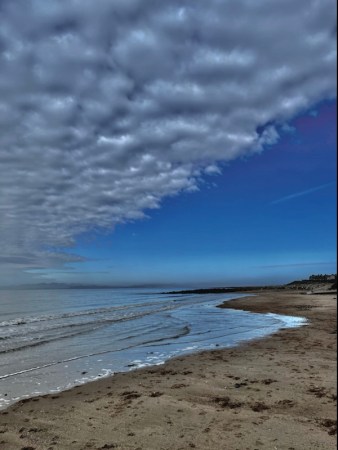
Where the ocean meets the land is a wonderful place. Rocky, sandy or urban-developed, this ‘littoral zone’ has a special magic that spills over into opportunities for the photographer.
Above is an example of simply being there at the right time. A perfect spring morning at Heysham Beach, near Morecambe. Tess (the collie) did her usual job of dragging me from the car and along the lane that leads down to the sea. After a few chucks of her frisbee, I noticed there was a ‘tear’ developing in the beautifully mottled clouds. Emerging in the gap was the most beautiful blue…
Tess had to wait a moment while I snapped away. The colour was so deeply blue, I had to feast on the potential, exploiting every angle the camera could cope with.
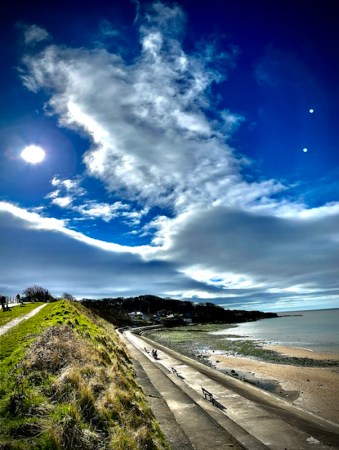
Leaving the beach involves a steep climb up a hill that separates the two parts of the village. On a clear day, the views down into the village are a rich source of photographs. Occasionally, the sky rather than the sea becomes worthy of being the primary subject. Exploiting this often requires the ‘vertical panorama’ that I’ve described in previous posts. An example of this is above.
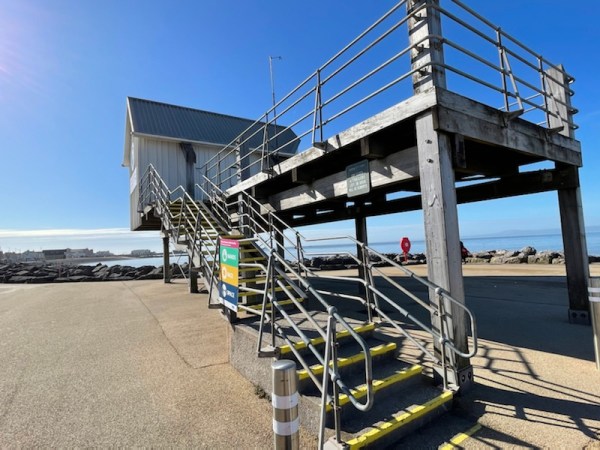
It’s not just natural features that make interesting photos. The coast can be host to some of the most adventurous architecture, too. The radical design of Morecambe’s ocean racing building, above, lends itself to fascinating structural components, like its dramatic stairways. In bright sunlight these look good in either colour or black and white.
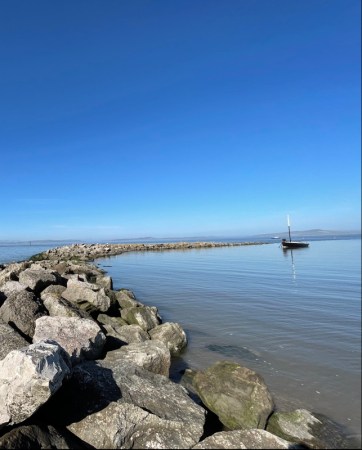
The final photograph, above, is classically peaceful. All the shots here were taken on the same day, with a perfectly blue sky. In this image, a restored skiff had just been sailed into the small bay and was in the process of being moored. The natural curve of the breakwater rocks led straight to it. All I had to do was find a careful route over the deadly stones – which are not designed to be walked on!
©Stephen Tanham, 2021.
Stephen Tanham is a Director of the Silent Eye, a modern yet mystical journey through the forest of personality to the sunrise of Being.
Share this:

+ #Silenti, Consciousness, esoteric psychology, Mindfulness, Mystery Schools, Silent Eye School, Truth and Esotericism
The Belief Tree
by Steve Tanham
It might be thought that, in our technology-driven age, the concept of belief has become less important. If we go back fifty years, belief was still central to most people’s lives; so what has happened to change that?
(1000 words, a ten-minute read)
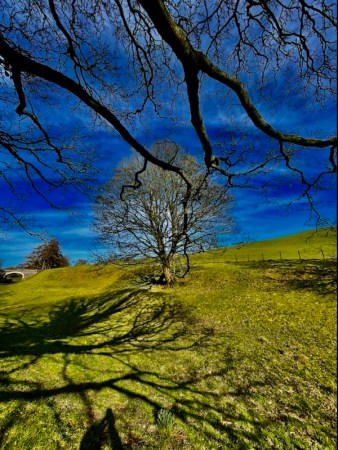
A friend of mine suggests, slightly tongue in cheek, that the biggest factor in religion’s decline is shopping… We might substitute football for shopping, to even up the gender sheet. The principle is the same; occupation of the mind and emotions by identifications with things of a tangible nature. If we’re fortunate, these may be luxuries. If less so, they are the passions generated by, say, our favourite team, of whom we are a loyal and devoted follower.
Passions for the less tangible things of life seem to be fewer, in this more advanced age…
Life is a struggle towards maturity and the personal crown of independence, which may be achieved in various degrees. Being self-supporting would be a key stage. Having a good job and ‘a place of our own’ would be important milestones.
At the end of decades of life we might find ourselves truly independent and able to choose how we dedicate our energies. This freedom from the influence of others can prove an arid place, however, when we realise that sea of experience in which we now swim reflects only our personal likes… and not the rich tapestry of challenge that it used to contain. ‘Beware what you wish for’ can be appropriate words, here.
Maslow’s famous hierarchy of needs showed us that we only get to develop a depth of understanding of ‘higher things’ when our basic survival and comfort needs have been met. Yet religion usually features in the lives of the poorest people.
Is this a sign that the ‘undistracted’ are closer in their simplicity to where the spiritual originates? It may be that the closer-knit societies of the poor – outside of the developed West – have tightly woven communities where worship and neighbourly care go hand in hand. In this sense, religion is not chosen, it is a given, perhaps reflecting life in the West from a previous era, but with different religions at its heart.
Our societies have lost coherence and become a hotch-potch of identifications, desires and fears. The solid, if imposed, set of values that religion used to provide as life-basis has been replaced by a gradient of thoughts ranging from life purely as consumer, to the deepest explorations of a variety of philosophies, some linked to disciplined exercise regimes, as with Yoga. Seldom in our history have more people been seeking…
Science generally mocks religion. I once watched a whole programme by one of my favourite scientists: the astronomer professor Brian Cox, who filmed religious worship around the world – particularly funerary rites – just to say, at the end of programme, that God, and associated life after death, had no basis in demonstrable fact. I remember feeling sad that so much energy had been spent negating the basic and genuine needs of so many subsistence-level people.
Not all scientists feel this way, as individuals. Psychologists work at the known frontiers of the mind, stabilising the all-important sense of ‘self’ that arises when the individual works successfully towards maturity and individuality. We might say that all the gains and many of the ills of the modern world have resulted from the cult of the self, allied to consumerism.
How is the young, thinking person to approach this, if they decide there is more to life than comfort and the personal prestige of accomplishment? We might say they will be met with three concepts: to believe; to have faith; and to know…
The tree of wisdom has, throughout the ages, and within all the world’s systems for studying a ‘supreme being’, begun with belief; asking the aspirant to adopt a deeper, more values-based approach to their lives. We are urged to do this as a trial, setting aside our established thinking, to consider that there might be states of mind and heart that are truly ‘higher’.
Some systems of development, such as Buddhism, advocate no such supreme being, rather focussing on the potential of the individual human, instead.
Belief traditionally provides no proof, except for reference to ‘good people’, but offers a path of focus on an ideal that may have the power to change the aspirant. The majority of people satisfied with belief, alone, are ‘woven’ together in a community centred on some kind of church or other centre of worship. A belief system with associated values may cause us to examine whether our lives are ego-centric. It’s a useful truism that a good way to lessen your troubles is to take on the troubles of others. It is sufficient for many people to remain in this state of belief, helping and serving their communities and enriching all our lives with their kindness.
Those who want to go beyond this and access the often referenced higher states of consciousness are first faced with the question of whether these actually exist. Fortunately, life provides each of us with moments of extreme and unusual lucidity, called ‘peak experiences’. These are so different in terms of quality of consciousness that they point to something very real in the human potential. In simple terms, the memory of these states is vivid and we want to be back there…
Sufficient work on the self, at this level, reveals there to be a related family of such states of the higher Self, all ready to host our active consciousness, if we can find the way to them. Once ‘tasted’, these states of what are commonly called ‘Essence’, entice us back, because they contain something that can only be describes as a certainly of rightness.
We simply know, beyond question, that we are in a mental and emotional place that has an extraordinary level of clear thought and feeling; indeed, that the word thought is no longer sufficient to describe how we ‘see’ the world.
This new state of consciousness, albeit it temporary, takes us beyond belief and faith and into a place where the words, essence and spirit are seen for what they have always been, ready for our own interpretation into the language of our age, thereby perpetuating a tradition of teaching and learning whose only goal is the service of our fellow human beings – because we all share this potential, which only needs awakening.
We have travelled from belief, with its fine community spirt, through faith that there is a higher consciousness available to us, and worth the work, to the place of knowing, or gnosis, as the ancients rightly called it.
And all of this is the birthright of mankind, and always has been. It is available to every man and woman, regardless of race or creed. The language used to describe it is different in each culture, yet the experience is the same. In the place where there are no words, the language of experienced certainty is universal… and startling in the new world it unveils.
©Stephen Tanham, 2021.
Stephen Tanham is a Director of the Silent Eye, a modern journey through the forest of personality to the sunrise of Being
Share this:

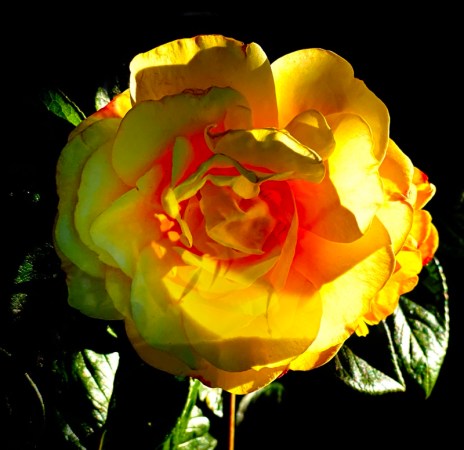
Mystical Poetry
(A one-minute read)
➰
And as the end it will be thought
A climb of thorns on stem untended
An effort worthy of the past
But not in words that speak unended
➰
Within the stem there lives a rose
Whose living warmth, once felt, unfolds
And at the end it will be known
The rose’s fragrance is your own
➰
©Stephen Tanham 2021
Stephen Tanham is a Director of the Silent Eye, a modern yet mystical journey through the forest of personality to the sunrise of Being.
Share this:

What do you do when it’s raining so hard that normal landscape photography is impossible? Stay indoors and use a simple trick to make some sophisticated and stylish abstracts for your future blogs… or even book covers.
(400 words, a two minute read)
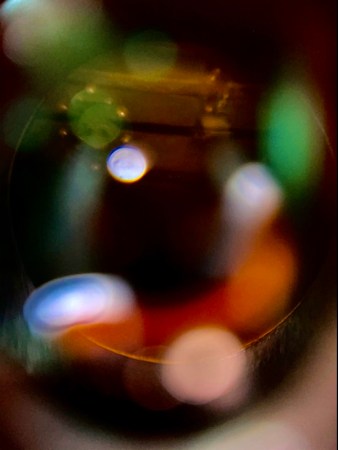
They’re inexpensive, available online at a day’s notice, and will fool most observers into thinking you’re a Photoshop expert – which few of us amateurs can afford to be, these days.
For about £30, (one-off, non-recurring), you can get one of these:
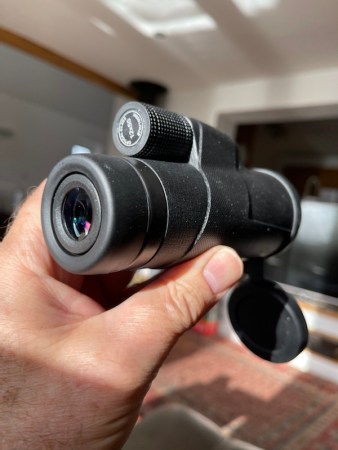
This one is about six inches long. It’s lightweight, and looks like half a pair of binoculars, which is exactly what it is… Technically, it’s a monocular, and is a great pocket assistant on any walk involving landscapes, bird-spotting or the like. For the night sky, it’s indispensable. These modern, small telescopes pack a punch, but they have a hidden talent not usually mentioned on the tin…
Focus the monocular on a remote subject, then place your phone’s camera right up to the monocular’s eyepiece, looking on the phone’s screen to check what you’ve got. It takes a while to find the focus spot. Then, if you press the shutter, you’ll get a boring shot like this…
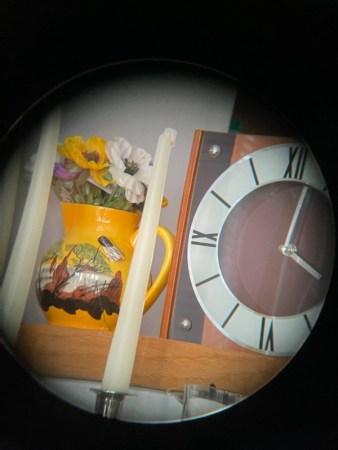
However, angle the phone, slightly, and you’ll get a dizzying set of optical effects, some of which will be a mixture of real image and lens-induced special effect.
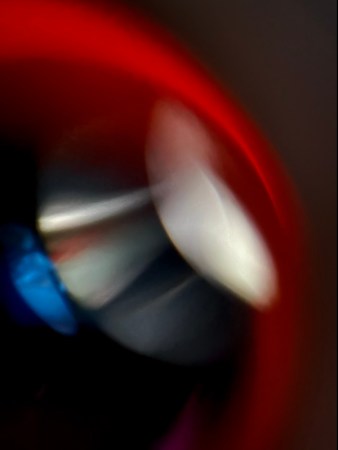
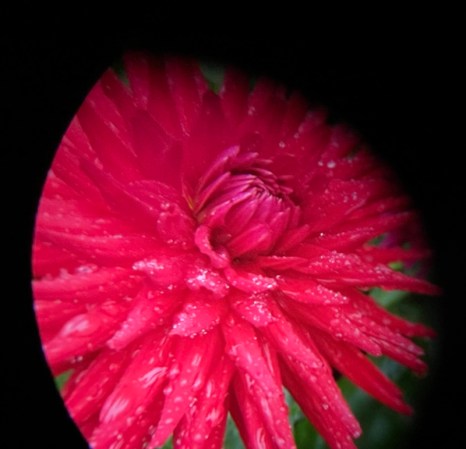
Gardens are full of beautiful organic objects, rained-on or not. The marriage of lens and flower can be magical.
Simply play with the combo until you get used to its potential. Some of the best and most natural looking images can be achieved just with the monocular, as above and below.
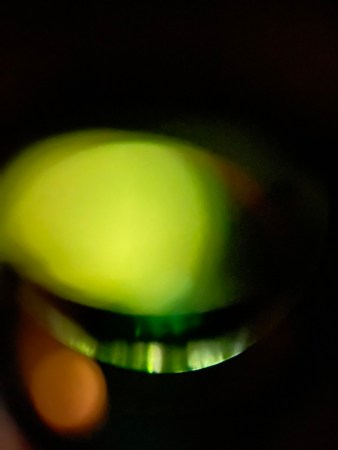
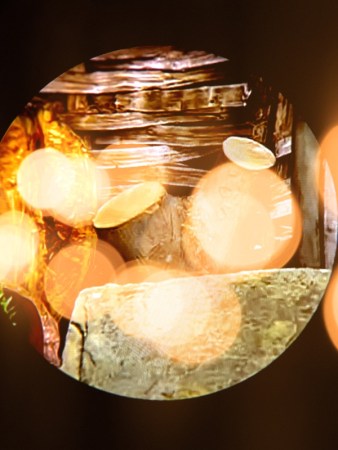
If you want to go further, you can buy a basic photo-effects App for the phone and use the best abstract shots as a canvas on which to add special highlights. Each of the images below is the result of a few minutes’ work on the App Pixlr.
Early success can take you into more challenging projects. Photographing people is always a task to approach carefully, but the monocular technique can be applied to real life or photos.
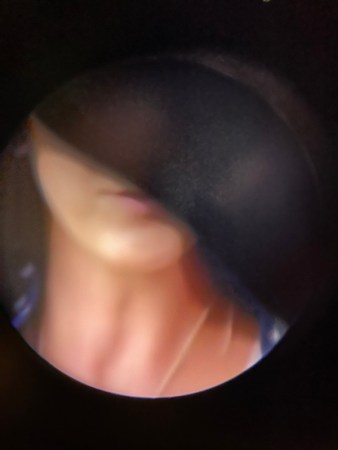
Can become…
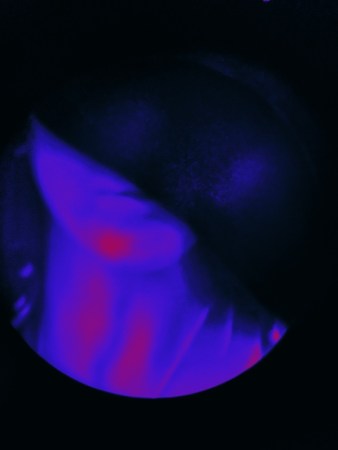
Most of all, have fun. We learn best by playing; and playing with colour images is a wonderful pastime.
©Stephen Tanham, 2021.
Stephen Tanham is a Director of the Silent Eye, a modern yet mystical journey through the forest of personality to the sunrise of Being.
Share this:

Not to be outdone by the recent discoveries on Orkney, Stonehenge – one of the world’s most famous stone circles – has thrown up a whole new story about its origins… and its original face.
(1100 words, a ten-minute read)

It was the end of the archeology ‘dig season’ of 2018. Strong winds and heavy rain had blown for weeks across the exposed face of the hillside on the west coast of Wales. Everyone was ready to call it a day and go home – an action that would doom the last attempt by Professor Mike Parker Pearson of University College London to show that there was a much deeper link between this saturated hillside and far-away Stonehenge than anything dreamt of, before…
One of the dig team called out – a large stone had been found, not far beneath the surface. Professor Parker Pearson set off across the mud, holding his breath…holding on to the possibility that it might be a Bluestone, or even better, a ‘socket that had held a known tooth’.

If you’ve visited the famous Stonehenge stone circle in Wiltshire, you may recall that the Neolithic monument, 5,000 years old, actually comprises two rings. The outer circle consists of 15 of the larger Sarsen stones, familiar to us from images of the site. Each of the Sarsen stones average 13 feet in height, and an astonishing 7 feet wide. The average weight is 25 tons, though the largest, the Heel Stone, weighs about 30 tons. The Sarsen stones are connected with matching overhead lintels. Recent developments in geochemical techniques have placed the origin of the Sarsens at West Woods near Marlborough, 20 miles from the stone circle.

But within the mighty ring of Sarsen stones is a secondary circle of smaller ones – the main topic of this post. Within these, in the centre of both circles was originally a third group of free-standing trilithons, each comprising two vertical Sarsens joined by a lintel. The whole monument is oriented towards the sunrise on the Summer solstice, the longest day and shortest night, and a time of immense cultural importance for the people who constructed the Neolithic stone circle, using only stone tools and manpower.
The two different outer stone circles have long been a puzzle. The types of stone quarried for the Sarsen stones is quite different from that used for the inner circle. The latter has a blue hue and hence their name: Bluestones. Decades ago, geologists located similar stone outcrops in the Preseli Hills (see map) in the far west of Pembrokeshire, the last bit of Wales before the Irish Sea. But that’s a long way from Wiltshire, and the prospect of moving the massive stones 150 miles east begs the question: why on Earth would anyone do that? Wiltshire is not short of its own durable stone…

Professor Parker Pearson had a theory… actually, he had two, but he wasn’t telling many about the second, which was more of a slim possibility. His first theory was that the long-accepted origin of the Bluestones, whilst being the Preseli Hills, wasn’t the hilltop outcrop at Carn Menyn that had first been assumed. Part of his reasoning was that nothing else related to Neolithic ritual and burial activity was to be found nearby – yet Pembrokeshire is famous for such sites.
The professor is a world authority on the prehistory of Britain and Western Europe from the Neolithic to the Iron Age. He is also one of the authorities on the archeology of ‘death and burial’ during this period; a topic that unites and divides in seemingly equal measure. For the whole spring and summer of 2018, his team excavated two sites a few miles from the rejected Carn Menyn. At first, the work went well, with a high chance of success. But, as the season wore on, conflicting evidence suggested that nothing conclusive could be found – much to the dismay of the locals, who were great supporters of the work; and the potential revelations they would bring about the location’s link to the ancient past.
With the dig-season running out, Professor Parker Pearson turned his attention to a nearby boggy field, Waun Mawn, the site of four small monoliths and well known to the locals. But a full excavation, there, had never been carried out. It was the last possibility. Pearson’s exhausted team dug in for days, fighting the wind and rain… then the cry went up… a new and large stone had been found.
The results are astonishing. The original circle at Waun Mawn comprised a full stone circle of between 30 and 50 large stones. The circle is the third largest in the UK, even bigger than Long Meg, in Cumbria. The stones were of a blue hue… and one of them had socket hole with no stone; and that socket matched one of the stones at Stonehenge, exactly. The socket had found its ‘tooth’ – 160 miles away. All of this had been protected by the Welsh peat for 5000 years.
The full story almost needs a stiff whisky to absorb… The Bluestone circle at Stonehenge was the original circle, transported by the tribe from Preseli who migrated to Wiltshire, taking their most treasured object with them. The massive Sarsen stone circle was added, later, at a time when the makers had perfected their art… but they never abandoned their beloved original circle…. which is still there for us all to see and feel – the inner ring of Stonehenge.
All of this is the subject of an excellent BBC documentary, available for the next ten months on the BBC’s iPlayer service, presented by Professor Alice Roberts.

And there my narrative was due to end, but then, preparing the blog post from last Thursday on the new findings from Orkney, I saw footage of Professor Parker Pearson walking with Neil Oliver at the intact 5,000 year old village of Skara Brae.
Last week’s blog discussed the findings that Orkney was the place of origin of all the British stone circles, whose journey took them (predominantly) down the west coast of the British Isles… culminating at Stonehenge in what is now Wiltshire, where the last of their Bluestone masterworks was given its new and final home, set within the most magnificent stone circle ever created.
And you have to ask, assuming they survived, what did these remarkable people build next? But that’s for another day… not that I have the answer, mind you. But I’m watching the people who might have, very closely…
Professor Parker Pearson is the co-author of an interim report on the dig at Waun Mawn. The link to the PDF is here.
If you want to follow the Silent Eye’s workshop on the trail of the Picts and Sacred Orkney, here are the other parts of that series:
Sacred Orkney:
Part One, Part Two, Part Three, Part Four, Part Five, Part Six, Part Seven, Part Eight, Part Nine – end,
The preceding Pictish Trail weekend blog posts:
Part One, Part Two, Part Three, Part Four, Part Five, Part Six, Part Seven, Part Eight, Part Nine
©Stephen Tanham, 2021.
Stephen Tanham is a Director of the Silent Eye – a journey through the forest of personality to the sunrise of Being.
Share this:

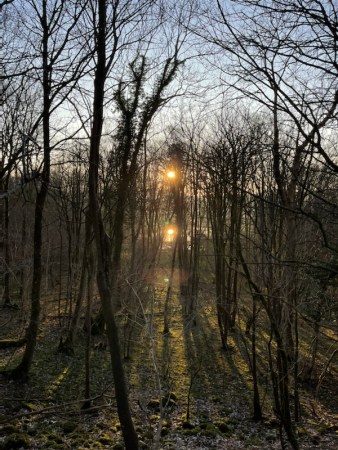
I love this time of year. The early spring offers an interesting mixture of summer light and winter forms. The last few weeks of the bare organic structures offer mischievous possibilities for a slight degree of editing…
But sometimes, nature surprises without any artifice on the photographer’s part. In the opening shot, I was walking Tess through the local forest when I was startled by no less than two suns shining at me from the west! It took a few moments to realise that the incessant rain of the day before had created a temporary pond on whose surface the evening sun was reflecting – in perfect symmetry with the original.
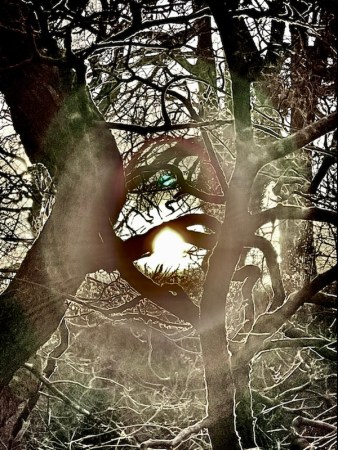
Photo number two, above, would have been dull and featureless without the setting sun being in exactly the right place from where I stood across the River Kent. The ‘eye’ this formed was unmistakable. A little juggling with the light levels not only highlighted this, but also gave the branches of the trees a ghostly glow.
At this point, my walk was becoming decidedly spooky, and I didn’t expect any more visual bonuses from my surroundings.
But…
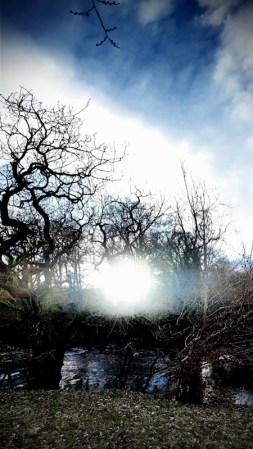
Emerging from the forest’s footpath, I noticed the sun’s light was casting a spreading glow on the finer foliage over the river. I took the shot, as a ‘maybe’ for when I got home. Playing with the light levels, again, this wonderful ‘eye’ shape appeared.
Spooky and lucky… it certainly doesn’t happen every trip!
©Stephen Tanham, 2021.
Stephen Tanham is a Director of the Silent Eye, A journey through the forest of personality to the sunrise of Being.


 Sun in Gemini

You must be logged in to post a comment.