+ #iphonephotography, #Photography,, #Silenti, Ancient Landscapes, Places and Prose, Travel and people
Island of the Sun
by Steve Tanham

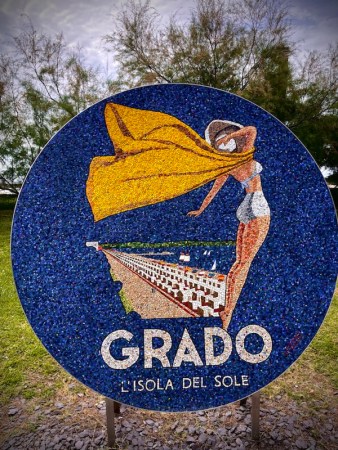
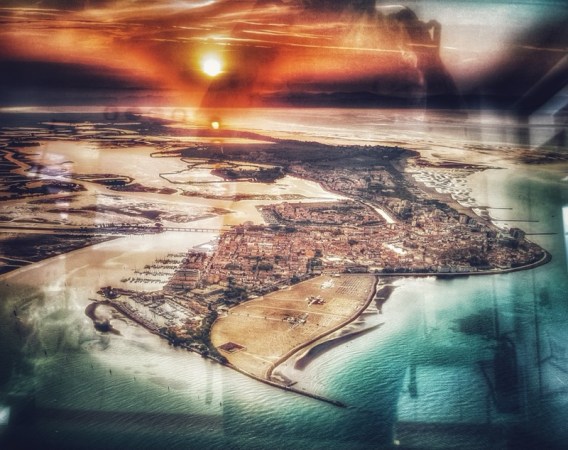
For somewhere I’d never heard of a few months ago, Grado – l’Isola Del Sole- has made a big impact.
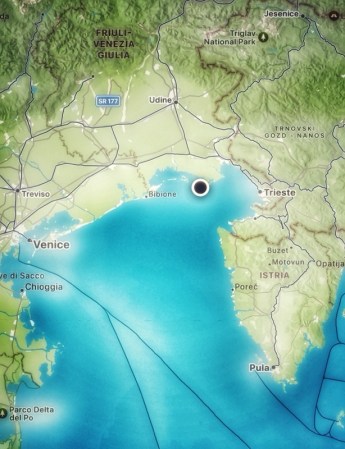
This ‘island of the sun’ sits in the upper arc of the Adriatic Sea: the ocean that links eastern Italy with its neighbours, Croatia and Slovenia.
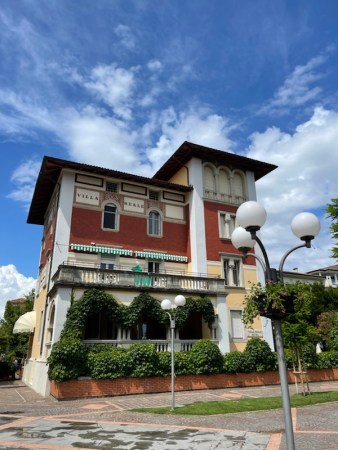
Trieste, that ancient meeting place of east and west, lies some fifty km to the east, and can be reached by boat in 90 minutes.
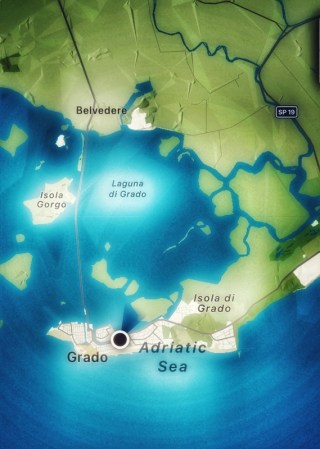
Technically, Grado is only just an island. A long causeway links it with the mainland of Italy. Venice is an hour away by train plus a 30 minute journey by bus from the nearest station.
It’s worth the effort…
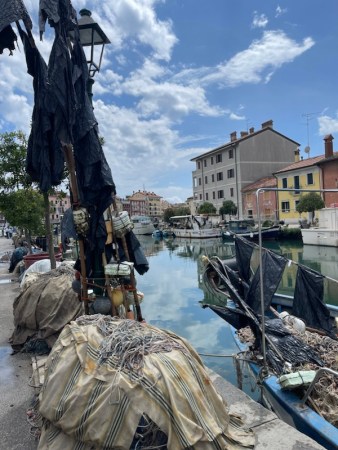
We’re on foot, of course, as explained in the previous blog post. It’s brought us much closer to the experience of the region’s beautiful lakes and people, but can prove costly to ‘soul and sole’ on a hot day when two smaller cases and a large one have to be manhandled onto train and bus in unkind heat…
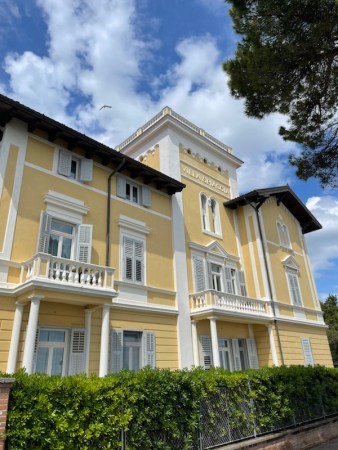
The opening image, which delves back into the island’s ‘Belle Epoque’ 1900’s past, made me smile when I thought of the pun on the more weary aspects of ‘journeys by foot.’
The local fame and fortune of Grado was sealed by it being the favourite holiday destination of the Hapsburg dynasty’s royalty, who ruled a mighty region of Austrian and southwards until the disaster of the First World War, after which they lost this beloved land as territory, leaving them without a sea border.
By the end of the war, in November 1918, Austria-Hungary no longer existed as unified entity – at the expense of Italy’s reclaiming of the coastal regions up to Trieste, which completed the longed-for reunification of the Italian state.
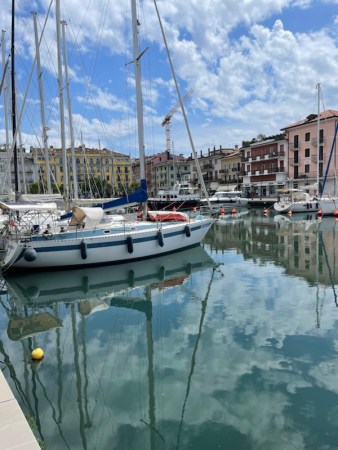
Despite this, when you arrive in Grado, you get a shock. The most common spoken language is German. Restaurants and shops all open their dialogue with German; switching to Italian or even English once you respond.
The German speakers are mainly Austrian. The drive to their former coast is now a matter of a few hours and they come in droves, from May onwards. It’s a lesson in how older cultures form deep patterns in our lives, and affinities remain.

I’m a beginner in Italian, though I am plodding through the excellent (and free) Duolingo online course, in which you do a few minutes per day.
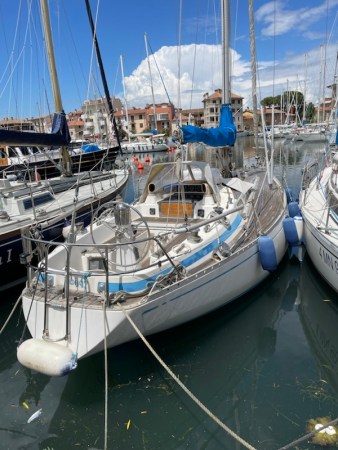
Many years ago, I worked for a German computer company – Nixdorf, from Paderborn – and they paid for a few of us to have language lessons from a private tutor. After two years, I was the only one left in the class. Much of it remains in my memory, and comes in useful on these occasions, though I always start off rusty.
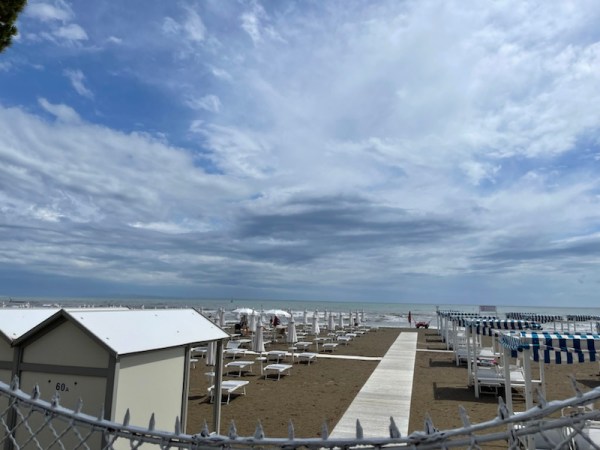
So now it’s time to let the Grado visual postcards speak for themselves. The shots to here are as taken, those that follow are the subject of a lens-art approach.
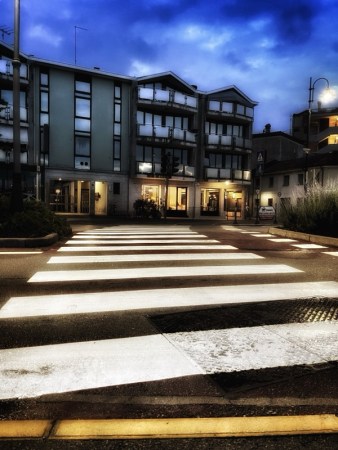
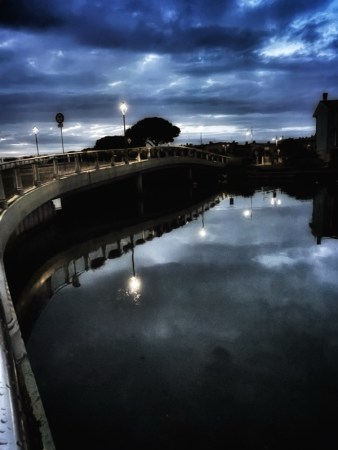


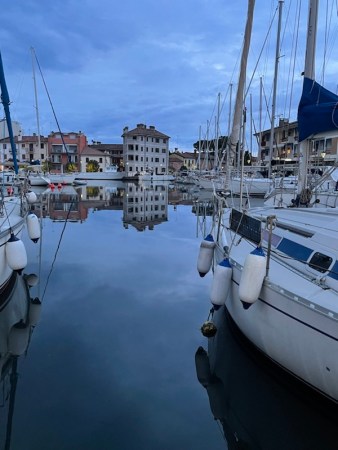
Grado has been one of the highlights of our trip. Our adventure of Italian exploration is now coming to an end. We will certainly return to this place when we get the opportunity.
The concierge of the hotel summed up Grado’s significance when he said: “It’s truly a meeting place and a melting pot for both culture and language. As such, it’s a very modern place in an historic setting…”
We couldn’t agree more.
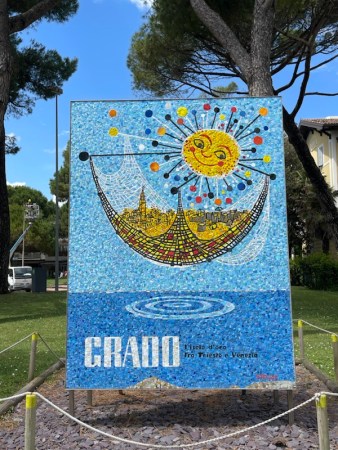
©Stephen Tanham 2024
All photos taken and processed on an iPhone 12 Pro.
Stephen Tanham is a writer-photographer and mystical teacher. He is the founding Director of the Silent Eye, which offers a free monthly Zoom-based gathering of companions, each one on their own, unique journey to deeper states of self-realisation.
Contact: stevetemeq@gmail.com.
Share this:

I like to think I’m a man of the world …
I’ve certainly not ‘done it all’, but I’ve lived my life, fully. And greatly enjoyed each challenge as it came, often learning in the process, especially from the disasters.
But I’d never met a tanga, before. Well not in a personal way…
I’d better explain.
I’ve just turned 70. “Surely not!” I hear you say – and thank you. But the great wheel of personal time has brought me here in a healthy state, ably assisted by a lot of effort at family Pilates, dog-walking, and a wife whose healthy cooking is second to none.
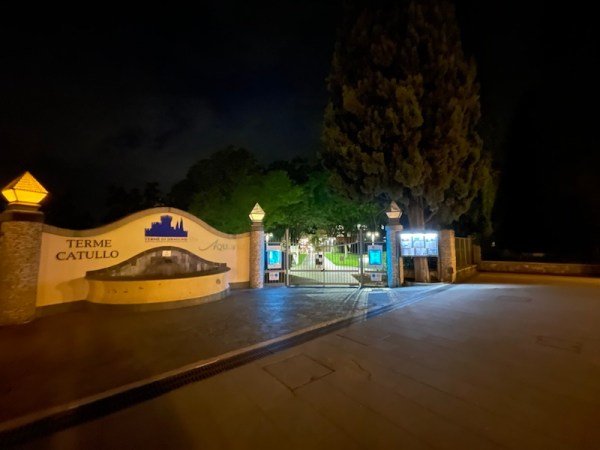
We were in our previous location of Sirmione when we stumbled across the historic spa at the foot of the hill on the way to the old town.
It looked inviting … but expensive. I went ahead into the town to line up two latté macchiatos while Bernie entered the spa to explore. She’s a big fan of such places, whereas I can take it or leave it. Give me a good walk with the Collie, any day.
Ten minutes later, she rejoined me with a smile. I knew that spelled trouble…
“I’ve booked myself into the spa for a two hour session, tomorrow,” she said.
I began to relax. “Excellent!”
“And you’re having a massage with Olga on the morning of your birthday…”
“Hmmm…”
Two days later, as scrubbed and showered as I could be, I trundled down the hill to meet up with Olga. She approached me at the inner door of the ‘personal treatment’ rooms. She was Croatian, delightfully pleasant yet serious, gently perfumed … and gorgeous.
Olga instructed me to remove my clothes and lie face down on the massage table. I looked to where she pointed and saw a rolled up towel at head height.
“I will leave the room while you undress … and put this on”
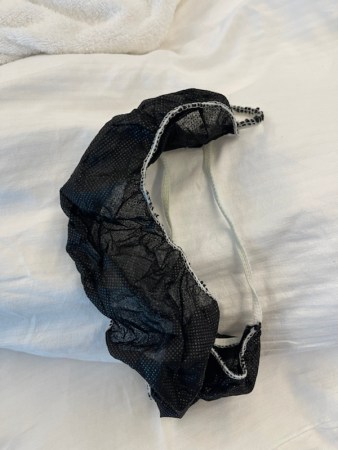
She handed me a small blue bag containing a piece of black ribbon which narrowed to a string, with what appeared to be white trimming at the edges. Horrified, I started at the cloth serpent uncoiling on my palm.
“‘It’s a tanga,” she chuckled in response to my catatonic state “The thin bit goes at the back…”
I remained frozen as she left the room. Even allowing for the shock of the thin bit at the back – literally between my butt cheeks, the ‘larger’ bit wouldn’t cover a Canarian banana, let alone Horatio, down there…who’s not as inert as a banana. I should point out that I’m perfectly average, unlike the tanga.
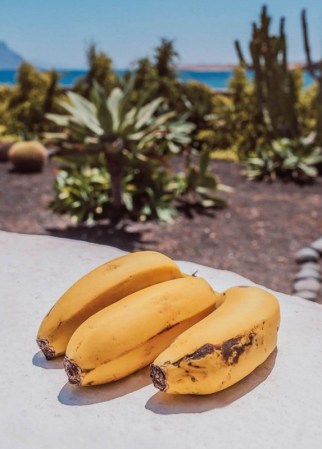
I’m kidding. He’s not called Horatio.
I lay face down on the table, my head resting sideways on the rolled up towel. Olga returned.
“I’d rather have you like this,” she said whipping the towel gently away and urging my head down into a padded hole in the massage table.
I had little time to respond before I felt warm liquid being gently dripped up the back of my calves and thighs … and all points north.
Expert and strong hands followed, and I entered a state of heavenly floating as everything but what was beneath the thin strip was stroked, prodded and squeezed into a relaxed mush.
Olga did eventually roll me over. She may have shot a disparaging glance at the errant Canarian banana, but I’ll never know, there was a warm and perfumed towel over my face before I could blink.
Heaven continued. Eventually, she left me to come back to earth. “Shower and dress when you’re ready. No rush….” She chuckled. “Keep the tanga.”
I did, but only until I could photograph it for this blog. it’s going in the bin now.
Thank you, Olga. You were expert, wonderful and entirely proper. And thank you, Bernie … for a memorable birthday event.
©Stephen Tanham 2024
All images taken and processed on an iPhone 12 ProMax or created using NightCafe Studio AI.
Share this:


We have observed over the years that our best holidays are those where we have to ‘do a bit of work’ to engage with the destination landscape.

Just getting on a cheap flight and staying in a sanitised resort is no longer satisfying, though a few days of sun at the end of a Cumbrian winter is much needed!

Our best ever trip was to cycle the Canal Du Midi from Carcassonne, in southwestern France, to Sête, on the Mediterranean coast. The journey and local hotels were organised for us by Headwater Holidays, but we had to do the cycling – and in considerable heat, requiring the carrying and drinking of three litres of water each day.
This spring, with a big birthday coming up, my wife, Bernie, offered to arrange us a touring holiday based around the Italian Lakes … but without the car. We would be essentially backpacking, but using rail, local buses and foot travel.
We would fly to Venice – covered in the last post – and then use the train and buses to navigate an inclusive arc around the best bits of Lake Como and Lake Garda. We would finish back in Venice, 19 days later, to get our return flight to Manchester.
We carefully practised our packing – hoping to reduce it down to two, small roller-cases that had backpack straps and qualified for cabin bags on the plane – but in the end surrendered to the need for a few luxuries and included a third, larger case that had to be checked onto the flight.

We’re now in Sirmione, on the southern tip of Lake Garda; and we’re experiencing our first sunshine of the trip, which is very welcome…

Situated on the southern tip of Lake Garda, the small town of Sirmione reminds me of Carcassonne, in south-eastern France.

Similar to its French counterpart, it is built around a medieval castle, which is carefully maintained as the centrepiece of this historic and attractive place. Unlike Carcassonne (which is spectacular but recent) this castello has a real history.

But the town has more to offer than history. It’s a magnet for well-heeled tourism due to its stylish shops, cafes and restaurants, as well as a place (on Sundays) for well-off locals to show off their top-of-the-range motors: of either two or four-wheel varieties.
It’s Sunday, so they’re all posing along the promenade. Everything is gentle and civilised. No one’s objecting to the ostentatious chrome displays.
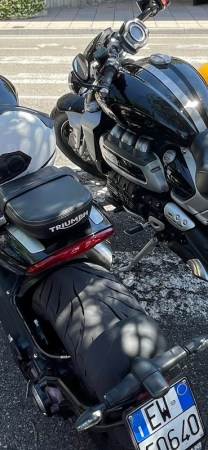
It’s all delightfully Italian…

We’re feeling human, again. We’ve slept and had breakfast before our walk. But we didn’t look or feel relaxed the day before – when we arrived, weary after a seven- hour journey from Venice by train, bus and foot.

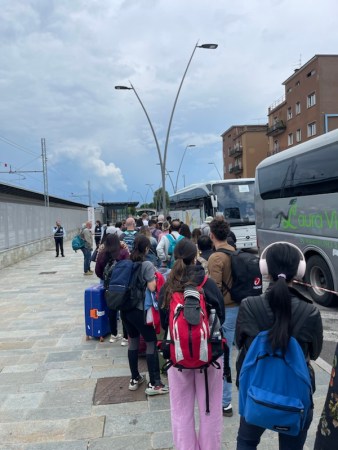
The delayed arrival was due to the ‘scheduled closure’ of the main line from Milan to Verona. The train would have dropped us off in the early afternoon within a short taxi ride of our destination.
Generally, like most of Europe, Italian trains are modern, spacious and wonderful. They make British trains look and feel like antiques.
Sadly, our rail systems, under the lies of efficiency and investment are neither, but like the efficient water companies, have generated billions for often overseas investors in what should be treated as fraud on an industrial scale.
The scheduled engineering works meant we had to leave the train at Brescia and ‘join the coaches’ waiting to take us to each of the stops the train would have made.

passengers onto his immaculate tour boat with teasing jazz)
In fairness, the buses/coaches were modern and swift – yet calmly driven. Soon, we were dropped off near Sirmione to be take a taxi to the resort. Later, we learned he had charged us three times the going rate…

But such dishonesty has not been a general part of our Italian experience. Quite the opposite.
And, finally, we had arrived at our new home for the next five days.
So, I’ll let the photos of Sirmione do the rest of the talking….

©Stephen Tanham 2024
All photos taken and processed on an iPhone 12 ProMax or created using NightCafe Studio AI.
Stephen Tanham is a writer-photographer and mystical teacher. He is the founding Director of the Silent Eye, which offers a monthly Zoom-based gathering of companions, each one on their own, unique journey to the deeper states of them-selves.
There is no charge to attend these meetings.
There are two blog streams:
(mystically-oriented writing)
and
(general interest, poetry, humour and travel)
Contact: STEVETEMEQ@gmail.com
Share this:


The power of the jigsaw
Can only come through
When all the pieces
Are correctly aligned.
What seemed academic
Is revealed as the key
To a higher understanding…
———-
©Stephen Tanham 2024
All photos taken and processed on an iPhone 12 ProMax or created using NightCafe Studio AI.
Stephen Tanham is a writer-photographer and mystical teacher. He is the founding Director of the Silent Eye, which offers a monthly Zoom-based gathering of companions, each one on their own, unique journey to the deeper states of them-selves.
There is no charge to attend these meetings.
Contact via: stevetemeq@gmail.com
Share this:

Venice is, by definition, old.

But much of the area near to St Mark’s Square is given over to modern tourism.
A fifteen minute stroll through the crowds will bring you to the Rialto Bridge.

Where hundreds of people are taking photographs of the Grand Canal, which divides the central island in two.

Once across, and through the nearby markets, you can take just about any of the small streets and find yourself in a very different world…

And here, the photographs can tell the story of an older and less tourist-focussed life in this fascinating city.


Eventually returning over the Rialto to wander along the busy quayside to find that final coffee before, in our case, boarding a ferry back to the Lido – a more modern island at the neck of the lagoon in which Venice is situated.


————-
©Stephen Tanham 2024
All photos taken and processed on an iPhone 12 ProMax.
Stephen Tanham is a writer-photographer and mystical teacher. He is the founding Director of the Silent Eye, which offers a monthly Zoom-based gathering of companions, each one on their own, unique journey to their deeper states of self-realisation)
Share this:


We’ve always loved Italy…
Some of the friendliest people we’ve ever met, beautiful food and a general willingness to help you, when you’re staring at that upside-down map.
So we’re off to Italy for a walking and touring break. But not by car. We’re letting the Italian trains take the strain.

We have to get to Italy, first, so that will involve a plane – and the innate hostility that goes with airports, these days.
Friends have commented about the lack of having a car in a strange landscape – we plan to visit one or two of the famous lakes. We don’t mind a lot of walking. It sheds the calories being put on by the delicious cooking.

The problem these days is the dog and cat. Both much loved, and we don’t put them in kennels unless we absolutely have to.
Recently, an elegant solution has presented itself. Two of our best friends (with whom we exchange pet-caring when the other is on holiday) love Kendal, and its closeness to the Lake District.
They suggested that they stay in our house while we’re on holidays, and they would look after our furry ones – in the pets’ own home. Much less traumatic!
In turn, we would look after their blind black Labrador … which we’ve done for the past six weeks.
So that’s where they all are.
And we…. Well you might be able to tell from the photos…

I look forward to posting lots of photo updates.
Ironically, we’ve left behind glorious sunshine in Britain only to be greeted with several days of rain, here. The essence of irony.!

But Venice is so beautiful, it doesn’t really matter.
More soon.


©Stephen Tanham 2024
All photos taken and processed on an iPhone 12.
Stephen Tanham is a writer-photographer and mystical teacher. He is the founding Director of the Silent Eye, which offers a monthly Zoom-based gathering of companions, each one on their own, unique journey to the deeper states of them-selves.
Share this:

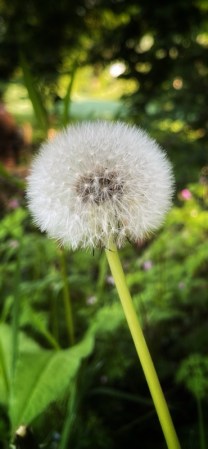
The world
in a spherical haven
of perpetual
re-creation
——————
©Stephen Tanham 2024
All photos taken and processed on an iPhone 12 ProMax.
Stephen Tanham is a writer-photographer and mystical teacher. He is the founding Director of the Silent Eye, which offers a monthly Zoom-based gathering of companions, each one on their own, unique journey to the deeper states of self. .
Share this:

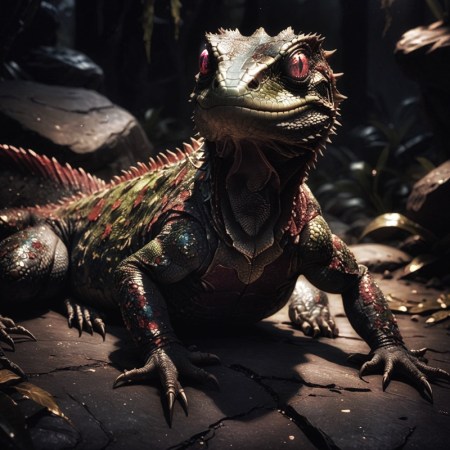
I’m having a conversation with a lizard. Nothing to be alarmed about, the lizard is only in my head – quite literally, in fact.
As Homo Sapiens developed over the long course of our evolution, the nature and function of the brain changed with us.
At the top of our spine resides the first proper brain we possessed, named the Limbic. It is a processor of signals; if you like – our first bio-computer.
The limbic brain dates back to when the life-vehicle that became a human being was a lizard… Amazingly and rather surprisingly, it has stayed with us, more or less intact. After the lizard brain, we developed a mammalian brain above it called the Cortex. The cortex takes up most of the dome of our head and is concerned with the social world we live in – which goes to show how important our social interaction with each other is.
The limbic – lizard brain – is concerned with survival and reaction. Survival is the ability to continue to live – and make the right decisions to ensure our best chance of doing so. The lizard in our heads is on constant watch for situations that might threaten us. It does not employ logical processing as the mammalian brain does. Instead it ‘knows’ when there is the need to be on high-alert.
In other words, it’s the seat of the instincts – response we did not consciously develop but which were part of us from birth.
When the lizard detects there is danger, the hairs might raise on the back of the neck; we might unexpectedly start to sweat; our breathing may quicken, and many more components of ‘danger-readiness’ may manifest. The detection of the danger state also gives the limbic brain access to vast stores of energy within us.
The lizard is concerned with ‘fight or flight’. Either will do. Its sole concern is to move us out of the zone of danger. We can ‘kill’ the other occupant(s) of that zone or run away. If we run away, our ‘legs’ will be empowered like they have never been before. If we need to fight, and can drill into the core lizard energy, we will become ‘demonic’ in our fighting purpose and intensity – even if only for a second or two.
Murders caused by anger and rage originate here… Although it may seem warped if we are a rational and controlled person, the murderer believes and feels that their existence is threatened…
Flight is more normally preferred…
So, given that the effect of threatened existence is so potent, we can see why a passing acquaintance with our lizard and their behaviour is desirable.
If we have made our conscious (higher-brained) lives into a journey of self-discovery, it’s vital to watch the lizard at work, because ‘his’ low-level responses of high energy pervade every aspect of our psychological life and its responses. There is a leakage of what constituted survival at the physical level into our vital concept of a psychological self. In other words, the essence of me…
When the me feel as threatened at my work or driving my car, then we have the dangerous and often volcanic uprising of defensive energy with a potentially murderous rage. We’ve all seen incidents on our roads and at football matches.
For the mystic, the lizard is a perpetual challenge. The sane response is, like it has been for millions of years, to trap it.
We can train our minds to notice that raising of the hairs on the neck; the arising of anger’s sweat in the skin and the pressure of blood in the head – the famous ‘red mist’. And then we can – and it will take thousands of repetitions – calm the slippery beast and thank it for its defensive energy – which we can now put to good use.
Good luck with your own lizard…
©Stephen Tanham 2024
All photos taken and processed on an iPhone 12 ProMax or created using NightCafe Studio AI.
Stephen Tanham is a writer-photographer and mystical teacher. He is the founding Director of the Silent Eye, which offers a monthly Zoom-based gathering of companions, each one on their own, unique journey to the deeper states of them-selves.
There is no charge to attend these meetings.
Guidance will be provided to each person joining the group in the form of conversation, questions and answers. In this way, understanding and companionship are deepened in a caring and sharing environment.
There is an optional extension of this work in the form of monthly studies into the nature and facets of our personalities, how to examine them and the finding of the keys of spiritual return in each of the jewel’s facets.
There are two blog streams:
(mystically-oriented writing)
and
(general interest, poetry, humour and travel)
Contact: STEVETEMEQ@gmail.com
Share this:

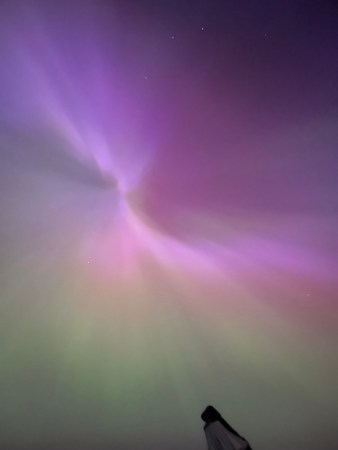
The strange object – bottom right in the photo – is the top of our folded sun parasol which lives next to our patio table, outside the house.
The ‘shades of lilac’ object in the background began its life as one of the biggest explosions the Earth would have ever seen… And its effects took approximately three days to reach the sky over our garden… not that they were headed for our garden, as such.
It’s the Aurora, of course… The famous ‘Northern Lights’. They are not supposed to be visible in Cumbria; even we are too far south.
We were once travelling on business in Vermont, USA, just south of the Canadian border. After dinner, the regulars in the small hotel made us very welcome at the bar and we ended up falling back into our rooms rather late.
In the morning, a group of fellow residents asked if we had seen the Aurora; that it had been the best they had ever seen…
We had slept through it…
Having so spectacularly missed our one chance to get that kind of view, we were resigned to never seeing the Northern Lights with our own eyes.
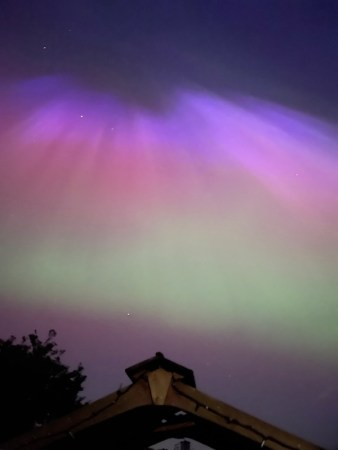
Three days ago, I paid little attention to the forecast that the record-breaking flare exploding from surface of the sun would result in a high-probability opportunity to see the Aurora. I was headed for bed when Bernie called me back, excitedly. She and Dean, our guest for the weekend, had just taken the collie out for the late-night necessaries and reported that they could see definite ‘curtain-like patterns’ in the sky.
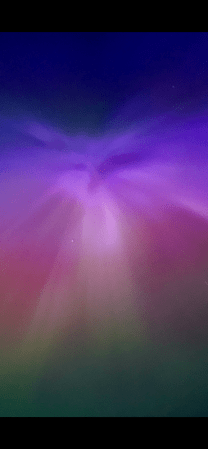
For the next hour I was busy with the camera. You really need to see the images through the lens of the camera to get the colours. There’s no manipulation involved, it’s just a property of lenses!
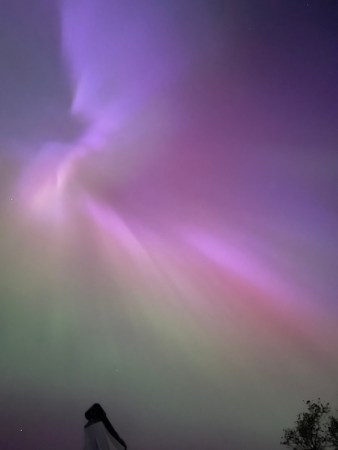
Who would have thought it? The Aurora is not normally visible in the north of England. When you consider that two of the photos were taken looking south, the display was remarkable in its intensity.
—————-
Stephen Tanham is a writer-photographer and mystical teacher. He is the founding Director of the Silent Eye, which offers a monthly Zoom-based gathering of companions, each one on their own, unique journey to the deeper states of them-selves.
There is no charge to attend these meetings.
Guidance will be provided to each person joining the group in the form of conversation, questions and answers. In this way, understanding and companionship are deepened in a caring and sharing environment.
There is an optional extension of this work in the form of monthly studies into the nature and facets of our personalities, how to examine them and the finding of the keys of spiritual return in each of the jewel’s facets.
There are two blog streams:
(mystically-oriented writing)
and
(general interest, poetry, humour and travel)
Contact: STEVETEMEQ@gmail.com
Share this:

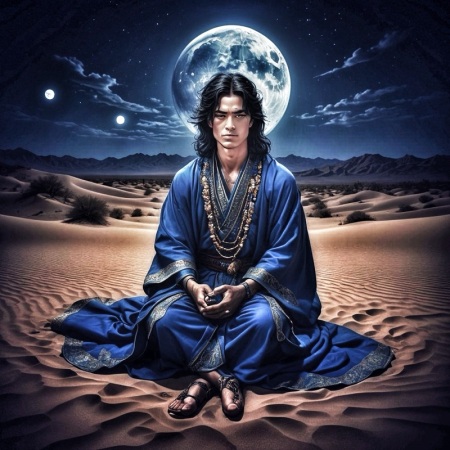
Our use or not of the word ‘believe’ reveals much about our deepest opinions and concepts of meaning.
I can say that I believe that the awful weather we’re having will shortly change to something more appropriate to the month of May. I can’t say I ‘know’ this to be true, but I’d be willing to defend my opinion.
I can say I know how to ride a bicycle. Doing so has been one of the joys of my life. I couldn’t explain to another what that moment of letting go of the fear that I will crash to the ground, offset by my calmness and forward speed, feels like.
I can simply do it, and know with the fullness of involvement, that I can and will do it. In simple terms, riding a bike has become part of my known truth; it’s gone beyond hope, and even faith, to knowing. I know the experience of it, I no longer need the theory, I can just be it. And yet, to someone looking at a bicycle for the first time, the idea of balancing, let alone travelling, on it would seem impossible.
The Ancient Greek philosophers had a name for this kind of experience, related to the knowing of what started at spiritual knowledge and became something less theoretical: gnosis. Gnosis resulted from a depth of contemplation so purposeful that it propelled the participant beyond the emotion of having faith in something – a belief – and into the actuality of living it and therefore knowing it. Once achieved, the knowledge and presence of the known and lived experience rendered the other levels redundant.
The true state of what is known in this way is holy. That’s the effect it has on us…
The process of initiation was considered central to helping aspirants achieve gnosis. Initiation was designed to involve as many of the senses as possible in order to bring lived reality to the experience in a way that thought, alone, could never do.
Anyone can have the ‘knowing of gnosis’. It involves the living presence of the truth – the actuality – about a situation or state. That presence replaces the ‘idea’ – a thing or thought with which we’ve struggled towards a longed-for goal. Some situations lend themselves to a knowing of actuality, others not so readily.
Death is an interesting example. It would seem we cannot know death until we live it, and then no-one returns to talk about it… We live in an age where me must ‘conquer’ such nightmares, to make us sleep safely. Christ’s comments on this were interesting, He said that to ‘conquer death we had only to die…’
I suspect he was talking about a state where we enter death in a fully-conscious way, seeing it as the culmination of life, rather than its opposite.
When we get to our innermost thoughts and feelings – and opinions on such considerations as life and death, it becomes delicate…
No writer or philosopher wants to trample on the cherished beliefs of friends and companions on life’s shared journey; be they physically known or via the blogsphere. But there are certain approaches we can take to ‘test and mature’ our beliefs.
When we believe something, we are using it to cover up a ‘hole’ in ourselves. That hole is a non-belief, a fear. In the case of death, the fear is that our existence is going to end, that our molecules will dissipate back to nature and be recycled and that ‘we’ – really ‘me’ will cease to have a holistic continuity known to ‘me’.
Since we cannot know that this life subsists after death, we hold a small doubt in our minds about its existence. At the same time, we may fill our lives with small rituals of various kinds that act as an inner call to everything we hold dear, as we beseech this ‘inner state’ of life after death to reveal itself in some tangible way, so that we may age peacefully towards it.
In other words, we acknowledge doubt. And there is nothing healthier than doubt.
As children, we are full of doubt, but we know it as curiosity. Tommy Jones says the moon is made of shining cheese, but I think there’s more to it than that. In fact, I know that there’s more to it than that because I feel the two certainties: the doubt and the opening of alternatives.
Doubt has the magical property of bringing our personal truth into consideration. I might doubt that reincarnation exists as it is popularly described. I can’t prove it either way, but the doubt focusses me, intelligently, on the possible purposes of life and the natural methods of its continuation.
Eventually doubt will lead to the most meaningful questions and these will lead to trust … and a never-ending confidence in your own powers to decide what matters and what is right for you to enter the known.
Equipped with the truly known in ourselves, we will be ready to enter any gate that life – or death – offers. The only valid experience will be ours, and how we ‘see’ it.
——————————
©Stephen Tanham 2024
All photos taken and processed on an iPhone 12 ProMax.
Stephen Tanham is a writer-photographer and mystical teacher. He is the founding Director of the Silent Eye, which offers a monthly Zoom-based gathering of companions, each one on their own, unique journey to the deeper states of them-selves.
There is no charge to attend these meetings.
Guidance will be provided to each person joining the group in the form of conversation, questions and answers. In this way, understanding and companionship are deepened in a caring and sharing environment.
There is an optional extension of this work in the form of monthly studies into the nature and facets of our personalities, how to examine them and the finding of the keys of spiritual return in each of the jewel’s facets.
There are two blog streams:
(mystically-oriented writing)
and
(general interest, poetry, humour and travel)
Contact: STEVETEMEQ@gmail.com.
Share this:

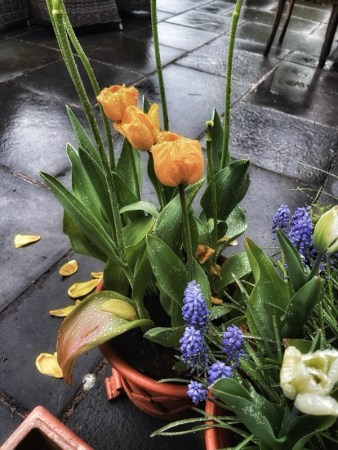
No sooner bloomed than fallen
The soft and playful petals
Lie contrast, on the charcoal stone
Premature to human eye
A zenith passed too soon
For mind of man seeks solace
In what endures in form the most
But nature’s love can last a single
Beat of yellow heart upturned
Then, like the memory of fine wine
Enjoyed with friends of heart
And eyes kind full of love
Writes itself, unafraid, into eternity.
©Stephen Tanham 2024
All photos taken and processed on an iPhone 12 ProMax.
Stephen Tanham is a writer-photographer and mystical teacher. He is the founding Director of the Silent Eye, which offers a monthly Zoom-based gathering of companions, each one on their own, unique journey to the deeper states of them-selves.
There is no charge to attend these meetings.
Guidance will be provided to each person joining the group in the form of conversation, questions and answers. In this way, understanding and companionship are deepened in a caring and sharing environment.
There is an optional extension of this work in the form of monthly studies into the nature and facets of our personalities, how to examine them and the finding of the keys of spiritual return in each of the jewel’s facets.
There are two blog streams:
(mystically-oriented writing)
and
(general interest, poetry, humour and travel)
Contact: STEVETEMEQ@gmail.com.
Share this:

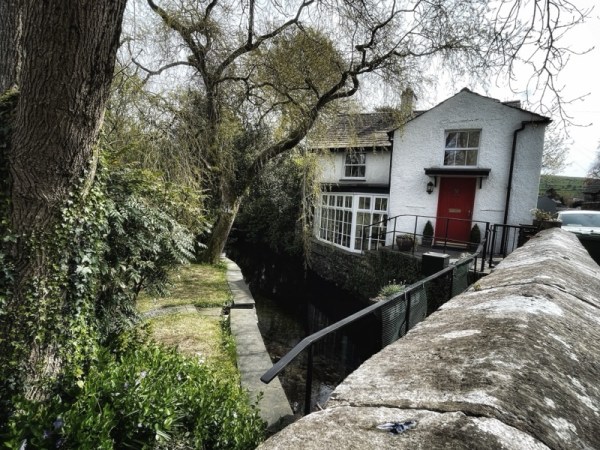
“We haven’t had a Sunday trip to Cartmel for a while…”
It was true, aside from a short and very wet mid-winter visit, we hadn’t been to Cartmel for some time.

There was a good chance that we’d find spring in full bloom, and feel that brightening of the late April light that so ‘warms the soul’, even if the temperature of the eternal polar wind doesn’t.
It would also get us away from the sinus-pounding stench of the ‘manure plus’ (a village name for it) that the local farmers spread on the fields several times a year in these parts. Rumour has it they dump gone off milk in the mix, as well. The crops love it, I’m sure…
The EU had put a stop to this kind of practice, but a Brexit benefit has been the removal of such controls and a return to airborne toxicity. Who wants a nanny-state, anyway…
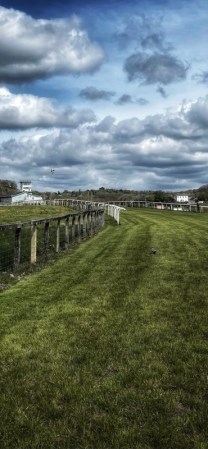
Cartmel didn’t have the stench. It does offer several dog walks around the edges of its famous racecourse. Tess adores them, and happily picked one for us.

Despite the near-constant rain, the place had a definite spring feel to it. Bluebells are always a welcome sight – even if they are the non-native French varieties.

We duly trotted up the dog’s favourite hillock, then down the other side and along the course of the river Eea, returning through the forest and back along the final leg of the racecourse into the village square.
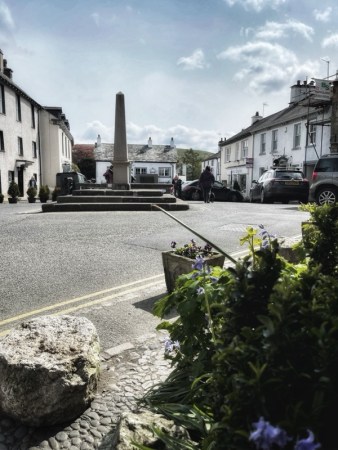
One of the joys of a visit to Cartmel is an abundance of tea-rooms and old-fashioned coffee shops. Not a Costa or Starbucks in sight; not that there’s anything wrong with their coffee, but it’s nice to have a change and return to individuality.
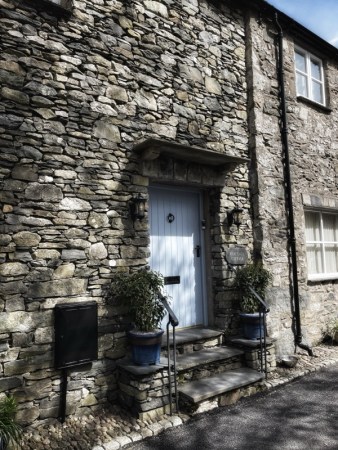
Our favourite tearoom is also a B&B. The ground floor is divided into two ‘salons’, and the timeless decor is gentle on the mind for the end of a stroll.

The village is the home of the celebrated ‘Cartmel Sticky Toffee Pudding’. Combined with a walk and a latté, it’s hard to beat, even if it is still late morning.
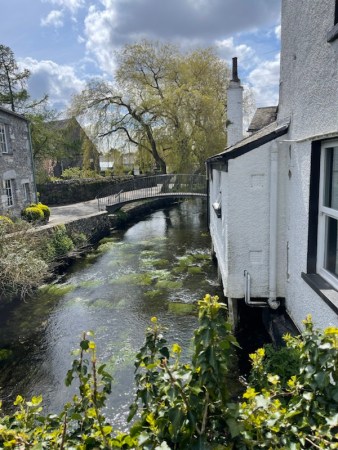
No trip to Cartmel is complete without a visit to the local priory, once a powerful religious centre governing a vast area of former Lancashire and Westmorland.
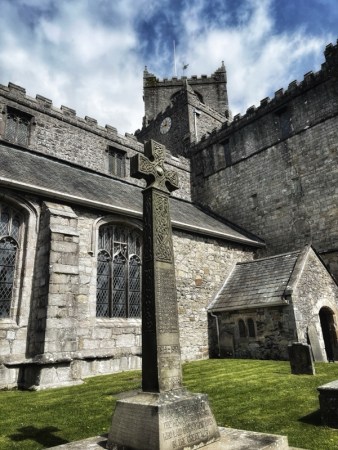

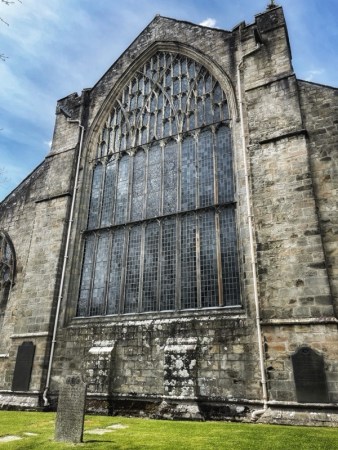
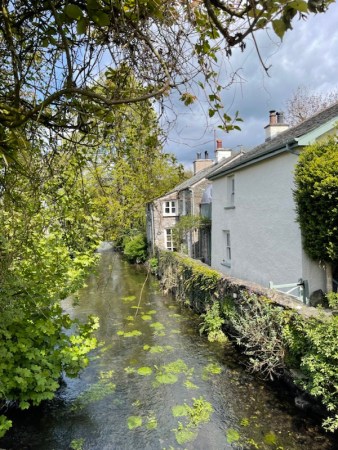
©Stephen Tanham 2024
All photos taken and processed on an iPhone 12 ProMax.
Stephen Tanham is a writer-photographer and mystical teacher. He is the founding Director of the Silent Eye, which offers an exciting journey of the soul guided by lessons, inner experience and outer companionship.
There are two blog streams:
(mystically-oriented writing)
and
(general interest, poetry, humour and travel)
Contact: STEVETEMEQ@gmail.com.


 Sun in Gemini
You must be logged in to post a comment.