+ #Silenti, Ancient Landscapes, Ancient Sacred Sites, landscapes, Photographic techniques, Photography
A Cross at Trearddur
by Steve Tanham


It wasn’t what I was expecting to see in the middle of the beautiful curve of Trearddur Bay, one of the jewels of the island of Anglesey, off the North Wales coast.
But the more I looked at it, the more perfect its setting – like the ‘collector’ at the parabolic point of focus of a radio telescope’s dish. And how fitting that image is…

Saint Ffraid, the patron saint of Trearddur Bay, is the name on the cross. She was born in Faughart, Ireland in about 450 AD. The Millennium Celtic Cross, above the beach at Trearddur and bearing her name, was erected to mark the new century.
The name Saint Ffraid is the Welsh version of Saint Bride (or “Brigid”). She set up a monastery in Kildare in the late 5th century, and was known as the Virgin of Kildare.
Legend claims she was carried over the Irish Sea, and arrived at Trearddur Bay beach on a square of green turf. I understand the colour link with Ireland, but there may be more to the symbolism: squares tend to be associated with spiritual states…
Half way up the 8 foot high cross, made from Anglesey limestone from Moelfre Quarry, is a carving representing a hand carrying a flame.

This symbolises the light from Kildare, Ireland.
At the head of the cross you can see the beautifully carved “Cross of Peace”.

The words “St. Bride, Pray for Us” are inscribed in four languages, English, Latin, Irish and Welsh; one on each side of the plinth.
Even in the middle of a summer rainstorm – or perhaps because of that – it was a striking object of great beauty.
©Stephen Tanham 2023
Stephen Tanham is a Director of the Silent Eye, a journey through the forest of personality to the dawn of Being.
http://www.thesilenteye.co.uk and http://www.suningemini.blog
Share this:

+ #Silenti, Consciousness, esoteric psychology, Gurdjieff, Incarnation, Photography, Psychology, Silent Eye School, Spiritual Enneagram
Nine Keys: (3) the Fall
by Steve Tanham
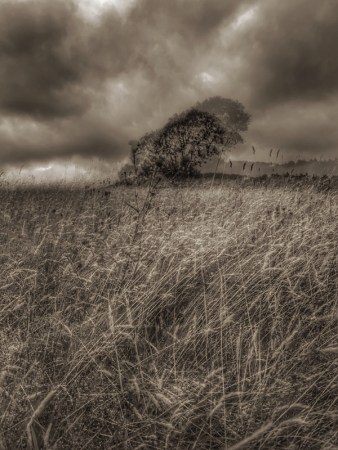
We seldom think about what it must have been like to be a new-born.Perhaps there is something uncomfortable about the image of being so helpless?
And yet that first period of life – emerging from mother’s body in which we have been safely cocooned with all our needs met – is formative for the rest of the human being’s incarnation in matter.
The way we came to be who we are had its beginnings in our birth and the first few months of life. The mother’s womb provides literally everything the unborn child needs; both physically and psychologically. The child knows … but their is no ‘object’ to that knowing. It loves every ‘thing’, but there are no things! What it loves is the tapestry of warm, bright and loving patterns with which its wonderful new universe is made.
For the pre-born, this is blissful union with the mother. There is no other state known to the fresh brain that is rapidly gathering the sensory information that can only been seen as flavours and colours of oneness, without any separation into ‘me, you and it’.
It’s an easy and powerful exercise to ‘feel yourself’ back in this state; with perfect love directed at you, and experiencing in that love perfect contentment without desire. You might be surprised to discover how instantly refreshing this is.
You might even question why it feels so easy and natural…
At birth, the child is literally pushed away – out – by its mother’s body, in order to have its own life, but the closeness of her warmth and the senseing of her flesh are seen as a continuation of the womb’s perfection, even though the focus moves to the mouth and the urgent need for external nutrition. Air in the born-powerful lungs provides the infant with the ability to cry – and at a frequency tuned to the mother’s instincts.
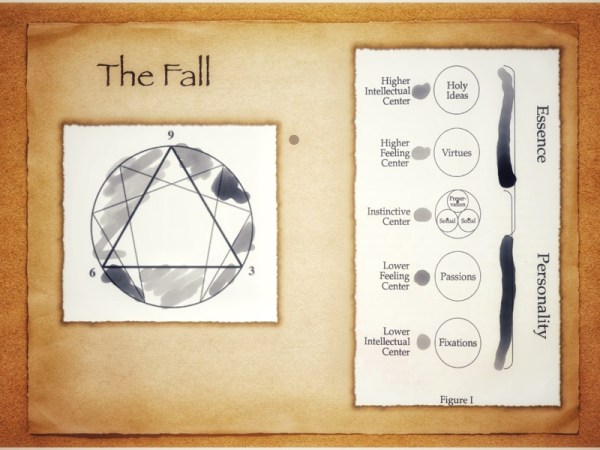
There is no cognition, because there is no differentiation from the state of oneness. The infant is enjoying a consciousness made up of sensations from its body, emotions … and something else. That something is illustrated in the right hand diagram in Figure 1, above.
This figure shows the twin upper and lower worlds of the self available to the human consciousness. The lower half will come to be filled and dominated by the developing personality. The upper half represents the beautiful aspects of oneness known (but not by cognition) in the pre-birth state. These aspects are known as Essence, and always remain part of us, though we push them into our personal unconscious when their existence is not ‘reflected’ back at us by our parents, who, sadly and long ago, lost the active presence of their own Essences.
Our Essence belongs to us. It was there pre-birth and endures. It waits for us to find our way through the veneer of the personality and back to the more powerful presence of the true Self.
Though this is available to all, few take up one of the many paths that lead to inner realisation.
But the personality has a vital role – to protect our physical existence and allow us to work in the world and in the society in which we are born and have our developmental opportunities.
This paradox needs to be examined and considered before it offers up its jewels…
In Part Four, we will consider how the unfolding of the personality begins to gather pace and sophistication.
Parts of this series:
This is Part Three: The Fall
©Stephen Tanham 2023
Stephen Tanham is a Director of the Silent Eye, a journey through the forest of personality to the dawn of Being.
http://www.thesilenteye.co.uk and http://www.suningemini.blog
Share this:

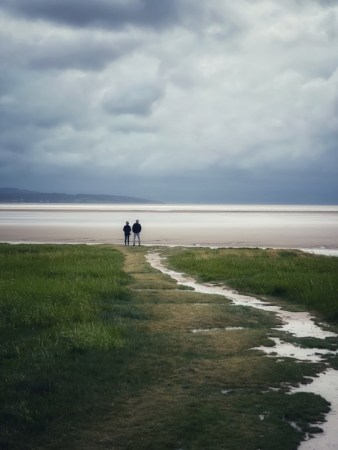
And will we weep while mammon rages.
Beyond that silver shore.
Heated words in anguished cages
Fading, falling, dew so slow
Reflecting endless sea
With mind that longs for other ages.
—-
©Stephen Tanham 2023
Stephen Tanham is a Director of the Silent Eye, a journey through the forest of personality to the dawn of Being.
http://www.thesilenteye.co.uk and http://www.suningemini.blog
Share this:

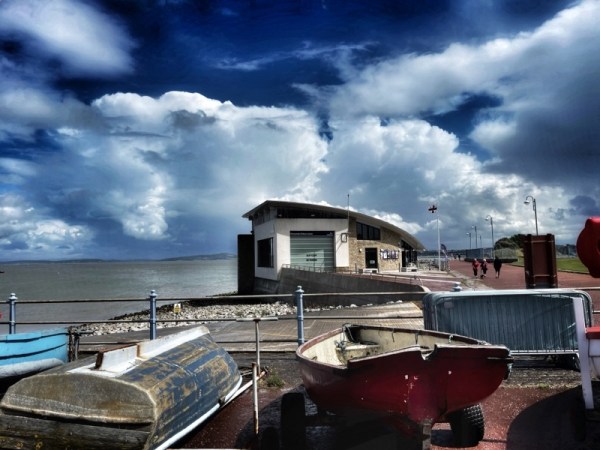
Like a knife, dividing
Bright July from
Oncoming storm
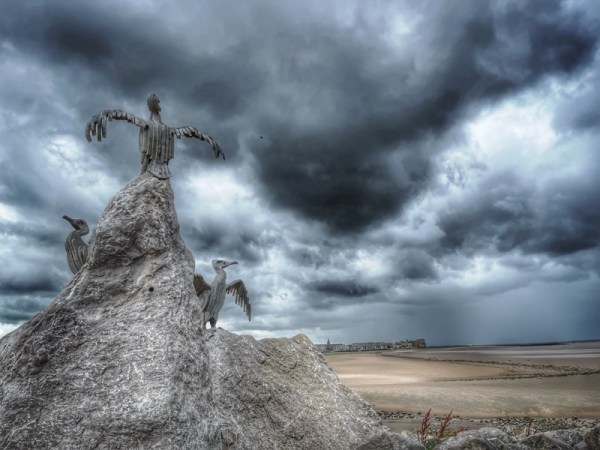
Where birds of warning
Guard the last resort
With mocking grey
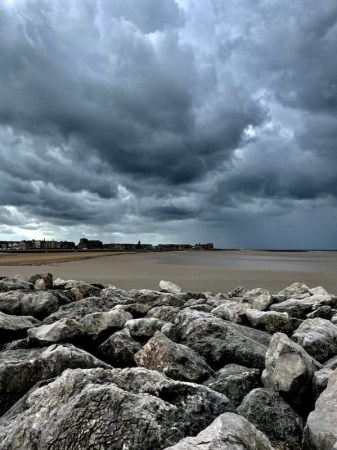
From here is only stone
And rocky way
Towards the end of land
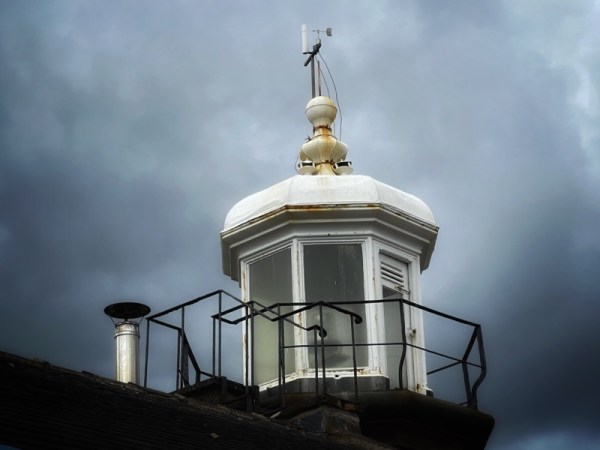
Wise and full of warning
Yet ancient-skilled in reach
The light of ages searches
#Phoetry is a mixing of predominant images and guiding worlds to – in this case – tell an inner story.
©Stephen Tanham 2023
Stephen Tanham is a Director of the Silent Eye, a journey through the forest of personality to the dawn of Being.
http://www.thesilenteye.co.uk and http://www.suningemini.blog
Share this:

+ #Silenti, Consciousness, esoteric psychology, Gurdjieff, Incarnation, Photography, Psychology, Silent Eye School, Spiritual Enneagram
Nine Keys: (2) The look of love
by Steve Tanham
A good friend wrote to me after last week’s Part One of this series. They wondered if they had ever really known their ‘real self’.
It’s a common observation, and people who can say this are being emotionally honest at a deep level. But I can reassure anyone who feels this way that they are mistaken.
The feeling is that life has apparently taken away their ‘real world’ – and there is a correspondent sense of ‘long-term lack’, whereas what has happened is that our reactions to life have obscured a real world that is still there – right in front of us, right now.
In other words, we have changed and not it…
We can compare this process to the ageing of a pair of well-loved glasses that have become scratched and covered in the daily residue of organic living. We believe the view is still there, but we have only one pair of glasses … and we need them to see.
Where is that view? Does it lie in the glasses? Clearly not – no pun intended! Does it lie before us, but now obscured? We have think carefully before we answer this. Have we ever known that view in its actuality, or have always had the glasses; which used to be near-perfect but now have lessened in their acuity?
What we appear to experience is like an equation…comprising what might be really ‘out there’ plus what we do to it when it enters our ‘glasses’…
If we dwell on this for a while, we see that we cannot escape the conclusion that what we experience as our view of the world is a mixing of what might be out tbere – in ‘actuality’ – plus the ‘colouring’ we give it, caused by our states of perception.
Perhaps we can never escape this mixing, never see things for what they are? The truth of this is very subtle… and exciting. We should not be in a hurry to get rid of or diminish any part of our ‘seeing’. Each part is magnificently constructed so that we come at the solution in a particular way.
None of this is accidental. Mankind is both Being and Process, and has a deep relationship to matter and what lies beyond matter.
Our sensual ‘glasses’ are smeared, bent and possibly of the wrong prescription. But they are composed of the stuff that is us. Our bodies are real and are doing the perceiving. The world ‘out there’ appears to be real – science has spend centuries ‘proving’ that to us… and yet the issue of ‘consciousness’ vexes science more than any other. What’s really doing the seeing?
What is it that is aware? We know that the mind is inseparable from the thoughts that form its movement – its changes and states. There is no location where the mind lives. This is the basis of meditation. When you quieten your thoughts, you drift through to a deeper place where anything related to words is unnecessary. Our subject-object use of language means that the idea of ‘me and it’ is embedded in our consciousness.
In truth, we assemble the ‘world’ in our own minds, and much of this is related to expectation. We see what we expect to see; and we have some sophisticated mechanisms for building up the force of that expectation.
Chief of these is memory. Everything we do with the mind uses information from the past to interpret the present.. and to worry about the future, which has no existence but plenty of uncertainly to generate constant anxiety.
Memory is essential for our day-to-day work. But the past as a basis for our future is distinctly flawed.
We can examine this in a forceful way by stopping in the middle of a repeated activity – say, washing the cups after our morning tea or coffee. Take away the act of vision by closing your eyes and letting your hands explore the mug, the hot water and the feel of the soap. Let the sounds you had forgotten come back into your experience and feel the richness of it. Take away any sense of having to complete this before you move onto that next ‘essential task’. When you’ve established your gentle will over this, open your eyes and see how much power of experience is removed by habitual repetition and expectation.
You’ve just had a truly fresh experience and seen the power of the habitual to seriously dull things. But that continuously-available freshness was still there, waiting for you.
Our minds do this for good reason: to help us cope with the sheer volume of ‘information’ in our lives… but it robs us of colour and depth.
In meditation, we want to leave behind the normal day-world. But there is another ‘discipline of consciousness’ that is the reverse: being present to the now.
Being present to the now means being fully engaged with whatever we are doing. We don’t need to be judgemental, just to be truly involved with that task that has arisen and that we need to get on with. We might like or dislike it, but if we can ‘trap’ those two imposters and not let them sap our energies with negative emotions, we can enter a state of presence that in-volves us with the now in a feeling of clarity (and often love) that is startling.
Pulling all of this together, we might want to ask if there is a single, core cause of this dulling of our lives; of this loss of freshness?
There is. It’s one of the most essential things in our lives, but its construction from the material of the past means it has only one place and one direction: heaviness.
Its name is the personality, known in psychology as the ego.
It’s not wicked or evil; it simply is what its nature makes it – our apparent centre.
But the infant has no ego, no personality. It – we – are born with a full set of glorious, beautiful and loving characteristics that, in mystical work, we refer to as essence.
Imagine two circles that mirror each other, one above, one below. The one above is connected in joy to everything in the universe. The one below is connected only to our separateness…
Next week, we will begin to examine these two circles and to map the way the original, joyful qualities of essence have become diminished … But not lost, and how what William Wordsworth called our ‘Clouds of Glory’ are still with us, as traces; traces that generate so much longing in our souls.
The two maps on the twin circles might just provide us with a method – a deeply personal path – that allows the original ‘essential’ qualities to shine again in our being … and regenerate our inner lives in the world, without needing to be withdrawn from it.
Parts of this series:
This is Part Two: The look of Love
©Stephen Tanham 2023
Stephen Tanham is a Director of the Silent Eye, a journey through the forest of personality to the dawn of Being.
http://www.thesilenteye.co.uk and http://www.suningemini.blog
Share this:

+ #Silenti, Consciousness, nature, Photography, Places and Prose, Seasons of the year, Silent Eye School
The Perfect Evening
by Steve Tanham
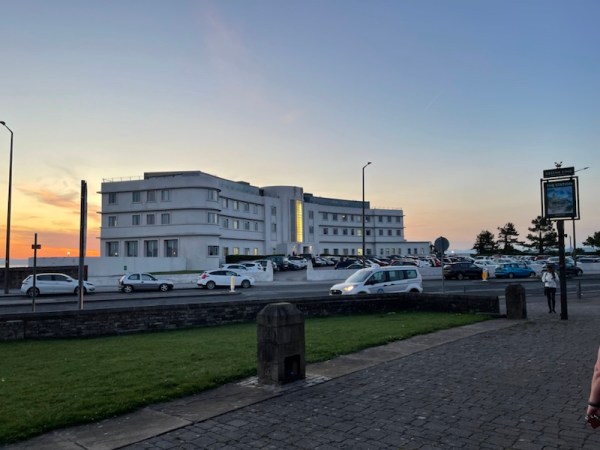
I begin to look for it from the start of July…
The ‘perfect evening’. Highly subjective, of course. For me, it begins with a gentleness of warm (but not hot) air flowing over the land.
Add in light that has a softness – as though mother-of-pearl had been ground into a fine dust and scattered, unseen.
And the final ingredient is an emotional, mellow ‘fullness’ that seems to encircle the whole experience, giving us a taste of underlying perfection, yet showing us that the price of this coming-into-manifestation is brevity…
I don’t look for another. I’m content to let the summer flow on towards harvest – though none too quickly, please – once the perfect evening has graced us with passing perfection.
©Stephen Tanham 2023
Stephen Tanham is a Director of the Silent Eye, a journey through the forest of personality to the dawn of Being.
http://www.thesilenteye.co.uk and http://www.suningemini.blog
Share this:

+ #Silenti, Consciousness, Lake District, landscapes, Photographic techniques, Photography, Seasons of the year
Gold and Grey
by Steve Tanham
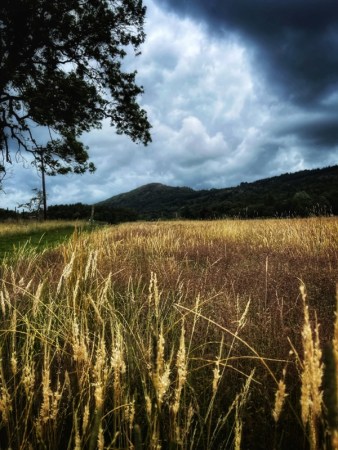
I love that moment – when summer sun and dark clouds fight to cover the land below in a fast-moving and alternating patchwork of colour and it’s absence.
If there’s gold on the land to bejewel the electric grey of the sky, even better…
Here, at Fell Foot Park, on the southern tip of Windermere, the extremes always seem to be marked, both summer and winter.
All you need to do is: be passing; point and press; smile a lot…
And then treasure each second of the gold’s existence… for the all-dark will not be far behind.
©Stephen Tanham 2023
Stephen Tanham is a Director of the Silent Eye, a journey through the forest of personality to the dawn of Being.
http://www.thesilenteye.co.uk and http://www.suningemini.blog
Share this:

+ #Silenti, Consciousness, esoteric psychology, Gurdjieff, Incarnation, Photography, Psychology, Silent Eye School, Spiritual Enneagram
Nine Keys: (1) The human hologram
by Steve Tanham
Modern spirituality is aligned with psychology in many ways; one of them being that whichever direction we travel in on our quest to ‘find the real’, we need to start with the personality.
The personality is where we live. We think of it as us. Because it’s ‘me’, there is no questioning how it views things. True, we can be aware that we tend to judge this and that wrongly – very occasionally; we can find ourselves in lifelong friendships with people we initially hated; we can find colour and warmth and even excitement if we step out of its increasingly dull shadow … but generally, we don’t.
We don’t because that sense of ‘me-ness’ is embedded in everything we do: the yardstick for whether to do this or that. It’s the severe internal critic when we know we’re being rash or foolish, or just plain foolhardy despite that inner voice. But that critic may not be the truth, either.
The core of the personality is formed in the early years of our lives and cemented into a rock of personal identity sometime around the age of seven. Until then, we would have viewed life through a focussed lens that more or less answered our needs for security, love and the company of people we liked. But we allowed for an opening or two into another place, from which that spring breeze of fresh air still blew.
Perhaps we had a wise mother or father, who could still make us think and question how we came to conclusions. Perhaps we had a theatrical uncle or aunt who commanded great excitement with their presence, as we sat, entranced, for hours, while they told tales of wisdom beyond mystery!
After seven years of age, or thereabouts, we stopped questioning that this thinking-me was my-self. It was self-evident; there was no-one in here arguing with it.
Now, as adults with many miles on our personal journeys, we may not even be aware that we can examine the part of us that considers itself to be the whole of ‘me’. In all of this, we should never lose sight of the fact that the sense of ‘me’, our identity, is precious.
The body can still be a mystery, of course – especially when it goes wrong… or occasionally, when it’s in a relaxed state where there is an easy and peaceful glow, and everything is suddenly more intense – and yet quieter at the same time…
We have no memory of ‘building’ that, not even as a one-off, let alone a psychological process to repeat it, reliably.
And yet this personality we all possess – and which is truly a treasure. Is entirely made of the past…
The personality is the accumulated knowledge of our reactions to the world, stored as our egoic self. It is rightly our self and no-one has the right to change its position in our world … except us.
And the only reason we might want to diminish its preeminence is that our life has run out of that breezy freshness we used to find all the time.
In our age of depth psychology, science, technology and genetics, we have some great ‘ideation’ tools for building new ways of thinking. These are seldom used to consider the me. But when we do, we can come up with some wonderful ways of considering our-selves.
One that has emerged over the past few decades is the conclusion that our formative years lead to the creation a holographic movie of our early lives. This movie constantly plays on the screen of our consciousness, but not in a ‘flat’ way; rather it can be seen from any angle we like, allowing us to react to not just the old, but the new, making original connections between the old bits.
But … and it’s a big one, we only get to react within the original plot of the film, no matter what we are trying to do – even something totally new.
This is the reason why it’s so very difficult to change ourselves; because those changes are only emerging within the existing movie story, albeit dressed in new clothes. Over a short period of time we conclude that the new and exciting teacher of this and that is really just another storyteller; and we’ve tried what he said and it doesn’t work … for me.
And there’s something grindingly familiar about this process of disappointment.
The problem is the movie – the fabulous holographic movie, whose existence the personality doesn’t want us to know about … because that’s the edge of itself.
Everything in that movie gives us a fixed set of attitudes with which to respond to whatever comes our way. Over these, we layer depths of like and dislike, grown sophisticated as we developed our personal power and rightness.
The core of that rightness and the way it paints everything we encounter can be investigated and found to have developed from a small number of keys. Hiding within all of us is a nine-fold pattern of response that conditions our psychological lives – but does not touch what lies beyond in the realm of the inner Self.
By working with these keys, we can break open the egg of our lives, no matter what age we are, and fly into a bright, deeper and more exciting reality that lovingly embraces the existing personality – lighting up its potential and making obvious its weaker aspects.
In part two, we will consider the nature of these nine keys and the means by which we might begin this journey to a much deeper identity than anything we have ever known.
©Stephen Tanham 2023
Stephen Tanham is a Director of the Silent Eye, a journey through the forest of personality to the dawn of Being.
http://www.thesilenteye.co.uk and http://www.suningemini.blog
Share this:

+ #Silenti, Consciousness, Lake District, Mindfulness, mystical travel, Photographic techniques, Photography, Travel, Travel and Photography
Wet Summer Light
by Steve Tanham
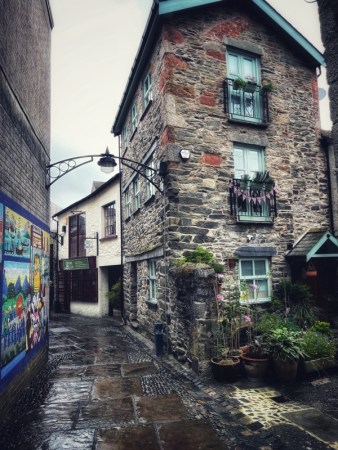
Ulverston on a June day. Immediately after a dowsing in one of the rainstorms that have ended two solid months of sunshine and blue skies here in the extreme north-west of England.
It’s actually a pleasant change, though I have no desire to ‘hex’ the lovely summer we’re having.
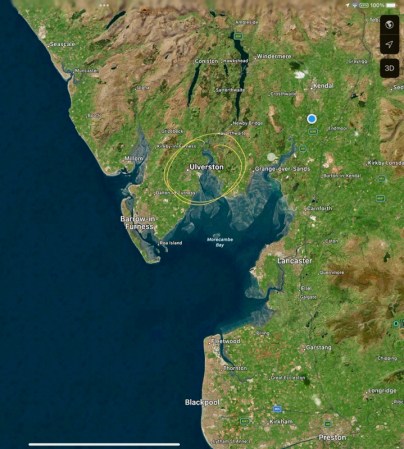
We’re in Ulverston – a lovely market town that used to be in north Lancashire, but is now part of modern Cumbria. Ulverston is directly across Morecambe Bay from Morecambe.
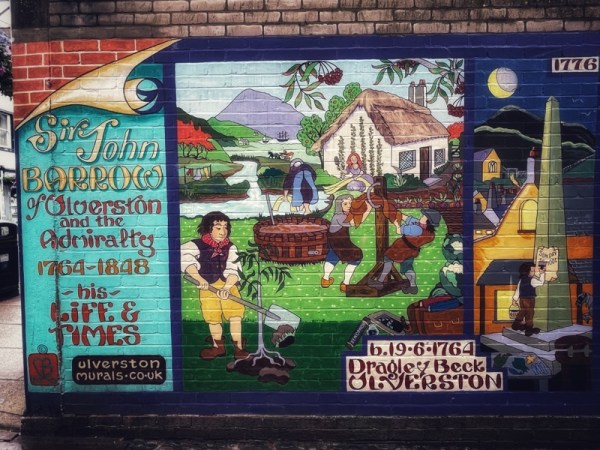
Ulverston is a ‘working town’. It’s not twee, nor has it ever been viewed as a hippy location, but it does have an artistic and creative consciousness. Its roots are old industry on a small scale. It used to have a famous brewery: Hartleys, long absorbed into one of the faceless brewing combines and closed. It used to have a world-famous part of Astra Zeneca down by the old port at the end of the canal. But that was closed and its operations moved south (of course) in the name of profits, leaving hundreds of local workers bereft of employment.
These days, Ulverston has to fight for the stability of its existence… and it succeeds by being local to everyone.
This is the birthplace of Stan Laurel, of Laurel and Hardy fame. There’s something of their humour in the ‘hardy’ character of the place, as it continues to survive, and even prosper, in its own quiet way.
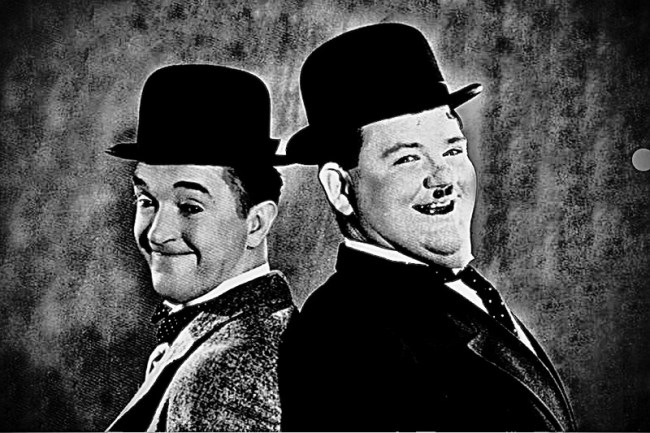
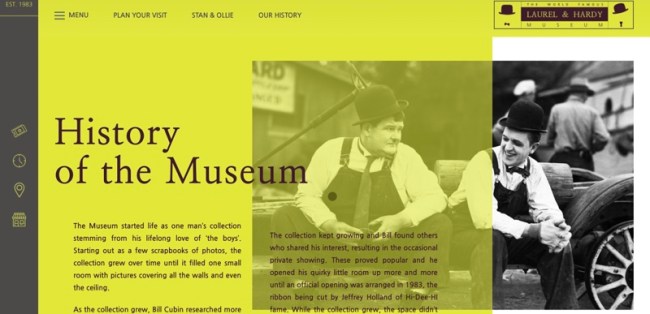
There is a Laurel and Hardy museum – well worth spending an hour, especially on a wet day… and, as with anywhere in Cumbria, there are lost of those.
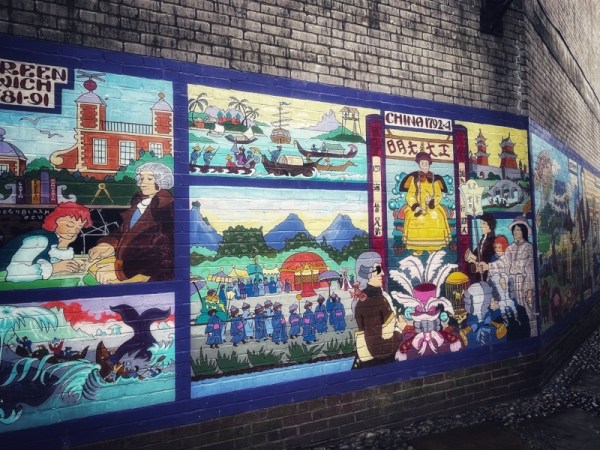
The market brings in visitors, especially in the summer. It hosts dressing up festivals where many wear full Dickensian garb. There are music and literary weekends. But it does all of this on a scale that feels decidedly human – approachable and friendly.
It’s a pleasant place to be. And it has one of the best vegetarian cafe-restaurants in the region. We’ll get to that…
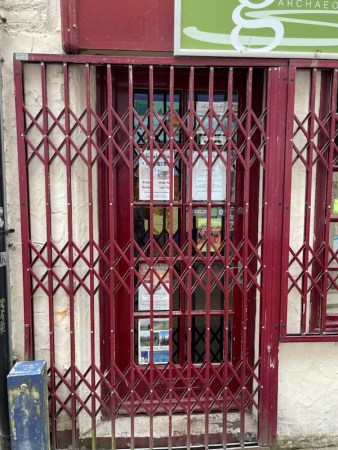
A friend staying with us wanted to visit one of the local specialist fabric and crafting shops – Ulverston has several. The rain had left everything with that ‘just washed’ smell and atmosphere. It was a good chance to stroll around and take some photographs. The ‘wet summer light’ was perfect.
I’ve always enjoyed exploring the small alleyways that cross-cross the centre of the place. They were not designed to be pretty; just evolved, organically, to get you past the main thoroughfares – if you knew where to find them.
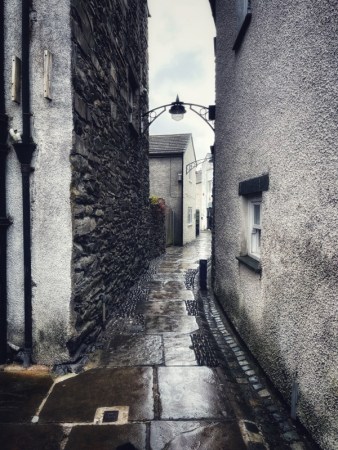
I love the muted summer light of such times, just after a downpour. It’s much brighter than the light present in the short winter days, and it carries a certain ‘softness’, emphasising textures and reflections, and giving depth to shadows.
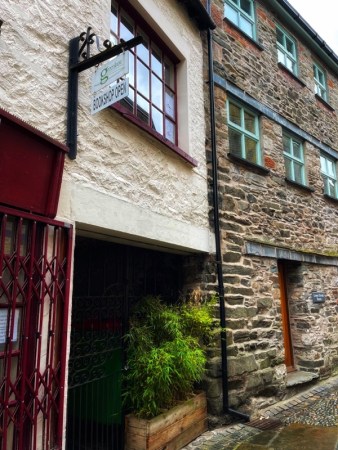
The photos were all taken in a single sequence along Lower Brook Street – an open space that becomes one of the longest alleys until it spills out into Union Street, from where Market Street – the centre of town – is accessible.
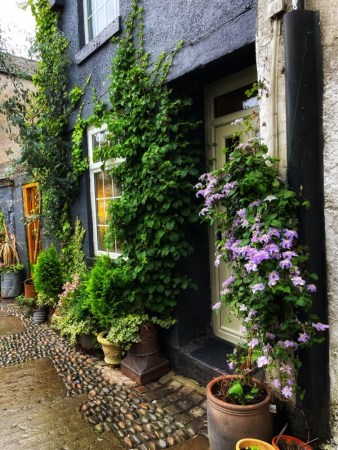
You can see from the photographs how much effort many of the residents put in to make the brief summer full of colour – even in this simple alleyway.
It’s a gesture (and hard work) that has always made me proud of the town. Its not unlike my home town, Bolton – which could well learn a lesson or two from its northern cousin.

Eventually, the ‘pretty’ dies down, and the bare stone ferries you to the end of the enclosed ‘cut’.
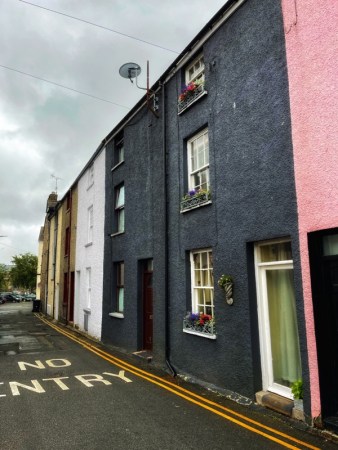
There, only yards away from where the alley emerges, is our destination: a late breakfast at Gillam’s famous vegetarian restaurant.
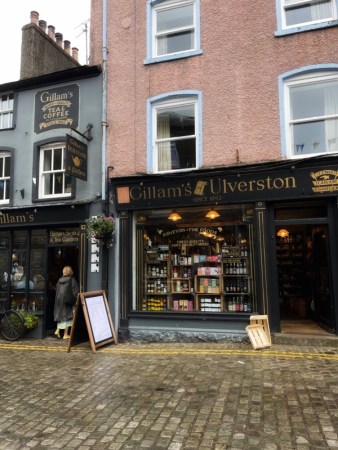
An hour later, we emerge; in my case full from one of the best cheese rarebits I’ve ever eaten. I’m not on commission, I just love it…and the rest of this place.
©Stephen Tanham 2023
Stephen Tanham is a Director of the Silent Eye, a journey through the forest of personality to the dawn of Being.
http://www.thesilenteye.co.uk and http://www.suningemini.blog
Share this:

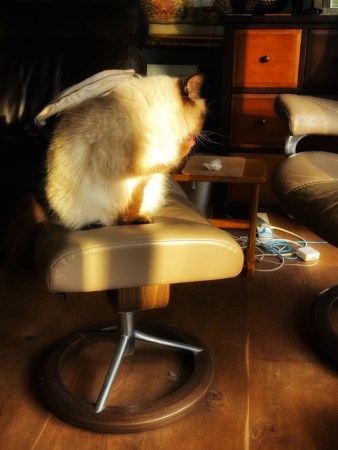
Soft paw from softer body rises
Warm tongue licks away the dust
A scrawl of cables underlines the difference
Between the self contained-
The loving organic
And human objects of desire…
©Stephen Tanham 2023
Stephen Tanham is a Director of the Silent Eye, a journey through the forest of personality to the dawn of Being.
http://www.thesilenteye.co.uk and http://www.suningemini.blog
Share this:

+ #Silent Eye, #Silenti, Ancient Landscapes, Consciousness, Lake District, Photography, Silent Eye School, Spirituality
Water-Circle+Cross (5-End) Gummer’s How
by Steve Tanham
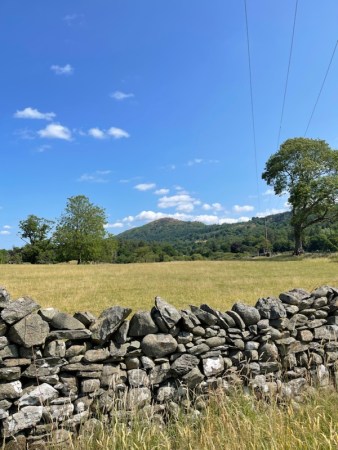
There is always a poignancy about meeting up on the final day of one of the Silent Eye weekends. So much has been shared that it seems impossible that the beginning was only two days before. Everyone arrives ready to depart at the end of the morning, or – if they have the luxury of another hour or two – at the end of the final lunch. Many have journeys that will take up most of the day.
It’s a mellow time, but also one full of reflection. Often, new friendships have been made, and there is that sheer intensity of ‘being here’ and having shared something wonderful.
It’s important to pick a Sunday morning location that facilitates this; that gives a lot but allows an easy departure, too.
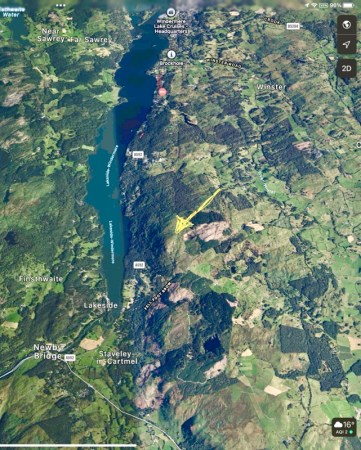
From nearby Fell Foot Park, Gummer’s How looks like a half-day climb. But there’s a road that cuts across the hill and does most of the work, leaving a walk of about 45 minutes. The ample car park also takes away the stress of finding safe places to leave what, at this stage, is a small convoy of homeward-bound vehicles.

A herd of long-horn cattle share the lower part of the path.
The path begins with a gentle climb until you cross a stream, when it suddenly becomes much steeper and requires a determined push upwards…
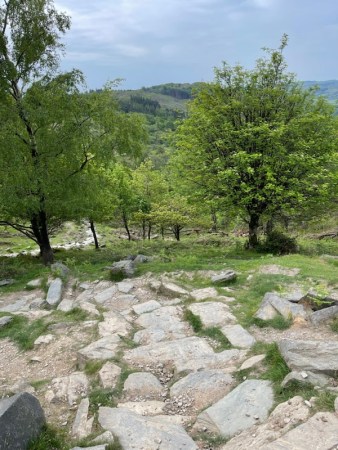
At this point the rocks become more like ‘steps’ until the way forward opens up and levels out.
Gummer’s How is popular with school trips. I’ve heard many a teacher say, “So this is up to you… You can take a gentler curve to the right and approach the summit using a longer path … or you can just go at the scramble in front of you!”

The school kids – fit young bands of elastic – usually go right for it.
I’ve done both. The scramble is more prone to error. The day before had been a hard walk, so I recommended the gentler ascent, and we all took it. Once, again, the weather was beautiful and the climb a joy.
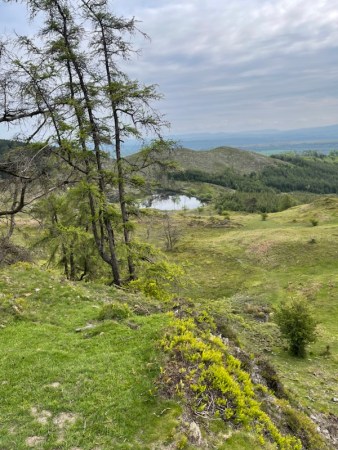
The semi-circular way skirts the side of the peak, revealing a delightful landscape of forest and valley below to the east and towards Winster. This is unseen from the peak and provides a reward for the more cautious choice.

There is a short scramble up the side of a limestone boulder, then the path opens up into a curving meadow, and the peak is visible ahead.
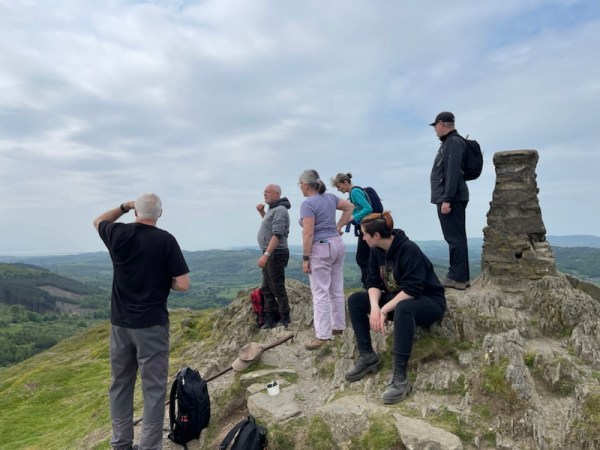
The view from the peak and its old ‘trig-point’ – long ago replaced by GPS signals – is one of the widest and most informative in the Lakes.
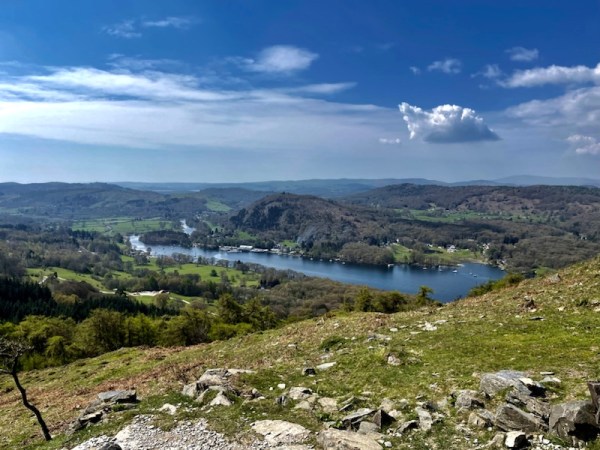
Lake Windermere is partly visible below, but I was planning to take us down to a nearby edge from which the whole ten-mile length of the lake could be seen.
Look south (left in the photos) and you can see along the line of the A590 to the Hoad Monument at Ulverston and the edges of Barrow-in-Furness in the far distance.

Once everyone had drunk their fill of the views from the peak, I led the party down towards the edge of the upper meadow to where the land drops away and the whole lake comes suddenly into view.
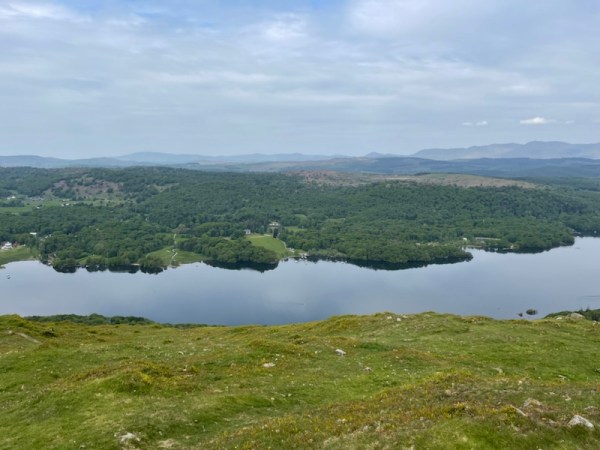
It’s a ‘what was that!’ moment! Everyone stopped, surprised that the Gummer’s How peak was not the most spectacular view, after all.
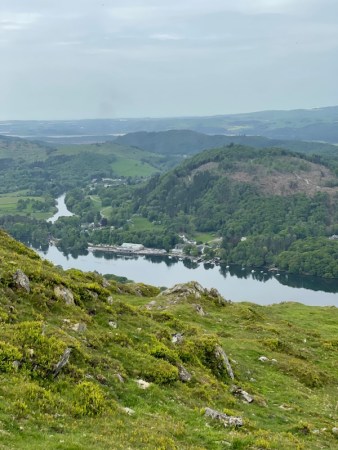
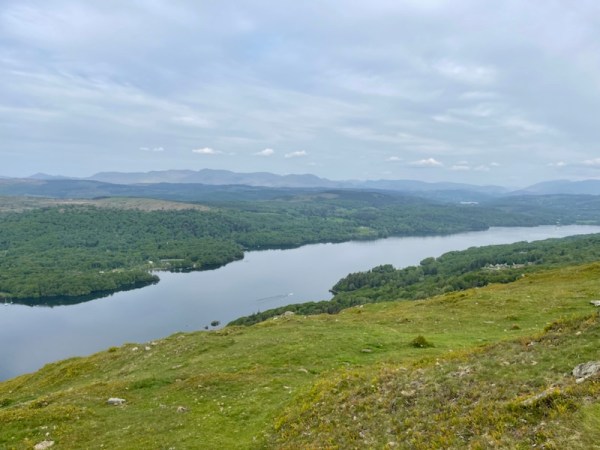
It was time to bring things to a close. We gathered just back from the sheer drop of the viewing edge, in a gentle hollow where we could review our weekend and carry out our final discussions.
We had one last part of the workshop to carry out: the final assembly together of three stones we had each used to signify the three energy centres of belly, heart and head. We would take these away – as charged and active tools for our own use.
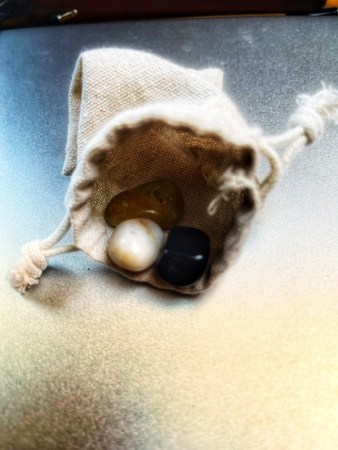
With a final use of our Mudra – a hand ritual that we had used throughout the weekend, we packed our ‘now-precious’ stones into bags and pockets and made our way down the mountain.
Everyone agreed it had been a meaningful and fun weekend. We had tested ourselves against the landscape and emerged a close band of companions with a shared quest. I knew the memories would keep coming back to everyone in the weeks and even months ahead.

And the May weather had blessed us with the perfect experience of one of Lakeland’s finest landscapes.
Some were able to stay for a snack lunch at the Yew Tree Barn, not far away, others had to get off to begin long journeys home.
None of us really wanted to leave…
Surround yourself with beauty … and it will do the rest.
Ancient Sufi Wisdom
Before departing, we discussed the ideas for next May’s workshop. The plan is to move the centre of action northwards, to Wordsworth’s home landscapes around the town of Grasmere. We are likely to use Ambleside as a base of operations as it’s a bigger town, with more accommodation and cafes. More details to follow, here, as it takes shape.
The provisional title is ‘The Magical Landscapes of Wordsworth’. We will use extracts from his mystical encounters with nature to inspire us as we wander around his most loved hills and lakes.
The dates will be the weekend of 17-24 May, 2024.
To be added to our mailing list for this event, and stay abreast of developments, send an email to rivingtide@gmail.com
This is Part Five, the concluding post.
©Stephen Tanham 2023
Stephen Tanham is a Director of the Silent Eye, a journey through the forest of personality to the dawn of Being.
http://www.thesilenteye.co.uk and http://www.suningemini.blog
Share this:

©Stephen Tanham 2023
Stephen Tanham is a Director of the Silent Eye, a journey through the forest of personality to the dawn of Being.
http://www.thesilenteye.co.uk and http://www.suningemini.blog


 Sun in Gemini
You must be logged in to post a comment.