+ #Phoetry, #Silenti, landscapes, Life and Death, Photographic techniques, Photography, Places and Prose, Poetry
Led by Bent Metal #Phoetry
by Steve Tanham

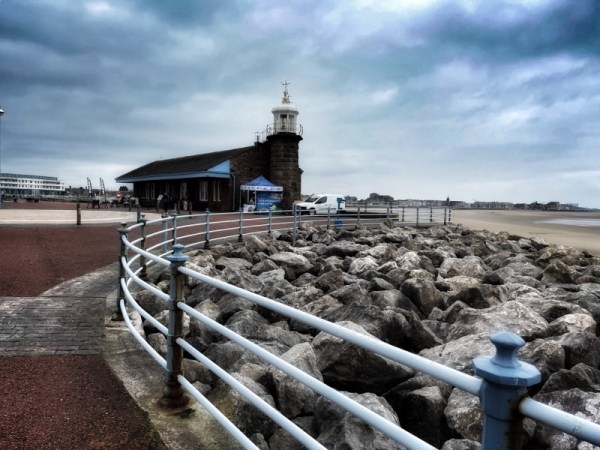
Voice of war from a wizened tower
Orchestrating irony, avoiding boulders
An iron stave of howling notes
Issues forth.
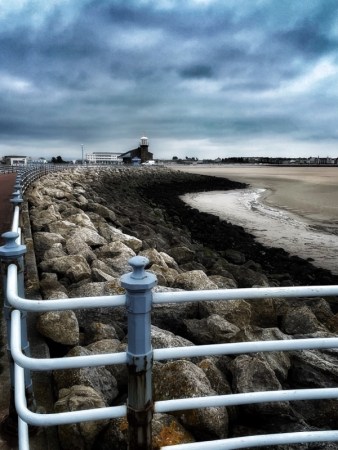
And throws its force of straightening iron,
Slick by rocks that tear and sands that grind
To arm the ninety, ready soldiers of the right
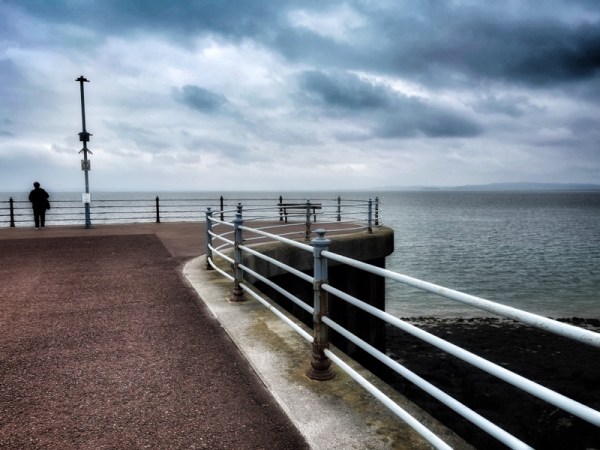
Angled mage-like, she guides her seeing out to sea
And does not deign to turn and watch the curves
Of darkness settling on the broken thrust…
#Phoetry is a hashtag amalgamation of the words Photography and Poetry, a form of visual and poetic communication.
©Stephen Tanham 2023
Stephen Tanham is a Director of the Silent Eye, a journey through the forest of personality to the dawn of Being.
http://www.thesilenteye.co.uk and http://www.suningemini.blog
Share this:

Students of esoteric studies – focussed on practical techniques for understanding and accessing the deeper potentials of our being – are exhorted to consider the idea of polarity at the start of their journey.
Polarity is the idea of opposites creating a dynamic environment in which some kind of evolution takes place… For example, the play of heat and cold in a watery substance creating patterns and currents in the fluid.
We might consider the idea that heat and cold are, in reality, different degrees of the same ‘quality’ – temperature.
From a mystical perspective, the evolution may be in one of two directions – something higher in-volving itself with a lower medium which it has first created: a primal substance; or evo-lution, where a ‘corner is turned’ and the upwards, or return journey to the source is pursued. In practice, these two directions are taking place, simultaneously.
The parable of the Prodigal Son is related to the inner symbolism of this: the idea of a ‘wise’ return’ to the ‘Father’. This is a classic example of the symbolic rather than literal use of the word. The tale is told in terms of father and son, and yet the subject of the story is ourselves.
One of the best examples of polarity at work is the biological coming together of male and female, as in father and mother; to create, then birth and nurture the child. I am careful here not to confuse the biological aspects of male and female with the characteristics of masculine and feminine.
We all have a mixture of masculine and feminine in our natures. But only the combination of biological male and female will continue the species. We have seen, over the past century, the widespread presence and acceptance of mixtures of masculine and feminine traits in behaviour and character. Societies that allow for this are generally more gentle, artistic and creative.
From a mystical perspective, these words need to be considered carefully. Masculine and feminine are qualities within the human character. They are not to be confused with the male and female biology. In that sense, each ‘set’ occupies a functional ‘level’ of being that is different from the other pair. The exercise of feminine and masculine elements of character holds a different balance in each of us.
Such levels are seen as vertical. Their purpose is to create a hierarchy of increasing intelligence and sophistication so that the whole may express and explore itself more mindfully.
There is in all nature a scale of what we might call organisation. The single-celled organisms, from which mankind evolved over billions of years, had the ‘lower’ level qualities of such attributes as persistence, separation and the ability to exchange material with their environment. Did they have awareness? In a simple form, yes. They were aware of what would meet their needs in the oceans in which they arose and matured – which is not to say they ‘thought about it’. Thought requires a brain and a reflective mind; something that was not to arise until the higher mammals evolved. Brains developed from primitive nerves.
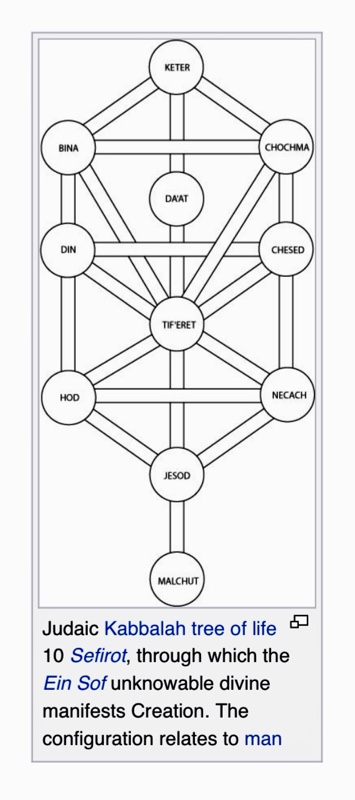
The Kabbalistic Tree of Life (above) is a diagram of how polarity was the tool that created and maintains both living things and consciousness. There are three vertical pillars that span the ‘above’ to the ‘below’. The above is the bringing into existence of the world as we know it. The below is the evolving of organic life from the material of that world and its climb back towards its non-material source.
The right pillar is that of Force, and is traditionally seen as a masculine (not male). The left pillar is that of Form and is seen as feminine (not female). The middle pillar is that of Perfect Balance and represents the ascent of the human mind and heart as it learns, through what will eventually be wisdom, what it really is and what its place is in Creation.
Thought, through its tool – words, provides the building blocks of communication with others and with ourselves in the form of ‘working something out’. What we are really doing is holding something up to the light of the highest consciousness we have ‘inside us’ – before speaking it. This is mind at work, but, as we shall touch on, later, mind is not the highest consciousness we possess, though it is intimately related to it.
It is likely that the molecular structures we now consider to be DNA and RNA were the proto-form of life which established the principles of persistence – the foundation of living things that change and yet stay the same – in other words, Life. We are very conscious, during our lives, that something stays the same. What is it? The answer, which must be found by each of us rather than being told, is the catalyst to the real spiritual journey of Self.
That journey to the personal spirit surpasses the mind… reaches back in time and forward in potential, simultaneously.
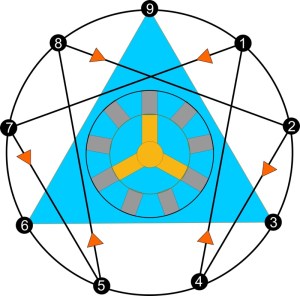
Although it is centuries old, there is nothing childish or primitive about the Kabbalistic conceptualisation of reality. Understood fully, it is a map of the way home. It can suffer from a degree of over-ornamentation, which is why other forms of portaying human consciousness have arisen that map more closely with psychology as we know it. One of these is the Mystical Enneagram, as below and created by the Silent Eye.
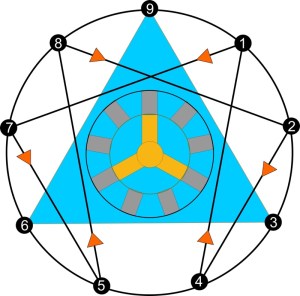
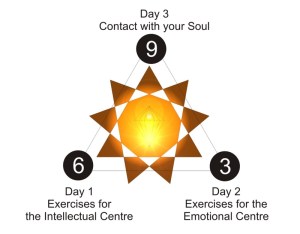
The two symbols are best studied together, with the Kabbalistic Tree of Life illustrating the whole scheme of creation and personal evolution, and the Mystical Enneagram providing the findings of esoteric psychology and how the personality is a mask for the wonderful parts of us that lie beneath.
Organic life began with persistent molecules. In other words, its long climb of organisation began with matter plus this unseen ‘upward reach’. For unknown millions of years the principles inherent in matter that drove it to ‘self-organise’ provided an ‘upwards’ gradient to development towards more sophistication.
Single-celled life emerged around 3.5 billion years ago. The persistence of ‘form’ inherent in the DNA/RNA molecules was evolved in order to create a more sophisticated ‘body’ – one that was sensitive to its environment.
We take it for granted, but defining LIFE is difficult… The famous Quantum scientist Erwin Schrödinger – celebrated for his dead/not dead cat – wrote one of the classic science books of the twentieth century on this subject: ‘What is Life?’. It was written for the layman but proved to be one of the drivers for the birth of molecular biology, the subsequent discovery of DNA and the entire field of ‘Emergence’.
The link is in the text if you’d like to get yourself a copy. I recommend it.
To close this thought: the radical philosopher and spiritual teacher G.I. Gurdjieff maintained that polarity was actually three things and not two. He said that behind any system of creative polarisation, there was always a ‘third force’ driving on the creation to its next level. We could, he said, train ourselves to be conscious of this ‘third force’.
I can’t think of a more noble ambition…
©Stephen Tanham 2023
Stephen Tanham is a Director of the Silent Eye, a journey through the forest of personality to the dawn of Being.
http://www.thesilenteye.co.uk and http://www.suningemini.blog
Share this:


+ #Silenti, Ancient Landscapes, Consciousness, Lake District, Photographic techniques, Photography, Places and Prose, Seasons of the year
A Rite of Spring Green
by Steve Tanham
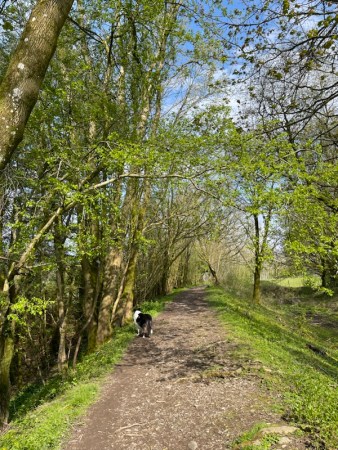
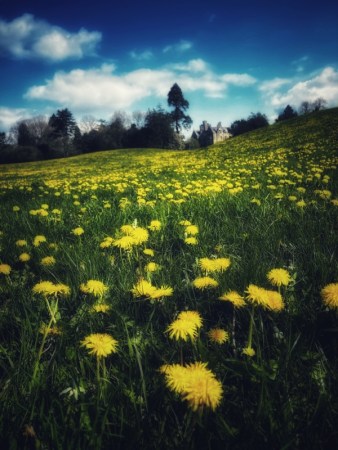
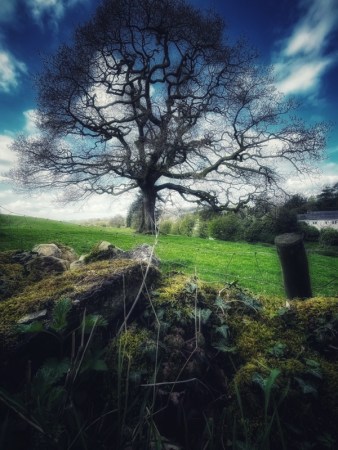
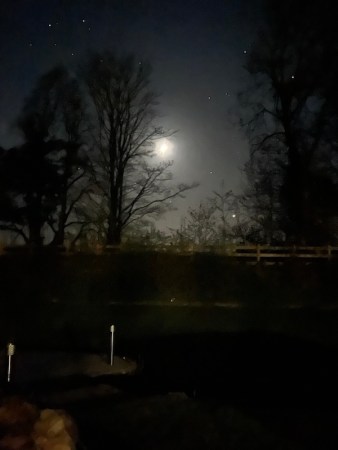
As dwellers on the southern edge of the English Lake District, we are very conscious of the seasons. The dawning of what I call ‘the real Spring’ is a feeling rather than an exact date. It is triggered by the sight of a certain shade of green in the local forest’s foliage.
I couldn’t define that green; simply state that it has a ‘voice’ and is quite different to any other green in the whole year. It carries with it a potency and an almost vocal sentiment that ‘the winter was worth it’.
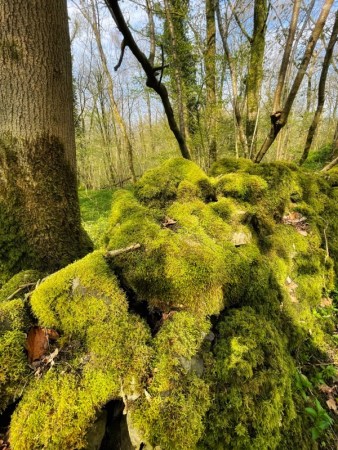
The word ‘rite’ has always fascinated me, as though this short synonym for ‘ritual’ has a degree more natural power.
My annual spring ‘rite’ is a walking and photographic one, but carried out with as much reverence as I would bring to a more formal gathering with ceremonial purpose.
One third of our garden is the line of the old Preston-Kendal canal, created circa 1820. It was bought by the owners of the plot in the 1950s. We’ve landscaped it to give a split-level lawn but, if you know what you’re looking at, the line follows its original course through the few private gardens before burrowing like a mole beneath the farmer’s land before entering the forest, where, ironically, it emerges into the daylight, again…
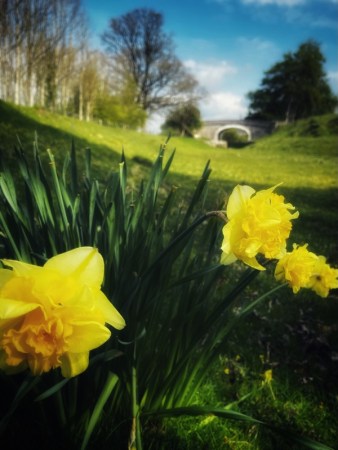
Just me and the Collie along a two mile square: through the forest, down to the river, across a mythical bridge, along the road before going across the river, again. Then a climb up a steep meadow…
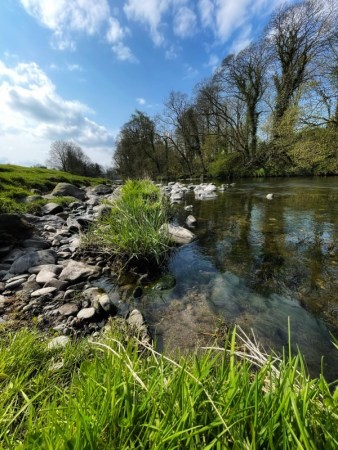
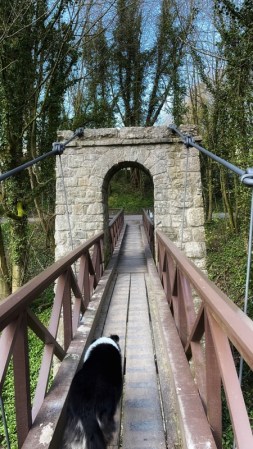
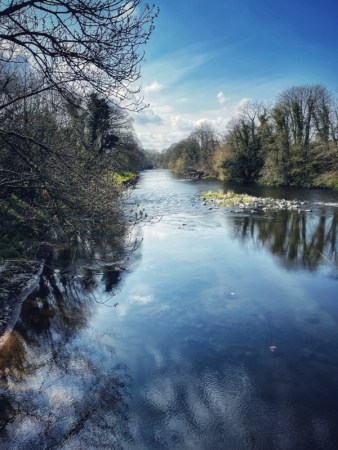
Its a short walk along the southern bank of the River Kent to bring us back to the final leg of our square… where the Hawthorne blossom is in its full bloom.
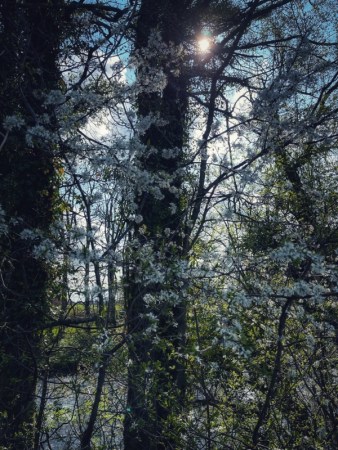
And then we cross the river again, at its deepest point within the gorge.
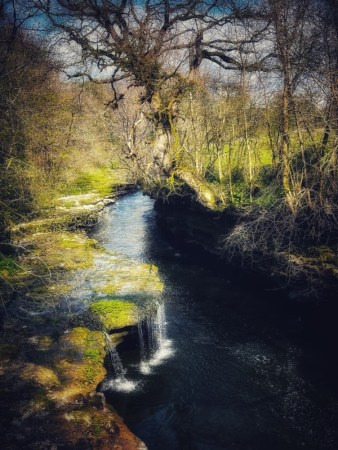
And cross the final line of tarmac – a poor neighbour, suddenly…
©Stephen Tanham 2023
Stephen Tanham is a Director of the Silent Eye, a journey through the forest of personality to the dawn of Being.
http://www.thesilenteye.co.uk and http://www.suningemini.blog
Share this:


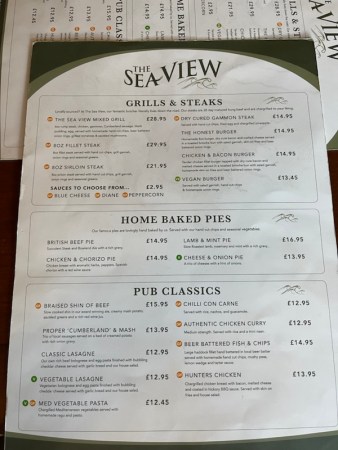
I’m a simple man when it comes to food.. Especially simple, old-fashioned grub when we go out for a meal; which, given the presence of the Collie, is a rare treat.
A reunion with a much-loved former neighbour in Whittle-le-Woods, near Chorley, Lancashire, saw us sharing the pub’s dining room with a funeral and having some of the best ‘home cooking’ I’ve ever had. One of those slightly surreal but wonderful occasions.
Our home diet is mainly vegetarian plus fish. So this kind of choice from the olden days is unusual.
But, I have to say, once in a while, it’s good for the soul.
©Stephen Tanham 2023
Stephen Tanham is a Director of the Silent Eye, a journey through the forest of personality to the dawn of Being.
http://www.thesilenteye.co.uk and http://www.suningemini.blog
Share this:

+ #Silent Eye, #Silenti, Consciousness, English Lake District, enneagram types, esoteric psychology, History
Drowning not waving
by Steve Tanham
Stage Directions: Cue: Hamlet cigars advert music from the 60’s to the 90’s…. Video link below, if you weren’t there…
YouTube video, late 1970s… https://www.youtube.com/watch?v=MVecbh15dWU
They were a very popular series of ads about heroic failures… All featuring the same theme music ‘Air on the G String’ by J. S. Bach.
It is said that humour is divine. I often find it puts into perspective some of life’s most challenging moments. Sue Vincent loved humour, so let’s invoke her kindly spirit… and understanding.
To steal and paraphrase from Ian Fleming: to lose one Director might be said to be happenstance…
To lose two of them is bordering on carelessness. Sigh. But that’s where we are. Two down but one up, as Caro has joined us, so the outlook is not too bleak.
When I first had the idea to set up the Silent Eye, way back in 2012, I asked Sue to sanity-check some of the proposals. We were already good friends from our shared Servants of the Light (SOL) days, and I knew she had a reputation for being a good blogger – to the extent that she had thousands of followers.
The Silent Eye would need to rely on the modern form of ‘word of mouth’ recommendations, in other words, the internet. It was difficult not to sport a large grin when she agreed to join the School prior to its official launch in the Spring of 2013.
I was a complete novice with social media. Sue even had to show me how to use Facebook. But we were well placed to share the work. She would establish the web presence and announce our emergence to her existing base of online friends. We knew from experience with other mystical schools that the take-up would be a tiny percentage… but people talk to other people. And that is doubly true of the internet.
All my ‘design experience’ during my working life had been with desktop publishing, using tools like the Adobe’s In-Design suite. This wouldn’t help us with the online world but would be a big driver for the quality and look-and-feel of the lessons – a three year programme, for which I would have primary responsibility.
Each lesson would be published in PDF format to a high quality; with me writing them and Sue checking as each one as it emerged. It had taken me about a year to master the use of the Adobe products for my former corporate role, but it was about to pay off in this new world
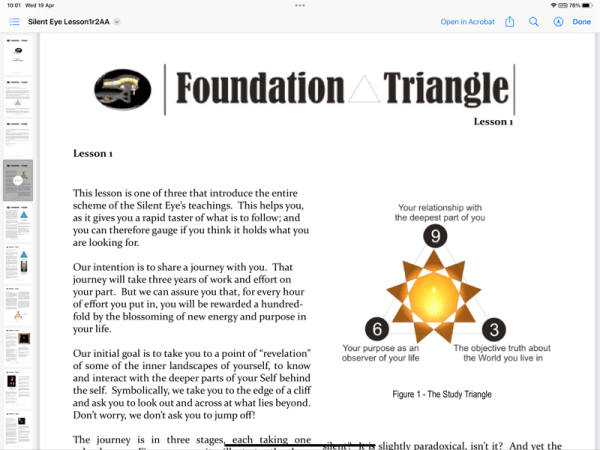
In this new writing process, Sue was the artist and I was the illustrator and in-house publisher for the lessons. Shortly after, Stuart joined us as fellow Director. Stuart was already a published author and turned out to be one of our best creators of the Spring workshops held in the wilds of wonderful Derbyshire.
In addition, he and Sue were soon to establish a set of fictional books, the Triad of Albion series, with a recognisable couple as the main characters, and loosely based on the early days of the Silent Eye. By the time of Sue’s sad passing, they had gone far beyond this.
As the library of the lessons grew, so did the list of Sue and Stuart’s books, for which they established their own website, France and Vincent.
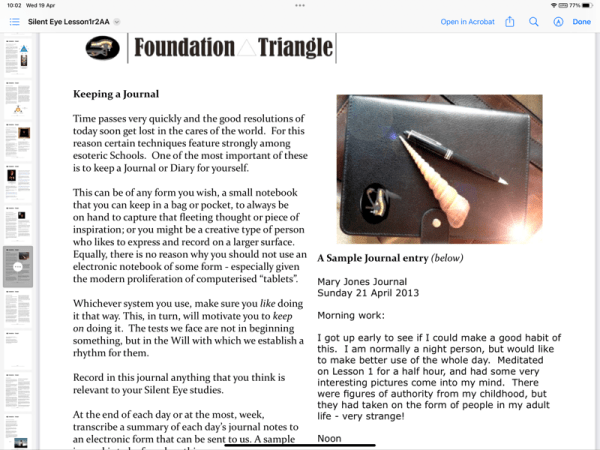
My priority was to create the three-year correspondence course that was and still is at the heart of what the Silent Eye does.
Here, the desktop publishing skills were in their element. Some examples of the work produced are shown here.
And so we continued… until Sue’s tragic and early passing at the end of March 2021.
I suspect both Stuart and I were in state of shock for a while afterwards. We discussed how we might carry on and decided that the lesson system could remain unchanged, though the website needed at least a refresh.
Both of us would continue to provide supervision to incoming Companions doing the course. We would have two ‘landscape’ workshops per year; one in May to capture the early good weather, the other in September. The May weekend would reflect my more ‘spiritual psychology’ approach. The September one was to be based around one or more of the tradition sacred sites, such as Avebury – a type of outdoor event that Stuart excelled at.
Both approaches had been successful in the past.
By now, the use of Zoom-based internet meetings had been well established; with monthly Silent Eye Explorations Zooms attracting people from far across the globe. Stuart didn’t feel they were his forte and withdrew to concentrate on creating new books based on his and Sue’s work together.
But the Silent Eye continued the Zoom meetings each month, with me leading and Caroline Ormrod, our new Director, providing support.
This online world continues to grow and we are planning teaching forums over the same mechanism to support the work of the course and its monthly lessons.
This type of remote meeting with ‘small windows’ for each participant is not ideal for spiritual discussions… but the world adopted it, of necessity, during Covid, and it continues to grow in popularity, now that its viability has been established. The genie is unlikely to go back into that bottle…
Last Sunday, with the subject ‘Presence: gateway to a new personal world’, the SE-Explore Zoom attracted twelve people; which is a great number to facilitate interaction and give everyone who wants to speak a say. Getting there in person would have cost thousands; and in this hard-pressed age, this route is a clear winner.
Which is not to say that we don’t plan to continue with our well-established ‘Landscape’ workshops. The next, Water, Circle+Cross on the 19-21 May, this year, will be using the majesty of Lake Windermere, its waters and surrounding low hills, to give us a travelling stage on which to explore the mystical dimensions of emotion. Contact us on Rivingtide@gmail for more information.
We live in a changed, post-Covid world and we need to move with it. We are doing our best to do so in a way that keeps costs down for those attending.
Unfortunately, neither Stuart nor I used the past couple of years to brush up our skills to rework the website that Sue built… Now, with Stuart’s recent departure, I find myself alone in this technical cockpit. Caroline’s skills mirror my own, so we’re both looking at a steep learning curve to gain some mastery over the vagaries of WordPress.
My own personal site, Sun in Gemini, was based on a simple WordPress theme, and presented no issues in configuration, just needing a couple of photos to fire it up.
Not so the Silent Eye, with its more complex structure and mass of history. And this is taking a little bit longer. We want it to look good and be friendly and easy to navigate. Sue would have wanted it to evolve.
We’ve made a fine start, but simple things like how to create header images that scale from the desktop to the mobile phone are challenging; not least because the relevant information seems to be scattered across the WordPress sources.
All offers of help will be gratefully received!
Our goal is to modernise and slim-down the Silent Eye’s website. Stuart has extracted posts related to his and Sue’s time together in order to turn them into book form.
The historic posts also remain on the Silent Eye site, and we have no current plans to remove them.
All created things have their cycle. That of the three of us working together has come to an end… but the Silent Eye’s has not. It is alive and well, and continues to do what it set out to do: offer a practical and fast-track path to mystical consciousness based on a three year journey into, and beyond the personality to arrive at the personal ‘dawn of Being’.
It works, and in Sue’s own words, “This is changing lives…”
I knew Sue well. We began this, and I think she would be pleased with our determination to continue it.
Now, where’s that Hamlet cigar…. I feel another encounter with WordPress coming on… perhaps an aspirin and even a small Scotch, too?
©Stephen Tanham 2023
Stephen Tanham is a Director of the Silent Eye, a journey through the forest of personality to the dawn of Being.
http://www.thesilenteye.co.uk and http://www.suningemini.blog
Share this:


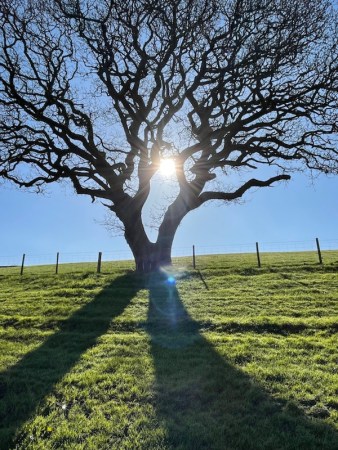
From a distance it’s just another tree.
Yet, as you get closer there’s something about this oak that makes it a kind of ‘king of the hill’.
It sits on the highest point of a track that used to be the path of a canal linking Preston with Kendal. The stretch of landscape was known among the barge folk as the most beautiful of the canal’s sixty-mile length.
The views down into the valley are beautiful.

It’s my tree. In the sense that I talk to it, and have done so, since we moved here, ten years ago.
Like all of us, this oak tree is waiting to emerge from winter’s grip. You can follow its branches and see the new life beginning to emerge at the tips.
Soon it will look like this and be talking back at me…

©Stephen Tanham 2023
Stephen Tanham is a Director of the Silent Eye, a journey through the forest of personality to the dawn of Being.
http://www.thesilenteye.co.uk and http://www.suningemini.blog
Share this:

+ #Silent Eye, #Silenti, Consciousness, English Lake District, esoteric psychology, guided mystical walks, Higher Mind, landscapes, meditation, Mindfulness
To Boldly Glow…
by Steve Tanham
We’d like to thank Stuart France for his decade of insightful contributions to the Silent Eye, his companionship, and the depth of his historical spiritual knowledge. We will miss him, very much, and wish him well in his future work.
And now we have to move on…
Deeper into cyberspace may not the only place we glow.
The world is changing, and we must, too.
©Stephen Tanham 2023
Stephen Tanham and Caroline Ormrod are Directors of the Silent Eye, a journey behind the personality to the dawn of Being.
http://www.thesilenteye.co.uk and http://www.suningemini.blog
Share this:


Our Silent Eye Explorations group meets online via Zoom on the third Sunday of the month at 8 pm UK time. For April, our topic is Presence.
We live in an age that takes a lot of ideas lightly, professing a working familiarity with such things as meditation, mindfulness and the idea of presence.
Are these separate, or do they overlap and even interact? Perhaps, at some deeper level, they are the same thing?
What is presence? A friend defines it as ‘the unmistakable proximity of a deep, knowing and loving home-full-ness…‘
For me, that’s a wonderful way to orientate ourselves to this magnificent ‘gift of (our) nature’.
A few years ago, I had a deep spiritual experience which transformed and aligned all the esoteric ideas I had to that point.
It was early morning. I was sitting, fully awake in a quiet room. The sunlight was streaming through the window behind me. I was suddenly ‘invested’ with what I can only call a higher version of myself which stared out through my eyes, and knew the world with a depth that my personality had never managed to achieve – in retrospect, could never achieve.
The ‘presence’ of this loving intelligence removed any uncertainly that might have existed at that point about the real nature of spirituality. After perhaps an hour, it gently faded. But I knew the experience had changed me. I never wanted to go back to the former state. The seed and memory of that day has never left me, though I have so far been unable to repeat the experience in its fullness.
But elements of it… yes.
Later, I learned that it was quite common for such intense experiences to be ‘gifted by grace’ but then depart, leaving the recipient to seek that ‘lost horizon’ by their own efforts, and, perhaps, thereby earn them.
During that hour, I was able to impress on my ordinary mind the nature of the experience – not to a depth where I could repeat it at will, but enough to be able to assemble the elements of its ‘being’.
A few days after this experience, I realised -with a flash – that I had entered this state of consciousness on two previous occasions; I just hadn’t connected them. In both cases I was driving a car, in a state of complete relaxation, the day after an important event. The difference between the prior and the latest was that I knew what I was experiencing…
These elements then became the basis of a search for its reconstruction. I share them here in the heart-felt hope that they may serve to assist others in their own search for that ‘higher Self’ of which we so often speak… but do not know in a personal way.
That knowing is our birthright, and it will, one day, change our world.
Element 1: Personalness
Like many of these qualities of Being, the sense of personalness is relatively meaningless until you experience it. When it happens, you realise that there is a space inside you that is more personal than you knew you had.
Element 2: Companionship
There is an intense sense of oneness; a gradient of companionship to love. The Sufis have a saying that ‘the friend returns’.
Element 3: Competence.
The idea that there are problems simply vaporises. This level of Being looks out and sees ways forward from which it chooses.
Element 4: Quietude
As though the whole word is listening. An intense silence that is totally harmonic.
Element 5: Timeless Harmony
There is the sense that ‘this place’ where ‘I am’ is more powerful than time; that time exists to serve processes initiated here. Perhaps this contains the gnosis that time never really existed, at all.
Element 6: Ordinary thought ceases…
These elements of the state of presence will be discussed at our SE-Explore meeting on Sunday 16th April. They will be expanded on in this blog and the Silent Eye in posts to follow.
If you would like an invitation to the SE-Explore Zoom meetings, which are held on the third Sunday of the month, at 8:00 pm, contact us at:
Rivingtide@gmail.com
©Stephen Tanham 2023
Stephen Tanham is a Director of the Silent Eye, a journey through the forest of personality to the dawn of Being.
http://www.thesilenteye.co.uk and http://www.suningemini.blog
Share this:

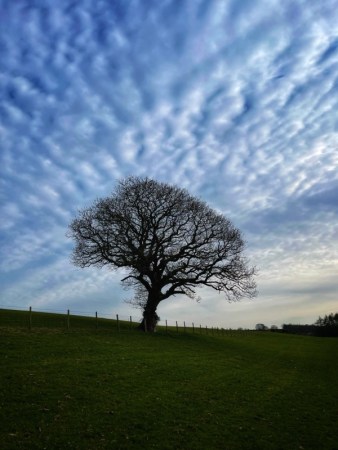
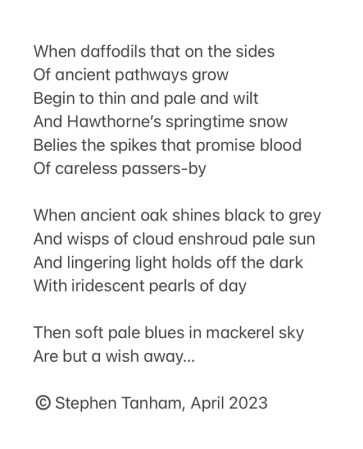
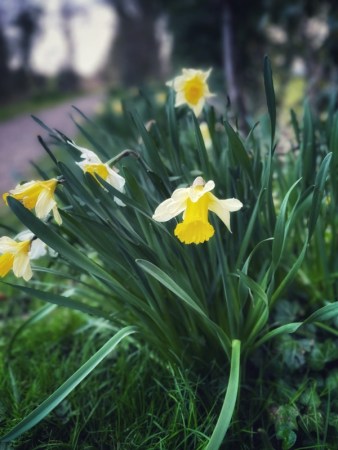
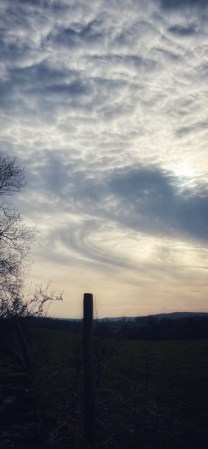
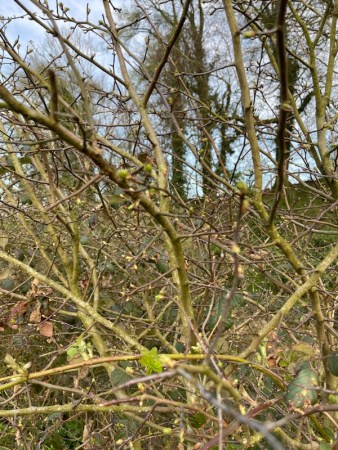
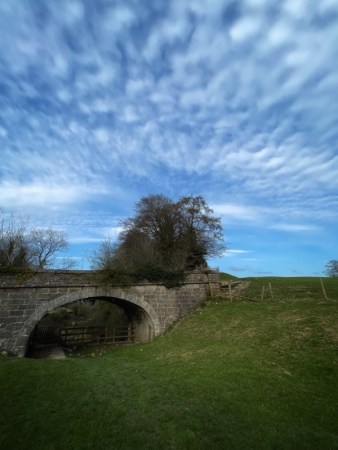
©Stephen Tanham 2023
Stephen Tanham is a Director of the Silent Eye, a journey through the forest of personality to the dawn of Being.
http://www.thesilenteye.co.uk and http://www.suningemini.blog
Share this:

+ #Silenti, Ancient Sacred Sites, Christianity and modern mysticism, Consciousness, English Lake District, esoteric psychology, Photography, Silent Eye School
Death and Resurrection
by Steve Tanham
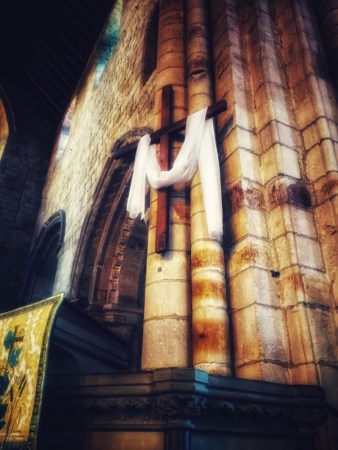
For the mystic, Easter is about symbols…
Being doesn’t break through the barriers into normal life very often, though it is the very substance and energy of its existence.
The journeys in the gospels are those of the individual soul, learning the fundamental truths of their own existence – which then expands to be existence, itself.
For me and many others, Easter is about the symbolic death of the ego – the personality. It’s a surrendering to the force and the ‘coming forward’ of the higher self, against whose light its own egoic candle is precious but fragile.
Trusting that it has found the truth, the personality lays down its symbolic life and invites the coming of the spirit.
And the spirit fills it with new life – the Christ – and re-purposes all its skills, its love and its intent.
However you see and celebrate this time of symbolic ‘death and renewal’, we wish you a Happy Easter.
@Stephen Tanham 2023
Stephen Tanham is a Director of the Silent Eye, a journey through the forest of personality to the dawn of Being.
Share this:

+ #Silent Eye, Consciousness, Esoteric Meaning of Myth, esoteric psychology, Higher Mind, Mystery Schools, Photography
Shadowy Spirituality
by Steve Tanham
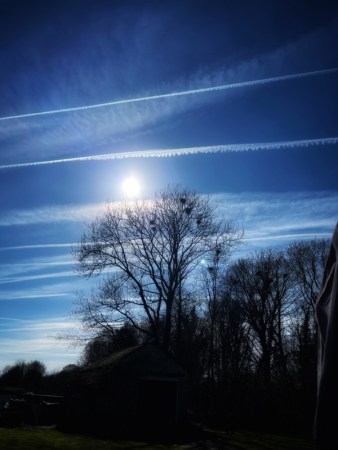
Psychologists have often reminded us that we have a have a ‘dark side’.
Yes, you… And me, too!
Sigmund Freud, whose work was behavioural and independent of spirituality, gave us the famous classifications of Ego, Id, and Superego; three seemingly separate parts of who and how we are.
Carl Jung, who was more intent on a personal unity involving the spiritual side of mankind, gave us the construct of the Shadow and the Persona, among other things.
All these terms describe how we view our-selves and the variance between our idealised view of that and what others might see – or what we might see also if we became a bit more objective about how we really are.
They also speak about primal parts of us, including inherited traits and even childhood attitudes and energies that have been suppressed in the name of ‘maturity’. The two psychologists differed in one major respect, and this has implications for any ‘spiritual’ perspective, to which we will return at the end of this post.
We all carry with us an idealised picture of ourselves. We smooth over behaviour that falls short of our professed ‘standards’ or moral codes. We tend towards self-contradiction, and have developed coping mechanisms that forgive and allow what might scream at us under the bright light of self-analysis.
The true maturing of the individual’s human nature is a long struggle between differing levels of hunger and those of satisfaction. Balancing the two requires honesty, sensitivity, and intelligence.
The driving force at the heart of all of this, regardless of the system of classification used, is societal pressure: to behave in an acceptable way – one that initially makes us fit to share a society built by others, then goes on to mark us as potential for that world’s more responsible or ambitious roles. These need not be lofty. Bringing up children is one of the hardest jobs in the world, as is looking after someone in great need, or the responsibility for a person’s health or education.
I’m not decrying society, here. The culturing of behaviour – so that we can all live harmoniously, yet with fulfilment, is a crowning achievement of any civilisation. The long cycle back to barbarism is only prevented by those willing to defend what has been earned.
We are born with an entire set of energetic aspects – from sex to imagination; from jealously to love.
To reduce these to a set of behaviours or manners…is artificial. Whole parts of our foundational layers are being suppressed. But it does represent a code by which we can demonstrate our membership of the society we live in. This is critical to the outward success of our lives. But, psychologically, it produces vivid conflicts within us, analogous to a city built in a volcanic region.
In Freud’s system, the ego is at the centre of our existence: our regular ‘self’, the decision and peace-maker and centre of how we view ourselves. Its opinion of our-selves is critical to how we view our selves and our lives.
Freud’s concept of Ego has an above and a below. The above is the superego – a kind of portable headmaster-cum-mother figure that constantly exhorts us to do better. The ‘below’ is a wild creature: the Id, (Latin for ‘it’ ) that lurks deep within, to which realm have been banished all the unacceptable behaviours and attitudes that do not fit within our aspiring climb to be ‘someone’ in our world.
Jung’s Shadow plays a similar but not identical role, but one destined to open much more potential for the spiritual aspirant.
In a very real sense, the Shadow or Id came first, and is reflected in the lower – and more powerful- parts of both our psyche and the physical structure of the brain; the bits that contain our largest reservoirs of energy, much of which can be viewed as untamed.
A classic example of such ‘dark’ forces is the sexual impulse, which permeates the behaviour of mankind in everything from jewellery to advertising. Never in civilisation’s long rise from barbarism has sex been so blatantly exposed before us.
But now we have a problem…
These primaeval and increasingly needed reserves of life-enhancing strength are locked away and branded unsafe… which they are, if let free in an unguided way.
But there is a way to let them play… and in return be gifted with their precious energies. It’s startling, but it has been shown that the ‘dark players’ in our so-called subconscious (as in ‘not conscious, yet’) will settle for a little time in the spotlight, then return to their slumbers without filling our peaceful valley with red hot lava.
The human ability to imagine has depths that get ignored as we ‘mature’. One of the most precious is the ability to lose ourselves in ‘play’. Later, that play becomes the powerful gift of creative imagination which will serve us both in career and partnerships.
When we watch a ‘primitive’ tribe dancing, covered in body paint and masks, they are showing us that they understand this division of the self – and the means to bridge it, peacefully. A wisdom passed from generation to generation, often in a landscape maintained in perfect harmony.
Jung’s insight was that the powerful shadow of you or me does not stand alone, it has within it various ‘characters’ or archetypes. These are not particular to you and me, they are shared by all mankind – and who knows, perhaps beyond. The ‘Gods’ may turn out to be far more important to mankind’s future than our technology-dominated age could ever know…
How can we turn this knowledge of our own inner makeup into a practical discipline? Any activity that empowers and brings alive part of this ‘cast of archetypes’ in our daily world will serve. Here is the basis of any ritual – from people meeting in love and respect to honour higher and shared ideals, to being involved in local theatre, as supporter or even a budding actor in that summer production.
To quote from the classic film Kiss me Kate, starring Howard Keel, maybe it’s time to brush up your Shakespeare... and walk round the house, hoovering and enacting paragraphs from Hamlet, as we anguish over our own fate…
©Stephen Tanham 2023
Stephen Tanham is a Director of the Silent Eye, a journey through the forest of personality to the dawn of Being.
http://www.thesilenteye.co.uk and http://www.suningemini.blog
Share this:

+ #Silenti, Ancient Landscapes, Celtic Christianity, Consciousness, English Lake District, History, Lake District, landscapes, Photography, Travel and Photography
Treachery and Morecambe Bay
by Steve Tanham
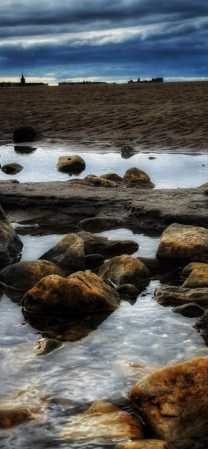
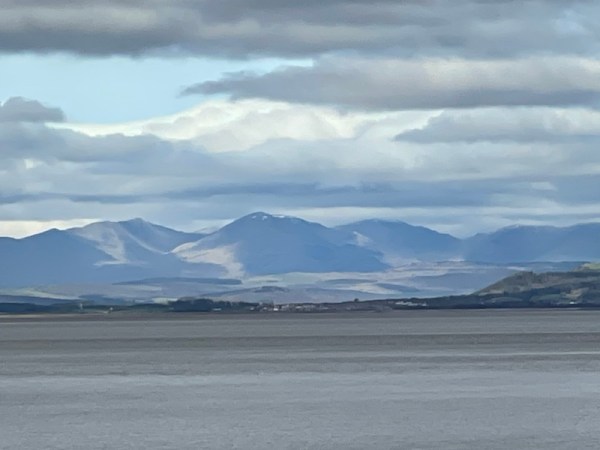
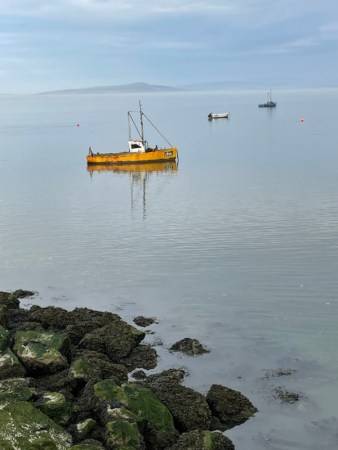
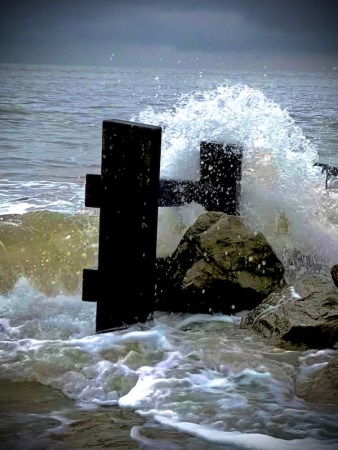
The treachery of Morecambe Bay has been well-documented throughout its history. Volatile, unpredictable and downright dangerous are words often used to describe it by those in the know.

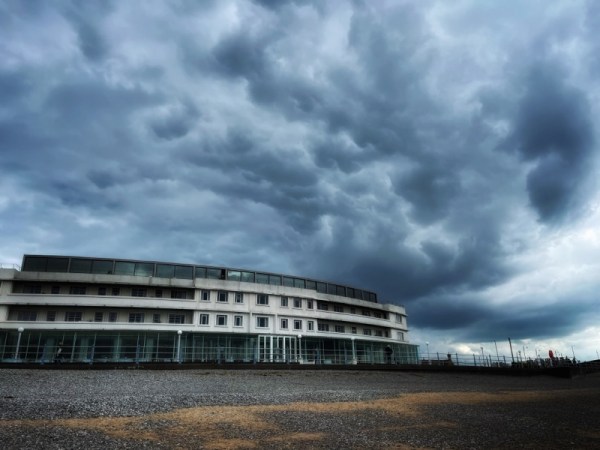
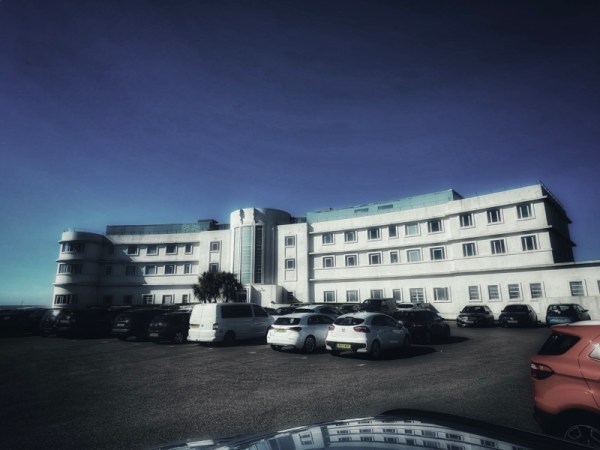
A ‘sister’ resort to Blackpool, forty miles to the South – Morecambe has managed to cling to a little of its former Victorian glamour partly due to such iconic buildings as the renowned Art Deco Midland Hotel in the middle of its four-mile seafront.
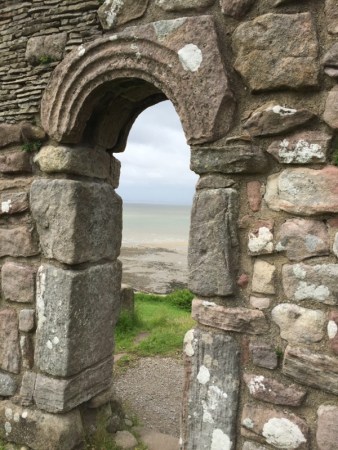
St Patrick’s Chapel on the cliff tops south of its neighbour, Heysham, is an example of how the town protects its ancient as well as modern history, via, in this case, the National Trust.
The original Anglo Saxon chapel at this site is thought to have been established a short distance from the rock-cut graves during the 8th century, around 1300 years ago.
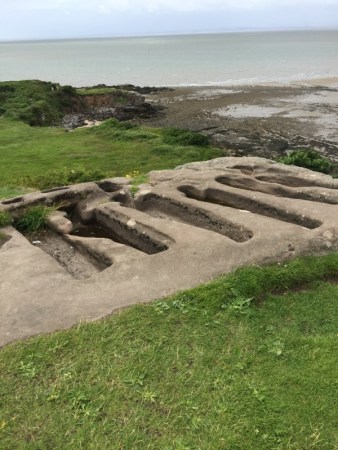
The chapel may have been built at the behest of a wealthy patron. Amazingly, remnants of plaster and paint have been found in recent excavations… Also, the chapel would have been too small to accommodate a congregation.
The stone graves remain a mystery, but are not unique to this site.
The chapel was rebuilt and extended in the 10th century, possibly due to the increasing popularity of Saint Patrick as a patron saint
Following this the existing walled enclosure developed as a cemetery. Burials of at least eighty men, women and children have been recorded in the area around the chapel. Whatever its origins, it was a very important place.
The ‘treachery’ associated with Morecambe Bay lies visible through the open door of St Peter’s Chapel, above: the sea; and the shifting and deadly sands on which it flows.
Morecambe’s tide comes in, to use the popular but true expression, faster than a galloping horse.
Faster than a galloping horse…
And there have been terrible consequences…
On the evening of 5th February 2004, 21 Chinese illegal immigrants, who had been put to work by local Chineses gangmasters picking the celebrated cockles, died of drowning and hypothermia when they found themselves lost on the sands of Morecambe Bay, two miles north of Morecambe centre.
The local Coast Guard rescue services knew approximately where they were, but in the fog of that evening, were unable to get to them – even by helicopter.
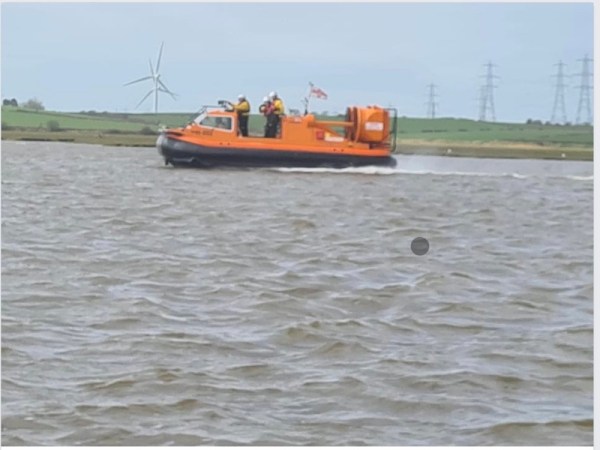
Those responsible were jailed for several years within UK prisons. The one good thing to come out of the tragedy was the provision of government funds for a second lifeboat station to contain a hovercraft: a vessel that has since been responsible for the saving of many lives and would have been able to reach the poor ‘cocklers’, as they are referred to.
The joys and the dangers of Morecambe Bay will be centre-stage within the new ‘Eden North’ project. Based of the successful Eden Project in Cornwall, the newly named ‘Eden Morecambe’ development will showcase the diversity and importance of marine life in Morecambe Bay.
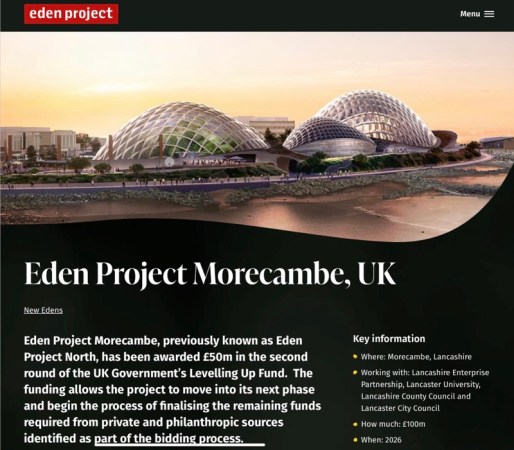
The UK Government has recently guaranteed to provide £50 m as part of the ‘Levelling Up’ programme. This will allow the Eden Morecambe development to begin in ernest.
I will be writing regular blogs posts on its progress.
You can find more about Eden Morecambe here.
Eden will be a great boost and an addition to Morecambe Bay’s many faces.
©Stephen Tanham 2023
Stephen Tanham is a Director of the Silent Eye, a journey through the forest of personality to the dawn of Being.
http://www.thesilenteye.co.uk and http://www.suningemini.blog


 Sun in Gemini
You must be logged in to post a comment.