+ #Silent Eye, #Silenti, Consciousness, English Lake District, esoteric psychology, guided mystical walks, Higher Mind, landscapes, meditation, Mindfulness
To Boldly Glow…
by Steve Tanham

We’d like to thank Stuart France for his decade of insightful contributions to the Silent Eye, his companionship, and the depth of his historical spiritual knowledge. We will miss him, very much, and wish him well in his future work.
And now we have to move on…
Deeper into cyberspace may not the only place we glow.
The world is changing, and we must, too.
©Stephen Tanham 2023
Stephen Tanham and Caroline Ormrod are Directors of the Silent Eye, a journey behind the personality to the dawn of Being.
http://www.thesilenteye.co.uk and http://www.suningemini.blog
Share this:


Our Silent Eye Explorations group meets online via Zoom on the third Sunday of the month at 8 pm UK time. For April, our topic is Presence.
We live in an age that takes a lot of ideas lightly, professing a working familiarity with such things as meditation, mindfulness and the idea of presence.
Are these separate, or do they overlap and even interact? Perhaps, at some deeper level, they are the same thing?
What is presence? A friend defines it as ‘the unmistakable proximity of a deep, knowing and loving home-full-ness…‘
For me, that’s a wonderful way to orientate ourselves to this magnificent ‘gift of (our) nature’.
A few years ago, I had a deep spiritual experience which transformed and aligned all the esoteric ideas I had to that point.
It was early morning. I was sitting, fully awake in a quiet room. The sunlight was streaming through the window behind me. I was suddenly ‘invested’ with what I can only call a higher version of myself which stared out through my eyes, and knew the world with a depth that my personality had never managed to achieve – in retrospect, could never achieve.
The ‘presence’ of this loving intelligence removed any uncertainly that might have existed at that point about the real nature of spirituality. After perhaps an hour, it gently faded. But I knew the experience had changed me. I never wanted to go back to the former state. The seed and memory of that day has never left me, though I have so far been unable to repeat the experience in its fullness.
But elements of it… yes.
Later, I learned that it was quite common for such intense experiences to be ‘gifted by grace’ but then depart, leaving the recipient to seek that ‘lost horizon’ by their own efforts, and, perhaps, thereby earn them.
During that hour, I was able to impress on my ordinary mind the nature of the experience – not to a depth where I could repeat it at will, but enough to be able to assemble the elements of its ‘being’.
A few days after this experience, I realised -with a flash – that I had entered this state of consciousness on two previous occasions; I just hadn’t connected them. In both cases I was driving a car, in a state of complete relaxation, the day after an important event. The difference between the prior and the latest was that I knew what I was experiencing…
These elements then became the basis of a search for its reconstruction. I share them here in the heart-felt hope that they may serve to assist others in their own search for that ‘higher Self’ of which we so often speak… but do not know in a personal way.
That knowing is our birthright, and it will, one day, change our world.
Element 1: Personalness
Like many of these qualities of Being, the sense of personalness is relatively meaningless until you experience it. When it happens, you realise that there is a space inside you that is more personal than you knew you had.
Element 2: Companionship
There is an intense sense of oneness; a gradient of companionship to love. The Sufis have a saying that ‘the friend returns’.
Element 3: Competence.
The idea that there are problems simply vaporises. This level of Being looks out and sees ways forward from which it chooses.
Element 4: Quietude
As though the whole word is listening. An intense silence that is totally harmonic.
Element 5: Timeless Harmony
There is the sense that ‘this place’ where ‘I am’ is more powerful than time; that time exists to serve processes initiated here. Perhaps this contains the gnosis that time never really existed, at all.
Element 6: Ordinary thought ceases…
These elements of the state of presence will be discussed at our SE-Explore meeting on Sunday 16th April. They will be expanded on in this blog and the Silent Eye in posts to follow.
If you would like an invitation to the SE-Explore Zoom meetings, which are held on the third Sunday of the month, at 8:00 pm, contact us at:
Rivingtide@gmail.com
©Stephen Tanham 2023
Stephen Tanham is a Director of the Silent Eye, a journey through the forest of personality to the dawn of Being.
http://www.thesilenteye.co.uk and http://www.suningemini.blog
Share this:

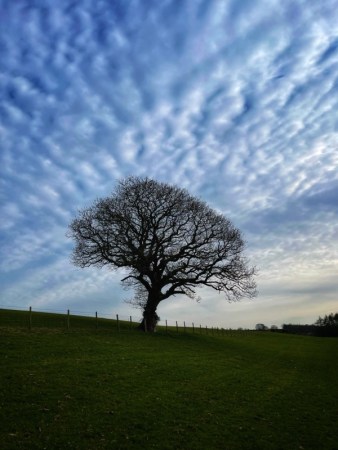
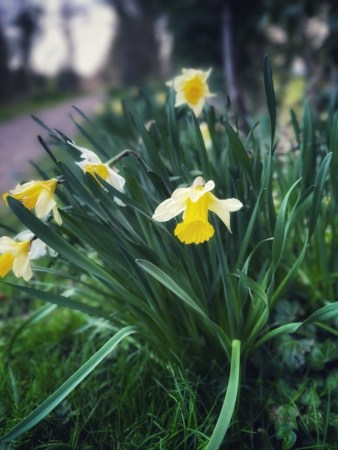
©Stephen Tanham 2023
Stephen Tanham is a Director of the Silent Eye, a journey through the forest of personality to the dawn of Being.
http://www.thesilenteye.co.uk and http://www.suningemini.blog
Share this:

+ #Silenti, Ancient Sacred Sites, Christianity and modern mysticism, Consciousness, English Lake District, esoteric psychology, Photography, Silent Eye School
Death and Resurrection
by Steve Tanham
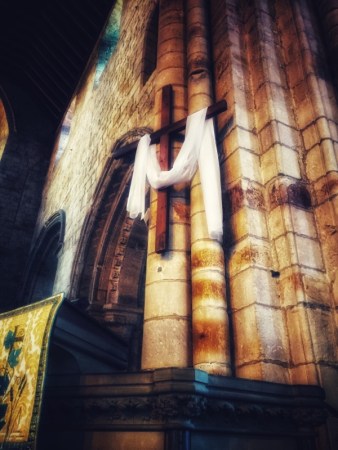
For the mystic, Easter is about symbols…
Being doesn’t break through the barriers into normal life very often, though it is the very substance and energy of its existence.
The journeys in the gospels are those of the individual soul, learning the fundamental truths of their own existence – which then expands to be existence, itself.
For me and many others, Easter is about the symbolic death of the ego – the personality. It’s a surrendering to the force and the ‘coming forward’ of the higher self, against whose light its own egoic candle is precious but fragile.
Trusting that it has found the truth, the personality lays down its symbolic life and invites the coming of the spirit.
And the spirit fills it with new life – the Christ – and re-purposes all its skills, its love and its intent.
However you see and celebrate this time of symbolic ‘death and renewal’, we wish you a Happy Easter.
@Stephen Tanham 2023
Stephen Tanham is a Director of the Silent Eye, a journey through the forest of personality to the dawn of Being.
Share this:

+ #Silent Eye, Consciousness, Esoteric Meaning of Myth, esoteric psychology, Higher Mind, Mystery Schools, Photography
Shadowy Spirituality
by Steve Tanham
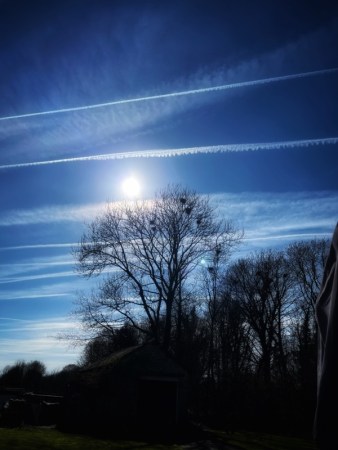
Psychologists have often reminded us that we have a have a ‘dark side’.
Yes, you… And me, too!
Sigmund Freud, whose work was behavioural and independent of spirituality, gave us the famous classifications of Ego, Id, and Superego; three seemingly separate parts of who and how we are.
Carl Jung, who was more intent on a personal unity involving the spiritual side of mankind, gave us the construct of the Shadow and the Persona, among other things.
All these terms describe how we view our-selves and the variance between our idealised view of that and what others might see – or what we might see also if we became a bit more objective about how we really are.
They also speak about primal parts of us, including inherited traits and even childhood attitudes and energies that have been suppressed in the name of ‘maturity’. The two psychologists differed in one major respect, and this has implications for any ‘spiritual’ perspective, to which we will return at the end of this post.
We all carry with us an idealised picture of ourselves. We smooth over behaviour that falls short of our professed ‘standards’ or moral codes. We tend towards self-contradiction, and have developed coping mechanisms that forgive and allow what might scream at us under the bright light of self-analysis.
The true maturing of the individual’s human nature is a long struggle between differing levels of hunger and those of satisfaction. Balancing the two requires honesty, sensitivity, and intelligence.
The driving force at the heart of all of this, regardless of the system of classification used, is societal pressure: to behave in an acceptable way – one that initially makes us fit to share a society built by others, then goes on to mark us as potential for that world’s more responsible or ambitious roles. These need not be lofty. Bringing up children is one of the hardest jobs in the world, as is looking after someone in great need, or the responsibility for a person’s health or education.
I’m not decrying society, here. The culturing of behaviour – so that we can all live harmoniously, yet with fulfilment, is a crowning achievement of any civilisation. The long cycle back to barbarism is only prevented by those willing to defend what has been earned.
We are born with an entire set of energetic aspects – from sex to imagination; from jealously to love.
To reduce these to a set of behaviours or manners…is artificial. Whole parts of our foundational layers are being suppressed. But it does represent a code by which we can demonstrate our membership of the society we live in. This is critical to the outward success of our lives. But, psychologically, it produces vivid conflicts within us, analogous to a city built in a volcanic region.
In Freud’s system, the ego is at the centre of our existence: our regular ‘self’, the decision and peace-maker and centre of how we view ourselves. Its opinion of our-selves is critical to how we view our selves and our lives.
Freud’s concept of Ego has an above and a below. The above is the superego – a kind of portable headmaster-cum-mother figure that constantly exhorts us to do better. The ‘below’ is a wild creature: the Id, (Latin for ‘it’ ) that lurks deep within, to which realm have been banished all the unacceptable behaviours and attitudes that do not fit within our aspiring climb to be ‘someone’ in our world.
Jung’s Shadow plays a similar but not identical role, but one destined to open much more potential for the spiritual aspirant.
In a very real sense, the Shadow or Id came first, and is reflected in the lower – and more powerful- parts of both our psyche and the physical structure of the brain; the bits that contain our largest reservoirs of energy, much of which can be viewed as untamed.
A classic example of such ‘dark’ forces is the sexual impulse, which permeates the behaviour of mankind in everything from jewellery to advertising. Never in civilisation’s long rise from barbarism has sex been so blatantly exposed before us.
But now we have a problem…
These primaeval and increasingly needed reserves of life-enhancing strength are locked away and branded unsafe… which they are, if let free in an unguided way.
But there is a way to let them play… and in return be gifted with their precious energies. It’s startling, but it has been shown that the ‘dark players’ in our so-called subconscious (as in ‘not conscious, yet’) will settle for a little time in the spotlight, then return to their slumbers without filling our peaceful valley with red hot lava.
The human ability to imagine has depths that get ignored as we ‘mature’. One of the most precious is the ability to lose ourselves in ‘play’. Later, that play becomes the powerful gift of creative imagination which will serve us both in career and partnerships.
When we watch a ‘primitive’ tribe dancing, covered in body paint and masks, they are showing us that they understand this division of the self – and the means to bridge it, peacefully. A wisdom passed from generation to generation, often in a landscape maintained in perfect harmony.
Jung’s insight was that the powerful shadow of you or me does not stand alone, it has within it various ‘characters’ or archetypes. These are not particular to you and me, they are shared by all mankind – and who knows, perhaps beyond. The ‘Gods’ may turn out to be far more important to mankind’s future than our technology-dominated age could ever know…
How can we turn this knowledge of our own inner makeup into a practical discipline? Any activity that empowers and brings alive part of this ‘cast of archetypes’ in our daily world will serve. Here is the basis of any ritual – from people meeting in love and respect to honour higher and shared ideals, to being involved in local theatre, as supporter or even a budding actor in that summer production.
To quote from the classic film Kiss me Kate, starring Howard Keel, maybe it’s time to brush up your Shakespeare... and walk round the house, hoovering and enacting paragraphs from Hamlet, as we anguish over our own fate…
©Stephen Tanham 2023
Stephen Tanham is a Director of the Silent Eye, a journey through the forest of personality to the dawn of Being.
http://www.thesilenteye.co.uk and http://www.suningemini.blog
Share this:

+ #Silenti, Ancient Landscapes, Celtic Christianity, Consciousness, English Lake District, History, Lake District, landscapes, Photography, Travel and Photography
Treachery and Morecambe Bay
by Steve Tanham
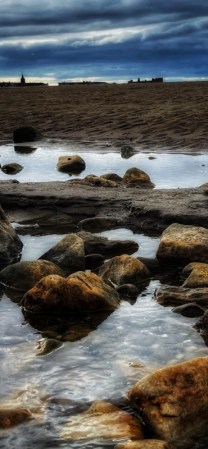
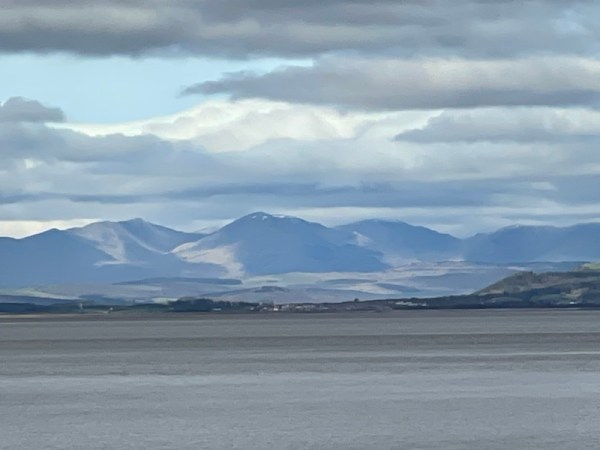
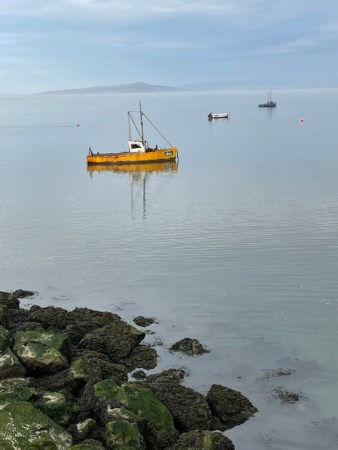
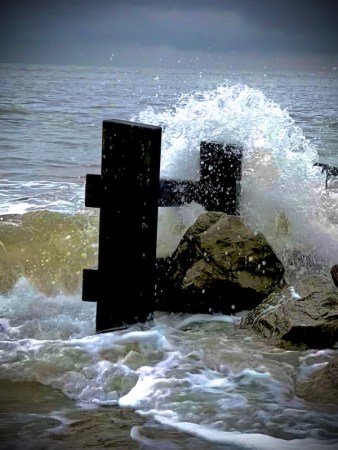
The treachery of Morecambe Bay has been well-documented throughout its history. Volatile, unpredictable and downright dangerous are words often used to describe it by those in the know.
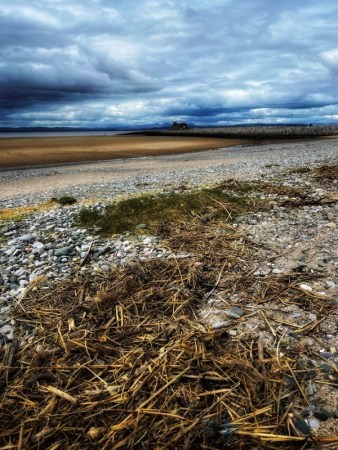
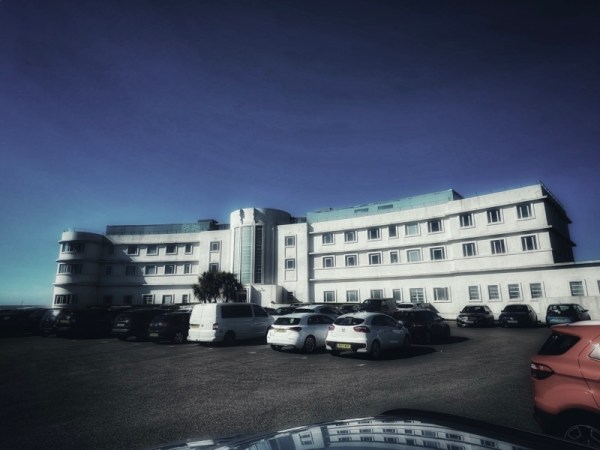
A ‘sister’ resort to Blackpool, forty miles to the South – Morecambe has managed to cling to a little of its former Victorian glamour partly due to such iconic buildings as the renowned Art Deco Midland Hotel in the middle of its four-mile seafront.
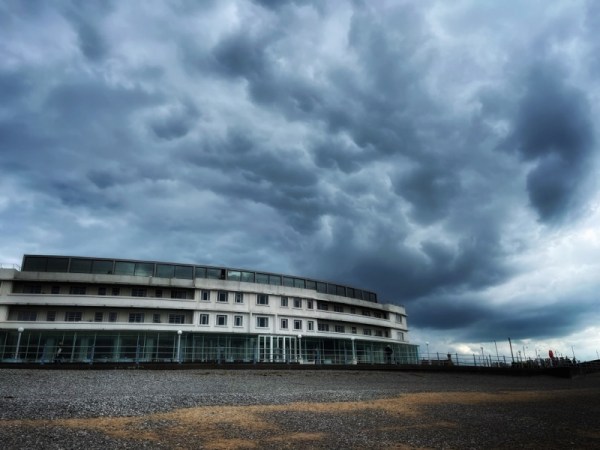
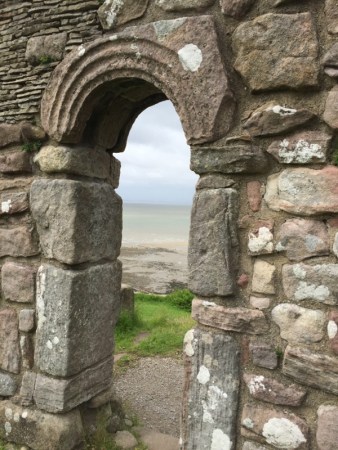
St Patrick’s Chapel on the cliff tops south of its neighbour, Heysham, is an example of how the town protects its ancient as well as modern history, via, in this case, the National Trust.
The original Anglo Saxon chapel at this site is thought to have been established a short distance from the rock-cut graves during the 8th century, around 1300 years ago.
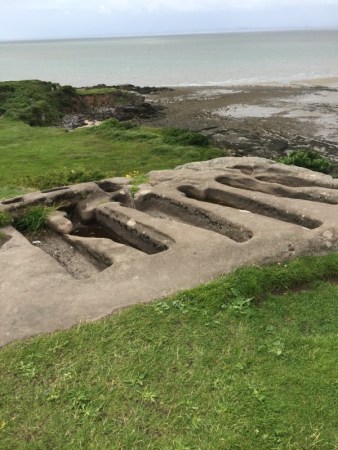
The chapel may have been built at the behest of a wealthy patron. Amazingly, remnants of plaster and paint have been found in recent excavations… Also, the chapel would have been too small to accommodate a congregation.
The stone graves remain a mystery, but are not unique to this site.
The chapel was rebuilt and extended in the 10th century, possibly due to the increasing popularity of Saint Patrick as a patron saint
Following this the existing walled enclosure developed as a cemetery. Burials of at least eighty men, women and children have been recorded in the area around the chapel. Whatever its origins, it was a very important place.
The ‘treachery’ associated with Morecambe Bay lies visible through the open door of St Peter’s Chapel, above: the sea; and the shifting and deadly sands on which it flows.
Morecambe’s tide comes in, to use the popular but true expression, faster than a galloping horse.
Faster than a galloping horse…
And there have been terrible consequences…
On the evening of 5th February 2004, 21 Chinese illegal immigrants, who had been put to work by local Chineses gangmasters picking the celebrated cockles, died of drowning and hypothermia when they found themselves lost on the sands of Morecambe Bay, two miles north of Morecambe centre.
The local Coast Guard rescue services knew approximately where they were, but in the fog of that evening, were unable to get to them – even by helicopter.
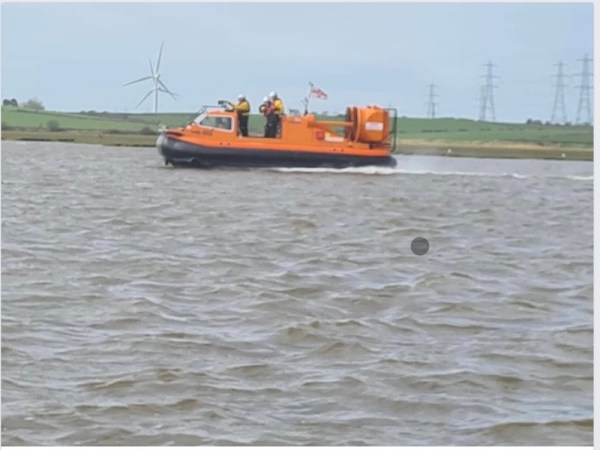
Those responsible were jailed for several years within UK prisons. The one good thing to come out of the tragedy was the provision of government funds for a second lifeboat station to contain a hovercraft: a vessel that has since been responsible for the saving of many lives and would have been able to reach the poor ‘cocklers’, as they are referred to.
The joys and the dangers of Morecambe Bay will be centre-stage within the new ‘Eden North’ project. Based of the successful Eden Project in Cornwall, the newly named ‘Eden Morecambe’ development will showcase the diversity and importance of marine life in Morecambe Bay.
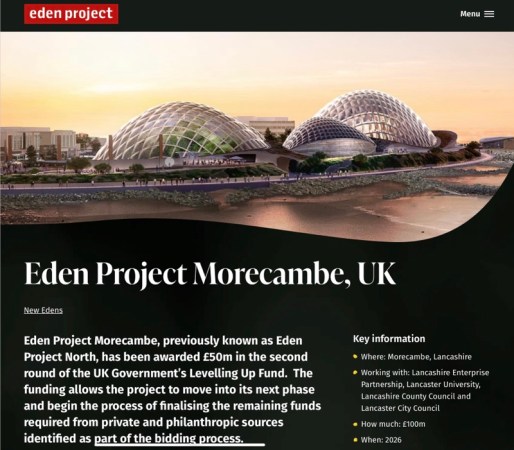
The UK Government has recently guaranteed to provide £50 m as part of the ‘Levelling Up’ programme. This will allow the Eden Morecambe development to begin in ernest.
I will be writing regular blogs posts on its progress.
You can find more about Eden Morecambe here.
Eden will be a great boost and an addition to Morecambe Bay’s many faces.
©Stephen Tanham 2023
Stephen Tanham is a Director of the Silent Eye, a journey through the forest of personality to the dawn of Being.
http://www.thesilenteye.co.uk and http://www.suningemini.blog
Share this:


Just you and me along the prom
As far as eye can see
Assuming eye can see at all
Within this silent storm

We could be settled by a fire
With crackle-snap of logs
Instead, we tread in sodden pools
Could dullness get much higher?

This masochistic love of dogs
Companions of the heart
Is strange to fathom, hard to square
Yet, seldom we’re apart.

©Stephen Tanham 2023
Stephen Tanham is a Director of the Silent Eye, a journey through the forest of personality to the dawn of Being.
http://www.thesilenteye.co.uk and http://www.suningemini.blog
Share this:


I’ve been following Di over at Pensitivity101 for many years, now.
Like the rest of us, she’s had her ups and downs, but always weathers them and comes out cheerful and positive. She’s got a great sense of humour.
She hosts ‘Fibbing Friday’. This week, she offers us the chance to spend a few minutes lying, as amusingly as possible, about the authors of a list of books. Here’s my entry:
“This week I am inviting you to suggest or invent authors for these (I think) fictitious books…”
1. The Mystery – Dr James Hoo
2. Dances with The Wolverine – Peter ‘One-Hand’ Singleton.
3. Who killed Roland Rabbit – Rt Honourable Roger Rogerson.
4. The Taming of the Crew – Odysseus MacMaster
5. Far from the Maddening Crowd – Penelope Farbright
6. The Golden Crown – Pippa Mantel
7. Up, Up and Away – Angela Downton
8. Bottoms Up – Sir Leslie Fillets
9. For Whom the Bell Tinkles – Jonathan Toll
10. A Dog’s Day – Lady Rufus Grey (né Hound)
A moment of levity..
Why not visit Di and have a go?
Steve
Share this:

+ Ancient Landscapes, Ancient Sacred Sites, Consciousness, esoteric psychology, Lake District, landscapes, Love, Mindfulness, nature, Photography
Scaling the Heights
by Steve Tanham

As a child, I remember asking the local vicar, “Where is God?”
He looked at me, a little startled, and said, “God is everywhere!”
I looked around, not meaning to mock him, but he took it that way. My simplistic feeling was that God was in the high places, open, accepting and taking things are they were.
My family were Rosicrucians and it was clear to him that I was being raised a heretic. He and the primary school headmaster were later to take their revenge on the family by conspiring to keep me out of grammar school, despite my earned grades.
What doesn’t kill you…

But it taught me to think.. and not to accept anything at face value when it was repeated by rote. It taught me to realise that if there is a God, ‘he’ would be perfectly happy chatting to me.
The question is a good one: Where is God? And while we’re pondering that we’d better ask: What IS God?
There are two main divisions to the life of our ‘self’. There is a gradual coming to accept the societal view of how things are. The closer and more elegantly we can harmonise with this, the better our chances in life. This is fitting in, and being rewarded for an outstanding alignment.
The other life of the self is what we think and feel inside. We can wear all the masks we like, but what really affects the quality of our lives is how we feel ‘in-here’.
If I feel good about myself, my life will be lived in inner harmony. I will have confidence to go out into the world and discover more and more about it.

Where will I find God? In the high places, of course.
But the new high places will be mountains inside myself – my:self. And once I’ve sampled the quality of the air ‘up there’, I will begin to want to live in that way and continue breathing that inner refinement of feeling and thought.
I probably won’t have an idea what God is. I may simply have confidence that this general sweetness inside is one of the pathways to her-him-it.
And I will begin climbing mountains, and they will be inner mountains; though there’s nothing wrong with talking to ‘God’ on the top of a real one…
Which, when I have enough personal power, and can return my own energy of discovery into my self, will turn out to be places of peace and silence. In those silences a different type of conversation begins.
And now, a reliance on what experts think falls away. Once I know how to be honest about my interior space, I can bring into it the authority of discovery, because the only thing of importance on that mountain is to change my world to the truth – my own truth, whose yardstick has been honed by my own experience, refined and reliable.

The world is full of crazy people. Now, I can be my own crazy person. Except I’m not. I’m a person with a reliable and well-forged set of thoughts and feelings that reflect what I know to be true – for me.
A new core of my life may emerge. The sense that something greater lives ‘behind my eyes’ waiting to be handed the controls. This new something feels a lot like my hard-earned self. But its power is greater, and its insight is instant.
I might call it my Self, rather than the ego-formed sense of identity that has come to make up my reactive self. This Self doesn’t have to react to the trivial world, no matter how good or bad. It has the power to see the world very differently – and thus change my relationship to experience.
And then, one fine day, I might find myself having a conversation with God, but in the highest and quietest place I could imagine; a place at the centre of everything that is and could be.
And it would be deeply caring and personal.

The Silent Eye’s spring 2023 landscape workshop: Water-Circle+Cross will take place on the weekend of 19-21. A few places are still available.
Message us at Rivingtide@gmail.com for more details.
©Stephen Tanham 2023
Stephen Tanham is a Director of the Silent Eye, a journey through the forest of personality to the dawn of Being.
http://www.thesilenteye.co.uk and http://www.suningemini.blog
Share this:

+ #Silenti, Ancient Landscapes, Ancient Sacred Sites, Castles, Consciousness, English Lake District, Lake District, landscapes, Photographic techniques, Photography, Places and Prose
A most unlikely castle…
by Steve Tanham

James Dawson had an eye for a view. In 1840, he stood on the spot from which the photo below was taken. and decided to buy it.

His advisors explained that he couldn’t buy all of that, but could have the land down to Lake Windermere, on which he could more or less do what he wanted… planning control were not expected along for the next fifty years-ish, so were unlikely to interfere with his ambitious and imaginative ideas.

He had plans to use it as a retreat from his stressful but lucrative career as a Liverpool surgeon. On top of that, and of great assistance to his plans, his wife, Margaret, was rich … very rich.
He had an eye for the Gothic, as well, and fancied himself as a modern ‘lord of the manor’ – but within a baronial castle. He had a clear picture of how he would feel, ruling over this landscape with his beautiful and very rich wife by his side.

She seemed content for him to indulge his interests on the shores of Windermere. She had much to do within her own social life.

Sadly, his wife didn’t like the place, and refused to live there. She was very rich and had lots of choices.

I think I have recounted everything the man on the boat from Waterhead to Bowness told me. He said it was all true. I suspect some of it is… but have doubts about other parts. He did have a grin when he spoke – like someone who’s just transported into your reality.

James Dawson died in 1875, thirteen years after his wife Margaret. Gothic villas like ‘Wray Castle’ were becoming unpopular and were considered ‘vulgar and ostentatious’.

Wray Castle passed to a distant relative, Edward Preston Rawnsley. In 1898, he sold the entire Wray estate which, as an out-of-favour derelict, passed from owner to owner in the face of the money needed to restore it.

But all this was to the eventual benefit of the public. In 1929, the young National Trust bought Wray, not for the ‘folly’ of a house, but for the beautiful stretch of lakeshore that it included.

As parkland, it remained open, continuously. But the ‘baronial castle’ was leased to several unusual tenants including the Freshwater Biological Association (1931-50) and the Merchant Navy (1958-98). Plans to convert the castle into a luxury hotel were halted after the financial crash of 2008.
As a story, you’d be pressed to make it up…

But, in reality…

It’s really beautiful.

And the vision that James Dawson had was not only achieved, but sustained and extended by the National Trust.

If you’re in the Lakes, go and see it. Share the remarkable… and the triumph of the unlikely.
From Wikipedia:
Wray Castle is a Victorian neo-gothic building at Claife in the English county of Cumbria. The house and grounds have belonged to the National Trust since 1929, and house has opened to the public on a regular basis since 2013.[1][2] The grounds, which include part of the shoreline of Windermere, are open all year round and are renowned for their selection of specimen trees – Wellingtonia, redwood, Ginkgo biloba, weeping lime and varieties of beech.
©Stephen Tanham 2023
Stephen Tanham is a Director of the Silent Eye, a journey through the forest of personality to the dawn of Being.
http://www.thesilenteye.co.uk and http://www.suningemini.blog
Share this:

+ #Silenti, Collie dogs, Consciousness, English Lake District, esoteric psychology, landscapes, Photographic techniques, Photography, Silent Eye School, Travel and Photography
No strangers on the shore
by Steve Tanham

“Lead them in,” said the man who taught me much about composition in photography. “You’ve got to ferry those looking at your images into the core of the shot…”
The steps, alone, were a perfect ‘lead’ down to the beach. Add in the storm wall and the high level of the promenade’s main body and you have a harmonic set of ‘pointers’.
The third element, and the reason the shot needed to be taken, was the way the central figure (my wife) and the collie were set against the curling pool of water from the draining high-tide.

Tess spends hours racing up and down the compacted sand, chasing the hi-bounce ball or the frisbee. I wasn’t expecting to find a new ‘view’ on this most familiar beach. Which goes to show that you shouldn’t discount the infinite combinations that nature can summon via light and tide.
I’ve put both shots in: after and before. I liked the second but wanted to get more emotion into the shot, and the use of the ‘smoothing’ filter seemed to offer that, allowing it to become more of a painting than a simple photo. Lens art is one of the names for this kind of approach. Purist photographers may not approve…

Its a functional beach, rather than a pretty one. We’ve used it for years, it’s difficult to find ‘new angles’, but they are there…behind every tidal change. All we need is eyes and consciousness … and a willingness to ‘listen’ and see’ to what’s there.
©Stephen Tanham 2023
Stephen Tanham is a Director of the Silent Eye, a journey through the forest of personality to the dawn of Being.
http://www.thesilenteye.co.uk and http://www.suningemini.blog
Share this:

+ #Humour, #Silenti, Consciousness, humour, landscapes, Photography, Places and Prose, Stream of Consciousness, Travel and people
Faro2 : The Shape that fell to Earth
by Steve Tanham

Looking back, it could have been the sunshine… The bright blue sky was such a contrast to the cold grey clouds of Cumbria in early March.
But it wasn’t. There was something about the shape of Faro2 that actually spoke to me…
It looks crazy – the words emerging on the screen here. Sounds even more lunatic putting it into a mystically oriented blog-slot, and yet, why should one place – or ‘space’ – be more special than another? Surely such things speak for themselves … or not at all?

Let’s relive that dramatic encounter…
I’ve gazed on remote stone circles that felt lifeless, but this place – this unlikely exotic and largely abandoned place – reaches across hundred of metres to make me smile. Bring that camera here, it says. You’ll not be disappointed..
It’s not on the tourist map – unless you’ve got a very old one. This is our second visit to Maspalomas, Gran Canaria. We’ve been coming here for the past two years for a winter week of much-needed sun. Our hotel is an eight-minute walk away. We found it last year but didn’t have time to explore. My wife is not the same kind of ‘urban explorer’ as I am and is soaking up the sun by the pool.
Which is great, because there’s somewhere I need to photograph. I’ve sneaked out for a walk. And possibly a cold beer.
No-one said go and visit Faro2. It’s got ‘concrete cancer’, but its not contagious. One of the reception staff who was a child when they built it told us. Going to cost a fortune to demolish.
So they don’t… forty years on, freshly dropped from the blue sky. Still as amazingly energetic as the day they opened it – somewhere back in the 1980s.

The words ‘SHOPPING CENTRE’ lie like a scar over the top of what is a very beautiful construction; its proportions gentle and pleasing to the eye. Somehow its name – the smaller sign – FARO2, is much more in tune. Designers always say use odd numbers of things in arrangements. It’s dated and the faded pink renders it a very odd number. Works for me. Very post-apocalypse…
It was weird… I’ve never experienced anything like it, before. A sense of a building actually welcoming you… Perhaps it has something to do with photographers, and their ability to compose shots that show things off ? Even from a distance, I could tell it was mainly derelict…

Yet there is activity. Lots of it. And there’s a bar-pub.. and quite a few abandoned men drinking beer. But I’m not ready for that, yet, even though the afternoon is hot.


I was weaned on sci-fi. Here was a building that – usage aside – was straight out of that genre…especially tales of devastated landscapes where the survivors clustered around to create a new ‘home’; or point of congregation.
Not Mad Max, more subtle than that… Something about a group of local folks who loved a place so much they wanted to save it. A bit like Covent Garden in London.
Faro2 fell to earth… It’s not fanciful, it told me so when I glimpsed its exotic curves above the rooflines of the nearby houses. The now-revealed circular mezzanine confirms it… Pure spaceship.
And now, by some fluke, or the quantum flickering of synchronicity, the iron-mesh barrier to the upper levels has been moved by one of the crew emptying yet another closed shop.

He says something. I don’t speak Spanish, and he can tell, so, he shrugs and, unmolested, I bound up the stairs with my camera at the ready. He’s probably gone to get his mate who does speak English to come and throw me out.
So I run and photograph while I can…


I collect my thoughts. A cold beer at Cleopatra’s Bar helps. There’s a thriving if small supermarket next door, but I only want a beer. Across from me a man who should be named Jinxie is looking back… perhaps seeing that I’ve been smitten and would I like to join their restoration action group?
And, for the full experience, we need to walk back via the bridge that crosses the ‘walkway to the mountains’. This ‘canal’ is an overflow from the distant peaks to carry the melt-waters to protect the resort of Maspalomas. Residents report they have never seen water in it, but it’s there if needed!

©Stephen Tanham 2023
Stephen Tanham is a Director of the Silent Eye, a journey through the forest of personality to the dawn of Being.
http://www.thesilenteye.co.uk and http://www.suningemini.blog


You must be logged in to post a comment.