
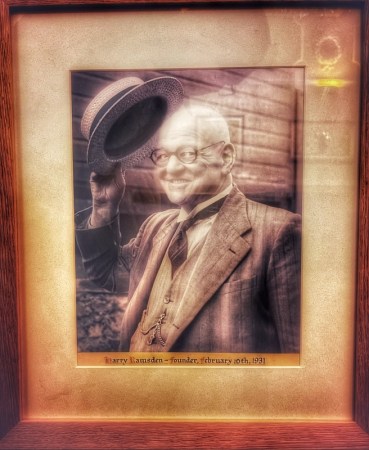
As we approach the spring, it can be instructive to consider examples of how cherished things struggle to maintain vitality – and which ones succeed.
The inevitable cycles of growth, maturity and decay are ever-present. But they are not all-powerful. Business fortunes as well as personal fate obeys certain laws of success and decline.
As a young computer salesman with a (now long defunct) UK technology company named CTL, One of my successes was an organisation called ‘The British Wool Marketing Board – BWMB’, based in Bradford, West Yorkshire. They were responsible for the official auctions that supplied the raw wool from across the north of England and the Scottish Borders – big business in the 1980s, though that boom era for quality British wool was coming to an end, even then.
I had been working with them for about a year and just secured a major upgrade of the technology when they mentioned that the IT department were to have an outing – a ‘do’ (add a ‘w’ after the ‘o’ and you’ll approximate the lovely local twang) to a place called ‘Harry’s’; and would I like to come along?
It was a good sign to be invited, and I accepted at once – but had to admit that I knew nothing of ‘Harry’s …
So they told me the story of Harry Ramsden’s Fish and Chip emporium…
Established in Guisley, between Bradford and Leeds, and on the edge of the fabled Yorkshire Moors, Harry’s Fish and Chip restaurant began life in 1928 … in a hut.
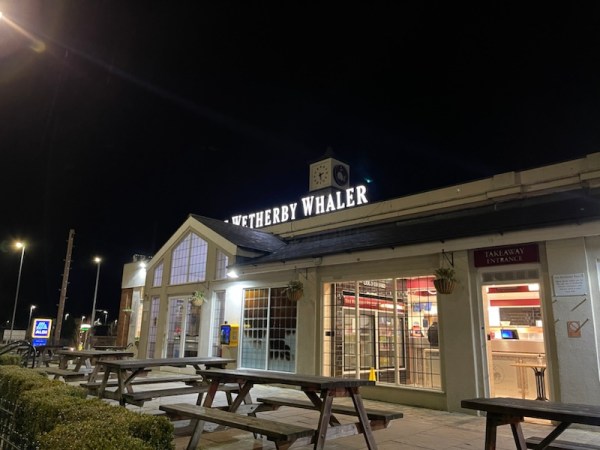
Sadly, I couldn’t find a photo of this original building online. But the modern replacement – now renamed by the present owners – is shown here and through this post.
His excellent meals, served with as much elegance as one could muster in a limited structure, were an immediate success, and he decided to take a huge risk and develop a plot of land on the top of a hill nearby.
Harry’s goal was to lift the spirits of the local people who were languishing in the doldrums of the post WW1 1920s: a very different era for poor folk from the glamorous ‘Flapper world’ so popular with novelists of the time. But that was the key to what Harry did. He warmed the souls of his working-class customers; with theatre, classy props and excellent, inexpensive food.

For a short time, they were somewhere else, in a world that understood them and their needs.
And cared…
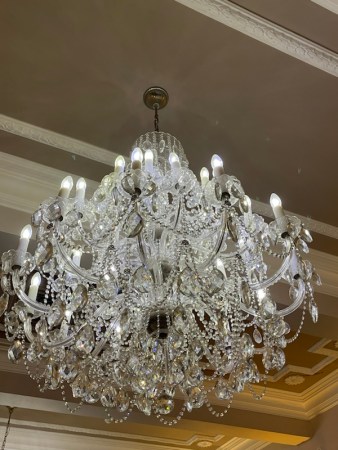
His new large emporium would give the locals a taste of luxury and class as well as excellent and healthy food – with fish shipped fresh from the Yorkshire coast daily. And he supplied all this at a modest price.
The restaurant was built where the trams from Bradford and Leeds disgorged their passengers on the hilltop. To many, who knew only a back-breaking life in pits or the dire textile mills, it must have seemed like an exotic holiday.
Staff were dressed in black and white uniforms reminiscent of a London restaurant, and they were trained in how to make their guests feel special; nothing was too much trouble.
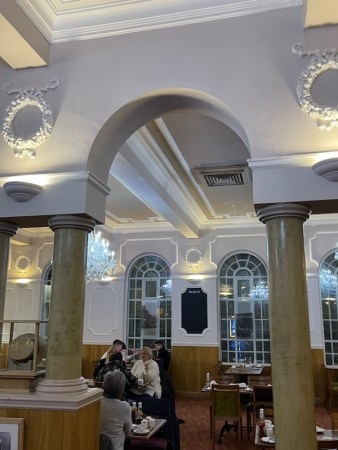
Harry Ramsden was at heart an entrepreneur and a showman who understood his customers’ needs and aspirations. They, in turn loved him and flocked by the charabanc-load to eat his fish and chips. The walk-in queues ‘seemed to snake from the door to the edge of Leeds…’
Harry Ramsden greeted his customers dressed in a wing collar, starched apron and straw boater. A trip to Harry Ramsden’s was an “experience”, something to boast about to your workmates in the mill or factory after a coach trip through the Dales. And back home via fish and chips.
Harry’s continued to prosper, widening its reputation and becoming one of the places to visit.

As a politician keen to display her populist credentials, Margaret Thatcher was keen to visit during a trip to West Yorkshire in the late 1980s. She joined the long list of celebrities who wanted to be associated with Harry Ramsden’s .
My time working with the IT team at the BWMB had ended way back in 1985. I often thought about them. I had loved the ‘do’ at Harry’s, and wondered how the old place was faring.
When passing through West Yorkshire, we had dropped in for supper from time to time over the years. The charm was still there, though I did detect a sense that it was getting ‘frayed at the edges’.
At the end of this last month – February, 2023 – we were due to travel to a motel next to Leeds Bradford airport for an early holiday departure the following morning. We wondered if the old place would be suitable for our evening meal?
Not knowing any of the recent history of Harry’s, I did a few searches online…
In 2019, Greg Wright, a journalist with The Yorkshire Post, had written:
When I moved to Menston in 1999, I was intrigued by Harry Ramsden and his legacy. Did his spirit still guide the chip shop that carried his name? A trip to Harry Ramsden’s at the turn of the new century was a colossal disappointment. After just one visit, I vowed to only return when all other gastronomic possibilities had been exhausted.The magic had gone. The interior was dowdy. The restaurant was almost empty. It was just a dreary fish and chip restaurant close to a big roundabout.
What had happened to this fine example of Yorkshire entrepreneurship?
It turned out that the modern owners had become embroiled in plans for national and even global expansion. The brand was there to be exploited, but in the rush to growth, they had neglected the original showcase restaurant – the ‘heart of Harry’s’
There were always two aspects to the ‘soul‘ of a Harry’s creation. The first was the ‘idea’ of serving fish and chips on such a scale. The second was the sheer presence of that ideal at its home in Guiseley.
In simple terms, the latter had been forgotten.
Nobody was surprised or dismayed when Harry Ramsden’s original emporium closed its Guiseley restaurant in 2011.
But… you might well remark, looking at the glittering images here, everything looks rather chipper, now?
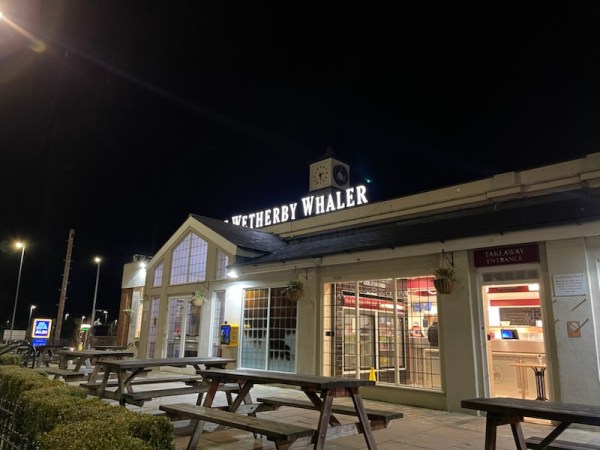
And it does, as this is the fully restored Harry’s, now sporting its Weatherby Whaler logo, but nicely leaving a few choice mementoes to its past
The owners had taken their eyes off the ball as they plotted national and global expansion. Harry Ramsden’s had become a brand that was there to be exploited. But in their eagerness to secure growth, Harry’s successors had neglected the original restaurant.
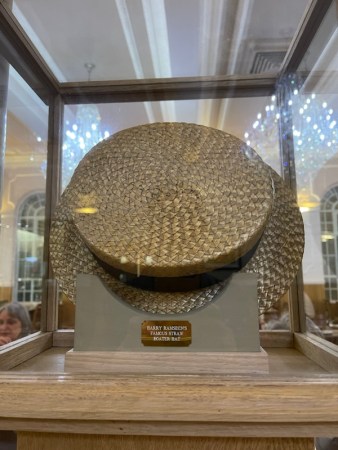
A visit to the same site today is a very different experience. Under its new owners, the Wetherby Whaler fish and chip group, the old restaurant has re-discovered its sparkle. In the night before our holiday, the service was superb and the tables were packed with diners.
In years to come, students may use the decline of Harry Ramsden’s as a textbook example of how to lose sight of the goodwill generated by such a socially respected brand.
I can’t help thinking that Harry, with his straw boater and cheery manner, would be very pleased with the reinvigorated future of his treasured emporium on the hill. I suspect that what we might call the ‘mind presence’ of what he created was still present in this area and strong enough to invest the new enterprise with its ‘spirit’.
We might say that a human undertaking can afford to lose or modify its ‘outer’, and still survive … as long as the spirit of its ‘inner’ is alive.
©Stephen Tanham 2023
Stephen Tanham is a Director of the Silent Eye, a journey through the forest of personality to the dawn of Being.
http://www.thesilenteye.co.uk and http://www.suningemini.blog
Share this:


I never used to like strong sun. The temperate summer of verdant and lush England always suited me fine.
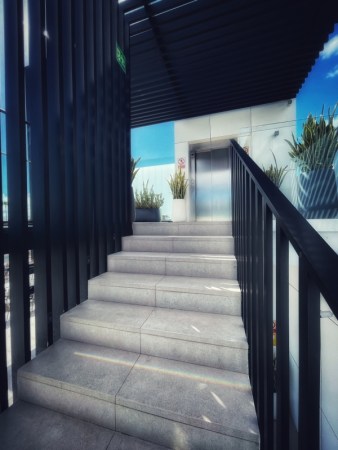
The rain was the price of the incomparable greens of the Spring. Everything was balanced…
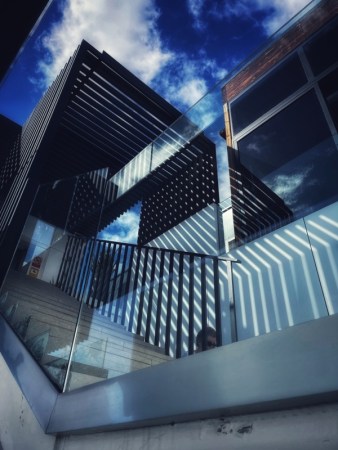
And then I became more involved with creative photography… and my trusty iPhone Pro has never been far from my questing fingers and eyes, since.

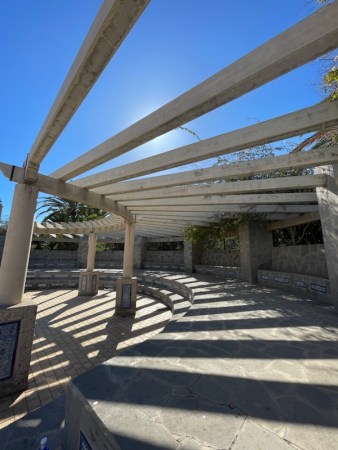
But then I noticed, while on holiday, that the power of the brighter sun lent creative potential to all kinds of scenes.
Some climates seem perfect for the amateur photographer, giving an abundance of light amidst inspiring semi-tropical foliage and structures designed to partner with sunshine rather than to repel it.
Herewith a selection of the best of my attempts from this week’s (hopefully) end of winter break in Gran Canaria. I hope they lift your zest levels as they did mine…
©Stephen Tanham 2023
Stephen Tanham is a Director of the Silent Eye, a journey through the forest of personality to the dawn of Being.
http://www.thesilenteye.co.uk and http://www.suningemini.blog
Share this:

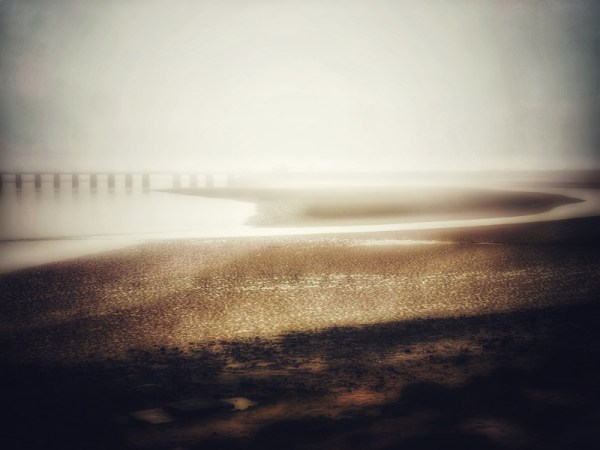
Arnside on one of the dullest days of the year.
In the viewfinder, there was nothing of interest. Half-heartedly, I pressed the shutter button and put the phone camera back in my pocket, content that I had a record of my visit.
But when I looked at it over a coffee, back home, this appeared.
Blurred and practically monochrome. But it was moody and worked.
The bridge is the viaduct carrying the main line between Barrow-in-Furness and Lancaster – and all points south.
©Stephen Tanham 2023
Stephen Tanham is a Director of the Silent Eye, a journey through the forest of personality to the dawn of Being.
http://www.thesilenteye.co.uk and http://www.suningemini.blog
Share this:

+ #Poetry, #Silent Eye, #Silenti, #WhimsyPhotoEssays, Consciousness, Higher Mind, landscapes, Mystical poetry, Travel, Travel and Photography
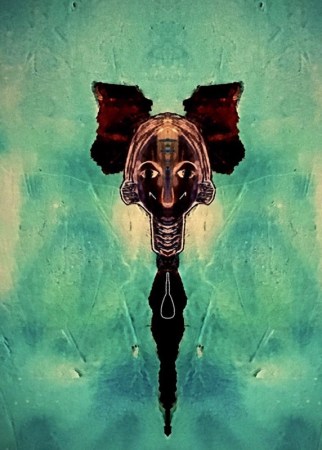
Reborn in innocence
by Steve Tanham

©Stephen Tanham 2023
Stephen Tanham is a Director of the Silent Eye, a journey through the forest of personality to the dawn of Being.
http://www.thesilenteye.co.uk and http://www.suningemini.blog
Share this:

+ #Silenti, Photographic techniques, Photography, Places and Prose, Silent Eye School, Social History, Travel and people, Travel and Photography
A return to Manchester
by Steve Tanham

For over two decades, the centre of Manchester was only a short journey from our offices in the rapidly changing landscape of Salford Quays – then a barren set of post-industrial docks whose only offering to the 1990’s was a floating wine bar, soon to be burned to a hulk of floating black wood because it’s owner wouldn’t pay protection money to the neighbouring Ordsall gangs.
The developers of Salford Quays made a bold move when they staked their future on the vast and dirty remnants of what had been the end of the Manchester Ship Canal: the huge waterway that freed the businesses of Manchester from the charges of the Liverpool docks.
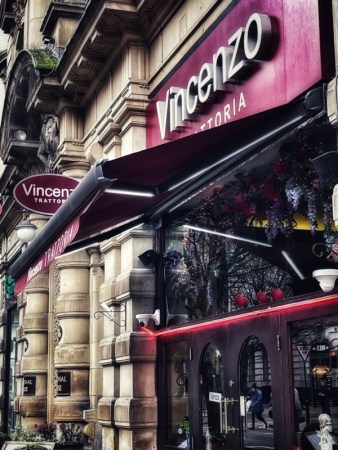
The office location on Salford Quays served us well, but our favourite times were driving into the centre of Manchester, perhaps once a fortnight, and having our lunch there.

Snack or sit down meal, street cafe or department store, it didn’t matter. The centre was vibrant and growing in the 90s.
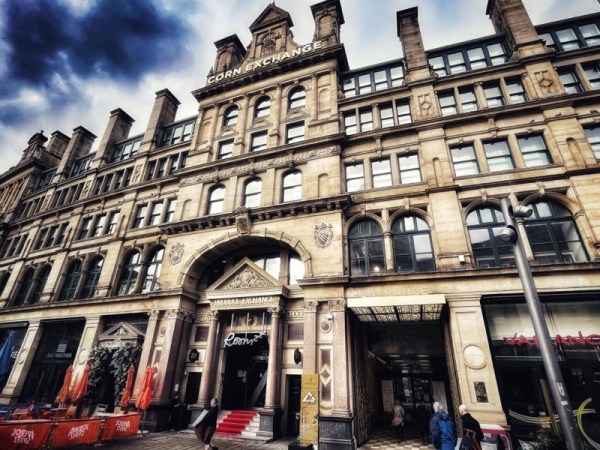
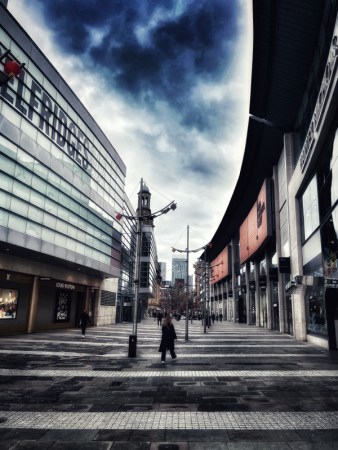
So it was great to go back. An appointment in the city for Bernie gave us a good reason to travel by rail from Kendal to Manchester to make a day of it. I made industrious use of my free time wandering round and taking shots of our old haunts.

Manchester has a large and vibrant ‘China town’ and the new year festivals go on for several days. There were still remnants of the fun, such as the red balls visible in the trees of St Anne’s Square.
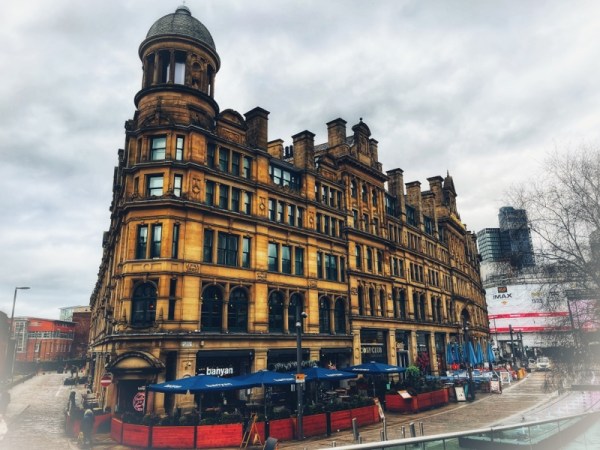
For me, the old Corn Exchange building, now a mecca for fusion cuisine, is representative of the best of the surviving Victorian age; a period in which the city achieved international fame and wealth.
©Stephen Tanham 2023
Stephen Tanham is a Director of the Silent Eye, a journey through the forest of personality to the dawn of Being.
http://www.thesilenteye.co.uk and http://www.suningemini.blog
Share this:

Er… Perhaps I shouldn’t be on this platform!
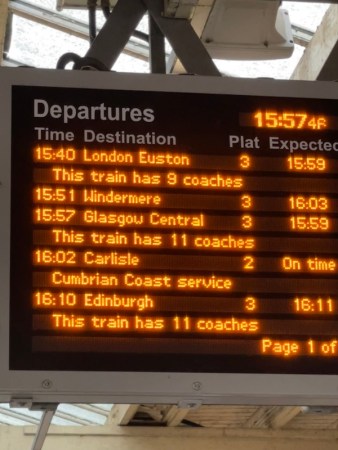
Last Friday. 15.57. Lancaster station; waiting for a train back to Oxenholme, our wonderfully local Lake District station.
Look at the electronic train information display. The London train (Euston) is a large express going south. The rest of the trains are going north.
Each is stopping at Platform 3. My head hurts… there’s only one track next to platform 3…
Postscript: I did get home. No trains were harmed in the making of this blog. The signal geniuses sorted it…
but you had to wonder….
Did they all get their turn on Platform 3? I have no idea. The first one in (to Windermere) whisked me away to ‘safety’!
©Stephen Tanham 2023
Stephen Tanham is a Director of the Silent Eye, a journey through the forest of personality to the dawn of Being.
http://www.thesilenteye.co.uk and http://www.suningemini.blog
Share this:

We all have moments when we experience that inner sense of ‘glow and wellbeing’ – often quite unexpectedly…
This usually happens when we are carrying out a task or thinking out a situation and become absorbed to a depth that assists us to resolve something complex. That eventual sense of a breakthrough is indicative! As is the deep breath that usually accompanies the triumph…
We seldom stop to examine the parts – the mental and emotional components of what has come to our aid. The feeling of ‘calmer waters’ is often present; and that carries us along as a good canoe would after shooting a set of rapids – which isn’t a bad analogy to some of the problems we face in ‘modern life’.
In truth, life – taken as a whole – has probably always been much the same. There are just different ‘theatre stages’ on which we play out the same human interactions – like Greek plays – giving us slightly more to worry about in the techno-age, but faster methods of writing it down and sharing it… often part of the problem, itself.
In those glowing moments our sense of self is enhanced. We’ve never been taught to notice it, so we don’t look for anything unusual at that level – even in the calm euphoria of the self-moment. But it’s a core element of what we are.
It’s not an egoic feeling – we don’t feel blown up with pride or a sense of ‘showed you!’. There is a quiet flow that is more like a higher mental and emotional ‘current of doing’. Problems just drop away, swept aside by a quiet mind that has far more capability and an expectation of carrying out the task, once our egoic self gets out of the way.
That flow is powerful, and belongs to a deeper level of our selves. The flow is how the deeper Self does things… only we interfere with it, all the time. The flow is how our lives would be if we didn’t…react.
Reacting is part of our inherited response system. Reacting is a big part of what the brain and nervous system does. It’s there to protect us; a vital part of the survival mechanisms that looks after us so well.
The problem is the reactions we commonly experience – particularly those that take a lot of our energy, like worry and fear, are those belonging to the ‘fight or flight’ level of our brain. We’re not familiar with the art and science of governing the reaction. We are familiar with its use in other things, though – like driving a car.
We’re not familiar with the art and science of governing the reaction. We are familiar with its use in other things, though – like driving a car.
When we learn to drive, we have to go through a similar ‘mental engineering’ process to intelligently suppress some of the survival instincts. Imagine being the first person ever to drive! What is now a natural part of growing up, at least in the developed West, would have felt very experimental and uncertain.
So it is when we begin to engineer our reactions. As humans we are designed to be a vast ‘system’ of response to the universe – a universe that is all around us and within us. There is no real separation, save that which we decide is ‘us’, and that which is not.
Our five senses provide a harmonic spectrum of what the universe is. We may think that our real appreciation is only close-range – the world immediately around us. But what would be the point of us being aware of galaxies distant in time and space, and spread to infinity in the night sky, if we couldn’t participate in their lives, too?
Our bodies are fashioned from what we ingest of the planet. Our minds are a response to what we experience though the senses. Both of these are in the world of opposites: light and dark, hot and cold, for example. But what lies beyond them is not polarised in this way.
What lies beyond the body and the mind is the truth about us: our inner Self, which exists at the heart of what we are. It is our real existence and its actions are those that flow from the glow.
Under the guidance of that inner Self, we learn to respond much more proactively to the Universe and enter a relationship with it that ends our sense of separation.
©Stephen Tanham 2023
Stephen Tanham is a Director of the Silent Eye, a journey through the forest of personality to the dawn of Being.
http://www.thesilenteye.co.uk and http://www.suningemini.blog
Share this:

+ #Silenti, English Lake District, landscapes, Photographic techniques, Photography, Silent Eye School, Travel and Photography
The massive Skiddaw
by Steve Tanham

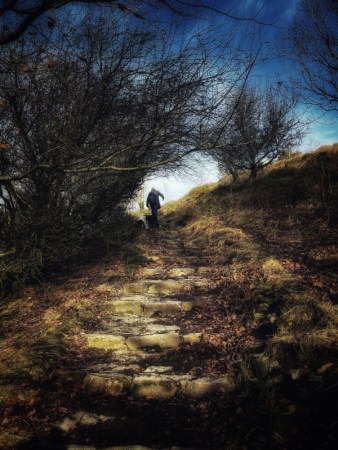
The massive presence of the mountain called Skiddaw towers over the Lakeland town of Keswick. The entire north-eastern horizon is dominated by its sheer size.
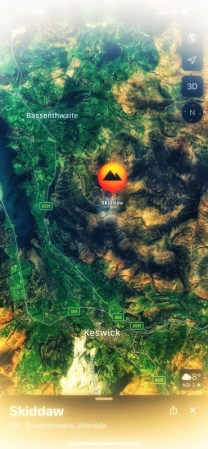
I was intending to simply post the photo above, but the dramatic image invites a bit more background information for anyone who is not familiar with the northern part of the Lake District National Park.
The opening shot was taken from the edge of Keswick, adjacent to the local football club’s car park. In the map image the location is next to the letter ‘K’ in Keswick. From this you can see how steeply the mountain rises from the edge of the conurbation.
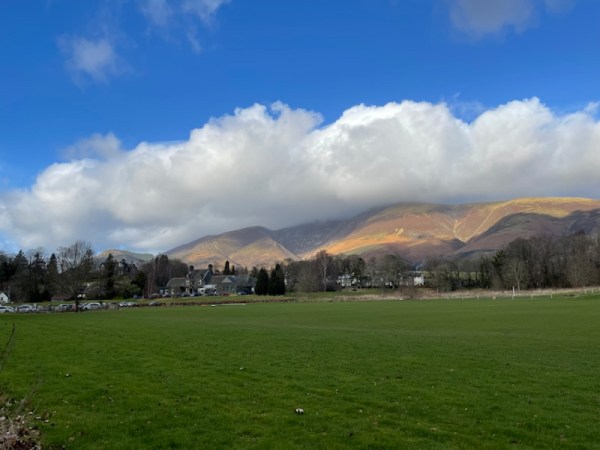
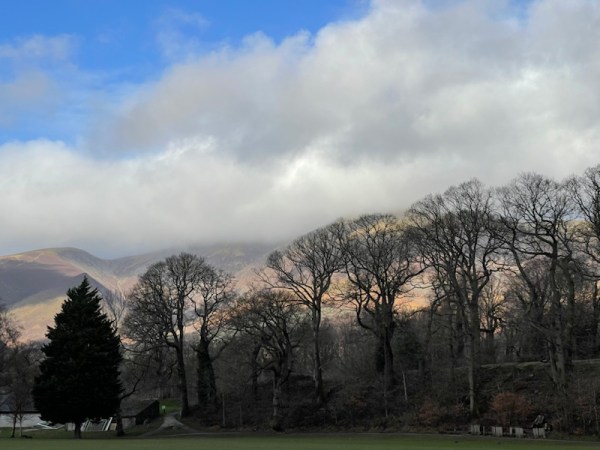
The nearest part of the town is Fitz Park, bordered by the River Greta and providing a ‘green edge’ between the town and the mountains. The photos were taken from various locations in Fitz Park.
Keswick is a half-hour drive away from the M6. Take the Penrith turn-off and follow the A66 towards Keswick and Cockermouth. If you’re travelling to Scotland, its well worth the small detour.

©Stephen Tanham 2023
Stephen Tanham is a Director of the Silent Eye, a journey through the forest of personality to the dawn of Being.
http://www.thesilenteye.co.uk and http://www.suningemini.blog
Share this:

+ #Poetry, #Silenti, #WhimsyPhotoEssays, landscapes, Photographic techniques, Photography, Travel, Travel and Photography
And Cherries on Sunday
by Steve Tanham
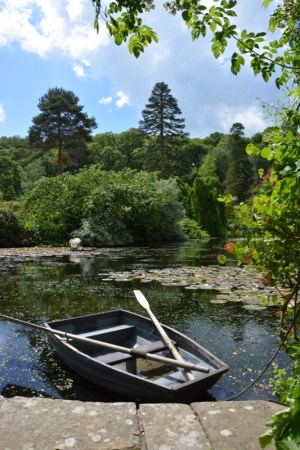
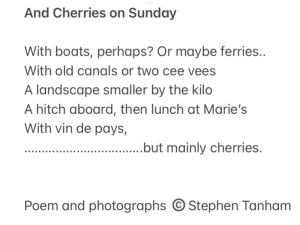


©Stephen Tanham 2023
Stephen Tanham is a Director of the Silent Eye, a journey through the forest of personality to the dawn of Being.
http://www.thesilenteye.co.uk and http://www.suningemini.blog
Share this:

+ #Silenti, Celtic Christianity, Consciousness, esoteric psychology, Love, Metanoia, Mindfulness, Mystery Schools, Soul, spiritual turning around, Sufi Poetry, The Beloved
Barriers to Love
by Steve Tanham
Eight hundred years is a long way to look back and extract meaningful guidance about ‘today’s world’, and yet I can say with honesty that the historical figure whose wisdom made one of the most important differences to my spiritual life lived in the 13th century…
Generally known by the short-form of his last name: Rumi, the Sufi mystic and poet Jalal al-Din Muhammad Rumi can be said to have done more than any other contemporary to bring to us the essence and vision of the mystical tradition of the Sufi schools. It needs to be remembered that the Sufi tradition operates within Islam; the latter forming a basis for society, behaviour and everyday worship.
Sufism provides the living and experiential heart of the mystical tradition – the realisation of the ‘divine’.
As with Gnostic Christianity within its parent, the two are not easy bedfellows – and yet the strength of a culture that has both behavioural and visionary layers to its learning has been lauded over the centuries.
Sufism – a school of the soul – lived under constant threat from narrow dogma and authoritarianism. The ideas of Gnostic Christianity are embedded in many mystical schools, today.
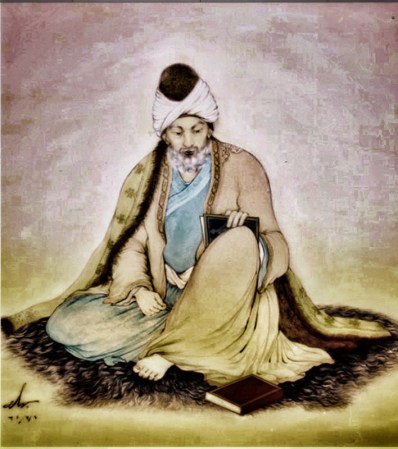
Rumi, (1207-1273) also known as Mevlana (‘master’), was a Persian scholar and Sufi mystic. His influence, even today, transcends national borders, and – more importantly – ethnic divisions.
Rumi’s teachings – often expressed as poetry or simple sayings, continue to be central to spiritual thought in Iran, Tajikistan, Turkey, Greece and within the Indian subcontinent. He has even been described as the ‘best-selling poet’ in America; which perhaps demonstrates the continued hunger for his style of clear and intelligently mischievous writing.
Rumi takes us on a journey – it’s a story; the best way to learn anything is to immerse yourself in its story…
Below is the Rumi aphorism that made such a difference to my own mystical journey.
Your task is not to seek for love, but merely to seek and find all the barriers you have built against it…
The Sufi tradition is one of poetry and concealment ‘in plain sight’. Its goal is to unite the ‘seeker’ with an inner presence known as ‘The Beloved’. We all have a inner Beloved, just as we have a personal inner journey awaiting us when we are ready to take it.
The Sufi and Gnostic Christian journey is one of inner unity with a part of us that is more real than we can comprehend – until we get there. This strange-sounding dilemma is due to the properties of the mind.
Mind is the organ of experience, both inner and outer. It has vast power over our intellectual and physical vehicles, even allowing us to take an action that will end our organic lives.
But mind is object based… By this I mean it views itself as separate from what ‘its’ senses tell it is happening in the world of its things – objects. It creates an ‘in-here’ and an ‘out-there’, and the result of that is the secondary creation of a ‘me’.
Eventually, the ‘me’ – a separate entity in this colourful world – decides it is interested in ‘heaven’ – a super-state. It wants to aspire to this state, as this might assuage the deep hunger it feels for meaning. The mind, outward-facing since childhood, senses that its world of objects is limiting. The initially bright and wonderful world it had in childhood – when all the objects were new – has faded…
When the mind sets off to build this picture of heaven, it does so in the way it does everything else – by doing, and by adding more.
And this is where Rumi’s wisdom comes in…
The trouble with creating a picture of heaven to be your destination is that it is formed in the outward-facing mind and is therefore made up of separate objects – things, just better things.
Rumi’s words remind us that we are the ones who have separated ourselves from the goal, which is Love – the Beloved. What we need to remove is the inner separation, not build a new bridge to an unseen, unfelt place.
To get to that ‘heaven’ – the superstate of consciousness which is real and pre-existing in our lives, we need to dismantle the barriers – the negative objects related to our concept of self – and then feel the fresh breeze of the real Self – the Beloved – coming to transform our lives’
This task is the objective of the ‘mystery schools’. In various forms, these have existed for centuries – even millennia. Mystery Schools use different methods to light the path and enable the traveller, depending on where the School arose and what the background was of their founders.
But they all share the same goal…
The Silent Eye is a modern mystery school whose teachings include wisdom derived from the Sufis; though we are not associated with Islam in any way.
The ‘barriers to love’ are the negative states we have built in our personalities. They have no lasting reality and no real power beyond their bluff and bluster. With care and gentle supervision, they can be systematically identified and ‘turned’ to face our personal source of life and love…at which point they become their opposites!
This process unveils an ever-brightening path upon which the personal Beloved reveals itself and takes an active and unmistakable role in our advancement.
There is no reason why such arcane wisdom need be complex. The right understanding propels everything…
©Stephen Tanham 2023
Stephen Tanham is a Director of the Silent Eye, a journey through the forest of personality to the dawn of Being.
http://www.thesilenteye.co.uk and http://www.suningemini.blog
Share this:

+ #Silenti, Ancient Landscapes, Consciousness, Lake District, landscapes, nature, Photographic techniques, Photography, Places and Prose
Stories of Winter Fire
by Steve Tanham
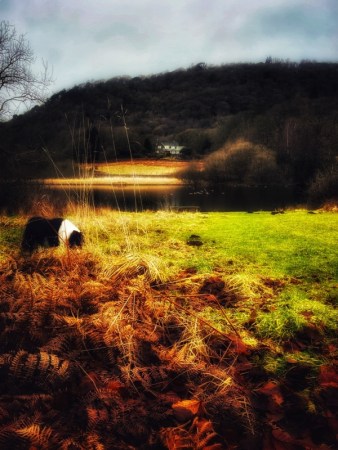
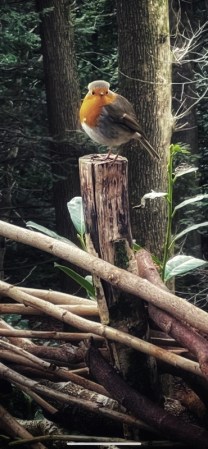
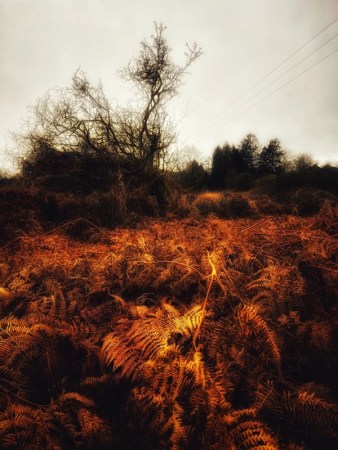
Here in the Lake District, colour can be hard to find in the Jan-March depths of winter. So I thought it might be fun to explore the replacement of faded colours – like those found in last year’s grasses and ferns – with a colour treatment that was blatantly artificial, yet suggested hidden fire and life…

The grasses above are a good example of something that retains last year’s summer shapes, but whose shapes remain, leaving us with a form that defies the winter’s ravages, yet is pale.
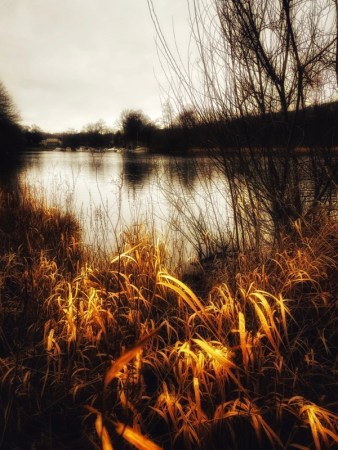
The iPhone’s toolset, including the downloaded Google Snapseed App, is good at taking such a pale form and bestowing a richness that would have been hard to achieve using just the raw set of ‘sliders’ that come with the native tools to brighten, darken or increase contrast, for example.
Equipped with a test result, above, I set out to find other sympathetic subjects – all this while being dragged around by a decidedly unsympathetic collie…


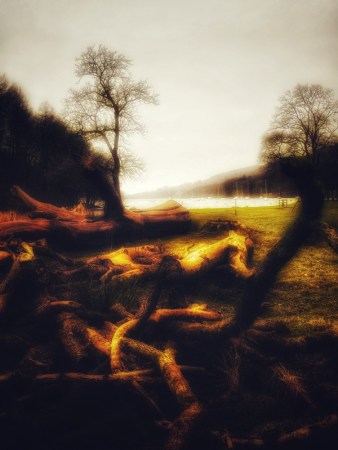
An old overhanging oak, near the end of the lake at Newby Bridge, looked promising. I explored different captures and settled on the above framing, then used examples of the same settings – varied in two stages- in Snapseed as the previous ‘winter fire’ shot.
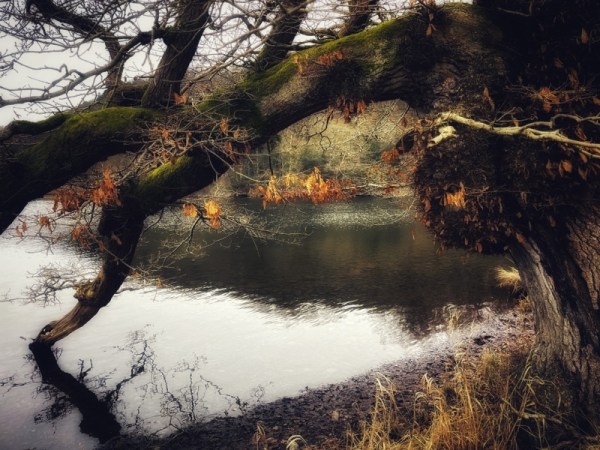
The final result, below, included a little ‘smoothing’, and had much more atmosphere than the raw shot. Armed with two successes, I went hunting…
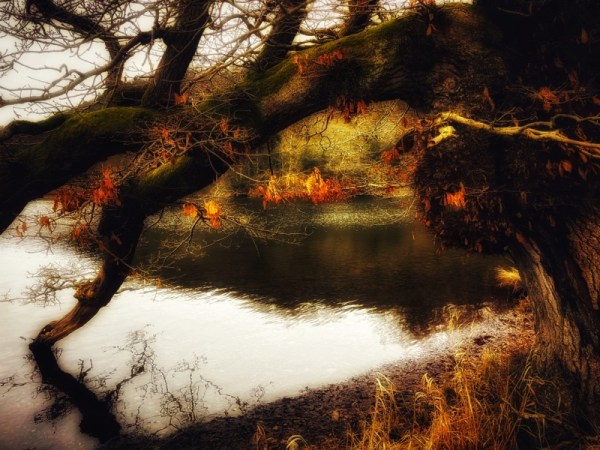
I was looking for an artistic rather than a purist approach, and quite happy to entertain a high degree of distortion. The shot below had only one strip of old vegetation to be ‘lifted’ by the filtering. The contrast between this and the dark background still made it an effective photo.

The result is nowhere near photo-realistic, yet gives life to the ‘fire in winter’ idea.

And what follows are the best of the rest…
It’s a technique I enjoyed exploring. I will use it with other settings on future projects.
©Stephen Tanham 2023
Stephen Tanham is a Director of the Silent Eye, a journey through the forest of personality to the dawn of Being.
http://www.thesilenteye.co.uk and http://www.suningemini.blog
Share this:

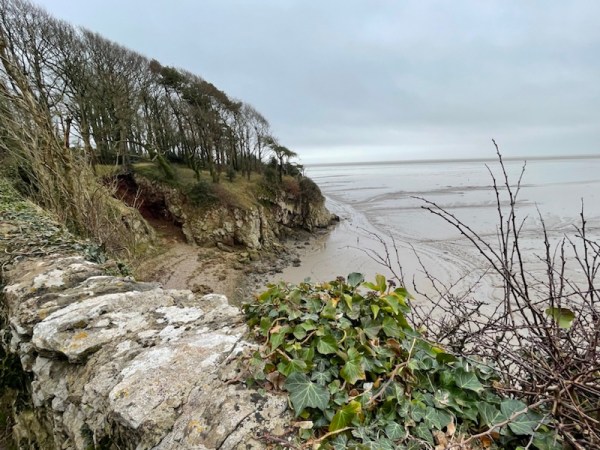
It’s called ‘The Lots’. It’s a heavily protected stretch of undulating land behind the rocky headland of Silverdale’s rugged coastline.
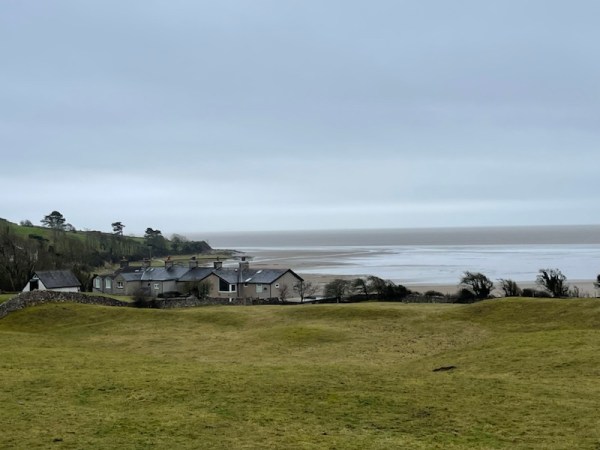
Silverdale is one of the most northerly places on the Lancashire coast. Before the boundary changes that created Cumbria (soon to be sliced into a new set of nonsensical pieces) Lancashire extended all the way around Morecambe Bay to Barrow-in-Furness.
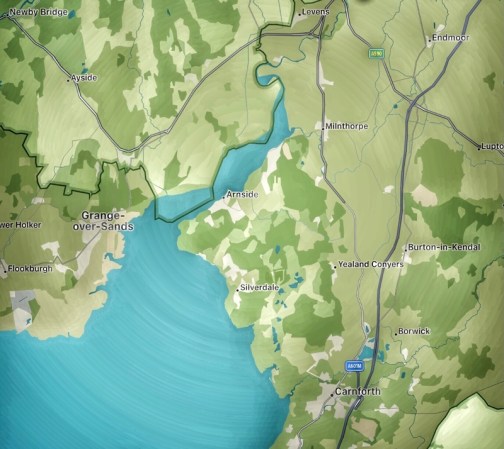
The peninsula on which Silverdale sits is shared with Arnside and Milnthorpe, both of them local gems and well worth visiting. I’ve written about Arnside in previous posts.
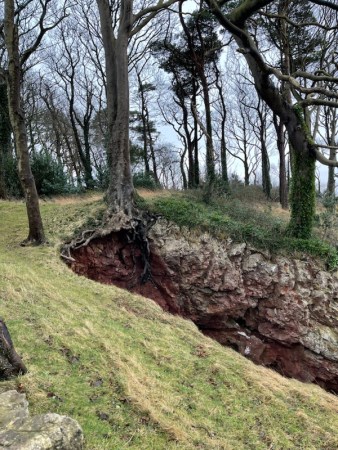
The path across The Lots connects the prosperous village of Silverdale – the former home of Victoria Wood – with a beautiful cove about a half mile away. You can reach the cove by road but where’s the fun in that?

The walk across The Lots, even with the zig-zags needed to throw the ball for the collie, is less than twenty minutes.
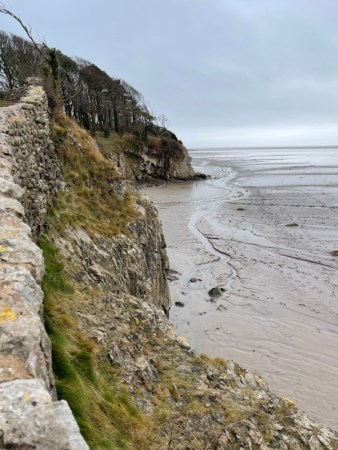
Its a cold place in February… but the clear air is ideal for photographs that capture the harsh essence of the place.
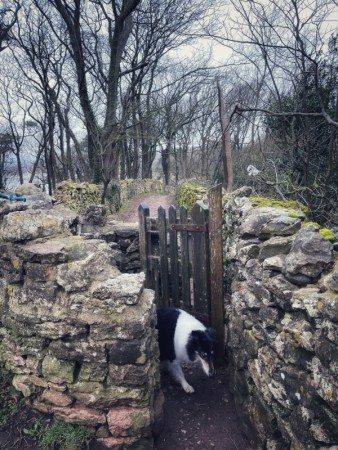
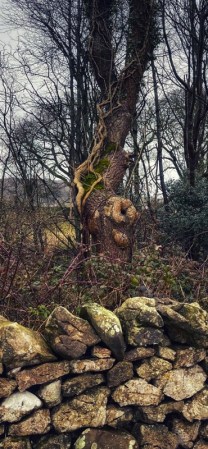
The muddy path narrows to a walled gate before descending towards the sea again.
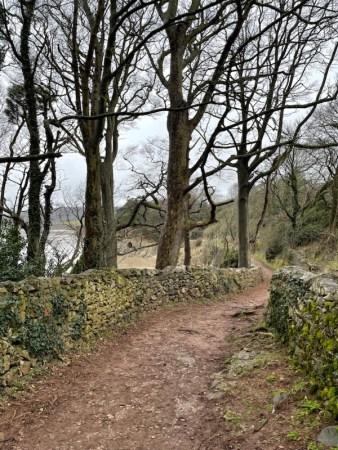

The Cove. In February, you may well need a thick, waterproof coat.
©Stephen Tanham 2023
Stephen Tanham is a Director of the Silent Eye, a journey through the forest of personality to the dawn of Being.
http://www.thesilenteye.co.uk and http://www.suningemini.blog


 Sun in Gemini
You must be logged in to post a comment.